
In short
EUVC Podcast Episode #198 Summary
Episode Title
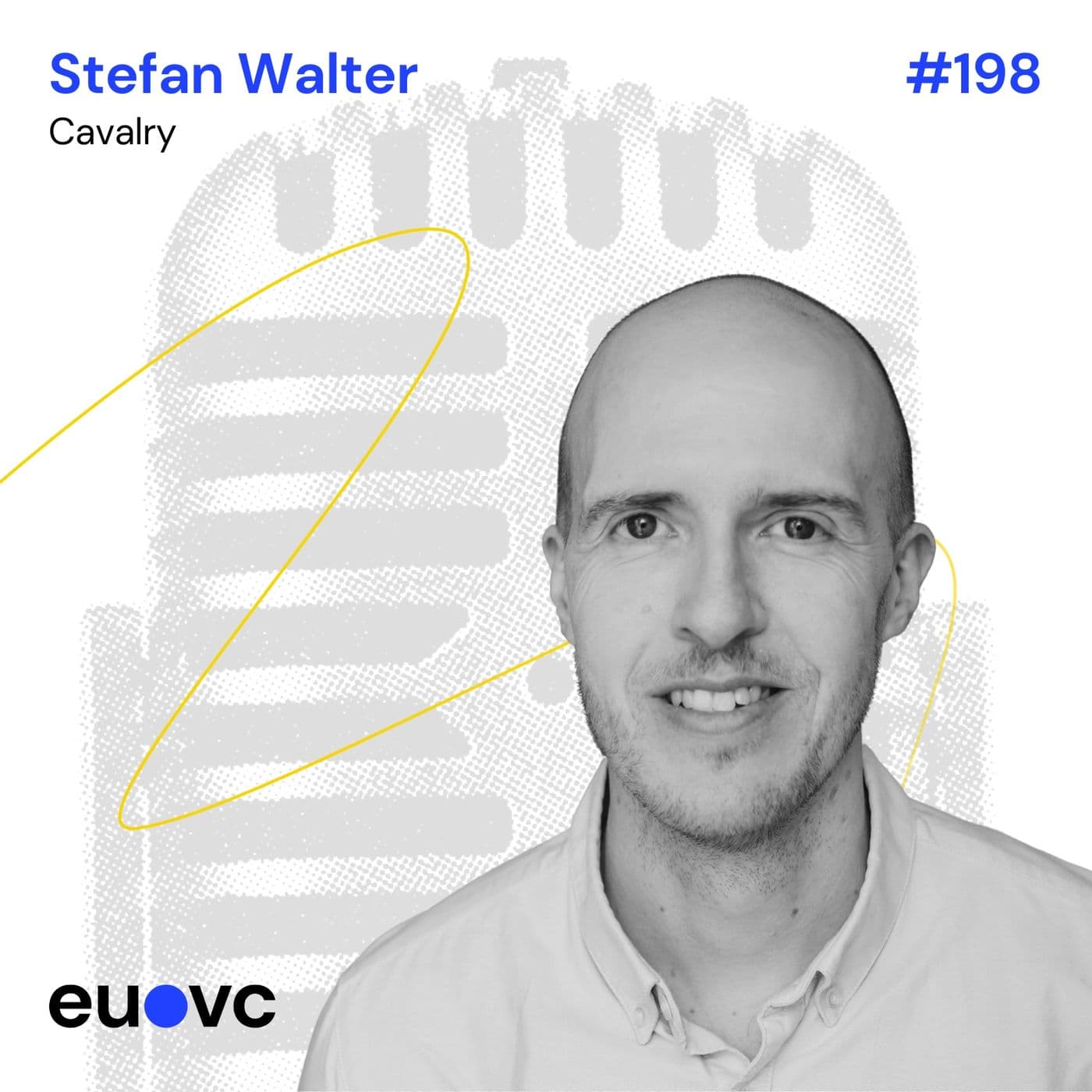
EUVC #198 - Stefan Walter from Cavalry 🤠 on leveraging a 250+ LP base & investing with conviction
Podcast Description The EUVC Podcast, co-hosted by Andreas Munk Holm and David Cruz e Silva, explores the European venture capital landscape with prominent figures from the industry. Episode #198 features Stefan Walter, Co-Founder and Managing Partner at Cavalry Ventures, discussing early-stage investments, the philosophy behind Cavalry, and insights from his journey.
Key Highlights
- Introduction to Stefan Walter
- Co-founder and Managing Partner at Cavalry Ventures.
- Cavalry focuses on pre-seed and seed-stage investments, typically pre-product and pre-revenue.
- Notable investments include companies like Forto, PlanRadar, and Aleph Alpha.
- Stefan’s Journey into Venture Capital
- Grew up in a non-entrepreneurial family and transitioned from studying business economics to founding his own company.
- Joined an early-stage investor in Berlin before establishing Cavalry with six founding partners in 2015.
Discussion Topics
- The Birth of Cavalry Ventures
- Established to fill gaps in the venture capital landscape by connecting entrepreneurs with a supportive LP base of over 250.
- Focus on a structured, scalable approach while maintaining a personal touch, highlighting the importance of relationships in VC.
- The Cavalry System
- Operational Setup and Value Addition
- Emphasizes a platform team of three to four individuals dedicated to making introductions and supporting portfolio companies.
- Uses tools like Airtable to streamline processes for efficiency and impact.
- Key Learnings and Insights
- Stefan’s Three Biggest Learnings:
- Team Beats Idea: Strong teams are critical to the success of ventures.
- Conviction Over Hype: Investing with conviction rather than chasing trends; avoiding overly hyped investments.
- If It Seems Too Good to Be True, It Probably Is: Skepticism regarding investments that promise unrealistically high returns.
- Challenges in VC
- Discussed the difficulty of maintaining a balance between urgency and importance in investment decisions.
- Addressed the concerns of LPs and the skepticism in the current market climate, emphasizing realistic expectations for new fundraisers.
- The Impact of Generative AI on the VC Landscape
- Stefan expressed caution and excitement regarding the implications of generative AI on the investment landscape and portfolio dynamics.
- Acknowledgment of the transformative potential of AI technologies and the importance of adapting investment strategies accordingly.
Quickfire Round
- Desert Island Items: A book on rough building, Wolfmother's album, and sunscreen.
- Advice to Younger Self: Focus on distinguishing between urgent and important tasks to reduce stress.
- Emerging VC Tips: Seek advice from experienced GPs and maintain realistic expectations in the current market.
- Counterintuitive Learning: The balancing act between long-term goals and short-term success stories in venture capital.
Conclusion The episode concludes with a reaffirmation of the importance of community, relationship-building, and adapting to changing market dynamics in venture capital. Listeners are encouraged to engage with the podcast and follow the evolving European VC landscape.
---
For more insights and updates on European VC, follow the podcast at [eu.vc](https://eu.vc).
Written by AI. May contain mistakes. Listen to the episode to check what was said.
Transcript
Automatic transcript. May contain errors.0:00Today, we're happy to welcome Stefan, managing partner at three early stage funds with over 250 million in assets under management in Germany. These funds back pre-seed and seed-stage software businesses across Europe with over 250 entrepreneurial LPs and a productised platform approach to create tangible value-add early on. With over 50 portfolio companies, notable cavalry investments include Forto, PlanRadar and Ailif Alpha. If you're listening in and love our show, drop us a review, follow the pod and subscribe at eu.vc.
0:36Tear down this wall. It's more than just an alliance. This is a union of values. United and determined, we can serve as a model for other regions of the world. The nature of a problem requires a European response. Europe is a story of new beginnings. New beginnings. Let's start acting.
1:06This show is not investment advice and the hosts of this episode may be invested in the funds and companies featured. Hello, everybody, and welcome to another episode of the European VC Podcast. I am David, the LP Syndicate Lead, and as usual, joined by my dear co-founder, Andreas, the LP Hype Man. Let's start things off with how you got into venture. Care to share that story with us? My journey into venture, I guess, is a little bit of an unusual one. I grew up in the middle of nowhere somewhere close to the Dutch border and my family didn't have any immediate entrepreneurial background and I studied business economics actually had some touch points with tax and corporate law in a previous life as well and somehow made it to Berlin about 15 years ago joined a startup a year later two years later co-founded my own first company, an online marketplace, selling high-quality mechanical watches.
2:06Switched sides a couple of years later and joined an early-stage investor based here in Berlin. This is where I met one of my current co-founders at Cavry as well. And in 2015, we, with six initial founding partners, stuck our heads together, thought about a new kind of fund that we could come up with. Had the first close of the first fund in 2016. running the second fund since 2019 and are live with Fund3 since last year. So now I'd love to hear a pivotal moment in your life and how it has shaped you as an investor. For me, it's actually a little hard to come up with one pivotal moment that answers that question.
2:47For me, it has been a rather series of, I'd say, nudges. So I personally started in the Netherlands for a while, did part-time work to finance that. for one also at one of the Dutch islands in the North Sea where I read quite a cheesy American business book which to some extent resonated with me and actually pushed me towards entrepreneurship. That is one. The second one is a lunch meeting I had when I was still with the other Fante in Berlin. Unexpectedly, my meeting brought a friend. That friend had breakfast that same day with Marcus co-founder of Deliver Hero currently kind of rethinking sustainable residential real estate with Gropios and that friend said hey you should definitely have a talk with Marcus which I did and which then led us together with the other four to start Cavalry in 2015 together and then when it comes to what is shaping us or me as an investor I guess early stage venture in particular very much is and experience and pattern recognition game.
3:59And we're learning something new every day. Certainly I am. And I believe while it's important to stay nimble and open to change your views, having seen things before is a major asset for NBC. take a start
4:25could I tease out something out of you by using the statement VC is a people's business and it's not scalable to a certain extent it's true right but at the same time like we're like this is especially the angle that we're trying to approach this from, right? Because we have a ton of LPs and we have less than 300 million assets under management and we have a platform team composed of three to four people all the time and trying to set up a structure that is as scalable as possible within, of course, the frame of being a venture capital is something that I personally believe sets us apart from some of the trends out there.
5:14And that actually gives us an edge because we are much quicker and much more structured when it comes to introductions and a couple of other topics out there. And we're able to actually facilitate this even prior to handing out a term sheet, which is very tangible value add while everybody claims to be valued. Right. In general, of course, I would agree with the statement you just made, but there are nuances to the answer to that, I guess.
5:43Stefan, to the attentive listener, they've heard a couple of interesting things already in this episode as Cavalry having six co-founding partners, which is definitely not something we see that often. And to the listeners that will stay in, they'll hear more interesting stuff about also the sheer size of Cavalry's LP base, but also the networks around you guys. So I'd love to ask you a bit more about the origin of the name. What does it come from and what does it mean for you guys developing as a firm? Of course, the name has a background or has a reason. And that being all of us who co-founder and recovery coming with a certain entrepreneurial background, about half of us also being involved in some of those Berlin-based incubators, the startup studio structures.
6:35so from day zero we had I guess a fairly good understanding of on what impact you can have on very early stage startups if you connect them to the right people very early on therefore as kind of part of our initial DNA and said okay let's not try to find the the just a handful of of major big investors but try to find like-minded people like us entrepreneurs turn angel investors with a similar entrepreneurial background, combine those all in a fund structure, and from a founder's perspective, deliver something or offer something that is just one line in your cap table, but which has kind of the whole category, so to say, behind it, that you can call in for support if you think you need to.
7:25Did you manage to stay true to that as much as you wanted as you moved from fund one, fund two, fund three? and obviously this question comes with kind of a sub-question attached which is, you know, as fund sizes change and strategies evolve, you know, do you feel that you could stay true or did you have to do some kind of concessions over time to that kind of ethos that you had from day zero? Our initial fund was 22 million euro. We raised this from about 80 private investors and the second fund 2019 was 80 million. our current fund, the 2022 one is 160. Raising 160 million from private investors only, 10 of one to 300k tickets.
8:12That's super viable, of course, right? What we did in terms of staying true to that approach is that as said, we had initially we had about 80 private investors. As of today, it's more than 250 across kind of our fund entities. But from a GP's perspective, of course some financial continuity on the LP base, some bigger larger piece institutional money that invests with a large or with a longer time horizon and from day one and plans on re-upping in the next fund generation as well that's of course super helpful right therefore our LP base right now is too cold on the one hand side we have the more institutional more professional investors with the larger tickets.
8:57On the other hand side, we very actively nurture the private IP base that we have built so far as well, of course. You couldn't be more aligned with what we do with the UBC. And that's, of course, also why we had, apart from you and I both being beautiful, bold men, we also had this to really connect over when we met at Web Summit. And I'm very, very curious to hear because we're, of course, only just getting started doing this and we're trying to almost productize or industrialize the ability to manage a large group of LPs that has value for the GP. But I'm curious to hear, what is your operational setup to then manage this group?
9:44How do you think about getting them all involved? Because it's definitely more than a report here and then, right? Yeah, you're totally right. And this is something that obviously has changed from Cadbury 1 up until today. Initially, we have been a fairly small team. The initial fund and the management fee behind this, of course, put some constraints on the team size as well. And initially, a lot of the platform work, so making introductions, connecting people with each other, has been with the investment team. which from today's point of view is not ideal because for the investment team, there's always something more urgent coming up than making an introduction.
10:28And therefore what we established quite early on, and I feel you'll have a hard time finding another fund out there with similar assets under management and with a similar operational and platform team structure as the one that we have, is that we've established a platform team always containing three to four people and trying to kind of be software entrepreneurs ourselves, leverage software as much as possible, productizing the whole approach as much as possible. So we're having standardized introduction processes, standardized feedback loop processes, tracking every single introduction we make from the team.
11:12But it's not like I, Stefan, have a couple of connections, such as with you or with some others, and I'm always the one making introductions to you, but we have this kind of more of a spider in the web and the as much as possible ego-less approach to the whole VC game, where we try to be as efficient and as impactful as possible without generating unnecessary overhead. And when you say, because I want to double down on the, when you say productize and using software. Could you go more detailed? Will you share with us in the audience exactly how you do it? A couple of things, of course, I can share.
11:58It's not all rocket science at the end of the day, right? But just if you think about connecting people with each other and tracking introductions, then tools like Airtable are super helpful. Tools like Bridge can be super helpful, to just add some level of efficiency to your introductions. And there are more and more like this as well. And then eventually it comes down to, I can't stress this enough, make sure that if you have something that is a priority for you as a fund, that you have some function or some role that you have hired and for whom this is actually their priority one and not priority three or four.
12:42because otherwise it won't get done. It's just the case. Stefan, may I ask you, the concept of productizing anything, and we in IOMC have this challenge ourselves, is that you take it too far. Yeah, of course. And there's always the unique case. There's always that founder that needs help with something that you'll probably never have to help another founder about, right? And you never want to go too far to that extent as an early stage investor. So I'm asking out of my own personal curiosity slash learning, but also to other kind of aspiring and emerging GPs who might be thinking about, maybe I can, you know, I'm doing something super specific in the sector and I can actually productize everything and it's going to be great and whatever.
13:24And then they're kind of losing their sight off of the true needs of the market of the entrepreneurs that are on the ground. How do you think about it? Right. How do you manage that? So you know that you're not taking it too far and you're still being super relevant to your farmers. The thing is the value add per se is somewhat limited anyways, right? I guess in general, the best case for us is we are saving our founders time. And then kind of helping founders is rather in the kind of helping with nudges than helping in the 10 % impact kind of way, right? So saving time, I guess, is what stands above all.
14:06And then with, of course, limited assets on the management and not 200 people working for us, but 18 right now, and half of those on the kind of operational support end, we have to ask ourselves, what do we want to offer? If you look at the HR functions, for instance, for us, it doesn't make any sense to hire recruiters that do the actual recruiting for those companies. But it makes a ton of sense to connect our founders with Ariana, who has been with Bubble, HelloFresh, Get Your Guide, Clue as well, prior to joining us, and who speaks with all either HR departments or the founders when it's early on, on a regular basis for our portfolio.
14:48and she can very easily help with very easy questions. Like, okay, founders come with, based on the role we have in mind, we feel we need to engage with a recruiting agency. And then you could say, yes, that's a good idea. Go ahead. You could also say, based on the role, we would recommend those three. and this is the kind of retainer commission realm that you should be working on. All the founders are capable of finding that out themselves if they do this for the first time, but it takes time, right? And this is the angle that we try to approach this one. I'm curious to ask you because I see some who are activating their LP base and the angels around their fund doing that very much via events as well.
15:46And by having monthly or at least recurring events where they get them together around different things, it might be specialized themes or it might be going through GeoFlow, really. How do you think about that stuff? And have you tried that yourself? And why have you then stopped it? The thing is, of course, I think events and meeting people in person is super important. COVID came and once out of nothing basically no board meetings happen in person anymore and I think having no board meeting in person isn't ideal having four board meetings per year in person where you fly across Europe isn't a good idea either so I guess the middle ground as always is where the truth is therefore I don't know one board meeting in person is fantastic we presume is also fantastic attached to this the same i guess applies to how you manage relationships per se and how you how you manage a platform like this and we had a format like saloon talks so basically uh inviting 20 to 40 people from our network some a piece from some from the broader network for dinner events every couple of months prior to corona that um kind of stopped a little with COVID kicking in, this is something that we have started again though.
17:09So of course for us, events is super important to keep the engagement level high. But at the same time, if you have a set three to four people on the platform team, you're actually able to not only engage with your IP base if you want something from them, right? But also you are able to listen to what actually their needs are or what their interests are and can cater to that to a certain extent. And as with everything, I think it's about alignment of interest. And if something is not just a one-way street, but it feels like beneficial for both parties, then something good usually happens. If not, not.
17:49May I ask, Stefan, when did you start? So in the firm's history, when did you start building out this platform? Was it from day zero? Was it with fund one? No, from day zero, we had the idea of leveraging our IP base. which we didn't do very well because of all the issues mentioned before. We had a small team. The investment team had other priorities at some point and we started to raise the second fund with back then two full-time managing partners on the fund and some capacity constraints connected to this. As of today, it's a well-oiled machine, I'd say, but we very structurally started to pulling this off with the start of the second fund in 2019.
18:33You have a question, Stefan, that goes along the terms and deal sweeteners that you apply for LPs. And I always find it interesting because when you get larger tickets, there's also certain expectations. But on the other hand, when you have small ticket investors that bring a ton of value and commit time and their network and resources to you together with their money, then how do you then manage this in terms of are there larger LPs that get special information rights and special co-investment rights? Or do you say, no, no, we're all a family. It needs to be the same for all. Yeah, it's definitely and since they won the letter.
19:27So they are private LPs that are amazingly well-connected, and everybody has a fair claim of requesting better terms, right? Everybody has a reason. And the same with SSF, your big anchor LPs. So what we did from day one is, of course, we have all kind of most favorite nation clauses in place. So we start out with the fundraise with kind of terms we have in mind. And everybody gets the same economic terms. If then eventually a big anchor LP joins the route as well and says, okay, the terms need to be different for me to join, then those, of course, apply to everybody involved. And this is crucial also to not kind of add a level of imbalance to your IP base as well, I guess.
20:19But could I ask you, Stefan, because it's one thing that is attainable for everyone? meaning if you just put 5 million then you can get it meaning that there's full transparency that it's there but and then there's the other angle which would say no no so everyone will get the same and it's independent of how much do how much you put how do you think about that is it the first or the latter it's it's the the same is the same like if you invest 100k in cavalry and we we kind of let you invest the 100k in Calvary because we feel, hey, your network is good. It makes sense for us to formalize the relationship we have.
20:58Then you'll have the same economic terms as our 40 million euro anchor investor. That's cool. I like that, I had a feeling you'd go that way, but I wanted us to really double down on getting that explicitly stated because it's, of course, something that every... Now it's on record, right? Yeah, exactly. Nice. Now we can hold you against it. Yeah.
21:34So now I'd love you to give us a shout out to a Cohen Master Angel or LP for being absolutely awesome. And of course, share with us the story behind that awesomeness. Shout out, as I said, it's going to be a little hard for me to do to one person in specific, but I'd rather have a shout out to all our angel LP base and the founders of all portfolio companies who actually more and more join our funds as a piece as well. And those are not just valuable to us in terms of kind of sparring and input that they give us when we approach them as part of the due diligence we do. But actually those people also source close to a quarter of all new investments we do.
22:18and of course as you said maybe naming a few could be interesting here and I'm gonna go forward and do this one where it's been sharing quite a lot with us in the past has been Mike co-founder of of Doodle now doing Uwe Morgan Ventures fantastic guy and sharing quite a lot of interesting investments with us a couple of others to name here are Gero from Zglavio has been acquired by SAP a while back or portfolio founders of ours like Ana Alex who the Planet Lee sold this to OneTrust a year ago. Domago of Plan Rodar bought from Noctex. But this is just naming a few. There are so many others as well.
22:59And yeah, as you know, we have more than 200 and just the IPs. I don't want to start naming all now because then we need a little more time here.
23:12I would love you to tell us your three core learnings in your life or the past 10 years first is team beats idea the second is conviction over hype and the third is if it sounds too good to be true it probably isn't i would love to jump into then conviction over hype because we've definitely been in a period where hype seemed to be what was running the game and not conviction. So could you just take us through your reflections over the last two years and also try and be as honest as you can with us, how you've developed your own thesis around conviction versus hype. And of course, if you look at our portfolio, you'll see that we are not invested in any of those FBA aggregator plays or those throttler clones or others.
24:10We're not big in quick commerce. We also never invested in scooter companies. So just named a couple of companies that, okay, you kind of gave me the segue early on, right? But named a couple of companies that have been hyped to a certain extent that have gotten valuations for the founders, but also, of course, for the funds involved early on. and that drove value in their books that might not in all of the cases have been justified. And we, of course, had internal discussions as well during that time because on paper, at least, we felt that a couple of other funds out there where we had the very subjective feeling that we weren't necessarily doing a better job than us, they suddenly looked quite good.
25:04Luckily for us, I'd say we kind of stuck with what we did from day one and not changed our strategy in investing and trying to follow any hype, which doesn't necessarily make us much smarter than others, right? But I think for us, it has been important from day one to very consciously force ourselves to invest out of conviction, not only in the first round, but also in following rounds and try at least not to be driven by market sentiment and kind of formal too much, which means per default, we try to be the lead both in pre-seed rounds and in seed rounds. And this whole approach to every new investment, to be honest, also leads us to a certain extent to feeling more comfortable than maybe others in a situation like the one that we've seen since the last 18 months, maybe, where bridge rounds are a little more common than they have been before, to actually still stick with, okay, we stick with the companies where we actually believe in.
26:13We are fine with the kind of conviction role, even if it's in a bridge round, but this can be, in the long run, quite an interesting double down from our end as well. But everything is a trade-off, right? And this regard has been good for us, but let's see where we'll end up eventually. I'm actually curious to pursue it a little bit more because it's one thing to say conviction over hype and that is what is leading you. But what do you do when you have conviction about a hyped deal? Meaning that you're then looking at something you really want to do, but it's also incredibly expensive. The thing is we invest, like we've done a little more than 50 investments so far.
26:54All of those, like every single one, we initially invested either in pre-seed or in the seed stage. So a little bit too extensive usually isn't the case, to be honest. And if we really believe in something, and even if it's an expensive seed round, we'll do it. Because, again, conviction is we rank this higher than anything else. And we did this with the first fund, to be honest. We lost not a lot, but we could have passed on a couple of investment opportunities due to pricing. We probably wouldn't have been doing at least the same decision on all of those again. Then there's the flip side of this, which is, as you said, you internally were seeing, there are some of the other funds that we think we're doing an ass good job of.
27:49and they're looking pretty good these days. How did you manage that period with your LP base? To be honest, we didn't have a lot of discussion with the LP base. It's not like we're doing poorly, right? Like our fund one is like this is the 2016 vintage, the one where it's most realistic to see where this is actually going. This is a fantastic fund. the thing is just there have been others that looked even a little bit more fantastic and it felt odd that this was the case so we didn't have any external discussions to be honest but rather some internal is there anything we should change and we luckily said no i like that i would then want us to go into the if it's too good to be true it probably is i'd love to hear why you're saying that because it's it's quite applied to you but i think that there's a special reason why you're picking this one?
28:48I think it's driving me to the same direction as we just discussed. The short answer is 100x or in cases even much more than those AR multiples sound fantastic. But they are not very true. It's usually not us or other early stage funds that that set those right but it's rather funds following that or has been funds following that i'm very skeptical of if this is ever going to to to come back to to to a phase where where people will invest at that rate again uh to be honest i hope not um because the the risk especially for for seed investors like ours is so big because people companies raise so much money and you have so much leak press hanging above your your heads and and you kind of the last one getting money and the next download is going to kill the early investors and the founders so yeah that's the short of a fairly short answer i love to ask you stefan and obviously you haven't had those discussions with your own lps in reference in relation to you but we're we are at a time now where I think that there's many LPs that did their first BC investments over the last two or three years and are now looking at the sector and saying, Stefan, I'm never coming back.
30:21What's up with this private market and startups and shit? I'm curious to hear if you've had those conversations and what you've said to people. Yeah, of course, we've heard that before, but it's very hard to convince somebody who has kind of been burned with their first or second approach. That's just the case. This is the reason why people shouldn't do angel investing and only invest in two or three companies. But if they do this, they should kind of set aside some time for that to do it actually and do it properly and invest in, I don't know, at least 15 companies over a certain period of time so that not one company can hurt you that badly.
31:06Because you have this kind of portfolio approach. But then again, if you look at the time right now, and if you just look at what has happened on artificial or generative artificial intelligence over the last couple of weeks alone, I don't think it makes a lot of sense to not invest in early stage funds these days. Because they are going to be the ones, the funds that are able to allocate money in the market right now, are going to be the funds that are going to capture quite a vast amount of value in this first kind of AI wave that we're seeing right now, if you want to call it the first wave.
Read the full transcript
31:47But it's the natural wave, I guess, that we're going to see right now. You're actually mentioning something there that I'd really been hoping that we would get into. Because obviously, generative AI and LLMs and everything in this space is incredibly interesting and there's so much happening right now. I think many would say that we've never experienced a time like that. How do you think about Stefan? And I know it's not related to the questions that we've just gone through, but I'm too curious to hear how you're thinking. How much time do you have? 10 minutes.
32:27like for us this this is like this is very much within the core of what we're doing like we are software investors from day one and and what we're talking about here is software and something that is quite impactful of course even though it's still very much a look into the glass bowl to where this is all headed. But I had somebody else give kind of a possible frame in another podcast a couple of weeks ago of what the impact could be. And he mentioned the kind of base case being the iPhone moment. His kind of a little bit more impactful case would be going from kind of a calculus to computers.
33:13And then the kind of a little bit more extreme on the more extreme end is that, okay, we as humans, we know how to build nuclear weapons. And with this technology, we enable everybody to do this at their home, which is, if you look at just what is possible with agents and like with GPT and base agents these days already i don't know i personally i'm very much torn between excitement um and anxiety this is basically how my day goes since a couple of weeks every day and it's quite stressful to be honest Yeah. And if we bring it to the portfolio level, because I can only imagine that you will have done investments a year or two ago that you can now see they are already at a major risk of being disrupted by startups that are more naturally born with AI.
34:16So I'm curious to hear how you've been thinking about that. Not necessarily your established portfolio, but just this space in general. Not to go into too much detail on this, but I guess this applies to a lot of software investors across the board. I feel like a lot of people are looking, of course, at their portfolio, especially at the value drivers, not so much at the companies they invested in a year ago or two, but at the actual value drivers. and very much think about what are potential implications of generative AI on those. We do the same. And I can tell you that for now, I still get a good night's sleep, but developments are just so hard to grasp these days.
35:01Let's talk again in a couple of weeks or a couple of months, right? So, of course, we go through this exercise as well, as everybody else as well should. And I feel like a couple of investors as included of course question their own investment thesis per se when it comes to certain directions and I think this is necessary and makes sense as well right but it's hard to give a very definitive answer on this. Yeah absolutely the jury's still out. How about for you because it's one thing with the startups and their business models and competency sets but also you are not as such an ai firm you're not all you know born born ai guys how are you thinking about that as a vc firm do you think that there's a competency set that you now have to recognize that we need to hire for or develop the thing is which which gp or which we see is an AI firm.
36:01You know what I mean? The question, while it's fair, we're also not a logistics firm and we've invested in photo. We're also not a real estate firm and have invested in plan radar. I think for us, it's important that we're able to wrap our heads around it, which doesn't necessarily mean understanding how natural language models and certain approaches to natural language models that language models work. up until the very technical level, but we need to be able to wrap our heads around it and we need to have people that we trust. And we have done quite a lot of deep tech and AI-heavy investments in the past.
36:44We invested in Aleph Alpha and a couple of other companies as well, right? It's important that you have a couple of people in your close network that you're able to reach out to when it comes to the technical delusions of topics. but I think we are very well equipped of being investors in this space. And now, the quickfire round.
37:15And now, it's time for the quickfire round where we ask you three quick answer questions. If you were stranded on a desert island, what book, music, album and luxury item would you bring yeah given i'm stranded on an island given i'm not a fan of rereading books i'd say i'd go with something about rough building and on the on the album side i'd go with anything from wolf mother to keep my energy level up and as i'm very very white and getting red very quickly um and don't have a lot of hair to cover my head i'd go with sunscreen on the Very functional luxury. What advice would you give your 10-year younger saw?
37:59Yeah, think about the difference between urgent and important. Because, and this is rather to the 15-year-olds, or 15-year-old younger me than the 10-year-old younger me, but still, it would have some impact on the 10-year-old younger me as well. Because it's quite a lot of stress that you can avoid by really internalizing that difference. What are your top tips for emerging VCs across Europe who are now fundraising themselves? I guess the cynical answer is ask yourself whether you really want to go out in the current market. But if you are, I'd recommend talk to people who did this already. So did the kind of GP fundraising, did this maybe also in the current market and go into this with your eyes open and realistic expectations when it comes to denominator effect and a couple of other topics.
38:47and then be very, very clear about your positioning and developer position because it's just a different market out there right now compared to 2020, 2020. What's the most counterintuitive thing you've learned since you've been in venture? Given venture has at least early stage venture has 10 year feedback cycles. And when I personally went into this, I was not expecting kind of aligning mid or long term goals or kind of revenue return on investment targets for the funds and short-term success stories in some instances as well and to be as much of a balancing act as it sometimes is.
39:32All right, everyone. If you enjoyed this episode of the European VC Podcast, drop us a review, follow the pod and subscribe at eu.vc. I'm Andreas the Hype Man, joined by my dear co-host David, the LP Syndicate Lead. Thank you so much for tuning in today and can't wait to see you all out there.
40:14New beginnings. New beginnings. Let's start acting. Acting.
From the publisher
"Rather than focusing on a particular vertical, we focus on a specific stage, which is the “as early as it makes sense for the company” stage. We invest early, often pre-product and pre-revenue."
And the Cavalry stable is full of champions, counting the likes of Afilio, Aleph Alpha, AMPECO, Anyone, BRYTER, Charm, Clarisights, Flip, Forto, Kinnu, Lhotse, Loctax, McMakler, Nory, Oblivious, Origin, Patronus, PlanRadar, Plantura, Planetly (acq. by OneTrust), REKKI, Rouvia, SERA Intelligence, ShowHeroes, Sofía, SPREAD, Upper, Usercentrics, WhenThen (acq. by Mangopay), and many more incredible companies. Check out their Crunchbase profile for a full overview.
Dive in for an episode covering:
- Stefan’s Journey into Venture
- The Birth of Cavalry: A New Kind of Fund
- Taking a stance on "VC is a people's business, and it's not scalable"
- The Deep Dive
- The Origins of the Cavalry name & how to turn your LP base into a Cavalry
- The Cavalry System
- Stefan’s shout-out to some special people in the ecosystem 💌
- Stefan’s Three Biggest Learnings
- Team Beats Idea.
- Conviction Over Hype.
- If It Seems Too Good to Be True, It Probably Is
- The Quickfire Round 🔫
- Think about the difference between urgent and important
- Embark on your fundraise with eyes open and realistic expectations
- VC can be a surprisingly tough balancing act
- Vertical consumer software is super exciting.


