
In short
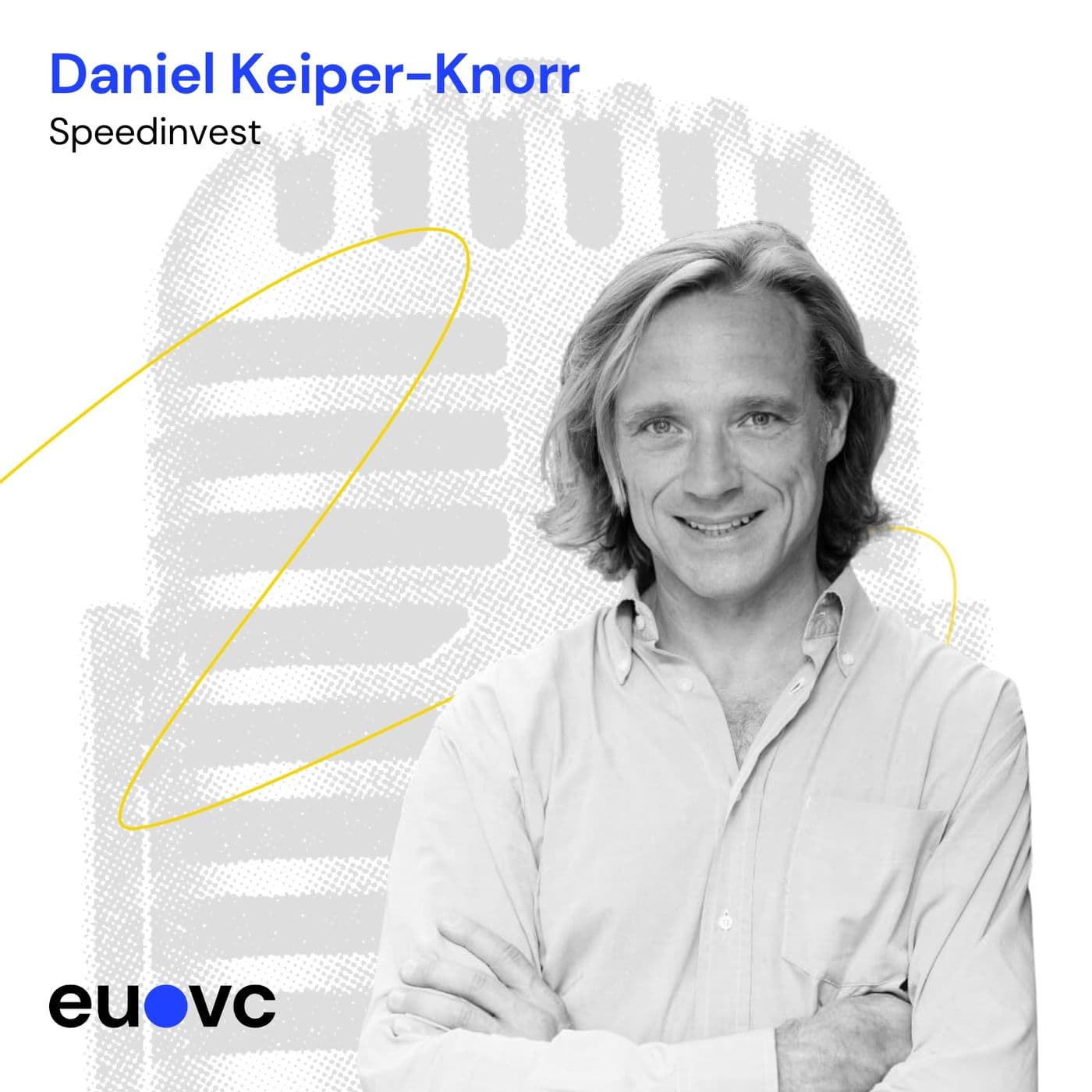
EUVC Podcast Episode Notes: EUVC #201 with Daniel Keiper-Knorr, Speedinvest
Podcast Overview Title: EUVC Co-hosts: Andreas Munk Holm, David Cruz e Silva Guest: Daniel Keiper-Knorr, Founding Partner at Speedinvest Description: Daniel discusses his journey into venture capital, his experiences at Speedinvest, and the growing interest in the MENA (Middle East and North Africa) region.
---
Episode Summary In this episode, Daniel Keiper-Knorr shares insights from his journey in venture capital, particularly focusing on his work at Speedinvest and the evolving landscape of investment opportunities in the MENA region. He reflects on the challenges, successes, and strategic approaches that have shaped his career in venture capital.
---
Key Themes and Discussions
Daniel’s Background
- Early Career:
- Worked as a stockbroker and private banker with ErsteBank and Credit Suisse.
- Co-founded a Fintech startup that sold for €55 million in 2006.
- Transition to Venture Capital:
- Transitioned to venture capital in 2010 after a successful earn-out period following the sale of their startup.
- Faced a steep learning curve while adapting to the new role as investors.
Growth of Speedinvest
- Initial Fundraising:
- Took 18 months to raise €10 million for the first fund.
- Recently raised €500 million, highlighting significant growth over the years.
- Learnings from Crises:
- Emphasized that crises (financial, pandemic, etc.) have significant impacts but also present unique opportunities.
- Noted that venture capital is inherently long-term and timing the market is difficult, especially in early-stage investments.
Insights on the MENA Region
- Strategic Investments:
- Started investing in the MENA region after securing a Bahraini family office as their first limited partner (LP) in 2015.
- As of now, Speedinvest has made nine investments in the MENA region, focusing on sectors like fintech and marketplaces.
- Cultural and Relational Dynamics:
- MENA investment landscape is relational; building trust takes time.
- Compared to Europe, decision-making processes can be quicker once relationships are established.
- Evolution of the Tech Scene:
- Observed rapid evolution and increased innovation in the MENA tech ecosystem.
- The UAE is positioned as a global gateway for tech startups, attracting talent from around the world.
Key Takeaways from Daniel's Experience
- Long-term Relationships:
- Emphasized the importance of nurturing relationships and being present in the region beyond fundraising efforts.
- Adaptability and Timing:
- Recognized that while external factors influence investment success, adaptability and preparation are crucial.
- Role of Luck:
- Acknowledged that while luck plays a role, it often favors those who are prepared and proactive.
Final Thoughts and Advice
- Advice to Emerging VCs:
- Always be fundraising; it’s essential to maintain continuous engagement with potential LPs.
- Personal Reflections:
- Life events, such as becoming a parent, can significantly shift perspectives and priorities.
---
Quickfire Questions
- Advice to younger self: Be surprised by where you will be in 10 years.
- Top tips for emerging VCs: Always be fundraising.
- Counterintuitive lesson: In hindsight, nothing is truly counterintuitive; insights develop over time.
---
Conclusion Daniel Keiper-Knorr’s insights provide valuable lessons on navigating the complexities of venture capital, the importance of relationship-building, and recognizing the potential within emerging markets like MENA. Speedinvest’s journey reflects adaptability and strategic growth in a rapidly changing investment landscape.
Written by AI. May contain mistakes. Listen to the episode to check what was said.
Transcript
Automatic transcript. May contain errors.0:00Hey, everyone, and welcome to the European VC podcast. Today, we have with us Daniel Kuyper-Kunor from Speedinvest. We've got, of course, myself, your beloved LP hype-hypey. And then we've got Omar Hassan with us to talk about the whole MENA region. And of course, this is connected to our journey or our small expedition into the MENA region in connection to North Star. And everyone listening in, if you love our show, don't forget to drop us a review, follow the pod and subscribe at eu.bc.
0:40This is a union of values. United and determined, we can serve as a model for other regions of the world. The nature of a problem requires a European response. Europe is a story of new beginnings. Let's start acting. This show is not investment advice and the hosts of this episode may be invested in the funds and companies featured. So guys, thanks so much for joining me for this interview. Amazing. Thank you so much. I'm glad to be back again. Likewise. Thanks for the invitation. Greetings to everyone out there from Vienna. Daniel, with that out of the way, would you tell us your story, how you got into venture, and then later on, we'll get more into MENA.
1:29Sure. Again, hello, everyone out there. Thanks a lot for the invitation. My journey into venture started over a decade ago, more precisely around 2010, 29, 2010 slash 2011, when the earn-out and lock-up period of the tech company that my back then, again, co-founders and myself were able to sell in 2006. We were on a three-year earn-out period. That one successfully then passed. We sat together, thought what could be next, and starting a fund back then seemed the most logical and natural thing for us to do. Well, I can say, little did we know what we are getting ourselves into there. We thought it would be super natural thing to just change sides of table.
2:17But, well, again, back to square one on the learning curve. And just to put everything in perspective, I know this story before, because we've all spoken to Oliver on the podcast a couple of times. But, Daniel, it took you 18 months to raise 10 million for the first fund. And you just four months back or so announced 500 million. So it's been quite a journey. You're doing something right, Daniel. Well, doing right. I don't know. We do a lot. That is clear. So to me, well, thanks for this. We are super, obviously super excited about that most recent fundraising success. More so given current market environment, which is, you know, a completely new regime now.
3:01But honestly, the success of that fundraise, that wasn't the result of the past 12 months. That was the result of the work of the past 12 years. Without what we did and the team did in the past decade, that success would never have been possible. So now let's get more into your story, Daniel, because I want to hear a pivotal moment from your life and tell us how that has shaped you as an investor. It's probably not have been one single moment that, you know, shaped, I don't know, the career, the life investment as an investor or the mindset as an investor. I think it's a series of events. My closer team, including Oliver Vernon and some other guys and myself, we are in the tech and innovation.
3:43And now we see ecosystem for almost the past 25 years. We started a tech company in the midst of the burst of the Nasdaq bubble back then. We brought it through all ups and downs, nearly went bankrupt, hustled along, got it to a successful trade sale back in 2006, then set out to launch our first fund in 2010 in the midst of the global financial crisis. So the second fund we launched in 2015 at the peak of the Euro debt crisis. So let alone what all happened next, right? A pandemic, a war, things nobody ever would have thought possible in nowadays time. But what we learned, including myself, is probably timing does play a critical role, but you can time this market.
4:30And I can only speak for the precedence seed stage of the investment part of the business. that might be different further downstream and it goes closer to IPO territory. But in the very early stages, this market is untimable. That might also be the reason why we have not seen valuations come off that far as we witnessed in later stages. So a series of events, untimable market, luck does play a role, but then again, not such a large role as many people might think. But what we learned out of all these crises, they vary in their routing causes, in their triggering events. But there are some things, all these crises share in common, most notably two things.
5:19Once they are over and after them, the world looks different, very much different. And I think venture is exactly, this is where the opportunity lies, right? in these big shifts, be it societal, technological, environmental, financial, you name it. You know, if it's a long-term game, this is what we learned that shaped us clearly. And if those large changes happen and if, you know, values change in a society, in an economy, the attached valuations change tenfold. And these are the things that I think that really makes venture so fantastic. It's not to be neglected the importance of having experience.
6:07And we're definitely seeing that in the market now that there are some young bucks like myself that have been a bit more surprised with what it looks like now compared to before than most of the more senior leadership that we have in our community. I could dive for a long, long time into your latest fundraise and how you navigated the troubling times of 2022 and 2023. I will not do that though. I would much rather that we get into the core of dealing with the GCC and thinking about MENA as a region as a whole, because you've got quite some experience there. If I'm not wrong, I think you had capital raised for your second fund, meaning your 2015 vintage as the first one from the MENA region.
6:53And then you've also actually done nine investments in the region, which I think to many will come as a surprise because we're used to thinking of speed investors as purely a European player. So I'd love for you to first tell us your story with the region, how you got there, why you got there. And then afterwards, we'll dive into these specificities about both investing there, but also sourcing capital from the region. Super happy to share. So as so often, things start out of opportunities that just arise from unexpected corners. That was the case also with us. You're right. It was the second fund, Vintage 2015, where we happened to win a Bahraini family office over to write an LP check in our back then fund.
7:39And as so often at Speedinvest, we are taking a slow approach to things. We never try to force stuff and overdo it. VC is a long-term game. You need also on both sides of the business model on investing and capital raising. You need to give things time to grow. And so we did with addressing that market. We won the first LP from the region back in 2015. We raised the fund in 2017 where we got a Qatari LP in. And then we raised the 2019 fund generation, which was our first really large fund, almost 200 million in volume, where we were able to win, I think, four or five more family offices. And it's all mostly family office dominated LPs that we did not shoot for the obvious targets, sovereign wealth funds from the region, because we know we need to build our brand first.
8:37We need to build relationships, establish relationships, foster relationships. Typically, when you talk to LPs, it's not for the current fund, but for the fund next. So in three to five years time. And this we did and it played out. And with the current fundraise or the past from Vintage 2022, we broke into the more sovereign wealth territory, but still winning LPs over from the family office and private sector side of the market. Which to us, it's important to have a balanced LP base. We don't want to have a few large LPs come in. We rather play for a broad-based, balanced LP base for a number of reasons.
9:25And then we came across attractive investment opportunities. And one thing is also true, we are a European fund, 80 to 90 % of our capital we do deploy in Europe, but there'll be 10 to 15 % allowance we may deploy in selected global emerging markets. And the MENA region is very high on our list here. As said before, we have in MENA that includes Turkey, Egypt, Arabic Peninsula, and Pakistan, nine investments so far, predominantly in fintech and marketplaces. So these are our two strong topics. They have been good to us ever since we started from 2011. The biggest successes, biggest outcomes have been from these two sectors.
10:12and there where we have the largest investment teams, what we think the most experienced and the most knowledge in these topics, we're there venturing out into more distant geographies. Daniel, I'm just going to go back a step or two because I actually didn't know that your first LP was from Bahrain, which makes it even more fascinating because I think for a lot of European VCs or American VCs, when they think of the region and LPs, Bahrain would probably be fifth on the list and there's only five countries in the GCC. What's that? How was that experience, I guess? And if you compare that first to first of all, they're dealing with the Bahraini LP and bringing that family up.
10:52Because 2015 was quite early on for a family to invest into venture capital. It was still a very early ecosystem. And then, so that experience. But then secondly, how would you compare the LP experience from a family perspective in the GCC compared to your experience in Europe and that kind of the mindset or the process that you go through. Comparing ecosystems per se is always difficult. Each ecosystem is individual for itself. But I know what you mean. So what the experience was, it's probably a more relational business world than in other parts of the globe. That is true, but super professional.
11:32And Bahrain is actually, historically, was the first country to step out into the global financial markets. Corp originates from Bahrain. Only few people know that one of the first global PE firms taking, you know, buying into the Italian European luxury brand market, the House of Gucci movies, they place to this a bit. So super professional, you know, European American educated, trained business experience from global investment banks, but still a relational business world. So I mean, you still need to be relations. You can't professionally pitch, of course, but you need to come with the right mindset.
12:13It will take time. It should also take time. You know, maybe a bit more than in Europe and the US, you need to have the long-term perspective in building relations. But once you break into that relation, the family offices that we work with, they keep following up with every fund generation and then very swift processes, often far quicker in decision than repeat the DLPs from Europe. So it's definitely worth the effort. And I agree with you about the relationship side of it. I think, you know, I've often said to people, if you want to learn how to do it here, you might as well speak to Daniel because you do get that relationship side really well and you've to bow this.
12:53It's amazing. Yeah, I mean, that's a few things maybe worth, you know, being aware of. Travel the region frequently, also in between funds, not just go there every three years when you have a new fund to raise. The people there, they value if you show up in between. To me personally, the best time to raise is just after successful raise. So don't go on holiday with the announcement of the closing. Take the next three months and book your business trips and go on holiday then. That's the first quarter after successful raise is the best time to go to the market because the LP is not in danger of being pitched.
13:31And then they want to talk. So travel the region frequently, stay there for a week, be available. Also, you know, use Jitex as a hook and be there and try to give a bit back to the ecosystem. Be there for, you know, ask me anything sessions for the young entrepreneurs in the region. That's super valuable and helpful. Yeah, and it makes a lot of sense, right? But I'd love to ask you the question, Daniel, that this is what you often hear, that there is an interest in seeing VCs that try to raise in the region also show that they're active in the region. Have you seen it being fruitful that you're also deploying there?
14:17Because nine investments out of, you know, God knows how many Speed Invest does isn't a lot, of course. but I would guess that it's something that is received with quite open arms. A VC that invests in the region is clearly standing out of the crowd of all the others who don't. However, there are LPs who specifically look to get their money deployed outside of the region. There are other LPs who, and to some it's even a mandate or mandatory that you deploy in the region, specifically when for example SVC they need to see money coming back into being deployed in the region but this is the same concept as the European say tax money investors like KFW and BPI and others have it's a normal natural logical thing however also for those that expect their money to deployed outside of the region, talking to a VC that actually deploys in the region, makes a difference.
15:22You are perceived different than the others. You are perceived more understanding, bringing more understanding for the region, the culture, the people, the society, everything, the economy as well. It sets one apart, definitely. I experience this every time I travel there. from the moment they realize that we also deploy in the region the conversation gets to a completely different level one of the things that i think i mean since 2015 i mean you've been here many times how have you seen the evolution of the tech in the region because a lot of people have a perspective that there isn't innovation in the region to invest in how is that have you seen the evolution because you've done the nine deals you know where have you seen the best evolution or where's the kind of the key areas first observation probably is that it's developing super fast deep frogging um they come to where they're headed uh see um so uh just spoke to men of g42 uh day um abu dhabi sovereign wealth strategic uh sir a big master plan behind and goes everywhere.
16:30To bring the region to the forefront of the technological development and that on global scale and with global importance. That is clearly the case. There is capital available to do so. Maybe one more point. Our investments, don't get us wrong. We are not, you know, predominantly investing there to get access to LPs. We invest there because we believe in the investment opportunity in the region. Striving economies, societies, very promising, specifically fintech investments, for example. That makes very much sense to us. So we would not invest if we wouldn't believe in quality of founders in the eyes of the opportunity.
17:14There's not many that successfully run a scam, especially not for multiple generations. And that's what VC is all about. So I think anyone getting the idea that you can do something like that. I think you're just setting yourself up for the same type of failure as you are if you're thinking that you can jump on a plane for Jitex and then you'll come back with money in your suitcases. Omar, would you maybe pitch in a bit here on what you've heard Daniel say compared to what you've experienced yourself as well, but also what you have seen from other investors? No, I mean, I think Daniel's spot on.
17:51I mean, we started to do these trips in 2015, 16. I think I'll say to you before, Andrews, you know, back then, the technology that was being developed in the region was very regional. You know, you'd have a company, basically, maybe starting a company in Egypt and then scaling to Dubai. And then the Holy Grail is to scale to Saudi. That was kind of the traditional path for Jordan, Dubai, and Saudi. and I think that made it difficult for investors coming from Europe or the US because actually you're used to looking at technology that can go global or scale globally and that's where you're looking to make your return.
18:30But I think where we are now is, particularly in the last two years, the mindset has changed and I think Daniel would have seen this through things like Jitex and Norsa, is that you're seeing much more innovation that's not necessarily looking at the GCC or the Aresby, but maybe looking at the continent and Zahara as sub-Saharan Africa, North Africa, you'll see entrepreneurs build technology that can go potentially global. And I think from a venture perspective, I think the local ecosystem, VCs, is looking at investing beyond the region as well and looking wider and wider continent. I think what has been really interesting is the change in positioning the UAE in particular as a global gateway.
19:19You know, it's not just about coming to North Star to see technology in the UAE or venture capital in the UAE. It's actually bringing in sub-Saharan Africa. It's bringing Asia, you know, bringing India, bringing Pakistan. You know, we're looking as far as Nigeria, Kenya. So I think that's what's been a real evolution of the UAE, evolution of the ecosystem, becoming a global gateway. And I think that's what's kind of made it a lot more attractive for venture capital to come this way. And I think, Daniel, if I'm wrong, I might be wrong, but I'm sure I'm right. One of your portfolio companies has scaled from Holland to Dubai because they're servicing the African market, they're servicing the regional market.
20:02I think it's called Moves. Am I right? Yeah, super happy to share the story of our portfolio company, Moves. originally out of Lagos, Nigeria, a fintech offering a car finance for ride-hailing drivers, purchased the next vehicle. So super successful, originally sourced by one of our team members, Speedinvest again, one of the first funds on the cap table there. That company actually relocated from Lagos to Dubai using Dubai now as their hub for the global expansion. Just imagine the story a fintech company out of Lagos moving to Dubai and from there exporting their product to European capital such as London, Paris and other large cities like Milan and others because nobody over here in Europe can do what they do as good as they do it.
20:57They are just outpacing the market on every vector. And Dubai exists the hub for the global expansion. They moved there, I think, a year or two years back. Dubai, ideally positioned, you know, the tax regime they offer, the fact that they're in between time zones, you know, three hours ahead of Europe, four hours lagging to Eastern Asia. That allows them having several business hours of time overlap. But that alone is worth a ton. It allows companies to operate various regions in the world from one single office. Everything around availability of talent, attractiveness to talent to move there.
21:42I know many people from Europe moving to Abu Dhabi or Dubai, respectively, to set up shop and reset up their whole lives. packing family like omar you did packing family and moving to dubai i was chasing the sunshine more than anything to be honest from london that is also an additional aspect one warm climate super efficient you know government processes far advanced in in many respects over what we are used to here in europe i mean i can remember back dubai was one of the first airports i ever went through those electronic passport gates and how swiftly everything worked. That is just amazing.
22:25Totally off subject now. Now you don't need to take your passport out of your pocket when you go to the airport. But I still need to bring one, right? You still need to bring one just for the guy at the boarding gate. That's it. Not for anybody else. Yeah. And then again, the other day, that trip to Sofia I took last week, it wasn't until the airport that I realized that I needed the passport. By luck, I got it in my pocket. I would have bounced on the gates, right? And that's just an hour and a half flight from Vienna. Then down there, you don't even have to pull the passport from your pocket to be allowed to enter the country.
23:08Now, Daniel, I'd love to ask you to give a shout out to co-investor Angel LP that you just think is far more awesome than anyone would expect. Well, given our whole history, where we come from, starting from friends and family SPV back in the early 2010s in Vienna, there probably was one personality person, business angel, who believed in us from, I can't even say day one, it was more like day 0.9. And that is kind of Hansi Hansmann, the gentleman is called, a great person. I might assume you have heard of him. He was awarded European Business Angel of the Year, so not so much of a secret. But without him, the Viennese and the wider Austrian ecosystem would be nowhere near where it is now.
24:05We could only build Speedinvest to a large degree to his foundational work. Tremendous investor, a good person. other than my terrific co-founders, of course. But outside Speed Invest, it would probably be him. I think we need to get Hansi to Northstar in October. Probably. Yeah, that's done. It's booked. This, ladies and gentlemen, is where you see direct sales going to a very senior businessman that reflects success, probably. Wise friend always said, always be raising. ABF, exactly. It would always be fundraising.
24:47Daniel, I'd love to ask you to just give us your three biggest learnings. And we've been chatting away here, so we won't be able to dive too deep. But I just love our audience to be able to get them from you. Biggest learnings in life, where, you know, life is so much more than business, right? We have a five-year-old at home now, and that literally changed everything. it totally recalibrated all perspectives on life you had before that life was very much centered around business that's no longer the case and i think that's also a good thing it allows you and forces you and enables you to to put the right focus on things but when it comes to business i think is specifically the last three quarters told many people in our industry to us It's been the more, you know, in the grayback corner of the market.
25:37All markets go in cycles. They all do. So does ours. And the reset in valuations and everything is only a natural thing that the last cycle was stretched artificially through the COVID episode. And literally the interest rate cycle in the US was over in the summer of 2019. They had already interest rates up to two and a half to three quarters, I think. then was smacked down again to zero for COVID recovering programs. So another artificial tool is the harder the hit had to be now. All markets go in cycles. That's what I think we all learn. Then also one thing probably that you always meet twice in your life.
26:20So just be nice, right? It's just no point in not being nice. You don't know where that one person that you have just not been nice to might emerge from a totally unexpected corner two years away from now. And they better have you in good memories. And I think to our audience, Daniel, with Omar just before this recording, and I said, what is there for me to know? What should I know, Omar? Then Omar said, well, Daniel is the nicest person you'll ever meet. But I said one of the nicest because they want to leave Andreas out of it. Yes, you were kind enough. you're kind enough to leave a bit of leeway from our own imagination of my grandchild.
27:03I think without embarrassing him, I think especially in our space, in venture and in the startup world, you come across people who genuinely would email you or message you afterwards and say something to you along the line, what can I do to help? And I think that's Daniel. And I think it's a testament to him as a person, but it's a testament to speed investment. And from what I've seen over the last four or five years and the way you guys do things, Not often you meet people that live by those venues. Daniel, awesome. Well, gentlemen, thank you so much. Obviously, great to hear, but that goes directly to all of our team in the offices who live and breathe that spirit day in, day out.
27:41And, you know, we have 80 people on the ground in six offices and we bump into people more than probably many other firms. And the more touch points that the outer world you have, the more important it is, I think, to just be nice, right? And then a third thought, I touched upon this earlier on, there is a certain element of luck to business, but then again, much less than many people would think. Luck can only play out if you're prepared to be lucky, right? Have a clear vision or a clear thesis or a clear idea where you want to go. And then if an opportunity arises, you can take a quick decisions that to an outsider may appear as pure luck.
28:25Of course, you can get unlucky. And that's the other effect of luck that you can have. But if you need luck to happen to make your business prosper, then I think you might give it a rethink. Obviously, you have to be open to serendipity, to opportunistic developments, like that one relationship I had to that one guy who happened to run the Bahraini family office. That opened a whole new world for us. But obviously, once you have it, you need to work on it. That's maybe the three learnings that will prevail over time. Others come and go there, you know, realize stuff and then you forget it again.
29:10But these three things, I think they will stand true also in the next couple of cycles to come. And also, kind of, I've always struggled with aging, right? But since about February, March 2020, I'm happy the age I am. It must be tough being 25 years old, Daniel. Yeah. Thank you so much. That would imply that I started my career in child labor. I did not. I knew there was something dirty to the speed invest story. You know, we all have our shadows in the past. I used to work in investment banking before, but that's ages ago. I used to squad building. So let's head very quickly into the quickfire round.
29:59And now, the quickfire round.
Read the full transcript
30:10You know the format, all of you, I think. But just to recap, it's the round where we will ask you quick answer questions. Are you ready for it, Daniel? Hope so. Yeah, the stress is on now. What advice would you give to your own 10-year younger self? You'd be surprised where you'd be in 10 years. Second question. What are your top tips for emerging VCs across Europe who are fundraising? ABF. Always be fundraising. It's not something that you can do in cycles. These times are over to my firm belief. Absolutely. What's the most counterintuitive thing you've learned since you started in venture? Well, in hindsight, nothing is counterintuitive, right?
30:55So I literally don't have an answer here. But don't expect things to be counterintuitive if you look at them somewhere later. In hindsight, they are not counterintuitive. It's part of human nature that you erase those moments where you had a false view on reality.
31:18thanks a million guys so much for joining us for this episode where we hopefully unbeknownst to our audience had a bunch of tech hiccups so thank you gentlemen for for bearing with us thank you so much was great talking see you guys soon This was their final hour. Tear down this wall. It's more than just an alliance. This is a union of values. United and determined, we can serve as a model for other regions of the world. The nature of a problem requires a European response. Europe is a story of new beginnings. New beginnings. Let's start acting. Acting
From the publisher
Daniel started his professional career as a stockbroker and private banker with ErsteBank in Vienna and Credit Suisse in Zurich. In 2000, he teamed up with Oliver Holle and Werner Zahnt in their Fintech startup, offering mobile payments to the media, entertainment and information industries. In 2006, they sold their startup NASDAQ listed VeriSign in a €55 million exit.
This episode is co-hosted by our good friend Omar Hassan from Mena Tech Fund.


