
In short
EUVC Podcast Episode #203 Notes
Episode Overview
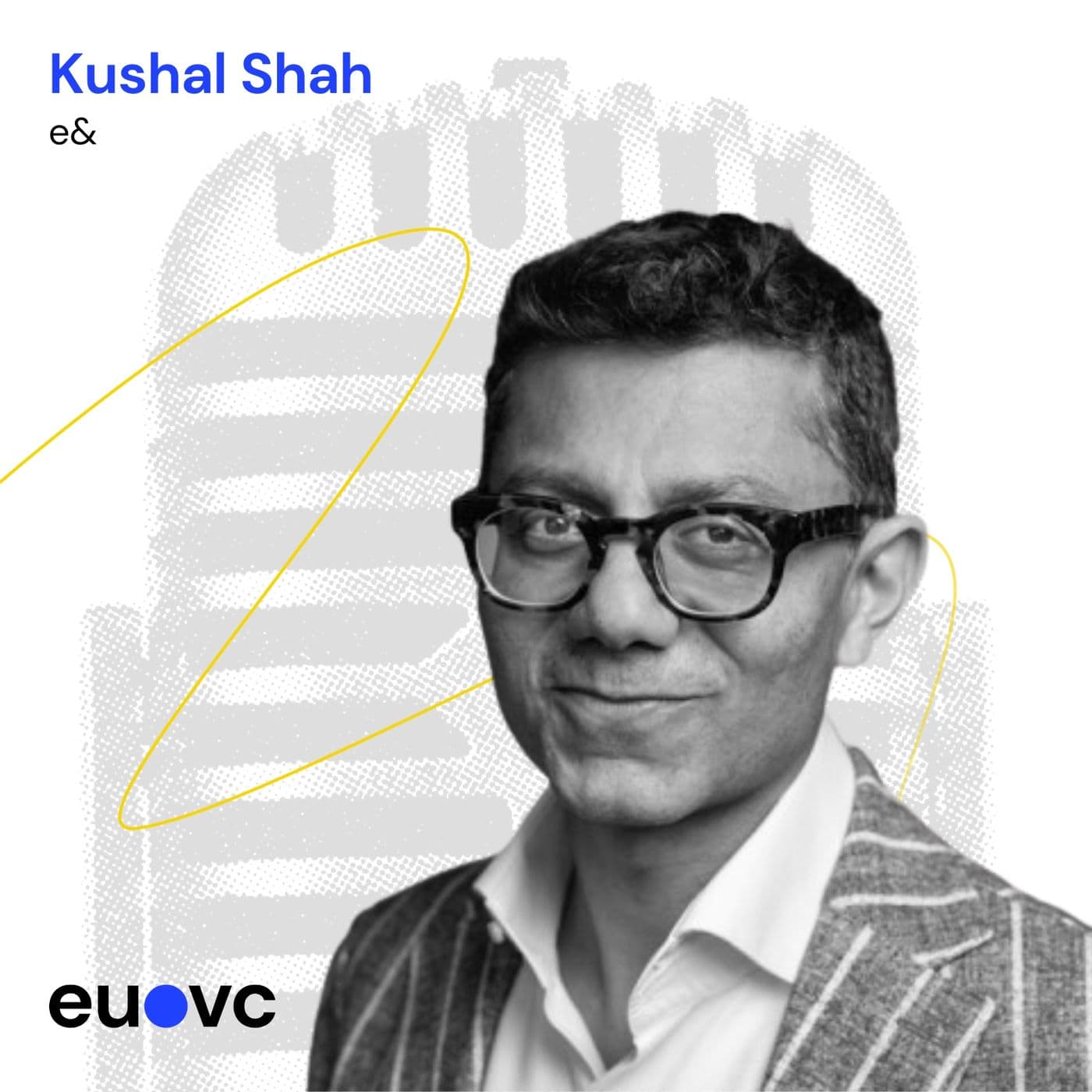
- Title: Kushal Shah, e&
- Description: This episode features Kushal Shah, Managing Director of e&, alongside co-hosts Andreas Munk Holm and Omar Hassan from MENA Tech Fund. The discussion covers Kushal's experience in venture capital, his journey in the entrepreneurial landscape, and insights into the MENA investment ecosystem.
Key Participants
- Kushal Shah: Managing Director at e&, former Senior Partner at Roland Berger, and Managing Partner for the Middle East.
- Andreas Munk Holm: Co-host of EUVC.
- Omar Hassan: Co-host and representative from MENA Tech Fund.
Episode Highlights
Introduction
- Andreas welcomes listeners and introduces Kushal and Omar.
- Emphasis on the vibrant nature of Dubai's tech scene with upcoming events like North Star.
North Star Conference
- Date: October 15-18, 2023
- Location: Dubai Harbor (new venue)
- Expectations:
- Over 1,000 exhibitors, 500 global funds, and 2,000 startups.
- A festival-like atmosphere with a diverse international presence.
Kushal's Entrepreneurial Journey
- Grew up in an entrepreneurial family, leading to early ventures, such as a Subway franchise.
- Transitioned to Dubai for telecom projects, leveraging experience from launching telecom operators.
- Founded Dubai Angels, which became a significant player in the region’s angel investment ecosystem.
Dubai Angels
- Origin: Formed from a group of individual angels who recognized the need for collaboration.
- Impact: Invested in 40 companies; notable success with a voice AI company acquired by Cisco.
Insights on Investing in MENA and Africa
- Market Dynamics:
- The MENA region is characterized by high GDP per capita and high spending in sectors like healthcare and luxury goods.
- Importance of understanding individual markets within the broader MENA framework (GCC, North Africa, Levant).
- Investment Strategy:
- Emphasizes building relationships and understanding local ecosystems.
- Importance of having local co-investors for insights and guidance.
- Challenges:
- Navigating governance and political landscapes that may be fraught with uncertainties.
- Currency fluctuations and their impact on investments.
Pivotal Learnings
- Karma in Relationships: The importance of nurturing long-term relationships and how they can yield unexpected benefits in the future.
- Reference Checks: Essential for mitigating risks in investments, particularly in emotionally driven decisions.
Quickfire Round
- Advice to Younger Self: Prioritize sleep for better long-term health and decision-making.
- Tips for Emerging VCs: Craft compelling narratives that engage potential investors rather than just presenting numbers.
- Counterintuitive Lesson: Collaborating with competitors can be beneficial, particularly against larger incumbent players in the industry.
Conclusion
- The discussion wraps up with an emphasis on the evolving nature of the MENA investment landscape, urging European investors to engage actively and build meaningful relationships in the region.
---
Key Takeaways
- The MENA region presents unique opportunities and challenges for venture capitalists.
- Building strong local relationships and understanding regional dynamics is critical for successful investments.
- Collaborative approaches can yield significant advantages in a competitive landscape.
Additional Resources
- For more insights into European VC, visit [EUVC](https://eu.vc).
- Follow the hosts and guests on social media for updates and discussions related to the episode.
Written by AI. May contain mistakes. Listen to the episode to check what was said.
Transcript
Automatic transcript. May contain errors.0:00Hi, everybody, and welcome to the European VC podcast. In the hot seat with me today, we have Kushal Shah from eant.com. I'm Andreas, and taking David's usual seat as my co-host, we've got Omar Hassan from Mina Tech Fund. Everyone, if you're listening in and love our show, do drop us a review, follow the pod, and remember to subscribe at eu.vc.
0:33The union of values. United and determined, we can serve as a model for other regions of the world. The nature of a problem requires a European response. Europe is a story of new beginnings. Let's start acting. This show is not investment advice and the hosts of this episode may be invested in the funds and companies featured. Welcome everyone. excited thank you there's a lot of pressure stepping into david's seat but um hopefully i'll do some justice finally i have a bald brother with me which makes me all the more happy this is actually out of choice by the way i keep telling people this is out of choice i could grow it that's what you say i said that in my 20s as well so okay guys we've got north star coming up in october and we're going for the first year David and I, and we cannot wait to hear what we've got ahead of us.
1:36So Omar, Kushal, you guys have been there for quite a few years. So I'd love to just ask you, what do we have to look forward to? So first of all, it's going to be in a different location than last time. So this will make it interesting. I think it's going to be a more hipster area than the more traditional trade center type of area. So I think that's already a start and expect chaos as part of it, organized chaos. So I like that. Second, you'll get to get a feel for Dubai at its peak. October, November is always a good buzzing moment for Dubai. Lots of things are happening. So when you come, there'll be activities all over the show.
2:21I've been North Star for five years now, I think since the first one. So Northside was born about five years ago alongside Jitex. For anybody that comes, there's that initial shock in terms of the size of it, in terms of that this is in the UAE. I think a lot of people don't understand. I mean, to put it into context, I mean, it's a lot larger, but imagine walking to Mobile World Congress at CES for the first time. What can you expect? I'll give you some numbers. over a thousand exhibitors over 500 global funds over 2 000 startups from over 70 countries and a lot of people and a lot of fun and Kush is right it's moved to Dubai harbor it's more of a festival feel this year um so there'll be plenty of sunshine away from the indoors of Dubai World Trade Center best thing about it I think it's the experience it firsthand that you're not just in Dubai it's a global summit and so you'll see a bit of Africa a bit of Asia a lot of Europe America and so if anybody come in for the first time probably just get your walking trainers on and not shoes and it'll be a lot of fun I think the energy levels will be will be very interesting you'll get a very good vibe if anyone so to anyone listening in if this sounds like something that you should be joining in for then for sure hit me up because we're going and uh and we're doing some stuff with omar so i'm pretty sure we can get your sweet gig going there so for sure any uvc uh lover and friend we would love to help get the best experience uh in dubai dubai in these uh days am i right in saying it's mid-october i'm shit with dates omar so help me here october the 15th is day one, which is a Sunday, until October the 18th, with Sunday being the opening day and the GPLP Summit that Sunday evening at the Bulgari Hotel, and then a whole week long of an event.
4:19But Kujal, now let's dive into the hardiness of this show and get your story and how you got into Venture. Thank you. Well, Ventures has always been, I was brought up in an entrepreneurial family, So it's kind of in the DNA. So once I got into my first job in a corporate kind of setting, I was always looking to stick my neck out and see what can I adventure into. So out of that job, there was a Muslim friend and a Jewish friend that got together and said, hey, let's set up a little bagel shop. And I thought, come on, guys, this is going to be fun. So a Hindu me said, let's go. I'll go in with you.
5:02But we decided, forget the bagel shop. Subway, as a franchise, was coming on. So we took on a Subway franchise. And over a period of seven years, one of them left his job. Over a period of seven years, we built 24 Subway restaurants in London. So that was the first college venture. There was no tech in it. Where was the first one, Kush? Where in London was it? Gooch Street. Gooch Street. Wow, okay. Next to the schools, there was a lot of university traffic. I learned about footfall and locations and also the long versus broad versus designing it. So data was a key part of our discussions of where to invest and how to invest and how to close it down as well fast.
5:51Yeah, that must have been important. That was the beginning. And then what got you to Dubai then? So at some point, one of my colleagues won a project to create a telecom operator in Dubai. And that time there was only a monopoly player. So I basically moved over to support the launch of a telecom operator. So that's why I came here. And in my old job, we used to launch telecom operators all over the world in emerging markets. So in some ways, that was a venture as well. because it's not our money, but in six to nine months, you have to go live. And the pressure is on. It's a count when you literally have a clock on the wall that says 48 days to go, 47 days to go.
6:37Everything's being prepared. There's a whole queue going on. So it was a sprint in many ways. So that got us into Dubai. And then Dubai is one of those places you come for one year and you stay and you stay and you stay. So I've seen three cycles, three business cycles in Dubai, I had extreme ups and downs, extreme emotions in people, new people moving in and out. My kids have had new friends about three times. But what's different now in the last four or five years is it's a lot more consistent. It's immigration and there's very little emigration in the last four or five years. Anyway, that got me to Dubai.
7:16And then in 2010, 2011, after five years of looking and looking for investments, I invested in what we would call e-commerce, but those days was TV commerce. It was a shopping channel, TV shopping channel. So that's when I got into investing in the tech scene in Dubai. I spent five years investing as a solo angel. But then over the last two years of those, up to 2015, I discovered the people on the cap table, the angels on the cap table were the same angels. So we looked at each other and said, why are we doing this individually and spending so much time and effort? Why don't we group together?
7:56So we had a dinner together, 10 of us, and said, let's just call ourselves Dubai Angels and work together and invest together. So we said, okay, we'll bring a company each to pitch to us. in a month's time. By the time we got to that pitch, we didn't only just bring a company each, each one brought about five friends each, so it ended up being 50-60 people gathering, and then it grew to about 200 people. So effectively, that was an organic launch of Dubai Angels. We've invested in about 40 companies along the journey. Am I right in thinking Kush Day was the first angel group in the region when it was launched officially.
8:35Yeah, as a consortium. So there was a few others. There was Tamar had launched, you know, Tamar and Sonia had launched VentureSook. So those were more deal by deal. Ours was kind of lump sum. What do you think, or like, because, you know, you now spend time investing across the globe as well. How was those early days different from what you then did later as a global investor? Oh, yeah. Early days, you get very emotional. You get very involved. You get attached to the individual investments. And often, you don't see the trees or how do you say, the forest through the trees. So I did get involved in individual companies at a deep level and get super excited by them.
9:22But then later on, I realized, well, you know, the market size for these things is this small. The world is this big. So we did shoot a lot of big bullets at small elephants, let's put it that way. Important learning and definitely something that I think that we're seeing in all angel ecosystems, everyone going through that journey. Kush, when you launched Dubai Angels, I remember in the early days, I came to a couple of your monthly pitch things at In5 and TECOM. And it was like, you know, moving to now, there's a lot of angel investments. But back then, it was kind of unique, innovative in the region.
10:03How easy was it to get more angels into the group or get people to even interested in tech back then and the evolution of it now? Is it still going? Yeah, we had to close the door because people were bringing their friends. some of them were not even you know they didn't even have the cash they're like don't do it we had to tell people stop angel investing some were bringing their children and the children were putting their pocket money it was it was nuts so we the demand was greater than we would we would recommend and everybody got it was those days where everything was booming and it's like the taxi driver wanting to invest so everybody wanted to be an angel to be honest and just before we just leave Dubai Angels, I guess, Aaron, successes or biggest kind of?
10:51Yeah, yeah. Because you had a couple of notable successes. We had the very first investment we made was we actually didn't have a structure. So actually, I put all the money until we created a legal structure and invested. So that company went and got, effectively, it was a voice AI company. In those days, you didn't call it AI. Got taken over by Cisco. and it was a Dubai-based company that moved to the valley and then got taken over. We didn't make crazy money. We made two and a half X, but it was our first investment and it was a nice exit. We put very little money in it. In the end, it wasn't about money, but it was more about the story.
11:33And then there's a very large one. We invested in those days. I'm talking 2016. Typical valuations were$1 million,$1.2 million. So when you put 200K, you're owning a significant stake in the company. So one of those companies, which is in Egypt, just raised$37 million at$120 million. And we're still on 10 % of a company that's now worth$155 million. And then, Ian, how did you come to join there? Sure. So the angels that used to be part of Dubai Angels ended up effectively becoming CXOs of many of the large companies in the region. So we focused on CEO type. So I had about eight telco CEOs as angels.
12:23And within EAND, four of the angels were EAND executives. So basically, I got pulled into saying, look, stop doing this small stuff. Let's go big. let's do this in a focus with a big engine behind us. So effectively, that's what happened. Yeah, one of the engines pulled us out. Share with us a bit more. Of course, it's just been in the intro when this goes out, but do tell us a bit more about what you're doing at EYAD. We used to be called Etty Salad, which is the largest telecom operator in the region. We're in 16 different markets with about 160 million customers. and we're divided into kind of four divisions.
13:03There's the telecom division, there's the enterprise, cloud solutions, et cetera. Division, there is something we call EN Life, which is fintech and entertainment, and then EN Capital. So within EN Capital, we have the VC fund, which is roughly$300 million. And we invest in late series A, early series B, so it's$10 to$20 million investments. We intend to make all of those investments by 2025, So we've done eight so far. So call it another 12 to go. But it's global as long as it's either it's disrupting us as a telecom spectrum or we can add value to it. So that's the CVC, the synergy part of the VC part.
13:47And we're going to dive much more into your perspectives as a global investor. But before we go there, I just want to ask you to share with us a pivotal moment in your life and describe how it has shaped you as an investor. I love this segment of our podcast. This is when it can get emotional or serious or let's see where we're going to go with this one. Okay, so, you know, probably most people invest because of FOMO, right? So when I was still in London, before I even started the subway investments, one of my colleagues, his wife joined a startup, and all he could talk about when we were working, all he could talk about was her company.
14:29And I was like, man, I was getting FOMO on this company. I said, you've got to get me in, you've got to get me in. So I got into a business which made lunchboxes. Now, it made lunchboxes in prison, using prison labor. And I was like, wow, you're giving somebody some work to do. And it's pretty interesting. And so I put$10 ,000 into this business. Now, the pivotal moment was the guy who, the founder, ran away. So he ran away from prison. He lost the founder. So that was it. That was the end of the project. So the pivotal moment was like, you have to go through everything. You have to understand every aspect of it.
15:10Who the people are, how big is the size? You know, what are you investing into? What's the legal structure? Then just get excited and just throw some money at it. Has he ever been found? I tried to look for him for about six to nine months, but then I said, okay, you know, there are other people more able to look for him than I. I gave up. I think that's the first for the podcast. I think we're 200 episodes in, and I think it's the first for the podcast. So that's good. Invested in a business supporting prisoners by the founders run away. I like that. Let me take us into our deep dive section.
15:51And this is going to be quite close to Northstar as well, because Northstar, of course, is much more than just seeing Dubai, as you guys just said. It's about the entry into the Middle East and all of Africa, really. So, Kajal, I'd love for us in this interview to really dive into how you think that we as European investors should be thinking about MENA and Africa. And I don't think that there's many that will have as strong views and perspectives as you, because investing out of the end, if our audience doesn't know, that is, as you just heard from the ticket sizes as well, it's quite a beast to be maneuvering.
16:28and to be backed by. So great. If we take the entire pyramid within MENA, we have a very top-heavy, let's call it the whales. So if we think about the products that the high GDP per capita buy, it's extreme. And if you take something like healthcare, the average spend either that the insurance company or the individual puts on healthcare is so significant that if you have an investment that is focused on that high-end space, the margins are huge, the average revenue is huge. Take as an example, the average luxury shopping basket is about US$700. I think that's about four times the size of an average shopping basket in Europe.
17:18So when you're at US$700 and the margins are at 50%, 60%, you can make money. So that's within the GCC. And that's primarily five, six markets that drive this. And of course, it's a small customer base, but it's a very high spending customer base. And you'll get a feel for that if you come out to some of the nice restaurants here in North Star. You'll get a feel for the average bill. Can we just, I'm just going to jump in here because I think some of the listeners, I think I'm not a geography teacher, but we'll give a bit of basic geography. When we refer to GCC, I think this is really important.
17:58So when people think of the MENA region, Middle East and North Africa, I'd probably break into two or three. I mean, the straightforward one is GCC is the Gulf states, so Saudi Arabia, UAE, Qatar, Bahrain, and Oman. And then you've got the North Africa parts, you've got Egypt, Jordan, et cetera, and then you've got the Levant, Lebanon. and they're all very drastic but I think overall 455 million people predominantly Arabic is the main language different dialects but that's the way to think about it you've got the GCC which everybody knows and I think within the GCC everybody knows predominantly UAE and Saudi Arabia but then you've got Egypt, Jordan, Lebanon you've got Iraq etc within that context and even so the markets like kuwait or or qatar the average spend per capita is so significant you know it's even two or three times higher than saudi arabia and uae so so it's you know you do have some very special markets you have smaller smaller but special markets like iraq where you have very little competition so if you do build out something strong there the spending power is very high and the ability to kind of corner the market is also very high.
19:21So that's, you know, from a GCC perspective, you do have also, by the way, adjacent to those markets you described, you have the entire French speaking Africa, you know, you go from Morocco westwards and you also have touching India, Pakistan, where, you know, India sees Dubai, for example, as just another Indian city. For them, it's a few hours flight. You can speak any language in India and and get along here. So for them, it's just another city of India. So there are some very large markets next door as well. A fellow podcaster would go and put 150 million or lead 150 million euro round in Pakistan.
20:05That did not turn out too well. I'm curious to ask you, So this is probably analogous of many, and obviously because of our fellow podcasters, high level of attention that's put on him. Everyone heard about that and saw that, and it was in the news. But I'm sure that there's a bunch of European investors that have had similar experiences, just a little less high profile. Could you share us a bit about, you know, if you think as a European investor that you want to do business in GCC and in MENA in general, what are the pitfalls? How should you think about things? Should you always have a local co-investor with you?
20:52How do you think about it? I once went whitewater rafting in the Nile. And I went with expert rafters from a different river. that we went to Uganda and we got into the Nile and we got some massive rapids, but we didn't know the river. So we took the wrong side of the river and it crushed us. I broke a leg, et cetera. So to answer your question, you never go into the wild without a guide. You need a guide in the wild. And some of these markets are pretty wild because they're fairly new. So sometimes governance is not what you would expect 10 years from now. Governance is still building up. The ethics are building up.
21:36That's part of it. Politics has its own thing in some of these markets. And obviously currency, whether you're talking about Turkey, Pakistan, Egypt, you've got some massive currency devaluations which you have to factor into your equations. All of this is important. And there's never a certainty. If you build a relationship with one person, make sure that's not a political person. Try to keep it economic. So, you know, there's no certainty here. But, you know, it's interesting because I think incidents like that, I think it's a bit like VCs who jump on the plane and, you know, hop into Saudi, hop into UAE, expecting to raise money within 24 hours or off one trip.
22:23and I think a lot of people don't realize you know whether you're investing in this market whether it be in this region or Pakistan Bill Akush says you know you've got to be doing it with somebody on the ground in the know but it's also the other side of it it's building those relationships whether you're raising the capital or investing in this you've got to really get a deep understanding of the ecosystem and and spend some time there it's not you know writing a check or trying to raise a check within within a week it's you know it's going to go bad it's going to go bad and that has an impact on these ecosystems whether it be pakistan or egypt or wherever it may be that you do these things and so um yeah it's it's um it's similar and and the good news now both at the vc level at the lp level and at the startup level you do have some very good strong names so you have relevant partnerships relevant people to engage with across the board now and But spend time.
23:21Don't rush into it. Would you say, Omar, this might be more in your direction? Because it's a longstanding thing that people would... It's funny, right? Because on the one hand, everyone would say that, well, if you want to do business in the GCC, then expect it to be very relationship driven. And on the other hand, you have the same person would probably also be the person that would say, or pay 3 ,000 euros to jump on a plane and take a tour and expect to come back with money. But would you say that an LP race in MENA is more relationship-driven and longer term than racing from European investors?
24:02No, I mean, it is. And I think if you think, I mean, Kuch would probably agree with this. If you go back 10 years to when Kuch started to buy Angels or whatever and all the other things, if you said to somebody in this region, I want 250 ,000 to buy a car or a property it's it's there but I want to invest in a textile top or in a fund it's like no you know you can't see it can't feel it can't touch it was that kind of mentality fast forward now the capital is there but it's still very you're right relationship building it's you know it's you've got to remember that for every individual coming out here pitching a fund there's another 300 coming out pitching probably the same thing to be honest but it's you know trying to kind of align that value add align that strategic relationship that partnership you know between the LP and and the fund you know there's not a there isn't a the abundance of LP is not the same as Europe the maturity is not the same as Europe to a certain degree so you know it's going to take time it's going to take a lot of relationship building and it's going to be you know what can i bring to the table and as well as what can i offer what can we have in exchange so it's still that mentality um and you know it yeah it takes time but it's it's definitely there and it's a lot and it's also getting a lot more mature now but i think the one thing i would say to any european vc coming here there's hundreds that have come here before you and it's hundreds that will come here after you you know it's the ones it really that you're right it's the ones that build a relationship it's the ones that keep coming back and eventually it's the ones that put feet on the ground and be part of the ecosystem that succeed there's a terminology they use which is don't be a suitcase salesman so come and filter yourself so you know they as soon as they see this little briefcase they feel you're just coming and going.
26:00They want to feel some kind of anchoring going. That's a good perspective. And to anyone listening and thinking, this is interesting, I'd love to hear more, expect that we will cover this quite extensively on EU.VC going forward in our newsletters as part of our trip to Northstar. Because I personally think that this is what you're hearing about from everywhere. The GCC is where there's still money flowing and there's still risk appetite and venture is seen as very much the route to stardom or for the countries, new technologies and so on. So for that reason, we will be diving much deeper on this.
26:40So I want to take us to the biggest learnings from the last 10 years of your life. Yeah, so I would say karma, number one, and we'll dive into it. Always take references, number two, and take the risk, plunge. Those are my three learnings. I want to almost take the take references because I'm sure that's going to get us into the story of our prisoner again. But let me hear a bit more. Why do you think that this reference check is so important and also linked especially to your learnings from the region? As part of, at least at the angel side, less on the most structured corporate VC side. But on the angel side, because we're emotionally driven on making decisions and it's your own money, often your emotions say, I really want to bet on this person or this technology or this product.
27:29And you kind of ignore bad signals once you're attached to it. So the reference checks is a clarity, gives you clarity. And also often the reference checks are from people you trust, typically. And if they say, give you a negative feedback, take it on board. I've had many incidences where I ignored it. And then, you know, five years later, it turned out. So there's too many opportunities to ignore negative references. Yeah, absolutely. I also think that the part that you spoke about earlier about always having a guide is exactly if you do references as an external person and you're taking references on someone who is actually a person in the ecosystem that there's respect about, but there's also bad things to be said.
28:17If you come as a pure outsider, don't expect to be told what's the bad things, right? Because you're just the outsider. So definitely having that guide is why I personally do LP tickets, right? Because I have no idea and no way to get a good reference check on someone in, say, Romania, if I don't have someone who I can trust there. So I think that those two connect very well. Then you're saying karma. I'd love to just dive into that one a little bit, because it's something that I think is probably understated in VC sometimes. We say that it's relationship-driven, but I think that diving into karma is probably relevant.
28:57In my corporate life, again, I'm just going to use my own illustration. In my corporate life, again, when I used to be in London, I worked with two clients, one I hated and one I loved. And the one I loved, I did a lot for afterwards. He lost his job. I gave him a lot of support. 14 years later, he turned out to be running a telecom operator in Oman, and he gave me huge opportunities just because he remembered that little bit from 14 years ago. The one I hated turned out to run a telecom operator in Ethiopia and hates me. So he would refuse to, you know, this goes back a while ago, but he would refuse to touch me.
29:40Why did I hate him? I turn back and I say, it was just simple. Like, okay, he didn't like my work. That was all. He just gave feedback. That's ill. But, you know, I took it personally and all that karma stuff. So negative and positive energies come back at some point and try to be nice. Try to always be nice. Absolutely. Absolutely. It's a small world. Yeah, it is a very, very small world. Now let's get to the quickfire round. And I'm going to run us through this so Kushal can make his meeting in three minutes. So everyone do buckle up. And now, the quickfire.
30:27First question, what advice would you give your own 10-year younger self? Sleep a lot more. You keep your hair, you keep your rest. Sleep is important. And sometimes I forget the extra amount of energy you throw by doing things that are not necessary. I just slept 36 hours almost. So I can absolutely agree with that. That's a record. Yeah. Second question. What are your top tips for emerging VCs who are fundraising? And let's focus that on the region. Everybody likes a good story and good narrative. So tell them the full narrative from how you found a particular investment, how you scouted it.
31:06how you invested the deal structure, how you supported the founders when things went wrong or good, how you harvested that opportunity, how you exited it, the entire flow. And bring them into the emotions, bring them through that. Don't just go and tell them, here's my nav, here's my TPI, here's why I'm great. They like the story. They want to drink tea with you and have a, you know, read the tea leaves. They don't just want to have a sales engagement. So the story brings that engagement much more. And finally, what's the most counterintuitive thing you've learned since you started in venture?
31:43Collaborate with your competitors, even with their employees. Again, back to the small world, back to the karma. But more important, our real enemy is the incumbents out there that are not letting the technology guys drive a piercing through them, especially in things like fintech, et cetera. Can I just add just quickly to Kusha? I was going to say the first one is don't give a shit. And really just don't give a shit about it. Just get on with it. The second one for emerging VC is nobody cares about your MBA weighted business. I think that's nobody cares. I think I'll leave it at those two. I just really want to get those two in.
Read the full transcript
32:24So I actually think that we should do a full to anyone hearing you talking earlier today, Omar, about how to think about racing from the region and so on. And I think that we need to do a deep dive entirely on that because I think that that's where many people's mind is these days. Both of you, thanks so much for joining us. You've been amazing. Thank you so much. Thank you so much for having us.
32:51Tear down this wall. It's more than just an ally. This is a union of values.
33:06The nature of a problem requires a European response. Europe is a story of new beginnings. New beginnings. Let's start acting.
From the publisher
This episode is co-hosted by our good friend Omar Hassan from MENA Tech Fund.


