
In short
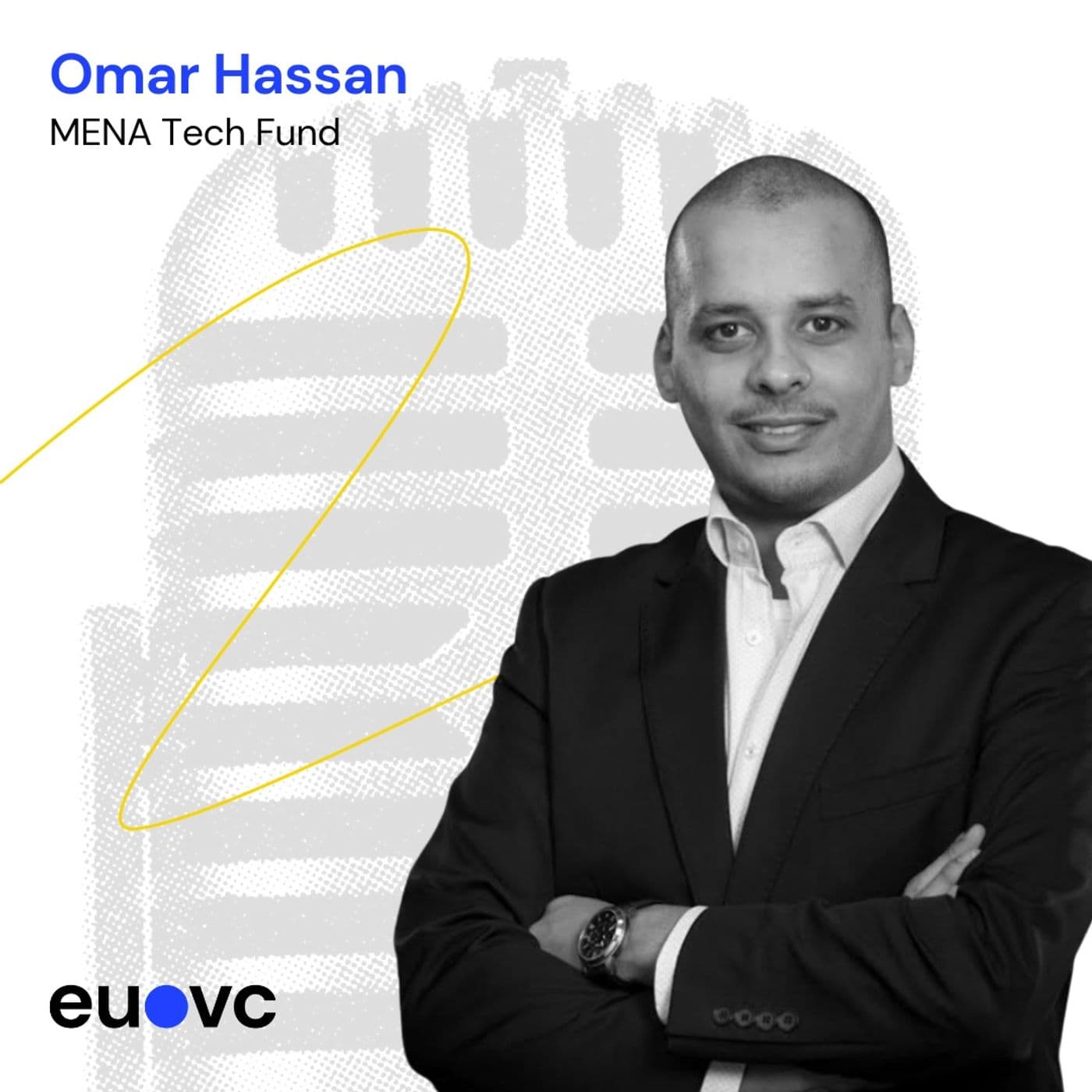
EUVC Episode #205: Omar Hassan, MTF, on Raising Capital in MENA
Podcast Overview Title: EUVC Description: EUVC is the go-to podcast for insights into European venture capital, co-hosted by Andreas Munk Holm and David Cruz e Silva. The episode features prominent figures from the European VC industry, discussing various aspects of the sector.
Episode Summary Guest: Omar Hassan, General Partner at MENA Tech Fund (MTF) Focus: Raising capital in the Middle East and North Africa (MENA) region, particularly in the context of the upcoming Expand North Star Conference in Dubai.
Key Points Discussed
Introduction to MENA Tech Fund (MTF)
- MTF is a $25 million pre-seed/seed stage venture fund based in Dubai.
- Focus areas include AgriTech, FinTech, and B2B SaaS businesses in MENA, including Egypt, Israel, UAE, and Saudi Arabia.
- MTF has an established portfolio of nine companies and actively seeks to grow sectors within the region.
Importance of European VC in MENA
- MTF aims to increase European VC involvement in the MENA region.
- The podcast emphasizes the shift from simply understanding the region to actively co-investing and raising capital.
Omar's Journey into Venture Capital
- Initially involved in startups and mentoring through the Startup Loans Initiative in the UK.
- Established Global Growth Hub in 2015 to connect Europe with the Middle East, which led to the founding of MTF.
- Shifted focus towards investment, recognizing the need for better access to capital in MENA.
Overview of the GCC Fundraising Landscape
- Gulf Cooperation Council (GCC): Comprises six Arab countries: Saudi Arabia, UAE, Qatar, Oman, Bahrain, and Kuwait.
- Major sectors for investment include healthcare, fintech, sustainability, and energy.
- Important to understand both GCC and North African markets for broader investment opportunities.
Differences in Fundraising Approaches
- Fundraising timelines are considerably longer in the GCC compared to Europe, with relationships needing to be developed over time.
- Traditional family dynamics and cultural sensitivities play a significant role in the fundraising process.
- Entrepreneurs must navigate a landscape where investors expect personal connections and trust before financial discussions.
Cultural Nuances for European VCs
- Avoid discussing politics, especially in professional contexts.
- Be open-minded and respectful, focusing on business and family-oriented conversations.
- Familiarize oneself with local customs and histories to build rapport.
Evaluating GCC Limited Partners
- Conduct due diligence and background checks on potential limited partners (LPs).
- Identify sectors and specific LP interests aligned with your fund’s goals.
- Networking is essential; attending events to meet family offices and other investors can foster relationships.
Success Stories
- Mention of European VCs who have successfully raised funds from the GCC by establishing relationships and understanding local markets.
- Highlighted examples include Speedinvest and Cherry Ventures, both of which built connections through repeated visits and engagement in the region.
Key Takeaways
- Building relationships is crucial for successful fundraising in MENA.
- Understanding the cultural context and specific market needs will enhance the likelihood of securing investment.
- European VCs should approach the GCC with patience and a willingness to invest time in relationship-building.
Conclusion The episode emphasizes that the future for European VCs in the MENA region is promising, provided they are willing to adapt their strategies to local expectations and practices. Engaging proactively with the community and understanding the nuances of the region will be key to success.
Call to Action: Listeners interested in participating in European VC delegations to the MENA region are encouraged to reach out for opportunities.
Written by AI. May contain mistakes. Listen to the episode to check what was said.
Transcript
Automatic transcript. May contain errors.0:10Hi, everybody, and welcome to the European VC podcast. a 25 million USD pre-seed seed stage venture fund in Dubai, backing Middle Eastern and North African agritech, fintech, and B2B SaaS businesses in Egypt, Israel, UAE, Saudi Arabia, or UK tech with market fit into the MENA region. MTF are investing out of fund one with a total of 25 million USD AUM and an established portfolio of nine companies, including Suze, Lenke, Vilt Selectica. At MTF, Omar focuses on SaaS and Agritech in MENA and has led investments into Vilt, Swiftbox, Selectica, and Mankey. If you're listening in and love our show, drop us a review, follow the pod, and subscribe at eu.vc.
1:07We can serve as a model for other regions of the world. The nature of a problem requires a European response. Europe is a story of new beginnings. Let's start acting. This show is not investment advice and the hosts of this episode may be invested in the funds and companies featured. So, Omar, you are our very good friend that has given us the opportunity to be part of the team organizing the delegation of European VCs going to Dubai for the North Star Conference. That's very exciting. But before we get into all of this, let's just say that this interview is going to be 100 % dedicated to talking about how to race in the region.
1:57And that is, of course, exactly what most people that we have been talking to have said. How can I do that? How does it actually work? And Omar, thanks a million for joining us in for this conversation. Guys, I'm so excited and thank you so much. It is a question that's probably been asked, like you said, a million times over the years. And we'll dive into it. But I tell you what, since we started to do these trips five years ago, and it's always been one of our focus to get more European PCs into the region, seeing some more great investors to co-invest alongside within the region. But you're right, it is always the question, how do I raise, can I raise, way of form.
2:35So really excited to get into this today. I couldn't agree more and I think you nailed it on its head and that's why we're interested in collaborating and being part of this as well. but just before we dive deep into this if anyone is listening in and think it sounds cool feel free to reach out and express your interest in joining we'll see if we can get you a spot and come with us maybe actually omar you could say a few words about what we've got in store because you've done a few of these trips by now right yeah i think we're in our fifth or sixth one now fifth or sixth year in a row it's going to be amazing look the conference has evolved so much over the years I remember actually the first time we invited European VCs to come, we could only manage to take 10.
3:20Now this year we're aiming at about 400. And also what was really interesting, the first group that we took, we're purely going there to understand how do I find ways from here? Whereas now we've seen actually co-investment happen. We've seen capital being raised. We've seen European VCs look up to set up in the region. is going to be an amazing four days and over 3 000 startups about 250 speakers 800 funds and most importantly a lot of fun a lot of fun and a lot of things to see and to buy that is incredibly cool and it's so cool to see how it grew from 10 to 400 we see that that is amazing uh we'll we'll talk much more about that but i think it's just about time that we dedicated some of this episode to getting to know you.
4:07So many of our listeners might not know you yet, Omar. So just tell us, who are you? How did you get into venture? What got you landed in Dubai with that beautifully sounding UK accent and setting up MTF? How did I get into venture? It was a bit of a mistake, but at the same time, kind of a natural progression to what we were doing. I was always kind of involved with startups from probably my early days, had a couple of successes, a lot of failures. around 2008, 2009. I started to mentor in the UK through an initiative called the Startup Loans Initiative, which was set up by the government to support early stage startups and SMEs.
4:47And then I started to write small checks, very, very small checks. So it was always kind of something that I was interested in, but it wasn't until maybe 2015 when we launched Global Growth Hub, which is kind of, Global Growth Hub is an economic development consultancy about focus on tech and innovation and focus between Europe and the Middle East. We were seeing around 2012 that the region was changing a lot. It was no longer kind of, and this will be kind of, we'll touch on this later on because it was very acceptable back then in 2012 for you as a young person to go to your kind of father or mother or whoever it may be and say, I want$250 ,000, but I'm going to buy a sports car.
5:33with it. But you can't say, I want$250 ,000 to put into a startup. It was very normal for you to say, I'm going to work for the big four, but it was not acceptable for you to launch a business. But then that started to change around 2012, 2013 in Egypt, in the UAE, in Saudi. So we saw earlier on that actually there was a need to better connect Europe in the Middle East support, whether it be from venture capital or programs or market access. So that's where Global Growth Start was born. So we focus on three areas, venture capital, working with European funds to show them the region, but then also work with portfolio companies to grow.
6:16We focus with the second piece of market access, working with companies to scale to the region. And the third piece is a lot of advisory around government. And as part of that really, over the years so we we deliver programs on behalf of the world bank european investment bank and private sector we've seen a lot of startups a lot of great ideas but we didn't have the capital to invest ourselves and that's where the mtf came about two years ago so you know what let's let's bite the bullet uh let's start investing um and let's see if we can kind of create you know a successful fund that bridges mainly the uk and the middle east and here we are it's been a journey but it's been a fun journey I'll let you know in a few years if it's been a successful one or not we will be here asking and curious about it for sure Omar let me ask you regarding MTF just could you paint a bit of a clear picture what's the team like where are you guys based just some of the details there yeah so MTF we HQ'd in London and i'm based in dubai to go back to your point actually um the the dubai reason is i think once you know i'm egyptian by birth so north african or african and at some point you need to get back to some vitamin d uh and that's partly why we're in dubai um but but it's uh defined we're hq'd in london and we are investing across the middle east uh and when we say the middle east we focus on Egypt, UAE, Saudi Arabia, and Israel.
7:49And a lot of people were saying Israel as well. I said, yes, it's always been our thesis to have a fund that's pan-regional, if that makes sense, and also look at the innovation and the tech that comes out of Israel and how that can be taken into a wider region, especially within agriculture. And the second part of the fund is we focus on UK tech that has a market opportunity to grow to the Middle East. So especially in fintech, which is a real kind of area for growth for the UK companies and secret startups. The team is based across London, Dubai and Tel Aviv. We're a small team, four of us, four and a half.
8:32Could I ask you a question just right off the bat here, diving into what's probably one of the questions that are a bit tough to answer on a public podcast like this one. You said you also do Israel And everyone knows that we just got a deal about a year ago or so between, you know, what you might say is the leading region in the Gulf states and then Israel. And we're now seeing them collaborate more. Have you ever received that political, not pressure, but counter-positioning towards your fund? Sometimes. Look, I think with us, we're not like with any other VC. We're about making money, right?
9:13So it's not for us. When we look at the region, our thesis was devised around, look, Israel's always been a startup nation, creating tech that goes global from day one. And in fact, actually, the Israeli chutzpah, as they call it, if it's not going to put the Israeli flag on the world map, what's the point? The rest of the region was still in its early days. Look, it's a 455 million people marketplace. There's a lot of great talent, but the innovation was still very local, very regional. So what we wanted to do was look, how do we tap into the Israeli tech to balance our portfolio while tapping into regional tech that might not achieve us, you know, the four, five, six X that we'd want to return the final.
9:56In terms of political, look, there's always been collaboration. It's just now it's open. I think we've had some pushback from VCs that historically can't invest in Israel or co-invest in Israeli companies, but that's fine. We earmark our Israeli investments to the side. But look, we believe that soon we will go from startup nation to startup region. And I think Israeli tech plays a big part in that, equally as much as regional tech across Egypt, UAE and Saudi. Is that politically correct enough or no? No, well, I asked the question exactly because, you know, there are so many and that's definitely going to be one of the things that we're going to talk about in this as well.
10:39There's so many people that have preconceived notions and some will prove to be right. And I think that some will have their some notions confirmed throughout this conversation and some will see them dispelled. And I think that what you just said there may have dispelt some views for some people that it is actually possible to be beyond the pioneering mission of saying, well, we should be a tech region, not a tech nation. So that's why I asked the question. And I think that that's exactly what we should be doing in this conversation, diving into the important questions that you may not be able to read in the most public magazines.
11:15And we believe that at some stage we will invest in companies that are co-founded between the Israeli kind of deep tech mindset, but also the consumer facing mindset of Egyptian entrepreneurs or media entrepreneurs. And our latest investment was actually into a company of three founders, one Israeli, two rejections, met at MIT and co-founded the company together. So we've got the deep tech in Tel Aviv, we've got Consumer Face and stuff in Cairo. So we already see this thesis come to life. And, you know, I think that investment with the founders' mentality and what they're doing, I think, could be an amazing one.
11:54Sounds like we should have a Mina Tech-focused podcast purely. Sounds like about the time to connect the ecosystems. And on that note, for the attentive and interested listener, we did many short shows already. So do check that out. We have a few, I think it's four episodes or so more focused on Mina. Omar, I think the great place to start here is to ask you to give us kind of an overview of the GCC fundraising landscape. And I think I can safely say that many of our listeners might not even be sure exactly what the GCC is. But it's basically the Gulf Corporation Council which brings together six Arab countries, if I remember correctly.
12:40But Omar, give us a quick rundown of what should investors that are fundraising know about the GCC landscape. You're right. It is the Gulf Corporation Council. But I think it's five countries. So you have Oman, Qatar, Saudi Arabia, UAE, and Bahrain. Is Kuwait in the list or not? I always forget. Kuwait is in the list. So that is six then. Is it six? This sounds like we're going to have to edit this bit out. It's six. That's me prepping. Many people will, when they think GCC, probably straight away spring to their minds, UAE, Qatar, and Saudi Arabia. Normally in the news, you hear about them a lot, whether it be from most recently the world cup or division 2030 or the ue is a holiday destination uh obviously all very big sovereign funds um all very young countries um and i think it's been mentioned a few times but honestly with the exception of saudi arabia goes back hundreds of years in history um the rest are probably you know if you look at the uae is 50 years old but I would say consider it as 20 years old because it's really a lot of the stuff you're seeing at the moment is in the last 20 years.
13:54So they are a startup in their own right. So yeah, that's the GCC. But then it's very important to kind of take another step back and look at the North African region because what you have is the Arab-speaking nations. And I think we've touched on this previously and you've got Egypt, Lebanon, Jordan, Morocco, Algeria, Tunis. the Palestine, Iraq, which is kind of the Middle East. And those are nations that are very closely affiliated to the Gulf states. And typically, if you're looking at it from a VC perspective, typically a lot of, you know, up until maybe five years ago, if you're looking at any deals or any early stage investments, you wouldn't be looking at the GCSE, you'd be looking at Egypt, Jordan, Lebanon, et cetera.
14:39That's typically where entrepreneurs will start off from. he launched a business, validates, start to scale slowly, and then landed somewhere like the UAE, Saudi Arabia or Qatar to then access that follow-up funding and look at the region and beyond. Sector-wise, look, everything. I think if you look at somewhere like the UAE at the moment, it's COP28 in November. It is a lot of focus on sustainability on energy. Again, the same in Saudi Arabia, but fintech has always been booming and it still has a lot of knowledge to go. healthcare is a massive, massive area to look at. And obviously, you throw AI on top of everything.
15:19And interestingly, the UAE has, I think, the only AI minister in the world, federal minister focused on AI, how AI can utilize. He's a great guy. He's young, very tuned on. He's doing a lot in that space. So yeah, that gives you kind of a few starting points. can I ask you a question this is truly an outsider's question and it might just be a proof of my ignorance but you know if you look at GCC countries and Yara speaking countries I literally pulled up a map because I don't know this year of the world by heart I needed to pull up a map and then you talk about Jordan and Lebanon and Egypt as well of course but the scale of these countries there's really really small countries but you did say that that is where you would go for deal flow and I'm really curious to understand because if I go to the list of Arab speaking countries that also includes much bigger countries like Libya, Algeria even Morocco is in sheer dimension much bigger than Lebanon and I'd just love to understand a bit more the geo of why is it like that and why is it that these ecosystems are at different levels of maturity where does that come from?
16:37I think the simple answer would be again without getting myself into any issues it's leadership I'm an Egyptian, I am a proud Egyptian even though I've grown up outside of Egypt all my life so if you look at somewhere like Egypt it's 100 officially I think 110, 120 million people then you look at the Gulf states The UAE is 9 million. Out of that 9 million, 8 million are expats, immigrants, whichever way you want to call it, and a million or 900 ,000 locals. Saudi Arabia is about 30 million. Qatar is maybe 3 million. Ormans are the same, quite the same. Based on the leadership, the GCC is really seen as the anchor of the Arab nations.
17:28The leadership have created prosperity, a lot of investments, and so on. But actually the need to innovate and the need to look at different ways to, you know, in places like Egypt and Jordan and Lebanon, whether it be from banking, whether it be from healthcare, it's where the populations are, it's where the need for innovation really is. then you know the entrepreneurs you know you look at somewhere like egypt i think somewhere like cairo uniform i think the annual number is for nearly six seven hundred thousand engineers graduating cairo every year and so historically if yeah it's a it's a region as a whole is very highly educated obviously it's you know if you wanted to get married if you wanted to get married a long time ago, you'd have to say to your father of the bride, I'm an engineer or I'm an accountant or I work in the big four.
18:24Whereas now it's quite fashionable to say, actually, I'm a startup and I've just raised 5 million on call. And, you know, things are looking good for me at the moment. So the need is to innovate in those countries, but the leadership is not there. So what you'd find then after that for policy, for stability, entrepreneurs need and going to the goal states where they'll be given the kind of the canvas to flourish. I think it's worthwhile saying to the audience here that, and Omar, correct me if I'm wrong, right? But there is quite some strength in, one, going to the region, having done the homework so that the things that you talk about here is something that's not foreign to you.
19:01Am I right in saying that that's a good place to start? Yeah, I mean, it's always nice to understand where you're going, right? it's always nice to show that you've done some sort of research and especially somewhere like the Gulf where it's very natural for somebody to get in on a plane to go to Egypt and they've done a lot of research about the history of Egypt you've seen it, you hear the pyramids all that sort of stuff but for a lot of people going into the Gulf they don't think the Gulf does have history it's a massive trading hub going back years you know it's been going through transformation in the last 20 25 years so yeah you know spend a few moments read about it it's all there it's all online and you'll be surprised and now let's get into the fundraising part very specifically could you tell us what would you say are the key differences between fundraising in the gcc compared to europe where most of our audiences are used to raising from.
20:04I think time is a major factor. We have LPs in Europe that we knew within an hour that, yeah, they're going to be part of this fund. They're going to be part of it. We have LPs in the region where six, seven months later, we didn't know. So time is a big factor. And I think you've got to have that from day one. Understand that it does take time. the pool of lps again depending on depending on the fund and then you are you could be very limited to that problem and so you know if you're looking at kind of funds of funds for example and the sovereigns look the sovereigns unless you're a tier one fund it's i don't think you'll you would raise from the competition is so high the you know they know what they're going after it tends to be tier one us or european funds if you go back a step or two from that yeah you look at somewhere like dubai dubai future district fund yes that's a great starting point and to get understanding of what they were looking for and what they're investing but again you're talking kind of a few months of relationship building before you get to kind of the next stage of the due diligence somebody said a while back not somebody a guy called mohammed al-abar is probably one of the most successful business people in the uae and this is really true if you started to deal with the families in the uae and he said something along the lines of before we do business together come and have dinner with me at my mother's house and i'll do the same at your mother's house and i'm not saying literally that's what you've got to do but it gives you the idea of the mentality of the family these are very traditional families they're they're evolving a lot at the moment and you know they're changing the leadership in the family's changing younger generations coming in but it's still got some way to go so understand that once you start to dealing with the families and there is a lot of them which is a positive which is a great thing again it's time but in terms of sophistication in terms of due diligence in terms of what they're looking for i don't think there's much difference anymore between europe and the gcc whether it be the funds of funds whether it be the families these teams are very well set up so if you put the time piece time element aside they know what they want they know what they're looking for they fully understand vc now five six seven years ago it wasn't the case it was still going back to that example of putting the money in real estate or put it onto something that you can see feel the touch whereas now they understand vc and they know the value is just picking the right one now i guess you mentioned dubai future district fund just before we actually have done in episodes It was our 114th one in our MENA special series with Sharif, who runs that fund.
22:51So if you want to dive into that and understand a bit more how they think about their investment activities and so on, go and listen to our episode number 114. I would love to ask you, Omar, just one more question on this topic, which is, could you tell me what are the specific sectors, if there are any, that are particularly attractive to the LPs that are operating in GCC? Look, I mean, I guess this goes back to who you're speaking to. But I would say there's a couple of things on this one. A, in terms of the funds of funds, if you're going to someone like Dubai Future District Foundation, there's a massive appetite for specialist VCs.
23:32So, you know, not sector agnostic one, but actually, you know, health is a massive area. So, you know, if it's a fund you're specializing on health tech, that's the one. So if it's sustainability or energy, that's a massive cost area. So, you know, specialist funds is where the appetite is. From an LP perspective, look, if you go to Abu Dhabi, understand that actually a lot of it is around health and a lot of it is around energy. So if that's you, that's what you're doing, I would definitely head to Abu Dhabi and speak to the likes of Moabah, the ADQ and a few others there, even the families. That's where a lot of their family businesses are in.
24:12That's what a lot of the investments are in. Dubai tends to be a bit more open. But again, it depends on the family. But if you went to somebody like, for example, Mohamed Al-Abar, you've been looking at commerce, you've been looking at construction tech. So again, tailor it to being a speaker to, would be my advice. I would stay away from fintech now. And why is that a market? There's plenty. I mean, look, I think it's the other part of it as well. I think the region where we go back five years, it's kind of evolved. It was about getting startups going, right? Getting the ecosystem going. I think now is really the time of that looking at what does the next 10, 15, 20 years look like, not just for the GCC, but the wider region and the world.
25:01And I think that's where, you know, almost looking at, I think we've done the consumer phase and stuff now. I think there's a lot of that. There's a lot of fintech. There's a lot of banking going on. I think now is, going back to those points, education, health care, how to make education more accessible to the masses, but also using the UAE as a platform to ask for COVID. There's a massive media market around that. And health and energy is where I think a lot of the focus will be over the next two years or so. So we featured your thinking or many of the things that we're talking about here also on our newsletter.
25:38And you did a bit in one of our most recent ones that I really enjoyed because you had a phrase in there where you said that the easy money thinking about the region, that boat has sailed. I'd love to ask you to just expand a bit more on that view and take us through your overview thinking there, because then we can dive even further into building relationships and trust with limited partners in the region. Three years ago, it was JITEC week, and I was in a car with a couple of investors that come over from Europe. And one of them in particular, I'm not going to name names, but he'd never been to the region and never been to the Gulf anyway, but never been to the wider region.
26:21I was driving through Dubai and he said to me, I was expecting to see camels on the side of the road.
26:29And I'm not joking. and the funniest thing about it is probably one of the most successful european funds uh and i thought to myself holy crap hey how is somebody trusting you with their money and b what have you you know what are you what are you watching um and that goes the same with the kind of the assumption that everybody in the gulf has an oil pipe in their back garden and you know the money's there the oil is pumped the oil is being pumped out um that's not the case look so that you know there's that misconception but also the times have changed again you know i think anybody who's been to dubai probably six seven years ago and comes now you will feel that change in the ground you know there's been a lot of mistakes made over the years and you know nobody's denied now nobody's saying there hasn't there's been a lot of checks that have been written there's been a lot of deals that i've done have not given back a return or have not materialized on any single value on the ground people have learned the simple thing is people have learned from writing those checks or doing those deals the maturity of the lps has changed you know like i said these these families and funds you know look at whether the likes of dubai feature district one headed by sharif you know sharif has has been around the block he's spent a lot of time in san francisco he's founded businesses he's been one of the most successful funds early stage funds in the region so the the leaders and the leadership within these organizations have changed but also they've seen a lot of funds come over saying you know we can deliver this amazing return we've got this amazing access to to pipeline etc etc and that hasn't materialized and you know and i think they've also seen a lot of people that have come taking the money and have not returned and that's a massive factor and that's why i say now if you're looking to fundraise it's the other way around it's spending the time on the ground and doing that work and be seen rather than come and ask and go it's what's a massive flip at the moment that shocks a lot of people mart you you shared um or you paraphrased a cool quote by mohammed al-abar before we do business come have dinner with my with me and my mother and i'll do the same which i think goes a long way to explain like the mindset and the way the way relationships are built so unless you have anything to add there let me ask you a slightly different question which is what do you see LPs in the region kind of looking for in terms of the relationships they have with their portfolio GPs so the GPs they have invested so is it is it a pure kind of it's it's a money it's a money thing like it's returns it's diversification it's a it's a financial argument thing or actually is Is this approach of having dinner with my mother and me having dinner with you and yours, does it also go beyond the investment decision and into what these individuals and families expect to get out of these relationships in the long term?
29:28By the way, if you get to have that dinner, have it. It'll be an amazing dinner. I'm not saying don't have to do it. The dinner will be amazing. If Mohamed Alaba is listening in, he should also have that dinner with my mom because she's an amazing lady and she cooks very well. that's your way of groveling for a dinner in dubai um no way no this i think there's there's a couple right so if you go to a somebody again we keep using dubai feature district fund as an example but look they are the dubai entity so their mandate is almost two areas right and what their interest is can they bring amazing specialist funds into you into dubai to to invest but also would those specialist funds tick another mandate of theirs by bringing portfolios to scale into Dubai and use Dubai as a place to scale from so that's their that's their mandate that's what's in their fourth one so if you if you tick those boxes have a conversation with the team there's other LPs on the ground as well that are similar within the free zones and they have their mandate is to bring entities into Dubai so again if you can help them understand and see the benefit of your portfolios and potentially portfolio scaling that way.
30:41Great. Now, the families, I would say 70 % of their mentality is making a financial return. And I think people need to understand that they want to see a return on their investment. That's all it is. I'd say about 30 % of their mentality is, can you bring me technology that will benefit our operations, whether it be in energy, whether it be in retail, whether it be in banking, whether it be in automotive. But I think that's still only a small mindset. I don't think that part of their thinking is there yet. So I would say 70%, show me how you're going to make me the money back and more. And 30%, can you add value to my existing portfolio?
31:29But I think that 30 % is going to grow. And we've seen a lot more stuff, especially from the larger entities like Major Dauphotain and Altair, looking at innovation that come into there and diversify their portfolio, etc.
31:49And Omar, to the story that you shared of the, let's call it theoretical successful European GP that thinks we see camels in every corner when you go into the region. do you see any kind of cultural nuances as well that gps as an example gps joining in this year's trip should be aware of because sometimes you know culture culture is a bitch in the sense that you know uh it is something that we grow with and we're completely unaware of other cultures until we are exposed to them look i think as europeans uh i think we're quite good at you know there's always the exception like our friend from a couple of years ago but look i think we're quite good at you know cultural sensitivities we're quite good at kind of being a bit open-minded understanding i think what it is for a lot of people when they come to dubai because you'll probably spend i don't know 90 of your time dealing with either a fellow european or an egyptian or an american and and i I think, do you know what I mean?
32:51It's that it's so diverse, so multicultural, and 10 % of your time will be spent dealing with an Emirati. But that 10 % is kind of the decision-making 10%, right? So, you know, when you're dealing with that 10%, just, you know, don't speak politics. Avoid politics at all costs. Don't kind of disrespect or say anything negative towards the UAE. keep it to business and family and try to get that understanding, but just avoid the politics and anything around that. But, you know, they're very kind of European as well. You've got to also understand that most of the Emiratis spent their entire summers in Europe, whether it be in Paris, where actually Vienna is really popular now.
33:41Obviously, Newcastle has always been popular. Berlin. Actually, Munich is one of the most popular destinations or Marathi travelers. So, you know, they spend their time in Europe. They understand Europe. Munich, that is unexpected as a destination. Apparently, I asked a friend of mine, I said to him, because he said, okay, to Munich, we go there, we have an apartment there. And I said, why? So I don't understand why. Apparently, Munich is really safe. Apparently, Munich is really safe, really cool to walk around. That was what I got from him, especially for young women. It's good enough of a reason, to be honest.
34:19When you're comparing it to walking around London, you might as well go to Munich. Safety first. So yeah, Munich. Well, at least in London or in Munich, they don't drive on the wrong side of the road. So you won't be hit by something. I'd love to ask you, because you said they'll talk about politics. And there's something that VCs tend to do quite a bit, and that's tweeting around or X-ing around or whatever that's called now. If you take Dubai money or GCC money or want to sometime down the road, would you say that you should be mindful also what you would kind of engage in on social media? Just as anyone would if you took money from Volvo, you probably wouldn't share a news story about Volvo being crap or whatever.
35:12or would you say that there is a sensitivity here and you'd probably be better off not talking about this? I was actually looking at, is it X now, right? It's X. It can't be tweaked. No, no. It's X. And I saw just without diversion, but I saw a number of VCs removing the hop-in handle from their X-ing profile over the last 24 hours. but it's you know yeah you know you yeah look just don't do politics and there's nothing you know it's there's nothing wrong with xing or rying whatever it is you want to write but yeah just don't do it really it's quite simple just don't do it keep politics out of it you know and it's actually on the same on the same level the beauty of it in the region a lot of people they talk politics and especially in uae because actually it's designed in a way for everybody to prosper and whether it's you know you can go someone like the uae and live the life from the calm and have your instagram backdrops and you know if you want to do if you're that kind of person it's there for you right it's built it's there you can go to and honestly you can go to the uae and work 24 hours a day and build a company from scratch and actually if you look at a lot of the wealth in the uae uh especially that's been created over the last 20 years it's been by immigrants coming to the uae and building something from zero to multi-billions so it's designed for you to do that the whether it be the policy the framework etc if you want to go there live as a family and comfortable life and now just hide away from everything you can do and so i think you know respect the way the country is designed and respect the way things are done and just talk business.
Read the full transcript
37:08And that's it. Keep everything else out of it and try to limit your threads because they do come back and horn you at some stage, I guess. I'm curious. So, Omar, let's take this to a different topic, which is evaluating GCC limited partners. And I'm, of course, asking this because the most important thing almost in fundraising is knowing who not to fundraise from in the sense that there's a lot of people with a lot of money, but there's not that many that have a fit for your fund. Is there anything that you would say can guide European VCs that are preparing the trip to Dubai with us for North Star, as an example, that are saying, okay, so I want to meet El Pista.
37:51I know Omar has told me on the podcast that I should probably not expect them coming into the fund that I'm closing in December if I go there in October. so still if I want to meet them now start building their relationship for the next fund or the fund after that how should I go about this how should I start filtering the LPs, how should I start getting in touch with them, is it just normal rules that apply or are there specific things that you would say this is worthwhile paying attention to I have a list that you can subscribe to I'll send you a monthly subscription if you want to it's a thousand it's a thousand key right it's yeah look it's just it's just a small retainer and a small percentage but interestingly on that point honestly rule number one if anybody says to you uh i can raise money for you from the gcc here's my fee here's my retainer run a mile and i think that's something to be wary of from the beginning there are honestly yeah i don't know how many of these people around and not a single one of them is successful in what they do um i could probably tell your three and then you can even get them referenced by other european funds that are worthwhile speaking to if you want to go down that route so rule number one is avoid any fundraisers in the region honestly um rule number two it's it's a really small ecosystem really small country a few clicks on the internet you can do background checks on potential lps a few conversations with local funds which is a really great way to start and there's some amazing funds out there whether it be bco mevp shrewd partners global ventures there's a lot of them and we've got global ventures um actually in a few weeks every address they will tell you you know the who and who not in the GCC.
39:52Look at the, you know, if you speak to the families, you can look at the existing businesses and interests, and that will give you an idea of where they sit and how they sit within the ecosystem, et cetera. But again, this goes back to time. You know, if you're going into the GCC wanting to fundraise quickly, you're probably going to get it wrong. If you're going in there with time to spend and build in the relationships, it can be really successful. There's a lot of events actually where a lot of these family offices, the local family offices attend for you to kind of start to get to know them and build that trust and build that relationship.
40:29So it's not that hard. The UAE is built around networking to be honest. So it's very easy to get around, very easy to meet people. I think the only thing I would say is if you're meeting people without an agenda, you'll find it as a lot easier to do so with an agenda to start off with. You said before earlier, I just want to bring that to the forefront now in connection to anyone who actually pulls out their pin for this small section of the podcast. You also said that there are definitely specific regions that you would want to go to if you have different vertical focuses. Could you just say a bit more about that or restate that part?
41:09Maybe we should have said actually to people earlier, the UAE is made up of seven states. you know, seven states, but actually the states that you would hear about are Dubai and Abu Dhabi, right? You know, those are the global states. And, you know, and if you're raising money for anything around sustainability, healthcare, you know, kind of cyber, I would go to Abu Dhabi. That's where all the government entities are working in those kind of spaces. That's where the hospitals are to a certain degree, you know, and oil and gas and so on. if you're kind of looking at fintech, you're looking at AI, you're looking at edtech, any of that kind of stuff, it's Dubai.
41:52That's where a lot of, I mean, the fintech hub is in Dubai, the IFC, you know, education, et cetera. So it's all there. Omar, maybe to kind of get us in the mood of wrapping up, I think it would be cool if you could share, if you have any success stories. So do you have any insights or real stories that you can share of European VCs, European GPs having success in both building relationships in the region, GCC region, but even raising capital from LPs in the region? Yeah, I mean, I think there's been quite a few. There's big funds, you know, I don't know about. But I mean, Speed Invest, I think Daniel has spoken openly about it.
42:39he's probably Daniel since three years ago would spend maybe three or four visits a year, four or five visits a year to the GCC whether it be UAE, Qatar and Bahrain and raised a decent amount of money into their latest fund which I think was 500 million from the region has made some great relationships there but again it's been on the back of spending time in the region. I think Cherry Ventures has raised a decent amount from the region. So there's a few funds like that, European funds that have done really well. What's interesting as well about something like Daniel, it's that they've also invested in the region, not necessarily in the UAE, but they've got an investment in Egypt.
43:25And they've used the UAE as a gateway to some of the investments in Africa, which again, it kind of ticked the boxes for some of the families they've raised from, but also the sovereigns as well. So it's just trying to find that fit. But yeah, those are the two that have done quite well, I think, from Delision so far. Yeah, and we have an episode already recorded. I don't know if it'll be published before or after this episode, but when that comes out, definitely listen to it. It's with Daniel Kuyper-Kinor from Speedinvest. I also think he said something which was very interesting, and that was, well, we've just closed the fund, So I'm going to Dubai now because I'm going to the region just to, you know, to be there, not fundraising, because that's really the best time to go there and build relationships.
44:16And also just because, as you said, he's built a relationship with the region already. So he's also just enjoying his time there. But I think that there's an important point there. Is that really smug of him to say, I'm going now just to relax? I will not comment on that. No, I do think that it's true enough. And my wife has been saying, fuck, I want to go with you as well because she's been there, I guess, what now, four years ago or so. She's really been wanting to come back to Dubai and see what's happened. But, you know, I think we've said this before, haven't we? I think sometimes as VCs, we forget that it's sales and sales is about relationships.
44:59And, you know, and that's what it is. You know, you always sell it, you always build in that relationship. And that's, I think, you know, according to Daniel, he does that. He does that really well. He does that really well. On that note, I think we should call this a wrap and invite everyone to to join us on the trip. Just reach out and we'll see what we can do to to get your spot in our delegation. Omar, thanks so much for taking us on this journey with you. We think that you and everything that we're doing together is incredibly exciting. Everyone listening in, if you enjoyed this episode of the European VC podcast, do drop us a review on Spotify, Apple or wherever you're listening to this.
45:40And do also go to EU.VC and subscribe if you haven't yet done so. I am David, the LP syndicately joined by my co-host Andreas, the LP hype man. Thank you so much for tuning in today. And we can't wait to see you all out there, hopefully in the GCC region.
46:02It's more than just an alliance. This is a union of values. United and determined, we can serve as a model for other regions of the world. The nature of a problem requires a European response. Europe is a story of new beginnings. Let's start acting. How you like them apples? levels yourpowers and pieces or twzeń out and spannend to thunder. I am so friends of all loving andислыми by capital hits. My favorite batang to die here During a long back then this is a tragedy that
From the publisher
MTF are investing out of Fund One with a total 25 AUM and an established portfolio of 9 companies including Soos Lenkie Wuilt Selectika. At MTF, Omar focuses on SAAS and AgriTech in MENA and have led the investments into Wuilt, SwftBox, Selectika, Lenkie.
As warm-up for eu.vc delegation going to Dubai for the Expand North Star Conference, we sat down with Omar for a dedicated episode on raising capital in the region.


