
In short
EUVC Podcast Episode #208: Simone Brummelhuis, Borski Fund
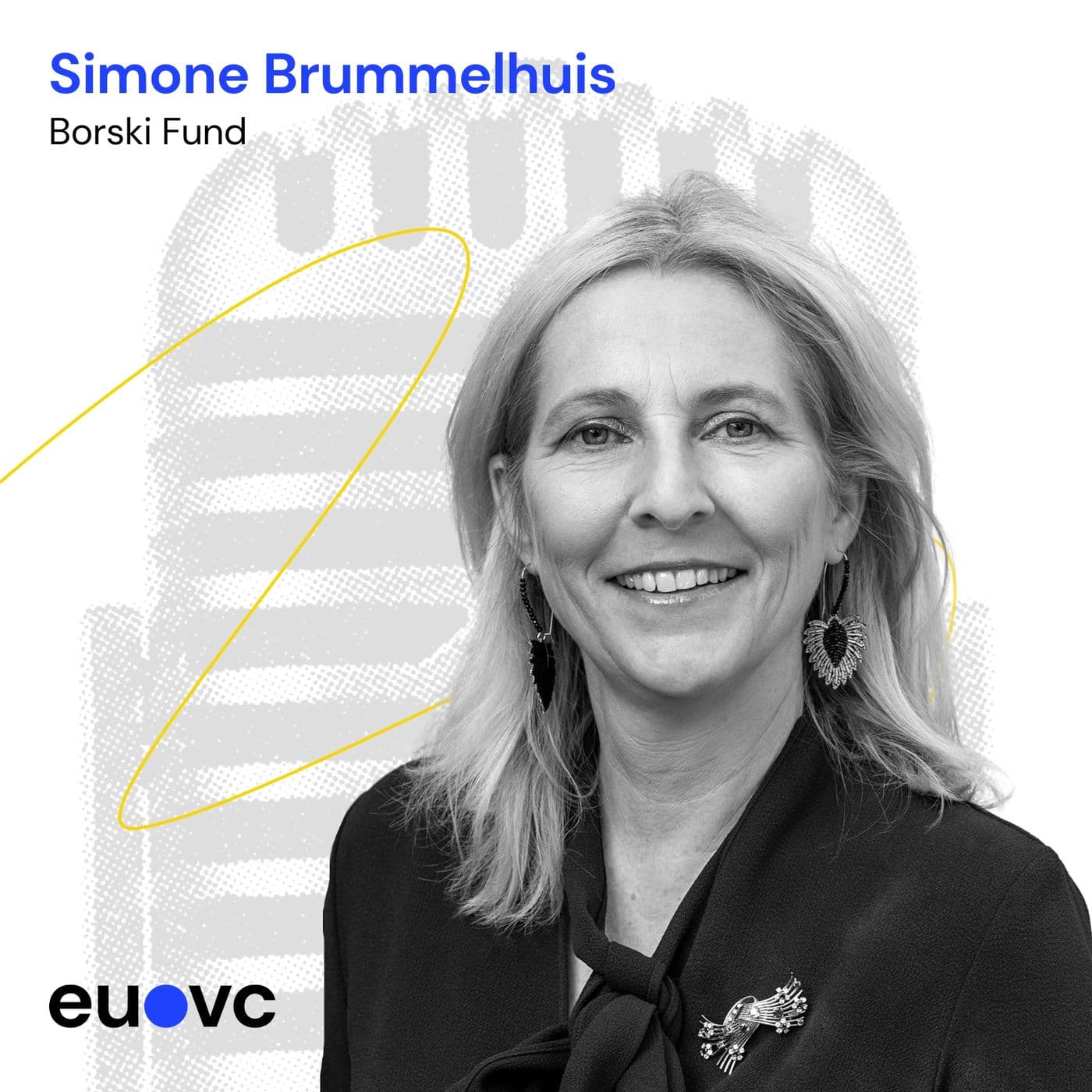
Episode Overview In this episode of EUVC, hosts Andreas Munk Holm and David Cruz e Silva welcome Simone Brummelhuis, Founding Partner and Fund Director of Borski Fund. The discussion revolves around her career journey into venture capital, the importance of diversity in investment, and insights into the current state of European VC.
---
Key Takeaways
Simone's Career Journey
- Early Career: Started in law, transitioned to entrepreneurship, and had a portfolio career as a non-executive in various listed companies.
- Path to Venture: Joined an organization focused on female entrepreneurs, leading to her interest in venture capital, emphasizing diversity in technology investments.
- Timing in VC: Believes she entered the venture space later than typical but acknowledges her early focus on diversity as a unique advantage.
Pivotal Moments
- Entrepreneurship Challenges: Reflects on her experience with a restaurant technology company, highlighting the difficulties of changing business models and the importance of having supportive investors during tough times.
- Investment Philosophy: Stresses the need for patience with companies pivoting their business models, drawing from her entrepreneurial experiences.
Importance of Diversity
- Investment Thesis: Advocates for a broader definition of "best" in investments, emphasizing that diverse teams and ideas lead to richer innovation.
- Current Landscape: Points out the lack of funds focused on female entrepreneurs in Europe and the need for increased female representation among Limited Partners (LPs).
Building a Diverse LP Base
- Community Building: Discusses the creation of a community (The Next Women) to support female entrepreneurs and encourage them to become LPs.
- Investor Engagement: Shares insights on how to attract male investors by connecting them with female entrepreneurs and their innovations.
Challenges and Future Directions
- Saturation in Diversity Discussions: Addresses recent perceptions that the market is saturated with diversity initiatives, stressing that actual investment numbers in female-led businesses are still low.
- Long-Term Perspective: Encourages ongoing dialogue about diversity and the execution of initiatives, rather than just strategy.
---
Discussion Highlights
On Changing Business Models
- Emphasis on the need for investors who understand the challenges of pivoting business models and the importance of supporting entrepreneurs through these transitions.
Dealing with Rejection
- Advises emerging VCs to accept "no" as part of the fundraising journey and to focus on building a network of promoters.
The Role of Diversity in Innovation
- Highlights that diverse teams lead to different problem-solving approaches, thus enhancing creativity and market opportunities.
---
Insights on the VC Ecosystem
- Calls for more collaboration among European startups and investors, suggesting that merging similar companies across regions could lead to more significant market impact.
- Encourages VCs to think beyond financial returns and consider the broader societal implications of their investments.
---
Final Thoughts Simone Brummelhuis shares her profound insights on the journey of building a fund focused on diversity and technology, emphasizing that the landscape for female entrepreneurs is still developing. She urges the VC community to maintain momentum in supporting diverse innovations and to continuously engage in conversations about the importance of inclusivity in investment practices.
---
Conclusion This episode not only sheds light on Simone's personal journey but also provides valuable perspectives on the challenges and opportunities in the European VC landscape, particularly regarding diversity and the role of women in entrepreneurship.
For listeners interested in learning more about European venture capital, follow the EUVC podcast at [eu.vc](https://eu.vc).
Written by AI. May contain mistakes. Listen to the episode to check what was said.
Transcript
Automatic transcript. May contain errors.0:00Today we're happy to welcome Simone, founding partner and fund director of Borski fund, a VC fund investing in technology leaders and diversity. Simone is Supervisory Board Member of Royal Skiphole Group, Rabo Amsterdam and Media Host Netherlands. She previously founded The Next Women, providing access to capital, programs, resources and networks for female entrepreneurs and is founding investor and director of The Next Women Crowdfund. If you're listening in and love our show, drop us a review, follow the pod and subscribe at eu.vc.
0:34Tear down this wall. It's more than just an ally. This is a union of values. United and determined, we can serve as a model for other regions of the world. The nature of a problem requires a European response. Europe is a story of new beginnings. Let's start acting. This show is not investment advice and the hosts of this episode may be invested in the funds and companies featured. So Simone, let's start things off with how you got into venture. Care to share that story with us? First of all, I already had a long career. So I had a career in law, then I became an entrepreneur, and then I had a portfolio career as a non-executive in a couple of listed companies.
1:31And then I joined an organization focused on capacity building of entrepreneurs, female entrepreneurs. And with that background, I thought that venture was the logical step. So in a way, I was quite late to the venture game. On the other hand, because of the thesis that I choose, which is diversity and technology, I was a little bit earlier than others. And that, I think, defines me that sometimes I do things a little bit earlier than others. Actually, I wanted to go in venture a little bit earlier. I wanted to go in venture when I moved to London in 2006. and I met Reshma Sahony of Seedcamp and I told her, you know, I really would, I would like to join a venture firm and Reshma said to me at the time, Simone, you're not a young MBA.
2:34You haven't sold your business yet. So it means that you're not ready for venture yet. So I took the advice and we built the business further, which I founded. We sold the business. The MBA I never did, but because I sold the business, I think I became more qualified. And that was in 2006. So in the end, the first venture firm we built was in 2015. That was a small pilot fund in order to test the diversity and technology theme. and the larger VC fund, which we are running now, Borsky Fund. We launched our first, we had our first close in end of 2019, start of 2020. So now I'd love to hear a pivotal moment in your life and how it has shaped you as an investor.
3:30As an investor, you need to be early into a certain domain, but not too early. And then you need to stay on in the hard times. and when I look back to the company that I built which was a restaurant technology company which we in the end sold to TripAdvisor you know we had really had hard times in the beginning because we were at the start of user generated content we were at the start of building technology to do online bookings at the time when everybody just picked up the phone and call the restaurant. And it was really hard to change our business model at the time. So we started out as a sort of Dutch sagat, which is books.
4:21And that was based on user-generated content, but our business model was selling books. And we knew that that was an end game, and we needed to change towards a new business model. And a lot of entrepreneurs that we invest And now with Borsky Fund, they also sometimes need to pivot their business model. And it was really hard because we made quite a lot of revenue with those books. And we knew that if we were changing our business model towards a restaurant reservation system, that in the beginning, no one would really use it. You know, you needed the first users. And it meant that we had not only we had to convince our investors, but they also needed to stay with us in these hard times.
5:06And changing your business model is really something which you need an investor who has done that before and who understands that that takes time, that you should be patient, that it's a sprint but also a marathon. So staying as investors with a tech company in hard times I think is something that I really appreciated of our investors at the time. And I sometimes also think that we should be doing that with some of our companies who are going to rough times because they are changing a business model which has much more opportunity. So that I think shaped me as an investor, that I think twice of, is this the right moment to say this company is not going anywhere Or is this the moment that we just have to wait a little bit longer and be a bit more patient and be there for the different business model?
6:08The other thing what shaped me as an investor, and that was also my experience as an entrepreneur, is that we built a market leader in the Netherlands at the time with our company. and our brand was everywhere and we had millions and millions of people on our website but we didn't have our own tech and so we first tried to get our tech through a company in Sweden but then they were also servicing other companies throughout Europe and they were just choosing whatever country they thought was the biggest growing the fastest whether they want to change the tech and in the end what we did is we merged with a tech company which was also based in the netherlands which had a good tech but it didn't have any brand and it didn't have any following and that merger brought us really further and and and i see right now that there are in europe many companies of with different investors who are all who are sometimes building the same thing in a different country and and i wish that those investors much more talk to each other and see whether they could merge those companies into a much bigger thing so especially when you're doing something new that we really will help you in in in getting market share much faster especially when the when the incumbents are are large companies who are just waiting for innovations to fail or to pick them up and to decide themselves whether they want to continue.
7:53So I always try to talk to our entrepreneurs and say, you know, who else is building something like you are doing in another country? And it's also limited by that country. And who needs money as well, who needs to grow her team? And why don't you do this together? And this is something that we really should talk about much more, in my view, because then there is just so much more opportunity otherwise to build larger companies.
8:40so now let's go to the take a stand section where we will ask you to comment on a quote given by another guest of ours i don't care about diversity i only care about investing in the best funds and what is the best candidates i think that's something you you always have to think about what is the best is that the best for innovation purposes the best from financial purposes um is it the best uh for the short term is the best for the long term um and so um you know there there there there the definition of best is something to uh to talk about um the definition of diversity is much clearer you know if you if you invest in in diversity in a diverse entrepreneurs or in diverse innovations or in diverse stages of a company, then everybody knows that you are spreading your risk and you have more opportunities as opposed to being, you know, copy the herd mentality of a lot of other investors.
9:43I mean, if you look at the diversity landscape in Europe, you know, there are not enough funds who invest in women. There There are not enough funds who invest in innovations by women. There are not enough female LPs. And governments themselves, they don't have a diversity policy. At best, they have a diversity policy for everything outside of Europe. But for Europe itself, we are in the beginning of the stages. And if you want to build a world where you invest in the best innovations and you invest in a world where we do not only want to become rich, but we also want to be healthy and we also want to be educated and we also want to have happy children and we also want to have a society which in the end is not only defined by money, then I think then you would qualify best something different and and it could very well be that if someone says the best funds are the funds which are for example you say financial is the only driver that I have then it could very well be that you end up with companies that might not give you a healthy society, might not give you a sustainable society and all these things.
11:27So I think the phrase is a too simple phrase. For me diversity means that you are looking at innovations of you know invented by women or invented by men and women and if you have a room full of men and women and you will ask the women, you know, what is the biggest problem that we need to solve, then probably you will end up with different problems than when you would ask the man in that room, what is the biggest problem that we need to solve. And if you ask the men and women together, you know, what is the biggest problem that we need to solve, they come up with different things as well. So, you know, gender and people from different backgrounds and diversity in thinking means that you at least innovate on the full spectrum.
12:24And that's why I think everybody should care about diversity, because then you will have the best funds from a multi-purpose perspective.
12:38but there's also something that i particularly found super interesting which is how diverse your own lp base is and if i kind of open up the kimono a bit and share with you like something that i am thinking about more and more with our own investing activity is are we attracting diverse investors to invest with us yes no well the answer is actually i think not enough yet. And so how can we do better? How can we attract more diverse profiles to invest with us? And so you have an amazing accolade, in my opinion, which is if I have the number right, roughly three quarters of your LPs are female, which is amazing.
13:16So I'd love to ask you a very, very kind of concrete question there. How did you succeed in doing that? How did that come to be? And any lessons you can share with us there? When you look at our individual LPs, 70 % of them are women. And actually, we always talk about how do we get more men interested in this topple. So the exact opposite. And the first movers among the men are the men who have daughters. And especially those who have daughters who study technical subjects at university. and who are entrepreneurial. They're really interested in understanding, you know, how can we move the needle in innovation invented by women or by diverse teams.
14:09But on the female LPs, so what we did is we thought, if you look at them, now I'm talking about the individual LPs. So we know that people who want to invest in venture are people most of the time who have sold their own business. They are the ones who have that risk appetite for a venture. So what we've done long ago, even before we built a fund, is we have started a community with women who are building large businesses and who in the end are building those businesses to sell them. Many of those women have built businesses without venture capital.
15:06So already, if you look to people who are building businesses, many of them are building businesses without venture capital and based on their cash flow or with a bank loan or what have you. but when they sell their business they do are the ones who have that risk appetite for venture but it's very new for a lot of women most of the time they are in a network not with other women who are in venture so for them it's a it's really the first or the second fund that they're that they're investing in so we've really built that community among women who have built their own company who have sold that company and then are thinking okay how am I going to invest my money and how am I going to invest in the next generation and we've been quite careful in building that community it's called the next women hundred and these are women who are you know who are going through the motions of a small company to a larger company to in the end selling their business whether to private equity or to a strategic party but so those are the women that we have built a community with the second layer of women are the women in finance that we saw these are women who may might have run a bank or they might have been really senior in some financial institution and who understands the risk appetite which goes with venture and that's also a group that we've had um been uh connected with that we've we've we've networked with was that intentional or was that a happenstance um well when i when after the uh when i sold my business i started to do this capacity building for entrepreneurs um we've we've we started to to uh to group those people uh entrepreneurs uh people in finance and we soon saw also that also the hurdles of entrepreneurs is access to finance.
17:12And going with access to finance, we created a network where not only you have the entrepreneurs, but you also have the people who finance those entrepreneurs. So it was intentional in that respect.
17:28When I started the fund, Borski Fund, I really needed an anchor investor. and that was quite hard in the beginning because we knew that if we want to build this fund and we want to have a 40-50 million fund then your first close needs to be quite high with 75 female LPs many of them for whom it was the first fund they would not be able to be that cushion for the first fund So my first visit was to London, to Atomico. They just had released their report on the status of Europe in finance. And one of their conclusions was that the percentage of funding to female entrepreneurs was below 2%. So I thought, ah, this is a real great opportunity for them then to invest in diversity.
18:30I was really too early. You were too early with Atomico there? No. Well, in the end, they didn't invest in us at the time because they had to report, but they didn't think about investing in diversity. And they didn't have that investment thesis yet. And I had the investment thesis. And they were like, yeah, I know this was our conclusion, but we never thought about doing something about it ourselves. And I said, but you can be our anchor investor. and then we can start. We have the first fund in Europe and you'll be the anchor investor. But they said, well, we don't have that investor thesis now.
19:08Now they have one, but that was after our final close. So I know that they are investing in AdAventures and there are a couple of others because in the end, they had that investor thesis, but at the time they didn't have it yet. So I was really early, but at least I'm very happy that they have that thesis. So I hope I can get back to them. I am starting. So a year ago and one and a half or two years ago, I felt that we had a really good wave going on. Whenever you set something about doing something focused on women in venture, you'd always receive good backing for it. Many people would want to be involved in this space and so on.
19:52But lastly, I think the last six months or so, I kind of feel like I've been getting more reactions that point in the direction of, but is there enough in that? Don't we have enough doing conferences in that space? Don't we have enough doing media for that space? Don't we have enough funds now that are women-focused and so on? What's your take on that? Because it has come as a surprise to me the last six months, really, that it kind of feels like some people have become saturated. I totally get that because we are also, there are quite a few funds in the US who started also with small funds and then with pivotal ventures of Melinda Gates.
20:43I wish we had a Melinda Gates in Europe. You know, they really were able to make that second step. But if you look at the numbers, the numbers are not great. So it could very well be that there are more people who understand it. So awareness is quite high that we need to have more innovation focused on women, that we need to focus on women's health. But if you look to the numbers, we are really in the beginning of investing in that space.
21:20And so it is true. So we are always talking about what should the narrative be? Let's not talk about investing in female entrepreneurs, but let's talk about investing in female innovation. or let's talk about that our own portfolio is AI driven and it's data driven and that we like diverse teams, something like that. So the narrative is always something that, yeah, you need to, you know, it's a marathon, you need to stay the course, but sometimes in order to convince people, you also should show the other sides of your thesis, which could be technology, AI, data, hardware, software, What have you?
22:03That's also what I'm seeing more pivoting towards because it's been too much of a focal point of everyone. I think that that's a smart move for many of the VCs that are building in this space. I have one quick question I want to ask you. And that if you believe that there's something that exists that might be called like a media to reality gap, meaning that there's so much media about this problem. And every time someone does something concrete about this space, it's very quickly very publicized. But on the other hand, the fact of the matter is that the 2 % mark is not really changing. And I'm wondering if, are we doing ourselves a disservice with bringing so much light on the successful entrepreneurs and the successful VC funds being raised for this space so that people get complacent because they think that, well, now it must be solved.
23:07Or now, okay, we're hearing enough about it, so I don't think we need more of that. Do you think that there's something to that or not? I've just been wondering, you know. it well it's true that you know that um you don't want something to be a hype because even hype need persistence everything what is hyped it's uh is if you look to what is it automated driving or if you look to eating uh less meat or uh um the metaverse you know it seems like oh this is going really well and everybody's onto it and still you need that persistence and that sort of marathon on if you uh so uh you need to uh um yeah you you need to have it on top of mind always i mean so our last investor which came into our fund was visa foundation and uh and they are a u.s investor and they wanted to invest in a european fund and they wanted to invest in diversity and for us it is really a game changer as well because it's for for us a u.s investor who came in.
24:12It's an institutional investor who requires even more data to build their case. But it's still the only foundation out of the US who is investing in diversity in Europe. So in that respect, we must show that it's a success, but yeah, they're still the only one. And it's the same as in as the European investment fund you know they have a report now that it's really important that diversity should be a driver of some of their decisions in where they invest in in their fund of fund strategy but now they also need to execute it and so we really should make a difference between awareness strategy and execution and we always we know that our our own entrepreneurs need to do that as well they can have a great strategy but they still need to execute it.
25:06And we are still in the execution phase. So maybe we should tell that their audience a little bit more.
25:20Now I'd like you to give us a shout out to Coen Master Angel LP for being awesome. And of course, share with us the story behind that awesomeness. If I know how many people are with our firm I do the medics service if I only choose one or two I think I mean if you look at our what we're doing we have a health committee of six women because if you if you focus on diversity then 30 % of your deal flow will be in health so we established a health committee six individuals and then we have an advisory board and an investment advisory committee so there are quite a lot of people um maybe uh if i you know you always have to start and there are and um and there are actually three people i think who were probably pivotal or maybe four to the at the start um one was was my co-founder laura who even though she has already built multiple funds in the cleantech and started being capital, has around 500 million under management in several funds, she still wanted to take the risk in going into a new vertical.
26:41So I think a shout out to Laura Roosboom in being innovative and being a risk taker in that respect and seeing the opportunity. And the other one is Sasha Engels, who at the time when I said, okay, we have this angel fund, it's only a million, you know, we prove our point, how should we go about this for the next step? She said, you know, find a business partner in here because, you know, this is a long-term game and it's really good in a fund to not be your sole GP, but have a business partner. And I said, yeah, you're right. And so that's how Laura came about in building this fund. And the other one was actually one of the first men who I went to.
27:32He was Eric Westerink. He was running Parcom at the time, a private equity firm. And he had his office at Schiphol. And I said, I came to him and I said, okay, we're ready for raising our large fund now. So, are you in? Because I need a couple of people who tell me, you know, if I am doing. And he said, yeah, yeah. He said, I'm in. If you are raising this fund, then I am in. And then I said, so what's the first step that I should do? And he said, you should, you know, you should write, you should sit down this weekend, get your deadline and write the investment memorandum. You know, don't waste your time, just write it.
28:24Because I hear what you're going to do, but if you haven't written it down, then no one is going to, then only if you write things down, then you know what the real issues will be. and I said oh but I'm going on holidays to Italy this weekend and he said it doesn't matter you really should take that deadline so that's what we did. The first investment memorandum I wrote on the beach in Italy in these two days because I said you are right he was a you know a managing partner of a major PE firm and I just took that advice and I said I'm going to do this you know and uh and so you need sometimes promoters and people who set deadlines for you and then um and they will then uh uh you know follow on and the fourth person is actually one of the banks who was the first to set the uh the the uh signature as an anchor investor that's all someone has to be the first and and i had these three banks ab and emerald ing and reibo together which was already quite unique that they wanted to invest in diversity and that they would join to do this and uh and you know and a lot of things which you do which is very risky or which is new you know sometimes you can do it better in a cooperation than and try to be the only one so i had them all and they wanted but they were there was no one who wants to to uh to put that first signature down and uh and Mireille Pennings uh who is from Rabo she was the first who who I said at one point you know I need someone who then just takes that extra step we've done the whole due diligence we have the documentation you know we can negotiate on and on and on but who is making this first signature and i called upon her uh to do this uh and um uh and that was uh uh so that's a shout out and then i have one last shout out and it's actually to our queen because maxima was um advocating for diversity and technology already uh as a as a special uh envoy for the United Nations in a lot of countries outside of Europe.
30:40And she always said, I don't understand. Outside of Europe, we always say, if you invest in a woman, you invest in a village, you invest in a country, and everybody accepts this outside of Europe, why don't we accept that in Europe? And so she was pivotal for that. And I was really happy that with our first launch, she came along to celebrate our first launch of our funds, of our Borski Fund. So also a big shout out that sometimes, you know, yeah, you need more people who are advocating to get started. I think this proves that it takes a village. I know.
31:29I'd love to ask you to share with us the three biggest learnings from the last 10 years of your life. Yeah, so my first learning is hard work and deadlines make sense. The second one, it's good to have a stable family. And the third one is the great innovations, they need money. And now let's unpack the first one. Hard work and deadlines make sense. You just said it before. You had, you set yourself the deadline that I need to write this by Monday and I'm going to Italy. So I need to write my mesmerism memorandum on the beach. So I did, but I'm guessing it permeates other parts of your life as well.
32:06So I'd love to hear that. It was a deadline when I was in my 20s, which said, you know, you can apply for a LLM in New York at the time when I didn't even know where in New York. I mean, now every teenager has been to New York before to celebrate that they go to high school. But at the time, you know, no one knew what New York was. and there was a deadline at my university that you could apply for a university. It was called Columbia University. I didn't know whether it was a country or whether it was a university. And I said, oh, when is this? And I went to my professor and I said, it seems like a real great opportunity.
32:51I'm going to apply. Are you ready also to give me some letter of recommendation? So that was a deadline in my life which really made a difference because coming from Europe, landing in New York in the end of the 80s, it was a situation where, you know, life was still, what is it, how you would say it, makeable. and opportunities were there. And so that deadline really changed my life as well because in New York, I encountered something like the Zagat, which was a restaurant guide, even though I was trained as a lawyer. And that was going to be my next adventure after my law career. so that that's that's that small deadline really made a big change in my my life um i uh i even met my husband in in in new york uh so uh it's always changed also my my private life and uh um so deadlines matter and uh and and hard work everybody knows that that's that you know And now I need to dive into the second one, which is very close to my heart.
34:17So I think many in our audience will know that my family and myself, we packed up the tent and moved back to my wife's closed ecosystem because that's what we needed for us to have a good, safe of life. So that's SBR. So that is what I always say. So everyone, when I talk to the VC ecosystem, everyone expects that I'm in Copenhagen because I'm in Denmark, right? And then I'm always like, well, in fact, good that you're in Copenhagen, but it's a three hour drive for me. So maybe we won't see each other this time. Right. And just to say, I have nothing to do with the rest of what's going on in Denmark, because I am trying to keep a stable life for my family at the same time as I'm trying to put in as many hours as possible into UBC.
35:02And in three hours on the road is not exactly high on my priority list. So I love to hear what you mean when you say it's good to have a stable family. stability is a good cushion for being innovative to try out new things to to accelerate and also to slow down and and you and and for me a stable a family is that cushion to accelerate, to slow down, to be realistic about things, to set priorities and not always make yourself the priority. And in the end, that is really healthy. As an entrepreneur, I see all the time in also in our portfolio and our deal flow that it really takes a lot of a toll to be an entrepreneur.
36:10But also as an investor, as a VC, you have to have your network, you need to communicate with your LPs, then your portfolio, then the deal flow. You're sort of a 24-7 activity, but at the same time, you need to have that stability in order to be able to do that long term because that's what it takes. And a stable family, it does help me to keep my feet on the ground in a way. And we more and more see that this is an important topic for entrepreneurs to talk about. You know, I also was raised and educated in a time where we didn't talk about our private life at all. You were not supposed to do it, not even as a woman.
37:03It was even rare to do that. And more and more, I see that we need to make that a topic of entrepreneurship, of the investment landscape, of a lot of things that we do. how can you get some of the stability in your family and whether it's your own family or the family you come from or the family that you are attached to or that doesn't really matter. And it might even be the family which is your team in your enterprise. But some stability, I think, really is needed and we need to talk about it more. And I also find it sometimes really difficult to talk about that because I'm also not educated for that.
Read the full transcript
37:54But I'm glad at least that my daughters have less issues with that. So the next generation is ready for that, to talk about instability, stability. It's curious how many still struggle to talk about it, right? And to me, you know, when we're investing in people and teams, it's so obvious that if you're investing in something or someone whose foundation is not solid, it doesn't matter. They're not going to be able to pull it through if everything falls down around them. So I couldn't agree more with what you're saying. And now, the quickfire.
38:45And now it's time for the quickfire round, where we ask you three quick answer questions. So Simone, if you were stranded on a desert island, what book, disc and luxury item would you bring with you? Ah, okay. So as a book, I would bring a biography of Jeanne Birouma Oosting, who is a great female artist from the Netherlands. And I would have a book played out in the city of Philip Roth. as a disc I would bring a disc with stories and all the chitchat and the serious things of my daughters in their whatsapp group which I'm not part of but I would love to listen more in and as some good food I would take the foie gras but then the vegetarian version which is developed by a French startup.
39:39That is true commitment to, before you've even tasted the French startups, you're ready to commit to bringing that one to the desert island. I think that is commitment to innovation. Simone, what advice would you give your 10-year younger self? Yeah, for me, there's always a time to start something new. And, you know, keep learning. try to get your learning curve in an upwards momentum. That I think it's, yeah, I think that's important. I think when you look back, when you are a certain age, you always think, oh, I'm too old to do this and do that. And 10 years later, you're sometimes thinking, why didn't I do that?
40:24I was so young then. And I think we should tell each other much more, you know, you're never too old to start something new. keep learning. What are your top tips for emerging VCs across Europe who are fundraising? So if I talk about emerging VCs, a lot of women and who are starting trying to start a fund and and you will get a lot of no's and to accept the no's and don't count it as something personal is something that you need to learn so accept the no's um you know coming back to what we said earlier is set yourself a deadline um and that deadline could be you know um a sub deadline i like build your pipeline that's a deadline uh call everybody that's a deadline uh a deadline when you really want someone to say yes or no it's a deadline but set yourself deadlines and for me it was always uh important to get a good promoter and not be you know not the only you're not the only one who wants something in a normal sales pipeline you need promoters and you need others to to to vote to be vocal about you so get a good promoter is is my third tip accept the nose set yourself a deadline on multiple deadlines and get a good promoter what is the most counterintuitive thing you've learned since you've been in venture looking at technology teams that some tech even some technology you know super nerds are good sales people and
42:17but they sometimes don't even know it themselves
42:23and that is you know it's also counterintuitive for some of these people some of these entrepreneurs they've been so into into into science or something that a sales job feels not as educated. So they don't even dare. So even tech teams, they can sell. And even tech nerds can sell. And I think it's counterintuitive, not only for me, but also for some of the tech nerds themselves.
43:05All right, everyone. If you enjoyed this episode of the European VC podcast, drop us a review, follow the pod and subscribe at eu.vc. I am David, the LP syndicate lead, joined by my dear co-host Andreas the Hypeman. Thank you so much for tuning in today and can't wait to see you all out there. How are you currently reporting to your LPs? Is fund administration taking hours? Are you getting lost in spreadsheet version control? Well, Flow solves all of these issues and more, allowing you to unlock the power of your fund's data by consolidating your work streams onto Flow. Book a demo to learn about Flow's portfolio and fund management features and transaction infrastructure at flow.io forward slash VC.
43:46F-L-O-W-W dot I-O forward slash VC. This was their final job. Tear down this wall. It's more than just an alliance. This is a union of values. United and determined we can serve as a model for other regions of the world. The nature of a problem requires a European response. Europe is a story of new beginnings. Let's start acting.
From the publisher
Today we are happy to welcome Simone Brummelhuis, Founding Partner & Fund Director of Borski Fund, a VC fund investing in technology leaders and diversity. Simone is Supervisory Board Member of Royal Schiphol group, Rabo Amsterdam and Media Huis Nederland. She previously founded The Next Women, providing access to capital, programs, resources and networks for female entrepreneur and is Founding Investor and Director of The Next Women Crowd Fund.


