
In short
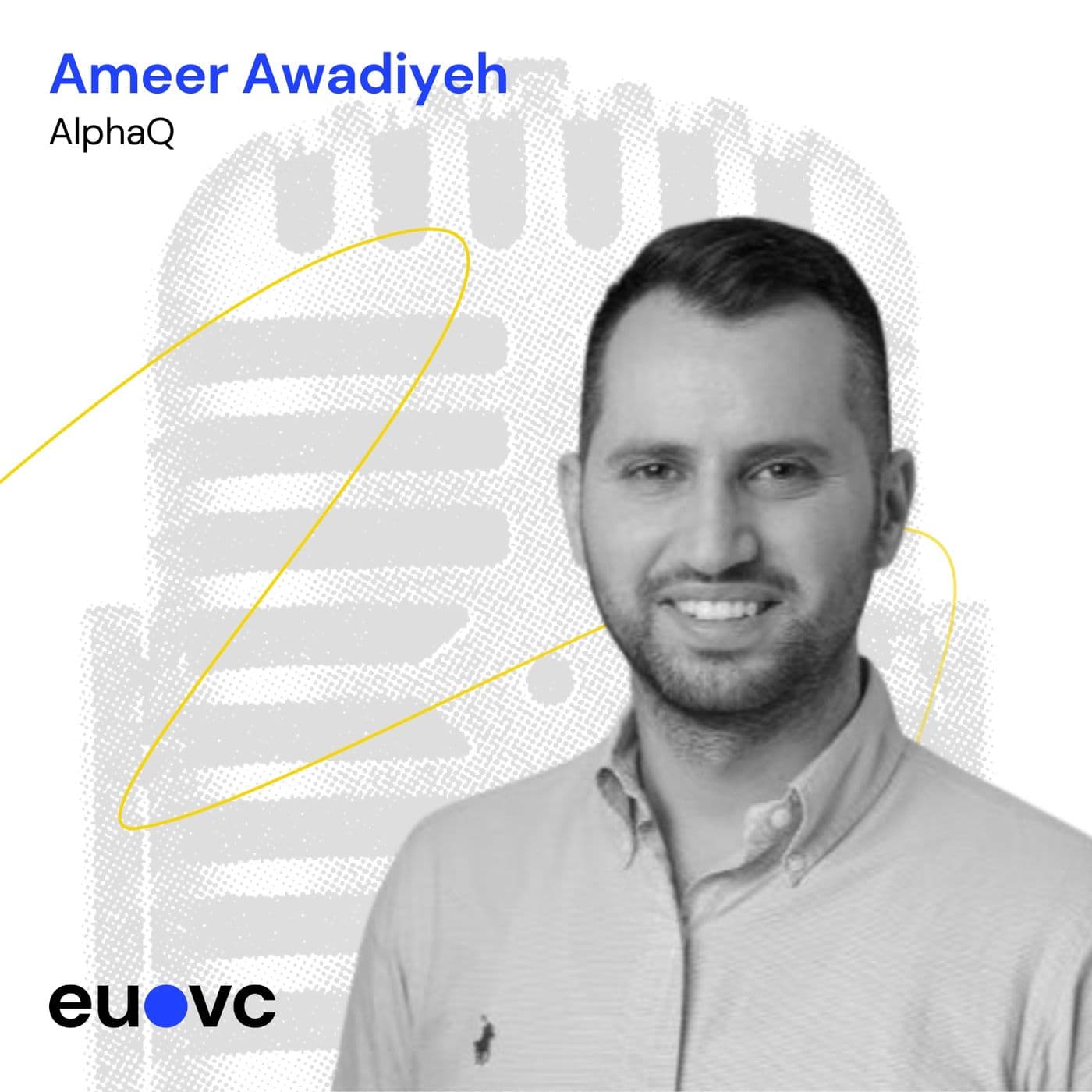
EUVC Podcast Episode Summary: EUVC #209 with Ameer Awadiyeh, AlphaQ
Episode Overview
- Podcast Title: EUVC
- Episode Title: EUVC #209 Ameer Awadiyeh, AlphaQ
- Description: The episode features Ameer Awadiyeh, the VP of Investments at AlphaQ Venture Capital, discussing his journey into venture capital, the current state of the industry, and the strategies employed by AlphaQ in today's market landscape.
Key Guests
- Ameer Awadiyeh: VP of Investments at AlphaQ Venture Capital
- Co-Hosts: Andreas Munk Holm and David Cruz e Silva
Main Topics Discussed
Ameer Awadiyeh's Background
- Education: Accounting and Economics degree from Tel Aviv University, followed by an MBA.
- Career Path:
- Started in accounting but shifted to consulting and then joined EY's high-tech division, working with startups and VCs.
- Joined Vintage Investment Partners, where he spent six years managing investments across North America, Europe, and Israel.
Transition to AlphaQ Venture Capital
- Motivation for Joining AlphaQ:
- Desire to democratize venture capital and innovate within the asset class.
- Ameer was impressed by AlphaQ's vision and team.
Pivotal Career Moments
- Discusses how the recent market downturn marked a significant change in his career, shifting from a bull market to a challenging environment.
- Reflects on the challenges of investing during downturns and the need for a reassessment of investment strategies.
Current Market Dynamics
- Investment Strategy Changes:
- Emphasis on adjusting expectations as the market shifts from significant up rounds to a focus on sustainable returns.
- Discussion of the importance of recalibrating fund sizes and ownership stakes in light of declining valuations.
Managing LP Expectations
- Ameer highlights the challenges fund managers face in communicating new market realities to LPs, who were accustomed to high returns during the bull market.
- Strategies include transparency about fund strategies, check sizes, and potential risks.
AlphaQ's Strategy
- Fund of Funds Approach:
- AlphaQ is structured as an evergreen fund, allowing continuous fundraising and investment.
- Focus on building a diversified portfolio with the goal of democratizing access to venture capital.
Portfolio Construction Approach
- Ameer provides insights into managing a fund of funds, emphasizing the importance of relationships with both GPs and LPs.
- Discusses how current market conditions have led to a more cautious approach, with a focus on smaller check sizes and strengthening ties with established managers.
Key Takeaways
- Market Shifts: The transition from a bull market to a downturn requires VCs to adapt their strategies.
- Fundraising Dynamics: LPs are more cautious now, requiring more transparency from fund managers about their strategies and expected returns.
- Long-Term Relationships: Building strong connections with fund managers is critical for long-term success in venture capital.
- Evergreen Fund Benefits: AlphaQ’s evergreen structure allows for flexible investment strategies and the ability to adjust to market changes continuously.
Conclusion The episode provides valuable insights into the challenges and strategies facing the venture capital industry, particularly in Europe, as it navigates a new market landscape. Ameer Awadiyeh's experiences and AlphaQ's innovative approach serve as a model for adapting to the evolving dynamics of venture capital.
---
For more information and updates on European VC, follow the podcast at [eu.vc](http://eu.vc).
Written by AI. May contain mistakes. Listen to the episode to check what was said.
Transcript
Automatic transcript. May contain errors.0:00Hi everybody and welcome to the European VC podcast. We are here live almost at Superventure. We're in our good friend Mark Penkeles' apartment. And we're here with Amir Awadie. I just got it perfectly right just before, but you always fuck that up once you then start the recording. From AQVC.
0:33United and determined we can serve as a model for other regions of the world. The nature of a problem requires a European response. Europe is a story of new beginnings. New beginnings. Let's start acting. This show is not investment advice, and the hosts of this episode may be invested in the funds and companies featured. Guys, what did you do last night? You know, this is the second day of Superventures, so we need to first just hear what's the lowdown, what happened. First of all, thank you for having me. It's great to finally meet you guys. But yeah, I came into Berlin in the afternoon and I had a few meetings and then attended the Topline event, which was really nice seeing some fellow LPs there.
1:21And yeah, that's mostly it. And got a good night's sleep to prepare for this podcast. So to all the GPs listening in, you did not meet any LPs at the event you went to because they were all at the LP event. Well, I met them. That was a good thing. So as I am from Berlin, for me, I didn't have to commute. I had a very nice sleep. I woke up, had a couple of LP meetings. And then I actually prepared for the evening event where we met. I met some LPs, which was great. and had a very short evening, went to bed early to be up and running for this fantastic podcast with you guys. All right. Amir, tell us, how did you break into venture?
2:01How did you end up here at AQVC? Yeah, that's a good question. I'll maybe start from the beginning. I think that my journey into venture, very much many people in VC was not a planned or a calculated one. So I started by doing accounting and economics at Tel Aviv University, did my MBA there as well. And then I got into, like, quickly realized that I'm probably not going to be doing accounting for the rest of my life. Got into consulting, did that for a year and a half, then got into EY's high-tech division, working with startups, VCs, accelerators, and so on. Spent a couple of years there. And then when I started looking for my next thing, a good friend of mine at EY said, like, hey, Amir, you should look at this anonymous job description.
2:44It's a really cool one. I think you're going to like it. I applied. And after a three-month process, I became part of Vintage Investment Partners investment team. I spent six years at Vintage doing three strategies and three geographies. So I did fund-to-funds, second-reasoned late-stage investments across North America, Europe, and Israel, and kind of like watched Vintage grow from 20-person team, 1 billion AUM, to more than 60 people over 3.5 billion AUM. And towards the end of 2021, I decided that, okay, it's time to move on. But also it came as part of a family decision of wanting to relocate Europe.
3:25So what I did was I left vintage beginning of 2022. I started doing some freelance advisory work with different family offices, high net worth individuals, mainly on their venture strategies and mainly in Europe. And that's how I got to meet AQVC, got to work with the team a little bit, also on a part-time basis as well and really bought into the vision and what they were building and this kind of like vision of democratizing VC and opening up the asset class and the way that they wanted to do it and it was so innovative and I really liked it and I liked the team so I decided to join them full-time and move to Munich.
4:01And now I want to hear a pivotal moment in your career because this is one of the segments that we've started to plug into the podcast really because we've found that everyone has that pivotal moment in their career. So I'd love to hear yours. Yeah, that's a good question. I think that, so this might sound a little bit as a cliche, but the most recent market turndown has to be on top of the list of pivotal moments in my life. I think that if you think about it, my career in VC started during basically the longest bull market run in history. And I never really had experience investing throughout a market downturn.
4:40And I think that specifically investing throughout the post-pandemic area up until end of 2021, early 2022, evaluating funds was mostly about these very significant up rounds that were happening at a very high pace. And suddenly, a 2x to 3x performance benchmark was not good enough, right? You're like looking for the 4x and the 5x. If you're like doing two to three X, that's like, yeah, that's old news. And then suddenly everything turned down. And when everything kind of like cooled off, revenue multiples started going down. Public markets started going down. Valuation started going down. Can I ask you a question on this point of going to the four and five Xs being the benchmark?
5:28I've been reflecting through this process as well, right? And I've been thinking, huh, it's pretty funny that, because that was, of course, not being talked about in terms of the funds that were already raised, but it was about the funds that are being raised. And you were saying, well, we want to see the targets being 4 to 5x. And if it's not, then, you know, there's no reason to, you know, we're not taking that meeting, right? That's what you were hearing LP say. And you were hearing some very big names being vocal about that in podcasts like ours. And then I'm thinking back and thinking, hmm, interesting that now we're talking about that's probably going to be some of the worst vintages, right?
6:05And I can't help but think, hmm, and I've been wanting to ask those, but I haven't had the chance yet. When you look at the mirror and think this is what you put out into the market in those years, how do you reflect on that today? And I'm curious because you've been investing through that era and you've been part of the firms that that you know people would be looking to to to understand how they should fundraise their tactics in the end the target that you put is your strategy of course but it's also what you put to satisfy LP expectations when you're racing in the end and I'd love to hear you know how do you reflect on that benchmark creep up that we saw through that period where we're now looking at it being the worst vintage.
6:50Yeah. So one of the other things that happened is also suddenly exits are probably not as big as we had thought that they're going to be, right? So this kind of like begs the question of, okay, many of the funds that went out to raise during that period were saying, okay, we need to increase our fund size because valuations are going up, because companies are raising much more capital. But don't worry, that's fine because exits are much larger or are going to be much larger in 10 years' time. But then suddenly that was what shifted, right? And I think the expectation is now, or like what we hope to see is, will these fund managers take a step back and say, okay, we made a mistake, maybe made a mistake, but we might not be able to invest, I don't know,$150 million, but probably$100 billion works much better for our model, for what we're kind of like investment strategy, what we're hoping to build.
7:45The ownership percentages that we're going to get and how we model that into future exits and a 5x multiple. And when you say that, do you then refer to the next fund iteration or do you mean for the existing? So, okay, we raised 150, but we're actually guys, we're going to return 50 and we'll only deploy 100. Is that what you mean? So we actually did see that happen. Some fund managers did say that. Not many, to be honest, but I think that the recent vintage years, 2020, 2021, are going to be challenging. I think they're going to be kind of like capped in terms of outlier performance because of that reason.
8:25It's really hard to return capital at the end of the day, right? It's not an easy step. Many of the managers are emerging. They don't also have experience in such market dynamics, so they kind of like just hope for the best. But what we're hoping to see is managers kind of like taking their time, taking a step back, really now thinking it all over again, resetting their investment philosophy and thinking about capital deployment, reserve ratios, and so on. How much kind of like really trying to model the fund, the portfolio that they have built, and what can it really generate in the future. So it's both relevant for existing fund generations.
9:02How do I optimize returns for the ones that I, okay, I've already invested it probably how do we optimize returns make sure that i uh get the best uh out of this fund that i have already invested in and then the next step would be thinking about future fund generations okay does this work how do you currently manage lp expectations we had a 10 year bull run everybody was excited about the four or five x returns now you have to go back to the lps and kind of readjust their view on the market saying look this is not going to happen you've been spoiled for 10 years. It's a different market today.
9:34How do they react and how do you manage this accordingly so this asset class becomes still interesting as it is? Yeah, it's a challenging environment at the moment. You know, it's not a secret. Fund managers are taking a longer time to fundraise, which kind of like gives some leverage to LPs to really build this meaningful relationships with fund managers because before having the conviction and making the commitment, and one of the things that they should be looking at is this topic that you mentioned is what is your strategy does it fit your fund size and just like from a mathematical perspective is there a high probability of generating the 5x return because if you're raising 100 million dollars because that's the amount of fees that you need to kind of like run your shop but you haven't really thought about how much deal flow you're going to see what percentage of your deal flow So of the companies that you're going to be investing in, how many companies are you going to be investing in?
10:28Are you leading rounds? Are you joining rounds? So this reflects on the ownership percentages that you're going to get. And then kind of like taking a dilution assumption for like 10 years, right? Does a billion dollar exit or like maybe a one to three billion dollar exit be a fund returner for me? Because that's, I think, the range that we can assume at the moment. I think that's kind of like how we look at it. Do you think that you've seen change from your LPs and your own fundraise because AQVC, you went to market with a very large fund, you know, launch back in, I guess, a year ago about now, one year and three, four months.
11:07And I'm curious to hear, how have you managed through that process? Because we've seen many guys go from, okay, 50, which is probably going to be 30. You know, you went out and said a billion. I would almost want to say, and I think many are asking that in the ecosystem in Europe. How do you come back from that? Do you stick to that? Is that what you're building for? Or how are you navigating this now? No, got it. That's a good question. And I think that's also one of the maybe difficulties of some of the European press, because, and we're different in that sense, because we're an evergreen fund.
11:41So we're always going to be fundraising. And that number was just a target for us, right? So naturally, as an evergreen fund, our vision, as I mentioned, is wanting to one day democratize the asset class. And the way we want to do that is by listing this vehicle. And if you want to list a holding company, you naturally have to reach these targets of 500 or 1 billion. So it's still our target, but we know and we realize that it's going to be a long way getting there. So what we're doing at the moment, you know, it's naturally for all of us, a difficult and challenging fundraising environment. So we're making small steps, focusing on the smaller check sizes to be able to prove out our thesis, build out a kind of like wide enough portfolio to prove our access and selection capabilities.
12:28We have done nine fund investments to date so that we can, once the market kind of like, or there's renewed LP interest into the asset class, you know, once there's some more M &A activity, maybe the IPO window opens up in the next year or so. I'm hoping to see the larger potential LPs that we're in discussions with really make the step in committing larger check sizes. And then we can really prove on our thesis and build out a really big European VC fund of funds. At this time, when this episode goes out, we will have launched our episode that we recorded just a couple of hours ago in the very early morning here at Superventure with Isomac Capital on their Fund 3 launch.
13:10and we had a very long conversation about how do you manage expectations with GPs when you're fundraising at the same time. And I think in Europe, I think I'm not wrong if I say that every single GP here in Europe is kind of like, I'm raising from all these funder funds, but I don't really think any of them have money. And I'd love to hear how you manage that dichotomy almost, right? Because we all love funder funds because we need them and you're pioneers in the ecosystem. you're the ones banging the drum with the big LPs that we need to have venture as a bigger asset class in Europe. But at the same time, you also have GPs that are all in line saying, when do you guys open?
13:52My philosophy when it comes to managing expectations with GPs is always be transparent about your process, about the time you need to get to a decision, about your check size, your potential check size, the amount of work you need to do while you do go through this list tell us a bit about how you think about each of those elements so as an example the timing well how does that how do you think back to your own how do you navigate that your investment team you're one person and then you've got your your colleagues how do you how do you make sure that because one thing is what Amir wants to do but then you've then you've got Marius and then you've got Stefan and all of you need to somehow know where you are at the same time.
14:35So I'm curious to, you know, open up the box as much as possible for everyone listening in. How does an AQVC think through these things? Yeah. So I think we're more or less aligned on that. Otherwise, you know, it's going to be sending out different signals into the market. So we're more or less aligned. We work as a team. We have weekly deal selection meetings where we review the deal flow. We decide together on which funds we want to kind of like take to the next step to take a closer look at and so on. So we're more or less aligned. And again, the process, our process is pretty much clear. The check size we're currently writing, the range of the check signs we're currently writing is also more or less clear.
15:12The types of funds we're looking for or the types of managers that we're looking for is pretty much clear. And I think that, you know, eventually, going back to my previous point, it's extremely important to be transparent and managing these expectations with fund managers that, okay, maybe I'm currently at a point where I cannot anchor your fund. I don't have the capacity to anchor your fund because I don't have enough capital at the moment, but I do like what you're doing. I do want to follow you closely. So maybe I'm not considered as what is called like a first close investor because maybe I also cannot take your fundraising risks as another risk level for when I'm doing investment decisions or making investment decisions.
15:54but I want to follow your progress. Please keep me updated and then we can come in closer towards the final close. You started an upmarket. Everything was fantastic. Money was raised. Companies were blooming. So it was a lovely time. How did your investment strategy when it comes to portfolio construction as a fund of fund changed over time? Upmarket too. Look where we are today. We're rather in a recession, very high interest rate, very high inflation. So things are very different. Did it change? Do you focus more on emerging managers compared to established one? Did you change the geo? Did something happen or did you just stick to the thesis and the construction of your portfolio as it was back in the day?
16:32You naturally have to adapt in such significant market developments. You cannot continue executing on your strategy just like any other VC fund building their portfolio. So the first thing that we did, because the fundraising momentum slightly slowed down, we said, okay, let's decrease our check size a little bit, because we want to make sure that with the capital that we have that we're bringing in every month or so, we want to make sure that we build a wide enough portfolio to show our potential investors what types of funds that we are investing in, which geographies that we can get access to some of these funds and build out kind of like a wide enough portfolio to show them the access and selection capability.
17:14So that's the first thing that we did, slightly decreasing the target check size. The second thing that we did was because of this market downturn, many, we realized that there are, so we do both established and emerging managers. And we saw this opportunity of some established managers, maybe not having difficulties in fundraising because they have a very solid LP base, but having some openings, being more aware about diversifying that LP base, and suddenly considering you as a potential investor in their fund. So that's another thing that we did. Started strengthening the relationship with some of the established managers that we're targeting.
17:50So that's another thing that we did. And then, you know, the bar is always high for emerging managers. But I think the current situation just got the bar to a much, much higher level. Can I ask you, actually, I'm curious, on a portfolio side, portfolio construction perspective, as an evergreen structure, how do you think about it? Because I am biased to thinking the traditional fund-to-funds model, right? So you have a fund model, your target is XYZ, whatever that is, and that reflects into 20 GPs, 15 GPs, 25, whatever, right? And then re-ups, that's a next fund conversation, right? Typically.
18:25Some exceptions, right? But in your case, it's very different. So I guess some of your early bets might be coming back to market soon-ish, depending on their success and deployment rates. How do you think about that, right? Is that something that you will have re-ups in the same portfolio of this Evergreen structure? Are there like criteria for that? Because it's coming back to your topic of relationship, right? Yeah. Because what is the relationship you're building with your GPs, but also on the other hand, the relationship that you have with your investors, right, where you have three re-ups in the same portfolio, do you want that, right?
19:00Is that wise? Isn't that wise? It's really curious. It's a good question. Before I answer that, it's really, I think, key to understand that an evergreen product is different than a closed-ended fund setup, whether it's like a fund of funds or a traditional VC fund. For many different reasons, it's just what investors are looking for in each vehicle is sometimes a little bit different. And they have, I don't want to get into that, but they have the different kind of like advantages and disadvantages, both approaches. And answering kind of like the second party question is a question around relationship, but relationship is key.
19:34Every time any LP commits to a fund manager, whether it's from an evergreen structure or from a close-ended structure, I think the expectation is that you're going to have to back this manager for at least two more fund generations. Because nothing significant is really going to happen that will change your thinking about the thesis of why you back this manager in this timeline. Right unless he does like a major foul. I don't know increasing the fund size 5x or something So the expectation should be that I'm gonna back you for at least two more fund generation So you have to have the conviction in this fund manager That this is someone that I would want to be working with for a very very long time I know of a fund that you backed as the first one right they're back to market now You've done nine investments.
20:20It's your tenth investment going to be fund two from that GP Because, you know, how do you manage that towards... Yeah, I know that's a good question. I was going to get into that. I answered the relationship part first, but I'm going to get into how our kind of like internal dynamics and structure works. But what I was saying is that, as I mentioned, again, the expectation is backing these fund managers. Now, when it comes to our own internal portfolio construction or the way we work, it's the same more or less as an open-ended, sorry, a closed-ended fund. We're not an index fund, so we're not going to be backing hundreds of managers.
20:56We're building a portfolio of, I don't know, between 40 to 60 fund managers. And every time we think about deployment and allocation model, we, of course, take into account the managers that we have previously backed for future allocation purposes. So in that sense, we're not very much different from a closed-ended fund. And even to see more about that is because we're an evergreen, in the future, once distributions start coming in, we're going to be recycling all of these distributions. So once this flywheel starts, the distributions that we get are going to be funding the next fund generations of our existing managers.
21:36That's the idea of an evergreen fund and how we think about it. But it takes time to get this flywheel effect going on. I have a question on indexing. I had very good talks with pace notes, with equation, with multiple capital exactly on where does indexing start and where do I have a concentrated portfolio? I had a broad set of views. So one said, hey, look, anywhere up to 15 funds is perfect. Beyond 15 fund, actually your performance goes down. So I took this as a point where I say, OK, after 15, it actually starts to index. As an evergreen fund, well, you literally, when you said 40 to 60, which means you're going to do five to six investments for the next 10 years until you start divesting these funds fully and then you actually add new funds.
22:21So you're just going to do a harsh stop at 60 and say, okay, unless we fully divested a fund and wrapped it up, we're going to do a new investment. So by nature, your fund amount has to increase over time as you raise more funds or you just put more money into the same fund and you always depend on that. after 10 years we're fully divested and we're going to do a new fund how does it work question so what i said was we want to have 40 to 60 relationships not funds right it's going to be much more funds it's the number of relationships that you need to keep in mind right because you're talking fund managers right relationship is a fund manager but in terms of funds you're going to have hundreds okay and to your diversification question it all goes back to your investment strategy and what opportunities or markets you're targeting.
23:06We have a global mandate. We do both Europe and the US, also Israel. So the number of funds in your portfolio is really dependent on what is your investment strategy, which markets are you investing in, right? So a fund of funds building a 15 fund portfolio targeting the US is totally different than a fund targeting Europe, for example. So you always need to keep that in mind. And I think the way to look at this is you always want to be investing in the top quartile of funds. So what are the number of relevant funds in your target market? What is the top quartile? And that should be kind of like the number of funds you want to have in a portfolio.
23:45That's kind of like indexing versus building a selective portfolio, more or less. I think this is the perfect spot to stop this in-person recording and go into the next segment which is going to be a completely different type recording both because to our audience that's going to be on video or on on zoom and and and this is then the special segment where we were enjoying mark's company in his apartment here at superventure um so thank you so much for joining us here in person thanks a lot thanks mark for hosting us This was their final hour. Tear down this wall. It's more than just an ally. This is a union of values.
24:32United and determined, we can serve as a model for other regions of the world. The nature of a problem requires a European response. Europe is a story of new beginnings. New beginnings. Let's start acting. Acting
From the publisher
Alph Q has 9 funds and counting, Whitestart Capital, Scale Venture Partners, Abstract Ventures, Nucleus Capital, Signature Ventures, Pale Blue Dot, Maple Capital, Symbol Ventures. AlphaQ is becoming the European gateway to a diversified venture capital fund portfolio via one single stock.


