
In short
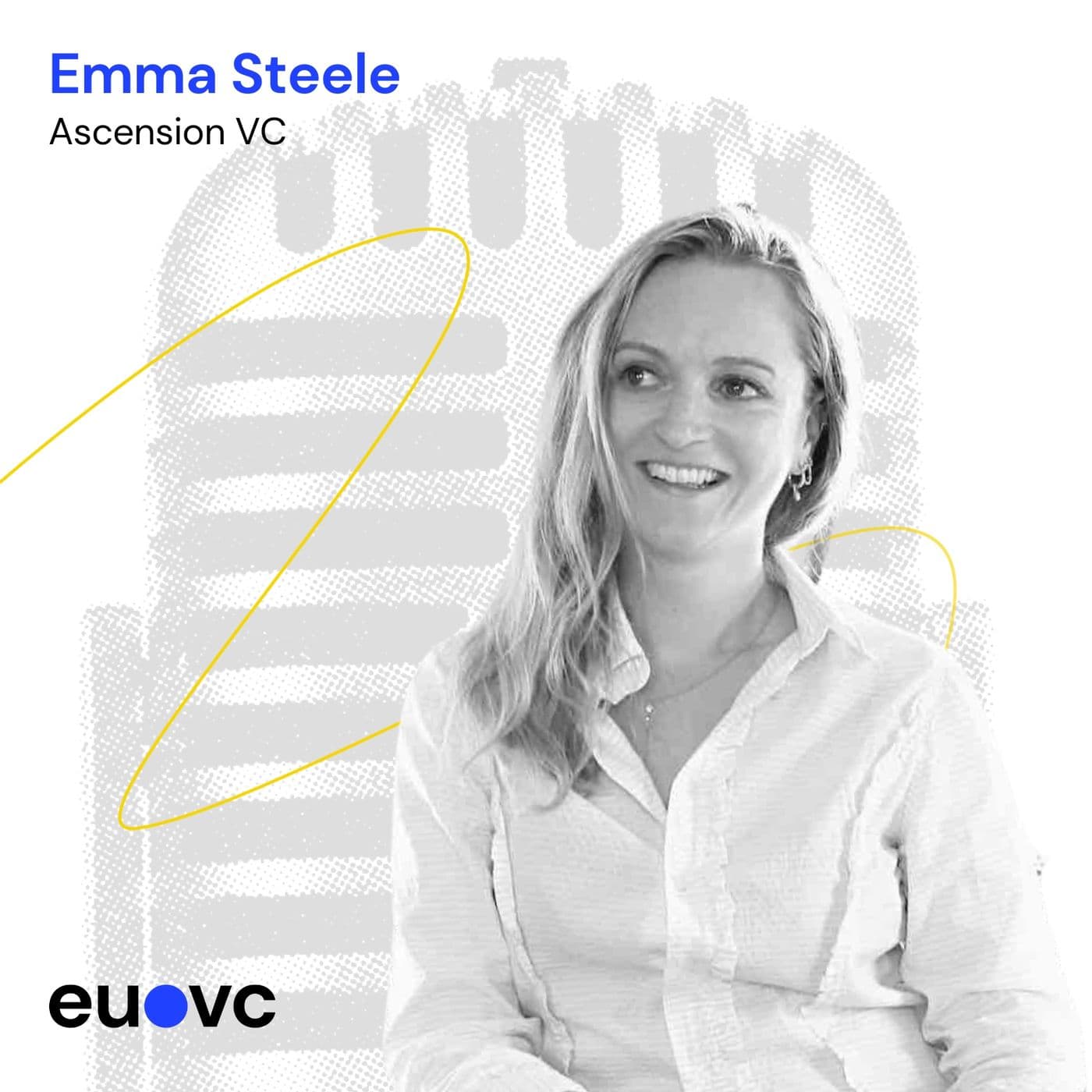
EUVC Podcast Episode #210 Summary - Emma Steele, Ascension VC
Episode Overview
- Podcast Title: EUVC
- Episode Title: EUVC #210: Emma Steele, Ascension VC
- Release Date: [Insert Date Here]
- Hosts: David Cruz e Silva, Andreas Munk Holm
- Guest: Emma Steele, Partner at Ascension VC
This episode features Emma Steele, a partner at Ascension VC, focusing on her journey in venture capital, the importance of impact investing, and her insights on working with LPs (Limited Partners).
Key Themes Discussed
Emma Steele’s Journey into Venture Capital
- Early Ambitions: Emma aspired to be the UN General Secretary at a young age, guiding her education in Philosophy, Politics, and Economics.
- Career Path: Transitioned from banking (Santander) to consulting for charities, emphasizing the need for financial sustainability which led her to impact investing.
- Impact-Driven Venture: Emma illustrates the importance of supporting founders who create commercial value and societal impact.
The Role of Impact Investing
- Ascension VC's Focus: The firm aims to create resilient societies by backing impact-driven founders and has a portfolio of over 180 companies, including notable investments such as Wagestream, Credit Kudos, and Tembo.
- Investing Philosophy: Emma believes in the “for-profit for purpose” model, stating it effectively scales impact.
Working with Limited Partners (LPs)
- Pitching to LPs: Emma discusses the varying approaches to engaging different types of LPs (foundations, family offices, corporate funds).
- Emphasizes the need for emotional resonance in storytelling beyond mere facts.
- Highlights the significance of aligning impact and commercial value.
Challenges in Impact Reporting
- Measuring Impact: Addressed the complexities of impact measurement in early-stage investing, where many startups may fail, yet their societal contributions may persist.
- KPI Development: Discussed how impact KPIs can indicate the alignment of social impact with financial returns.
Insights on Management and Team Dynamics
- Empathy in Leadership: Emma discusses how her experiences shape her empathetic leadership style, particularly when supporting founders.
- Team Dynamics: Emphasizes the importance of recognizing individual strengths within her team and fostering an environment where employees feel empowered to pursue their own entrepreneurial ventures.
Key Learnings and Advice
- Emma shares three major learnings from her career:
- Trust and understand your gut feeling.
- Sales skills are essential, regardless of personal affinity.
- Interruption can be beneficial for effective communication.
Quickfire Questions
- Advice to Younger Self: Don't fear wrong turns; there are no wrong decisions without direction.
- Tips for Emerging VCs: Regularly refine your vision and narrative; leverage warm introductions; maintain relationships with all LPs, even those who reject you.
- Counterintuitive Insights: Profit isn’t everything; understanding failure is crucial, and making faster decisions often yields better outcomes than prolonged deliberation.
Conclusion Emma Steele’s insights into the venture capital landscape, especially regarding impact investing and interactions with LPs, provide valuable lessons for both emerging investors and established firms. Her emphasis on empathy, adaptability, and the intertwining of commercial success with social responsibility highlights a path forward for modern venture capital.
For more updates on European VC, subscribe to the EUVC podcast and visit their website at [eu.vc](http://eu.vc).
Written by AI. May contain mistakes. Listen to the episode to check what was said.
Transcript
Automatic transcript. May contain errors.0:00Hello, everybody, and welcome to the European VC podcast. I am David, also known as the LP Syndicate Lead, and today I'm joined, as usual, by my dear co-founder, Andreas, the LPI. Today, we are welcoming Emma Steele from Ascension VC. Emma is a partner at Ascension's Impact Fund, a seed-stage venture fund focused on creating resilient societies by backing impact-driven founders that are driving commercial value and hopefully on their way to become the next impact dragon. Ascension has an established portfolio of more than one of Navy companies and notable investments led by Emma, including WageStream, Credit Kudos and Tembo.
0:36And remember, everyone, if you're listening in and love our show, drop us a review, follow the pod and subscribe at eu.vc. And now some words from our beloved sponsor. How are you currently reporting to your LPs? Is fund administration taking hours? Are you getting lost in spreadsheet version control? Well, Flow solves all of these issues and more, allowing you to unlock the power of your fund's data by consolidating your work streams onto Flow. Book a demo to learn about Flow's portfolio and fund management features and transaction infrastructure at flow.io forward slash VC. F-L-O-W-W dot I-O forward slash VC.
1:19This was their final show. Tear down this wall. It's more than just an alliance. This is a union of values. United and determined we can serve as a model for other regions of the world. The nature of a problem requires a European response. Europe is a story of new beginnings. Let's start acting. This show is not investment advice and the hosts of this episode may be invested in the funds and companies featured. Emma, let's start this thing off with your journey into venture. Would you share that story with us? Absolutely. Well, my journey into venture is very much led by my desire for impact. I wanted to be UN General Secretary aged 12, probably 12 to 15.
2:17It's a very ambitious goal by the way Yeah But you know It kind of led me to doing Philosophy Politics, economics At Warwick When I left France To try and Know a little bit more about my second culture Half French, half English And then did development economics And needed to Try and find a career and to be honest I fell into banking accidentally I uh I needed to repay a master's loan pretty quickly so took up a graduate graduate scheme at Santander but I never really forgot the the kind of desire to to advance social change and yeah I I quit in um 2016 to to start to think about that did a little bit of time uh doing consulting um for charities to try and make them more financially sustainable and that's how I started to think about impact venture so for profit for purpose venture models as I well led was led to conclude that actually it was a more effective way of scaling impact models I think I find I find like super interesting that you you have that experience you know from you know helping charities as you said become more for financial sustainable and how that led you into venture, right?
3:41It's a funny because, and I commented with Andreas prior to this recording, it's funny because many of the GPs that we met, we've had conversations about who's your ideal LP, right? And charities, foundations is actually the ideal LP profile that many of us would love to be working with on the long term. So I'm just curious to know, like, could you share a bit more light on how working with charities then ends up taking you to venture? Like it's not, for me, it's a bit unexpected. And I think for most people in that space, it's not the typical route they take. No. Well, incidentally, actually, a few of our LPs are foundations themselves.
4:16And we have this debate all the time because they straddle both worlds. But I started that job because I think at the time, Big Society Capital, who's again, one of our main LPs, was invested in quite a few what you call social investment funds that only invested debt or debt instruments. into into asset locked entities um and you know what i found working directly with those charities is that often i'm not saying all the time but often the the idea to or the the need to get uh debt was actually driven by the existing business model of the charity being completely unsustainable or highly dependent on local authority funding for example and they needed to do something completely new and completely different uh open up a new trading avenue and then get investment uh to to leverage it so effectively a lot of the stuff we were doing was putting debt into equity like business plans and with with with charities and founders of those charities that were very unaware of what it took to to you know use use and plan for free cash flows to repay said debt and kind of a lot of risk attached to that.
5:39Plus, you know, there's in the charity world, there's a little bit of a bad rep for the concept of profit. And I didn't like that. It doesn't sit well with me and my philosophy of the world. So I started to look into who was doing tech for good, investing at the very early stages in the UK at the time. And there was not that very many players. There was Mustard Seed, Best of Green Ventures and Ascension wasn't necessarily defined as an impact investor at the time, but they had an amazing portfolio. So I started stalking them and I think I called outreach to Kieran, who was Ascension at the time, Kieran Hill.
6:22And that was it. I think that's a pretty interesting story and something that we don't hear too often. And I'd love to ask you just to dive a bit more into that pivotal moment in your life and describe to us how it really shaped you as an investor. Yeah, I mean, there's probably two pivotal moments in my life today. One was when I chose to leave France with not much. I mean, I was OK with my vocabulary, but my English wasn't that great. and, you know, little support system to kind of go to uni and explore new areas, new adventures. That sort of shaped me probably as an individual, taught me resilience.
7:09But I guess the professional pivotal moment is when I decided to live my personal values in my professional life. And I decided to take a huge risk in order to be able to do that, which is, you know, one day I woke up Literally, it was from black to white. I woke up in front of my computer at Santander and decided to leave with, you know, no plan B. And often now that I know a lot of founders and other investors and even friends who are in their mid-30s, we've on average all had that kind of moment, I think, in our mid-20s. But I was feeling very rebellious at the time when I did that. And, you know, I'm not saying I didn't I didn't learn anything at Santander.
8:02I think it really the time at Santander shaped how I approach things as an investor. I think I use a lot of the sort of breaking down things to first principles and kind of asking the stupid questions on business plans, having the confidence to kind of question very basic bones of a problem and business model, I think was down to my experience in credit. and really using a founder's financial model as a way to kind of understand how their brain works when it comes to thinking about their growth drivers. I love doing that. And I love using that as a kind of base to understand how they see their own path to growth.
8:53But I think understanding that you need to juggle the unknown and take calculated risk when the upside is worth it. It's something I've done and something I really, you know, I lead with empathy now that I go on that journey with founders and I get to know them. And I think it's important to really get the underlying personal drivers of why someone does something in the startup space in order to even begin gaining conviction on it. So that's how I start with a founder, probably because of that experience. I love that story. It really made me reminisce on like, you know, the kind of similar story, but for myself, like the day that I decided, no, I'm going to have my own thing.
9:44I'm going to be my own boss. I'm going to have my own business. I'm going to truly be an entrepreneur rather than be working with or for someone else, right? And that feeling of full unknown, like it's kind of scary. But it's also kind of freeing, right? And it also made me think of the day that Andreas and I decided to start building new VCOs. It's such a cool thing. And I can definitely see why you say that you lead with empathy when you've gone through that, right? And you're working with founders. I think that's an amazing story. Thank you. Thank you for sharing that, Emma. It really made me smile.
10:17Can I ask you a question, Amar, Moic, because leading with empathy on when we're talking about working with founders and then being empathetic because you have that experience yourself. Yeah. Choosing to go that route of leaving the known and secure makes it much easier to deal with founders, right? Yeah. I can't help sometimes, and I know we have our producer listening in on this call, and she's an employee of ours, right? But I can't help but think that sometimes when we're leading a company and in every VC all the day, all day long, we're working with our GPs, our partners, and then we're working with our founders who have also all taken that step.
11:02But then at the same time, we're managing an organization with people that are, by definition, not yet at a stage where they've chosen to leave their jobs because they're with us, right? Right. How do you, I always find it difficult to think about how, how do I put myself in the shoes of an employee? Because part of me wants to take up our employees and say, leave us, goddammit, go and build your own thing. And another part of me wants to say, well, I want to motivate you inside this world of EUVC, but I also want you to, of course, you know, stay with us. Right. So how do you think about that, Emma, in terms of your own management towards your own team?
11:42I mean you need to look at the individual personalities and and you know what what their strengths and and and weaknesses are like there are um there's actually one of my one of my very dear colleagues who uh who I've been working with for over five years Nico I always knew he was a a builder at heart in the way he thought in the way he approached things in the way he built some of our own tech stack at Ascension over the years. So I knew it needed to be the case that at some point he would kind of fly off and do his own thing. And that's what he's doing. It's actually his last day on Friday. But I pushed him to do that a little bit when he was kind of talking to me about maybe thinking about doing that.
12:36And it's the best possible thing for him. But then there's, you know, other personalities where you don't necessarily need to be that creator. I think I am creative in some ways, but I know in my heart that I'm more likely to remain an investor, an enabler of other people's passions and visions rather than an operator myself. And I think that's OK. You know, there's value in everything. so Emma I'm really looking forward to our chat today because you know I'm very excited to hear your your thoughts and but more importantly your experience here on talking to LPs about impact and returns and the reason why why I find it so interesting is we've done a lot of episodes here on around this topic and similar topics you know we have a partnership with with the Topling from the World Economic Forum which led us to talk with a lot of impact focused focused VCs.
13:33But you have something of a unique experience here, which is, you know, you did a little test yourself at a major VC conference earlier this year to effectively test out like different approaches to pitching to LPs about yourself. And I'd love to hear that experience and that story. And more importantly, what are your learnings and how are they relevant for other GPs out there? Yeah. So, you know, we've been fundraising towards several different types of LP stakeholders for over 12 months now. We've been talking to foundations, family offices, high net worth, corporates, funder funds. And the statement I'm about to make is probably less true towards some types of LPs, more true towards others.
14:15But we started with actually being quite factual about what the fund was doing, which is the entire theory of change of the fund is to invest in tech-enabled solutions that tackle social inequality. However, although some LPs resonate with that, foundations will tend to resonate with that mission, it is more difficult to convey the excitement and the sort of emotional empathy that some LPs need in order to go on a journey with you. and you know family offices actually more often tend to be that that that type of state stakeholder but to be honest fund the funds as well even more more formal financial institutions and I've pivoted a little bit to being more positive in the way I pitch the fund which is actually the fund what the fund is doing is creating more resilient societies and not only will LPs resonate more with this, but they actually stop questioning as much whether there is a trade-off between financial returns and impact when I talk about it that way, rather than talking about it in terms of social inequalities.
15:38And potentially it's less politically charged. There's fewer issues attached to it, or maybe their imagination can think about the solutions out there with the second part. You said that it's probably a bit different profiles that resonate. And then you ended up also saying, well, actually, the more professional investors, the funder funds do actually also resonate more with this kind of messaging. But I'd be curious both to hear, let's start with the messaging part and ask you the question, where do you see the lines really differ or the reactions differ? Are there profiles that are clearly more in the, give me the numbers, then let's talk story afterwards.
16:29And those that are completely in the other, or is it more context wise? Because I think there's also a bit of a difference between are you sending over a deck and a blurb or are you actually at a dinner party trying to give someone the rundown of your fun? There is probably better to tell the story. Yeah. I mean, look, it always starts, whether it's a formal process with a fund, a foundation, it always starts with an individual being the champion, especially if it's an individual in a wider organization, they need to be enabled to be the champion for your fund internally. So there's, you know, there's actually a lot more conviction building needed even at the funder fund level, I think, because there's a lot more kind of defense and internal committees to go through.
17:20So that's one thing to think about. But I think it all the differences depend on what buckets the investment is made of. Even for foundations, the foundations that have backed us, there have been several buckets. Some have been actually converting some of their grant programs to impact investing, in which case we barely talked about returns. The others were actually allocating a part of their main endowment to impact, in which case actually they're extremely risk averse. So return was the first conversation. And it's very similar for fund-to-fund and probably more institutionalized family offices.
18:07They either have an impact allocation, which has a specific, I guess, return target for them, or they're experimenting. so you're you know in general we're we're although we are targeting venture returns the way people see us is in a bucket and we have to be able to to fit that bucket so the story needs to go with our bucket and and uh create that that imagination for people it's fun it's funny that you bring that up and also the beginning of the story that you started sharing like it's it's just thinking about buckets and and kind of the biases and whatnot that we have and it's I always find it funny that impact is oftentimes like people's minds goes to, there's kind of an assumption around return when you hear the word impact.
18:58And I'm curious if you have any thoughts or reflections on why that's the case. Is it because we're doing something wrong as an industry? Is it because, you know, historically, XYZ? I don't know. Super curious to hear that. And then after, I want to deep dive into a completely side topic about impact and whatnot, but I'd love to hear your thoughts on this. Yeah, I mean, you know, the concept of impact is very closely linked to philanthropy in people's mind and philanthropy is giving money away. How can you even fathom returns? um but you know part of the issue is that you don't you don't question or you don't try to understand one doesn't try to understand the the underlying thesis or or theory of change or what you're trying to actually do within the impact space impact is just a lens it's an intent you know it's it's it's doing investing within with a specific intent or a specific lens and the journey I take people on is actually through this intent, through this lens, you can actually be driving more commercial value down the line.
20:12Some people are easy to convince on that and others, it's just not their philosophy. But I'm a big, big, big believer in inclusive capitalism, you know, and that's where I think you can affect change. I'm very curious about a thing because the only firms we ever hear talking about theory of change are impact firms. And it's a bit interesting because I can't help but think that all the other firms also have, if not a theory of change, then at least a theory and how you then fit into that change. but you have a thesis around what's the future going to look like and for that reason okay I have a theory we had Facebook I think that we're gonna need one that's focused on images for that reason I'm gonna invest in things like Pinterest and Instagram and whatnot to put it very easily right but yeah I actually think that that's very much a theory of change and I think it's a very powerful mindset to to to be using towards LPs I'm curious to hear your mindset around this Yeah, I mean, what I've done since starting our first impact fund is always try and align any impact related framework we had going on with our investment strategy, align it completely with our commercial investment strategy.
21:45i.e. the theory of change is as much of a view of the world of what we want to achieve from a kind of social impact perspective, but actually what kind of value we can create for our investors down the line and how. and I think it's that alignment that isn't necessarily always possible but is the it's where I think we impact investors demonstrate their value rather than you know backing more generic thematic funds that happen to do you know that happen to have invested in impact driven companies I think the value comes from again that intent around what you're trying to what you're trying to achieve from a commercial and impact perspective hand in hand so i have uh we're talking about a bit lp and and and gplp relations obviously the topic we love the most at uvc and i'm hoping to get you in a tiny bit of trouble emma by asking asking this question just because i find it somewhat interesting topic as well which is you know there's a lot of a lot of capital geared more towards um impact climate sustainability these days than there was like five years ago, whatever.
22:58But a lot of that money, mostly institutional money, also comes with a lot of, I'm not going to call it red tape because it's not red tape, but like reporting requirements and like views of how you measure impact and et cetera, et cetera. And I've always thought like in early stage investing, so pre-seed and seed, obviously, like the model, and we know it because that's the part of it, the model is that most of these companies will fail. Most of these companies will die. So why the hell do you want to measure impact knowingly that 60 % of this is going to die? So isn't there a better model? I don't want to get you into trouble, but I kind of want to get into trouble because I'd love to hear your experience of have you seen LP expectations into how you report on your impact or how you disclose impact just completely misaligned with the venture model and what you guys are trying to build and what do think is the way forward.
23:49Interesting. I don't think it's misaligned at all. But basically, what's most valuable to LPs, even just commercial LPs, is to understand at a portfolio level, what's the deal? What's my current TVPI? What's my current cash? And if you're an impact LP, what we provide to you and what's most difficult to achieve, actually, for generic impact funds, is a monetary value of what social impact you've managed to create out of the portfolio level. So the KPIs that we require our companies to report on help us create a sort of quantitative measure of how much we've moved the dial, whether it's wages enabled, cost decreased, or health outcomes that have been interpreted into an economic outcome.
24:51And it's that overall portfolio level view that I think is super interesting for LPs. And it's dinner party conversations, you know, for family offices, not notably. But I think from my perspective as well, in venture, I find it super interesting to even start to talk about the concept of KPI reporting, impact KPI reporting at the early stages when we talk to founders, even like, you know, say third conversation. What would a typical relationship look like working with us as an investor, working with you as a founder? I will mention the potential impact KPIs that we might expect them to report on.
25:34And I test how much value and how much engagement the founders have with that. And if they tend to be like, oh, that's great. You know, I can integrate that in my sales sheet or I already report on that because it's super valuable. then that's a proof to me. It's a signal that the scale of the impact is in lockstep with the returns of the company and is very valued by the founder. And I think on the failure point, it's interesting because a failure financially isn't necessarily a failure from an impact perspective. And we've had one example recently in our existing fund where the business just run out of cash, wasn't able to find product market fit quick enough before they run out of cash.
26:30But the existing platform was amazing and the engagement was great. It got acquired by a company that was more focused on other audiences. So it was a kind of social inclusion platform that sold into more of a kind of recruitment business for older age. And from a financial perspective, it was nada, but actually the employees of the platform were retained and it still exists and is still scaling within that bigger business. VC would probably be one of the businesses where you would say it is in a way a pump and dump scheme in the sense that if a portfolio does take off, then we're very quick to move on to the next thing.
27:21And some would say that we then leave some zombies behind us. This, of course, for an impact fund is probably taken a bit worse by the LPs than in a normal financially purely focused fund. How do you think about that? Have you seen reflections on the LP side around that? And how do you think about it as a fund yourselves? because it is one of the downsides of VC, right? Yeah, but this is potentially a controversial statement, but I think one may be able to actually limit failure with the right relationship management on portfolio companies. The way we set up ourselves as a fund is that I always think about fund outcome, how to allocate our time in the best way possible.
28:21And yeah, I will tend to think about our investment into founders. I sort of emotionally give them kind of two years, 18 to 24 months to sort of demonstrate put a market fit, jump the hoops. And by that time, they should have then received Series A money, in which case our formal role, our formal kind of support can scale back. And for those that are taking more time or potentially needing to go through pivot or experiencing other problems, I really, I think there's a lot of value in that. I work very closely with our portfolio director, Julia, and she's kind of an extension of me. But she, in her way, is an emotional defender.
29:11She stands for the portfolio. And we have this kind of healthy tension where she's like, we need to allocate time and resources to this company and this company and this company. And then we kind of figure out through push and pull how to allocate most of our attention. But in comparison with other funds, I agree overall, we are just more hands-on across the portfolio. Interesting. I could imagine that it's also something you would expect as an LP and an impact-focused fund.
29:51now emma i'd like to give you a shout out to co-investor an angel or an lp for just being plain out awesome and of course also share with us the story behind that awesomeness yeah i'd like to shout out uh to big society capital who is um our anchor lp in our next fund and has been backing us in our existing fund as well from the very beginning. They have been comfortable with allowing us to test and shift a lot of the investment strategy and really go on a journey with us into the unknown and to really discover what the potential of our impact fund had. and they've been an unwavering champion of ascension from the beginning.
30:42I think they also really believe in impact as a driver of value. And for that, I think they're an exceptional LP to have for any impact fund out there.
30:58I want to take us into the three biggest learnings from your last 10 years of your life. And I want to ask you to first just list the three for us because I love having that. And then we can dive deeper afterwards. Okay, cool. So number one is really don't ignore your gut feeling, but rather unpick it, understand it and embrace it. Number two is you really don't have to like sales, but you just have to keep going and learn to be good at it. And number three is on average, I really believe that it's better to interrupt too much rather than not interrupt enough. When I saw these, I thought, okay, I'm going to want to talk about how you unpack your gut feeling.
31:47Because I think this is a topic that, given that BC is all about decision-making in the end, it's so important, I think, to be able to make gut decisions. But at the same time, also not just be the guy who walks around and doesn't really have anything to pin down your actual decision on in the end. So would you tell us a bit about your method for unpacking your gut feeling? Yeah, I mean, I don't think about decision making as a kind of separate list of things, of reasons, which make up the gut feeling. I think when you build conviction on a founder market business model, you do it as a compounding effect through the different interactions that you've had in the process of getting to know the founder of the business.
32:39And I think each interaction reinforces each other. And when you do get a gut feeling, the way the way what is probably driving that you have to kind of sit and think is, you know, in the past, you may have come across a, say, slowness, a slowness in response, a slight defensiveness. in a certain stance or a lack of excitement at a certain statement and it may have resulted in a certain path to decision making and these kind of compounding thoughts and processes are registered in you and it then helps you to build your own intuitive framework as to how to gain conviction. And I'm talking here as an early stage investor where there's zero quantitative, very few quantitative metrics to play with.
33:49So the entire point is to believe in the upside story of a problem, the depth of a problem, of the size of the market, and to understand and see enough signals around that to de-risk that story. And, you know, if those signals through those compounding interactions are more green than orange and red, then, you know, I think that that results in conviction. So where I think that the magic and so I'm very much a gut feeling kind of guy, right? And I think that if there's anything that I would have to, you know, because it would be very easy for me to default to making gut decisions, right? And I can make a lot of arguments for gut decisions to making a lot of sense.
34:45Many of them centered around exactly what you also say. Your gut decision or gut feeling in the end is the summary of all your interactions. And it probably supersedes my ability to think consciously and objectively and put together a sequence of learnings, you know, compared to, you know, It's just a very good summer, right? But in the end, that is where I am today. What happens with that decision made now and then in the year? If I don't make sure that I formalize that, I'm going to have a very difficult time becoming a better investor in something that has so long lead times as a venture. How are you thinking about that?
Read the full transcript
35:28How are you documenting to make sure that you get smarter year on year on year? Yeah, I mean, I actually think that unconscious bias is a product of not doing enough of that, for instance, not doing enough of that unpacking of the gut feeling. I think we absolutely have a duty to understand and I'd say put a framework around understanding that gut feeling. And we formally list all of the ones we've taken to IC and we decided not to invest. So that's that's one we're formally keeping a record of and tracking. You know, I've got kind of Google alerts on them and everything just to see what's going on with that.
36:12And then for our next fund with Jean, who's my partner, we've decided to also build up a shadow portfolio for the ones where we have a strong sponsorship for. There will be always one of us that will be the sponsor for the deal. we will need to have accountability i.e if within one year a set of decisions has led to x negative outcomes in the next year we need to rethink how those investment decisions are made so it's keeping each other accountable but during the investment calls we use a scoring framework, which has become a bit clunky. So we need to kind of make it more effective. But we put a score on market product team.
37:14And within the team, there's a lot of subsections on that. And that allows to kind of keep a little bit of a memory of what our initial thought was alongside notes, you know, on our CRM. But I just, there's always, I think there's always a case for being more automated and more effective on that. At the moment, it's a bit clunky. And now, the quickfire. Quickfire.
37:46Quickfire.
37:49And now, Emma, it's time for the quickfire round, where we ask you three quick answer questions. Okay. What advice would you give your 10-year younger son? So, I would say don't be scared of taking a wrong turn. There is no wrong decisions when you don't know where you're going. I would say your sensitivity is your superpower and don't take your humility as a weakness. It's part of your style and your identity. What are your top tips for emerging VCs across Europe who are fundraising? You won't be surprised by that one, but very regularly rework your vision and your narrative because you rarely get it right first time and you have to test it often with multiple stakeholders.
38:32I would say warm introductions, sadly, probably our biggest source of conversion. So always try and seek a kind of first or second degree connection to a target. But even LPs who end up rejecting you, who said not now, can end up being champions for you. So do keep them very close and find people in the space, other GPs that are in that fundraising journey with you that you trust. What's the most counterintuitive thing you've learned since you've been in venture, Emma? When I started venture, it was profits are overrated. the second thing is failure and knowing how to fail and when to fail is good the third thing is a decision made fast with say 60 knowledge is better in outcome than a decision made very slow with 90 knowledge and final thing your inbox is your biggest enemy And now let's cue the commercial for Superhuman, which Andreas, yours truly, Hype Man, is a very avid user of.
39:44If anyone wants a free month, contact me. I'll give it to you. Then I'll get it as well. So that is our impromptu promo spot here for software we love.
39:59everyone thanks a million for joining us uh for this episode of the european vc if you enjoyed it drop us a review follow the pod and subscribe at euvc as you know i'm andreas the lp hype man joined by my very own best bestie and co-host david the lp syndicate lead and we thank you so much for tuning in today and can't wait to see you all out there how are you currently reporting to your LPs? Is fund administration taking hours? Are you getting lost in spreadsheet version control? Well, Flow solves all of these issues and more, allowing you to unlock the power of your fund's data by consolidating your work streams onto Flow.
40:38Book a demo to learn about Flow's portfolio and fund management features and transaction infrastructure at flow.io forward slash VC. F-L-O-W-W dot I-O forward slash VC. with their finest hour. Tear down this wall. It's more than just an ally. This is a union of values. United and determined, we can serve as a model for other regions of the world. The nature of a problem requires a European response. Europe is a story of new beginnings. New beginnings. Let's start acting. Acting
From the publisher
Ascension has an established portfolio of more than 180 companies and notable investments led by Emma including Wagestream, Credit Kudos and Tembo.


