
In short
EUVC Podcast Episode Notes: EUVC #212 - Chris Smith, Playfair Capital
Episode Overview
- Title: EUVC #212 Chris Smith, Playfair Capital
- Hosts: Andreas Munk Holm, David Cruz e Silva
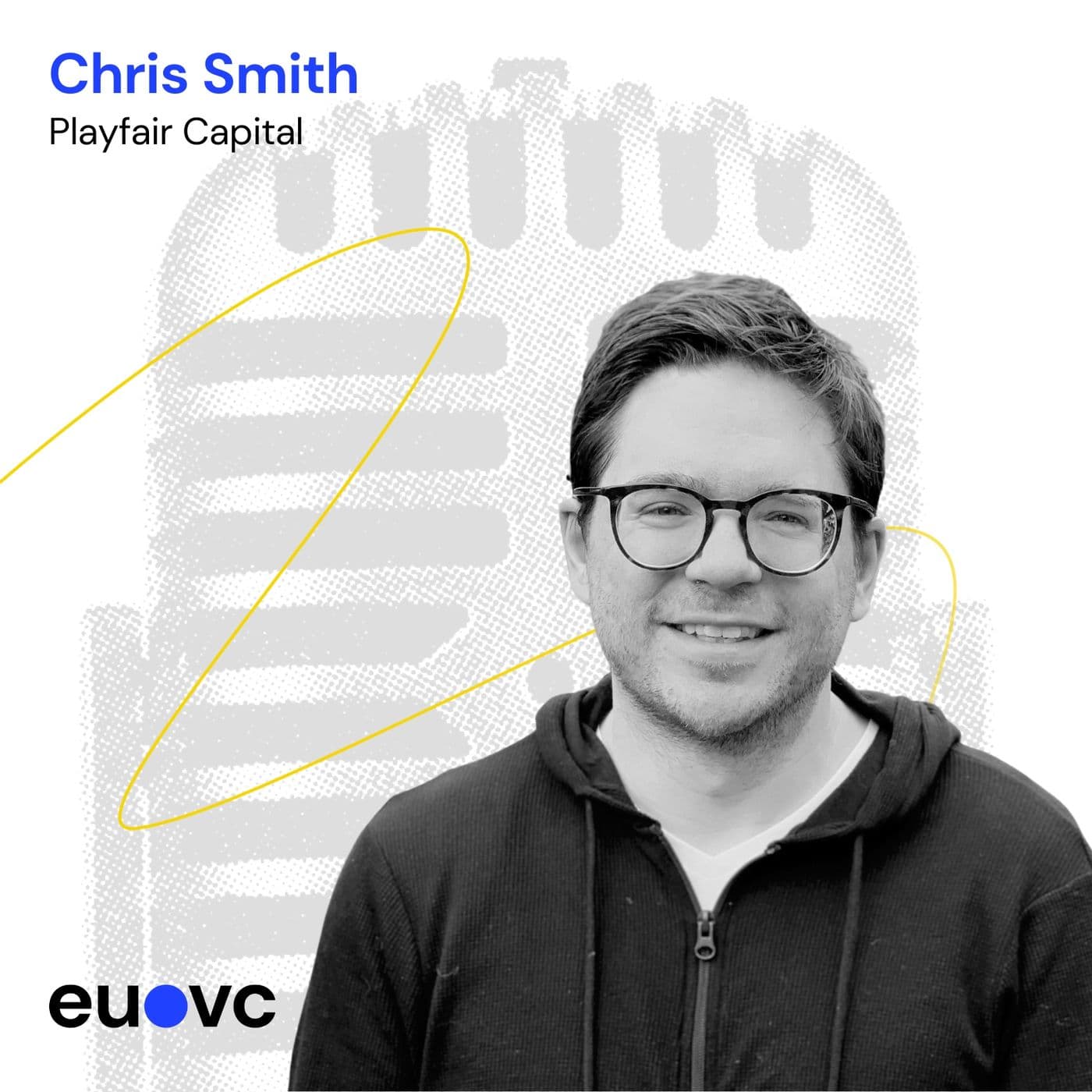
- Guest: Chris Smith, Managing Partner at Playfair Capital
- Focus: Discussing Playfair Capital's contrarian approach to pre-seed technology investing in overlooked sectors.
Key Points
Introduction to Chris Smith
- Background:
- Chris has a diverse career path, starting as a lawyer in private equity and M&A.
- Transitioned to entrepreneurship by founding a telecom business during university.
- Gained VC experience through angel investing and eventually joined Playfair Capital around the age of 36.
Playfair Capital
- Investment Strategy:
- Generalist VC fund with a contrarian approach, focusing on high conviction, low volume investments.
- Aims to make 6-8 investments per year.
- Currently investing from a $70 million Fund 3 with over 100+ portfolio companies, including notable names like AeroCloud and Thought Machine.
- Sector Focus:
- Pre-seed opportunities primarily in the UK, Europe, and Israel.
- Interests include:
- Autonomous transportation
- Business and industrial automation (AI, ML, computer vision)
- HealthTech (excluding diagnostics and therapeutics)
- B2B SaaS
Chris's Journey into Venture Capital
- Early Career:
- Initially pursued a career in law due to external expectations but eventually followed his interests.
- Gained experience through angel investing in Silicon Valley.
- Pivotal Moments:
- The dot-com boom and bust significantly shaped his understanding of market cycles and the importance of separating hype from sustainable trends.
Discussion on VC Contributions
- Value of VC Firms:
- Acknowledges that some VCs may overestimate their value to startups.
- Emphasizes the necessity of alignment and honest conversations between founders and investors regarding expectations.
Addressing Hype Cycles
- Contrarian Approach:
- Playfair aims to avoid investments in sectors currently experiencing hype.
- Chris highlighted the example of RecyclEye, a waste management company, as a positive investment in a traditionally overlooked industry.
- Data-Driven Sourcing:
- Review of 5-6,000 pitch decks annually helps identify trends and avoid overexposed sectors.
- Prioritizes long-term sustainable trends over quick wins.
Investment Philosophy
- Portfolio Strategy:
- Focus on concentrated investments, which necessitates a careful approach to risk.
- Avoids chasing trends like Gen AI unless they fit into a long-term sustainable model.
Sourcing and Investment Strategy
- Generalist Approach:
- Not overly thesis-driven, allowing flexibility to adapt to emerging technologies.
- Proactive Sourcing:
- Increased emphasis on outbound strategies to identify unique investment opportunities.
Reflections on Fund Management
- Single LP Structure:
- Maintains a single LP to streamline decision-making and focus on concentrated, high-impact investments.
- Future Fund Considerations:
- Open to the idea of bringing in external LPs if future funding needs grow.
Learnings from the Episode
- Historical Awareness: Understanding past market behaviors helps in navigating current investment landscapes.
- Media Consumption: Critical evaluation of mainstream media can prevent skewed perceptions.
- Patience and Hard Work: Long-term commitment and willingness to make sacrifices are vital for success in venture capital.
Shout-Out Segment
- Co-investor Highlight: Liz Christo from Stage 2 Capital praised for her efficient processes and active contribution to portfolio companies.
Quickfire Questions
- Advice to Younger Self: "Stop caring what other people think."
- Core Learning from LP Relations: "Tell the truth and be timely."
- Counterintuitive VC Insight: "Avoid hype; run away from the crowds."
Conclusion
- Call to Action: Encouragement for listeners to engage with the podcast, leave reviews, and stay informed about European VC developments.
- Final Message: Emphasizes the need for a European response to global challenges and the importance of acting collectively.
---
This summary provides a comprehensive overview of the key discussions, insights, and perspectives shared in the podcast episode featuring Chris Smith from Playfair Capital, highlighting the unique approach of the firm and Chris's personal journey in venture capital.
Written by AI. May contain mistakes. Listen to the episode to check what was said.
Transcript
Automatic transcript. May contain errors.0:09Hi, everybody, and welcome to the European VC podcast. And if you are one of those loyal longtime listeners, you may recall Chris from our 14th episode. And I'm going to do a little pause there just to reflect on the fact that we're now 220 plus episodes in. And it's been a really cool ride. But back to our guest. Chris is a managing partner at Playfair, a generalist VC fund with a contrarian approach to precede technology investing. They're based in London and Playfair invests across the UK and Europe with an internationally high conviction, low volume approach. making six to eight investment a year and preserving time, capital and resources to help companies post investment.
0:48Playfair is now investing out of their 7 million USD Fund 3 and has an established portfolio of 100 plus companies across two funds, including AeroCloud, Thought Machine, Andela, Mapillary, RecycleEye and Orca AI. At Playfair, Chris is focused on pre-seed opportunities in the UK, Europe and Israel. He loves finding companies operating in overlooked sectors that are ripe for disruption and is particularly interested in autonomous transportation, business and industrial automation, especially through AI, ML and computer vision, as well as health tech and B2B SaaS. And finally, if you're listening in and love our show, drop us a review, follow the pod and subscribe at eu.vc.
1:36Union of values. United and determined, we can serve as a model for other regions of the world. The nature of a problem requires a European response. Europe is a story of new beginnings. Let's start acting. This show is not investment advice and the hosts of this episode may be invested in the funds and companies featured. So, Chris, as David just said, welcome back to our little show here with the European VC. 200 episodes later, here you are back again. But let's get us started with your journey because you had a great story back then. I'm sure it's only gotten better since. So tell us, how did you get into venture?
2:23Yeah, so Andreas, David, thank you so much for having me back. Awesome to be here. So my journey into venture, it actually took a long time. So I was 36 when I got my first role at Playfair. And that obviously begs the question, what on earth were you doing in the 36 years prior to that? Obviously, a big chunk of it was like growing up and going to school, but kind of breaks down into a few things. So right out of university, I went and became a lawyer. And I was doing private equity and M &A law in the city, because a lot of people told me that's what I should do. And it sounded sensible. And actually, it paid pretty well.
2:57So I did that for about a decade. But whilst I was doing that, I actually set up my own telecoms business when I I was at university. It's kind of my first sort of step into entrepreneurship. I met a co-founder, had that experience, and we grew that business to about 14 countries. So there was the kind of founder piece over there. I also started angel investing. So I spent six months in Silicon Valley, started to really learn about venture all the way back to like George Dorio, like the founder. I started to understand kind of how it worked, what tech companies were doing, and started to angel invest myself made 15 investments over about 10 years and then the next move was actually to an operator role with a b2b telecoms company called plan.com based in the isle of man there a couple years a sales director three years running the software development and data science teams and then finally to play fair so it was kind of a meandering journey and i i just followed what i was interested in um whilst at the same time accepting that you know a lot of people didn't think it was a sensible thing to do and being comfortable with that.
4:01Would you also share, because we love asking this question, a pivotal moment in your life and how it has shaped you today as an investor as well? Yeah, you know, I think it was like the first, like the dotcom boom and bust sort of like 99 or 98, 99, 2000 was actually a lot more pivotal than I realized. I was still at school, but I read a book about boo.com, like I was interested in like web van, all these stories of companies that had these huge run-ups, tens if not hundreds of millions of dollars of venture going into them, and then kind of flaming out for various different reasons. And it's kind of made me as an investor very conscious to understand the difference between kind of long-term sustainable trends and hype.
4:45And I think that's particularly relevant now. We go through hype cycles much faster now. So whether it's like NFTs and metaverse, or it's VR or it's Gen AI now, these come around so fast, ramp up so quickly, and then most of the time go down as quickly as they came up. So everything's become a lot more compressed. But I think seeing it through that lens, this is not new, right? This is a phenomenon that's been happening for a long time. I'm trying to separate the hype from these long-term macro trends that do support good investments. This we are going to talk much more about. But before we dive into that, I want to take you to our little new invention, which for you, you've never tried before.
5:29So let's go to our take a stance route.
5:43So in this round, Chris, I will ask you to comment on this quote from Sabina in which she says I think VCs add way less value than they think they do. They're less pivotal to the businesses they're advising. Well, it depends what they think, doesn't it? No, I guess one thing to note about venture is that there is still a lot of and too much ego. So I think for whatever reason investors who have a checkbook, it kind of brings with it. Unfortunately, a little bit of arrogance, a little bit of entitlement, all these kind of behaviors that aren't great. And so I think a lot of those investors believe they deliver a huge value, when in reality, they don't.
6:27I think to answer the question, it's actually about alignment. So can investors do everything for a founder? Definitely not, right? The founder is the center of the story, the hero, however you want to see it. But I think as long as the founder understands what they're getting from the investor and they align before the investment, then actually I think they can deliver a really good amount of value. And so for us, maybe to give examples at Playfair, we help with financing and fundraising in the next round. We help with people strategy. We help with marketing. We help with PR. We help with sales and go to market.
7:02If you want those things, we're going to meet your expectations. If you want something else, we're definitely not. So I think it's about honest conversations and making sure there's alignment before the investment.
7:16So Chris, as Andreas hinted to, we want to deep dive a bit into this topic of hypes and fads and whatnot. And as you certainly know, and most of our listeners are aware that the sexy thing these days is to emphasize how contrarian we are and kind of show everyone that we won't be tricked into another hype cycle. But as I kind of funnily joked with Andreas yesterday, I said, well, it seems like there's no such thing as hype because everyone talks against it, right? It's this funny little concept that hype feels like a construct, but it happens. And getting from talk to talk is incredibly different.
7:51And we know that Playfair has had this focus on non-sexy industries. And I think a good example, actually, for the skeptic listeners is if we revisit episode 14 that we did with you, you actually spoke about being excited about the waste management industry, which wasn't something that we were hearing that much, right? I think that's a cool little thing that we can share and show about you and Playfair. But I'd love to ask you, could you share with us how you protect yourselves at Playfair from these hype cycles? And if possible as well, share some examples of companies in your portfolio that are an expression of that.
8:27Yeah, of course. So, yes, could you mention waste management? I mean, Recyclized is doing great things there. And I had a previous angel investment actually called Compology that was also doing sort of waste management optimization. organization in that case it was around dumpsters and rooting and everything else uh they got acquired by roadrunner recycling about a year ago so it's kind of i don't know i it's it's kind of in my dna and it's in the in the firm's dna that we generally run away from from kind of hype i think one of the things that really helps and as a starting point is we see about five to six thousand pitch decks a year so we've had an open pitch from on our website since the beginning of fund two that gives us some really unique insights because we see what founders are working on and we see what the trends are and we see what's being overexposed or where founders are over indexing and i think just to give one example there kind of in the gen ai space we've seen between eight maybe 10 companies doing like sales pipeline optimization like gen ai that sits on top of your CRM.
9:28And like, it's cool. And like, there's a use case for it. But it's kind of like, it's an optimization problem. It's not solving something fundamental. And you know, a lot of people are doing it. So we get the benefit of seeing where we don't want to invest from the trends that the trends that we see. And I think more broadly, we just kind of think, how is this going to be in 5, 10, 15 years? And I just I think sometimes in the industry, there's like this absence of long term thinking. So it goes back to my point about the sort of dot-com boom in like 1999, 2000, it goes back to like, you know, when SVB kind of fell over.
10:02And I remember acting on the Lehman Brothers bankruptcy when I was a lawyer, like that perspective helps, you know, you need to have kind of a long-term perspective. And I think also founders sometimes, and the industry is guilty of just not really focusing on the problems. Fundamentally, right, tech is trying to solve problems. If it's a really sexy bit of tech, but it doesn't solve a really fundamental problem, it doesn't really matter. So maybe to just take one example in the portfolio. I mean, I think AeroCloud is a really interesting business. So they work with airports and they are basically like the operating software for airports.
10:41Traditionally, it's either been the airport if they're smaller was like using Excel and WhatsApp and phone calls to just like manage these hugely complex organizations or they use like one of the incumbents which is like on-prem super expensive not very flexible doesn't do what they want to do and this is a big problem for airports because they're kind of blind on their operations they can't react when there's bad weather they don't know how long it takes someone to go from like check-in through security through to the commercial side of the business so they can't optimize that so really hard problem and also an industry where founders are like a little bit scared a little bit put off to get involved because there are big incumbents with big market caps uh the sales cycle is really tough you know there's a lot of like rfps and public procurement so i think that's one example where we actually ran towards that we're like well okay there's lots of things to put you off as a founder but if you can break through the opportunity is really significant could i ask you chris because i'm trying to marry a couple of different data points that we've gotten on playfair already in this conversation, right?
11:46You said that you only do six to eight bets per year. Obviously, a quite concentrated portfolio compared to many VCs. And I'm trying to then marry that. And you do pre-seed, seed, and actually oftentimes pre-seed. So in that sense, it's very concentrated compared to many that would be navigating that space. I'm guessing what I would normally say is that when you do that early stage investments and at the same time do concentrated bets, you don't want the risk profile of betting on something that is traditional VC play, meaning that, okay, we go for the unbounded upside and there's a big chance that we're not going to hit the one that's going to win, but we're comfortable with that because we've made a lot of bets.
12:43naturally given your smaller portfolio size, you can live with that risk profile. So for that reason, you're betting differently. Am I right in saying that that's also a bit what informs you when it comes to then saying, no, we don't want to bet on the hyped things because there you know there's going to be a shakeout of all the different VC backed companies trying to hit this Gen.ai opportunity that all of us are trying to chase right now, because we can all see that Gen.ai is definitely going to make huge differences for the sales cycle, for the sales outreach of anyone working in a CRM, right?
13:20It's obvious to anyone. And there is going to be someone who's going to make a really big win here. But is Playfair going to be that one hitting that bet? Well, if you did 30 bets, you'd maybe take that bet. But if you only do six, I'm not going to take Is that part of the thinking behind saying, okay, we're going to steer away from the typical VC type investments? Yeah, I mean, I think that's a really great observation. So, yes, I think if you're looking at something like Gen.AI, where the long term impact is going to be significant, but short to medium term, it's really unclear who's going to win.
13:56You need to spread your bets, right? And so the example we use, the sales optimization, we actually met a team who was outstanding. And then a week later, we met another team who was outstanding. like well there are six to eight bets it doesn't make sense if i'm writing 20 30 40 checks a year and i can go into both if i don't have a conflict issue that that makes a lot more sense so yeah i definitely think that is a little that's a big part of it um i think actually specifically on on gen ai is i'm not sure who's gonna win that's the other thing that's informing us on that particular area so i actually think the incumbents are super well placed whereas in an industry like let's go back to error cloud actually let's go back to the airport business there's like two big incumbents and they are huge and they're about 30 40 years old and if they change their model they're going to cannibalize their existing revenue streams and they just don't move fast it's not in that culture if you look at gen ai and you look at the sales example actually like hubspot salesforce pipedrive these are not companies that are that old they're not that you know far from being a startup and so they can adapt.
14:58So I think trying to figure out who is going to win when there is a new piece of technology in the market is also a big part of what we do. I'm actually interested, Chris. I really enjoyed that this last little bit of the conversation was super insightful, but I'm actually interested in terms of how this informs your focus on specific verticals and or the way you source deals? Because I would imagine you are a bit more taking this kind of, I wouldn't say a hunting approach, but almost a hunting approach where you kind of have some areas mapped out that are more interesting to you instead of others.
15:38But I'm guessing here. So I'd love to hear a bit how you think about that. Yeah, so we're not too thesis driven, actually. Like I think the benefit of being a generalist VC is that you can change, you know, as industry changes, new technology comes along. I think we do those source from a bunch of different places. And if I look at Fund 3 versus Fund 2, there's two main changes. One is that outbound has become a much bigger part of our sourcing strategy, like data driven and sort of proactive. And actually the company I put on LinkedIn this morning, the company that we're just investing in is a German robotics business.
16:16I can't give away much more than that right now. but we wouldn't have seen that had it not been for the outbound data strategy and that's the type of company we love because you know a lot of vcs don't like hardware a lot of vcs don't like robotics you know we we do so i think that's definitely means we need to do a lot more outbound and have that sort of more targeted approach then on the inbound it's a filtering process right we have an amazing team who basically just goes through and we kind of figure out does that fit you know generally what we're kind of what we're looking for on robotics i actually have an invitation for a VIP trip to Odinson, my hometown for robotics investors.
16:52So if you're very, very much into robotics, we should actually guide you in for that as well. That's also, I think my team would say I'm obsessed. So that's kind of the way it happens, just to give you maybe how it happens with the team. Like we kind of all have our areas of interest. And then almost throughout the year, we've become really focused on particular things. So for me, it's been robotics the past six months, made two investments there. They'll be announced later this year. You know, one of my team is looking at sort of energy and specifically like sort of micro generation and how energy gets distributed and all this kind of stuff.
17:25So we then really follow that through to the end. But we're very flexible and we can look at basically whatever comes up. I'm curious, Chris, because you said something else that I wanted to just touch on. And that is, and to our audience that don't know, maybe you're a single LP. but yet you're still running with a fund structure where as you just said what a pivot from fund two to fund three strategy is that we're now doing more outbound so why with a single lp structure do you still think in the mindset of funds and shifting strategy per fund yeah that's a great question so i'll actually just add something there which is that we had an internal debate probably two years ago now about should we just be an evergreen fund should we just be like we have this like pot of money that's refreshed every year we can invest we didn't do it because it would drive us insane is the short answer so like you need to know right as when you're running a fund what is my main goal today and so when you launch a new fund suddenly you switch it right okay well my main focus is on finding new opportunities for the next two or three years or in our case maybe up to four investing in those and supporting them is you get towards the end of that fund, you're starting to harvest them, you're starting to find M &A opportunities, whatever it is.
18:39If you're evergreen, you're like, you're all over the place. You don't really know what is my main focus this quarter? Am I meant to be deploying? Am I meant to be harvesting? Whatever. So we wanted to create that. We wanted to create that structure. I think it's also super helpful for founders to know where we are. So like, what does evergreen really mean? Actually, if we announce a fund three, like we did it two months ago, I think three months ago, it's a$70 million fund. We want to make 25 investments over the next four years. It's really clear where we are in our deployment cycle. And that gives sort of some comfort, I guess, and reassurance to founders.
19:09I guess there's also maybe two other things. And correct me if I'm wrong, but I imagine there's also something because you are styled completely as a normal VC. You're not styled as a family office or something like that. But that also means that you're very much part of the VC crowd. And if you were an evergreen fund, then I guess that there were conversations and best practices and that kind of thing that would be a bit different for you. And thus supplying best practice and flows and eps and flows in your work and so on would actually be a bit difficult, you know, unnecessarily. Am I right in saying that there's something to that as managing partners as well?
19:52I mean, it also makes it easier to like resource planning. Right. And it makes it easy to think about hiring. And, you know, we've worked on two new brilliant analysts, Joao and Claire, joined us for like four fund three. So I think it allows you to create that structure. I think it also creates some discipline as well. You know, I mean, we have a single LP today, you know, fund four, fund five, fund six, you know, who knows what's going to happen, right? And I think we're not totally against the idea of external LPs. It's just we haven't needed it. We've been fortunate. We were able to return a good, you know, more than one X the first fund and that got recycled.
20:23And so it's all been fine. But I think having the discipline of like a fund with multiple LPs is just a good place to be. Am I right in saying that there's also something around talent attraction, meaning that both that you can offer a partnership role or whatever in that fund and that that's a bit easier, but also in terms of talent wanting to go to something that's a little more blue chip so that whatever they learn there is more transferable? Yeah, I think so. I mean, probably the same thing that helps me focus, which is like, right, we've got Fund 3 up and running. We're going to deploy it.
20:58This is what we need to do. It really applies to everyone that joins Playfair, works at Playfair as well, is that they have a really clear understanding of where they are in kind of the journey. And yeah, absolutely. When we hired the two analysts who joined us, we went out for that process a little before we announced Fund 3. But the whole point was we're hiring you to help us deploy and scale as we do a third fund. you know and that was a really you know successful process we've got over a thousand applicants to it if we'd said we're an evergreen fund and we're trying to add a little bit more capacity i don't know whether it would have been the same but yeah definitely it definitely helps in giving people a clear picture of also the direction you're going in right because our first fund was about 20 million pounds second fund was like well i switched the dollars but 32 million dollars the third fund is 70 million dollars so that's important right that's a vote of confidence from the lp a vote of confidence that what we're doing is kind of working.
21:47It means that if you're going to come work for us, it's going to be a good place for you to get experience and kind of build your own profile. Yeah. It's always, I think this is always incredibly interesting. You said before, a bit, you know, as a side comment that you have thought about or you're not entirely closed off to the idea of taking in external LPs. I'm curious to hear just if you would open up a little bit the reflections there. We can cut it from the conversations if we don't want it in the interview. But I'm just too curious because I think it's so interesting when you have the trusted mandate of one LP.
22:23And then how do you think about whether you want to stay like that or the LP wants to say, well, there's no reason why we only leverage my capital and whatever I can bring to the table. I actually have three other friends that are equally interested in blah, blah, blah. You know, they trust me. So why don't we, you know, I imagine there's a lot of interesting conversations between you and your single LP in figuring out exactly how you're going to take the firm forward. Yeah. I'm happy to talk about this thing. Super interesting. So my partner, Henrik, came up with the best analogy I've heard, which is that, you know, we treat our firm like we're a company, like we're a startup.
23:02so for us fund one was like pre-seed we were kind of trying to figure out what we were doing um we ended up investing some good investments but it was straight we had everything from like we're investors in stripe and everyone's like oh amazing but yeah but it was the series c you know it was like it was a little it was opportunistic it was actually brilliant right it was it was a great i'm sure it's a great time to be at playfair we made some good investments but we were figuring out who we were what value we added to founders and how we wanted to invest fund two was like our seed round we kind of we figured out a bunch of stuff we were only doing seed and pre-seed um we kind of honed in geographically it was going to be like uk and europe and a bit of israel so again we started to figure things out we grew the team a little bit i'd say we're now fund three is our series a so we kind of got product market fit and i think we then really focused the strategy just on pre-seed and the way i say we got product market fit is because we looked at all the data we have about our fund.
23:59We're still too young to have any like meaningful DPI on fund two, but we have like 1.2x on fund one. So that's great. The TVPI is looking good. Everyone discounts that nowadays. So what we looked at was our series A graduation rates and it was like 75 % from fund two. And we're like, okay, wow. What's the average? Like 20%. So we kind of figured out, yeah, we're doing something right. It's working. I'm going to into it. So this is our series A. We have product market fit. We've got more capital and we're going to keep growing and keep growing. For the next fund, fund four, it's series B where we need like gross capital.
24:31And I think the question then and whether we take external LPs is about how much we need. Like, I think we're going to always want to be six to eight investments a year, concentrated, you know, do a lot of work with those founders. So we probably don't need that much more money, but let's say we need a hundred million dollars. Is that going to come from our sole LP? You know, That's a conversation to be had. If we need more, that's why we'd go external, because we need the amount of capital to continue the strategy that we want to deploy. And on that note, Chris, it's now time for the shout-out segment.
25:09Now I'd like to ask you, Chris, to give a shout-out to a co-investor, angel, or a random LP for being awesome. And of course, share with us the story behind that awesomeness. There's a bunch of people, right? There's a lot of good investors out there. There's a lot of good people in the ecosystem. But for me, Liz Christo at Stage 2 Capital is my shout out. And what's the story? I guess it's linked to AeroCloud again, the company I already mentioned. But Liz led the Series A round. And she, first of all, made a great impression during the actual round process. Super efficient, quick process. Didn't take up too much of the founder's time, but was really thorough, really understood the business.
25:46business. And now being an active board member has delivered everything that they promised. So really strong on sales and go to market, really strong on strategy and finance, and also really great. They're based in the US and they're helping the company figure out key hires and their strategy deploying in the US. So yeah, Liz is great. And I think one of the things for me is when you have an investor come into the company, I don't want there to be a shock. I don't want there to be a change in culture. And stage two have been exactly what I would like. So really hands-on, really supportive, and hopefully the way we like to do things as well.
26:26So Chris, now let's turn to our three biggest learning section. And I would love to just ask you to give them to us right up and quick. Yeah, I think for me, the three biggest thing so first of all history repeats itself we talked about it earlier in the in the in the podcast but like for me this really came home when we had the svb situation and all the founders were panicking and i basically said look i i worked on leeman like i have a really good sense of how this is going to work out and these are the kind of the steps you need to take and basically don't don't panic um so history repeats itself and we can learn a lot from that same with the dot com boom and bust in like 99, 2000.
27:07So we see these patterns repeat themselves. If we understand that, we can kind of make much better investment decisions. Can I stop you there, Chris? It's a completely irrelevant question. I just thought of it. What's the average age of your founders? Do they remember Lehman? No. Do they know what that is? I reckon the average age of our founders is definitely less than 30. We're probably talking like 27, 28. More important, and the team. My team is like, no one is above, no joke. Basically the team is mostly under 30. so that's a real advantage right like i'm the old guy that's helpful because then i can say i think we've seen this before or don't worry about it and have some like give them some yeah now we're in the in the realm of bonking the episode structure i have to ask you because i know that you're you have a journalist background as well and you you love or i am not a journalist background but i know that you write a lot and you write actively for forbes um um so i have to ask you, we've got the likes of the guys on the All In podcast that are very much saying that you cannot do venture as a young guy and you can definitely not come out of school and just start being a VC.
Read the full transcript
28:16I would love to ask you to just take a stance on that one. No, I don't agree, but I think there's a nuance. So as an individual, I think you can be really successful in venture coming up in venture. However, I think the best firms have a mixture of age groups, backgrounds, you know, different opinions. Because like my team, if I take, I think my partner Henrik, right? He's still super young. He did some things before he started at Playfair. Like he was crowd investing. He had his own startups. He had a little bit of experience there. He's a young guy. He's absolutely brilliant at working with founders and sourcing investments and whatever else.
28:56But then when he asked me things about, what do you think, what's your perspective on this? And I can bring that longer term perspective or something about being a lawyer or being an operator or whatever it is. So to me, if you're working as a team, you can definitely have a blend of both. Interesting. Thank you for that. Now let's go back to the three biggest learnings. All right. So where are we at? We're at number two. So number two, I feel like it was in the four-hour work week that basically Tim Ferriss was like, just ignore the news. And I thought at the time, yeah, whatever. like i mean it's an awesome book but like how practical is it really um but i get i get it with directional rather than like an actual recommendation how to live your life but i actually think ignoring the mainstream media is something i'm increasingly doing because the it's just gone to a point where everything is super polarized everything is clickbait everything is trying to get an emotional rise out of you so you go one morning and you read like the the telegraph in the uk and then the guardian and the daily mail everyone's trying to piss you off and wind you up just from a different point of view and i have no time for that anymore and it makes you also it makes you reactionary right it makes you feel oh i need to do something about this now or like one minute i think london is going to be like it's absolutely fine like london's crushing it as a tech ecosystem the next minute i think it's falling apart we all need to leave and go to dubai like it's kind of stupid so i actually try and consume less mainstream media um and spend time on other things whatever it is like working thinking walking just ignore the mainstream media is definitely number two.
30:28Number three is probably like super cliche, but work hard and be patient. And I say that because a lot of my old lawyer friends, when we meet up for dinners or whatever it is, they're like, how did you get into venture? Like, because I think they'd be interested in doing something similar. And I'm like, well, I tell them the story, which we said at the beginning of the pod, it took a long time. You know, I was like mid, late thirties by the time I even started. And I said, oh, and by the way, I took a bunch of pay cuts along the way. And I never like geared myself up. You know, I never had massive mortgages or lived in like this flat and hamstead or whatever it is.
31:03And they immediately changed the topic. Okay, cool. Well, in that case, I'm going to stay being a lawyer. So I think, you know, being patient and actually making some sacrifices along the way is definitely like the best thing that I've done. And it's a mistake people make, right? You get into a certain environment. A lot of VCs do still come from banking and consulting in those places. and they get a certain salary and they're like, they have to keep up, right? With their peers. And so they rent a crazy flat or buy a crazy flat and it locks them in. So just don't do that. Do not gear up if you want to basically follow what you're passionate about.
31:36Let's have a round here where we each tell us what we've recently given up because we've chosen the path of venture. I just sold our second car just because I had to finance that we had another car and also building a UEC and not pulling out what, 10, 15K per month.
31:55Give me a personal sacrifice, Chris. I mean, my personal sacrifice is going to be different, but it's going to be living in Devon and having to come up to London every single week because I want to spend time with my team. I have to be in the office. I love what I do, but I also love my wife who works down in Devon. So that is my personal sacrifice. A little different, but it is fun. I have a similar one, which is I'm in Esper, which is in the middle of nowhere. So I'm with my wife and children. when I'm definitely not with anyone in the venture ecosystem. And that's why you have a podcast, right?
32:29So you can connect with everyone, even though you're an expert. Otherwise, people wouldn't take my calls. So now I'm just having to say, I'm recording this one. And then suddenly people talk. David, give us a personal sacrifice. I've done exactly the same as you, Andreas. So selling the car to have more money. So I don't technically own a car. I think that's a good example. And even I went through the process of buying a new house. And obviously, if I were working in a good-ass, beautiful office being paid whatever amount that would be, I would probably have bought a bigger, nicer, like shinier house.
33:04And I bought an older house that I had to fix up, which are going through the process right now. But hey, I think, Chris, what you say is spot on, being patient, right? It's a long-term game. And I think many, many times that I don't know if it's the media adventure or just the way people communicate and are always selling, because I do think GPs are master salespeople that it just just comes across as like everything's so exciting and so easy and so quick and so whatever. But it is incredibly long, long term. I want to ask you a question, Chris, because I share your views. I haven't watched mainstream media or read in I don't remember when, but I do find myself oftentimes.
33:46And this happened to me this weekend. I went to visit the family and they're like, oh, did you guys hear about the issue in Hawaii as an example? And I was like, what happened in Hawaii? I had no idea. I had really no fucking idea. And obviously, we all know that we live in information bubbles. And I think we all know how dangerous that can be. I'd love to ask you, how do you strike a balance, right, of not reading mainstream media, but making sure that you are informed enough on world affairs and local politics, whatever you care about and you think is important for you as an individual? Just as one counterpoint, actually, before I answer it, super interesting, this guy, I was actually a friend of my dad's, he was a CEO of some big property company, I don't remember the details, but like a really successful business person.
34:32And he used to actually read all of the tabloid newspapers every morning. And my dad was like, why do you do that? It's trash. It's not really what's happening. And he said, well, I need to understand what my employees, what my team, what all the stakeholders I work with, what they're thinking and what they're concerned about. And I think that's a really good kind of illustration of like, you can't be out of touch. The problem of sort of not reading the mainstream media is you become in your own bubble and then you don't know exactly as you were saying. So I think for me, it's actually, it's kind of skim reading.
35:07So I still go to those sites. Like I will still go to the newspaper sites. We watch the news headlines every night. We're like such an old couple. It's a bit tragic, but like the 10 o 'clock news, we'll watch the headlines together. And normally we'll watch the headlines and it will literally be 90 seconds. And we'll go, okay. So we know about like the fire in Hawaii. We know about like the junior doctor's strike. Like if something interesting comes on, of course, we'll watch a little bit longer, but I actually think taking the headlines and having like an understanding of what's going on is important.
35:37But then it's the next step. If it's something that interests you, you then go and find out more from trusted sources or better still like multiple sources. So we kind of have a bit of a joke in the office. It's like in the UK, Telegraph and Guardian are almost like the polar opposite, right? Left wing, right wing, whatever. So you basically go, you read the story, you get the spin on it and you also see the different photographs they're using or whatever politician person it is like it's kind of funny right but i think if you can have that level of critical thinking then you're kind of in a safe space so to me it's like skimming and then going deeper but like making sure i look at multiple sources yeah that's a very good point a very proactive way to go up it's crazy how the world has changed right when talking to family members that come from different generations like how the world has changed where it used to be that source of information that you would trust and now and i very much agree with you chris by the way you You actually really have to have that critical thinking ability and being able to understand, okay, what is the agenda behind this media outlet?
36:33Okay, got it. Now I'll compare it to that one. And you need to go through that process. That's a very, very kind of scary realization, but I couldn't agree more. Chris, it is now time for our quickfire round, where we will ask you three quick answer questions. And now, the quickfire.
36:59What advice would you give your 10-year younger self? Stop caring what other people think. Like, I think, I look back on my time as a lawyer. I was in a blue suit, black polish shoes, tie, being someone that everyone thought I was meant to be, and everyone told me it was great and it was the right thing to do, and I realized it wasn't me, and I hated it. So stop caring about what other people do. It's one of the most freeing things you can do. What are your core learnings from managing LP relations? Tell the truth. So I think it's so easy. Venture, we talked about it, is like it's a sales business, right?
37:38You're selling yourself to LPs, you're selling yourself to founders, whatever. So I think telling the truth and doing it in a timely manner is the most important thing. Stuff goes wrong all the time. LPs understand it. You'll build that relationship, that mutual respect and trust if you're honest about what's going on. And what's the most counterintuitive thing you've learned since you've been in venture? Well, I don't think it's counterintuitive anymore, but I did think it was avoid the hype. Like literally run away from the crowds, run away from the hype rounds. That is always a great thing to do.
38:16All right, everyone. If you enjoyed this episode of the European VC podcast, drop us a review, follow the pod and subscribe to EU.VC. I'm David, the LP syndicately joined by my co-host Andreas the Hypeman. Thank you so much for tuning in today and we can't wait to see you all out there.
38:44United and determined we can serve as a model for other regions of the world. The nature of a problem requires a European response. Europe is a story of new beginnings. Let's start acting.
From the publisher
Based in London, Playfair invests across the UK and Europe with an intentionally high conviction, low volume approach: making 6-8 investments a year and preserving time, capital and resource to help companies post-investment. Playfair is investing out of their $70m Fund 3 and has an established portfolio of **100+ companies across two funds including AeroCloud, Thought Machine, Andela, Mapillary, Recycleye and Orca AI.
At Playfair, Chris is focused on pre-seed opportunities in the UK, Europe and Israel. He loves finding companies operating in overlooked sectors that are ripe for disruption and is particularly interested in autonomous transportation, business and industrial automation (especially through AI, ML and computer vision), HealthTech (except diagnostics and therapeutics) and B2B SaaS.


