
In short
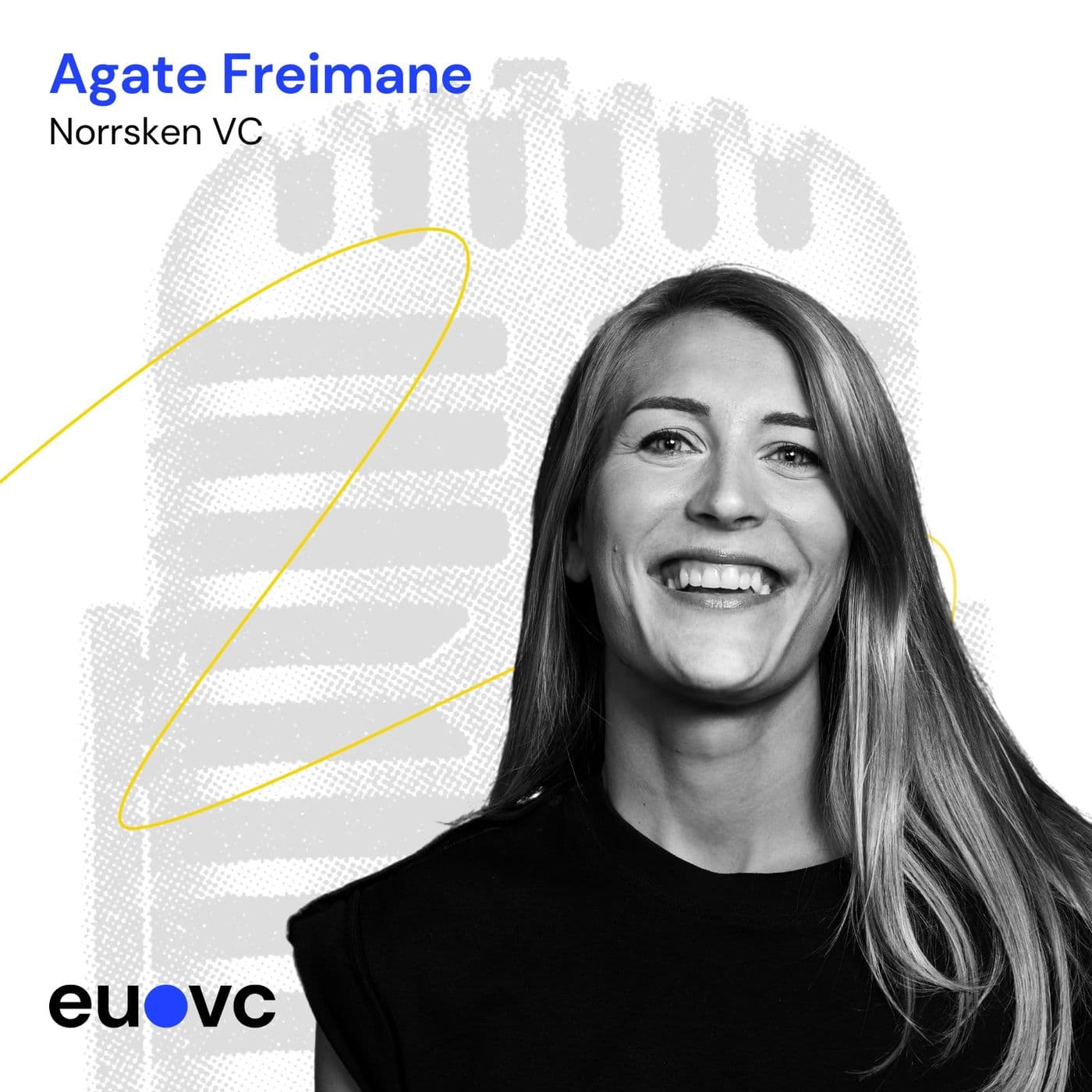
EUVC Podcast Episode #216 Summary: Agate Freimane, Norrsken VC
Podcast Overview
- Title: EUVC
- Hosts: Andreas Munk Holm and David Cruz e Silva
- Focus: European Venture Capital (VC) insights and discussions with prominent figures in the industry.
Episode Details
- Episode Title: EUVC #216 Agate Freimane, Norrsken VC
- Description: Agate Freimane, Founding Partner of Norrsken, discusses the impact venture capital landscape in Europe, particularly focusing on climate tech investments.
Key Topics Discussed Introduction to Norrsken
- Norrsken is a leading impact venture capital fund, part of the Norrsken Foundation.
- Focuses on early-stage startups, primarily in climate tech.
- Investments include notable companies such as Northvolt, Einride, 1komma5, and Matsmart.
Agate Freimane's Journey into Venture Capital
- Freimane transitioned from a finance background (Morgan Stanley) to startups.
- Emphasizes the importance of founder empathy gained through her startup experiences.
- Highlights the serendipitous move to Stockholm and the establishment of Norrsken VC.
Key Themes in Impact Investing
- Impact Investing in Europe: The evolution and growing importance of impact investing.
- Opportunity Funds vs. Impact Funds: Discussion on the declining appetite for opportunity funds among LPs (Limited Partners) and the challenges of balancing interests in VC.
- LP Appetite: Insight into the changing landscape and the need for dedicated impact funds as generalist funds evolve.
Challenges and Opportunities
- ESG Reporting: The rising demand for ESG compliance in investment decisions and the impact it has on capital allocation.
- Impact as a Business Model: Challenges in defining impact and ensuring it is a sustainable part of the investment strategy.
- Finding the Right Problems: Emphasizes the necessity of identifying significant issues within the impact space to drive successful investments.
Lessons and Insights from Agate
- Core Learnings:
- Emphasizes the importance of patience and aiming for 80% rather than perfection.
- Best decisions often come easily when aligned with one's gut feeling.
- Importance of self-awareness, particularly regarding ego in investment decisions.
Team Building and Culture
- Discusses the significance of nurturing a healthy team culture and the challenges of maintaining ego balance within VC teams.
- Encourages open dialogue and vulnerability within teams to create a supportive culture.
Quickfire Round
- Top Tips for Emerging VCs:
- Filter LPs effectively to save time and energy.
- View the first fund as a business card for future fundraising.
- Stay lean and flexible in the early stages to iterate quickly on strategies.
Final Thoughts
- Agate Freimane expresses optimism about the future of impact investing in Europe, acknowledging the gradual shift in LP attitudes and the emergence of impactful startups.
- The conversation highlights the dynamic nature of the venture capital landscape, particularly in the context of climate action and sustainable investments.
Conclusion This episode provided valuable insights into the impact investing landscape in Europe, shared personal experiences from Agate Freimane, and offered practical advice for emerging VCs. It underscores the importance of adaptability, culture, and a clear understanding of the problems to solve in the investment space.
---
For more insights into European venture capital, be sure to follow the podcast: [EUVC](https://eu.vc).
Written by AI. May contain mistakes. Listen to the episode to check what was said.
Transcript
Automatic transcript. May contain errors.0:00Today we're happy to welcome Agate, founding partner of Norskin, one of Europe's leading impact venture capital funds, born out of Norskin Foundation, which hosts events, operates co-working spaces, and runs accelerator programs across the Nordics, Iberia, and Eastern Africa. Their fund is dedicated to investing in early-stage startups, focusing primarily in climate tech, and they've led the investment into almost 50 companies. Highlights include Northvolt, Ayn Ride, 1 ,5, and Matt Smart. If you're listening in and love our show, drop us a review, follow the pod, and subscribe at eu.bc. This would have been a challenge.
0:37Tear down this wall. It's more than just an ally. This is a union of values. United and determined, we can serve as a model for other regions of the world. The nature of a problem requires a European response. Europe is a story of new beginnings. New beginnings. Let's start acting. This show is not investment advice and the hosts of this episode may be invested in the funds and companies featured. Hi, everybody, and welcome to the European VC Podcast. I am David, also known as the LP Syndicate Lead, and I am joined by my dear co-founder, Andreas, also known as the LP Hype Man. Let's start things off with how you got into venture.
1:25Care to share that story with us? My journey into venture started six years ago when together with my three other partners, we started to work on the 1.0 version of Norsk NVC. And before that, I had a finance and startup operator background. Started my career by spending the first six years at Morgan Stanley. But to be honest, I've always knew that that's not going to be my place. I've always had the startup somewhere in my DNA. So it was just a matter of time for me to jump ship. And actually, when I was ready to leave Morgan Stanley for a while, I was about to start something of my own, but sort of in the process of dating potential co-founders, I met two other amazing founders who were just about to start BrickFest.
2:12And I was so blown away by the vision. I thought that my background matched exactly what they were about to do. So instead, I decided to join them as the first employee and super grateful for that experience. it's been really, really formative for me as a VC because I've really seen the VC process from the other side of the spectrum. And that has really breeded the strong sense of founder empathy. I have made a personal pact with myself to never ask a lazy question to a founder. I truly, truly think that there is such thing as this stage appropriate question or there are questions that, hey, do your homework.
2:52If this is, I understand if it's a small market and, you know, there are nuances to it. But if it's a straightforward market, do your own market sizing exercises. You know, don't waste the founder's time asking questions that you know answers to. But anyway, after my startup journey, after living in London and New York, my husband and I decided that, hey, why don't we give it a go and move to Stockholm? And that was probably one of my most serendipitous moments of micro year, because I quickly landed in the Stockholm startup ecosystem and heard about this weird thing called Norsken that one of the co-founders of Klarna was just starting up.
3:30And the vision of Norsken is to build globally the most ambitious ecosystem for supporting impact tech entrepreneurs because we really think it's down to them to fix our world, fix our planet. And of course, no ecosystem can exist without capital. So I came on board to really figure out what the investment arm and what the VC structure within Norsken could look like. And that was now six years ago. And since then, we've raised three funds, invested in over 40 companies and have few unicorns under our belt and hopefully more to come. So now I'd love to hear you share a pivotal moment in your life and describe how it has shaped you as an investor.
4:11Well, what has shaped me as a person and as a venture investor is just that I have moved around a lot in my life. I'm born and raised in Latvia, but was lucky enough to get a scholarship and study in the UK. So started my career there. And throughout my life, I have moved so many times, which basically means that, you know, I've had to restart my life over and over again. And the good thing coming out of that is that it's given me this really strong sense of self-confidence that I'm going to be fine literally anywhere in the world. I mean, you could literally drop me anywhere in the world tomorrow, and I know that I'm going to be fine.
4:46I'm going to find my way. But how that has contributed to my kind of VC track has been that I think generally I'm good at building relationships. I have met people from different walks of life, different backgrounds. And I think that's given me an edge to somehow find that common thread, how to connect with anyone. And I really enjoy it. And that's the favorite part of my day-to-day job is connecting with founders. And as you know, there's no such thing as one type of founder. They come in all shapes and forms. And I find that super, super fascinating. So, but professionally, it's really hard to define kind of one pivotal moment.
5:31But, you know, surprise, surprise, I have made, you know, my fair share of mistakes in my VC career. And even though they're the most obvious ones, until you get to experience them on your own skin, it's just theory. You kind of have to feel them on your own skin to truly, truly integrate that. It's actually really funny. When we started up, one of our kind of advisors to us at Norskin VC, he's a true VC veteran, 20 years of VC experience behind him. Don't want to say his name because I don't know if he's comfortable me sharing this in public. But when we got started, literally the quote was, he's like, yeah, you guys have to invest 20 million euros and then you'll start to know what you're doing.
6:15But the critical mass is 20 million euros for an early stage investor. And then, you know, we're way past that mark. But I 100 % understand what he means because that's the critical mass of mistakes that you make on the entry, enough of the critical mass of the mistakes that you make on the follow on rounds. So yeah, I really, really agree that the critical mass is 20 million that you have to invest in yourself as a VC investor. I mean, first one, the most obvious one that everyone will tell you over and over again, it's team. But again, it really takes it experiencing on your own skin when you know when you really fall in love with everything else but the team.
6:57But you just think that, you know, this is such a ripe opportunity. The market size is huge. Look at the traction. You know, this is flying off the shelves. You know, it could be an AI running this company. But it's really, really never in the case. You know, good never cuts it. And at some point, the growth is going to start to plateau and, you know, there are going to be hiccups on the way. So when it comes to team, never, ever compromise on the team. And then other mistakes, like, for instance, for example, not taking as naively the notion of, hey, you have an awesome growing free community that's not monetized today.
7:32There is engaged community. Yes, there'll be plenty of ways how to monetize that. I mean, of course, we have these examples on the podium, the likes of Slack, etc., Twitter, Facebook, etc., where we look at them and then we think that, hey, we're going to be able to do the same here. It's so far and in between. And if I'm ever going to invest in kind of a freemium to premium model ever again, then the early traction just has to be off the charts. You know, it's even great is not going to cut for you to really believe that you're going to be able to drive the freemium to premium journey.
8:17So now let's go to the take a stand section where we will ask you to comment on a quote given by another guest of ours. Every VC fund is an impact fund. I knew you were going to ask that. I get this question all the time. I think I don't remember the last panel that I have been on that I didn't get the question from generalists challenging me on, you know, is there kind of a gap in the market today for an impact investor? Because today, of course, more and more generalists kind of recognize that some of the most valuable companies of our decade are going to be impact companies for very obvious reasons.
8:53Because, you know, of course, the bigger the problem, the bigger the opportunity. And at the moment, you know, it's hard to find more obvious opportunities than those tackling climate change or some of the social issues that we have. but to answer your question no i don't think that every every vc fund is an impact fund i truly hope that that could be the case but i'm also a realist i know that that's never going to be the case and the way i kind of think about this question is that you know there are generalists that will generally invest across a lot of different kind of verticals you'll have your fintech vertical your healthcare vertical, et cetera, et cetera.
9:34And the same is now happening with impact that as a generalist, I think you're really behind the trends. If you haven't added your impact or climate vertical by now, every generalist out there should have that vertical. But we as an impact fund will always, always have an edge in investing in impact companies because that's what we look at day in, day out. It's simply the difference between being a generalist fund and being a specialist fund. And I think specialist funds will always have some kind of an edge in the market. And that's really how we're trying to position ourselves in the universe.
10:07It's interesting, you know, when we started to raise our very first fund and we went to some of the traditional LPs, one of the most common reasons that we got turned down was the answer that we just don't know if the impact investable universe is big enough to sustain a fund of your side. Fast forward to today, again, one of the most common reasons if someone turns us down, they're saying that your impact focus is really, really broad. I mean, our focus is that we're going to invest across all of the United SDG goals, energy, food systems, healthcare, et cetera, et cetera. And today, sort of the LPs have flipped the question saying that, you know, you're so broad, we prefer to go more vertical, vertical focused.
10:56So it's just fascinating that in six years you can go from, hey, your universe is too small to, hey, we think you're too broad kind of in your focus. But to kind of answer your question more concretely, you know, yes, you're right. Impact is broad. Even if you narrow it down to climate tech, you know, that's still really, really broad because that can be energy, that can be food tech, that can be transparency and accountability within sustainability. topic. So it's really, really broad. But still, we think that the scope is narrow enough for one impact investor to claim to be a specialist in all of those segments.
11:43So I'd love to hear your take, because you kind of hinted into this already, hear your take on how the LP landscape has evolved over the last couple of years. And And with your experience at Norsk and you can actually share that as well. But not only how it has evolved generally in Europe, but how it has evolved for impact investors in Europe. From the very beginning, when we set out to build Norsk and VC, we really had two underlying missions. One, we felt that we drive impact with every single investment that we do. That's going to generate a lot of positive impact. but two we also want to change kind of the capital markets or how the typical asset allocators think and i have to say that in six years since we started we've we've come a long way and and one of our goals was we want to drive more capital to impact because there's just huge funding gap some of the data says that today in order to address UN SDGs we need 16 times more capital flowing to impact companies as a business.
12:47How are we going to bridge that gap? And we think that we can bridge that gap by showing that there is really no contradiction between investing in impact in companies that have a clearly measurable net positive impact and at the same time have the potential of generating top tier returns. And how the LP landscape has evolved. So six years ago, when we set out to raise our first fund with the kind of promise that we're going to invest in impact unicorns, companies that can have a positive impact on the lives of 1 billion people, but companies that can also be valued at 1 billion. And, you know, the comments that we got from the traditional LP base was, yeah, cute idea.
13:32You know, sounds great. Good luck. Not for us. Come back when you're raising your fund to three. So in the end of the day, our very first fund ended up being purely unicorn founders. So they were the ones who sort of believed that you can do something that hasn't been proven before. But fast forward to today, LP base has matured a lot. We see that a lot of traditional sophisticated LPs for the first time ever are actively creating impact allocations. and so hence today I think it's probably a really good time to be an impact investor. In the last 12 to 18 months, we have seen an amazing, amazing impact funds come on the market.
14:19So I think that the pre-seed, seed series A kind of universe is starting to look really, really good in Europe. Where we're still lacking is growth and it's actually growth that LPs want Because in my experience, kind of the sophisticated, conservative LPs, they will invest in growth before they invest in early stage venture. So I don't know if I can make one shout out today. That's basically we need more impact growth investors. And honestly, I think that there has never been a better fundraising environment for that specific strategy. And we've seen that on our hands. I can't talk too much about it.
14:58As you know, there are strict fund regulations, but let's say over the past year, despite challenging macroeconomic environment and many generalists struggling to raise, I don't think impact funds have been struggling to raise. There has been a really, really good product market fit between impact managers and sort of the LP community. You're saying something that has me having to ask a question. And we're seeing definitely that opportunity funds have fallen out of favor, both for VCs and especially are probably driven by LP appetite. But what you're hinting at there is making it very difficult not to ask you, how are you guys thinking about opportunity funds?
15:47Yeah, to be honest, I see why opportunity funds make sense. At the same time, there are just so many natural conflicts of interest with opportunity funds. And I'm probably leaning towards the spectrum. I think there is definitely room for impact growth investors in the market. But I think, you know, keep it clean, have it as a separate entity, separate fund, no crossovers. because yeah I think as the market you know the traditional setup where you have your you know feeder fund and then the opportunity fund just so many conflicts of interest what happens to the companies that you don't back from your opportunity fund what signal does that send especially now in the market downturn also are you really getting the best deal for your opportunity fund or are you kind of trying to save some of your seed fund opportunities.
16:44I think it's, you know, when everything's perfect in the markets, it works. But I think when the waters get a little bit rough, there's so many conflicts of interest with that setup. And you're thinking the same thing in terms of multi-stage. You wouldn't want to take Norskine to a 300, 400, 500 million per fund size. and then say, well, we start out at seed in an early stage, but we definitely also continue. Our sweet spot is investing in seed series A, and we really believe in follow-on investments. So our current portfolio construction is roughly 40-60 between initial tickets and follow-ons.
17:30So if you really want to double down on your companies, you can definitely support a bigger fund size. a true multi-stage where you're investing in pre-seed, seed, all the way to C, that starts to get tougher. And I think you anyway end up having dedicated teams for each one of those strategies. And then it kind of begs the question if you should still keep it all under the same wrap, under the same umbrella, or would you just be better off? You can still do it under the same franchise, but maybe better strategies to keep them separate. I have to ask you, and I'm shifting a bit, topics and coming back to topics, you know, because, and you said it yourself, right?
18:17Challenging macro environment, let's put it like that, but you are very optimistic for the impact space, right? And that's something we're not really hearing from most of our colleagues, friends, you know, et cetera, et cetera. It's a really challenging environment right now. So I'd love to ask you to deep dive a bit more on why do you think that's the case? Why do you think there is this resilient LP appetite in a space that, as you said yourself, six years ago, there wasn't really, right? And I'm quoting you here. I'd love to have your reflections on that because, how to put it, I don't see yet a clear winner in Europe for the impact space.
19:04There's a couple of players, but there's not one brand in Europe that you can recognize. This is the go-to firm for early stage relations or whatever. So if there is an opportunity, it's super interesting for us also to understand it and assess it for our audience as well. You're absolutely right that there isn't kind of the clear winner in the impact space today. I think, I don't know if I would point out one that's come far in Europe is generation investment management. But let's say not necessarily VC, now dipping toes in growth. So a little bit of a different kind of beast. So maybe not relevant.
19:41No, but you're absolutely, absolutely right that there is no one clear winner in terms of kind of a fund that fund franchise or whatever you want to call that is you can truly say that, you know, they've now proven it all. the proof points that you have that impact as a strategy makes sense is that you're starting to have at least the first impact unicorns emerge in europe companies that that that have impact at the very very core i mean from swedish ecosystem and also some that we back like north vault in right etc so you're starting to have the proof in the pudding in the success in the underlying startup success stories but where kind of so yeah if there are no clear winners in terms of funds where is that LP demand coming from I think it's a really good question and we really think that that demand that demand is sort of this mounting social corporate pressure I don't think that you could find a board room among leading companies, asset managers that are not today discussing what are we doing in ESG, what are we doing in impact.
20:55And of course, I know I'm very glass half full kind of person when it comes to these topics, because one, I've seen that in six years the market has changed you know overnight but two also it's just this anecdotal feedback that we're getting from all segments across the market and when I say that there is LP demand you know if you would look at percentage of portfolio allocated to impact it's still tiny I mean I've seen different kind of market different kind of stats but it's anywhere from one to three percent a day that's dedicated to active impact strategies so that's obviously nothing so so then maybe but why it's still significant it's because it's gone from zero to one or from zero to that three percent and that's huge huge shift yeah and uh and and so for the first time and and i'm i'm 100 confident that there will be winners emerging in the impact space and and the impact as a strategy will cement itself i have i have to ask you a tiny bit provocative question before we change topic which is how much how much because you you raise a relevant point right if we go into the boardrooms of these big big corporates throughout europe right it is a topic and my question is how much do you think it is driven by esg reporting slash article mind like topics versus true desire to lead and drive impact it's a mix of both and again you can And, you know, of course, there is a ton that still could be improved about how we approach the whole exercise of ESG and impact.
22:43You know, it's way far from perfect. But at least one thing that the regulatory framework and the pressure today has succeeded in doing is at least putting it on the agenda. And you can't really ignore it when it is on the agenda. But it's definitely still far, far from perfect. If the interest and impact is genuine by some of these large stakeholders, no, I don't think that every single, I don't think that the interest is always genuine. But I think, but that's fine, because as long as that moves us into the right direction, and as long as it puts pressure on the stakeholders to do better, that's fine.
23:26And I think in any organization, you'll have, yeah, you probably will have people that don't care about these topics at all. But as long as you start to have that loud minority that demands that, and that can be the loud minority can be investors on your, you know, your shareholders, there can be a loud minority within your shareholders, there can also be a very loud minority among your employees who say like, hey, we as a company need to do better. And if we don't, I'm going to move on somewhere else. So to be honest, yeah, I think today it's down to the loud minority to drive that shift. But I think the loud minority is doing pretty well in terms of getting us moving.
24:09I want to ask you one final question before we end here. And it's bringing us a bit back to where we were earlier. But you talked about being specialized in impact versus not being. Being in impact is many different things, right? Some of it is mobility. Some of it is construction work. Some of it is future food. It's very, very wide, right? And if you look at the tech that's needed and the business models that are being employed, it's definitely very different models. So how do you think about being specialized within impact? Because it's one thing that you're solving a problem that will have a positive impact.
24:54but it's not really a business model just as SaaS was, right? Which is why VCs ended up being so good at funding SaaS businesses because they understood SaaS 100%. They were the best ones at that. So for that reason, that's what we were good at. But impact is more of a problem area than it's a vertical in a way. What would be your take on that? No, I think it's a really, really good question. And it's like a smart way of framing it. I think you're absolutely right. It's more of what joins, what's common for all of the impact strategies is that we're addressing the same problem, but we could be addressing that problem with, as you mentioned, with different technology, different business models, etc., etc.
25:38So are you really, really an expert? I think that's a really good point. So not going to outright disagree with that. But what I have seen firsthand is that in the end of the day, it's the common thread that drives all of the underlying demand. And what I mean by that, you know, let's take, for instance, the whole global movement towards net zero. It doesn't matter whether you are a B2B SaaS accounting, carbon accounting company, or if you are a green cement company. What creates the demand for that product is exactly the same. And the other thing that's common for impact industry as a whole and why I think impact investors have an edge is that a lot of these markets don't really exist.
26:33If you look at carbon offsets, you know, we've just seen the very, very beginning of where that market's going to go over the next 10 years. you have so so i think what still gives you an edge as an impact investor is that you're so at the heartbeat of the problem and you're every single day listening to different kind of stakeholder groups in that ecosystem that it gives you an edge to predict what is going to be the next big thing what are going to be the next big markets so yeah so i agree with you maybe you don't have the edge in terms of being an inside-out B2B SaaS investor. But I think you really have an edge in terms of predicting what are the markets that are going to really, really take off in the next 10 years.
27:18Because you just understand the underlying drivers of that so, so well. Yeah. That's a very interesting way to consider it. And I actually buy that argument more than the way I've been thinking about it myself because I have been struggling a bit with the impact investors that are not at the same time vertically specialized within the spaces in which you find the solutions. But I think that you are right in saying that there's definitely a large part of VC which is about understanding the problem thoroughly enough and knowing where to bet. And given that the problem space is as big as it is, it's probably more important to be specialized in that right now than it is on the value add side of being able to well then understand the technology and know the trajectory and how you take it from technology readiness level three to two and blah, blah, blah.
28:20I think that's probably the right way to think about it, that what matters is whether you're you're a specialist and dedicated in finding the right problems to back the solutions of than necessarily knowing a lot about how to then bring those solutions about. That's in the end, not the work of the VC. No, exactly. And it's also about, you know, in the end of the day, kind of, you know, I can't even think of an example where one solution in isolation can make it. You know, you always need the ecosystem that kind of feeds each solution. And it's also to the point where, you know, today we invest in a lot of companies.
29:04We're on the cap tables of, let's say, you know, most of our companies have the usual suspect generalists on their cap tables. So, you know, we look at the same opportunities. We have the same bar in terms of investments that we're after. But still, the number one reason that sometimes I hear from our generalist friends that they don't pursue an investment that we think is super, super interesting is the TAM is not there. And I sort of think that, yes, the TAM today is not there. I mean, to give you an example, energy storage. It's the biggest push of a decade to switch to renewable energy. We need to fix the grid.
29:43We need energy storage. Yes, it's not there today. But if you truly understand what's driving that market and all the different stakeholders that will be needed to enable this transition, you know that the market is going to be big enough in five to 10 years. And you'll still have a business that you can build along those years.
30:13now i'd like you to give us a shout out to co-investor angel lp for being awesome and of course share with us the story behind that awesomeness i really really want to give a shout out to our very very first lps that were three unicorn founders that basically gave us the carte blanche, you know, go see what you can do, see if it works. And that was Carl Mann, co-founder of Mojang behind Minecraft. Sebastian Knutsen, founder of King behind Candy Crush and Philip DeSander behind Daniel Wellington. Without them, we wouldn't be here today. So huge shout out for giving us the chance to prove that this can work.
Read the full transcript
30:59I really want to ask you about your three biggest learnings from the last 10 years of your life the three biggest learnings from my life have been first of all strive for 80 percent not 100 and I'll explain what I mean by that in a second biggest decision is best decisions in life come really really easily and third but not least never never stop studying your own and other people's egos because all the answers are in that let's dive into the first one always remember that the world leading performance athletes aim for 80 to 100 to get them to the best results when i when when we spoke about that before this this recording i was like that's interesting so tell me more no i really struggled to believe in it but it's an actual research that was done uh they compared the performance between top top athletes where their coach told them at the beginning you know now go for 100 do your best and the performance of athletes where the coach said do do your 80 you know don't go all out and actually the performance of those that strived for 80 % turned out to be better than those that strived for 100%.
32:17And I kind of, you know, and I kind of how I integrate that into lessons for myself and from my life is that I think, especially myself, you know, you can, I can be a pretty intense person. And sometimes when you get into this, like, crazy, intense zone, I think you stop seeing the world around you. And I think when you actually sort of take a breath, go with things a little bit easier, go with things at 80 % capacity, what actually ends up happening is that you somehow free up some kind of headspace in your head that actually enables you to get even more done or get people easier on board. And I truly, truly believe in that.
33:00And honestly, I do not, you know, I struggled with keeping to it every single day but i constantly try to remind myself you know take the pressure off a little bit aim for 80 and the minute you start feeling that pressure come off you actually become more productive and you actually end up getting a lot more done so yeah so that's a really really important lesson for me that i try to carry with myself i love that but i i want to take us to the the second topic you raised because you share something that I found quite interesting, right? Cause you said, you know, that the most important ones are the best decisions can come easily, right?
33:44But you also talk about having your own invested diary and how that's connected to this learning. And I, you know, I think that there's not a lot to be said about best decisions, best decisions coming easily. It's just, you know, accumulated experience, but there is a lot to be said of what you are kind of engineering into your own routines to kind of extract the value from that learning. So I'd love to hear that. I know it's a little bit contradictory, but honestly, like if I look back at, you know, last 10 years of my life, maybe even the last 20 years of my life, you know, the best decisions were the dead obvious ones where you had to make a decision and it was hell yes.
34:24And that's applicable for career choices, or people you want to hire, investments you want to make. It always comes back to this like, hell yes. And those always turned out to be the best decisions. But what I shared with you about writing my investor diary, the kind of most useless and at the same time, the best advice one can give and get is like, oh, just trust your gut feeling. When it comes to investing, just trust your gut feeling. but it's so so difficult to pin down your gut feeling and and and and one it's really difficult to pin down your gut feeling and two it's really difficult to trust your gut feeling uh and and kind of what i do to try to help me with that that you know since the very first investment that we have made or investments that we have passed i write a pretty detailed diary for myself and I try to write down, I think that my gut feeling says X, Y, Z.
35:22And then I'll go back to it and I'll take a look at it. Did I follow my gut feeling? Did I not follow my gut feeling in that specific decision? And over and over again, through that process, I sort of build confidence in myself and build confidence in kind of how to listen to that gut feeling because Because it's really different. Because, of course, in investing, you know, there are always strengths and risks. I mean, I talk about these hell yes kind of moments in investing. But, you know, those hell yes moments still come with a ton of doubt. And it's very, very hard to disentangle the ones, you know, where is the gut feeling still telling you.
36:05Can I ask you a follow-up to that? Because you've anchored it to your investing, right? You're an investor, obviously, right? But I also know you care a lot about building team and culture as a VC firm. And so I'd love to ask you again, same learning, gut feeling. How does that apply? Any kind of examples you can share. And the reason why I ask it is because I definitely agree with you. It's incredibly hard to pinpoint your gut feeling. Hiring being an example, it's incredibly hard to hire people. You do one interview, you don't know them. You do 10 interviews, you still don't know them. You do a project with them, but you still don't know them.
36:41right and and every hire comes with a risk and it's always easy or to use your own words it's almost a lazy comment to say if things go bad yeah my gut feeling told me well but that's kind of it's kind of detached right because so if if it did tell you why why did you do the hire anyways i'd love to ask you in terms of culture and team building how does this apply to you no it's like the culture building is really really important and and we talk about it almost on a daily basis And I think it's one topic that actually the VC world doesn't talk enough about in comparison to the startup world. But how we apply the gut feeling in day to day, it is a lot down to hiring.
37:21And we've seen in practice how we have made those mistakes. But also the day to day, it's like, you know, when is the moment to be vulnerable? When it's like, hey, you know, should I do something about this? You know, is your gut feeling telling do it, then do it. And if it doesn't, then don't. I don't know, it sounds so basic and cliche when you put it like that. I think actually coming into the rescue here, right? Thank you. I think that you're completely right in tying it to your note-taking, right? Because that's where you're forcing yourself to distill your gut feeling into something that can actually be put on paper.
38:03And that is where I think that the difference between what you might call a decision maker to be the journey of a good decision maker to become a very great one is definitely forcing that discipline on yourself. because it's one thing to be able to have a good gut feeling right now. But if you want to build on that, I think that you need to probably force yourself to bring out where exactly it is that you're making the right assumptions at the right time and where you're making the wrong ones. And I think in team building and culture, you get more rapid feedback than you do in investing. And for that reason, it's maybe less important for a normal manager than it is for an investor.
38:52Because investing in startups, you don't know. You meet the founder now, you invest in 10 years. You'll see if that decision turns out to be a good one, right? So I think it makes a lot of sense that for you, your position, note-taking has become such an important tool to develop your gut feeling. I think that's very wise of you. Absolutely. And one very, very important point to add that it's obviously not bulletproof. But I think in early stage investing, when you're dealing with the odds that we're dealing, is that all you need to do is that you need to be a little bit more right than wrong.
39:31And as long as you strike the balance of being a little bit more right than wrong, you're going to be in a really good spot. At least you need to be more right with the capital deployment. It's okay to do many small bad bits. No, exactly. Exactly. I want to hear about that ego thing because I remember sitting in business school back in the days and thinking, if I should research anything, it would be Slack, meaning not the software tool, but Slack in organizations, because I'm finding that Slack is so hugely important. You want to have, and I had the same thought as you, you want to have 20 % Slack.
40:13um uh because and and that goes with the ego right because if you are to pursue your own development as an individual and give people room for that you want to get you want to give them that room to grow so i think it's it's very interesting to see those two tied together but maybe that's just me i want to hear you about ego no i'm just i don't know where it comes from to be honest but I'm just so fascinated about the notion of ego. I think, you know, everything that we do, every single action, it all stems out of ego. And it's also so fascinating that, you know, there is no right and wrong answer.
40:53And especially as an early stage investor, you know that, you know, egos build awesome companies, but egos also destroy companies. And where is that kind of healthy balance and so on? So I sort of, yeah, so just find it super fascinating. But I'm also very observant of my own ego where you sort of, you know, I sometimes laugh about it, that it's the little monkey sitting on the left shoulder. And then sometimes the little monkey on the left shoulder can sometimes react. And then you look at it as like, okay, was this an objective response? Or was this the monkey on the left-hand shoulder, you know, trying to act out?
41:38And I think it's really, I think as an investor, it's really, really important to have your ego in check and be very, very observant of it. Because, you know, the only way you can make closest to unbiased decisions is when you really closely observe it. But it's also your craft as an investor to study the entrepreneurs on the other side. And again, obviously, we don't get it right every single time, but also kind of trying to get into the heads of the founders and understand what is that why that's driving there? Because you know that you need a fair amount of healthy ego to get somewhere. It's a fire, but it's a fire that you have to play with very carefully.
42:24I love that you bring it up, Wolf. I love it for two reasons. like the professional development kind of angle to it. And, you know, I think it's relevant for many, many investors listening in. But also it's a topic that one of our very first guests on the podcast, I think was the fourth guest, and we're now over 170 or whatever, he brought up in saying that, you know, VC is this weird job where you're always getting like your ego boosted, right? You know, you have founders pitching to you constantly. So you're like, you feel like you're so important and so special if you're the owner of TrueWrite.
42:57so it's so important to keep it in check so i love that now over 100 episodes after it comes back again as a topic of of note for for any vc listening no and there is the you know the ego boosting or when the term sheets start to drop like dominoes you know it's like kind of where is your vc ego starting to kick in where no i want to win this deal so so i think there are a lot of different application areas where as a VC investor, you have to really kind of have it quite in check to make smart decisions. And now, the quickfire round.
43:43And now, it's time for the quickfire round, where we ask you three quick answer questions. If you were stranded on a desert island, what book, music album and luxury item would you bring? Book, super easy. Michael Singer, Untethered Soul, my all-time favorite book that I have reread a few times. Music album, difficult to answer. I have a really broad taste in music, so I'll go for two extremes. Something between soulful like Nina Simone or some really good house beats that you never get tired of. And a luxury item, I think it would be really warm sheepskin slippers. And here you gave away your Estonian upbringing.
44:28Latvian upbringing.
44:33It's very un-vegan of me, but still. I like that. Guilty pleasure. We should actually make a guilty pleasure rather than luxury item. that's a good one what advice would you give your 10 year younger self first dare more i sometimes fell for the trap of being a little bit too much of the good girl good student type of person just dare more stick out more and second one is i've done a lot of these things but travel more learn learn more languages, party more, sleep less, because when you get kids, you really don't have any more time to do those things. Well, maybe sleep less is not on my list of things that I'm thinking I would wish I had done before.
45:29Well, you can store the sleep anyway.
45:35What are your top tips for emerging VCs across Europe for fundraising? One, filter the LPs that you're going to talk to. Oftentimes you're given the advice that, you know, when you're raising fund two, you need to already be speaking to LPs that will be prospects for fund two and three. I think too many emerging managers take that interpretation too broad. You still have to do your homework and don't waste your time talking to LPs that are just never going to invest. So be smart, you know, preserve your energy for the ones that matter. two I think fund one is really your business card with fund one I wouldn't be too obsessed about portfolio construction early on because in the end of the day you're it's really really important that you build an awesome portfolio that kind of starts to speak for itself when you're on fund two and fund three which basically means sometimes making an exceptions accepting a lower ownership just to be part of truly, truly exceptional stories that later is going to give you a lot of credibility.
46:41And the third, I mean, building a VC or any fund, it's the same as building a startup. You have to learn, you have to iterate, you have to find your DNA or product market fit. And I think you should stay lean in early days so that you can iterate faster and you can really really kind of develop what is your fund's dna and then once you have truly found that dna then you can start to scale then you can start to communicate that in in a really efficient way but i think it's a big mistake to grow your fund team too quickly too early for instance in our journey i mean with fund one we were four people making most of the decisions together fund two we kind of doubled that and then fund three we have again doubled that so today we're 16 people.
47:29What is the most counterintuitive thing you've learned in venture? I'm not sure that it is counterintuitive but I think to most of the VC community it's probably old news but it's this concept that you know the best performing early stage funds have the highest number of write-offs which basically means that you know you have to be willing to be bold and you really have to invest with this what if this works out mentality more than seeing all the risks with the opportunity and i think especially coming from a pe background it actually takes the time to make that mental switch where you start to focusing more on why this is going to work or why it would be in a you know, really big opportunity versus just listing all the million reasons why this could fail.
48:24I think it's incredibly important. And I think there's still people in Europe that should definitely, you know, listen to you when you say that, even though many are definitely investing in that fashion. But I think that there's an angle to the LP side, right? where when you're raising your VC fund, you're raising primarily from people to whom this is a hugely counterintuitive thing to think about. And for that reason, you need to nail down your story on this point with every single LP you talk to who's not used to doing VC. And the fact of the matter is that most of the wealthy people in Europe have not done many VC investments.
49:09So you've got to be able to tell that story in a very convincing manner to someone to whom you're talking nonsense. No, exactly. I definitely agree with you that there is that mismatch between the LP and GP way of looking at investments. Or another good example of that is the valuation discipline. I mean, that's a whole other topic that we could go into. How important is valuation discipline in early stage investing? Your LPs really want to hear that you have a very rigorous valuation discipline. But the reality as an early stage investor, it's either you believe that this can support a billion dollar outcome or you don't.
49:52And if in the early stages you end up paying 20 % more or less on a seed round, it's really not going to move the needle. I mean, it is going to move the needle, but it's more important that you were part of that journey. So, yeah.
50:10All right, everyone. If you enjoyed this episode of the European VC podcast, drop us a review, follow the pod and subscribe at eu.vc. I am David, the LP syndicate lead, joined by my dear co-host Andreas the Hype Man. Thank you so much for tuning in today and can't wait to see you all out there.
50:41of other regions of the world. The nature of a problem requires a European response. Europe is a story of new beginnings. New beginnings. Let's start acting.
From the publisher
Their fund is dedicated to investing in early-stage startups focusing primarily in climate tech and they've led the investments into almost 50 companies, highlights including Northvolt, Einride, 1komma5 and Matsmart.
Jump to the parts that matter to you 🎧
00:00:00 - "Tear down this wall"
00:01:04 - Disclaimer and Introduction
00:03:10 - Journey into venture
00:12:00 - Impact Investing in Europe
00:15:24 - The Decline of Opportunity Funds and LP Appetite
00:17:52 - Shifting Topics in the Impact Space
00:18:27 - LP Appetite & The Challenging Environment
00:22:09 - The Drive for ESG Reporting in Europe
00:24:49 - The Challenge of Impact as a Business Model
00:28:19 - The Importance of Finding the Right Problems
00:31:02 - Agate’s Core Learnings in Life
00:36:12 - Building Team and Culture as a VC Firm
00:38:23 - Assumptions and Feedback in Team Building and Culture
00:39:38 - Capital Deployment and Small Bad Bets
00:40:31 - Ego in VC & Professional Development
00:45:19 - Regrets and Priorities
00:45:35 - Top Tips for Fundraising In Europe


