
In short
EUVC Podcast Episode #217 Summary
Episode Title LP Roundtable - Raising in a Bear Market
Episode Description This roundtable features prominent Limited Partners (LPs) discussing strategies for raising capital in a bear market. The conversation covers current market conditions, key considerations for fund managers, and advice for those raising their first fund.
Participants
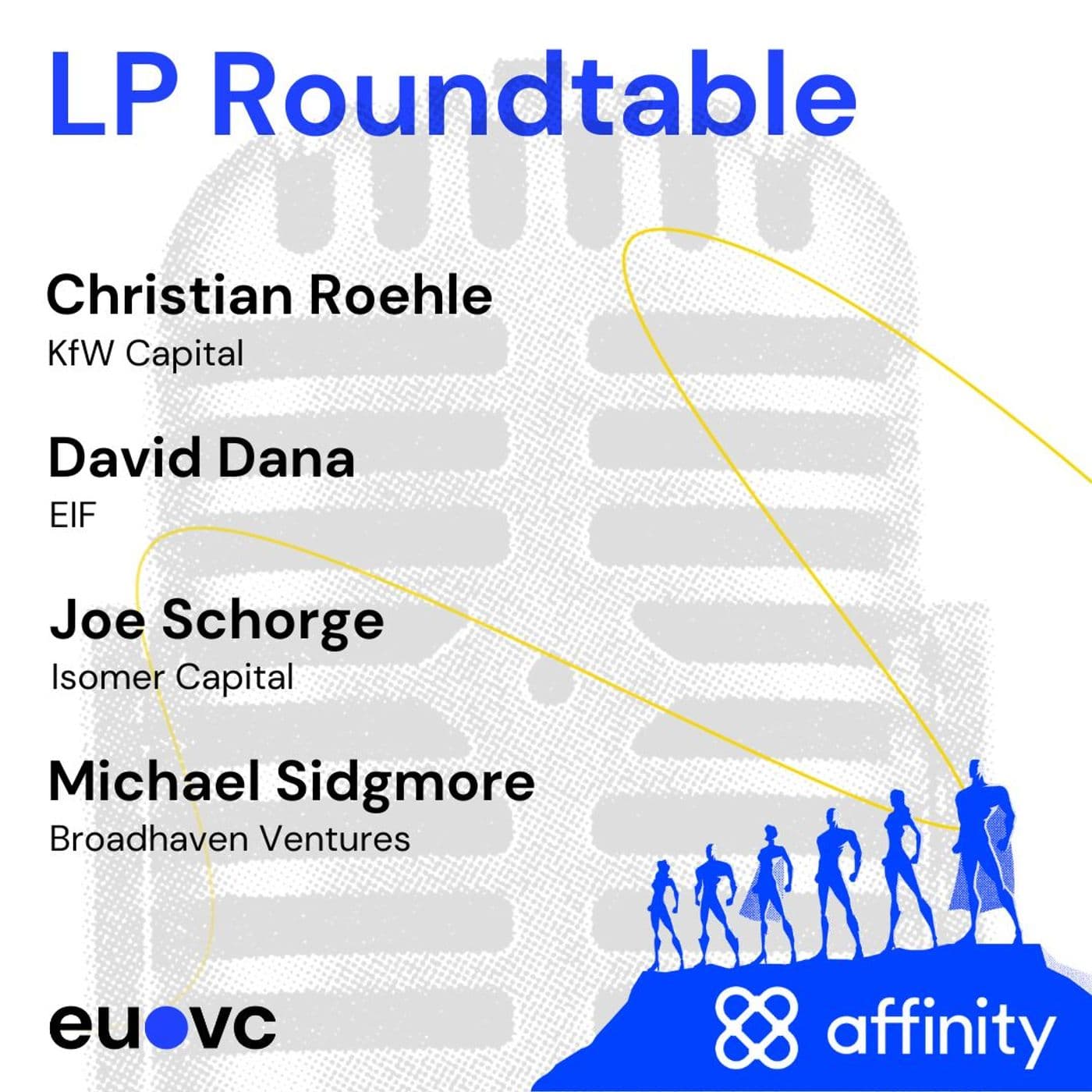
- David Dana - Head of VC Investments at EIF
- Joe Schorge - Founding Partner of Isomer Capital
- Christian Roehle - Head of Investment Management at KFW Capital
- Michael Sidgmore - Co-Founder & Partner at Broadhaven Ventures
Key Topics Discussed
- Current Market State
- Market Sentiment: The panelists discuss whether the current economic environment is as dismal as portrayed, with a consensus that while fundraising is slower, quality fund managers and companies can still attract capital.
- LP Relationships: Established relationships are crucial; newer entrants find it challenging to raise funds without prior connections.
- Fundraising Considerations
- Manager Strategies:
- First-time managers should secure commitments from larger LPs before broadly fundraising.
- Unique selling propositions (USP) are essential for differentiation in a crowded market.
- Investment Focus: LPs are increasingly looking for managers with specialized expertise or a clear focus in a particular sector.
- Advice for Emerging Fund Managers
- Building Trust and Transparency:
- It's important to maintain clarity regarding fund performance and investment strategies.
- Early engagement with LPs can help align expectations and investment terms.
- Key Tactics for Success
- Co-investment Opportunities: Offering co-investments or early deals can illustrate potential for success and attract LP interest.
- Valuation and Terms: Maintaining reasonable valuations and straightforward terms is critical. The panel warns against excessive complexity in fund structures and terms.
- Market Dynamics and Future Trends
- IPO Outlook:
- The panel speculates on the future of IPOs and liquidity events, expressing cautious optimism based on upcoming IPOs from major firms.
- The performance of recent IPOs may influence LP sentiment and willingness to commit capital.
- Navigating LP Relationships
- Negotiation Strategies: LPs stress the importance of aligning interests and maintaining clear communication during negotiations.
- Institutional vs. Family Office Dynamics: Managers need to be cautious when working with family offices, ensuring that agreements do not hinder future fundraising efforts.
Key Takeaways
- Patience is Key: Both LPs and fund managers agree that patience is essential for navigating the current fundraising landscape.
- Quality Over Speed: While previous years favored quick decisions, the trend is shifting towards thorough evaluations, benefiting long-term relationships.
- Talent Pool in Europe: The discussion highlights that Europe has a growing talent pool, which could positively impact the venture ecosystem moving forward.
Conclusion The roundtable emphasizes the evolving nature of the European VC landscape in the face of economic challenges. With careful strategies and relationships, fund managers can navigate the complexities of fundraising during a bear market.
---
For further updates on European VC, follow the EUVC podcast on their official website: [eu.vc](https://eu.vc).
Written by AI. May contain mistakes. Listen to the episode to check what was said.
Transcript
Automatic transcript. May contain errors.0:00Hi, everybody, and welcome to today's roundtable on Raising in a bear market. I am David and I'm joined by my dear co-host and co-founder, Andreas. Yes, and today we have with us some of Europe's very best and very most active LPs. And three of them are actually repeat offenders here on the podcast. We've got David Dana, head of VC Investments at EIF. We have Michael Sitchmore, co-founder and partner at Broadhaven Ventures by Broadhaven Capital, calling from the US. And then we've got Joe Schorch, founding partner of Isomer Capital. And then we have with us a very new face to many of you. And that is Christian Guler, head of investment management at KFW.
0:45Before we start, we just want to give a massive shout out to the sponsor of this roundtable, Affinity, without whose continued support we couldn't dedicate all our time to create content like this roundtable for you. So if you're not yet a client, our message is clear. Do reach out, say thanks and consider if their platform is for you.
1:29of new beginnings, new, new beginnings. Let's start acting, acting, acting, acting. This show is not investment advice and the hosts of this episode may be invested in the funds and companies featured. We just gave you a very short intro, but I do think that we should let everyone in the audience know a little more about you, especially because we know that the audience are probably all about to raise or out there on the trail now. So it is probably the best service we can do to anyone to let you all share a bit about how you're investing, what you're looking for, what type of fund you're investing out of.
2:07And Joe, you being very much connected to the disclaimer that we just said, because we're VPs with Isomer Capital, full disclaimer there out in the open, I'll ask you to be the first one to tell us what exactly are you and Isomer about? Well, thanks. I'm Joe Schorch, founder of Isomer Capital. We focus from the beginning and to today on Europe exclusively, early stage. We invest in funds, we co-invest with them into companies, and we buy a secondary piece of both together with our GPs. We have invested in about 75 funds so far. And because we focus on the early stage in Europe, that means we invest in lots of emerging managers.
2:55We always say, if you're on fund 10 and you're still doing that pre-seed, seed, early stage investing, we'd love to continue with you. But funds tend to get bigger and later. We have about 2 ,000 underlying portfolio of companies covering 38 countries at the moment. Pretty broad view of Europe. And that's Isomer. That is Isomer. What a beautiful beast, as we always say. Michael, I'll ask you now to tell us a bit more about Broadhaven Ventures. Yeah. Hi, everyone. I'm Michael Sigmore, co-founder and partner of Broadhaven Ventures. We're a global early stage fintech investor that we do three things.
3:33We invest principal capital into fintech companies globally, a number of them in Europe, most recently 73 Strings, which we did with Blackstone and Fidelity. international. We also invest into VC funds, mainly outside of fintech financial services. We have some, there are some overlaps, but it's mainly to get exposure outside of fintech financial services, but help asset managers build their business as we believe their founders as well. And then incubate companies as well. Current of which is a GP staking fund called Cantilever, which we're doing with one of our partners who was a partner at Goldman for that.
4:06And we're collaborating with BTG Pactual on that as well. So we'll build and incubate asset management businesses. We're built on top of a fintech investment bank that my partner started called Broadhaven Capital Partners. It's advised on over 90 billion of M &A transaction volume. Most recently, the Franklin Templeton deal with Lexington Partners and TPG's acquisition of Angela Gordon. So we have a bunch of exposure and experience in the alt space. From that perspective, we spend a lot of time looking at Europe. We like Europe both on the direct side as well as on the fund side. On the fund side, we've invested in the likes of Goodwater, Lower Carbon, a few crypto managers like Polychain and Boost.
4:43And then in Europe, Tiny, Passion Capital, FireDrop. Then I've looked at a number of others, some of which other panelists are investors in and really like the ecosystem. I went to LSE, lived in London for five years. So I really think that Europe is in a really interesting spot right now. And then you're also a fellow creator with Old Ghost Mainstream, and you are both doing a podcast and newsletter. So anyone interested in, how should I call it, the more institutional perspective, maybe? Michael, can I say that? And then the Alt Asset Broader Asset Class than just venture, definitely tune in there.
5:17It's an amazing newsletter. Weekly comes out with quite a few rundowns that I don't see many other places. And your deep dive conversations are, for any LP, really, really worth a lot, I find. So, Michael, thanks a million for being a creator and helping us all evolve the ecosystem. Now, Mr. Christian Rohle, I will ask you to tell us about KFW. Thank you. Thank you so much. KFW Capital is an investor in German European venture funds. I'm heading the investment team of KFW Capital. And what we do basically is dual fold. So we want to improve the access of capital to German and European startups and at the same time attract additional investors to the asset class, hopefully.
6:06Maybe as a little bit of background, while KfW, some of you may be familiar with it, is Germany's state-owned bank and it's actually just celebrated the 75th birthday. KfW Capital, the company I work for now, is almost a startup still. We were founded in 2018 and basically were put in charge of this investment program where we basically invest around 500 million per year into funds. And yeah, we've built a portfolio of well over 90 funds on our way to 2 billion assets under management. We invest in stage and industry agnostic from seed to growth, life science, software, climatic, whatever, enters our deal funnel.
6:56And we have a performance-based selection process. The idea being that good managers will be able to pick hopefully the startups that will deliver economic growth and employment to the ecosystem. And now, David, Dana, tell us about EIF. Not everyone knows you as well as this group here. So tell us everything. Sure. Thanks for having me here. So basically, the European Investment Fund is a European institution based out of Luxembourg, and we are a part of the European Investment Bank Group. What we do at EIF and what we are known for is investing into VC funds across Europe, and more specifically across the European Union, because we are investing and managing European public money provided by a number of counterparts, like the European Commission, the European Investment Bank, a number of governments, ministries, regions, group of regions.
7:48So all in all, we are managing more than 50 different mandates that we are investing into VC funds. Over the years, we have invested into more than 700 VC funds. So we have quite extensive overview of what is happening in Europe. And we have been on the market for more than 30 years now. So we have been seeing a number of phases and cycles, you know, and the current situation that we will come back on is maybe a bit different, but still we'll see how it will evolve. But basically what we do is that we back emerging teams, established teams to the extent that they can achieve our objectives, which are a combination of financial returns, but also policy objectives.
8:33And by policy objectives, we mean that the ones we have in our status at EIF are about supporting innovation, research, and job generation within the European Union. So this is one of the preliminary elements we look at. And then we go into deep analysis on each and every proposal we receive every year to make a selection. And on average, we invest a bit more than€3 billion every year into VC. And it is dispatched between 80 to 100 VC funds every year. So with these introductions out of the way, I hope that to anyone listening in, it's quite obvious why we brought this gang together. The amount of capital being deployed here is incredibly relevant to anyone navigating the current market or raising a fund or raising a second-time fund, first-time fund, whatever that is.
9:22And we'll deep dive into the state of the market, important considerations around that, how other managers or stuff we're seeing other managers doing, and so on and so forth. So I hope you enjoy. To kick things off, let's put it like that. Michael, you are the less European-centric guy here. So I'm going to start with you on this one, which is, what are your views on the current state of the market? Is it as grim as some say? Do you see a light at the end of the tunnel? And feel free and please do share as much as you can from also your conversations with other LPs as well in terms of deployment rates and what they're seeing and what they think.
9:57We have an interesting perspective because we're both a direct investor in companies and I'll lead seed rounds. I've led six seed rounds. I sit on boards with a number of VCs. And then we also obviously invest into funds, mainly emerging managers. So raising their first or second funds. So we see the fundraising journey that they're going through and the difference that it's been kind of 2020, 2021 versus today. I think it's a different environment than it was a few years ago. However, having said that, I think both good fund managers and good companies are still able to attract capital. I think it just may take more time for them to do so.
10:32So if on the LP side, if people have not yet had existing relationships, it's harder for them to get started from a cold start. But I think we're seeing a lot of re-ups and people, particularly on the institutional side, we see the institutional world, both from the podcast that I have, where I talk to a number of institutional investors, CIOs of endowments, CalSTRS, etc., as well as a large portion of the wealth channel in the U.S., large wealth managers, platforms, etc. etc. People are willing to re-up with existing managers because it's easier to do so. And I think they have familiarity, but new relationships are taking longer, which I think is probably net net positive.
11:13It means that I think allocators and quite frankly, either funds or companies have a chance to build relationships and actually properly evaluate the opportunity and business relationship. I can tell you from the direct investing side, there were times when we had days to make a decision, particularly if we weren't leading around. I think that's pretty unhealthy. It happens at times. And there's, I'd say one of our best investments, a company called Nowports, we had to make a decision in a week. And it turned out to be one of our best companies, let us see it, and I'm still on the board. It's at post-Series C now.
11:43So that can happen. But I think generally speaking, it takes a little longer to make decisions. And that's, I think, a positive thing going forward. Yeah, I just agree with all of that. and we were being pushed, I guess all of us were being pushed maybe a year ago to make decisions very quickly with FOMO kind of fundraising. And I don't think that's healthy either. I always think particularly on the fun side, we're getting into partnership for at least a decade, probably longer. So I really don't like this kind of urgency, fake urgency, shall we say created and even worse on the company side. In and around now, And it's super cool that one of those decisions turned out great, Michael, but they can also turn out not great because you didn't have time to do a full property.
12:33So personally, I see everything slowed down and I'm really happy about that. Not because I think markets should generally go slower, but because you have time to do a proper job of it. And everybody around the table has that same expectation. We will take time, we will be thorough, and that feels much healthier. I think health is a good word, a much healthier way to go about this. David, because you're investing a bit out of a different perspective and sometimes you've got or you do have strategic agendas also driving you at EIF. So I'd love to ask you both, how did you deploy through the period and how are you deploying now for this period?
13:09Because I always remember back in my early days in BC here in Denmark, I was with a fund that was backed by the Danish government where we always said, and many of our entrepreneurs said, that we were so instrumental in that period where everyone hesitated because the market was down. And I'd be curious to hear, you know, what have you seen through this cycle that we're in right now? I think something which is very true in what you say that governmental money, as we are at the end, and public investors, contrary to purely private investors, will also have a duty to support the market when cycles are going down.
13:48And this is also a reason why we have been continuing massively investing in the market with some changes indeed, as you rightly mentioned, because there are some expectations for us to be more active on the climate, for instance, topic or sustainability. more than what we used to do in the past or to focus on some new what we call disruptive technologies typically deep tech kind of focus on you know space tech ai blockchain quantum technologies all that kind of things which will maybe less of a focus for us over the last decade but what is very true at the same time is that our role has slightly evolved meaning that we are the if together with other entities like kfw bpi and other public investors that a more national level.
14:34We have always been very important, notably, to achieve first closings. Now, more than that, we are important, I think, just for a fun to become alive, because we have seen a lot of failures as well. And even with teams which had, in our assessment, very good and strong potential to deliver, it has become even more harder than what it was in the past. Just to give you an anecdote, but a couple of years ago, I was at a conference, and I was really surprised to see how many funds that we had declined managed to raise significant funds, which was a good sign for the market. But there were a number, maybe tens of funds that we had declined.
15:15You know, we declined a lot, but tens are thinking about this specific conference that we rejected. And we had a quick catch up in the corridors and they told me, yeah, you know, we closed the fund at 100 and 150 million euros, which was great for them. I don't know yet about the financial outcome, but this we will see maybe later in a number of years. But it was very striking to see that they managed to do it because there was a huge interest of many, many LPs, most of them being very new in the sector as well. Whereas now it has dramatically changed. The best ones definitely continue to raise, maybe in a less speedy mode, which is good.
15:54But for the ones which are a bit more at the borderline, I would say, or very innovative, it has become harder than ever. Christian, I'd love to ask you to comment on this. Did you also see slash feel the same as David just described? Yeah, I think overall, I fully agree. And for us, it's the same. So we're basically still very much committed to the market and continue to deploy. One thing that I think is quite important is that what the private investors do, though, is absolutely important to us because we run a private Paripasso investment program, which means we always require 50 % private investors.
16:35So we like to monitor what the private investors do very closely. And, yeah, I mean, you cannot basically ignore that there are some detrimental developments going on, right? because the mood is not where it was. Of course, the public markets have gone up. So I guess the denominator effect has receded somewhat. But still, I think a lot of LPs took very huge sizes of investments in 2021, 2022. So they have basically still sort of over allocated. Then there is a crunch because there is not enough DPI, right? So there's another issue for private investors to do follow-ons. and the alternatives have become a lot more attractive in the fixed income area.
17:23We still see that there are fundraisings happening and I think the number of successful fundraisings probably hasn't declined as you could have feared, but it takes a lot longer. The fund sizes are coming down and I think all those aspects are quite dramatic if you want to set up a new first-time fund. As the young guy in the panel, I just love to ask the four of you and feel free to take it, whoever has the burning ache to answer first. But is this something that you feel is just another cycle playing out? So you've kind of seen it again, nothing new. It's just kind of remembering what happened in the past and just kind of learning from that.
18:05or are there specificities to what we're seeing today that are very unique and different that require a bit more, let's call it mental plasticity slash flexibility to navigate? I think if I may, something which is very important, at least at the European VC level for me and based on what I've seen for the last 13 years at EIF, is that there has been a consistently exponentially growing market which attracted a lot of money. Performance was looking super nice very high, but most of it remained unrealized. So combining this aspect together with the current geopolitical environment and all the other risks associated to that, inflation and whatever, it makes it super hard.
18:49You know, alternative investment is super risky. Private equity within this is even riskier, and VC is the riskiest asset class within AI, in my view. So combining all those elements, if you go and ask a typical institutional investor to put money there, they have to make sure, to the extent possible, that they will get higher return out of it. And this is something which, so far, has not been proven enough, I think, in terms of purely cash-to-cash. And now, what we need, for sure, is to continue on that front to attract and to require specific percentage of funds to be funded by private investors.
19:31You know, we have some specific exceptions in some of the mandates we're managing, where it can be that 30%, for instance, of private money would be sufficient, where we can go ourselves up to 70 % of the fund size. Is that good? I'm not sure, but this is necessary, at least for the time being. So if there is no understanding on the market that there's a need for private investors to come, not only for financial returns, but also for some corporate and other entities for more strategic investments and cooperation, then there will be a failure in my view. But I think that's something all of my fellow colleagues here on this panel can also comment on.
20:12Well, my take on your question, David, is I think investor behavior doesn't change. Prefall are prefall and capital deployment is capital deployment. However, Europe has a specific set of circumstances. The whole VC ecosystem rebooted after the financial crisis. So we've had this long, you know, what, 12, 13 years of growth on growth on growth. And that's very different than the US where you've had multiple cycles, but you didn't have this kind of mass reboot. and picking up on David, David dropped a very important point, but went by it too quick. Many of the LPs that have joined in the last 10 years, their first entry into venture capital.
20:57And I think they haven't, if you haven't been in this market for a long time, you don't really understand it takes time to build company. This DPI point, it's important. Everybody's talking about it. But you, as an LP, you must have patience. And if you just entered in the hype cycle, reading on the FT every day that everything goes up, well, now things are going down a little bit. And for long-term LPs, that's normal. You know that's coming. But what I'm seeing is a lot of these newer LPs are saying, well, that's not, we thought, you know, this just went up. There's no such thing as gravity. And maybe I actually want to sell because I shouldn't have gotten into tech or whatever.
21:37So I think there's some secondary coming because of this phenomenon in Europe, which is different than the US. You have a lot of LPs that have been in it for 20, 30, 40 years who behave differently. Yeah, I think as the outsider looking in, I'll add three points, starting with one that I think is related to this in terms of the trend of private capital moving in. My perspective on this is somewhat informed by I built the sales team at iCapital with two others early days. So they have a big presence in Europe. And I think what we're seeing, and this is a secular trend, is that the wealth channel is picking up the slack or the institutional channel maybe not allocating as much because of the denominator effect or they don't want net new relationships because they have a ton of relationships into private markets.
22:22Now, I think that that will take time to mature and evolve. Not many platforms are necessarily working with emerging managers in particular because they have standards. They're working with the big brand name managers or a lot of the wealth channel, whether it's family offices or the wealth managers, RIAs in the US, IFAs in UK, Europe, et cetera, tend to work with more established managers to get their feet wet. But I do think that that's a trend worth noting. And I think that over time, that will be a positive thing for any ecosystem, whether it's the US, whether it's Europe. I mean, there's a ton of capital that needs to flow into the alt space from the private wealth channel.
23:03Average wealth manager in the US is 1 % to 5 % allocated to alts compared to the institutional investors, many of whom are, some of you have them as LPs, 20 to 30 plus percent allocations to alts. So I think that's an important trend to think about. We see that happening more and more in Europe. A lot of the private banks are thinking about this. So that's one thing to think about when it comes to fundraising. I think two other things from the outside looking in as a US investor that make me excited about Europe, despite the fact that the market may have changed both US, Europe, et cetera, is one I think particularly at growth stage, you have been seeing more US funds come to Europe.
23:42they're planting flags on the ground and they're putting capital into the ecosystem. Sure, I think there's been data that's shown that they've pulled back in the past year or two. We've seen that in other regions of the world, but I think that will come back faster because the European ecosystem is more developed and there's a clear path to exits or a path to European companies. While they don't necessarily need to move to the US to build big outcomes, you certainly can go that way. So I think from that perspective, as a US investor thinking about Europe and spending time in Europe, investing in it, I think the fact that there's plenty of other US investors really thinking about this, focusing on it, and dedicating time and resources to it makes me think long term Europe's in a very good spot.
24:22And then the other piece is, this is more anecdotal, but really strong talents coming to Europe were investors in SoRare. Their head of people joined from Lyft, was first head of people at Lyft. And someone from the US hadn't spent time in Europe, thought that this was a great opportunity and could have had other opportunities in Silicon Valley. Same thing. I've had a number of other friends who've from the US decided to join European companies because they're really excited by the opportunities there. So I think the fact that there's talent coming into Europe from not just the US, but from anywhere, I think bodes really well.
24:58And then you all know the statistics, right? There's more developers in Europe than there are in the US. Others have said this. So I think there's great universities, particularly for developer and engineering talent. So I think long-term Europe will be in a very good spot. I have to pluck you in here, Joe, because what Michael told us just now, I almost felt like it was your story, Joe, coming from the US, recognizing the power of Europe and doubling down on it, seeing both the tech talent, but also the amazing innovation happening everywhere here. But that's the story of Isma, of course, and you, and that goes back decades.
25:34But you're actually seeing exactly what Michael is saying. That uptick in interest around your, in the US, amongst the larger LPs is really happening now. Could you share us a bit more on that point? And also because to our audience, Joe, as a fund-of-fund manager, is raising capital, of course, as well, just as you guys are. And for that reason, I also ask you, Joe, could you just reflect a little bit and share some learnings on being a European, selling Europe in the U.S.? Because that's, of course, where we see many European managers thinking, maybe that's the next frontier for me to raise.
26:14Yeah, we see all those effects that Michael described, which I consider second-order effect. So if you have a productive, successful environment, it will pull talent. It will pull capital. So that's happening. And that's, to me, the evidence of success, which is drawing in more talent, more capital. And as we know, labor and tech are very mobile. So, yeah, and we have some American LPs. We market a little bit in the U.S. and year after year after year, the word is getting out, shall we say, to the point where I think many people think, you know, if you look at your, if you consider your venture allocation on a global basis, if you're not doing something in Europe, you're really missing out.
26:58And that's, you can look at the pitch book data and the frequent data and the Cambridge Associates data, and that's pointing you to what David was talking about earlier, which is there have been great growth for now, not one year, five year, but more than 10. You can criticize Europe on DPI, I think, but that's also a feature of a younger ecosystem. My only real criticism would have been when we were up high in valuation terms, in say 21, first half of 22, I wish BCs had sold more. and I had a lot of active fights with them saying, you know, I know you feel that it'll rise forever and you're an optimist.
Read the full transcript
27:41That's why you're in BC. However, take some risk off the table, sell down, return some cash. So, you know, my criticism of Europe would be you probably didn't do enough of that, but that will come, that will come. We're still seeing exits. I think probably you can say the same, David and Christian, we're getting exits week on week and they're not all headline, multi-billion exits. But if you build a good company, there's capital to fund it and there are corporates that want to buy it. Did I answer your American LP question? Sorry. You did it beautifully, Joe. Christian, I want to call on you to come in and give your perspectives on this.
28:23Yeah, I fully agree with what Joe just said. In terms of Europe, I think the good thing is that the ecosystem, if you compare to previous cycles, has matured a lot. And that will mean there are more people on all letters, basically, right on the LP level, on the GP level, and on the startup level. So that should provide some resilience, I guess, for the coming upturn in activity. At the same time, we've looked at the data and actually the terms of returns you can gain in Europe, in BC are extremely competitive, right? And some people, I guess, underestimate made that. I guess if you have a couple of more success stories in terms of successful European exits, I think that would probably supercharge the activity in Europe because the valuations tend to be a little bit lower.
29:12And yeah, there's still some catching up to do in terms of you compare the fundamentals that are relevant for a healthy ecosystem and the volume and deal activity that you see in Europe. There's something we've been dancing around throughout this conversation, which is, of course, when are we going to see better times? When is the IPO window going to open? So for that reason, in real, I was almost going to say real debate style to the, you know, very much in topic because of the US primaries, I want to give you just 30 seconds to tell everyone in the audience, when do you think that the IPO window will open?
29:54and when will the LPs really come back to market? I think people are closely watching Klaviyo Instacart and that could be an interesting barometer for IPOs elsewhere and to see how the market supports those businesses. So I think we'll know relatively soon whether or not I think there's appetite for further IPOs based on how that goes. I do think things will pick up towards the end of the year. I think conversations I've had with both on both the company side and with other LPs, funds, it seems like people are going to really start to think about things towards the end of the year. Funds I know are going out to raise or finish their fundraisers.
30:35Starting in September, there was a little summer lull. But I think end of this year or early next year, I mean, I think certainly is what I hope. Certainly don't have a crystal ball though. So it could be into 24. And then I do think for better, for worse, the interest rate environment is continuing to be monitored in the US and that obviously has a knock-on effect of other things as well. Talking about the IPO, I would say there are two levels to answer the question. First one is Europe and the second one is the US. Because basically, you know, the European listed market has always been very different from the US one and notably when it comes to tech IPOs.
31:14And that's also one of the reasons why most of the successful European companies are not listed primarily or exclusively in Europe, but mostly on the NASDAQ. Again, I don't have a crystal ball either. I hope it will reopen soon. But for the time being, we don't see clear positive signs. For sure, definitely not before the end of the year. And even for 2024, I have doubts that before we manage to regulate a bit more inflation and other economic aggregates and parameters, we will come back to something a bit more, I would not even say usual, but as we could expect. Talking about the LP eagerness, I would say to continue to come back to support VC funds, that's a good question.
32:02And currently what we see is that, as I mentioned a couple of minutes ago, we have to substantially increase our part of some funds because there's a lack of LPs investing in the field. More specifically, for sure, for emerging teams, but also for some specific segment of the market, which has always been quite difficult in Europe. I will not say that there's enough money in early stage, but I think there's quite a lot of money still and firepower on the market. Talking about, and I think Michael referred to that earlier, talking about universities, spin-off technology transfer type of investments, since Europe has always been lagging behind all the other geographical areas, and this is still the case.
32:49Unfortunately, the Brexit didn't help on that front because the UK market, I think, is the most advanced we have in terms of tech transfer in Europe. We are trying to catch up, but it's very, very difficult to attract investors in that field. And also, there's a lot of education to do at the level of the universities, which sometimes just do not want to share anything. At the same time, the growth market in Europe has always been also quite complex, meaning that most of the runs were led by non-European investors. As a European institution, you can imagine that we are not happy with that. Not that we do want to prevent European companies to grow and expand internationally, but we would like actually to have them remaining European a bit longer and to remain in Europe.
33:32And for that, you may have heard about an initiative that we launched at the beginning of the year, actually called the European Tech Champion Initiative. I saw you made a post on that. couple of months ago so i'm sure you you're familiar with that as well which is a fund a fund program of almost 4 billion euros dedicated to invest in funds investing in european gross companies but those funds have to have a size of a 1 billion euros minimum the purpose of that is not just to make it a nice marketing communication type of thing okay we have reached the 1 billion threshold it's just that below this size you are not considered as a serious international competitor by non-European investors.
34:10And with that, we hope that we will be able to put on the market or to help having on the market maybe 10 teams between now and in two or three years' time so that there will be more options for European entrepreneurs when they have to raise bigger runs and growth runs. So putting all these elements together, make it like if we had some nice pieces of a puzzle, now we have to assemble everything to make it work again. Not that it's broken, but that it has been discontinued. And we would like to have this a bit smoother now. We cannot force anything, but we can continue showing strong signs. And also, coming back to the performance topic, DPI is definitely great.
34:50It's not a solid element. But again, if we only look at, you know, we have been promoting a lot of European VC market for years. We started by showing on a slide the number of European unicorns. I'm not particularly eager to back unicorns only, but I prefer what we call the dragons, you know, in funds but still, 10 years ago, let's say we had 2-3 logos on the slides. Now we need basically almost one slide per vintage or every other vintage to be able to put everything on the slides. So it has to continue Now with this crisis, the number has decreased for sure, and we have seen a number of companies facing issues, still raising but a lot lower valuations, which raise the question in terms of performance for later stage investors.
35:33But all of these elements together make us think that we have very nice perspective. It does that we have to be patient. As Joe mentioned, this is a business where you cannot assess the performance every other day. We have to keep this in mind and investors as well. And sorry if I've been longer than 30 seconds. I was just about to say that this is the LP quickfire version. So that's why we booked 90 minutes for the whole session. And we know that we're going to do a quick part and that's going to be five minute answers per one. Nonetheless, I do think that we should not shun the details and nuances here.
36:09And that is why we have EUVC and not something that will try and get everything done in 20 minutes. So for that reason, Christian, let's get to you and ask you the same question. So my impression is that, or actually what we discussed earlier, that if the main issue of the LPs are still on the fence, and of course the question is like what would get them to join the field again, I think some aspect of it is time, right? So the over-education issue hopefully will recede a little bit. But then I guess the success stories of IPOs are really important, which of course leads to the question when are those going to take place?
36:46I think Michael mentioned a few Trailblazer companies. And what we know from conversations with our more late stage managers is that, of course, those companies in their portfolios are watching them quite closely. And I guess if the economy holds up and those Trailblazer IPOs are successful, then they will be very quick in basically filing their IPO requests just because it's also a pressing issue for them. Hopefully, when that takes place, the LPs will be quite quick to follow. because at least again, our managers can tell us from their past fundraisings is whenever there are IPOs, the LPs will pick it up, especially those LPs that are maybe not in the market for a long time.
37:30And they will basically take this as a sign of the future when the IPO takes place, even though I think we probably agree that it would make even more sense to basically split your allocation a bit more and deploy over more vintages. Joe, now I'll ask you to come in in the end on this. Feel free to go on a super long run. Well, you know I love going on a super long run, so don't give me permission for god's sake. Quick on the original IPO question, I'm kind of in the same opinion of Michael. I think there's a few marquee IPOs coming, particularly ARM, that a lot of people are watching. And as those go out, I think ARMS is going out with a target of$50 billion, something like that.
38:16This is not a venture-backed company. It's an older tech company making chips that we all use, very important company. So to see the investor appetite for that, I think will inspire, will others launch their IPOs or will they hold back? I think based on that and Instacart and a few others, You could see the IPO window coming back open, Jen, but I'm also going to agree with David that we just don't have a good tech IPO market in Europe. I think we've done government, investors have done such a great job of fixing the private market. I wish they could fix the public market in the sense of having more analyst coverage on tech IPOs, having more education for investors that can have really strong public tech returns in Europe.
39:07That hasn't been the case over time. So companies that can IPO in the US or do a dual listing, they do. And they get better, a lot more interest, better pricing and so on. I hope in the future that will be more broad, but that's our experience. We had eight IPOs in our portfolio in 2021, and you saw just very different pricing, the ones that went out in the US and the ones that went out in Europe. With similar fundamentals, you get better pricing in the US. Hope that changes. David, can you fix that for us? That'd be really nice. We have the whole panel smiling to those only listening in and watching the video.
39:45I actually have kind of a comment slash question on the original question of when will the IPO window open again and LPs come back. And it's connected to the latter part of that question, which is LPs coming back. And I think two of you, if not all of you, have already said that long-term slash professional LPs just keep on investing, keep on supporting their existing relationships. That won't necessarily change substantially. but from my perspective I agree very much with Michael's timings of when I think things will gain some clarity on the IPO side of things but I think we'll see a huge delay from that happening if it's in 3 months, 6 months a year, whatever that is, into more capital coming in and I also think there's going to be a huge difference moving forward and now long term thinking I think the last 2 years we saw an explosion and if we kind of try to normalize the data that we have historically, that's just completely not normal.
40:44So I think just the concept of saying, when will the IPO window open again? I think it's very important to clarify that, at least from where I'm standing, that doesn't mean we'll see as we saw the last two years. It's going to be very different from that. I'd love to hear you guys comment on the duality of it, of what is the opening up again and how it will impact new capital into VC. I think one point just to add to that that's a bit of a nuance is sure we can talk about the IPO window, but I think we can also talk about exits in general and others will be better placed to speak on this than I will.
41:19But what I will say to open that up is that I think you're probably going to see a lot of fundraisers where fund managers think about taking secondary on some of their existing portfolio to show DPI, maybe in its inducements for new investors coming in, things of that nature. But secondaries will be a big part of helping usher in an era of exits and helping LPs see some liquidity and then either re-upping or new LPs being able to say, okay, these fund managers have had some exits. So I think that's another piece of this conversation. It's not IPOs necessarily, but it's a really important piece of the conversation to grease the wheels.
41:59So others are better placed to do that as they spend time in this professionally. But I think from kind of outside in, I think that's an important piece of this as well. Are we seeing too hard of a push on DPI on managers today from LPs, causing them to maybe, well, for them to be able to raise the fund that they're in now? They're saying, we need to start to get DPI on the fund that we're running. And for that reason, they're actually being pushed to exit too early or feeling that push, at least. Not for actually, you know, the final maximum DPI, but because they just need to show DPI earlier and feel that pressure because they know that they're coming to market with the next one.
42:47I'm curious if you're seeing any of that behavior and you're seeing VCs reaching out on your LPAC saying, how do you navigate this? We have a bunch of investors inviting us every week. When are you getting out of that company? The quick answer is no, I don't see it. It's a gentle pressure. Yeah. You know, there's a real form of pressure, which is LP saying we can't rely on until we have some EPR because we're using those distributions to fund our future commitments. And so that's a genuine pressure. It's just the reality of the market. But you have to remember, venture is very different than buyout.
43:25For example, in buyout funds, you own the company. You control the exit. You can start a process and sell a company. In venture, you're a minority investor and you're one of many. So you aren't in that control position of saying, I will sell now. What you can do is influence in your position as a board member. You can also influence the team in a soft way saying, okay, we think it's time. You can also accept secondary offers to buy. And I think that's dried up to some extent. We saw that a lot in the hype cycle. SoftBank would come in and try to buy early investors out or Tiger or groups like that.
44:05That's happening less, but that still happens where the growth investor comes in and wants to own the larger piece and they say, well, can I buy? So we always encourage that at the right time, maybe you saw part of your position. But I think that's also this kind of secondary exit for the very early investors is a healthy thing. That's not happening as much now, but you're not in the control position. So you have to be open to these kind of other ways of exiting or partial exiting along the way. Yeah. And on this note of then talking tactics, I want to go into the question of what considerations are you seeing managers having today in terms of going to market and preparing for a fundraise now or running a fundraise now?
44:51And what tactics have you seen being successful? And I will ask David Dannett to start here. You've got a bunch of first time funds, second time funds. They're now getting ready to do their next fund. What considerations have you seen be super valuable that they have? And where would you say maybe managers should be a bit more thoughtful here? Something which has evolved definitely is the fact that over the last 5-10 years, most of the teams that we saw came to us maybe not as one of the potential first anchor investors. They came with already a couple of millions from a family office or whatever, and then they tried to raise from us and other institutions.
45:42Nowadays, we see more and more of them who try to secure, to the extent possible, a firm commitment from a big LP like us or anyone else before going and starting really fundraising on the market. I think this dynamic changed because, as we said, it's more and more difficult, especially for first-time teams to raise money. You know, as I said, we are not shy on backing first-time teams, but we will not back a first-time team just for the sake of having a new player on the market if it doesn't bring anything different, meaning that we have backed a lot of investors. We have a huge portfolio. There are lots of VCs in Europe.
46:20If it's just about adding a new team which will just come and compete against all the other ones, it will not make sense for anyone. Then if they come and bring something different, They have a particular USP that they can evidence in the way that potentially they have a specific particular sector focus or a particular expertise, networks, way of investing or selecting the companies. Anything which makes them unique and capable of being selected by the best entrepreneurs to become part of the game. So then we start talking about something more concrete and that we can try to substantiate a bit.
46:58And smart advice as well is that they should not come in a very aggressive position. We've seen a number of them last year and the year before, actually, thinking that because we claimed and because this is what we do, that we would continue supporting the market heavily, that it was something kind of granted to them to come and have a kind of box-taking approach. Meaning that, okay, we do this, this and that. This is part of what is your objective. you have to back us. And if we say no, then they start complaining, trying to activate any kind of link they have with a politician or someone in the European Commission or wherever to make us change our mind, which is even worse because it just confirms that we made the right decision.
47:43Be smart, be sure of what you want to do and be sure that you can do it well. And then if you're convinced about what you're saying, it will be easier for you to convince other people that this is what they have to invest in. Just to give you the way we see it, in terms of EIF processing, we as front officers in the investment teams, once we are convinced that we need or we want to back a team, whatever the reason, we are the best advocate of the team internally. But still, we have to convince many other people. It's not because we think that this is an investment we should do or we want to do, that it's done.
48:20We need to convince our colleagues from risk management, from compliance, from legal, all of them to make sure that, First of all, it fits with what we can do, but it makes sense. And then our top management and our bot. So we have several layers and type of entities or people or counterparts internally to convince. So be sure that you convince us, you convince the people you're talking to that you're good at what you want to do. And then it would be already a good start. Michael, I would love to ask you because we had a conversation about this before. And you brought out some really good points, salient points on incentives to get investors over the line.
48:55Both, if you could comment on how important they are and also on which ones you've seen being effective and which ones like pressure on political personas that are less effective. Yeah, I think, look, as a manager first time or early on in the process, I think doing things like offering co-investments or doing a few deals early out of the fund or even through SPVs can be a good way to demonstrate what an XYZ fund deal looks like so people can understand. They can actually visualize and see, okay, this is a deal that they would do. I think that's going to help more and more. we've seen a few managers come to market with a few deals that they've done and that's helping them then get additional LPs.
49:44So I think that can be really important. There's obviously a balance to that too. You don't want to do too many SPVs as a way to kind of get started and build a track record because then if LPs allocate to them, particularly in this, this would probably be more for the family office community. They might allocate, then they do enough of those. They may not allocate to the fund. We've seen that happen too. So I think there's a real balance between kind of showing enough skin and then not showing too much when fundraising. So I think that that's one piece of it. I think related to that, that then gets to, you know, what is the minimum viable fund and what does that look like?
50:20So really thinking through if it's going to take longer to raise a fund, what does the minimum viable fund look like? And then if you are going to do a first close so you can do some deals, how big will that be? And then how many deals can you do? So I think those things and really understanding that math are going to be important. You know, I think related to that too, and I would echo David's point and just say it in a slightly different way, which is I think managers who can clearly articulate their edge are going to have a real advantage in fundraising. That's what we look for. And just to give some examples to it, I think managers who can articulate their edge in a sentence or two, and we as LPs can articulate their edge.
51:00I'll give you some examples. good water data-driven venture capital uh tiny vc indexed exposure to europe at pre-seed and seed lower carbon you know great brand chris sacca one of the best you know emerging managers kind of pioneered spvs done a lot in climate himself like you can you can clearly encapsulate what managers are doing i'm sure you all have examples in your portfolio i think that ends up being a really important thing for LPs to be able to say, okay, this is what makes this manager different, and this is why they're going to succeed. So as a fund manager going out to raise, really think through how to articulate what your edge is and what your difference is, because otherwise it's going to be hard for LPs to say, hey, here's another early stage fund that we can get exposure to, but what really makes you different?
51:50Christian, I'd love to ask you to come in on this and build on what Michael just said. Yeah, sure. I mean, I can maybe comment on what is important to us when teams come in and maybe focus a little bit on emerging managers, because I think there are some additional topics that are important. And the first I would say is like how you build the team, right? I guess for us and many other institutional investors, if you do an emerging manager, you want to be extra sure that the team has a relevant experience. So when you set up your team, if you take on board people who have a good track record in terms of doing investments, but also showing some exit activities for us, very crucial.
52:35And then I would say, yeah, if you approach BLP, do it as early as possible, right? So don't basically anticipate the commitment very much before any relevant closing. But do it as early on as possible. Be transparent in terms of information requests. You'd be surprised the difference in the decks you see, like how open points are laid out and not. I would say what is also helpful, especially in this field, is that you are firm on valuations and you can basically talk about your portfolio. When was the last round? Basically, what were your considerations, for example, for keeping an older valuation that is basically on the investment side?
53:24And then in terms of the fund setup, clean structure is always preferable, right? So if you have outside parties receiving carry or yeah, there is just a very strong keyman issue. I mean, in that kind of market, I guess it makes it a little bit more difficult. And lastly, the terms and conditions of the fund, at least for us, it's also very important that you are down to earth, right? So I think the super carry was very prominent in 21 and so on, but you should be able to defend that based on your past performance, right? So I would say those are some points that are important to us. Christian, just one thing to add on the super carry.
54:06and that's something which is always striking is that some teams and sometimes with basically no track record ask for a super carry but are not ready in return to get a lower carry in case of a lower performance because typically when we have to agree on the super carry which happens usually more with the established teams we also ask for a decreased carry typically they ask for 25 or 30 % beyond a certain threshold we said okay but from the hurdle rate up to let's say 2x net performance, then you will only get 15%. Because why would you be getting more if you do more, but not less if you do less?
54:45So it's always a question of negotiation, but also trying to promote this best market practice and the pari-passu treatment. Joe, I always call you the architect. We just put out an episode today where I think I introduced you as such. So now we're into the nitty-gritty negotiations negotiations and deal terms and so on. Tell me, Joe, what would you advise specifically on terms when it comes to a manager getting ready to raise in this market, be that an emerging or an established? Shouldn't established give better terms in quotation marks compared to what they did two years ago, three years ago?
55:25Well, you know, for new teams... I love the side, Joe, by the way. This dude asking tough questions at this time of the day. I don't think this is what any of us enjoy spending our time on, to put it that way. You know, not if you agree, but David and Christian, I think we'd all say the same. We'd love just standard terms. Just go down the middle so then we can spend our time discussing investment thesis and companies and how do we have a big outcome together? Whereas tweaking stuff on the edges, it's just annoying. And in Europe, we have very strong standard VC terms driven in large part by EIF.
56:09Because over the years, EIF has been the largest investor and has had a very clear definition of what it wants and what it doesn't want. And that's been a good thing, I believe. So most funds we invest in, we don't really spend a lot of time discussing it, especially if EIF or KFW maybe or others have already spent half a year. We do. We do. I know. So that's good and bad for us because by the time they reach us, we say, okay, if David's been beating you up for half a year, let's talk about something else. But my feeling, particularly for new funders, you need to make it as easy as possible for investors to join you.
56:52So don't create a nice, smooth road that can drive down. Don't create bumps and difficulties through what you may think is innovative. And then I kind of agree with you, David, on the super carry point. OK, if you think you deserve higher performance, then you should also do lower performance if you perform. go. We're trying to put terms in place for an unknown future. But my favorite is just vanilla down the middle, keep it simple, and spend your time focusing on what's this thesis. But in a bigger picture point of view, I think what we just heard from both David and Christian is they are really spoiled for choice as investors.
57:37There's so many funds out there, and every manager thinks they have the best idea and their fund is the best. They're the first doing this. They're not. You're not. In fact, we're all seeing lots and lots in the same way a VCC sees lots and lots of company. You have to make a selection. So you're better, by the time you go to Christian or you go to David, you better have a pretty compelling thesis and a team that can execute and a strategy that really can drive value because there are lots and lots of people trying to do similar things. And you have to compete. So I sometimes call them, you're a fundpreneur, and you have to bring all that cool marketing stuff that Michael mentioned about the crisp marketing message and the strapline.
58:23That's true on company level, also true on fund level. You've got to bring that to shine out above the rest and get anybody's capital. And it's interesting to hear it from David. I think part of the market sees the governmental investors like an automatic cash machine. Oh, I'll just go down there and take out, you know, my anchor commitment. No, you won't. You know, you need to be bringing something better. And something also which is very true on top of that is that the alignment of interest is also key. I mean, for sure, keeping it simple with standard terms make it easier for everyone. You know, sometimes there can be exceptions, but in particular cases.
59:02But the main purpose of that is to keep the interest aligned between the GP and the LPs. Because at the end, if things go well, we are super happy that they all become super rich. That's the rule of the game. But if things go less well, we can lose basically everything. It's not for the team in return to become rich based on management fees, for instance, only. So we have to find the right balance to make it workable and viable for everyone. Could I ask you, David, because even though you all laughed in agreement and nodded when Joe said, we don't enjoy negotiating. This is not the part of our job that we really love.
59:43That's not what we're here to do.
59:48Nonetheless, and I'm trying to tease out a bit about the dynamics of a fundraise, right? For everyone listening in. Because you've got the behemoths like all three of you here. You can cornerstone a fund if that's what you want. That also means that you are the ones typically setting the terms. But David, as an example, it takes quite some time to get through your process. And from point A to point B, where you might get that commit from the EIF, you will also have been raising from others. And those others may have pushed for other terms or you may have okayed something with them that's a bit quirky and that kind of thing.
1:00:30Could you shed a bit of light to the audience on how they navigate that, how a VC navigates that best when they're talking to a cornerstone investor like you, Hugh? Our processes are quite long indeed, but what we almost systematically do is that we start working with the team sometimes even before they formally apply to get a potential commitment from EIF. So since day one, and what we always recommend to the teams is that once we have a kind of common understanding that there are chances that we move ahead, then we also start agreeing on the main terms. Because if they agree with something which is just not acceptable to us, it might come back later as a no-go for us in the process and also for a potential other LP.
1:01:13So we always recommend that we discuss any unusual requests from a potential large LP or LP, beforehand, officially or unofficially with us, but at least we can provide feedback so that if we are then in a position of committing, it will not become a blocking point. So yeah, that's something we typically do. There are things that we don't like, but we can accept in certain occasions, things that we are just not capable of accepting because we are not allowed to do so. So we can always provide more feedback or so on potential flexibilities that we may have. And depending on the number of elements, if it's an investor without which there will be no fund at all, even with us, then potentially we can be a bit more inclined to accept something for one generation of fund and then for the successful one, not agreeing with it anymore.
1:01:59So it depends on many elements. So it's really on a case-by-case basis that we assess that. But there is a kind of common grid on what we can accept or not, which is in a kind of term sheet that we share with each and every GP when we start discussing more seriously. You go, Michael, you look like someone who had something incredibly important to say on this? I don't know about that, but I do think that as someone who is not necessarily in the same position as the three of you and would rather see all of you on the so-called cap table or LP list for fund managers, I think what I would say to fund managers is really be judicious about what you're giving early on as inducements to try to get to a first close or if you're not gonna have an anchor or you're talking and you're getting commitments beforehand, like from a family office or otherwise, be really careful and judicious about giving certain terms because it'll actually hurt your chances of then working with a true institutional investor.
1:03:00And as someone who would invest alongside those institutional investors, not always, but I think we'd prefer to, because I do think that venture or the LP game are both team sports, that we'd rather wait and see a high quality institution come in similar to the way around work for a company kind of lead terms really be able to institutionalize the fund because that will help them build their fund over multiple generations because they ideally if you have an institutional investor like the three of the three of you they're going to end up committing not just likely to one fund but to multiple funds so you're really building a franchise or a business and i think as lps we would rather see that as well and i think that ends up being a good signal.
1:03:43So important to know how and when to deal with both early LP conversations and to David's point earlier, it's good to get some momentum, have family and friends or some family offices say, hey, you know, we're interested, we want to commit or we have committed, but really take the time to think who you want to have as your anchor or true institutional LPs. And don't damage the potential for relationship with them by trying to create a dynamic of having certain terms that then make it harder to harder to unstick. And maybe to give you a concrete example that what was a little bit of a red flag for us.
1:04:16If during the process, you learn about stuff like the GP and the LP are sort of in a special relationship, right? And you realize only after a while that basically, yeah, the GP wasn't independent from the LP or the IP had an option to buy part of the GP or stuff like that. If you're upfront about it, then you can discuss it. But if it just comes out later on, that's quite unfortunate. You refer to when family offices start PC funds. That's the most common case, I think. They own it at some point. And then, yeah, we struggle with that as well. And lots of groups like that which said, well, if you ever go independent, we'd be really interested to invest.
1:05:04but we believe in treating all LP equally within the OPA. So that's kind of a part. I think most groups get that and then evolve over time. Hopefully you have that experience too. It's funny that you both mention it because that's something that we've heard a lot as well and they even reach out to us asking if we have opinions, which is funny because we don't really, to be honest. We talk with guys like you and then we echo that. But I'm just curious to hear as well, any solutions that you've seen work within those settings? So Family Office launching these VC funds and kind of the setups that work.
1:05:41Is it like just pure independent structure that has them as a standard LP? Any tips there that you can share? Because I also know quite a few emerging managers that listen into our podcast that actually find themselves in that situation where this is an incredibly important pool of capital for them, but they don't want to shoot themselves on the foot in terms of not being able to raise more after. The most obvious is if you try to become independent from whatever entity, should it be a family office or corporate or whatever, start with the name. Already it will give a strong signal. Don't call your fund fund X from family office X, right?
1:06:15Try to change it a bit. Use why, maybe. Seems obvious to me, but you never know. Basically, it's about, again, alignment of interest and real independence because we all have a different definition maybe of what independence means. But in a way, it's about being independent in terms of decision-making, investment, divestment, and being the one deciding in terms of governance of the management company as well. If you have a GP removal clause, but the anchor investor was your previous owner can actually block the GP removal, that would be a concrete respect. I love you, Michael, because as David said, we have many in that position listening in.
1:06:56And you were for the attentive listener from Broadhaven Renters by Broadhaven Capital. And you do invest principal capital. And I'm sure that you've probably gone through that process of thinking, do we want to do one thing or do you do the other? So I'd love to hear kind of your pros and cons on that, not specifically to your case, but in general. You know, there's both sides to it. We've seen with some managers who we have worked with or are going to be working with where they've spun out from other entities, whether it's larger institutional family offices, corporates, et cetera, it can be beneficial to have and show some affiliation.
1:07:33I think in some cases, changing the name can be a good thing. In our case with Broadhaven, we felt because of the brand that we've built on the advisory side and in financial services broadly, having the same name would actually be helpful. And I think that that has helped. I can't say we've done a great job of marketing all the time. That took time and a process because I think we've generally just tended to be more about doing than marketing. Over time, I think that's had to change because it's important to be out there and have a platform. I do think content creation, as you all are doing, and I'm sure as a number of your managers are doing as well, is becoming an important piece of VC so people understand who you are and what you're doing.
1:08:15but we felt that that having a brand affiliated with our broader business uh would be helpful and resonate and i think that's been the case uh so so i i think in in our case it was a conscious decision to keep the brand and that has been helpful when it's come to larger institutions knowing who broadhaven is on the venture side companies saying oh we can help from truly from seed all the way to exit and we have in a number of cases we can connect to to financial institutions from our relationships, from the, we have 75 people on the investment banking side, 13 partners, many of whom were senior bankers, partners at Goldman, vice chairman of Morgan Stanley's investment bank, people like that.
1:08:53So, so that ends up being really helpful. So I think it really just depends on, on the DNA of the firm and, you know, what you want the brand to be. I think the, the broader point though, I would say here is that, you know, it's not necessarily a bad thing to have a sole LP or a backer and use that as fund one, if they're fund two or whatever the number of fund generations that is in terms of investing and building a track record as a team, I think that's where LPs are really going to ask the questions are, have you had a process, a repeatable process with a team that's invested before? Sure, you had one LP and maybe there were certain terms and ways of investing, will that be the same when you go out and raise capital from others and have relationships with multiple LPs?
1:09:40So I think that's the big thing. And if you can prove that that's the case, then it's fine. It's just under either a different brand or a slightly different perturbation. But that's, I think, the most important thing that LPs are going to look for is, is this a repeatable process? And are you going to be doing the same thing with the same team that you did before. All right, ladies and gentlemen, thank you very much for listening into this LP Roundtable. We had the pleasure of welcoming Christian Rolla, Head of Investment Management at KFW, Joe Schorch, Founding Partner of Isomer Capital, David Dana, Head of VC Investments at EIF, and Michael Sijmore, Co-Founder and Partner at Broadhaven Ventures by Broadhaven Capital Partners.
1:10:19If you enjoyed this episode slash roundtable, drop us a review, follow our podcast and subscribe at eu.vc. And thank you so much for tuning in today. And again, thank you to our esteemed panelists for being here with us.
1:10:53The problem requires a European response. Europe is a story of new beginnings. New beginnings. Let's start acting.
From the publisher
- LP views on the state of the current market and when you see the light at the end of the tunnel?
- The most important considerations the panel sees managers having today and the tactics they employ to be successful
- Advice from the panel to managers thinking about embarking on the raise of their first fund today.
- David Dana - Head of VC Investments at EIF
- Joe Schorge - Founding Partner of Isomer Capital
- Christian Roehle - Head of Investment Management at KFW Capital
- Michael Sidgmore - Co-Founder & Partner at Broadhaven Ventures by Broadhaven Capital Partners
And finally, we just wanna give a massive shoutout the sponsor of this roundtable: Affinity without whose continued support we couldn’t dedicate all our time to create content like this roundtable for you. So if you’re not yet a client, our message is clear: do reach out, say thx and consider if they’re the platform for you!


