
In short
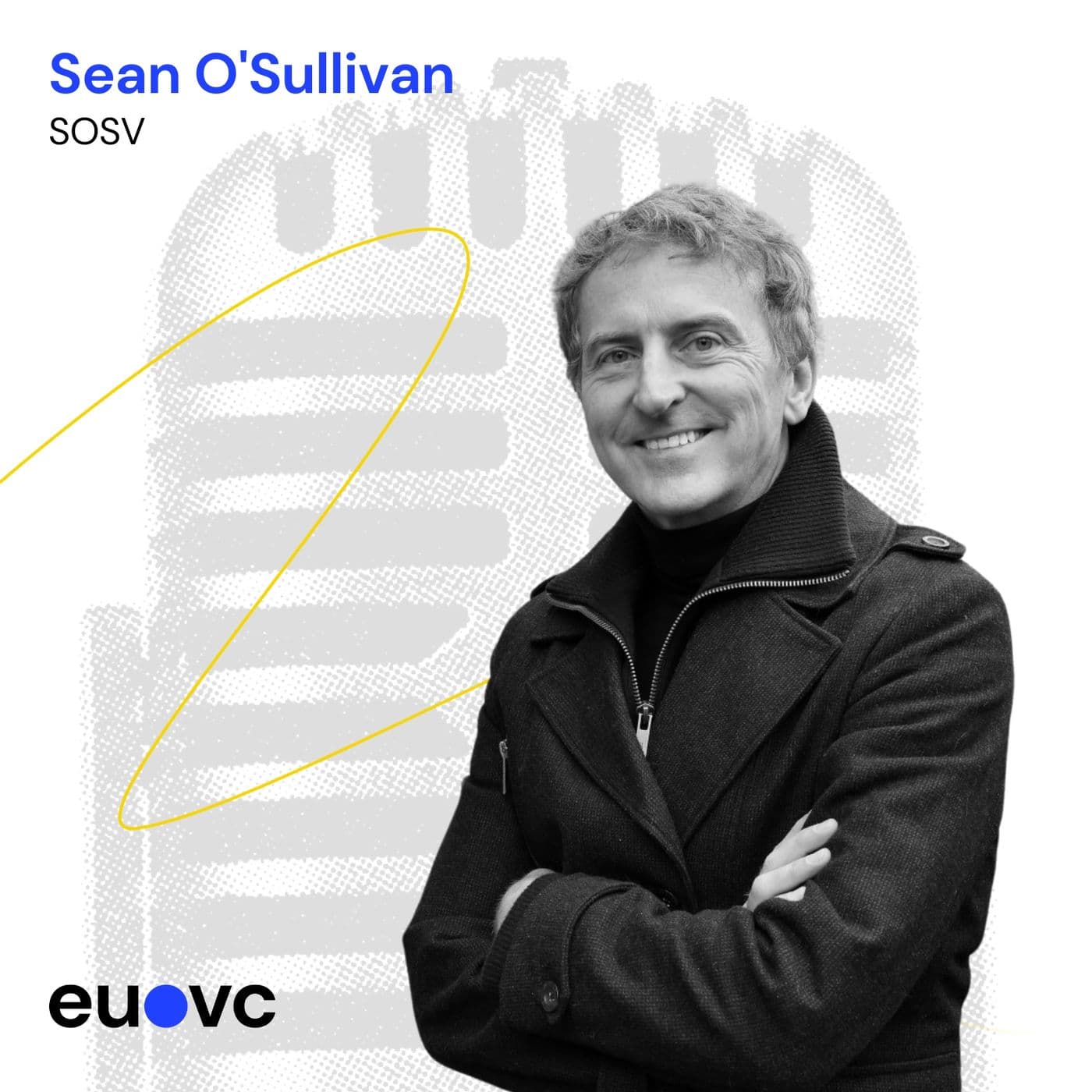
EUVC Podcast Episode #221 Summary: Sean O'Sullivan from SOSV
Episode Overview In this episode of the EUVC podcast, co-hosts Andreas Munk Holm and David Cruz e Silva interview Sean O'Sullivan, Managing General Partner at SOSV. The discussion covers Sean's multifaceted journey into venture capital, the unique approach of SOSV toward investment, and insights on the current landscape of venture capital, particularly focused on planetary and human health.
Key Participants
- Sean O'Sullivan: Managing General Partner at SOSV, a venture capital firm with $1.5 billion in assets under management (AUM).
- Andreas Munk Holm and David Cruz e Silva: Co-hosts of the EUVC podcast.
Episode Highlights
Sean O'Sullivan's Journey
- Background: Sean’s path into venture started with his company, MapInfo, which went public in 1993. After leaving, he ventured into music, tech startups, and humanitarian efforts in Iraq.
- Learning from Failure: Sean emphasizes the lessons learned from his failures during the dot-com crash, which shaped his investment philosophy.
Investment Philosophy
- Resilience and Adaptability: Sean discusses the importance of perseverance, long-term commitment, and a diverse entrepreneurial mindset in guiding SOSV's strategic approach to investments.
- Multi-Stage Investment: SOSV operates at various stages from pre-seed to Series C, focusing on nurturing startups through their growth phases.
SOSV's Unique Approach
- Global Studio Model: SOSV employs a unique model that combines early-stage startup development with significant infrastructure support, such as wet labs and specialized facilities.
- Vertical Focus: The firm concentrates on hardware, life sciences, and planetary health, differentiating itself from traditional VC models that often lack such specialized resources.
Key Insights on Venture Capital
- Value of Founders: Sean underscores that while VCs can help, the ultimate success belongs to the founders who do the hard work.
- Climate and Health Focus: He notes the rising emphasis on investments related to planetary and human health, advocating for a hands-on approach to support startups in these vital sectors.
Investment Strategy
- Investment Metrics: According to Sean, the VC industry often sees 1 out of 10 investments succeed, stressing the need for strategic patience and long-term vision.
- Collaboration with Founders: He believes that strong partnerships with founders are crucial for navigating challenges and achieving success.
Key Takeaways
- Diverse Background: Sean's story illustrates that a diverse range of experiences can contribute to a successful career in venture capital.
- Investment Philosophy: Emphasizes the importance of recognizing the value in founders and the need for a long-term commitment to nurturing startups.
- Deep Tech Focus: Highlights the necessity of engaging deeply with hardware and life sciences to address pressing global challenges.
Quotes
- “By the time it's big, it's too late.” - Sean O'Sullivan on the importance of early investment.
- “Leadership is not about creating followers; it's about creating leaders.” - Sean O'Sullivan on the role of leadership in entrepreneurship.
Conclusion Sean O'Sullivan's insights offer a compelling perspective on venture capital, especially in the context of emerging technologies and the pressing challenges of our time. His journey reflects the importance of resilience, collaboration, and a commitment to impactful investing.
For further insights and updates on the European VC landscape, follow the EUVC podcast at [eu.vc](https://eu.vc).
Written by AI. May contain mistakes. Listen to the episode to check what was said.
Transcript
Automatic transcript. May contain errors.0:01Hello, everybody, and welcome to the European VC podcast. I am David, and I am joined, as usual, by my dear co-founder, Andreas. Today, we have Sean with us. Sean is a managing general partner at SOSV, a global multi-stage venture capital firm that operates early-stage startup development programs, notably HACS, IndieBio, and Orbit Startups. They are the first check in deep tech starting at pre-heat stage. SOSV has$1.5 billion USD in AUM and an established portfolio of 1 ,000-plus companies, including the names of Upside Foods, Perfect Day, OpenTron, Formlabs, etc. Sean is also on the board of Khan Academy, the Tyndall Institute, the Autism Impact Alliance, the Brain Foundation, and a number of private companies.
0:44If you're listening in and love our show, drop us a review, follow the pod, and subscribe at eu.vc.
1:02United and determined we can serve as a model for other regions of the world. The nature of a problem requires a European response. Europe is a story of new beginnings. Let's start acting. This show is not investment advice and the hosts of this episode may be invested in the funds and companies featured. All right, Sean, I saw you really enjoying our very European jingle there. Yeah, and got to love the dance throb music there. There's nothing better than marrying Merkel and dance throb for sure. But Sean, let's kick this thing off with your path into venture. Would you give us your story? Tell us who's Sean?
1:50How did you get here? How did I get into venture? So my journey into venture started when I was graduating from university. Rensselaer Polytechnic Institute. I started a company called Map Info. If you've ever typed an address into a computer or onto your smartphone and seen a street map, like to get around or whatever, that's what we invented. It became a very successful company. It became a big public company. It went public in 1993 before both of you guys were born. And I was... We were born. We were born, I must say. I was very, very young. I was one year old. Okay, okay, okay. But I don't think we saw that as a user, though.
2:33Yeah, well, it was more for the commercial users and putting data on street maps and whatnot. We had thousands of people who built our technology into their products. And so, you know, the first million people ever to do this sort of technology, 98 % of them did it on MapInfo. And then others obviously came off later. The Google Maps and whatnot is a great derivative product that we really love and think has added a lot of value to the world. But I grew to a couple hundred million dollars in revenue. I left the company after it went public and actually went into the field of music. I made some music.
3:16But some friends of mine pulled me back into the tech industry, got me to start another startup, Netcentric, where we had the idea for software inside the internet, or as we coined the term, cloud computing there. It was a big idea. idea. But when the dot bomb era hit in 2001, we had, I think,$8 million in revenue and$10 million in expenses. And that just didn't cut it in a world where you needed to be having more revenue than expenses. So we went out of business, sold for pennies on a dollar. And you learn as much from failing as you do from succeeding. It still hurt a lot, but that was my start into venture.
4:03I guess throughout all that time, after my first company went public, I was investing. I was a super angel investing at the sort of quarter million or half million dollar level into pre-seed startups. And several of the investments did really well, including companies that got acquired by public companies, a company that went public, other companies that sold for hundreds of millions of dollars. And so after the amount of money that I was managing through all of that grew to the low hundreds of millions of dollars, I decided to make it formal and say, I am now a VC. And that is how SOSV came into being.
4:41I hired a back office and brought on other partners. And now we deploy the capital and tend the flock.
4:54I feel like I can risk and say that you have a really diverse, unexpected background. And just to shed some light on that, and we will share some links to the listeners that want to hear more about these stories. But you have a background going from janitor to entrepreneur, rock star, filmmaker. You were in Iraq. You ran a humanitarian organization. organization, I know there's this weird story about you also having your eye eaten by a steroid-induced viral infection, and to more recently even being a TV star in Ireland, right? And I feel like I could go on if I listed all the interesting things in your background.
5:30So I'm very excited to ask you this question, which is, would you share with us a pivotal moment in your life and how it has shaped you as an investor today? Well, I'd say the first pivotal moment in my life, and let's just stick with that one, It was how I went from being a janitor at my high school to being a programmer when I was 14. So I grew up really poor. And so we were on welfare. My mom had, we had a deadbeat dad. There were nine kids. And so we, for six years, were on the welfare system in the United States. So they had a program for the poorest of the poor, which was called the Civilian Employment Training Act.
6:13and you could get a job theoretically on something that was hopefully helping you develop a career. So they gave me a job as a janitor and I worked in my high school. And I figured out that you can't wait for something to be handed to you. You have to go and seize it. So I found another job where I thought I could actually do something which would actually advance me. I knew that there was a there was a government agency in town that had a computer and I said I want to go be a programmer so I asked the person who was running that just knocked on the door asked for a meeting he was open I stepped into his office and I asked him hey can I just do something here you know can I change the tapes on the on the machines can I do punch cards or whatever it is that you do here.
7:03And he said yes. And then I then became a programmer. And, you know, that helped shape my life.
7:15I think one of the most important things for an entrepreneur is that moment where we realize that you have to seize what you want to get it. No one is going to hand it to you. I'd love to ask you a question about your investment into Netflix because that's something that I think that most people would think, that must have been a pretty wild ride. Well, actually, I originally invested into Netflix through a VC fund that I was an LP in. And so I really liked the company. They had the red envelopes back then. So this is like pre-digital distribution, pre-streaming. And so then they went public, and then they just crashed.
8:00You know, the stock went to a very, very low valuation. And I actually bought most of my position at the IPO or not post IPO, I would say. So it went down at very, very low valuation. I bought like 2 % of the company. If I'd held on to all of that, it would be worth several billion dollars. I sold it over the years and made plenty of good returns on that. But just the same, that's how I got into Netflix. I asked the VC if I could meet with the founders. And so they introduced me to Reed Hastings. And I stayed with that company for many, many years through the transition to streaming and through all of that.
8:45And a big believer in their huge success. And always kind of shocked as well as how much capital they had access to and sort of the stratosphere of valuations. So I sort of diversified and went into other sort of more value-based stocks, you know, later on, like Apple, when Apple was, you know, a very low value company. So that those things were sort of my lessons in getting into Netflix and actually how you can actually ride a wave for a very, very, very long time. you know Netflix has been around for you know way more than 20 years 25 years and you know it it keeps increasing in value you know pretty substantially and so has Apple you know when I bought into Apple I don't know it was a couple hundred million dollar valuation for the whole company right and and so you know maybe it was a billion dollar valuation and now it's a trillion dollar valuation right so a couple trillion three trillion so you know those are those are you can right away for a really, really long time.
9:51If you get a winner, stick on the back of that course. Yeah. And I think that this ties and we've got a lot of conversation around SOSV and your investment strategy and so on. But now you saying this, I cannot help but want to just scratch a little bit deeper and say, you are a multi-stage investor. And of course, you're that because of the philosophy of you want to double down on your winners. But I'm curious to just hear you tie what you just said with those two experiences with Netflix and Apple to the reason behind you also being a multi-stage investor? And to what extent would you even go in and buy up after a crash after an IPO?
10:32Yeah, well, actually, we don't have that mandate in the fund. I actually invested in a VC that does have that mandate, Technology Crossover Ventures, when I was getting going. And I actually really appreciate that approach because those runs can be really long runs. I would like to have that approach, but on the other hand, that tends to tie up capital in a different way than people like to when they're investing in VC funds. So we stick to the knitting and we just really work with the startups. at the pre-seed stage where we start investing. And we do go to, you know, Series B, Series C. So we are a multi-stage investor.
11:17But our focus is really from, you know, from a couple of million valuation to sort of a couple hundred million valuation where we're buying up. And then beyond that, we tend to sit on the sidelines. Let's go into the take a stand section.
11:46All right, Sean, let's get to this quote from Sabina that we want to hear your take on. It is VCs add way less value than they think. Yeah, I mean, we try to do a lot more than most VCs to add value. you know, we have these physical facilities, we have a huge staff, you know, we have over 120 people globally that are working with our startups. So, and 75 % of those are working at the at the pre-seed stage. So it's really a tremendous amount at the foundation. And we know that the startups appreciate the work that we do and they're happy to work with us. But fundamentally, it's always the founder's company, right?
12:29And at the time we first get involved in the companies, that founders own the majority, the vast majority of the equity of the company. They're the ones doing the 80 to 100 hour work weeks. It's really all about founders. I think VCs appear a lot of times to want to take the credit. It's very true that VCs can do and should be essential for getting the startup to go further, go faster, skirt unnecessary problems and all that. But ultimately, really, if it was all about the VC, why do only one in 10 investments in a VC's fund actually produce these disproportionate success stories? The thing about VC is, they say about VC is, it's the only job where you can be right one time out of 10 and be called a genius.
13:21And that's the truth because five or six times out of 10, those investments are going to go to zero or go to just a partial valuation. You have two or three investments out of 10 that earn you out of the hole and then really one out of 10 investments that if you get it, you get to do the next fund. And if you don't get it, you're out of business because, you know, the odds are always for asymmetrical returns in VC. and so it's not the VC's fault. You know, I think VCs have a tough industry to be in. They have the faith and the courage to back companies. Most of the times the companies are going to lose money and they're going to back those companies for years of their lives, you know, spending time trying to help those companies.
14:11So I don't want to diss the VCs. This is a hard business for everyone to be in, but it is the founders ultimately that build the success And you have to underline that. We're a bit along for the ride here.
14:28So, Sean, we've been seeing, obviously, and we as an industry, of course, a rise in the emphasis of this topic of planetary and human health within VC, you know, whether that's existing firms doubling down on that space, increasing their allocations for those verticals, or just increasing fund size, but also many emerging GPs actually that may have calmed down a bit. I don't really have data, but I remember seeing a lot of new funds or new projects at least popping up here and there within that space. And your approach, as we kind of hinted to already, stands out from the traditional VC model in the sense that you could provide a lot of hands-on support, but you also provide like infrastructure, core infrastructure.
15:08And I'll let you kind of deep dive into that a bit more to startups. And that is intriguing. And I would love to ask you to elaborate a bit on the why behind that unique model, because it does take a different level of investment and not only capital. But also, why do you believe that positions you at the end of the day to just generate the outsized returns for your LPs, your investors? Well, so the first thing is that the accelerator model is well understood, and there's a couple of people that are playing at sort of the level that SOSB plays at. So there's Y Combinator, there's 500 startups, and there's Techstars that are at the sort of volume and the sort of success level.
15:51And then there's a bunch of, there's thousands, there's literally thousands of other accelerators scattered around the world. Could you just share some big numbers there just so people that might not know the exact numbers of FV, just to give an idea of the scale that you're now talking about? Yeah, I mean, we only invest in about 100 to 125 companies a year, but that generally puts us up in the top three investors globally for seed, pre-seed investors, et cetera. and we also invest in follow-on rounds. So we are also one of the most active Series A investors, one of the most active Series B investors.
16:32And when we, at the accelerator level, we came along, we sort of loved the Techstars model of these cohort-based models where people are physically located alongside each other. As a matter of fact, I was one of the first backers of Techstars back in 2008. And we also backed 500 startups in their first fund as well. So we were looking at what was going on and we were actually, we created our version of the accelerator. We're the first in Asia. We created China Accelerator. It was the first in all of Asia and the first in China to have that model. But what we liked is we liked taking a very different approach and having a unique approach to our accelerators.
17:17And that meant that instead of just trying to be one size fits all, do all kinds of software, do all kinds of whatever business models, we became very focused and very vertical in terms of what we were trying to do. So that's China Accelerator. The market in China, you know, there's the Great Firewall. There's all these other things. You know, it's completely different than the software market anywhere else in the world. So so we had this model, you know, of actually trying to create more vertical accelerators. And, you know, so, for example, creating an accelerator for China and for the Asian markets, creating an accelerator for hardware.
17:58Because, you know, when you think about it, hardware is completely different than software, right? So you need to do pick and place machines. You need to do mechanical engineering and electrical engineering and, you know, frequency and FCC approvals and things like that. So all of those different specialties, we said, okay, well, obviously it needs to be its own different program. It needs to be its own different accelerator with people who can advise and work and get real deep help to startups in those areas. And we did the same thing for life sciences. So we became the world's leading programs for the targeted areas that we do.
18:37So we're the world's most active life sciences investor. We're the world's most active hardware investor. And we do a lot in the Asia marketplaces and the developing markets with our Orbit program. But we're not the world's most active software investor, and we never will be. So we sort of abandoned the accelerator model, and we created this more deep founder-first studio model where we actually spent. And we spent tens of millions of dollars building out these facilities. so that people could actually build their prototypes, do vacuum form plastics and molding and injection machines and mechanical work with five and six access robots that we have on site, pick and place machines, removing the circuit boards around, et cetera.
19:31So we have all of this capability to allow the founder to go further faster. And that was something we did because that was before we were a regular VC. This was when I was doing it out of my own money. And I thought that this is the way it should be done. There is no way that any VC could have done that because it required too much of an investment. And you can't do that out of a management fee. Management fee is only 2 % of your fund size. So I was able to sort of spend the money, build up these facilities and these capabilities. And since then, since it's been proven, we've also gotten some state supports when, you know, New York State helped us build our wet lab and they gave us$25 million to help do that.
20:19New Jersey helped us build out our HACS facility in New Jersey. They gave us another$25 million to do that. So it sort of differentiates us from other investors and certainly at any stage, but certainly at the pre-seed stage, because we have these capabilities and these facilities and the technical staff. We have 11 PhDs on staff, et cetera, that help with mechanical engineering and, you know, biomechanical and whatever is needed. Could I ask you, Sean, because you are a global investor, you've got investments everywhere, but having wet labs means you've got physical places and you're taking founders to those physical places.
21:07Many would argue, or many, maybe as an excuse for not having their own wet lab, argue that you don't do that. The best founders won't necessarily move to China to be in your wet lab, blah, blah, blah. How do you position on that angle? Yeah, no, I mean, we don't require them to stay for years. We only actually think that founders who are very dedicated, they're going to be able to uproot themselves for three months, six months, or whatever, because the business is the most important thing that they need to do. The other benefit is that we have these facilities in New York City and, you know, in New Jersey, the outlining area of New York City and in San Francisco.
21:55So at the same time, if you have like a European startup or somebody from India or someone from South America or whatever, this gives them access to capital that they never had before. I mean, one of the reasons why YC was only in Silicon Valley is because it actually has the investors there. We also, New York is an up and coming. It's the number two area for venture capital in the world. So we have our facilities where they can not only run, but they can also prove. I mean, these are physical companies. They're doing physical things. They actually need to have investors come and see them and see what they do.
22:37And, you know, they're not going to fly even to Singapore or something like that to back these companies. You know, they have to see it with their own eyes. And we help de-risk that for the investment community because they know the quality of the output that we put out. But also, you know, for the startups that they get to work with the best founders from all around the world, right alongside them for months at a time. And that is a huge, huge benefit for the founders to be brought out of whatever sort of limited ecosystem they're in and to be brought to global centers of finance and technology.
23:15You mentioned some stakeholders there that help with the development of the infrastructures. I'm curious to ask, you know, what is the partnership that you have with these entities? Are there LPs in the fund? Are there shareholders in the management company? And maybe also use that as a segue to talk a bit about what's the profile of LP that SOSV has proven to be good at working with? Sure. No, actually, they're just state agencies looking at this as an economic development opportunity and their grants. We've just been given grants. They've seen what we've done for the ecosystems for other areas in the world.
23:50They've seen the hundreds of millions of dollars in investments. They only give us really a small amount of money relative to the economic leverage that they get. you know 25 million dollars over a five-year period was was what our grant was from new york state and they we've already achieved in the first two years you know 150 million dollars of investment into the companies um and and over the next three or four years it'll be over a billion dollars of investment so it's like it's for them it makes a lot of sense given our success ratio of turning startups into unicorns the other part of the question oh sorry you asked about the lp LPs.
24:27You asked about the LPs. Yeah. Okay. LPs. So, yeah. So, you know, they don't, we don't need them as LPs. We have financial investors and institutions and whatnot. Sometimes they will also invest capital and that's, that's also, you know, appreciated. but our primary LPs are those that really care about the work that we do, the impact areas that we work in, and also the companies that, you know, big corporations that are looking for ideas. There's a lot of corporate LPs that are from all over the world, family offices. We have about 200 LPs across our various different funds, SOSP 3, 4, and 5. And each fund has its own set of LPs.
25:20There's a huge amount of re-upping, obviously, from one fund to the next. But yeah, each fund has new LPs. The first fund was a$150 million fund. The second was$277 million. And the third fund is a$400 million fund. So yeah, we add LPs as we go along. And you've got thematic funds as well, right? So that also, I guess there you have a bit less cross-pollination because you often see someone committed to climate being less committed to corporate, I guess. We have a core fund which supports all of our programs. And we have a follow-on fund which supports the companies as they are sort of Series B and later investments.
26:04Okay, that's cool. So you run your programs as you run, and this is just for our audience as well. the programs are run as thematic, but the fund that then invests into the opportunities in each of the programs invests across the programs. Yeah. I mean, really, this is no different than how all VCs work or nearly all VCs work. Like you'll have one partner who is, you know, specialized in SaaS, another partner who's specialized, you know, and maybe for the fintech sector or whatever, another partner is on healthcare and another partner that's doing, you know yeah uh ai or something and and so gen ai so like you know then so so we cover multiple sectors and we're quite generalist when in those areas but we have the technical capability to help those companies deliver and in particular we really are focused in human and planetary health with planetary health being 65 of what we do um you know really changing the means of production of how we produce the products that we consume as a society and as a world.
27:10Okay, so now it's time for our shout out segment.
Read the full transcript
27:23Sean, we use this segment to ask our guests to give a shout out to a co-investor, Angel or LP for being awesome. and of course, whenever possible, to share the story behind that awesomeness. Well, you know, I cannot, we work with hundreds of other VCs, so I cannot just name one VC or other investor. I'd be leaving out so many other investors that have continuously faced up to these challenges, continuously funded or tried to turn around these dire situations, and gloriously succeeding when they do. I really actually love spending time with the VCs on the boards that I'm on. Despite how time consuming it is, most VCs and CVCs are incredibly professional.
28:13But you did ask for some love. So I'll point out, we love LPs that like to co-invest with us, not just investing in our fund, but also leading rounds in our startups and or helping fill out rounds. There's this one investor I'll call out by name, Ashwath Mera, who's actually on two of our LPAC committees. He's been with us since SOSB3, our first fund that was open to the public. And he finds time and energy to back more than a dozen of our startups with his support and his advice. and he's a leader on the companies he does come in on. And we, you know, I'll give him a special shout out. And also, you know, calling back to my the earliest days when you're getting started, you know, Alex Hawkinson from Tiedemann.
29:08You know, he was really the very first institutional investor to pull the trigger on our first fund, SOS V3. And he, you know, and he tripled down on the next fund size, bringing in other institutions as well on our second fund. And just to give you an idea, like on that first fund, I put in a hundred million dollars of my own money into SOS v3. And I thought I was going to raise like a$300 million fund or something like that. Nobody showed up. It was like me with my hundred million dollars and like the model is just too crazy, right? this how could this ever succeed you know this is weird it's in all these different geographies they've got this accelerator model who really knows if that's going to work you know and and we we started with accelerators we move we don't do accelerators anymore it's more the sort of studio model kind of thing much more advanced much more capital we put a lot more capital into our companies but but uh but uh you know so we got like you know everybody the only people that put money in were people that had already worked with me.
30:15You've been on boards with me before, who I'd funded, who became multimillionaires as a result of, you know, my investments to them, et cetera. And then, you know, they came in and that was it. And then, so Alex actually from Tiedemann or before that, he had, it was a different, Tiedemann acquired as the group that he was working for. But it's, it was actually a huge deal to get this sort of institutional, investor in and with all the foundations that he brought in and other people. Huge shout out to Alex. He had the faith.
30:53Amazing, Sean. I think anyone who's listening to this can hear David and I laughing a small bit and also see us nodding if they've got the video on because you've got some great stories. And I think that you're saying something here about Alex and the importance of getting that first institutional money into a fund. It is incredibly important and life changing for any fund. But, Sean, all throughout our interview, I've also been sitting here dying to hear the three biggest learnings from a man like you who've built SOSV into a behemoth of 1.5 billion AORM. So I just want to kick it up to you and say, tell us what's your three core learnings.
31:33well number one uh by the time it's big it's too late right so do not pursue the flash in the pan like there's the this is what happens and always happens in the vc market an area gets hot and people follow through with derivative investments it's too late guys it's too late and i'd say that this is not entirely true you know there's some generative ai stuff that is super super super hot right now. And if you were to get in at sort of the pre-seed stage and, you know, back a founder, but when pre-seed becomes a hundred, a hundred million dollar round, it's too late, you know, you know, that, that's not right, you know, and there are pre-seed rounds that are going out at a hundred million dollars being raised, right.
32:19You know, and so there's this whole, you know, falseness and this, this happened in social media, it happened in crypto and it's happening right now in generative AI. If you're not among the first movers, you're just going to be burning money. Number two, steady on. There's a lot of flashy people that come in into this game of venture, and there's been a huge number. I mean, saying a lot of arrogant things, they haven't really necessarily done anything in their lives, right? They haven't necessarily built anything. It's not just the Donald Trump types, right, who will lie about anything. In fact, 10 % of Wall Street are narcissistic psychopaths, and a similar percent of CEOs are narcissistic psychopaths.
33:08So you really have to root those folks out. Because, you know, as we're recording this, Trump just get another indictment, you know, for another, you know, for trying to overthrow the elections just last night, right? So, but that, you know, that was a pattern that had been established his whole life. You have to go into, before he was president, he was already, you know, convicted of multiple crimes and got himself off. I mean, this guy has been a crime maker, a criminal his whole life. So if there's anything to learn, you know, it's about doing rather than saying. So do not listen to what they say.
33:50Listen to what they have done or look at what they've done and find out the truth about that in terms of the people you're backing. And stay steady with those people. You know, just just, you know, just ignore the fact that there's these flash in the pan that come out with their big, big views on life and and don't actually have any real history of creating something from nothing. And third, if you're going to be huge in venture, it's really a multi-decade game. The first decade is that decade when you're building your own first business. When you're an entrepreneur yourself, when you're doing the work, when you're establishing that you can build something from nothing.
34:30And that first decade gives you the credibility to then go and be helpful to the next set of entrepreneurs coming after you. To give advice. And this is particularly true. I'm really speaking to early stage investors rather than sort of the Series B investors or whatever. You can just go to MBA school and invest and be an investor at later stages. But when you're actually in with founders as they are just learning to grow the business and dealing with the layoffs and dealing with the, you know, the difficult challenges when a customer doesn't come through or when you have to hire or fire people, You really need advice of an operator that has done this before.
35:14And therefore, this experience of building a business is incredibly critical. And we always get operators at SOSB that can really advise our startups on how to run and build a business. So the second decade, the first decade is just being an entrepreneur, building multinational, multimillion dollar businesses. And that gives you the credibility to play the game as a VC. The second is as an investor, just learning all the stages. You have to go in and actually go through with many exits, the whole process of taking a company, getting them to M &A, even taking them to IPO, knowing what that process is like.
35:57And that is just providing the grounding of the foundation for that next decade, which is really taking all those lessons that you've learned as a VC and continuing to build off of that marvelous network that you've built in your first decade as a VC and expand on the capital that you're able to attract as you have succeeded. it. Incredibly exciting to hear. I think you explained so well your position on the first part, which is that you need to be an operator or maybe even a founder to be a VC. So I will not dive more into that because we can always steel man the opposite perspective. But I think that we've all heard that discussion so many times.
36:43So I'd rather use the energy here to dive into the second stage and say, well, having taken as many companies as you have now from the very early pre-seed stages all the way to the IPO stages in hardware, which honestly, we do not have too many VC investors who have done. I'd love to ask you, to all the people that are now doing this and raising these funds or generalists diving into doing more hardware, What are the main pitfalls? What are the things that you're seeing that people should really keep top of mind if they want to play the hardware game? Well, I don't even think of it as the hardware game.
37:27I think of it as the climate change game or in the health care game. Right. So like if you're going to affect real world changes in, you know, say decarbonization, for example, what creates the carbon in the first place? It's physical processes. It's the chemical industry. It's mechanical. It's building things. It's concrete. It's all of these things. You're not going to solve those issues with software approaches. I mean, software can help on the edges. And it's essential to be part of solutions, hardware solutions and biomechanical solutions or biological solutions to these problems. But if you want to make a difference in climate, you really need to have either hardware expertise, building, manufacturing, reinventing the means of production of how we produce everything from our food to our buildings and our built environment to our energy supply, etc.
38:23These are deep tech issues. This is what we concentrate on. And if you're passionate about that, you know, you have to be in hardware and you have to be in life sciences because life sciences is the efficient way of often using biology as a technology to produce things at 30 times to 300 times less carbon emitting approaches. For example, you produce meat without cows or milk without cows or, you know, concrete, which doesn't, you know, generate a huge amount of waste gases or, you know, all the methane sources, etc. All these things are real deep tech problems. So if you care about these problems, you have to be in hardware or in life sciences.
39:06So in terms of the issue of how to be successful in hardware, like this is, I don't think of, there's a lot of people that came at hardware and they came at it from the consumer applications first. And we've done a lot of consumer companies as well. Consumer companies, it's hard to really make that work. You know, the hit ratio is one out of every 20 or something. And that is a difficult business to make work. And the capital equipment costs, even though they're much, much lower than they used to be, we rarely do consumer hardware. We do find some companies that we that we back these days. But we're doing more industrial applications these days for manufacturing, transportation, for energy, for recycling, for mining applications.
40:02And in these areas, you know, the thing is to have some specialty, you know, have done it yourself, you know, have actually built hardware companies and been through it before. We've backed over 200 hardware companies. Many of them are on the shelves of stores with our consumer products. And hundreds of them are actually in industrial applications in industries, you know, redefining our manufacturing of textiles and clothing manufacturing and redefining how we produce our foods. You specifically decided to build with, that's now not called Accelerator, but Studio Model, where you had the wet labs and so on.
40:46how do you see investors that don't have that type of, you know, access themselves? Do you feel that there's an issue there and that founders should be thinking twice? Or do you see more that, well, we all have complementary investors and we all have complementary ecosystem players. And for that reason, it doesn't have to sit with the investor. What's your thinking here? Yeah, well, no, I mean, you know, most of the deep tech investors that are going into hardware or life sciences that need these labs and whatnot, they're coming out of either universities or they're coming out of research institutions, etc.
41:25And they can, you know, they can use those resources up until they really want to commercialize them. And then at the time that they want to commercialize them, a lot of times it'll take a few million dollars of funding. So there's that gap between, you know, where they are trying to leave their university or whatever and where they need to raise a couple million dollars. Sometimes they can do that just off of the back of however far they've gone. Most of the times they need to get some sort of pre-seed or seed round in the middle. And so we look at ourselves as the supply chain for the rest of the VC industry.
42:03I mean, we only take a small portion of the companies, you know, 10%, you know, 12%, something like that for the first half a million dollar investment that we put in, quarter million to half a million dollar investment that we put into these companies. So we, you know, they can use all of our resources, et cetera. But then we have 250 investors that come right after us at the seed level and at the Series A level. And so we look at ourselves as just performing a role of service to the rest of the venture capital industry. There are others that, you know, can perhaps get funded with a couple of million dollars directly out of their university.
42:43And that's a possibility. We still think we have a lot of value to add to those companies as well. and certainly, you know, 70 % of the companies that go through our programs will receive, you know, on average$3 million or so after they graduate our programs. So, and sometimes it'll be even bigger rounds, 10,$15 million rounds. So like the idea is to, in terms of how other people compete with us, I don't know really, and I don't care, you know, like we were able to sort of invest tens of millions of dollars and build out these facilities and have, we have a bit of overhead here. You know, we have, you know, all these PhDs and whatnot.
43:30And so we're taking a small bit of equity in exchange for the overhead that we have. We like that where we sit in the marketplace. There's a couple of people that MIT has the engine. It's very, very, very focused on Boston. Like 50 of the 55 people that they backed are all from Boston. So we try to be thinking more globally and getting companies more globally. And so, but other than that, like it's hard for most people to do this without depending on their universities. Yeah, and that's also, and that's why I asked the question because I remember from back in my early days in venture, that was in the deep tech hardware space.
44:19And I was definitely seeing that as an entrepreneur, you get to this point where all of a sudden you're starting to feel the university and the grants and so on are starting to have to kick you out because they're not allowed to have you there anymore. and all the venture investors and angels are saying, it's too early. We're not ready to take that risk. Yeah, I mean, so that's our role is we come in in that intermediate period. We de-risk the investments. We get the prototypes to a production level or at least benchtop readiness level. And then we de-risk it so VCs can feel more comfortable about coming in.
44:56And then we'll participate in those rounds as well to help fill out the rounds. That's a huge role for investors like you in many, many, many ecosystems because we do not have it in most countries yet where you have the combination of having risk cabrio that's willing to take the risk, but you then also have someone who knows how to commercially invest and build companies at the same time be able to take the grant money and the development money from the states to then put that to that type of use because we are seeing that when those two things are being done not connected, then they can have a difficult time actually playing well in parallel.
45:38Well, I would also add that you're not going to be successful if you have the kind of overhead that we have, unless you are dealing with the whole world's deal flow. We are actually able to attract the best companies in the world. And as a result, we can make the infrastructure work. If you were in a smaller country, if you're trying to do this for a Scandinavian country or the UK or something like that with only 50 million people, you know, and you're trying to, there's just not going to be that many companies coming out that could support that level of investment and be practical and also get the next level of investment.
46:17You know, you need a lot of the companies to be successful at getting that next round of investment or else you're just going to be burning through taxpayer dollars. And now it's time for the quickfire round where Sean will ask you three quick answer questions. And now, the quickfire.
46:42What advice would you give your 10-year younger self, Sean? I'd say, number one, don't be a pushover. It helps when everybody in your organization or everybody in the companies you back know that they have to do the best work of their lives. You have to hold high standards. And so do not compromise on that. It's the point of pride, I say, as well, that people will know that they've done the best work of their lives and they're willing to put that in and making that happen. number two finish what you start um i think that is uh the challenge that we often have we try to do too many things and then we don't finish anything just pick your priorities choose the thing that really matters and then finish it number three um cut your losses if you get to a place where it's a fundamental fail and even if you've invested a lot of money in the company you should be prepared to just flush the investment.
47:52And this is especially true if there's a founder that's showing dishonest or disingenuous traits with you. If they're not being completely open about the challenges and the struggles that they're having, you should just figure out how to rescue as much value of the investment as you can, but then cut it and move on. now sean what are your top tips for emerging vcs that are fundraising this is a really tough time you know um i i would say as i've spoken to this before show you can build a multinational multi-million dollar business by starting and building one that gives you the credibility to advise others on how to do the same do that first but then you ask what should they do for, you know, for fundraising in particular.
48:46So, uh, this is a hard time for fundraising. It is taking much longer than, than ever before, uh, to, to fundraise. So, um, I'd say probably, uh, figure out how you can do, uh, the best you can and raise the money for 12 months and then stop fundraising and focus on backing the businesses with whatever money that you've raised in that period of time. And what's the most counterintuitive thing you've learned since you've been in venture? Well, I'd say that everyone thinks that they know the winners from the moment that they meet them. And that's not really true. As we've talked about, you're a genius.
49:32If you're considered a genius in venture, if one out of 10 times you're right, you can't really predict which one of your startups is going to return the fund. So go with your gut, back to the full level of your conviction, but spread your bets. You'll be surprised how often it's an unproven team that ends up winning.
49:59All right, Sean, before we wrap up, we cannot let you go without asking you to give us a controversial opinion or belief that you have. And we'll share this with future guests for them to give us their take on whatever you're about to say. Entrepreneurship, it's a blood sport. The founders are constantly battling in the arena and ultimately the majority of them are not going to be successful in changing the world in that particular startup anyway. They leave a piece of themselves on the fields and our job as venture capitalists is to be coach and confidant, help the company fight the good fight, help the founder get up after being knocked down, and to some extent, help them realize when the fight is over.
50:43We hope that every time, even if the company fails, the founder succeeds, and by having tried and grown through the battle. But my controversial statement here is leadership is not about creating followers. It's about creating leaders. If the startup or the movement is going to succeed, it's going to require other leaders to inspire and spread the mission. And so I think too many people focus on just being great leaders without realizing that being a great leader is really about creating other great leaders. Wow, that's a wrap. Thanks a million, everyone, for listening in. We hope that you enjoyed this episode of the European VC podcast as much as we did.
51:27Drop us a review, follow the pod and subscribe at EUVC. I am David, joined by my co-host Andreas, and thank you so much for tuning in, and we can't wait to see you all out there. This will definitely tear down this wall. It's more than just an alliance. This is a union of values. United and determined, we can serve as a model for other regions of the world. The nature of a problem requires a European response. Europe is a story of new beginnings. Let's start acting. Acting
From the publisher
SOSV have a $1.5 Billion in AUM and an established portfolio of 1000+ companies including Upside Foods, Perfect Day, Opentrons, and Formlabs. Sean is on the board of Khan Academy, the Tyndall Institute, the Autism Impact Alliance, the Brain Foundation, and a number of private companies.
From serving as a janitor to embracing his passions as a musician, filmmaker, and even running a humanitarian organization in Iraq, Sean O’Sullivan’s multifaceted nature reveals a remarkable tapestry of life experiences. Among the intriguing anecdotes is his encounter with a rare viral infection that affected his eye, providing a testament to resilience and adaptability. His ventures extended to the world of television, where he enjoyed a stint as a TV star in Ireland, further exemplifying his versatility.
In conclusion, Sean O'Sullivan's venture journey offers a tapestry of experiences, showcasing the significance of perseverance, long-term commitment, and a diverse entrepreneurial mindset. These insights have molded his investment philosophy, guiding SOSV's strategic approach to support startups in their earliest stages and nurture their growth through series B and series C, while emphasizing the immeasurable value of riding the wave with successful companies for the long haul.


