
In short
EUVC Podcast Episode #229 Summary
Episode Overview
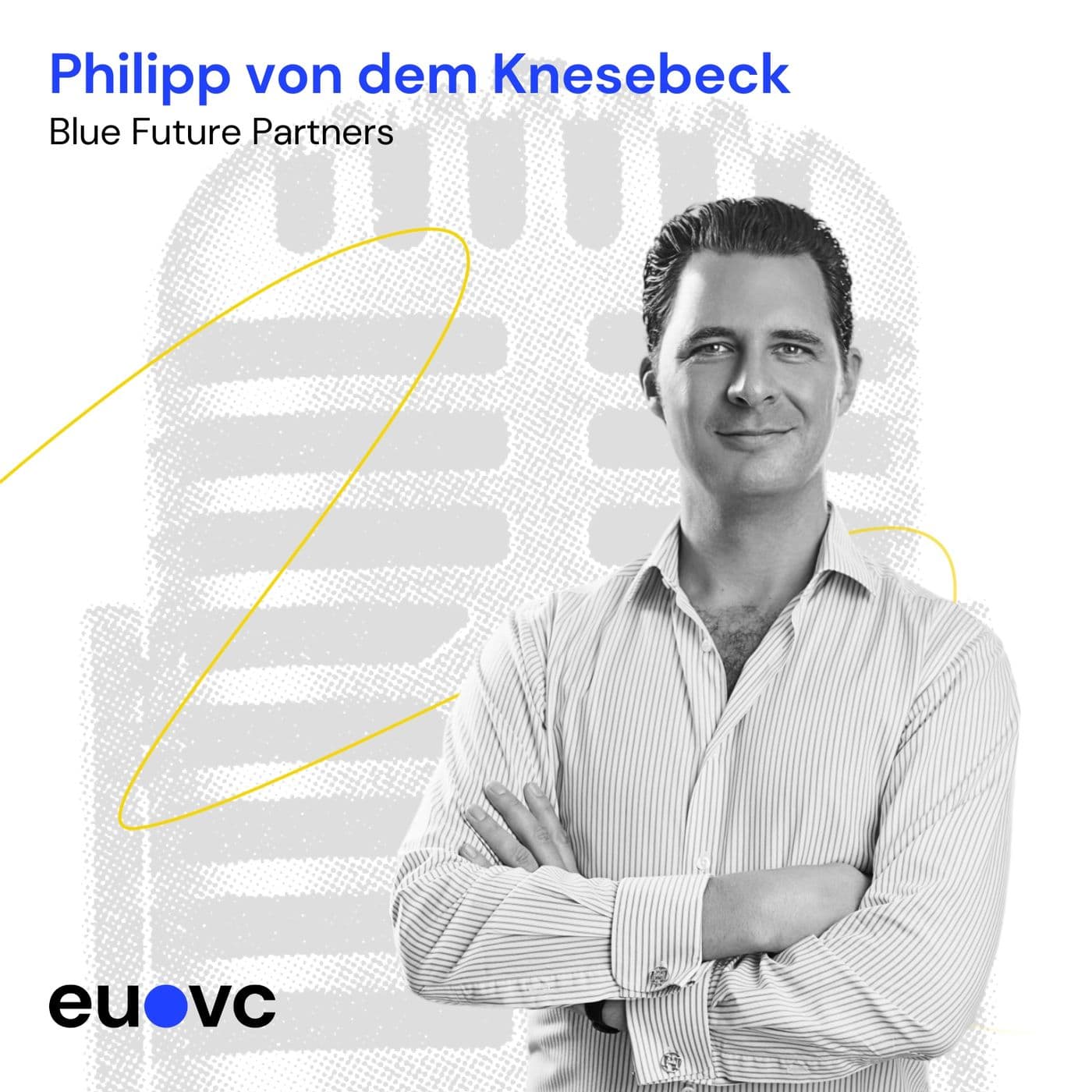
- Title: EUVC #229 Philipp von dem Knesebeck, Blue Future Partners
- Co-Hosts: Andreas Munk Holm and David Cruz e Silva
- Guest: Philipp von dem Knesebeck, Co-Founder of Blue Future Partners (BFP)
- Focus: Discussion on the European Venture Capital landscape, investments strategy, and insights into emerging managers and start-ups.
Key Themes and Discussions
Introduction
- The episode features Philipp von dem Knesebeck discussing his journey into venture capital, his experiences, and insights as a co-founder of Blue Future Partners, a fund of funds investing in emerging managers globally.
Background of Philipp von dem Knesebeck
- Previous Experience:
- Spent five years managing Venture Capital activities for a European Family Office.
- Early exposure to software and internet investments across various regions including the US, Europe, and Asia-Pacific.
- Transition to Venture Capital:
- Involved in digital publishing, attempting to modernize traditional publishing processes led to insights into venture dynamics.
Investment Philosophy at Blue Future Partners
- Fund Structure:
- Focuses on backing emerging managers, with a concentration on 10-12 core relationships that account for 80% of capital.
- Maintains a diversified portfolio across geographies and sectors but with a concentrated approach for risk management.
- Performance Expectations:
- Targets a 3-5x return on investments, emphasizing the realistic expectations on fund performance.
Market Insights and Trends
- Current Market Conditions:
- Discusses the state of the venture capital market post-pandemic and the recent economic corrections.
- Noted the significance of liquidity and its impact on companies during financial downturns.
- European vs. US Venture Capital:
- Highlights the differences in storytelling and networking within the European and US VC ecosystems.
- Emphasizes the growth and opportunities present in the European market despite regulatory challenges.
Fundraising Insights for Emerging Managers
- Key Strategies:
- Importance of differentiation and storytelling in presentations to potential investors (LPs).
- Establishing long-term relationships with LPs, maintaining consistent communication, and being patient during the fundraising process.
Challenges in European Venture Capital
- Regulatory Environment:
- Discusses the competitive landscape and regulatory hurdles faced by European firms compared to their US counterparts.
- Cultural Differences:
- Highlights the importance of understanding cultural and linguistic diversities across European markets while investing.
Advice for Aspiring Venture Capitalists
- Lessons Learned:
- The nuanced understanding of venture capital as a challenging asset class requiring systematic approaches to succeed.
- The necessity for emerging managers to adapt and innovate continually to stay competitive.
Conclusion
- Philipp shares a balanced perspective on the future of European venture capital, emphasizing the need for patience, adaptability, and careful strategic planning. He reflects on the importance of diversification and the potential for growth within the European market.
Key Takeaways
- European VC offers substantial opportunities but comes with unique challenges that necessitate careful navigation.
- Effective storytelling and differentiation are crucial for emerging managers accessing capital.
- A focus on long-term relationships with LPs tends to yield better results than transactional approaches.
- Understanding market dynamics and maintaining liquidity are essential for navigating economic downturns.
Closing Remarks
- The episode encapsulates the evolving landscape of European VC and the strategic insights from a seasoned investor's perspective, providing valuable lessons for current and aspiring venture capitalists.
Written by AI. May contain mistakes. Listen to the episode to check what was said.
Transcript
Automatic transcript. May contain errors.0:00Hello everyone and welcome to the European VC. We are here for the final podcast interview at Mark Pankal's apartment doing Superventure. And we're here with Philipp von Kniesenbeck from BFP. And of course, Mark and David, my dear co-founder and partner in crime. So thank you. Welcome. Thank you. Thanks for having me.
0:24Tear down this wall. It's more than just an ally. This is a union of values. United and determined we can serve as a model for other regions of the world. The nature of a problem requires a European response. Europe is a story of new beginnings. Let's start acting. This show is not investment advice and the hosts of this episode may be invested in the funds and companies featured. So I think we have to just in recognition that we are in Berlin to have a good time for Superventure I think we should ask you what did you do last night? What did you do yesterday? And what are you looking most forward to for this conference?
1:15So we had our own little event yesterday which was fun. Very small group. Went on quite long. So here some of my colleagues have been doing 7 a.m. podcasts. I wouldn't have been in good shape for that. And yeah, no, it's great. I mean, this is a great conference. Everyone is in town. So back to back, really. But yeah, great to catch up with everyone in person. So more of that. Absolutely more of that. Philipp, tell me the story about how you got into venture. Yeah, that's an interesting one, actually. So my mother basically was a publisher, started a publishing house back in the 80s, ran it for 20 years.
1:54And then when she found out that none of her kids had any interest in taking over, she sold it back in the early 2000s. And that was sort of a very nice firm, which still exists, but very old fashioned, right? Printed paper, coffee table books, nothing digital of any kind. And so in the mid-2000s, once I had finished my studies, I had actually worked in banking. But together with my siblings, we created a concept to digitize many of the processes in publishing and pitch that. But obviously, my mom would have said, yes, great. But unfortunately, she wasn't in charge anymore. So to the management of the group that bought her publishing house.
2:34And the guy is brilliant. Built a fantastic sort of empire in the publishing world French guy, super cool guy, but he didn't think the internet was a thing. So he said no. And that led us to basically start our own... Basic mistake. Yeah, basic mistake. God bless him. But it basically led to us, and by us it was actually my brother and my sister in that case, and I was moonlighting a little bit next to my banking job as we created a digital publishing company. It was a software service, automating much of the processes like production, distribution, royalty you know payments and that's a really sort of uh yeah good software solution and it's been sold to hundreds of publishing houses so we didn't actually raise capital at the time because we sort of bootstrapped it but um yeah that sort of brought me to venture and then and how does one from that to think funder fund i think i should do a funder yeah so i went way up from the startup to the funder fund um yeah that's something so uh you realized how wrong it could have gone how many So you thought, okay, I'm not going to just do a venture fund, which will only give me 30 of those crazy companies.
3:42I'm going to do a fund of money. I'm going to get 300 of those. Well, that actually was a sort of a logical conclusion in a way, because I sort of saw, I mean, you know, as I said, it was on the sidelines, but I saw how tough it is. And I have huge respect for any founder going through that journey, how tough it is to build a business from nothing. The chances, unfortunately, of any individual sort of company becoming a unicorn are pretty slim, as we all know. So I very early understood the need to diversify and then obviously you can go to the fund level or the fund's level where you have really broad diversification.
4:14But yet, you know, it's an interesting asset class because you can obviously have sort of high multiples on individual investments. So our approach with BFP is to basically, yes, we diversify across many different things, geographies, verticals, etc. But compared to other fund funds, we run a very, very concentrated portfolio. So it gives us sufficient downside protection. But if we have that outlier or a few of them, it really turns the needle on the portfolio level returns. So how concentrated is the portfolio or is it going to be? Did you change your strategy over the generations of fund funds you've been raising?
4:48No, not really. So we figured out that with 10 to 12 core relationships, which is around 80 % of the capital, we'd have sufficient diversification. Also across verticals, that's quite deliberate, how we basically manage that. So for instance, our biggest vertical is enterprise SaaS, which is a huge vertical. But that only accounts for like 15 % of our underlying investments. And every other major category is less than that. So we make sure we're very diversified there. We invest in the US, we invest in Europe, we invest in Israel, we invest in Asia. And also we make sure we have temporal diversification.
5:22Where's the 10 to 12 coming from? I'm asking particularly because we've been speaking to lots of funder funds lately. We have lots of numbers. anywhere between up to 15 is the magic point where your portfolio starts to perform not as good as you would like it to perform others say no it's sturdy and we have indexed funder funds which are evergreen which say no it's anywhere between 40 and 60 where's the 10 to 12 coming from yeah so 15 is a number coming from some portfolio diversification theory i mean i studied i did a master's in finance in london that seemed to be i don't know where that comes from but the magic number for perfect diversification.
5:57Figured out we sort of, you know, take a little bit more risk because in venture capital you do need to take risk. Otherwise that's not going to work. So we just dialed it down to 10 to 12 and I said with those other factors, diversification of course, verticals, geographies, vintages, we figured and you know it was always a good story to tell that I could never prove it up until 2022 and luckily our portfolio has been very stable throughout this massive, massive correction. So that's what proved the point on the downside protection. Do you have a like fund returner thinking when you invest into a fund of funds?
6:30Does every fund has to have the potential to return your fund of funds or a fraction of it? And if so, what would that be? Yeah, I mean that would sort of 10 names that would basically be a 10x on a fund, which I mean it's nice if you can get it, but I think it's not realistic to sort of underwrite that. I'm asking because that's what I heard from different fund funds that they go after that, especially with the content edit. Yeah, I mean you can, I know you're even lucky, but we underwrite to a sort of 3 to 5x basically outcome, so we basically need a quarter of our funds to sort of... To hit their target, yeah.
7:02And I think that's also the most normal approach that we hear. I do want to hear that your pivotal moment because I think you've gone through the crisis and seen that, so I think that there's something there that we should definitely dive into, but we dove into the thesis and everything, so I think we should just hear a bit, when you're saying you're a global fund, what does that look like in terms of how much is Europe, how much, because 10 to 12 relationships, well, is Europe then only three funds for you? We have a few more, so A, we have obviously run a third fund now, just about to launch our fourth fund, and you know, with sort of the cycles of the funds raising, not every one of our core relationships is in all of those funds.
7:43But yeah, sort of the re-upping question becomes tougher over time because the good ones you want to back in the first one, all names are fresh. But yeah, I mean, in terms of the geographical allocation, we're, I wouldn't say US heavy. We're basically matching global flows in terms of US. US is just under half, basically, of our allocation. Europe is like a quarter and the rest is between Israel and Asia. you often see fund of funds and LPs that, especially fund of funds, that meet a lot of emerging managers, but they never really, you know, the odds that they're ever going to invest in emerging managers is very, very slim.
8:24And I'm curious, it's a question that I often ask Yaron about from Pace Notes, why do you even spend the time, right? Because you are, in the end, Balls and HV, you are those big names, That's what we all know you for. But I also know a lot of emerging managers that have met with you. And I'm like, why do you even take the time? Because it... And I'm curious. I mean, for us, we're exclusively emerging managers. The only name that might sort of stick out is Early Bird. But that was actually the Heilemann Brothers, whose fund we backed. And then they merged with Early Bird. So that's how that happened.
8:58Which is, we're very happy with the relationship. But it's not a typical sort of case. other than that every fund that we invested to is a fund one two or three we've had a lot of funds where we were in the first fund in the first close um so we're high conviction investors um
9:19i actually didn't know that and and sorry to the audience for me not having done my homework there but that surprises me and i had put you in the other bucket because i was thinking you need to be deploying large tickets into these funds if you know since you only have 10 to 12 relationships out of pretty big fund and most people that do emerging would then say going to do smaller tickets more more wide yeah so out of our fund three which was a 50 million vehicle and we've basically got two ticket sizes one is sort of a three million core ticket so we've got 10 to 12 of those it's like you know 32 million for three million yeah And then we have pilot tickets, which is 1 million.
9:57And we've done a bunch of those, also 8 to 10. And then we also carved out 20 % of the fund for direct investments. So the fund part is only 40 million. So the ticket size arrives at that. And the next vehicle is going to be a larger one. So the ticket size is going to grow accordingly. From the three buckets, which performed best? Looking at the numbers as we speak. Of the pilot tickets, a lot of them performed very well. But blended across all the tickets you've done, like Pilot and Core or Cornerstone plus. Yeah, I mean, I have to say there's something about first time funds. I'm a little bit wary about the overall statistic because there's obviously a survivorship bias.
10:37But just judging from our portfolio, a lot of the pilots have done very, very well. Do you have any, because I think that this is what many in our audience will be thinking, what's the rationale behind that? Why do you think? Because that's of course a very strong argument for an emerging reality to be able to say well if BFP thinks about it like this. So I think many in our audience would be able to drop that thought in conversations with different people. And could you enlighten me a bit? So why is it? Well it's not statistically significant. Just based on observations maybe it's just luck. But no I mean there's a number of things right?
11:15I mean, if someone does very well over several vintages, and success kicks in, you get both types. But you become a little bit comfortable. So I would say first time fund managers try a lot harder. There's also better alignment of interest. Once you've got an asset base, and then you see the management fees rolling in, that also can get comfortable from a certain size. But emerging managers, funds are typically sub 100 million of their office, or 50 million. And you really need that performance to make any money out of it. And everyone, I mean, I also have huge expect for emerging managers, because that is also, I mean, the first close of the first fund for most is the hardest thing they've ever done.
11:58But it does get easier. So once you've got that going, yeah, but I mean, you make real sacrifices. You work like a dog. It's hard. It's a slog. Do you have any cap or virtual limitation where you said that's the maximum fund size, which plays into your A strategy and B your expectation in terms of returns for that fund? Is it 50 million? Is it 100 million? We're talking about one or two? It's actually 200. Having said that, a lot of the funds, so we've got some funds at 200 and for some funds it makes sense to be at 200. It depends always on the strategy. Saying fund size is your strategy, that's what matters, but it also matters on the region.
12:38If you are in a region where there's maybe less sort of following funding, early growth growth, then you need to be in control of your destiny or the destiny of your companies for a little bit longer by sort of feeding them a bit more cash. In a market that's highly competitive like the US, I think smaller funds are beautiful. So most of our funds are between say 50 and 120-ish, which I think for sort of seed funds is a good size. Do you as well invest into solo GPs? Yes, we've got a bunch of solo GPs. Any preference between solo or multiple GPs? Yeah, I mean, it's a little bit controversial. A lot of people, my peers basically argue about what if a solo GP becomes incapacitated, what happens then.
13:23But on the other hand, you have partnership risk. And touch wood, I never had a solo GP incapacitated, but I had several partnerships break up. So that's the other risk. and then things can become really ugly and really dysfunctional and don't want that either. So, I mean, obviously we've got a portfolio, so we can balance risk between the two sort of approaches. But, no, we like SolarGP. Any way to mitigate the risk, looking at an emergent fund saying, this is the treat we'd love to see in order to say we feel comfortable with that team that they will survive the first, second, third generation.
13:57Yeah, as a partnership. Yes, exactly. Yes, I mean, you know, one of the questions I ask, how can you sort of prove that you're still going to be working together in 10 years? And obviously, it helps to have a history here, having gone through some ups and downs together. But then it's also things like, you know, how do economics split? Then, you know, you always have to have the discussion. You know, there's no right or wrong. It can work either way. But I think the easiest model is just sort of you have two partners or three partners just split it down the middle, equal partnership. Yeah. Because ultimately, you never know what a value is going to be generated.
14:29You know, it could be one deal that you find for chance, one intro you make that sort of generates huge value and you don't want to be fighting over it afterwards. So I really like it with equal partnership models. I was about to jump in before with a comment, which was that it's funny that in every other aspect of life, you kind of like default to saying, well, what's the worst thing that can happen? I won't fall around dead, right? And it's like in VC, for some reason, that's something that people are really afraid of if you're a solo GP. Don't, you know, there's huge solo GP risk. Yeah, I mean, you can.
15:05So if you are a solo GP, you need a backup. So what happens to who manages, who takes care of your portfolio if, you know, something happens? But the same is also very often true with sort of GP partnerships. To be honest, sometimes, you know, you're really underwriting the one partner and the other one might be very complementary. I may have less investment experience or something like that. And then if something happens to one partner you're underwriting. Yeah, what do you do? You know, you can be in a very similar situation. And also, obviously, this would always trigger a key man clause. So you have your existing portfolio.
15:38No new investments get made. Hopefully, a lot of those portfolio companies will have already had full-on funding. There are other investors at the table. So the company is not going to fall off a cliff just because that's a solar GP. It's not able to perform their job. So, you know, it's complicated. Yeah, definitely. So now let's get into something where I would say when you walked in today and we spoke a bit about the market, you exuded calmness. And this ties us into the pivotal moment in your career. So tell us the pivotal moment in your career that has kind of formed you as an investor. Yeah, well, it actually ties in very well with this question.
16:17So as I said, I used to be a banker. I worked for a European bank that leveraged finance in London and Hong Kong for nine years. And so I've basically been through the financial crisis. The interesting thing is some people who weren't in finance hardly noticed the financial crisis. But I remember if you were in banking, it was really doomsday. It was like the world was. I don't know if you've seen the film, basically, Wall Street 2. Yeah. That's what it felt like. Like, literally, the world is going down. And what I learned, so I was obviously in credit at the time, sort of, you know, basically, LBOs, funding, and liquidity just dried out overnight.
17:00So it can happen literally like this. Something happens tomorrow. There's no way of refinancing yourself. No way of getting any new capital. It's just gone. That's how the financial system works. And I don't want to say liquidity is more important than your mother. Sorry, mother, it's not. But it's pretty much up there. And you see it now in this crisis, right? I mean, what you need to do if you're a company right now is extend your runway as long as you can. Liquidity is everything. So that's something I learned there. And, you know, it ties in with financial markets. So that was sort of triggered by something else.
17:35But if you look at the dot-com crash, what triggered it? steeply rising interest rates what triggered the crash early 2020 steeply rising interest rates so and that's again obviously controls global liquidity and global liquidity drives in my opinion all asset classes up or down and i think that we should just touch on the topic that led me to saying that you you you exuded calmness because we've spoken a lot about it today with I think everyone that we've been talking to today, of course the market today and use that something before, which was something along the lines that we're 18 months in.
18:15I think we are where we are starting to see that it's going to be better now. I mean, that's sort of historically, if you look at corrections, it's not the first correction, right? Or crash even. They typically last 18 to 24 months and sort of pull out of the slump. I don't want to get too deeply into the macroeconomics of it, but you can obviously see stock markets are going up again. Inflation is coming down, so that leads to the assumption that interest rates will peak at some stage. And then things will start to stabilize. And also, there's budgets, right? So most sort of institutional investors have budgets.
18:52So it's actually the exact opposite than in 2022. In 2022, it was obviously coming out of the madness. There's a lot of funds came and re-opted sooner, raising larger funds. It was Q4, 21. Q1, 22. So a lot of institutional investors had basically blown through their budgets in the first half of 2022. That's why in the second half of 2022, it was dry as the desert. It was just the worst fundraising environment I've seen. Now, 2023, first quarter, again, pretty much nothing. A total fundraising for most. And the reason is, I think, because people are waiting for Q4 results. And I have full sympathy for that sort of mark to marking illiquid assets.
19:37It's extremely hard. And I had a lot of conversations with the GPs in our portfolio as to how to do it. And it is insanely hard, right? If you have a company which is arguably overvalued, but you're like, it's still sitting at cost. You're sort of right up there in the liquidation stack. It has five years of runway. Are you going to lose money? Probably not, right? So it is hard. And people have been writing things up or down in the inter-year quarters, Q1, Q2, Q3, Q3. But Q4 was the one where they really sort of had to deal with auditors. Always a pleasant conversation to have. Nothing against auditors.
20:12Very valuable to what we do. But that's when people needed to have a hard look and justify it, not only to the LPs, but also auditors, et cetera. And I think with that, and there have been heavy markdowns on the whole in Q4, more so than the previous quarters, people sort of took more confidence in sort of the repricing having sort of flown through to, you know, obviously it happened in certain places in liquid markets, but liquid markets like venture capital, I think it gave a lot of people confidence. And now we're in May, and people are sort of testing the market again, but those budgets are largely still there.
20:47And they need to be deployed in the second half of 2023. So that's why I'm a bit more confident about fundraising. Is there a LP? Just imagine you would raise your emergent VC fund and you do it for the very first time. Is there an LP class, which is the low-hanging fruit to raise from? Going from high nets to family office, multifamily office, fund of funds, institutional money. How would you structure it? How would you do your raise as we speak, looking at the money? Good question. I think family office is going to be the first one back in because a lot of them are sitting on a lot of cash. but they are hoarding it because of uncertainty, right?
21:21So they just want to sit on it for a while. Obviously, now they're getting sort of positive interest rates on it again, although real interest rates are still negative with the high inflation. But a lot of them, you know, I think it's family offices, it's very sentiment-driven, right? So as soon as the overall sentiment turns, and it can turn very quickly by a lot of external factors, they'll be ready to go and they're flexible. So I think they'll be the first ones to come back. Fund and funds, I mean, I'm going to be honest, a lot of funds are struggling too to raise cash, so it depends where they are in the fundraising cycle.
21:55And yes, I think with the larger institutional investors, there are still budgets to be spent, so they will be there. I think a lot of it will still go into more existing relationships, because obviously new relationships also add a new layer of risk. But I mean, as you said earlier, I am quite positive. They don't have a crystal ball, but I think things are going to reset sooner than many people. Many believe and say. That's very interesting. Now to our Take a Stance round.
22:34And I would love to ask you to take a stand on the following quote. U.S. venture is light years ahead of European venture and for that reason, NELP is better off investing their dollars there. I don't agree with that. I believe in sort of globally distributed talent and opportunity, feeding back to the there's no free lunch. So obviously, the U.S. is a market you cannot ignore. It's over half of the asset class, which actually shrunk a lot. So a few years ago, it was maybe 700, 800 billion. Now it's just 450 billion globally, which is shockingly little. And the US is basically half of that. So if you invest in sort of just for financial returns and invest in venture capital, you cannot ignore the US.
23:20In fact, what we do, I think you should sort of match the flows. But there's a huge opportunity everywhere. Europe is a big place for this, but also Israel is a country that's really punching above its weight, has plenty of opportunity in Asia. So yeah, I think it's just, yeah. Absolutely. Diversified geographically.
23:48All right, so now I want to take us into a real deep dive on how you think about Europe because you know you being global i think it's very interesting we've obviously given david some my relationship we often you know bring in isomer for for conversations we're trying to shed light on what's happening in europe and how they think about europe because it's it's you know they're right next door for us so we'll just return say joe tell us a bit about how you think about xyz right but now we have you and your global investor so you're really seeing okay should i do a u.s you know fund now or should I do a European one?
24:22So you're used to more juxtaposing those two regions. Tell us how do you see Europe in the grand scheme of things. I mean Europe is a huge market. It's sort of a huge amount of talent a lot of technology there's 450 million people in the EU alone which is larger number of people than the US market and it's underserved right. I mean if you look at the US, it's insanely competitive. Yes, you have more sort of big outcomes. You tend to have higher valuations. And obviously, many more unicorns generated. But it's also hugely competitive. So I always believe in the saying there's no free lunch. So even if there are fewer opportunities, if it's chased by less capital or fewer market participants, and that's great.
Read the full transcript
25:11I mean, there's a few things that are specific about Europe. It's a good market, it's also a very heavily regulated market. You have GDPR, SFR, and labor laws and all that sort of thing to navigate. And it's funny, right, now you mentioned GDPR, right? I don't think when we all thought about GDPR becoming a bit of an innovation issue, 12 months ago, 18 months ago, 24 months ago, no one was thinking about AI, how it would be impacting AI, right? And now I think that's mind-blowing to think about, right? Sorry for... No, not at all. So, yeah, there's a lot of frictions in the European market to navigate, but no, I think European PC opportunity is fantastic, and you can see that a lot of...
26:01I went to a conference here, and there's a lot of US LPs. So they're clearly taking a look at European funds. There's a few, not so many, actually. But I see, in terms of deals done, a lot of US funds doing chasing deals in Europe. So the opportunity is definitely there. If you compare US first-time funds and European first-time funds, what's the main difference? Are there better storytellers? Are there better fundraisers? Are there better networkers? Do they bring something to the table which European emerging fund managers have to learn, copy, and kind of like indoctrinate in order to be better managers per se?
26:38I mean the storytelling part of this is huge. I think it's just generally you know one of the key success factors in life and you and I we are grew up and went to school in Germany. You don't get taught storytelling in Germany whereas in the US you do and even the UK right you have debating societies and stuff like that. So that's something where the German educational system could invest. Now, I think almost one of the hardest things I could imagine in being a global fund investor is going from a US fund manager call that just pitched you and then going into a German deep tech guy. Yeah, exactly.
27:15That's a very different experience. I agree. It's very hard not to just run with your emotions and then say, obviously, it's the US guy. Is it as well a matter of experience and sophistication in terms of a very mature ecosystem like in the US? like let's not only look at Silicon Valley but generally in the US compared to Europe we're like 10 years behind we don't have the experience, you don't have the people who bring like 10 year track record and venture capital. Is that a factor as well? Just looking at emerging fund managers? Yeah, I mean in terms of collective experience I think the US is ahead although that gap is being shortened and I'll tell you why.
27:50But you know the US has been starting during VC in the whatever 60s and 70s in Europe, you know in the late 90s potentially. So Europe is 20 years behind in that. And sort of collective memory does feed through. Having said that, we have this lovely thing called Twitter. But in terms of learning about venture capital, it's a great, great resource. Because a lot of people are building their personal brand by pushing out content. And that comes from the U.S. So if you follow a lot of relevant people in the U.S., you can learn from them via Twitter. So that's why I think the gap is becoming smaller.
28:23We have a good opportunity to catch up with European overseas. It's amazing that you take such concentrated bets. Kudos to you on that. I think that's ballsy. But how do you think about then, do you say, okay, so you mentioned early bird just before. Do you say, well, okay, then I don't know if east or west or both, but do you then say they cover that region for me? I'm not going to do another fund there. I don't say that. I mean, as I said, I already mentioned we invested in early bird east and west. And as I said, super successful. One of the most successful firms out there in Europe. So that's my shout out.
29:02But no, but so if you look at, speaking openly, early bird digital east, it's the elephant in Eastern Europe. They've done extremely well. I believe early bird one is the best performing fund in Europe ever, digital east. But yeah, it's a$200 million fund. And a$200 million fund is harder to return multiple times over than a$30 or$50 million fund. So we sort of run parallel strategies. So we are actually actively looking for sort of new relationships of smaller funds in Eastern Europe. And, you know, it's always good not to put sort of all eggs in one basket. So to answer your question, we are looking for new relationships.
29:37Is there a particular treat you're looking for when you look at funds, whether it's like you're looking at climatic funds or thesis driven funds or funds which do entry and follow on investment? something where you say it's literally mandatory for us to have that before we consider to invest. Aside of course, great teams. So to have what exactly? Like are you looking for a specific treat which you'd like to see in every fund where you would put like an MP ticket? Aside of you know a great team track record and everything they have to bring to the table which is rather hygiene-backed. Well, I have to be able to tell stories to become your earlier point.
30:11But I think the key is even in Europe. I said it's less competitive in the US but it's still competitive, there's no doubt. So you really need to differentiate, be something to someone, not everything to everyone. And you need to sort of build a great brand behind that. So yeah, to be very clear about what you're doing, sort of stick to your guns stuff and not be optimistic. That's a key trait. You mentioned one of the challenges for Europe being, of course, that we are 20 years behind in terms of we're not anymore but we started 20 years later do you see any other challenges specific to the European ecosystem?
30:51Yeah as I mentioned regulation then obviously it's sort of hard to internationalize even within Europe I mean Germany and France and UK and Italy all great places but very different culturally linguistically So, yeah, the luxury that the US has, that they have a huge, proper unified market, that's not the case in Europe. How about discipline and portfolio construction? Do you see us being, you know... Getting a lot better. So I think Twitter helps a lot for it, raise people's awareness about the huge, huge importance of portfolio construction. So portfolio construction is basically how we verify that a fund has the potential to deliver that 3 to 5x.
31:37So there's many different strategies. You can go for maximum optionality early on, do a lot of small tickets, and then sort of hope to buy app as an increase ownership at a later stage. Great concept in principle, but very hard to pull off in practice. As we all know, rounds in companies that grow fast become incredibly competitive. But I have seen people pull that off, or GPs pull it up systematically. So it is possible, but then you need to prove to me that you have been able to do that in the past like increase ownership over time later further down In your winners or you know, the other alternative is to maximize Ownership the first check have a little bit in reserve to basically protect your ownership in the winners, so Yeah, portfolio construction is usually important.
32:29Okay, so now I want to go to your three core learnings in LP investing I'm curious to hear what's your take there? Key learnings in LP investing. So I mean venture capital is a difficult asset class to make money in. Everyone sort of sees the glitter of individual deals which return 100x etc. To actually hit one of those is statistically very, very hard. So it's very important to sort of have, you know, sort of a systematic disciplined Approach have a clear differentiator clear value add a clear edge Yeah, and basically sort of be disciplined in executing that You may get lucky early. I think it's actually very dangerous to become lucky too early because you need to be exceptionally good So I think it's better to have a sort of few early learnings and then you know improve your chances of having a lucky outlier later on.
33:29But luck, let's be honest, plays a huge role in venture capital. Yeah, but as I said, there are real pros who systematically make outsize or generate outsized return in venture capital. And they're clearly doing something right. And we try to find those people and back them. Now I'd love to take us to our quickfire round. Are you ready for that? I am.
34:03I would love to ask you the first question which is what advice would you give to your own 10 year younger self? I mean you know the world we live in it's incredibly hectic and fast paced and you know I think I actually got worse during COVID, like, you know, where you have back-to-back calls and sort of no break in between and you get sucked into it, right? And the risk becomes become too bogged down in the detail and sort of miss the bigger picture on the way or lose the bigger picture on the way. So I think it's hugely important to just take a step back once in a while and generally slow everything down, right?
34:38I mean, everything always seems time critical. It's also sometimes a legitimate strategy to sit things out and some problems go away just by sitting them out. So generally sort of reduce the pace, take a step back, you know, it improves the outcomes generally. So now the second question and that is what are your top tips for emerging managers that are fundraising? For fundraising, so as I said earlier, it's enormously important and this is really a message you need to convey in the first three minutes of any conversation or put it right up front and put it right up front in your pitch deck what makes you different right like any fund of funds and most you know investors in vc you see hundreds of thousands probably not thousands of funds but hundreds a year and this new ones in a year year and you know the longer you do it you sort of filter through you know more efficiently and you're looking for that or lps are looking for that what makes you different, why should I spend more time evaluating the opportunity?
35:40So that's the message to that's really important. The other thing is sales, that's what most VCs teach their company is a process, right? And you need to have a process, you need to have a CRM, you need to figure out also different LP types. You should ask your LPs, what's a good cadence to follow up? what information, even if you say not now, but maybe for your next fund, what information may I provide you with and cater to that. So run a real process. Venture capital, let's put it this way, the GPLP relationship is not transactional. It's exactly that relationship. It's a very long-term relationship.
36:22So cycles in venture are very long, as we all know. So invest in a relationship. And even, so I advise to some, you know, people say, become very disappointed if you don't say yes after two months or something like that. Even if you've done the work, right? Because you obviously do your desktop based work and you do your Q &A, et cetera. You just might need a few more months to become comfortable with the relationship to be patient. And even the rejection is rarely, sometimes this, sometimes this, but it doesn't mean it's rejection forever. I mean, I'm not ready for this one. Let's talk again for the next one.
36:58So be patient and don't be transactional about it. Now the final question is, what's the most counterintuitive thing you've learned since you started in venture? As I said earlier, I think there's a misleading allure to venture capital that it's an easy asset class to make money, right? To make a quick buck, so to speak. And that is absolutely not the case. It's a real grind. You know, if you invest in private equity, for instance, you know, you diversify a little bit. You see, with the big names, you'll make what you want. It's a 2x, you get your money back a lot quicker. Then in venture, you take, you know, very little risk if you diversify a little bit.
37:42So that's a sort of pretty, pretty solid, pretty reliable thing. Venture capital, it's not like that. You can't index, in my opinion, people have different opinions, You can't index venture capital because you look at US venture capital, 30, 40 year returns, low single digits. You know, nothing wrong with low single digits, but then I don't need that sort of risk profile and definitely don't need that illiquidity profile. So not a good reason. But obviously clearly someone is making money and you need to really sort of find those people and sometimes it becomes very hard to access. I actually, there's days where I just rock up with a check and I was singing and dancing.
38:22You know, might be the experience for many, but the really best funds are to spend a lot of time to persuade the GPs to give me a small allocation.
38:38Awesome. Amazing. Thank you so much for joining us. Thank you for having me. It's been a pleasure. Thanks a lot. Thank you, Mark, for hosting us. Take care. Thank you. Bye-bye.
39:15Let's start acting.
From the publisher
Prior to co-founding Blue Future Partners in 2015, Philipp spent five years running the Venture Capital activities of a European Family Office from 2011 to 2015. There he started building substantial expertise in both fund and direct investments in early and growth–stage companies. His investment focus was predominantly in the software and internet space with geographic exposure ranging from the US to Europe and Asia-Pacific.


