
In short
EUVC Episode Notes
Episode Title
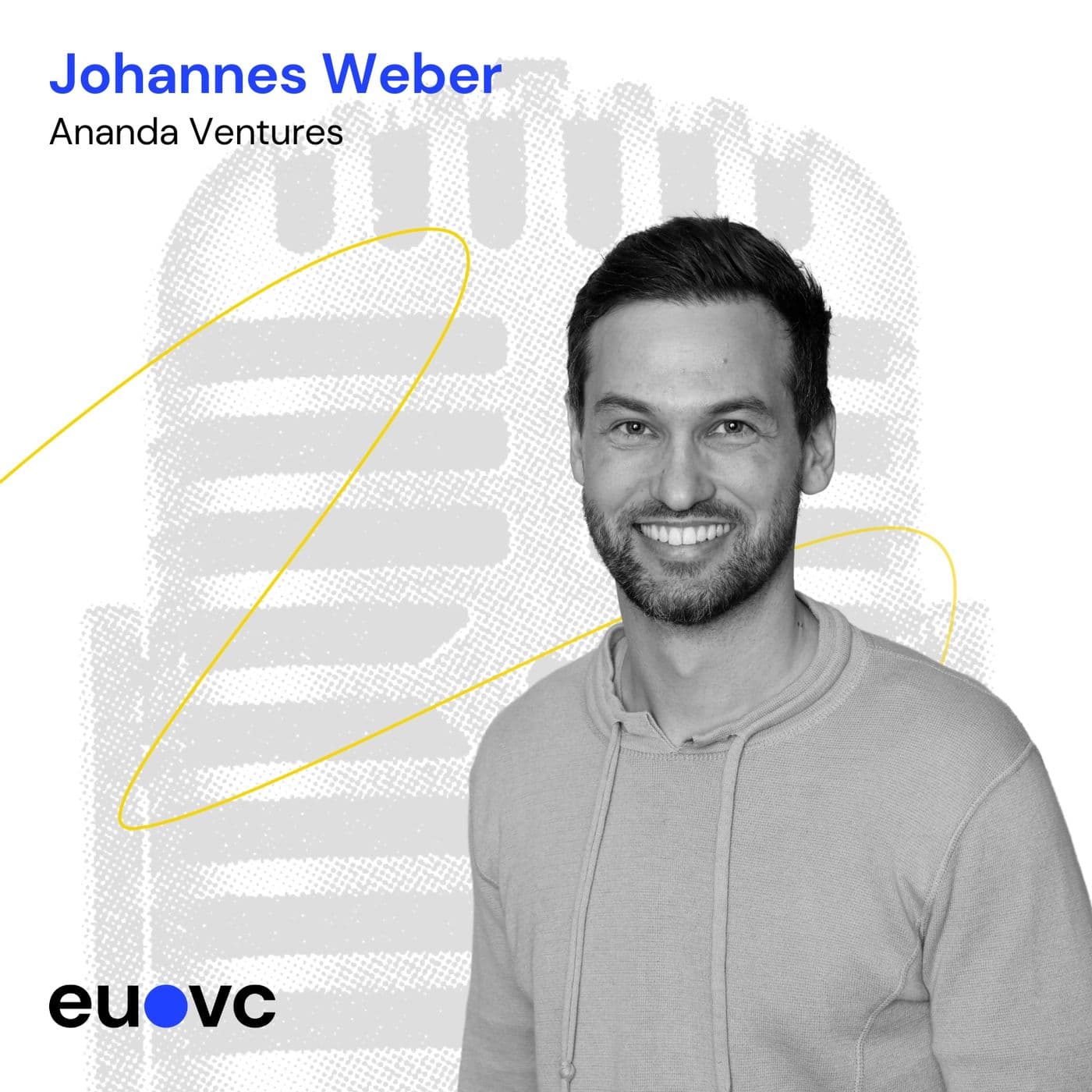
EUVC #232 - Johannes Weber, Ananda Ventures Podcast Description EUVC is your go-to podcast for everything European VC, co-hosted by Andreas Munk Holm and David Cruz e Silva, featuring prominent figures from the European VC industry.
Episode Summary In this episode, co-hosts David and Andreas welcome Johannes Weber, a serial entrepreneur and pioneer in impact venture capital in Europe. Johannes manages over €200 million at Ananda Impact Ventures, focusing on investments in technology-based companies that address climate, health, and education, referred to as "impact unicorns". He discusses his journey into venture capital, his philosophy on impact investing, and the evolution of the impact carry model.
Key Points
Introduction to Johannes Weber
- Background: Serial entrepreneur turned investor with a passion for impact.
- Current Role: Manages €200 million at Ananda Impact Ventures, focusing on TechBio, Education, and Climate in Europe.
- Investment Philosophy: Focus on companies that create social impact while also being financially successful.
Impact Venture Capital
- Definition: Investing in technology-based companies that address social and environmental issues.
- Investment Areas: Climate, health, and education.
- Notable Investments: Nature Metrics, OroraTech, and One Day.
Journey into Venture Capital
- Johannes initially was not inclined to become a VC; his transition was influenced by a desire to support businesses that create positive societal change.
- He was inspired by case studies of entrepreneurs committed to making the world a better place.
Personal Mastery and Kindness
- Johannes emphasizes the importance of kindness in business. He shares a pivotal moment when he realized the value of kindness in professional relationships.
- He believes that a focus on both business success and kindness can lead to more fulfilling and sustainable partnerships.
Value Addition in VC
- Reflects on the common perception that VCs overestimate their value to entrepreneurs.
- Highlights the importance of mental health for founders and the role VCs can play in supporting them.
Impact Carry Model
- Development: Created in collaboration with EIF to ensure measurable impact for funds.
- Mechanism: Linked financial incentives to the achievement of defined impact goals.
- If a fund fails to meet its impact goals, the carry for VCs is affected.
Challenges in Measuring Impact
- Acknowledges the difficulty in maintaining a quantitative approach to measuring impact, especially for early-stage companies that pivot frequently.
- Suggests that flexibility in setting KPIs can help align impact assessments with changing company missions.
Final Thoughts
- Humility in VC: Recognizes the importance of humility and learning in investment.
- Diversity in Teams: Stresses the strength that comes from diverse teams in achieving business success.
- Role Models: Encourages young entrepreneurs to seek out diverse and relatable role models rather than just high-profile figures.
Quick Fire Round Highlights
- Advice to Younger Self: Prioritize a strong family base, avoid comparisons, and trust your instincts.
- Tips for Emerging VCs: Start with any amount of capital, focus on building a track record, and ensure strong partnership dynamics.
- Counterintuitive Learning: Success can be achieved without being a jerk, and the more fulfilling path is often the kinder one.
Conclusion Johannes Weber's journey and insights provide a profound perspective on the intersection of entrepreneurship, impact investing, and the importance of kindness and humility in business. This episode emphasizes the evolving landscape of venture capital in Europe and the need for a focus on social impact alongside financial returns.
Follow Us Stay updated with everything European VC at [eu.vc](http://eu.vc).
--- *These notes provide a comprehensive overview of the key discussions and insights from the podcast episode featuring Johannes Weber.*
Written by AI. May contain mistakes. Listen to the episode to check what was said.
Transcript
Automatic transcript. May contain errors.0:00Hi, everyone, and welcome to the European VC podcast. I'm David and I'm joined by my co-founder Andreas. Today, we're welcoming Johannes with us. Johannes is a serial entrepreneur and a pioneer in the field of Impact VC in Europe. With his team in Munich, Berlin and London, he manages over 200 million euros and invests in technology-based companies in areas such as climate, health and education, what they so call the impact unicorns. Johannes has been interested in the interface between entrepreneurship and personal mastery for many years. And we'll deep dive into that, I think, a bit, Johannes.
0:33And he's also enthusiastic about bringing and passing on his knowledge to companies he finances. In a nutshell, Ananda Impact Ventures are investing out of Fund 4, as I said, with a total of 200 million euros AUM and an established portfolio of 35 companies. Notable investments include Nature Metrics, Aurora Tech, and One Day. At Ananda Impact Ventures, Johannes focuses on tech bio, education and climate in Europe and led investments into companies like Closed Loop Medicine, One Day and Oticon. If you're listening in, love our show, drop us a review, follow the pod and subscribe at eu.vc.
1:24United and determined we can serve as a model for other regions of the world. The nature of a problem requires a European response. Europe is a story of new beginnings. Let's start acting. This show is not investment advice and the hosts of this episode may be invested in the funds and companies featured. All right, Johannes, let's get right into this and ask you to tell us your story about coming into venture. Yeah, well, thank you for having me, David Andreas, first and foremost. And also, congratulations on the new jingle. I'm all fired up. Speaking after Angela Merkel is a bit difficult as a German.
2:09A lot of pressure, man. Yeah, I'll try my best. So, yeah, so my journey into venture, how did that come? Well, I actually never intended to be a VC. When I started to be a VC, I hadn't even heard that much about venture capital, I have to say. But I was a hustler-turned-entrepreneur-turned-investor. And in my mid-20s, I had exited one of the companies I'd built. I'd made enough money not having to work for a while. And I wasn't really happy. So my wife handed me this book on a different kind of entrepreneurship. It was all about case studies of entrepreneurs that made the world a better place.
2:50And I was like really deeply impressed with these kind of entrepreneurs and their mission and their intrinsic motivation. And I just wanted to help. And I didn't have any singular driver in my life, which would have, you know, maybe facilitated to build my own business at that time. But what everybody was missing was, you know, capital, the right kind of capital to support these companies, which we maybe today call impact businesses. And that's why I, together with my co-founder Florian, kicked off what has become an end of ventures today. And today, impact investing has become, I would say, a full investment style.
3:27So we've been there from the very beginning. And to our audience that know us, they are probably waiting for David and me to put out a spiteful comment about mixing impact and returns and how does that work and doesn't returns always come first. Everyone, we promise we will ask these questions, but we will ask them later. Thank you for that. That's very kind. Yes, we're always at your service. I actually have a question to that. is any specific case of entrepreneurship that stuck with you from reading that book that your wife kindly offered you that led you down the route of VC? I was very inspired by a lot of things, but one thing that really struck me was a company or actually more of a foundation I think it's more of a foundation that was created to help people on the autism spectrum, um especially people that well that are Asperger autists and I was just deeply impressed with that organization trying to see you know this mental condition this neurodiverse condition more of us as a superpower than um you know something that has to be compensated and they trained them to be um software testers and I thought that was just really really impressive um because you know you look at a at a thing from a very different angle.
5:01And I thought maybe this doesn't have to be a charity. Maybe this could be run as a business. And one of the first companies we ended up investing into from fund one is a company called Oticon. And we ended up co-creating it in the very beginning. And it has become quite sizable. So some good stuff has come out of this out of this book. Do you remember the name of the book? Because then we will put it in the show notes so that everyone can see it on EU. Yeah. So it's actually two books. One of them is called How to Change the World, you know, like very in your face title. I can't remember whom it is.
5:45And there's a nice German version by Wolfgang Hafenmeyer called Die Zukunftsmacher for the German audience that inspired me. But this is 15, 20 years ago. So I'm pretty sure there are some more updated versions on these kind of stories, because at the time, these stories were still very charity like. Right. And today you can create a unicorn from an impact idea. So lots of things have changed there. Can I ask you just because I have always loved Porter's work and he started talking about creating shared value at a point. I'd love to ask you if that's something that you've dived into and whether it's something you apply in your fund.
6:30Can you go a little bit deeper on how he explains that? The whole setup is that the way that we in the future will create large businesses is not by only maximizing for shareholder value or stakeholder value, but there's actually both multiple bottom lines, but it's also the opportunity space lies in. And then in these spaces where you actually solve for multiple things at one time. As an example, he uses fair trade because fair trade is better for everyone in the end. From my question, you can see that I wasn't so familiar with Porter having talked about that. You know, we all studied his five forces, I think, at one point, but it's a long time ago.
7:12Yeah, I think in that sense, we discuss these things a lot. We have been discussing these things a lot. I believe that it's possible to create a company that can be very, very impactful and be financially very successful without necessarily having to have a trade-off between the two. So I really like it when the impact is inherently built into the business model, into the DNA, and the impact scales in lockstep with turnover, right? So it doesn't become a a trade-off model. And if Porter kind of supported that thesis, then this is something we discuss a lot. Johannes, you will enjoy the article version of this episode because it'll go out on EU.vc and I'll make sure to plug in the Porter framework for creating shared value.
8:08Thank you. Yeah, it's chasing me. It's always good to have a dude like Porter on your side of the ring, right? That's very true. And with that word play, I will take this into asking you to share with us a pivotal moment in your life and how it shaped you today as an investor, because it has something to do with rings as well. Wow. Yeah, there have been quite some pivotal moments, old enough to have a few in my life. I think one of the things that have really changed is when I started off as an entrepreneur, I really, as I said, I was a hustler. I really tried hard to, you know, satisfy clients, but also make money.
8:43and I didn't really care so much about my behavior or my mindset towards things. And I've always been kind of a fighting sportsman, but boxing taught me so much. Nowadays, I'm boxing in a Hungarian cellar gym and I ran into this former world champion. And she's actually the kindest person I've probably ever met in my life. And the more I got to hang out with professional boxers, I found the more professional they are, the more fights they had in their lives, the kinder they were. And I just I'm really intrigued by this value. So I went to my team and I said, look, guys, that's now quite a while back.
9:25Why don't we talk more openly about, you know, business and kindness? Because I think that's something very special about us, how we do our VC deals, how we treat our portfolio and so on. and most people on the team were like yeah johannes we agree but let's not be so vocal about it you know because we might be considered as weak partners because you know um you know you can't talk so openly about kindness and i just didn't want that business success and kindness would contradict each other and you know that's why i you know i just made it part of our pitch and we we flew to london together with my uh with an associate and we wanted to back two entrepreneurs I think many people wanted to back in the city and we took them into a restaurant and I started my my pitch of kindness, you know, so, you know, as a VC nowadays, you also have to pitch.
10:14Right. So I told them why kindness is the core value and why we believe, you know, we should build a relationship on the basis of this value. and my associate was like the more I talked you know diving deeper and deeper into a chair feeling like Johannes like you completely lost this you know it's just going in the wrong direction you're boring the hell out of these people they don't you know it's just not not what you should be talking about and after I'd finished there was a bit of a break it was too long to feel comfortable and then one of the founders started to roll up their their sleeves on their arm and there was a tattoo on his forearm and it's in Sanskrit and I asked him, you know, what does that mean?
10:57And he says, well, it means kindness and it's the core value in my life and I couldn't agree more with you. So I could, it was just really surprising for me that, you know, if you're authentic in what you do, in many cases, life just rewards you for it. And now we're, we dare to be a little bit more vocal about it. I think we need a lot more kindness in many avenues of our life. So I'm happy to hear you tout the horn of kindness on the podcast. Thank you for that, Johannes. I will, though, force you to be a little less kind, because now I'll ask you to take a stance on a quote from Sabina Vissander from Creandum.
11:40Take a start.
11:50So as teased, I will now ask you to take a stance on Sabina V. Sanders' quote, which is... I think VCs add way less value than they think they do. They're less pivotal to the businesses they're advising. Yeah, so I hope I can do that in a kind way. I completely agree. so I think that there's so much talk about you know value creation I hear myself pitch to founders and there's still so much about all the great value creation we bring to the table and then you say you know what do you say as we see it's capital of course it's capital but then it's network that's probably the second thing you say in there and there's two three other bullets and I think the truth is that most of us will max out on our network within six months and if we're excellent we might max out after 12 months but that's probably the truth and then you're already working with secondary contacts so not it's not the people on speed dial that you have that would make the company a better place you know and at the same time i think there's um a lot of vcs that don't understand that the founder might understand the market and the company so much better than them but they still try you know to understand it better and you know, kind of lead, lead the company into a certain direction.
13:13And I think that can become a real burden on the company. So we really look for entrepreneurs that are, you know, that are smarter than us, and that are better than we are. Because, you know, once we overcome this kind of ego battle with ourselves, as we cease, I think there's real room to be very helpful. And so, in the end, I, I also not agree with this because I think you can be helpful, but not maybe in the things you think you're so unbelievably helpful with. And one thing where I believe we can be super helpful with is a thing called founder's health. So there's lots of statistics that show that about 50, 60 % of founders suffer from a negative mental condition in the first couple of years of founding a company so if we make founders mental and physical health a priority i think then the whole ride can become so much more enjoyable together and the other thing we can do is you know we can help founders to stay focused so i run my board meetings actually on the basis of simple questions what are the three things you're focused on you know and then they get the same question the next time and usually if we lose focus then we go back into being focused on what's really important.
14:30And I think that's something you can do as a board member, as a VC. And then it's more about just being a good and trustful person to talk to. So just last week, one of the CEOs of our portfolio company reached out to me. It's not a company I'm personally on the board with. It's my partner. And he said, look, I've just taken over this CEO role and I have a family, growing a small family, and there's this new job. And how do I manage these two things? I have three kids myself and I've built businesses during that time when my kids were really little. So I'm not a trained coach, but I gave him some life advice and he sent a text message to my partner just this morning and he said, well, that was really good.
15:14And that made me really, really happy. So I believe there's stuff we can do as VCs that help the founders, but it's maybe not the stuff we think we're so unbelievably good at.
15:29I like that example, Johannes. It speaks to your core values as well. So that's cool to have it within there as well. But let's shift topics a bit. And as Andreas teased in the beginning, any loyal listener of ours knows that whilst we are extremely committed to driving change, whether that is the reason why we actually are involved in VC or why we've done work in specific sectors that we have in the past or even why we are partners of projects like the Uplinks Innovative Funds for our Future initiative, we are also very critical about the ability to communicate that to your LP base and whether or not impact and financial returns can go hand in hand, should go hand in hand and how to navigate that.
16:16And the interesting part of our dear guest today, Johannes, is that they're actually quite involved in the development or the co-development of the impact carry model in VC with EIF. And I think I'll leave it at that, Johannes, and ask you to just expand a bit on that. Give us the context that we need to know the story there. Yeah. Okay. Happy to. So that's back in 2014 and we were just starting our second fund and for the first time onboarding real institutional investors. and that was also the time when the EIF started their social impact accelerator program where we were heavily involved in discussing what would be the right way for the EIF to go about impact investing and at the time there were a few ways to measure impact quite academic quite over the top and not really applicable for founders and the VC founder model.
17:14And we all thought, how will we be able to differentiate ourselves as impact funds in the future in a way that not everybody 10 years from now, if this works, what we're trying to do here, will call themselves an impact fund with no strings attached. And back in the days, we thought, okay, so we need to make impact measurable and we need to make it measurable in a very quantitative way. And if we are so, you know, sincere about creating impact out there, if we really want to do this, then there should be a consequence if we don't achieve the impact because our LPs want to invest into an impact fund.
17:58So there has to be some kind of a financial and maybe legal implication if you don't fulfill on what you promised on the impact side. And of course, you also promised some stuff on the financial side, so things have to go hand in hand here. So at the time, we sat down with Uli Gravenwater and Cyril Guifes, and we discussed how could we create an impact carry model. And we went into many different ways, But what we came up with is that we should ideally start with a theory of change with a company and say, what does the company, which activities and inputs, what outputs and outcomes does a company, what does it want to achieve?
18:44And then we need to set KPIs towards that mission. And we need to put target values behind these KPIs. And we can't do that ourselves. It has to be the largest investors in the fund that signed this off to give it some credibility. And we had a lot of discussion whether or not you should be able to compare companies to each other. So is it, you know, what's better helping a person with autism or hearing impairment or, you know, saving the world from forest fires? And we ended up saying in different words, but it's a bit like playing God, right? So it's not possible. It should be like personal development.
19:21So you set yourself a goal and you benchmark yourself against that particular goal. And I think that's a very healthy thing. And that's what we do here. So we benchmark every company against its own impact goals. And in the end, we create an average across the portfolio, which is then called the portfolio social impact multiple. And if that multiple drops below 80 % of what we wanted to achieve initially, then that affects the carry. So in an extreme case, if we 5x our fund, but we do poorly on impact, then we will not see any carry. So that's the logic and that's the consequence and the model has evolved.
20:02And I think by now it's used by more than 80 funds in Europe. That's the latest number by EIF last month and not sure about the world, but probably many more in the world. and there are different ways of doing it. And I know that not everybody's a fan of doing it, but I'm just, you know, before Ananda, I owned an ESG investing pioneer company. And now, and at the time, you know, we're pioneers in sustainable investing, which is now ESG. And, you know, just imagine everybody could call themselves a sustainable fund without having to measure any ESG. That would also be very, very bad. So impact goes way beyond ESG.
20:43I think that's also important to say. Yeah, but that's what we ended up with. Can I ask you, because you mentioned the number 80 there. I was surprised when I saw the number 80 because that was more than I had expected. But I'm also surprised when I hear a VC reaching out and saying that we're doing a carry sharing or an impact carry model. And they then claim that they're one of the very few that do that. I've also been like, there's more than just a few, but the number 80 surprised me a little bit. So I don't know if you've got any reflections on that, Johannes. Do you think 80 is much or 80 is too few?
21:19I think it's a lot. I think it's great. So we've been super transparent about the impact carry model. I think it's great that people link their performance to impact as well and their carry. I think that's really helpful. And I was also surprised, but the EIF portfolio has grown quite significantly. Maybe we can put a link to their portfolio into the show notes. Yeah, for sure. And I think in the end of the day, there should be many more funds doing that. If you look at the emerging impact fund of funds, you know, if they only have 80 funds to choose from in Europe, I'm not sure if that's, you know, big enough of a target audience to create a very strong fund.
22:04so they might end up investing into Article 9 funds. And the latest number I've seen is I think there's about 850 SFDR9 funds out there in Europe. And that's the number that shocked me because there's not so many impact funds out there to my knowledge. So who else is an SFDR9 fund? And I think I've even seen ETF funds being SFDR9. And I'm a bit struggling with that because I was hoping to have Article 9 to be somehow a benchmark for being an impact fund, but that seems to be gone. So I kind of like it that there is at least that impact carry model thing in place. There's two things in what you originally said that I think are interesting.
22:46One is the idiosyncrasies of the model itself. And another one is the impact of the model. And by impact, I don't mean impact. I mean, the outcomes or the consequences of having that model. So, for example, you gave a 5X where you don't get money as a GP. So, if we focus on the former, you know, one of the biggest, and you just named another issue or parallel topic, which is the SFDR 9, Article 9 Funds. Something I hear a lot, it's mostly within the context of SFDR Article 9 Funds, to be honest, but I guess it's somewhat relevant to discuss here as well, is how for early stage venture, it's incredibly hard to do in the sense of it's incredibly hard to have this quantitative approach sometimes because companies pivot so much like they change over three months or doing something completely different.
23:42So like, as you said, it's not about comparing saving a person's life versus extending someone's life. It's about your goal versus what you achieve. And so it's so liquid and so fluid that it's really hard to measure. And I'd love to hear your comments with regards to that, both in terms of impact model, that is the impact carry model, that is the focus. And if you have anything relating to SFDR, I'd love to hear that as well. So I'm not so sure if it's so hard to do. First of all, there's great examples of funds that do it out there, and I think they're willing to share. We're definitely open to be very transparent.
24:18The model needs to allow for some flexibility. As you said, you know, early stage companies pivot. So what we do in the beginning, our goal is eventually to create five KPIs around the company's impact mission. But we might start with just two, two that we are very sure about. And those two might even be what we call scaling indicators. So, you know, things that kind of reflect turnover, because as I said, initially, all the companies we invest into, ideally, their impact grows in lockstep with turnover. So very basic example, the autism consulting company we've been talking about, how many autistic or how many consultants on the autism spectrum do we employ?
25:00Or a satellite company that protects the world from forced fires, how many acres, hectares of land are protected by the company? But in a way, it reflects turnover. Then if you become more knowledgeable, you know, within the company, within two or three years, we can choose to add another two or three indicators. And we do that again together with our advisory committee. And we're also able to drop indicators when we feel that they're no longer helpful or that they cause the company to spin. So, for example, we've had a situation where a company, on the one hand, was focusing on the depth of their impact.
25:41So, how deep do I influence a certain person's life? And at the same time, they needed to focus on how many people do we reach? And that can create some drama, right? Because they need to be good at both. So, at one point, you need to drop one of those impact KPIs, ideally according with the company's general mission. you're not creating a problem here right and one thing i think that you you're alluding to is what happens if the company is not impactful anymore if they pivot into something completely different which is probably even potentially even harmful for this particular case we and i know many other impact funds have a mission alignment clause in in our contracts and then we're able to to put our shares and obviously have a good discussion on the on the board before we do that and that's a clause that's been widely accepted by co-investors from the largest vc funds and pe funds out there out there in the world so it seems to work and not scare anybody could you deep dive a bit into that and explaining it yeah it doesn't go much deeper but in the end you you you define the company's mission so what do they want to what do they want to achieve um also in impact terms it becomes part of the of the articles and if the company then deviates from that then you know you start obviously in an ideal world you you already feel before that's happening but if it's going in that direction then you can have a good discussion so let's say you're invested invested into you know physical health care and because there's no money in affordable health care the company pivots into plastic surgery, right?
27:26That would be a good example. And then before that happens, you probably have had a few good conversations on the board. But if the founders then keep saying, you know, we have to be the best plastic surgery out there in the world, then at least, you know, not judging plastic surgery, because it really depends on what it's used for. But definitely, you want to have a discussion if it's still aligned with what Ananda wants. And if it's not, then there has to be a chance that we get out of the company and are able to sell our shares. Because in the end of the day, It's not doing what we intended the company to do.
27:57We cannot influence it enough to go in a different direction. And it would also be a huge reputational problem if we stayed invested. So it's usually accepted. I want to throw a curveball here. But, you know, as we know, the devil lies in the details, right? And everything in real life is gray. It's not black and white. And your example is somewhat interesting, the plastic surgery example, in the sense that plastic surgery can be used for purely aesthetic reasons, right? Which the impact of that is minimal, I'd guess. Maybe from a mental health or something like that, there could be an angle there.
28:35But it can also be used for, I don't know, people who've suffered. It could be reconstructive, right? Yeah, exactly. Suffered from an accident, something like that, right? And kind of detaching ourselves from that example, but keeping it as the backdrop, you know, within the context of this clause, could that put you in a tough situation where you actually have to make calls where because of your impact carry model, you might have to consider selling an asset that from a pure financial standpoint could actually deliver returns for LPs. And I'm asking you to conceptualize it, right? By design. And how something like that can be managed within the firm, of course, but also, and maybe more importantly for you as a GP with your LPs, right?
29:17You know, people have asked me this question in several ways ever since we started. So it's an obviously important question. You can ask the question a different way. How do you make sure that a purchaser of your successful impact company doesn't turn it into something evil, right? So it goes into the same or similar direction. In theory, this makes a lot of sense, that question. In practice, as you said, the world is much more shades of gray that you don't get these placative Theranos stories, you know, that everybody loves to write about. I think if a company kind of loses its mission, it's a slow drift.
30:01And it's sometimes it takes a little bit to grasp it. And it's usually also not in the interest of the founder. And there have to be different dynamics within the company. Usually they are interconnected with some kind of a negative financial performance. That's what we've seen. So if you kind of lose your impact mission, then you kind of lose the general mission of the company and you're trading the DNA. And then it kind of becomes a bit of a less attractive investment, sometimes also on financial terms. And the impact carry clause is like the very last thing you would pull. And we haven't done that, right?
Read the full transcript
30:42So it's more of the Damocles sword that hangs there. And you're like, if you go down that route, then there's a consequence. So let's not go down that route. And usually people are aligned because you also don't have, you know, two evil VC co-investors sitting around the board and they're like, yeah, let's do evil stuff, right? They're also interested in creating something good. I generally believe in the good of people, right? And even private equity people really wanted to create something good. You know, sometimes they don't, but they do. And in the exit case, I've seen this now a couple of times.
31:17We've done some exits and it's rarely the evil buyer out there that then turns it into something, wants to turn it into something bad because the company has lived 10, 15 years maybe until that point, living that DNA, which was creating something good. And if you want to turn it into something else, usually you break the company. And therefore, this is also not happening. So very simple example, like we built the largest child, affordable child care center chain in Germany, obviously not a VC investment, we would do today. But from fund one, we had to do a few brick and mortar things as well until, you know, enough tech entrepreneurs were out there.
31:58And we sold it. And there were PE funds interested and family owned businesses. And we didn't have the trade off between that one evil investor wants to pay a lot and the good investor that wants to pay less, which a lot of people want to see, you know, when they ask these questions. But I remember the PE companies were coming from somewhere far abroad, and they just knew the private child daycare center model. And they thought, oh, why don't we just double the fees, right? And it would still work given where Germany stands in child daycare. And we said, yeah, you know, the moment you did that, you would break the entire model because it's still 50 % governmentally subsidized and so on.
32:35and probably you lose all the nurses. And so in a way they understood and they knew they couldn't kill the impact in the company. So Johannes, we're running a bit over time here, but before moving on to our next segment, I want to ask you to share from a high level, as I started saying, there's the consequences of the impact carry model and the example you gave, 5X, we get nothing, right? Could you share kind of the broad strokes of what the terms are like? Yeah. So I've seen it in many different ways. We're very transparent about it, even the formula in our impact report, which is on our website, so everybody can download it.
33:14But it's a sliding scale. So if it's below 60%, we see nothing between 60 % of the impact and 80%. There's a sliding scale. And above 80%, then we see the entire carry if we've also jumped the financial hurdle, right? So it's two hurdles that we need to jump. And I know there are other funds out there that, for example, get a super carry if they overperform an impact. And there's some funds out there that only link 50 % of their carry to the impact. But yeah, that's life. That's the model I was more aware of. The super carry one is a very good topic for another conversation because that will lead us into a little big rabbit hole.
33:54Yeah, I would. Now it is time for our shout out segment.
34:02everywhere I look around
34:07Johannes, I'd love to ask you to give a shout out to co-investor Angel or LP for being awesome. And if possible, share that story with us. Yeah, love to. So there's so many people I'd love to shout out to, but you asked me to pick one and it seems pathetic, right? So we're not in fundraising enough to say that and we're pretty sure they'll invest again. So this is not because of that, But I wanted to shout out to a guy called Cyril Griffiths. He's head of impact investments at EIF. And it's really true in this case. He backed us when we were not backable. And now EIF is in three funds. We two defined together what we just discussed about the impact carry model.
34:44We developed a lot of things in impact investing. And it was just a really good ride. And he challenged us, you know, in the right moments when we were not open for institutional capital. We're not prepared. You know, he translated. to us what institutional capital would need. And I really hope he'll be EIF CEO one day if he wishes to be. And yeah, we still learn from each other a lot. So I appreciate that guy. I love that we just had a shout out with someone being, how would you put that recommended to run for CEO at EIF? I love that. Yeah, it's a mensch, you know, we're looking for mensch. And they have them at EIF.
35:22That is completely correct.
35:28So, Johannes, let's get into the three biggest learnings of your career and life so far. Yeah, intervene, right? So if you think there's nothing to learn from that. We'll pounce on you. Yeah, please do. You promised to. So first of all, I think what I've learned in venture capital is that it takes humility to be a VC. And VC lacks humbleness. And I think we should always leave some space, you know, for the chance that you were just lucky and not so damn smart as a VC. I've seen a lot of VCs just being really lucky and admitting it. And on stage date, you know, kind of retrospectively explain why they were so damn smart 15 years ago when they made that particular investment.
36:10And I think it's not helping people because young people entering VC, they're like, oh, I can never be like that person because he's so unbelievably smart. And it kind of makes you a better investor if you get to the point that you don't know anything, right? Because that's where real learning happens. And I like to be humbled by my entrepreneurs. So I hope I can keep that. So the other thing is, I think building a great company can only be done in a real and honest team effort. And for me, a great team, and that's also something that I've learned, has to be diverse. So all systems in nature are diverse, and this is where they draw their strength and resilience from.
36:51And I think the same is true for any company you build, because what's a company? It's a group of people. And that has to be a very strong group of people bringing in different perspectives. And we cannot only talk about gender diversity here, but also about socioeconomic diversity. I've helped to build a school where my kids go. I hope it's one of the most sustainable schools in Europe. And it's one of the biggest thing we look at is to build diverse groups here. And it's a private school, but we try to give 40 % of the kids stipends because you will have a different way of thinking and a different way of growing and different kind of learning from each other.
37:30So that's what I deeply believe in. And the third thing, so first thing, humility, second thing, you know, kind of honesty around diversity. And the third thing is around how to pick your role models. So I used to have these very big role models, you know, Richard Branson, kind of entrepreneurs you pick. I never had a VC role model because I never intended to be a VC. But my role models have morphed into people that are not these obvious superstars, you know, that are very talented in one aspect in life. But for me, they're more like the silent heroes out there. It's more like regular people that I would say wear the black belt in life.
38:12And yeah, well, in this interdisciplinary sport, which we all call life, that's what I'm impressed by. So I could give you a few examples, but, you know, you will, they will not really make this a good show because you're like, oh, what's so special about this person? You know, and I think they just master a lot of things at the same time and they're humble and kind and just beautiful human beings to be around. And that's what I'm aspiring to become. Let's ask you on the third one, Johannes. And that's because I think you're completely right that we have, we don't always have the most healthy role models.
38:47neither do we watch the most healthy news or entertainment, meaning the broad, here I'm talking about the broad majority, because I think BC tends to be a bit in our own bubble. So at least the news and the idols that normal society looks at and looks up to is oftentimes not the same, at least that's what I find in groups that I hang in. But I'm curious to hear how you think about the state of society and sort of bringing it up to this level, but where are you seeing the entrepreneurs that you meet? Because often you meet young entrepreneurs on their journey. Do you see them building towards the right values or do you see it as it takes quite a mature entrepreneur to realize the value of having that type of ideas?
39:39So I think everybody's on their on the personal growth journey, I'm definitely dealing with a bunch of entrepreneurs who benchmark themselves against unicorn founders. And that's all they want on their boards and on their larger advisory boards. They all want unicorn people. And then you introduce them to two or three of them and they're like, oh, that conversation sucked. And like I told you, why do you want all these great people out there? You know, like most people that are so famous and, you know, you believe are so great and you want to hang out with all the time. If you had to spend a vacation with them, they would bore the hell out of you, you know.
40:22And some of them were, you know, maybe just also lucky. Of course, they have a great skill set in a certain direction, but it might not be applicable to what you do. And I'm not done yet with the analysis of the current generation of entrepreneurs. I see a mix of people that, you know, look for the right role models. Some of them look for the wrong role models. And then we hope to be able to talk to them about it. What I do see is somehow a relationship between founders that are a bit more experienced and then learning to choose to go, you know, to hang out with the right role models. And maybe don't hang out in all these events where the wrong role models are pushed in your face.
41:06because they're doing all the keynotes. And I think that's important. On the other hand, if you see entrepreneurship as being a professional athlete or something like that, it's great to benchmark yourself against world top performers, the Tim Ferriss kind of people that are interviewed. And I think that's also good, but you always have to keep in mind that you're not them. And I think I've done a few mistakes in that in my life and chose the wrong role models, and that's why I ended up here. now, probably picking better ones. It's actually very interesting what you're saying here. And now we're making this super philosophical.
41:43And if a VC came here for advice on just investing today, they probably think that we're now diverging from the core topic. But I find what you're saying incredibly interesting. And I think about it quite a bit also, because you also said you have three children, I have two. You think about the life that they're going to be leading and what you're showing them in the television and what they're seeing in their classmates and so on. So you say that they're not them. They're not, you know, your entrepreneurs are not necessarily the unicorn founders. For that reason, don't benchmark yourself to them.
42:19What I always say is, well, it's not that you're not them. The fact is that just that you're not seeing them, right? You're just seeing what's being portrayed. I think many people think that David's in my life is different than what it really is, because we got to just do a podcast and have fun, right? Because it might look like that from the outside, but damn, I wouldn't describe my life as such. I think that it's more that, but I'm curious to hear your take if you agree in that analysis or you think that it's actually that there are a group of people that were not like them and they're different.
42:54What I have to say in that respect is, do you know the film Seven Years in Tibbet? Yeah. Yeah, so old one, right? But I think Brad Pitt's in that. It's Brad Pitt, everyone. So if you haven't watched it, go watch it. So it's about the Dalai Lama when he was young and how he was educated. And he gets to meet all these amazing people. And by disclaimer, Brad Pitt did not play Dalai Lama. It's not that bad. True, yeah, it's good. How epic would that be, though? That would be a brown face moment. Yes, true, true. So what I always wanted for my kids in their education is be exposed to amazing people when they're really young, that it becomes normal for them to hang out with these kind of people and that they're demystified.
43:51So whenever I have the chance and somebody comes through my city or we travel with the kids, I try to expose them to any kind of superstars. And, you know, whatever is special to my kids. So my oldest, you know, wants to be a ballerina. So, you know, I get her a prima ballerina that I happen to know from the past. And she hangs out and has dinner with us. Or, you know, my middle one would like to be the chancellor of Germany. So when we have a chance to have a top politician or former politician comes over for dinner, that's great because they tell them what life's really like, you know. and that your job as a politician starts the moment when everybody stops working, right?
44:31And that you can't have a family life and all of that. And I think at the same time, there's so much to learn from that. So I'm trying to do a little, you know, personal Tim Ferriss for below 15 years olds at my house. And I think that's great because it's demystifying, right? And every once in a while with a founder, if I'm not maxed out on my network and they they keep bugging me i want to meet that person then and i accidentally happen to know them then you know i try to bring them together and they find out oh it's just a human being you know they cook their children there's a problem with their children they don't know how to handle it and then you find out oh it's it's all normal or some people are drawn to money right so you know meet a billionaire talk to him what's it or her what's it like and you find out same problems you I think you're completely right.
45:23I always remember my little sister, I always mentored her a little bit with how to think about life and so on. And what I recognized was she always looked at the next step of life as that really cool, unattainable thing. You can never, you know, when she was about to start in high school, you know, then that would be the tough thing. And it's going to be completely life changing. and she can't just go there and experience it. And then, you know, you take her hand, go and watch high school. And then she can see that everything's, everyone's exactly like her. Everyone's just, and then next thing, the funny thing is three years later, she's about to switch into a university.
46:09She thinks the university is going to be completely crazy. And then when she needs to get her first job, then she thinks that life on the other side is going to be terrible. Yes. And it's so funny until you recognize that that pattern is going to get to you. If you don't recognize it, then you're going to be fucked for the rest of your life on the treadmill. I still believe there's one exception. I think, you know, like Batman and Barack Obama, they're actually both really, really cool. Like there's no trade-off. Haven't met either of them, but you're like, you know, I think they're just really cool.
46:45better than anybody else I love that it's the two of them maybe it's the same person you know so in my household it's Miles Morales that is the guy that everyone talks about David get us out of this rabbit hole please pull us up into the quick fire I love this rabbit hole but I'll take us out of it and it's time for the quick fire round Johannes will ask you three quick answer questions and now
47:24What advice would you give your 10-year younger self? Okay, well, I think you're running an ultramarathon here. So don't follow the herd. Make sure your family base is strong and your support systems are up. You will need them. Second one, stay in the blue ocean. Don't compare yourself to others. I struggled a bit when I started wanting to be a great VC to compare myself to the greatest traditional VC firms out there. Wasn't fun. If the deal somehow feels wrong, all the due diligence says go, don't do it. Don't ever do it. And in summary, just listen to your heart's intelligence in everything you do.
47:59What are your top tips for emerging VCs across Europe for fundraising? Well, first of all, just get started with whatever amount of money you were able to raise and then work from there. Build your track record. then raise a fund focus on getting the partnership right because if you don't you're in deep shit later on focus on diversity as a great strength and resilience comes with that and we've seen that from nature what's the most counterintuitive thing you've learned since you've been in venture so i think you can be successful without being a jerk and you can also be successful by being a jerk.
48:35But I think the former is just much more fulfilling to you and others.
48:43Johannes, thanks so much for joining us today. Everyone listening in, thank you so much. We are hugely indebted for your continued support and wanting to listen to our semi-philosophical conversations. Do drop us a review, follow the pod and subscribe at eu.bc. I'm David. I was joined by Andreas today with our guest Johannes from Nanda Impact Ventures. Thank you so much for tuning in today. And we can't wait to see you all out there. Johannes, thank you for joining us today. Thank you for having me.
49:34Europe is a story of new beginnings. New, new beginnings. Let's start acting.
From the publisher
Ananda Impact Ventures are investing out of Fund IV with a total 200€ AUM and an established portfolio of 35 companies and notable investments including E-DNA Company Nature Metrics, New Space Company OroraTech and Education Company One Day. At Ananda Impact Ventures, Johannes Weber focuses on TechBio, Education and Climate in Europe and led the investments into Closed Loop Medicine, One Day and Auticon.


