
In short
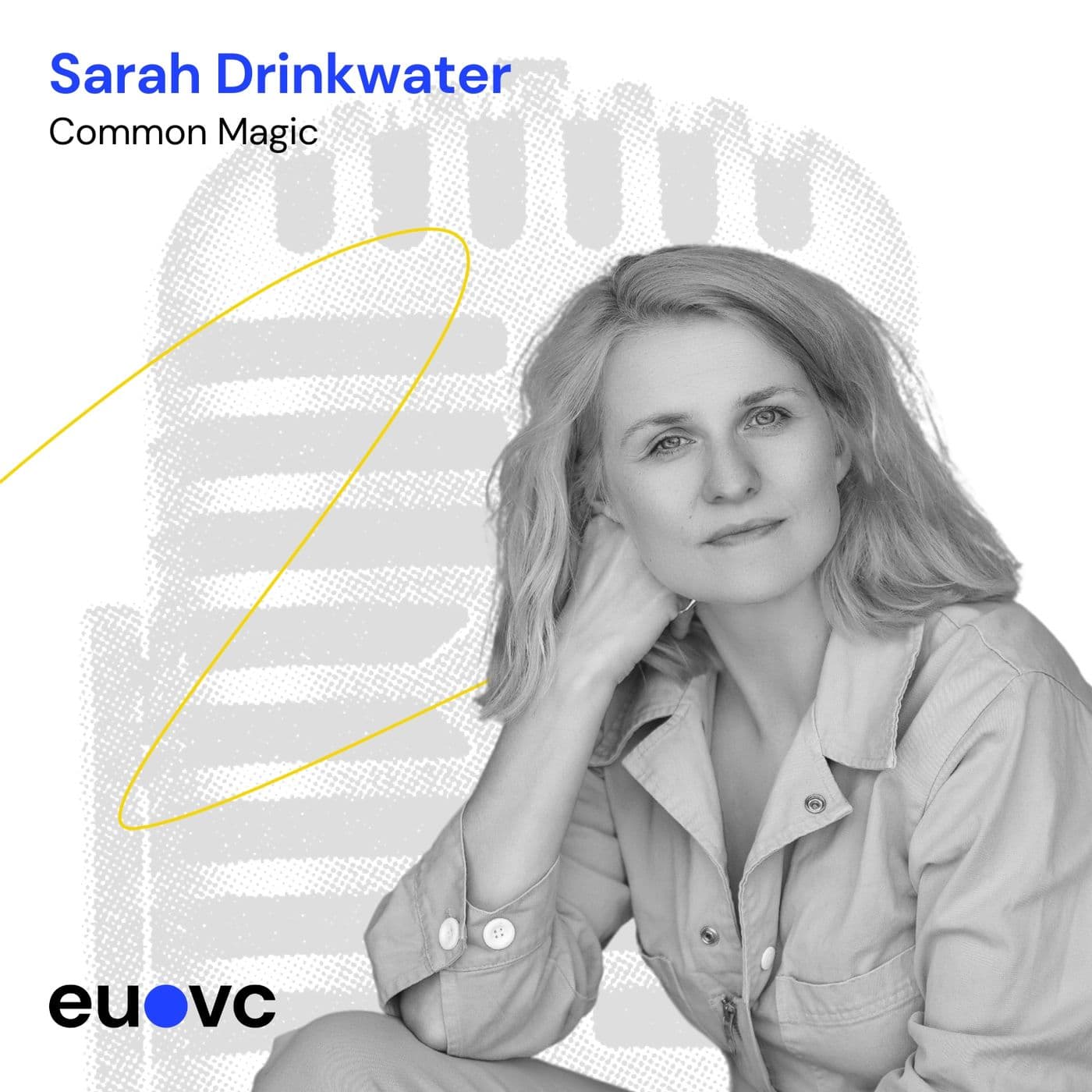
Podcast Episode Notes: EUVC #234 - Sarah Drinkwater, Common Magic
Episode Overview
- Podcast Title: EUVC
- Episode Title: EUVC #234 Sarah Drinkwater, Common Magic
- Episode Description: Sarah Drinkwater, General Partner at Common Magic, discusses her journey into venture capital and her focus on community-driven startups across Europe and the U.S.
Hosts
- Andreas Munk Holm
- David Cruz e Silva
Key Guest
- Sarah Drinkwater: General Partner at Common Magic, a pre-seed/seed solo GP fund focused on community-centered products.
---
Summary of Key Topics
- Sarah's Journey into Venture Capital
- Started her career as a journalist before transitioning into technology and venture by working with startups.
- Background includes:
- Writing a popular blog which led to her first role in a startup.
- Long tenure at Google, where she managed a space for entrepreneurs and connected with many VCs.
- Transitioned to angel investing due to her passion for working with founders.
- Common Magic
- Founded with a focus on investing in community-driven products.
- Specializes in pre-seed and seed investments, emphasizing community strategy, early hires, and narrative development.
- Recently made her first three investments after the fund's initial close in May.
- Specialization in Community Building
- Views community building as essential for startups, focusing on:
- Utility and Belonging: Communities should provide value while fostering identity and connection among members.
- Importance of building relationships and trust within communities.
- Community roles require a blend of skills, particularly relational skills and a genuine passion for the product.
- Personal Motivations for Moving from Angel to VC
- Passion for supporting founders and the realization that her unique skill set was underrepresented in traditional VC.
- Sought to create a fund that aligns with her values and community focus.
- Challenges in Community Building
- Not every startup needs a community; founders must validate the necessity before investing resources.
- Common pitfalls include:
- Starting initiatives that cannot be sustained.
- Launching ambitious plans without proper validation or resources.
- Hiring prematurely for community roles without a clear strategy.
- The Role of Community in Startups
- Highlights the synergy between community, marketing, and sales.
- Effective community strategies enhance customer engagement and retention.
- Emphasizes alignment among team members as crucial for success.
- Emerging Trends: DAOs and Community Structures
- Sarah has explored the concept of DAOs (Decentralized Autonomous Organizations) and their potential for community building.
- DAOs represent collaborative efforts with shared ownership and accountability but face challenges in sustaining long-term engagement.
- Building Community as a Solo GP
- Sarah actively engages with her network and organizes events, such as hackathons, to foster community and collaboration.
- Acknowledges the importance of continuous relationship building and long-term trust with both investors and founders.
---
Key Takeaways
- Community-Centric Investing: Emphasizing the importance of community in product development can lead to more successful startups.
- Flexibility and Adaptability: Investors need to be adaptable and focus on the relationships they build with founders.
- Long-Term Relationships: Building a network of trust and collaboration is crucial for navigating the challenges in venture capital.
- Iterative Approach: Community building is a process that requires experimentation, iteration, and ongoing feedback.
---
Resources Mentioned
- Medium Articles: Sarah's insights on community-building strategies can be found in her Medium posts.
- Books/Authors: David Spinks and Bethany Crystal on community strategies.
---
Final Thoughts Sarah Drinkwater's insights highlight the evolving landscape of venture capital, particularly the growing emphasis on community engagement in startups. Her journey reflects the potential for personal passion and unique skill sets to shape new investment strategies in the venture ecosystem.
*For more discussions on European VC, follow the podcast at [eu.vc](http://eu.vc).*
Written by AI. May contain mistakes. Listen to the episode to check what was said.
Transcript
Automatic transcript. May contain errors.0:00Hi, everybody, and welcome to the European VC podcast. I am David and, as usual, joined by my co-founder, Andreas. Today, we have Sarah Drinkwater with us. Sarah is the general partner at Common Magic, a pre-seed, seed, solo GP fund investing in and supporting founders building products with community at their core across Europe and the US. If you're listening in, love our show, do drop us a review, follow the pod, and subscribe at eu.vc.
0:32It's more than just an alliance. This is a union of values. United and determined we can serve as a model for other regions of the world. The nature of a problem requires a European response. Europe is a story of new beginnings. Let's start acting. This show is not investment advice, and the hosts of this episode may be invested in the funds and companies featured. Sarah, we just spoke about how did we come to get to know each other? And then we mentioned a couple of names and said, maybe was it this or this or that? It wasn't. I actually found out in the meantime that it was from one of my spammy LinkedIn posts.
1:19So that's actually where we go back. Oh, that's nice. So that's our backstory. But Sarah, tell us, how did you come into venture? How did Common Magic come to happen? Yeah, I kind of came into technology and venture backwards by accident. I'm a long-term operator in early stage European tech. I've been working in Europe in tech for the last 15 years. And I first came into startups because I used to be a journalist. I wrote a blog that was kind of popular at the time. And a startup founder emailed my blog and asked me to do some work for him. This is like 2008. I had to Google the word startup.
1:50Didn't know what it was at the time. And then from that job and from subsequent jobs, you know, I was at Google for a long time. I ran a space for entrepreneurs. I got to know many VCs through those jobs. And I think for a long time in Europe, because the profile of many VCs was very finance-based, you know, they had MBAs, a very particular kind of person. That's not my background. That's not my skillset. And so I came to angel investing really because I was surrounded by founders building interesting things. And so eventually, if you're surrounded by enough founders and you're looking at your bank balance and you're falling in love with their ideas, you're going to start thinking, oh, I should do this myself.
2:25and start angel investing. And then with the fund, it was kind of a confluence of factors in that I ended up building a thesis by accident. I have a particular specialism around community building. The more I angel invested, the more I saw that that focus was appealing to founders. The more I realized there was a space in Europe and in this part of the world for the thing I do best, which is really precedence seed investing, not leading, but taking a particular place on the cap table where I help operationally with one thing, which is building a community strategy, Thinking through the right first hire, thinking through metrics and helping you build narrative for your company.
2:59And so just on first close in May, I had made my first three investments and we are off to the races. That is so cool. Let me just ask you one thing and that is, how does one end up having a specialization in community? Meaning, which route through, you've got a Google background, through Google does one take to end up with that? And you're also a journalist. So, you know, I'm curious to see how that puzzle fits. I tend to think that community, people who build community well are kind of born, not made. It kind of is a particular way that you lean. I guess I think of community in the context of startups as, you know, building ecosystems around products.
3:41How do you help users connect to each other, connect to the product? You know, but at the core of that is relationship building. At the core of that is trust. And so for me, I call myself a journalist. But before I came into early stage tech, I also worked in advertising. I ran a vintage clothing shop. I ran club nights. I did lots of things where the core theme was bringing people together. Like I just always liked doing that. And when I began working in early stage startups, I was the first non-technical hire three times in a row. My first three companies I joined, first woman, first non-tech hire.
4:10And I basically was charged with, we're building the product. Can you go and find us some customers? And so for me, when I say I'm a community builder, I basically built that for myself in that, you know, I was, for those companies, looking at the copy of how we talk about what we do. That relates to my journalism background, clearly. But also, like, thinking through atypical mechanisms to kind of find people that might like this product, when the founders themselves didn't have that peer group. But, you know, the people in my network that are great community builders of all types, whether they're developer advocates, gamers, or classic community builders, they tend to have a couple of things.
4:44You know, first of all, they have a strong affiliation with the thing they're building in my case I've worked a lot on discovery in cities I love great dinners I love great vintage shops that's something I personally have and will always have I just love that I like this neck scarf you know neck scarf you know bit of a thing and secondly you're good with people you can talk to anybody um and I think not everyone has that I think it took me a long time to learn that ability to talk to anybody and build trust anywhere is quite unusual in some ways and And so I think if you're a founder looking for an amazing hire in this space, it tends to be atypical profiles that thrive in community roles.
5:20There's no one route, I guess. Could I ask you, Sarah, because you shared your journey into venture. Yeah. But there's one small detail that you didn't share that I'm particularly interested in, which is the personal motivations of, you know, Angel into VC, right? Was it about, you know, making a hobby a full-time job? Was it about there's things I just cannot do that it really pisses me off? So let me go and solve that. What was the personal reasoning there? It's kind of everything. I think a bunch of things happen at once. I love working with founders. It just makes me really happy and I'm good at it.
5:53And I think that, you know, when something makes you happy and it's needed by the person, you know, like there's a nice flywheel happening there. I think firstly, I really liked working with founders. I didn't see people with my skill set working with founders in Europe in a venture type role. Even as an angel, I still have quite a distinctive skill set. you know when I moved back from the US when I was living in America I was tracking the rise of solo GPs and thinking oh that looks really fun and it was pretty clear to me that you know I could spend a couple of years trying to break into the classic VC industry in Europe or I could be bold believe in myself and build my own beautiful world over here and so I think for me it wasn't particularly people are doing it wrong I don't like it it was far more like oh here's actually an opportunity that that you know you know I knew that I had a certain brand as a community builder that I could leverage.
6:40I don't think I would have had the credibility to raise in a totally different sector. But then I think in general, you have to be thoughtful about where you fit in the market. So for me, it was a combination of things of me being at the right life stage, of me having the right network around me, of me, you know, like I knew I could find the companies. And then it's a matter of can you fundraise? The answer to that is undetermined. Yeah, I've raised some of it. I haven't raised all of it. But you don't go into this knowing everything ahead of time. Otherwise, it wouldn't be fun. And with that, on that note, we go into asking you to share us a pivotal moment in your life and tell us how it shaped you today as an investor.
7:12So when I was 20 weeks pregnant, I found out my son would have one hand. And this is quite personal story, but I'm just going to tell you upfront. I think for most people, they have three or four moments in their lives when the axis shifts. And normally you're not lucky enough to know it ahead of time. You know, normally you look back and you're like, wow, that changed me. And I think with my son, it really changed me because it was incredibly unexpected. And at the time, it felt like a massive deal. And then, of course, my son comes out and he's a totally regular toddler that struggles to climb big walls.
7:41So it's not that big a deal. How that changed me is it kind of reminded me that the only constant is change. That was a big mantra when I was at Google. People said it the whole time. But it's true. The only thing that happens, the only constant ever in life has changed. And what you control is your response to things. You cannot control the universe. All you can really control is how you think about stuff. You know, particularly at an early stage, that helps me a lot. You know, I tend to work with companies when, you know, really you're investing in people the products they're building nearly always the solution changes and so I think really for me as an investor something I think about a lot is being flexible but focused you know my goal is finding the best founders that are building products with community at the core you know my oldest investments now are five six years in so I don't have enough data to say this with certainty but I haven't got any companies that that if I'm thinking about my successful companies and I've only had one company shut down so far but in my portfolio as an angel there are distinct companies I look at and think it's going quite well.
8:38I can't think of any of them that have not had very long, hard periods. You know, co-founder disputes, revenue dries up, things shift, really foundational higher leads. And so I think personal resilience really matters. It matters to me and it matters in how I think about the companies I back. I don't think you can do this job without having a good sense of humor, but also thinking about, you know, how do you thrive in hard time so you just keep going we should go to our take a stand section
9:17so sarah let's get your take on fred destine's quote which goes something along the lines of a founder turned VC who knows how to invest is probably the best VC you're ever going to get. I mean, I don't disagree with it. I know I'm meant to be salty here, but I don't massively disagree with it. I think it matters what kind of operator you were, right? For example, if you're coming out of Fang as I did and you've never worked at a very small company, sometimes the advice you give to founders is seen through the lens of leaving a massive tech company in 2023. tree. For me, I spent the last four years of my time at Google running a space for founders, working with founders every single day.
9:58So I had a bit of a different experience. I don't tend to believe in absolutes ever. That's the thing I'll push back on with Fred, is I think in general, there's such a focus on absolutes. We live in this very algorithmically controlled Twitter world, and I just don't think the world works in absolutes. I think there is so much gray everywhere. What makes a great investor now? What makes a great investor four years ago? What makes a great investor in 10 years time those can be different profiles in different parts of the world so i'm gonna the thing i'll push back on is is the is the absoluteness of that perspective that i just don't believe in sarah in your launch post on medium which to our listeners will of course put on the notes of this show and on the newsletter you state something along the line uh lines of there's been a Kimboon explosion of interest in community, but still very few playbooks on how to do it well.
10:54And I can attest that EUVC has this community side to it. And we've engaged in many, many conversations on how to build community, our view on how to build community. We've fucked it up over and over and over again. And to be honest, I guess we're not alone, right? But to be honest, there's some bodies of knowledge or areas of knowledge where you just have like a framework, a playbook or whatever. that you can refer to. And I would agree very much with your quote saying, like, there's definitely not a playbook that I know of in community. So I'd love to use the next part of our interview to talk with you about what is your playbook or how do you think about building of community?
11:35In other words, what is your theory of community? You know, to your point, a lot of the information around community building is quite fragmented, right? So I always look at David Spinks and Bethany Crystal, they write about it a lot, but they're both in the US and have worked at larger companies. It's one of the reasons why I've tried to keep writing on my medium is I've realized a lot of the conversations I have in private are not things that are commonly accessible. And so that's why you have to keep sharing your thinking. You know, when we talk about community, the challenges are, you know, community ultimately is utility plus belonging.
12:02You know, utility as in the EU VC community serves me well and belonging as in the EU VC community is part of my identity. I want to build status. I want to build recognition for this, et cetera. You know, that's the golden formula for communities, utility and belonging. And every group seeking to build community is pursuing slightly different tactics to reach certain business goals. You know, in your case, it might be, okay, we want a certain percent to become, you know, to convert, to invest in the funds that we're backing. And so you have to work backwards to think, okay, how do we think about building trust?
12:33How do we think about connecting folks to each other? How do we influence and create the conditions for success in this community without owning it? Because then you get to a place of transaction where it's like, okay, It's very much like a system where it feels more like broadcast than true community. I think there are loads of great case studies out there. If you look at Europe, you've had everything from Unity to Miro to Hugging Face that has leveraged communities to get big. It's just that we need to be sharing those stories more widely. And, you know, if I think about investing communities, I think about Stonks, who I'm quite obsessed with.
13:03And I think about the, you know, they have both the very strong content and broadcast brands. I think that newsletters are really good. but also many of the folks in my network that use stonks talk to each other you know odin is kind of the same and there's a lot of folks around odin that kind of talk about it and so i think um if i think about my theory of community which sounds quite grand compared to fragmented thoughts i'll string together for me now i think you don't you don't own communities you kind of work to influence them i think all community work is a work in process and that you know it's that's why it can be so frustrating for tech folks is tech folks often think through, you know, often it's like launch a product, assess the product, but with community, it's far more iterative.
13:43And I think so many of the things that I've done that have been highest value for me longer term have been starting really small. I spent three and a half years building the kind of Google Maps social layer from scratch, you know, just from just me in London to like a team of 50 around the world from kind of Tokyo to San Francisco, you know, hiring a big global team. And that I started with 10 people at dinner in London in 2011. And I'm lucky in that my last startup had been in a very similar space. So I knew the right people to bring together for that particular first group. But for a company as big as Google, it was intimidating starting so small.
14:15You know, very different from rolling out a massive marketing campaign. So for every company seeking to build community, nearly always you'll have a group of folks in mind. That'll be, you know, in the same way that EUVC probably started with your peer group. It started with people that you already knew that you were sharing deals with and talking to. The challenge comes when you extend beyond that group. So early on, it's about starting small, starting custom. And then it's thinking through the structures that you need to put in place to enable a much larger group. But I think David Sprink has a great framework around this, thinking through, you know, pre-seed stage.
14:47It's nearly always the metric that you use to assess the strength of a community is around product feedback. Is this thing working? Does it work as expected? Do you want it? Will you pay for it? And then later on, it becomes about engagement and acquisition. and then later on it becomes more about kind of success and storytelling like how do you how do you bring in your friends how do you help build our brand for us without us spending money on it that was actually exactly the question i was about to ask you because i don't know how many but a large percentage of especially maybe b2b sass or sass type products will have community angles to them at least you see a lot of them and i i wonder how many of the founders you know how do you test the founder on whether they really understand what they mean when they write community and say that this is a community-based model blah blah blah you know how do you think through that and make sure that you get the right insight from the founders there yeah i think there's two things there the first is that um you know to your point i actually do a lot of b2b i think because my background is in consumer and when i started out as an angel i did do a lot of consumer checks probably about a quarter of my angel investment portfolio is bdc but um over time i've learned first of all my skill set suits yeah i'm intellectually quite curious i have like bio i have developer tools etc and secondly i think funding and scaling a consumer company in europe is very hard and ultimately my goal is to make my fund as successful as it can be so i have to be very thoughtful about the moment that we're in and i think secondly if i think about mistakes i made as an angel that i'm using in terms of my fund perspective you know typically i meet founders when they have a bad MVP, but they have some sign of community love.
16:26That can be anything from a WhatsApp group. They've been running dinner parties. They've been running meetups. And so I think, you know, when we think about SaaS, people still buy from people. You know, when you're selling to a business, you're still selling to a person. And actually, I can't talk about the last investment I made through the funds, but that is a SaaS company with a very strong community element where I was able to kind of really assess it early on by talking to their existing, the folks that had signed LOIs but are not yet paying for them. There was a very clear reason why they might want to be in conversation with each other around education, around the friction of installing this particular tool.
17:03So when I think about community, I guess something I look for in founders is do they want to build this perfect product in a separate room and then deploy it top down on an unsuspecting audience? Or do they want to build something bottom up, which is always my preference. You know, if you're building a car, you're not going to start with building the whole car. You're going to start perhaps with a skateboard and then you're going to put a stick on it and call it a scooter because ultimately customers care that the thing goes. They don't really care about the look of it. They care that it goes.
17:31And so I think that's a particular thing that I look for in founders is that agility of mindset. I think particularly in this capital environment where I tend to very often invest in founders that are raising a small first round to test assumptions, that money is not going to build them the whole car. It's going to build them a scooter. and so I want to know they can spend that money wisely and they can really start to build the engine that will that will enable the success of the car longer term but I'm still learning I think if I think about mistakes I've made in past angel investments it really has been founders that are very precious about building something perfect and then releasing it to their and they've learned over time oh actually I should have really gone more bottom up you know people like to feel part of the journey um I had a call this morning with one of my angel investments they're running their first ever meetup next week.
18:14They're a bio company called Briefly, and they're bringing together a group of machine learning biologists that they want to be their first earliest test group. You know, the fact that we spent half an hour walking through the flow of this first meeting to me is a great sign. They put a lot of thought and care into this. I think the people coming are going to have a really good experience. You know, Andreas asked you about how do you, you know, engaging with a founder, how do you look for that insight on community building? Let me ask you a Very, very similar question, but from a different angle.
18:40Common challenges and pitfalls. I guess you have some interesting data points there. Do you have any tips and tricks of how can they be addressed or even avoided? You know, first things first, not every company suits the community around it, right? So like the first acid test is like, do you need this? And I'm trying really hard to be on thesis. So if I don't think this justifies a community, I won't invest in it. But that's a decision for the founders to take. I think with any buzzword, you're going to get a lot of folks that think, oh, yeah, I'll open source this oh yeah I'll do this oh open source is actually a ton of work like you know to like you can't just launch on product launch it takes an awful lot of work for it to launch wisely so I think the first thing is understanding if it's necessary I think the second thing is starting something you can't finish I think lots of folks launch you know in the same way that folks launch a podcast and they can't keep up with the rigor that it takes to do that repeatedly over time you know you build a brand through doing something again and again and again like me like I was talking to a Denver old person right before this call and he was telling me about an event he ran recently where two people turned up.
19:38I've had that happen to me so many times. It's quite funny. It's like that's how you earn your stripes in that world is you have to have a terrible event when nobody comes. I think not needing community, not starting something that you don't really need yet. And I think also launching an ambitious, expensive plan before validating it. Like pretty much everything in this space is built on trust. You can start really small, but it doesn't tend to need someone that can put a certain amount of time behind it. And something else I see companies do is hire too early or hire someone that's a bit more junior than they want.
20:11You know, they bring on someone to do kind of social media posts and that person feels underutilized and doesn't have any impact. Like, you know, if the founder hasn't put deep time into thinking about like, what does this mean for my business? How does it get me to my business goals? I think anyone that you hire that's going to be worth it is going to be appropriately, you know, it's a foundational go to market hire. So you should be thinking about the equity and the comp in that way, not this person will run events for us, because then you're going to get someone that's lovely, but junior and has a bad experience and leads.
20:39I'd love to ask you because there's always a bit of a fight between people that believe in community and the people that believe more in hardcore sales or hardcore marketing, performance marketing, that type of thing. How do you see that with teams and make sure that there's a coherent mindset and balance between those three categories? Because I think community is kind of bringing marketing and sales together. But quite often, you'll have an operational guy who's done marketing who definitely do not think that he needs to involve sale too much because he just wants to get his stuff out there.
21:20And then you've got the sales person that has a completely different mindset, but none of them really feel that they need to do too much together. And community really does require that everyone comes together to build this, you know, cohesive unit. I think it all comes back to motivations, right? And I think this is, you know, if I think about the number one killer of early stage startups, it's nearly always alignment. Like it's not the customers hate you or you can't raise money, it's alignment. And what I mean by that is, are you building a thing that the market wants? Are you able to get your team together to actually, you know, can you move in the same direction?
21:55And I think there's a great case study that Twilio, I wrote a piece about this today on Medium, actually. We can put the link in the show notes if that's useful. but Twilio did some good work to align sales and DevRel to build shared goals because I think to your point you know typically the companies I work with are not ready to have a full-time marketing hire you know marketing is nearly always something that that can be a subsector under community at my stage of company but over time yeah you want to think about building the function I also think with sales um you know community done well is really about both top of the funnel but also retention engagement and customer success it's just we don't frame it like that and I like I've never worked in sales.
22:32I've really been selling full-time for the last 25 years, but something about that frame, maybe it's the European in me, but I resist that term. But ultimately, if you're hiring and building a smart community team, they should know what the ultimate goal is. And often the ultimate goal is sales. You cannot deny that. I think it's really about folks understanding what we're here to do. If the goal is to help, for example, in EventStore's case, to help customers find the perfect database for their needs. Part of that is selling to them. Part of that is dealing with the customer complaints. Part of that is, that's why we're building a community around this thing is to fuel adoption and engagement around the product.
23:10I hear what you're saying. I think partly it comes back to clarity internally, alignment internally, appropriate goal setting internally. And also I think there's so many weird political tensions between DevRel, community, marketing. I don't understand it. It's so weird to me. But it does exist. It's always been a problem. I think partly it comes back to the kind of profiles that you find that do these kind of things. But I think some of that's kind of going away, I hope. Yeah, and comment, Ben, also. I'd love to ask you, where does community live in a company? Does it live in sales or does it live in marketing or does it live in something in between?
23:46It depends on the company. I actually, as I said in my Medium post that went live today, I think Matt is, I've always fought to report to product and engineering for lots of reasons. When I was a first-hand operator, I used to report to CEOs or heads of products. That was just always my preference for my team because I think the stages that I work at tends to be about product feedback and influencing product feedback well. For the companies that I work with, there's a vast difference depending on the type of company. So in some cases, CEO, just because the teams are small enough. In other cases, it really sits under growth more generally.
24:20And growth is quite a nice catch-all term where sales marketing community growth, that's nice to me. In other cases, particularly with developer advocacy teams, product makes sense. There's not enough spoken out loud about org chart structures and what they imply. One of the classic community go-to-markets out there always sat under marketing. I actually have a screenshot of their community org chart at one point in time because I was so interested in, And I'm quite interested in this question of where stuff sits. But, you know, I think at the stage that you and I both work at, it really is about having it inside the company and having it owned by somebody, having metrics that are understood, that are legible.
24:56But it depends. Yeah, at the very early stage, it lives with the founders. Yeah, always, pretty much always. And then I think the challenge becomes founders ultimately like it because nearly always they're talking to people they used to work with. You know, they're talking to folks that are in their network. and I think um you know every founder has to give away their legos at distinct points in time and actually this is the job that I've seen founders struggle to let go of sometimes because they're like oh but I love doing this oh but I haven't got time anymore and I've got to hire someone to give it to because it feels good you know when it goes well it feels quite good.
Read the full transcript
25:27Sarah we're running a bit a bit over time here but I can't take us to the next section without first asking you something which is on this topic of like emerging trends or innovations or whatever, you know, and I think it goes without saying, you know, many communities live inside of Slack. And so without Slack, we live in a completely different world. But now there's also this funny thing called DAOs as an example for the different structures and governance of communities. I am by no means an expert in the topic, very far from it. So I'd love to ask your take on, you know, emerging trends and innovations, specifically DAOs with this lens of community building and building companies with community at its core.
26:06So I spent a lot of 2021 and early 2022 very deep in DAOs, basically contributing in DAOs full time. I think DAOs are decentralized autonomous organizations, term coined by Vitalik, often thought of as related to kind of crypto, Web3, the last the last vote of crypto before we kind of dived into the bear market. You know, my interest is always in, you know, for me, I came into technology in my late 20s. And part of the reason I moved industry from publishing was the freedom and the autonomy of technology. I think we forget this the whole time. Many folks, many friends I have who've only ever worked in tech don't understand when I talk about this.
26:40But, you know, when I used to have reviews when I was a journalist, my boss would always be like, you've got too many ideas and you share them too much and you should wait your turn. And in startups, it was the first time I didn't have to do that. And I keep thinking about like when I think about DAOs, these are ultimately groups of people coming together around a mission, a goal, an identity around building a thing together. where they basically have a leaderless movement where they have a shared bank account and they get stuff done. That is the idea. I think I'm still a very big believer in DAOs, but I think a lot of the groups that flourished as DAOs in the first wave, i.e.
27:142021, 2022, have struggled to thrive longer term. I think we're very new to building the muscle of group accountability. We like having a boss sometimes. It's quite relaxing having a boss in some ways. As I'm learning as a solo GP, every morning I'm like, okay, I'm the boss. I have to ask you, Sarah, because now you said it yourself as a solo GP. You're all about community. How do you think about community building as a GP then? Because one of the firms that I really love is Cavalry because they've got 250 LPs behind them. They are very explicit about what their name is Cavalry. That's because you get a Cavalry behind you when you get their investment.
27:58How does that, you know, are you doing something similar to that? I know that it's still early days. So obviously there's still more to be unpacked there, but I'm so curious to hear. I think yes and no. So on the one hand, I very much work in a very networked kind of way. I think every successful solo GP has to or aspires to, in my case, given I'm brand new, in that I have distinct folks that I like to invest with. There are areas where I'm not able to diligence and I have folks I particularly go to. like there are very particular scenes I'm part of where that's where I find deals that's where I see deals that's how I get to know people I think with my LP base um you know I've tried a bunch of things so far um at very small scale because it's just me and I think this is something I'm thinking about the whole time so for example I ran a hackathon in April this year in London you know partly as a way of of following a personal rabbit hole you know I was really interested at the time.
28:52I still am in kind of what Gen AI means for people like me who are not that technical, like how fast can we build stuff? So I ended up running a hackathon at quite short notice. We put it together in five weeks, ran it with a friend, Victoria Stornova, who used to be a full-time hackathon runner. So old friend, you know, we got sponsorship from kind of Amazon, DeepMind, OpenAI, Faculty AI, Stability AI, all the AIs, the Royal Academy of Engineering, British Medical Journal. We got 150 builders to come together. We ended up, you know, we ran it basically for the community but for me it was also experimenting okay you know to my mind if I think about communities I've been in that have been quite meaningful this was a bit of a harmonica and then we had three days of folks coming together building stuff together really fun and now we have a whatsapp group that's popping but less you know like we're doing less in person and so I guess when I think about effective community building as a solo GP it's two levels one level is my day-to-day like who am I constantly in flow with who am I constantly talking to and then the second level particularly with some of my gps who are not based in europe it's like okay they want to feel part of this movement they want to feel part of my story and my journey and it's up to me to have great communication but also to ask them for help you know to be very thoughtful about their time and so i have to be honest and say i'm still building that out but i very much believe that anything great happens and is built by a village that i'm not this is not about you know me solo it's about me solo day to day but at the same time it's like my success rests on other people all the time and i think cavalry is a great example there are so many great collectives in the u.s but i also don't want to pretend that i'm that i have a fully built up plan already because i don't a lot of this is very emergent because it's the first what i did my first close three months ago now and now it's time for our shout out segment
30:42Sarah I'd like to ask you to give a shout out to a co-investor angel or LP for being awesome and of course do share the story behind that awesomeness with us I think I'm going to pick Atomico because they were the first big yes that they got for the fund um you know I first got to know them in early 2010s they were the investor in state company that I worked for at the time It was an early opinion social network. Didn't work out, but that's how I got to know them. And then when I ran campus, Nicholas and team, the company was a lot smaller then. But they were always just real supporters of me and of campus as something that was for the community.
31:17I joined their angel program via Sophia Bentz in 2020. And again, they kept inviting me back. They really helped me build my confidence that I could do this full time. You know, as an angel on their program, you get to write memos. and I really got in the flow of, you know, it was very much like a training program in some ways, and it helped me get better at what I was doing. And then when I had the idea for the fund, I took it to 10 people that I trusted, and they were one of them. And they were very much like the foundational commitment that made me go ahead and do this full time. So I think they've always been great.
31:46I have a lot of trust with various people there. And, you know, we invest in quite different stages. But I think at the same time, they were just a really foundational yes for me early in my journey of building Common Magic.
32:01Sarah your life has been quite a journey and I am very very curious to hear what your 10 years you know your biggest learnings from those 10 years has been I guess two things if I look back at what I was doing 10 years ago I wouldn't recognize my life now it's like I'm not I'm not a big planner I think I tend to fall in love with things and go down rabbit holes and pursue it I think the first thing I've learned is nothing works unless you do like ultimately like you know So I would love to say that I've fallen by accident into lots of, I would love to say that's true, but no, I've had to work for lots of things.
32:31That's good. You know, I think the last 10 years has really taught me the importance of working, but also I've really learned the importance of serendipity and curiosity and basically meeting interesting people, you know, building relationships that work for the longterm. I think Tomiko is a great example of that. That was, you know, 12 years from, well, about 10 years from our first meeting to them giving me any money at all, because that wasn't the goal of our, of our relationship early on. And that's something that I found interesting on the fundraise trail is I'm raising now, meeting folks for the first time now, asking for money right away, which doesn't feel great.
33:02My preference would be to get to know folks first, both sides, I'm sure. I think a common friend of ours, Anthony Dannen from Coca-Cola, he taught me the word manufactured serendipity, which I think is so beautiful. Yes, I like that. Together, it really sounds great. Nice concept there. How do you think about that point around manufactured serendipity of designing that into your life as a VC? And you said you're not a big planner, but we're all planning ahead after all. So how do you make sure that you manufacture that for yourself? Yeah, I think two things. Firstly, I don't like having lots of meetings.
33:43I don't like having a week where I know what I'm going to be doing ahead of time for a couple of reasons. I think, you know, obviously at least half the week always is planned ahead. You schedule, et cetera. But I don't like when I, you know, for example, one of the reasons why I moved on from a particular job before is I was realizing I had 40 hours a week of meetings every single week. And I had no space to think. I had no space to read articles. I had no space to meet new people. And if I've learned one thing, so for example, it might be VC summer, but I've signed two different things this month.
34:12And in both cases, there were things that all of a sudden became very hot. and I happen to be able to jump on them at the right time and make space to do the kind of diligence that I like to do to kind of really give time and thought and care to these things. And I think the second thing is, there are a lot of people that I trust to introduce me to anybody. And there's lots of, I do do an awful of intro calls. Like if I think about manufacturing serendipity, it's about being open-minded always. I think what's interesting about venture is, the timeframes are so long, you don't have any idea how things are going to pan out.
34:44you know and you meet so many people the founders you work with all of your co-investors all the early hires at your companies you know i'm now seeing the first wave of people that are founders that have left companies i've already funded you know they joined as like an early financial hire in 2020 and they're now leaving to do their own thing so i think i think it's really about understanding all of this work compounds in the long term but not expecting in the short term any goals you know i think you always know when you're having a first meeting with someone who's very transactional because they come into it wanting to get stuff out of you doesn't feel good if you go into it feeling more open-minded about things then you know benefits over time i guess i couldn't agree more sarah though i always say about vc that in in the end and this is me being a bit cynical maybe in the end we we broker connections right we broker our network and and connections between people.
35:38So in that sense, we're amazing connectors also at the individual level when we meet, but it's also why you'll experience VCs, you know, being transactional up until the point they realize that there's a match here. Am I right in saying that you do recognize that? Because we could spend all day long in meetings, right? We could be talking to people all day long especially because right now vc is so sexy and everyone wants to be a vc and so on in the end it's not at all and it's fucking grind and you're backing for money all the time right so it's not really that sexy but everyone thinks it is i know it's so confusing sexy we make it sexy just because we make it exactly i like that but the way that i think about it is like it's like dating not every date you go on is going to be a smash hit and maybe if you're lucky but i think i have loads of intro calls where it's very clear in the also with founders too it's clear in the first five minutes we are not a fit it doesn't mean they're a bad founder or that I'm a bad VC it just means that we're not a fit and you know there are particular kinds of founder profiles that I love and lean to and there are certain kinds of founders that just don't like me and that's fine I think it really is about fit and you know to your point sometimes you meet folks and it becomes very clear there's a match it becomes very clear there's an overlap you know you build your circle around you folks you think are doing interesting things that you can trust.
37:02And it's not that you're not going to work with other people. It's just that you might have a bit less trust with other people outside that group. And when you meet the right ones, then common merit arises. I think that's it, right? I mean, the name that I chose for the fund was very much about honoring common labor, right? About honoring things groups can do that others can't. And so I think to your point, like if I think about, you know, I'm thinking about deals I did as an angel where every person in the cap table knows each other really well. And of course, there's a flip side there where it becomes groupthink and that's not good.
37:32But at the same time, you know, like there's a particular founder that I'm working with right now that's really struggling. Just the company is having a hard time. And the fact that I know his lead very well and we can talk about it too, that helps me a lot because we can tag team and support the founder in the right way and kind of, you know, me and the lead bring very different things to that perspective. And I think hopefully that's beneficial for the founder overall. And Sarah, now it's time for the quickfire round. And it's the bit where we ask you three quick answer questions. And now, the quickfire.
38:12What advice would you give your 10-year younger self? Keep going and have fun. What are your top tips for emerging VCs across Europe who are fundraising? Build a story that makes sense that you absolutely believe in. What's the most counterintuitive thing you've learned since you've been in venture? sometimes it really is about intuition and gut feel versus numbers
38:35all right everyone if you enjoyed this episode of the european vc podcast drop us a review follow the pod and subscribe at uvc i am david and i was joined by my co-host andrea is welcoming sarah from common magic thank you for tuning in today and we can't wait to see you all out there This is a union of values. United and determined, we can serve as a model for other regions of the world. The nature of a problem requires a European response. Europe is a story of new beginnings. New beginnings. Let's start acting
From the publisher
Today we have Sarah Drinkwater with us. Sarah is the General Partner at Common Magic, a pre-seed/seed solo GP fund investing in and supporting founders building products with community at their core across Europe and the US.


