
In short
EUVC Podcast Episode #235 Summary
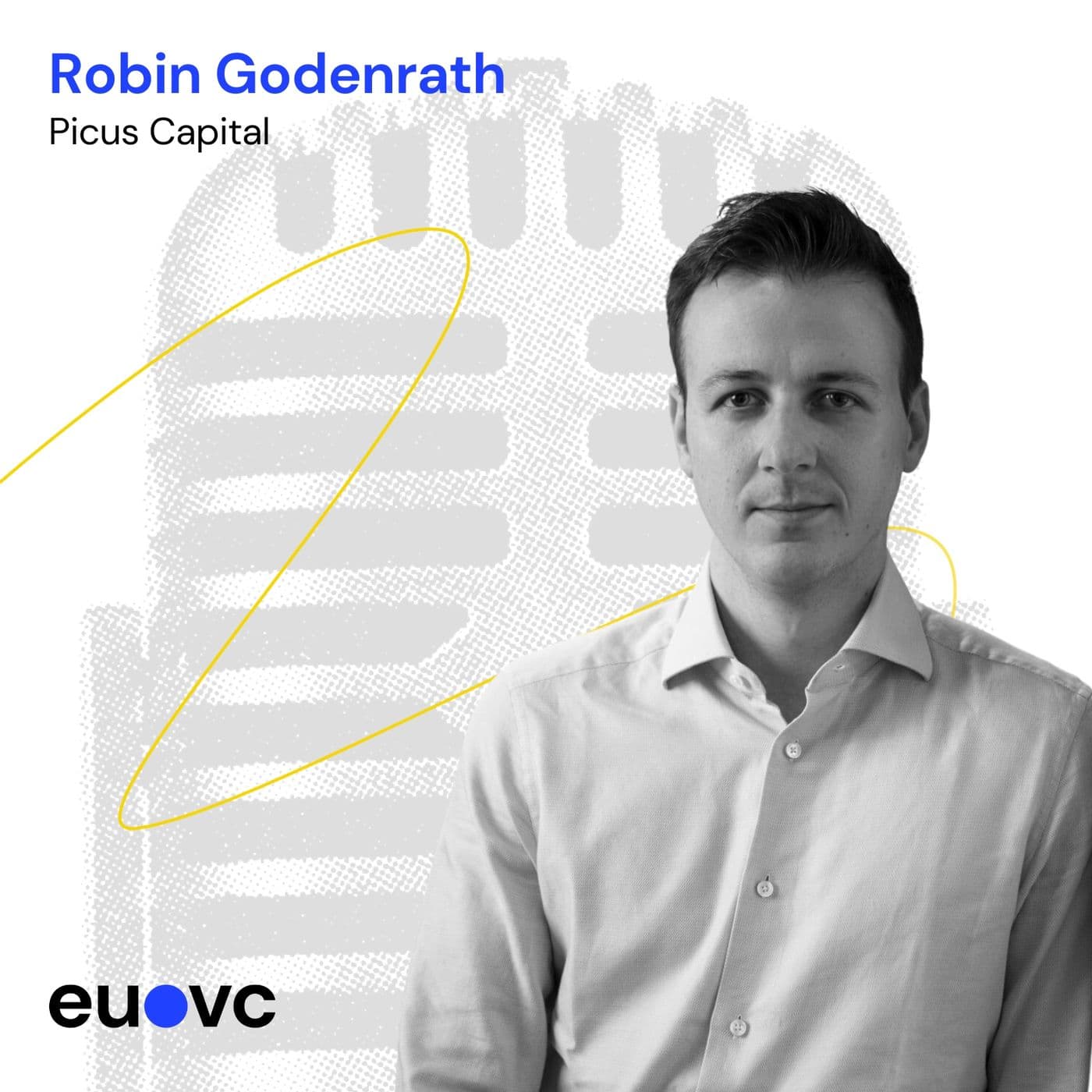
Podcast Title: EUVC Episode Title: EUVC #235 Robin Godenrath, Picus Capital Description: Interview with Robin Godenrath, managing director and founding partner of Picus Capital, discussing the VC landscape in Europe and his journey in venture capital.
---
Key Guests
- Robin Godenrath: Managing Director and Founding Partner, Picus Capital
Introduction
- Co-hosts: Andreas Munk Holm and David Cruz e Silva
- Overview of Picus Capital:
- Managing an investment portfolio exceeding 1 billion EUR.
- Notable first investor in European unicorns such as Personio and Enpal.
---
Robin Godenrath's Journey
- Unconventional Start:
- Initially founded an anti-hangover drink company during university.
- Recognized the gap in understanding business operations, particularly online marketing.
- Transition to Venture Capital:
- Shifted from consulting to venture capital after observing opportunities for combining structured approaches from private equity with venture capital.
- Pivotal Moment:
- Meeting co-founder Alexander Zamba, who inspired Robin to pursue a long-term passion rather than focusing solely on salary and conventional career paths.
---
Founding Team Dynamics
- Collaboration and Capital:
- Co-founders aimed to create a flexible investment structure, merging the agility of angel investing with venture capital.
- Emphasis on systematic approaches to identify and support promising startups.
- Investment Philosophy:
- Invest early with a long-term view, often providing substantial funding in follow-up rounds as companies grow.
- Aim to be a lifelong partner to founders, supporting them throughout their journey.
---
Key Investment Insights
- Importance of Macro Perspective:
- Strong macroeconomic understanding is crucial for seed investors, as many successful startups arise from well-formed early hypotheses.
- Global Approach:
- Maintain continuous communication with industry thought leaders to spot trends and innovations globally.
- Use a matrix organization to foster collaboration across geographies and industries.
- Avoiding Lifecycle Pressure:
- No strict fund lifecycle or exit timelines, allowing investments to align closely with founder priorities.
- Focus on supporting founders through the entire growth process without the pressure of quick exits.
---
Differentiating Factors of Picus Capital
- Investment Strategy:
- Preference for smaller initial investments (often 10-30%) with a willingness to increase stakes in successful companies.
- The firm's capital structure allows for reinvestment from profitable exits, leading to accelerated growth.
- Team Composition:
- Younger, driven team members are prioritized over experience, fostering innovation and agility.
- Emphasis on continuous networking and relationship-building with potential hires.
---
Personal Insights from Robin
- Work-Life Balance:
- Robin enjoys an integrated work-life approach, where his professional engagements feel more like a passion than work.
- Talent Over Experience:
- Asserts that exceptional talent often outweighs experience, advocating for a focus on hiring innovative and ambitious individuals.
- Future Aspirations:
- Aims to grow Picus Capital into a major global player, focusing on solving significant challenges like climate change and education access.
---
Closing Thoughts
- Advice for Young VCs:
- Emerging VCs should differentiate themselves with unique investment hypotheses or value propositions.
- Final Reflections:
- The conversation emphasizes the need for patience in investments, the importance of team dynamics, and the evolving nature of venture capital in Europe.
---
Host's Outro: Encouraged listeners to review, follow the podcast, and engage with the broader European VC community.
---
Note: The episode encapsulates Robin Godenrath's philosophy on investing, team dynamics, and the strategic framework of Picus Capital, offering insights into the European venture capital landscape.
Written by AI. May contain mistakes. Listen to the episode to check what was said.
Transcript
Automatic transcript. May contain errors.0:00Hi, everybody, and welcome to this episode of the European VC podcast. I am David and joined by Andreas. Today we are welcoming Robin from Picus Capital. Robin is the managing director and founding partner of Picus Capital, which is managing an investment portfolio of more than 1 billion euros and was the first investor in European unicorns such as Personio and Npal. If you're listening in and love our show, drop us a review, follow the pod and subscribe at eu.vc.
0:33It's more than just an ally. This is a union of values. United and determined, we can serve as a model for other regions of the world. The nature of a problem requires a European response. Europe is a story of new beginnings. Let's start acting. This show is not investment advice, and the hosts of this episode may be invested in the funds and companies featured. So, Robin, coming on the back of Angela Merkel here, will you tell us your story on how you got into venture? Sure, great to be here. Yeah, my journey into venture is actually quite an unorthodox one because it's via an anti-hangover drink company, which I founded with a couple of other students.
1:21Who doesn't love that though, right? Yeah, it's true. It was quite popular. There actually was also going quite well, but obviously worst founding team ever for such a company with six people who are able to do the financial model and no one has any idea about online marketing. Don't tell me you were heavy users of the product. Yeah, we were definitely also some users of the product, but also our other friends and students were obviously quite strong users. But we had also quite some traction in supermarkets and clubs and so on. But it was my first touch point with entrepreneurship and I really liked it.
1:55for me was very clear then that at some point I'm going to found something. But I didn't think that it's going to be an investment company. In the end, I thought it's going to be an operative business. But after a couple of years of consulting, I had a lot of friends in the private equity industry and a lot of friends in the startup and VC industry. And we felt there's quite an opportunity to do something which combines a little bit the structured analytic approach of private equity and bringing that basically into venture capital. I'd love to ask you to share with us a pivotal moment in your life and more importantly, describe how it shaped you today as an investor.
2:31I think quite a pivotal moment for me was meeting my co-founder of Pecos, Alexander Zamba. And back then he was out of Rocket and Global Founders Capital. And together with my other co-founder of Pecos, Jeremias Heinrich, he was working already on some property deals. So they had a real estate investment company called Augustus back then. And they thought a little bit also about this kind of new idea of an venture capital firm, which we discussed together. But for me, it was quite a pivotal moment because until then, I was quite structured when thinking about my career, thinking about, OK, how important is salary?
3:07How important is that maybe for my next career step and so on? And it's what I'm working on very interesting. But obviously, Alex, at that point of time, already had achieved a lot, basically, financially and everything I think you need. but he was still so driven and so excited about a lot of different topics and i felt that was just very inspiring and for me that was a little bit a game changer because then i thought a lot about okay i want to do something next which i want to do then the next 15 20 plus years of my life which i'm so passionate about and hopefully the success then then also follows um so yeah that was it was quite important for me because it changed my priorities a little bit and also for me then And obviously it was super important with who I do that basically in the end, because that's quite a long time.
3:53And so, yeah, the priorities shifted. Could you tell us a bit about that whole experience of coming together as a founding team and deciding that let's do this together? That was quite interesting because Alex had obviously a significant pool of capital on his own. He achieved through his career. and he had together with Jeremias a lot this idea basically of having something privately financed which has basically the pockets of a VC but is very flexible in where you invest basically in what kind of models so very agile and entrepreneurial but without all the restrictions of a venture capital fund like no life cycle no exit horizon and so on so combining a little bit the best of angel investing and a venture capital fund.
4:41And for me, the systematic approach was super important that if you want to really be successful as a firm and build an international category leader as an investment firm, you need to have a lot of structure around how do you really find the best deals in Europe, in US, in LATM, in Asia? How do you get actually in? How do you support these companies at scale? And for me, that required a lot of analytical approaches, best practices and so on which is probably not the standard in every early stage we see and so that in combination was then very interesting because we liked all of us basically what the others said and then we said okay let's do it let's really build something and which does a lot of things radically different and we're going to talk much more about that in just a second but now let's head into the take a stance round take a start
5:41so robin why i would love to ask you to ask to ask you to to comment on this quote by patrick murphy from tapestry which is being a great seed investor requires having a strong macroeconomic view on the world? I think that's a super interesting one because I think a lot of people underestimate how much forward looking and thinking you have to be as a pre-seed seed investor. If you're a later stage growth investor, you can look at business models. Did the product market fit really work and so on? If you bet on a transitioning industry, you still have customers, you have unit economics, etc. So you have a lot more proof points but as a pre-seed investor if you look at a lot of the most successful companies out there whether it's in stripe and clana and airbnb euro and so on you have to make an hypothesis very early on you have to have a conviction very early on because if you are a couple of years late it's very rare that basically then the company is coming after with similar models and so on really the leaders in that space so you have to form your hypothesis um very early on and i think This is also why you have to be in continuous exchange, basically, with thought leaders of an industry to form these hypotheses.
6:56You will not form them with just talking to companies or sitting in a closed room. For example, we at Picos have seven different industries and area squads who continuously talk to thought leaders in the space. The developer infrastructure squad talks continuously to CTOs in the industry, in the top technology companies to understand what's happening there. basically where's the infrastructure moving and what's new and so on and i think that's quite important and the other point is it's also very global a lot of investors are also quite local or if they are global there are different teams mandates incentives and so on there's not a lot of exchange we think that's quite quite a mistake because in the end different trends start in different areas while us is definitely with ai and so on leading also a lot of consumer trends leading financial technologies often start in Europe.
7:47So if you are global and you understand where innovation comes from, you can also track it throughout the globe. And if you want to understand technology globally, you have to be active globally, which is why we have a kind of matrix organization with industry on one axis and the other axis like geography. And you can always talk to the right people, which makes sense for that specific business or for that specific industry and hypothesis. So this is a little bit how we're trying to take that challenge of making bets so early on and hopefully being right quite often.
8:24I love how you finish that quite often. That's very much a VC industry specific thing where we only have to be right a few times to be successful. Not too bad of a career. Robin, you were talking about something just before the Take a Stand section And basically, you mentioned, you know, your setup being special at PICUS because you don't have that fund lifecycle pressure, that specific exit timeline or exit window pressure. And I'd love to ask you, and I'm going a bit off script here, but I'd love to ask you, what does that actually mean for your stakeholders? And by stakeholders, like top of mind, I'm obviously thinking about the startups, of course, but I'm also thinking like co-investors and even LPs that are deploying capital into the industry.
9:07I'd love to hear you expand a bit on that. So yeah, if we start investing very early on, pre-seed seed, we just have the feeling the really big companies, if you look at the category leaders, you don't build them in six, seven years. You sometimes build them in 10, 15, 20 years. So we don't want to be more basically aligned with actually how the founders think about their business. And they are for sure not on day one thinking about a six, seven year time horizon. So we really like to keep investing along the way. often we just invest basically 20-30 % of our overall capital in the first round and along the way actually the majority of the capital.
9:43One of our most successful portfolio companies was for example Personio here in Munich or Enpal in Berlin, the largest climate tech company and Personio being probably the most successful SME SaaS player in Europe in the last 10 years And there we invested probably 10 % of our capital in the first round and 90 % along the way. On the one hand, because we think our conviction just increases, we see how the team performs basically. And we see how the product behaves in the market and whether there's a real fit and so on. So the conviction is a different one. But on the other hand, we like of communicating to founders, we are with you here in the very long run.
10:21We keep on investing along the way and we have a value proposition which goes along the way. a lot of things which we support on very early on, whether it's fundraising, recruiting, expertise, network, etc. But actually also a growth team which helps you on internationalization, venture debt, IPO preparation. So we stay very continuously. We rather see ourselves as an basically lifelong global entrepreneurial sparing partner to the companies. And our ambition is always to be the closest partner to the founders and to the company. So that's a little bit how we see it and hopefully the founders then rather see us a little bit more on the on the entrepreneurial side of things than on the pure investor side of things from your standpoint like in your perspective is the differentiating factor that you have that amount of reserves because that you know what you mentioned is quite different i'd say from the majority of our guests right here in the podcast at least they they do 60 60 first ticket 40 follow-on typically right that's kind of the average i'd say is that a differentiating factor or is the differentiating factor really the patient capital so you know as you said fun life cycles 8 10 12 years whatever that is oftentimes and i think like current i wouldn't say best practice but but like knowledge everyone says like if you have a winner in your fund you just extend the fund you know there's value there just extend it extend it and there's many cases like that right i'd love to deep dive a bit more there yeah the fund extension obviously is quite later stage typically but i think if you look also in the first couple of rounds it's very different what we do.
11:51Often funds invest first round quite sizable tickets and also have certain mandates basically how much they should own the company so often that's even 15 to 20 percent so they start like that and then they have maybe 20 percent reserve follow-up rounds. We start differently we don't care if in the beginning sometimes we only own a couple of percent sometimes more sometimes less and then maybe along the way we keep working our way up or at least we avoid dilution so often our entry tickets are also much smaller than at maybe typical seed funds which have to own 15 or 20 percent so that's one piece the other piece is obviously our capital we have available will grow quite exponentially over time because if you are a fund and if you do a 10x on your portfolio you typically pay it back to LPs maybe you pay carry to the to the partners and the team and then you raise a new fund and maybe the new fund is a little bit bigger than the old fund.
12:44While we basically can recycle everything we have now portfolio, it's private capital, it's completely owned by us. So if we grow times 10, basically, we have 10 times the capital. So everything we would sell in secondaries and exit and so on, we can reinvest. So this allows us as a company to grow much faster than the typical fund. We have at the moment a portfolio, which is more than a billion. And that's our basically investment pot as well like if we sell something we can reinvest and the next stop for us is to grow that to five to ten billion on our balance sheet privately financed so i think that's a little bit of difference so we grow much faster so in the future i think you will see that also our possibilities and capabilities in terms of what we can invest will grow but at the moment if you compare it to seed pre-seed funds it's a little bit more opposite side we start smaller and then we double down the second, third and fourth round.
13:35And that's more the series A, series B and so on, and not so much the series Ds and Es, which may be more relevant in continuation funds, basically, if the core fund then is invested out there. Could you expand a bit on, it's one thing that you do that, but could you expand a bit on why you do that? Because it is contrary to normal wisdom, right? You want to put more money in the beginning because it's cheaper there and if you don't like it if you don't like what uh how what the what the cake ends up looking like then you'll just not follow on you you're saying the opposite almost that well we'll put a small ticket in the beginning then we'll keep keep taps on it and then we will is it then because you say well we have confidence that we have a strong enough value at that we will always be invited in we won't we won't be squeezed out and we don't mind paying more for the bigger clarity that we have later down the line.
14:30So I think for us, one of the reasons why this works in our portfolio, and I can also name actually a couple of numbers which prove that, is that we are working together with the founders in a much closer way than probably a lot of other VCs. So often we're working together with founders already from day one when we are not even invested. So we keep basically sparing with them. We are adding a lot of value by providing our network, providing our expertise, making connections to potential co-founders and employees when we're not even invested yet. And once we maybe make a first investment, if the company is founded and it's small, we stay that close basically.
15:08So we want to more work together with founders in a WhatsApp kind of relationship and don't care so much about boards and observer seats and so on. So be very, very close and operative, which then gives us a totally different conviction in the follow-up rounds because we really know the company in and out and we know the weaknesses and the strengths. And to be honest, in the very early stages in pre-seed, you often make also mistakes. Sometimes maybe a team is not as strong as you thought in the execution side because obviously you talk a lot in the beginning. Maybe there were some parts of your hypothesis which were wrong and actually the product which was built is not really hitting the market the way you thought about it and so on.
15:48So a lot of different risks, which if you stay close to the company, a lot of them might be mitigated by a series A round or a larger seat because we often even start in the pre-seat round. So once we feel that a lot of these risks are basically mitigated, we feel much more comfortable than investing more significant tickets along the way. Also the hiring question, like how strong does a founding team actually hire people? You can see that in the very beginning. Can they really convince the best people to join them? And that's probably the most important indicator for success in our portfolio.
16:21You see all of these things in the first one or two years. So then we basically keep on doubling down on the winners. And in our portfolio, if we look at return since we exist, I think we have an annual IRR of about 70 % throughout our entire portfolio, which I think is quite exceptional. But if we just look at the second, third, fourth round, so we completely exclude the first ticket, it's a little bit lower, but close to actually the same IRR. However, with much, much less risk. So completely different level of risk because the Series A, B company has much less risk in an economic downturn than a pre-seed pitch deck company.
16:58So we feel the risk return works quite well. And we just see that basically that it correlates quite well in our portfolio, the amounts we then invested in the company and which ones really go well and are winners in the end for us. I'd love to ask you, Robin, to expand a bit on it's actually two things. One is portfolio construction and the other one is like deployment rates. So if we start with the first portfolio construction. so you're you're as you said you know you're doing you're doing these these bets very early stage and then you're doubling down and sometimes i guess even increasing your stake how do you manage that internally as a team right in the sense of it's very different to look at a pre-seed case or look at a series a case or series b case and you know is is it the same process when you put a ticket of x amount and the ticket of 10x amount right i guess it isn't right i'd love i'd love i'd love to hear a bit about that.
17:51Also internally, who are the team members, the decision making, how does that work? Which also leads me to the deployment rate question, which is a separate but very closely connected question because conventional wisdom is that you have a fund, you deploy it over a couple of years, four years max, right? And then you raise another fund, then you start deploying again, and management fees go up and down based on the fact that you have more work, less work, right? How do you guys think of that as well in the organization? in PICAS is are you deploying as fast as you can, meaning then there is some actually down time, so to speak, in terms of work effort?
18:26Or are you actually thinking practically, okay, we have these cycles, even though we're not forced to it. And as such, we try to only deploy a specific amount of capital on a yearly basis, which then affects the portfolio construction. So yeah, it's maybe also a little bit unconventional, but we don't care at all about deployment speed, basically. For us, it's really only about kind of the number of high quality deals we basically find and we want to back and if maybe one or two years that's zero then it would be zero we don't have this fund structure so we don't have to basically deploy and get into problems and so on with it was a piece on that side on the later stage side it's anyway i think then from the second third fourth round on and so on it's much easier because we can basically tap into our early pre-seed portfolio which is quite significant but on the very first investments we don't care about it at all we are thinking about it more in a way that we say we don't actually even have industries we invest in we only have a set of 15 to 20 core hypotheses we believe in and some of them are also yeah quite forward looking and might take still quite a while until they really hit the market basically and these hypotheses are typically based on 15 10 15 years fundamental trends so we believe that the world looks in a certain way and then we invest in business models which basically bet on that so this is why also very few of our investments are for example in typical consumer topics you do very little things like a scooter a supermarket and so on which are very marketing heavy as well and another competitor might raise a big round and you get into problems so we invest only 25 percent in consumer and this is more things like decentral energy like for example npal where we actually did the first investment in 2017 where decentral energy and renewables and so on, that was absolutely not en vogue at the moment.
20:13So that came in particular now in the last couple of years, even more with the geopolitical situation. But that was under the Tier 1 effect. And then there are a lot of Tier 2 and Tier 3 effects which come down the line if you believe in a decentral energy structure and not in an energy structure where there are three big power plants. And that's, for example, on the consumer side or shift from ownership of assets to subscription of assets It's where we invested in a company called Finauto, which is a car subscription company, because we believe car subscription will be 5 % of the car market in 5 to 10 years.
20:45And today it's 0.2%. I also don't care too much about consumer recessions if I think the market in which I'm active grows times 25, basically, in the next couple of years. And that's only B2C. On the B2B side, the majority we do is cybersecurity, developer infrastructure, payments infrastructure, tier one ZaaS topics, which we really need to operate your business and which are not nice to have. So this is a lot of things where you have basically transition in markets. Cyber security will for sure also grow very extremely also in the SME area in the next years and so on. So a lot of things where we think not too much dependent on the economic development and when it hits the market, we have to be there.
21:27And if there are the investments we can do, we can do them. But if it takes time, then we are inactive or we are not doing that many investments. We also have an advantage with the geographical exposure since we are active with offices in US and Latim and Asia and Europe and so on. Sometimes we do more investments in the one geography. Sometimes one geography is too expensive and we don't do investments there. So it changes a lot, but we have no pressure or restrictions in that sense. Does this, and this might sound a bit provocative, does this fluidity in your opinion, and if you have any data points, please do share because I think it's really interesting.
22:03does this fluidity or lack of pressure as you said it make you less or more resilient to hype cycles and sentiment across you know the venture industry that we just saw one right right now and now everyone everyone's a genius and everyone's everyone knows what what should have been done before but we all know that when we're in the middle of the hype cycle everyone's behaving more or less kind of the same way i think much less um pro to that in the end because if the generative AI hype is coming. I don't like the word hype about that too much because we had a lot of hypes, but I think generative AI, the certainty that this has massive impact on different industries, on work, on our life, is probably much, much higher, the conviction about that than for some other things we saw, even higher than also things like crypto and Web3 and so on.
22:53So I have not a lot of doubts around that, but if you see that at the moment and generative AI hitting the market everywhere and you are a fund and you have LPs, then they might want to see generative AI investments and that you're active there at the forefront of technology and so on. While we are at the moment still super careful and not because of the question marks around the impact, but more around the question marks around the risk return of these investments. We see at the moment some interesting business models with great teams starting, but 10 same business models at the same time in Europe, for example, in the same market, then you have risk from the foundational models that maybe Google and Microsoft go into that area as well and compete.
23:35You have crazy valuations, crazy high entry valuations. And not all of these business use cases are automatically as big that they automatically get 10 billion size company if that works out. So we're asked a lot of question marks. Is that actually a good risk return? Often, not so much for us. So while we like the impact about that, we think there's at the moment a lot of hype around it, which makes sometimes investments not so attractive, which is why I think in the past 12 months, we invested a lot in, for example, decentral energy, like actually really a lot, probably if you look at the different industry squads and so on.
24:12and we felt that there we have a much dearer picture around risk return. So we feel we have no pressure with that. We have no one complaining that we didn't do so much in that space yet. We did a couple of AI investments, of course, but already a couple of years ago. And we keep observing how the risk returns and the different sectors develop. So, yeah, I think it makes us less prone to cycles and hives. We have quite a few LPs listening into this show as well. And you've said a couple of times that, and even stressed it, right, that you invest principal capital and as such, you don't act as a normal fund, right?
24:53You don't have that fund lifecycle. Yet you do have a fund as well. I'd love to ask if you could expand a bit on and do position this, you know, to the LP asking, right? So, Robin, you guys have your investing out of your bank. own bank statement. But at the same time, you're managing a fund that I'm considering putting money into. How do you make sure that you're making the right bets here? What's the checks and balances? And how do you think about my money and the fact that you need to liquidate my investment within that 10-year timeframe, whereas you don't need to do so with your own? Could you expand a bit on that?
25:33To shed a little bit light into that, the first couple of years, we were also completely privately financed. However, we ran a little bit into the really big luxury problem, actually, that in, as I mentioned in the past, in the best companies, basically, we invested in our double down investments. And while our first investment might have been 300, 400K, we invested 500, 600, 700 in the follow-up rounds in companies where the possibility for us to invest or the purata rights of them as well would have been three five ten million and a good example is is the company npal in berlin which is the only climate tech unicorn in in europe i think um and um at some point we even had in the company a 20 stake but at the moment it's now 11 which is still great but it also shows like why did we dilute in a company which was obviously one of our absolute strongest winners we were investing in day one we worked together with mario four months before i even founded and already tried to to help him basically fight the right right approach to it that situation we didn't just have an empire but we had i think already at 20 30 companies that we knew these are these are our really potential winners these are the best risk return rounds now let's double down with our capital and we could have done much more and the the additional operator right we didn't use was then taken by maybe excel index and some other great investors and obviously that's very painful for us so this is why we decided basically in a couple of years ago that we take our closest partners actually into a into a fund structure where the fund one was a hundred million basically and i think half of that were actually our own founders and venture scouts and a lot of people from the growth and financial industry and maybe some very close family offices to us where we said let's have a structure where we actually do the double downs together and together is for me very important because this is not a continuation opportunity funds which invests later if we don't want to invest on our own we are the own and the biggest one of the biggest investors in that fund on our own as well so there's a very clear rule that if a company has a certain size we and the strategy is proven winner so typically it has revenue there's a certain valuation threshold it's eligible for the fund and then there is no cherry picking there is just is it a double down winner then the fund does it and we do it together with the fund because we are investing alongside or we don't do it at all because can write very small checks but we cannot say like oh this is maybe the next meta and now we are doing it from the balance sheet it's this very clear rule basically every partner can say like look these are my two three winners we want to track this year and then there's a pipeline of 30 40 rockstar winning companies and if then in the round we really like the setup and the valuation and the risk return, then we do it with the double down and with the fund.
28:24That was fund one. And at the moment we are raising fund two, which will be around 200 million and which will start investing early next year. And it's just bigger because our puratas got bigger. The strategy is not doing our puratas. It's doing the best 10 % of our puratas. So while, for example, this year our purata rights were probably 350 million, we would then do maybe around 35 million with the fund. And next year, the report rise will maybe be 500 million, the year after 600. So if you go down the line and you think about a three, four years deployment period, then you need a bigger fund.
29:01So that's the idea. And in Fund Tour, we are also the largest LP. Out of the 200 million, we are putting 30 million on our own. So we put the majority of our capital also in the follow-ups because we strongly believe, and we saw it in our purely privately financed portfolio in the past that these are the best rounds and risk returns. So we also want to put our own money there. So we still do the first small foot in the doors, basically from the balance sheet. We still also allow LPs of our fund to participate there. Some of the venture scouts and founders want to invest in angel rounds as well and put small tickets there.
29:37A lot of LPs in the fund then invest also alongside the fund with direct investments as well. And there are also some large companies such as, for example, our Anchor LP, which which is one of the largest UK asset managers, they are more looking at it as a pipeline for really sizable own investments. This one, for example, in particular, on the climate and impact front, where we have a lot of overlap, and then maybe even leading rounds. So 95 % of our piece, we are working together with them beyond the fund, so not purely on the financial side. While I also think also on the financial side, it will be an absolute top performing funds, also based on our historic performance, which obviously everyone can see in the data room.
30:17So now it's time for the shout out segment.
30:29Robin, I'd like to ask you to give a shout out to a co-investor, Angel or LP for being awesome. And please do share the story behind that awesomeness. Yeah, so I think myself, but also a lot of people at Picos are quite excited about Sutter Hill Ventures. I think a lot of them also know them. They're a little bit kind of inventors of the entire VC game, but I think an extremely bold player who is just a very own approach and doesn't necessarily do things basically the VC way, but extremely successful as well with that approach. And I think we just like that approach of not being prone to trends out there and so on, but sticking to a very successful system.
31:08And a couple of pieces, what they do different is one thing is they are really going super, super deep in highly complex topics and are really building highly complex and forward looking hypotheses in these spaces. And we are really talking about industries which are transitioning at the moment. They were definitely one of the absolute forerunners basically in this entire cloud infrastructure transition, transition from on-premise to cloud. And then going very deep into that and betting on technological risk. So if they make their bets, there's still massive technological risk. But if it works out and there's a solution built, there's no question around the demand for it.
Read the full transcript
31:50And I think that's quite interesting because with that kind of approach, it can just get to really massive and successful companies. And the team setup and approach is also very interesting. The own team of Satelventa spends 40 % of their time probably on being CEO of their investment companies. And they let the founders focus completely on the technological solution, which sounds really unorthodox. But what they have achieved is very tremendous. I mean, they were basically co-builder of Snowflake, which is 50 billion by now. I think Satellite Ventures achieved a return of 12 billion with that investment.
32:29But also a lot of other investments like lace work and cloud security space or pure storage, basically in the modern data experience space. Super, super impressive role models for what they can do with that approach. And also very interesting, they stay very agile early on. So only these companies only have five to ten people teams until there's really a proof that the product market fit is there, basically. And then they also keep doubling down and also invest more money on their own. So not just very early on, but just also along the way. They prefer to work together with zero entrepreneurs or seasoned operators who have seen that problems and the technological challenge in practice.
33:12And yeah, I think it's very impressive. And on top of that, they are not one of these players which runs around with their showcases and shows off and is a lot in public. They're just very calm, very focused, super, super content first, basically. And I think one of the most impressive firms out there.
33:34So, Robin, now I want to ask you about your three biggest learnings from the last 10 years in your life. my learnings are probably all around people because one thing I've also learned with our portfolio and so on is that in the end the the best teams are building the best companies and probably talent beats business model a nine out of ten times so um if we looked at our portfolio wall and the big success cases very often the business models were very very difficult and in the beginning I would have definitely not said like oh that's absolute low brain and so on so So very challenging and absolutely clear at all.
34:10But the teams were just very exceptional, obviously, very early on. But they just proved down the road that they can also not only attract capital, but also attract really exceptional other people to believe in them and then work with them, work for them. And you don't then have this pyramid of that. The more you go down, basically, the hierarchy, the weaker the people get. but that you have actually people having equally strong people and getting them motivated to work for them. So that's why I mentioned also before, we look so much into what people someone hired because someone can be extremely smart and entrepreneurial but does not get great people to work together with him or her.
34:50And that's a big problem because in a big company, you will not be successful if you don't have 30, 40, 50 absolute rock stars in your organization and you cannot carry it on your own. Your own performance gets basically less important over time more and more. And by the way, I also think that if you look at the big entrepreneurs of our world, like Elon Musk and Jeff Bezos and Mark Zuckerberg, I think if you look in their organizations, there is a lot of the key of their success that they have insane profiles and persons basically working for them in all these organizations and leading the different areas and sometimes even the companies, right?
35:31So I think it's a big success factor. And one thing we really like doing at Picos in the early days, but also still today, is that everyone who is basically joining your company, whether it's an intern or full-time equivalent, basically has to go in a very systematic exercise through all their life and career and think about the two, three, four absolutely most impressive people they have met, basically. And basically we track them in a big Google sheet list, basically. And you have to then show every quarter that you have talked to that person. Because in the end, it can be that maybe it's interesting for us to join Picos.
36:08It could be interesting that he or she start in a great company and we want to invest. Or they want to become an operator and then maybe in one of our portfolio companies. But really stay continuously in contact. That's also how we actually got to a lot of the people working at Picos. our US partner was definitely one of the most impressive peers I have met in my life. But he was in investment banking in New York and very difficult to get out and took me like three, four years to convince him. And now I think he's building that business there really as an entrepreneur. So this network approach can be extremely powerful.
36:45Of course, there are some problems if you also need to go into new areas. For example, we want to hire someone in Tag Bio at the moment as well. we don't have typically people in tech bio in the networks and a lot of people in our organization so there you have to think innovatively again how to you get someone really really stellar in that space and maybe from that person on then again you can get into into more people which studied biomedical engineering and so on so very different profiles and we're hiring people in cyber security at the moment and so on so that's a little bit the challenge with that approach but it can be extremely powerful but because if someone knew a person for very long work with them and knows that was just absolute rockstar there, then there's very little risk in hiring that person and for sure much less risk than talking to a person five times in the interview process and so on.
37:33So I think that's very interesting. And intelligence in the end, it's an absolute commodity. Intelligence is important that someone is intelligent, but actually it's not so important whether someone is like an Albert Einstein kind of intelligent person or just intelligent. In the end, the real value drivers in a business are the entrepreneurial people. And I think that was also for us important because in the end, we have a very clear philosophy that you can't also get up basically in our own organization with a couple of nice investments. You have to be an entrepreneur and reinvent the organization.
38:07So you have to build something at Picos, which in the end translates a significant value or comprises a significant value of the overall value of Picos. And that's quite challenging because that can be a new sector, a new actually business approach. This entire pre-seed founders bearing approach was something one partner actually brought up here and invented basically. Or it can be also basically, yeah, I'm going in a new geography and building up that. So it's a very big important point for us. And we're trying to really institutionalize all of that. So we always have also in our feedbacks and so on, micro and macro innovations.
38:46And micro innovations are more like things, how are we doing things today? and how would you do them in a better way? So, for example, could be people completely revamping our screening and changing how we are finding founders and looking for them and so on. The macro part is probably even more challenging because that's what should we do or what are we not doing today? Should we do private equity or should we change the way, basically, how we are allocating our tickets and so on? Should we do a new geography we are not doing today and so on? That's very difficult to come up with because you cannot just sit down and think like, oh, now I have to come up with a macro innovation.
39:23It's more like you have to, on the one hand, block time, but then really think about, okay, today I only think about geographies. And I think about all geographies which are out there and then I have to have a clear answer why we are not in all of the others where we are not, for example. Or maybe say like we shouldn't do one actually because it doesn't fulfill actually the criteria which are necessary to be active in a region. So you have to institutionalize it to come up with these kind of things. And I think one other thing which is very interesting is I always tell people, if you are making 10 suggestions throughout the year and nine are good, then you are not thinking radically enough because it should be vice versa.
40:03It should be you should come up with 10 things. Of course, you should have that whole thought and through and they should make sense. But nine should be killed, basically. It's like, oh, that's too crazy. We can't do that and so on. And so, yeah, that's why it's very, very important, I think, to think radical, because if one goes through, that's typically quite a game changing one. Makes a big difference. One of the innovations at Picos, for example, was that one partner brought up the idea that, OK, we had on the private finance side, no fund at least. So we can actually draw depth on the basis of the value we have there.
40:36And that unlocked for us in the last couple of years, 70, 80 million additional investment volume, which is absolute game changing in how fast we could have grown without that. So it's a really, really big difference. And we pay for the debt in the past. We paid eight, nine, 10 percent and our return was 70 percent. So a very clear case, basically. But obviously with Fundlogix and so on, I've not seen a lot of others do it. So these kind of things, the innovations are the ones which bring you further. And there's also actually a quite prominent example out there, which is all this story around Blackstone.
41:12I think there's also a book called What It Takes from Steve Schwartzman. He also talks about that you need to hire basically nines and tens because eights are great executors and nines are entrepreneurs and so on. But he had a very strong 10 in his own organization, which was Larry Fink. And I think there were some struggles also around how powerful he can be in the organization. And I think it is always difficult to let someone up basically next to you. great entrepreneurs don't let themselves be managed or hired so you have to let them go free and they have to be on your same stage basically and have the possibility to get there otherwise they will leave or not even come and larry fink left and he founded black rock um afterwards so would have been quite nice to have black rock and blackstone as one company i think it's been insane but i think it was one or i think he also writes that it was so quite a quite a mistake basically him to let him go so yeah that's that's quite interesting and on on the talent side the last learning for me is always look for extreme outcomes so i would always prefer someone where i said like okay it's completely crazy also on the founder side by the way could be really really exceptional and great but could also be a maniac who completely kills it or yeah just doesn't work out at all but this kind of optionality like maybe 10 chance he's a 10 or she's a 10 that that's what I'm looking for, I would always prefer that to 99 % is an eight.
42:34That's very important for me, just go for extreme outcomes. And that's also how the VC industry works, right? So we need a couple of extreme outcomes. If a company goes out of business, it's always bad and sad, but it's still not the end of the world. Before I let David go into actually rounding up the episode, I want to ask you a question, Robin. You've captivated us with your thinking and building PICUS, but we don't know much about Robin as a person. Could I challenge you to tell us a bit about what does Robin make his day work? How do you live your life? What do you enjoy doing as a hobby and that type of thing?
43:14What really changed for me after McKinsey, I love McKinsey. It's a very interesting job and so on and was great people there and so on. But I would never have like on the weekend just said like, oh, now I do a little bit of project work just because it's so much fun. And in particular the first years of Picos, I really had the problem on the work life. And it's so exciting what you're doing. And you have so many passionate and exciting people around you, whether it's the founders or the people at Picos and so on. It's really hard to not think about it and so on and not work and so on. But it doesn't really feel like work.
43:48If the founder of Billy calls me on the weekend, that doesn't feel like work for me. And it's great because you always say like, if you work a lot, basically, and you spend a lot of time, it should be something which is your hobby and which is passionate, which you're passionate about it. But I think 95 % of the jobs out there, I don't know whether it is like that really, maybe close to it sometimes and so on, but it's very hard to get there. And it's an extreme privilege that you can work into something like that. It also means if I would go anywhere else and have to be employed again, that would, I could not do it anymore.
44:20It would be a, yeah, it would be a catastrophe for me. So yeah, I think, I think that's quite a, quite a, quite a cool space to be and it's nice to build a large company but what really drives me to that I also want Picos actually to be a player in the size of an Nespas, Blackstone and SoftBank. At the moment we are working on extremely interesting topics basically but if you are getting to a very different size and you are active on a global scale you are suddenly in a position where you together with founders of course and maybe also some co-investors but you are really in the driver's to basically focus on the big problems of our time, whether it's really solving climate crisis or whether it's preventing cybercrime, basically, or whether it's democratization of access to education for emerging markets and so on.
45:10And I think that's just such a nice North Star that you can then really basically do things which really make a significant impact on these kind of challenges. So I think that's why I have a lot of fun every day. And I think that's also why a lot of people here, although a lot of people here work a lot, definitely typically have a big smile on their face. And I think that's a big privilege. So this is a little bit what drives me. And yeah, but I still obviously have to sometimes try to push back a little bit and also take some time for private life, etc. Because that's also important as a balance or whether it's sports and so on.
45:47but it's very fluent, definitely, the line. And I don't care that it's fluent. I don't need that indication. I then have nothing to do with work and it can be fluent. It's fine. It is clear that, Pickus, you're building something amazing with Pickus, Robin. So I wanted to just touch on the personal side as well. I would love to ask you a question on this note. There's one thing that's very apparent to anyone roaming around on the Pickus website, and that is that you have a quite young team. I'd love to ask you first, why? And then also, is this connected to what you just stated? Yeah, I think it comes also, again, back a little bit to the people points I mentioned.
46:29Talent beats business model, but also, in our opinion, talent beats experience. Because we need people who are really innovative, driven, and really want to create something big and are with us in particular for the next 10, 20 years. So we have a lot of time also to develop people. And we just think people can grow very fast. I myself, for example, when I joined from McKinsey, I didn't have a specific expertise in a specific area. But I think in my first two, three years, I talked probably to a thousand prop tech companies. I think I've also done the most prop tech deals in entire Europe, in entire VC ecosystem.
47:08We were also as a company in the first couple of years very active in the prop tech space. And I think also very successful. So when you talk to a thousand prop tech founders, you can also talk to the next one in a very credible way. And you know a lot of things they don't know. And you can go very deep into that sector and be an expert very fast. So therefore, I think fast experience piece is not so important. There are some other areas where you need certain education and so on. And if you go into tech bio, you probably need to have been doing something with biomedical engineering and so on.
47:39And it's difficult to get an economics person to go into that direction. So that's also what you actually see a lot in our organization, people with robotics background, with cyber background and so on joining. But the age is not so important for us. The drive and the ambition and the entrepreneurial skill set is key. So this is why you see quite a young team. But also if you look at some of the people, also quite impressive track records after a couple of years with the firm. And on that note, it's now time for the quickfire round where I'll ask you a couple of quick answer questions. And now, the quickfire.
48:22What advice would you give your 10-year younger self, Robin? I think for sure, like, don't care so much about what other people say, what you now need to do, or what's the basically best outcome. Also, after university, don't care so much about brand and what salary you earn and what others earn and so on. focus really about finding something what you want to do and what you're passionate about for the next 15 to 20 years and then you will be anyway successful with it if you're really passionate about it and you will find a way to be successful with it what are your top tips for emerging vcs across europe who are now fundraising it's a harder time now so there are a lot of generalists out there if you're fundraising now i think you have to find something where you are just better than anyone else or most of the others.
49:09So that you do something just differently or that can be a very specific investment area or you have a very bold hypothesis for the future or you have a very dear value proposition like I'm bringing in all the CTOs of all tech companies as a network or something like that, which is very unique. But if it's relevant and the hypothesis, for example, is relevant, then you are one of the very few where this fits because then you have a very good chance and getting into the best companies there. And also then maybe you even get into at a great risk return because in generalist opportunity, there are also a lot of investors out there and so on and it gets expensive and so on.
49:46So do something better than most or better than everyone. What's the most counterintuitive thing you've learned since you've been in venture? Yeah, what I definitely had to learn is basically that raising a lot of capital at very little dilution, even if you're disciplined can be a really big problem because you just have a ton of expectations then um also for example if certain investors came on board and paid out on certain valuation there's an expectation that you fundamentally very fast grow into it maybe that's not the best for the business maybe you have to take your time and test different things and then you're pushed into a higher burn and so on it's not always an obvious choice for the founder then to say like yeah but but I still behave like I didn't raise that money.
50:29Yeah, there are expectations to that money. It's difficult. And there are also internal signals in the organization. The employees think they sit on a rocket ship, maybe their nephew valuation holds and stays horizontal for two rounds. People feel like, oh, we are losing momentum and so on. And maybe you lose some great people in the organization. So it's not always great to raise a lot of capital on small dilutions.
50:57Amazing, Robin. Thanks so much for joining us. And to everyone listening in, if you enjoyed this episode of the European VC Podcast, do drop us a review, follow the pod, and subscribe at eu.bc.
51:21United and determined we can serve as a model for other regions of the world. The nature of a problem requires a European response. Europe is a story of new beginnings. New beginnings. Let's start acting.
From the publisher
Picus Capital is managing an investment portfolio of more than 1bn EUR and was the first investor in European unicorns such as Personio and Enpal.


