
In short
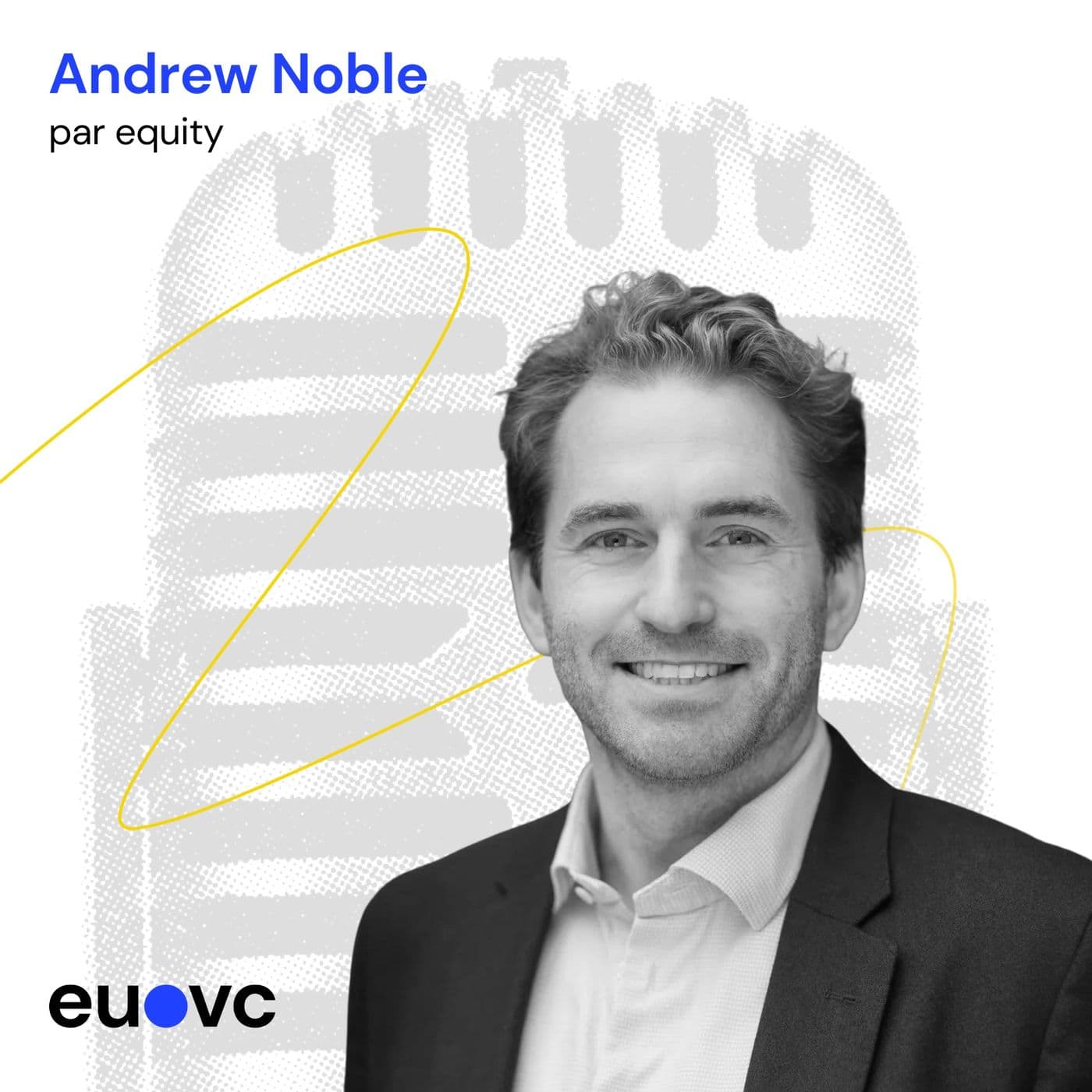
EUVC Podcast Episode #236 Summary: Andrew Noble, Par Equity
Episode Overview
- Hosts: Andreas Munk Holm and David Cruz e Silva
- Guest: Andrew Noble, Partner at Par Equity
- Focus: Discussion on venture capital, especially in health tech, climate tech, and industrial tech sectors in Northern UK.
Key Points
Introduction to Par Equity
- Background: Par Equity is an early-stage venture fund focusing on B2B IP-rich companies, operating primarily in Northern UK.
- Investment Focus: Health tech, climate tech, and industrial tech.
- Assets Under Management (AUM): £213 million, with a portfolio of 77 companies, including 48 active companies and 29 exits.
Andrew Noble’s Journey into Venture Capital
- Early Career:
- Andrew was a professional ski racer until an injury led him to explore new career paths.
- Developed an interest in entrepreneurship and investing through his father's angel investments.
- Entry into VC:
- Interned at Par Equity, leveraging his enthusiasm and connections despite lacking traditional qualifications (no university degree).
- Gained experience and eventually returned as a partner after various roles, including at McKinsey and as a tech entrepreneur.
Themes in the Discussion
The Grit of Sports in Business
- Andrew discusses how resilience and perseverance from sports backgrounds translate into business success.
- Traits such as dealing with adversity and a strong work ethic are essential in venture capital and company building.
Transitioning to a Search Fund
- Launched a self-funded search fund focused on acquiring businesses in Scotland.
- Emphasizes the value of mentorship and support from established networks during this journey.
Insights on the Northern UK Tech Ecosystem
- The Northern UK economy is a trillion-dollar market with strong academic institutions and a heritage in engineering.
- Despite a significant concentration of VC funds in London, there are substantial investment opportunities outside the capital.
Funding Landscape Dislocation
- Only 9% of capital deployed in the UK goes to Northern companies, despite the presence of scale-ups in the region.
- The disparity highlights the need for focused investment strategies in overlooked areas.
Key Success Stories and Learnings
- Success Story: Delta DNA, a game analytics company, achieved a 13x return for Par Equity after restructuring and enhancing its product.
- Andrew’s Three Biggest Learnings:
- Celebrate the wins.
- Good credit doesn’t travel—emphasizing the importance of local connections and trust in deals.
- Conviction over hype—highlighting the importance of a strong thesis and understanding the market.
Advice for Emerging VCs
- Identify your niche and establish product-market fit.
- Build genuine relationships and understand potential LPs.
- Importance of finding cornerstone investors to support fundraising efforts.
Closing Thoughts
- The conversation wraps up with reflections on the complexities of venture capital, emphasizing that success is dependent on building networks, understanding market dynamics, and maintaining rigorous investment practices.
Conclusion
- The episode provides rich insights into the venture capital landscape in the UK, particularly the Northern region, while also sharing Andrew Noble’s unique path and the principles guiding Par Equity's investment strategy. The discussion highlights the critical role of perseverance, local networks, and purpose-driven investing in achieving success in venture capital.
Additional Information
- Notable Investments by Par Equity: Integrated Graphene, AEM, Fuuse, Current Health, Delta DNA, ICS Learn.
- Listen to the Podcast: Available on platforms mentioned in the show notes.
Links
- [Follow EUVC for updates](https://eu.vc)
Written by AI. May contain mistakes. Listen to the episode to check what was said.
Transcript
Automatic transcript. May contain errors.0:00Hi, everybody, and welcome to the European VC podcast. I am David and I am joined by my dear co-founder, Andreas, as usual. Today we have Andrew Noble with us. Andrew is a partner at Power Equity, an early stage venture fund backing health tech, climate tech, industrial tech companies. Power Equity invests in the north of the UK, applies a hybrid investment model, basically an angel approach meeting VC, and focuses on B2B IP rich companies to create outstanding results. Power Equity has a total of£213 million in AUM and an established portfolio of 77 companies, 48 in the current portfolio and 29 exits.
0:41Notable investments include Integrated Graphene, AEM, Fuse, Current Health, Delta DNA and ICS Learn. If you're listening in and you love our show, don't forget to drop us a review, follow the pod and subscribe at eu.vc.
0:59Tear down this wall. It's more than just an ally. This is a union of values. United and determined, we can serve as a model for other regions of the world. The nature of a problem requires a European response. Europe is a story of new beginnings. New beginnings. Let's start acting. This show is not investment advice, and the hosts of this episode may be invested in the funds and companies featured. All right, Andrew, we are just coming off of the funniest pre-talk for any episode ever, I think. So let's try and see if we can keep the mood high and the energy flowing. So, Andrew, tell us, how did you first get into venture?
1:49Oh, thanks, Andreas. Thanks, David. Absolute pleasure to be here. So thank you very much. uh i've actually had two cracks at the whip uh getting into vc over the years but my journey into venture really starts in 2008 and um i have to say it needed a fair amount of hustle and good fortune so in 2008 i was 24 i've never been to university i was a professional ski racer of all things with the british ski team i was splitting my time between um some of the ski slopes of amazing mountain ranges all around the world and also the wonderful city of Edinburgh, which is where I grew up. In the summer of 2008, I'd actually just returned from a training camp in Chile and I'd had yet another injury.
2:35If you know anything about ski racing, when you injure yourself, they tend not to be sort of little niggles. So to paint a pretty grim picture, I've managed to put the femur, the bone in my thigh muscle through the knee and into the top of my tibia. Pretty painful. But what that meant was that I was back home in Edinburgh. I had a hell of a lot of time for reflection. A lot of my contemporaries and friends were leaving university, going off, getting real jobs in London and elsewhere. And I was starting to realize that maybe, just maybe, a career which involves breaking bones and wearing a tight Lycra suit.
3:18You know, it wasn't such a smart choice after all. Look, I've got a bit of a curious outlook. You know, through this time, I developed a bit of an interest and an appetite for just entrepreneurial stuff. My dad had made a few angel investments and I really enjoyed reading those business plans, you know, digging a bit deeper on these entrepreneurs who had new innovative technologies that they were seeking to bring to market, disrupt those markets, grow businesses, build teams, create value. It got me really excited. I invested. We talked a little bit about how much money I made from ski racing prior to us coming on here, Andreas.
3:58The little savings that I did manage to build up, I decided to invest in these young companies. Thankfully, they worked out and I got positive outcomes from them. um that entrepreneurial spirit also crossed over into very bizarrely um i ended up buying a a toilet block on the outside outskirts of edinburgh i converted that into an outdoor advertising site that to this day is probably still the best deal i've ever done so you know i really started to develop this entrepreneurial spirit right meanwhile i was still actually recovering from my injury. I kept going with the skiing. I competed in the 2010 Olympics, which was fantastic.
4:42But eventually, at some point, you have to grow up and get a real job. And of course, I now had this taste for early stage investing. So the immediate focus was VC and PE. It might not come as a surprise to you. There aren't that many VC and PE firms looking for someone who can throw themselves down a mountain in a tight Lycra suit. So I had to hustle a hell of a lot to end up with that dream job it does sound like the profile of a good founder though um but yes you're right on the investor side it's not necessarily where what people are looking for no yeah 100 so i i you know that took me to job interviews in london hong kong and eventually uh you know it got to the end of 2010 and i was getting quite desperate I was literally offering myself out for free.
5:30And I met this guy in Edinburgh called Paul Atkinson. And Paul is a physicist by training. He's a serial entrepreneur, serial angel investor. And it just so happened that Paul had co-founded Par Equity in 2008 with three colleagues. And they were needing some cheap labor. So it was a marriage made in heaven. I joined as an intern pretty much for literally for beer money. And that was my that was my big break into into VC. I should I should add that I spent three or four years cutting my teeth at Power Equity. It took me just through that curiosity, that enthusiasm for building networks and knowledge.
6:10I then decided to do an MBA, did that at INSEAD, joined McKinsey in London, where I spent a few years. That was a fantastic experience, lots of great projects and people that I worked with. However, that entrepreneurial itch was still there, right? So I left McKinsey. I founded a tech business. I then founded a search fund backed by some McKinsey and Power colleagues. And ultimately, all of that led me back to Power Equity, where I rejoined the team in 2019 as a partner. And since then, I haven't looked back. I personally really am automatically enthusiastic when I meet people that have a, let's call it strong sports background, whether that's then professional or not.
6:57If it's something that I can see must have taken blood, sweat and tears. That's a characteristic that I really, you know, think is important in anyone. and it's very transversal to venture and company building and being a good employee in general. So I'd love to ask you just, Andrew, could you reflect a little bit on that? Do you think that that's something that the non-sportsmen tend to think is a good quality? Or do you agree that there's definitely a grit to being a sports athlete that's very, very transversal? There are attributes of being a sports person which can bode well in a business career, right?
7:38So, like, in our environment of early stage tech and growing and building big businesses, you're going to take a lot of punches. And it's going to be hard work and not everything is going to go right all the time. And you've got to deal with a ton of adversity. And I think if you come from a sporting background, you have dealt with considerable setbacks. There's often no hiding place. You have to look at yourself, you know, as to why you might have failed. and I think that perseverance and tenacity can come through, especially when you're trying to build things, whether that's a VC firm or an early stage tech business.
8:16I actually want to bomb the script already and ask you about this, you know, have this funny experience, you know, intern at a firm, go do an MBA, work at an MBB, start a startup, then you start a fund and go back to that same firm, right? Which is kind of curious. And I think what's really interesting is that moment when you go fund manager yourself, when you launch a search fund, and how that relationship with Par kind of stayed alive during that process to now you coming back to the firm as a partner. I'd love if you could shed a bit more light on that period of your career, the launching of the search fund.
8:57What was that about and how that kind of panned out to today? Yeah, I think that's a really insightful question, David. So when I launched the search fund, I learned all about search funds, well, as much as I could during my time at INSEAD. And I had a number of peers who went off and did search funds at different parts of the world. That was fantastic. I decided to launch a self-funded search because it gave me the greatest degree of freedom. But I had the support of people in my network who were willing to contribute to that deal or the deals that I brought them and we worked on together. and I found that that gave me great flexibility, but also the advice and support that I needed.
9:34Why did I do that? Well, ultimately, I wanted to be more of an operator. I wanted to build something. I wanted to have more agency and I think I found that I didn't have enough of that at my time at McKinsey. How that brought me back to Power Equity? Well, my search thesis was really around Scotland. I was trying to leverage a lot of the network that I had in this part of the world to buy a business where the owner operates or was coming to retirement age and needed to move on and didn't have that kind of that talent to hand the reins on to someone else who's already in the business. So that's what I tried to position myself as.
10:10My wife and young child at the time, we've moved back to Edinburgh. I was working on this. I was hot desking out of the Par Equity office. I, of course, was leaning on Par Equity and Par Equity's extensive network to find the deal flow. We worked on a number of opportunities. I mean, I looked at three in the space of 18 months. I looked at 300 opportunities. I met with 50 owner managers. We put offers on three companies. Ultimately, for reasons that I won't go into, the third company that we tried to buy fell over for four days prior to completion. And at that point, the offer came up from my colleagues at Power Equity to rejoin Power as a partner and come in and help build Power as a business.
10:53And that almost opened my eyes because in many ways, I was looking for a business to buy and take on and grow as an owner, but actually it was sitting right under my nose with four colleagues who I know well, and I could help grow this business into something more meaningful. And that was 2019. And for the last four years, I've been really rolling up my sleeves and enjoying building a VC business. Beautiful story. And I want to take us straight into the pivotal moment. So share with us a pivotal moment in your life and describe how it has shaped you today as an investor. Yeah, amazing. So I love this question, right?
11:29So the pivotal moment for me was when I came out of McKinsey and wanted to start this tech company. I wanted to start a business in the sports betting industry of all places. The premise of the business was really his business model innovation, right? And I thought and still believe that I could drive down that customer acquisition cost, making that business highly acquirable for any of the incumbent operators. If you know the gambling industry well enough, the cost of acquisition is astronomical, right? It can be anything between 50 and 400 pounds per customer, depending on that channel. And what we were trying to do was use a novel business model to drive that down to about five or 10 pounds customer acquisition cost so that eventually you grow out that user base and it just becomes a really acquirable asset for these larger operators.
12:23So I started that business. I invested capital in it. We built the prototypes. We're nearing first hire as a bit of a sidebar. I even had the great pleasure of pitching this business to Paul Graham and to Jessica Livingston of Y Combinator fame. That's probably a story for another time, but it was great fun. But really, over this three to four-month period of working on the business, navigating the industry, really understanding the revenue drivers, the cost drivers, it became increasingly clear to me that the operators in this industry were preying on vulnerable customers in ways that I hadn't even previously thought about.
13:03right? And they were not only thinking about how they can increase the share of wallet, but how can they increase that size of wallet, you know, really tapping into what is a highly addictive feel-good chemical called dopamine. And gambling is an addictive product, really. So when I was reflecting on it, I felt increasingly uncomfortable about growing a business, making lots of money out of other people's misfortune. And I decided to quickly fault the business. Now, what did that process teach me? Well, I learned a lot as a leader, as an investor about what I wanted to be, and ultimately lit a fire in my stomach.
13:40How did that manifest itself into what we do today? Well, through my work and with colleagues at Power Equity, it definitely drives a mindset for profit with purpose. So how is that coming through? Well, we, Power Equity, help launch and then sit on a steering committee of ESG VC, which is a pan-European project to improve ESG credentials of early stage businesses. We do that with a number of our peers like Beringia, Atomico, Lakestar. It's also what's driven us to become B Corp certified as an organization ourselves. And it's also why we are allocating a significant portion of our carried interest in our new fund to be channeled towards initiatives which can improve the tech ecosystem in this part of the UK?
14:25EUVC being one of them. So thanks for that. 100%. The disclaimer in the beginning did not state that there is not meant to mean that we're getting 2 % of energy. Kerry, we're not just to make everything clear. Take a start.
14:56Andrew, I want to get us into our take a stance on him. I would love to ask you to take a stance on the following quote from Fred Dresden from Stripe. And he says, A founder turned VC who knows how to invest is probably the best VC you're ever going to get. But it is not obvious that this statement extends to operators. Yeah. So, I mean, I picked this quote because I think it's a really interesting topic to double click on, right? What Fred is saying is not wrong, but I think there's a fair amount of, let's say, amusing clickbait out there online on LinkedIn about what a good VC should look like.
15:37And I think the reality is much more nuanced. For me, a good VC is a program. It's not about an individual. It covers multiple funds, we would hope. It involves strategies that need to evolve over time. And it needs to serve dozens of portfolio companies that have different requirements over a 10 or 15 year period, at least. So there's no doubt, and we've seen this from our own experience operating Power Equity, that exited entrepreneurs can mentor others to navigate that scale-up journey. And as Fred says, they know how to invest and they know how to make, and if they know how to invest, they can make fantastic VCs.
16:22However, my challenge to that is the degree of relevancy. So how relevant is that individual to the portfolio company that's working with by stage, by industry, by technology driver, the network that they bring, and also the timelines that we're talking about here. I mean, if you started and grown and sold a business 10 or 20 years ago, just how relevant are those learnings that can be applied to new companies today? So I believe very simply to help your portfolio, you need the right people in the right seats with the right incentives at the right time. And that's our no-star at Power Equity. And we've taken that approach ever since we started the business in 2008.
17:06And we tried to build this angel network around our model. So we fuse that angel group together with the professionalism, the rigor, the scale of a VC firm. So fast forward to today, we've got close to 250 angels in our network, many of whom are based across our geofocus. They've got relevant expertise to our portfolio, either as exited founders or operators and tech firms, or even executives in industry. And it's important to note that this is an evolving collection of talent, right? So over the 15 years, we've evolved this group and we're continuing to fill the top of the hopper in terms of those skills and expertise that we can bring to bear with our portfolio.
17:53And it's a melting pot. I mean, it turbocharges the investment activity that we have, and it improves the portfolio outcomes. And we see that really in a number of ways, right? It gives us better access to deals. It enhances our diligence process, avoids that groupthink that we as an investment team might have. And we can leverage that network to manage the portfolio. So right now we've got about 40 operating partners across our portfolio, helping us to solve some of the portfolio's biggest challenges and steer them in the right direction. So for us, it's about the model rather than necessarily the individual to get the right outcomes.
18:37Andrew you've um you know par equity actually not you par equity is focused in the north of UK which is quite interesting right but the fact of the matter is that most VCs free in Europe actually right are actually based in in the UK specifically in London right um so it's really interesting to know and to understand how you guys have evolved over the last years, which have been a few, to double down in the Northern UK. I'd love to just give you kind of right now the time to expand a bit on that. Yeah, I mean, you're absolutely right. I mean, I think what's quite interesting is the development of the European tech ecosystem and with that, the VC community alongside it over the last five years, especially.
19:24I think as an early stage generalist tech investor, it's really hard to have a pan-European strategy these days because there are so many things bubbling away in different parts of Europe, right? Getting access to his very best deals is tricky. And it's obviously why we're seeing more VCs move into verticals or geofocuses in their strategies. In our case, we're based up in Edinburgh. We think the north of the UK is super interesting. and we've, over the last 15 years, evolved our strategy to make it as compatible with the strengths of the northern UK ecosystem as possible. Just taking a step back, I mean, north of the UK, I mean, a lot of people forget this.
20:07In its own right, it's a trillion dollar economy, right? That is the equivalent of the eighth largest country in Europe, 20th largest country in the world. We've got incredibly strong academic institutions in this part of the UK, many of which date back to the 1400s. They've got particular strengths across STEM subjects. And also, I mean, we were talking about it before we came on air, but the north of the UK has a really strong engineering and manufacturing heritage and experience that we're trying to tap into as well. So all of this lines up really nicely with our investment strategy, which is to support early-stage B2B IP-rich companies in those fields of health tech, climate tech, and industrial tech.
20:55So we marry those two up really well. And Dave, just to touch on your point about where the VCs are located, like 70 % of VCs are based out of London. Very, very few are in the north of the UK. I think a really good stat from the BBCA, which I saw recently, is that of all the capital that's deployed in the UK, which is something like$25 billion nowadays, 82 % is deployed within two hours of the VC firm. And there's a whole bunch of compounding reasons for that, right? So you've got high deal sifting rates, you've got network effects, and then you've got a combination of FOMO and also deal syndication.
21:35And these all compounded together just make it really hard for VC firms in London to focus on opportunities in the north of the UK. What that has done is it's created a dislocation in the funding landscape in the UK alone. So only 9 % of that 25 billion goes to companies in the north. And that is in stark contrast to the amazing work that the Scale-Up Institute does, where they've identified there are actually 50 % more identified scale-ups in the north of the UK than there are in London. And so a lot of this work that we've done, and particularly with the launch of this new fund, is that we've discovered this gap is most prevalent at Series A.
22:15And we hear it from our portfolio companies, we see it in the data, and we see it in our own returns. We've realized close to 30 companies now that covers about 170 investment transactions, and we can see where the gaps in the market are in our geo focus. And that's been a huge catalyst for the fund, which I'm delighted to say we've made a substantial first close on, brought in some amazing LPs, many of whom are from the angel community as well, that we've talked about. Could I ask you, Andrew, and this is a super difficult topic for me because on the one hand, I can definitely see the argument that as a VC, you should just be in the main capital.
22:59That is, you know, where everyone will have to come through at some point. Any great founder from the north of UK can just hop on a train or take their car, drive down to London, meet the VC ecosystem there, and then they can go back and build their company where they are if that's needed. But there's no reason not to be headquartered where everyone can kind of get to and where the financial center is. And I'm putting it like this because I've definitely seen that in Denmark as well. The numbers that you're presenting here are, you know, I'd almost say that percentage wise is the exact same as in Denmark, right?
23:37The industries that you're stating are strong in the north of UK are almost identical to the industries that are strong outside of the capital of Denmark, Copenhagen. But we're seeing the same concentration of VC dollars inside Copenhagen. And so I've been with a team that tried to raise a fund for the outskirts of Denmark or whatever you would call it, or the non-Copenhagen part of Denmark, right? And so I'm very used to that whole storyline that you just told. But now being on the LP side of things, I can definitely also see the argument from the other side, that if I want to do a fund in Denmark, I think that the funds that I would be looking at are probably the ones that are primarily headquartered in Copenhagen, to be honest.
24:25So far in London, for sure, it's also the ones in London and not north of UK that we've gotten to kind of engage the most with. And so far, we've also only invested in one which is London focused or at least London headquartered. I'd love to ask you to kind of maybe instead of debunking the strength of the capitals, try and say, OK, where do you see that there are some truths to that statement? that as a VC, you might as well be in the capital. I think there's a strong argument for both, Andreas. I think it depends on the stage, the type of company that you're looking to invest into as well, the strategy that you have.
25:10There's no doubt that London has the capital and the talent to grow big, big businesses, right? We at Par Equity have been successfully investing outside of London for 15 years. Like we've proven that's possible. We can make really good returns for investors by doing that. We've also done that. And you consider that our biggest exit has been$400 million, right? So we haven't had to build some of the biggest companies in the world to make fantastic returns for investors. That's not to say that we can't and we won't, but that hasn't happened yet. And we can still deliver. And that's also kind of the finding that I have come to myself, that I think that what you might call, or I at least would call the purebred VC model of going for companies that really do, I wouldn't even say shoot for the stars, but that have a completely unbounded upside there.
26:11If that's the plate, you're probably best situated in one of the capitals. But if you're looking for those overlooked opportunities, and oftentimes also, if I may put it like that, a bit niche in terms of understanding and network and so on, because it's not the traditional founder profile. profile, the traditional ventures type style business profile, those you need to be embedded in ecosystems that are not flashy and are not well susceptible to the typical, what in London might, I don't know if you call it a London hipster style, but in Denmark, you'd say that, well, outside of Copenhagen, you definitely, you have some people that I would say, I don't like people from Copenhagen.
27:00I don't want some flashy Copenhagen guy coming in here with all his money, splashing it around, saying we're going to grow to a billion. And I imagine that you have some of the same characteristics in the UK as well. Yeah, there's definitely an element of that. I think in the world of tech, though, there's less of it. I've seen less of it in our experience. I think the other thing to say is, Andreas, we've got to think about what is our role as a VC firm? And ultimately, I see us doing three things and we need to do them really well. And one is like helping these companies out with their strategy.
27:34And that's something that, you know, we've got 19 people in the team at par, 10 in the investment team. We can provide that in spades in different areas, right, as well as the network that we have. The second is that network. So like bringing people to the table at the right time to support those companies. And the third is capital events. and I include sort of fundraising opportunities, but also exits too. And when it comes to fundraising opportunities, it's really our job as a VC to connect the portfolio companies with other VCs in London and elsewhere. And that's something we're really working hard to do to help those companies tell the right story so that they can raise the sufficient capital that they need to grow substantial businesses much bigger than the$400 million exit that I've already alluded to and really build some exemplars in this part of the UK.
Read the full transcript
28:27I'll take us forward to our, because we're having too much fun here. So I'll take us into our shout out section.
28:40Give a shout out to someone that you absolutely love, a co-envast, an angel, or an LP, and do tell us the story for that awesomeness. Okay, fantastic. Well, given our structure at Power Equity, there's no shortage of amazing people that I should really be calling out. One comes to mind is Mark Robinson. Mark has been standout angel operator for us. Mark co-founded a company called Delta DNA. It's a games analytics business. It effectively helped games publishers to personalize and customize their games in real time. depending on the habits of the user right so if it was a user who didn't quite adapt to the game quickly enough they could tweak the difficulty rating of that game in real time for that individual user equally you know if that user was using a sword rather than a gun they would try and sell or provide that that gamer with a gun rather than a sword so they just increased the embeddedness in that game fantastic products grew immensely over the holding period that we had when we first invested the business was a consultancy led business and our investment was to seek to productize it mark founded the business with a chap named Chris Wright in the beginning we had a lot of data ingestion issues and we also discovered that we perhaps didn't have the right people in the right seats so we've reshuffled the deck chairs a little bit mark then moved from CEO to CEO Chris Wright moved to CTO and then all of a sudden the business started takeoff and And eventually it was bought by Unity Technologies in 2020.
30:23And it did a 13x return for Power Equity. So like we were really happy investors. Mark and Chris did incredibly well. They made substantial returns for themselves. And as it always happens in our community where we are, Mark and Chris also then joined our angel group, right? And it wasn't long after the exit of Delta DNA that we started to work on a new opportunity in Manchester called Partful. And Partful is a sort of industry 4.0 after-sales software business. And when we were going deep on that business, we discovered that it actually had a lot of data ingestion problems. So immediately we're on the phone to Mark.
31:06We connect Mark with the team. We start having those sorts of conversations. and Mark eventually joins, as part of our investment, joins Parkful as the investor director. And he did a phenomenal job there, right? So together with the team, they got their data ingestion down from weeks down to minutes. Okay, so their customers are now picking up this product and uploading their data into it like that. I mean, it's a game changer. As it also happens over the last couple of years since we've invested in Parkful, we've had to make some tough management decisions too, right? And start to move people around.
31:44And Mark has been instrumental in that process, holding the hands of the founders, managing it with the board and also another US-based VC. He's been absolutely superb. The business is growing extremely well and we've got high hopes for it. So yeah, big shout out to Mark. And to top it all off, he's just a brilliant guy as well. So chapeau, Mark. Thank you very much.
32:12Andrew, would you now list your three biggest learnings from the last 10 years in your life? First is celebrate the wins. Second, good credit doesn't travel. And the third is conviction over hype. I have to ask about the one that I'm not 100 % sure I know what you're saying, right? which is good credit doesn't travel. Lay it on us. What do you mean by that? So this is something that I've been burnt on, learned from, Power Equity as a business has learned from with our geofocus. But let me give you like a really short example. We came across this business based in California of all places back in 2015.
33:01It was a business in the VR headset space. The founder also invented Google Earth. The headset itself was a fraction of the cost of anything else on the market. And at the time, VR headsets were exploding. And we all got quite excited about this opportunity. They wanted to grow their business in the UK. We felt like we could help them with that. And we invested in the business, and ultimately it failed within 18 months. And there might be multiple reasons for its failure. But for us, it demonstrated alongside other learnings, the opportunities that end up on your lap, either through your network or cold outreaches that have come from a fair distance, 10 or should have red flags attached to them, right?
33:49So the point really is that the best deals that we've done, or to look at it from the other way, the best deals that we've done are always the ones that we're close to. The ones that we know the management teams really well. We can diligence it really easily. We know the individuals. We know their friends. It just makes it a much easier deal to work with. And the point really is that good credit doesn't travel. Like, you know, these opportunities that find the way to you, if they haven't been invested into by local players, there's probably a good reason for that. I'm so interested on this one, Andrew, because, yes, you say local players, but you also say that it's people that you know already.
34:31And I'm looking to my left here to anyone watching the video version of this. And I'm doing so because I'm looking at our latest newsletter where I shared an article by Charles Hudson from Precursor Ventures, Silicon Valley based. And he said that he never, almost never have a previous relationships with the majority of the companies that they invest in. And, you know, it's just because it struck a chord with me that you said you're almost doing the opposite and the best deals are always the opposite. Could you kind of, you know, share with me why you think that there's such a big difference in what you're doing successfully and what you're seeing others doing successfully?
35:13Because it is a very common strategy or trait of VC that you typically don't know the founders beforehand. We're talking about extremes here, right? And there's a big gray area in between. So when we talk about knowing management teams and knowing people who know the management teams quite well, what we're really saying is that these individuals, we have either tracked those businesses, we have individuals in our angel network who might have mentored those founders for a couple of years, and so we're quite close to them as part of an ecosystem, right? Rather than them coming, you know, rather than someone from Bulgaria, for example, coming to us for an investment opportunity, it's much harder for us to diligence and get close to that opportunity as we would otherwise be able to do versus our current opportunity set.
36:07And I do take the point that Charles makes, which is, yeah, you don't really want to invest in your brother's company or your brother-in-law's company. So that creates all sorts of conflicts, but by people that I know or we know and the community, it really is people within our reach that we can get close to and we can track over a period of time. And I'll use that to take us into our quickfire round, which is how we end our episodes, Andrew, as you probably know, and where we'll ask you three quick answer questions.
36:52What advice would you give your 10-year younger self? Control the controllables and don't sweat the small stuff. I'm a perfectionist. I like to prepare as much as possible. It's probably from my sporting background. I genuinely find that the more I practice, the luckier I get. The trouble is that when you're in the world of BC, there are an infinite number of things that can go wrong. And of course, that doesn't mean that you shouldn't fight like hell to make things happen or go the right way. But my advice is just to trust the process. Everything will be OK. I love that. Now, what are your top tips for emerging VCs across Europe who are fundraising?
37:36So I've probably got four or five top tips. I think the first one is find your niche. I mean, why this strategy? Why you? Why now? I would encourage all emerging managers not to lift a finger until they've nailed these three questions. Find your product market fit is another one. At the end of the day, VC is a product. Know your market. Know your customer profile. Test it. Iterate it. My next bit of advice would be to be human. All right? We're all human. We all want to enjoy the conversations that we're having. We all want to build a relationship with the people on the other side of the phone.
38:13So, you know, please spend, or what we try and do is spend 15 minutes on every call that we have with an LP, finding out about them, what makes them tick, do they have money to deploy, what are they looking for and why, what are their processes. All that stuff is incredibly important. Then I would say, and this is pretty obvious, but find a cornerstone investor. One bit of advice that I would have that we discovered late on is that our strategy wasn't quite a good fit for British Business Bank's ECF program. And what I've discovered over the course of the last year or two is that there are a lot of investors out there that tend to lean on the work conducted by British Business Bank.
38:52And these are either funds of funds or LPs looking to index the market. And they leverage BBB's diligence work and also its priority return, which benefits other LPs. So you get a leveraged position. That's something definitely worthy of considering as part of your LP makeup. And my last tip is the best tip of all, because this is based on very relevant experience. But do not close a fund and have a baby at the same time. It is a terrible idea. Thankfully, I have an amazing wife who's incredibly patient and understanding. And we've navigated our way through that experience. but it was it was a fairly nerve-wracking uh process what's the most counterintuitive thing you've learned in venture andrew fail fast i still really struggle with this philosophy i mean like i think knowing when to walk away is the hardest thing you can do as a vc firm and to really master like no one likes to fail and to give up on the teams that we back we're all human we want to believe in the story.
40:02We want to continue to believe in the team that we've backed. And so not to continue to deploy capital in that opportunity is really hard. And then on top of that, as VCs, we're all optimists and we don't like it when we're wrong. So from our point of view at Power Equity, we are investing into a lot of companies which are really quite deep tech by nature and you need a lot of patient capital. And this idea of failing fast is something that we wrestle with all the time and we certainly don't always get it right, but it is something that is so important and so critical. And I think if, you know, it is slightly counterintuitive, but if a VC firm can nail that, then they are doing something really well.
40:50Andrew, thanks a million for joining us. Everyone listening in, thank you so much for staying with us as our good friends here on the other side of the mic. And thank you for subscribing to EUVC and for following the pod and always being supporters. I am David and I was joined by my co-host Andreas today. And again, thank you for tuning in and we We can't wait to see you all out there. This was their final show. Tear down this wall. It's more than just an ally. This is a union of values. United and determined, we can serve as a model for other regions of the world. The nature of a problem requires a European response.
41:41Europe is a story of new beginnings. New beginnings. Let's start acting. Acting
From the publisher
Par Equity has a total of £213m AUM and an established portfolio of 77 companies, 48 in the current portfolio and 29 exits, and notable investments including Integrated Graphene, AEM, Fuuse, Current Health, Delta DNA and ICS Learn.
Chapters
02:12 - From Professional Skiing to VC
05:40 - From Intern to VC - Andrew’s journey at Par Equity
07:27 - The Grit of Being a Sports Athlete in Business
09:10 - Launching a Self-Funded Search Fund
15:37 - The Role of VCs in the Startup Journey
17:43 - The Evolution of ParEquity and the Benefits of a Melting Pot Approach
19:16 - Deep dive on the North of the UK Tech Ecosystem
21:07 - Dislocation in the Funding Landscape
22:57 - Concentration of VC $$ in Capital Cities & Investing outside of them
28:45 - Success Story: Delta DNA
32:13 - Andrew’s Three Biggest Learnings from the Last 10 Years
34:01 - The Importance of Local Players and Existing Relationships in VC
36:00 - Investing in People in Your Region
37:44 - Key Advice for Emerging Managers
39:06 - Considerations for LP Makeup
40:42 - A VC firm's success indicators


