
In short
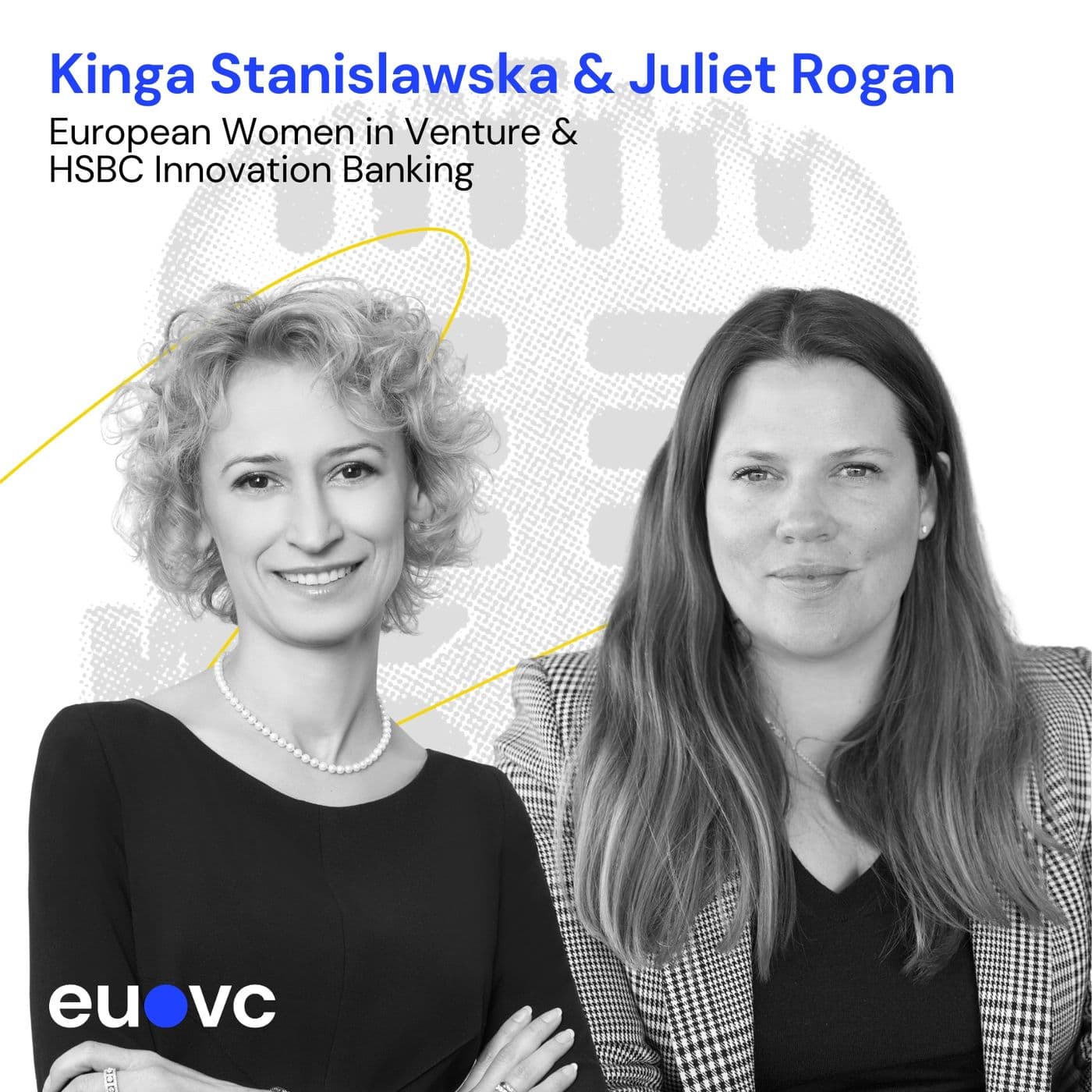
Podcast Episode Notes: EUVC #238 with Kinga Stanislawska and Juliet Rogan
Episode Overview In this episode of the European VC podcast, co-hosts Andreas Munk Holm and David Cruz e Silva discuss the state of diversity in European venture capital with guests Kinga Stanislawska from European Women in Venture and Juliet Rogan from HSBC Innovation Banking. The discussion centers around insights from the European Women in Venture Report, emphasizing the importance of female representation in venture capital.
Key Themes
- Diversity in Venture Capital
- The need for increased female presence in venture capital, which positively impacts economic growth, innovation, and societal change.
- Research and Data Insights
- Analysis of the 2023 European Women in Venture Report, highlighting key statistics on gender diversity and its correlation with financial performance.
- Emerging Managers and Female Founders
- The rise of female-led funds and the importance of supporting emerging managers and diverse founders in the venture ecosystem.
Chapter Breakdown
- Introduction to The Episode (00:00:00)
- Introduction of guests and overview of their backgrounds in promoting women in venture capital.
- Increasing Female Presence in Tech and Venture (00:02:07)
- Discussion of ongoing efforts to address the gender imbalance in venture capital.
- Launching the Report at TechBBQ (00:04:16)
- Overview of the report's launch event and its significance.
- The Foundation of The Survey (00:06:13)
- Explanation of the survey methodology and data sources used for research.
- Importance of Diversity in Funding (00:08:27)
- How diverse teams drive better financial performance and reduced risk.
- Performance of Mixed Teams (00:12:24)
- Statistical evidence showing the impact of gender diversity on fund performance metrics.
- Equity in Investments and Succession Planning (00:16:37)
- Challenges faced by women in achieving equity in venture capital partnerships.
- Affordability of General Partnerships for Women (00:18:38)
- Discussion on financial barriers for women seeking to enter general partnerships in VC.
- Importance of Diversity in Management Teams (00:20:40)
- Analysis of how diverse management teams contribute to effective decision-making.
- Progression and Measurement in Impact Investing (00:22:26)
- Insights on how measuring diversity can foster impactful investments.
- Rise of Female Emerging Managers in VC (00:28:26)
- Growth of women in emerging manager roles and their role in shaping the future of VC.
- Reflections on VC Accelerators & VC Lab (00:32:24)
- Overview of programs aimed at supporting women in venture capital.
- Broadening Access to Venture Capital for Women (00:34:28)
- Strategies for increasing female participation in venture capital.
- Investing in Diversity for Long-Term Success (00:38:27)
- The long-term benefits of investing in diverse teams.
- Personal Choice and Taxpayer Institutions in Europe (00:40:25)
- Discussion on the influence of public funding on diversity initiatives.
- Speed of Change and Female-Led Startups (00:42:32)
- The urgency for accelerating change in the venture capital landscape.
- Collaboration and Unity (00:44:36)
- Emphasizing the importance of collaboration among diverse stakeholders in fostering a supportive environment for women in venture.
Key Takeaways
- Statistics on Diversity and Performance
- Reports indicate that increasing female representation at decision-making levels correlates with improved financial performance (1.3 percentage point increase in IRR for every 10 percentage point increase in female presence).
- Barriers to Entry
- Women still face challenges in obtaining general partnership titles and accessing funding, highlighting the need for continued advocacy and support.
- Emerging Trends
- A noted rise in female emerging managers and a focus on sectors such as clean tech and life sciences where they are increasingly represented.
- Importance of Community
- Collaboration among women and allies is crucial for overcoming challenges and driving progress in the venture capital ecosystem.
- Long-Term Focus
- The discussion reinforces that the investment landscape requires a long-term commitment to diversity, as financial returns take time to materialize.
Conclusion The episode concludes with a call to action for listeners to actively support diversity in venture capital and to engage with the European Women in Venture Report to better understand the current landscape and ongoing challenges.
For more insights and to download the report, visit [EUVC](https://eu.vc).
Written by AI. May contain mistakes. Listen to the episode to check what was said.
Transcript
Automatic transcript. May contain errors.0:00Hi, everybody, and welcome to the European VC podcast. I am Andreas and I'm your host for today's roundtable on the core learnings from this year's European Women in Venture Report. Joining us today, we have with us Kinka Stanislavska from European Women in Venture and Juliet Rogan from HSBC Innovation Bank. Juliet works in the investor coverage team at HSBC Innovation Banking, providing support and access to the HSBC platform to investors and their portfolio companies. Prior to joining HSBC, Juliet spent 10 years at Barclays, where she co-founded the Female Founders Forum. So we're in the room with two longtime devotees to the mission of championing women in European venture.
0:44So now, let's cue the music.
0:50Tear down this wall. It's more than just an alliance. This is a union of values.
1:05The nature of a problem requires a European response. Europe is a story of new beginnings. Let's start acting. This show is not investment advice, and the hosts of this episode may be invested in the funds and companies featured. So, Kinga, we just said some very short words about the European Women in Venture Capital, but maybe you could add a little more to that. And by the way, it was great seeing you at the LPTP meetup for the launch of the report at TechWRQ. Brilliant. Thanks, Andreas. And hi, everyone. Indeed, European Women in VC is the largest network of senior female venture capital and growth investors from all over Europe and beyond.
1:56Our aim is to address the gender imbalance in venture, which we're going to talk about a little bit in just a second, and highlight the achievements of female-led and mixed teams in terms of the side of financial returns, but also the side of impact. Together, we're a community of about 1 ,000 investors, founders, limited partners, public, private institutions, stakeholders, women and men working in the tech space that are trying to magnify the role and influence of women in asset management, in venture, in startups, and in tech overall. And what we want to contribute to is basically the increase in female presence in venture, because we believe that then impacts economic growth, it fosters innovation and drives societal change.
2:50So the way we do this is with data. We are very data driven. We publish a big piece of proprietary analytical research every year, which we've now been doing for three years in a row. Our partners have been the IDC group, which is International Data Corporation, a preeminent data analytics company, who are, on the one hand, very experienced in surveys, in data gathering and research. On the other hand, they're a neutral party who can take the right approach to how to judge the state of the market and draw the conclusions. this year we had the pleasure of launching the 2020 free research report at tech barbecue in the morning on the main stage where i was very happy that a lot of the people around the community were able to be there in person it's an 8 000 people event so it's a great honor to be there and the way we did that was we had a keynote speech which followed by a panel of uh really very experienced people across venture investing.
4:03We had the new CEO of the European Investment Fund with us, Marjit Falkstedt. We had the Chief Investment Officer of EIFO, which is the Danish National Fund of Funds. And we had Thomas Christensen, a senior partner from LGT Capital. So very grateful to Marjit, to Eric and to Thomas for being there with us to launch this super important piece of work. And I know you were that too, Andreas. Yes, yes, yes. We never miss a tech barbecue, do we? So, Julia, could you tell us a bit more about why HSBC Innovation Banking are backing this report? Yeah, sure. Well, I mean, for HSBC Innovation Banking and the wider business, this is a really important area for us.
4:51We feel that technology and innovation are playing an increasingly important role in society as we know it, and that pace of change is just continuing to accelerate. So we're backing this report as part of our long-term commitment to creating a more inclusive and equitable innovation economy, as it really is the world around us. And we believe the measurement is really the first step towards driving that change. And this report is vital in terms of shining a light on how greater diversity can drive positive financial performance. Since the first report has been very obvious to anyone in the market, the huge gap that we have.
5:26But before we dive more into that, Kinga, could I maybe just ask you to tell us a bit about the method behind the numbers here, just to make sure that we're all aligned there and understand what the premise is of this. The way we approach this is in two ways. There is the survey, which has been this year quite extensive. The survey was led by IDC with a series of questions looking at the different vintages of every manager, the related performance, as well as the gender composition of the investment decision-making team. So that is one set of data that we have, and that was sent to around 600 venture and growth firms, where we received the report findings of over 105, I believe, who are headquartered in Europe.
6:26So they manage more funds, obviously, that we're talking about the fund manager here. To put that in perspective for the audience, IAF's main report has 500 respondents. So considering that, I think that we can conclude that it is a quite large survey in Europe. It's a very important one. And 100 respondents is definitely not something to think a little about. Yeah, I think I want to just add that the survey was not a sort of three, five minute click, yes, no, and simple questions. No, it was actually a very detailed survey looking at literally per vintage and for large investment funds and teams, this has not been an easy feat.
7:17So this took a while for the person responsible for the finance function, for the reporting function to do. The reason we had to do that is, of course, because the venture and the growth market today do not report so much as we would love to. so therefore this is an encouragement and I think a light moving forward towards more transparency more respondents and more knowledge about what's going on in venture and in grave which I think that the stakeholders the limited partners the ultra high net worth individuals family offices pension funds and everyone out there would just love to understand so much better there's a lot of nuances to this.
8:06So this is why, as I said, this is an invitation for more work into transparency across venture. The survey was coupled with publicly available data that you can actually buy from ready-made resources. This year, we used pitch book data to analyze the European venture and growth ecosystem in parallel. I ask you, Julia, from your position in the ecosystem, have you often thought that you needed this type of data for also the female founders firm and everything you're seeing? Would you shed a bit of light on how you've been thinking about the need for research in the space? I think what's really important about this is that it shows that the commercial returns are higher when there is more diversity in the funding landscape.
8:55And I think as these sorts of initiatives have, you know, grown over the last 10 years, initially, I think it was much more about, you know, like, let's be seen to be good, you know, let's be seen to be inclusive. Whereas, you know, as we're going into more of a contraction in the industry in terms of funding, I think it's really important that we can see the sort of hard data that shows and supports the fact that more diverse pockets of capital are going to lead to better growth and more sustainable returns. The society we live in means that the people are driven by that and as it should be in lots of ways.
9:33So I think, you know, this kind of report really shines a light on the importance of what we've been saying and what really makes sense, right? Like, it's not a surprise that, you know, representing 50 % of the economy has got financial reward to it. But, you know, it's so important that we recognize it and celebrate it because, you know, that's the way that we're going to move things forward. Maybe because I'm sure we have some in the audience that haven't read the report. Kenga, could you give us a couple of the statistics on the link between diversity and performance? Sure. First of all, everyone is invited to www.europeanwomendc.org.
10:19And please do download it. Have a look. It's got some beautiful statistics, numbers, pages and conclusions. So please go right ahead. Of course, put it in the show notes of this as well. So anyone listening and thinking, let me review it while I'm here, it's right there on EU.VC where you have the episode as well. Awesome. So I think, you know, the starting point really is to say how many women are making decisions across venture. Now, whilst people who are female and have a partner title equate to around 15-16 % of the VC partners, unfortunately, what we've learned, and that was more learning from last year, is that every partner title does not equate to each other.
11:08So we have a bit of a differentiation in understanding what a partner or a general partner even is. My assumption would be that someone who has a general partner title owns a part of the general partnership and is on pre-allocated carry and is taking responsibility for the strategy, the thesis and the budget. unfortunately there are still many women but I believe that it is not just women but in general in Europe there are still funds that give people general partner titles that are not real general partners so that that is one point that has come out from the research now every year there's a bit of a positive change which is that the number of women who are partners grows and the assets under management that are managed by them, where they have the firepower to invest in those top startups also is growing.
12:09It's growing at a small rate. It's not fast enough. This year, we found that women are managing around 9 % of the assets under management in Europe. Now, this means that the smaller funds that are new, the emerging managers, the nano funds, the solo GPs, there is more women presence in that area, in that space, whilst there are many, many fewer women representing the largest VC and growth funds in Europe at the real general partner level. So with that, we looked at the performance because we do believe that if we would like to see the assets being shifted into mixed teams, let's think, do these mixed teams truly drive better performance?
13:01And yes, they do. So for every 10 percentage point of increase in female presence at the decision-making level, there is a correlated 1.3 percentage point increase in the IRR of the fund. So if you think about a 10-year plus two fund, that's just absolutely spectacular. It's cumulative. Of course, this is not a pharmacist approach. This isn't a perfect measurement. Like I said, we do want more funds to report data. We want to increase our understanding. But I think for the first time in Europe, we were able to correlate increase in mixed team decision making and management to actual performance, which, you know, for me is just just wonderful.
13:53There is also a correlation between the fact that mixed teams simply are less risky. As we know, venture is a very risky asset class that takes a long time to bring forth its real returns. Now, during that time, there's a lot of volatility. And what a mixed team does better is it decreases that volatility of return. So we have a slide in the report which basically talks about the standard deviation of that. And mixed teams are around half of what male-only teams are because the IRR standard deviation for a mixed team is 23 % and for all males is 56%. So I do invite you to page 14 of our report.
14:46The basis of the lack of women VCs in senior positions, that we have an issue of a lack of trickle-down economics, so to say. You know, as GPs tend to also support other investors, either as LPs or with advice and so on. I'd love for you to speak a little bit on this. And of course, this is a topic that's close to our hearts. So I'd love to hear you talk a bit more about, you know, this importance of getting more women into the industry because it helps breed a stronger industry. And maybe, Julia, I can invite you to start there because you've been very dedicated to the whole space as well. Sure.
15:28I mean, I think one of the things that I think I've seen over the last 10 years is definitely a shift towards, you know, more women being present, which is great, right? Like 10 years ago, I used to get really annoyed when I saw a VC talking on stage because they usually looked and sounded the same. And they would say, well, the best way to get into a meeting with me or for me to invest in something is through my network. And it just seemed so small, the network that they had, right? Because they sort of invariably had gone to the same university, looked and sounded the same. and I think the trickle-down impact of having more a more diverse investment community means that that network is is is broader no matter which way you look at it I was at an event a couple of weeks ago where I was standing with one female GP and another bounded up to her and said I've got the best female founder you must meet her and I've just thought wow that's that's exactly what this is about this is about supporting one another in a way that I'm not saying that men can't invest in women-led businesses or diverse teams but I think you know the natural order of things is that women are more attuned to it and the importance of of it in a way that you know men have been supporting each other for many many years so I think you know the the cold hard numbers for Kinga and this report have have delivered for us it's just another great stride in the process of moving towards a more equitable investment landscape.
16:55Tell us a bit, Kinga, because you have this finding of having GPs that are not really GPs. And I think that was one of the big surprises in your first survey. Am I right in that? Yes. Yes. We were quite shocked with that. But what happened after we published last year's report is I had calls from a number of women in Europe who said, look, and we're talking now about substantial funds in developed countries in Western Europe, who said, look, I went through this myself. My partners did not treat me equally to them. And there has been a lot of discussion about the percentage ownerships of the general partnership and so on and so forth, even though on the website, I have the same title.
17:49There's been a lot of that. And I think this is coming up more and more now with the fact that a lot of the funds were created, say, 20 years ago, just to put a number there. And ahead of us lies the succession of many funds across the VC space. And it will be very interesting to see how that plays out, because there's obviously many approaches to succession. One is, what is the worth of a general partnership when you invite a new, more junior person and lift them up into that general partnership to become a shareholder? What is the value of that GP in monetary terms? Is it worth something? Is it not worth anything?
18:31I mean, let's remember that, you know, when these GPs were started, it was simply you, me and Julia putting together a couple of thousand euros. And here we go. We have a GP, right? So the value has been built. There is a brand value over many, many years. But what does that actually equate to? And how can a woman, it's often women, but there are also many men who want to rise up. How can they afford to buy into these general partnerships? So that is a question on the table. I think, you know, it'd be interesting to one day do an episode about that. I don't know if you've done that already. But I think we're definitely moving in that direction.
19:10So yeah, that was a big surprise. I just want to add something to what Julia just said. I think this idea of the trickle-down effect is just so important. As we're trying to ensure that the female-led and co-led startups that are truly driving change in certain spaces and sectors, that they get the right amount of capital to be able to do that. And there are plenty of overlooked sectors for many, many years. Just to give an extreme example is everything around female health, where only 4 % of R &D money has been invested in that space. And it requires then a lot of capital to bring these solutions to market.
19:53was I should think that there's 50 % of the global population that needs these products and solutions. So here there is an overlook of an amazing opportunity. We're just not doing that in a regular way yet, although that space is also growing. So I think what we want to see really is this trickle-down effect of the right type of mix of investors investing in a diverse group of managers and investing into a diverse group of founders who are truly bringing to life those products and solutions that are needed by everyone, not just by a small group of people. And I think I'd add to that, you know, to your point, Kinga, around the importance of diversity and management teams.
20:43You know, oftentimes we talk about female founders, female-led teams, and actually you don't get the same kind of impetus on men to find a female founder co-founder right like it's sort of you know men are quite happy to start their business and have their male co-founders and people are very happy to invest in those businesses but you know where women are kind of sort of said well we'll maybe find the male co-founder and I think that's fine because it's about diversity but I think maybe we should be talking about why why men find it so difficult to find you know a female co-founder in terms of that the diversity piece?
21:17Oh, absolutely. There was a story in the US how two women went fundraising and they couldn't really raise much. And then they invented a male co-founder and they did raise money. I have to look that up to give you more details on it, but it was a funny story. You ask both of you the thorny question of your perspective, whether it's blatant discrimination or it's unrecognized biases that are poorly treated by the individuals? Or is there any truth to the deal flow problem that anyone would typically say, well, I don't see enough women, so that's why I don't invest in women? I mean, the way that we've approached this from an HSBC innovation banking perspective in terms of the challenge that is how do you kind of get more founders, more investors and more kind of measurement of that is to look at the supply right to say okay well what how can we support women who are in tech businesses want to start their own business what are the things that we need to do there so we support things like the radio accelerator and a ton of like female founded and diverse founded support programs but then also on the investor side things like newton program who are really encouraging more diverse people with different backgrounds to get into kind of understanding what BC is and supporting them through that journey and progression within the firm.
22:41And then lastly, this measurement piece. And the measurement piece is so important, right? Because that's kind of where we're going to start seeing a change in the way that people are thinking. You know, to that point I made earlier around, this isn't a nice to have. This shows that there is a clear movement towards better returns if you have this kind of approach and when we talked about this before we we laughed because we shouldn't even have to show that it's a better improvement right we shouldn't have to show that like it should be fine that it's just the same if not you know but the fact that we have to to prove ourselves to say this is important is kind of the the status quo that we're in and I think you know as as things progress hopefully we'll move away from that the other thing to to note is as we move into this new world of kind of different kinds of investment we've got ai and climate tech is is attracting so much more capital and i was at another conference last week and i found it really telling actually that two of the panels back to back were about esg and climate and they were fully populated by women on both fronts three and three and um in a sense you know like well i don't know why that is or whether there's an incidence of more women in sort of more impact investment but certainly it's it's an interesting um point to to kind of consider as well yeah it i think it's like this african proverb if you want to go faster go alone but if you want to go further go together and i think you know on this point about women looking for male co-founders i think it's a bit about that they understand very well that there are complementary skills that everyone can bring to the table.
24:28And I think it's not just about gender, it's also about other types of diversity, where a good, thoughtful founder will often look to create a business for 20 years. And then it just makes sense to cover many of the potential challenges that will be faced with these different viewpoints. And that functions very, very well once that is set in place. But I do think that if people want to do things faster, then just by virtue of the way we are, we will immediately call our best friend to set something up, to start a new project. And that best friend is likely to be very much like us. Inga, where you said that in some big Eastern European funds, and I think also across Europe, we have GPs that are not really GPs and this whole transition question.
25:23And one of them had reached out as well, saying that it's been tough, get your fair share. I'd love to ask you, do you think, because this one thing is, how does a founder form his or her company in the beginning? and that's a very short-term decision or not short-term decision, but it's a decision made in an instant. It's not something that, and then it happens to another person, but it doesn't happen to the same person again and again and again. But in venture, in the established firms, they're here and they're here to stay and they've been around for ages. So when we continue to see this issue of not having diversity and reports of women experiencing a harder path to the near positions than men.
26:14Do you think that it's because we have a blatant discrimination in venture in Europe? Or is it we just don't have enough women or we have biases that are not treated that well? Well, I think often the world is in black and white. It kind of never is. So for sure, there are many funds. I don't want to name anybody by name here, but there are many funds that I know that brought in a female GP and have given her equal rights to all the difference from the share ownership to the carry and so on. There are funds like that in Europe. They're great. And many of the women are members of European Women in BC.
27:05They're very, very much supported by their male co-partners, co-GPs. Now, of course, there are also other stories. And I think what the world usually does tend to focus on is the stuff that is seems just more interesting and more controversial. Yes, there are stories of horrible discussions of, you know, that there was a question recently that Sifted posted, which was why so many women are leaving the venture space. So let's just remember that there is some truth and a big grain of truth to all these different things that are happening. Yes, there are reasons why senior women are leaving the venture space.
27:49So it is not all rosy and perfect. There are groups of people that are very supportive. There are also male allies. You are one, Andreas. There's actually, and David, and there's quite a few of you. There's a lot of LPs that are very supportive of this as well. So that also counts because, you know, there are LPs around Europe that will ask that question. They will say, okay, so you are a team of three or four. There is one woman, there's three men. So how come she doesn't have this and that? And that tends to encourage strongly the entire group to ensure that there is parity. so there is a lot of positive light onto this i think there can be much much more i think that lps can do much more in terms of digging into you know the real truth behind the gp uh the contributions the uh the shareholdings and the pre-allocated carry to really make sure that this is fair so there are lots of gps and lps doing that there are lots that are not there yet so you know we're on the road to progress and i'd love to pick pick up on that on the road to progress because i'd love i'd love for both of you to tell me a bit about what are the good trends and initiatives that you're seeing and that you'd love to see more of julia feel free to start well i actually i'm sort of just wondering there was when king was talking about you know women leaving bc firms and maybe this is a trend but just you know the establishment of emerging managers you know and and more of them and like from what i see that there's a more kind of female-led gps that are in the emerging manager space and i just wondered if there was kind of statistics to back that up or that's just something that we've been seeing absolutely there is definitely a lot coming up from well i would say bottom because i mean the smaller funds so you will have a more fair and equal representation in terms of the nano managers, the micro managers, the solo GPs.
30:01You see a lot more women doing things there. And what is interesting is that often it correlates also with the newest trends in the market, which is something you mentioned earlier, Julie, which was this entire clean tech, green economy. But also just to take that one step further, something that is science-driven, science-based and in the deep tech space. So there are many, many more women present in there. As an example, funds that do biotech and life sciences have a much higher representation of female general partners than basic digital funds. And that is truly awesome because you see that women who are often biology graduates can very well have a road into BC.
30:50and then work with those scientists that are bringing products to market, which they understand so well because they've been in that position before. They have done those STEM studies. That is truly awesome. And France is a great example of that. There are funds like that in Spain as well and even in Finland. So I'm seeing a lot more women being emerging managers, but also being deep tech, clean tech, focused investment managers. And I think that's a great way forward. I think, I guess, in this current climate, it's quite difficult, I imagine, for emerging managers to raise funds. And so it's really important that we shine a light on the positive impact of that because, you know, at a time where, you know, established funds are obviously raising, but I think emerging managers are struggling more to kind of close those deals in a way that they weren't, you know, in the last couple of years.
31:46it's really important for us to support, you know, diverse emerging managers, particularly in these amazing sectors that are so important to the way that we're, you know, driving the world. Absolutely. You know, there is a program called VC Lab run by Ade Oresi, who tries to ensure that as many women become VC managers as possible. and I think he's you know hovering close to the 50 % range of the new cohorts coming into his acceleration program to build a VC being truly mixed teams and a lot of female managers so I think that's a really awesome acceleration program if you are a female looking to go into the VC space at a senior level I would definitely look at one of those programs I think they're truly awesome and they're doing a great job.
32:37They're doing a lot of diverse work right across the globe. So the positive thing is also you meet people that are in a similar position, but come from completely different countries, backgrounds, cultures, geographies. Anyone who hasn't raised a fund before will get on a very, very quick learning curve by joining their program. There's a bunch that's not tailored to Europe. So keep that in mind. I think that everything is as absolute as Adeo makes it sound like. He has a very, very special style. He's also incredibly entertaining. So if nothing else, then you will be incredibly entertained with stuff that's actually making you smarter if you join BC Lab.
33:29So also a very warm recommendation from my side, because we have so many emerging managers listening, I also want to add the caveats that you need to think of it as an online accelerator, where you need to pick what you listen to and what you don't. I don't think that because you don't agree with him that you're wrong. He might make you feel like that. yeah i think you know if you're an emerging manager today uh the good news is that there are programs like this and there are other programs out there there are things you can watch there are things that you can buy uh for small amounts of money to listen to so what i want to say really is the market has made huge programs even the fact that we can now as small investors invest into some of the top VC funds.
34:22That also opens up a category of VC funds and a category of investors. So, you know, and a lot of the emerging managers, this happens to be women. It's all true. So that just aligns so well. And I just want to congratulate you and David on all the work you're doing, because it exactly just opens, broadens the entire base of both LPs, but also the GPs who can be out there top of mind, thanks to the work you're doing. On that note, I would say the woman wanting to break into venture or starting your firm at some point, definitely explore either going direct if you can into funds, but joining with others in a syndicate as an example, we've done a syndicate into one of the tier one funds here in Europe, heavily oversubscribed, but we've managed to get an allocation because we build a syndicate around women getting access to that fund and they want it to broaden their LP base.
Read the full transcript
35:25That is definitely a trajectory or a trend that we're seeing across Europe. So if there's women out there that want to get access to what is otherwise very, very difficult to get access to. I think that there's definitely an opportunity there. 200K, 500K might be very difficult to put together yourself, but if you go with 10 others, then it might be a little more doable. There's so much to learn from doing LP investments, and that's my view if you're an emerging manager. I'd love to point your direction to the tier ones that are looking to form these types of syndicates, because I think there's so much to learn from it.
36:07Same thing with backing amazing other emerging managers. You can build so much great community around it. So very warm recommendation there from my side. Well, absolutely. This is a community driven effort. If we're all supporting each other, we will just go much further. And I think it will truly benefit those mixed teams that are running those startups. So, you know, when I started out in venture, what was super important for me was to find female LPs. And in the end, I had three out of 30 LPs who were female. And it was very, very hard to encourage other women to move that forward. So I think if we can also bring those women who are wanting to test the water, who want to try to see what it's like in the venture space and to invest more as an LP.
37:02I think that this is an amazing platform to learn from and to try to do it in the first instance before deciding on your next career step. I have one question that I want to ask before we stop this episode. And that's that in the report, you find that D &I is a secondary element for investors when making their investment decision. And I thought to myself, is that surprising? Because when we invest in funds, David and I, it's not our driving element, right? So that's not why we invest in fund X, Y, or C. But it's definitely something that we care about and look at and consider. And it's definitely a big alarm if we're seeing anything that might signal that there's something off here.
37:48It's not something that would be our driving element. I'd love to ask you how you think about that. I get that, right? At the end of the day, you want to invest in the best businesses. But what I would counter with is, regardless of what the diversity makeup of a business is when you're investing in it, I think the onus on investors is to ensure that that there is thought to what that company's approach to DE &I is, you know, and how they plan to to grow their business through, you know, with DE &I as part of the, you know, their growth trajectory. Like, what are they going to do to increase diversity in the business?
38:33Because I think we've all seen and, you know, we've established that it makes commercial sense to have, you know, that diverse businesses will, you know, achieve more. I would recommend or hope that whoever the investor, that that would be part of the conversation when you're looking at investing in a company. I think that we're in the investment space and the investment space needs to be driven by, first of all, financial return. Because if it is not, then how can you raise another fund after? We're here for the long term and therefore we need to financially perform. But I think what is often overlooked is the data that we've just unraveled, which is that actually a mixed team does outperform.
39:19So we're just kind of not seeing that as we're looking at projects and we're not conscious enough to think about it. So I think we need to bring that to mind. much more. And remember that we are in there for the long term and that this is not a sprint. This is a marathon. And we cannot expect returns very quickly. We know that some of the best funds out there take 13, 14, 15 years to go from the start to finish to return the capital to the shareholders. Sometimes it's even 17 or 20 years. So let's bear that in mind and that in those circumstances and in that length of time, indeed, diversity outperforms.
40:04Now, I do think that there is a difference in approach between what should be a private LP and what should be a public one. The mission is just simply different. A private LP can be driven by his idea that, you know, The fund or the investment indeed needs to just deliver a financial return. Or he can be driven by the fact that, okay, I need an okay financial return, but I want to create a lot of impact, which is actually what is happening today, that as long as a family office sees that the return is stable, they prefer very much to be in that business with those managers that are also delivering very strong on the impact side.
40:51You know, there are family offices out there that prefer, I don't know, biotech solutions because they've gone through certain issues with the medical space, with life science from their own personal viewpoint. But there could be others that have brought to life big energy companies or big projects in the energy space and now want to move over to the green side of things. So it's very much a personal choice. But I do think that Europe is driven so much by taxpayer institutions. And there, it needs to line up with policy. Now, if we have policies coming from Brussels, coming from local governments, national governments, that want to address some of the biggest challenges out there, and we know that mixed teams do this better, then shouldn't we put more emphasis of ensuring that that taxpayer-led institution, that taxpayer money is actually given the same fair and equal access for those managers and that these mixed teams can actually build bigger funds and faster.
42:04So I do think there's a difference. I think that private investors need to do what it is that they feel they need to do. They should have their own thesis and be able to execute whatever they see and they believe in. But there is a difference when you relate to the fact that women are 50 % of taxpayers and Europe is so heavily, heavily reliant for its VC system, for its entire VC and growth, actually, community and ecosystem on taxpayer-led institutions. I think that's an important point to make as well. So now, before we close, I want to ask you, is there anything we didn't cover that you would love for us to just have a small conversation about?
42:51Yay, of course, you know. Yeah, I mean, I know that we could talk about this for hours, but I think, you know, the bottom line is this. We are all moving in the right direction. We are getting much more recognition for these topics. We are showing that not only are they impactful and challenging and tackling a lot of the challenges out there, but they are also performing so well. And this recognition is absolutely awesome. The thing that is, I guess, the most sort of challenging right now is the speed of change. And I think it is the speed of change that we need to hurry up because really we can do this.
43:35We can do this so much better. And in many cases, it's just a question of letting those female-led and co-led startups iterate, try to learn on the job by getting more money downstream into them. And the same goes often for emerging managers. All we need to do is allow them to execute their pieces, give them a chance to do that. And we need to do that much more quickly. So I would just encourage everyone to get motivated, get involved, see the opportunity out there in venture and growth, and obviously subscribe to EUVC. Thank you for closing the episode like that. Juliet, any final remarks from your side?
44:23No, I mean, I think we've covered most of the aspects and elements of the debate in the last 45 minutes. But the one thing that's resonated mostly with me, though, is what Kinga mentioned earlier in terms of the old proverb, you know, you can go faster alone, but further together. And I think that's just a really important point to remember with all this, you know, as the world, you know, as the pace of change accelerates and if we do things together and collaborate, then we'll be better placed overall. Yeah, just to add to that, Julia, the report itself that we launched this year was backed by 15 different partners.
45:04And it's a very varied space. There were funds from Venture and Growth. There were financial institutions like yourself. There were advisors. There were, you know, just different stakeholders of the entire ecosystem. There was the European Institute of Technology, so more of a government-led institution or taxpayer-led institution. So what I would like to say is that there is the private market, there's the public market that truly believes this is an important mission. And we can just see that in the people that are supporting this work. All right, everyone. If you enjoyed this episode of the European VC podcast, do drop us a review, follow the pod and subscribe at EUVC where we can go further together.
45:53And of course, also, you'll find the findings of this report on there as well. I'll try and pull out some of the parts that stuck out the most to me. And then we'll put a download link for you as well. Thank you, everyone.
46:11It's more than just an alliance. This is a union of values. United and determined we can serve as a model for other regions of the world. The nature of a problem requires a European response. Europe is a story of new beginnings. Let's start acting.
From the publisher
Juliet works in the investor coverage team at HSBC Innovation Banking – Providing support and access to the HSBC platform to investors and their portfolio companies.
Prior to joining HSBC, Juliet spend 10 years at Barclays where she co-founded the female founders forum.
Kinga is a co-Founder of the leading CEE (Poland based) VC fund - Experior VC with investments in data driven CEE startups with global ambitions. She is also an Investment Committee Member at EIC as well as the EIC Fund, the largest deep-tech fund in Europe and board member at fast growing companies. As one of Europe's first VC funds to be befounded by women, Kinga also co-initiated the European Women in VC Community which published an annual report on the state of diversity in European Venture - which we dive into today 👀
Chapters:
00:00:00 - Introduction to The Episode
00:02:07 - Increasing Female Presence in Tech and Venture
00:04:16 - Launching the Report at TechBBQ
00:06:13 - The Foundation Of The Survey
00:08:27 - The Importance of Diversity in Funding
00:12:24 - The Performance of Mixed Teams
00:14:53 - The Importance of Getting More Women into the Industry
00:16:37 - Equity in Investments and Succession Planning
00:18:38 - Affordability of General Partnerships for Women
00:20:40 - The Importance of Diversity in Management Teams
00:22:26 - Progression and Measurement in Impact Investing
00:26:15 - Equality and Support in Venture Capital
00:28:26 - The Rise of Female Emerging Managers in VC
00:32:24 - Reflections on VC Accelerators & VC Lab in Particular
00:34:28 - Broadening Access to Venture Capital for Women
00:38:27 - Investing in Diversity for Long-Term Success
00:40:25 - Personal Choice and Taxpayer Institutions in Europe
00:42:32 - The Speed of Change and Female-led Startups
00:44:36 - Collaboration and Unity


