
In short
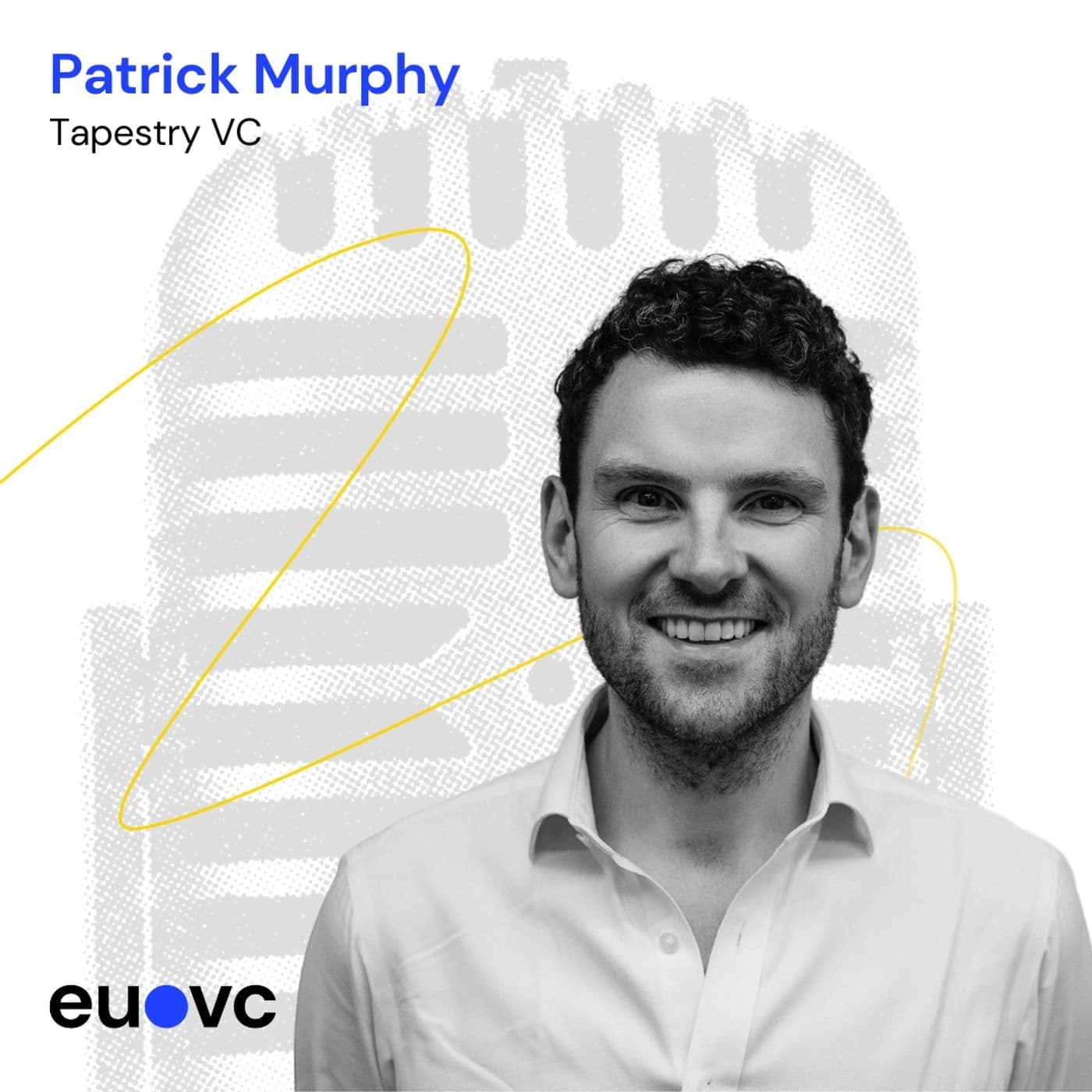
EUVC Podcast Episode #240: Patrick Murphy, Tapestry VC
Episode Overview In this episode, co-hosts Andreas Munk Holm and David Cruz e Silva interview Patrick Murphy, co-founder and managing partner at Tapestry VC, a $50 million seed stage venture fund. The discussion covers Murphy's journey into venture capital, the dynamics of investing in repeat founders, and insights into the European VC landscape.
Key Takeaways
Introduction to Tapestry VC
- Background: Tapestry VC focuses on backing technical and repeat founders across Europe and the US. It operates from a $100 million Fund II with a diverse portfolio including over 40 companies like Hopin, Pitch, Builder.ai, Nothing, and Manna.
- Global Reach: With teams spread across the UK and USA, Tapestry VC emphasizes a transatlantic investment strategy.
Patrick Murphy's Journey
- Early Interest: Murphy's interest in entrepreneurship began at a young age, building websites.
- Career Path: After studying mechanical engineering, he worked at Goldman Sachs, gaining insights into technology businesses. He later formed a venture fund for Universal Music Group before launching Tapestry VC.
Insights on Venture Capital
- Investment Philosophy:
- Emphasis on stewardship in early-stage investing.
- The importance of backing repeat founders due to their experience and ability to pivot.
- Corporate vs. Institutional VC: Murphy discusses the challenges of corporate VC and the necessity for clarity in strategic investments versus institutional methods.
The Role of Repeat Founders
- Advantages: Repeat founders typically raise capital faster, achieve higher valuations, and have lower failure rates. Murphy highlights that their experience leads to better decision-making.
- Data Insights: Repeat founders show a 30% lower failure rate and are 50% more likely to exit successfully compared to first-time founders.
Cultural Differences in Pitching
- US vs. European Pitching: Murphy analyzes how American founders often emphasize long-term visions, whereas European founders focus more on present capabilities and short-term goals.
The Importance of Distribution
- Murphy stresses that distribution and storytelling are crucial in building successful startups and attracting investment.
Key Learnings from Venture Capital
- People Matter: The importance of surrounding oneself with talented and trustworthy people.
- Stick to Your Portfolio Model: Adhering to a defined investment strategy builds credibility and trust.
- Distribution is Key: Effectively telling your story can significantly impact success.
Future of European VC
- Murphy predicts a "super cycle" for European startups, driven by a growing number of experienced founders and increased exit volumes. He emphasizes the need for a strong ecosystem to support this growth.
Conclusion Patrick Murphy's insights into venture capital and the importance of repeat founders highlight a shifting landscape in European VC. His experiences and investment philosophy provide valuable lessons for aspiring investors and entrepreneurs alike.
Call to Action For those interested in the European VC landscape, follow the podcast for more insights, and visit [eu.vc](https://eu.vc) to stay updated on the latest discussions in venture capital.
Written by AI. May contain mistakes. Listen to the episode to check what was said.
Transcript
Automatic transcript. May contain errors.0:08Hi, everybody, and welcome to the European VC podcast. backing technical and repeat founders across Europe and the US. Tapestry VC has its team spread out across the UK and the US and are investing out of fund two with a total of 100 million US dollars in AUM. Their portfolio includes over 40 companies and notable investments like Hopin, Pitch, Builder.ai, Nothing and Mana. If you're listening in and love our show, drop us a review, follow the pod and subscribe at eu.vc.
0:45Tear down this wall. It's more than just an ally. This is a union of values. United and determined we can serve as a model for other regions of the world. The nature of a problem requires a European response. Europe is a story of new beginnings. New beginnings. Let's start acting. This show is not investment advice, and the hosts of this episode may be invested in the funds and companies featured. Patrick, my man, so great to have you with us. Tell us your story, how you got into venture. Andreas, David, really nice to be here with you. Thanks for having me. I think it probably goes all the way back to being a very nerdy 12-year-old, I think, building computers before I even had a modem and installing a 33.5K board modem back then and teaching myself how to build websites and really getting into entrepreneurship that way by actually selling those websites to family and then friends and then complete strangers, which was also my first way into building businesses, which was fun.
2:04I then studied mechanical engineering in my native Ireland. I studied at a UCD in Dublin. And what was interesting was commercialization was always in the back of my mind. There was great research happening at the university. We were building robots and firing lasers and all kinds of things. But I always wondered, how does this turn into a business? You read about these great American innovators, things coming out of Harvard and Stanford. And I always wondered, why can't that happen here? and then much later I got the opportunity to work at Goldman Sachs I started in London moved to New York and got to know a lot more about the business side and how technology companies work on the inside and that was five great years great mentorship built a great network was able to move to the United States and be became become the transatlantic kind of life that I live now.
3:01And really seeing the path from idea to business from an innovation perspective stuck with me. And I ended up trying to pursue the venture path and started a venture capital fund for Universal Music Group, which is the world's largest record label. They were a client of mine at the time and had invested in things like Spotify and wanted to do more of that so I joined them and built a venture capital fund for them which was great fun and we invested in a bunch of interesting consumer and tech media companies along the way and then about five six years ago started out on my own with a partner building what's now Top Street VC and Patrick I I know because we did prep a tiny bit for this.
3:53I know that your pivotal moment is very much connected to how you just ended this segment of going on your own. So instead of asking about that, I'll just go straight into show it as a pivotal moment in your life and how it has shaped you today as an investor. Yeah, for sure. I think starting your own fund and going out on your own is a really big decision. I think you've had many great people on this podcast to describe their journeys. and I don't think anyone else's is the same in anything I've listened to. And for me, it was really seeing what can happen when you're not in control of your own destiny.
4:33And I had committed to a really, really great founder of a legal tech company that was in YC at the time. This is probably 15 or 16 probably, and committed to a bunch of money into their seed round, then had to reverse that commitment, which was really unfortunate. The founder completely understood he had an oversubscribed round, but that company then, a few years later, Series B from Sequoia, Unicorn later than that, and unfortunately, that was a big mess. and so I really would have the reversing of that investment really caused me to question like okay well maybe I should not let that happen again and so decided at that point to really kind of take it into my own hands and take the risk of starting something and I was lucky to find a great partner my current partner David to do that with would you say it was more of a circumstantial thing or kind of it's just part of how working with corporates in venture is and that you just thought it wouldn't it wouldn't be a good fit for you in the long run just interested to know if it's a if it's a one-off thing or it's something that you think any vc actually working within that context should should be comfortable with and aware of yeah i think corporate vc and just institutional, shall we say, VC are two very different beasts.
6:05And I actually ended up doing some consulting for other companies on this along the way. And firms who want to build a corporate VC program, they really have to understand that they can either make it look as much like an institutional investor as possible. So Google Ventures has done a great job of that since 2009, or you really need to make it look like a strategic investor. And there's plenty of great examples of that where they only focus on things that are going to help their core product. And then your metrics are different. Yeah. And at that point, your metrics are different. I think where these things fall down is if you try to be in between those two or if at some point it becomes a victim of its own success and somebody wants it changed or the CEO changes or the board changes or the macroeconomic changes.
7:03And I think in the 10 to 15 year time horizon you need for any venture investment to be successful, that's 40, 60 quarters, right? And that's a very long time in a corporation. and as a result it's just very difficult to do it right it's a somewhat Clayton Christensen like etc I'd love to ask you with everything you know today and I'm thinking back of conversations I have had with others and especially now with the with the you know what's that called conglomeration or whatever of VC that we're seeing and we're looking at you know we're seeing corporates and banks and so on acquiring VC firms you know and then that means that we have a lot of GPs thinking through?
7:50Do we actually want to merge with someone? Am I willing to give away what I have to become part of something bigger? That might give you the safety. It might also allow you to grow your firm to something bigger than you could yourself. Would you ever, with your experience, having been in corporate VC, would you ever do that trade? Or are you like, tapestry VC, 100 % mine, that's what we're going to do. Never going to ever let myself be captive to incorporate? I'm really privileged to work with five of us that are really talented at the firm. And as we've been growing that under our own steam, I think it's really, really great.
8:33I think on a more macro perspective, I agree with some of your posits there that there should be some consolidation. I think a lot of that consolidation should and will be talent-based. It'll be LP-based. I don't necessarily know if there's a corporate reason for that to happen. And I haven't seen a lot of that. There's always lots of interesting rumors like, well, Blackstone buy a multi-stage venture capital firm, right? And you're seeing lots of interesting innovation in getting consumer or retail, excuse me, investors into venture. Whether that's good or bad, I will leave that to someone else or the individual investor to opine on.
9:15But ultimately, venture capital is a boutique game at the early stage. And what we have found is that being really focused on what we do, which is investing in repeat founders and technical founders, and doing that around 30 companies per portfolio per fund, and being able to help those people in really, really, really strong ways that are suitable for where they are on their journey. that's what's true in venture and there's a lot of people who can build great businesses co-investing build great businesses later stage investing but i think there's a lot of people who were trying to be weren't trying to be stewards in the early stage market over the last few years but being a steward is really what's important and you've had some really great gps on here that have been that.
10:10And that's what we are trying to be. And I don't think there's a shortcut there. It requires focus. It requires decades to build something substantial. Now, let's go to our take a stance round. Take a start.
10:34All right, Patrick, let's get into this. and I'll ask you straight up to comment on this quote from Stefan Walter from Cavalry. Vertical consumer software is super exciting. Love Stefan and his partner, Ruben. They've been great co-investors with us at Cavalry. And I actually agree with him. So his controversial stance, vertical consumer software is super exciting, even this year. so i have a background in investing in a number of really interesting consumer technology companies over the last decade uh some of those have been you know successes for a small period of time and had you know reasonable exits like meerkat house party uh the founder there ben is a great innovator that was two three four iterations and now he's building again something new all the way to things like musically which became tiktok that i think most of us have on our phone whether we like it or not nowadays which you know universal when i was there was a very early partner of and having also lived and seen many great consumer like sas products whether that's hop in that we're an investor in or pitch.com that people use now instead of powerpoint and Google Slides.
11:54These are all part of the consumerification and the next generation of users. And I think that next generation of users is what people are missing, right? We've already been through a cycle where people move to Snapchat and Instagram instead of the Facebook blue app. And every Gen Z sees the world differently than their predecessors. And we're an investor in a company called Nothing that's trying to compete with Apple in smartphones by having just a much different approach to aesthetic, approach to the software user interface, approach to how the brand speaks to a new generation. And I think that's going to extrapolate not just in hardware but into software.
12:41And we're seeing new things like retro, like be real, smaller apps like stops, which is kind of an interesting camera app, massive things like threads, and even a reboot of Twitter or X or whatever it'll be called next week. Seeing some of this innovation, there's no world where we just stop. And I think consumer has been underappreciated. And as a result, we've been making a number of investments in that space in the last 12 months, one of which is a consumer, location-based consumer discovery app. with a huge social component that's currently in stealth. And another that we just made an investment into, a consumer fitness app, which a lot of people automatically turn their noses up at in this space.
13:33And we've had many of our later stage peers have a look at this company in particular that I can't deny it's yet. But they were like, oh, wow, this is a 99th percentile set of metrics. But it's not generative AI. So we'd love to talk in a few months. When you have incorporated gen AI. Yeah, when you have incorporated generative AI. And so I think just, yeah, there's always ups and downs and cycles. And so that company has like 10x its revenue in the last 12 months. And it's just really interesting to see what's being appreciated or not appreciated in consumer. and what's required to grow. It might rhyme with the past, but it's very much very different in every paradigm.
14:26And we're excited to back and work with and talk to companies that are doing that.
14:35So I'd love to just ask you before we go into our normal deep dive section to just expand a bit on hopping because that's a special beast And it's something that everyone in Europe, if not the world, have been talking about, right? And it's been kind of like the poster boy for what happened during COVID. And then the bust afters that happened in venture in general. So I'd love to ask you to just put the record straight in terms of how you think about it and how it matches in with your thesis as well, of course. For sure. Sure. So we had met Johnny in late 2019. He had built a really amazing software product all on his own, kind of software that made me tingle when I used it the first time, because you could use Zoom for one-to-one conversation, but there was nothing that helped you speak to thousands of people and definitely nothing that helps you interact with those people and make that a meaningful interaction.
15:39And we had looked at the world and said, okay, it might cost you five,$10 ,000 all in to go to a conference, buy a ticket, take a flight, spend some nights in a hotel, buy some food. And the alternative was don't go, right? Zero costs, but zero addition. And we looked at it as there must be some economic surplus if this can happen digitally. It just so happened that when the investment closed in, I think it was February 2020, the world then in March went into quite a different paradigm where that$5 ,000 option in my example didn't exist anymore. And so the only alternative was to do these things digitally.
16:23It was by far and away the best product. And as a result, grew really exponentially. At its peak, it had 100 million of ARR and I think was at least at that time the fastest company to reach that milestone. As an entrepreneur who scaled that software, scaled that team, hired almost 1 ,000 people in that period, did so globally, did so without an office, acquired, I think, five companies along the way. And at the start of that journey, I was 26 years old. I think is probably one of the top entrepreneurs in that generation. And it's so interesting because being someone who hosts virtual events twice a month or so, I'd say the problem is not solved at all in the world right now.
17:20We're doing ours on LinkedIn. It has its pros in terms of distribution, but definitely has its costs and downsides on anything from engagement to experience. So it is hugely frustrating for a creator being in that space. I think, Patrick, as I said in the guest opening where we introduced you, you're focused on repeat founders. If I remember this correctly, I think most of your investments are into actually repeat founders. And some of the many names that you've already mentioned, like Nothing, Pitch, Hopin, repeat founders, right and i'd love to ask you know of course expand on that but i have this kind of personal curiosity for some time which i've looked at a lot of data on repeat founders and and there's a there's quite some interesting stuff in terms of you know their ability to to raise follow-on rounds the valuations of the blah blah all of that i've never seen data on actual returns and i don't know if you have it because it takes a long time but i'd love to ask you to expand on on your thesis around repeat founders and do you have any data or any insights that you can share with us in the list is there for sure for sure so our focus is as you said repeat founders and tactical founders and the reason we focus on that is that there's just an incredible depth of experience that when you are on your second or third iteration of something you are able to just move faster and make better quality mistakes and make them quicker.
18:56And when we say second-time founders, we don't necessarily just mean somebody who has sold their company for a billion dollars, although that is some of them. It's really people who've failed valiantly even, right? Because that's incredibly valuable and expensive experience. And we value that very highly. If you take you know some of the companies you mentioned right nothing they're shipping a mobile phone they're shipping a pair of headphones that i'm speaking to you right now on right that is so cool because when we started this and if people can't people can't not everyone is going to be watching this right just to describe them when i saw patrick join this i was like i'm gonna ask him what those those headphones are because they look really cool very sexy he's holding up Patrick is now holding up the box.
19:50This box has now turned into an unboxing video of the headsets. Tell us, Patrick, what are they called? Where can people get them? You can go to nothing.tech and buy them. They are better spec than the Apple AirPods Pro. It's probably 30%, 40 % cheaper. And they'll ship it to you right now. And will they integrate well with my non-Apple iPhone device? They integrate perfectly with all devices and actually will connect to two devices at once. So you can seamlessly switch. You just got a new customer for one of your founders. Thank you. Very happy to do that. And whenever we have a meeting with someone in London, we actually typically walk them past the store because it's in.
20:37Wait a second. There's one of our portfolio companies. I didn't know. Alex is great at that. it's part of his routine um but basically with carl who started that company with his co-founding team he had previously built a mobile phone company it was called one plus it still exists and was owned is owned by a much larger oem but he built that there you go so andreas you're you're you're a key upgrade candidate to the nothing phone too but carl had basically already built a mobile phone company. And so when he came and said, hey, I want to build another one, that was relatively straightforward for us to underwrite from the perspective of, can this founder achieve the things that he's talking about?
21:24One of our North Stars is, is it physically possible? Whereas if Andreas, you and I teamed up and said, we want to start a mobile phone, and we walked in to see someone at Sequoia, I'm sure they'd show us the door right and so we look across our portfolio people like johnny who we talked about at hop and he had started two companies before this they didn't go very far but he learned a lot about how to build and ship a product christian from pitch him and his co-founding team had previously built wonderlist which sold to microsoft um you know we're in a company called mana in ireland that is literally pioneering drone delivery right now you can get a burger delivered in Dublin.
22:09And one is delivered every three minutes, I think now. And the founder there, he had previously built a$200 million revenue company. I think it was sold for that much, a decade ago, and doesn't need to work, but was really interested in this problem. And Bobby decided, I want to try and get a burger delivered in my garden. And so we partnered with him to make that real. Can I ask you, Patrick, something about firm building here? And also, you know, it actually goes all the way back to thesis building as well, because, you know, I think it's pretty clear to anyone that, of course, a repeat founder is probably going to be pretty good.
22:54Am I going to bet on the guy who never ran the Olympics before or the guy who won it last time or placed five or, you know, you know, it makes sense. but most angels and to be fair, many VCs do not have the network that is necessary to be able to get into those rounds. Meaning we all know Christian and we all knew that he was going to do something pretty cool after he did Wunderlist. But if I reached out to Christian, he'd be like, what the fuck, dude, who are you? Or he wouldn't even reply because he got another 50 angels asking him, you know, what are you going to be up to, right? So I'd love to hear your story about how were you positioned as your team to be able to follow this strategy?
23:37And what have you done as a firm to build out your strength across Europe to continue, you know, flourishing in this strategy? So ultimately, it's about focus, right? And so we invest very globally. I think 80 % of our, 70 % of our companies are already operating in multiple countries from day one. And when we think about the firm building aspect that you asked about, Andreas, it's really focusing on those repeat founders and giving something to them that's useful, which is advice and introductions and something perpendicular to what they already have. right and we're very often part of a syndicate where we're co-investors with a lot of other people we try to bring in other founders that they might not know into rounds right at the start and then you know my background being an advisor on you know billions of dollars of m &a and financing for over 10 years before this on my partner's network you know building one of the largest tech conferences across Europe.
24:48We just know a lot of people. We have a longitudinal experience on when things will go right and how things will go wrong. And being able to share that in a very adult way without trying to sort of make somebody feel nice all the time, I think has really been a differentiator. I think you speak to some of our portfolio, they'll tell you oh yeah they paint it like it is right we've had ups and downs with many of our founders but i'm sure they would tell you over the span of time we told them the thing that ended up happening whether they took our advice or not different story but we try and paint it like it is and be quite realistic with people which ultimately i think was actually kind of gone in the market for the last few years and was extremely fashionable but over a 10 to 20 year time horizon doesn't build meaningful value patrick could i ask you to comment on something i saw you wrote which is a super cycle is coming especially in europe for the first time how that connects to to this topic of repeat founders because i find that super interesting so i think what's interesting is people saying, oh, well, it's quite obvious that a repeat founder might be something that becomes more successful, right?
26:10And you'd also asked about some of the data, David. Yeah. And so if you look at how much faster they move, they'll typically raise almost 2x as much capital in more than 2x as much capital in just under 2x the time from founding the company, they'll do that at not too different a dilution. I think your audience knows enough about it to know the difference between dilution and valuation. I think they're with you. I think they know. That leads to, in the data, when you review it, oh, they raise a much higher valuations. And as a result, some of our seed deals are 500K, some of our seed deals are 8 million.
26:58And so, but if you look at the dilution, it's actually only about one to two percentage points less dilution for repeat founder than a first-time founder. And because of the ability to move faster, it's very difficult to pull apart the outcomes because of the survivorship bias. But because they move faster and can raise more capital, they tend to have better results. results. And if you look at the longitudinal data, they have a 30 % lower failure rate, and they're 50 % more likely to have an exit than a first-time founder. And so it's really quite interesting. And when you think about the super cycle, I live between California and Europe.
27:51and when you are in California, there's 40 years of people investing, 50 years of people investing in venture, people building companies, people that have war stories from Larry Allison shouting at them, Bill Gates shouting at them, Marc Andreessen shouting at them when they were company founders, right? That's not yet been the case in Europe until now, right? You have people who worked at Adyen, worked at Skype, worked at Hopin, worked at all these great companies that have US outposts, right? And the exit volume has also been growing faster in Europe. It's up about 50 % in the past five years over the preceding five years versus about 30 % in the US.
28:40And as a result, we really think there's a super cycle of experience, both generally, because over the last decade globally starting a startup has become something that's much more acceptable to people's moms when they decide they want to take a job that has no boss and has led to a lot more of this expensive experience that we call it in starting something new and you have this very unique slice of a generation that has had great success very early in their lives in their their 20s and their 30s and their 40s. And they're not going to just take a job somewhere for the next 40, 30, 20 years. They're going to start something new, start something else.
29:29And we exist to work with those people and really help them succeed at an even faster rate. And can I ask you, because you're saying serial founders, does this extend to the first five, 10 hires? and how do you think about the senior leadership team and the very early believers of companies into this framework? So it very often does. It feeds into the ability to hire at a high velocity of great talent. And so we have companies where there's seven co-founders because they've all worked together, obviously with varying levels of equity. That's happened a number of times. We have companies where the first 20 to 30 employees have been people they've worked with in the past.
30:22We have a number of those in the portfolio. And that just leads these people to not have to establish a new culture, not have to establish new norms, not have to go through the rigmarole of the hiring. But there's some downsides to it, right? if it's the wrong cultures, if they're all thinking in the one way. But generally, it allows them to move much faster and have a lot of trust with each other. And so we're seeing a lot of companies build this way and be very successful. Patrick, when you said that you have 500K tickets and 8 million tickets at these early stages, Am I right to infer that you see a bigger dispersion than a typical early stage focused fund in terms of the ticket sizes that you're doing within your whole portfolio?
31:18Or is that a wrong kind of conclusion to make? Yeah, so we are very pro syndicates. we really think having more people at the table for a founder having a long laundry list of other founders that are going to help them in some way that are thinking about them in passing every now and again when they're having coffee with somebody new all of that is incredibly valuable and that feeds into how we invest we try to make sure we have you know substantial co-investors etc we keep our check sizes anywhere in between half a million to one and a half million USD. And we look at our exposures much more as the inverse of the check size.
32:03So how much of our fund is exposed to a winner? And so if we can have, you know, two to 5 % of our fund in a winning company, and at 20 X's, that's the fund returned, right? And ultimately, the whole 20 % ownership came from the outputs of this in the kind of typical 90s, 2000s fund size. But we look at it as how does this have an impact on us? And if this becomes a billion-dollar-plus company, is that meaningful for us? And do we own enough of it in order to spend time? So as a result, we own 5 % to 10 % of these companies. But as a company that can have an impact on us and our outcomes, that's enough as we scale the whole scale.
32:54I love that. I love the simplicity of it and the logic of it. I love it. I have one final question before taking us on with the next segment, which is I don't have the network to invest into these companies that you're mentioning. I just don't, right? I fit into that Andreas' example of, you know, I know who they are. I don't know if they'll answer my message, email, or phone call. So for any listener listening in, who's an investor, when you say we're proponents of syndicating, their ears might start tingling in the sense of, I'd love to be a part of that. So what do you, Patrick, and TapestryVC look for when you're setting up or designing and thinking of these syndicates for a specific deal?
33:37I think much like how we think about ourselves and the founder, which is, can we add some perpendicular value to them or a perspective that's different? We look for that in co-investors, right? And so very often, we might be the European fund to an American company that's helping them think about a global expansion. We can also be the inverse, right? And so we look at, can a general partner at another fund's operating experience really help push this company forward? Can their value add around hiring, market expansion also bring a lot of value? And ultimately, what we solve for in helping companies think through this is often the longevity of the people involved.
34:30and that biases us very often to the people that are also the committed angels the committed super angels the boutique funds where the people that are you're working with you can expect them to be there in five or ten years time the experienced founders have often seen what it's like to be orphaned by a large shareholder to have someone not pay attention and that's a real negative in the company building experience. And when they go about it again, they solve for that. And we try and help them shortcut that. Now it's time for our shout out segment.
Read the full transcript
35:19Patrick, we'd love to ask you to give a shout out to a co-investor, Angel or LP for being awesome. And of course, do share the story behind that awesomeness. For sure. I think the one that springs to mind would be Molten Ventures. Jonathan Sebelia and Nikki there, who have been great partners to us. They're based in London. They look all across Europe. I'm sure they're an LP in a number of the people you've had here on the show. And they were a formative LP for us and have been great partners. And also been really great co-investors. and so delivered on their view of, hey, we want to be able to see the market.
36:00We want to be able to work with some of your companies. And they ended up leading a series A for one of our companies, Mana Drone Delivery, that I mentioned earlier. And I think have been a really great ecosystem participant and somebody who delivers on what they say they're going to do.
36:23part of the success with the co-investing LP is not just the LP's posture but also the VC being able to actually utilize the LP and and give them the access points that they need and information that they need I'd love to ask you Patrick what have you found being the key to unlocking that potential in Molten? I think like any human relationship, it's about trust. And so being able to have some durable dialogue where it's not just sending somebody something and selling it to them and really being able to help them understand investments. I mean, we've talked about a number of other of our portfolio company opportunities with them.
37:07some of them they've tried to do and another firm has won some of them they've actively passed on like any relationship it's about being able to be good and transparent partners and i think in a world where a lot of people were also maybe trying to raise uh various spvs and take economics and things like that in this past cycle and a lot of lps wanted the co-investment as part of their kind of view on the market, but maybe weren't prepared for the parametric outcomes that ends up in venture, that maybe some people would be not so happy. But I think having somebody who's a tenured venture investor, I think probably 30 years of tenure, I think really helps because they know what they're doing and everybody has a good and durable relationship.
38:05Patrick, I want to go and you've already picked your brain on a million different learnings in your life, but I want to ask you about your top three learnings. Ultimately, the number one that's the widest is really the fact that life is about picking people. And I think it's very easy to say that venture capital and seed venture capital in particular is about picking people. But I also think whether it's founders, whether it's partners, or whether it's friends, I think integrity is what's really, really most important on a long journey, especially when that journey entails very uncertain territory, very uncertain outcomes.
38:45And much like before you would get married, you would really think about what does the next 100 years look like. I think the same should be the case for friends. The same should be the case for founders. The same should be the case for people you work with. I think the other thing, second thing that springs to mind is a bit more work-related, which is stick to your portfolio model. I think 10 years into being a venture investor, having always been the one putting together the portfolio model and the strategy, I've really seen what happens when it physically works. And I think it's one thing to say, oh here's my monte carlo simulation of if i have a decacorn in my portfolio it's something else to have put actual money to work and decided on that fought for that and then seen it work and i think being able to then go back to your stakeholders and say here's what i said i would do and here's what happened and it worked that brings a lot of again durability is a word i really like and that breeds trust.
39:57And I think there's a lot of people in this last cycle that did something that was cool as an exception, made a lot of exceptions. Maybe they changed strategy entirely. You know, we're seeing a lot of jokes about crypto funds that are now AI funds and things like that. I think sticking to your knitting is important. It can be hard and venture is a game of exceptions. But I think you should pick your exceptions. I think the final one that when you say kind of biggest learning from the last 10 years is probably the most recent one is distribution is everything. And I think this is really important, being able to tell your story, market your story.
40:46And my background was to be quite modest, be in the background. and I was once even told I'm far too modest to be in venture capital, which I didn't understand even years later. But I think that's maybe the hard thing about being a European immigrant in the United States sometimes. But here I am. And I think there's a whole great generation, you guys included here with your great podcast, folks like Harry Stevings and other people who've built great businesses on the back of media and distribution. And I think it's only one aspect, but if you can have that distribution, I think you can do great things.
41:30Before we go to the quickfire round, and I think that this is coming to be one of our longer episodes, but I think that our audience will experience it as one of the shorter. I want to ask you about that point about being told too modest to succeed. And then, as I also expected, that was said by an American. Because the difference between what we have in Europe and the U.S., both in terms of storytelling, but thus also on the other side, expectations. And we have many Europeans that are looking to the U.S. to raise their capital as well. So I'd be curious to ask you, as a European guy raising LP money in the US, what are your experiences?
42:13What are your key things for Europeans thinking about crossing the pond to think about? Well, very glad that you're putting up with a loquacious Irishman for the length of the episode. It's a great question, Andreas. And it's actually something I talk about a lot with our founders and people that we meet and talk to. Because obviously, it's a great privilege to have this job. And I tell people a lot of the time that I waste 99 % of my time because you're only investing in one in 100 or less of the meetings that you do. when i see europeans pitch in general and when you see people from the united states or who grew up there pitch in general i often say the european will very happily stand at today tell you about what they did today tell you about what their product is going to do tomorrow and how they're going to do it and then if you ask them will politely tell you about what the plans are for next week or next year an american will stand at next year tell you about what 2030 is going to look like and how great and easy the path to that is going to be and then maybe if you're lucky they will explain where it is today uh and how and i think the basic principle of anchoring is really what they're doing it's subconscious but it really leads to in the business of imagination which is what we do in venture is we imagine a future and we imagine a journey you really do need to paint the picture of this 100x potential and go from there i think the one time my framework has broken down was when i used to do a lot more or meet a lot more companies in los angeles where the very base case there is they're pitching you a movie.
44:17And I think when somebody who's used to pitching movies decides that they want to also use technology, you really have to dive into the technology side twice as much. That's interesting. But I think just to translate this for our European VC audience that are thinking about racing in the US, and just putting it from the perspective of an LP that's both being or an angel investing as an LP that's being pitched both US funds and European funds. I would 100 % concur that what Patrick says here, even for you VCs listening in that know that, you know, you know all the things about pitching and you're being pitched every day.
44:58We're seeing the exact same thing play out. US investors are incredibly good pitchers and they're incredibly good pitch deck assemblers versus the European counterparts. And I think that, you know, at least for me, thinking of going to the U.S., doing anything, I really think, OK, I need to learn some of the U.S. skill before I go in there. Because otherwise I'm going to be like, they're going to spend their first time getting anchored to where you are as a European person. Right. Because otherwise they're going to be like, what's up with this guy? He hasn't done anything. What are his plans at?
45:38But so I'm just really trying to say everything you said here, Patrick, goes for the VC side as well, even though you would think that it wouldn't because, of course, a VC would know how to tell their story. Any European investor with limited experience to the US ecosystem, I'd almost say try and do a couple of outreaches to get pitches from US either founders, but even VCs. try and get some emerging managers in the US to pitch you to try and see how they do it, because the majority of them are doing it in a quite radically different way from a European investor. And now, the quickfire.
46:29And on that note, it's time for the quickfire round, Patrick, where we'll ask you three quick answer questions. What advice would you give your 10-year younger self? I would come back to one of the things I learned in the last 10 years, and I would say picking people. Make sure you're thinking about picking the people. I think where things have gone really great in my life and career, it's kind of a truism, but I think it was because there was great people involved. And at the time, I was very lucky and have been and continue to be very lucky to work with really great people. But I didn't necessarily have it in my mental model that it was the people rather than the circumstance that was making that.
47:11And I have noticed that when there's been a negative outcome in business or in life, it was very often the clash or the personalities and the clash between those that ended up causing that rather than any fundamental analysis that was wrong. And so I think prioritizing being around amazing, ambitious people with high integrity is probably the best advice I would give any person. What are your top tips for emerging VCs raising capital across Europe? I think the main thing, venture capital funds, it can be difficult to differentiate. And so I think really being able to articulate the reason that you exist and really understand why you win, I think is important.
47:59I think there's also a big difference generally between the typical origin story of an EU firm, which often has private equity or some other kind of roots or talent involved, versus in the US where there is very often a company builder or a successful entrepreneur involved. And I think there's also a little bit of a lack of purely technically focused, like we are venture investors maybe across Europe, given some of that differential in the background. And so as VC funding becomes much more democratized, much more institutionalized, much more globalized for the best founders, we, like you kind of said at the start, Andreas, we expect a lot more consolidation.
48:45and we expect a lot more larger funds to come and invest globally like we do. And as someone who's probably one of the few globally focused but boutique seed funds, we really think being able to talk about that is useful. And so I would say to any other VC to make sure that you're articulating why you're going to win. What's the most counterintuitive thing you've learned since you've been in venture? I think that's a difficult one. I would probably give you a compound answer and say that price doesn't matter. And I think check size does, which maybe is a little circular. But basically, there's no point having a small part of something that's really incredible.
49:33You really should try and have as much of it as possible. And luck has got a lot to do with this. And so when you put all three of those together, it does form a kind of logic in that if something's really excellent, you should try and have as much of it as possible. And if it's plus or minus 10 or 20 percent on the price versus some rules that you might have, that maybe isn't a good reason not to do it.
50:04all right everyone if you enjoyed this episode of the european vc podcast do drop us a review follow the pod and subscribe at eu.vc i'm david joined by my co-host andreas interviewing our guest patrick murphy from tapestry vc thank you so much for tuning in today and we can't wait to see you all out there thank you very much guys
50:30Tear down this wall. It's more than just an alliance. This is a union of values. United and determined, we can serve as a model for other regions of the world. The nature of a problem requires a European response. Europe is a story of new beginnings. New beginnings. Let's start acting.
From the publisher
Tapestry VC are investing out of Fund II with a total 100m$ AUM and an established portfolio of over 40 companies and notable investments including Hopin, Pitch, Builder.ai, Nothing and Manna.
Chapters:
00:00:00 - Introduction of Patrick Murphy and Tapestry VC
00:02:40 - From Goldman Sachs to Venture Capital
00:04:51 - Reversing Investment and Taking Risks
00:07:15 - The Challenges of Merging with a Corporate VC
00:09:03 - The Importance of Stewardship in Early Stage Venture Capital
00:11:21 - Consumer Innovation and Next Generation Users
00:13:50 - The Rise of Gen AI in Revenue Growth
00:16:04 - Scaling Software and Hiring Globally
00:18:09 - The Benefits of Repeat Founders
00:19:53 - Unboxing the new headsets and their features
00:21:10 - Investing in Repeat Founders
00:23:04 - Building a Strong Network and Fostering Global Relationships
00:25:18 - The Reality of Repeat Founders and Dilution
00:27:18 - The Advantage of Experienced Founders
00:29:25 - Building with Serial Founders and High Velocity Talent
00:31:35 - The Value of Co-Investors and Check Sizes
00:33:32 - Adding Value through Syndicates
00:35:54 - Successful Co-investing and Building Trust
00:38:10 - Life is About Picking People
00:40:24 - The Importance of Distribution and Telling Your Story
00:42:36 - Cultural Differences in Pitching
00:44:54 - Pitching Skills in US vs European Investors
00:47:11 - Prioritizing Amazing and Ambitious People
00:49:38 - The Importance of Luck in Success


