
In short
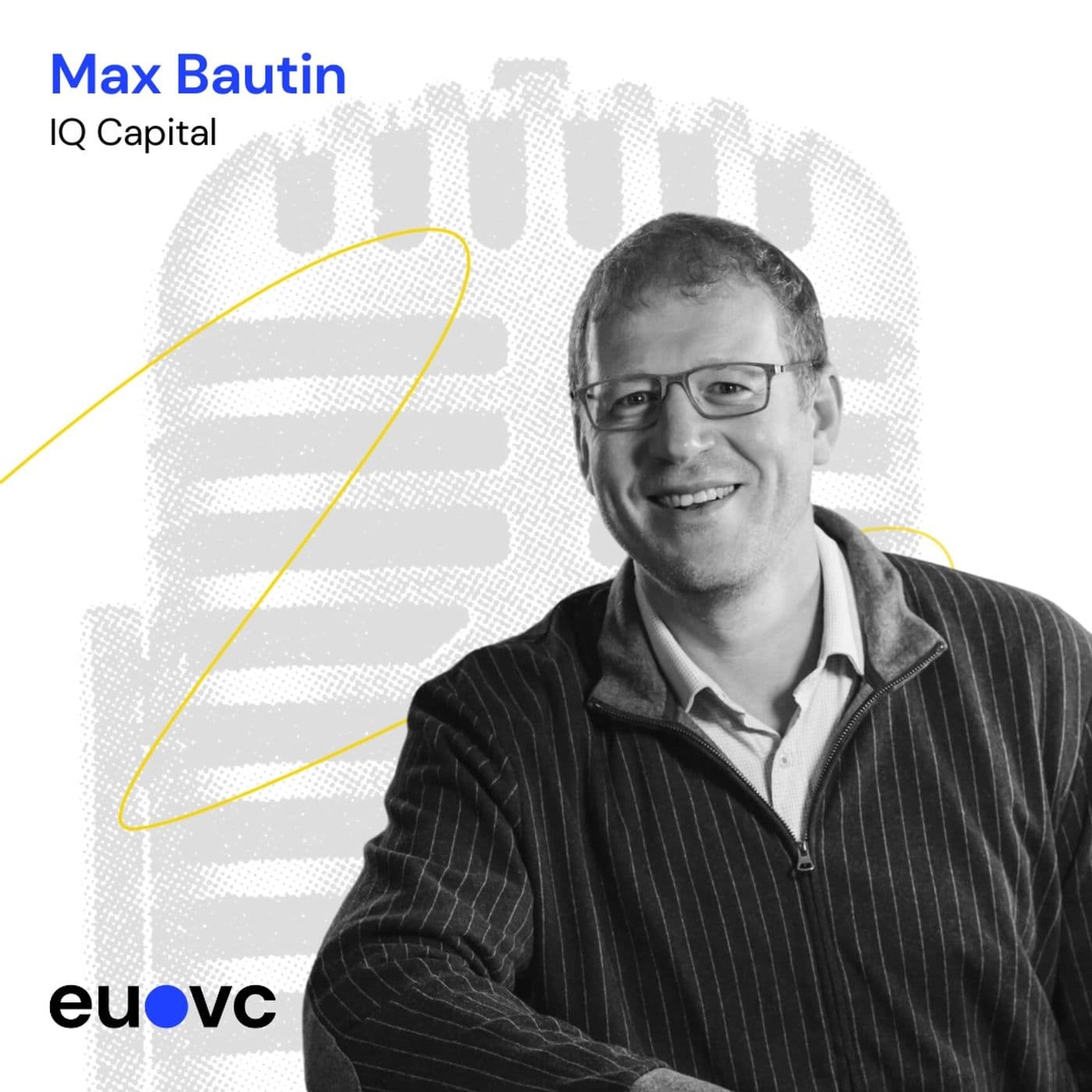
EUVC Episode Notes - Episode #245: Max Bautin of IQ Capital
Podcast Overview Title: EUVC Description: EUVC is a podcast focusing on European Venture Capital, co-hosted by Andreas Munk Holm and David Cruz e Silva. The podcast features prominent figures from the European VC industry, offering fresh insights into the investment landscape in Europe.
---
Episode Details Episode Title: EUVC #245: Max Bautin of IQ Capital on Investing in DeepTech, the Cambridge Mafia and the Cambridge Ecosystem Episode Description: In this episode, Max Bautin, Founding GP at IQ Capital, discusses investing in deep tech, the influential "Cambridge Mafia," and the broader Cambridge ecosystem.
Key Themes and Discussions
- Introduction to Max Bautin
- Founding GP at IQ Capital, a €700 million venture firm focusing on European deep tech startups.
- Overview of IQ Capital's funds, including a €185 million Fund IV and a €150 million Growth Opportunities fund.
- Max's Journey into Venture Capital
- Transitioned from private equity in telecom to venture capital after an MBA at Cambridge.
- Initial experiences involved leading seed-stage investments and co-investing with angel investors.
- The Cambridge Mafia
- Discussion on the influential figures within the Cambridge ecosystem, often referred to as the "Cambridge Mafia."
- Notable members include Krishna from Crane, Chris Wade, and many others connected to ARM and the Cambridge Angels.
- The Cambridge Ecosystem's Success
- Factors contributing to Cambridge's status as a tech hub include:
- Strong academic institutions fostering innovation.
- Supportive policies for IP ownership.
- Successful alumni contributing to the ecosystem as entrepreneurs and investors.
- Avoiding Negative Value from VCs
- Max discusses the notion that many VCs may add less value than they perceive.
- Importance of being a supportive sounding board for entrepreneurs and recognizing when to step back.
- Deep Tech vs Traditional Venture Capital
- Key differences highlighted:
- Deep tech requires a more disciplined approach due to longer timeframes for development and market validation.
- Necessity for a hard technology base that leads to significant innovation.
- Challenges such as slower iteration cycles and the need for patience are emphasized.
- Investment Strategy at IQ Capital
- IQ Capital focuses on a blend of seed and early-stage investments across diverse deep tech verticals.
- Emphasis on understanding market opportunities and the importance of feedback from customers.
- Defining Deep Tech
- Max's definition includes scientific or engineering innovations that are defensible and address substantial market needs.
- Companies must demonstrate that they cannot be easily replicated.
- Navigating European Ecosystems
- Max elaborates on the approach to expanding investments beyond Cambridge to other European tech hubs.
- The necessity of establishing trust and connections within new ecosystems.
- Future of Deep Tech Investment
- Discussion on the maturation of the deep tech sector and the potential for significant market opportunities.
- Consideration of fund duration and the balance of risk and liquidity for LPs.
---
Quickfire Round
- Advice to Younger Self: Be more confident and trust your convictions.
- Tips for Emerging VCs: Align with private investors who can contribute more than just capital.
- Counterintuitive Learning: More help to companies doesn’t always correlate with better outcomes; knowing when to step back is crucial.
---
Key Takeaways
- The Cambridge ecosystem exemplifies successful tech commercialization through strong academic foundations, supportive policies, and a culture of reinvestment.
- Deep tech investments require patience, a technology-centric focus, and a strong understanding of market dynamics.
- Building trust and connections across various European tech hubs is essential for successful investment strategies.
---
Closing Thoughts Max Bautin's insights shed light on the evolving landscape of venture capital in Europe, particularly in the deep tech sector, emphasizing the importance of patience, understanding, and community in fostering innovation and entrepreneurial success.
For further insights into European Venture Capital, follow EUVC at [eu.vc](http://eu.vc).
Written by AI. May contain mistakes. Listen to the episode to check what was said.
Transcript
Automatic transcript. May contain errors.0:00Hi, everybody, and welcome to the European VC podcast. I am alone here today because David is stuck in a bunch of construction work right next to his apartment, so he couldn't join us for this one. But today we have with us Max Bottin. He is the founding GP at IQ Capital, a 700 million euro seat and early stage venture firm in London to back European deep tech startups. IQ Capital is investing out of a 185 million euro fund for and also has a 150 million euro growth opportunities fund. IQ has an established portfolio of over 60 companies and notable investments include Thought Machine, Paragraph and Niobolt.
0:45If you're listening in and love our show, do drop us a view, follow the pod and subscribe at EUVC.
0:58It's more than just an alliance. This is a union of values. United and determined, we can serve as a model for other regions of the world. The nature of a problem requires a European response. Europe is a story of new beginnings. Let's start acting. This show is not investment advice and the hosts of this episode may be invested in the funds and companies featured. So, Max, you are a true veteran in our industry. So, I know it's quite a tall order that I'm asking you to now, but I will ask you to share your story about how you got into venture. Well, actually, my journey into venture started controversially in private equity.
1:46I joined the firm, a telecoms-focused investor, after my university. who was actually kind of a bit of a mix. They were buying licenses for mobile operators in developing countries and then creating a startup mobile operator. So I was part of the kind of first team of five that would send to build it from scratch. And so ironically, it was actually a startup experience, but in a field that was well established and not really exploring new stuff all the time, but full of technology, full of challenges. So that was a good training ground. and I came to Cambridge afterwards to do my MBA, bumped into a few people in the Cambridge mafia and was incredibly lucky actually to be offered an opportunity to join an asset management firm to lead their seed stage investment practice in N.W.
2:37Brown and that was the next few years, the next five, six years of my life where I ran a series of really small seed funds, co-investing with angels, investing in university spinoffs with the University Challenge Fund and actually kind of learning that it's bloody hard. I was quite arrogant at the time, I suppose, in terms of thinking, I know how building tech companies work and then you learn that you don't, basically. And then I met my co-founders at Stacey and Kerry Baldwin. We made a bunch of investments together and decided it was time to set up a firm of our own. So IQ Capital was born in 2005.
3:18We raised our first fund, which was$25 million. It seemed like a lot of money back then. And then the second one, third one, fourth one, now we have a growth program as well. So, you know, 20 years on, almost 20 years on, it's finally starting to scale. I'd love to ask you, Max, because you just mentioned the Cambridge Mafia there. and everyone knows in Europe, we're not as, especially in venture, not as marketing savvy as they are in the US. So everyone knows who the Payfell Mafia counts, but who counts the Cambridge Mafia, if you should mention a few. I know in my mind, I'm thinking about Krishna from Crane.
3:57I'm thinking about you and Carrier, of course, and the whole IQ team. And then I'd also think about Chris Wade, Andrea Traverson from Amadeus. Who else are in that group that you'd say this is there? Well, I mean, you know, there's kind of the institutional venture investor lot. And of course, you know, it would be a miss not to mention Herman Hauser there, you know, and the whole ARM community and how that sort of created, you know, the Cambridge phenomenon origins of consulting and linked to university that then born a few large companies that started spinning off new companies in return. you know David Cleveley is of course Robert Sansom the Cambridge Angels as an ecosystem itself in terms of kind of angels and you know there's too many fantastic names to add there so you know Robert Swan and you know that you literally can pick up any member there where uniquely it's a 60 technology entrepreneurs with experience with of building successfully scaling their companies, that some of them, like Paul Foster, coming from the US after really massively hitting big successes there, some staying in the UK and then resurfacing in the ecosystem.
5:18I think that was a major driving force behind the success of Cambridge as an ecosystem, and that all these tech entrepreneurs came back with the experience. Because I think in the early days, especially, the experience was the way bigger gap than capital, although capital was very much 50 times smaller today. I'm so excited about having this conversation precisely today because in a couple of days I'm going to an ecosystem event for the investors and ecosystem players and the founders of the Odin's robotics ecosystem. So I'm really hyped about getting to tap your brain here about the Cambridge ecosystem and what you've learned there.
6:01You've, of course, invested in a company, QuadSat, in Odense. So you know it a tiny bit, and we're going to dive a bit more into it. But definitely the focus here is on Cambridge and what learnings we can draw from the Cambridge ecosystem and extend that to the rest of Europe. But before we go there, Max, I now want to take us to the take a stance round of this conversation. Take a start.
6:35And Max, I will ask you to comment on this quote by Sabina Wissander, which is... I think VCs add way less value than they think they do. They're less pivotal to the businesses they're advising. I think it was actually Vinod Kostler that famously said that 90 % of VCs or 95 % of VCs add negative value. I think it's as many things it's it's much more complex than that but we certainly try to start thinking about it with how do we make sure we don't have negative value to companies because you know I think way too many VCs are not very cognizant of that that you know constant questions you know the overhead that they bring the misdirection that they sometimes bring through their own biases and the sort of empower sometimes the power imbalance um effect and so on so number one thing is that make sure we don't add negative values our mantra and then secondly we we try to just say look the most important thing is to just be a good sounding board for the entrepreneur and for them to trust you to enough to share the hard challenges that they're facing and then and then we are good at certain things and we should just put it on the table and also be cognizant that the journey of a particular company could be different from experiences that we have had before.
7:58While patent recognition is useful, it can also be dangerous. It's a complex matter, but I think overall it's a very good point and I think VCs, especially the younger VCs, are not thinking enough about it and not shutting up enough quite frankly to just listen and to not to be too opinionated and affecting the founders too much.
8:25All right, Max. So now we're going to go into our deep dive section and I want to ask you to really help us understand, and maybe this is the first question, deep tech versus traditional venture. Can you really run it by the same playbook or is there one specifically for deep tech that one needs to know to be a successful investor in this space? I think deep tech is very different from traditional venture. I mean, if you actually go back to the origins, it was very converged and if anything, the kind of Silicon Valley version of venture was started around a lot of deep tech and semiconductor. And then we discovered software and then we discovered the much easier ways of building companies where you kind of come up with an innovative model and then buying on a bit of software on top of that and that gives you enough of a competitive advantage for 10-15 years to build a big enough firm, scale it and then exit it and then do it all over again.
9:26So I think we were on the drugs of that kind of software enabled innovation for a bit too long. I mean obviously with AI and a bunch of other new techniques. There's sort of new, you know, and it's a big field and will continue to be a big field. But the difference in deep tech is that you have to be a lot more disciplined about, A, the market that you are addressing. You can't iterate, you can't move as fast in terms of changing your proposition. You have to go after a market that exists today rather than may or may not exist at some point, and you're just testing whether the demand is there for this new idea.
10:03You have to be very, very focused on whether the market is there today and will be there in a few years. You have to be very technology-centric and really examine carefully whether there's hardcore innovation which is defensible and which is moving the needle sufficiently enough for it to be noticeable. And we have a 10x in the back of our mind in terms of performance, although it does depend by industry very much. and sometimes the 30 % is groundbreaking. And it needs to be addressing a massive, the market opportunity needs to be big. I think a lot of deep tech companies, especially the spinoffs from universities, are cool technologies, but they're not necessarily scalable into a big, big market opportunity.
10:50And the two things need to come together. And lastly, deep tech hardly ever works out of the box from the get-go where a year from now, your sas metrics are this and and you are better than the market average and and then two years from now you kind of get the commercial you don't get the commercial feedback you have to stick with productization you have to get you have to listen very carefully to what your customers are saying so you're way longer in that territory of not having objective market feedback on your product in terms of actual checks written. And that is sometimes very difficult because sometimes in year three, you have to make a call whether or not it's still going to be a success or it's time to actually pack up.
11:37Can I ask you, because there's a lot to unpack there and we'll dive deeper on the points you just said, but I want to ask you, because we're going to have many listening in that are not deep tech investors as such, but are likely starting to see the same movement as you also somewhat described and many others on the podcast have described, that we are seeing more and more solutions needing hardware to be integrated. And thus you're starting. Historically, that's often where you've said, okay, when there's hardware, then it's deep tech. No doubt about it, right? And you get many of the qualities of, of course, you can't do hardware without it being deep tech.
12:17But that's where you start to have many of the qualities of a deep tech startup that requires typically more capital intensive operations. It requires longer time to market. You have a supply chain. You have to manage all of a sudden. All those things that really make this space harder, in quotation marks, than what you might call traditional venture. Do you think that it's viable for a non-traditional or non-deep tech rooted firm to start venturing into this space? And if you were to say to them, this is what you really need to keep in mind when you do so, what would that be? I mean, first, certainly in our definition of deep tech, it's not only hardware.
13:08Yes, hardware innovation is almost always deep tech because it's linked to patents and inventions and so on. But in fact, for the first two funds, we certainly didn't do any hardware. It was software only. But the needle in software is moving all the time. So, of course, a novel AI is a big factor. And you can find lots of deep tech within it. So, you know, have a lot of algorithms kind of rather than applications as a kind of, and a lot of embedded software as well. So, in fact, the majority of hardware investments that we make have a significant software component. Pure hardware is quite thin.
13:52But thankfully, we see a lot of appetite for deep tech now. A lot of firms are starting to look at it very seriously, trying to differentiate. What are the learnings? I mean, you have to appreciate that you are operating using different metrics than you do in pure SaaS companies. And it means that you have to develop very strong affinity and conviction on the company and the market opportunity. And then you basically iterate on the productization. You have to be a big believer that your tech is changing the world in terms of performance. And then you just iterate on product. You think about the market opportunities that you go after.
14:34What's the low-hanging fruit? What's the long-term? So it just has to be, and you have to have more patience. Because the good thing in DeepTek is that we do see a lot of companies being acquired, driven by the technology attraction early days. And it's often a good plan B for companies that are struggling to scale for whatever reason or maybe going slow. but for the ones that are successful you often have to wait for 5-6 years before you really see a categoric lift off in terms of product in the market selling and sort of tens of millions and people queuing up to get it so you have to think very differently and the rest of your team has to think very differently as well because what we sometimes see is that in companies that have some GPs going after DeepTag some not when you are in a company for 3 years are they going to support it as a firm?
15:25Because it's like, well, what's your results? Show me the money kind of thing. Yeah, I imagine it can be hard to be in the IC or conversations. There are as the one person that have accepted that deep tech is different from traditional venture. I can imagine that. I'd love to ask you, how have you built the IQ capital firm to go after this opportunity? and how does that make IQ different from other firms? Well, I mean, some of it was just sort of serendipity. You know, my partner, Ed, and Kerry, Ed started in a Cambridge consulting company, Generics, or Syngentia now, as the head of the due diligence practice.
16:15And gradually, and a lot of the stuff that they were doing was, of course, DeepTak. And then they started the predecessor venture firm in mid-90s. and sort of cut their teeth doing some at least highly technology driven investments. And of course when we started in Cambridge all the companies around us, or virtually all the companies around us were deep tech. So our edge was that we knew the ecosystem and we had invested in a few businesses and all we were seeing was deep tech. So we were also passionate about it and you know Ed in particular is a sort of big physicist and Kerry and I are kind of bringing a different perspective on it in terms of customer journey, growth, team building and so on.
16:59And back then it actually was a very good combination, certainly. And with time we learned more and more and more. So I think, but yeah, we did get a lot of people kind of going like, why the hell are you doing this? You should be investing in e-commerce and apps and this is where the quick money is. but we just felt this is what we feel passionate about there's a huge amount of impact we're big believers that deep tech is the only long term solution to big challenges that we're facing as humanity, as society and as the venture industry grew I think it's now become very clear that without the big edge long term competitive advantage however all that sounds it's very difficult to build big art performers and particularly predict which companies are going to become the big art performers if you're investing at seed and seed in an early stage because software gets rebuilt so quickly now and so on.
18:00So it was a little bit of serendipity with a bit of fit with the skills and mix that we had, the differentiation that we had within that space, which which then thankfully the industry that we started investing in kept growing and growing. And then we increased our differentiation. And of course, now we have 15 people in the investment team. Most of them are way smarter and more experienced in a particular vertical than we are. And that's fantastic. And I'd love to ask you specifically about that part. Because have you built IQ as a, might I call it a thesis-driven investor? or is it more opportunities driven, meaning you have investors within these verticals and then you scout for the best opportunities there?
18:48Or do you have built theses around robotics as an example? We've always been a mix. So we do have what we call Friday tech meetings where we look at the advances in science and the potential impact within the commercial opportunities. and then to the extent that we see that something has really changed we start to go proactively after that opportunity. But equally in deep tech I think it's very difficult to be given that the space itself is actually very broad and spans from tech bio to robotics to even some elements of fintech but fintech was an edge. You have to be very cognizant that you will never be the cutting edge in terms of understanding certainly the technology opportunity.
19:40And there could be a breakthrough invention that six months ago nobody could ever predict. So being a themed only investor is only possible if you start to focus on a very narrow field like, I don't know, quantum, for example. But then the question is, is the whole field going to really perform? What's the advantages? We've chosen to be a relatively generous firm within deep tech because we feel that the journeys of companies in every vertical in deep tech are actually not dissimilar. And the sort of thinking process about assessing them, helping them, scaling them is actually very similar. Could I ask you just before we move on to the next section, because we've spoken about deep tech here.
20:23And I know from previous conversations between us, you have a very clear definition of what you see as deep tech. and I think that it, I've always thought that's a very thoughtful one. So I think it would be cool to bring that one up so that everyone knows this is actually what we've been talking about now. You know, the kind of the broad space of DeepTek is, you know, a scientific or engineering innovation that has a breakthrough in it and is moving the needle performance-wise, which is also defensible. So whether it's patent or know-how, and it needs to be addressing a big market opportunity worth tens of billions of dollars.
21:00So we say that sometimes a good test is to say if 50 engineers can rebuild your company or your product in less than two years, that's definitely not deep tech from our perspective. The opportunity here is then to think within the broader deep tech space, what's the right mix of investment opportunity? There are things like, I don't know, Fusion or even Quantum, which for us, it's kind of too much on the deep tech end. So for us, we focus on investing where we can see a product in the market with some customer feedback within a couple of years of us writing the check. We feel that it's very important to stay connected to the end user.
21:46And staying in the lab too long is possible. And in life sciences, for example, there's plenty of successes there. and again there are different fields but we're just focusing on things where we can see the productization journey with that result relatively quickly and of course in real life it sometimes does take twice or three times as long because you can't predict it but if you know at the beginning that it will take forever that's a hard space for venture money and hopefully the industry will continue to mature in being able to address those opportunities too and it's great to see that people are investing in fusion and other things but it's not something that we would do at this point.
22:26One final question before we go on to the next section, because just on that timing point, do you think that, because I've heard some argue that in deep tech, we should maybe start thinking about not raising tenure funds, but it should be on another timeline. What is your take on that? Would you say yes, for sure, from a founder VC perspective, but just the LP appetite for something that right off the bat has a different duration, is just not going to fly. So why bother? Well, I mean, to be honest, I'm slightly confused about that whole debate. I mean, if you look at the data from the large fund of funds, which is relatively public, an average life of a VC fund is something like 16, 17 years.
23:11That's across all fields, right? Some of the longer ones are 22, 23 years. Fair enough. A lot of it is driven by a long tail of small investments. And the question is, when do you actually deliver most of the upside to the LPs? And yes, because the deep tech journey early takes longer than, say, in software space. It typically means that if you're looking at the time that it takes to scale a company, it could take longer. But on the opposite side, if you're bringing a product which is five times, ten times better than competitors to the market, it will scale much faster and often with less capital.
23:50So it's a bit of a trade-off. I think, yes, would I welcome slightly longer time frames? We are very open to our piece in saying that we do want to have extensions and we aim to return 1x DPI by year 7, which is quite common for the industry, and then deliver the bulk of the upside by the end of year 10. but often we genuinely do expect the funds to have some companies that take longer to realize. I think it all goes back to the appetite for risk. Yes, as an industry, we would welcome somewhat longer funds, I'm sure, but you have to appreciate that ultimately it's LP money and not everybody is prepared to take a liquidity freeze for that long.
24:38Are you seeing an opportunity like Fusion that you mentioned just before that you would actually kind of love to pursue, but the current state of the market and the fact that you raised in your funds, it's not for us? Or is it more about, well, it's just the tech is not there yet, so we'll get there, but maybe just in fund five instead of fund four? Yeah, I mean, I think we just need to see, and, you know, I mean, there are certain verticals within it where you could argue conceivably that you could see a win and quantum similarly. You could see a win in sort of three or four years in terms of commercial traction.
25:15And certainly we have a couple of quantum investments and we've seen that happen within edges or selling the shovels to the market type of stuff. I think the reality is that the maturity of the industry has already been happening for a while. It was difficult to imagine a SpaceX, which is privately funded, or a Tesla, or some of the battery startups, the next Concorde boom being privately funded by venture. All of that is very capital intensive and very long term, and yet it has happened. The point is that, you know, I think we're getting there. I think we as a firm will, I hope that we will be in a position to do that too.
26:03As we progress our thinking and mature as well and convince our piece that those returns are real. It's just that they take longer. Amazing. Now let's head into the shadow section.
26:23So now, Max, I would love to ask you to give a shout out to Coen Master Angel or LP for just being plain out awesome. Andy Phillips. Why him? It's a slightly unfair thing because Andy is our advisor and he is very instrumental. Andy, he was the co-founder of Active Hotels, which essentially became the European part, non-US part of Booking.com. And that was when he was in his 20s. and since then he's done an amazing number of investments which have been all successful he has great impact on companies he gets involved we actually have a number of of people you know i mentioned david cleveley david gammon robert swan richard little of course who are all technology entrepreneurs who built multiple businesses and have come back to be angel investors and all share the same crates and we're just very big on on bringing those kind of super angels in syndicates alongside us.
27:28And I plugged us in there with a scratch sound because I thought what you just said there was the best possible segue to get into a conversation about the Cambridge ecosystem and what is of course made that so amazing and then And after that, go into what can we learn from it in Europe? So you just said it very correctly, right? You've got this Cambridge ecosystem with a Hallmark university. I should probably say Hallmark universities. And then you've got the, I think, earlier than many places in Europe, the repeat entrepreneurs that are reinvesting their wealth. And you had a very early also coming together of VCs there.
28:10But really, I want to put this on you, Max, and tell us the story as you see it and why you think that the Cambridge ecosystem is one that has gotten so successful. Well, I think there are a few pillars. One, of course, it was always a very, very successful technology university, which over the years has come up with a ton of world-changing inventions from the DNA structure or discovery of the DNA to jet engines and so on. It's just that it was never any good at commercializing it or had any interest. In fact, when the university started thinking about entrepreneurship, it was a very, very controversial subject and it was considered very impure for an academic.
28:56It was almost dirty to be involved in that. So a combination of global talent and being successfully established as an inventor of technology that is changing the world, coupled with a very sort of academic attitude to commercial rights, which actually helped Cambridge. And it's interesting to contrast it in Oxford because Cambridge's IP policy from the very beginning has always been that the inventor owns the IP and the university only gets a stake in that if it's sort of commercial co-funding or the university is investing or helping with IP protection or something like that. plus colleges wanting to be having commercial interest and actually wanting to establish it.
29:45So the Cambridge Science Park and Trinity's involvement there, St. John's Investment and St. John's Innovation Centre back in the 70s to sort of accommodate was driven somewhat by the kind of commercial angle but somewhat with the belief that supporting entrepreneurship was important and of course the consultancies came up around the same time and everything else. So the point was that, so one, IP, strong IP, two, support in academics getting that IP for little cost, and three, after a while and with some successes and failures, we always joke that the one thing that drives innovation most is a professor from the neighboring lab parking his Ferrari in the car park.
Read the full transcript
30:33you know the people have seen that innovation can be successful they have seen it as a path of proving that their inventions have a real angle and then of course they saw a number of or Cambridge had seen a number of biggish successes and that unsuccessfully success the Cambridge phenomenon was labeled by the 80s and then it really started becoming the hub spot for innovation and attracting capital with that, repeat entrepreneurs that have then chosen Cambridge as a place to be, a bit like Stanford and the US parallels there. And I think actually the angel community in particular has played a big part in helping the new entrepreneurs avoid the mistakes and being good mentors, not just investors.
31:26So all of those were elements in Cambridge's relatively quick success. And people say there's different data, but 5 ,000 or 6 ,000 technology companies around, 20 plus business science parks in town and so on and so forth, some big successes. And I think all of that then helped to bridge the gap in terms of expertise. So people started coming back from the US. So it's not just about the entrepreneurs. It's productization, people marketing sales and so on. So and that's what become that's when it becomes a true ecosystem, because, you know, that it's an environment where a company can genuinely perform better than somewhere else.
32:12And that's why we were very Cambridge centric for many years. But then we've started seeing very similar things in Oxford, London, Bristol, Birmingham and beyond. And very similar conversion of technology talent to commercial success throughout Europe, which is why we're now investing not just in the UK, but throughout. That was my next question, right? Because you come as this investor that has been very Cambridge-centric and has done a whole lot in that ecosystem. And now you're lifting your eyes and looking out to the rest of Europe and can see the amazing innovation happening there and also setting sights on those and doing investments there.
32:58As I said, my little town of Odin will welcome you to invest in Quadsat. And that, of course, is a huge success for the ecosystem because IQ Capital comes with the respect that you do. So when you put your money there, that matters to the ecosystem. And that, of course, is happening across all of Europe and many of these hubs. But I would love to ask you, how do you think about that approach to the rest of Europe? Are you thinking of it as ecosystems that you're penetrating or hubs that you're penetrating and going after like you had with Cambridge? Or are you thinking of Europe more as a we'll see what comes in through the funnel?
33:38I think that's actually a very good question because it's a very challenging jump to make for a fund. because to be a truly pan-European fund and invest with the same strategy of two-thirds seed, one-third series A first checks that we do in the UK, you have to have ground presence in all core ecosystems and not just be there, be there for years because I always joke about Cambridge that it can be a sequoia and you can come and knock on the door, but the question is which door are you knocking on because there's a thousand doors that you need to be knocking on and connecting because, you know, it's lots of disparate parts.
34:22And, you know, I mean, big brands, of course, you know, are known and it helps. But the reality is that you need to be connected to the researchers, you need to be connected to angels, you need to be connected to the university criminalization, to lawyers, advisors, and so on and so forth. And more so, not just connected, be trusted by them because you've been there, done that for years, and they know how you behave and that you're sort of local, but also a bit global. So I think for Europe, it's a journey for us, and we're starting to do it in certain places, but it will probably take another five to ten years for us to really firmly establish ourselves and grow sufficiently to be there.
35:01So most European companies for us is inbound where we've built enough of a reputation of a good deep tech investor who is helping companies to scale. And that's when they come at sort of seed plus series A stage to us because they want our experience as well as the check. And hopefully we'll be able to write bigger and bigger checks as we scale. I always am profoundly amazed at the fact that entrepreneurship and venture requires such a balance of extreme patience as well as extreme impatience in the sense that we're all working hard every day to make ourselves move faster. But at the same time, we also have to recognize we're working on a five, 10-year horizon.
35:49And obviously for the same thing when IQ chooses to look to the rest of Europe and the same thing for European ecosystems when they look to build up those ecosystems like Cambridge. But with that, I want to take us into the quickfire.
36:14Max, what advice would you give your own 10-year younger self? Be more confident. Believe that your conviction is the right one and stick with it and go after it. What are your top tips for emerging VCs across Europe who are fundraising? It's going to be tough to focus on aligning yourself to the investors that can be helpful and you can be helpful to them. And a lot of that is private money, technologists, technology entrepreneurs who could come with more than just money into your fund and you could actually bring something to them that they're not seeing directly as well. What's the most counterintuitive thing you've learned since you've been in venture?
36:56Probably the most counter-intuitive is that more help to companies is not always positively correlated to the outcomes and in fact it's often negatively correlated. So your big successes don't necessarily need a huge amount of help from you and you need to know when to step back. but equally in those big outcomes there could be very small interventions that can actually move the needle sufficiently that because of the scale the outcome can be big so it's kind of that match of involvement versus outcome
37:36Amazing Max thank you everyone for listening in for this episode of the European VC Podcast do drop us a review only if you enjoyed it of course and follow the partner subscriber to you.bc thank you all thank you so much for having me tear down this wall it's more than just an alliance this is a union of values of values united and determined we can serve as a model for other regions of the world The nature of a problem requires a European response. Europe is a story of new beginnings. Let's start acting.
From the publisher
Chapters:
00:00:00 - Introduction
00:01:51 - From Startups to Asset Management to IQ Capital
00:03:25 - The Cambridge Mafia in Venture Investing
00:05:05 - The Success of the Cambridge Ecosystem
00:06:49 - Why Avoiding Negative Value Added by VCs Is The Holy Grail
00:08:30 - Deep Tech vs Traditional Venture
00:10:06 - Defensibility and Scalability in Deep Tech Companies
00:11:44 - Deep Tech Investments and Hardware Integration
00:13:27 - The Growing Importance of Deep Tech
00:19:51 - IQ’s definition of Deep Tech
00:21:20 - The Productization Journey
00:22:51 - On The Duration of VC Funds
00:24:32 - Focusing on Future Opportunities
00:26:07 - Shoutout to Max's Bestie
00:27:49 - The Success of the Cambridge Ecosystem
00:29:25 - The Importance of IP and Academic Support in Innovation
00:31:05 - The Rise of Cambridge's Tech Ecosystem and Beyond
00:32:47 - Expanding into European Ecosystems
00:34:20 - Building Trust and Reputation in the European Tech Industry
00:35:54 - Quick Fire with Max


