
In short
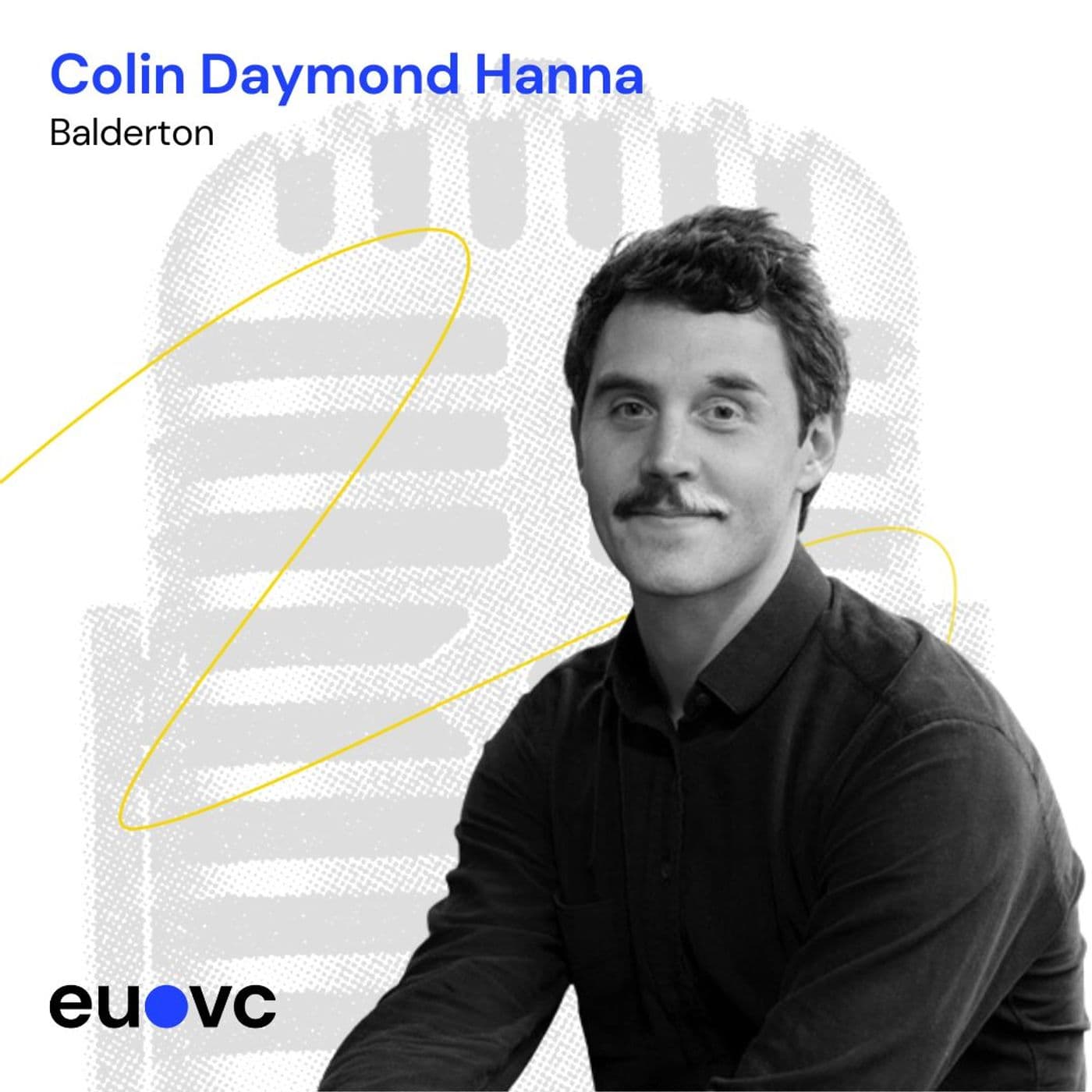
EUVC Podcast Episode Summary: EUVC #247 - Colin Daymond Hanna, Balderton on Purpose, Empathy, and Prioritization
In this episode of the EUVC podcast, co-hosts Andreas Munk Holm and David Cruz e Silva welcome Colin Daymond Hanna, a partner at Balderton Capital. The discussion covers various themes related to venture capital, including purpose-driven investments, communication, and the role of luck in decision-making.
Episode Overview
- Hosts: Andreas Munk Holm and David Cruz e Silva
- Guest: Colin Daymond Hanna, Partner at Balderton Capital
- Main Topics: Purpose in investing, empathy in venture capital, prioritization, and sustainable initiatives.
---
Key Themes and Concepts
- Background of Colin Daymond Hanna
- Transitioned from Goldman Sachs to Berlin’s tech scene.
- Inspired to work closer to operational roles within the tech industry, leading to a focus on venture capital.
- Purpose-Driven Investing
- Colin emphasizes the importance of investing in founders with clear missions.
- Examples of companies he has invested in:
- Clue: A women's health app empowering data-driven health choices.
- Fuse Energy (formerly Tesseract): Aiming to create a vertically integrated renewable energy company.
- Empathy in Venture Capital
- Discussion on the lack of empathy in the VC industry.
- Importance of understanding the challenges faced by entrepreneurs, especially in difficult times.
- Prioritization and Communication
- Clear prioritization is vital for effective decision-making, both personally and within investment teams.
- Communication should be thorough to ensure all team members understand goals and priorities.
- Sustainable Future Goals Initiative
- Balderton’s initiative to align investments with UN Sustainable Development Goals (SDGs).
- Focus on tracking metrics related to sustainability and diversity within their portfolio.
---
Key Takeaways
- Luck and Decision-Making: Colin argues that luck plays a significant role in success, and investors should recognize the aspects beyond their control.
- Building Relationships: He underscores the importance of building trust and relationships with founders, allowing for open communication about what support they truly need.
- Investing Philosophy:
- Founders should have a defined purpose, making it easier to attract talent and investors.
- Valuations should not be the sole focus; the emphasis should be on the company’s mission and team dynamics.
- Advice for Emerging VCs:
- Focus on personal strengths and unique insights.
- Build a network based on mutual respect and understanding, rather than merely chasing capital.
---
Discussion Points
Transition to Venture Capital
- Colin shares his journey from a career in finance to embracing the startup ecosystem, highlighting the differences between the two fields.
The Role of Empathy
- The conversation touches on how a lack of empathy can hinder the growth of both startups and VC relationships.
Importance of Clear Communication
- Colin emphasizes that frequent communication can prevent misunderstandings and ensure everyone on the team is aligned.
Sustainable Investing
- The Sustainable Future Goals initiative at Balderton is highlighted, with Colin explaining how it incorporates measurable objectives related to social impact.
---
Final Thoughts Colin Daymond Hanna’s insights offer a blend of practical advice and philosophical musings on the nature of venture capital, highlighting the significance of purpose, communication, and empathy in the ever-evolving landscape of European startups. He encourages emerging VCs to focus on building meaningful relationships and aligning their investments with impactful missions. The episode serves as a reminder that success in venture capital is shaped by both strategic decision-making and the human connections formed along the journey.
For more insights from the European VC community, follow EUVC at [eu.vc](https://eu.vc).
Written by AI. May contain mistakes. Listen to the episode to check what was said.
Transcript
Automatic transcript. May contain errors.0:00Hello, everybody, and welcome to the European VC podcast. I am David, and as usual, I am joined by my dear co-founder, Andreas. Today, we are welcoming Colin Damon-Hanna. Colin is a partner at Balderton, and I think it goes without saying that I need not introduce this firm. But just in case someone's listening in that has just started InVenture, I'll say that in the two decades since Balderton's founding, they have worked with hundreds of extraordinary European founders and have raised eight funds totaling more than€3 billion, with a B. At Balderton, Colin invests in purpose-driven, product-focused founders spanning verticals, including cloud, consumer, crypto, and fintech.
0:40Colin has led the investments into Tesseract, Ori, Supernormal, and AnyType, as well as Clue, which I almost forgot there. Colin is also part of the team at Balderton that's responsible for driving the firm's sustainable future goals initiatives. And now, some words from our beloved sponsor. Attention, folks. On December the 11th, we're hosting our virtual roundtable, Mastering Non-Dilutive Funding in Europe on LinkedIn. Sign up to eu.vc. Discover cutting-edge approaches and best practices in leveraging non-dilutive funding, a crucial tool for both your startup portfolio and if you have the flexibility, even your own investment strategy.
1:20Gaining valuable insights from Gilles de Malbosque from Harmony, a seasoned family office investor on optimizing these fund avenues for maximum returns. Hear from Bailey Morrow at HSBC Innovation Banking about the evolving role of banks in non-dilutive financing and how this impacts your investment decisions. Venture capitalist Hamal Fraser-Rawal shares a unique perspective on balancing equity and debt for optimal growth in the European startup ecosystem. Learn from Benjamin Ryder from Levenu, a successful entrepreneur on how his platform aids businesses in securing non-dilutive funds effectively.
1:59This roundtable would deepen your understanding of non-dilutive funding options, strategic implementation and how they complement traditional investment methods. This is an essential event for VCs, angel investors, family offices and financial leaders seeking to refine their investment strategies. Secure your spot now. Transform your investment portfolio with non-dilutive funding knowledge. Visit eu.vc. Head on over to the events section and sign up to join us for an in-depth look at how to win with non-dilutive funding instruments in Europe. If you're listening in, love our show, drop us a review and follow the pod and don't forget to subscribe at you.vc.
2:53United and determined, We can serve as a model for other regions of the world. The nature of a problem requires a European response. Europe is a story of new beginnings. Let's start acting. This show is not investment advice and the hosts of this episode may be invested in the funds and companies featured. All right, Colin, let's start this thing off with how you got into venture. Tell us all about it. First of all, I just wanted to thank David and Andreas. Thanks for having me on the show. I love what you guys are doing. Great energy you're bringing. And my journey into venture, I guess, began really when I started my career.
3:39I had just graduated from university on the East Coast. I was 21 years old. I didn't know exactly what I wanted to do. But I had a lot of the community from my university at Princeton. We're kind of moving to New York City. And I'd grown up in Asia. And I got this opportunity to join Goldman Sachs, kind of focusing on an Asian-specific share sales desk. So we were kind of helping to sell IPOs and stocks that were mostly kind of Chinese internet companies and Japanese gaming companies. And so I started working there when I was pretty young and got kind of familiar with the information superhighway of the financial services industry.
4:13But I just felt like the abstraction layer was kind of too high for me. It was all about kind of numbers and ratios and multiples. And it was good to have that lens, but I was really kind of missing the feeling of what were these actually underlying businesses? What do they feel like? Who was operating them? What were the challenges they were confronting every day? And so pretty early on, I kind of decided I wanted to do something that was kind of closer to the bare metal, so to speak. And it took me a little bit of time, but three years into it, I sort of took a leap and moved to Berlin in 2014 and started working at different software companies.
4:46And that was the moment when I started working at software companies and doing a bit of growth work and product work. And, you know, I got to spend a few years doing that. And what came to me at that point was the adventure was this really kind of great blend of the financial abstraction layer, as well as really kind of the operating and the product work and working with the engineers and on the software side. And so I kind of set my sights to be doing that. And a little bit sooner than I expected, I was able to join Balberton seven years ago, 2016. Colin, I can't help but ask you, because I remember when we first exchanged emails, I went on a bit of a rabbit hole of seeing all the little links that you had in your signature and seeing a really interesting, I'm not sure if I'm using the right term, you will correct me, a small test documentary.
5:35Could I call it that about Asia? What is the connection to Asia? because you just shared also that you started your career in that part of the world. So I'd love to ask you that personal but also professional question. Yeah, I think I have this. Actually, I think my mom has gone through my archives of our old family video footage. And she went through a spell and she posted some on YouTube. And this particular video is like an hour and a half of footage of a family trip we took when I was like 10 or 11. And we traveled to Guilin, which is sort of in central southern China. and I was like loving, you know, being a cameraman.
6:11So I sort of filmed the whole trip and it was interviewing people and giving commentary on it. And so I have a link to one of those. But essentially the background is David, I mean, basically six months after I was born, my parents moved to Jakarta, Indonesia. So I was six months old and my father was working at the World Bank. And so I spent the first five years of my life in Jakarta. And after that, my father was an economist, started doing research for banks and moved to Hong Kong. when I was, we moved to Hong Kong when I was five. And so for the next decade or so, I lived in Hong Kong. So the first 15 years of my whole childhood was in Asia.
6:44I'm curious because we hear so much about China these days. How do you, how's your relationship to China now? Do you go back once in a while? Is it tourist destination number one for you or less? It's, yeah, it's a complex relationship because it's partly where I'm from. I identify as a Californian because that's my family and that's sort of where the roots of our family are. But, you know, really growing up, I grew up sort of on, yeah, in Hong Kong, in the hills and streets of Hong Kong. And Indonesia is sort of this place if you kind of, before you're five, I think you have a lot of formative years.
7:21I'm seeing that now with my young kids, but, you know, it's hard to kind of consciously recall them. But I think they shape who you are in pretty profound ways. So actually, I go back to Indonesia quite frequently. I come as much as I can. I'm just sort of, I think, you know, the culture there and Indonesia as a country, the landscape, the wildlife, you know, a lot of it is, I think, yeah, just really magnetic. And Hong Kong, I went back and kind of celebrated my engagement back there. I've traveled there and still have friends who live there. A lot of my friends sort of went and did university maybe in England or in the U.S., but then I moved back to do their careers there.
7:58It's obviously changed a lot as a place since the 1990s when I grew up there. but it's sort of it's a whole different universe right it's a whole different world and and too often i think the two worlds sort of are separate from one another and so i think i i think it's important as we sort of enter the next couple decades and that that you know i continue to try to kind of have a strong connection and and so you know i guess that what my only comment will be what would be only here in the media and and the people's perception a lot of that is sort of government to government. And I think it's really, really important.
8:30Like if you go onto the streets of Beijing or the streets of Hong Kong, you're going to find people, you know, just like us, right. And in terms of what they're interested in, what they're worried about. And there's, maybe it's a slightly sort of different framing context, but you know, they're, they're, they're, they're worried about just the same things and the dynamism there is really infectious. So I try to get back as much as I can really. And then Berlin, why the hell? So Berlin was totally off the map for me for sure so Berlin you know here I was this um a Californian who grew up in Asia and sort of you know home was probably somewhere in the middle of the Pacific Hawaii would have made a lot of sense um you know just in terms of crossing the two and Berlin and Europe was completely off the map and and you know no kind of family connections really or anything and I think that was probably part of the appeal of it is it felt like an adventure it felt like a new frontier and I moved there, I was 24.
9:20And the other thing that had a lot to do with it was a woman that I just met like a year before. And we met in New York City and she decided to move back to Berlin. And I thought, you know, I'd kind of mentioned that I hadn't wanted to stay at an investment bank and I kind of wanted to mix up my career and do something more operational. And Berlin at the time was a very different kind of startup ecosystem than it is now. It was much smaller, but it was it was high quality. You had, you know, Rocket and companies like SoundCloud and ResearchGate that had sort of getting started, but it was still a fairly small and kind of concentrated ecosystem.
9:57And I got to kind of dive right in in 2014 and found a job for myself. So, you know, between her and kind of the career opportunity, I just took a kind of blind leap of faith and went for it. I love how that love can take us anywhere. So, I think that that's to know what I want to go to the Take a Stance round with.
10:27So now, Colin, I would love to ask you to comment on this quote by Daniel Kiberknoer from Speedinvest. But if you need luck to become successful, then you might rather restart. Yeah, this is a fun, you know, I got to read that quote. and I know Daniel quite well, but it's one that, yeah, I guess I fundamentally disagree with. And the reason I fundamentally disagree with it is just because I think, look, luck always plays a role in my opinion. And it doesn't mean that you can't do the best and work the hardest on the, on the factors that you control and you should, right? Because anything that you can control, you need to try to optimize it and work hard at.
11:05I'm a big believer, like after a swimming career of just hard work and pure effort creates results and outputs. At the same time, there needs to be a recognition that like you can't control and you can't influence every factor. And almost the definition of luck for me is actually things that you can't control or you can't influence. Like, how do they net out for you? You need to be lucky sometimes. I think people need to have the kind of humility to recognize my success doesn't come just purely from my own input, right? That there's a recognition that sort of other things align to allow me to be successful.
11:34I you know look I I'm a I'm a bit of an amateur poker player I enjoy playing poker and there's a great book um written by a woman named Annie Duke and Annie Duke is one of one of the most successful poker players in the world and she dropped out of her psychology PhD to become a professional poker player and wrote this book called Thinking in Bets and Thinking in Bets is really about understanding decision making when you have to combine sort of the role of skill and luck right and poker is a great game that way because you can be really skillful and you can lose the hand you can make the right call on any given sort of bet and still lose the hand uh and in fact lose several hands and lose the tournament or etc and it doesn't mean that you're not better than the other person but you know sometimes he just it doesn't break your way and so yeah that's i would you know i would just take a stance on that that you need to work hard you need to be persevering but you need to sometimes also recognize a role of luck
12:35so to the attentive listener here i'm going to mix up our standard script because i want to go straight into talking about biggest learnings with colin we had a pre-chat here that i'm kind of sorry we don't have it recorded but colin let's start things off by just asking you to share with us the three biggest learnings from the last 10 years in your life and that includes balderton but of course other stuff as well yeah the first one i'd actually put is just having a clear sense of purpose you know why are you doing what you're trying to do to do so if you're an investor why are you an investor and if you're investing in specific companies really why are you investing that company if you're a founder what purpose did you have for founding that company right and i think like a clear understanding of purpose for yourself makes it easier to attract great people to do what you're doing because they can get that clear purpose can be infectious.
13:26It can make people, you kind of put your heart on your sleeve in terms of people saying, look, I identify with that purpose. So I want to join you in it. I want to sort of help you achieve that. And so the clarity of purpose, I think, is fundamental. The second kind of learning is just prioritization. I think once you have that clarity of purpose, and this is something my dad drove home to me a lot, and now having become a father and with the demands of time that being a parent sort of presents you with, having really, really, really clear prioritization and knowing for yourself, look, when I wake up in the morning, these are the things I need to achieve today.
13:59And these things like, it'd be great if I achieve, but maybe I won't get to them. And these things, frankly, they're not important. And just being very, very almost ruthless in terms of prioritization for yourself. It becomes, becoming a parent sort of raises the stakes for that. And I think overall, though, you can kind of carry that lesson of prioritization back to your work and say, look, I have a much clearer vision of what I need to do and what I don't need to do. And I think that can help you become really, really effective. And so prioritization is really, really key. The last piece, and this has come similarly at work, I think as you take on more responsibility and you start maybe leading a group of people sometimes, or if you're a parent and you're working with your partner on how to raise the kids and do so in an environment that is fun for everybody, which is not always easy.
14:47The last point is communication and communication, communication, communication. It's like, I really believe you can't over-communicate things. I mean, it's really, I think, so rare that the person you're speaking with really fully understands exactly what you're trying to get at and why you're trying to get there. And so I think just over-communicating, whether that's people you work with, your colleagues, maybe people who might report to you, your partner at home. Communication is so vital to sort of making sure, like if, for example, if you're prioritizing something, like making sure that you communicate to people, why are you prioritizing it in that way?
15:21Like why, why has this thing fallen off the list for you? And you kind of take it for granted so often, maybe you're moving really, really fast that you don't slow down to communicate this to your colleagues or your teams or your partners. And, and so communication is really key. So it's purpose, prioritization and communication, which like, you know, they seem pretty general and pretty obvious, but I think that they're all really, really vital. Couldn't agree more. And we had a conversation about parenthood in this connection just before, and we will go back to that because I think it's every time I had a VC conference, it's probably also connected to the mindset of an investor there.
15:55You know, we're always like, I actually wish I was home, but now we're here and let's talk about being home or not being home. But we'll get back to that. But I just wanted to maybe ask you to, and we didn't introduce Balderton too much in the beginning. So just to make sure that everyone's on the same line, I'll ask you or challenge you a bit to also put this in the context of Balderton and being an investor at your stage. So if you could start by saying purpose, how does that fit into Balderton? How does it fit into the stage at which you invest? and kind of then, you know, go through that train of thought for each of the three?
16:34Because I think that that's an interesting perspective because the majority of the investors in Europe are, of course, smaller funds and also earlier stage than you. No, I'd love to do that. So, you know, first of all, at Baldessin, we do our purpose to be the partner of choice for the best European entrepreneurs. You know, one thing that's there that I like as a clarity is that we're focused on Europe. There's a lot of European funds, but not of our scale. And there's a lot of funds that are scaled that aren't focused on Europe. And so we try to be a fund that can back founders in their journeys from C to Series C and plus.
17:07But we really, really wanted it bounded by the best European founders. That's our purpose. I think for me, David kind of read a little bit of my bio. And the founders and companies that I'm looking to invest in are also often just really, really deliberately purpose-driven in terms of what they're trying to achieve. you know, they're not out there necessarily just to kind of be monetarily successful. They're out there to like, you know, make a serious impact on the world in a certain way. And it's, you know, it's up to them to define what that impact might be. And, you know, maybe you agree with it, maybe you don't.
17:37But I think people who have that mentality do a great job of, again, of just like collecting the best team, collecting the best investors and really, yeah, having a product or a service that really just makes a difference for a specific reason, Right. I think that's really, really important. Could I challenge you, Colin, to give us an example of how you've seen that play out in one of the companies? As an example, I guess I imagine that Clue would have a very special mission and resonance with, as an example, many, many employees, but also a whole community that's built around, you know, women sharing the app with each other and so on.
18:16And also add a few words. We might have some in the male audience that wouldn't know what Clue is. Yeah. So Clue is really the most successful, most respected female health companion app. And their purpose is like no myth, no taboos, to empower every woman or any person with a cycle to make kind of data-driven decisions about their own health, right? And there's huge examples of the healthcare system that sort of, you know, when they test for particular pharmaceutical drugs, you know, they don't take into account the cycles of women. um they don't you know clue is clue is collecting this huge kind of longitudinal data set that that really informs each individual user about their own health choices they make and then they never sell that data on to anybody like some other you know apps in the ecosystem have have been known to sort of sell the data to facebook and others and clue is you know kind of berlin-based super data privacy concern and super just mission-driven in terms of what they're trying to achieve another example would be alan and charles at tesseract which is now called fuse energy that they wanted to build like for the UK.
19:21They had vertically integrated energy companies in the 1990s, but they wanted to build sort of the first fully vertically integrated UK energy company that was going to be 100 % renewable energy powered, right? So none of this stuff about buying a credit, but actually, you know, we're going to make sure that we're going out there and, you know, building solar farms, you know, wind turbines, doing commercial grade rooftop solar. And that kind of clarity of vision and purpose is what's attracting fantastic talent to go work with them. They just have phenomenal kind of caliber of operators that want to join because that clarity of purpose is infectious.
19:58The last company maybe I'll work with or call out is a company called AnyType. And Jana and Anton started off trying to create sort of a really, really modern and fresh feeling productivity suite that was actually still kind of user-owned in terms of your end data. So you weren't hosting anything on the cloud. You were doing everything locally. It meant that it sort of didn't matter what happened to that company if they ran out of funding. You always sort of retained ownership over your own data, which is technically, technologically very, very hard to achieve. and also really important in countries like, you know, Russia, China, or Iran, where, you know, you kind of have an inherent distrust of uploading something to the cloud where, you know, it might be able to be sort of moderated or monitored.
20:40And so that local first mentality is really something that's really important to them, that censorship resistance. So just some examples of that. But I will, you know, what I would say is, frankly, I just read Musk's biography from cover to come from Walter Isaacson. And it's, you know, he's, he's obviously that, you know, become this kind of this larger than life character. But when you read the biography, one of the key things that come through is like, he doesn't, you know, you don't understand that every decision I've ever made about SpaceX, including Starlink and everything has, has been through the clear prism of bringing humanity to Mars.
21:13It's like SpaceX exists to bring humanity to Mars. That's it. Every decision it's, you know, all the contracts they signed with NASA, et cetera, It's all about having the resources and capital and sort of equipment available to bring humanity to Mars. And I think in the world we're living in now that's so well connected and so people can be so transparent with one another, that clarity of purpose is something that people want to go work with. If you want to join that purpose and join that mission, you know where to go work, right? Now I'll reveal that I'm a bit of an audiobook guy because I'm about to say that I have two hours left and I don't know how many pages that converts into.
21:49But I guess with a lot of traveling, that makes sense, right? But I'd love to ask you, because that book has definitely stirred some thoughts in my mind. And I think that one of the standout quotes for me is on Musk's personality is, you know, from people who have decided not to work with him anymore because they just couldn't. They said that this type of individual is probably one who we need to just allow to be as he is. and if that's the trade-off we need to make to have Tesla and SpaceX and the borrowing company and so on, then that's the price we have to pay as a society. But he is definitely not leading with the type of humanity that I'd say that we in Europe at least tend to kind of weigh very highly.
22:41So I'd love to get your take on that because it is some stories that are really thought provoking to hear yeah i my sense is kind of reading it as an investor was he's someone who's willing to sort of gamble everything and throws himself fully into the things that he does and that's an admirable quality and he's and he's not willing to accept convention right he's he's he's not willing to sort of say just because it hasn't been done before it can't be done you know the way that they approach standards for example that sort of you don't quote a standard unless you know exactly why it was created and by whom it was created at the same time i'd say a couple things you know it's evident that you know his sort of lack of empathy means that his ability to retain the best people over periods of time it suffers pretty you know pretty clearly i think from that and there's a lot of anecdotes in the book that sort of demonstrate that so you want people who are working with more empathy and indeed generally I think you want people who have that much power in the world to have more empathy.
23:43I mean, I think that just like, it just kind of feels intuitive. The second thing I got that sense from the book is that he's completely overstretched himself. I mean, he's throws himself fully, but you can't throw yourself fully into seven or eight things simultaneously. I mean, Jobs was, you know, I like Isaacson's biographies and Jobs was very kind of self-reflected on the period of time that he was leading both Apple and Pixar as being a time that sort of really drained him and probably, you know, he attributes to when he got pancreatic cancer, the stress of sort of trying to run two great companies like Pixar and Apple at the highest level.
24:18And, you know, one can imagine that sort of trying to run all those companies at a high level and you're seeing it, right, to some degree, I think. So, you know, you'll need to have people that you can trust in each place and have the empathy to have them, you know, want to stay with you. At the same time, And there's a lot of qualities that he has that sort of are superstar-like qualities that everybody will be attracted to. But yeah, it's sort of a mixed bag, right? It's a mixed bag. And he makes the point in the book, I think, quite well that it is a mixed bag. And there are aspects of him that, you know, we'd be better off if he didn't have those qualities.
24:47And there are aspects of him that, look, frankly, if he didn't have those qualities, he wouldn't necessarily maybe have been able to achieve what he's been able to achieve. You've now written the whole or read the whole book. Would you put money into every one of his company and say that's a bet on Elon Musk? Personal money? Is the question, would I put money into every one of his bets? Or is the question, if I did put money into one of his bets, then it's necessarily a bet on Elon Musk? Feel free to take both. But my question was to first. So would you put money in every single one of his companies?
25:16Put 10K in every single one of them? Saying this makes sense? Or would you say, no, that doesn't make sense? No. I mean, so I think at least from my lens, I think you have to feel that alignment of purpose as an investor. I think as a founder, hopefully you want people around you who feel that alignment and purpose. And an investor, you should be spending time and capital on things that you feel aligned with. So I would say that my feelings of alignment differ according to the different ventures that he has. His Twitter purpose might be a bit off from you. Yeah, well, I mean, I just don't believe that the world's sort of global mouthpiece in communications network should be owned by one person, fundamentally.
25:56I mean, I don't think that's probably right. So certainly I wouldn't have backed that. that bitch. Colin, now I'll take us to the shout out segment.
Read the full transcript
26:12Colin, we'd love to ask you to give a shout out to a co-investor, an angel or an LP for being awesome. And of course, if you can, do share the story behind that awesomeness. That'd be great to do. One of the shout outs I'll have to give is to Point9 Capital. They're Berlin based and And, you know, I got to know both Ricardo and Louis, who are both partners there when they were living in Berlin. And I just really admire and I think I think a lot of the industry shares this. I really admire their their kind of singular sense of focus, the way that they've been able to sort of stay small, but stay excellent at what they do, even as competition has increased.
26:48You know, and they're seeing whether it's sort of large multistage firms or American firms come over and, you know, very much kind of compete with them and what their sweet spot is. but they don't let that sort of phase them. And they're still going about kind of doing the kind of deals that they're known to have done. And I think there's a lot to be said for kind of sticking to your knitting. So I'd like to give a shout out to Ricardo and Louis and Christoph and Paolo at 0.9.
27:15So we just wanted to interject the long road into or rapid hole into Elon Musk that we just did that steered us away from the three biggest learnings in your life. But I want to get back to them because you said, and just to remind our audience, you said the first one was purpose. The second one was prioritization. And the third, communication. Purpose, we spoke about Clue, and we also ended there talking about Isaacson's book, On Elon Musk, which definitely makes sense because he is a person who is driven by a very big purpose, and that's what's seen very much across all of his companies. there's a very strong purpose there.
27:54And in every single decision he makes, it's purpose that's driving them in the end. But prioritization, I'll give you the same challenge just as before, Colin. Tell us how prioritization informs you in your work at Balderton. As an investor, the work is kind of limitless, right? You could kind of speak to an infinite, almost infinite number of people and then look at almost an infinite set of companies. It certainly felt that way over the last couple of years in terms of the level of buoyancy and volumes that we were seeing in the market. But prioritization is really about, I think, identifying for yourself as an investor, where are the quality bars that you're looking for things to clear in terms of the team, in terms of the depth of the market, in terms of the execution on the product side.
28:39And kind of putting like one of these old horses that sort of has blinders on the side and putting those blinders on intentionally and saying, look, I'm just going to focus on the things that meet that bar there in front of me and do the work. Because winning a deal in this market in a high caliber company with a really high quality team requires a huge amount of focus. And I think that focus can only come when you're able to prioritize that small subset of companies versus the rest. And so we're in a position now where I think it's a precision sport. You have to be really, really precise with the investments that you make.
29:17And precision and prioritization, I think for me, kind of go hand in hand. The other thing, I'll kind of say again, going back to being a parent, I have a one-year-old and a three-year-old at home, two sons. And they're trying to raise two young kids as a partnership requires a lot of attention and energy and time. And so you come back to that with your work and you say, look, with the meetings I'm going to do, with the research I'm going to do, with the network I'm going to create, I'm constantly thinking about it in terms of quality and in terms of sort of coming back and trying to level your bar up because you want to make sure that with that kind of network, the output of it in terms of the investments in your own deal flow is at the highest quality.
30:02So that's a little bit how prioritization kind of plays in. Could I ask you, Colin, to also expand? Because I think there might be a lesson for many of our listeners. Obviously, most of our listeners are emerging VCs, right? By default, that's what we have the most in Europe, right? And so our listeners as well. And I'd love to hear you expand a bit on how prioritization plays a role in portfolio management for you. And I'm actually thinking specifically in terms of how you dedicate your time to the different ventures. But there might be other topics. I'd love to hear on that. Yeah. Well, first of all, I mean, I consider myself an emerging venture investor.
30:37I mean, I've been doing it for seven years, but as we know, the time scales are drawn out and learning loops are drawn out too. And so you need to kind of continue to feel like you're learning. And I still very much feel like I'm ramping up. In terms of managing portfolio, I think, you know, the key is to understand, you know, when whatever it is you're going to do is going to move the needle in a positive way for this company and having clarity of that versus, you know, I think there is quite a lot of sort of investor interventions that are of questionable value to the company in terms of an enduring way.
31:12And so I think having the humility to step back and be like, okay, my intuition is to do this, but is that the right intuition here? How does that fit into what the goal of the management team is? And how does that fit into what they're trying to achieve in terms of aligning the team underneath them? And so what's really great is when you can build a relationship of high vulnerability with the founders, and they can really be candid with you about, hey, look, honestly, it wouldn't be helpful if you did this, but this is really what I need your help with, you know, now. And like, let them help you prioritize, right, to some degree.
31:43And I think that you need to have a lot of mutual trust for that kind of relationship to develop. But if you can have that level of mutual trust, and then we care about a lot about that at Ballerton that we feel like, you know, we're, you know, we're one of the, you know, only investors or one of the few investors that the founder really feels like they can confide and be vulnerable with, because that allows you then to spend your time on the things that are really going to matter for the company. Very few funds have the same follow-on capacity as you do. And as such, it's very, very difficult probably as a bulletin investor to be able to tell a founder, we're out of cash.
32:19Or you're always thinking when you do a seed bet, you can take them all the way to see how does that influence your work and how do you think through that and so on. Could you tell us a bit how you map that out and think of it as an investor? Because it's a very a special situation to be in compared to most funds in Europe? We debate and discuss this a lot as a partnership, I would say, firstly. And I think the most important thing, I think you have to set expectations at the outset too, that like, look, when we do a deal with a company, that deal is a point in time, and we invest something in exchange for something else, exchange for shares, and we're investing against sort of a plan or a future, right, that we're trying to achieve together.
33:03and you know any future investment is probably predicated on how well that goes right and how well we sort of are achieving that plan and and working together to get those get to get that done and so there's there shouldn't be this notion and i don't think there is this notion that sort of just because you have a fund like ball listen or something on your cap table that sort of you're going to be funded all the way through it's sort of no matter what happens i mean you need to execute hopefully what we've done well is you know with high conviction investing selecting the right company that's gonna execute, you know, all the way through.
33:31But, you know, we know that it's a hard path and, you know, you need to have perseverance. You need to have a little bit of luck. You need to sort of have, you know, have things break your way. And you need to have investors in a small group of people working on the company together that are sort of working hard to make things happen. So, you know, what, yeah, what I would say is if you're transparent at the outset, it also makes it clear when we're prioritizing, you know, we're not here to kind of prop up companies that aren't, aren't going to be successful. And so, you know, it makes it really clear.
34:00And I think if you, if you have also that transparency and level of trust, then, you know, you can be clear to people, look, you know, this, this hasn't worked the way we thought it would. And our priorities, priorities lead us elsewhere. Right. And, and to do so in sort of a, a, a candid fashion is not to say that that's always easy, but I think if, if you come at it from a, a place of empathy, but also a place of logic, like highly logical, but also highly empathetic, I think usually you kind of get to a good place in the end. I'd love to ask you, Colin, and this is on a different note, because you're arguably one of the most coveted potential co-investors or follow-on investors for many seed funds and pre-seed funds in Europe.
34:40And in that connection, you said it just before, with regards to prioritization exactly, how do you prioritize building your network? So I'd love to ask you, we have a bunch listening in that will all be thinking, how can I connect to Colin at a level where he will take an extra look at my deals when I send them his way? Could you tell us a bit from that perspective of a listener thinking, I'd love to play ball with Colin? How should they think about establishing that connection to both Falterton, but also Colin? It's great to be building relationships and friendships and a network among other investors.
35:18It's really important to do so. And a lot of times we're we're competing and collaborating in our industry. Sometimes I think it's a little bit of a sideshow. I mean, I think like the reality is, I think, you know, when you have investors in place, it's like, look, it's up to you to build a relationship with the founder. I'm not going to really just invest in a company because somebody is invested in the company. Somebody else is, right? It's like, the founder and the company needs to be the central spoke, right? And sort of the hub, I should say. And each investor is sort of a spoke outwards.
35:48But you need to all be connected to that central hub, which is the founder, which is the purpose of the company, which is, you know, your depth of understanding of the company, right? So, that's the first thing I sort of say at the outset. I think that the second thing is obviously having a strong network of people you trust who work within the industry can be a really helpful filtering layer in terms of, you know, when you sort of respect somebody's investor acumen, you know, you kind of say, okay, well, you know, I'm paying attention to what they're doing and, oh, what do they see here? Maybe it wasn't apparent to me at the first go, but I'm going to spend a little bit of extra time trying to understand because I really respect their own acumen and their track record.
36:24So, you know, what I would say in terms of just in general, trying to sort of build relationships with other, you know, with other investors is, you know, the best thing you can do is focus on your own book first thing and just sort of, you know, try to build your own track record and build your own investment acumen and your own framework such that, you know, it will be apparent to people that you are someone who they, you know, they should, they should try to be connecting to and trying to sort of understand what their portfolio is. Right. And then that will come, that will happen organically.
36:54Yeah, with a lot of work. So now you were a bit more specific on the communication part before, but just because we've gone through the three, let's rehash and give us your view on communication, how that plays into how you invest at Baldwin. Yeah, I think it comes maybe a bit ties into something else, but we can't take for granted, as I said, but we can't take for granted that everybody understands your own compute machine in your own head, right? And the own context that you have. we are a democratic organization at Balderton. We sort of make decisions collectively as a partnership and as an investment team.
37:30And we have sort of a big open table where, you know, it doesn't matter sort of whether you're an analyst or a managing partner, you can air your views and have them debated on the basis of their logic. And I think that, you know, having that is really, really key because, you know, we work as a team. We win deals as a team. Kind of we grow companies together as a team. And we run the firm as a team. And you need to do that professionally by, you know, by having really strong communication channels, by discussing things collectively around the table, by kind of being available for that, you know, for chats.
38:03You know, we have a culture, I think, where people can just kind of, you know, you get off the meeting with a founder and you just call each other or you kind of pull each other to the side and you debrief together one, you know, very, very quickly. The other really important thing is when it comes to sort of delegating and working together as a team, and again, this is something as you sort of level up and start managing people, is having the clarity that everybody understands your set of goals, again, your sequence of prioritization and why that is, you can only over-communicate. And I think it's sort of the ocean that everybody connected to.
38:39And if you start to realize you haven't communicated enough, it's a little bit too late at that point. At that point, the ships have sort of moved off in completely different directions and you have to really work to bring them back together. But if you had sort of a strong layer of communication in between once another and a strong layer of vulnerability in that communication, right? Like not just sort of posturing, but really telling people like this is exactly how I think it is and showing weakness there. I think that's really, really key. I love that, Colin. Actually, yesterday I was driving and I was thinking in my mind, I was thinking, you know, that I was really thankful that my partner did something.
39:14And then I thought, oh, shit, I should verbalize it. You're fucking thinking it, but you're not saying it. And I think it's such an important thing to keep in mind and to bear in mind professionally and personally. right just there's no such thing in my view as as as community over communication right if you if you keep on communicating the message gets through so i love that you brought it up and thank you for sharing i want to ask a completely unrelated question colin which is am i right in saying that you used to be an olympics trials roller i competed in the olympic trials in the united states in 2008 um so that basically just meant that i i qualified for the meet that in the united States, that meet and how you perform in that meet dictates whether or not you join the Olympic team.
39:58And I qualified and swam in that meet. That's quite high level. Competitively speaking, that's quite high level. I'm right in saying that, right? Yeah, it took a lot of work to get there, I'd say. It definitely took a lot of work to get there. And I view it as something I'm proud to have achieved in my life, for sure. And it's cool also because my mom qualified for the Olympic trials in 1976. So I was able to kind of go 32 years later. And we both sort of have that, which is great. Is that something that you feel has also shaped you professionally and personally, and even today as an investor?
40:31Because that's something we hear a lot from former professional athletes in whatever professional area they are, right? That need to be top level all the time, that need to be in the grunt every single day to be able to then perform at a specific day i'd love to hear you expand on that on that if there's anything there to be expanded on i feel just kind of really immense gratitude for having grown up with the with the kind of athletic background that i had and a lot of it i think actually i put to my mom and my dad my dad was a diver at berkeley the part of the great aquatic program they have over at berkeley my mom as i said it was before they had the institutionalized women's sports team so unfortunately title nine wasn't yet in place in the ncaa and so she wasn't able to swim to that level in college, but she was a phenomenal swimmer.
41:16And they both kind of imbued within me, just like, you know, doing all sorts of sports growing up and then really focusing on swimming as something that I was maybe particularly had a little bit of more talent in. A lot of life has become, you know, easier, I think, because of the trials that I sort of put myself through and my coaches. I have a lot of great gratitude to the coaches that sort of, you know, trained me when I was, you know, starting, you know, Anne-Marie Monk when I was 13 and my mom was a coach for a while. And then Paul Stafford and Ray Mitchell with the Terrapins program. Um, and then my coach at Princeton, Rob Orr, they were all like great people who were, you know, shaped and cultivated my own character and demanded a lot out of you.
41:54Um, but did so in a way that sort of, yeah, I just, I, it means that sort of, you understand like, there's no shortcut to the swimming. Like if, if you want to get the output, you've got to have the input, but that's just how it works. It's been difficult maybe adjusting to something like, I talked about learning loops, and what's really great about swimming is variables are very, very tightly controlled. And so when you hit that wall and you look up at the clock, you know that, first of all, that's a very, very clear feedback loop. This is what I did, and this is the time, right? And the second thing you know is it's all pretty much up to me.
42:30I don't have a referee to blame. I don't have a teammate who messed up a pass or something like this. It's up to me. right and so you have to take accountability and put it on your own shoulders and swimming can be brutal that way swimming can be really you can be sort of you know in tears right this happens a lot you hit the wall and you put everything in and you're in tears because he's just you didn't achieve what you wanted to achieve venture investing in that sense is totally different because you i mean you wish you could you know you kind of you invest the term you sign the term sheet you look up at the wall like no idea right no idea but you have to trust i think that that You got to put in the inputs and you got to keep working day after day.
43:11You got to go to practice. You got to, got to, got to do the miles. And, you know, over time, you got to trust that, that that process is going to lead to the outcomes that you, that you're looking for. So he had the little non-VC related shout out there, which I'm really happy we managed to get in. Colin, final question from my side before, before we wrap things up is we didn't talk at all about an initiative within Balderton, which is the Sustainable Future Goals Initiative, right? And I'd love to ask you to expand a bit about it, but maybe more interestingly, at least from where I stand, this is obviously something that's somewhat connected to the SDGs, I venture to say.
43:51And I'd love to ask you as well, personally as an investor, within the space of sustainability and SDGs, what gets you excited? right and and really thinking from with the investment lens here i'm no i'm really glad we get to speak about it because these are something that um are really really important to us i mean bena my partner bena i was it was kind of 2019 2020 and we realized we sort of need this to level up here we're really really lucky to have a head of impact and sustainability called led led broad who joined us about a year ago but really what the sfgs we call them a sustainable future goals are about is really, it's like first and foremost, a recognition, I think, that we're all confronted with like a set of global challenges these days, right?
44:34Whether it's sort of around how we want to govern ourselves as a society, whether it's climate change, this is lack of biodiversity. And we just wanted to get out there and say, look, we don't feel like we just are sort of a European venture capital firm. We just want to optimize our IRRs. That's how we measure ourselves. That's our yardstick for success. But it's not the only thing that's important to us. We also sort of want to say, we feel like we have a role to play somehow. And it's not about sort of any sort of checklist. It's about sort of saying, look, these are the things that we feel like we want to get behind.
45:06And so we actually use the SDGs from the UN because we thought like, you know, that's a great kind of set of humanity's goals. And we wanted that we kind of interpreted them and say, well, which of these are actually important and relevant to us as a European venture firm? And we went ahead and we kind of, we adapted them to us and we have these 10 sustainable future goals and you know bernard is a big okr fan and we're kind of big believers in sort of having clear metrics and so what we did is we actually created and we and we have full reports to sort of very very transparently report against these every year is we took those 10 goals which are like urgent climate action you know gender equality data governance and data privacy are really important you know these kind of big kind of lofty goals, but we broke them down into small, like, you know, smaller and smaller little bits of like small little OKRs, like how many taxi trips are we taking as an investment team every year?
45:55Or, you know, how many of the founders who come and present to us are women versus men, right? And we had all those metrics and we're tracking all that data and reporting against it every year. And it's a way for us just to say, look, how are we doing? It's a scorecard, it's a report card that we can kind of report against on an annual basis. and it was nice. I got the chances to hear Michelle Obama speak at Bits and Pretzels a couple of weeks ago and she underscored the point to me that I think sometimes gets lost, which is people are talking about ESG and whether or not things are too heavy handed.
46:25And it's like, sometimes I think you lose the forest for the trees. And what the forest is for me is like, we have a responsibility to help confront these global challenges. We're gonna try to do it in our own way and what's important to us. And we're just happy to be super transparent about how we're trying to go about achieving those things. I actually want to share some love because I checked out the report that you guys put out. It refers to last year, right? And I think it's a really interesting read for anyone who's in the venture industry. Of course, you know, you show that you've achieved some stuff, but I like also the fact that you are transparent about what you haven't achieved.
46:57And I think it's kind of cool also how you think about, you know, companies that are actively, I don't know what's the exact word you guys use, but like proactively or championing exactly, that they're championing a sustainable future goal. And I think it's a good benchmark. So thank you for putting it out and just sharing some love there. Yeah, well, that comes back to the purpose alignment, right? And, you know, I think what we found is us being a little bit transparent and vocal and over communicating about what are these missions or these goals or objectives are really important to us. It's actually helped us attract founders who I think feel like the companies that they're starting and what they're trying to achieve has some alignment with them.
47:33So it's been constructive that way. If you look at your portfolio of investments all across it, how many of them would you say fall within one of the SDGs? My viewpoint is that the reason why I love Ventress, because even if I'm not investing in a fund that's an impact fund, a lot of the capital in the end are going to help solve inefficiencies. And many, many of the opportunities are somehow within democratization or open access to more things and so on. So I'd love to ask you, what is your overall view on the state of tech as a broad group represented as your portfolio, right? And whether they are positive or negative have contributed to betterment of society.
48:25In 2021, 26 % of the companies that presented to the investment committee were sort of definitely championing one of the SFGs. In 2022, that number went up a little bit to 27%. And I think in 2022, we invested in, yeah, about, we made nine investments in companies that were sort of championing one or more of the SFGs. And as a proportion of sort of new investments, that was roughly the same, I think a little bit higher proportion. So actually you had a higher chance of sort of clearing the IC if you were especially championing them. And that sounds about right. That it's sort of like, does everybody in every company we need to invest in need to be expressly aligned with us?
49:01No. We're not an impact fund. What we are is we're an IRR-driven fund or a returns-driven fund. We feel like there's a good chance. And to your point, Andreas, I really believe that the best founders starting new companies in 2023 are often driven by these sort of lofty ambitions from a purpose perspective. And some of them will really align with and some of them we won't. And that won't stop us investing in them when they won't. But maybe it gives an extra push when they are aligned. I'm a bit surprised that it's only 30%, actually. uh not not from a from a perspective of aren't you doing more but more from a perspective of i would have said on the on the on the whole that's also contingent on where you where you put the bar right we try to keep the bar high one of the points is expressly like it's like the founder themselves need to be like this is why i started this company it can't just be like oh like one of the because there's there's you know you kind of have three consultants who started a company and they're like, oh, I could tell you about in this report, like, you know, one of the positive externalities of our business is XXX, right?
50:07And if you, but if that's where the bar is, like you end up sort of creating a rationale or justifying every investment you have, it was positive because this could be one of the positive externalities. But so we said expressly championing that goal. And so we want to keep that bar high. But it's pretty funny because If you asked Elon with SpaceX, is that expressly targeted any of the SDGs? Probably not, right? But then they end up creating Starlink, which is probably going to be one of the most important factors allowing us to democratize access to the internet, right? Yeah. So, you know, us getting the Mars didn't make it on the SFGs.
50:45We could argue if that was sort of the wrong or right. But, you know, so SpaceX sort of wouldn't qualify. and one of the externalities of SpaceX is to create Starlink, but Starlink is really, you know, it's a product in the service of getting the Mars, I suppose. So it wouldn't, you know, wouldn't need to buy. Yeah, that's super interesting. But that also goes to show that the 30 % is definitely, then we're pretty sure that, or 27%, then we're pretty sure that they are definitely SDG compliant or SDG ambitious. Very cool. Now let's go into the quickfire.
51:30so colin quick fire quick answer questions 30 60 seconds each what advice would you give your 10 year younger self no advice uh you know the reality is i i think i've been happy with my past both the failures and the successes the risks i've taken it's sort of one of those things if If you were in a science fiction book and I got into a time machine, would I go back in time? But if you change one thing, who knows what else you change? There might be sort of this butterfly effect. So honestly, 10 years ago, I took a big risk when I left New York and I moved to Berlin. And if I was hesitating on that, I would have taken the plunge.
52:02But the reality is I took the plunge. So I wouldn't give, maybe controversially, I wouldn't give myself any advice. What are your top tips for emerging VCs across Europe who are now fundraising? People need to understand what their own wheelhouse is. I often talk about ventures like you're kind of mining gold veins. And once you find that gold vein, whether that's a particular kind of insight you have on a market or a smart, like a network that you have, double down on it. Double down on your own weirdness. Double down on your own experience set. Run against the crowd. Yeah, be contrarian and sort of don't look over your shoulder too much.
52:38I think we as an industry do that too much. And that's the advice that gives any emerging investors. And what's the most counterintuitive thing you've learned since you've been in venture? Valuations don't matter. Dive into that one because everyone's discussing it, right? And I think that we've all just, or maybe I'd rather say not everyone's discussing it, but maybe rather everyone is right now running away from that statement, right? We set it all up towards the top, the peak of the bubble where everyone was thinking exactly what you're saying. And now I think the one thing we've heard on this show consistently since…
53:18Maybe I need to clarify. What I need to clarify is I don't mean that you should invest in companies like independent valuation, just to be clear. What I mean is as founders and as companies and as board members and as investors, chasing higher and higher valuations really is not constructive. Yeah, it's, you know, these valuations are a mark. It's sort of one private investor has decided. And maybe the founder has agreed with that private investor, but there's very little signal in that mark. And in particular, I think the media industry are in, you know, we sort of chase the fundraise headlines and the valuation headlines.
53:55But, you know, building an enduring, important company, you know, happens over a long period of time. A lot of things need to go right. And sort of whether you have a high valuation or a low valuation is really independent of a lot of those things. To be clear, as an investor, the entry price that you pay for shares does matter. I believe that it does. But I think sort of when you're on the journey of kind of building a big company, chasing after that headline valuation and, you know, you're not going to be issuing, you know, hopefully too much equity over the course of the journey. So you have to think about your cost of equity, but don't think about it too much.
54:30Think more about the people around the table or what it is you need to achieve to sort of really create that product and service that's going to achieve the purpose you set out to do. And the valuation is a little bit of a sideshow.
54:44Thank you so much, Colin, for joining us for this episode of the European VC podcast. To everyone listening in, do drop us a review if you enjoyed the show. Also, make sure to follow the pod and subscribe at eu.vc. And now, some words from our beloved sponsor. Attention folks, on December the 11th, we're hosting our virtual roundtable, mastering non-dilutive funding in Europe on LinkedIn. Sign up to eu.vc. Discover cutting-edge approaches and best practices in leveraging non-dilutive funding, a crucial tool for both your startup portfolio and if you have the flexibility. even your own investment strategy.
55:25Gaining valuable insights from Gilles de Malbosque from Harmony, a seasoned family office investor, on optimising these fund avenues for maximum returns. Hear from Bailey Morrow at HSBC Innovation Banking about the evolving role of banks in non-dilutive financing and how this impacts your investment decisions. Venture capitalist Hamal Fraser-Roual shares a unique perspective on balancing equity and debt for optimal growth in the European startup ecosystem. Learn from Benjamin Ryder from Levenu, a successful entrepreneur on how his platform aids businesses in securing non-dilutive funds effectively.
56:05This roundtable would deepen your understanding of non-dilutive funding options, strategic implementation and how they complement traditional investment methods. This is an essential event for VCs, angel investors, family officers and financial leaders seeking to refine their investment strategies. Secure your spot now. Transform your investment portfolio with non-dilutive funding knowledge. Visit eu.vc. Head on over to the events section and sign up to join us for an in-depth look at how to win with non-dilutive funding instruments in Europe.
56:42Tear down this wall. It's more than just an ally. This is a union of values. United and determined, we can serve as a model for other regions of the world. The nature of a problem requires a European response. Europe is a story of new beginnings. Let's start acting.
From the publisher
At Balderton, Colin invests in purpose-driven, product-focused founders spanning verticals including Cloud, Consumer, Crypto, and Fintech. Colin has led the investments into Fuse Energy (formerly Tesseract), Ory, Supernormal, AnyType, Clue (note: the links go to Balderton’s annoucements, interesting reading!). Colin is also part of the team at Balderton responsible for driving the firm's Sustainable Future Goals initiatives.
Chapters:
00:00:00 - Introduction to Colin Daymon Hannah
00:02:54 - Growing up in Asia & the US and transitioning to venture
00:07:28 - Taking a Leap of Faith to Berlin
00:09:51 - The Role of Luck in Decision Making
00:12:05 - Prioritization and Communication
00:14:27 - Balderton's Purpose as a Partner for European Entrepreneurs
00:16:38 - Clue: Empowering Women's Health
00:18:56 - The Local First Mentality and Censorship Resistance
00:21:31 - Lack of Empathy in VC and Overstretching
00:23:40 - Importance of Investor Alignment
00:26:03 - On Purpose and Prioritization
00:28:35 - Prioritization & Portfolio Management
00:30:49 - Transparency in Investing
00:32:54 - Building Networks with Investors
00:35:10 - The Importance of Strong Communication and Vulnerability
00:37:17 - Communication and Gratitude
00:39:12 - How Sports Shape Your Path
00:41:31 - The Importance of Trusting the Process
00:44:01 - Transparency in Achieving Global Goals
00:46:07 - Investing in companies aligned with SDGs
00:48:32 - Express Championing of Positive Externalities
00:50:26 - Tips for Emerging VCs in Europe
00:52:46 - Focusing on the Purpose, Not the Valuation


