
In short
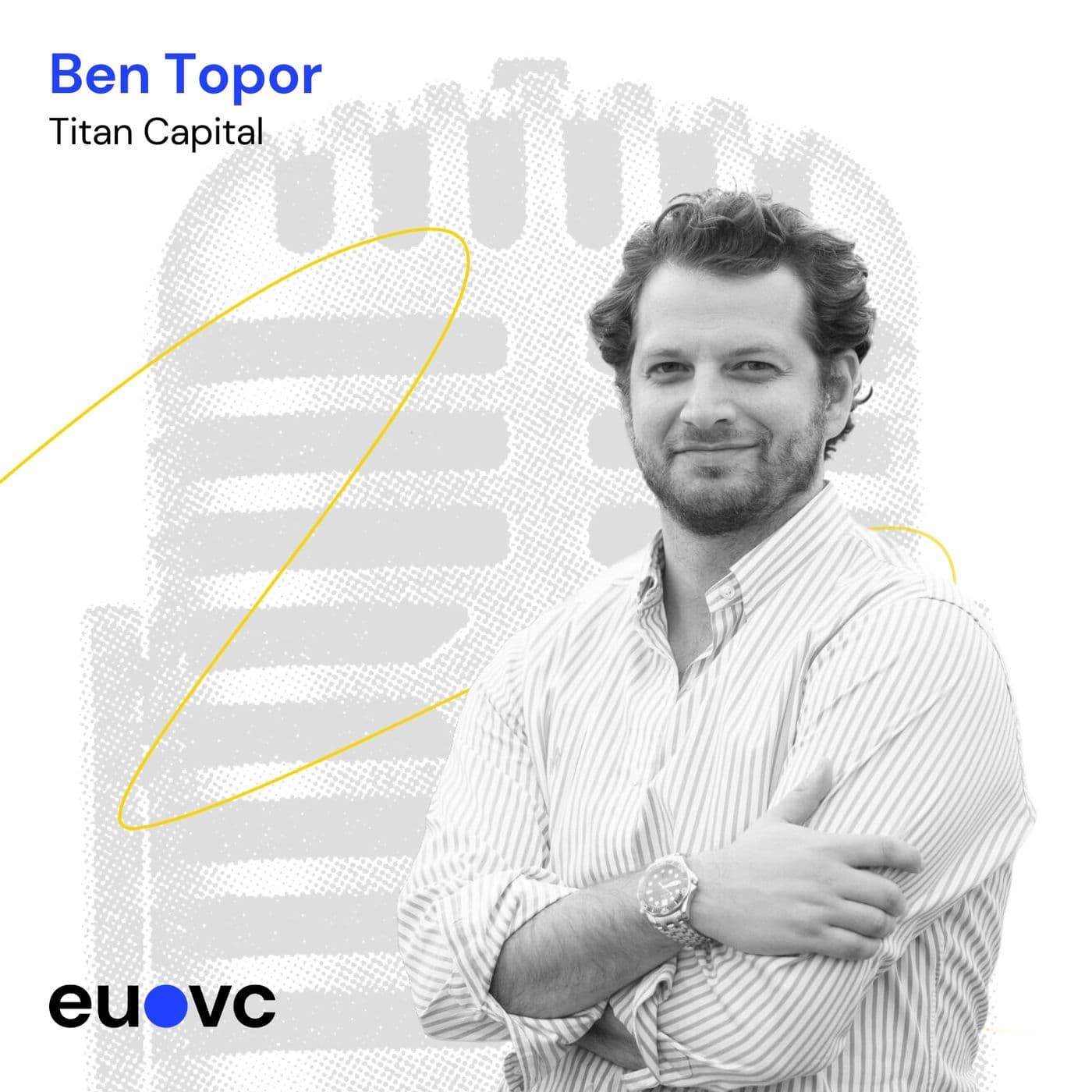
EUVC Podcast Episode #248 Notes: Ben Topor on Growth & Secondaries Investing & The Beauty of Flexible Mandates
Episode Overview In this episode, co-hosts Andreas Munk Holm and David Cruz e Silva engage Ben Topor, the Founder & Managing Partner at Titan Capital, in a detailed discussion about growth equity, secondary capital investing, and the strategic advantages of flexible investment mandates. The episode touches on Ben's background, investment strategies, and insights into the European venture capital landscape.
Key Details
- Podcast Title: EUVC
- Episode Title: EUVC #248: Ben Topor on Growth & Secondaries Investing & The Beauty of Flexible Mandates
- Guest: Ben Topor, Founder & Managing Partner at Titan Capital
- Focus: Titan Capital's approach to growth equity and secondary investing, as well as insights on market dynamics.
---
Table of Contents
- [Introduction and Background](#introduction-and-background)
- [Investment Philosophy](#investment-philosophy)
- [Market Dynamics](#market-dynamics)
- [Secondary Investing](#secondary-investing)
- [Pivotal Moments and Lessons](#pivotal-moments-and-lessons)
- [Conclusion and Key Takeaways](#conclusion-and-key-takeaways)
---
Introduction and Background
- Ben Topor's Journey:
- Military background in Israeli intelligence.
- Transitioned to investment banking, focusing on technology sectors.
- Founded Titan Capital in 2021 to pursue growth equity and secondary investments.
- Titan Capital:
- Currently raising a $50 million fund.
- Focuses on Israeli, European, and American firms in sectors like internet, software, consumer, and fintech.
- Backed by prominent investment firms, including Tiger Management.
---
Investment Philosophy
- Core Principles:
- Emphasizes solving pressing needs rather than focusing solely on founder capability.
- Believes in a bottom-up approach to identify market opportunities.
- Pivotal Book:
- "Crossing the Chasm" and its insights on technology valuation have significantly influenced Ben’s investing philosophy.
---
Market Dynamics
- Investment Strategies:
- Discusses timing the market and spreading risk as key factors in investment strategy.
- Highlights the importance of understanding the cycle in venture capital: when to invest in primary shares vs. secondary shares.
- Selling Shares:
- Factors influencing decisions to sell include market conditions and company performance.
---
Secondary Investing
- Secondary Market Insights:
- Describes the growing opportunities in secondary investing due to an influx of capital and an increasing number of stakeholders in tech companies.
- Discusses the motivations of different shareholders (e.g., angels, fund managers, employees) to sell shares.
- Flexibility in Investing:
- Titan's flexible mandate allows for direct and indirect investments, including LP positions in funds or SPVs.
---
Pivotal Moments and Lessons
- Key Lessons from Experience:
- Hard work and perseverance are essential for success in venture capital.
- Understanding the nuances of the market and who the key players are can lead to better investment decisions.
- The distinction between long-lasting businesses and emerging, threatening categories in the market is crucial for strategy formulation.
- Investment Strategies:
- Emphasizes the importance of timing and recognizing the right moments to enter the market, especially in secondary investments.
---
Conclusion and Key Takeaways
- Future of European VC:
- Ben believes Europe is poised for growth, with opportunities in sectors that are still maturing.
- The podcast highlights the importance of adaptability in investment strategies and the potential for secondary markets to thrive given current market conditions.
- Final Advice:
- Emerging VCs should focus on building relationships, staying patient, and being proactive in closing deals.
- Emphasizes the importance of a data-driven approach in identifying investment opportunities and the value of continuous learning.
---
Important Quotes
- "The number one risk for a company is there is no demand for the product."
- "If you don't know who the fish at the table is, you are the fish."
Upcoming Events
- An announcement for a virtual roundtable on January 29th, discussing the evolution of European venture capital with industry leaders.
Call to Action
- Listeners are encouraged to subscribe to EUVC, follow for updates, and participate in upcoming events related to European venture capital.
---
This episode not only sheds light on Ben Topor's insights and investment strategies but also provides valuable lessons for both emerging and established players in the venture capital space.
Written by AI. May contain mistakes. Listen to the episode to check what was said.
Transcript
Automatic transcript. May contain errors.0:00Hi, everybody, and welcome to the European VC podcast. I am David and I'm joined by my co-founder, Andreas. Today, we have Ben with us. Ben is the founder and managing partner at Titan Capital, an investment firm in Israel backing Israeli, European, and American companies by providing growth equity and secondary capital to world-class internet, software, consumer, and financial technology companies with a bottom-up approach to secondary and growth. I just want to pause here to say that EUVC stands with Israel condemning ads of terrorism and violence. The recent events in Israel have been heart-wrenching in their scale and brutality.
0:34Our hearts go out to all of those affected by these atrocities. However, this is not the focus of today's episode, nor something we'll deep dive on too much as we feel we wouldn't be able to give it proper credence here as a small side segment. So back to the focus of our episode, Titan. Titan is raising a 50 million US dollar fund, investing in companies and venture capital partnerships directly and via secondary transactions. and is backed by top-tier global investment firms, leading corporations and family offices. Of note, Target Management, which is a well-known investment firm that built an impressive track record in seeding some of the world's best fund managers, backed Titan.
1:12Yay! So Vic, congrats to Titan for being a tiger seed. And now, some words from our beloved sponsor. As 2023 draws to a close, join us for a landmark virtual roundtable with the true OGs of Europe on the evolution of European venture capital. Mark your calendars for this pivotal event on January the 29th. This is your exclusive opportunity to hear from some of our founding figures of the European VC scene. We're bringing together a panel of industry OGs to dissect the transformation, current trends and the future of European venture capital. Jaron Vala, founder of Target Global, one of Europe's few firms that count their AUM in the billions, will enlighten us on the evolving VC landscape and the emerging challenges and opportunities.
1:57Chris Wade from Isomer Capital, as one of Europe's true OGLPs, will dive into the intricacies of venture capital strategies in the changing economic climate. Kerry Baldwin of IQ Capital, as one of the most influential investors in European venture and early deep tech pioneers, will shed light on the tech-driven transformation of the venture sector, offering invaluable insights only few can give. Learn about the European VC history, current trends, strategies for success, and how European venture capital stands apart globally. This roundtable is a must for VCs, limited partners, and entrepreneurs alike.
2:33Don't miss the chance to hear from the best in class. Go to eu.vc, navigate to the events section, and register to be a part of this transformative event. And also visit EUVC for more details and to secure your place in the future of European venture capital. If you're listening in and love our show, don't forget to drop us a review, follow the pod and subscribe at EU.VC.
3:20Europe is a story of new beginnings, new beginnings. Let's start acting. This show is not investment advice, and the hosts of this episode may be invested in the funds and companies featured. Ben, let's start this thing off, as we always do, with how you got into venture. Thank you for having me, Andreas and David. I got into venture, I think, you know, it all started the army. In Israel, you're obligated to go to the army. In my case, I was actually seven years. I was an officer in the Israeli military intelligence. I was at the Central Research Division. It's a division that's in charge of researching threats and gives recommendations to strategic decision makers.
4:06After the army, I went to study economics in Tel Aviv University. And when I graduated, I was recruited to work in investment banking in Israel's largest investment bank. and initially they gave me the role that nobody wanted at the firm, right? So they gave me being responsible on agriculture business, which is not an easy investment banking area because there are a lot of movements, M &As and fundraisings. But nonetheless, I had a lot of luck when I started and I found myself at the right time, at the right place and I led what became one of the largest transactions at the time. I sold a business to Mitsui and that was promoted very quickly to be a managing partner and heading the technology, media, and telecom investment banking activity for the bank.
4:51And on a personal level, I led more than 35 transactions, if it's fundraising, it's an M &A for some of Israel's sought-after internet and software companies. And then after five years, I became an investor. I worked in one of Israel's largest growth equity funds. And after almost a decade doing investments and banking, I've decided that I built this competitive edge both from my experience from the army which is more analytical and research and at the same time very transactional from investment banking I thought that's the right time for me to strike out on my own and in 2021 I founded the Titan Fund We're very happy you did Let's continue on that journey and I'll ask you to share with us a pivotal moment We always ask this and I love it Share with us a pivotal moment in your life and how has it shaped you today as an investor?
5:43Sure. I think, you know, for me, I'm an avid reader. So one of my pivotal moments was actually reading the book, The Gorilla Game. It's a book from 1999 by Jeffrey Moore. Jeffrey Moore is very famous for many books like Crossing the Chasms and the like. But this book was a pivotal moment for me because it was the first book that completely explained why are technology companies being valued on revenue basis and not EBITDA basis, right? This is one of the biggest mysteries an investor can have when he enters venture capital. This book explains how high-tech markets work. Why is a certain company command very high multiple versus their comps, which are much lower multiple being traded on.
6:27And so this was a very striking moment for me to understand. The market happened 10 years ago, and still today, this book inspires me in anything I do. As the Titan Fund, we're looking for the titans, right? for the best of the best technology companies, companies that other companies are building on. So that's one of the things. Another pivotal moment in my career, I think, is my investment banking experience, where through the years I led the tech banking, I identified many strong inefficiencies of dislocations. One is just the fact that in my time back then, growth investing made much more sense than venture capital.
7:06When you look at different strategies, you see what's the return profile, the risk profile, and the time. So these three elements, for some periods of the market, make more sense, and the market is linked towards a certain strategy. But most of the time, there is a winning strategy. So that's the realization that there are certain elements and strategies which are just much better in a certain time. This was a pivotal moment. Another dislocation that I noticed back then is just, you know, back then in 2016, 2017, the premiums attributed to public markets were very high. You know, it didn't make sense to me that the private business can just go to an IPO and be valued twice and plus.
7:53So that's another, I think, realization that really was pivotal. And lastly, you know, very relevant to what I do today, just the dislocation between the primary and the secondary market. It didn't make sense for me throughout my career that on one hand, investing primary shares in a company with a bit more protection or a bit more, you know, entitlements should be valued much, much, much more than just owning common shares. So the difference and the arbitrage between those primary and secondary markets, it really was like a pivotal moment, I think, for my career. You just said the three things that I think are incredibly important.
8:33And we will, you know, I think that they're perfect to dive deeper on. But we will go to the Take a Stance round now and then we'll get back to them because I think they should be treated, you know, with quite a long segment. Take a start.
8:57So, Ben, give us your stance on the following quote from Simone from Borske Fund, which is if we say fix the system, I think it means fix the man. I can see why the quote makes sense. But in my perspective, I don't agree with these assets. The reason is, if you look holistically on how venture capital works, in my opinion, is that the number one risk for a company is there is no demand for the product. It doesn't correlate to the founder and the execution capability of the management team. It's really about solving a pressing need and finding a good solution, which is repeatable and across industries, etc.
9:38So it's really about finding the problem. Changing the CEO would not make much difference. By the way, there's a chain, right? First, you change the chief revenue officer. Then you change the marketing officer. Then you change the CEO. But that happens in every tech company, right?
10:02Thank you for that, Ben. So as Andreas said, you shared a lot there in your pivotal moments, and I think it's super interesting to deep dive on. I want to pick one. I'm sure Andreas will relist back into other parts of that, certainly. You talked about the dislocation between the primary and the secondary market, which I think in a time like today, it's an extremely interesting topic. So without diving too much into it, I'll just ask you to kind of those learnings, how are they playing today in the way you look at the market today? So again, going back to the cycle element, the VC cycle, sometimes primaries makes more sense, sometimes secondaries make more sense.
10:43The cycle changes primarily because of supply and demand of capital or supply and demand of capital to risky assets. That's the end of the day, the main driver. And I think today, looking at the coming one or two years, we just went through a hype cycle, right? In 2021 was the peak of the cycle, and now it goes down. The secondary market, I think, is very interesting to invest during this time frame because, first of all, there's a lot of capital being deployed in the last 10 years. Like it's very easy to forecast what is the tapped NEV that needs to be exited in the next 10 years. Right. So investments have been substantial.
11:27Secondly, is the amount of shareholders. Right. And the amount of shareholders in tech companies, it used to be the case that you have just a few. And now there are, you know, in each one of the ecosystems, if in Israel you have 250 funds and the UK you have more than 120. in Berlin, you have, again, more than 100. In each one of those ecosystems, you have like 300 engine investors plus, right? So that's a lot of stakeholders. And those stakeholders have their first needs. So as the market matures, there's more activism in portfolio management in VC. Would you also agree, Ben, that the sheer amount of new LPs into the asset class also affects that?
12:10because, again, you're talking about shareholders from the fund side, right? The investor side, but then you have the investors, investors, right? Is that something that you also see playing a role and how? Yes, definitely. Look, I think the incentive structure of a new player is very different than an established player. New players that are getting in the market, they want to prove themselves. They want to build a track record and they want the track record to be realized, right? So the new players will likely to sell earlier than the established players, right? because they want to achieve this, to secure their next fund, for example, to secure their activity.
12:45But I think the other element that really contributes to the proliferation of the secondary market is just the fact that there's two reasons to sell, as they say. Either things are going very, very well, or either things are going bad. So the uncertainty is just climbing, right? The IPO markets are cold. The investors that thought they were going to have an exit in a short time frame now realize they will need to wait longer with the risk of down rounds and liquidation preferences. So obviously, a lot of players are now exploring their options to see if they take some money off the table. So definitely uncertainty is one of the accelerators of the activity in this market.
13:26You stated a very fundamental premise, which was that, you know, for your whole strategy and thinking, that there are times where you want to be a primary investor and there's times where you want to be a secondary investor. Common wisdom is very often everyone shouting from the rooftops, you cannot time the market. You're almost saying the opposite when you say that there's a time when I want to do primers and there's a time when I want to do secondaries. Why do you think that the statement of you want to or you can't time the market is wrong? I think the statement you cannot time the market primarily relates to the public market.
14:00You cannot forecast the public market because it has few other effects. there's, you know, what is the fundamental and generating fundamentals from the companies and how the market reacts. And this is very hard to forecast because it's driven by, you know, trends and, you know, the discourse of the day. In the private market, it's actually the opposite. You can time the market, you can enter to businesses when they are down with the hope when they revive, you will have a bigger exit. So no, I don't agree with no timing as an investor in the market. I think in a sense, VCs are playing a bit of a different game in terms of their own business.
14:39They cannot time the market. They need to continue to invest. This is essentially a service for their LPs. There's a lot of consideration within the fund itself, how to time the market or how to spread your bets during the investment horizon. But that's another question. And what did you say? So your Titan has a risk profile, right? probably you might say significant in the sense that you do try and time the market, you do try and step in and out from the different asset classes or how we should put that different assets depending on how you see things moving. So whereas if you're an LP, you tend to say that you want to do...
15:24You don't want to go out of venture. You want to stay in venture. If you do Venture, you do deals every year, right? You invest into managers every year because you don't know exactly when what's going to happen, right? But then what you're saying is not as an LP. You want to be going in and out. You say, well, you want to go long. You want to go long on venture and do every single vintage. But then you also have a part of your portfolio where you want to be acting like you are, Ben, with Titan. and say, well, there's part of it that I'm okay with, that I am trying to here bet on my own ability to time the market.
16:02Am I right in saying that? I think so. I think that for venture, first of all, what type of venture? Early stage venture, for example, doesn't really fluctuate with the macro conditions. You can see that in the pricing, right? The pricing, you know, Michael Mappusin always talks about, you know, the pricing tells you everything. In terms of later stage, et cetera, I think it's quite different because sometimes things are overpriced. I think 2022 was a prime example of not to invest in overpriced companies. I do think people need to know when to enter because if you look at VC, this is well known that from 96 to 99 was the prime years to receive.
16:44You lost. If you didn't participate in those years in VC, you were probably lost major contributor to your results. And I think similarly to, you know, 2017 to 2021, in a sense, if you didn't participate in venture during this time, it's also a hurdle. So far out that you get your liquidity from venture. So you can't time it in terms of, you know, well, is it going to be in 2025 that I don't want to be in the exiting funds or do I want to be in the 2027? No, one needs to, you know, increase the velocity of investing at the right time. So, for example, if you've had, you know, an thesis about where the market's at, for example, 2018, for an early stage investability is entering in a price which is keeping almost constant through the cycles.
17:37Obviously, you need to invest more because the upruns will be faster. So those are the vintages that I think will likely, if you enter that cost, their valuation is very high. And presumably the companies are more mature because they were able to sell. Now going forward, this state of affairs, probably secondary investing will make a lot of sense in the coming two years. Just because you can cherry pick and to be a real bargain hunter, right? So you can cherry pick the best companies entering depressed prices. In our chat, Ben, I think it was the first time you and I spoke, you shared some cool kind of way of thinking.
18:19I don't necessarily want to call it a framework because I don't think it's a framework. But you kind of expanded a bit on the different shareholders as you just did now and the different reasoning for each one to sell and their timings to sell. And I think that's really interesting insights for many of our listeners. You talked about private investors, you talked about fund managers, of course, you've talked about management and employees, et cetera. So I'd love to kind of ask you again to go on that reasoning because I think it's incredibly insightful. So when you're a primary investor, you're dealing with management, right?
18:52You're investing in the business, they issue new shares. On the secondary market, I would say three buckets. One is the angel investors. So they have personal needs, typically after 12 or 14 years. The angel doesn't really have a very strong, frequent relationship with maybe a new CEO that was changed already. And he sees many new investment opportunities. So he's a bit tired. He's just tired. He wants to invest in other companies. So that's typically angels. In the same bucket of investors, you have fund managers. So fund managers have a specific timeline, right? So typically 12 years. And I was there.
19:32Like I was there in a situation when you need to sell down your assets in the end of the fund. And I can tell you it's not hunky-dory. Like nothing is great. The market is not there. Things are not there. But by the way, it's not only when the fund is ending. As I mentioned before, if you want to raise your next fund, you need to show results. So it's another motivation to sell out. The second bucket is the employees and founders. So management team. Those investors are typically concerned by personal needs, right? Dramatic life events and mainly buying real estate. I want to buy a house. That's more than 50 % of the reasons, as someone says.
20:14Another bucket is the LPs in funds. So they have, again, different considerations. I think for LPs in funds, we see a lot of regulatory issues, right? If it's China that stopped investing in overseas funds, if it's Russian investors that cannot reallocate their funds. In Israel specifically, we enjoy this because we have a very cosmopolitan high-tech environment. You have Chinese, you have the US, you have European. So you have a lot of those issues. Those are typically the reasons investors want to sell out. Could I ask you on that note of the different profiles? profiles, how are you, because it's always to me vexing, how you as a secondary investor source investments?
21:02Because, you know, it is quite a bit more difficult in quotation marks, at least the book is less well written and less well published, than how do you source great firmware investments? Yeah, it all starts at getting an understanding about what companies you want to own. So one needs to develop the skill, right, of choosing, selection, which companies you need to zero on. So I mentioned the gorilla game. So we're looking in our fund, for example, in categories. We're not looking at, you know, single companies. Which categories are there? Which one are not too competitive? Which one in their maturity level are not already commoditized?
21:42And within this small dynamic in the market, which is the likely winner? Okay. So you need to gather understanding is really connected to rigor analysis of markets and pricing and dynamics. Then you start the bottom-up approach. The bottom-up approach is looking at those companies, what's the best way to enter. I will not disclose here all our techniques, methods, structures, the know-how we have, and the value proposition you need to develop, but there's a lot of complexities because it's not only one needs to know the shareholders, you know, private shareholders and private companies. One also needs to know the founders.
22:23You need to add value to those founders. They need to want you to buy the secondary. Thirdly, you need to know how to transact, right? So it's not like, it's not an easy transaction in many cases. You know, profit sharing mechanisms. You need to maneuver between the management and shareholders. And lastly, you know, the due diligence you have is also much more complex than primaries because it's not only the counterparty that you need to understand this motivation. You also need to vet what are the others? Why am I seeing this? So you have many different types of level of diligence one needs to develop in order to do this efficiently and effectively.
23:06Ben, I'd love to ask you because you always say that the fund size determines strategy, right? And I think that what you just shared with us in terms of you are looking for the categories first, and then you're looking for the, and there you're looking for categories that are less competitive. And I'm looking, of course, at you doing a secondary strategy with a fund of 50 million in a market where, you know, I said it just before we went on here, I came just out of a call with Kemper from Industry Ventures, who just raised 1.4 billion, partly for secondaries, right? And what I spoke to him about was in secondaries, it's very much for a player like you and for many of the new players we're seeing coming to the market, the minimum ticket of the usual secondaries investors is oftentimes 5 million.
23:58So that's a, there's a huge opportunity there. And that's at least my thinking for an astute investor to come in and say anything below 5 million is very difficult to sell in, especially in Europe. But I'd be curious to hear if that's also what you're finding and that's the opportunity that you're seeing. Yeah, like this is a part of it. I think a major contributor to the market opportunity for us is, as you said, the secondary market is dominated by mega funds, huge funds. You know, as a fund manager, some of my peers are concerned to increase their A-WIM, right? That's our main concern today, to increase their fund sizes.
24:39And yeah, that's a problem in secondaries because actually the most profitable transactions in the secondaries is with counterparties that don't have the information as an institute investor. They don't have the influence. They don't have the visibility to the understanding of the public markets. Their viewpoint is more short-sighted than a long-term investor. So, yeah, definitely. That's the most, you know, I think the small scale secondaries is probably where you can find the biggest bargains. I want to ask you another question before we go shout out. And that is, you said in the beginning, actually before this segment, a point on we normally price on the back of EBITDA, but then here comes venture and we price on the back of revenue.
25:30and that was perplexing for you. It was one of your pivotal moments realizing that, okay, there's a good reason to do this. Now we've kind of shifted into a time where everyone's talking about profitability again and some would even go so far as to shake their head at the fact that you would price an IPO-ing company not on profitability, but on revenues. So Ben, I'd love to hear your take on that. The market, where we're at, Do you think that, you know, that we're overcompensating and going too far? And for that reason, there's an opportunity? Enlighten me. I think you're right to allure that because, you know, in the end of the day, there's a very nice McKinsey report about what's the probability to have a large exit for a certain, you know, growth rate.
26:20Okay. In software, in Internet, if you don't grow, you die. because technology markets are moving so quickly. If you grow slowly, you don't have the luxury of not growing. So in that sense, growth is more important than profitability, but there's moments in the cycle that only profitability is important, and there's a moment in the cycle that a combination of growth and profitability is the nice ratio to aim for. So if you say my, you know, and maybe other central scenarios that, you know, probably four or five years in after the crisis like you had in the 2000s, the technology market will come back.
27:04So if that's a central scenario, you're not only looking forward to investing companies that are going to appreciate fundamental level, the revenues, if it's 100 % year by year, 80%, but also you can expect a multiple expansion. And I think that's a very interesting point in the market right now, where you can enter into great companies in low multiple and enjoy both of those elements in a few years. In Europe, we have for a long time not had DPI in Europe, and we have a small short track record for DPI compared to the US. You're investing in both Europe and the US. You don't care whether it's here or there.
Read the full transcript
27:45So an asset in Europe is being compared right up against an asset in the US, just as apples would be to apples. I'd love to ask you, how do you think about the exitability of European startups? Because it is notoriously more difficult to exit a startup in Europe than it is in the US. We have many great companies that go on to be great companies that are not exited. I understand. And as you said, there are differences, but I think these differences will decrease in time. And the reasons that those differences will decrease is because we're really talking about the technology markets. It's not like we need to fly or call up or see all the clients, right?
28:35Those companies are beginning to be more global. People are, you know, for Internet and consumer technology companies, people just, you know, self-serve through the Internet. So as the markets are becoming more global, I don't think, you know, what is a European company? You know, what does it mean? The HQ is in Europe. The customers are in Europe. So it's really like I don't think, you know, in the long term, there will be a difference in terms of their exit opportunity at the long term. But at the same time, I do think there is a massive opportunity to invest because, you know, the penetration rates and you see many categories that are mature in the US starts to enter to commodity stage, has single digit penetration rates in Europe.
29:20It's very easy to say, aha, this worked here in the U.S. Why wouldn't it work in Europe? And many of those tech companies in the U.S., you know, Europe for them is like, you know, we're going to reach there maybe after an IPO. We're not going to do this, you know, in round A or in B or in C. And especially for companies that are serving enterprises and you need to know many different languages, right? So there's a natural barrier to entry that I think a smart investor can choose the timing to take advantage of right now. Ben, thank you for sharing that. I don't know if I'll get in trouble for saying this, but I can't help but think how timely it is that we're having this conversation.
29:58And I just got a WhatsApp kind of confirming our first LP secondary deal. So that's kind of cool. That's kind of exciting. So I love that that happened. But now let's go into our shout out segment.
30:18Ben, I'd love to ask you to give a shout out to a co-investor angel or LP for being awesome. And of course, do share the story behind that awesomeness. Yeah, for my sake, it will be definitely a shout out to Mr. Rory Khalabi. He was the chairman of Agri Capital Corporation in New York City. When I started out my career, I was actually assigned to work very closely with Agri Capital. And he was really a mentor for me. So he took me with him, although the age difference couldn't be more greater. But, you know, I've seen how he's handling himself with management teams and in M &A negotiations. And I will not forget how he really led the processes.
31:03He was a real investment banker, like with a tradition. And this was inspiring. And I learned a lot from him until today. I always tell my team, like, examples from that time.
31:17I would love, Ben, to take us into our three biggest learning segments. And I'll ask you just to list the three to us first, and then we'll dive into them afterwards. My biggest lessons, I think, from the last 10 years should be one of just hard work. That's the recipe for success. The business is a marathon run. It's not about, you know, you shouldn't be discouraged because of tactical failures. There is a long-term play. And each morning is a new morning that you need to take yourself and move forward. You cannot be stuck. And I think it relates to every sector, but it's really, really important for business.
32:00The second thing that I learned, you know, there is a saying, if you don't know who's the fish at the table, you are the fish. they are talking about this sentence in poker but it's really relevant for VC VC is a very competitive game you have a lot of smart people playing this game at the same time one needs to understand why is he seeing an opportunity is he like the first one or is he the last one is the company, is it like real ARR is it CARR, is it booking is the financials, where do they put their you know, that the customer support? Is it in codes? Is it in sales and marketing? You know, you can take a really, really bad company and turn it to be the best.
32:46Really, it's really, you know, there's a book in the 2000s called Selling Air. I think this is really something you see in high-tech markets. Maybe the third thing that I learned is, you know, there's really only two ways. And I think there's a semi-sentence, there are only two ways to make money in software, which is one is bundling and there's unbundling. Only two ways. And this is a sentence that was said by Jim Braxdale, who was the CEO of Netscape at the time. And I think it's super relevant. Things don't change. It really depends which cycle you are. If you're in the market is in its peak, all the enterprises are seeking to optimize revenues to be upside-seeking.
33:34So they will seek to have more vendors that will allow them to capture this opportunity. They will seek a best of breed approach just to buy the best Vodax, best vendors. In a downturn, companies are more cost cutter. They are downside mitigating. So they will seek a platform solution that gives a good enough proposition to the enterprise, but they will be much cheaper. So there's only two strategies in software. And this sentence really was profound for me, and I see that every day. I want to dive into the second one, which is if you do not know who the fish is at the table, you're the fish. I want to ask you a very frank question, because as a secondaries investor, I think you're often at a table with quite a few fish, especially when you're not looking at the very large transactions.
34:29So I'd love to ask you, could you tease out some of the core things for the fish at the table to be thinking about to maybe level up from not being fish? So I can tell you our approach to things. I cannot speak to others. So because there's a lot of, you know, investing, you're playing in many dimensions at the same time. My partners and I know each other for more than 20 years. We met in the Army, the intelligence in the Army. And we bought this approach of being an investigative investment firm. It's not only to look at the opportunity, it's to look, you know, to find untraditional ways and signals in order to understand the situation.
35:18Like if someone says everything is well, something is weird, right? You need to ask yourself, what do I don't know? What is not telling me? If the counterparty says, I need to close down my fund, does it really? Can you just have an extension? Someone says, I need money. Does he really need money? There's a lot of elements that you need to be cognizant. This is a game. And you need to know how to form an opinion about the situation. And everyone needs to develop their own methodologies for themselves. I cannot tell you the secret sauce because I don't have it. We just developed our own things.
35:59Could I ask you, because you did link it to your time in the military and in the intelligence space, could you tell me a bit about how you utilize that experience as an investor today? Yeah, I think from what can I, I think things that I took and inspired from the army is not necessarily, you know, definitely not the technology, right? It's so personal. I love that. Well, we've got a pretty sick text tag that I brought out on a USB key when I left. Yeah, so definitely not things like that, but the principles and the methodology of, you know, thinking about the data in terms of, you know, data sets and how to slice it, you know, how to systematically monitor sets of data and what those changes in sets of data tell you?
36:49What movements can you see in the market if you test the sets of data in a timely and consistent manner? Who is the individuals? What are the different entities? How much time they invest in each entity? What are the waterfalls of those companies? You can generate an understanding of the counterparty. Definitely, this type of approach can lead you to forecast or to generate ideas of what secondary opportunities will happen in the next one or two years. And this is something we're trying to do this in our funds. And it's definitely inspired by our intelligence service. On your website, it states very clearly that part of the beautiful thing for Titan is that you can do anything.
37:38You have a very flexible mandate. For our audience who are listening in, who are looking for secondary investors, if not constantly than once in a while. How should they be thinking about you ticket size, stage-wise, that type of thing? And GP, GP, Kerry, you're buying that type of thing as well? Yes, we're super flexible in terms of investing. We either invest directly in a primary round, more as a co-investor, if you will, and as a secondary, both directly in the company or indirectly as buying an LP position if it's a tail end fund or an SPV. The ticket size we deploy is, you know, up to$5 million.
38:20But you need to remember that, you know, this is a fund and my investors are very, very large. Not only that, you know, some of that were mentioned earlier, many of them are very large. We can co-invest with our LPs. So we do examine larger transactions. You know, the first transaction we did actually was large, you know, more than, you know, it was$14 million. and so we do examine larger transactions. And how small can you go? So that's the thing that we're proud of. Like we don't have minimum. Like if there's a company we like, for us it's accumulating, accumulating positions in the companies we like.
38:57So we don't really have a minimum. The only restraint is that you cannot be, you know, it's not a 50K. We need to deploy the fund. But we're not concerned. We're not concerned in participating in the board of directors. We bring our value differently. We are actually, you know, we are very thoughtful. You know, we actually bring a business plan to the company, how we're going to help them. But we don't do this as a bold participator. And we don't have like a minimum stake requirement like growth funds, right? So we don't need to be 20 % of the company. So I think those two elements allows us to be super flexible, to move super quickly, and to bring outsized value.
39:40I can tell you that some of the portfolio companies don't expect a supply of value they can pursue. I'm going to ask you a question that you might just say, I can't reply to that, Andres. We saw an opportunity to get into SpaceX. I would love to ask you how you think about SpaceX without having taken a deep dive, necessarily. I don't know if you have. I'll tell you my approach is to find those growth companies early so you can be more confident that you can reach your return target. What is your return target? If your return target is 3x return, I wouldn't encourage you to invest in billion-dollar companies.
40:27That's just the historic notes, right? So you don't have those amounts of exits in these prices. So, again, there's the notion of base rates. How many companies reach the stage and do this kind of exit? We're investing from early growth. So as soon as a company, which is$10 million, which is really like what we say the initial market fit. And this is the stage we look at a company up to late stage. But it's really, it's not about the specific company. It's about just the fact that SpaceX is definitely in their later stage or maybe too late for an investor that wants to hit a fund return. That was more from the angel perspective.
41:11Okay, I couldn't tease you into saying a bit about how you think about facing very long. All right, we can go quick fire on that note, everyone. And now, the quick fire.
41:33What advice would you give your 10-year younger self? I think just relax. I think that's very important that thinking long term, right? And taking one day at a time, everything will play out. I think that's very important for young entrepreneurs. They want to accomplish, to conquer the world, right? They don't need to lose sight of what's important in life, right? I think career is very important, but other things are also important, right? So one needs to bear in mind all of this. secondly you know just investing yourself i think reading books for me was really like how i built a very profound base of my knowledge right and there are so many books out there there's a lot of opinions and so many writing i think in a sense a venture become you know venture judgment has been talked about unparalleled than you know 10 years ago right so you can really get very smart in venture.
42:32So I really recommend just reading. What are your top tips for emerging VCs across Europe who are now fundraising? Well, definitely VCs, emerging managers that are now fundraising are now addressing their biggest challenge, right? Fundraising for VCs is the biggest challenge. You know, just tactical advice is, you know, first of all, don't wait for, you know, if a final close or first close to the closing. Do it on a rolling basis. And this is how you don't need to have everyone move at the same time at the same pace. You just meet an investor and sign them out. Secondly, I really recommend using DocuSign or other similar service.
43:18I think it's one of the most embarrassing things as an early VC is to follow up. You meet with an investor, he's not moving forward, you want to follow up. how many follow-ups should you do, right? That's a big question. And I think those services are automatically making the follow-up easier because they automatically follow up. And I think that really was an advantage starting to use this. Thirdly, maybe just realizing it's a numbers game. You need to meet a lot of people. Not all the investors are looking forward to investing in VCs or for earlier managers, et cetera. So you need to have patience and to grow the top funnel.
44:01The top funnel is very important. And maybe the most important thing, when you're right at the end, do everything in your power to close, okay? I'm saying this because when you reach the final few meters and something is stuck, don't, as a fund manager, don't be shy to become personal. to say to an investor, trust me, it will be fine. Things like that. I think people are very business, they're playing the game, but they need to, at the last stage, if there's something very, very important, get out of themselves and talk openly because it's a personal business. And what's the most counterintuitive thing you've learned since you've been in venture?
44:50First of all, not asking other receivers for recommendations. That was an early realization I had. Because when you talk to VCs and you ask them, who do you recommend? Their incentive is to help their companies that are not necessarily the best performers. So wanting to be, again, to realize this is the situation. They will invite you to the companies not necessarily you want to be invited to. So that's one. At the end of the day, the founders is everything. It's very, you know, I think for me, you know, when you need to have, you have a lot of moving parts. Who has the largest power in the room?
45:33And this is the CEO of the company. That's the founder. It's not the investor. It's not the other counterpart. It's not the employee. The CEO will listen to him at the end of the day. Another realization is just the fact that it's a flavor business, really. You know, there's a few strategies in VC. You can either aim to invest in sound, long-lasting businesses. You can follow a lot of Warren Buffett-style investing and see, is the return on equities compounding faster than your competition? This is one way to win the game. The other way to win the game is not that. It's to look for emerging categories that are threatening, not necessarily with the real base, but threatening for big companies.
46:20Those categories, it's really like the book, The Innovators Dilemma. The big enterprises would not risk it. They would buy it out. So that's a different game than really building a business. It's building a threatening business that talks in the slogans and has a lot of buzz. And yeah, one can think about in this cycle, when the money is very expensive or the money is very cheap, what type of businesses you can build? they can grow quickly and make enterprises scared. So that's another realization.
47:18OGs of Europe on the evolution of European venture capital. Mark your calendars for this pivotal event on January the 29th. This is your exclusive opportunity to hear from some of our founding figures of the European VC scene. We're bringing together a panel of industry OGs to dissect the transformation, current trends and the future of European venture capital. Jaron Vala, founder of Target Global, one of Europe's few firms that count their AUM in the billions will enlighten us on the evolving VC landscape and the emerging challenges and opportunities. Chris Wade from Isomer Capital, as one of Europe's true OGLPs, will dive into the intricacies of venture capital strategies in the changing economic climate.
48:00Kerry Baldwin of IQ Capital, as one of the most influential investors in European venture and early deep tech pioneers, will shed light on the tech driven transformation of the venture sector, offering invaluable insights only few can give. Learn about the European VC history, current trends, strategies for success, and how European venture capital stands apart globally. This roundtable is a must for VCs, limited partners and entrepreneurs alike. Don't miss the chance to hear from the best in class. Go to eu.vc, navigate to the events section and register to be a part of this transformative event.
48:36And also visit EUVC for more details and to secure your place in the future of European venture capital. They are finally... Tear down this wall. It's more than just an alliance. This is a union of values. United and determined, we can serve as a model for other regions of the world. The nature of a problem requires a European response. Europe is a story of new beginnings. New beginnings. Let's start acting. Acting, acting, acting, acting.
From the publisher
Titan is raising a 50m USD Fund, investing in companies and venture capital partnerships directly and via secondary transactions and is backed by top-tier global investment firms, leading corporations and family offices. And, of note, Tiger Management, which is a well-known investment firm that built an impressive track record in seeding some of the world's best fund managers, backed Titan.
Chapters:
00:00:00 - Introduction and Event Announcement
00:02:47 - The Future of European Venture Capital
00:05:50 - The Pivotal Book: Crossing the Chasm
00:08:51 - The Importance of Solving a Pressing Need
00:11:57 - Factors affecting investment strategies
00:14:50 - Timing the Market and Spreading Your Bets
00:17:58 - Different Considerations for Selling Shares
00:20:48 - Strategies for Secondary Investments
00:23:50 - Finding Bargains in the Secondary Market
00:26:56 - Investing in European Startups
00:29:57 - LP secondary deals
00:36:21 - Winning with a Data driven approach
00:39:21 - The Flexibility of Investing in Growth Companies
00:42:37 - Fundraising Challenges for VCs
00:45:48 - VC Strategies: Long-lasting businesses vs. Threatening categories


