
In short
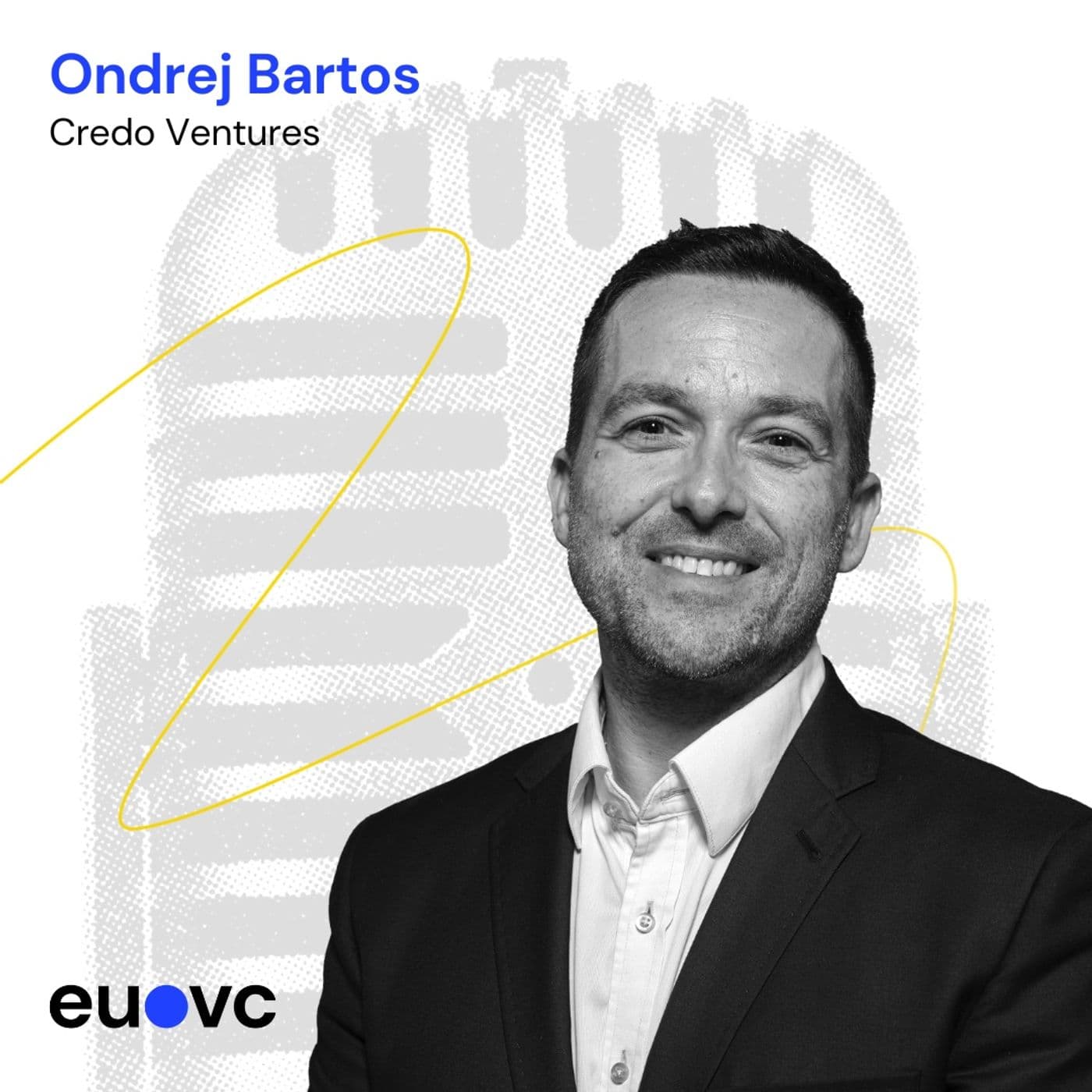
EUVC Podcast Episode Notes: EUVC #250 - Ondrej Bartos, Founder of Credo on Building A Venture Firm with A Lasting Legacy
Episode Overview In this episode, co-hosts Andreas Munk Holm and David Cruz e Silva engage with Ondrej Bartos, a founding GP at Credo Ventures, which manages a €75 million seed-stage venture fund based in Prague. The conversation explores Bartos’s journey into venture capital, the challenges and successes he has faced, and the ethos behind building a venture firm that aims for a lasting legacy.
Key Participants
- Ondrej Bartos: Founder and GP at Credo Ventures
- Andreas Munk Holm: Co-host
- David Cruz e Silva: Co-host
Episode Details
Introduction
- 00:00:00 - Ondrej & Credo Bio: Overview of Credo Ventures, including its €250 million AUM and portfolio of notable companies like UI Path and ProductBoard.
Journey into Venture Capital
- 00:04:06 - How Ondrej Got Into Venture: Bartos recounts his venture journey starting from the late 90s, leading to his first VC role in 2005 with MCI.
- Pivotal Moments in Career: Key experiences that shaped his approach to venture funding, including:
- The success of Avast as a local company.
- Learning from failures, including his first unsuccessful investment.
Insights on Entrepreneurship and VC Dynamics
- 00:09:18 - The Challenges of Being an Entrepreneur and VC: Bartos reflects on the difficulties faced by founders and investors alike, acknowledging the competitive nature of the VC landscape.
- Collaboration vs. Competition: Discussion about the dual nature of relationships among VCs and the focus on maintaining a collaborative approach, even amidst competition.
- 00:12:07 - Struggling with Success: How success can lead to its own set of challenges and the importance of managing expectations with transparency.
Credo’s Ethos and Approach
- 00:24:44 - The Meaning of Credo: The term "Credo" suggests belief, and Bartos emphasizes a founder-centric belief system at Credo Ventures, prioritizing support for entrepreneurs.
- 00:27:15 - Supporting Entrepreneurs: The firm’s commitment to nurturing startups through thick and thin.
- Importance of Passion and Hard Work: Bartos highlights that genuine passion and diligent work are crucial to succeeding in venture capital.
Future Directions
- 00:34:44 - Staying as a Seed and Pre-Seed Fund: Credo’s philosophy to remain focused on early-stage investments and the reasoning behind potential fund size adjustments.
- 00:37:13 - Building Towards a Franchise: Discussion on building a sustainable venture firm that can continue thriving beyond its founders, including the integration of younger GPs into the firm.
Experimentation and Learning
- 00:39:53 - The Logic Behind the Crossover Fund Experiment: Initiatives to explore late-stage investments as a means to enhance returns for Credo’s portfolio.
- 00:45:08 - Failure in Internships and Startups: Bartos shares lessons learned from various startup failures and how they contribute to a culture of resilience.
Quickfire Round
- Advice for Emerging VCs: Standing out and establishing expertise is vital for success in a saturated market.
- Counterintuitive Learnings: Not all charismatic founders are effective; charisma can be learned, indicating a deeper evaluation of founder capabilities is necessary.
Key Takeaways
- Importance of Founders: Credo’s ethos revolves around supporting innovative founders and creating value through collaboration.
- Navigating Competition: Bartos advocates for a more calm and collaborative approach to deal-making, emphasizing that not every competitive situation warrants a high-stakes battle.
- Long-term Vision: The ultimate goal of Credo is to establish a lasting legacy, ensuring the firm continues to thrive through proper succession planning.
Conclusion This episode provides a deep dive into the journey of Ondrej Bartos in the venture capital space, shedding light on the intricacies of building a firm with a sustainable future. The discussion emphasizes the balance between passion, hard work, and collaboration as pivotal factors in navigating the competitive landscape of venture capital.
Written by AI. May contain mistakes. Listen to the episode to check what was said.
Transcript
Automatic transcript. May contain errors.0:00Hello, everyone, and welcome to another European VC podcast. I am David, and as you know, I'm joined by my co-founder and co-host, Andreas. Today, we have Andrei Bartos with us. Andrei is a founding GP at Credo Ventures, a 75 million euro seed stage venture fund in Prague and a bit elsewhere to back central, eastern European tech startups, of course, with a global ambition and kick-ass teams. Credo are investing out of fund four with a total of 250 million euros in AUM and an established portfolio of 60 companies or so and notable investments, including, well, the famed UiPath that you all know, Product Award, Price Effects, Resistant AI, and 11 Labs, among many others.
0:39And now, some words from our beloved sponsor. AppyDay is the leading all-in-one ESG platform for GPs. Central to AppyDay's philosophy is that ESG for your portfolio companies must be relevant and value-adding, making you a partner to your companies, not adding more reporting burdens. AppyDay offers AI-led ESG reporting, full SFDR compliance, including disclosure templates, EU taxonomy, carbon accounting, due diligence assessments, and most importantly, tangible tools to help your companies like ESG resources and policy templates. See why over 1 ,000 portfolio companies leading Article 9 funds and$100 billion of AUM trust Appaday to manage ESG and sustainability across their ecosystem.
1:26Take a free product tour at apide.com or book a No Obligations ESG VC strategy session with one of their experts. If you're listening in and love our show, do drop us a review, follow the pod, and subscribe at EU.VC.
1:53United and determined, We can serve as a model for other regions of the world. The nature of a problem requires a European response. Europe is a story of new beginnings. Let's start acting. This show is not investment advice and the hosts of this episode may be invested in the funds and companies featured. So, Andre, before I ask you to tell us about your journey into venture, I want to just settle a dispute, and it's not one between David and me, but between many in the ecosystem. Credo or Credo? Okay. So, hi, guys. I'm buying time. I don't know. Like, both count. It's a similar question as whether it's Andre or Ondraj.
2:48I actually answer to both. And similarly, Credo or Credo answers to both. How would you say it in Czech, though? Oh, it's not a Czech name, but... Yeah, right. It's Latin, right? It's kind of Latin. We thought it was just a cute name to have. I think we started with Credo mostly, and now we settled at Credo. We might go back to Credo. So it's, you know. That's very smart of you. It's like you can just revamp your brand identity with new colors and stuff and also change how you pronounce it. I like that. I say Credo because I was such an Assassin's Creed fanboy when I was younger. And I just remember that game every time I think about your fund.
3:34It's not a bad association in my brain, at least. Good to know, David. With that said, now, Andre, please tell us your story about how you got into venture. I got into venture a long time ago. And actually, so I've been a VC for over 18 years now. But the story started earlier than that. I think the first time I heard the term was in the late 90s. And then I got closer during the dot-com bubble when I was a part of a movement called First Tuesday that nobody remembers anymore. But it was like a series of networking events and sort of an ecosystem builder, early ecosystem builder. I got very interested and fascinated by the world of venture.
4:34So I was reading books and I was following blogs and I was following especially the US and UK scenes. And eventually I became a VC in 2005 when I started my cooperation with MCI, which was a Polish venture fund. And Andrei, you have a very non-Polish nor Pragian way of talking, meaning you sound very U.S. Do you have a U.S. background as well, just for our audience? I do not have a U.S. background. I think it comes down to watching too many Friends episodes. You've been in deep mourning the last couple of days then? Yeah, I've been sad. Yeah, we've been we were to the audience. We're recording this shortly after the what is Chandler Bing's real name?
5:37I can't remember. Matthew Perry. Yes, Matthew Perry. Yes. So I disrespected. OK, Andreas, the real name is Chandler Bing, right? Yeah, exactly. There you go. Second personality. Yes, that's that's probably all right. Amazing. Now, Andre, I want to take us into asking you about your pivotal moment in your life. and how it has shaped you as an investor. And maybe this is even Kratos' life because I think the two of you are just as intertwined almost as Chandler Bing and Matthew Perry. As we've already learned, one of my pivotal moments was when I discovered friends. In such a long career, I can think of many pivotal moments, like almost indefinite number.
6:23But I guess I can mention a couple. I think one is definitely around ambition, and that one would be connected with Abast, one of the first big success stories coming out of this region. I've been friends with Avast founders for a long time, all the way from the 90s. And the pivotal moment was when I realized how successful Avast actually became when they acquired AVG, you know became a multi-billion dollar company and they achieved it you know from their Prague office from their Prague you know dark den of an office and it was pivotal because I you know I saw it was possible I saw it in reality that it is possible to build amazing companies from Prague, not Silicon Valley, not the US, not the UK, but Prague.
7:42Another pivotal moment, I'm sure, was my first unsuccessful investment, the one that failed completely and was 100 % write-off, just because it helped me sort of shaped my relationship to risk and it taught me how to you know accept failure is very important in venture and then like more recently our investment in uipath and uh and the success that followed was definitely pivotal for both me and Credo, also for the whole CE region and Romania. It was just pivotal on many, many fronts. I couldn't put it better. I think it was, and even for the way people look at the region. Now, Andre, I'd love to take us to the Take a Stand section.
8:44Take a start.
8:53Andre, I'd love to ask you to comment on the following statement by Sean O'Sullivan from SOSV. Entrepreneurship, it's a blood sport. The founders are constantly battling in the arena. And ultimately, the majority of them are not going to be successful. I agree.
9:13I agree. I mean, I started as an entrepreneur myself. I never made it big. I never had any notable success as an entrepreneur. But I did go through it and I did spend those several years of hustle and roller coaster of a ride and sweat and blood. I think when I was just trying to make things work and I was pulling all-nighters and, you know, 120-hour work weeks with, you know, mixed results. Sometimes, you know, a little bit of success, sometimes a complete failure. So I think this is correct. And I went through it. I remember it. And I think it actually makes me a better VC, I believe. The fact that I've been through it and, you know, yes, I never built anything close to a unicorn.
10:30But I do remember the tough beginning. So I can relate.
10:39Can I ask you, Andre, and we had a conversation about this at HowToWeb at the Q &A stage, because we were talking to a couple of emerging managers there. So I want to ask you, and it might be slightly more controversial than answering yes, yes, being an entrepreneur is a blood sport. How about venture? Being a VC, is that a blood sport? Oh, yeah. Wow. At the end of the day, it's a lot less sexy than it appears. It's a lot more of hard work and less of cool parties than what it appears. It's a tough business. It's a business with an incredibly long feedback loop. So, you know, for most people, you know, it's just painful because you don't see the results and a year passes by and five years pass by and, you know, you still are not the, you know, Michael Moritz or the super successful, you know, flashy person.
11:49you still kind of struggle and you're still not sure if this gamble will pay off or not. So I'd say totally, yeah. Yeah, because I thought when I asked the question that there's two sides to it. There's that one that you just touched on now. And then there's also another side, which is collaboration versus competition, VCs amongst. And I think we tend to try and say that we're all collaborative and we high five when we meet at events and we even hug, I think, many of us. But in the end, there's also competition between firms. And especially, I think, if you're a smaller firm and less successful firm, you might not see it as much as someone like in your position, because I think people that would try and get money from you would also try and get money from SeedCamp or from Early Bird.
12:48And you're all three big boys and you're very successful. So I'd love to ask you that relationship between VCs and maybe especially the tier one VCs of seed stage investing in Europe. How do you see that and how do you navigate and how do you think about it? Well, I mean, you're right. I mean, you know your stuff. It can get pretty competitive, especially on the deals that are considered hot. or deals in what's currently considered hot space. We've been in competitive situations with both Seedcamp and Early Bird and with a hundred others, out of which I guess I don't know what you guys consider tier one, but with tier ones as well.
13:42And sometimes we won, sometimes we lost. I'd say, no, I'm not going to do stats for you. um sometimes we lost sometimes we won i personally try not to get too passionate when it comes to you know competitive situations i at the end of the day even some of the hottest you know deals turned out badly and some of the completely cold deals turned out great So, you know, I usually try to calm everybody down and get more to, you know, the collaborative mode. Or if that's not possible, then, you know, try to be a bit fatalist there. We actually lost it last week in a very competitive process. But, you know, hey, it's not a success until it exits.
14:48That's the important. I feel like some of, especially like the emerging VCs out there are spending way too much energy and sort of mental capacity on, you know, fighting for getting into deals as opposed to then helping the companies and, you know, or guiding them towards successful exits. Writing a check is the easy part. Yeah, you wrote a check, but then what now? Do you think it's also kind of because of the way just venture works, such long feedback cycles and for an emerging VC like first fund or second fund, the best proxy that's kind of available there aside from their own past track record, of course, is while we are in this deal and these big names are also joining or joined after or whatever, right?
15:46You think it's just kind of a byproduct of the way the industry works? I think so. I think it is a byproduct. How do you navigate that with your less senior team members? Because you're saying you try to always put ice on whatever the expression is in English. I can't remember now. Because, you know, people get passionate and excited. Oh, fuck, we lost that deal, man. Well, I mean, as I said, I'm trying to cool everybody down. How exactly? Like, sometimes it works. sometimes it doesn't. Sometimes people get so passionate and excited about a deal that it is almost impossible to cool them off. But that's life.
16:28I'm sorry for using this phrasing, but hitting it big with your iPad change anything in how you think and act as an investor when it comes to this rivalry around deals? Some people would say, well, it was transformative once I made the money that I need to make. Since then, my outlook on life and how I work with others have changed. I'm pretty sure it did change me in many ways. To be quite honest here, I haven't spent much time self-reflecting on what exactly has changed and how. If you mean that I might have become less hungry how dare you andrea i mean that i'm wiser than yeah that sounds about right it's definitely changed me so in this context you know in uipath i have seen many very competitive hot rounds, which I had the luxury of not having to fight for because those were series B, C, D, E.
17:51I don't even remember where it stopped, but pretty much all of the investment rounds after seed and extension, which we did, all of the follow-ons were super competitive. So I could make my popcorn and sit and watch all the big brands and tier ones fight to get in. And so I guess this alone has changed the perspective a little bit. How do you think then, because knowing that this is the trajectory of a portfolio company that really shows the right metrics and having seen that yourself, how does that change how you think about communicating around your portfolio publicly? Because I run around calling myself the LP hype man, right?
18:52So I hype everyone up and there's typically room in a GP investment or in an LP investment. So for that reason, it's not a big problem for me. But if you have someone hitting the stride like UiPath, you're maybe not in a rush to invite everyone in by also letting the world know that they're doing amazing. I have two perspectives on this. One is I have never personally, I have never been much of a hype man myself. I've, you know, ever since our first fundraising or fundraising of Fund One, I've been more on the side of, you know, guys, this is huge risk. You know, think twice. I'm not sure you want to do this.
19:41Like, you know, we might lose it all. Like, actually lose it all. So I'm always more on the side of trying to manage the expectations and, you know, be on the cool, cold side rather than hot. My second reaction is we at Credo, and I think I can speak for Credo as a firm, are very founder centric in many, many ways. We started as a founder-centric, founder-friendly VC firm, and we've always tried being one. And a part of that is also that we are pretty much leaving this up to the founders to decide. Daniel at UiPath was a very transparent person. So he shared the metrics with just about anyone on the way.
20:51And he just believes that he can always sort of outperform the expectations and forecasts and everything. And he did. There are other founders in our portfolio that are very secretive about the performance numbers, and we completely respect that. We try to guide them. We try to be the sounding board, and we tell them advantages and disadvantages of both approaches. But we never are the drivers for hyping something up. I guess this is the Eastern Europeans in us. Yeah. Instead of being the LPI man, you can be the GPI springer. Or whatever you want to call it. I like that. You like it? Okay, cool.
21:46It's called Waterboy, isn't it? Waterboy. Please don't. Andre, one final question on the note of competitive rivalry. Do you ever see dirty tricks being played? And if so, can you speak to them saying, how can you poison a deal? How can you poison yourself as a firm? What are red lines for you? What have you always thought this we do not do? And maybe, what do you do, but no, it's a bit dirty? You know what? But I don't think I've seen many, if any, really dirty tricks. Like, I mean, I've seen like competitive situations where, you know, VCs were trying to like take the whole round or too much of a round, not making space for friendly VCs or Credo in particular, claiming that they need a certain ownership, which I knew was bullshit because they have taken less in the past.
23:03But I wouldn't necessarily call those dirty tricks. It was just what they wanted to achieve in that particular deal. and I don't see anything fundamentally wrong about that. I want to say we are trying to be very collaborative, but everybody says that. I made myself laugh about that dirty PR trick of mine. It's an important feature of being able to laugh about ourselves. It's very healthy. Also, we add a lot of value. guys. Yeah, let's do a 90-minute session just on value add from credit. We do not follow hype trends, right? Never.
23:52Andre, on a separate different note, building on that, I'd love to ask you to share with us, you know, Fund 4, it's been a hell of a ride. I'm sure there's much more to happen and to come. what would you say have been the let's call the first principles in in building the firm or and maybe a funny word play here what is the firm's credo funnily enough the firm does not have a credo credo is a musical thing uh right am i not right in saying that it's something credo is belief it's what you believe in the core belief yeah yeah yeah it comes from latin that's And it's in Portuguese. That's why I know so well.
24:35We use it still at church and stuff. It's useful. I've always tied it to credibility, but that's also true. No, it's a very deep belief that you hold very close to your values and core. Now, listen, like we don't have like a formalized credo. What I would think is closest to that is what I've already also mentioned, which is the founder-centric approach. To us, this is all about founders. We don't consider ourselves bankers or financiers or we don't actually don't tell them, but we don't actually consider our LPs our customers. to us the founders are the customers RLPs are just a tool again don't tell them and so we've never formalized it because it was just so deep in the DNA of Credo since the beginning that we've never felt the need to actually They, you know, put it in words.
25:49Back to what I mentioned a couple of minutes ago. You know, I mentioned the Avast founders and the inspiration that they were. For me, the inspiration was about what they built and what they've achieved and how many people they've influenced on the way. It was never about money. I don't think we've ever thought about how much they made in terms of how rich they became. They did become pretty rich, but it was never about the money. The money was like a byproduct. So already when we started Credo as a firm, it was never about getting rich or making money. I think there are easier ways to make money if it's the money that you're interested in.
26:46This was about backing smart people, innovative people, people who thought about something really good. That was the inspiration. Can I ask you, though, even though you don't have a credo, you do have firm building principles, I'm sure. Some that you would say these are the four principles if you were an emerging manager. Oh, actually, you know what? We might have a credo. I just forgot. But like when we were, when we created the first website, we decided instead of a menu that we would have, we support entrepreneurs. We was the about section. Support was what we do. and entrepreneurs was the portfolio, actually.
27:38And we designed it in this way because we believed just that. So I guess it's we support entrepreneurs. I have a funny story for you because Sequoia had that as well on their website. We might have stolen it, yeah. Or the other way around, who knows? It brought me such a pain because I remember that my first job in venture, I was helping redesign the website. I was like, we're going to do this. And we were really struggling to find a really cool way to write it in a way where I would feel that my integrity wasn't challenged by the fact that I was knocking off Sequoia. So they brought me a lot of hardship just for that.
28:23So, okay. But we bag entrepreneurs. I like that one. So that's the credo of credo. Now, core firm building principles. Andre, we spoke at that Q &A stage about how emerging managers should think about going in to build their firm. And now we just spoke about being in VC as a blood sport. And one of the things you said back then was, I slept under the tables in the beginning of Credo. If I should get you started on one core firm building belief, I think it's that venture is built by passion and it's not something that you come to sleeping. Definitely. There needs to be the passion for what they do.
29:11And again, it's been mentioned already, but because venture has such a long feedback loop, the results come years after people invest. you need the passion to actually survive to stay to you know keep doing what you want to do um so passion and hard work there's a lot more hard work than than it probably seems um at the conferences and tech crunch articles and stuff but there's a there's a lot of hard work if if people want to be successful. So I guess passion and hard work. What else? What else? Let's leave it at that. André, I want to take this to our shout out segment.
30:10In the shout out segment, I'd like to ask you to give a shout out to a co-investor, an angel or an LP for being awesome. And with as much detail as possible, of course, do share with us the story behind that awesomeness. There's a certain unfair advantage because we've just done so many co-investments with Seedcam. But if there's one, at least the one that comes to mind immediately, then it would be Reshma at Seedcam. I met Reshma sometime in 2008, 2009, so at the very beginning of Seedcam. I think we have become friends. I invited Reshma into the advisory board of Credo early, early days. So in 2010, we established an advisory board and Reshma accepted.
31:09And, you know, they were, I think they were the first sort of Western European co-investor that we had in our investments, in our portfolio companies. And they have always been awesome, always trying to help. I also feel like Reshma was among the sort of Western investors. She was one of the first ones, if not the first one who paid attention to CEE. So, you know, I love Reshma. I've always loved working with Seatcam as a firm and with Reshma as a person. I think that's all I can say. and also like that was the reason so um uipath seed round was early bird credo and seed camp and we actually showed it to seed camp and the reason was that we always respected them and liked them as a co-investor and reshma saw the potential then and there and she joined so another reason to respect her.
32:28I want to ask you about a topic that I've really been looking forward to dive into, which is the next chapters for Credo. And in this also succession, because you are one of the few firms that have in Europe been around long enough to be really thoughtful on this point so about next chapters at credo so we are currently at fund four so next chapter will be fund five and then the following will be fund six do you want me to continue can you explain that that's too that's too complex come on let's go slower i can i can continue it so fund four 75 million fund five because you've gone the opposite way you're not growing, you're getting smaller.
33:17So the next one's going to be 50. And then we're going to end it with a 5 million vehicle. With the sizes, I'm not sure. The big picture here is, yes, we want to build a franchise. We want to build a brand that will be here when we're not. So, you know, the aim has always been to build Credo as a firm that will go through a succession. And I will, when I retire at the age of 80, if I'm still alive, I will be reading about the successes of Credo that I didn't have anything to do with. So that's the plan. About the sizes of the funds, so I don't know about that. What I can tell you is that as long as I am with Credo, we will be raising funds of sizes that make sense.
34:22We want to stay predominantly a seed fund and pre-seed fund. So we want to do the early stages, earliest stages of startups, because I feel like that's the DNA. That's what we do best. That's where we feel best. And that means that we will always be raising funds of sizes that just make sense. Currently, it's a 75 million fund. And I can imagine, you know, if the inflation continues and, you know, euro or dollar lose their value, we might, you know, the next fund might be, you know, 80 or 90 or 100 or not. Or it will make more sense to raise a 60 million dollar vehicle, euro vehicle. I don't know that.
35:21I do know that we don't want to keep increasing the sizes of the funds just because we can raise more money. We don't want to do that. And I think we've proven that that's not the path that we're in. So that makes perfect sense, right? I'd love to ask you, though, and just a note to everyone. I was looking just before for the exact episode. So we put it, of course, in the show notes on EU.BC, but we have done an episode earlier with Andre and a couple of others from the Engaged Conference, where we also spoke about this decision to not grow fund size just because Credo could. So much more on that there if you want to.
Read the full transcript
36:10now andre i wanted to ask you because yes that that's the next chapter for credo makes sense fun 567 but how do you think so you said i want to prepare of course the firm to go on and be handed down to the next generation if you may put it like that when we spoke to stefan on the podcast from creandum he said well i think about it as you have boutique investors and you have firms, real firms, and then you have franchises. And when you're trying to build for a franchise, and then he described some of his thinking there. I'd love to ask you, when you are building towards this franchise, what have been your key considerations in that building up talent?
37:00How are you thinking about the requirements for you as a leadership inside the firm? I'm sure Stefan has done a lot more thinking about this and is probably more structured around this than I am. On our side, the process has kind of already started. So for fund four, we brought in three new partners. Two of GPs in funds two and three actually left for a bit different reasons. but it's been well communicated and it was a friendly agreement. So Jan and myself, who were the two GPs that stayed, we brought in three new GPs. Internally, we call them fresh blood. We don't do that publicly, but that's actually what it's supposed to be.
38:00They're younger than us, a little less experienced, but still pretty experienced. I think that summarizes our approach. So we want to work with younger GPs alongside us in fund four, most probably in fund five, maybe fund six. And then when we leave, I hope nobody even notices because there will be continuity in the team. And then hopefully new GPs will join in 2040 and I won't even know them. So nothing radical, nothing thought-provoking or nothing really, really smart. Just, you know, a process. But there's a simplicity in not over-engineering it as well. And that's probably what I would get as a takeaway as a listener of what you just said there.
39:08I think it's cool. Let me ask you a different question. Recently, you guys also came to market with a slightly different product. So if I remember correctly, it was a secondaries fund. How does that? Well, of course, do share with our listeners that they don't know what that is about, of course. But that's quite quickly explained. But how does it fit into what we're just talking about in building up Credo? So we at Credo like to experiment. We always experiment with something. We experimented with sending one GP over to Silicon Valley for 18 months or 20 months. We decided to experiment with a talent partner as one of the first ones in the region and so forth and so forth.
39:53So we like to experiment. And one of our most recent experiments was this crossover fund, which you refer to. And the logic behind this was, well, first of all, this was an idea from inside the team. And we always like to listen to what even the junior members of the team come up with as ideas. And the logic was, it's been a trend of the last couple of years that big hedge funds, who were always doing public investing or investing in public stock, they were coming down a little and they were doing also private investments pre-IPO and earlier. Like some of them went as low as seed, like think KOTU or, you know, Dragoneer or Tiger.
40:57So our logic was we already do early stage. Why don't we try to use that experience and go up and start doing the late stage private or even public? And the reason why we should try to do that is we already research a lot of the late stage and public companies. Because when we invest in data observability, we go out and take a look at the universe, being it private, public, whatever, and we try to understand the space. Second reason is on the way as an early stage investor, as our companies grow, they very often accept investments from the late stage guys. So we create relationship with those guys.
42:02And that's how we might get into deals that previously we didn't see when we started. And also we felt like, so we've never done SPVs for follow-ons for our prorata. We either took our prorata or not. We never did any SPVs. We like simplicity. You guys might already know that about me. And so one last reason was to actually have something to be able to do follow-ons in the most successful companies in our portfolio. So we created Crossover One Fund, which is small, which is$15 million, as an experiment to try this out. and ask me in a year or two. The feedback loop here might be a little quicker, faster than in the early stages, but so far it seems like the process at least works fine.
43:14Let's see where it takes us. Let's see the outcome, yeah. Andre, we are short on time now, but I can not refrain from asking something. As a firm that experiments, you're bound to fail. That's part of it, right? Can you share any failure and or learnings associated to that that is worth for other GPs listening? There are just so many failures. So one of our early experiments was we backed, basically funded, initiated and funded one of the first co-working spaces in Prague. And that was a really bad idea because co-working spaces in 2011 or 2012 just did not work economically. And they still don't.
44:06Look at WeWork, right? So WeWork is now worth$120 million. That's insane after raising billions. Anyway, So that was one of the failures. We created this program, which I believe was called Starlift, that was supposed to seek internships at big tech, well-funded startups in the US for, you know, Czech people or Central Europeans. that failed because the, you know, arrogant big techs and well-funded startups just weren't interested in the interest. So, I mean, I guess I could go on. Like so many things have failed and will fail, but here's what you got to do. Thanks for sharing, Andre. I think it's great to also put some light on that and share, you know, that testing just leads to failure in how you talk about it, right?
45:14I think it's also an important learning there. You know, test, try quickly. If you fail, you fail. Fuck it. Next one, let's keep on trying and iterating. I think that's beautiful. Very much like building a startup. And now on that note, let's go into the quickfire round, Andre. I'll ask you quick answer questions. And now, the quickfire. Quickfire. Quickfire. Quickfire. Quickfire. Quickfire. Quickfire.
45:42What advice would you give your 10-year younger self? Be patient, work hard, work harder. And if you keep doing what you're doing, the results will come just a bit later than what you expected. What are your top tips for emerging VCs across Europe who are now fundraising? My top tip is don't do it. Bad idea. Yeah. Second tip would be, be different, stand out. Nobody needs just another VC, you know, be something, build an expertise or, you know, have a unique insight. Then you will raise and you will be successful. What's the most counterintuitive thing you've learned in your last 18 years or so in venture?
46:35Charisma can be taught. so don't get over excited about charismatic founders they sometimes may be bad founders
46:53so with that andre i just want to say thank you so much for joining us and everyone who's listening in. Thank you to you as well. Do make sure to follow the pod on eu.bc and hit us up with a review if you are enjoying it or think you have something great to say. And now some words from our beloved sponsor. Appyday is the leading all-in-one ESG platform for GPs. Central to Appyday's philosophy is that ESG for your portfolio companies must be relevant and value-adding, making you a partner to your companies, not adding more reporting burdens. Appyday offers AI-led ESG reporting, full SFDR compliance, including disclosure templates, EU taxonomy, carbon accounting, due diligence assessments, and most importantly, tangible tools to help your companies like ESG resources and policy templates.
47:48See why over 1 ,000 portfolio companies leading Article 9 funds and$100 billion of AUM Trust Appaday to manage ESG and sustainability across their ecosystem. Take a free product tour at appaday.com or book a No Obligations ESG VC Strategy Session with one of their experts. As 2023 draws to a close, join us for a landmark virtual roundtable with the true OGs of Europe on the evolution of European venture capital. Mark your calendars for this pivotal event on January the 29th. This is your exclusive opportunity to hear from some of our founding figures of the European VC scene. We're bringing together a panel of industry OGs to dissect the transformation, current trends and the future of European venture capital.
48:36Jaron Valla, founder of Target Global, one of Europe's few firms that count their AUM in the billions, would enlighten us on the evolving VC landscape and the emerging challenges and opportunities. Chris Wade from Isomer Capital, as one of Europe's true OGLPs, will dive into the intricacies of venture capital strategies in the changing economic climate. Kerry Baldwin of IQ Capital, as one of the most influential investors in European venture and early deep tech pioneers, will shed light on the tech-driven transformation of the venture sector, offering invaluable insights only few can give. Learn about the European VC history, current trends, strategies for success and how European venture capital stands apart globally.
49:20This roundtable is a must for VCs, limited partners and entrepreneurs alike. Don't miss the chance to hear from the best in class. Go to eu.vc, navigate to the events section and register to be a part of this transformative event. And also visit EUVC for more details and to secure your place in the future of European venture capital. This was their finest hour. Tear down this wall. It's more than just an ally. This is a union of values. United and determined we can serve as a model for other regions of the world. The nature of a problem requires a European response. Europe is a story of new beginnings.
50:08New beginnings. Let's start acting
From the publisher
Chapters:
00:00:00 - Ondrej & Credo Bio
00:00:41 - Announcing Roundtable on The Evolution of European Venture
00:04:06 - How Ondrej Got Into Venture
00:06:34 - Pivotal Moments in Venture Investing
00:09:18 - The Challenges of Being an Entrepreneur and VC
00:12:07 - Struggling with Success and Collaboration vs Competition Among VCs
00:14:31 - Maintaining a Calm & Collaborative Approach in Competitive Deals
00:16:58 - The Transformative Power of Success
00:19:34 - Managing Expectations and Transparency
00:22:17 - Collaborative Competitive Rivalry
00:24:44 - The Meaning of Credo
00:27:15 - Supporting Entrepreneurs
00:29:32 - The Importance of Passion and Hard Work
00:32:15 - Respecting Reshma and Co-Investing
00:34:44 - Staying as a Seed and Pre-Seed Fund
00:37:13 - Building Towards a Franchise
00:39:53 - The Logic Behind the Crossover Fund Experiment
00:42:26 - Creating Relationships with Late Stage Investors
00:45:08 - Failure in Internships and Startups


