
In short
EUVC Podcast Episode Notes
Episode Title
EUVC #255: Investing in Deep Tech & The Need for a New Playbook
Co-hosts
Andreas Munk Holm & David Cruz e Silva
Guests
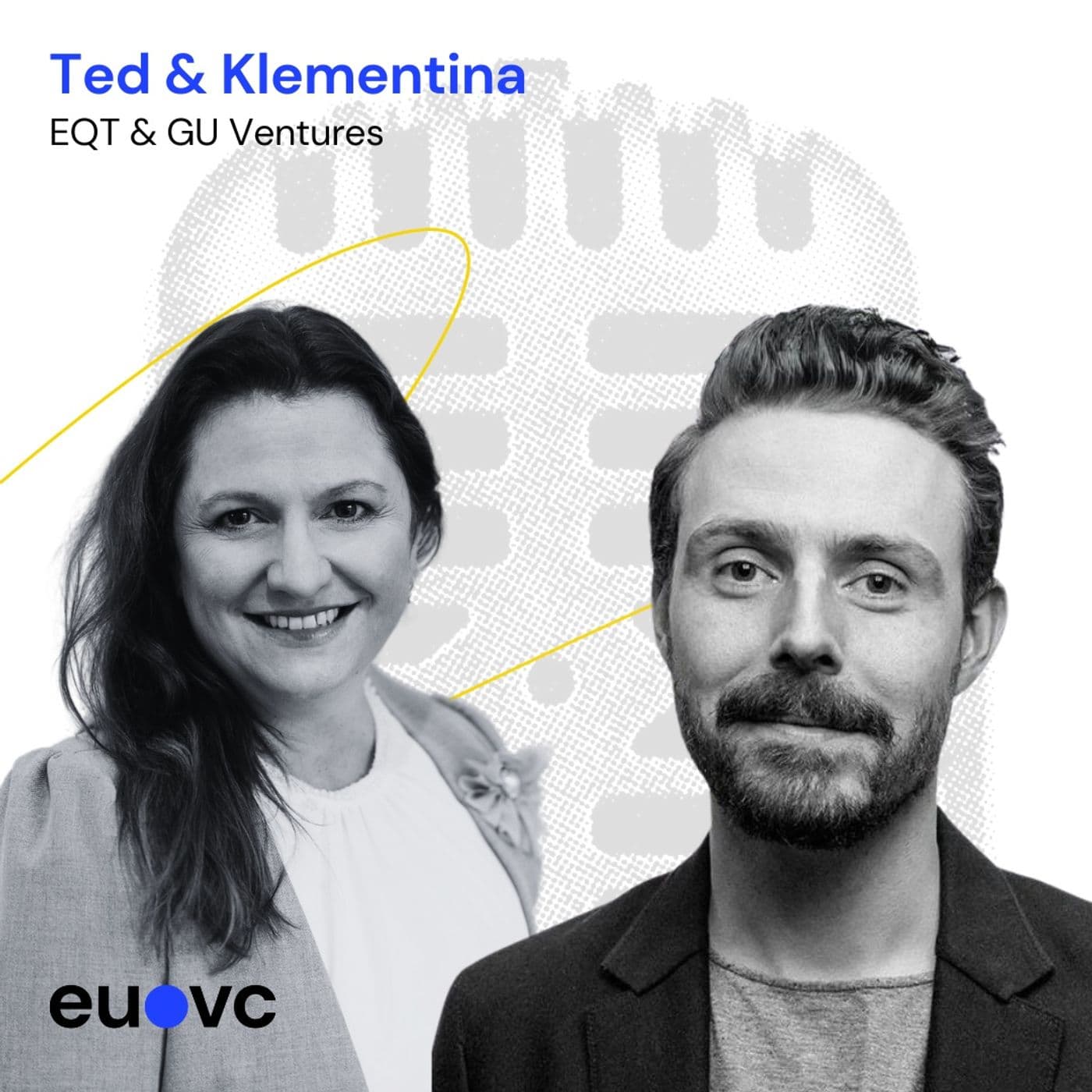
- Ted Persson - Partner at EQT Ventures
- Klementina Österberg - CEO at GU Ventures
---
Episode Overview This episode delves into the intricacies of investing in deep tech, particularly focusing on university spinouts. The discussion revolves around the shifts in investment strategies, the evolving landscape of deep tech, and the collaborative efforts needed between investors and startups to drive innovation.
---
Key Highlights
Introduction to Guests
- Ted Persson - Partner at EQT Ventures, focusing on multi-stage venture investments with significant AUM and an extensive portfolio of companies including notable names like Wolt and Einride.
- Klementina Österberg - CEO at GU Ventures, an early seed investor in deep tech formed from university research. GU Ventures operates as an evergreen investment vehicle with significant success in establishing numerous startups.
The GoWest Conference
- The episode serves as a warm-up for the GoWest Conference in Gothenburg, highlighting its role in fostering deep tech innovation in Sweden.
Investing in Deep Tech
- Key Concepts:
- Importance of deep tech as a vital source of future innovations.
- The need for a deep tech playbook due to the unique challenges and requirements of hardware investments.
University Spinouts
- Discussion on how universities serve as incubators for deep tech startups, with emphasis on the potential for innovation stemming from academic research.
- Klementina provides insights on GU Ventures’ approach: starting investments with researchers who own their IP, focusing on building diverse founding teams, and securing patient capital.
Investment Strategies
- Ted shares EQT’s transition from being a pure software investor to recognizing the value of companies emerging from academia.
- The conversation expands on the necessity of having a well-rounded approach to team composition in startups, incorporating both academic expertise and business acumen.
Challenges in Deep Tech Investing
- Discussion on the capital-intensive nature of deep tech companies and the complexities involved in managing these investments.
- Importance of having a robust strategy for reserve management and navigating the technology risk associated with hardware-centric businesses.
Collaboration Among Investors
- Klementina describes how GU Ventures actively collaborates with other investors to bring in co-investors and streamline the funding process for startups.
- Emphasis on building relationships within the investor community, highlighted through events like GoWest.
European Tech Sovereignty
- Ted emphasizes the need for Europe to enhance its technological capabilities and independence, aiming to compete on the global stage against established non-European tech giants.
- A call to action for European investors to support local talent and innovation.
---
Chapter Breakdowns
- 00:00:00 - Introduction to EQT Ventures and GU Ventures
- 00:02:24 - Klementina & Ted’s Journey in the Venture Industry
- 00:07:14 - Investing in Deep Tech Startups
- 00:09:32 - Investing in Startups from Universities
- 00:11:40 - Investing in Companies Coming out of Academia
- 00:13:53 - Building Diverse Founding Teams
- 00:16:14 - The Skills of a Founder and Investor Relations
- 00:18:24 - Investment Strategies and Cap Tables
- 00:20:47 - Investing in Post-Internet Companies
- 00:23:03 - The Need for A Deep Tech Playbook
- 00:25:14 - Investing in Hardware
- 00:27:42 - Capital Requirements for Deep Tech Companies
- 00:30:14 - Managing Opportunities in the Sustainable Industrial Sector
- 00:42:04 - The Potential of Biotech
- 00:51:10 - European Tech Sovereignty
---
Conclusion The episode wraps up with a mutual appreciation for the evolving landscape of deep tech investment and a call for continued collaboration across the venture ecosystem in Europe. The hosts encourage listeners to engage with the guests and consider attending the upcoming GoWest Conference to further explore opportunities in deep tech.
---
Key Takeaways
- Deep tech is increasingly recognized as a critical area for investment and innovation.
- Universities play a pivotal role in fostering startups through research and academic networks.
- Collaborative strategies among investors are essential to navigate the complexities of deep tech investments.
- European technology sovereignty is vital for fostering local innovation and competition on a global scale.
---
Next Steps for Listeners
- Engage: Reach out for potential co-investing opportunities.
- Attend: Consider joining the GoWest Conference to connect with the deep tech community.
- Follow the Podcast: Stay updated on future discussions and insights in the European VC landscape.
---
Feel free to adjust or expand on any of these sections based on your needs or specific highlights from the episode!
Written by AI. May contain mistakes. Listen to the episode to check what was said.
Transcript
Automatic transcript. May contain errors.0:00Are you tired of only knowing what European VCs sound like? Yawn no more. Leap over to EU.VC where the episodes come alive. Now with every new episode featured in full video, high def, pristine lighting, emotions up close, and men and women who pick their boogers, don't settle for eavesdropping on Europe's best investors. Join the peak show instead at EU.VC. Hi everyone and welcome to the EU.VC podcast. I am David and I'm joined by Andreas as usual. Today we're welcoming both Clementina and Ted. Ted is a partner at EQT Ventures, a 1.1 billion multi-stage venture fund with offices spread across Europe and the US.
0:41EQT Ventures are investing out of Fund 3 with a total of 2.3 billion euros in AUM and an established portfolio of more than 120 companies. Notable investments include Boltz, Einride, Nothing, Anaphim, Candela. On the other side of our virtual roundtable, we have Clementina. Clementina is CEO at GeoVentures, an early seed investor and incubator in Gothenburg, Sweden. GeoVentures is fully owned by the Swedish state and is an evergreen investment vehicle. GeoVentures invests in deep tech companies formed out of the research at universities. They're investing up to 200k euros and have established over 165 companies, of which 82 are in their portfolio today.
1:23And notable investments, including Bica, Ytech, Surgical Science. All of these examples are listed on the Stockholm Stock Exchange and Nasdaq today. And we've reeled in Clementine and Ted for this episode as a warm-up for our participation at the Go West conference in Gothenburg, Sweden. Go West is proving to be a real force in deep tech, punching above its weight this year, just as Gothenburg and Sweden is, with an incredibly cool investor day lined up, counting speakers like Stefan Helgesen, the founder of Creandum, a climate panel with WorldFund, Norsken, and Planet A. a Deep Tech panel with Speed Invest, Fantech, EQT, and the NATO Innovation Fund, as well as an LP panel with leading pension funds, corporates from the region, as well as, of course, the well-known EIF.
2:07As said, just like the region, truly attracting the best of the best. So don't miss it if you're in Deep Tech. And finally, if you're listening in and you love our show, you know what to do, drop us a review, follow the pod, and subscribe at EU.VC.
2:26Tear down this wall. It's more than just an alliance. This is a union of values. United and determined we can serve as a model for other regions of the world. The nature of a problem requires a European response. Europe is a story of new beginnings. Let's start acting. This show is not investment advice and the hosts of this episode may be invested in the funds and companies featured. So Clementina and Ted, let's just start everything off by letting our audience get to know you. And we always do that by asking you your story. Today we are a bit bigger than normal because we are two people from two different funds with two different stories.
3:17So for that reason, I will ask you to not go as deep as we normally do. which everyone knows is typically a 10-minute conversation about your journey into venture. Clementina, please take it away. Thanks. Happy to be here. Well, who am I? I worked for G-Ventures for more than 22 years. It's one of the best jobs you could ever have. I have a background within the automotive industry, where I worked with both Volvo Cars as well as Dynia Chrysler. but then I was very interested in entrepreneurship in my early days so I actually started two companies when I was still in school and then I joined after the automotive industry I'm where I really had great time but I still wanted to be more entrepreneurial and then I joined the McKinsey team when they established Venture Cup in the 1997-1998 where you know you remember that It was called the new economy.
4:17We met Johan Stell von Holstein at Ica Media Lab and Jonas Birgersson at Framfab. Cool new entrepreneurs making their way into the industry. And that was a great time where I learned a lot. And then afterwards, I was headhunted to G-Ventures in 2001. And I loved it ever since. people are often very interested in how come you stayed for so long but I mean who wouldn't if you can work with companies like you mentioned before surgical science was the first one then I was actually in the beginning very interested in investing in high tech which took us a while but I mean we hit it off very well and then we sold it to Volvo Penta so there's lots of great companies that I've been you know engaged in so I can't quit I can't quit I love that.
5:09That's a good reason to keep going. Ted, tell us your story. It's a bit concerning when you're saying that you can't quit. Everyone should have a choice to quit at all times because otherwise it's moving into illegal territory. If you need help, I'll text you my phone number later. Joke aside, my name is... We all need help. Yeah, my name is Ted. I've been at ICT now for nine years. So I was part of the team setting up the venture side of the firm. Back then we were, I don't know, like EQT as a whole, maybe 150, 200, something like that people. And now we're close to 2 ,000 people. So we've been on kind of our startup journey on our own.
5:50Now on the venture side, we're 45. So 45 out of 2 ,000. We're still kind of like the kids stable within the firm. Before joining AQT, I had, I don't know, 15-whatever-year journey in various facets of tech. I've been part of startup journeys, funding companies, both as a self-taught developer, as a product designer. I've been funding and running digital consultancies, like the ones you mentioned, Clementina, that basically were the startups around 1999, 2000, 2001. done some of those. But I think I identify as a I feel like a builder somehow even though I'm not building kind of on a detail level anymore but sort of working together with some of the smartest people in the world who are building.
6:42That's why we can't quit, Ted. I was going to ask that. You also shared the feeling that you cannot quit. Can I quit? It would be very sad if I would quit. It is super fun. Technically, I probably could. I don't want to try. Because what if it works? I'm sure you have a pretty aggressive bad lever clause in there. Yeah, I mean, I guess that depends on how I would quit. I don't think I would. Hopefully not quit to trigger a bad lever clause. Stealing some staplers. It's worth it. Some staplers, they just stare you right in the eye And you're like, oh, you're coming home, baby. They're so beautiful.
7:29But I mean, to be frank, I mean, we have so many great entrepreneurs. And it's not that they really, really need our help, but it's a great collaboration, right? And Ted, that's why we love it, because we work with great people and also great teams, the ones that you mentioned, and also my team. I mean, I've been so honored to work with those people. For instance, Sofia, that's also joined us and worked with Govest. That's why we work here and we can't quit. And that's why I can't quit UEC because Andreas will then follow me around the world trying to pester me. But that's another conversation for another day.
8:08Now let's dive into what really matters today, which is investing in deep tech with a particular focus on university spinouts. More loyal listeners will know that both Andreas and myself have a soft spot for this topic. So we're really happy about having you two here with us, Clementina and Ted, because obviously universities are an important source of deep tech innovations. And Clementina, let's start with you, as it seems you've managed to get it right at Juventures and Gothenburg Universities. By the way, being ranked top 10 for university-based incubators and helped develop more than, if I have my numbers correctly, 140 innovative growth companies.
8:42So tell me a bit more about how you work at Juventures and specifically the topic of helping deep tech startups spin out of the university and get across that infamous valley of death that we'd love to talk about. Thanks, David. I would love to. And to start with, we are the ones that are first investing. So when we meet our ID providers, as we call them, there are usually researchers that have been working with a special task for many, many years. And of course, they are really deep into that. And it's just great to think about and sit and dream together. What can we do with this? And which application should we try first?
9:24So we go from there, from ideas to companies. And it's really important to manage expectations in that level. and also write business plans that we think that we can manage. We need to usually get somebody in as soon as possible to work with the ideas. So what we do start with is a blank sheet. We don't have an entrepreneur in the beginning. The researchers are normally best at the technology. So what we do is that we focus on starting the business together with a board. We want to form a board where we have different competences and in the beginning, try to raise a bit of a capital so we can actually employ that entrepreneur.
10:09So we don't usually do company investments where we meet an entrepreneur to begin with and that's who we invest in. We actually often recruit the entrepreneur. We have, of course, a few examples on that side as well, where we have met entrepreneurs and we invested in their ideas. And then we connected them with research because we thought that these ideas could actually benefit a lot if they met and worked together with researchers in that field. It's been a while since I've been invested directly into startups. So for that reason, I don't want to be the one leading this one. But Ted, I want to ask you, in general, when you've looked at or when you look at your portfolio, the companies that make it all the way to where EQT Ventures starts coming in, how many of them do you see coming as incepted out of a university with the background of having both hired executives versus whether it's founder driven right from the start and only?
11:06How do you think about what Clementina said on the board level, that you start by setting the board and all those things? Because to me, you know, and I can say what I think, right? Because to me, it's a bit where I see oftentimes the difference between coming out of a university and being built from outside of a university, that you don't have that type of breeding ground and that's for the better or the worse, right? So Ted, I'm curious to hear your take on this overall and what you've seen. Yeah, I would say, I mean, from our perspective, more and more. But I don't necessarily think that that is because more and more companies are being spun out of academia.
11:47I think it's just like us discovering it kind of. So in the early days of Equity Ventures, when we were investing out of our first fund, I think we were new to investing. And when you're new to something, you look around and you find a few role models. And then you start imitating, basically, and saying, this is how we want to do things. And of course, infusing our experiences from being founders ourselves. But where we ended up with the first one was in the early days of the first one was basically a kind of clear cut software investor, just like all the others in Europe and in the US. Then I think we've been on this journey realizing more and more that that's not really where the interesting stuff happens.
12:24we kind of rediscovered EQT more and more, which of course has been an industrial investor from the start. So realizing how much competence and knowledge and experience is inside our walls and working closer to them and using that as a springboard out into kind of sourcing companies outside of the typical kind of two guys that used to be in a garage. And I think looking at it now, I think companies that started in universities or have some type of angle coming out of universities is a very big chunk of what we're doing. We recently reorganized our whole team and added a fourth sector team on top of B2B, B2C, and FinTech that we call sustainable industrials, which is basically looking for these companies coming out of academia.
13:16Then I think a lot of very cool things. I think there are a lot of watch outs and challenges and stuff like that as well. But more and more. I love that we got this point in here because so much of the, how should I put it, the literature base that we have on startup and entrepreneur world would say that it should be two guys in a garage. And it shouldn't be, don't go into the universities. You should search for dropouts, not for researchers. And that type of bro mentality that there's been. But I think that what's becoming exceedingly clear is that if you're looking for the future innovations of this world, it's going to be deep tech.
13:57And there you're going to be working with spin outs of universities or companies even. So I think it's an important point. And I think it's very interesting to hear from your side that you're saying, well, we're actually seeing this growing quite significantly as a source of deal flow for us. Actually, it sounds great that you see it that way, but I have to admit that, I mean, we've been working with great VCs all along and many of our teams consist of many researchers still, but it doesn't have to be maybe the CEO. Maybe it doesn't have to be everyone in the management team. And actually many VCs have invested in researcher-driven entrepreneurs, entrepreneurs that have quit their research and started to work in the companies.
14:46That's fine too. We just have been looking for a more diverse team in that perspective. We think that it's much better if you do have a commercially driven person that has like, Ted, you were into that, that you have a industrial background maybe, because if you want to make it in the big world, if you want to make it in the big industry, you have to have contacts. You have to have knowledge of the culture. You have to know how to negotiate that business. And even if you're a researcher, you can do that, of course, but you don't have probably all the same skills that we can recruit to the teams.
15:23No, I agree. It's interesting to think about. I mean, you're looking for, like how to say, simple answers. Of course, it's a podcast. We have to wrap this up at one point. But it's like... Not really. We'll just go on. That's why it's a podcast Just do like an infinite live stream. But I think it's just like being a founder, a successful founder, it's very rare. And it's very special, remarkable people that make it. And I think if you apply sort of some type of archetype thinking and also become stereotypical in a way, I think if a person comes out of business or out of tech or out of design or sort of out of domain expertise, there are certain sort of things to look out for and certain ways to construct kind of like a high performing team around that person.
16:24And the same is true for people out of academia. There are certain sort of, I think, special watchouts we're looking for when we're sourcing companies spinning out of academia. and thinking about how to spend the team. And I think, I mean, you have to be good at so many things being a founder, but having the commercial side, being founder-focused, being able to articulate what you're doing, being able to rally employees, investors, media around you, almost being both a founder and a politician at the same time. And if you put down that list of all those prerequisites, There are not a lot of people in the world that fits those criteria, but they exist.
17:06And that's what's so cool. Clementino, I wanted to kind of build on this and ask you something. I've personally, and I'm sure you've all seen it as well, I've personally seen my fair share of university TTOs slash incubators slash accelerators, whatever they position themselves as, of actually sometimes doing more harm than good. And I think it actually comes from a place of, you know, they're still learning themselves and like their early ecosystems and the team is still actually internally still being set up and building up the expertise. But the downside of that is that I have seen my fair share of investors like Ted being kind of scared off because of what was done before.
17:47And I'm sure that's not the case at Gothenburg, but I'm sure you've learned a lot in the process and you've revamped and changed some things that you were doing in line with. making sure that at the end of the day, you're not hindering the prospects of future financing for these companies. I'd love to have you share a bit. I don't know if you want to share failures, but at least share the learnings and what you've built on over time. I can share both actually, but you're right. I mean, I think that we have different data that we've been looking at. For instance, I know that I have colleagues from the UK, from Manchester.
18:22Manchester University, for example, they own the researchers IP. So it's a totally different situation where you have lots of money and the researchers comes to the university, TTO, and you put in a lot of money and you create a team. I'm not that familiar with it, but it works totally different in Sweden because the researcher owns that IP himself or herself. So then it means that we are sort of interested in how can we help this person? How can we invest in a great team, in a great IP so that, of course, we can get new and much more patient capital coming in? So in that perspective, I know that many TTOs have like sort of a sweat equity deal.
19:09Maybe they share profits with the researchers. That's what they do in the US. For we invest capital, it's a valuation. We get the percentage, the ownership that we can get for that money. Some others that have sort of a different way of looking at this, we use the sweat equity because they don't have that much cash in the beginning. or maybe they're risk avert in a way and they don't want to put in too much cash before they can see if this is going to fail. So anyway, just to be frank, everything is tested and everything is possible in this business. But what we don't want to see in the end is that the early investors, either it's universities or business angels that mess up the cap table, that actually are maybe two big owners compared to key personnel and of course the founders in that way as well.
20:04But we need to also have an ecosystem where early investors can invest in the beginning and then when bigger VCs comes in, how we can clean the cap table. And we'll be doing that for many reasons as well. The business angels want their money back. And when we progress and when we expand, we don't want to have 40 business angels as owners either. So it's a sort of a two-way street. You have to look at it from the VC's perspective, as well as the founders and all the other investors that were in the early stage. I don't know, Ted, what do you think about that way of looking at it? Deep tech investing, or like academia spin-outs, they kind of sell out of favor.
20:47It's like back in the day, I mean, that is where the tech industry is coming from. from the beginning. That's how Silicon Valley was born. But then I guess investors discovered the internet. And in the beginning, it was diverse and there was no playbook. But then it was more and more and more and more streamlined. And there was some, where do I see that? It was connected to Biden's package in the US just before the IRA was born. There was a graph that I saw, which was during the year where we had the most investments going into tech, we had the lowest rate of foundational research happening at the same time.
21:25And then I think we had the geopolitical shifts in the world. I think a big part is driven by that we're reaching the end of Moore's law. We kind of have to find new hunting grounds. And then all of a sudden, it became kind of trendy again, in a way. And I think it's both out of necessity, and then we started seeing some great first role models. What's interesting, There's a blog called The Reaction Wheel, and there was an article about VC investing in, I think, the 80s or the 90s or something like that. And it looked super cool. It resembles a bit what we're talking about right now. So right now, there's this term that is floating around like post-internet companies, like companies that are driving innovation in fields that could become as big and impactful as the internet.
22:12if you look at these investing in the 80s and 90s that was pre-internet yeah pre-internet post-internet it's the same yeah it's the same it's kind of like you have sort of you have a lot of it was a segment diagram and then for the listeners here i'm trying to show with my hands but the segment diagram of very diverse multiple different sort of sub-sectors and then all of a sudden the internet took it over and everyone invested into apps and then then e-commerce and and then mobile, and then blah, blah. And now you see sort of new interesting stuff breaking out since synthetic biology. And it's actually super funny, Tep, because I'm coming right into this recording just from an interview or a roundtable that was on venture debt and revenue-based financing, which it's so obvious that now that we know the playbook for SaaS as well as we do and for all the e-commerce and very predictive or predictable starter paths, it's clear that the way of financing this type of business is to an increasing extent, not equity financing.
23:21And for that reason, it's also natural that you will see VCs going to the more hard tech or deep tech angle, because that's also where you actually can justify taking equity at a later round as well. Because of course, in the beginning, you can always warrant it. But at Series A, you're starting to look with the SaaS business like something that you would just finance with debt. Well, I think we came to the same conclusion. In a way, software investing is proven. I mean, there's no risk in, how to say, There's no risk in the investment model or in the financing model. We all know where an A-RUN, a B-RUN, a C-RUN, and so forth is.
24:04But in this new world, we kind of don't. So we're working on some type of attempt on our side. That's kind of like a community-led approach we call the climate break, which will come out later this year, next year or something. Yes, it's coming out together with Contrarian. Yeah, exactly. So I met Rokas through Kauffman and basically trained to do a study around the new journeys. We realized it's not one journey. It's probably right now it's seven, six or seven journeys. And just trying to create some type of grid or framework or manual that will evolve over time, hopefully. But it's interesting.
24:39I think it's almost exactly a year ago that we put out an episode with Rukas from Contrarian and Christian from 2150, where we spoke about the need for a new venture model or playbook for this type of ventures. And I'm so happy when I saw the climate break work being done by Ruckus and you, I thought, ah, so they're really at it now. That's really good. Probably came out of that. The spark was we were in a bus with this Kaufman thing. And we were the only two ones, I think, that had not submitted our thought leadership projects. And then we said, how should we do this? And then let's do it together.
25:20And then poof, it became like bigger and bigger and bigger. And we still have not submitted it, though. That's really impressive. We're looking forward to that. If we could just go back, if you kind of summarized it very good. We have had a digital era. During that period, actually, we have done lots of investment within, let's say, life sciences like biotech and pharma, as well as really deep tech companies within energy and different solutions. But anyhow, I could say that during these years, we have raised much more money in the deep tech ones, the pharma ones, the energy ones, because, of course, they're like more like hardware.
26:02They need more cash. And the competition hasn't actually been that tough in that area. It's really easy to say, can you cure this cancer field? Can you cure this other field? Like, for instance, we're developing a vaccine for Alzheimer's. I mean, who doesn't want to invest in that, right? And all these ideas, we have made, let's say, 10 or 20 times our investments in the beginning compared to the other ones. And of course, if you're an early stage investor, you can't count that on that we're going to make the same multiples like you guys in the long run with bigger investments. So in the beginning, of course, we're going to find our ways, but we need also to do great investments and to change the world.
26:50You need to do hardware. You need to do pharma. You need to do all those fields as well. And the digital is always in the business model. Almost always. Almost always.
27:04You know what, Clementina? I think the narrative was so nice. We're in the post-in-and-era. Everything is like moving towards this. And then all of a sudden, AI just like coming in. Exactly. Back to software. This biotech pharma stuff. Back to software. Now we all have to invest all our money into AI. Just kidding. I think it's super exciting, of course. Holy shit, what we have around the corner within that field, which will impact all of these things that we're talking about right now. And I guess that's the hum part about investing. You want to have a diverse portfolio. even though you need to focus.
27:43You want to find stuff that kind of are co-active. Probably this is most to you, Ted, because normally you'd always say that deep tech is capital intensive. And for that reason, it's more difficult. And venture doesn't really like it for that reason. And that's been the critique or what's been keeping people. So then what's so funny is that you've kind of gotten now, I'm seeing more and more often the opposite argument being made, which is with a SaaS model, you end up building these companies with terrible unit economics that you're just pouring cash and cash and cash into. And we don't want to do that anymore.
28:27We actually think that deep tech is where you can make some real strides in the beginning. And then because you've got an actual product and the model for building something industrial, we all know and you will get profitable sooner and more reliably once you've gotten over the tech risk, right? I'd love to ask you, is that how you think about it as well? Or get that there's, of course, truth to both sides? I'd love to hear how you think about the long-term capital requirements for deep tech companies and whether you see them as clearly bigger or clearly smaller, or it is just case by case and you need to look at each case.
Read the full transcript
29:17I mean, I wish I could just say yes to what you just said. To be honest, in the last months of the zero to low interest rate world, I would have said, yes, that is exactly the way it is. It's very clear in my mind. This is the way of the future. Now, I think it's a bit more nuanced, to be frank. And I also think that in the search for the next big thing in a zero interest rate environment, there is nothing hindering you to go all in into these super futuristic projects designed to fix all the problems that we have created that we have to solve before 2030 and 2050. Now it is a bit more... I mean, there aren't enough later stage equity investors.
30:11There aren't enough later stage debt providers, grant providers. It's not streamlined, the process. It's tough. So I think you can't, as an investor, you can't... I mean, I could go out and make like 10 early stage software AI bets. Kind of spray and pray. It's like the standard VC model. Most of them would fail. Some of them would succeed. I don't think we should do the same thing with these types of companies. Because firstly, I think they require way more attention. They require way more reserves. It takes longer before they improve themselves. You have to be able to carry them forward. You have to be open to, in many cases, price multiple rounds in a row.
30:49But I think most importantly is that we got to fix the 2030 and 2050 problems. We can't afford just having 75 % of the companies fail. I don't think the fundamental business model for VC is kind of built for this. Because if you have real IP and you're investing both equity and debts into building, I don't know, a factory or demo plant or something, we can't just say, ah, didn't work. Throw it out. Throw it out. So I think it's like yes and no. I think where I'm in my brain right now, it's on the deep tech spectrum. The more software-like deep tech, we can be pretty sort of generous with. Let's give them a shot.
31:35The more hardware-centric stuff, we're more careful. And if we are committing to backing a founder with a vision to build something like super big, then we got to be able to carry it through the whole way. I love that you say this. And thank you, Andreas, for raising the question because the capitalization issues, They're one of the biggest hurdles as well. Of course, there's risk in the technology and risk that the market may be not buying directly. But you're totally right, Ted. We need to keep many things in our heads. And to be successful with these technologies, they're going to save the world.
32:13They're going to save the earth. They're going to save humans. And it's really important. Can I ask both of you to comment a bit on the portfolio model to fund deep tech? because, and you, and maybe Ted, you should start because you just said what you did, right? You can't just place bets and hope that - Spray and pray. Yeah, exactly. So would you maybe, that of course implies that, well, you don't do 30 bets and hope that two of them actually come out on top and deliver the whole fund. So I'd love to ask you, how do you put, if you contradict or juxtapose the deep tech part of your portfolio and that arm versus the others because you can't hold them to the same standard when you go to IC.
33:00Yeah. So, I mean, that is, again, one of the reasons why we initiated this climate break project together with ROCAS. We use that in our ICs for these types of companies right now. But I think it's more like we decided early this year to start managing these types of opportunities in a separate way. So we created this sustainable industrial sector before we We just called it moonshot and then whatever went into that bucket. There was no definition. And now, two months ago, we reorganized a team. So we're kind of solely working in these different sectors. And I think right now we're trying to figure out exactly how to craft the investment strategy.
33:39Of course, talking into our overall investment strategy, but specifically for this sector. But some early reflections would be the reserve strategy probably has to be a bit different. Yeah, it can't be that you just back something and then expect that you will get like a mega upround in like preempted in five months and bam. If you're backing a company in this subsector, you really have to be confident that you have a very long term view of that. And one example could be we backed a company called Evrock, which is a founder that we've known for a long time. His name is Matthias Ostrom, and he's building kind of green and European sovereign data centers, basically wanting to take on like Amazon and Microsoft and Google on the cloud side.
34:31And yeah, I mean, there's a very long-term plan, long-horizon plan for that company. Then, of course, who knows? So far, it's looking very promising. But it's not like a seed bet in gaming or in whatever. When he puts his shovel down into the ground, it has to happen. Clementina, we shared some stats for GU Ventures in the beginning. 160, I think we said that you had seeded so far. 165 of which 82 are in your portfolio. I'd love to ask you, how do you think about your portfolio model? What is it that has led to having seeded 165 and then having 82 alive now? That's a great question. And like I said, we own fully by the city state, but it doesn't mean that they put cash in our cash machine all the time.
35:29We have to do exits. We have to make money ourselves. So we started out with just a few millions and we started to invest a few seed money here and there in both actually services from the university as well as DeepDeck. Our first big investment gave us 12 times the money in a few years. So then we can reinvest that and then we can reinvest that and then we can reinvest that. So during the years we have invested approximately, let's say, 15 billions of euros. So that's not a lot, but it's all made by the exits we have made. And in that way, our portfolio has become more and more focused on the investments where we have done great deals.
36:16So, for instance, Pharma, that's been the outmost biggest and best investments we've made. We have also listed companies on the stock exchange. We've been one of those that succeeded to do that many years ago. And these companies have had a hard time right now at the stock exchange. But before that, before these times were getting more rough, it actually gave the companies the possibility to raise much, much more capital than actually the VC community could invest. So let's take BICO, for example. They have raised approximately, I think, one billions of euros. I'm not sure exactly on that figure, but approximately.
37:00Then we have surgical science. They have also raised at least almost 0.5 billions of euros. and it's quite tough to get all that money in and try to build your business in a much much more speedy way but they have succeeded in doing that and this also means that when we have seen these companies succeed you follow their leads so we look for more companies in that field for instance we have a company called C12 and they have offshore wind turbines they're establishing them on the Norwegian coast. And I mean, as a seed investor, people must ask us, you must be freaking crazy to think that you as a seed investor can start a company where you're going to build offshore windmines.
37:46And these wind parks actually that we're building, we have tested them already in the south here in Sweden. We have one in Lyseskila, a really small town on the coast That's been, you know, there from 2015 working. So we don't have to have huge investments to get new technologies, new energy, new whatever materials, automotive or whichever field we've been working with. That, you know, it's going to face really huge challenges that we don't, we haven't faced before. more. When we started the venture side of IKT, we were the part of IKT that was very tech oriented. Now, obviously, the whole of IKT is tech oriented.
38:33There's so much going on. Starting to be interested in the more disruptive or moonshotted side of pharma and biotech. And we just acquired a Dutch life science investor called Edespi, which is Europe's largest investor. So, were integrated them into GT and starting to collaborate. But what I find interesting is, and also how we construct our team, is to have a mix of people who are experts and people who are not experts. So because it's like, if you're, I have so many examples of situations where on our team, we have someone who has tried something in the past or did a PhD in that or whatever, and then you're looking at a new thing, and then you're stuck in too much info.
39:18oh, you can't really see, you can't kind of say yes to some super crazy perspective. And then it worked. So I really think when you create deal teams and also wider kind of teams of experts, making sure that you listen only, I don't know, that much to people who know, and then you still have your kind of, your external perspective and there could be pattern recognition with completely different things. I find that kind of interesting. And maybe from your perspective, Clementina, who are closer to the inception of these companies, if you have any perspectives on that. I actually do. And exactly what you say, we see that in the beginning when we mix the researcher with new board members and that new CEO we have recruited.
40:06That's the first inception when you can see that. Okay, but are you really sure this is how it's going to work? Why haven't you thought about this? Maybe we can do it this way instead. So that's the first. But then in my team, just as you say, I have different competences, but also the general ones. How do you build the company? How do you make a strong culture in that company? And not just only having the PhDs that already developed lots of pharmaceuticals before. It has to be mixed together. I totally agree. And then as a seed investor, I have right now 12 business developers slash investment managers in our team.
40:42We are, of course, quite small. So we need to also focus within those areas. Which areas do we know? Can we actually go for that field or we don't know that field at all? So then we can't invest in that field. So those are issues we're talking about discussing them each day. Maybe you should invest in four companies that you know something about. And then in one company that you have no clue about. Exactly. And then you just have a CFO. There's a key tip for anyone trying to build a new portfolio. do four things you really understand and then just close your eyes and throw a dart for the fifth I'm going to do that make sure you throw it away from your face not towards you that's a rule that does not just apply to investing also in general life don't throw things at your face but Ted actually that's a great idea but you know what I'm going to do I'm going to invest in four stuff we really know and then four stuff we have no clue what to do with oh you're upping the game You're investing in eight things, 50 % of things.
41:43And you've got to go invest. I'm in. And you've got to go invest. Or we have some people from our side who know, and then people from your side that does not know, and then we just move. Or the other way around. Yeah, I like this. It sounds like some type of dance, some dance exercise. Nobody wants to back these companies. We're making progress here. That's good. I want to ask a super nerdy question, Ted, which is you like 10 minutes ago or seven minutes ago, you were talking about like different capital needs of these companies and how you can't treat the same way like software intensive compared to hardware intensive or whatever company.
42:22How do you feel that affects the risk profile of the whole portfolio? Like how do you balance that also in LP relations, right? Because it's very different. And I'm coming from the perspective that my first job in venture was raising a biotech fund drug development focused. And what I've always heard, I was freaking annoyed. It was like, we don't do that. It takes too long. It's too risky. It doesn't really work. There's no potential buyers. I think it's could be furthest from the truth. So I'm asking both from a just fundraising perspective, but also portfolio and NLP management perspective. From a fundraising perspective, I think it's still kind of early and the fund cycles are so long, even though they're shorter and shorter, maybe longer and longer now again.
43:05But I mean, there is an increased interest for LP co-invest, for sure. I think there was a trend in the low interest rate environment when things got crazy and for a lot of the LP investors to go direct. It feels like that is... Even in these perceived capital, and I'm using inverse commas here, everyone, even in these perceived capital intensive companies, also in that profile of companies? I would say, yes. I mean, if you look at the North Vault, cap table round over round, both on the equity side and the debt side. It's interesting reading. So I would say yes, but I think LPs are going less direct now and relying more on managers such as us.
43:50I mean, so far, I don't think we have any great examples of synergies in between debt and equity. you can see actually had a credit that was sold a couple of years back before this new world I think it's too early to tell to be honest I think like how far we've come is to discuss reserves education like in an IC the way it works on our side we have five voting partners just making sure that we have the same kind of view of the world. So you could also disqualify a company based on very fundamental things that has nothing to do with the company. For instance, we need more reserves. Then it's better to say, okay, this is the way that we structure our reserves across all these different types of companies we can invest in.
44:45So you just remove all the reasons to say no, that does not have to do with the company before. And then you can discuss the actual company. But the reason for my question, and again, It's a very geeky question because if you need further reserves for these companies and they do still have risk associated to them, maybe with the same capital reserve, you could do three software-leds compared to one non-software-led one. So that automatically affects the risk profile of the whole fund. Just curious to hear your reflections internally. I think it depends on how you stage things. I think, firstly, how you manage technology risk.
45:26and then also how you stage the journeys. And I think there is a tree building journey, and then there is a post building journey. And with building, that could be ranging from like a physical product, could be a demo plant, could be whatever physical. And I think before you put the shovel in the ground or the hammer to the nail or whatever you're building, I think it's more software-like. And then I think it's fine to let the Darwinian forces have their ways. But after you start building, when you start building, you should have figured stuff out to the extent of where there's very little chance going back.
46:05Then, because it will be super hard the way it is already, just securing the journey and making sure everything works. And you have so many more stakeholders in this world than in software. And software is basically just you as a founder and then an investor. In this world, you have like policymakers and debt providers and non-dilutive and academia. And so it's just a way more complex journey. Way more complex. And actually, that's why I'm really impressed about what you're doing. Of course, you've done a lot of complicated digital as well. But I mean, you are the most active investor with great portfolios.
46:42And I mean, I think I wish that many more were actually thinking like you do. And we have lots of new VCs. And also, I hope that they look into what's the secret sauce? How have you built this? And I know they do. Maybe we can also see that much more new best practices comes out there. Because just like you said, David, it's a great question of how can we actually benefit from all that innovation that's within the academia? Which field it ever is? It's always complicated in some ways. Clementina, before passing the baton to my fellow co-host Andreas, if I'm a GP listening in, I think that you're doing some really crazy technology and I want to back the four companies you're going to invest that you don't understand shit about.
47:29How do you collaborate with other investors like TED and others? First of all, we work within the companies, both owners group as well as the boards. We look into who are the most preferred investors and we do contact each one of them. We work together with corporate finance actors as well. So we look into who do we want to invest with. And that's why also we are arranging Go West, because we want to gather lots of investors, build relations. And we've been doing this for many years. So in total, we have attracted more than 2 billions of euros into these companies. And they're still quite small.
48:09So that's a huge amount of money. But yeah, so how do we go about it? So just like everyone else, we start to negotiate and see if we can get a term sheet in place. Who's going to want to take the lead? What do they think about the valuation? But foremost, how can we build the same sort of collaborative partnership where they see what we see and do they want to build the way we want to build? And sometimes we haven't succeeded. Sometimes we have to turn around and say, OK, we couldn't do this. How can we then take care of the business anyway? And we have actually in one point bought out or cashed in for some of the investors and started all over again.
48:50Because we thought that the technology was still very good, even though we didn't succeed. So one or two times at least. But it's the same normal procedure. We want to get new investors in as soon as possible. And we're very open to co-investing. So just give me a call. That was my next question. my question was if I were a VC which I am and I would like to engage and I want to engage which I do what should I do but you just answer that give you a call so will you post your phone number in the show notes is that what you say we always post phone numbers you always post the phone number good stuff it's at the footnote of every episode joking aside just like you said there's lots of communities And what we want to create is, of course, if we think that this VC is great, then of course, that VC could actually influence who the other co-investors are.
49:47And that's how you guys always like to work, that, you know, we want to co-invest a syndicate with this and this. And so quite quickly, if we just have one interested, then we can get two, three as well. Please call me. I actually think the true answer to what you asked, Ted, is you should go to Go West on the 6th of February. And then you'll meet all the deep tech community. Actually, Andrea, sorry, it's on the 7th and 8th that Ted's going to meet all the deep tech entrepreneurs. But on the 6th, he's just going to meet a lot of co-investors. Here I display my over-indexing of the venture community over the startup community.
50:27Sorry to everyone listening in. Ted, before we close, I want to ask you about European technology sovereignty. Because I went through your investment announcement posts on EQT and something stood out to me. Every time you wrote, there tended to be something along the lines of European technology sovereignty in there. And, you know, just to put it there, you had about the exploration company. you said, what the team at the exploration company is building is exactly what Europe needs. And about Emmerich, you said, Europe's first secure, sovereign, and sustainable hyperscale cloud, a challenger to US giants and a trailblazer for what European companies can become.
51:11And about Einreit, you said, this is exactly the kind of gold innovation Europe needs. I need to ask you, Ted, what's your take here? Why is it important to you? What's the mission at EQT? Is there one when it comes to European technology sovereignty specifically? I mean, when we founded EQT Ventures now nine or so years ago, the whole idea was not to compete with other European investors, but to compete with the idea of having to go to Silicon Valley. Now, it's pretty proven that you don't have to do that. So I don't think that's kind of like our key selling point or anything like that towards founders.
51:50but it's something that is kind of dear to us. Now we just need to go to New York to list on the stock exchange but that's the next thing for us to fix. We can buy a bell and hang somewhere in New York. No, but I mean, we're a global firm. We have team members both in New York and in San Francisco from the venture side. I wouldn't say that all cases are like that and I think there is a lot to be done on how to say the corridor in between the US and Europe as well. But I mean, I don't know, maybe it's more on a personal level. I am just looking at sort of the talent we have here, looking at sort of STEM PhDs.
52:31I mean, we're crushing it. So we should just continue on the journey of crushing it in tech as well. And if you look at the IRA, I think it's like brilliantly packaged. We have those types of programs in Europe too, but they're just not as user-friendly. We got to up our game in Europe. We got to make sure. I mean, I don't think it's just like, it's not like a war or anything. It's kind of like a friendly competition. We got to show that we can compete. It's like a personal drive. I'm on the board of companies in the US as well. So nothing against that or anywhere. I really agree. Can I say that?
53:06I was at a conference when Niklas Sennström at Atomic said the same thing. Well, sort of the conclusion was that it was like an EU conference where the Swedish presidency was holding that conference with VCs and lots of politicians. And everyone said, now we need to go for the win. It's not possible anymore to not go for the win. And actually there's been so many new funds building from that perspective to focusing on what could Europe do. I think this is the beautiful place, most beautiful place ever that we have stopped an EUVC episode. So let's wrap it here. everyone who listened in. We really hope you enjoyed the episode.
53:46And if you did, please do drop us a review, follow the pod, call Clementina, send Ted some love and subscribe at EU.VC. Thanks for having us.
54:14The nature of a problem requires a European response. Europe is a story of new beginnings. Let's start acting.
From the publisher
Ted is a Partner at EQT Ventures, a 1.1bn multi Stage venture fund with offices spread across Europe and the US. EQT Ventures are investing out of Fund 3 with a total €2.3bn AUM and an established portfolio of 120+ companies and notable investments including Wolt, Einride, Nothing, Anyfin and Candela.
Klementina is CEO at GU Ventures, an early seed investor and incubator in Gothenburg, Sweden, that is fully owned by the Swedish State and is an evergreen investment vehicle. GU Ventures invests in deep tech companies formed out of the research at universities. They are investing up to 200k€, have established over 165 companies, of which 82 are in their portfolio today and notable investments including Bico, I-Tech, Surgical Science, all of which are listed on Stockholm Stock Exchange and Nasdaq today.
We’ve reeled in Klementina and Ted for this episode as a warm-up for our participation at the GoWest Conference in Gothenburg, Sweden 🥳 which is proving to a be a real force in DeepTech punching above its wait just as Gothenburg and Sweden is. We’ll be there as there’s lined up for an incredibly cool investor day counting headlines like:
- Fireside chat with Staffan Helgesson, the founder of Creandum
- Climate panel with partners from Norrsken, Pact VC and Planet A,
- DeepTech panel with partners from Speedinvest, Ventech, EQT and NATO Innovation Fund and thought provoking presentations by Sebastian von Ribbentrop at Join Capital and Nicholas Nelson on The rise of Defense Tech
- LP panels with leading pension funds and corporates from the region as well as of course the EIF, Isomer Capital and BFP.
Chapters
00:00:00 - Introduction to EQT Ventures and GU Ventures
00:02:24 - Klementina & Ted’s Journey in the Venture Industry
00:07:14 - Investing in Deep Tech Startups
00:09:32 - Investing in Startups from Universities
00:11:40 - Investing in Companies Coming out of Academia
00:13:53 - Building Diverse Founding Teams
00:16:14 - The Skills of a Founder and Investor Relations
00:18:24 - Investment Strategies and Cap Tables
00:20:47 - Investing in Post-Internet Companies
00:23:03 - The Need for A Deep Tech Playbook
00:25:14 - Investing in Hardware
00:27:42 - Capital requirements for deep tech companies
00:30:14 - Investing in Deep Tech Startups
00:32:37 - Managing Opportunities in the Sustainable Industrial Sector
00:34:58 - Investment Strategies and Success Stories
00:37:34 - Balancing Expertise and Fresh Perspectives
00:39:52 - Building a Strong Portfolio with Balanced Capital Needs
00:42:04 - The Potential of Biotech
00:44:20 - Managing Technology Risk
00:46:31 - Collaborating with Other Investors as a VC
00:48:50 - Calling for Co-investors at Deep Tech Event
00:51:10 - European Tech Sovereignty
00:53:18 - Drop Us a Review
Considering joining us at GoWest? Here’s what you need to know 🧠
Why GoWest?Two universities. Eight incubators. Many global brands. Industrial heritage. Gothenburg is at the forefront of research& development and home to emerging industries striving to solve tomorrow’s challenges. GoWest is unique. It is fantastic meeting place for investors, startups, scaleups, talent and other stakeholders who want to engage and don’t want to miss out on the opportunities our industries and deep tech spin outs have to offer.What can you expect?There is something for everyone. We facilitate matchmaking and have a dedicated stage for fundraising startups. The hottest topics in deep tech, defense, climate, and health tech will be showcased on the main stage and next year the event will feature a brand-new Deep Tech Investor Day. The Investor Day will add extra value by bringing West Sweden’s investor community together with international peers to discuss current topics and build lasting relationships.Anything else?Yes, Gothenburg is one of the fastest-growing regions in Europe and that adds to our competitiveness on the international stage. GoWest enables easy access to our ecosystem and the region's key stakeholders. The conference has a great line up of speakers and topics on the main stage, side events, networking opportunities and more exciting announcements to come.


