
In short
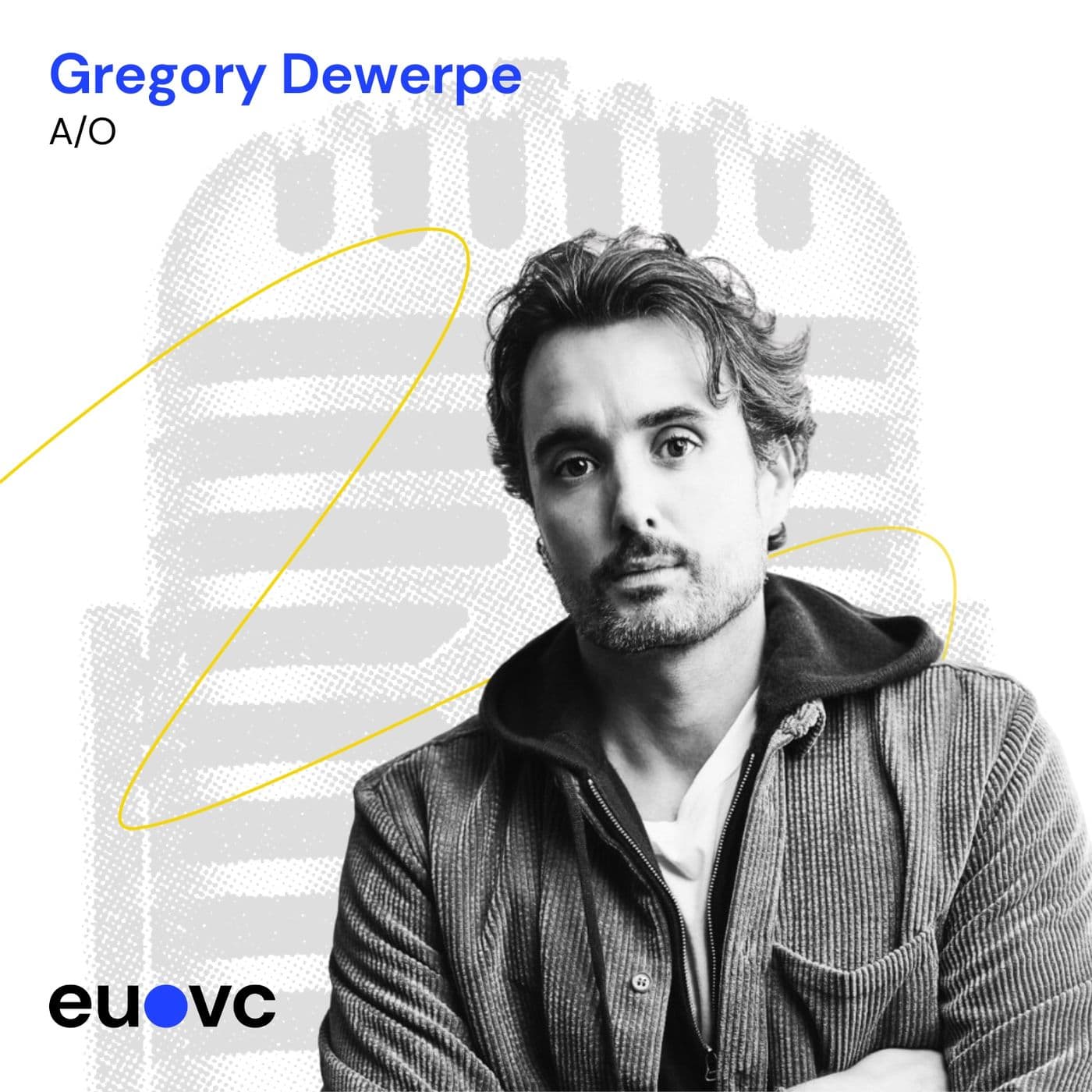
EUVC Episode Notes: Greg Dewerpe of A/O on Building Europe's Biggest Solo GP
Podcast Overview
- Title: EUVC
- Description: A podcast exploring the European VC landscape, hosted by Andreas Munk Holm and David Cruz e Silva, featuring insights from key figures in the industry.
Episode Details
- Episode Title: EUVC #257: Greg Dewerpe of A/O on Building Europe's Biggest Solo GP with 250m€ AUM and the Opportunity of the Built World
- Guest: [Greg Dewerpe](https://www.linkedin.com/in/gregorydewerpe/) - Founder & CIO at [A/O](https://www.aoproptech.com/)
- Episode Description: Discussion on A/O's focus on innovative technology within the Built World, their portfolio, and insights into risk, success, and personal journey.
Key Points & Themes
Introduction
- Greg shares his background transitioning from investment banking to venture capital.
- Focus on building a firm dedicated to technological advancements in the Built World.
Career Transition Challenges
- Overcoming Career Dissatisfaction:
- Greg left banking after a health scare, realizing he wanted a different career path.
- Established a real estate company that eventually led him to venture capital.
Building A/O
- A/O’s Focus:
- Specializes in technology that addresses mission-critical problems in the Built World.
- Portfolio includes 23 companies with significant investments targeting decarbonization, climate resiliency, and digitalization.
- Investment Philosophy:
- A/O is the first VC to join the World Economic Forum as a Global Innovator.
- Emphasis on backing entrepreneurs that solve significant problems.
Challenges in the VC Industry
- Keyman Risk vs. Team Risk:
- Discussion on risks associated with solo GP structures.
- Importance of having a strong team and processes in place to mitigate risks.
Industry Insights
- Real Estate as a Focus:
- Discussion on the intersection of technology and real estate.
- Emphasis on environmental impact and the necessity for technological transformation in the industry.
Personal Reflections
- On Resilience:
- Greg discusses how his childhood experiences with cancer shaped his resilience and approach to challenges.
- Importance of having a supportive environment for children and instilling resilience.
Reflections on Parenting
- Greg shares insights on balancing work and parenting, emphasizing the importance of being present for his children.
- Discusses the impact of bullying and the necessity of creating a safe environment for children.
Investment Takeaways
- Resilience vs. Intelligence:
- Resilience is prioritized over intelligence in the venture capital landscape.
- Team Dynamics:
- Best investments are often those that are not obvious and require strong teams to pivot and adapt.
Final Thoughts
- Long-term Thinking:
- Importance of having a long-term vision in investment and personal growth.
- Advice to Emerging VCs:
- Focus on being a specialist and think about long-term strategies rather than short-term gains.
Conclusion
- Episode wraps up with reflections on the changing landscape of venture capital, particularly in the Built World.
- Greg encourages transparency, resilience, and a proactive approach to challenges as essential components of success in the industry.
Episode Chapters
- Introduction to European VC (00:00:00)
- Overcoming Career Challenges (00:04:12)
- Power of Visualization (00:07:55)
- Industry Challenges (00:11:44)
- Building A/O (00:15:34)
- Keyman vs. Team Risk (00:19:25)
- Growth Journey (00:22:54)
- Parenthood Balancing Act (00:26:34)
- Confidence and Growth (00:33:59)
- Opportunities in Real Estate VC (00:41:58)
- Tech's Impact on Asset Prices (00:45:44)
- Aligning Profit with Purpose (00:49:32)
- Risk Tolerance in VC (00:53:35)
- Benefits of Specialization in VC (00:57:14)
---
Key Takeaways
- The Built World represents an enormous opportunity for technological transformation.
- Resilience and team dynamics are critical to navigating the challenges of venture capital.
- The industry is evolving, with increased regulatory pressures and changing customer expectations driving demand for innovation.
For more insights and to follow the European VC journey, visit [eu.vc](http://eu.vc).
Written by AI. May contain mistakes. Listen to the episode to check what was said.
Transcript
Automatic transcript. May contain errors.0:00In a world where podcasts outnumber humans, we try at EUVC to be mildly more interesting. Tune in at eu.vc to watch this episode instead of just listening. eu.vc, where the extraordinary is just another Monday.
0:37with a unique access to some of the largest B2B customers in the industry. AO has a total of 500 million euros in AUM, an established portfolio of 23 companies and notable investments, including Span, PassiveLogic, Satu, Plentific, and Enter. At AO, Greg focuses on building world technology and positive transformation, like decarbonization, climate resiliency, and digitalization, in Europe and in the US, leads here to Series B. AO is also the first VC to ever join as a global innovator at the WET, which the attentive listener will know we are big supporters of, given our involvement with the Uplink initiative.
1:12If you're listening in and love our show, do drop us a review, follow the pod and subscribe at eu.vh. And now, some words from our beloved sponsor.
1:37APIDE offers AI-led ESG reporting, full SFDR compliance, including disclosure templates, EU taxonomy, carbon accounting, due diligence assessments, and most importantly, tangible tools to help your companies like ESG resources and policy templates. See why over 1 ,000 portfolio companies leading Article 9 funds and$100 billion of AUM trust to manage ESG and sustainability across their ecosystems. Take a free product tour at apiday.com or book a No Obligations ESG VC Strategy Session with one of their experts. This is a union of values. United and determined we can serve as a model for other regions of the world.
2:35The nature of a problem requires a European response. Europe is a story of new beginnings. New beginnings. Let's start acting, acting, acting, acting. This show is not investment advice and the hosts of this episode may be invested in the funds and companies featured. All right, Greg, with that little introduction, let's get right off where we always start our episodes, which is sharing your story about how you got into venture. Good to see you both and thanks for having me. So it's a little bit of an unconventional journey for the most part, where I started my career in investment banking at a time where it was still a cool thing to do.
3:20So pre-2008, 2009 crisis, it was a pretty traumatic experience for me. I had a great job. I spent the most of 10 years as an investment banker, but I hated pretty much everything about it. the DNA, the culture, and really what I thought was a very self-centered approach that we know it all and we're kind of the king makers. So when I turned 30, I had a little of a health scare, nothing too bad, but something that just forced me to bed in a hospital bed for a few days. And I decided now is the time to leave because I'm single. I only have myself to take care for. and if I'm taking a pretty kind of important decision to leave a well-paying job to go and figure it out, it's going to be a lot harder to do that they have a wife and kids to take off.
4:15So I did that. I left not knowing what I was going to do, but knowing at the core of my heart and my gut that what I didn't want to do was be a banker for the rest of my life. So I left and it took me a while to figure out what I was going to do, what my passion was, what my purpose was, and how I was going to get to that. When you leave a big organization like a bank, that's all you know, and then you go into the real world and you're a 30-year-old guy, it's tough. It's tough. It took me a couple of years to found my next step in my journey. I always knew that one day I wanted to end up in venture, backing innovation, backing the entrepreneurs with vision.
5:03But I knew it was not possible to go straight to that. I didn't have the credential to do any of it. So I started a real estate company that was initially mostly advisory, then became an investment company, which was tough. It took me a while. And just when I thought, that's it, I don't get my breakthrough i'm going to stop and i'm just going to go back to being a banker that's all i that's the safety one right i give up on my dreams i tried let's go back to to real life and just when that happened when i reached that point i had my breakthrough with my real estate uh company and then what followed is a few years of you know uh amazing success uh where i think we did more than six billion of transaction you know in in three years with that company advising investing deploying capital.
5:52And that was a transformational journey for me, both personally and the confidence that you get with that, the reputation, the network. And so I reached a point in my life where I could then afford to get to the next step, which is trying to build something for the rest of my life. And that was a venture firm, which I believed I had finally the opportunity to do. Can I interrupt you? Sorry, before you go into that part of your career, which will probably where we'll focus the rest of the episode, to be honest. I'd love to ask you, what was the inflection point with the real estate business? You just share like on the personal side, you're really almost about to give up and suddenly it went through.
6:36But we all know that that's how it feels, but it's very far from being the truth, right? All of it was a result of all the work that was put in before. And what was actually that inflection point? So you're right. It's the fruit of all those years of hard work that suddenly, finally pay off. But it was particularly one transaction. I'd worked on many transactions and you spend time, you spend resources, and then you think it's going to happen. It doesn't happen. And then you have nothing to show for aside from having spent time, energy, getting demoralized. And then there's one specific transaction that I've been working on for a while that worked, that went through.
7:14and that was a turning point for a couple of reasons. It gave me the energy to say, okay, I've cracked it. Let's now go all in in this. And it gave me the confidence that now I had done this and I really believe that when you approach certain situations and relationship and you're not confident, people can feel it and that usually drives a negative outcome. And I came to this really pumped and confident and I went on a call it a lucky streak whatever you want to call it and then everything I did for me here on was closed and success and one after the other and it's kind of a virtuous circle in a way of how you approach things, how you behave your body language, your success calls success and then once you can visualize success then it's a lot easier to replicate again, that would be my the way I would look at it Yeah, it's almost like a self-fulfilling prophecy, right?
8:13Honestly, yeah. Because, you know, when you're negative and you think nothing is working, the whole world is against you. You're very negative. You're in your bubble and negativity equals negativity also. So I genuinely believe that allowed me to snap out of this and look beyond. And so as you're so optimistic, you've thought about VC. I thought about VC, yeah. I thought about VC because I got to a place in my life where, okay, now I can project myself. I don't need to worry as much about the next day and the next payroll and making the next payment of my rent. And so I can focus maybe on having a longer term vision of what I want to build.
8:55And so I was able to repurpose a lot of my experience of building myself, building a business, doing it in real estate. having all my finance background and having this inspiration of making a difference, making a positive difference. It so happens that the built world with obviously the big role it plays in climate was a way for me to put that all together. So I decided that was my next challenge. And when I went around and said, hey, I want to do this. And people were like, there's no way. how could you raise a fund where you've you've you've not from venture you've you've never worked in venture you so basically it was everywhere i look was no no no you can't do it it's impossible you'd be lucky if you raise five million ten million so i decided okay that's it's cool i like a challenge uh i was very very clear about what i wanted to do and i was convinced that we had the tools to do it i just needed to go in and build and the vision was very clear like it's the largest industry in the world.
10:02It's the most polluting one and it's the least digitized one. So there's a lot to unpack for technology and for entrepreneurship. It so happens that I've done all those things in real estate. I had access to large real estate groups, family offices who had done business with me so they could be potentially anchor of that new fund. And they could be strategic because they could be consumer users of those technologies. So it all made sense, at least in my head. It didn't make sense for anyone else, but in my head, it made a lot of cents. So raised the first fund, raised 250 million euros for the first fund, which caught a lot of people by surprise, made me kind of happy to prove everyone wrong.
10:43I'm not bitter about the fact that people would doubt it. I actually think it's great because I can find motivation in people not believing in me. And so that was the beginning of it. We announced the first fund in January or February 2020 so just before COVID and what started as one person literally in a basement office so it's not like a it's literally it was a basement office is now you know we're 13 people we're not in the basement anymore we're on the first floor so we're moving up the ladder and we're closing in on 500 million AUM we're the largest prop tech fund in Europe and I don't know if it's true or not, apparently I'm still the largest solo GP in Europe in venture capital, which I don't take any pride in, but I know the industry likes those labels.
11:35And so not bad for someone who potentially couldn't raise 5 million. So it's a great journey. It's not as easy as it sounds when I tell it this way. It's a lot of hard work, a lot of sleepless nights still to this day, a lot of stress it's tough industry it's not as nice and rosy as anyone would like us to think and it's a very very long feedback loop so it can be a while before you know if actually are on the right track or not which which can be tough because you have no way to check yourself could I ask you Greg about that decision and I think hands down there's no doubt that you You are the biggest solo GP in Europe.
12:17My question to you would be why when you've grown to this size, normally, or even when you raise$250 million off the ban in the first fund, that would normally not be a solo GP structure. Could you share with us why you've decided to keep it like that? It's a conscious decision and has nothing to do with me wanting to hold on to economics or whatnot. The way I think about it, this was a firm that was built from the ground up, step by step, one person after the other. Every person that's joined this firm has, in my eyes, the potential to lead this firm and to be the face of the firm after me. So it's very important how we nurture talent inside the firm and to offer an opportunity for every single person that walks through our doors, that works with us, that becomes a team member to have no limits to what they can achieve.
13:12When I started the fund, I raised the first fund and obviously I set it up myself, put a lot of money in myself to set it up. It's a lot of sacrifices and investments, go raise the money and I build a team. And there was great people that obviously will work all together to build where we are. It's not like a single effort. It's not a one-man band by any stretch of the imagination. But my view was, if I'm going to open up the GP to this, I would like it to be from inside. I would like it to be from people who have gone up through the ranks and I've been part of the journey so far. I would not like, I don't think at least today, I think go outside and find someone to join into that GP because it can be really disruptive.
13:58It's hard to know the people before you spend a lot of time with them. And I think it sends the wrong message internally to the people who are working hard who have been here since the start. So what you'll find is you have a number of people in this firm that are going up the ranks. Some of them are going to become partners soon enough. and the plan is that by the time we go and raise the next fund i will no longer be the solo gp because it will be the natural progression for everyone that has been working out for the people that are mature and at the right place at the right time and that has served at a really inspirational part of our firm where everyone who comes in knows that they will get as much as they give.
14:42There's no limit. It's not top heavy. It's not all there's seven partners. And therefore, every additional partner eats in into the middle of the other ones. This is a flat structure. I want nothing more than for every single person in the firm to succeed. It brings me as much joy, if not more than some of our portfolio companies succeeding. And if we're successful in this firm, It will be by keeping our people, but also making them grow and be able to change their life through the opportunity that we bring. So it's not because I'm holding on to anything. It's also a risk, you know, when you've built something, so you bring someone else, the balance has to stay right.
15:23But also, I would say being a solo GP has allowed us as a firm to be very nimble, to make fast decisions, to navigate the storms, to navigate the difficulties of the market where you can make decisions faster. And I think we've seen between Europe and US in the last few years emergence of solo GPs. And some of them are performing really, really well, better than the ones who are becoming maybe more top heavy, more political, slower to make decisions. So I think the model makes sense. And by the way, solo GP does mean everyone in the firm, every single person that is employed at this firm has carried in the firm.
16:03I was about to ask you about your incentive structure because that's the important thing, right? And we could take this from the perspective of an LP, right? Because you've had tons of these conversations where people would ask, well, it's all right. I buy it that you own the firm. You're the only one who owns the partnership, but I need to see similar incentive mechanisms as I would in any other fund? I'm guessing that you've heard that from many or that you know that this is the thought process that's happening with the L.A.s. We hear it, not from that many, but we do hear it. And I think the way we express it, I think our carry structure is significantly above anyone else in the industry, significantly above average in multiples.
16:50So if you compare what we give in carry is two to three times what the industry standard is. So there's a real incentive there. For each seniority level. Yes, for each level of the firm. And frankly speaking, I also say there is zero value in the GP today. There will be value in this GP in fund four, five, six, seven, right? I'll have a lot more gray hair or no hair by then, but there will be value in the GP. And so it doesn't really matter if someone is in the GP today or not. It's not going to make any impact to their financial position because there's zero value to the energy P. And it's also down to how we run the firm.
17:30We're running the firm on consensus. Our ICs are running on consensus. I don't call the shot. Yes, I'm CIO. But we have an approach in the firm where it's not unanimous consent. It's majority consent. We have a firm belief that anything that's unanimous usually means we're not looking at this the right way when it's too easy to come to the same conclusion. Potentially, we're not using the right lens. And we're making collective decision on majority. And if we ever stuck 50-50, I will be the one who can tilt it one way or another. But so when you put that into the equation, it's a firm that's based on intellectual honesty, meritocracy, and transparency.
18:14It's a flat structure. There's no hierarchy per se. and in the end so it doesn't really matter who owns the GP today because it's irrelevant. Did you have Greg any other recurrent questions or kind of I don't know hindrances that LPs brought up given the solo GP structure that you could share some insights with other solo GPs listening in on how to navigate? I'll be honest you have firms that from LPs from the very first meeting will say we cannot do solo GPs. It's kind of firm decision. It's fine. There's nothing we can do about this. That's life, yeah. But I would say that's 1%, 2 % of the conversations that we have.
18:54I think the market has evolved a lot. And in the end, the key thing that comes is key main risk. What happens if you get hit by a truck tomorrow? Well, first of all, I hope I don't get hit by a truck tomorrow. But if I did, it's about having the right system, processes, having kind of, you know, who is having everyone responsible of their own kind of specific thing so the firm can run with or without me. That's number one. Because solo GP can mean a lot of things. It can mean a one-man show, one person doing everything. We're not that. We're 13 people going on 15. Trust me, there's a lot of things that I don't do.
19:35and I'm not responsible for, thankfully. The second part is I will always say, look, if you invest in this fund and in the LPA, you'll have key man risk. If Greg is no longer there for whatever the reason is, that qualifies as a termination event of the fund that LPs can decide to do or not. And so if they see that there is people that are taking over, there's succession, there's XR, it's well-organized, it's a well-oiled machine, they should be happy to continue by the way there are people in this firm that are substantially more smart than i am and that i will ever be and that they will be great at running this firm the day i'm either old or under a track but beyond that what i explain is if you invest in a fund with three l three partners three main gps and i'm an lp in a lot of funds myself usually a termination event would be the two of them or more no longer being there, right?
20:32Or one more than one. So what you could end up being in is in a situation where the main partner that you really is the reason behind you investing is no longer there, but it's not enough to qualify as a termination event. And then you're stuck with two partners that, okay, you like, but you don't love. With us here, it's very clear. Like you have the choice. It's me. If I'm gone, you can decide as an LP if you want to terminate or not, which I think gives a lot more optionality. You then purposely decide whether you think the team is what you expect to continue. So in a way, in a counterintuitive way, it's actually better in life, provided that you have the right system, processes.
21:09Our firm has changed a lot. I mean, it's not what it was three and a half years ago. It's a completely different firm. It's institutional. It's well-oiled. It will continue to get better. But I would say sometimes people mistake solo GP with one man bands. Yeah. One man bands, I agree. It's like, there's only so much you can do as one person. Solo GP is for the right reason, the right structure, I think is relatively well accepted. I think that's a really interesting and important point, Greg. And I think you raised something that's kind of more of a philosophical discussion, but the balance between key man risk and team risk, right?
21:42I think it's a really interesting convo. Let's not deep dive into that one too much. I want to ask you one question before going back on track to the script, which is in terms of the firm roadmap, right? You just shared with us, you know, this is not a one-man band. There's 13 people going to 15. People are going up the ranks inside of AO, right? And you want that to happen and it will happen soon enough. How involved or informed do you want to keep your LPs about your plans of the firm development? So as an example, if we have this principle that we're thinking of making partner, is that an information that you want your LPs to kind of be involved in and know of over time as the firm develops?
22:16Or is it something that you decide internally and you communicate? And are there also risks there in the sense of, you know, kind of LPs no longer relating to the team and they related more to you as a solo GP? So I'll say a few things. I think any LP that we have today, at least it's very true for the new fund, is investing not just because of me. It might have been the case for the first fund because I was alone launching this. but today anybody who's invested in this fund, the new one, has invested because of the work we've done as a team and because of the team. I so happen to be one member of it.
22:51I like to be as transparent as possible with what we're doing. I see ourselves as a firm that's growing in a similar fashion to the startups that we back. We're on our own journey. It's full of imperfection that we're continuously trying to improve and that's the beauty of the journey, to look where we started and where we're going and the journey towards our goals. We want to be in control of our own destiny. So we would have opinions and we'll believe what is right for the company. We'll inform our LPs. We have some LPs who are on the LPAC. So, you know, we sometimes have more thorough discussions with them.
23:29But it's important for us to have LPs who are adding value to us. I always say our LPs are as important on our success than our portfolio because they will be adding you know we're learning there will be lps in other funds they can share insights and so i like to have this sounding board because it just allows us to to interact with our lps regularly on just not the investments that we do or the investments that we do but on our journey and i always believe that if you have people buying to you and your journey and where you're going you'll create longevity in the relationship and a lot of loyalty.
24:06And I'm a huge believer in being completely honest and transparent about your flaws, your issues, the stuff you encounter with all humans. There's not a single human being on the planet that doesn't go through doubts, problem issues, that doesn't make mistakes. And so I think it creates a leveling of relationships when you do that, that again, can contribute towards healthy and long-term relationships. So we don't hide anything. We are where we are and we think we're in the right direction. We're progressing, we're improving, which is the most important. The day you stagnate or the day you go back or the day you don't improve, then that's where the problem is.
24:47I really like the long-term thinking that you're sharing with us. I think it's really important, especially where the market is today and where we came from. So I love that. Thank you for sharing, Greg. We spoke a bit about this, but I do want to shine light on pivotal moments in your life and understanding how they shaped you today as an investor. So I'll let you take it from there, Greg. There's a few. So I'll try to be concise. I think the very first one was early on in my life. I think one year old, I was diagnosed with cancer. This was early 80s at a time where it was something that was A, taboo, be not as curable or easily curable as it is today.
25:25I think I don't obviously remember it. I was one year old, but my parents basically were told that I had very little chance to make it. And so I believe that although I wasn't conscious of that, I was, I think, between one and three years old, you know, the treatments, the radiotherapy, chemotherapy, all that stuff, obviously that there was a big a lot of adversity for me as a kid i remember the aftermath aftermath of it which is you know you're you don't grow as quickly you're smaller you're weaker you're this and i had to deal with bullying in a extreme extreme way for a very very long time after that because you know bullying is quite common in schools at a time where people were not necessarily educated about cancer they thought i was contagious there's that kids refusing to sit down next to you at school nobody wanted to talk to you uh and me not being able to necessarily go to gym and exercise because i was had to go to do my test every week and then it became every month and then every three months and then obviously life became better but i was you know i until 13 14 i was smaller i was small uh and tiny and then i grew up thankfully later but that whole period was quite horrible for me probably much more horrible than actual illness a because i remember it but b also because it's very lonely uh bullying can be devastating for for any person i still believe it's it's conditioned some of my behavior today as a as an adult but that's also told me a lot about resiliency that's told me a lot about being an underdog having bad odds stacked against you uh having nobody believing in you all those things i've had to build a thick skin.
27:11And I also know that eventually, if you go through it, the light always shines on the other side, and it certainly did for me. And so every time I've gone through different periods of my life that were tough, I always know, okay, I can do this. I have thick skin. I've seen worse. I've seen the worst. Nothing that will come in front of me today can be worse than what I've gone through as a kid. Therefore, I can deal with it. And I know that if I deal with it eventually the sun always shines. And that's been a big driver of my life. Can you ask you, Greg, sometimes we call this Andreas' parenting section of the podcast.
27:49And we spoke just before to the audience, you have a three and a half year old and a one year old. And I have a six year old and a three year old. And we always tend to kind of end up in this conversation about parenthood. And one thing I often think about is the struggling. And since you've been through this yourself, right and now you have your own children that you're thinking around every single parent is thinking about how was my kid doing in in kindergarten are they being teased are they being bullied more than what would be good for them am I putting too much pressure on them or should I just give them that ice cream now that they're asking or should I not so I love to I love to ask you how do you think about or reflect on your experience back then and then apply that to your own parenting?
28:36Yeah, it's a tough one. I'll tell you that I don't regret anything that's happened to me as a kid. If I had to do it again, I would do it again because I believe it's been a net positive for the trajectory in my life. And equally, I'm a bit scared that, you know, my son started nursery last year, he's going to go to school, the bigger school like next year. I'm a little scared to see how I would react that he's facing bullying. whether I'm going to be very aggravated and emotional about it because I've suffered so much from it. So I'm doing a lot of work on myself to make sure that when the date happens, I'm going to be there to support him, but I should not go and fight this fight for him because it would not do him any justice or service.
29:23But it's tough. And I'll tell you that, you know, the thing that helped me go through all those tough moments as a kid is I had a very happy home. My parents were so loving, are so loving, too much loving sometimes, but they're so loving that, you know, at least I had a safe place to be. I know that no matter how bad my day would be, I would go home and there would be a safe place. So I think as a parent, that's what you can do is provide that safe place, provide that guidance. I'd be able to share with him that I might have gone through also similar experience on bullying and, you know, it turned out okay and try to instill wisdom into it i hope i can instill wisdom i hope i don't lose the plot so i'll let you know when and if that happens but it's a tough one you know if you ask me i think i would like to be as tough as reasonably possible for my kids so that they're prepared for life and life is tough life not easy and i think it's challenging because at the same time when you're in a great position in life.
Read the full transcript
30:23You want to get your kids everything they would ever be able to have, everything that I haven't had, but it's maybe a short-term satisfaction for me to do it, but it's not doing them a service. I almost find it to be a bit of a selfish thing to want to overspawn your kids because you can, because it's actually maybe satisfying you and not them. So I think with my wife, we try to strike the right balance and she's, yeah, she's good. just this morning, I had a call from my wife. She was out running and she said, because we had a bad morning with my son, he's a very energetic guy and he can be tough to handle, right?
31:00And then she said, fuck, honey, I feel like just going and picking him up again and just bringing him back home. And he's like, we can't do that. He needs to experience some trials at least because otherwise it's going to be a disservice. Yeah. Parenting is tough. We don't get the manual before. It was just thrown in the deep end. I'll never forget. My first son was born literally like March 2020, so when COVID started. And so we came back at home, me and my wife, and nobody could come. No family could come. We were all separated. Me and my wife come home, and we have this little guy here, and we're like, what the fuck are we supposed to do?
31:41How does this work? Like every noise is like, what is this noise? Is it okay? And, you know, you figure it out. But it's the greatest thing that's ever happened to me to be a dad. So it's a challenging journey, which I like because we have to get out of a comfort zone, challenge ourselves in our reaction in what are we trying to teach our kids? What is the right thing to show them? It's not easy. Some of the conversations I enjoy the most from the tech conferences is talking to fellow VCs about work-life balance, really, because you find yourself in this place where you're having one drink too many, talking to someone else who's also not with their children.
32:23And then you try and come to a good conclusion about how to best manage your life. How do you think about it as being a solo GP and leader of a very successful firm in Europe? How do you think about balancing doing something that's as time intensive as venture is. And at the same time, also wanting to be a parent and obviously having had experiences, both good and bad, that make you want to make sure that you're there for your children. It's very topical. I think three days ago, I was heading to the airport and my three and a half son said, dad, I don't understand. Why do you travel all the time?
32:58It's three and a half. And so I'm like, damn it, this is not good. I would say, and my wife really is kind of the north star for that to kind of keep me as balanced as possible. And I think what I've realized is, except the fact that I'm very busy, and a lot of people are, that I have pressure, deliverables, things that I need to do, and I never switch off. That's the reality of being an entrepreneur. If you're an employee nine to five, you leave the office, you switch off. I never switch off. But at the same time, you know, technology and the way of things are working. I can spend more time with my family, maybe traveling, but still work.
33:43And therefore, I don't stay away from them that long unless I'm traveling. And it's about the nuance of being here versus being present. That's a nuance that I didn't understand for a long time. I thought if I'm here, I'm here. It's great. I show my face, but it's a very different thing than being present. So my wife is keeping me on a tight, tight leash to remind me when I'm not present, what I could be doing to be more present. Not being on my phone or leaving the phone outside the room or when I go take my son on an activity, just not be on my phone. And it's quality over quantity. Sometimes it's said with kindness in her voice.
34:25Sometimes it's said with less kindness. but it's the same message and it's equally important. I think both, however, they're expressed come from kindness, but you also have to accept that you can't be frustrated with your family, the people around you getting frustrated by your lack of presence. It's frustrating. And, you know, life goes quickly and you don't want to wake up one day and, hey, your kids are like 20 years old and they're out. I think there's a frightening stat and I don't have the exact exact number maybe you guys will know it I think 80 or 90 percent of the time we'll ever spend with our kids is between them between zero and 17 so if I spend you know all that time working and not being present I basically will never ever know my kids it's it's it's frightening so I think about that every single day i've potentially because of my past i always have this idea that life is short goes fast you never know what happens and so you almost have to behave as if it was you know the last day i know it sounds very cheesy to say and but in some respect that should kind of affect and impact and influence how you approach your relationship with family with friends both are you know important parts of anyone's life.
35:51But it's a constant challenge. You're torn in two different directions. And I think it's challenging for everyone. I saw the most striking graph showing that exactly. And then it also shows, you had basically the math on how many times do you have left with your parents, as an example. If we say you see them every other month or something like that and then you say okay they're going to be another 10 years okay you're going to see them 24 more times or whatever right that is thought-provoking and really me as an example my parents don't live in in my town we live in my my wife's family's town right so for that reason you know i'm thinking about that how can i make sure that i'm i'm getting to see them more because it is probably only 10 15 20 years that we might be lucky enough to have them with us so So definitely something big for us to think about.
36:46Now, Greg, let's go to the take a stand section. Take a start.
37:00I would love to ask you to take a stance on the following quote by Sabina from Creandum. I think VCs add way less value than they think they do. They're less pivotal to the businesses they're advising. So I fully agree. And I think it's been one of the biggest surprises or learnings from sitting on many boards that a lot of people don't know what they don't know or think they know it all or feel they have to have an opinion on everything. and I think it can be very disruptive for companies that go through ups and downs to have some people around the table who feel obliged to express an opinion whether it's relevant or not whether they're qualified to have this opinion or have the expertise to do and so there's a bit of sometimes a lot of cacophony around the table which is just people not knowing when to stay quiet.
37:55I always say less is more. Try to speak when you can add value and knowing what you don't know, I think is critical. And by the way, that's a trait that I pay a lot of attention to even in the entrepreneurs that we back is having the good balance of confidence, humility, and knowing what you don't know so that, you know, you don't embarrass yourself or you go and spend the time to work on it, to acquire the knowledge. Because otherwise you will never ever grow if you think you know it all then why spend time to try to learn you're you just plateau for for a long time so i wholeheartedly agree with uh with that statement greg i just really want to take the time that i've been really enjoyed the interview so far you you didn't shy away from taking it very personally and sharing a very uh personal stuff thank you for that i do appreciate i think it's really important to shine light on that but let's go a bit more vc prop tech style now as many will know that's your focus i think it's also goes without saying knowing your story now it's quite logical why right given what you've done before but maybe a more let's start with a more kind of philosophical almost like question and worldview question of why did you focus to have such a long term focused business that is focused on the built world i was going to tell you i don't like the word prop tech anymore, like built world.
39:22And built world is really everything from new materials, everything surrounding design, architecture, engineering, construction, and then everything that happens post-construction. And for us, the thesis is quite simple. It's by far the largest industry in the world. So$330 trillion. It's more than all the stocks, all the bonds, all the crypto, all the gold combined. It's one of the least digitized industry globally, or top three worst in terms of digitization, particularly when you look at the subsectors like construction. And it's by far the most polluting industry, which I'll be honest, when I started, I had not realized the extent to which this was so impactful on climate.
40:09And not enough people know it. I still get challenged when I pull out my stats and people are like, oh, what do you think? What do you mean? No, it should be cars. It should be this. No, it's not. It's by far, it's 40%. Everyone gets excited by EVs. It's single digit, high single digits. Or planes is 2%. So I think it is, in my opinion, the opportunity of my lifetime to back transformation of the largest, least digitized, most sporting industry in the world at a time where there's never been greater urgency to try and fix the climate problem. And so our big focus across the board is to generate positive transformation of the industry.
40:52That means we'll back all sorts of technologies that are hardware, software, deep tech, AI, marketplaces that are contributing to the progress, the positive progress forward of the industry. And that means we'll back two types of companies. If I have to frame it from a small moment, an impact kind of standpoint, we'll back what we call impact native. So these are companies that their business model, their raison d 'etre is to decarbonize or to improve resiliency in the industry. And they are obviously very important. But we actually have the view that they're not enough because it's such an antiquated industry, such a fragmented industry, that unless you invest in the digital transformation and the data science and the automation, the transparency and the digital layering of this industry, you are not going to create a ground that's fertile enough for sustained positive transformation.
41:54Our view is the combination of the two, so those impact native and the others that we call impact enablers or accelerators. It's a combination of the two that will yield, we think the greatest returns, but also the greatest positive impact on the industry. I really like how you started off by saying you've grown to this like prop tech and like built world and how you connect it to impact and climate. I think it makes a lot of sense, actually. And I'd like to ask you, as you said, it's one of the most polluting sectors in the world. What do you think are the major challenges or things hindering the whole industry, the whole sector to kind of solve that, right?
42:32Because that also informs me on kind of your investment pieces to some extent, right? Because you're probably trying to solve those. Look, it's a good question. And one might ask, look, this is an industry that's been there for 100 years. It's never innovated. Why now? Why change things? And it's a fair question. I think a couple of things. It's never had to change. It's never had to do any introspection. It's an industry where everyone was making money asset prices were going up there was no pressure to rethink the way of of building or of operating and designing you know this was working relatively well but that culture the way of the industry of the last few decades has really come into a massive collision or crash into three things regulations particularly in europe we're the kings of regulations.
43:23And those regulations are putting a massive, massive pressure on asset owners, asset managers to leverage technology in order to measure the emissions, to reduce them, to decarbonize, to build resiliency. And if you look at some of the fine print of some of the regulations in Europe, your assets will be stranded. You can't rent, you can't sell them. So it's like a massive financial stick that people are very scared about and that is driving adoption. But it's not the only one because we would never go into something that is purely banking on regulatory frameworks to succeed because regulations can change, change of government, political instability.
44:13You know the drill. I mean, you've seen the UK going back on its commitment and timing of it. So that's not enough, right? And so the two other forces are customers. So the best way to think about it is think of Amazon as a corporate. Amazon is as HQs, as offices around the world, logistics, distribution centers, you name it, right? Warehouses. So when a company like Amazon makes a pledge to be net zero by a certain date, they commit to decarbonize the entirety of their operations and their supply chain, of which real estate is one of the biggest factors. So as an asset owner, if you want to rent or lease your office or your building to Amazon or sell it to them, unless you can demonstrate that that building is accretive to Amazon's net zero ambitions and targets, you will not be able to do it.
45:08And what might have been true just for a handful of companies like Amazon or Apple 10 years ago, who were the kind of going into those, making those pledges, is true for any credible corporate around the globe today that is making those pledges. So again, if you're standing here with an asset that is not in line with this, it will be empty. And so that's another financial stick that is inevitable and that is happening. And the last one is capital market. So your lender is going to tell you, well, I might not lend you if your building is not compliant, or I might do a lot less, or if I do lend you, it might be a lot more expensive.
45:43So when you put all of that together, it's like a perfect storm that we believe could have an impact of 30, 50 % more on asset prices. And so if you don't embrace this technology transformation, this revolution, you will be completely obsolete or the value of your assets will be zero because or your value of your ownership of assets will be zero, particularly if you have leverage. and so all of that is creating this massive forced wave of adoption that is not going anywhere it's a multi-decade process regulations are going to get tougher customer demands are going to get more intense capital markets are going to be a lot more regarding on this and so we like the setup which is it's a multi-decade transformation that is coming from different angles of this huge industry what's not to like right and it's across the board so it could be construction it could be design and architecture it could be asset management it's so broad so some people sometimes mistaken thinking oh you are a specialist in a niche to which i say let me explain you that this is the biggest niche in the world and the way we frame it it's everything around the built world it's energy transition it's resiliency it's electrification so it's it's it's endless When we talk about the built world, we talk a lot about climate here, right?
47:08But if I take more an impact view, right, there are other topics that are not necessarily climate related. And so as an example, I was just, you know, driving to the office today, hearing a radio show about the affordability of houses in the city where I'm based, which is Lisbon, right? I do think there's something to be said about that specifically with an impact lens. But I wonder, to what extent is it something that's relevant to you as an investor individually and to AO as a firm? When we frame it, we purposely frame it as a positive transformation of the industry. So positive transformation is obviously a big climate angle.
47:45but it also means that by leveraging technology to solve some of the inconsistencies and the pain point industry you will enable it to to become more efficient and transparent a lot of the issues is how opaque the industry is a lot of money a lot of people have made a lot of money because it's not a transparent industry if you can leverage technology to build greener cheaper faster, inevitably, it's not going to translate into just reduced carbon footprint, or it will translate into potentially less pressure on house prices, reduction of home housing shortage, better affordability. All those things are things we think about when we think about the positive transformation.
48:31So it's very much, and again, we don't, we're not an impact fund. We actually don't want to be labeled as an impact fund because we have a very, very specific take on how to yield the best possible positive transformation. And I will say something that is somehow controversial. We don't necessarily think that the way impact frames the opportunity is going to yield the greatest impact because of what I've said before, which is you need to back all sorts of companies that are on the adjacency of this climate that are going to contribute to pure digitalization, that are going to help just create a more technology-prone industry that might not decarbonize directly because that's not what they do, but they will be a key piece of the puzzle to enable decarbonization.
49:18So our view is that it's really this combination, this blend, this mix that yields positive transformation across the board and greater impact without necessarily coming at the mercy of returns. We're returns first. That's our job. We have to return a lot of money to investors. But it so happens that we think you can do well and do good or do well by doing good. The two are finally aligned. For too long, there was this conception that doing green was meaning making less money or spending more money or increased cost. It's not the case anymore. The two are finally coinciding with each other That's why we think the opportunity has never been greater than it is today.
50:03On that very positive note, I want to take us to the shout out segment.
50:15Greg, I'd love to ask you to give a shout out to Co-Investor Angel or LP for being awesome. And if possible, share the story. There's a few people that I would love to give a shout out, but I don't think we have enough time. and the one, my first LP and the person that backed me from the very first day would not like to be named. So I'll skip that. But it's someone that transformed my life and I would be eternally grateful too. But otherwise, as a co-investor, there's a gentleman called Yaron Valer. He's founder of Target Global, which is one of the most successful VC firms in Europe. I think they have three or four billion AUM.
50:51And he's someone who is one of the most genuine, direct, intellectually honest people I know in the industry. He's always been very supportive, always honest in an industry that, despite the appearances, is very cutthroat, very competitive. He's someone who's always championed and helped me and he's very happy for the success and he's there in the tough times to be a sounding board. So I appreciate him a lot and I'm actually having dinner with him a couple of days. So yeah, that's cool. that's my shout out.
51:30Now, Greg, I'd love to ask you to give us your three biggest learnings from the last 10 years in your life. And as the audience have heard, we probably will have more than three. I will definitely have more than three. I will try to stay concise. So I would say resilience is more important than intelligence. I would say that's true for entrepreneurs. That's true for pretty much anyone in the industry. That's, I think, one great learning. I would say the best investments are never the most obvious ones. They're never the ones where we all agree or everyone wants to pile into. They are the hardest decisions to make.
52:14They are the ones who take a vision that we don't always have to imagine the future. And so that was, you know, an interesting learning for me. Team over time, it doesn't matter. We often will get completely wrong the time. We have no idea about the time because sometimes it doesn't exist today. That's something we're creating a new category or a need. And I think that's rather than spend too much time trying to figure out what the time could be in the world, the size of the market could be in the future. In the end, if it's the right team, they'll figure it out. They'll pivot. They'll go where the opportunity is.
52:51And so I think spending less time on target market size and more time on team is definitely something that is important. And then I would say having the ability to maintain a consistent risk appetite and tolerance over the years is key because what you find is you might make one investment that goes belly up and you shouldn't stop right there or it shouldn't affect your appetite to go back to the next people. Failure is more normal in an industry in early stage and in other industries. So you have to accept it. And so if one investment doesn't go well, that shouldn't reduce your confidence for the next one.
53:38You obviously have to take lessons, learnings, and try to see what you could have done differently. But that shouldn't affect your risk appetite because your next investment is maybe your best one yet. That's very important. But to that point about risk tolerance or acceptance of failure, one thing I've noticed, which was also something that, you know, we don't function like that. But if you look at the VC model, depending on what stage you're at later or earlier, there is a certain percentage, usually, you know, 50, 60, 70 percent. These are companies that will not succeed. Then there's 10 or 20 that will be OK.
54:13And then the rest will be where most of your turn falls. And that's not really how we think about our model. But what I've witnessed is for a lot of funds who are model like this, whenever a company goes through a problem, some investors will be very, very quick to say, oh, this is part of my 50 % of failure. Therefore, it's okay. Therefore, I just move on to spend my time on the thing that I believe could be in my top 10%. I don't know. I'm different. And maybe I've got it wrong. So I don't claim to have that my truth is the truth. but in my book we will give everything we have to make sure the company can succeed and sometimes it's from the companies that you least expect it that come very very close to the sun that has this last iteration that makes a success similar to how it was in my personal life I came very close to giving all up and the last push was the game changing push and for us every company that we back we would want to give it our own to support them in the good and the bad times.
55:17And I realized that it's not often the case in the industry. And maybe it's wrong. Maybe it's right to say, hey, just focus on your winners because why spend time on complex stuff? We're not like that, at least not yet. But it's definitely been something interesting to see in the industry where how people get comfortable with failure because they have this model in their mind of the 50 % or whatever, 60 % of failure. Could you tell me a bit more? Because here you describe it as how you manage your portfolio and manage your time. But what you're also touching on is, well, there's a portfolio model that drives that behavior.
55:56Could you share with us your portfolio model? Since you're saying that basically this is where it stems from, right? So again, the disclaimer is this is our model. We don't think it is the truth. And we're very humble in our approach. So we'll figure out if we're right or wrong. But I will say our model is because we're specialists, because we are very embedded in the industry where the customers of our portfolio companies are, a lot of those customers for our companies are LPs of ours. and we underwrite for the most part B2B companies where we have a good understanding of the problem they're solving, the pain points, the budgets of their customers, the willingness for those customers to adopt.
56:39We think that we get a lot less zeros because we are able to underwrite a lot of the stuff that we do because we have the other side of the equation. If you look at our fund today, I think, again, our loss ratio is 1, 1.5%. So it's low and it's not over, by the way. I'm sure it will be higher. But so far, we haven't really got it completely wrong on product market fit because we can underwrite and speak to their potential customers pre-investments. And as I said, a lot of them are a piece of ours. So in our model, we think we're going to have less zeros than maybe the early stage traditional generalist venture funds because we're so focused.
57:18That's all we do. That's all we understand all day, every day. So hopefully, you know, it's prone to make less product market fit mistakes. And that's not because we think we're smarter. It just means that's all we do. So hopefully that should serve a purpose. And equally, because it is an industry where, you know, it's more tied to the physical world and to the large enterprise customers, you might not have always the velocity or the 500x returns that you would have in an outlier and a generalist fund. But when you look at the makeup of how we do things, this gets us to top tier returns. So it's just a different makeshift.
58:00And that's potentially why we think it's worth it for us to fight more for those because of the balance in the portfolio for those who struggle more. And we've had great success in really rolling up our sleeves with some of our companies that went through top times that ended up being really successful outcomes. and I think it's even more satisfying when that happens because you've sweated for it and then you get the reward. So that's how we think about our model. Greg, I feel there's a lot that we could continue chatting about. I'm looking here at the clock and fearing that we will run out of time.
58:35So we'll leave it at that for now and we'll take it into the quickfire round where we will ask you three quick answer questions. And now, the quickfire round.
58:54What advice would you give your 10-year younger self? Invest in yourself. That's the best potential return you'll ever get. What are your top tips for emerging VCs across Europe who are now fundraising? Be different. Don't pay too much attention to the news and the headlines. Do your thing. Be a specialist rather than a journalist. I think in this new market, I think being a specialist and having a take and an angle, I think is critical. And don't worry too much about being smart five, ten, a few days, a few weeks from now, a few months. Worry about looking and being smart five, ten years from now in every decision that you make.
59:35What's the most counterintuitive thing you've learned since you've been in venture? I think it's one of the things I was saying earlier, which is the best decision, investment decisions are often the toughest one to make.
59:51Amazing, everyone. If you enjoyed this episode of the European VC podcast, do drop us a review, follow the pod and subscribe at EU.VC. And now some words from our beloved sponsor. AppyDay is the leading all-in-one ESG platform for GPs. Central to AppyDay's philosophy is that ESG for your portfolio companies must be relevant and value-adding, making you a partner to your companies, not adding more reporting burdens. AppyDay offers AI-led ESG reporting, full SFDR compliance, including disclosure templates, EU taxonomy, carbon accounting, due diligence assessments, and most importantly, tangible tools to help your companies like ESG resources and policy templates.
1:00:37See why over 1 ,000 portfolio companies leading Article 9 funds and$100 billion of AUM trust Appaday to manage ESG and sustainability across their ecosystems. Take a free product tour at appaday.com or book a No Obligations ESG VC strategy session with one of their experts.
1:01:02Tear down this wall. It's more than just an ally. This is a union of values. United and determined, we can serve as a model for other regions of the world. The nature of a problem requires a European response. Europe is a story of new beginnings. New beginnings. Let's start acting. Acting, acting, acting, acting, acting
From the publisher
A/O has a total of 250€ MN in AUM, an established portfolio of 23 companies and notable investments including SPAN, Passivelogic, SatteliteVu, Plentific and Enter.
At A/O, Greg focuses on building world technology and positive transformation (like decarbonisation, climate resiliency and digitalisation), in Europe & the US, late seed to series B.A/O is also the first VC to ever join as a Global Innovator at the WEF which the attentive listener will know we are big supporters of given our involvement with the UpLink Initiative.
Watch the whole interview and our key take-aways on eu.vc 💖
Chapters:
00:00:00 - Introduction to the European VC Podcast
00:04:12 - Overcoming Challenges in Career Transition
00:07:55 - The Power of Visualization and Positivity
00:11:44 - The Challenges of the Industry
00:15:34 - Building Europe’s biggest Solo GP
00:19:25 - Keyman Risk vs. Team Risk
00:22:54 - The Journey towards Growth and Improvement
00:26:34 - On Bullying, Balancing Work and Parenthood
00:33:59 - Being Present in Relationships
00:38:02 - Confidence, Humility, and Growth in Entrepreneurship
00:41:58 - The Challenges and Opportunities of VC in Real Estate
00:45:44 - The Impact of Technology Transformation on Asset Prices
00:49:32 - Aligning Doing Good and Making Money
00:53:35 - Risk Tolerance and Acceptance of Failure in Venture Capital
00:57:14 - The Benefits of Being a Specialist in Venture Capital


