
In short
EUVC Podcast Episode Summary
Episode Title
EUVC #261: Wrapping up COP 28 with leading Climate VCs from Europe and MENA
Episode Overview In this episode, co-hosts Andreas Munk Holm and David Cruz e Silva engage with prominent venture capitalists (VCs) from Europe and the MENA region to discuss the outcomes of COP28, focusing on the intersection of venture capital and climate change.
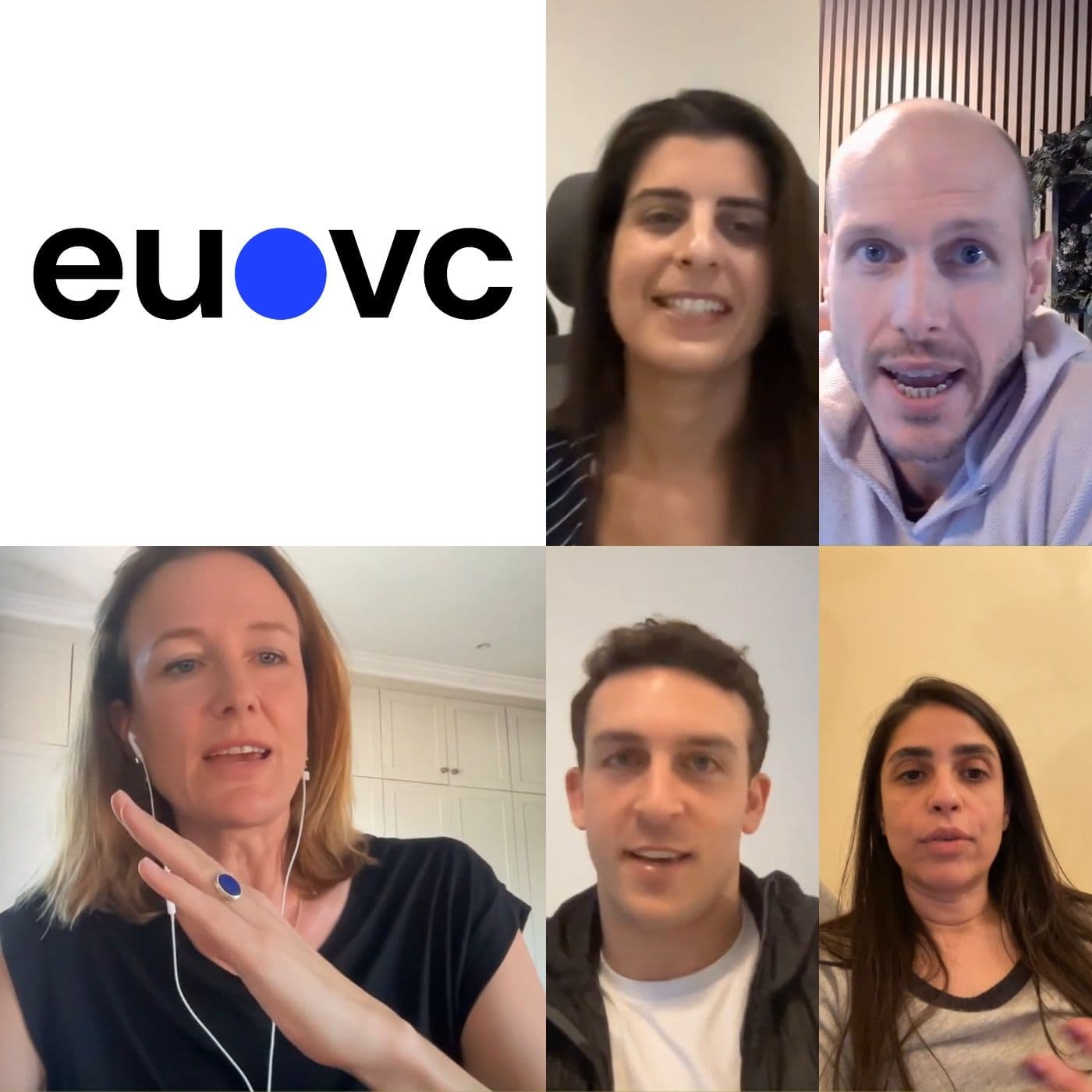
Key Guests
- Lena Tiede - Co-founding partner at Planet A (Green tech fund focused on nature and climate tech).
- Peter Hirsch - Head of sustainability at 2150 (Invests in urban sustainability).
- Sonia Weymuller - Co-founder and general partner at Ventures Souk (Early-stage VC focused on fintech and climate).
- Areije Al Shakar - Director and fund manager for the Al Waha Fund of Funds (Sovereign-backed venture fund).
Main Themes Discussed
- Evolution of Climate Tech:
- Growing recognition of climate tech as a critical sector in VC and its role in combating climate change.
- The need for innovative solutions and technologies for sustainable development.
- Role of Venture Capital in Environmental Policy:
- VCs are increasingly influencing environmental policy and driving sustainable innovations.
- The importance of collaboration among VCs, policymakers, and founders.
- Future of Climate Finance:
- Perspectives on funding mechanisms for climate initiatives, particularly in emerging markets and the MENA region.
- The need for more investment in early-stage climate tech.
Key Takeaways
- Transition from Fossil Fuels: The main outcome of COP28 emphasized the commitment to transition away from fossil fuels, which is crucial for shaping future energy systems.
- Investment Landscape:
- Significant potential for climate investment exists, especially in high-growth markets like the GCC.
- Investors are shifting focus towards climate solutions that not only benefit the environment but also have lucrative financial returns.
- Collaboration and Education:
- There is a pressing need for enhanced dialogue between LPs (Limited Partners) and GPs (General Partners) to foster a better understanding of the climate investment landscape.
- Developing educational initiatives to demystify climate tech investments and demonstrate their profitability.
- Public vs. Private Sector: Acknowledgment of the role of the private sector in supporting climate initiatives and the necessity for public funding to complement these efforts.
Discussion Chapters
- 00:00:00 - Wrapping up COP28 and its Implications
- 00:01:56 - Introduction of Panelists and Funds
- 00:03:47 - Transition Away from Fossil Fuels
- 00:05:28 - Investing in Climate Tech Funds
- 00:07:19 - Investing in the Environmental Space
- 00:09:13 - Investing in Early Stage Climate in the GCC
- 00:10:51 - Climate Investment in the Middle East
- 00:12:24 - Increasing Investment in Early Stage Climate Tech
- 00:14:07 - Tech Tipping Points and Earth Systems Tipping Points
- 00:16:12 - All-Hands-On-Deck Approach in Addressing Climate Change
- 00:19:26 - Generating Collaborative Spaces for Climate Action
- 00:21:04 - Investing Strategies in the GCC
- 00:22:45 - The Global Nature of Climate Innovation
- 00:24:35 - Fundraising in the GCC
- 00:26:16 - Investing in Climate in Emerging Markets
- 00:27:47 - Emerging Climate Solutions in High Growth Markets
- 00:29:21 - The Overwhelming Scale of COP and the Role of VC in Climate Tech
- 00:31:11 - Growth and Construction in Developing Countries
- 00:32:59 - The Role of the Private Sector in Supporting Climate Technologies
- 00:34:43 - The Need for More Public Funding in Europe
- 00:36:41 - Funding Climate Solutions in the MENA Region
- 00:38:26 - Collaboration for Climate Solutions
Conclusion The episode underscores the vital role of venture capital in addressing climate change and emphasizes the need for collaboration among various stakeholders. The insights shared by the guests highlight the potential for growth and innovation in the climate tech sector, especially in emerging markets post-COP28.
Follow EUVC for more discussions on European venture capital and its impact on global challenges.
Written by AI. May contain mistakes. Listen to the episode to check what was said.
Transcript
Automatic transcript. May contain errors.0:00Welcome, everyone, to today's very special episode where we are going to wrap up COP28, which has just about ended a small week ago or so. We couldn't get this to happen earlier, but that's because of the seniority of the panel. So you're in for a treat here.
0:20Tear down this wall. It's more than just an alliance. This is a union of values. United and determined, we can serve as a model for other regions of the world. The nature of a problem requires a European response. Europe is a story of new beginnings. Let's start acting. This show is not investment advice and the hosts of this episode may be invested in the funds and companies featured. Before we get into the core body where we will go through the main outcomes of COP28, what it all means, the whole positioning of everything and how it impacts venture and how venture can help drive the agenda forward.
1:11I think we should just run around the table here and ask Lina if you could start by introducing yourself to the audience. Yeah, thanks Andreas. My name is Lina Tieder. I'm co-founding partner at Planet A. Planet A is a green tech fund investing in European nature tech and climate tech companies that do something amazing for climate mitigation and biodiversity protection and being able to scale rapidly. And we are very science driven. My background is in science and environmental research. And we do calculate life cycle assessments as part of our due diligence. Happy to be here. And if anyone wants to hear more from Planet A, we have had Nick on, I think, once or twice.
1:53Peter, maybe you would take the mantle and tell us about 2150. Sure. Hi, I'm Peter Hirsch. I'm a head of sustainability at 2150. We're an early stage climate tech fund focused specifically on urban sustainability based between London and Copenhagen, but we invest globally. We invest in everything from decarbonization of cement, new ways of cooling, different types of windows, as well as looking into new areas like carbon removal and biodiversity. And Sonia, will you take the mic and tell us about yourself and your fund? Sure. My name is Sonia Wehmuller. I'm a co-founder and general partner at Ventures Souk.
2:30We're an early stage VC. We've been around for about 10 years based here in the UAE where COP28 took place. We're a thematic VC, specifically focused on fintech and on climate. Beautiful. And finally, Arish, will you tell us who you are and tell us a bit about your perspective as an LP. Great. Thank you. I'm Erie Jalshikar and I'm based out of Bahrain. I'm the director and fund manager for the Al-Waha Fund of Funds, a sovereign-backed venture fund of funds that invests in funds that are based across the GCC. My perspective as an LP now with the region getting focused on climate and sustainability, that we as LPs have a huge role to play within the space as we put the agenda forward.
3:21Beautiful. And now let's get to the main content of this episode, which is, of course, wrapping up COP28. And Peter, I want to start with you because I asked you just before we started, where should we start this? Where do you all feel is the right place to start this conversation? And you said to me that I think there's no better place to start than attacking head on the main outcome of the conference, which was that we got the transition away from fossil fuels into the text. But Peter, take us through that. Why do you think that's so momentous? And then we'll run around the table and discuss that.
4:01Yeah, it's certainly, I guess momentous is the right word in that it is a moment, right? Right. So leading up to this, the COP28, there was obviously a lot of discussion about the potential of the host country to be able to follow through on was the desired outcome was to see the language ultimately to commit to the phase out of fossil fuels within the timeline for the commitments of the Paris Agreement. So by 2050, we didn't get that exact text, but we did get a commitment to transition away from fossil fuels. While this might not be the exact outcome that many countries were looking for, in many ways, this is a step in the right direction when it comes to ultimately where we need to start shifting our economy and our energy systems when it comes to ultimately addressing climate change.
4:48It's the first time that we've seen comprehensively that the language around fossil fuels is actually in the text, that we have all countries agreeing that this is ultimately the transition of travel. And when I think about this sort of like the perspective of being an early stage investor, this is the clearest signal we've seen so far from at least our energy systems and where we're going to be sort of powering the future economy, that the way that we're doing things now is not going to last that much longer. And when you're thinking about how we're going to have to start building up the types of technologies that we need to ultimately see through that transition, having this clear global signal that that transition will happen is in some ways the foundation that many of our funds are trying to be built on.
5:35And Aries, can I bring you in with the LP perspective on this? Because now Peter just spoke about the foundation that all of our firms are going to be built on. There's definitely an increased need for capital to get into the climate tech funds that we have both across Europe that we normally, of course, deal with, but also globally. So, Arisha, I'd love to ask you if you could share with us the perspectives that you're really seeing being brought to the forefront in Bahrain, but also more globally when you talk to your fellow LPs. I think what we're seeing is that there's a definite focus in investing in climate.
6:20I think everyone has these kind of national goals within the sustainability carbon net zero on each of their individual agendas across the JCC. And I think it's a relatively new space. People want to learn, want to understand. And I think the best way to do that is to invest in funds that are investing in climate. You know, there is this stereotype when looking at investing in climate that it's not a money-making, you know, kind of subsector within investing in alternatives. And I think one of the areas that a lot of the funds that are investing in this space need to do is to build that awareness and then to kind of build their pitches towards the opportunity that they're presenting rather than this is a climate fund, please invest in us.
7:11A lot of times, each LP has their investor that they need to make money for. They have financial kind of returns as their main strategic or not even strategic, but their main kind of goals as a fund manager or as a GP. And I think it is important to kind of be able to kind of describe the space as not only something that is obviously better for the environment, but also an opportunity for a lot of investors to make money within this space. So I think it's an educational path, like with a lot of different type of alternative asset classes when they first come into play. It's kind of like a new language or a new kind of space that people need to kind of look at.
7:58And I think there needs to be this kind of two way conversation between LPs and GPs to understand how they can participate. Of course, within history, there's a lot of different types of instances within the environment and climate that have not worked in favor for a lot of investors in the past. So people have been burnt in this space prior. But I think it is the role of the GPs alongside the LPs to have a better understanding of how they are able to participate. I think one of the areas that becomes a little bit, you know, harder to kind of navigate once there's a new kind of alternative subsector within, you know, investing is understanding how to kind of due diligence these funds, these investments, whether it's direct or through funds.
8:53I think the best way for a lot of us in the GCC is to start to partner with funds that are doing this, whether early stage or at later stages, and then learn with these GPs and then perhaps start to do them direct after a few years of basically understanding the climate space. Yeah, if I could just jump in and just echo some of what Arish just said. I think, you know, from a regional kind of VC perspective, let's not forget that we still kind of very much live and breathe in a relatively nascent ecosystem. I mean, when we were here, when we launched in 2013, we were one of a handful of players.
9:35Now we're at 70 plus investing in early stage tech, specifically across the GCC. So, you know, while I think some may say that we're a little behind, I think we play catch up very well. And so I think, you know, the education point that Arige made, I think, is on point. Obviously, being in the middle of a fundraise ourselves, like, you know, we see that firsthand. I think there's a misconception of what early stage climate actually looks like, because people in this region have not invested in early stage climate. So they understand kind of the later stage part of the value chain more in terms of infrastructure funds.
10:10So if you see some of the announcements that were made at COP28 around Altera, for example, which is meant to be a$250 billion fund, 30 billion of which is being allocated from the UAE. They already made some announcements in terms of their allocation towards the likes of BlackRock and TPG and Brookfield, which are all later stage billion dollar funds. there's still kind of, I guess, a question mark around where kind of the early stage part of that value chain will sit with regards to some of the allocations coming out of that vehicle. But I think historically, very little funding from the Middle East has gone towards climate globally.
10:48I think that will change, again, playing catch up very fast. I think the numbers are around 2 % of global funding towards climate actually currently come from the Middle East only. I think from my perspective, sitting here, obviously in the UAE, I'm obviously very happy that the UAE played host to COP28 and continues to hold the presidency for the next year, because it means that climate will be front of mind, including amongst the sovereign wealth funds from the region, both here and in the wider GCC area. But I do think it's going to take a bit of time and I do think it's going to take some case studies.
11:22I think this region is still very two pocket thinking driven in terms of, you know, investing in a mission driven founder that's building a tech enabled product that's going to have long term environmental positive outcomes. It's still bucketed as almost worthy of philanthropic money and not as worthy of VC money. And so, you know, a lot of the work that we've been doing over the last couple of years is actually changing that mindset amongst the capital allocators to say, hey, we're a VC. Ultimately, we're looking for financial returns. We're not looking for concessionary financial returns either.
11:53Right. And so I think us being in a position to start pointing to case studies, which we did at COP28 when some of our climate portfolio companies flew in and we put them on stages and we put them on stage at our own event alongside the likes of Peter and some of our other climate peers. I think if we want to see more money flowing to early stage climate tech, I think some of the players here on the LP side do need to see some examples of successful companies that, you know, maybe some of us have seeded, for example, or contribute towards their Series A that are now building things later at the Series B, C and of D stage, where we end up passing the baton over to the growth stage investors and the later stage investors after that.
12:36So I think it will happen. I think a lot of people are fundraising from this region, as I think we all know. A lot of people from the US, from Europe and from Asia are coming through our doors here looking. My hope is that we see more Peters and Lenas coming through the doors as well with tangible case studies to show so that we can ensure there's more, you know, more capital flowing towards early stage climate VCs from around the world. And what is changing, I feel, is that a couple of years back, many people thought around climate tech as this new vertical, while now everybody understands that it's really tackling every single sector of the economy.
13:14And it's creating, I mean, these huge challenges create these huge opportunities. And whether you talk about how we travel, how we grow our foods, how we manufacture the stuff we need, it's all going to be, it's all going to change. And we are seeing this enormous economic transformation that unlocks so much innovation. And the quality of founders coming into that space is just enormous. We have seen 6 ,000 startups over the last two years have invested into 20. And there's really experienced founders coming into climate tech saying, I've been successful in the past. Now I want to do something relevant.
13:56And that's very promising. And if you're looking for one source of hope, it's really tech and new infrastructure. And once they reach these cost tipping points and are deployed at a massive scale, I mean, we've seen that with batteries, we've seen that with solar, then they become the norms within years. And I'm very optimistic that we hopefully reach these tech tipping points earlier than we reach the Earth systems tipping points. Peter, I also saw you nodding when Sonia was talking about, and I reached it as well, about the need for really educating LPs to understand. And I'm going to throw you a bit of a curveball maybe, but now we're wrapping up COP28.
14:51And I've always thought it's interesting. You have all the climate VCs going to COP28 and COP27 last year and so on. We don't really see a fintech VC going to the policy conferences for fintech regulation in wherever. Why is it that we see or you all decide to go to the COP events, to the COP conferences? So there might be two reasons. One is that the COP really has transformed into this huge expo, this huge fair for everything nature and climate. And it's just, honestly, to do business. I mean, it's very relevant also for our portfolio founders to meet with the sea level corporates there, for us to meet at peace.
15:41And the green zone is just bustling with energy and there are so many new alliances being forged. So I find it's highly relevant and increasingly relevant for climate tech VCs. And also, I feel that in the climate tech and green tech field, the role of VCs is also changing. I think we are much more active in policy than traditional VCs used to be. And it's partly because the markets that we're investing in are only being shaped now. And it was interesting. I'm also part of Clean Tech for Europe. And I was sitting together with members of parliament in Brussels. And they told me, look, for us, you don't even exist, you early stage investors and you early innovators.
16:25Only those incumbents come to me telling me, don't raise the CO2 price. Otherwise, I go bust as a steel producer. But I never hear the young innovator producing green steel asking me to raise the CO2 price. So I think that's very relevant discussions that we need to have. Sort of just to echo that, the ability for us to address climate change is sort of like all of the above solutions. When you think about policy, finance, industry, technology, it's going to take sort of an all hands on deck approach to actually make this massive of a transition happen. And COP is in many ways just a reflection of that, that while initially it started as a very specific political discussion amongst the UN, it has evolved into, for all intents and purposes, a big climate expo.
17:13And so for us to be able to then have a foot in at least an ear to the ground for how policy is evolving, how our technologies and other technologies in the relevant sectors are continuing to innovate, how massive industry groups are starting to form these alliances. All of this is happening in two weeks, normally towards the end of the year. So it's an unbelievably productive forum to have sort of a quick state of play for where we stand on all of these different aspects of this transition. There were a lot of side events that were happening around COP as well. So, of course, there was the massive event with the Green Zone and the Blue Zone at Expo City.
17:54But there were numerous overlapping side events happening across Dubai and even into Abu Dhabi, to be honest. And so I think to kind of reinforce Peter's point, I think because, you know, FinTech maybe is more market specific when it comes to certain things around policy, regulation, etc. Climate is not. It's a global problem. It's a global challenge. I think for us, it was great to be able to interact in person again with some of our climate portfolio companies, with some of our peers. We hosted, Peter, Lena, and I hosted, along with some of our peers, 150 VCs, climate-focused VCs who are at COP.
18:33So it was great. Also, it was a great kind of space, but we also invited our founders and other ecosystem enablers to kind of exchange notes and get to know each other kind of at a deeper level. And so I think, like, we need to move away from kind of the siloed conversations that happen. And I think that transpired a lot through some of the side events that were happening around COP. you know I hosted a you know two sessions in my own garden where I had a mix of like academics and VCs and founders and like you know people who actually had nothing to do with climate were just there because they were actually interested in learning and interacting with other climate stakeholders and these are the safe spaces that we need to start creating more and more of I think regardless of where you're based because that's Peter said it is all hands on deck and so how do we make sure that the corporates are interacting with the VCs are interacting with the policymakers are interacting with the academics are interacting with the students i mean it's also very much about the next generation of investors the next generation of founders climate is not going away this is kind of going to be the heightened focus we see it with our own junior kind of members in our team they care about what they spend on they care what they're wearing and making sure it's sustainable they care what we're investing into like they're the ones who will raise their heads and say hey guys i don't know about this one you know kind of their kind of track record in the sustainability space is kind of BS, you know, to be perfectly frank.
19:50So, you know, we're being held accountable. I'm not saying that we're all old on this call, but, you know, we're also kind of nurturing the next generation of investors within our own firms and climate is very much forefront for them as well. And I think maybe just to kind of, you know, bring your point, you know, when we're comparing fintech to climate, I think, you know, there, you know, there's a lot of, you know, fintech sort of events or festivals that happen globally that also bring together a lot of VCs that come together. Like once a year, for example, in Singapore, there's a Singapore FinTech Festival where the regulators attend, as well as a lot of VCs and founders.
20:27I think what's great about COP that it's kind of very high level, you know, leadership from like, you know, global leaders that come all into one place, putting a lot of importance on climate. And then with the VCs and kind of like the private sector elements that come into play and their kind of commitment within that space, I think obviously climate is a little bit more nascent from an investing perspective, like focus as compared to fintech. But when we look back a few years ago, just let's say in the GCC, and Sonia probably will look at that too, But, you know, we didn't really have any kind of fintech focused funds.
21:10But a lot of these now, these VCs, there is an Abu Dhabi Finance Week that happens that brings together people from all over the region and people who are investing to the region. And it happens within the regulator space in ADGM. And you have all the regulators from the region that come in. So I don't think it's very different, but I think it's important to have private sector plus the public sector present a lot of time. and especially when it comes to climate because it is a very new space. So, you know, how does the regulation that comes into play, what global leaders are talking about, how can we take that and then, you know, convert it into something that we can apply in investing strategies?
21:51And, you know, I heard that a lot amongst a lot of the various GPs and then a lot of even VCs that aren't looking at climate, that were also at COP. And I said, so what did you guys, why are you guys here? And they said, well, Erij, you know, it's very much on the agenda of, you know, of our countries. We want to understand, we want to learn, and we want to see what we can do within our funds to help, you know, carve out something to do. So I think that this is kind of the feeling I got attending co-op and attending, like Sonia said, the side events. It's very much a learning opportunity. And people want to know how can they, you know, how can they kind of just play a part in supporting the goals of, you know, each of their kind of countries.
22:41And I'm speaking specifically, let's say, at the GCC because most of our nations have that as part of their national strategies going forward. Can I ask you, Arish, in Europe, we've done quite a few climate-focused podcasts by now with European-based VCs. And they tend to say that we're the best positioned region to take on the climate agenda. We are ahead on X, Y, and Z. I'd love to ask you because I'm sure that you have a lot of European VCs knocking on your door looking to secure an LP commitment. When you look at the European continent, do you see the European continent as very, very well positioned and that we actually do have a, you know, a head start in this space?
23:29Or is that more, well, of course, every European VC manager says that, but that's just like everyone says they have a unique sourcing angle. I think it's fair to say that a lot of the technologies or a lot of the founders are actually innovating probably in Europe or in the West, just because that's where kind of maybe, you know, it started. Whether that means that they're better positioned or not, I don't think is necessarily true. And, you know, I'll use Sonya as an example. She's based in the UAE, but has one of the most kind of sophisticated networks across all of climate and sustainability globally.
24:06And she started maybe, like in my memory, about three to four years ago, just kind of building out the thematic fund. She sort of did it just like from her space. And I really believe when it comes to any space and specifically with climate, it's a global agenda. And I think you just need someone who actually or a group or a strategy of VC that actually want or believe in the space. And they can be based anywhere. I don't believe that if you're based in Europe, you'll have better access than if you're based in the GCC. But I think obviously just because of proximity, you might have more founders that are just like, you know, just, you know, a drive away or, you know, a bus ride away that you can actually sit down and talk to.
24:47I think what's interesting is what I think we mentioned is that a lot of we have a lot of GPs that are coming to the region for fundraising over the past two to three years. And I think in that respect, I think the GCC is actually very well positioned to really help support this space because this is where people are fundraising. And so if we don't get on board, then it's hard for these kind of things to go forward because this is where, you know, where the money's coming from. Yeah, absolutely. Lina and Sonia, can I ask both of you to comment on the LP presence at a place like COP28 and how you navigate that when you go there?
25:33Just because we have also many that haven't gone yet, and they'll be listening into this episode thinking about, okay, maybe I should go next year. Well, I guess my perspective is maybe a bit biased because all our LPs historically are all the sovereign wealth funds from the region. And so, yes, they were at COP because they're here already. So, but I mean, it was very refreshing for us to see kind of the LP involvement, our existing LP involvement in the climate space. These are LPs that maybe sit on our FinTech fund, for example, traditionally, right? So seeing them enter our other thesis, which is the climate thesis, is, I think, promising.
26:08But I just want to, before Lena goes in on her perspective on the LP, I mean, yes, we Actually, we all co-hosted panels in the green zone on the tech and innovation stage. And we had LPs, including Areej, provide their perspective, actually. So the LPs were there. And I think I can speak for myself, but I'm sure it was the same with Peter and Lena. I had meetings with prospective LPs at COP as well. But these are LPs who historically had invested in climate. So these are not kind of non-climate-y LPs who decided to show up at COP. I think we had more of those coming from the region, you know, who flew in maybe from Saudi or even from Bahrain and Kuwait, who maybe historically had not made investments in the climate space.
26:48But because COP was being hosted in the region, they actually showed up. So I think that maybe was good. But back to the earlier point that Arige was making that you had asked her as well. I also think like I don't think it's like Europe is best or U.S. is best or whatever. But if you were to ask me where I see the growth within the climate space, it is emerging markets. So, you know, I spent quite a bit of time recently in East Africa and in Asia talking to founders on the ground, but also talking to potential LPs on the ground. I definitely think there's a lot of room for growth across what's been dubbed the global south, but essentially like kind of this new kind of digital silk route that's been forming within the climate sector from Southeast Asia through South Asia into MENA and down to Africa.
27:30I think that what we're seeing is a lot of founders and maybe Lena will resonate with this based on her experience in Africa, but also a lot of the founders seeing kind of similar challenges that they may be facing and kind of exploring opportunities if they're sitting in, you know, like one of our portfolio companies that has expanded to MENA from the UK is now looking at Indonesia, for example. And then they're getting inbound interest from Africa. And I think that's kind of an interesting space to keep an eye on within the climate sector. specifically, these are high growth markets, which massive populations and also populations that are really feeling the effects of climate change firsthand, which is also propelling more innovation or kind of a desire to innovate.
28:11And so we are going to start seeing more of these kind of maybe ex-consultants becoming founders, which is kind of what we saw happening in the Middle East, turning their attention to kind of developing climate solutions based on the markets that they sit in, whether it be Jakarta or Singapore or Dubai or Joburg, et cetera. And so for me, if you're asking me, like, what are you most excited about from that? Yes, I'm very excited about supporting my existing climate founders from the West, but also helping them scale their solutions to emerging markets. And vice versa, I'm also excited about nurturing the next generation of climate founders coming from these emerging markets as well, and then exploring those cross-pollination opportunities amongst the founders.
Read the full transcript
28:52And I think that's back to the original point of like what was COP great at was actually bringing founders from all around the world together also to interact and potentially see if they can synergize and partner around specific initiatives that they're all doing. Yeah, so we're currently not fundraising, so there wasn't a particular focus of mine, but I think it is an ideal platform to meet climate-driven LPs, especially from the institutional side. I think you will find less family offices there maybe less individuals, but the big banks, the big financial institutions, they will be there. And the COP can be quite overwhelming.
29:33I mean, this year there were 100 ,000 people there. So if you want to meet Alpiz, I think you have to know what you want to get out of your days there. We have to do it quite strategically because, as Sonia mentioned, there's millions of side events and it's easy to get sidetracked. But yeah, I would encourage everyone raising to use that platform. And it's a great platform to form alliances. And for me, it's an exciting development that COP is really becoming this kind of space because VCs, for me, play a crucial role in accelerating these climate tech solutions. And they have proven so in the past that they can do that enormously well.
30:19In my perspective, they have not proven that in any kind of relevant, for society relevant kind of challenges. But that's why I think that the most relevant decade for VC is still to come, because we need to understand where the capital is needed and what are the big solutions, especially in the hard-to-obeyed industries like steel, like concrete, also the transport sector and the building sector. They have moved incredibly slow. And if we know that, as VCs, we have proven to be very good in scaling these technologies faster and time is of the essence. So I find that there could be a strong world for VC in that space.
30:59Just to reinforce Sonia and Lena's point, what we're trying to achieve pretty much to 2030 or 2035 is a sort of leapfrog of technologies when it comes to the areas of the world that we're developing the fastest. When you think about, you can say, GCC, Indonesia, Nigeria, India, all of these will be the places where growth and construction is happening, where the greatest amount of cooling will be coming online, where you're going to have more penetration of renewables coming online. Essentially, they're going to be the ones that, if we can get the cost curves of these technologies down, be the ones buying them in mass.
31:35So in many ways, the ideal would be to use COP as a sort of platform or sort of celebration in some ways to bring attention to those types of solutions that could actually make that transition possible as really the scale of what is needed between now and then sort of the next 15 years is hard to articulate in many ways. And I guess that's also why COP28 fits so well in UAE because of UAE's role as the gateway to the global south. I'm sure that there was a lot of thought behind that. I love to ask you, because Peter, actually, you said very well that it very much felt like climate tech was the foundational theme of the whole conference.
32:21But you also said that it was kind of like there was a missing piece, which was finance. We didn't have a significant financial commitment coming out of the conference. And the question is, Peter, I guess this creates a narrative gap for VC and PE and other like-minded in tech to really go in and craft something very powerful. And I'd love to ask you to dive deeper there. Specifically what happened in the final cough agreement text was that there wasn't a call sort of for the finance that's needed to see through this transition. We did see a number of exciting large funding announcements, as Sonia mentioned, Altera.
33:07There's finally sort of clear funding for the loss and damage fund. It can be continuous funding going towards cement and steel. This is all sort of clear where we have at least signals that there will be capital available to support the scale up of these climate technologies. But I guess at a larger scale, what we're not seeing and what we haven't seen from these countries is this wide commitment that they're going to follow through with their commitments with funding. And that sort of puts this onus a bit on what role can the private sector then play to be able to give the signals continuously through to every COP that there is going to be continued to be private sector support if public sector money continues to or eventually sort of gets articulated into the COP text.
33:57For many of us out here, we're definitely very well connected to all those investors that are looking to write serious checks when it comes to supporting these types of technologies. public support, public frameworks, public policy, all of this is going to be sort of an essential part of supporting this overall transition. I don't know if Lena is sort of sitting between two continents and Sonia as well, sort of with a bit more of a global perspective. I don't see how the private sector can do this alone. And we definitely need to have a clear signal on the global level that the public sector will start to step up in many ways.
34:36So in Europe, we already see that the public sector is stepping up. And for instance, the funding coming through the EIF, the European Innovation Fund, the European Innovation Council, and also in Germany, a big new deep tech climate fund. Also more money slowly, slowly coming into the growth space. But I think that is the space that is the most vulnerable at the moment, at least on our continent, in Europe, where you have quite a solid kind of early stage capital allocation at the moment. But then when you want to hand over that company to someone at a serious B financing round, it's very hard and they still often need to turn to Asia, the US.
35:23And so we need to, we are working a lot on addressing the needs of that capital stack, especially for climate hardware and first-of-a-kind plans, because it's a very kind of, it's a different game. And we are only building that capital stack now. And I think we do need more public money coming into that, or not only even only public money, but also, for instance, guarantees for banks to go into that risk a bit earlier. So the whole set of tools need to be there. I mean, Lina's absolutely right that there have been huge public movements from the US, from many of the G7 countries, from the EU, that there is going to be public support for it.
36:05It's just having that translate into the UN forum hasn't happened quite yet. We are almost up on the dot. So I want to ask each of you to just give us your final 30 seconds, one minute on how do you wrap up COP28 looking forward and where do you position yourself in this? For me, I look forward to COP28 acting as a catalyzer for conversations and further conversations within the GCC around climate finance. And I'm hopeful that over the next 12 to 18 months, we'll start seeing some serious commitments, even at the early stage of the value chain towards funding, towards early stage climate VCs and then ultimately to the founders, because none of this works without the founders.
36:53So how do we get more money to those founders that are developing climate solutions? I'm also hopeful that a lot of climate founders came to the region for the first time. And the fact is, this region is warming up a lot faster than some other parts of the world and hopefully saw an opportunity for them to actually potentially scale some of their solutions here in the MENA region. And so I'm also hopeful to see more founders come and spend more time here in the GCC and beyond in the wider Middle East region. You know, as I look at COP28, I think it was like a great sort of, it's kind of like just ignited a lot.
37:29We've been talking a lot about climate sustainability across the region over the past two years. But I think COP28 really kind of placed like a cornerstone as to how this is going to develop over the next year and the next few years. Our role as investors, as well as understanding how the private sector, along with regulation, can come together to really make a lot of these kind of national goals happen. Yeah, and I mean, implementation doesn't happen in the negotiation halls. Implementation happens in the real economy. And I think that's our role now to translate that political will to transition away from fossil fuels, not only in the energy sector, but all over the economy.
38:19Yeah, I hope that more LPs come into that space. And also that we manage to think not narrowly only CO2, but understand that that is part of a larger nature crisis. And I think I keep saying it's more about an earth system collapse than only a siloed climate crisis. But I'm very positive that we got a strong momentum now after this COP and will reinforce our efforts here. I mean, my main takeaway is I'm just really impressed with the community of investors and founders that formed in this early stage to BC space. from all the funds on this call. What's very clear is that we're all wrestling with very similar challenges for how to help our portfolio companies succeed.
39:03And this is a global challenge. And individually, we can try to sort of wrestle with those in our companies. What COP was able to do is bring us all together and actually get us all into the same room. And much of that is actually to, I want to give some credit to Sonia to making sure that we are also able to be in her backyard. But this community ideally is going to be the way that we can troubleshoot, that we can work with each other, the way that we can sort of collaborate on these challenges that are going to be common to any of our portfolios. And looking forward to future COPs where hopefully we can build a little bit on this momentum and use that collective voice as early stage investors to break attention to some of these challenges and get more funding into this space because it's definitely needed.
39:42You heard it, everyone. More funding to the space. You should definitely be putting your money with climate funds like the four that we have here. Everyone, thanks so much for joining us. everyone listening in. We love you all. If you enjoyed this episode, make sure to subscribe at EU.BC and tune in for our next episode.
40:22The problem requires a European response. Europe is a story of new beginnings. New beginnings. Let's start acting.
From the publisher
- Lena Tiede from Planet A
- Peter Hirsch from 2150
- Sonia Weymuller from VentureSouq
- Areije Al Shakar from Al Waha Fund of Funds
- The evolution of climate tech as a crucial sector in VC as well as in fighting climate change.
- The increasing role of VCs in shaping environmental policy and driving sustainable innovation.
- Perspectives from both LPs and VCs on the future of climate finance and technology.
Chapters:
00:00:00 - Wrapping up COP28 and its Implications
00:01:56 - Introduction of Panelist and Funds
00:03:47 - Transition Away from Fossil Fuels
00:05:28 - Investing in Climate Tech Funds
00:07:19 - Investing in the Environmental Space
00:09:13 - Investing in Early Stage Climate in the GCC
00:10:51 - Climate Investment in the Middle East
00:12:24 - Increasing Investment in Early Stage Climate Tech
00:14:07 - Tech Tipping Points and Earth Systems Tipping Points
00:16:12 - All-Hands-On-Deck Approach in Addressing Climate Change
00:17:57 - Generating Collaborative Spaces for Climate Action
00:19:26 - The Next Generation and Climate Accountability
00:21:04 - Investing Strategies in the GCC
00:22:45 - The Global Nature of Climate Innovation
00:24:35 - Fundraising in the GCC
00:26:16 - Investing in Climate in Emerging Markets
00:27:47 - Emerging Climate Solutions in High Growth Markets
00:29:21 - The Overwhelming Scale of COP and the Role of VC in Climate Tech
00:31:11 - Growth and Construction in Developing Countries
00:32:59 - The Role of the Private Sector in Supporting Climate Technologies
00:34:43 - The Need for More Public Funding in Europe
00:36:41 - Funding Climate Solutions in the MENA Region
00:38:26 - Collaboration for Climate Solutions


