
In short
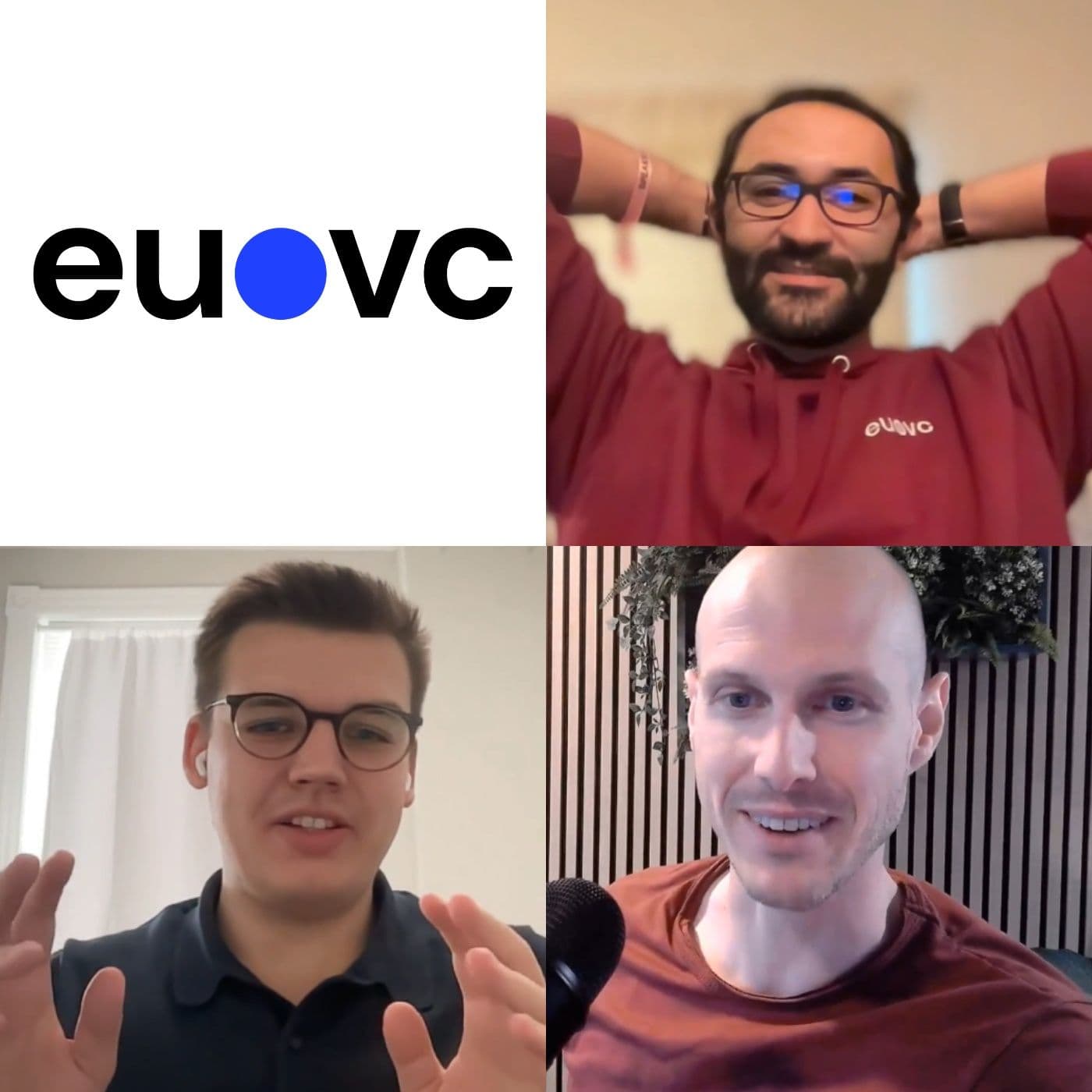
EUVC Episode #265: Simon Lohman on Building the Cavalry Platform
Podcast Overview
- Podcast Title: EUVC
- Co-hosts: Andreas Munk Holm and David Cruz e Silva
- Description: A podcast focusing on European venture capital, featuring discussions and insights from prominent figures in the industry.
Episode Description In this episode, Simon Lohmann, Head of Platform & Investor Relations at Cavalry Ventures, discusses his journey into venture capital and the importance of building an effective platform for the firm. Cavalry Ventures is an early-stage venture fund in Germany with a focus on European software companies and a robust LP network.
Key Details
- Fund Size: €250 million AUM
- Portfolio: 50+ companies, including notable investments like Usercentrics, PlanRadar, Forto, and Aleph Alpha.
Episode Chapters
- 00:00:00 - Introduction and Sponsor Message
- 00:03:30 - Investment Announcement with German Corporates
- 00:06:58 - From Sales to VC: My Journey in the Industry
- 00:10:15 - The Importance of Education and Learning
- 00:13:47 - Investing in Talent and Consolidation in the VC Space
- 00:17:29 - Challenges in the VC Industry
- 00:21:09 - Adjusting Valuations and Interacting with LPs
- 00:24:35 - The Beginning of Cavalry and the Platform Activities
- 00:28:11 - Structured Approach to Platform Development
- 00:31:40 - Using an App for Communication
- 00:35:04 - Using Affinity as our CRM
- 00:38:30 - Tracking the Success of Introductions
- 00:41:59 - The Value of a Platform Team in Venture Capital
- 00:45:28 - Importance of Value Add and Trust
- 00:48:45 - Supporting Portfolio Companies
- 00:52:14 - Shoutouts to Christian Du and Hannah from Don Capital
- 00:55:49 - Strategic Work and Scalability
- 00:59:20 - Capacity Management and Scalability Techniques
- 01:02:53 - Advice for First-Time Founders and Long-Term Thinking
- 01:06:27 - Communicating Clearly with LPs in Venture Capital
- 01:10:15 - European Unity and Values
Key Themes and Takeaways
Simon's Journey into VC
- Transitioned from a sales role in a startup to an intern at a venture fund due to networking and personal connections.
- Emphasizes the importance of education and long-term thinking.
Building the Cavalry Platform
- Recognized the need for a centralized function to minimize information asymmetries within the firm.
- Developed a structured approach to support portfolio companies focusing on four overarching goals:
- Winning deals
- Supporting portfolio companies
- Supporting deal flow
- Supporting fundraising activities
Importance of Strategic Communication
- Clear communication with LPs is crucial, especially during difficult times.
- Regular updates and transparency build trust between the investment team and LPs.
Use of Technology and Tools
- Implemented Affinity CRM for better transparency and tracking of interactions and introductions.
- Initially experimented with an app for internal communication but found Slack to be more effective.
Value of the Platform Team
- The platform team plays a significant role in adding value to portfolio companies through introductions and operational support.
- Relationship management is critical; platform team members often have a different relationship with founders compared to investment team members.
Scalability and Efficiency
- Scalability is key to reducing manual work and increasing the effectiveness of the platform team.
- Tools like Notion and Loom are utilized to streamline processes and automate repetitive tasks.
Advice for Emerging VCs
- Focus on long-term thinking and patience in venture capital.
- Build and maintain transparent communication with LPs and portfolio companies.
- Clearly define platform strategies and processes to avoid being overwhelmed with requests.
Shoutouts
- Christian Du: An LP who has been instrumental in supporting Cavalry Ventures and promoting education.
- Hannah from Dawn Capital: Recognized for her contributions to the investor relations team and valuable introductions.
Conclusion This episode provides in-depth insights into the strategic building of a platform in venture capital, emphasizing the importance of clear communication, technology integration, and the value of relationships within the industry. Simon Lohmann's experiences reflect the dynamic nature of venture capital and offer practical advice for both emerging and seasoned VCs.
Written by AI. May contain mistakes. Listen to the episode to check what was said.
Transcript
Automatic transcript. May contain errors.0:00Hi, everyone, and welcome to this episode of the European VC podcast. I'm David and I'm joined by Andreas as usual. Today, we're welcoming Simon. Simon, you're the head of platform and investor relations at Cavalry Ventures, an early stage generalist venture fund in Germany, backing European software companies with a huge LP network and the sizable platform team in place. To anyone listening in, if you guys kind of paid attention to our latest episodes, we've had an episode with Cavalry. So I do invite you to check it out. And we talk a bit about the concept, the origin story of Cavalry. Today, we're doing something different.
0:35Before we get there, just for context, Cavalry is investing out of Fund 3, total AUM of 250 million euros and an established portfolio of more than 50 companies. Notable investments include UserCentrics, PlanRadar, Forto, and Aleph Alpha, which just raised an enormous Series B. At Cavalry, Thiamond focuses on fundraising and investor relations. Now envelop the platform before. If you're listening in and you love our show, you know what to do. Drop us a review, follow the pod and subscribe at EU.VC. And now some words from our beloved sponsor. AppyDay is the leading all-in-one ESG platform for GPs.
1:12Central to AppyDay's philosophy is that ESG for your portfolio companies must be relevant and value-adding. Making you a partner to your companies, not adding more reporting burdens. Appiday offers AI-led ESG reporting, full SFDR compliance, including disclosure templates, EU taxonomy, carbon accounting, due diligence assessments, and most importantly, tangible tools to help your companies like ESG resources and policy templates. See why over 1 ,000 portfolio companies leading Article 9 funds and$100 billion of AUM trust Appaday to manage ESG and sustainability across their ecosystems. Take a free product tour at appaday.com or book a No Obligations ESG VC strategy session with one of their experts.
2:11It's more than just an alliance. This is a union of values. United and determined we can serve as a model for other regions of the world. The nature of a problem requires a European response. Europe is a story of new beginnings. New beginnings. Let's start acting. In a world where podcasts outnumber humans, We try at EUVC to be mildly more interesting. Tune in at EU.VC to watch this episode instead of just listening. EU.VC, where the extraordinary is just another Monday. This show is not investment advice and the hosts of this episode may be invested in the funds and companies featured. So, Simon, if I say 500 million, what will you say?
3:07I would say Aleph Alpha, the company that David just mentioned, because our portfolio company, Aleph Alpha, announced the enormous Series B last week. It was a 500 million US dollar, which is quite big. But you also have to understand the round structure, actually, because it's not all equity. There are also some grants and revenue included in the round. Schwarz Group was the lead in this round. It's actually the family business of Dieter Schwarz, who is the richest German family or German based family out of Heilbronn. They also built the ePie, which is an AI park and Aleph Alfa is right in the center of this park and that this park also invests into the company.
3:54So that's super interesting. we actually invested back in 2020 in the seed round together with our friends at Lea Partners 468 and now it's an honor to have German corporates on board like Schwarzkopf that I mentioned before and also Bosch which is super nice and they're also already working together with Aleph Alpha so that's also interesting on the business development side of things so yeah we are super happy that we could finally announce the round last week and it was super well in the press. So we are quite happy about the round. Who came into the Series A round? So back in the Series A, Early Bird was the lead.
4:35Andre, who is quite active also in terms of AI newsletters and educating people on the topic. So that's super nice. Audience, if you haven't subscribed yet to Andre's newsletter, go ahead and do that. It's an awesome newsletter. Yeah, it's super good. And we also had Lakesda on board. so some German funds as well. I mean, Aleph Alpha also had the opportunity to raise from bigger US corporates and funds, but they also want to be a European company and they also sell to big European enterprises and, you know, data and confidelity of data is a strong topic. And that's why they also chose European investors for this round.
5:23And I think it's super strong and it's a good signal for the European ecosystem in general. It's incredibly exciting. We could dive much more into it here. But today is dedicated to the platform team building and how to scale a platform as a VC firm. So we'll dive into all that in just a second. But before we go there, Simon, we want to give you, of course, the usual intro and ask you, just tell us your story about how you broke into venture. And you're a very young guy. I think you're the youngest guy on this call for once. So kudos to you for being an absolutely smash-hitting young guy. Yeah, thanks.
5:59So first of all, thanks for having me on the show. It's super nice to be here. My journey into venture actually started back in 2016 when I was still studying in Berlin. I did a master's in international finance. I worked at a company called Plista, which was a startup in the advertising space. So they built native advertising products. If you, for example, read an article on your iPhone, they had this advertising banners just in the text so that you actually not notice so much. And the company was built and founded by Dominic Matica, who sold Clista to WPP, which is the biggest advertising company in the world, and then was one of the co-founders of Cadbury.
6:45And I was working in sales at Clista, And he actually said, hey, I'm founding this fund. And do you want to work there? And I was like, sure. And he introduced me to the other founders, the managing partners of the fund. And I started with an internship back then, still finished my master's. And I also did an interesting master thesis then, actually, because I interviewed a lot of entrepreneurs and GPs from early stage venture firms back then. because I wrote about the relationship between early stage founders and their VCs. It was like a principal agent relationship. You may know this from your studies.
7:25And then I interviewed a lot of interesting people who are still friends. For example, I interviewed Peter Specht, who is now a GP at Creandum on the VC side. I interviewed also Claude Ritter, who was back then CEO at Bucke Tiger and is now a managing partner at Cavalry. So he's actually my closest partner here at Cavalry. So yeah, that was super interesting. I built up a network and I loved the spirit of VC back in 2017 a lot. Everyone was so motivated. It was quite a small industry. Today we have a lot of big firms, a lot of people working in the industry. But it was super nice and I still love it since then actually.
8:06So I'm now in the industry for six years already. I guess, Simon, going from being a sales guy that performs so well that he's headhunted by the former founder or the founder that sells the business, and then going to be an intern at a VC, that's quite a price tag. You can take quite a price tag going from being an accomplished salesperson to being an intern at a VC fund that's not raised yet. Yeah, I mean, it was a lot of luck, to be honest. before that i had no idea about vc and it was just amazing to get to know so many entrepreneurs and you know at cavalry back then was co-founded by six uh founders and five of them are actually serial entrepreneurs i think stefan explained it on the the other episode but we had people from delivery here and so on and it was so interesting to learn from them so after three months i actually got hired and was there full time i started in the investment team but then And actually pretty early, I noticed that it's super important to create another function that we then called platform.
9:16And I think that's the topic of today. Yeah, but it was quite an interesting journey, to be honest. And it was a lot of luck involved. And I still lock my day. So yeah, I'm super happy about it. To anyone wondering and listening in, it was episode 108 in 98, where we had Stefan. That was four months ago, roughly. You check it out. we talked about leveraging 250 plus LP based and investing with conviction. Simon, before we continue, I really want to ask you to show us a pivotal moment in your life and how has it shaped today as an investor? Yeah, so first of all, you know, I'm not directly investing anymore because as you mentioned, I'm on the fundraising part of the business.
9:57But you know what I can say, what was like a pivotal moment for me in general to build up my career actually started back in the school I was actually super bad in school until I was 15 or so. I was more like a party kid, you know, and I didn't care about school much. But there was a moment I can really remember today where I actually learned that I have to be, that I have to have a good education if I want to be free as an adult. And, you know, I don't come from a family with money. And so I learned that education is actually my biggest leverage to be successful and to build up a career. And that was really like a moment that I can remember that I started to be interested in school and started to learn.
10:48And then it was actually quite a good A-level in the end. And I studied at a private university back in the days. And this was actually an interesting learning because I thought it's the best that I can do. Go to a private university. It's near to the industry. You have a lot of contacts in the economy and you have small learning groups and everything. But in the end, it was actually an experience that was a little bit disappointing, I would say. and it was not the best idea because in Germany we have such good public universities for free you know I think I learned from that not to get tricked by fancy marketing super early and I think that's super important in our job and in our industry because we invest in the pre-seed and seed status so everyone with a pdf is a potential deal for us you know and yeah we have a lot of people that that also try to blend you and so this was a super important learning for me uh when i was still like 18 19 or so and i think um now i'm not so easy to get tricked anymore you also have a statement uh that says rich dad poor dad and warren buffett i'm super curious what that means yeah so actually this was when i was 18 or so i i for the first time I read the book Rich Dad Poor Dad.
12:21I don't know whether you know it, but it's actually about investing and spending money and thinking long term actually. And that was the reason why I started to invest in stocks when I was 18. I mean, it was small amounts because I had no money, but it really got me the thinking of exponential growth, long term thinking and so on. And it was my first experience with the stock market. And I think that's super crucial to understand. And exponential growth is one of the biggest component also of our jobs in the venture industry. You really have to understand it. And I think this book is quite helpful to understand why you should invest money.
13:05And it's funny that I'm now in the investing industry because back then I was 18. I just started with my studies. And yeah, it was quite influential. I mean, it's a cheesy book. you know it's not like the most sophisticated book but when you're 18 it gives you the idea right Warren Buffett of course he was the biggest name in the investment industry also I do like different stuff now but he also gave me the idea of investing you know it's funny because I was thinking the other day I came to think about one of the things that made me when I heard Warren Buffett say, imagine you could look around the room and then pick two people or one person to put your money with and then invest in that person's career.
13:58I realized that stuck so much with me when I heard him say that in the speech once. And I thought, that's actually why I ended up opting for LP investing, because that's exactly what you do. You take a deep, deep look at the smartest people you can find and then you pick one or two or a few to put your money behind. It's funny to think about how meaningful Warren Buffett has been to, I think, our whole generation of investors. That's absolutely right. And we do the same as a VC fund manager, right? As a GP, we also invest in talent, especially in the early stages. I think it's true the most. but it's funny that Robert Buffett is actually an value investor and Charlie Munger his colleague just said again that he doesn't like VC I think it's quite the opposite to do in terms of investing styles but as you mentioned in general it gives you the idea of actually invest in talent and that's quite a good statement I would say all right now Simon let's go to our Take a Stand section
15:20I would love to ask you to comment on the following quote by Nils Fritze from Scale Investor. There will be a huge consolidation in the next years in terms of the VC space. Also in the private equity as well, but VC, I would say even more than private equity. Yeah, so first of all, I think this is a super wise statement and I completely agree with it. You know, the last weeks you already saw that there is the first consolidation in the European DC market actually. You know that GC kind of merged with La Familia, which is a German pre-seed and seed fund. They also started to invest a little bit multistage now with their latest fund.
16:03Kudos to them. They actually started, I think, one year before Cavalry. We have some co-investments. They build up a very, very good portfolio. And they raised a lot of money in the last fund generation. So congrats to that. But I think that's already showing that there is some consolidation. and it's also showing that big US brand names are interested in the European VC market. You also see that as IBP and some other big folks, you know, Sequoia also opened up offices in Europe over the last couple of years. And I think especially in the pre-seed and seed market, it's super critical to have local networks And it's super hard to build this from the US or outside when you're not from this market.
16:54And that's why I think there will be some more activities going on in the VC space. And that maybe some other Asian or US funds will actually merge with some European funds. You also see some other directions. You know, you had Fred Destin on the pod talking about Strike VC and that he's not raising a new fund. That's also interesting. I think in the hype market of 2020, 2021, 2022, you had the problem that a lot of people actually spend a lot of money very fast. So the deployment cycles of the VC funds actually got a little bit smaller. A lot of people invested on very high multiples and also on some hype topics.
17:42You know, just mentioned the micro mobility startups, the quick commerce startups, the Amazon aggregator startups, like companies with a business model where it might make sense when capital is actually at zero cost available, but doesn't make sense anymore in hindsight, you know. and I think that's a big problem a lot of people still have like valuations in their book on very high marks like multiples on IR and I think we have a new market environment and some people will struggle and I think like a merger or stop raising funds are like some outcomes or like effects out of this right and now we have a different macro environment with a higher interest rate.
18:34And it's pretty tough now to raise funds. I can say, I mean, I'm in the fundraising market since the year now I'm raising for our new fund. And I can tell you that it's pretty tough. So I think there are some funds in the market that will struggle. And, you know, a merger or like getting by another fund is an option here. And you also have the trend, actually, just one last point that a lot of funds also raised you know growth funds so they started to be a multi-stage strategy firm instead of being a pure single strategy like let's say stage firm because it was so easy to raise money in the hype markets right and now i think these folks also struggling a lot because they invested on so high valuations and there are no uplifts anymore and it's pretty tough for them to actually raise the same amount of money and i think most of them build up a team also for gross investors and this is a huge challenge actually so yeah consolidation in the vc industry i think is a for is a short thing for the next month and years to come.
19:54I was about to ask you, Simon, because the other day I saw the deck of a manager who had small asterisks on his performance. And then it said 50 % at current portfolio value. So he had just written down the portfolio ahead of time. I had already in the deck there, even though it's right now held in the portfolio. Or if you looked at the latest round, then it would be at 2x what he put it at. Do you think that's good practice? And I'm asking you because you're, of course, heading much of the fundraiser recovery. And I think that everyone recognizes that you're very sophisticated. So I'd love to ask you, what do you think about that approach?
20:39How do you deal with that when you go out and race and you have a big established portfolio where some is at one mark and some is at another? First of all, it's super interesting how that actually works in the practice because every firm has different approaches to do that, which is funny. I mean, I spoke to big LPs of ours like the EIF or KFW. They invested in a lot of funds, so they have a lot of benchmarks. And it's funny for them because they invested in the same underlying assets via different kind of managers, and now they have it with different values in their books because every manager is valuing the companies differently, which is also a challenge for them because in the end they may have to make a decision.
21:21What is the real value as of today, right? But I can tell you how we did it at Cavalry. So we started to adjust the valuations actually in Q4 last year with the Q4 report. And how we're doing it is the entire partnership, So all our investment partners and I and our head of finance come together and we actually go through the portfolio line by line and we check whether the current valuation is still realistic. For example, we check the last post-money valuation, of course, then the runway, how much capital the company still has. and then we take a cut of it for the plan, you know, and then we check the ARR multiple at the end of the runway of the specific company.
22:16And when we have the feeling that this is not in terms of the market or whether it makes sense or not, actually it has to be below 10x for us and SaaS companies, you know. And if it's not below 10x, we actually adjusted the valuation And then we cut it down in steps of 25%, 50%, 75 % or 100%. But this is the point where VC managers are doing it quite differently. We also, of course, reached out to our co-investors. So the Series A investors that followed in our portfolio companies, for example, asked them about their approach, how they actually write down the companies or just the valuation of specific companies.
23:02And then we actually wanted to have a similar approach. But, you know, sometimes every manager is doing it a little bit different. Yeah. But we were quite early, I would say. And what is super important to educate your LP base, right? So we also wrote something down for the LPs that we shared, like our opinion of the market, why we actually did it, what we think, where we will be heading. we also offered an investor relations call with the managing partners where we actually had a Q &A session for like selected LPs so it's super important that you actively and proactively actually communicated these kind of things because in the end your LP want to understand your thinking and your opinion of the market right and that's super critical so Simon on on that topic you know of interaction with your lps and what they expect from you know that brings us to the topic of this conversation building a platform that basically in your case in cavalry's case allows you to leverage huge lp base in a way that is both i would say efficient but uh also that's that's that's value additive right so i'd love to ask you to kind of take it take us through that that process take us through that story you know i think it goes without saying to all of us chatting here and everyone listening in like the value of having such an LP base can be huge if you can leverage it.
24:25So let's not lose too much time there. But I think it's really interesting to go through your experience in building that out from scratch. So first of all, as I mentioned, Cavalry was actually built up by serial entrepreneurs. So we wanted to build a firm that is interacting on the eye level with other founders. And we wanted to be a good VC, if you wish. And we wanted to be hands-on. And we actually raised our first fund back in 2016. It was a 22 million fund. And we raised a lot of this from entrepreneurs. So other angel investors, other serial entrepreneurs. And we already had, I think, almost 70 unique LPs with the first fund.
25:10So quite a lot, quite a high number already. And when I started 2017 at Cavalry, I recognized or I saw a problem, a typical problem that you have in VC funds, the problem of, you know, information losses and information asymmetries. Because the problem in VC funds is you always have a decentralized structure. So you have a partnership, you have an investment team, you have some people that are sitting on the board of some companies, but not of all companies, of course, which makes a lot of sense. but not everyone in the team knows the entire network. You know the people that you maybe brought into the fund, your contacts that you maybe raised money from, but you don't know and you don't have the transparency of all the people that are actually working with you, maybe your partners brought into other interesting LPs and then a portfolio company asking you for advice and you only know your own network but not the network of the entire venture firm.
26:14like the fund. And I thought it makes a lot of sense to actually implement a more centralized function into a fund, like the spider in the web, connecting all the dots, right? So someone who knows the entire network, and then can help the portfolio companies, and that you minimize the information asymmetries. That was actually the beginning of the platform activities at Cavalry. And of course, we didn't name it platform back then. It was just an idea and something that we noticed where we should or could improve. And that's when I started in 2018 to actually work full time for the network and portfolio support activities.
26:59And I quite early found out that there is like a real big VC platform community already in place. And of course, it's more from the US. You have a more mature ecosystem there. There were a lot of people already working in the VC platform ecosystem. So there is a global community called VC platform community. And I actually reached out to a lot of people. I had a lot of conversations with Union Square Ventures, for example. They did an amazing job already. and there's also like a nice medium post from this community about the VC platform metrics. And this is a tool that helps you actually to set up your VC platform to build up your VC platform strategy.
27:47And I use this tool. It's actually defining the VC platform activities into 10 components. You know, one component, for example, is scouts and the network. Another one is partnerships and so on. And then you can rank it. And I actually did this together with the managing partners and actually said, this is the status quo at Cavalry. We are like on Scouts, we are on a stage five, which is the best and zero is the worst, you know. And then I said, this is the status quo and this is actually the target and this is the delta. And then I started to work to improve the components in a structured way where we want to be better, actually.
28:32And that's how we started at Cavalry. And I think it's super important in the VC platform that you actually work structured and data-driven from the beginning. Because focus is actually the most important thing when you start these kind of things. Because platform in the end can mean everything. and you should actually define your strategy. And here at Cavalry, back then we already defined it and we broke it down to four, I would say, overarching goals, which is winning deals, supporting our portfolio companies, supporting deal flow, like investment sourcing, and supporting fundraising activities.
29:16And we only did activities in the platform team that actually pay at least in one of these categories. And that was super important. Can you, Simon, can you give examples of things you didn't do? Because I think that's interesting within that framework of the four overarching goals. Because I think it's interesting to give examples. Because the reason why I'm asking is because the skeptic might say, well, that sounds awfully close to just a simple CRM system, which is definitely not the case. No, no, no. Well, I mean, I can go into more details what we actually did and how we did it. But things that we didn't do in the beginning was actually supporting, you know, hiring, operational hiring.
30:00We also tried to not to do too many operational stuff. It was more on the strategic kind of things, you know. And we also started with low-hanging fruits in the network. So when you have 70 entrepreneurs in your LP base, it was super easy to actually connect these LPs with our portfolio companies in terms of business development because a lot of these LPs were entrepreneurs or CEOs in their own companies and they were also decision makers in buying software so when I did a warm introduction to our new portfolio companies and there were opportunities where it made a lot of sense the probability was actually quite high that they will do in the first conversation and the demo call and then also if it makes sense pay for the service so for example we had one company back then where we supported to generate almost i think 70k mrr for a seed stage company which was quite a big value add for them you know but what we are doing now when we invest in the pre-seed stage, we like to introduce them to, you know, first paying customers, but also pilot customers.
31:13And it's super helpful for them, I hope. Because sometimes, you know, we just invest in a team without any commercial traction. And then we have a lot of people in the network that can actually can support and can be a valuable customer. But when we started, I had no idea, you know, I just came from university. I had no idea about the more functional topics, you know, like HR communications and so on, I was stronger on the facilitating introductions, you know, sales support, customer introductions, go to market. And over time, I had a lot of benchmarks on how you should actually build up your sales deck, what is your ICP, how do you, how should you contact your ICP and stuff stuff like this.
32:03And that was something where we started. And then we did a lot of things over time. So we built up a community to connect the portfolio companies with each other, because there's also always a lot of potential. You know, we implemented communications channels. So we actually launched an app called Saloon, which was based on Flip, which is one of our investments in the fund. It's actually an app for blue color workers. For example, McDonald's Germany is using it. or like all the big automotive companies. And we built our own app where all the founders could communicate it, communicating with each other.
32:41So this was super helpful. I'd love to ask you on that app point because it's something that a lot of people are always considering, right? Should we have an app? Or should we have a Slack group? Or should we have a WhatsApp community? Or what made you decide to take the plunge and actually do an app? And how did you, I'll probably put it this way, how did you get the users to really adopt it and open up that app? Because it's one thing that you'd spend two weeks to build that app. That's worth it. But then getting people to actually download it and log into it, keep an eye on what's happening in there.
33:24That's oftentimes the difficult part. You're totally right. That's super tough. And to be honest, I think it also didn't work out in the end with the app. What worked, though, is with the new portfolio companies that we onboarded. So we always do a separated onboarding with the platform team next to the investment team. And then it's also part to introduce the app and how to use it. And of course, we created different channels on specific topics. For example, there was a CTO channel where only CTOs had access to. or there was like a topic-wise channel on online marketing or whatever. And people were actually interested in that.
Read the full transcript
34:04And also the new companies were quite actively using the app because they knew how to install it and they got the information and the context. On the portfolio level, it was powerful with founders. Yeah, right. But it was also super tough to onboard the old portfolio companies, and the more later stage companies because they don't care so much about your maybe three seed seed investors. They were used to sending either a WhatsApp or an email. No, so we actually used this app only between category team members and portfolio founders. And it kind of worked, but you had to have a moderator and you have to tag people.
34:50You have to post a lot. You have to generate a lot of content, you know, and then it's working. But if you're not doing something proactively, it's super tough to get engagement. And in the end, we also made the decision to get back to Slack because it's integrated in everyone's workflow already. And it's actually working quite better, to be honest. But it was nice to have a Cavalry branded app. And it was cheap because it was one of our portfolio companies. And we supported them back then. And it was an interesting use case. I was going to ask you about how do you run this, right? Because there's apps, there's emails, there's Excel, there's CRMs, there's a bunch of stuff, right?
35:29And I was just going to ask if you could give us a bird's eye view of how you run the platform. What are the tools that you're using, not using, and that decision? Sure. So one of the first actions that I did when I started the platform activities in 2018 was actually change our CRM system. Back then, we used Pipedrive, which was good for the deal flow management, but it wasn't so good for the platform activities. Because for the platform activities, you actually need a lot of transparency. So that was the moment we decided to actually use Affinity as our CRM. Could you give an example, Simon, of where you felt it fell short, just so we understand?
36:09Yeah. So, you know, with the affinity, you can see the emails, for example, of each team member if you opt in for it, right? And for me as a platform manager, I have to understand like who of the team is actually working with what context right now and actually also on what kind of topics and what was the last communication, when was it and so on. Because in the end, the platform person is, as I said before, the spider and the web and And we are like in the people business, you know, and we have to have good notes. We have to be prepared when we talk to people. And that was the reason I switched to Affinity because you can see all the email threads.
36:52You can see the attachments. You can actually set up reminders, you know, also for your colleagues. You can write down notes. And this is helping me a lot because I understand what is really going on, you know. And that's the reason why I can go to meetings prepared and can say, hey, Stefan, our managing partner, just spoke to you last week about this and that topic, you know, and this is super helpful. And I didn't have the chance to have the same level of transparency in Pipedrive, actually, for example. And that was the reason we switched to Affinity and we still use it. Of course, we now also implemented some more individual dashboards and we don't use the, I would say, basic version of it because we also track all our introductions in Affinity.
37:46when we started back then i used air table and for for intro tracking so how we do it is we track each introduction that we are actually making for a portfolio company and categorize it so for example if a portfolio company comes with a request to sales introductions with a list of customers for example and i do an introduction and i track it there and it's categorized as a sales introduction we also have categories like hr intro sparring in general finance follow-on finance and so on and then we track it and we also always try to to close the loop and also ask for the outcome of each introduction so in the end we also track was this introduction actually successful or not and we also even try to quantify it because especially in sales introductions customer introductions, you can get a number out of this introduction.
38:47When you do a sales introduction, is this introduction actually converted into a paying customer? If so, how much? And we also try to track this. We did this in Airtail because you can build super fancy dashboards out of it. But now we also do it in Affinity because it's now also possible. Why do you prioritize tracking it? Why is that so important to you? It's super important for us to understand how we actually spend our resources first, because we can see the numbers of introduction for each portfolio company. So you really understand your focus and which portfolio companies you support the most.
39:31another point is actually it gives you some arguments when it comes to you know follow-on rounds and so on for rather negotiation you can actually show companies and follow-on investors what you did as a lead investor as a seed investor you know i mean it's not that i put my numbers to a meeting and then show come on i did 200 successful introductions for this company please give me an over parada but it gives us the data to understand how we support it you know and then we can go strong in the negotiation we know what we did i think it's also super useful for us internally to understand actually the value add that we provide as a platform team how successful we are it's super important and especially in the in the first days of the platform it was super relevant to also provide transparency inside our VC firm.
40:30So with all the colleagues that they actually understand what we as a platform team are doing. So back then, I actually sent out a bi-weekly newsletter to all Cavalry team members explaining how many introductions we did, what were the highlights, what are the new partnerships, what kind of founders did we introduce to each other, what was the outcome and so on. And having a platform and check all the data was super helpful for me to create this kind of bi-weekly newsletters. And it's just good to have the data to understand your work and also to improve. I think what you said there is almost like the perfect segue into when I invited you to come and talk about this, I sent you an article by the information that says why VC platform teams are on the chopping block.
41:22And that's, of course, about the corner market and the fact that, well, as fund sizes shrink a bit and we have to tighten the build, it's oftentimes the platform team that gets the X. And you just said, well, I was always proactive about making sure that everyone understands the value of the platform team. obviously not because of job security. But I do think that it's worth asking you, why do you think that this is? Or do you think that, how do you think about it at Cavalry? Is the platform team absolutely integral? Or do you see that, well, it is for us actually in the end an extra value add activity, but it's also one that we know in a time like this, We're keeping an eye on whether we really do get what we want out of it.
42:17And also what you generally hear, because I'm sure you know a bunch of other heads of platform. Yeah. So that's a really interesting question. Yeah. I just asked you to comment on job security inside Cavalry.
42:31That's always interesting on a podcast. So first of all, I think my situation is special because I came from the investment team and was the first hire inside the team that was not working in the investment team anymore and actually built up the operational team at Cavalry. Now we have nine people on the operational team, which is quite a lot for our AUMs. No, but it's super interesting because you can imagine we were quite early in the European ecosystem with this platform function, actually. So a lot of partners and other funds came to me and asked about my experience, especially in the hype market, everyone wanted to build up a platform.
43:14They had the resources, they had the money. So they reached out. And I have to say that every VC platform is unique because it really depends on your network. We had Cavalry. We now, over all our vehicles, we have almost 300 unique LPs. So we have a lot of resources that we can leverage. We have a lot of people with very interesting backgrounds and expertise. but there are other funds that maybe have let's say 10 10 lps or so and most of them are pension funds or you know institutional investors like insurance or so and they cannot help you so much on the operational side of things and the business development side of things because they don't understand the early stage market you know they won't help you with their customer introduction sparring in general they they are not entrepreneurs you know and then i think the platform doesn't make too much sense but because every platform is unique we in general in europe we are super collaborative and we help a lot i already mentioned this global vc platform community you can literally ask any question and they help you so that is super nice and and and you help there a lot but it's i made the point because it's so important that you have a you know certain standing inside your own firm as a platform in the investment team and the buy-in from the managing partners because if you don't the pot the portfolio companies might tend to always come to the investment team and ask for support and not to you as a platform manager so you have to have a strong relationship to your investment team.
45:01They have to support you. They actually have to sell you early in the process, even before they are a portfolio company, before we sign a term sheet, you know, and have to introduce us. And then we have to deliver pretty early, actually. So what I always like to do is after the first introductory call, I do the first, you know, into this company because it gives you credits and also trust. And then people tend to come back to you over the journey. And this is super important. And if you're not so well positioned and if your value add is not clear, the best companies won't work with you. They will go to the investment team and that's it.
45:51And you should avoid this. And that's why it's so important to have a buy-in and also show your work internally because when you can show that you're doing great a great job and actually really add value the investment team is also promoting you and this is super super important right and yeah you're related to the article i just want to say one one word about it because times are different now and we already mentioned it in the beginning you know capital efficiency is now more important than growth. You have to be careful with your money. It's not easy to raise, especially for later stage companies in this market.
46:32But I think if the platform is a good platform and really adds value and is able to give you paying customers, for example, as a portfolio company, the VC platform is actually crucial because it gives you more leverage on the revenue side. And if you actually increase your revenue with the contacts from your VC via a VC platform, you have a longer run rate and you don't have to raise money in this market. So I actually think the opposite can be true if the VC platform is really helping and if you have a good network to actually leverage it. Because why I can do it here at Cavalry is because I have so many good contacts and so many LPs that really want to support and work with us.
47:22And I think other funds maybe don't have it. And yeah, I mean, with us, it was quite organically that we have so many entrepreneurs, SLPs on the front, right? Simon, you said something along the lines of what you don't want is the entrepreneurs always reaching out to the investment team for support and value add. However, you know, for me, it's quite clear using a tool like Affinity, which is what you use that. it's quite easy and quick to have transparency so that everyone is aware of the interactions of the information blah blah but at the end of the day it is a member of the investment team that is sitting on the board and and and during the board meetings right and this is more of a question not so much of data or infrastructure or platform but much more about relationship right because the relationships are very different based on the interactions that you have right and so how do you manage that in cavalry like because it feels like sometimes it might be a bit of a fine mind especially in softer issues so absolutely one thing is i need an intro to potential clients whatever intro comes helps another thing is well i'm actually having a hard time as a founder it's it's super interesting because every team member of the investment team also works differently with their portfolio companies you know it's also a lot of personal style but we try to to have like clear processes here at cavalry and of course i always have to sync with each investment team member for each portfolio company how we want to support what is like the focus for the company at the moment and so on what i also like to do is i have access to all the reports of the portfolio companies and there's actually always a section saying requests for investors or like you know where you can support us and stuff like this.
49:09And I'd really like to read this and then proactively reach out to the portfolio company, always, of course, sync with the investment team member and try to help on these topics. So this is something that I do. But you actually touched a very interesting point. And this is, as a platform team, you have a different working stream with the portfolio company in comparison to the investment team, because the investment team is also sitting on the board. They actually set up OKRs. Sometimes they can be the bad cop and have to ask the questions that are not always fun. And I, as a platform team, working on a different level with the portfolio founders, and sometimes they are much more open to me.
49:58And when it comes about emotional and personal questions, they are much more open and I can support also more on this kind of questions where they might be, I wouldn't say afraid, but not too open to the investment team members. And this is actually a level of transparency that is super helpful for us also to understand the mood and the challenges of the portfolio companies and gives us extra information that can be very useful also in terms of decision-making. Shall we invest in the company in the next round? And so that's super helpful. And now I said in the beginning, we hadn't the function of HR communication and so on.
50:46But as of today, we have a real team in place. So we have some people with expertise in HR. So we have Adriana, for example, on board, who is supporting our portfolio companies in terms of HR, hiring processes, ESOP programs, and so on. And she's also sitting down with the HR managers, but also with the founders of our portfolio companies. And she also has another level of transparency and conversation. So in the end, we come from different angles and we have a lot of information about the company, which is super helpful because in a typical VC relationship to founders, you only have the board perspective and the investor-founder relationship.
51:29And I think we have a little bit more through our separated working streams. I love that answer. And I could go on for hours with follow-up questions, but now it's time for our shout-out segment.
51:48Simon, I'd like to ask you to give a shout out to a co-investor, an angel or an LP for being awesome. And of course, do share that story if you can with us. Yeah, so this one is tough. I mentioned that we have 300 LPs. We have a lot of co-investors. I want to shout out a lot of people in the platform team. It's all about people in business. But one LP who actually is special, I would say, is a private investor called Christian Duve. He was the first partner, one of the European partners at the law firm called Freshfields. He actually was also the supervisor for the PhD of one of our CEOs of a company called Brighter, which started as a legal tech back then.
52:37And he invested in our fund. He's also a professor at the University Heidelberg. He also invited me as a guest speaker there. So he's actually teaching law, but he's also doing, you know, financial classes on the weekends for his students. And I think that already shows that he's always going the extra mile that is really connected. And he really likes to educate people. and he's kind of a role model. He introduced me to a lot of other interesting people, to a lot of other investors, angel investors, to a lot of companies. He supported a lot of our portfolio companies. So yeah, I really want to shout out him.
53:18He promoted me a lot during my career here at Cavalry. So yeah, that's super nice. And then I know that you also have a huge shout out to the Global VC Platform community. And just to everyone who has listened in, We will, of course, link to that community on EU.vc when we publish the article so that you, you know, if you've been thinking up until now, I need to search for that. You know, just go on the show notes, then you'll have it there. And then you say something about Hannah as well from Dawn. I love to just now, you know, we're running like, I guess, at our 60th minute or so, and we're way beyond the usual time.
53:57But Zamin, I want to give you all the ability or the time here to give your shout outs, because I think it's such an important part of our industry. Yeah, absolutely. So Hannah is also a role model for me. She's working at Dawn Capital, which is a European venture fund based in London. They just raised a big, big fund in this market. So that's quite remarkable. Hannah was also heading the investor relations team at Dawn but now with the new fund generation got promoted to partner as well and she's also a co-investor so with Cavalry we have some co-investments with Dawn Capital and she's supporting us so much with introductions to potential IPs with people that she really likes to work with and she was such so helpful with how to fundraise, actually, how to communicate to LPs, how to engage with LPs.
55:00So she supported me on the one side with valuable introductions to very good and exciting people. But on the other hand, also on strategic things and also actually operational things and investor relations and how to work with your LPs. So yeah, I really want to shout out her as well. and she's doing a fantastic job there.
55:25So now let's head into our three key pieces of advice section. And Simon, I would just ask you to give us your top three pieces of advice and then we'll go through them. Yeah, so the three pieces, I think it's a little bit structural. I hope it's not too boring, but it's super important. You're German, we expect nothing less. so it's super important that you that you work strategically from the beginning i would say this is the first advice the second advice is to also build clear and scalable processes so scalability is also a huge and an important topic when it comes to platform activities and the third point is that you should set up a culture with first work principles actually and this is more like how you position yourself towards portfolio companies and how you want to work with them but this is super important as well I would love to just ask you to go further into this importance of defining the strategy for the platform because you touched on it in the beginning knowing these four strategic goals but since you are as structured as you are I'd love for you to just walk us through how would you do that?
56:48What are the core things to remember when you're defining that platform strategy? Yeah, I think define your platform and your platform strategy is a topic that we touched on before. So things that I said, this platform strategy matrix is super helpful because there you can actually define your platform. You can share it with your team members. You can even let team members actually do the same exercise and let you rank the 10 components. And then maybe you see that you have quite a different approach and view of how the platform should actually work and what are the goals. If you do it with all your team, you will see that for some people in your team, I would say deal sourcing is maybe more important than supporting your portfolio companies and so on.
57:44So this is super important to have an aligned strategy from the beginning. And maybe then you have to do a discussion with the wider team about it if it's not all on the same page and the same direction. so I think this is super important and then as I mentioned before start to work data driven from the beginning track your activities because to do it in the aftermath it's like super hard you should do it from the beginning you should communicate about it I mean I did a bi-weekly newsletter via email back then you can also communicate on Slack or you do like a call once in a month where you tell a little bit about your activities and so on.
58:29But I think that is super important to have a strategy to define goals and then focus on reaching these goals and not do everything. Because in platform, you know, portfolio companies can come to you with every request. Investment team members can come to you with every request and you really have to focus your time. And this is actually the most hardest part of the job in the beginning. A lot of people that started the platform role in VC come to me and say, what the fuck, I'm overwhelmed. I have so much to do, so much on my plate. How do I focus on the most important topics? And then I say, okay, did you actually define your goals of the platform and so on?
59:18Did you actually discuss it in the team? And if not, I always advise to do that first, because then you can always say if someone is coming to you and say, hey, can you please support portfolio company XYZ in that topic? You say, yes, I could, but it's not part of our goal, actually, that we define together. And this is super helpful. Right. So in terms of capacity management. And then we can also actually touch on the second topic, you know, scalability. because scalability helps you to reduce your manual work and gives you more capacity and more free work time. And what you can do, for example, is what we did also at Cavalry is to set up a Notion page, for example, which is kind of a knowledge platform where you document a lot of benchmarks and experience that you have and you just share it with other portfolio companies so that you have a lot of information and experiences already just on a Notion page that you can share.
1:00:27You can also document a lot how you can support and what kind of topics you can support, who is the best contact person for which topic. You can also show your AP network already. You can give transparency or provide transparency on other portfolio companies. You can provide all the partnerships you have on this platform and so on. So use software to automate processes and to have scalable processes. Also, when you do an onboarding with a new portfolio company, what we want to do now, or we think about it at least, is to record a Loom video, which is the most important topics, and then just send the Loom video as an onboarding.
1:01:12Because actually, it's always the same. Of course, every portfolio company has maybe more detailed and unique questions. But in the beginning, there are some repetitive information that you could share with a Loom video and so on. So really try to be creative here, use a lot of software. We also actually created the platform pitch presentation towards founders, where we actually showcase how we support, what our network is, successful case studies, how we supported other portfolio companies in the past, stuff like this. I think that's super important because you don't want to have like texts frequently, cords with your portfolio companies, let's say every two weeks, and then you have blocked 30 minutes of the time of a CEO of a very promising company, and then you are there on the Zoom call and actually talk about nothing.
1:02:13You don't want to block this time. You always have to respect the time of these people. So I always try to automate stuff and then really just reach out when there is real value and being a little bit more ad hoc, right? I think that's also super important. And expectation management, right? From the beginning, you always have to say, How do you want to work with me? What kind of support do you need? Where should I not support? You know, it's super, super important because there are also different levels of experiences with founders. You know, you have some serial entrepreneurs. They know where they need you.
1:02:53Then you have some first-time founders straight out of university. They are also overwhelmed with all the information and the support you are offering. And they maybe also struggle to focus on how to work with us. So be a coach and help them and have clear processes. It's also super important here. I love how Simon, I feel like you could go on if we let you. We are running out of time. Yes. Truly. Yeah, sorry for that. No problem. No problem. I think everyone listening, especially those thinking about platform or actually building a platform will benefit a lot from that. And I'm sure Simon would be available to chat.
1:03:30Anyone that's seriously looking at this. And I'm sure he's very easily reachable. for us he was at least but now it's time for the quickfire round where we will ask you three quick answer questions and now the quickfire
1:03:54simon what advice would you give your 10 year younger self i would say patience and long-term thinking you know i'm still impatient and i always was and i wanted to be as successful as soon as possible you know yeah because you only you only you only truly broke into vc at 40 right
1:04:16right no so um what you really learn in in early stage venture investing you know we are in the I would say, most private corner of the ecosystem. We invest in pre-seed and seed. So we have the longest feedback cycles you can imagine. Sometimes it takes you like 10 or even more years to really understand whether your investment and your work was successful or not. So I learned long-term thinking and patience, right? It's the same with platform. You support some companies. You actually think they're doing a great job. It's one of the best assets ever. And then they are not able to raise it. But you still spend a lot of work.
1:05:01And yeah, that's still important learning, but maybe not the best financial outcome. But this is something that I really, really learned. And I have to say to my younger me that you always have to think long term. You know, it's boring because everyone says it and everyone says it's not a sprint, it's a marathon and so on. But it's really true. You know, it's really true. And in platform, every contact is actually can be an important contact in the future. So you have always think about building up and managing relationships in a long term perspective. You know, and this is also a principle that we at Cavalry like.
1:05:44we actually implemented the favor box which which means you always want to be helpful for a person before you ask for advice and you always in terms of you know quantity you always want to be more helpful than than the other so we also already tried to track this one so how many introductions did we do for a specific person how how many introductions did he for us to manage this and um to always have a balance there and and in the best case do more for for the specific context so that's also super important and i learned uh doing my time in venture and what are your top tips for emerging vcs across europe in terms of of fundraising because this is my my my responsibility and job here at cavalry at the moment it's super important that you communicate clear and open i think it's the point that i mentioned when we talked about valuations so even if it's maybe not the best news communicate about it and tell lps why you made the decision and what you're thinking about this is because it helps the lp to understand your thinking your way you you approach things and this builds up trust and this is the most important I would say attitude or no no like the most important value in the relationship with a piece so be clear in communication always maybe call your your most relevant a piece and also ask them for advice on their opinion and try to involve them in as many activities as possible I always like to involve a piece into our DD processes as a reference because then they also understand what kind of companies we look into, how we think about it and so on.
1:07:45And this is maybe the most important advice I would give to people that fundraise actually and expectation management from the beginning. Don't promise things that you can actually not keep. Finally, what's the most counterintuitive thing you have learned since you've been in venture? Yeah, that's maybe also a little bit boring because I think more people said that before, but the power law, like the classical Pareto principle that you have in venture is quite counterintuitive for some people. So it just means that maybe you invest in 10 companies and if you have one hit or two hits, it can actually drive the entire fund performance and you can really successful with one hit and nine companies going bankrupt, you know?
1:08:34And this is hard to understand for most people that are not working in VC because they always try to have a balanced portfolio, you know, companies shouldn't die, you know, they support all companies. But, you know, the one hit is so much more important than the other companies in venture, at least for the return.
1:09:01Thank you, Simon. And everyone, if you enjoyed this episode of the EUVZ podcast, do drop us a review, follow the pod and subscribe at EU.vc. And now some words from our beloved sponsor. AppyDay is the leading all-in-one ESG platform for GPs. Central to AppyDay's philosophy is that ESG for your portfolio companies must be relevant and value-adding, making you a partner to your companies, not adding more reporting burdens. Appiday offers AI-led ESG reporting, full SFDR compliance, including disclosure templates, EU taxonomy, carbon accounting, due diligence assessments, and most importantly, tangible tools to help your companies like ESG resources and policy templates.
1:09:47See why over 1 ,000 portfolio companies leading Article 9 funds and$100 billion of AUM trust Appaday to manage ESG and sustainability across their ecosystems. Take a free product tour at appaday.com or book a No Obligations ESG VC strategy session with one of their experts.
1:10:12Tear down this wall. It's more than just an ally. This is a union of values.
1:10:27The nature of a problem requires a European response. Europe is a story of new beginnings. New beginnings. Let's start acting.
From the publisher
Cavalry is investing out of Fund 3 with a total of 250m AUM and an established portfolio of 50+ companies and notable investments including Usercentrics (Consent Management), Planradar (Real-Estate Construction Management), Forto (Digital Freight Forwarder), and Aleph Alpha (Generative Enterprise AI), which just raised an enormous Series B.
At Cavalry, Simon focuses on Fundraising and Investor Relations now and built up the platform before.
Go to eu.vc for a full write up of our learnings from this episode 🧠
Chapters:
00:00:00 - Introduction and Sponsor Message
00:03:30 - Investment Announcement with German Corporates
00:06:58 - From Sales to VC: My Journey in the Industry
00:10:15 - The Importance of Education and Learning
00:13:47 - Investing in Talent and Consolidation in the VC Space
00:17:29 - The Challenges in the VC Industry
00:21:09 - Adjusting Valuations and Interacting with LPs
00:24:35 - The Beginning of Cavalry and the Platform Activities
00:28:11 - Structured Approach to Platform Development
00:31:40 - Using an App for Communication
00:35:04 - Using Affinity as our CRM
00:38:30 - Tracking the Success of Introductions
00:41:59 - The Value of a Platform Team in Venture Capital
00:45:28 - Importance of Value Add and Trust
00:48:45 - Supporting Portfolio Companies
00:52:14 - Shoutouts to Christian Du and Hannah from Don Capital
00:55:49 - Strategic Work and Scalability
00:59:20 - Capacity Management and Scalability Techniques
01:02:53 - Advice for First-Time Founders and Long-Term Thinking
01:06:27 - Communicating Clearly with LPs in Venture Capital
01:10:15 - European Unity and Values


