
In short
EUVC Podcast Episode Summary: Data Driven Portfolio Modelling
Episode Details
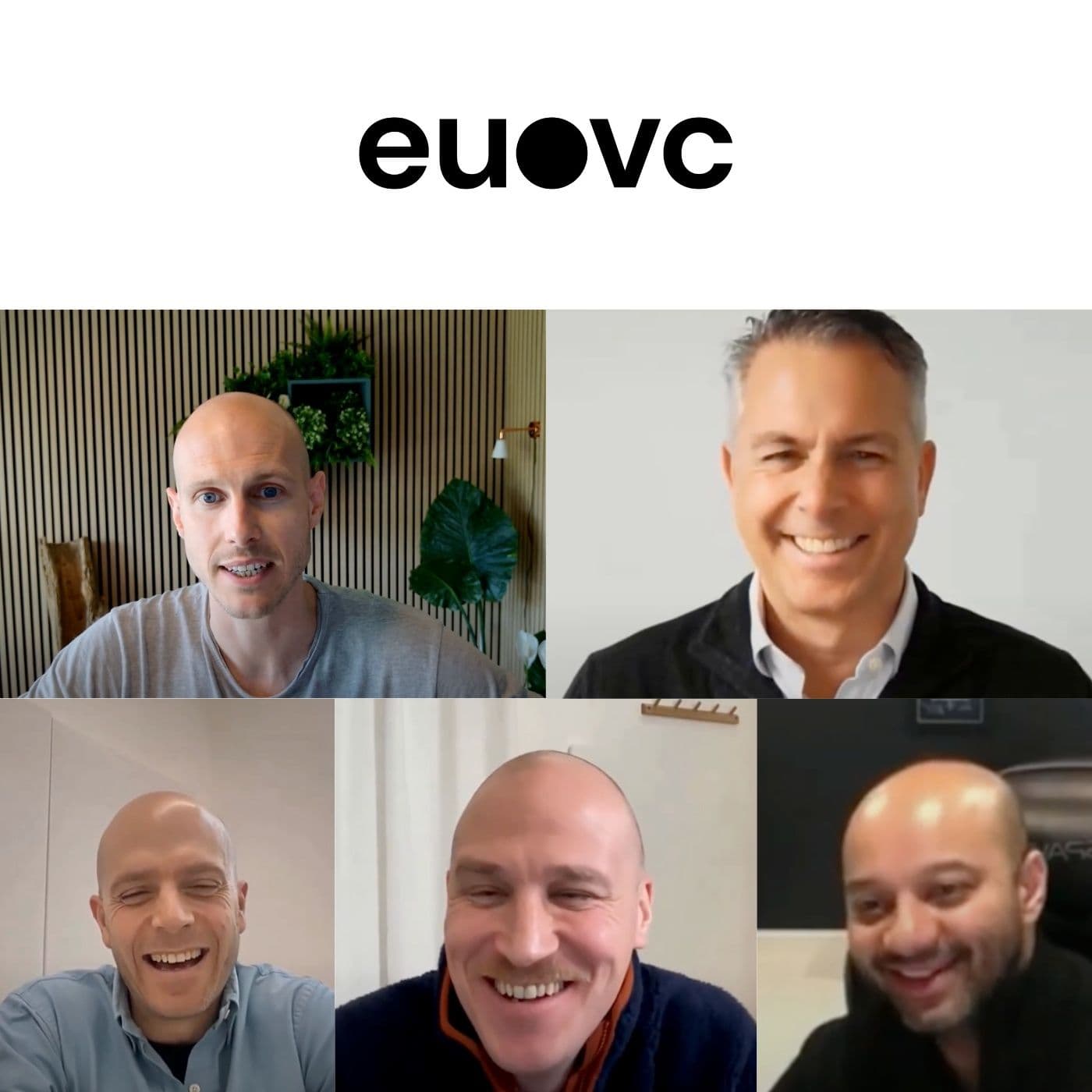
- Title: EUVC | Webinar VC:LP Roundtable on Data Driven Portfolio Modelling
- Description: A panel discussion focusing on data-driven portfolio modeling, featuring insights from leading figures in European VC.
Panelists
- Joel Larsson: Founding GP of Pale Blue Dot
- Jon Coker: Founding GP of Eka Ventures
- Joe Schorge: Founding GP of Isomer Capital
- Anubhav Srivastava: Founder & CEO of Tactyc
Key Themes and Discussions
- Best Practices in Portfolio Modeling
- Portfolio modeling is not a one-off task but a continuous process throughout the fund's lifecycle.
- Maintaining a current fund forecast is essential to adjust strategies based on actual market conditions and investment performance.
- Maintaining a Dynamic Fund Forecast
- Key to understanding market dynamics and ensuring disciplined investment strategies.
- An example discussed was the iterative process of updating forecasts based on actual performance and market insights.
- Challenges in Portfolio Construction
- Importance of sector-specific strategies and the implications of concentration versus diversification.
- Acknowledgment of the need for flexibility and adaptability in fund strategies.
- Sector-Specific Strategies and Risks
- The discussion highlighted the differing risk profiles across various sectors (e.g., fintech vs. climate tech).
- Each sector has unique nuances that affect investment outcomes and strategies.
- Fundraising Challenges and Realities
- Challenges faced when raising new funds, especially in volatile market conditions.
- Emphasis on the need for transparent communication with LPs about fund performance and strategies.
- Tracking Fund Progress
- Importance of real-time tracking of fund metrics, including revenue growth and capital deployment.
- Emphasis on qualitative assessments in addition to quantitative metrics when evaluating portfolio companies.
- Qualitative vs. Quantitative Metrics
- Discussion on the balance between qualitative insights and quantitative data in decision-making.
- Awareness that while data is critical, the context and narrative behind the numbers are equally important.
- Scenario Analysis and Reserves
- Use of scenario analysis to inform decisions on reserve allocation and follow-on investments.
- The panelists discussed the complexities associated with determining how much capital to reserve for different portfolio companies.
- Optimizing Reserves
- Strategies for determining optimal reserves based on projected returns and company performance.
- Importance of aligning reserve strategies with overall fund objectives and performance metrics.
- Monte Carlo Simulations
- Limited use of Monte Carlo simulations in venture capital, primarily for portfolio construction.
- Acknowledgment of the need for more nuanced approaches in active portfolio management compared to large datasets used in public markets.
Key Takeaways
- Portfolio modeling needs to be an ongoing, adaptable process influenced by market dynamics and actual company performance.
- Sector-specific insights and qualitative assessments are as important as quantitative metrics for successful portfolio management.
- Scenario analysis and the strategic allocation of reserves play critical roles in navigating investment decisions, especially in volatile markets.
- Transparent communication with LPs about both successes and challenges is essential for building trust and facilitating future fundraising.
Closing Remarks The discussion wrapped up with a collective acknowledgment of the evolving landscape of venture capital, especially in Europe, and the importance of data-driven approaches in navigating this complexity. The panelists encouraged continuous learning and adaptation in the venture ecosystem to thrive against market challenges.
Written by AI. May contain mistakes. Listen to the episode to check what was said.
Transcript
Automatic transcript. May contain errors.0:00Hello, everyone, and welcome to today's roundtable on data-driven portfolio management in venture capital. To those of you who are not yet trusted followers of the EUVC podcast, I am Andreas. I'll be your moderator for today, and I am thrilled to be here. This will definitely tear down this wall. It's more than just an ally. This is a union of values. United and determined we can serve as a model for other regions of the world. The nature of a problem requires a European response. Europe is a story of new beginnings. New beginnings. Let's start acting. And now, some words from our beloved sponsor.
0:57Tactic is the leading forecasting and scenario planning software for venture capital funds. Tactic combines portfolio construction, portfolio management, forecasting, and reporting into a unified platform. Investors are empowered with data-driven insights on fund strategy, reserve allocation, exit planning, and fund performance. Tactic was built using quantitative techniques researched from hundreds of data-driven fund managers and is trusted by over 250 funds globally today. Tactic is a proud sponsor of the first season of the At The Cap Table podcast series. If you'd like to learn more, please check out tactic.io.
1:34T-A-C-T-Y-C dot I-O. So everyone, we have ahead of us a 90-minute session. So I'll try to pace myself a bit here because I tend to get excited and speak super quick. But I promise you, the next bit of monologue will be the only one from my side. But I just want to set the stage and share some notes for the format. So please do bear with me. First of all, we decided to do this roundtable with this group in particular because we found ourselves in the middle of a call geeking out on the topic that we are going to talk about today, namely that of portfolio management and portfolio modeling. And for that reason, we said, and of course, me being a creator said, we need to do something with this.
2:22We need to open this conversation up to the public because not everyone has access to the great minds that we have on this call today. So here we are. And let's get into it very soon. First, one thing, we do have some issues with scammers sometimes on LinkedIn. That means I'm already seeing it in the comment section. Unfortunately, we were not able to avoid it by asking LinkedIn specifically to take action on this. If you get any links from anyone but me in the chat slash comment section, please do not click them. These are fake. They will try and prompt you to input your account numbers and that type of thing.
3:11Don't do it. Secondly, we are live, but we are live with some delay, typically some 30 seconds, sometimes more. It's a bit different from device to device. So we will try to take your questions throughout. So do share them in the comment, but do bear with us if we don't pick them up right away. And finally, sometimes for some people, the LinkedIn feed is less than stellar, creating for a laggy experience. If you're hit by this, you can do one of two things. You can refresh and see if that helps, or you can try and join from another device. Typically, if it doesn't work on your laptop, it will work on your phone.
3:49And worst, worst case, we are sharing the whole recording as well as our key takeaways on EU.vc. So head on over there for full recording in full high def definition. So now with that out of the way, let's get into it and introduce our panel. First of all, we have Joel with us. Let me call Joel up here so you can see his face. What a beautiful guy. Joel is the founding GP of Pale Blue Dot, one of Europe's very best climate funds and a total portfolio modeling geek, which I'm hoping that you will all see later today. So perfect fit, as you know. Then we've got John Coker with us. John is a founding GP of EcaVC, a true trailblazer in sustainable consumption and preventative healthcare.
4:39He's also, interestingly for today's conversation, a bit of a mastermind in building a concentrated portfolio that performs. So we'll dive into that. And then we've got George Short, the founding GP or one of the founding GPs of Isomar Capital. He is the man that I call the architect, also the only person in this call that has hair on his face. So congrats, Joe, on still looking sharper than the rest of us in this panel. Joe Herald is from Isamer Capital. And Isamer is, of course, one of Europe's very, very best VC funder funds, if not the very best. They're at least the most active. and me being, see the camera is zooming on Joe's face.
5:25Everyone's recognizing it. So as I said just before, Joe, I think, is one of the best thinkers on the fund investing side in Europe. So I think you're in for a treat. Now we've got Anubhav Srivastava as our final speaker today. Anubhav is the founder and CEO of Tactic. And he's also the only person on today's panel who is not a VC, at least not currently, because he has been. And that is actually a very good thing because Anabab stopped his time in normal venture practice and instead chose to launch Tactic. And I have to say Tactic, having experienced it myself, David, quite a bit more than me, David from my side, my co-founder, We are really enjoying it and we're seeing the power of that platform.
6:18Definitely one of the very best forecasting and planning platforms for VCs out there. So do make sure to check it out. And Anilab, being in this position, being the founder of Tactic, working with a bunch of VCs across the board, firms like Atomico, Sapphire, Connect Ventures, and many, many more. He has a great market-wide view on best practices and how people are thinking about portfolio modeling. So for that reason, I'll call on Anubav quite a few times during today's session to ask him to give us the overall take on things and how he thinks about it. And then afterwards, we'll all riff on that as a good jazz band always does.
7:02So now let's get into it. And I want to start us off with the topic of building and maintaining a current fund forecast. and above. I'll call on you to set this stage here. Tell us a bit about the best practices that you've seen. I know we also have a slide that we can show, but I'll let you start talking a bit first, and then you tell me when I should shift to a slide. Yes. Pleasure to meet everyone. I'm, as Andrea said, founder and CEO of Tactic. We work at about 300 to 400 funds globally today. We're a small company. We just started about 18 months ago. But with that, we're forecasting and planning software for VCs.
7:45So we see a lot of different techniques, workflows that some of the most quantitative funds in the world are using. And we've actually crystallized a lot of this in the software. We've actually also seen some things that are counterintuitive to what traditional traditions might say. And we'll talk a lot about those. I'll just say I'll preface everything today by saying that when it comes to portfolio construction, portfolio modeling, there is no one size that fits all. It's what works best for you as a GP and for your fund. So take everything I say today with that disclaimer. But having said that, I will share with you exactly the things that we have learned from our clients.
8:26And so let's talk about portfolio forecasting. And Andreas, if you want to actually just flip to the first slide. The first thing about portfolio modeling that almost everyone thinks is, oh, that's portfolio construction. I have to do this part for my LPs when I'm raising the fund. And then once I raise the fund, I never have to look at it. That's an Excel model that I build, and that's about it. What we saw is that the more quantitative funds and some of the more data-driven funds, they did not view construction as a once-and-done item. It is a constant process throughout the life cycle of the fund, or at least during the investment horizon, where they're building and maintaining an actual life forecast of their fund.
9:08And so it's a feedback loop that some of these GPs are putting themselves into. They build their original construction plan, they deploy capital, and then they develop a current forecast, which is where do we think the fund is now going now that we're one year into deployment? Do we want to change our strategy? Do we want to change our check sizes? Are we on pace or not? What do we learn from this one year? That feedback loop then changes their original construction plan, and the wheel continues going on. It's quite an interesting way of looking at the world. Most traditional software, and I would say most traditional workflows at VCs are backward-looking only.
9:46I just need to know my SOI. I need to know my portfolio management, my KPIs, how my fund is done. That is number one. That's what fund admins do as well. But the world is changing. We are now seeing this intention towards moving forward with what can we do after we started deploying capital. So why is it important to maintain that forecast? What do you get from it? And so, Andrea, it's actually just the next slide before I pass it off to my panel here. The reason you'd want to maintain a forecast post-close is you want to, first of all, see if you are right in construction. during construction you have to come up with reserve strategies check size strategies and a lot of that is dependent on what the market has been what do you think the valuations could be what do you think the round sizes could be but of course after some time of deployment you'll realize that your assumptions may not have been correct the market is different than what you thought it was and that's when you need to tweak it you need to change your possibly your original construction plan if the market has been way too expensive maybe you don't need to invest as much, maybe you need to increase your check sizes.
10:50Maybe that has an impact on your portfolio sizes. So there's a lot of different variables that get put into play once you start to get actual market data. Other things is just to understand, have you been disciplined? Have you been following your strategy? And if not, is there a good reason for it? Have you just come across an amazing set of deals that has caused you to deviate from that strategy? And if so, how does that change? Where do you think the portfolio is headed? Reserves is something I'm sure we will talk about a lot. Reserves is something that setting reserves for a company has historically been quite a subjective exercise.
11:26I love the founder. I have a great relationship with him. I like the company. I'm going to follow on to that route. This is what most early stage investors sort of have quite a simplistic view on it. The reality is what we've seen is you can actually allocate reserves on a on a quantitative basis you can compute opportunity cost for the next dollar of investment or euro of investment into that company and then we'll sort of start to figure out where do you want to optimize your reserves we'll talk about that today as well so yeah with that I'll kind of give it back to the panel here would love the thoughts of of my team here so Andreas take it away and so I was actually first go to thinking I was thinking should we go to Joe and ask for the LP perspective here, or should we go to one of the VCs?
12:13And I actually want to go first to you, John, because I know that you've, of course, been the mastermind behind the ECOM model that you have. And I know that you're now working on this together with your finance director to also make sure that it's not one that was just one and done. So, John, I'd love to ask you and invite you in here to tell us a bit about your journey, building the model and maintaining and what you've learned so far. Yeah, sure. First of all, great to be part of this panel. Really looking forward to the discussion. It's an area we spend a lot of time thinking about at UCARE.
12:48Anibab, just as you were talking, I guess a few things came to mind. I think there's the fund strategy and then there's like kind of hard-coded inputs into the fund model that change, which is a weird thing to say, right? but for example for us we're we're we're on fund one at the moment so when we the last model we built was for fund one we're currently building that kind of strategy for fund two into the model but for fund one um we had a first close at 28 million and a final close of 68 million so there's like a massive shift in the kind of hard-coded inputs into a construction model um from day one and navigating that is quite hard and there was a six-month gap between that first close and final close where we made three investments and so the initial tickets in those three is quite small so then how do you right size that over time so that's a big first consideration um i think the the second big consideration which is particularly hard to model is whether or not you're going to recycle fees and there's the question so actually i'll pause there and so the dynamic of recycling fees means that when you have an exit from the fund so if you have a 100 million pound fund that would typically be like a 14 over a 10 year period fee load so your investable capital outside of fees is just on like 88 like say 86 million um if you can recycle fees that means that when you have an exit you can take some of the profits from that exit and invest them up until you've invested 100 million of capital so obviously your portfolio construction is quite different between a fund model where you're recycling fees and when you're not question one then the second thing is you can't actually really predict whether or not you're going to be able to effectively recycle fees because you can't predict the exit timings.
14:35So you've potentially got like a 14 % delta in the kind of allocation model that you have or the construction model that you have that you can't predict. So particularly hard to deal with. And then the final thing is you put all of this kind of thought into the way that we model our construction is average first ticket, then average second ticket and percentage of companies that take a first ticket that take a second ticket and then the same again on the third ticket and we model that we only do three tickets. We originally modeled that 60 % of the portfolio would take a second ticket. The reality has been that we've had seen a much higher conversion to series A than we thought and a much lower failure rate than we thought and that means that that kind of reserve policy changes a bit.
15:21So So I guess those are the biggest challenges that we've faced. And I think it goes to that kind of loop that you had, the flexibility and the continued evolution is really important because you're basically trying to kind of nudge the steering wheel to carry on the path that you originally wanted to be on as you figure out how many corners you've got to go around. And that's the challenge. I fully agree. And I would add to that as well. Having a dynamic living document or a model that you can add to is is core and and it's it's i think portfolio construction is is it's not the right word because it is a living living model that you live with the next 10 years and so i i the train figure of what the inputs are you mentioned a few john and and what are the inputs that will change and what is the what how important are these inputs i think that is the the thing you need to figure out when you build this model like what do i think could change and how important what will what effect will they have could you could you expand a bit on those for you joel uh for us it's the same i think the the trying to figure out the future is hard and you change so many things over the last so we did the first model four years back where we raised the first fund it's 87 million first close was 53 i think um and we've changed the model i think three times the last four years uh not not not drastically but like small nuances like hey we shouldn't probably shouldn't do that anymore like we've seen some issue with how we think and adapted um that means you need a system where you can you can adjust uh how you think
17:08and i think on a higher level i think trying to figure out what the inputs are like part of the learning is building a model like you need to you need to think about this deeply enough so you know your inputs and outputs and that is if you take like google portfolio model on the internet and take somebody else's model then you're skipping that that problem and that learning so i think for each fund and each strategy you have to figure out what is important for you
17:40Joe, could I ask you to come in on this part about adjusting the model with your learnings? Because I think some are more rigoristic, I imagine, about what was first established and are this less? And you see, you know, how do you carry this discussion with GPs when you're first deciding to invest about, okay, what's going to come? What are you planning? How do you diligence this whole part? Well, I agree with everything these smart guys have said already. So nothing controversial to say. It's interesting. We heard you saying early on about doing this for your LPs. We're in the middle of the chain because we are a GP.
18:30So we have our own model and we do this for our LPs, our own cooking. but then downward we're looking at funds um and and for me the the model is a road map it's saying you know here's where we're trying to go and i have this theory just like you said joel i have this theory that there's a kind of asset in the market and this would be these bite sizes these reserve ratios i think this is the best way to approach it but i always remember i think it's mike tyson said everybody has a strategy until they get punched in the face yeah uh and then So we probably all have that experience where you're executing and you're a year in and then something happens in one of these assets, good or bad.
19:14And so maybe either good or bad could cause you to put more money in or not to follow on where you thought you would. And so this roadmap that you set up is by definition wrong. It's a plan. It's a strategy. whereas the execution going forward, I say it often, I'll never invest in a fund that hasn't got a plan, but I will also expect that plan to not be what we actually do. So that plan in the very early part when you're kind of talking to the LP, us upward or us downward, it's really a way of communicating, okay, we kind of get excited about a certain kind of company we can invest in and here's the way to do it.
20:00I think it's like this. You think it's like that. And for me, the model is a way to have a really thoughtful discussion. But you hinted at it, Joel. Actually, there's an interesting piece that happened before, which is you sitting quietly alone, cooking up that model. And it's forcing you to make trade-offs in your own mind. Well, if I do 20 tickets, there's an average size of that. If I do 25, it's like this. If I have this, you know, and if you build a nice a nice spreadsheet, you can prove for yourself the dependencies and change the number, and it changes the output. And I've met a bunch of managers over the years.
20:38We invest, I should maybe caveat, we focus on early stage. Everything I say is kind of on the early stage. Late stage is different. It is different. Decision metrics are different. But in the early stage, I've met a bunch of new funds over the years that didn't have a model. And we've been kind of the boring old guys who said, hey, you really ought to cook up some kind of model that we can talk about, you know, and they kind of grumble about it and they go away. These are brilliant people, right? They are leaving big firms, you know, for example, and say, I don't need a stinking model. I know how to do this.
21:12You know, you go, yeah, but let me just cook it up as a way for us to talk about it. And I think it's fair to say, without exception, they all come back and go, hey, that was a really good exercise, because even with my own partner, I had to debate this. And he had a different opinion than I did, or she was thinking that. And afterward, surprise, surprise, they've had a good process, the model changes. And so finally, what happens in year 234 is your strategies encountering the real world. Therefore, I think so long as, I think by now we've heard everything. I've done more, I've done less, I've done something off-piste, I've done, you know.
21:55What we're interested in is, are the decision metrics underneath based on your best thinking and so on. And this reserve thing, it's an opportunity cost, right? And there's a timing element as well, what John already mentioned. You're asked to take decisions on maybe you haven't raised the full fund. That's a good example. But even later, the bad company may be raising six, 12 months earlier than the good company. So having this agonizing decision, we put that money here or do we put it later, that's tough. That's all judgment. And the model doesn't tell you what to do, but it'll help you track and iterate as you go along.
22:37And I can add to the thing of using a model to think. i think for for a lot of decisions we make we make different models in the gps like we will think about the problem we will have the same data and we'll try to discuss something and part of that process is everybody thinks how this works and will model in one way we come back and we discuss the models a bit and we just we have we have the same data but different ways of thinking and that adds to discussion so i think having having this shared context and shared data is core to make these decisions but you can model it in a few ways to figure out what is important to the to the decision not only for portfolio constructions but for like small decisions on the way like reserves and then these individual qualitative decisions that are just one out of the hundred yeah so joel maybe to put a to put an example um if you if you build that model you may intellectually be struggling with A and B, but you may realize through that model that A doesn't really have a big impact, whereas B has a massive impact.
23:43We were doing one of these just yesterday, as it turns out, and kind of intellectually, they're equal issues. But actually, when you looked economically, not equal at all, and it caused us to go, well, forget about A. It almost doesn't matter what we do with A. B drives the whole thing. So let's put our best data and minds on that and this stresses me quite a bit so i have i'm a spreadsheet like data science lightweight person and i love building these systems but the problem is that you should not reused like it's the next decision cannot use the same same model the same template i wish i could but like the next decision needs something else it has some other context i wish i could build this perfect portfolio of model spreadsheets graphs that we could reuse for every decision in the fun that would be my dream but the issue i have is that each of them is unique and the it's so there's i would say low reuse rate on on the internal decision models on our side and we work more to get high quality data and a good structure to get the data out from the portfolio management system in a good way so we have an easy way for everybody to get all the data out in a good way, get them into a spreadsheet, and reformat them in a way so you can make your decision and look at the data and slice it in your way.
25:06So my dream future is more like a BI tool for portfolio management unless that would be my dream future. Somebody would add more of these features. I'm listening to you, Joel. And so let me actually share with you exactly kind of what some of the things that we just talked about here around portfolio construction, around portfolio management, BI tool, all of that. So, and something that actually Joe just mentioned, which is the variable you might be thinking of might actually have minimal economic impact. So what should you care about? That's actually something we've come across a lot. So I'm going to share with you an example of exactly what we talked about.
25:49And I'm going to take reserves as one of those examples. We see a lot of fund managers spend in order that amount of time focusing on reserve strategy. I want to build a$100 million fund with a 45 % reserve ratio, 40 % company, 40 people, 40 portfolio company. And that is my portfolio construction. The reality is your reserves are actually dependent on conversion rates, as John pointed out, or graduation rates, as we call it in tactic, which is how many companies can actually move from round to round. And so all of those things sometimes have a bigger impact on your reserve strategy too. So I just want to tie a bow around this topic a little bit to kind of share with you exactly what we're saying here.
26:27This is what a fund model, at least on tactic, looks like. And the other day, if you have it in a spreadsheet, it doesn't really matter. The important thing here is a workflow. And what we do is we actually have two versions to a fund. We have a construction forecast, which is the original plan you set out to achieve. And then once you start to add your actual deals, we develop a current forecast where we start to do actual versus projected comparisons on a lot of the key metrics. As I think, as Joel pointed out, the variables on building the construction forecast are really important. And so in our system, we actually take the GP through what we say is a wizard where we ask them questions around their fund strategy, their fund structure to basically build that construction model.
27:12and the way we do things is we take a look at a probabilistic view of the world so we ask for things like what do you think the graduation rate looks like from one round to the next round what do you think the exit rates look like what do you think the market's going to look like in terms of your macro assumptions on round sizes valuations and this should be informed by actual market data that you can come in and tweak a lot of our gps spend a lot of time on allocation and this is really the crux of portfolio construction, so to speak, where you can create a check size strategy for your initial checks, your follow-on checks, what that might look like, create different investment strategies, and see how you're doing, see how many portfolio companies you can resolve in each of those allocations.
27:54The net result of all of this is once you build a construction plan and it then becomes a current forecast with your real deals, you can then start to answer the questions we've just talked about which is okay so i have i'm one year into my deployment uh how am i doing what were my initial assumptions correct so we do a construction versus actual comparison on things like what does your initial check look like what do you what about your reserve you said you're going to reserve this much on average here's what you've actually done where have you gone off track and so that's where you can start to see uh if you need to change your strategy going forward uh and that can inform that feedback loop that we started this whole topic so Anyway, we'll come back to this later on, but hopefully that gives a little bit of a color into some of the topics we're talking about.
28:42Joel, maybe I would go directly to you and say, you just put your request out there for a BI system that would give you what you were hoping for or dreaming about. Seeing what Anubab shared here, what does that make you think about the good old Excel sheet model of running your portfolio modeling and so on.
29:11You're muted, Joel. We can't hear you. Sorry about that. So the stack we have on our side is a mix of tools. We use the portfolio management system, which is more for data. We use spreadsheets, a few super spreadsheets like causal, and then we use like a language called R, which is a statistical language to do more complicated stuff. And for us, that setup works well. I think we've started to, the thing that is annoying is getting the right graphs that we want to see. So we have a lot of things that we think about a problem and we discuss how do we want to visualize this to get the best output.
29:52And it's quite limited, I would say, with the tools at hand. So right now we actually have a fake portfolio that I send up to Upwork and I draw a graph that I want. And then I outsource the graphing to external people with this fake portfolio and these fake tickets. So the usual process, we said we have Monday meetings with the partnership and we have a question and usually something comes up. Like, how can we share this, slice this? And then we have a feedback loop of a few days to get the data back. It's not optimal, and I wish I could do this myself, but I can't because it's too time-consuming right now.
30:26So that is the structure we have today. But fully agree on a lot of the features in this model. You need to be able to do a lot of stuff that Tactic does, for sure. I would just comment I really like what you just showed, Anirvav, because when you raise your fund, you're kind of making a series of promises to your LPs. hey, give us your money, give us your blank check commitment, and we're going to go do this. And so this ability, I think that's partly the purpose of the annual meeting in the fun world, right? As you're coming back and you say, okay, we told you in year one we're going to do this.
31:04Here's what we actually did. So personally, I'm constantly doing that. Here's what we said we would do. Did we do it? And if we choose to deviate, we better do it with strong logic, documenting the case. So I think it's not a bad thing to deviate. That can be the best decision you make sometimes. But you better do it with a way to explain it with clarity. And also, I think, leaving yourself breadcrumbs in the form of investment memos and other things where you say, at the time, this is the data we had and the decision we took. Now, that may work out wonderfully. It may work out terribly. But that outcome doesn't tell you the quality of your decision.
Read the full transcript
31:47um so so keeping you know at each step of the way keeping that set of uh metrics upon which you took the decision i think is important later for course correcting and and we ourselves you know we did some good stuff we did some bad stuff but where it matters five years later is our ability to be um really transparent with ourselves and analytical to say you know that bad deal that was we lost all our money, we would do it again. And here's why, which is a crazy thing to say, but that's, is how our market works. And I'll stand by that. So long as the decision metrics were, you know, careful, thoughtful, and the best decision we could take at that time.
32:29Fully agree on the, on the keeping artifacts and keeping thinking over time and to be able to go back both qualitative and quantitative data and like to be able to, to take a step two years back and reiterate the decision and try to remember removing all the biases that happened on up until now and like why did we make this decision and what did we have back then so that is super important for sure i'd love to i'd love to ask john a question here which is around what i'd say is portfolio concentration and how you think about it i heard andrea's mentioned at the top of the call that uh it sounds like you manage quite a concentrated portfolio uh for early stage and And let me know if that's wrong.
33:05But for early stage investors, we've seen the single most important metric that correlates with TVPI and eventual DPI is portfolio size and number of portfolio companies, especially for early stage investors. It is a power lock or at the end of the day, no matter how great the diligent strategy might be, these are still seed companies. and so what we've seen is a magic number to be around 35 to 40 companies 30 to 40 companies at a critical critical point after which you know you have the shot of having a fund returner in your portfolio but I'd love to hear the the counterpoint to that because I get into a lot of trouble for this so I'd love to hear from you and how you think about portfolio concentration yeah I think the the really hard thing in venture is is the variable is to like how good a decision how good a decision making are you because if you run the data across the early stage technology companies in the world your conclusion would be you need a massive portfolio um because what you're doing is is picking the mean rather than like better decisions and then there's a whole kind of argument and i find myself in this debate a lot as to whether or not vcs can really improve like can we actually be stock pickers can we can we make better decisions um um i've i guess bet my whole career on the fact that we can um and uh and like the data so i've been in i've been investing since 2010 been invented since 2000 as a leading deal since 2010 in venture since 2007 and from 2010 to 2017 i made 16 investments so super concentrated um And the output of that concentrated portfolio is really good.
34:56And both in terms of like, well, there's two unicorns, one over 500 million, four over 100. And so like really high conversion rate to like big companies. And that, I guess, is all I have to go on for the way that I work. And then I suppose there's a second thing that I have to go on, which is we and Camilla, my co-founder at Ica. really struggle to ramp deal volume like we can we can kind of like look at lots of deals and think well maybe we should we should kind of lower the bar a bit on how much diligence we do and we just can't do it like we end up making four to six investments a year and that's what we feel comfortable with so those two things mean that we our decision is to run a concentrated portfolio we believe like that it is more risky in terms of like i imagine if you looked at eco over seven to ten year fund like period the volatility will be higher than if we were going out making 40 portfolio companies in each fund um but i do but i think we're prepared to like take the bet by by spending a lot more time on each investment we can like move the needle in our favor um but but i have like i'm not i i think there are loads of different ways of doing venture really well and you just have to commit to a way and if you don't commit to a way if you get stuck in the middle that's how you you do a bad job i think i would add to john here uh we have a bit a bit wider portfolio um so construction is first fund is 30 companies post seed so that means a few more tickets if you add preset companies depending on conversion rate and and but 30 companies post it is slightly wider but adding to john i think the if you just take the power law curve of all the venture exits in the world and use that as your way of deciding of course the last 10 years when everything went up the best option would be to do as many companies you can to index the full space of venture you did pretty well the next 10 years i don't think we'll have the same market dynamics i don't think we're going to have the same power law curve and on the adding to this like you have to figure out what is your power curve like what are you select what are you picking from are you are you picking from 200 fusion companies uh or are you picking from 200 sas companies totally different power curve uh stage wise that adds to your power curve as well so you have to figure out what is the subset of companies you're picking from and what is the power law curve that you're picking from before you can make this.
37:36And then you have all the constraints that John mentioned as well in terms of how many companies can you help? How many companies can you be on the board at this? So there's so many things going in. And yeah, and sorry. And the other point, I think actually to kind of extend on that is that there are multiple funds in the world that have been doing this for a really long time who have sustained very strong track records across multiple vintages of funds. so this isn't that there are you can be good at this job um i think it and it is it is it is a skill that you can develop and be really good at and so that data and then also you only you know we only have to look at if we look at the whole of the top of the funnel of companies that come to us and and and filter for those that have taken um vc money there is a clear difference in quality So there are better VCs and worse VCs and we can see it.
38:30And so I do believe that, yeah, the mean would suggest big portfolios. I'm not sure that the, yeah. I always say true alpha is only if you deviate away from the mean. So you kind of need to have a bit of a contrarian perspective on at least something if you're trying to develop an alpha. So I'll give you an example. Like I said, yeah, on average, it's 30 to 40 companies. But I've also seen the counterpoint, which is if the GP has a unique edge, let's say it's pharma. They're a pharma investor. So they've been through the pharma process before. They kind of know exactly what they should look for in a company in terms of having the likelihood of it getting to certain milestones in its drug process.
39:15And so like that's a very unique edge that sometimes I bring to the table where a GP actually has a very unique market insight that enables him to analyze a particular company. And that's where we see a lot of concentration happening, like sometimes as small as 12 company portfolios, because a GP just is at times smarter than everyone else in the room when it comes to that. But that's not always the case. Different strategies for different fund managers. Maybe just to put a word on what we're sort of describing is I would say we've so far talked about stage and the earlier you go the bigger portfolio what you might need but what we're really saying is the higher dispersion of potential outcomes you know if you have a zero or 100 well you'll need a lot of those to hit a few hundreds right and some sectors operate like that so the true moonshot kind of deals you will need diversity to hit a few that work whereas um maybe part of what you're saying john is by focusing on a certain kind of company with maybe a lower volatility profile should build um just mathematically speaking you know the less volatility you expect in outcomes the tighter portfolio you could build so there's a sector answer to this pharma's probably a good example of that because those you know it's a much smaller universe than the tech side with it's wrong to say less innovation but I mean there's there's a certain number of big pharma companies who are going to buy your product right it's not it's it's a it's a much more focused world shall we say so they can do a different portfolio model than you'd see in a pure you know I don't know, B2B style fund or crypto or even, you know, really out there.
41:02Yeah. And I think actually you could extend that to founder experience. So we spend a huge amount of time on founders. And I think we have a big internal debate as to whether or not we would have backed, for example, the founder of Gymshark. Or would we have backed Elon Musk if they came and presented to us? because would they and so there you're that's a kind of an extension of what joe was saying around the volatility of outcomes maybe increases if you're prepared to take more risk on um the experience set of the founder relative to the company that they're that they're building because occasionally you do just get people building enormous companies with zero experience in that sector or zero experience of in business at all and also what type of risk you can take as a fund like what what risk are you okay with taking like market risk like sector risk there there's if you look at climate for example there's so many sectors that don't have a market today and like should we invest like it's them and the market might be growing super quickly as well so there's depending on what risks you want to take can you share with us joe a bit about before we go go on to the next part which is encountering the real world uh market tracking and course correction on the basis of data.
42:24I just wanted to, before we leave this topic, ask you, Joe, to give us some insight into how you think about the topic of portfolio construction and different models when you're looking at managers. You said you hinted at it, right? You said that, well, it is contingent on what's the right model for the manager and so on. But if you could just be crystal clear as crystal clear as you can about how you think that most LPs will think about this and how do fund managers best prepare for that conversation. Well, yeah, sure. And two examples come up. When you use the word portfolio construction, what I think more about is selecting assets which are less correlated so that you get the benefit of a portfolio.
43:15So I don't know To make up an example, if I'm in fintech and I put everything in neobanks, well, that's not really covering fintech, right? And the outcome of neobanks will be somewhat correlated. Correlated is not quite the right word. But so I distinguish from a model, which is I'm going to do this number of tickets with this reserve ratio, and that's a generic thing. Whereas when I think about construction, I think more about as you're adding each deal, you think, well, is this similar to a deal we already have or different? And therefore, you're building up a construction, if you will, that, you know, I hear just again and again and again from successful fund managers.
43:59The one we thought was really great actually died. And the one we thought was going to be, you know, not so great, but we took that's our star. So in year one, the star may be in year five, the dog and vice versa. And I've just heard that so many times over so many years that it makes me think our predictive power in early stage in those early years is very low. And so that brings me to two examples. We all talked about making your first model and running your first fund. and and when you raise your first fund you're really raising on who you are your idea and and an attractive market that you're convincing your lp of but when you come to fund two i think the lp question is well what have you done you know what have you done with and and then you can pull out that model and go well we said this and here's what we did and we talked a little bit in the preparation about tvpi and dpi and all that well when you're raising fund two let's be honest That stuff's irrelevant, really.
45:01You know, and everybody wants to show, and we could in the last years, everything went up. So look, you know, only three years in, I have a 4X on my fund. It's vaporware, to be really honest. And it's great if you can fundraise, and many LPs will buy it because it looks. But really, it's not very relevant until year 5, 6, 7, when companies are actually developing real revenues. And this brings me to the second example. This becomes even more clear when you come into a fund as a secondary buyer. And it's fresh on my mind. We were working on a deal yesterday afternoon where, you know, very interesting fund.
45:42You come in, it's year eight of this fund. And so not, you won't be surprised to hear we're running a model and we're saying, okay, what are the companies here? Who's driving the NAV? and you get really funny things like, hey, the company's been growing for five years in a row at 12 % a year, you know, and it's doing that, right? But this year it's going to grow at 50 and next year at 60. Yeah, I struggle to put that in a model, you know? So we're saying, well, let's assume it keeps growing at 12 because it's got a good history. And that will drive an outcome. Or, you know, the company's been funded at 15 times revenue, but every company in the world that's exited has gone out at four to five.
46:25So, you know, your TVPI is based on this private valuation at 15, but the whole rest of the world is trading at five. So I don't say that that's the answer, that your company is 3x overvalued, but we're seeing that quite a lot. And that's interesting. The model is a roadmap in year zero, But by the time you're getting to year six, seven, eight, it's really telling you what's going on in the portfolio. And hopefully you can learn from that on your next fund. And fund three and four, you have then more process to show. But fund two and three are tough because you're showing activity but not results yet because the feedback loop is so long in early stage venture.
47:13I actually think Joe that you gave me the perfect segue into the next part which is exactly encountering the real world market tracking and course correction because one you know the the the situation that you're describing is of course well you're steering maybe partly in the blind and and also as an LP you don't have the the the TVPI markups and you certainly don't have DPI to base your decisions on. So I'd love to ask all of you here, how do you track progress in terms of tracking the pacing of the fund, tracking the market conditions, the current unprojected TVPI? What do you do to make sure that you have something that's rooted in reality as you manage through Fund 2 and 3?
48:10um i'll be happy to go yeah so we we um we track a few different things so we do we do look at because everyone wants to know it we do look at dbpi net ira and well i mean i could say we look at dpi it doesn't take very long uh um but so that's our kind of like we we that's one of the ways we look at it. The next way we look at it is we look at total portfolio revenue, total portfolio cash, and total portfolio cash burn as just a kind of sense check or quarter on quarter growth is the whole portfolio growing. And then we take all of those and we weight them by how much of the company we own. So we have this like weighted revenue, weighted cash, weight.
48:57And that gives us like, imagine that we, the fund was a company that's like the revenue of the fund. And if you assume that the average exit revenue multiple is 3x across a tech portfolio, I don't know whether that's conservative or not, but that's kind of, then you get a sense for like, what's the actual value of the fund in that way. So that's the kind of second way we look at it. And then we look at capital progression on the individual companies. So what's traditionally called moit, money on invested capital on each of the companies. And then we split that by initial investment over 24 months, initial investment under 24 months and follow on capital.
49:35And so really what we care about there is good moik on the initial investment over 24 months because we fund for 24 months. And then the final thing we look at is just the underlying portfolio and their revenue growth, cash balance. And I guess if you pull all of those together and look at them all, you can kind of start to join the dots between the two and explain why one's moving, one isn't. But it's so early. The thing we get asked the most often by our underlying LPs are which of the two or three companies you think are going to be the winners in the fund. And I'm like, well, we haven't finished investing in the fund yet.
50:13The company's tiny. Or if they're not tiny, they're still highly volatile, fragile. um like i'm i'm not and i can't have this we are not at the favorite stage yet and that is in in two or three years time very interesting and about that approach is that something you've heard before uh share with us yeah i love what john was saying about if the fund were a company what that would look like we we've seen similar types of frameworks used at some of our other clients as well um Two other things I would add that we've seen some clients use, pacing, especially, I mean, GPs are raising a fund pretty much every 18 months.
50:53And so how you're doing on pacing on your prior fund informs when can you start deploying your new fund or at least raising, kicking off the process for the new fund. So pacing is done in two ways. What we've seen, again, I'll kind of share more, I would say, practical. Are you guys able to see my screen? Yeah. So on pacing, what we see GPs focusing on is, first of all, volume pacing. What did I think I was going to do in terms of volume? What have I actually done? And what is my current forecast of life? Really simple. But then pacing is also done on basically comparing your initial investment pacing and your follow on investment pacing and comparing your capital deployed pacing.
51:35So what was my original forecast? What has been actually so far? And what is my current forecast? So kind of seeing, okay, am I on track or not? Is this the right time for me to raise the second fund? I think John also mentioned another thing, which is different types of multiples. This is really interesting. We have seen the same thing. So at least in tactic, we have, maybe we've done a bit too much of this. We actually have seven different multiples for a company. But basically for every single company, we actually track what the current multiple looks like. What the current multiple on your initial tranche of investment.
52:09What has it been on deployed reserve? What is the expected exit multiple? And then the exit multiple on your initial investment, and then you follow on reserves. So the point is, let's parse out your initial and follow on multiples and kind of see what they're saying. Why do you do this? Your multiple on initial capital represents your raw stock picking ability. How well have you picked your investments? Because that is your initial investment you did. how much have they grown by is showing you basically how well you've picked your initial deals. Fall on reserves is a bit more different. It's more about how well are you managing the deals?
52:45How well are you managing your ownership in your winners? How well are you defending your winners? And that is a bit of a different, it's a different question you're trying to answer that. So yeah, that's really it. Those are the other, I would say, variables that we've seen come through. The one final thing I would say on tracking, John's point about think of the fund as a company and what is my average weighted cash balance? What does that look like? We've seen a different flavor to it, which is if the fund were to be valued today as a company, would it be overvalued or undervalued? And the way we've seen that being done is, let's say we're collecting ARR for a lot of the portfolio companies.
53:22Okay, if we got the ARR, what is the fund's ARR multiple look like? And if I'm a FinTech investor, would I be overvalued or undervalued relative to the market? We actually do this in Tactic. So in Tactic, you can collect revenues let's say for all of your portfolio companies you can view the revenues for all of your companies but then we also do evaluation analysis automatically so you can compute evaluation multiple on let's say all the arr multiple that you you've got so far we'll show you your portfolio level arr multiple how that is changing over time and for individual companies how that arr multiple is changing across subsequent rounds so we're basically piecing together the funding round information along with the operating data you're getting from the company to to figure out what does that say about my portfolio today if that is all value for it i would really argue one thing you said if i can uh i don't agree that multiple on initial capital is the measure of your stock picking capability i think it's a measure of how many of your companies have been funded by others and what up round valuations.
54:36And in some firms, my observation is their VCs are very good salespeople. So they're able to sell their companies onward. So for example, in a pre-seed fund, if you don't have a very high multiple on initial capital, something's wrong. Just as natural. Like if you, if you pre-seeded and it doesn't get seeded, it was just a bad idea. right so i don't count that as metric that's normal you should get those companies funded and a pretty high ratio and at a pretty high ticker because you're in it nothing right so and and i i'm expressing some personal bias here but i hate it when a vc shows me that metric look multiple and initial that's not fund management um that's just some you know it's i'm not saying it's not interesting um but but ultimately i i like what you said as well john because you're saying, ultimately, we all know the success of a company is did you build a product that customers want and pay for?
55:34And so we're measuring how much they're paying, and we're measuring is that at a profitable margin or not. Ultimately, that gives us an outcome that we can cash back and put it in the bank. And it ain't a return until you can buy beer with it. So I quite like this fund. I think this depends quite a bit on the, I would say, diversity of type of companies you have in the portfolio and how you would be able to do this. Because revenue might not be the highest driver of a multiple, for example. And even if you look at like exit, like IPOs and lay stage companies, there's so many more inputs to that multiple.
56:15And trying to enforce that early on for us would not work as well. I think it's a good sanity check to collect this data. And there are four companies that should have revenue growth in some direction. But, of course, there are so many more inputs. So we collect all this data and we do graphs. But I would say it is like with everything with the portfolio. It's noisy data. You need to basically be able to slice out. Let's take these three companies out because they don't fit this model. Let's do this. maybe you have a few companies with like very low margins should they be included in the same set as the sales companies with like 80 margins so then you need to do like let's look at these five and see how it feels because if we would take the full portfolio of 35 trying to make an average would depend so much on how we deploy and what type of companies for example so it's for us it's more custom queries in our bi tool and custom graphs in our bi tool with some filtering before for the same problem i would say yeah well i like that joel because i think valuations are noisy data as well and i give you a recent example we were looking we were looking to co-invest in a company and if If you look at the companies in our world, they're only repriced on financing events.
57:45So if your company hasn't had a financing event in a long time, it may look like it's sitting there doing nothing. And that may be true and it's going to die tonight. That also may be the opposite. Actually, it's gone profitable. It's growing like mad. It doesn't need money and it hasn't been repriced. So we were looking at a company recently that that's the case. It went profitable. It doesn't need money. They were thinking to raise some money, and we were getting excited about it. It's like, wow, you know, they're going to take a little bit of kind of almost like growth capital. They don't need the money.
58:15You just want to spend some money to enter a new market. And so we were working on the deal, and all of a sudden they said, you know what, never mind. Actually, we just had a really great sales quarter. We got enough cash. We don't raise. So in a TVPI sense, in the funds they're sitting in, they're just sitting there at nothing. but actually the story of the company is beautiful it's wonderful so I sort of love it and hate it at the same moment I'm like damn it I want it to be in on the cap table as well on the other side it's like wow that's really amazing that you can grow your way you can sell your way to growth John you were about to say something just before.
58:54out. No, I just have two questions. Joel, I agree with everything you said in terms of it's really noisy, I suppose. We do the gross margin weighted as well as that kind of test, and it runs for like 65%. So it's more just like trying to hack a North Star. And it's, yeah, far from perfect. I think, Joe, to your point on that Moiken TVPI progression, it is the weirdest dynamic in the world that you can have a company that the more capital efficient a company, the less likely it's going to have Moiken TVPI uplift. And so it's completely the wrong way around. I don't really know what the solution is, the proper solution is.
59:42But I mean, I suppose it's one of them is sophisticated LPs who understand the dynamic.
59:51But sadly, that isn't the case across the fundraising. Yeah, and I was actually, I was just about to ask that question specifically. What do you do? What are the ways in which you can kind of build around this issue? and I think a lot of the people tuned in today will be thinking that question exactly and have that issue and exactly how do I solve that that I don't have an uplift necessarily but I know that the portfolio is solid especially in today's times you like you won't but you will have you will might have good revenue numbers as an example I think and correct me others if you think differently but but so our auditors ask us to look at so they they don't that after a period of time if you have a long period of time going between when the last price round was and the day that you had the audit you need to look in at the financials of the business and form a view as to whether or not the holding price is still rational or not the problem with that is so so you can have uplifts but the problem with it is that you need to be super conservative on the way that you value that company because everyone is deeply suspicious of internal uplifts so it's never going to reflect the or it's unlikely to reflect the valuation that that company would be able to raise capital at were they to go to market and so while you do get the uplift it's depressed versus what would happen if they went and raised 25 million as an example and I would be more on that I agree but also saying that it's it's qualitative and not quantitative it's you have five five companies driving the performance of the fund and it's I would say it's more discussion around these companies than it is if I would then my judgment in how we would uplift the company uh so I think the discussion is like how do we feel about these five that has the major TVP I drive right now how do you feel about them and how do you feel about the group that is coming up to to those five in maybe two years so on our side it's way more qualitative guided by data and guided by visualizations and way to create a a common context within the gps to discuss and a common common ground to common data set to discuss on but way more qualitative per company i think the critical thing that we've seen is as long as you're doing something with the data you're collecting that's a strut because there's a lot of funds there are GPs who are just out there um I have information rights I'm going to get the data but it's going to be buried in an email somewhere or in a spreadsheet that I haven't opened uh it's disparate it's not organized and so they actually are not even able to get to the part where they can start computing all the data start to make analysis from it whether the analysis as qualitative, quantitative, if the fund were a company, valuation multiples, honestly, that is sometimes that that will change over the investment horizon.
1:02:59But the fact that you're doing something on it is probably the first bar. And we've seen a lot of sort of DP sometimes struggle with that. And so it's one of those weird things that when you have a lot of data, if you don't have the infrastructure or the workflows to be able to compute on it, what's the point of collecting the data anyway. So hopefully the diversity of thought here, the diversity of approaches that all four or all three of you have talked about actually shows that doing something is better than nothing. What you're going to do is going to change over time anyway. So your advice is just do something.
1:03:33Do something. Just follow best practices for now. You will refine it anyway over time with what is working based on your portfolio. I think it's going to get worse on the metric you described john that the auditors are pushing more for private equity style evaluations because ipev's newer guideline is is pushing for that and we see funds now coming out the old the old ipev guideline was cost basis which i you know value everything at your cost or or third-party cost of the latest round and i like that because it's a true data point and it's the devil you know, you know, it has all these bad features, but you can understand them.
1:04:15Whereas what you see now is a lot of push and it's growing based on the newer IPEB guidelines to analyze and revalue your companies up or down in the private equity style. And I don't agree with that myself. I think it introduces lots of volatility without more understanding. But in France, for example, this has become kind of the standard. A bunch of new Luxembourg funds have chosen the IPEV 2015 or 2016, which auditors agree with. And they're kind of saying, okay, if you tell everyone that's your standard, that's fine. And I think that for me, that's a more interesting standard for early stage, because it takes the opinion out of it.
1:04:58And these are not profitable companies there's no EBIT DOM multiple so from a reporting standpoint it's you know it's a bit of fiction when you're marking it up or marking it down although I think we are seeing more I agree with you although I think we are seeing more profitable VC back companies off the back of the 2021 2022 kind of like stay lean mentality which is i guess in some ways encouraging other ways potentially concerning that's what we are that's what we are tactic uh for what it's worth that we are a tactic uh i'll give you the founder perspective which is uh in this market in this environment i personally am solving for honestly profitability growth and profitability for us that is more important to me than what a market might value me here today.
1:05:51And if I can have that wheel churning, then there's other vectors for me to go on. The problem with all this is what you touched on it earlier, John, when you go out to raise your next fund, most LPs are looking at those ratios, the TVPI and the, you know, and they're not generally digging, I hate to say it, but on average, they're not digging deeper into what's really going on in the company that drives it. So they tend to back the fund that looks amazing because that's what they can understand and take time to understand. But yeah. Yeah. Yeah. And about, I want to just ask you because I don't know, but I want to explore a tool like tactic in this market where I think it's correct to say that we're describing a less sophisticated LP base that does oftentimes lean towards thus also the simpler measures and things that are more readily consumable slash understandable.
1:07:00What are you seeing in terms of having a software-like tactic to guide that communication? Because it does take quite, I get 100 % and I love Joel, your answer that it's a long story. You need to dive into the companies. You need to look at how the narrative or what's really going on in the company. And then you need to slice the data in the right way to make sure that, but all of that goes with a lot of nuance and context and understanding. And if an LP, and unfortunately many only have the two minutes that we all see on docs and two two minute viewing time um so so so it's hard to put anything else than than a mark there um so anababa i'd love to ask how do you solve for that uh because in the end that's very meaningful if you so i view reporting it's an iceberg the little tip that's above water is what the lp sees but there is a whole bunch of analysis that should be happening underneath that's at the gp level that gp intelligence uh lp doesn't need to know how much has been reserved for each company what the forecast looks like they should not know that actually because that's going to change over time so a lot of the things we've talked about here very smart very quantitative or qualitative but the LP doesn't need to know all of that if the LP were to double click on it and ask about it great you are well armed with that information but what we've seen is LPs just see your number of how many companies you've invested in invested capital uh show your dpi if there is one uh tvpi um ir if there is one although ir is an even worse metric at times um and just kind of your overall portfolio how much have you deployed reserved uh and your views as a gp on what you think and this is where joel's point on the qualitative aspect that becomes more important how how do you think the gp how do you think the portfolio is doing are you happy with the performance so far what are what are the top three companies in your portfolio, what should we be watching out for?
1:09:02That is much more what the LPCs or apparently should care about at the end of the day, as opposed to what is the average revenue multiple of your portfolio and how do you track relative to the market? That's a very, quite a niche thing that doesn't need to be said at this point. But I think it's really, like, I definitely, it's something that I've had to work on a huge amount is like how I articulate that to LPs because if I've been through a phase where you do a catch-up with an LP, they ask how things going and I go into like a long monologue on you know well this company's doing exciting things in this company and then like if I think about it and you can see them just be like I just want to know if it's if you kind of good or bad but the problem is you then end up in the leads of the top three companies but as a seed investor And I know that if I name my top companies, I mean, first of all, I don't have a view on the top three companies.
1:10:00And the second thing is, if you forced me to, I know there's a lot of risk wrapped around each company. So you kind of, and I don't want to be that GP that talks about three amazing companies one month, and then the next month is talking about three different companies. And I definitely don't want the founders that we backed to think that we have favorites because we don't. So it's really, it's really, I don't have, like, I'm working on it and slowly getting better at it, but it's really hard. And it's founders have the same thing, right? We do exactly the same thing to founders. We sit with them and we want to know how it's going.
1:10:32We don't want, like, oh, well, if I look at it this way, this way, that way, we just want to know, like, just explain it quickly to us. It's hard. I think on our side, we closed our second fund eight months back or something like that, before the summer. and and i think the discussion we had with most lps back then was we had one graph showing days since we invested and multiple uptick per company uh just showing that this is time and this is multiple uptick but then we would in the gps have different things we were excited about and a few of them were still at zero like like this one is zero like one x uh but this is one of my top three like this is one that i'm super excited about and the world has really figured this out yet and this is one we are showing your conviction what you think which is not the market data and we have we we have different opinions in the gps as well and they change over time as well uh john but still we treat like yeah yeah well personally i think there's an easy middle road um and that is you know what we're doing is trying to understand what's going on in the company and you know having this discussion and that's great but most lps aren't doing that so what you can do for most lps is flash up the data and you show look here's how the total you know you can do the stacked um chart of all revenues and showing growth and show the big level metrics putting on display is not the metric but you're putting on display is the fact that you as a manager are on top of it.
1:12:11I think most LPs, that's really what they want to know. It's like, Joel, I'm never going to be in the weeds with you. And that's, in fact, that's why I invest with you because I'm not in the weeds. You are. So I'm giving you money to do that. And what I'm checking is not reassessing your work. What I'm checking is, are you on it? Do you know your stuff? Are you helping those companies that need it? And so I think that's the easy middle road for most LPs. And what I can tell is most VCs are not doing it. You know, they're doing what you said, John, which is this is my favorite three right now, and these are gonna be awesome, so don't worry, your return will be great.
1:12:49But it always makes me have a little more comfort if straight away you're getting the, and here's why I think it, you know, here's a bunch of metrics. I'm worried about this one. I'm enthusiastic about that one. Fantastic, then you can have a really nice discussion. And then yeah, half a year later, it may be reversed. But the thing LPs don't like, I had one not that long ago. The Star Company was then went to zero. And it's sort of, okay, maybe I wasn't paying enough attention, but there's got to be something between it's your best and it's your zero. You know, it was written. That was a shock to me.
1:13:27And I think that's what you want to manage with LPs. Not that you're enthusiastic about a different set over time. That's pretty normal. But having big surprises like that is not ideal. All right, gentlemen. Now, we promised a conversation about reserves in this, and I think that that is where we should go now, because we thought in the beginning, 90 minutes, we can't talk for that long. Now we are at an hour and 15, so we're making it. So for the last 15 minutes, I do think we should dedicate the conversation to running, and this is going to be a mix, right, running scenario analysis on active investments and optimizing reserves based on objectives.
1:14:13So I'm going to ask you, Anubav, to take the floor first and tell us a bit about how you think about running scenario analysis. And then I think we riff on the back of that and go into reserves from there. so there are many ways of doing this i will show you the way we have seen most funds do it and uh the way we have implemented this into tactic and i would sure my panel here would would want to add to it or maybe uh suggest that there's a different strategy to doing this as well um in tactic you when you're managing a deal you can actually model out the future rounds of that deal and you can set reserves for it.
1:14:54So you can set a prorata into any of the future rounds. And with an exit value, we can then estimate, okay, what your expected returns will look like for that future round. So like in this example, I have three historical rounds, seed A and B, but for the C round, I have reserved my prorata for that round. And of course, we calculate the dilution impacts and all that. You can also then step up and actually build multiple scenarios for your companies. So base cases, IPO cases, failure scenarios, whatever that might be. And each scenario could have a completely different reserve strategy or an exit outcome.
1:15:27You can then put a probability on the scenarios. And what we build is a standard venture capital weighted case analysis, where it's the expected returns, expected reserves on a probability weighted basis across all the scenarios. This is quite common. This has been done in spreadsheets for about 35 years now, where you're basically building different scenarios. your probability weighting them, and then you are, and then that's what flows up to how much you want to resolve. That's quite simple. And then in tactic, of course, all of that flows up to your fund model. So then for each company, we actually summarize, okay, what does that look like in terms of your initial investment?
1:16:02How much have you deployed in reserves? And then your reserves that are remaining. That is the simplest way of doing it. But if you recall now that earlier in the discussion, we talked about the follow on multiple, which is what is the expected return on the next$1 of investment. That's where optimization of reserves comes into play. So we do an optimal reserves ranking where based on the amount that you have reserved and based on your expected exit valuations and all the different policies you've done, what is the expected return on the next$1 or euro into that company? And that is a follow on multiple.
1:16:38All active investments are automatically ranked based on that. I'll be the first one to say this is garbage in, garbage out. So if you put in the wrong deal level configurations and exit valuations, of course, this isn't going to make sense. But if you are following sort of a framework that you're applying across all of your companies, the benefit of this approach is you can now compare an aerospace investment with a fintech investment on a purely objective basis. Because you are just figuring out what the opportunity cost looks like of putting one euro into here versus over there. and that is the whole benefit of kind of doing deal level reserve management along with exit scenarios because when you put it all together it becomes quite powerful in your reserve plan
1:17:21Joel you look like someone ready to go first no I can I can we have a pretty simple model on our side and I think we are better pickers than reserve allocators I think reserves are super hard uh i'm i'm i'm afraid of of um like hearing quotes from from i think it was floodgate some some amazing fund that had like the initials were super high performing and the reserves were having an opposite effect on on the fund and the question is do you believe that at at early a that you know who your winners are and if you go back the last four years in this world where you had high conversion rate um can you what signals can you make here and how good picker are you at series a how good picker are you at series b at series c so i think on our side we we try to optimize to not make any stupid mistakes but also be humble about uh not trying to optimize this too much um so we concentrate most of the money um up until seriously uh of the fund and that is so we a slightly wider portfolio and slightly higher multiple chance per ticket um on these on these tickets and basically less series b series c and try to be try to stay lower down in this with basically less money very very small amount will go to series b depending on conversion rate but that is basically a scenario where we're not having the conversion rate we want so that's our model and that means we have we do we need to do less scenarios we need to do less estimation on how much should we put in series c in this company in in three years um so our fund has precedency risk uh for each ticket and seriously but but early stage risk and high high multiple chance per ticket and that means for the research as well and so that's how we think about it
1:19:23Yeah. I just want to echo what you said, Joel. I heard Mike Maples say that as well on that podcast from, I guess, two years back now or so. And that resulted in them hiring a growth stage investor solely dedicated to only being the one that can make a call on doing a late stage follow-on investment um so i think i think and it always resonates a lot in my mind when i when i hear out about how people are thinking about their fund model uh and their reserve strategy that remember remember this it's not necessarily the risk just because it's a later stage right um john john let's get let's go to you yeah i think probably relatively similar approach so i I think it's been said multiple times on the call.
1:20:16I think it's series A and series B is very early to be picking which are the winners. And so I think our mindset is more that in the companies that are doing well, we want to make sure that we end up with about the same amount in each of them. So we don't suddenly have like 5 million in, you know, if you've got 10 companies that are all doing really well and you've got 5 million in one and 1 million in the other, then you've massively distorted which of those you need to be the outlier company and so our view is that um i think in a seed portfolio it would be very surprising if there weren't companies that relatively early on in the life of the investment it appears that they whatever the assumptions that the founder had on the market or the technology or you had have improved out and so therefore you wouldn't want to put more capital into them.
1:21:10But then once you've moved past those ones where the decision is potentially slightly easier, you then in the other companies, you want a relatively good spread of capital, I think it's because it's too early to tell. So that's kind of one way of thinking about it. I think one of the dynamics that doesn't get talked about a lot, but is very real is that people talk about following your winners. And often the ones that are presenting as the winners early on will be able to access a lot of capital at a very high price and so if you're following into those rounds what you're actually doing is you know you might have made an unbelievable decision early on to back a founder that was struggling to raise from other VCs because you saw something that they didn't and then a year later everyone else sees it they raise a massive round at a massive up price and what you do is just by going investing heavily in that round you massively increase your blended in price to that company so the backing your winners things, people don't think about valuations in that in the way that they should do, I think.
1:22:09So then that circles back to like, we want to have three and a half million in the top tier of our portfolio across the board. And we're kind of trying to navigate our way there, basically, is how we think about reserves. And I know I've conflated two things here between, because the topic is scenario planning, but I think, Andreas, I've done you a solid by also making sure we're I'm talking about the next topic here as well. I've located a scenario analysis along with reserves. I would love to know how, you know, others on the panel here, how do you guys think about just purely scenario analysis on deals?
1:22:45Is this, obviously I showed you a probability weighted workflow, quite common in VC. I'm sure there's other ways of doing this as well. Is this something that you guys do today? Maybe not on a quarterly basis, but on an annual basis, kind of running different upside, downside scenarios at the deal level or the fund level. So we don't do it today because I think the portfolio is too early to model exit scenarios. But when I was at MMC, managed a fund that was a lot more mature. And there we did do it. It was kind of going through the end of it. The bit that we added to what you have there is that we had this kind of chart that looked a bit like a stock ticker.
1:23:24Or in the middle, you had the probability weight evaluation. And then we had the best outcome, worst outcome. Okay. The support. Okay. Yeah. Yeah, and the reason we wanted to show that was because if you just probability weight it, but the lowest outcome is zero, you can't see it. So you kind of need to show that. Essentially just shows that. So then what happened is over time, you had companies where the best, worst, like narrowed, and then you had companies where it stayed really wide. And the job was to try and narrow them all. You've just given me a new feature on Tappic, so thank you. Sure.
1:24:03Joel? Yeah, I think for us, it's thinking about a few companies that are getting highly valued in the latest stage and trying to figure out what plan we have and how we should handle that the coming rounds and if there is secondary opportunities and how we think about it. So it's qualitative for a few companies and planning for the next years, how we should act so we are prepared when that opportunity comes, basically, if it comes. I just have one thing that I will now put in to the middle of this mix because we've had the question asked three times. Everyone's asking about Monte Carlo simulations and we actually spoke about Monte Carlo simulations in the call that led to this live event as well.
1:24:46So let's just do a round of views on the use of Monte Carlo simulations and where they're strong and were they less strong? Joel, you're already in the spotlight, so feel free to speak. We used it for early on in portfolio construction. So what we did was basically getting data points from EIF, AngelList, Crunchbase. There's a few data points where you have a fitted power law curve with parameters on top of exit scenarios. So EIF has it, AngelList has it, and a few other ones. So you can construct your parallel curve for the venture subset of the world. And that is, we use that to construct portfolios on top of that curve and picking from that subset and adjusting the parallel curve for what we think pre-seed and seed climate attack is compared to the average angelist curve, for example.
1:25:39So this is, of course, high uncertainty and it's guesswork, to be frank. But what it gives you is a visualization of what happens if I move a number, if I construct a lot of portfolios with 20 companies versus 30, and you see a curve and you get some understanding of where the numbers change. And I think that is valuable. So for us, that was the biggest value of doing Monte Carlo simulations, basically getting a grasp of a Paolo curve and what happens when you go from 20 to 25 companies and a Paolo curve has a different parameter.
1:26:18biggest value. And we don't use it for research. We don't use it for... We are more qualitative than quantitative when it comes to... Even though I am this ex-programmer who loves statistics, it's more qualitative than quantitative when it comes to the decisions in the fund. The only time I have seen Monte Carlo simulations actually being useful in venture capital is in portfolio construction, which is basically exactly what Joel just talked about. I think Fred Wilson has also mentioned that as well, which is he uses it more for portfolio construction on reserve planning. So figuring out, okay, well, based on the data set, what are average conversion rates from C to series A, A to B?
1:27:02And let's put a stochastic process on that and see what that's going to look like in terms of how many companies might, I have to follow on. So therefore, what is my, what should my reserve, what is the bell curve of my reserve strategy look like? and you can then appropriately size your reserve ratio. In active portfolio management, I see limited use of that. When you have real companies, at that point in time, putting a stochastic random process on it, if you, the GP, is doing a random toy cart on that, I don't know what that says about how we do it, so it's purely a portfolio construction exercise, in my opinion.
1:27:39John? Yeah, we don't use them. I don't know enough about them or the analysis, but I'm used to working in that world a little bit. And I'm sure there will be some people in the comments that say what I'm about to say is completely wrong. But if you're running a portfolio of 20 companies and the data suggests, like the worldwide data suggests that one of those companies is going to be a massive outlier, suggests to me that the Monte Carlo model probably wouldn't work. And then I think there was specifically a question on recycling of fees. So that's not to say a Monte Carlo model wouldn't work across the whole venture ecosystem.
1:28:29I'm sure it would. But I just think when you get into the, like there's too much like the fat tails. And I think that's probably why. I've picked a term that I think that people talk about in optional analysis. But the bit that there was a question on recycling of fees, using one to color analysis for recycling of fees. And I think that's where it really kind of was apparent to me. Because, yeah, I'm sure if we were managing 15 to 20 funds, then we could run some kind of probabilistic analysis on whether or not we can recycle fees. But we're running one fund. And so if it turns out we can't recycle fees and we model that we have, we're not going to have any management fees to manage the fund so that's going to be a problem and so and it and so we kind of need to like constantly iterate the model we can't model it probabilistically we have to behave in a certain way in a conservative way well in case it needed a fourth person to agree yeah i don't think it's helpful at all in fact you know when we invest in vc funds we're investing in people looking for the outliers so if they're using a tool designed for big data sets and averages that's not going to drive you toward an outlier right um and and the reality just to agree with you john the reality is you're you're managing um all number of various cases you're not managing at large it's not a stock picking machine like a fund in public markets would be that's where monthecolor analysis works And the reality is you may have a model that tells you, back to roadmap versus reality, you have a model that tells you to reserve X for this company, but you said it in a more nuanced way, price matters.
1:30:13So when that round comes and the price is wildly overvalued, well, back to your tactic logic, your marginal dollar is better spent somewhere else, even if you're a great company, you've officially reserved for it. But if you're really honest in a mathematical way, you should put that money in a company at a lower valuation. Maybe it even has a lower growth rate, but you're owning a piece which will be more valuable later. And then the real nuance comes, we're not talking about, which is, hey, if you don't be a pro rata, you don't convert your share to the new pref. So actually, you need to do something because it's a defensive.
1:30:55I mean, that stuff happens, right? And we're not. That's the real nuance. Never mind what your model said. You're going to be disadvantaged to everyone else if the round is designed that way. So I think the reality of managing a fund is taking in all that nuance, using your model as a roadmap, but taking the best decision you can at that moment you have to. I just want to add to that. I think there's so many exceptions, like what you just said, to anything. So it's so hard to make a template that works in every case because there's just exceptions all around and you have things are different. And so it's hard to module and guess.
1:31:37And that was the closing remark that I was looking for. There are so many exceptions that it's very hard to have a template. Let's leave this conversation on data-driven portfolio management on that note. Thank you, John, Anubav, Joel, Joe, for joining us. This was 90 minutes that just flew by for anyone that loves venture. Thank you, everyone, for tuning in. I truly hope you enjoyed it. Don't forget to subscribe on EU.VC. We will share the full recording there. We'll share the key insights and learnings from this. We'll, of course, also share a ton of links and demos and so on to the Tactic software so that you can dive deeper into how you can get a bit wiser using that tool.
1:32:29And now, some words from our beloved sponsor.
1:32:59250 funds globally today. Tactic is a proud sponsor of the first season of the At The Cap Table podcast series. If you'd like to learn more, please check out tactic.io. T-A-C-T-Y-C dot I-O.
1:33:15Tear down this wall. It's more than just an ally. This is a union of values. United and determined, We can serve as a model for other regions of the world. The nature of a problem requires a European response. Europe is a story of new beginnings. Let's start acting.
From the publisher
- Joel Larsson, Founding GP of Pale blue dot
- Jon Coker, Founding GP of Eka Ventures
- Joe Schorge, Founding GP of Isomer Capital
- Anubhav Srivastava, Founder & CEO of Tactyc.
Go to eu.vc for our core learnings and the full video interview 👀
Chapters:
- 08:29 Best Practices in Portfolio Modeling
- 10:03 Maintaining a Dynamic Fund Forecast
- 12:05 Challenges in Portfolio Construction
- 32:51 Debating Portfolio Concentration
- 39:40 Sector-Specific Strategies and Risks
- 42:24 Portfolio Construction Insights
- 43:01 Examples of Portfolio Construction
- 44:27 Fundraising Challenges and Realities
- 47:23 Tracking Fund Progress
- 49:50 Evaluating Portfolio Companies
- 52:32 Qualitative vs Quantitative Metrics
- 01:08:20 Scenario Analysis and Reserves
- 01:11:00 Optimizing Reserves
- 01:25:59 Closing Remarks and Takeaways