Ask ChatGPT

 EUVC
24 Nov 2026 · 59m · 25 chapters
How industrial climate startups should design “capital architecture” to bridge the funding chasm between early VC rounds (single-digit millions) and first commercial plants (hundreds of millions to billions). Fernando argues founders must “change the paradigm” from “raising money” to “financing the right assets,” reverse-engineering from the end facility, and separating what stays in the company (IP, talent, engineering) vs what moves into project/SPV vehicles (risk, certainty, bankable cash flows).
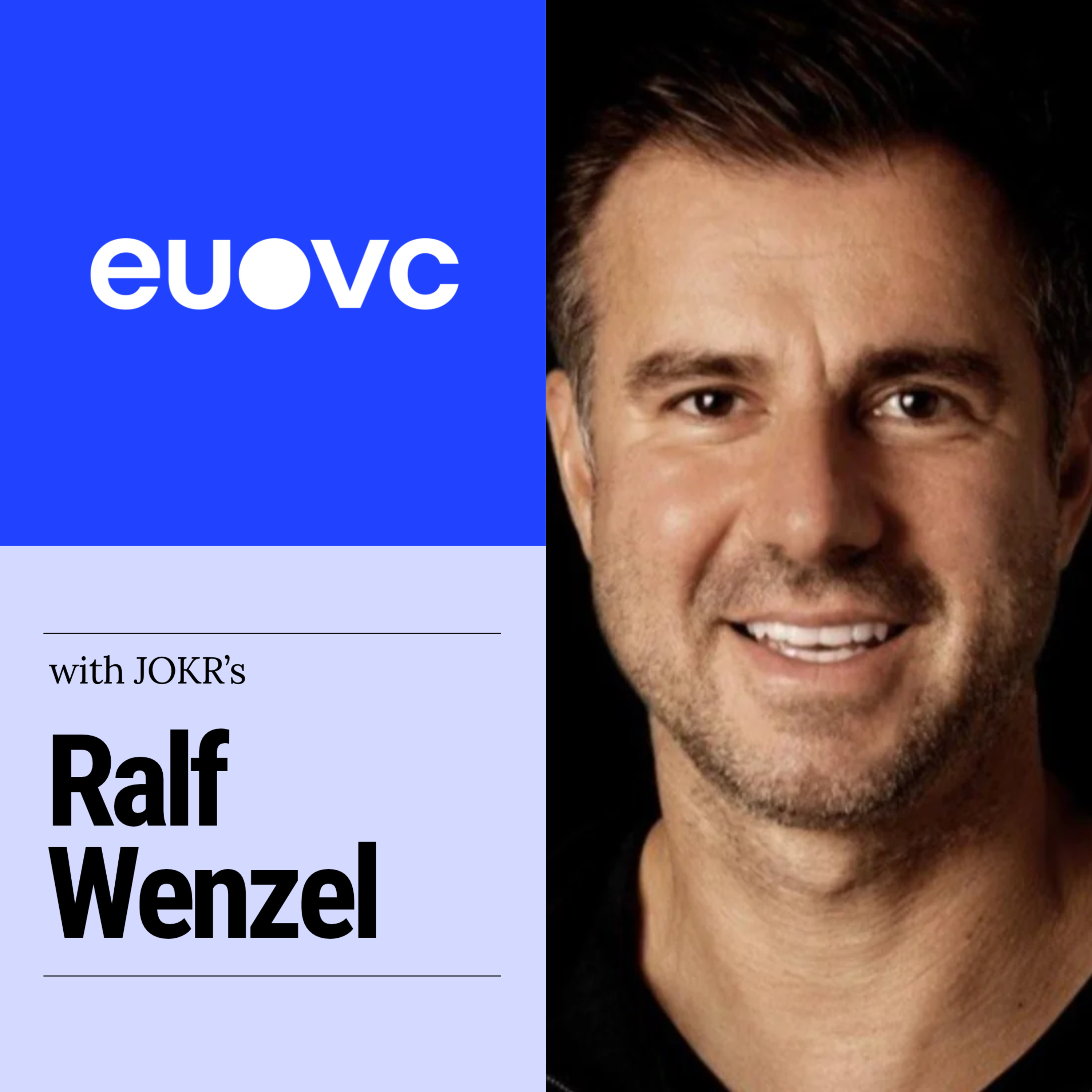
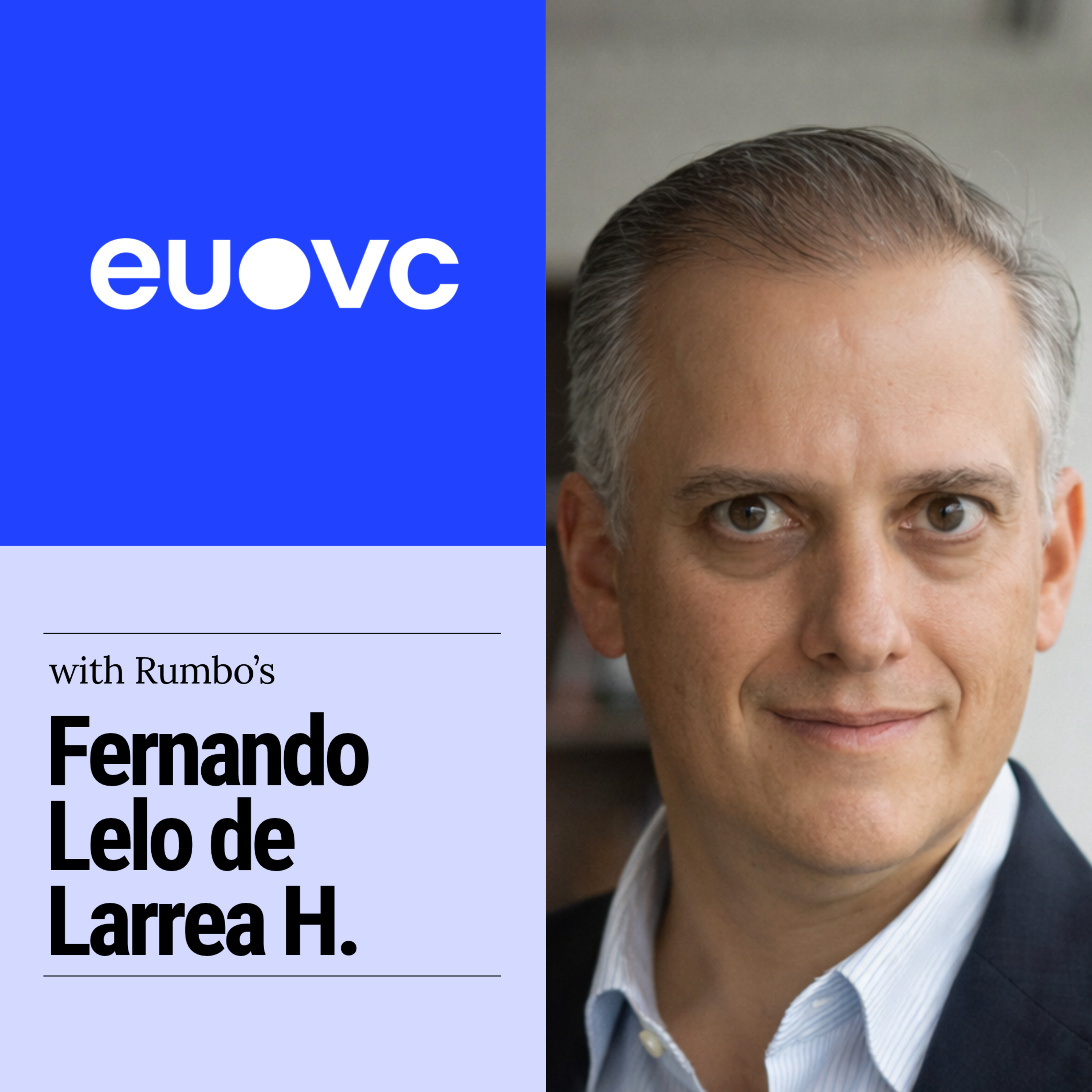
Fernando Lelo de la Rea (Rumbo Ventures). Mexican economist (ITAM), LSE, MBA Stanford; began in project finance (PPA power plants in Mexico), structured finance, headed real estate PE; co-founded AllVP (Antoni Lelo de la Rea Venture Partners) ~15 years ago, ran 10 years, invested $150M+; now based in Madrid, backs early-stage industrial decarbonization/energy transition companies.
VC milestones are often artificial; true milestones are “riskings” (technology risk off, offtakers/PPAs bankable). Banks are risk-averse; financing requires matching risk to pricing across equity/debt continua. Misaligned cap tables, grant restrictions, and project rights/governance can stall or derail scaling.
Carbon (UK CO2 capture using potassium; ~£10M to feasibility, then ~£500M+ first US facility); Circular Materials (Italy: nickel/copper/platinum recovery from wastewater; grant-to-equity-to project capital; portfolio approach); Parallel Carbon (UK/US: carbon capture plus hydrogen generation; viability via combined unit economics; targets < $1/kg hydrogen and < $100/ton CO2 removal).
Written by AI. May contain mistakes.
Learn about the disconnect between early financing and large capital needs in startups.
“You might need a 5 million seed round or a 10 million Series A and then all of a sudden it goes orders of magnitude larger.”
Discover Fernando's journey from Mexico to Spain and the founding of Rumbo Capital.
“So, Fernando, I just casually mentioned AllVP, but AllVP is quite an important firm in Mexico and all of Southern America.”
Explore the challenges startups face in financing large asset-based projects.
“So RUMBO is an investment firm with one job.”
Understand the various sources of capital available to founders beyond traditional equity.
“you have this successive set of rounds that are attached to certain milestones and runways but that is designed mostly for software companies.”
Learn about financial engineering and how it impacts project financing for startups.
“So you're deciding it's clear that this should not be funded by equity investors that come in.”
Discuss the limitations of VCs in navigating the capital stack for climate and hardware founders.
“And I see that that takes a lot of time and a lot of knowledge that the founders do not necessarily have, or they do not need to have because there's a specialty here.”
Explores the complexities VCs face in deep tech investments and the need for external expertise.
“And even if they know how to navigate it, it's maybe also something that's too time consuming for them to be able to dig into and really do for them.”
Discusses the importance of alignment in cap tables and the roles of advisors.
“What I have observed is, first, you have to have everybody aligned to the endgame and the path to it.”
Highlights the transition of companies to internal project financing and the need for external support.
“If you're needing somebody to send those emails, then perhaps you're not doing your job and the counterpart reads that.”
Evaluates the effectiveness and trustworthiness of advisors in the startup ecosystem.
“Now, is this something many people promise?”
Discusses the Climate Break initiative's importance in developing playbooks for climate ventures.
“What do you think that it gets right and is really meaningful for people?”
Explores the complexities of executing strategies in the climate space and the nuances involved.
“Any founder can read the map and they get an idea, but it doesn't mean that they can execute or walk through all the steps that are defined on each of those maps.”
Introduces a case study on a carbon capture company utilizing innovative methods to capture CO2.
“and then all of a sudden you're getting some really bad advice?”
Learn about the innovative company capturing CO2 emissions and its financial needs.
“because I've been training that prod myself on this.”
Explore how a company transforms wastewater into valuable metals and their funding journey.
“And building that facility takes more than 500 million pounds.”
Understand the importance of replicable solutions and how to lower financial costs.
“This is a company I love based in Italy.”
Discover how Parallel Carbon's dual revenue model enhances financing opportunities.
“you might gain 200, 300 basic points in the difference in your financing, and that makes the whole difference in the returns that everybody in the value chain gets.”
Learn key insights on how to approach financing and capital structure for startups.
“Yeah, that's very much a VC mindset that definitely does not carry over to bankers.”
Learn how to strategically structure your company for optimal valuation and future cash flows.
“and then move backwards and say, okay, in order to get there, what do I need now?”
Explore the complexities of venture capital milestones and their impact on financing.
“And that is a very project finance approach to it, I think.”
Examine the potential pitfalls associated with grants and project financing for founders.
“And now let me ask you the fifth and almost final question.”
Discover how to design project rights that do not hinder growth and execution.
“I've always been critical about exceptionalism.”
Learn why a holistic approach to financial design is essential for growth.
“And often you blame the financiers, you blame the VCs or you blame the banks.”
Explore how misdeveloped project financing can lead to company failure.
“I have seen misdesign project finance get the assets out of the company or for the company to lose that asset too early in its process so that it doesn't create this value-creating machine.”
Discover how founders can reach out and the importance of strategic planning.
“Sometimes asset as a service is the right way, but you need to define your, I love this phrase of Andy Grove, strategy is destiny.”

Get the gist, explore an idea or ask about something said.
 Claude
On EUVC, what are the key points of this episode?
Searching your listeningAutomatic transcript. May contain errors.
0:00You might need a 5 million seed round or a 10 million Series A and then all of a sudden it goes orders of magnitude larger. The moment you start, you need to build that plant, that facility, you're going into the hundreds or the couple of hundreds of millions of euros. There's a chasm there. There's a complete disconnection between the early financing and the need for that kind of equity. I invite them to change the paradigm. There's a paradigm or there's a mindset that is, I need to raise money. And there's a subtle difference between I need to raise money, because that puts a framing on, I need a round and I need gasoline for my engine, to what is it I need to finance?
0:47Think about the IP. Think about the talent. Think about the engineering, the things that will continue providing value on separate assets. And you want to hold that because that's what pays for the multiple. I have seen misdevelopment, misdesign project finance, get the assets out of the company for the company to lose that asset too early in its process so that it doesn't create this value-creating machine. And if you kill the black box, then you kill the company, regardless of the technology. Welcome back to the EUVC podcast, everyone. My guest today is Fernando Lello de la Rea, founder of Rambo Capital.
1:26He started in project finance, co-founded AllVP in Mexico, and ran it for 10 years. And today, he backs early-stage industrial climate companies, helping them navigate the path to scale with a special focus on complex capital architecture that's often needed for these startups. We have a playbook for a traditional venture, but we don't have one for this. So today, Fernando teaches one part of it, how to split the company from the asset.
1:55Fernando Lelo de Larrea H.: This show is not investment advice, and the hosts of this episode may be invested in the funds and companies featured. Fernando, welcome to the pod. Thank you so much, Andres. Pleasure being here. Really excited about it. So, Fernando, I just casually mentioned AllVP, but AllVP is quite an important firm in Mexico and all of Southern America. So maybe you can talk a bit about your journey and let everyone know exactly who you are and why you've decided to dedicate your next chapter to Europe. Of course. Thank you. Yes, very quickly about me. I'm originally Mexican. I'm an economist by training, started at ITAM in Mexico City, then London School of Economics, then an MBA at Stanford.
2:37And I started my career precisely in project finance. I started doing PPAs in Mexico, large power plants, then moved to the structured finance part of it. I headed a real estate private equity fund. And about 15 years ago, I co-founded OVP, Antoni Lelo de la Rea Venture Partners, one of the first VC funds in Mexico and in Latin America as a generalist fund. We ran it for 10 years, invested more than 150 million, rode the wave of VC as it globalized. But five years ago, I decided to change gears and kind of connect the dots backwards. I thought I had a very unique set of skills because I'd done project finance, then structure finance, then venture capital, but I wanted to go back to more impact, to really solving larger problems and really got obsessed about climate and fighting climate change.
3:31So I decided to relocate to Spain. So now I'm based in Madrid and to focus my professional efforts in Rumbo, kind of synthesizing everything I've done in this last 25 years, because I thought it was a unique offering to the market and more committed and excited to this impact and solving this big challenge that you described. So if we should give a two-sentence answer, what is RUMBO Capital? So RUMBO is an investment firm with one job. We design how a company finances its entire journey, bringing the right investors and the right partners to the table, putting our own money in for this complex need of hard or capex-intensive solutions for the decarbonization, industrial decarbonization, energy transition, and climate fighting, mostly in Southern Europe and Latin America.
4:28So let's get to that problem then, the problem that you see founders running into. And honestly, it's something that everyone knows and sees in the ecosystem, of course, that the capital stack needs to be different for companies with a very large asset base or hardware base. So if you could first described kind of let's call it that you have a startup that needs to build their first commercial plant and that they realize is very expensive to finance from their captive. Can you just describe the typical situation the founders are in and how to then we can then look at how you resolve that? Absolutely because you described it very clearly I think we have a playbook for VC you have this successive set of rounds that are attached to certain milestones and runways but that is designed mostly for software companies.
5:18And now we're trying to adapt that playbook to a very different reality. And the examples are good. You might need a 5 million seed round or a 10 million Series A. And then all of a sudden it goes orders of magnitude larger. The moment you start, you need to build that plant, that facility, you're going into the hundreds or the couple of hundreds of millions of euros. and there's a chasm there. There's a complete disconnection between the early financing and the need for that kind of equity. And it does not progress with the natural step-ups of round after round that are basically related to ownership, to dilution, and then to the multiples of invested capital that you get at the end.
6:06This is a completely different play and we have to question it with a different logic than this playbook. The way I understand it or the way I approach it is based on project finance. On project finance, there's this old rule or mantra that says every risk should sit with whomever is best able to carry it. It's a matter of who takes the risk or who's better suited for taking each risk. And if you get that matching right, then everything falls into place. But that's not the logic of VC. The logic of VC is more of a sort of hot potato and you get the financing as you build something. And then the math works backwards, but you're trying to just get to the next round of financing.
6:54And if you move with that logic in the first stages of your company without thinking about the overall arc of financing, then you end up finding that you do not have the pieces in place for that next stage, either because of dilution, either because of not the right incentives in place or the right alignment. And so the approach is we have to think of this from the very beginning. Where do we want to end? And then do the reverse engineering in order to have the right stages, the right pieces on each of these stages. So maybe you can talk a bit about the different sources of capital. If we look at the first time you need to go out and get real capital that is not from the cap table.
7:45So you're deciding it's clear that this should not be funded by equity investors that come in. Then what are the typical sources you can go there? Because we all know, of course, there's venture debt, but there's definitely also other tools there. How should founders think through that? Can you talk a bit to the breadth of the repertoire there is for them? Correct. And the first thing to understand is there is a broad scope of solutions and there's always a continuum. When we talk about venture capital, there is different slices there depending on the round, but there's a continuum to the private equity, owning a piece of the company and trying to sell those shares in the future.
8:24And then when you move to the next stage, you think about equity at a project level, and then typically those projects are highly levered. That means you carry a lot of debt and semi-debt or quasi-equity within that continuum in order to find the right pricing according to the risk that is being taken. So you always think risk is related to the return that is sicked. That is the pricing. And then there is a continuum of the appetite for risk and the right pricing for each of those solutions within the continuum. And you do things at the cap table of the holding company. And then you do things at the project level, at the SPV or special purpose vehicle that carries the assets on each of the facilities that you're building.
9:15And for that, there is project equity. There is appetite for equity at that level, first losses. And then there's debt at that level. The difficult thing is to do the first ones. The way I think about it is you have to design it in a way that once you nail it, you can have ideally a cookie cutter for how to finance these things because you can replicate the technical solution over and over. And the more you do it, the more efficient you are, the more the risk the project is, and therefore the lower the cost of financing for such facilities and the more value captured at the holding level. Where do you most often see that the bottlenecks are?
9:58Is it the banks or is it the fact that the investors and the company builders don't know how to go to the right sources of capital? What do you tend to see the usual problem? So there is one difficult step in the sense that we are working with new technologies. Because when we do venture, we want to do things that are being brought to the market that carry that technical risk. And you try to risk that technology risk because you've proven that it works. You've proven that there's a market appetite. But the banks typically have not gone through this kind of financing. And banks are very risk averse by definition.
10:35And that is right. You don't want to fit something that is not intended for them. But then it's very difficult to get the money without that leverage, given the size of this project. So how do you approach a debt facility that has never been built before? a product that has not given the financial institution or the bank the tranquility that, oh, they know they can forecast this cash flows easily, so they anticipate how is that going to be repaid. And that's where it is hard. But again, it is a matter of pricing it. Well, at what level of yield, at what level of rates, and at what loan to equity ratio does this is rightly priced.
11:26If we work very rigidly, then I see it gets tough. But if we're always thinking as a continuum, there is always a right matching of those rates with those risks and at those levels. But you have to be very open to that financial engineering. And I see that that takes a lot of time and a lot of knowledge that the founders do not necessarily have, or they do not need to have because there's a specialty here. And learning all that speciality when you are really focused on your next milestone and on executing on your startup is a bad balance. But there has not been an offering of saying, we will take care of all this path and we will find the right solution for you.
12:15Let me ask you, so we're going to talk about the climate break in a second, but I'd love to ask you if you could just comment on the ability for the typical VC to navigate the capital stack and how you design it well for, let's call it climate founders or hardware founders, deep tech founders in general. I'm not asking you to call anyone out. I'm not asking you to dunk on anything in general, but kind of just to advise founders on what can you expect from the typical VC when it comes to being able to navigate this and stitch it together? So I think there's always this narrative about VCs trying to help, but VCs are very good connectors.
12:59VCs are great at tapping on their network and really opening doors. And they can open doors for partnerships. And when we work in this world, you really need a lot of relationship with the corporate world. This is, as opposed to your traditional VC in the B2C world, here the incumbents are your allies. You need to work with your incumbents. And sometimes VCs are very well connected to help with that. But the scope of financial offerings is limited to that network. And they think of it as, oh, I might connect you here and there and then good things will happen. And that's very valuable and I've done it for many years.
13:37But here it's more about designing and really work in that capital architecture. And that takes a full commitment and a full-time job to do it. So it is not contrarian or in opposition to that door opening that VCs are very used to do, but this is much more intentional and prioritary, I would say. Let me ask you how you then recommend founders think about this because I think you're saying in a well-nuanced way that VCs are great and well-meaning, but this is difficult and it is a specialized skill set that you can't expect that even the typical deep tech VC will have fully nailed. And even if they know how to navigate it, it's maybe also something that's too time consuming for them to be able to dig into and really do for them.
14:29That then means, okay, you'll quickly as a founder have to turn to some type of consultant or hired in-house? Maybe that's the first place to start. Should you go to a consultant about this or an advisory firm around this or should you hire the competence in-house? Like what scale are we talking here? And then after that I want to get into if you say or to the level that you say let's talk about advisors there's always the problem for founders. Am I being scammed here or am I working with someone who really wants me the best and who I'll be able to get a lot of value from? Yes, I love the question.
15:03What I have observed is, first, you have to have everybody aligned to the endgame and the path to it. Problems arise in any cap table when there is a misalignment of the endgame conceived by everybody. So if you have a VC that says, yeah, yeah, sure, let's do that, but they are thinking about flipping their position in two years, that's a completely different playbook than the one that really wants to run this for eight or 10 years. So what's the time horizon for each of the investments in the cap table and what they're looking towards? I see a lot of companies discussing, well, we will get this technology and then we will license it and then we'll provide liquidity to everybody in the cap table.
15:44Well, how is that exactly going to work? Who's thinking about that? And it's easier said than done. So I'm always worried about, is everybody seeing the same path towards that exit in the same time horizon? And often the answer is no. Can they help? For sure. Can this be built in-house? This is something I've thought a lot about. When we had the first generation of project finance was typically run by advisors and specialty investment banks. And then the companies became very large and became very good at it. And both the banks and the developers kind of brought that know-how in-house. and that's how the market matures.
16:28So when you're financing wind farms or solar, there is a good knowledge in large developers for doing this and the banks know it and that's kind of soft in-house. The problem here is that you have new technologies and new technologies have not done this and the companies are not ready to develop this in-house at the moment because they're going full speed and the banks have not done it and cannot develop their knowledge in-house for every technology that is coming out. Because here we're talking about energy, but we're also talking about thermal storage and about cement emissions reduction, many technologies.
17:05And that is much broader than what they can internalize in the short term. So ideally, a company will grow very fast, will develop this skill set internally, and then we'll have a project finance division for that cookie cutter long term. But it is the transition. It is that growth that at the speed of VC, because you cannot lose this speed in order to give the returns to the funds that bet on you in the first place, that you really need external support. And then picking that external support, like we all know that, for example, the market for people that help you raise capital from VCs is wrought with a lot of sharks.
17:53There's a lot of zero value people there that are saying, I'll help you raise capital. And in fact, all they do is send emails with very little actual weight behind them. And then they end up basically doing a spray and pray approach and they fork a lot of money out of their startups. And there's an adverse selection to it. Sorry to interrupt. There's an adverse selection. If you're needing somebody to send those emails, then perhaps you're not doing your job and the counterpart reads that. And so that's problematic for sure. Yes, most VCs would say that it's the founder's job to do that. You can have someone help run the process.
18:29You can have someone help you maybe think through a bit about your narrative and that type of thing. But you definitely want to be the one in the driver's seat as the founder when you're raising capital. All of that aside, when it comes to then this space of project financing and navigating debt and even non-dilutive grants, Who are the advisors? Can you generally trust the advisors that are in the market here? Or is it a place where, oh, it is a bit of a gray space where there are people you should maybe avoid? I think the market is maturing. I think, as is natural, when the market is created, many people come out and some people cannot assess the difficulty of this and think that that offering is easy.
19:14You should look at, really, the track record. it, you should look at the skin in the game, which is something I like to build around this. And that's why I talked about an investment house and not only an advisor firm. Yeah, so your take on this, the way you solve the bias problem or the agency problem is, you're saying with Rumble Capital that you're both investing equity and you're also then focusing fully on this. And you're then building up an entire machine that can do it at a scale level compared to what a normal VC firm can do. When you look out to the typical suppliers of this type of service, we have the small guys and we have the big guys.
19:52I often know that the problem is that the big groups only want to work with bigger projects. So if you're trying to procure three million of project financing, they're going to be like, that's not really for us. That then means that you're looking at individuals that have made a career out of helping startups. Are there, like, how do your diligence and individual that helps startups navigate this? So that's the thing. It's this, and that's what makes it hard, as you say. Some projects are on a range that is difficult to finance because it's kind of a small ticket infra solutions that might not be very attractive for anybody if you don't have a long-term view of it.
20:31Where the money is made is if you really have a betting on the company growing. And that's why I think my approach is unique, because I've been on the other side. I've been a venture capital for more than 15 years, and I understand how the VC fund is thinking about it, how the founders are thinking about it. But I can also understand how the banks or the financial institutions are thinking about it. So I don't want to sound too touchy-feely, but you really need that empathy. You really need to understand what is everybody looking at so that you can arrange this and design this carefully. Now, is this something many people promise?
21:10For sure. How are the incentives aligned? Is there skin in the game? And is this tilted towards success and very sensitive to the timeframe? Because where the ball drops is, what are your results? How much money are you getting? Is this being paid off? I agree with you. There's a lot of oxygen in the market being taken by advisors that are not moving the ball towards this goal. Let me move the ball to someone who is doing an important piece of work on this, which is, of course, Contrarian mentions an EQT behind the climate break. So the climate break, of course, to those that don't know, is a mutual effort by multiple players in the climate venture ecosystem, trying to define what I said in the beginning we don't have, which is a playbook for building these companies.
22:04In that playbook, they have, and I do think it's fair to say we don't have the playbook because it's still being written and the teams are working very much on the climate stack or the climate break to continuously evolve it. But in that, you have the capital stack, of course. And I'd love to ask you, when you're looking at the climate break, and we've spoken about this beforehand, you know it very well and think it's a very worthwhile effort and important effort to understand as a climate team. What do you think that it gets right and is really meaningful for people? Yes. So I love that you bring this.
22:40I think that the work by Rockas and Contrarian and McKinsey on this is amazing. I really like it. And I think it's a great map. And it's important to have a map in order to navigate. But the map isn't the driver. You have this. And they've done it open source, which is really, let's put this out so that it starts being replicated and used. Now, who's using it on a professional, systematic, institutional way? And that's part of what I'm trying to build at Lumbo. It is one of the maps we use, perhaps one of the ones we use the most, but you need somebody who has driven the roads that are defined by climate break over and over again, and you gain the experience and the nuances of each of the roads that are defined by these different breaks that they've defined.
23:30Any founder can read the map and they get an idea, but it doesn't mean that they can execute or walk through all the steps that are defined on each of those maps. Yeah, so because one of the foundational points behind the climate break is, of course, that they're developing bricks for each of the typical archetype companies within the climate world. One could be gigascaling and others asset as a service models, new technologies, companion software, green deployment, product disruption, and moonshot. But you're saying that the thing is you have a map here which describes for seven different categories of companies how you could think about designing your path.
24:17But the problem is that oftentimes the companies that stall are two archetypes at once. So expand on that point. So one of the problems is that many of companies are two archetypes in one. And that is by definition, I think, because they're archetypes. They are not the universe of companies. And that shouldn't be a constraint. It's part of modeling things. But you really have to get the nuances of your particular project and the stages of it. And I think when we talk about some examples, it will be clearer. But again, the other part is these maps are complex. If you see that there's one pages that are beautifully designed and they have this kind of elegance of having everything on one page.
25:06Yeah, intuitive buildup. Exactly. There's a lot of detail into each of these tips that might not be completely described, that might be a good reference, and that I like when founders understand it. So it is great that it's not like intellectual property or anything, because the more I work with founders that I have done the homework and say, oh, yeah, I understand that I'm kind of scaling this thing. But at the very beginning, I'm thinking, well, my backers are thinking more as an asset as a service. So how do I combine them? And the discussion and the assessment becomes very rich if we're talking with the same vocabulary, with the same kind of orientation that Procass has put in place.
25:49Now, from that to really executing on this multi-annual plans, there's a big difference. So, and we'll go to some concrete examples in just a second. But I'd love to ask you about, let's call it the world of AI in this part, because a lot of us are now finding that obviously our cloud is an incredible helper to a lot of things. Yes. I'm sure that you're also using Claude a lot and so on. Are you generally finding it to be quite trustworthy and well-versed in this? Or is it exactly, it comes back to the point that, well, the problem is that much of this is not a well-trodden path and Claude will quickly have you have understood that you're a startup and then it'll quickly pigeonhole you into a traditional VC model.
26:39And then it'll find some Twitter threats about venture debt being terrible. and then all of a sudden you're getting some really bad advice? Or is it more that, no, it actually understands the nuances here, so we're quite far? It doesn't mean that you can do it on your own, but you are very well off if you're designing this together with Claude and then getting expert help on this side. Yes. So I'm using Claude all the time when working with my clients, but I have taken the time to create the artifacts and to upload within my cloud usage everything that we've been discussing. So the more I use it, the more it's, oh, now it gets the nuances, but it's because I've been feeling it.
27:23I do remember when I started designing it, it falls into the commonplace. It falls into the obvious, and that is not very useful because I think the nuances are what matter here. So yes, now it's starting to talk more this language of infra financing and the gap. And there's a lot of literature out there about, yeah, this is a problem and this can be solved. But exactly how do you talk about this with the banker that is the counterparty? I think it's still very theoretical. and changing that language to the audience is something that I'm getting to that point because I've been training that prod myself on this.
28:09Beautiful. Okay, so you said we'll get to a lot of the nuanced ones we go into examples, so let's pick the three that we talked about. We're going to talk about carbon, and we're going to talk about circular materials, and the third one is parallel carbon. Let's start with carbon. Can you first just tell everyone what's the company and what is the acid here? Sure. This is carbon with a K, referring to the potassium, hot potassium that it uses to capture CO2. This is a company out of Great Britain that is capturing CO2 coming out of power plants. So it's point of emission, CO2 capture. Very efficient using chemical and physical processes that exist for a long time, now bringing them to a scale in a solution that is self-sustained and energy and economically sustainable.
28:58I invested in this company very early and helped them get to the point, basically, and I'm going to talk a little bit about numbers, basically needed 10 million pounds to bring it to a point where all the feasibility studies, FES2, everything was put in place, the engineering, very detailed engineering on what needs to be built, including agreements with gas turbine providers and so on. So this is a typical venture financing. There was a risk linked to the team, the execution capabilities, proving that the technology worked as they intended on the simulators and that there's economic viability out of this.
29:41But now it comes to a point where it needs to build the first facility. And the first facility is already designed and with enough taker and with a specific location in the USA. And building that facility takes more than 500 million pounds. That's the chasm. You go from 10 million on a seed, you can say, series A, to 500. There's no series B here. This completely goes into the project finance and the high leverage on this. That is capital architecture. If you had not solved the cap table originally, if you do not create the incentives, if you do not design how everything needs to be in place in order to put the facility, create the SPVs and get the money for this, and you make a mistake very early, then it will be impossible to finance because of what banks will require and so on.
30:36So I love this because it's, I go to my first point, it's the kind of you allocated money to the risking and getting the milestones in a way that you can show that that risk is off the table and you get the risks that are more suitable for the project finance kind of financing. And you might need some additional kickers. You might need some warrants at the holding level. You may need to have switched into deals because this is first of a kind. But even for first of a kind, how have you allocated risk and the risk of the company to get to this stage? And we have been working with this company for the last two years to get to that point.
31:18With that company, would it have even been possible to do this on their own or without a specialist like yourself in the group? What I think about this company is that it's a very sophisticated team. And that might be counterintuitive, but it's exactly the way I like to work. The more knowledgeable I find that the founders are in the finance world, the more they understand it. Let's do this with professionals. It is not about, oh, we know it all. It's about, this is so much dependent on having the right capital architecture that it's money well spent. Not saying, we know how to find this. The head of this company is a very sophisticated infra manager.
32:04But he understands, yes, we need to create a dream team. Not that I'm part of a dream team or anything, but we need to create that, to bring the right people in order to get this to be successful. And sometimes people are trying to save on things because money scares and they're coming out of only 10 million. But this company had the vision, we will get the best engineers to get the technical solution ready. We will work with the best commercial team in order to get it. And we will work with a good financial team to get this solved. So it's not that they don't know how to do it and they needed somebody to tell them how to do it.
32:44It's that they knew that this was a big challenge and they put together a strong team to do it. Tell me about Circular Materials because I know that you also think that they had a great story about how they went from grant to equity to project capital for just one hub. Yes. This is a company I love based in Italy. So your typical deep tech company, a PhD with a brilliant solution and technical aspects that pulls valuable metals, nickel and copper and platinum, out of dirty wastewater from industry. That would otherwise they need to pay to get rid of. So this turns waste into raw materials that are very valuable and that Europe needs and is willing to support.
33:35And because of that, it was called a strategic project within the EU Critical Raw Materials Act, and it has received grants to accelerate its ready-to-market stages. So this is something we will see a lot. How do you get the grants in place, then the equity round in order to get the first facility? And different from the previous example in carbon, these are facilities that are much more a mid-size solution that can really get replicated. And that goes to another of your points. This, as opposed to the other one, which is you build one facility and it's so huge that it calls the attention of everybody.
34:18and if you get to financing, it pays by itself. Here you need a portfolio. Here you need to start building many of this in a size that might not be material for infra funds, both in the equity and the debt side, but that if you build a portfolio, then it becomes sort of an equity facility that you can deploy in a pipeline of new installations. And that requires a different logic, but I think a beautiful logic to it because now you start creating companies on its own that have different offtakers, but that are following. The more you can get it into a cookie cutter, into a very standardized solution from a technical way, the more you do it over and over and banks start feeling very comfortable about the inflows and the waterfalls that are defined within the company.
35:14and so you lower the financial cost of each successive facility. And that is important because the more we work in a world where interest rates are going up, the more margins are getting squeezed. We're entering a stage that we're ending a stage that we see got a lot of benefits of low interest rates. That's over. So now we're going into higher interest rates. So now the spread, the basic points that you gain from a good financing can make a lot of a difference for this kind of solutions. And again, the more you are efficient in designing this, you might gain 200, 300 basic points in the difference in your financing, and that makes the whole difference in the returns that everybody in the value chain gets.
36:03I want to go back to a topic that we spoke about earlier, which was the value of VCs in this. There's one, and I think of this because you spoke about the importance of being able to secure follow-on financing or financing for the next project. In venture, we tend to say, I think this is A16 set nomenclature, that we are lending credibility to startups. And that's, of course, beautiful and works inside the equity world because everyone knows that if Rumble was in, then we know that there's something there. The question, of course, is does this transition into our banks and big project finance partners?
36:41Because I imagine they don't tend to know ruckus from contrarian and what it means that he backed your company. Yeah, that's a good way to say it. And I know the phrase and I've worked with that VC logic. Here I think the difference is that support is not given by the name of the fund, which is what A16Z and all these verbs work like. So if you've been backed by Sequoia, there's a signaling game, and there's a lot of signaling in your cap table that allow you to get additional financing. Here the way I try to emphasize is you need somebody to signal that that derisking has taken place. And it might not be somebody on your cap table.
37:25It might be the bank or the technical assessment or who's backing you that that risk is off the table. That is not a specialty that traditional VCs have, I think. Yeah, makes sense. Let me ask you about Parallel Carbon, which is our third and final example on how you can build these project financings. You're saying here that what was magical was that they added a second revenue line, which absolutely changed the willingness of the debt providers and the financing partners to come in and actually finance Parallel Carbon. Yeah. So this is a company, again, out of UK, US, extraordinary PhDs in chemistry, leading it and very knowledgeable.
38:14But it's on this carbon capture space and the economics of that have been hard. And at the end, this has to make economic sense from the very beginning. The way they paired their solution, and that's why it's called parallel, because it's doing carbon capture with hydrogen generation. And it is the combination of the two unit economics that make it viable, feasible technically, viable economically, and financeable because of that logic. And they are moving towards hydrogen and the derivatives of hydrogen below a dollar a kilo on hydrogen and carbon removal of under$100 per tonne. And that is the combination that makes unit economics work because there's no secret here.
39:07It's about how do you bring on these very complex models to make economic sense. And many of the cases are, we don't have unit economics that make sense now, but we have economies of scale, and eventually we will get to those numbers. And that's a leap of faith. And here, this is not a leap of faith. This is the numbers work because of this combination at the economies of scale that we are financing. I'm always hesitant about this, which is important from VC world of saying, when we reach huge sizes, then we will become profitable. because that's not a promise that translates well to the banking, to the leverage of it, because the leverage is tied to that specific project, not to the overall future of the company.
39:58Yeah, that's very much a VC mindset that definitely does not carry over to bankers. Let's do something difficult now. This is me trying to wrap up the episode in a productive manner for everyone listening. And I want to try and see if we can kind of do a bit of a how-to for a founder who's, let's say, two years in from a first plant or two years from having to make their first big plant, big first asset investment. If we start with the very first decision, what is it that that founder has to kind of make as their first decision? I would invite them to change the paradigm. there's a paradigm or there's a mindset that is I need to raise money.
40:45And there's a subtle difference between I need to raise money because that puts a framing on I need a round and I need gasoline for my engine to what is it I need to finance. And it's subtle, but the difference I think matters a lot because of what we have been discussing, what falls within the company, what falls outside of the company. need. So what do I want to finance? And then from that logic, I can build, where am I going? What have I proven? What are the risks? Who's taking that risk? What is the best money for that? And so my first invitation is change that paradigm. You're not raising money because raising money has ended up being sort of a validation for companies that they are on the right track.
41:32Oh, my badge of honor, I've raised the round. It's more, what do you need to finance and what's the best way to finance this? And in order to do that, and then I'll move one step further with your question is, my suggestion, given what we have been talking about whenever this capital architecture fits, is start with the end. Do the reverse engineering. Connect the dots backwards on this. Design backwards from the asset that needs to be financed at the end, and then move backwards and say, okay, in order to get there, what do I need now? How can I set the brakes of the risking so that I can get the proper path and that trajectory?
42:13And you can get support by the maps and the bricks and all the literature that is out there, but that's really an exercise that you need to believe and align everybody in your boat to do. And that's another thing that we've spoken about multiple times and you framed it well, I think. what stays in the company and what goes into an asset vehicle, what lives outside of the company. So maybe you can provide some very clear guidance to founders and VCs, honestly, how you can think about what should be inside the company and what should move outside of the company into an asset vehicle. Exactly. So think of it.
42:52Your company has to be larger than the sum of the cash flows that are generated by each of the vehicles. And I'm a finance guy, so I tend to go back to basics. And every company is worth the discounted free cash flows that they will generate. So how do we make for this company to be more valuable than the sum of its assets? Well, because of the projection of what comes afterwards. So it's the future cash flows that are creating that cash flow. So how do we assure those future cash flows? Well, think about the IP. Think about the talent. Think about the engineering, the things that will continue providing value on separate assets.
43:37And you want to hold that because that's what pays for the multiple. Now, what stays at the project level is what makes for the stronger case for that project to have the most clearly foreseeable stream of cash flows within its life. So everything that gives kind of certainty. So venture capital is all about volatility. It's all about increase the spread or the volatility of those cash flows in the future. at the project level you want to really diminish that and really create the most certainty. So everything that is the risking, everything that is fine-tuning those numbers go at the project level.
44:22Everything that is expansion, that is future paths, that is additionality to your revenue stream goes at the company level. And that is a very project finance approach to it, I think. Yeah, makes a ton of sense. Let me ask you then, just as we all know the ladder of VC financing, that you're going from the pre-seed to the seed and so on, and there's kind of milestones that release each round, how do you think about that from the tranche of the debt financing and the project financing? I'm a bit of a little critical of those milestones in the VC world itself, because they become a little artificial because they kind of become circular references.
45:10Honestly, I would say that the beauty of traditional VC, of software as a service, is it ended up being exactly a milestone business where you could see if you're here, then it's a seed round and it's worth this much and I'm ready to under, you know, blah, blah, blah. Yes. That was beautiful. that was why VC worked so well for it. And it's also, of course, why we ended up in a world where the returns started getting a bit smaller because it ended up being very foreseeable. And for that reason, valuations were better aligned and you couldn't get that outlier performance anymore. On the one hand, but on the other hand, we've learned to trick the system, right?
45:56Yes. So if a milestone is, oh, show me that you have product market feed in order to go to, and then everything is sort of constructed in a way that I can justify that the series is built. And we create these runways that should be enough to get to those milestones, but then we always have bridge rounds and extensions. And I think it has become a little diffused from the original design that I completely agree with you that has been successful. But we can get into that, but I think it has defeated its own purpose. In this approach, and I don't want to be too repetitive, but for me, the milestones are the riskings, which is similar to what you could say at the VC on its origins.
46:41is the milestone is not that I have this letter from this bank or that I closed around. It's that the technology risk is off the table, that banks are showing this appetite, that the offtakers are signing, that the PPAs or the equivalents of the PPAs or the long-term contracts with the offtakers are bankable. And those are the milestones because those take risks off the table to the person that is more suitable to take it. And then the next one is clearly taking risks that they can underwrite and not taking risks that they don't understand. And now let me ask you the fifth and almost final question.
47:26I want to ask you which grants, cap table terms and product rights tend to be ones that founders are heard by in a later round?
47:41So, I've seen all kinds of things. I've seen grants that are tied to jurisdictions. And you have to think about your jurisdiction a lot. I've worked with companies in Norway. There's a lot of grants in Norway. It's very generous. But then perhaps you want to finance with American banks, and American banks or American equity doesn't feel comfortable with or doesn't know about Norwegian jurisdictions, say we have to flip this company to become a U.S. corporation. Oh, I cannot do that because I'm tied by the grants I've received. That becomes very costly. Or time commitment by founders. I have seen cases in Spain where the founder has received a lot of grants, but then it's tied to providing services to the public sector in Spain.
48:34and then is he really a full-time founder for this in the sense that a VC understands, well, yes, but then he still needs to work for this lab and, oh my God, then the cut table starts to get complicated. So those restrictions that at the beginning you are not that worried about can be very costly. There's oftentimes, it can either be service, but it can be activities in general or goals that you need to achieve in that project that you got grant financing for, that when you did it to get in the money into the company, it looked like it would be a good idea. But once you then have traction and you have other routes of financing, it starts just being a drag on the company.
49:20Yes, both on the time that you need to do on those activities and on the reporting side of those activities. Absolutely, and I've also seen that. That might be hard to avoid, but you just have to be very conscious about it. And then on top of it, this, yes, and it's exactly the being conscious about it point, because what I have seen, at least with very technical founders that come from university settings and are used to be project finance or grant financed, they're also a bit in a, they can easily get stuck in a mindset of this is how we finance the company. Yes. I used to call it when I was a generalist VC, you have this accelerator curse and you have this founders that are going around accelerators and incubators and prices and their ecosystem.
50:10But that's taking time out of their execution capabilities. And the same happens in this deep tech sector with grants. You can become addicted to them, let's put it that way. And I imagine that you've seen this potentially more in Europe than in South America or Latin America. At least that's, yeah. I mean, unfortunately, Mexico and Latin America do not offer a lot of grants, but they force founders to be much more self-sustainability oriented. The big advantage, and again, I go to my traditional VC years of working in Latin America, is that founders get used to be very efficient because the money is scarce.
50:57And that becomes an advantage once you get them good financing. Same thing with grants. You can be addicted, you can be devoting more and more time to them, and they may steal you away, as you say, from what now is clear that is the path to maximizing value for your shareholders. If you were, and I'm asking you this question because you are as knowledgeable as you are in this space, if there are any people that care about the policy developments in Europe and the grant designers, the ecosystem people that are listening to this show, what would be your recommendation to them to kind of try and weed this problem out?
51:38Because I see it as one of the big things that are holding back European founders in the deep tech space. Yes. I've always been critical about exceptionalism. Any argument that says, well, this is the way we do it in Europe, or this has always been the way in Spain. That's a red flag that is going against the right incentive design. There is a reason VC works in the way you described it, and there's a reason project finance works in this way, and any interference with that is a friction, it is a cost. And arguing that you're adding frictions just because this is the way we do it in Europe is a false narrative.
52:20So you have to say, is this benefit of being European? Because I think grants and the promotion of industry in Europe is fantastic. Is this an oil that is making things easier? Or is it a friction that we are adding to the final objective? And many times it has good intentions, but it becomes a friction. Let's shift also to project rights, because I think that obviously this is where we've spoken the most during this podcast. So I'd love to ask you about project rights. What terms are there for project rights that can sometimes also create a problem down the line? So again, in venture capital, we're very used to minority rights because the rounds of financing have to do with small stakes and you protect the downside and create those minority rights.
53:10And that fine-tuning creates all the incentives or the problems. And I have seen many exits that are really stuck because of poorly designed drag-along ride or a tag-along or waterfalls and preferred chairs and so on. Founders are very focused on, oh, this is my pre-money valuation. This is the money I'm getting in. And the details are for somebody else, for my lawyers, take care of. and the exact same thing happens even more so in later stages. What are the prorata rights? What rights are you having for the next one? How can you interfere with my corporate decisions or my decisions to finance the next plans?
53:54And because a bank is guaranteed by the, or I say a bank, but it's a financial institution in any nature, is limited to its payback by this facility, they don't have an incentive for you to maximize on further facilities so i have seen oh i'm financing you this facility you're super happy because it's the hardest to finance and you're and then you realize it has compromised all your trajectory going forward because now they have a saying on when can you build the next facility or where or if they have a if they have a saying on it and that completely misses the purpose of an spv but it's very common for them not only to try to grab some of the upside, but also to, they want you completely focused on the facility where they have the payback and you want to build many more.
54:45And that is very common, I see, that they want interfering in the governance, in the decision-making going forward. Fernando, I am sure that you have not only been involved with companies that got this right, but also with companies that got it wrong and it hurt them a lot. Many more. Can you talk a bit to that and what it looks like when this goes wrong? The problem with when things go wrong is that it's very hard to pinpoint what's going wrong. This is that we're always in the business of high scale. When I define what does VC do differently, it is not the technology per se. is that technology is an enabler for speed.
55:32And the differentiator and what gives you the returns is the speed of execution. And when you're not getting that velocity, when you're not getting that super traction, it's very hard to understand where's the constraint. Is it because I'm not executing properly? Is it because the market is not behaving as I was expecting? And so the responsibility for this gets diluted. And it's hard to say, oh, now I understand this because we did this thing wrong. And often you blame the financiers, you blame the VCs or you blame the banks. But I think it's more of a holistic approach to it where the incentives are being designed properly from the very beginning.
56:16So in the rush for closing a round, in the pressure for delivering results in your next board meeting, in your quarterly reports, you kind of omit attention to these details that come and bite you back when you're really accelerating. So many of the stories, many of the postmortems that we VCs do when a company didn't deliver on those results, and many of the cases are not a write-off, are 0 .5x or 1x or 1.5x that didn't move the needle for the fund. And you really do the post-mortem is we didn't create the engine for growth properly. And that might be because of any of these clauses that we're discussing.
57:08Have you seen misdeveloped project financings outright kill companies? Yes. I have seen misdesign project finance get the assets out of the company or for the company to lose that asset too early in its process so that it doesn't create this value-creating machine. And if you kill the black box, then you kill the company, regardless of the technology. The technology is as valuable as you show that this can become a cash flow stream generator machine. So I have seen cases, even with not so state-of-the-art technologies, I've seen cases in the solar sector, distributed generation and batteries, where the large project was taken off the company and then the company didn't have the track rail and it deviated the company into a...
58:15It comes to my mind going back to the bricks, to the climate bricks. It becomes more of an asset-as-a-service kind of company that wouldn't have been the maximizer. It should have been a giga factory and it ended up being an asset-as-a-service because of bad design of these parts. Sometimes asset as a service is the right way, but you need to define your, I love this phrase of Andy Grove, strategy is destiny. And you need to have this strategic intentionality to it in order to get the destiny that maximizes your returns. That's close in that point, Fernando. Fernando, where can founders find you?
58:58my email is flarea L-A-R-R-E-A at rumbo.capital they can also visit my page there beautiful Fernando thank you so much my man thank you for helping us think through this I think we'll have to do like a master class or something on this topic because I think it's very important thank you so much Andreas it's a pleasure talking with you likewise man
Industrial scale requires more than venture capital. It requires a capital architecture that matches different risks, assets and stages with the investors best equipped to finance them.
In this EUVC conversation, Fernando Lelo de Larrea H., Founder & Managing Partner at Rumbo Ventures, explains why the financing logic that works for software starts to break when companies move into capital-intensive industrial deployment.
Fernando discusses how to decide what stays in the company and what moves into a separate project vehicle, why founders should start with what they need to finance rather than the next round and how venture, project equity, debt and other sources of capital can work together.
He also explains why financing should be designed backwards from the final asset, how the first project can become a template for the next and why grants, project rights and poorly structured financing can restrict future growth.
Using Karbon, Circular Materials and Parallel Carbon as examples, Fernando shows how capital architecture changes depending on the underlying industrial model and why getting it wrong can undermine the company even when the technology itself succeeds.
Highlights
Why industrial deployment needs a different capital architecture
Where venture financing stops being enough
Company-level capital vs project-level capital
How SPVs fit into the financing structure
Matching capital to risk and milestones
Designing backwards from the final asset
Turning the first project into a repeatable template
How bad financing structures can constrain future growth
This episode was produced in partnership with Rumbo.