Ask ChatGPT


 EUVC
8 Oct 2026 · 13m · 5 chapters
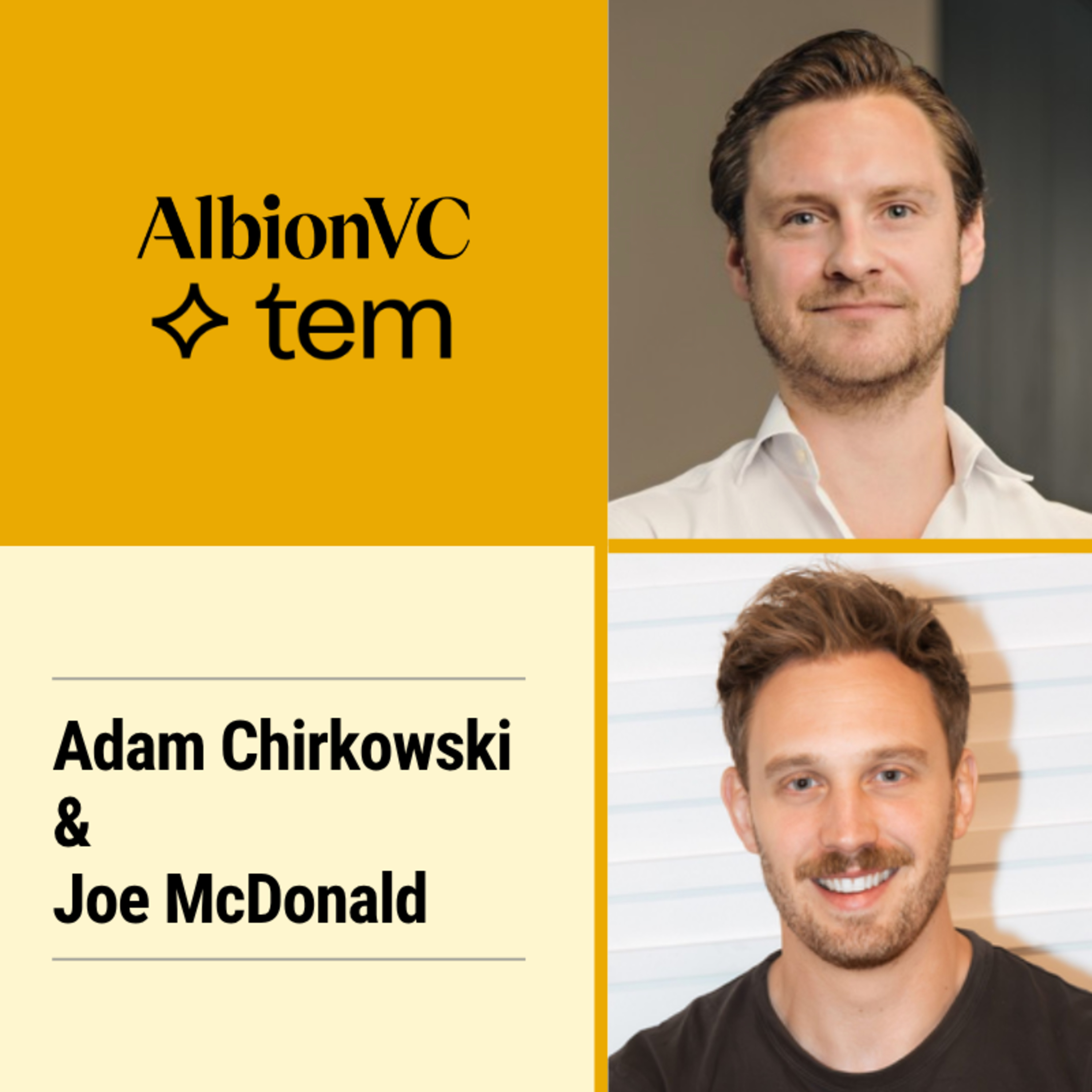
How to solve the “$900B energy problem” by enabling sovereign AI compute through cheaper, more competitive “sovereign electrons,” and by rebuilding the energy transaction layer to reduce intermediaries and transaction fees.
Joe McDonald (tem). Background: entrepreneur focused on energy tech; leads tem’s “neo-utility” infrastructure and growth in the UK/Europe energy market.
Energy costs of electrons determine AI model competitiveness; subsidizing data centers risks “99% paying” and anti-AI backlash; tem’s advantage is a rebuilt transaction layer using AI algorithms to move liquidity away from wholesale markets/incumbents.
UK energy market complexity; tem grew from zero to ~$500M and ~5,000 customers; runs with ~5 people vs typical UK utilities ~220; sold infrastructure to 20 of 35 UK utilities (they declined to cannibalize revenue).
Written by AI. May contain mistakes.
Explores the impact of energy costs on AI model competitiveness and innovation.
“The brief for this was to say something big and meaningful and not just sit here and chit chat.”
Discussion on sovereign energy models and the necessary infrastructure to support them.
“resourcing around sovereign energy and sovereign electrons.”
TEM's strategies to innovate in energy generation and transactions are outlined.
“And we're just finding any way possible of getting liquidity into our infrastructure and taking it away from UK wholesale markets and UK traditional utilities and incumbents.”
Challenges in sustaining growth amidst competition and market dynamics are examined.
“And it's kind of like what you've seen in Stripe and other fintech services talking about the customers don't even exist yet for this kind of opportunity.”
The future of TEM and the energy market's evolution is discussed, including global opportunities.
“Why would I cannibalize my entire revenue stream?”

Get the gist, explore an idea or ask about something said.
 Claude
On EUVC, what are the key points of this episode?
Searching your listeningAutomatic transcript. May contain errors.
0:00Adam Chirkowski: I remember just over three years ago, one of the things you used to say to me is that we're going to take down big energy. And I used to kind of smirk a little bit because that's a big, big ambition.
0:10Joe McDonald: I don't smirk as much now. So now people realize, oh, we need a sovereign AI model, right? Because if we don't, we can't innovate and we can't compete on defense and health tech and manufacturing. So how do we get a sovereign model? Well, we need a model company, but they also then need sovereign compute. So how do we get sovereign compute? Oh, we need to build data centers. Great. So we build those. But what goes into the cost of compute, which goes into the competitiveness of a model, the more compute you can use, the better the model, is the cost of the electron.
0:37Adam Chirkowski: The energy space, there's some fairly big, chunky incumbents there that have been around for a long time, as well as the world of AI that's getting up the knowledge curve. How are you going to ensure the growth that you've already seen, and in a relatively small space of time, how is that sustainable in the long term, and how is the value sustainable?
0:59Joe McDonald: The UK and parts of Europe have a genuine unfair advantage in potentially building generational companies from here. Like we saw in financial services, actually the UK energy market is one of the most competitive. It's one of the most complex. It's about five to six years ahead of many markets, about 122 markets worldwide that are kind of transitioning to the UK setup. So if you can get it right here and you have the ambition and the aggression for scale and you really believe that UK has the right to win, I actually do think you're going to see a couple of generational companies be born from here, right?
1:28Adam Chirkowski: We are live. We are live. In five. We are live. Four.
1:31Joe McDonald: We are live. Three.
1:32Adam Chirkowski: We are live. Two. We are live. One.
1:45Adam Chirkowski: The brief for this was to say something big and meaningful and not just sit here and chit chat. So with that in mind, how do you position energy and the importance of energy and what Thames building in today's world?
2:02Joe McDonald: I actually think it's a lot clearer now than it used to be, which is that five years ago, maybe people don't quite realize that the cost of the electron was redefining the new world order, like quite literally, nation to nation. We can actually use like AI and compute as a great example of this, right? So now people realize, oh, we need a sovereign AI model, right? Because if we don't, we can't innovate and we can't compete on defense and health tech and manufacturing. So how do we get a sovereign model? Well, we need a model company, but they also then need sovereign compute. So how do we get sovereign compute?
2:30Joe McDonald: Oh, we need to build data centers. Great, so we build those. But what goes into the cost of compute, which goes into the competitiveness of a model, the more compute you can use, the better the model, is the cost of the electron. And so we're faced right now with a situation where nations are working out whether they are actually going to reinvent their entire energy network to ensure they stay competitive? And this is just one example, right? We have the same in manufacturing, same in food, same in living standards. Or where they're not able to actually think about true, genuine bottom-up innovation, can we just subsidize it?
3:04Joe McDonald: And that's what we're also seeing. Let's subsidize the data centers, subsidize the electricity costs. Other people can pay for it. And I think the real risk there, and we're seeing this in the US, and we're seeing this now, and we will start seeing it in the UK, is that if you go down the subsidization route to try and compete and stay relevant as a nation, what you're going to end up with is the 99 % paying for the costs of that AI and data center, which creates a very much us versus them, cultural war, anti-AI sentiment. And then you layer on top of that the fact that you're not going to have an economy left in 10 years to actually utilize all of those models.
3:37Joe McDonald: And that's really what it boils down to. You're kind of on a track now of either a tourist state or a genuine new world power resourcing around sovereign energy and sovereign electrons. Yeah, so sizable, right? Yeah, just a second.
3:52Adam Chirkowski: So how's TEM positioned, given all that? How's TEM positioned in the world of energy tech?
3:57Joe McDonald: Yeah, so we see those three key pillars in solving that problem, right? You've got the generation stack. How can we just produce the commodity for close to zero? And you see a lot of infrastructure innovation there. These are the modular nuclear fusion companies, the renewable generation companies. So there's a lot of innovation going on there. So that can be brought down. Then you've got your second area was the plumbing, like the roads for electricity. So you're seeing digital twins, efficiency improvements, how you upgrade your infrastructure, but also, again, transmission connectors and battery storage and keeping the lights on.
4:29Joe McDonald: But the third pillar is the transaction layer. Literally, how do we move money and set price far more efficiently between the users of a system? And the difference with electricity compared to oil and gas is it's a data source now. It's not about physically moving barrels and pipelines. It's about actually just reconciling data. And there today, we have somewhere close to 25 % in transaction fees just being extracted out of the market. So it doesn't matter if we bring all those other costs down. If we still keep using the same transaction infrastructure, the same intermediaries, often five or six intermediaries between those that buy energy and those that sell energy, you're still going to be left with quite a sizable cost for your electrons.
5:05Joe McDonald: So you have to be able to come up with a new competitive solution. And that's what we built, right? We've rebuilt that through an AI fulfillment series of algorithms. And we're just finding any way possible of getting liquidity into our infrastructure and taking it away from UK wholesale markets and UK traditional utilities and incumbents.
5:23Adam Chirkowski: And so what does that mean for kind of long-term vision for Tem? I mean, what's the goal?
5:31Joe McDonald: Well, we talk about it every week, but it's not really abstract for us. It's like either you put a teacher in a school, you put a friary in a trader's garage. It's as simple as that. The impact of the electron goes right down to the lifeblood of a country, the SMEs, the people behind that. And so we always think about our North Star as how many dollars have we literally put back into the pockets of businesses rather than through the intermediary network. What I guess it means longer term is, yes, it's been exciting to grow a company from zero to 500 million, from zero to 5 ,000 customers, but one of the most interesting stats that we're seeing right now is that the cost to run that neo-utility, which was basically just a stalking horse for the market to prove our infrastructure works, to manage about 5 ,000 businesses, if you look at the average utility today in the UK, they have about 220 people.
6:24Joe McDonald: We're doing it with five, right? So once you start seeing that there's an opportunity for price discovery to become democratized and the ability to actually create a kind of utility, that's what really excites me. Because we expect to probably bring 1 ,000 new utilities and customer application layers into the UK in the next 24 months in a market that has never had more than 35 to 40 in the last 30 years. And it's kind of like what you've seen in Stripe and other fintech services talking about the customers don't even exist yet for this kind of opportunity. Now, whether that's a 21-year-old vibe coding a procurement agent on top of our infrastructure or a neobank becoming a utility or a council becoming a utility, We're not exactly sure where it will develop, but that opportunity and that vision of really democratizing access once you've rebuilt the nucleus is by far the most exciting thing that kind of keeps us motoring today.
7:13Adam Chirkowski: I mean, the energy space, there's some fairly big, chunky incumbents there that have been around for a long time, as well as the world of AI that's getting up the knowledge curve. How are you going to ensure the growth that you've already seen? And in a relatively small space of time, how is that sustainable in the long term? And how's the value sustainable?
7:43Joe McDonald: Yes, you've got like three things that would certainly keep me up at night as an entrepreneur in the space. It's like, can the model companies, the horizontal model companies just come into your space and just, you know, eat your lunch, right? I think a little bit like we've seen in the legal sector, but I think energy is probably five, six times more defensible than that. it's very difficult to actually take a horizontal model and bring into the verticality of energy it's so complex so even at the agentic level uh the complexity around the workflows the pricing the risk management the like unique things that come with being an energy manager or a procurement manager is very very different so i think you've got some sort of moat there but i think realistically then when you look at the incumbents um it's like very obviously innovators dilemma in fact we took our infrastructure and sold it to 20 of the 35 utilities here in the UK 24 months ago, and they all said no.
8:33Joe McDonald: Why would I cannibalize my entire revenue stream? A lot of them can't even think about workflow automation tools right now, let alone rebuilding the entire nucleus their company is going to work around, reorganizing their entire human stack. It's just not going to happen. So really what we look at is the new entrance. That's what you have to be concerned about here. In energy, as much as I would love to see the parallels exactly to fintech with the neobanks and the neo utilities, price is still like going to be the number one decider whether someone actually transacts with you or not. And so if you can't have your technology actually creating a moat around price, so the network effects, the liquidity that goes into the algorithms, that is exclusive to you.
9:12Joe McDonald: I do think even though you'll see fast growth short term, to maintain that growth will be very difficult. And that for us was always the number one principle is our price needs to be derived from the success and the liquidity and the intelligence of our algorithms, because then the more we grow, the more defensible it gets. And then so long as we're selling the shovels to the rest of the industry, I think it really sets us up quite nicely to bring in this kind of new wave of customer application layers into the energy space.
9:37Adam Chirkowski: Yeah, I mean, I could acknowledge the complexity. I think it's taken me a good three years to really understand what's under the hood. From a kind of Europe, UK, Europe standpoint, point, which is kind of why we're here today. How are we positioned? What's the kind of right to win of Europe in a truly global market?
9:59Joe McDonald: Yeah, I think at a meta level, I mentioned at the very beginning, Europe is kind of 50-50 in which direction it's going to go towards tourist state or potentially superpower, because it has invested and does have vision around underlying improvements to the energy markets. What I think about it from a tech company is where I try and encourage so many more entrepreneurs to come into this space. I spend a lot of time with fintech founders and sort of teach them and health tech founders and teach them about this space is because actually the UK and parts of Europe have a genuine unfair advantage in potentially building generational companies from here.
10:32Joe McDonald: Like we saw in financial services, actually the UK energy market is one of the most competitive. It's one of the most complex. It's about five to six years ahead of many markets, about 122 markets worldwide that are kind of transitioning to the UK setup. So if you can get it right here, and you have the ambition and the aggression for scale, and you really believe that UK has the right to win, I actually do think you're going to see a couple of generational companies be born from here, right? And you've even seen a kind of precursor of that with something like Octopus on the B2C side, and kind of revolutionizing the hardware and the software stack behind a home.
11:05Joe McDonald: And I think that's just one of many that's going to be coming out of the UK. So I'm actually incredibly bullish, as much as some people, the politicians get a bit surprised that I'm so positive about the opportunities that can come from here. I genuinely believe it. I remember just over three years ago,
11:20Adam Chirkowski: one of the things you used to say to me is that we're going to take down big energy. And I used to kind of smirk a little bit because that's a big, big ambition. I don't smirk as much now. What's the next 12 months have in store for Tem?
11:37Joe McDonald: For us, as I said, there's just so much opportunity just here in the UK that we just have to continue that domination. Every quarter, we're by far the fastest growing energy company right now in the UK and in Europe. So we just need to eat from that 0.25 % market share to a 2%, 3%, 4 % market share. And then you're already pushing into the billions of annualized transaction revenue, into the 100 millions of annualized actual net revenues. But we can't take our eye off the ball. So for us, the investment with Lightspeed came from the basis that, yes, we want to dominate here in the UK. Yes, there's about 12 billion in transaction fees here that we want to go after, but there is a trillion dollar opportunity worldwide.
12:15Joe McDonald: And so looking at the U.S. market and Texas specifically, looking at Australia, there's a couple of other countries that we're getting market pull from that are being brought in from both governments and companies in that space wanting to utilize our infrastructure. I think that is what the kind of next 24 to 12 months is going to really be about, is proving the interoperability of this and proving that it can actually scale and solve this as a global problem, not just a UK one.
Cheap, reliable energy is becoming a strategic advantage. As AI, data centres and manufacturing demand more power, the economics of electricity increasingly influence which countries and companies can stay competitive.
Recorded at EUVC Summit 2026, Joe McDonald, CEO and Co-Founder of tem, joins Adam Chirkowski, Partner at AlbionVC, to discuss how the energy market needs to change and why the UK and parts of Europe could be particularly well positioned to build major new companies in the sector.
Joe explains how tem is rebuilding the transaction infrastructure behind energy using AI, why layers of intermediation still add significant cost and what it takes to compete with long-established utilities.
The conversation also explores why the complexity of energy can create defensibility, how the sector could develop in a similar way to fintech and why lowering the cost of the electron matters far beyond the energy industry itself.
Highlights