Ask ChatGPT

 EUVC
20 Oct 2026 · 15m · 8 chapters
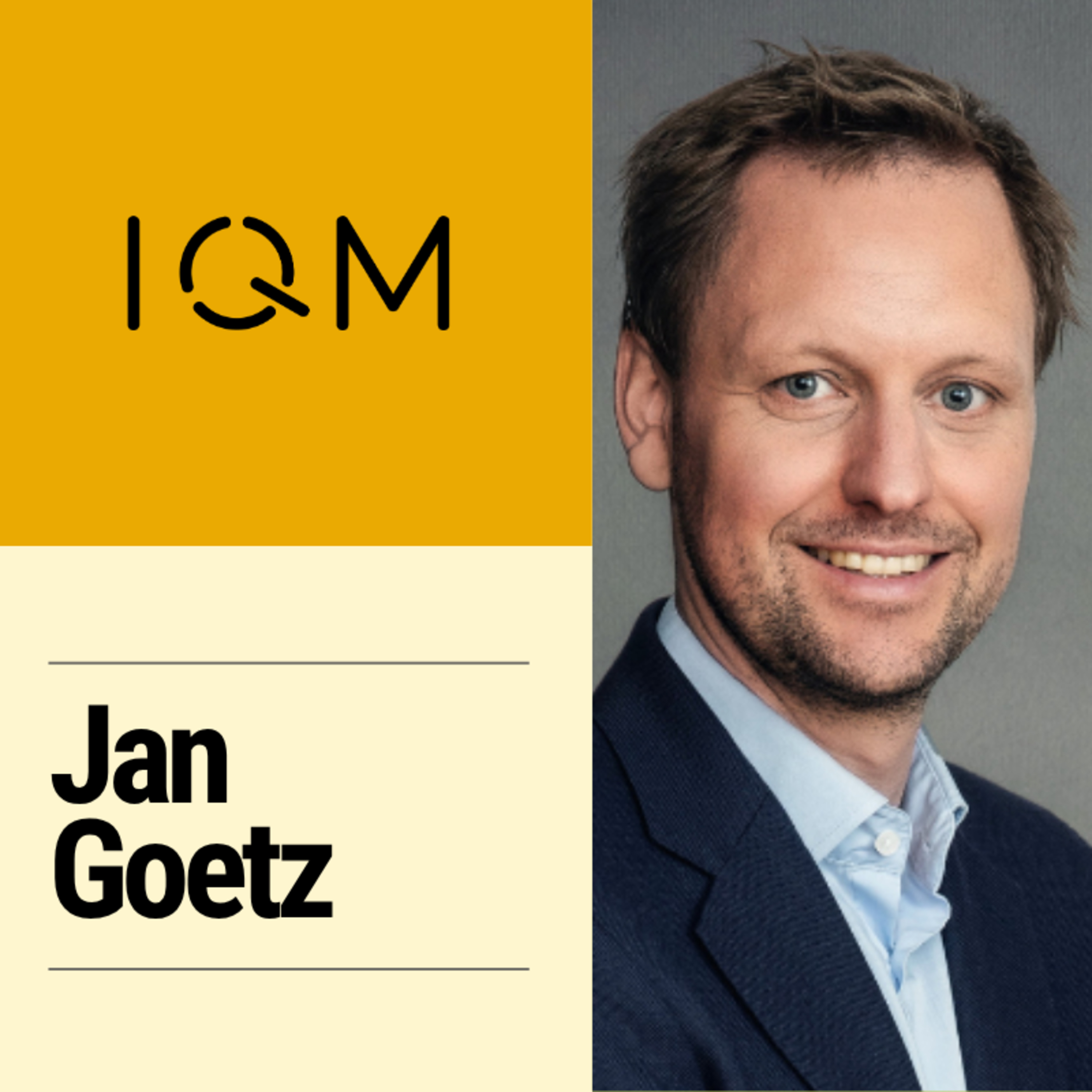
IQM Quantum Computers’ CEO Jan Goetz explains why quantum computing is needed as conventional CPU/GPU scaling hits limits in cost, size, and especially energy/power, and describes IQM’s “full-stack” approach to building and deploying quantum computers for problems like fertilizer simulation and drug discovery.
Jan Goetz is CEO of IQM Quantum Computers. He previously worked as a researcher at Aalto University in Helsinki, where he helped build a quantum research group (QCD Labs).
Conventional compute requires linear growth (more chips/transistors/data centers) while quantum can scale exponentially with qubits; AI-driven demand worsens energy constraints; IQM builds quantum hardware end-to-end (chips, factory, assembly, cloud).
simulating fertilizer chemistry to cut CO2 from fertilizer production; accelerating pharma/drug discovery (COVID relevance); Oracle’s ~1.2 GW data center and Zuckerberg’s “Manhattan-sized” data center; qubit devices mentioned include 54-qubit and 20-qubit systems.
Written by AI. May contain mistakes.
Discover the limitations of traditional computing and the necessity for quantum solutions.
“what we do in a nutshell is we build quantum computer actually that's a picture of one that you see there and we sell it to big supercomputing centers and data centers around the world.”
Explore the limitations and energy consumption issues with current data centers.
“but we don't only need computers that are a little bit faster or somewhat faster.”
Understand how IQM is innovating in quantum computing technology and infrastructure.
“So here's this example from London where housing projects are stopped because of data centers being built.”
Learn about the journey of IQM from university labs to a successful startup.
“you can imagine like a cadence or a synopsis for quantum, which is not really existing at the moment.”
Examine the funding journey and business planning process at IQM.
“And I did so actually as a CEO and I came back the next morning and the sign was on the floor.”
Discover how IQM has grown and impacted the global quantum computing market.
“infrastructure, no cooling water, for example, that we need.”
Hear about IQM's plans for going public and maintaining its European roots.
“I think now the number is 22 or so around the world.”
Learn about IQM Quantum Computers' funding history and plans for going public.
“I think the total amount until last year was around$630 million.”

Get the gist, explore an idea or ask about something said.
 Claude
On EUVC, what are the key points of this episode?
Searching your listeningAutomatic transcript. May contain errors.
0:00We had our first quantum computer in the offices, which was quite tricky because there's no infrastructure, no cooling water, for example, that we need. So what we did is we created our own, let's say, Silicon Valley garage story. So this was ground floor. We rented the parking lot underneath in the basement and we drilled some holes and put a compressor there to create the cooling water. Now the point is for conventional compute, so this type of compute with CPUs and GPUs, if you want to double the compute power, you need twice as many transistors, twice as many chips, twice as many GPUs. So basically, if you want to double, you need twice Manhattan at some point, and at some point, I don't know, the size of the UK or so to build a data center.
0:39And this is why we need better computers, but we don't only need computers that are a little bit faster or somewhat faster. We need computers that compute differently in a way to unlock those problems that otherwise really stay kind of behind closed doors. And it is a little bit like what you see at the moment in AI, where the hardware is really the limiting factor and people are really eager to get like what they do with the gpus now they they really try to get the quantum computers we are live we are live in five we are live we are live three two one
1:21what we do in a nutshell is we build quantum computer actually that's a picture of one that you see there and we sell it to big supercomputing centers and data centers around the world. And why are we doing this? The reason is that there are so many problems on earth that we don't even start computing because we know it's too hard and we are never going to make it even if we build the biggest supercomputing centers and data centers in the world. There are problems like this, like simulating fertilizers, the chemical properties of fertilizers. If you really want to do it accurately, you would need to build a computer that has more transistors than we have atoms in the universe.
1:59So that's quite an impossible task to do. And of course, these are quite important problems as well, right? Because it's, let's say, food production. We want to make sure that everyone on Earth has something to eat. It's also kind of from a technology perspective, often quite sensitive, for example, to climate and CO2 emissions. And in this specific case, a huge amount of the CO2 emissions comes from fertilizer production. and we're not able to simulate it accurately. And this is why we need better computers, but we don't only need computers that are a little bit faster or somewhat faster. We need computers that compute differently in a way to unlock those problems that otherwise really stay kind of behind closed doors.
2:36Another such example is in the pharma industry and drug discovery. And I guess many of us have experienced during COVID how important it is that new pharmaceuticals are developed fast. And this is another case where it's really hard to simulate this, even though companies are spending huge amounts of money. So you see the annual investments of the R &D sector there. So there's huge potential, actually, if you could shortcut this and if you could simulate, for example, the design of new pharmaceuticals. So the way we have been doing this so far is just building bigger and bigger computers and bigger and bigger data centers.
3:15And I think everyone is aware now that we are reaching some kind of limits. if you think about the size of the data centers that we are building, the kind of investments that are needed into these data centers, and also the power consumption. So this is a critical issue, and we need to find alternative solutions. And just to give you some examples of kind of the stage that we are currently, these are just two bits of information that I took here. One is about a 1.2 gigawatt data center built by Oracle, and the other one is a post from Mark Zuckerberg saying he's going to build a data center the size of Manhattan.
3:53Now the point is for conventional compute, so this type of compute with CPUs and GPUs, if you want to double the compute power, you need twice as many transistors, twice as many chips, twice as many GPUs. So basically if you want to double, you need twice Manhattan at some point, and at some point, I don't know, the size of the UK or so to build a data center. So this linear growth in computing power is actually an issue here. And this is really where quantum comes in, because in quantum, the computing power grows exponentially with the number of logical elements, what we call qubits on the chip.
4:26And this is really the reason why quantum computing can overcome what Moore's law has been doing over decades. We are trying now in just a few years, we're trying to catch up with what Moore's law has done in decades or so. But even if we do so, then you run into other problems which are more on the infrastructure side. So here's this example from London where housing projects are stopped because of data centers being built. And you have to decide where do I root my power, my energy and the like. And then even if you say we built out all the infrastructure and the grid and the networks and all of this, you will run into more fundamental problems.
5:01So on the right hand or from the left hand side there, that's a quite old graph. It's from 2020. And it shows in green all the power we put into computers on this planet. And in yellow, this yellow line is all the energy production we have available. And of course, we have an issue if these two curves cross, because then we have to decide, are we watching Netflix tonight or are we using the energy for food production or something like this? So it's a fundamental issue. And back then in 2020, people thought, OK, it's technology. We can make it more efficient. And we just flatten this green curve.
5:33And then we don't run into an issue, obviously. But back then, people didn't kind of have AI, of course, on their radar. And the reality is not that we are flattening the curve, but the reality is what you see on the other side is actually it's going through the roof now because of all the AI compute. So that's actually a challenge. And this is why some people say next to each data center, we are building a nuclear power plant, for example, to make sure that the energy is there. So we need an alternative path. And this is what quantum is all about, is building new ways of compute. And this is what we do with IQMs.
6:05So we built full-scale computers. Again, this is the product that we are building. It's a full-stack computer. Where we innovate is really on the chip side. So we are using our own chips inside. We have our own chip design tool, something you can imagine like a cadence or a synopsis for quantum, which is not really existing at the moment. We have our own chip factory, where we run 200-millimeter silicon wafers to produce the chips. We have an assembly line, where we build up the computers. and also we run a data center for cloud operations. Ultimately, and as I said, I will not go into the physics, but ultimately the way it works is we take these chips, they look very much like normal computer chips, and we cool them down to very low temperature.
6:44We shield them very well so there's no magnetic field or anything there anymore, and then we can observe the quantum effects on the chip. So literally these are electrical circuits where we can use one energy package or zero energy packages or half an energy package or a superposition to compute and to build logic. And the way we think about this is that it's going to be a complete new industry. So this is kind of the history of compute in a very simplified fashion. Of course, we had mainframe computers, personal computers. Now it's all about GPUs, AI chips and the like. And quantum is kind of then the next wave that's going to follow.
7:20And of course, we are still very early in this industry. But our goal really is to be a category leader and shaping the future of quantum computing from this perspective. And we started, as many deep tech startups, we started in the university labs. I was a researcher there building up a research group in Helsinki at Aalto University. And what you see here is basically a picture from the office to the lab door. And when we were raising our seat, so the lab is called QCD Labs that you see there. And when we were raising the seat round, we thought we need to show something real to the investors.
7:53So my first task as a CEO was actually to kind of create this door sign. and we called it IQM Nest and we had to glue it there. And I did so actually as a CEO and I came back the next morning and the sign was on the floor. And this is where I learned delegating. So I took one of my best PhD students and asked him to do it and I think the sign still sticks. So yeah, kind of use the best people around you to grow the company. I think that's the learning there. And of course then you need a business plan and this is how physicists think about business plans. Actually, this is the first one. and what you see here is just costs.
8:28So if you're a scientist in the new university, you just think about, okay, what can I buy and what can I build with this? And this was our business plan. We just listed all our wishes and said, okay, it's going to cost 12 million, so let's raise this money. And this was the seed round that we raised back then, was the largest seed round in the history of Finland. But then, of course, investors said, okay, it's not enough if you just tell us what you want to buy. You also need to tell us what you want to do with this. So this is when we created the second business plan here, which already has a lot of more content and technical details, obviously, in it.
8:58This was all done when we were still working at the university, and we had a lot of fun and learnings, of course, for the fundraising there. And we got the first investment round together in 2019, and we rented our first office space, and we liked to party in the company, and this was for the opening speech. You see, I just took these Euro pellets there, and we printed out an IQM sign, and this is where I gave the opening speech of the company. we had our first quantum computer in the offices, which was quite tricky because there's no infrastructure, no cooling water, for example, that we need.
9:32So what we did is we created our own, let's say, Silicon Valley garage story. So this was ground floor. We rented the parking lot underneath in the basement and we drilled some holes and put a compressor there to create the cooling water. And end of the story is we're not in these offices anymore. So obviously you want to move fast and you want to kind of be agile but at some point you have to do things properly and this is what we did so now we have a real stage or a real band as said we like to kind of build the culture of the company and we have a real factory so I'm actually flying from here back to Helsinki because tomorrow we celebrate the expansion of the factory so we build a first phase and now we invested around 40 million additionally into expanding the factory so this This is where we are as a company, but of course it always starts with the people.
10:24And in our case, actually what we did is when we started the company, we asked around from our network, hey, we are raising this money for the company, if we get it, would you join us? And these were the people we asked. This was our first Christmas party in 2019. And the nice thing is that almost everyone is still with us, really building the culture of the company. I think almost everyone on this picture has a PhD in quantum. So obviously this is how you start nowadays. It's a real company with a real business behind it. So we not only have quantum PhDs, but we have basically everything you need.
10:58We have the production teams, we have the delivery teams, service, quality, finance, marketing, and the like. And we still come as one global team together once in a year. So this was last May. We are now preparing our next event in May in a couple of weeks, where again everyone is flying in from all over the world. We are now a bit more than 400 people already, and we use this to kind of do strategy work, build the culture of the company and all of this. And behind this, obviously, there's lots of serious work. So this is a picture of the chip factory that we have been building. It's very unique in Europe.
11:31There's not so many other quantum chip factories out there. Obviously, in the US, you find some of them. It still says the old number. It's 560 square meters. And now with this expansion, we have around 1 ,000 square meters of clean room space where we produce the chips. And then the assembly line looks something like this next to it. So each of those is a quantum computer. It doesn't look so nice here because the shell is not there. So this is basically the inside of the computer that you see. And you see, for example, this one is a little bit larger than the other ones. So this one has more qubits in it.
12:03It's a 54 qubit device. And the other one, I think, are 20 qubit devices. So we built the computers before we shipped them then to the computing centers and data centers to make sure they actually work before we deliver them. And with this, actually, we are the company that has sold most quantum computers globally. I think now the number is 22 or so around the world. Many of them are here in Europe. Europe actually has more deployed quantum computers than the U.S., which is an interesting fact. So this is a technology where, indeed, we are leading in Europe, and we're not saying we are leading.
12:33But in the deployment of quantum computers, we are really strong. But we also sold in the U.S. and in Asia-Pacific region as well. Okay, and then, yeah, I said the other bit of the operations is the cloud business. So from a business model, either we sell the computers and ship them, or we sell computing time through the cloud. And we are working here with AWS, or we offer it ourselves, and we have built our kind of cloud data center in Munich. We have a larger team also in Munich. From the 400 people, a bit more than 200 are in Finland, and around 100 are in Munich, and the rest is around the world, actually.
13:05Yeah, and this is basically what I meant earlier. So this is the market share, and this is what we are quite proud of. that if you look at some of the big US names, we have been delivering far more systems than any other company around the world, and we still see strong traction there on the customer side. And it is a little bit like what you see at the moment in AI, where the hardware is really the limiting factor, and people are really eager to get what they do with the GPUs now. They really try to get the quantum computers. The customers that you see here, these big computing centers, We have actually sold to four out of the top 10 supercomputers in the world.
13:44So if you list all the top supercomputers, there's a list called top 500. If you take the top 10, four of them are actually integrating our technology in there. And again, I don't think there's any other company which comes even close to this number. And yeah, we have been using this story to raise quite some capital over the years. I think the total amount until last year was around$630 million. dollars so the 300 million that was mentioned this was our series B round that you see there I think on the left hand side and then what we announced in February this year is that we are going public and our plans is to do this as a dual listing in New York and then also in Helsinki so we are staying a Finnish headquartered company so from this perspective no flip to the US or anything like this that people are sometimes concerned about but of course we do acknowledge that there's very strong capital in the US and this is one of the reasons why we decided for the dual listing.
14:42We have very strong institutional support also in Europe, pension funds and the like who have been investing and this is obviously something that we want to keep on going forward.
Quantum computing is not simply about making today’s computers faster. For Jan Goetz, CEO & Co-Founder at IQM Quantum Computers, the opportunity lies in solving problems that conventional computing architectures may never handle efficiently enough.
Speaking at EUVC Summit 2026, Jan explains how IQM grew from university research into a full-stack quantum company building its own chips, systems, manufacturing capacity and cloud infrastructure.
He reflects on the practical realities of building deep tech, including operating an early quantum computer from an office with improvised cooling, raising significant capital for hardware and scaling a company before much of the surrounding infrastructure exists.
The session also explores Europe’s position in quantum, why hardware is becoming a critical bottleneck and how IQM is trying to scale globally while remaining headquartered in Finland.
Highlights
Timestamps