Ask ChatGPT
 EUVC
7 Oct 2026 · 45m · 19 chapters
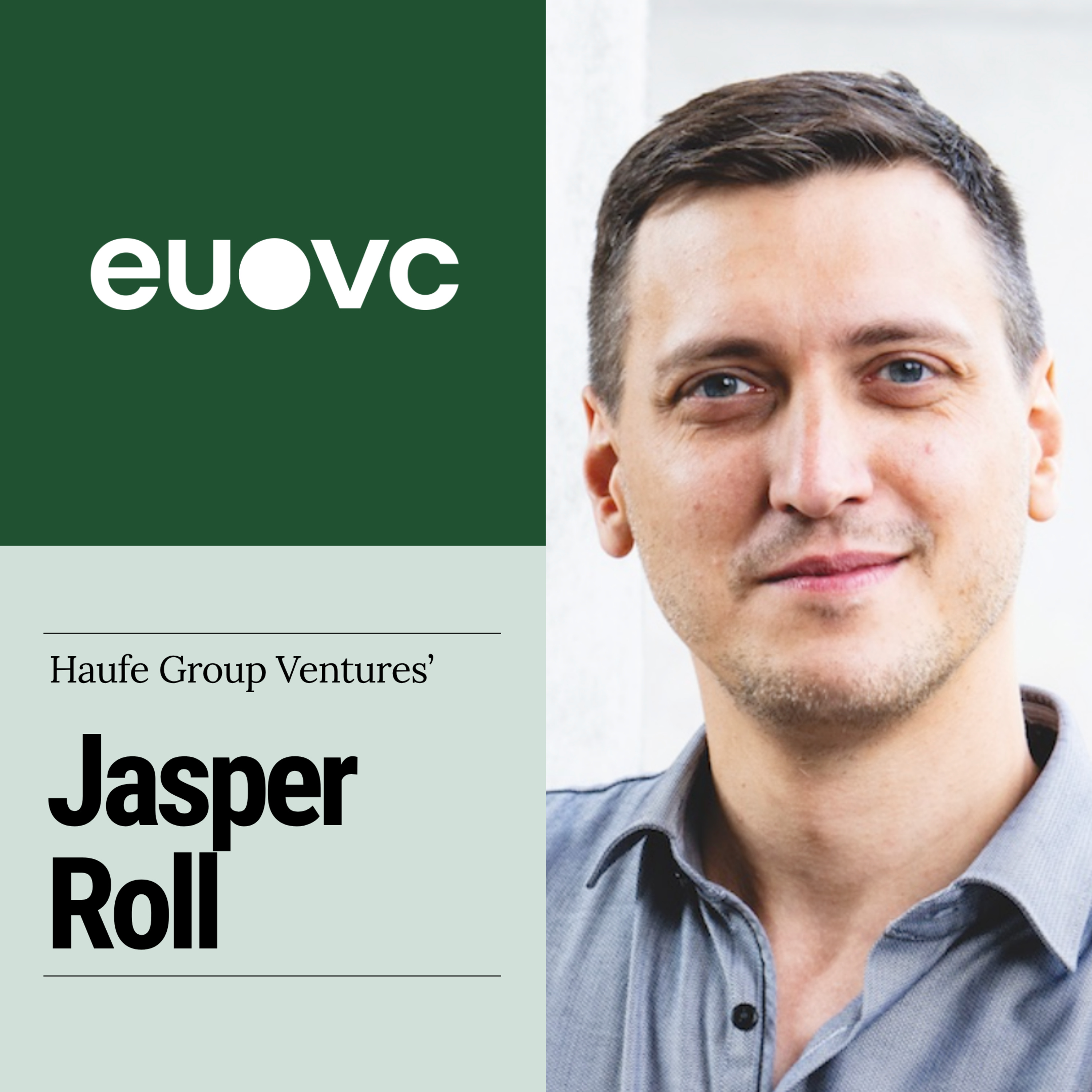
How Haufe Group Ventures built credibility as a CVC without a traditional fund structure—using a lean team, a family-owned balance sheet, and a “build + invest” model focused on work-tech (HR tech, legal tech, compliance). Jasper Roll explains why they started small, say no to opportunistic deals, invest pre-seed/seed, and manage expectations about venture power-law outcomes and long timelines for liquidity.
Haufe Group Ventures: 20 deals in ~2.5 years; 14 investments; started with 1 person, now ~3 on investment side; runs venture studio + investment vehicle; one portfolio company shifted toward a transactional model and was deemed non-investable.
Written by AI. May contain mistakes.
Learn about Jasper's background and how he joined Hauffer Group Ventures.
“When I started four years ago, the first year, I basically started alone and on purpose.”
Discover the unique structure and strategy of Hauffer Group Ventures.
“Most CVCs in Europe make noise before they make deals.”
Understand how Hauffer Group Ventures differs from typical CVCs in Europe.
“what the middle stunt gets right that the rest of Europe underestimates, and what year three of a CVC feels like from the inside.”
Get insights into Hauffer Group's three main business units and their roles.
“Well, as you mentioned, I started in Berlin as a startup kid.”
Explore the challenges and opportunities in the venture capital market.
“Yeah, I think what's interesting about it, I mean, I joined four years ago and we were thinking about how could a venture arm for the Haufen Group actually look like.”
Learn about trends in corporate venturing and investment strategies.
“And we are always kind of checking, hey, might partnering also make sense or not.”
Discuss the potential future direction for Hauffer Group and corporate ventures.
“And I think we also had your colleague on stage a couple of weeks back in Copenhagen.”
Understand how Hauffer Group is attempting to establish a new business unit.
“And we are market leader in that segment.”
Explore how different teams within Hauffer Group Ventures collaborate.
“Yeah, absolutely We, especially in HR tech, we see a lot of companies, but it's all over the place ultimately.”
Discover how Jasper Roll structures corporate venture capital for strategic and financial success.
“At the same time, we are a financial investor, but we are corporate, so the strategic part doesn't go away.”
Learn about the benefits and challenges of investing in pre-seed and seed stages.
“business units and what they're looking for?”
Understand the complexities of the current venture capital market and investment strategies.
“But you treat them as such because when you create this evergreen structure that Jasper is in, you need the financing to get back, right, and make sure that you can keep investing.”
Explore the strategies for establishing a network and gaining recognition as a new corporate venture capital entity.
“harder than saying yes to an investment.”
Learn how networking and deal flow are crucial for starting a CVC.
“You set up a large team and you start looking at companies, especially then I think it's hard at the same time.”
Understand how to manage expectations about exits in a CVC environment.
“And it's hard in the first couple of years, absolutely.”
Discover the importance of aligning expectations between startups and Mittelstand firms.
“with that in mind, there is a lot of reason to stray away from the normal venture model.”
Learn how the European CVC ecosystem can improve and innovate.
“It's not necessarily a startup or a Midstand topic.”
Understand the strategic considerations before launching a CVC.
“What are the learnings where you will tell them this you should not do?”
Learn how to establish a strong CVC strategy with commitment and structure.
“And you need that strategy and you need that commitment before you can actually start.”

Get the gist, explore an idea or ask about something said.
 Claude
On EUVC, what are the key points of this episode?
Searching your listeningAutomatic transcript. May contain errors.
0:00When I started four years ago, the first year, I basically started alone and on purpose. We didn't build up a huge team. We didn't take in a lot of money because we had to figure out what's actually working for the Haufen Group and how can we set up a unit that works. If you're not willing to go in and do it with conviction, so take investing. If you're not willing to put enough money down to actually build up a portfolio, but you rather want to go in and say, ah, opportunistically, we're going to look at one, two deals and then we're going to see how it will develop. and the same holds true for venture clienting or for building, then you shouldn't touch it.
0:32That's the tricky part about it. Saying no is far harder than saying yes to an investment. And lucky enough for us, our model just won't allow us to do those deals, so we won't look at it, and we're not tempted. We should do more. We should do more. We should work more with startups. We should invest more, and we should buy more startups, especially the exit part, I think. It's very important also to get liquidity back into the market.
0:56Andreas Munk Holm: Welcome back to the podcast, everyone. Most CVCs in Europe make noise before they make deals. They announced a mandate, hire the team, and spend the first two years telling the market they exist. Jasper Rall did the opposite. Four years ago, he joined Hauffer Group Ventures, a 500 million euro, 100 % family-owned German software company most of Europe has never heard of. At a moment when the CEO hadn't yet decided whether to build a venture arm at all. Since then, Hauffer Group Ventures has done 20 deals in two and a half years. No fund structure, no big flag on the ground, just a lean team, a family-owned balance sheet, and a clear focus on work tech, which equates to something like HR tech, legal tech, and compliance.
1:34Andreas Munk Holm: Today, we're getting into how you build a CVC credibility without a fund, what the middle stunt gets right that the rest of Europe underestimates, and what year three of a CVC feels like from the inside.
1:48This show is not investment advice, and the hosts of this episode may be invested in the funds and companies featured.
1:54Andreas Munk Holm: So Jasper, that was a lot on Haufen Group Ventures, but let's just start with you. You describe yourself as a bit of a Berlin startup kid. Can you walk us through how someone with that background ends up in Freiburg building a venture arm for a 100 % family-owned software company? Absolutely. And maybe the very short, very honest answer might just be I came back from a high school sweetheart. But then the longer story actually is, Well, as you mentioned, I started in Berlin as a startup kid. I studied at WHU and I figured somewhere in Berlin might not hurt and joined the startup. I joined Audi BN a couple of years back in a financing controlling role, where I also did my first fundraisers and also a couple of tech projects.
2:43And then it just stuck. I just never left Berlin. I went from Audi BN to Rocket Internet. I tried to find my own company. did a couple freelance gigs from there moved to hamburg and then heidelberg then minds and somehow i did a whole tour through germany and then after 10 years of of having worked in startups and trying to found my own startup basically my personal situation changed a little bit kids came into place covid hit a couple things just changed and i said hey it might be it might be time for a change and it might be time to to look for a job that's a little bit more let's say, plannable.
3:22And so I was looking around a bit, there was no rush. And at some point, I got in contact with the CEO of the Hafer Group, who back then were thinking about setting up a venture unit. And that's where I came in place. And sometimes it's timing and knowing the right people at the right time. And that's kind of how it happened.
3:40Andreas Munk Holm: You're, of course, the one who can give the context to Hafer Group ventures and how that's a quite different animal from what we normally see in European venture. Yeah, I think what's interesting about it, I mean, I joined four years ago and we were thinking about how could a venture arm for the Haufen Group actually look like. We are a family owned Mittelstands company. We're large enough, but at the same time, you know, we're not Bosch kind of size or a couple other companies that do it very well. So we had to think about what are the parts that we actually want to have in play. I mean, when you look at corporate venturing, you can do a couple of topics.
4:15And ultimately, in my opinion, it always boils down to make partner buy if you look at it. And then you have different kind of things that you can do in between. So for us, we discussed a bit how does the half group setup look right now? What might help from a strategic standpoint? What are the actual goals of the half group? And then we ended up with the setup that we actually have now, which basically is the half group ventures. It's a limited liability company that we use as investment vehicles, basically our corporate VC unit. And we have a second team where we build up a venture studio and try to build our own solutions for the Haufen Group.
4:54And those are the two things we decided on early on, which doesn't mean we might not do a couple more things. Like we just started fund investments. So we built up a fund-to-fund portfolio this year. And we are always kind of checking, hey, might partnering also make sense or not. But currently, it was too much to start.
5:14Andreas Munk Holm: Jep, and my dear friend and co-founder of Everything Corporate, could you just give us the context from how you look at the European corporate venture market and how Hauffer Group stands out in that market? I think where Hauffer stands out really well is that Jasper's explanation about what do they cover, right? We normally talk about build, buy, partner, and invest when we talk corporate venturing. I always preach this, that you never know where the success will come from. Because in the end, for me, it depends on the culture within Haufer Group. What will they basically respond to? What will the business owners adapt of all the great solutions that Jasper and team will bring forward?
6:01And here I think it's just super clever that Jasper has started the way he has. And I think we also had your colleague on stage a couple of weeks back in Copenhagen. And I think the explanation of now going also the front route, which for me translates into the sensing layer. What is it that the ecosystem is building? And Jasper now has the possibility to bring that back to Haufen Group. and then in the end I just love these family-owned German middle stands that that are bold you know we want to be part of the future we don't just want to sit there and wait for some technology to come in and take over so for me I think you know everything that I've seen from from Jasper and and how for group
6:50Andreas Munk Holm: is just amazing Jasper not everyone knows how fair as a company can you just give us the 60 second version. Yeah, absolutely. I'll try to keep it to 60 seconds. So the Haufen group basically consists of three large business units. One is Haufen itself, where we have a lot of kind of legal content around taxes, around work, on which then we build software solutions. Then the second large business unit is the academy, where in terms of corporate learning and development in the DAF market, you can basically do from resilience trainings to Scrum Master certifications. And we are market leader in that segment.
7:32And then the third, and I hope most people know it, is Lexware, which is basically the market leader again in the DAF market for accounting in S &B companies. And those are the three business units that we have, the three large business units. we make roughly 600 million in revenue two and a half thousand employees headquartered in Freiburg we do have 10 locations three countries where we are set up and our vision is to to kind of become the number one partner for anything regarding corporate services or as we like to call it work
8:07Andreas Munk Holm: Yeah, but tell me about how special it is to have a Mittelstand company like this going so bullish into corporate venture just on their sector, because oftentimes we see it be a bit wider. No, I think for me, this is a clear vertical, right? It's a vertical capture. And Huffington needs to be aware of what's happening within that vertical to keep being alive, right? And I think it's a natural part, and I hope that Jasper is also heavily into the AI wave, right? Because that is where the challenge will come for him. So for me, doubling down on the venture part is just a must. So I think being aware of the sector you are in and what will confront you is where they stand and what they should focus on.
9:00Andreas Munk Holm: I have to ask you Jasper though this was not a big part of the episode preparation that we did I have to ask you because everything is changing about how we work right now and I imagine it's not something you feel too much in the main business line but I imagine that there's never been a bigger explosion in startups in your pipeline Yeah, absolutely We, especially in HR tech, we see a lot of companies, but it's all over the place ultimately. And what we look at or what we try to look at, there was a huge discussion around whether, you know, software as a service is actually dead or not. Is AI going to break the whole market?
9:42And we are a Mittelstands company. Most of our customers are Mittelstands companies. And what we currently see there is that transformation or digitalization is not strong enough within that segment that we fear that software is not going to be sold anymore into these kind of companies. So it's still something that's investable. And at the same time, the issue that we see is that software has become a commodity. So it's exactly as you say, as soon as you have a smart idea, especially in the HR tech segment, I'd say there's a lot of smaller solutions kind of being built, and they are okay-ish built solutions.
10:23A lot of web coding stuff in between, but good software pieces as well. And the question stays the same, what's your mode? And a couple of years back, it might have been tech advances or a couple of years kind of starting earlier. nowadays it's something different because the actual software piece, everyone can build it by now. So we look deeper into go-to-market, we look deeper into distribution because those might be the new modes for software.
10:51Andreas Munk Holm: It's funny with the SaaSpocalypse. I've always thought it's a disruption of SaaS, it's not a destruction of SaaS. Clearly, the models will change, the software that was already developed will change. But how can you imagine that intelligence as a service does not translate into basically being software as a service. But, yeah, bigger discussion for another time. Let me ask you about your model. Maybe I should look to Jepa to bring us into this one because you're the structuring guy. You've helped set up corporate venture units. Can you take us into just how people should think about how for group ventures and ask the right questions to Jasper?
11:31No, I think the overlying umbrella again, what is interesting for me when we see that they're covering so many of the pillars, for me again looking at Jasper and seeing what will actually work is also to understand his governance structures and what are the key success parameters for Jasper because that will lead us into an understanding of will they become successful in what they do or are there any bottlenecks there that needs to be solved for for the overall success of how for good ventures so that would be my my question up towards jasper maybe let me start at the top so when we decided to do a venture building and investing it basically came from from two directions the building part was more or less set there was a clear goal for the for the whole organization to say hey we have three large and very successful business units.
12:27And one thing that made the HALF group strong in the past is that they are very different from each other. So if one market is struggling, the other two usually kind of work out well. So it's one of the strengths that we are so different. And obviously, to become more resilient and looking in the future, I think that's a really important topic for Mittelstands companies. Our goal is to kind of try to look into what could a fourth business group or business unit actually look like. and in a perfect world, then build it. Building a business unit in that size is a hard thing to do, but if we can kind of start doing that, that would be a good first step.
13:04Then secondly, I mean, when you look at that, ultimately what you have to look at is what are trends in the market? Where are our customers going in the next five, six, seven years? What are things being built right now that will help them later? And one very, well, it's not easy, but one thing that comes to mind is investing because ultimately you scout the whole market within that segment and you see a lot of things, you see a lot of trends. Obviously, we're not copycatting different solutions, but you see where the market moves into. You see where other companies move into. Plus, I come from the funding side.
13:39I come from the startup side. So I also had a personal interest in seeing kind of the other side having raised enough funding rounds. So that kind of became the second piece. and then ultimately looking at goals we're looking at financial returns obviously not now but in a couple of years and it'll take time especially venture building is probably the one that takes the longest to make reasonable returns then with cvc hopefully you know starting year six maybe seven we can actually see returns and in the meantime we have a have a pretty clear goal to do as many kind of strategic topics around it as possible.
14:18At the same time, we are a financial investor, but we are corporate, so the strategic part doesn't go away. Jasper, my follow-up on this is that you have structured your journey with the different pillars. How do they interact and what do you get out of them from each side? Yeah, and I would say it's three pieces. One is our Venture Studio team that once we prototype a solution or actually build something that we throw onto the market, they basically have the same problem that a pre-seed startup has. So we try to connect them with the portfolio, obviously. And the question is always, how are we doing go-to-market?
14:55How are they doing go-to-market? What do we see? What do they see? At the same time, we validate ideas and trends very, very fast. The team has a pretty clear process. We know how to validate things. We know how to test out strategies and solutions very, very fast, which we, again, rather as a process than as content, can give into the portfolio companies. From the investment side, I mean, it's clear we see a lot of things. We talk to the funds. We look at trends. And that translates into what would the Hauf Group potentially help or the Venture Studio. And then third piece is the Hauffer Group itself, where we have almost 3 ,000 employees, experts in their fields, which we try to utilize for whatever we do ourselves as well as our portfolio.
15:41One of the things that also impresses me, Jasper, is the amount of deals you have done. Insane speed, I would say, right? So a little interested in your IC and how that operates, but also how do you source the right deals with that amount of speed? By now, we're three people. When I started four years ago, the first year, I basically started alone and on purpose. We didn't build up a huge team. We didn't take in a lot of money because we had to figure out what's actually working for the half group and how can we set up a unit that works. So the first year was a lot of process, strategy, talking to other people that have done it before.
16:19I've talked to a lot of CBCs, to a lot of studios, to a lot of other corporate venturing units to kind of try to figure out, hey, what could be a good setup for us? Then we got the setup kind of going, started hiring the first people. And then on the investment side, we had three people by now. We've done roundabout 20 plus deals. We have 14 investments now, obviously a couple of follow-on rounds. And then we just started building up a fund-to-fund portfolio this year, which also is not to be underestimated how much work goes into that, obviously. And the main goal, I mean, we invest pre-seed and seed.
16:51And you need a clear strategy. You still need to set up, you know, how is portfolio going to look like? What's your fund model? Even though we don't have fund itself, but it's kind of an evergreen setup with the limited liability. So for us, it was pretty clear. We can't do five, six deals a year where we lead pre-seed, where we need to, you know, do extensive due diligence or even seed rounds. So we try to mix it up. sometimes we lead deals we build build conviction we do a standard vc process and sometimes and i think that's a good route for cvcs we're very very good follower or add-on ticket because we add the strategic layer we add specific expertise or specific perspective also in larger seed rounds where we then can say you know in terms of actually working with the portfolio we can be a bit more passive at those topics or with those topics that make sense for the portfolio, this is where we become active.
17:48This is where we find the right people within our organization that we then put into the portfolio. Jasper, being fairly young in the lifetime of Haufen Group Ventures, have you managed to make a clear structure of how you engage with your corporate colleagues or the different business units and what they're looking for? to be honest i i would i would i would have loved to have a clear structure there and kind of a process we don't really um the the way it works and the way it's probably it always worked best is you actually get i have to meet the people get to know them know what they what helps them um and what what can they help with and then actually get it going so we kind of comes close to a process probably but what we did is we we built up we call it fan base so we have our Hofer Group Ventures fan base, where we say these are people that are interested in speaking with us, that are interested in speaking with the portfolio, that are really helpful, that have very, very specific expertise.
18:48And those are the people that we keep meeting internally and that we keep placing with portfolio companies. And it's a close-knit group. It makes fun talking to them. That's as close as we get to kind of a structured approach, in my opinion, at least currently.
19:03Andreas Munk Holm: I'd love to ask you a question because you said you're doing pre-seed and seed deals. We tend to, on this show, primarily meet funds that do Series A onwards. And every time we ask why and they say, well, honestly, pre-seed and seed is too early for us to be able to engage with the startups. And you're clearly doing the opposite. So I'd love to ask you, how do you make that work? yeah um and and we thought about it um and you know the the later you invest obviously you take some risk out of the the equation at the same time tickets go up and series a is kind of an in-between topic why we decided on precedence seed is ultimately i would say three reasons one ticket size was a concern yeah how much money do we actually want to invest and then what phase would it make sense to then build up a portfolio if you're not willing to to build up and our plan And it's 2025 companies kind of in an evergreen setup.
20:00If you're not willing to have that diversity within a portfolio, probably you shouldn't be doing it. The second is I come from an operator background. So I like to actually work with the companies. I think in precedency, you invest into a team. You don't necessarily invest into the business model. But because until they get to Series A, it might change three times again. And that work and that broad sparring with the teams, that's something I've done the last 10 years. and it's a lot of fun, to be honest.
20:29Andreas Munk Holm: But that's also the problem, right? Because that means that you might invest in someone who plans to do something that's close and interesting strategic, but then they realize, ah, maybe we should run out sofas instead. And that's absolutely fine. It comes with the faith that we invest in that business models might change, that we pivot. And on that part, we are a financial investor. We have our strategic kind of investment focus, absolutely. it's digital products and we won't invest into hardware and there's a couple of other topics that we won't look at but ultimately it doesn't matter that's part of the game we had another CVC on the show that said this of course happens to their investments as well but when it happens that they come to be non-strategic it also means that they do not invest anymore they will still be there as an investor and they will not shed it necessarily, but there's no new money for that investment.
21:30Andreas Munk Holm: Have you met these cases yet? Is that how you think about it? Yeah, and I get that logic. And honestly, it doesn't happen that much in our segment because we're talking digital products. So SaaS might, you know, a legal tech company might move into more of a compliance tech direction, but they won't necessarily switch into a hardware company. So it still stays investable. We actually had one out of 14 that switched more into a kind of retail or transactional business model where we said, okay, this probably is not investable for us anymore. But I would say it's very rare in the segment that we invest in.
22:11I think from my side, the way that I normally see it operated from the CBC side of the table is that you use a classical BCG matrix, but you basically convert it into, you know, is there a financial or strategic fit? And then the outcome, right? And then you make sure that you use your time and the money in the upper right quadrant. And that is the way to go about it. then of course you will have the financial ones that are in the second best quadrant. But you treat them as such because when you create this evergreen structure that Jasper is in, you need the financing to get back, right, and make sure that you can keep investing.
22:49So I think as long as you operate it in a way, Jasper, where you just make sure where you are in these and don't, you know, double down on your losers, right, then I think you're very, very well off. And a loser might be a strategic one that does not basically cut it. Absolutely. I mean, again, we are financial investors, so we have those strategic parts. And when we invest close to our core businesses, so mainly HR tech, legal tech, and so on, this obviously is where we bring more expertise in, where we see more deals, where it's easier for us to actually win deals. I mean, that's a different topic as a young CBC.
23:22Winning deals is hard to do in the beginning, and you need to find your right to play. And the closer the deals go to our core businesses, the clearer the kind of right to play obviously is. And then we started looking into adjacent deals and kind of started building up a reputation and it got easier over time. But then again, we are three years old, so we're still working on it. And I think to make those decisions that you mentioned in terms of strategic or financial, and you asked before, we have a very lean setup in terms of process. Otherwise, it wouldn't work. And otherwise, we wouldn't be able to make those deals in kind of that speed.
23:56But we run a VC process. We had three people. So we kind of look at the teams. We look at the companies. We write a memo similar to anyone else. And then we have a very lean IC with our CEO, CEO, and me, where we decide whether we want to invest in or not. We don't need a family. Unfortunately, we don't need a board. But we have a very lean process, and I think that helps quite a bit, especially pre-seed seed. Otherwise, we would not be able to do those deals.
24:24Andreas Munk Holm: Let me ask one final question here about your investment strategy and the world in which you operate. because I would think that there are a lot of AI startups in the future of workspace where, of course, the deal sizes get massive very, very quick. Every single VC I meet, we're talking about how do you navigate today's market because it's really difficult. How do you navigate it? Yeah, I think because there's so many companies, especially in the AI space and especially because rounds get loaded around that, we kind of currently we try to just stay away from it there's two directions currently um in our opinion when we look at the market one is it's very very large rounds with very high valuations and obviously those companies need to grow into those valuations even at seed rounds um and it's something we can't participate in and we need to we have our fund model or we have our the portfolio construction that we plan on doing and doing those deals is just not part of it so we stay away from it and and to be honest i'm not entirely i think that's a good thing actually because it's hard to make those deals and if if that's resilient or or sustainable i'm not sure yet and then the second part to that is more conservative kind of more structured let's say classic valuations classic deals where you look at the financial model say how much money are we are we needing what's uh what's a reasonable uh what's a reasonable valuation um and that's those ideas that we look at.
25:54And there are still those deals out there. It's just obviously the PR around the larger round is a bit more. So yeah, it's a tricky thing to navigate. But again, even when we look at software deals, obviously, if they're not planning on using AI in some way, we won't look at it.
26:10Andreas Munk Holm: To give you a data point, I know one firm who is very well respected and massively oversubscribed in every fund and they've done three deals, three or four deals this year, and they should have done 12 by this time, like based on what they normally would do. So here's one data point from a very great firm that is definitely saying, right, the market is weird. We don't like the way it's looking. So we're deciding not to deploy as fast. And then I had a conversation with a very big, very well reputed LP, and it's Thomas Christensen, I can say it because it was on recording from LGT Capital and what he said was when I asked him what would your advice be to the European VCs that are navigating the current market today and he literally said, well I think many should think seriously about sitting this one out like think about whether it makes sense to do these deals right now it's obviously not sitting out everything but it is maybe it's good to slow down your pace a bit.
27:15Yeah, maybe in that area, yes. And fortunately enough, because there's always FOMO around these deals and obviously they look great. It's great companies and great teams. I mean, that's the tricky part about it. Saying no is far harder than saying yes to an investment. And lucky enough for us, our model just won't allow us to do those deals so we won't look at it and we're not tempted.
27:37Andreas Munk Holm: That's a good point. Okay, now let me go to another one, which is you've mentioned to us that your biggest challenge as a new CVC is getting the word out. Can you tell us a bit about that battle to get known? Yeah, especially when you don't have a fund and can go out, you know, with the larger PR around saying, hey, we've just, you know, raised 100 million fund and let's go. These are the focus areas. You set up a large team and you start looking at companies, especially then I think it's hard at the same time. For us, it was a good thing to kind of start a bit slower. Now, Obviously, I still have networked from my 10 years of startups.
28:16And obviously, if you work in finance and then do fundraising, you know the funds, you know some of the fund managers. So that helps. But we were very dependent on, let's say, curated deal flow. So obviously, in the first couple of months or even in the first year, I was able to get some deal flow going. But most of it came out of the network. And we see it similar to CVC. I mean, ultimately, that's what it's all about. and that's what i like about setups like yours obviously it brings together those players and then helps but yeah what you have to do is actually go out every conference meet every investor that you can talk to startups i talk to old operating or operator friends because he's obviously still have that once once they move out of a startup or they have friends that start founding so it's a lot of network a lot of a lot of bars a lot of beers a lot of late nights um but but that's what you do it's it's part of the job it's it's also part why it's why it's fun obviously um and then at some point you start making deals uh you become a better known you you make better intros um you you know in a perfect world the first couple of exits um but We're a bit early for that.
29:32But obviously, that gets you going. And in the best way, you get a reputation where other investors want to work with you. And that's what we try to do. And I think it's one of the good things of working in a Middstanz company or in a family-owned company because we do have values in how we invest and how we want to work with different companies. And that's exactly what we do. And I think that helped with our reputation. But you actually have to do the footwork. You have to be out there. You have to meet those people. You have to talk to founders. You have to get in those networks. And it's hard in the first couple of years, absolutely.
30:10I think, interestingly, here enough, Jeff, right, you're out doing all the right things, right? It's super hard. And you're also fighting basically for the community, right? Why are CVCs in there? You know, we have limited lifetime. time. We also have a rumor of not behaving the right way that you're also fighting. What I really, really love about your next pillar, the LP tickets, right, that you are doing is that hopefully you have a deal with your managers that they bring you along, right? And I think even, you know, I would even opt in for, we did a masterclass with Isma Capital in London a couple of weeks back, but basically, you know, do an investment in a fund of fund, right?
30:53If it is an ISMR, right, you get access to 3 ,500 portfolio companies and more than 40 managers, right? So I think there it's a clear way to get in front of the right things, the front of the right managers, go on stage everywhere you can, get the word out, do a podcast with EUVC, all that stuff, right? Absolutely, absolutely. And as you mentioned, I mean, for us, we started building up a fund-to-fund portfolio for two or three different reasons. One is obviously there's additional expertise that we get through it because we have a very specific investment focus. And obviously, through different funds, we can leverage that.
31:33At the same time, deal flow, obviously, and looking at those companies, looking at what they did, what they might have seen is a topic. And then third, it's also signaling. and again if you are in year three as a CVC there's still you know startups still ask are you going to be around in the next two or three four or five years because you don't know yet we don't have a second fund we don't have nothing it's fairly new we don't have the exits to show yet so actually building up a fund-to-fund portfolio also is signaling in that direction that we are here to stay obviously it used to be that even without the fund investments but it's just an additional chip that you can kind of throw in.
32:14And then I think also from a fairly new CVC, what you can actually bring out there is your knowledge of work tech. So converting your internal strategy to insights papers that the VC community likes and the startup community like. Because that is where you get the real stickiness of what you will do for the startups you engage with, whether you build them or invest into them or whatever you do right that is what they're looking for they are looking for what does Jasper roll and how for group ventures bring to the table so if you can convert that it's gonna be even better absolutely and I think I mean it was a good thing for us it's also something that we had to learn but we are pretty easygoing LP ultimately yeah we have our direct investment teams also we be no fun dynamics we know what they're doing we know their operational kind of topics that they have at the same time we bring expertise to the table so if they have a deal where they need someone looking at it or from a from a work tech perspective obviously that's where they can call us and i think that dynamic is perfect for exactly that let me ask you because you of course are in the
33:31Andreas Munk Holm: with the CFO and CEO, so you're very close to top management. But there's also a time where, of course, pressure doesn't only come from top management, but also from the board. You're in year three. I'd love to ask you, you probably are not feeling anyone asking you for DPI just yet. At least then you would have done a bad job onboarding everyone who's meant to oversee your work. But I think it's right to say that you're already trying to manage those expectations with top management. How are you doing it? Yes, absolutely. And fortunately enough, no one has asked for DPI yet, but we do get the question when we expect the first couple of exits.
34:11But yes, ultimately, we've managed the narrative since day one. As soon as I started, the one thing we keep talking about is how venture works. And that's true for both teams that I run, the venture studio where we build our own solutions, but the investment side as well. and from day one I'm basically going and saying you know we're going to invest into 10 companies most of them are not going to make it the ones that won't make it will be there earlier and we will have to deal with that and I don't get tired saying it I keep repeating it wherever internally I speak and that's the only thing you can do and you need to be really really transparent about how this works it's still hard we already had the first companies obviously that didn't work out in year three that's quite obvious and and so far so good yeah everyone understood okay it's part of the model it's it's part of how we operate it's part of how we work do you have like
35:05Andreas Munk Holm: the typical power law graph every slideshow starts with that it's even your internal logo for the department to make sure that everyone keeps in mind this is the distribution kind of we try to be not as obvious as as this but but basically yes yeah and and again we we keep saying you know And that's the beauty of the middle standard and evergreen setup. We actually are able to do a couple of deals that a VC might not do. Obviously, we don't do deals where we don't see financial return, but we do deals where the market might be smaller, where exit valuations might be a bit lower, which comes with our setup.
35:42We can do those deals. We don't necessarily need a fund returner. I mean, I would take one. Don't get me wrong, but we can do deals that are a bit more on the conservative side. So our goal is still, even though we have to play power law, it's venture capital. That's how the model works. But we can be a bit more conservative about it. So usually I would say eight out of 10 companies will fail. We try maybe six, but at the same time have a bit more lower returns. And we keep saying that.
36:14Andreas Munk Holm: Honestly, I think that, sorry for barging in, but keeping in mind that you have your financial returns and your strategic returns, with that in mind, there is a lot of reason to stray away from the normal venture model. Because a normal venture model would say, every shot, take it to the moon. You've got to try. But that doesn't have to be the truth when you're doing a CVC because you also have the strategic motivation. Yes and no. I would say yes, because internally for those rather strategic cases, and we're not as strategic, so it usually is not too much of an issue. But there you need to place it.
36:57At the same time, when we invest, there will be angels at the table and most likely there will be other VCs. And if you don't actually aim for the 100x return, then you're not aligned with usually what the VC wants from the company. And alignment on that cap table is one of the most important things, especially early stage. Otherwise, you ruin a team, you ruin the strategy. So I think you have to be very careful then who you invest with. And there are investors that have different kind of focus areas and that invest maybe a bit more strategic or a bit differently than classic power law and maybe find those and then co-invest with them.
37:35Andreas Munk Holm: Let me ask you, because you've been on the startup side, and I think it's very clear to everyone that this shines through in how you think about things. You've been, of course, with Rocket Internet, Dreamlines, and then you've tried to build a company yourself that in the end had to suffer the death as so many others. What do founders consistently get wrong? If you would just give a bit of advice to founders that are wanting to work with CVCs, what is it that they should be a bit smarter about when they're engaging with the CVC ecosystem? I think it's both sides. Obviously, I come from a startup background.
38:08And when I joined the Hoffman Group, my direction was, you know, everything needs to go faster, faster, faster, ultimately, or more pragmatic or leaner. And there was a strength when you have a startup background. At the same time, the Mittelstand is so resilient within the German setup and the German economy, they have their strengths too. That's something that a founder cannot forget, that the structure they bring, the resilience they have, the products that are perfected at times, those are strengths that the Mittelstand has. and combining those and talking about those, actually aligning expectation.
38:43What can I get out of it? And what do I have to bring to the table? I think that's the most important thing that founders as well as Mittelstand's companies forget. Mittelstand looks at the startup and says, yeah, you know, you're too fast. You're too chaotic. We can't work with you or we can't invest in you or we expect something different. And then all of a sudden, as a CVC, you go in and from a pre-seed company, you need 10 different reportings that they don't have. It doesn't make sense, obviously. And as a pre-seed company, you kind of keep going to the Mittelstands company saying they need to be faster, they need to be faster, they need to be more flexible or whatever it is.
39:18But they can't. There's different regulations in place. There's different structures in place. It's a different culture in place. And when you find teams on both sides, obviously Mittelstand needs to loosen up a bit. And then startups need to understand a bit more why structure is important and then talk to each other. That's the most important part. And I think that gets forgotten too often, but on both sides. It's not necessarily a startup or a Midstand topic. Jasper, you have been successful in presenting health ventures to the German market. What should the broader European CVC ecosystem learn from that and how can they improve and what would you share with them?
39:59Yeah, I mean, we're very, very Germany focused. So I'm not sure how well suited I am to speak for Europe, but hopefully some of the points might help. I mean, ultimately what we do, or what I don't get tired of saying, is the Mittelstands companies, and obviously that's not a German phenomenon, but European companies as well, we should do more. We should do more. We should work more with startups. We should invest more, and we should buy more startups, especially the exit part, I think. It's very important also to get liquidity back into the market, and that's not a German issue. Ultimately, I think that's the main topic.
40:36It's be bold. Andreas, you said it very, very early. It's a bold decision to actually set up a venture unit. And I think so too. But when you do it, be confident about it. Have a clear strategy and then go on. Innovation is not going to happen within your own four walls anymore. The speed is changing on outside innovation and external topics. And if you're not part of it as a corporation, regardless of size, I think you're missing out quite a bit. And that might in the long term hurt your business. So the earlier you can get your foot on one of those levers, it doesn't necessarily need to be investing.
41:14It can be building, it can be partnering, it can be anything on that corporate venturing spectrum. But the earlier you start, the better. So Jasper, now you have been part of this bold move in creating Hover Group Ventures. there are other German middle stunts out there that are behind you on this journey. What are the learnings where you will tell them this you should not do? Yeah, usually, and that's actually interesting, usually my go-to advice would be to start. As long as you do anything, it's better than nothing. In this case, please don't. In this case, I would always say, you know, talk to other setups, understand exactly how those three things make partner buy might work for your specific case what might be a good lever is it building is it investing is it a combination and usually it might just be a combination and then if you're not willing to go in and do it with conviction so take investing if you're not willing to put enough money down to actually build up a portfolio but you rather want to go in and say ah opportunistically we're going to look at one two deals and then we're going to see how it is how it will develop and the same holds true for venture clienting of a building, then you shouldn't touch it.
42:24And you need that strategy and you need that commitment before you can actually start. So get that strategy set up, get the mandate for it, get the budget, get the time, because it will take time and then go for it. But get those things first and then start.
42:39Andreas Munk Holm: One question on that, you brought in LP investments, not as the first thing. It's where I would actually often go and say, do LP investing first and then do the other stuff. I think if you want to do the investing route and you want to get your feet wet, then absolutely do LP investing. Kind of get a feeling for the market, see how it works, talk to other funds, build up the network, especially if you don't have the expertise in-house. And most companies won't have startup or obviously expertise in-house if they're not actually investing. For us, I was kind of lucky because I came from the startup side and obviously I came from the fundraising side, So it was pretty clear, but it could have gone the other way around for us as well.
43:23And why we did direct investments, though, was because it fitted very well to the venture building side. And we had that team in place. We had those dynamics in place, and that's why we started with direct investments first.
43:36Andreas Munk Holm: And it's a major network hack, of course. And I always say, and you're almost not allowed to say, but I say that venture is nepotism industrialized. In other words, there's nothing more important than the network. And for that reason, if you can then buy your way into that, and honestly, a 2 million, 3 million, 5 million euro ticket shouldn't be too much if you're looking to do corporate venture. So for that reason, it seems like such, it's the one place where it's so easy to just get ahead of the queue. So, yeah. All right, Jasper, thank you so much for this conversation. It's been absolutely incredible.
44:10Andreas Munk Holm: I think this is the type of conversation we want to have many more of. It wasn't just theory, it was the actual practice of it. So thank you for both championing Hauffer Group Banchers, but also the middle stand, because I really think the middle stand is what will unlock a lot of growth in Europe in the coming time. Thank you so much, my friend. Absolutely. Thanks. Thanks as well.
A credible CVC does not have to start with a traditional fund structure. Haufe Group Ventures built its model around an evergreen balance-sheet setup, a lean team and a clear mandate, proving the approach through deals rather than a large fund launch.
In this episode, Andreas Munk Holm and Jeppe Høier speak with Jasper Roll, Managing Director at Haufe Group Ventures, about how he helped build the venture arm of a family-owned German software company from the ground up.
Jasper explains how Haufe combines direct investments, venture building and, more recently, LP investing, why the team deliberately started small and how three investors have completed more than 20 deals, including follow-ons.
He also shares why early-stage CVCs need a clear portfolio strategy, enough commitment to build it properly and the discipline to walk away when valuations or deal dynamics do not fit the model.
The conversation also explores how Haufe manages expectations around venture timelines and failures, how a young CVC builds credibility with founders and other investors and why Jasper believes corporates can no longer rely on innovation happening entirely within their own walls.
Highlights
How to build a credible CVC without a traditional fund structure
Why Haufe deliberately started with a lean setup
How direct investing, venture building and LP investing work together
How a three-person investment team has completed more than 20 deals
Why CVCs need conviction before committing capital
Why saying no can be harder than saying yes
How to manage internal expectations around failures and long-term returns
How young CVCs build credibility with founders and investors
Why corporates need to engage with innovation beyond their own walls