 Ask ChatGPT


OpenAI’s Founder Experience for startups in Europe and globally, and how AI-native founders build differently across the founder journey (inception, pre-seed, scaling). Laura also argues “taste + speed” is the moat, titles don’t matter, and European founders have advantages from working near non-tech industries.
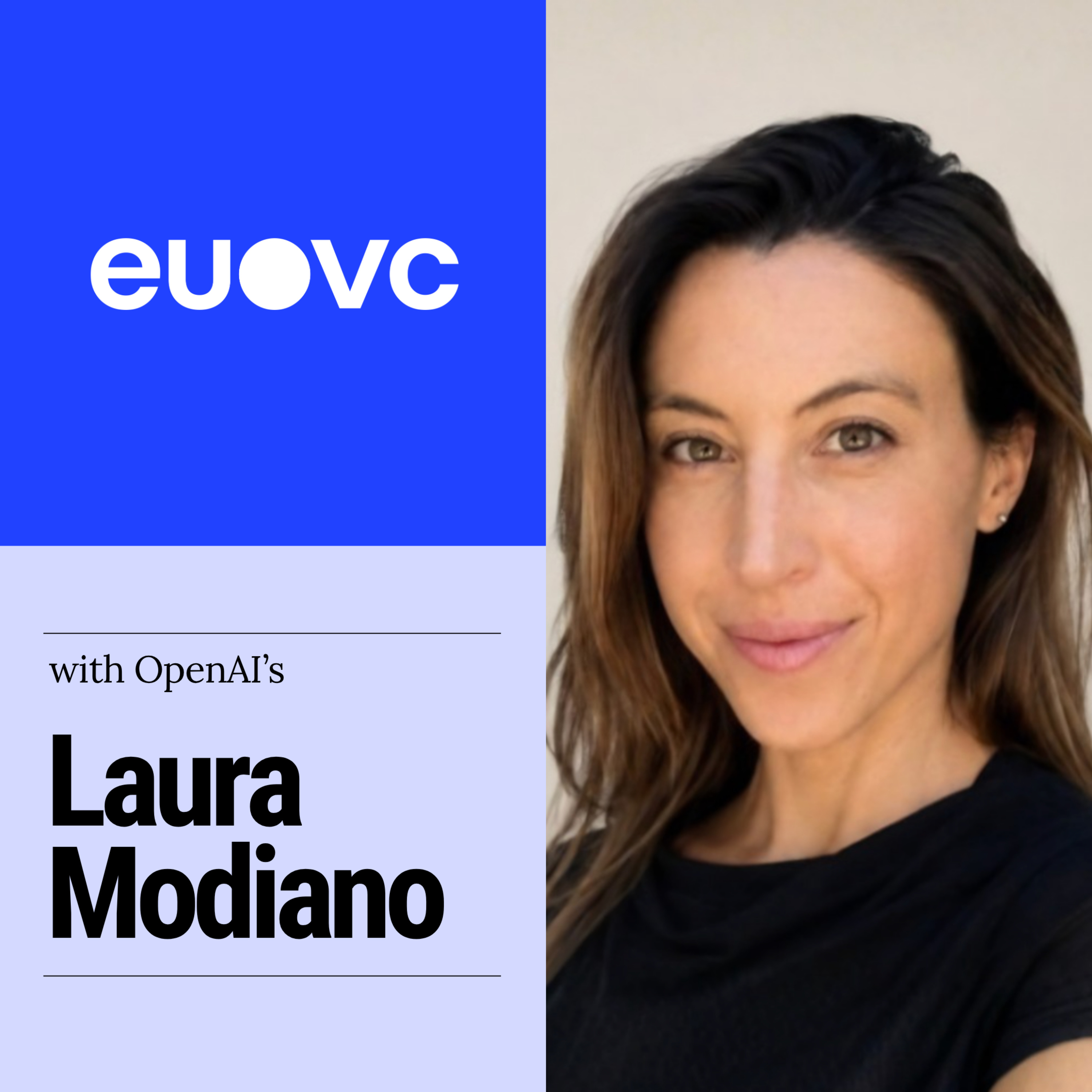
Laura Modiano (spelled “Laura Mariano” in transcript) runs Founder Experience at OpenAI (a function created this year). Previously worked at Deloitte, Novo Nordisk, the NHS, and AWS. She has spent years engaging builders via hackathons, universities, demo nights, VC events, and builder communities.
OpenAI provides API credits and team access to ChatGPT/ChatGPT Teams/“codecs for business” (up to ~10 people, expanding). For unbacked startups, she says support includes technical teams, office hours, events, and community access leading to credits. Founders should pressure-test ideas using “synthetic” roles (investor/CRO/CEO/Sam Altman), use AI to structure feedback, and capture knowledge in a centralized system. Titles don’t matter; make everyone an owner and build tight product–go-to-market feedback loops.
Simulating investor feedback by prompting ChatGPT with a personalized “investor persona” (e.g., nurse ICP example). Using AI to pressure-test proposals (as if CRO/head of startups/Sam Altman). OpenAI’s emphasis on centralized knowledge across email/Slack/calls and creating agents for sales/inbound capture.
Written by AI. May contain mistakes.
Learn how to leverage feedback for iterative improvements in AI-native startups.
“So usually I'll just turn on the microphone, download my thoughts, and then I'll have something structured back.”
Explore the various support systems OpenAI provides for startups and founders.
“This show is not investment advice and the hosts of this episode may be invested in the funds and companies featured.”
Understanding how startups can gain access to OpenAI's community and resources.
“As we all know that those partnerships are a very typical route for VCs to be able to bring their portfolio companies into offerings like this.”
Discussion on the importance of community interaction for founders and builders.
“So I spend every single day that I work and sometimes days that I don't work and it's like my weekend with founders and with the builder community.”
Insights on what founders should consider at various stages of their startup journey.
“And speaking of being for the builder, I've always thought of this podcast as a service to the industry, be that the VCs or be that the founders.”
The significance of utilizing AI tools like ChatGPT for idea validation and business modeling.
“Is it, Laura, necessary to do this breakdown of ICP prompts to chat GPT to get it to act as a nurse if that's your ICP or whatever?”
Learn how to effectively strategize during the inception stage of a startup.
“And I actually said, I want you to pressure test it as if you were CRO, head of startups, Sam Altman.”
Discover how founders can smartly apply AI in building their startups.
“I'd love to ask you, so now that we've gone through the inception stage, we're here, we have a real company, we're starting to build it out.”
Understand the importance of collaboration and communication in startups.
“and putting pieces together that no one else has ever thought about before.”
Learn how AI can enhance operations across all startup teams.
“Because intelligence is not just in the product, is not just in coding.”
Explore the importance of AI integration in product development and partnerships.
“Clearly, that's very much in place with anyone who's building inside chat GPT or building inside Claude, oh my God, it's very frightening to even think about shifting.”
Understand OpenAI's commitment to empowering startups and fostering innovation.
“So we want to be as accessible as possible.”
Discuss the challenges and strategies for non-AI native companies transitioning to AI-first.
“On top of it, we focus on the intelligence layer and we focus on AGI, which is our mission.”
Learn the importance of internal workflows and collaboration in a scale-up environment.
“But I think the bigger question, of course, is how do you help companies that are non-AI native at Series B and now trying to redesign as an AI first organization?”
Explore the value of community engagement and internal hackathons for scale-ups.
“If you're selling to, let's say, a legacy bank, you should hear from what the bank wants.”
Discover how AI is transforming industries and improving workflow efficiency.
“So if we can do it, I think every startup scale up and late stage company can as well.”
Explore how AI tools are transforming enterprise communication and workflows.
“So we had the State of Enterprise AI report and we found that there was an eightfold increase in the enterprise messages and the volume of messages that enterprises are sending to each other when they're using AI.”
Reflecting on the podcast experience and the potential for future discussions.
“Plus enabling, enable, enabling everyone to get back the agency to build.”

Get the gist, explore an idea or ask about something said.
 Claude
On EUVC, what are the key points of this episode?
Searching your listeningAutomatic transcript. May contain errors.
0:00So usually I'll just turn on the microphone, download my thoughts, and then I'll have something structured back. Then I'll see what comes out. But then I'll say, you are an investor. You are my CRO. You're my manager. You're the CEO. You're Sam Altman. If you were to read this, what would you say? What would your feedback be? What works well? What doesn't? What do you think I should do more? Mode is taste. It's speed. And being able to go fast means you're using the tools to iterate as much as you can and as fast as you can on the product with a point of view of why you're building what you're building.
0:35I think really topical for especially AI native companies is the fact that titles no longer matter. And really good founders who built and built again know that really talented people in the team are the ones who don't have specific relationship with the title or their responsibilities. but what they care about is delivering value to the company. European founders actually have a lot of advantages in the fact that we work side by side with other industries and with people who didn't start out in the technology industry. So if you're working in software, in physical AI, in robotics, whatever workflow you have, you're usually in a community around other people who really are experiencing the problems and are needing the value that you're building every single day.
1:22Welcome back to the UVZ podcast. Today, I'm talking to Laura Mariano, who runs Founder Experience at OpenAI, a function that did not exist until this year. Laura's story starts in 2008, flying to Hawaii to convince surfers they could see a doctor through a screen, and runs through Deloitte, Novo Nordisk, the NHS, and of course, AWS in the end before landing at OpenAI, where she now spends every working day and most weekends with the founders building on top of the intelligence layer. Today, we walk through the founder journey stage by stage. How the best founders pressure test their idea against a synthetic investor or even a synthetic inside maltman before their first real pitch.
1:57Why taste not technology has become the moat and what it means to build a company where titles doesn't matter and all your knowledge lives in one place the AI can reach. The question every late stage founder wants answered, will OpenAI eat the application layer and the two by two Laura draws for every company that wasn't born AI native. And we end with Laura flipping one of this industry's laziest narratives on its head. European founders are not short on ambition. They're sitting right next to the real economy the rest of the tech world is trying to reach. And the numbers say they're already handing people back an hour of their day.
2:30Enjoy my conversation with Laura Mariano.
2:37This show is not investment advice and the hosts of this episode may be invested in the funds and companies featured. So let me ask you, Laura, because we, of course, by now all know Google's program for startups, AWS's program for startups, all of that. Of course, OpenAI needs one as well. So can you just introduce this to us? What is the real offering that OpenAI has to startups that are building here in Europe and across the world? So there are different touchpoints that you can have with OpenAI? First of all, for all VC-backed companies or accelerator-backed companies, they have access to credits through their investors, the same as most other providers in the industry.
3:21So depending on the investor you have, there are different level of credit offerings that you have to make use of. In addition to credits on the API, you also get access to codecs for business. So for multiple people within the team, so the founders and the founding team, I think usually up to 10 people. And I think we're increasing that to more individuals within the startups. We're offering six months of free ChatGPT and ChatGPT codecs for the teams in order to be able to actually experiment, test the code, do any kind of work that they want to do. ChatGPT work now offers a huge amount of opportunity for founders.
4:00So we're offering that to start off with. If you're not... And Laura, let me just ask you, because you said But for VC-backed startups, does that mean that you're doing this via partnerships with VCs? As we all know that those partnerships are a very typical route for VCs to be able to bring their portfolio companies into offerings like this. But is it also possible for those that only have done an angel round or haven't raced yet but are on that track and thinking that that's the route they want to go? And if so, if you can just do an infomercial here for everyone, how do people get in contact with you around getting into this program?
4:33Yes. So for the VC back to get it through the VC, for unbacked companies, we are introducing a few things in the coming months. But A, when they reach out to us, they do get access to support. They get access to technical teams. They get access to office hours, technical office hours, and then they can come to multiple of our events. They can join the community. And then through that, they can then access credits. And then depending on if they are students in universities where we also have partnerships in, or if they attend events through Codex Ambassadors or our events, they also get access to, again, API credits and events.
5:11And then the last thing which I'm very excited about is we do more and more events in the community like hackathons and through Codex Ambassadors, Builder Labs, Builder Lounges, and multiple event series that we have been doing and will continue to introduce where anyone who attends can access not just credits and access to their technical teams, but also a lot of support that goes very deep into their specific use cases and then a community around them. Before we go into this whole discussion from your learnings, from how founders can really think about AI and what you've learned so far, if you can just share a bit from your vantage point, how you interact with the startups or are you purely the overseer and you don't have direct access and just to establish your own credibility in these learnings, where do they come from?
6:02So I spend every single day that I work and sometimes days that I don't work and it's like my weekend with founders and with the builder community. It is what makes me most excited because I think the core of where technology is coming from and is going to get to people's hands is going to be from the founders and the builders that build on top of the intelligence layer that OpenAI offers. So I'm very excited to see what people build. I go to builder meetups I go to hackathons I go to universities I travel around I go to demo nights I go to VC events I go to conferences not because it's something I have to do but it's genuinely something that I find feeds my soul in so many ways because often the magic of the ideas comes from when people come together.
6:56So you can work on your own, you can be slaving away sometimes at your computer, but the best ideas come when the builders come together and they actually get to workshop some of the things, or they gather feedback, they pressure test, they put themselves in settings where others are building at the same time. And for myself, for the role that I have now and have had for the last couple of years, it is really deeply important that anything I say is anchored in the reality of the lived experience of the builders. We cannot... Which is changing every day. It's changing every day, but we are a company that builds for builders.
7:38Intelligence in people's hands is something extremely unique and something that is moving very fast. So we have to know what builders are asking for. We have to know what their use cases are. where they need us to push the models, what use cases need to get better, how they're using and what they're pushing in so that they can ask from us what it is that they need us to improve, what we need to launch, what we need to introduce, how we need to support them, whether it is as a program, in the amount of credits, in the way we interact, in the technical skills that we're offering, or within the models themselves.
8:13And open AI is not a single thing. It is the totality of how we show up technically and in person. So that is what, at the fundamental, we have to do in conjunction with the community. And it's a live discussion that is always ongoing. And it is always for the builder. And speaking of being for the builder, I've always thought of this podcast as a service to the industry, be that the VCs or be that the founders. And what I want to do in this episode is I want to go through the different stages and kind of say, OK, given that we've now lived two, three years with AI completely changing how everything happens, I'd be super curious to hear from someone like you, from your vantage point, what have you learned across the stages?
8:58And so if we start with the inception stage and then we work our way through pre-C to C to Series A and onwards to scaling. If we start with the inception stage, tell me what has been your main learning there? What are you seeing most founders maybe getting a bit wrong or leaning into the wrong part and the best ones do something else? Yeah, I think founders, especially today, are in a sense more technical than ever because they're using the history of their technical capability in conjunction with the tools. So that means they're moving very, very fast. It also means that whether you're a single person team or a very small team or a larger team, you can pressure test the ideas from multiple points of views very quickly with the tools.
9:50So if you're working with Codex or with ChatGPT work, then as you ideate, then you can always get a second point of view. You can pressure test it. You can say, this is something I often do, which is I want to build something. Now, let's workshop the idea. So usually I'll just turn on the microphone, download my thoughts, and then I'll have something structured back. Then I'll see what comes out. But then I'll say, you are an investor. You are my CRO. You're my manager. You're the CEO. You're Sam Altman. If you were to read this, what would you say? What would your feedback be? What works well?
10:25What doesn't? What do you think I should do more? The same way, I think a lot of founders are doing the same thing now for their business model, for their product market fit, for the ICP that they're going after, for the sequencing of the work that they're doing. So once they have something that works really well as a base, which they can now do very quickly, just where they lack up some thoughts and codecs effectively, I think the teams, as they scale, they continue to do. And then as they go then to investors or to design partners or to hiring, they have something that's a little bit more prepared for them to go and have these conversations.
11:02I remember at some point, even for myself, I had gone to ChatGPT and I had said, I want you to find a lot of psychological information and business information and strategy on how different people think, on negotiation, on theory of mind. And then I was building personas based on a 30-point question that I had developed with ChatGPT. And I was saying, okay, I'm going to talk to an investor or founder that looks like this, and this is how they usually behave, and these are the things that I've seen them do. Given this personality, I'm going to workshop and simulate a conversation. Now, the fact that I can build that myself means that everyone can build it, first of all, but it also means that you can bring in those points of views.
11:45And if you are going to be pitching your idea to investor X and investor Y, you want to be able to bring in all the knowledge that you have of these investors, not just on the product that you have, but in how they behave, how they talk, what the history of them is, and really personalize the approach, the conversation, the deck, the narrative that you've had for the company to the individual that you're talking to. So you're doing the full business strategy analysis before you even show up in the first meeting or the deck that you're building. Is it, Laura, necessary to do this breakdown of ICP prompts to chat GPT to get it to act as a nurse if that's your ICP or whatever?
12:29Or will it do that if you just say pressure test this, will it then know to run through these different perspectives and so on? Or do you need to, like what do you see the best founders do okay so at inception stage i think it's important to see what it is that you're testing for so you're doing a few things when you're starting on you have a business idea a you want to make sure that the idea works is robust and is it an investable business so if your icp is a nurse per your example then i would test on is this something that exists how would you receive it etc because then if i take it and talk about it to an investor and they have questions, then you've worked through some of those questions before.
13:11And you want to go from an idea and your point of view or your experience of that problem to what if I extended and I had a bigger panel of experts who were working through this idea with me. Have you, Laura, seen ChatGPT feedback, so to say, replacing real world feedback yet? Or have you seen that it tends to be that when you go out and pressure test the feedback that ChatDBG gave you, it's almost always the same. So like you can just replace real-world feedback or we're not there yet. I don't think it replaces it. I think it depends on what activity you want it to do. So A, for me, and this is, I really try to use all of our products very deeply, A, to have a deeper understanding so that I can talk to others about it.
13:56But also I actually use it in my day-to-day job every single day. So there was a strategy I was writing for a proposal of a new program I wanted to introduce at OpenAI. And I actually said, I want you to pressure test it as if you were CRO, head of startups, Sam Altman. And it gave me a very different point of view because the goals that each of these individuals had are also different. So what they would each focus on are different. If you're launching an enterprise software company or any vertical that you have for an industry. You have to think about who the buyer is, who the user is, where the money's coming from, what their issues are, what their pressures in their industries are.
14:38So having that initial point of view at inception, before you're even going out, before you have a finished product and you have an idea, I think is something that allows you to quickly, with very low risk, actually make a bit of advancements and have a thought partner. And having that thought partner is what gets you from idea to actually, I have a business model I'm in, I'm willing and ready to go to an investor and present. And the gap between I am ideating and I'm presenting sometimes is that preparation framework. The other thing that I think is very important is if you are getting feedback from others, if you are talking to potential co-founders or potential users, whatever feedback you get in the real world, taking notes and then putting that into ChatGPT to actually collect and then give you an analysis or a meta-analysis of everything that you've collected and everything that you've heard.
15:34And there's, of course, a ton of specialized applications of ChatGPT out there that are made for founders, whereas other founders are helping them. There's podcasts that's dedicated to how can you use ChatGPT and the other LLMs to help you build a startup. And if anyone loves the inception stage or are there themselves right now, then definitely go and search out those example resources because they're very powerful. Then let's go to the pre-seed stage. I'd love to ask you, so now that we've gone through the inception stage, we're here, we have a real company, we're starting to build it out. Tell me a bit about like, where do you see that founders are applying AI in a smart way?
16:12And what have you seen that they should maybe do in a different way? The core learnings. So at this point, you have a product, maybe you've raised a bit of money, you have something that works, A, you need the team internally to continue to build. So you need to use the tools in a way that allow you to be very efficient, to move very quickly and to iterate on the product that you have. So every time that you now are showing the MVP that you have to a customer, any feedback you get, you have to make a decision. And that decision for a market is going to be yours and for you to decide what goes in it.
16:45But is the feedback actionable or is it one to keep in mind? Is it something that I need to introduce something new or do I need to change something that is there? Or is everything working really well and I need to double down? So as you're creating your prioritization matrix of what to work on, I tend to think that you need to do two things. One, have conviction and have a point of view as to why it is you're building what you're building so that your point of view and your taste actually shines through the product. then based on that where is the feedback coming in and where you're doing improvements on that conviction so that the character of what you're building stays true but it is one that actually delivers value to your users so finding that balance between the conviction and optimization is for you to decide how you do it is going to be with help of ai but it's also going to be with your team, with the feedback, and you have to be very smart on how many people you're talking to, what kind of personas you're talking to, what it is that you're asking.
17:50So the questionnaires maybe, or the type of experience that you're showing to the user that you're collecting feedback from can be shaped and optimized through uses of ChatGPT and Codex. I also know that you are saying that modes have shifted a lot. There's, of course, a big conversation around that, how modes are no longer the same. Now it's maybe more about speed than it's anything else. Let me hear your take on that. Where do you see modes really originating from now with AI founders? So I think taste itself is a big mode. I think having a very opinionated point of view of what you're building, why, how, and how it's delivering value, not in each step, but at the final outcome, I think is really important.
18:35And for a long time, I think we've seen people trying to sell point solutions that are optimizing specific steps, whereas now we're seeing with the power of AI, people really delivering outcomes with the technology that comes through. And that's why we're seeing so many vertical solutions that are verticalizing end-to-end the experience, and they're adding value across all the different steps in that solution. And I also, if I should just add a note to that, I think that taste is such a good point because it's kind of, it's come really to the surface because anyone can build now and thus it really matters what you build and how you choose to build it and the smaller nuances are what's going to make you win.
19:15So, and that's of course all condensed into taste, but where does taste come from? Taste comes from having real insight, which comes from having a differentiated background and putting pieces together that no one else has ever thought about before. And that's obviously what VCs have been looking for forever. It's just been, it's just come even more to the forefront now that anyone, like anyone can go and build something for nurses. But honestly, I know shit about nurses. So I would never have taste for nurses. So I think going back to your question on mode, mode is taste, it's speed. And being able to go fast means you have a point of view.
19:53You understand how the technology works. You're using the tools to iterate as much as you can and as fast as you can on the product with a point of view of why you're building what you're building. You're setting your company and yourself's priorities. I think good startups, especially early on, but they tend to carry that through across, have two to three big priorities per month, per quarter, per product. So you can't do everything all at the same time. And being very intentional about what you prioritize and how, when you're changing one thing, what the dependencies are with the others really matters because you need to be able to move forward while also improving other things.
20:34But you have to make decisions of this month or this quarter, we're going to make sure that we focus on marketing, on product, on UX, on UI, whatever it is, so that everyone in the team, whether you're two people, five people, or 50 people, can rally around this guiding principle that we're all focused on right now. Make sure that it works, experiment, iterate, and then if it works, you continue. If it doesn't, you know where you have to pivot. And being able to continuously measure that, whether it is on the code, whether it is on the product, whether it is on how you're going to market or who it is that you're questioning and why, you have to be able to continuously analyze it, measure it, track it so that you know the next time, whether again, it's a month or three months, why you're making that decision.
21:20Let me ask you, Laura, because I always now I'm like, I love, I can't get enough of talking to founders that are AI native because they are building in this space. And the best ones I really love talking to are serial entrepreneurs who have built in the old world and are now rebuilding or building anew in this world. And they can then juxtapose what it's like now versus then. And I'd love to ask you, at this stage where you're really starting to build a company, build the ways of working, build the infrastructure inside to make sure that you're ready for the future and everything that's coming.
21:57What have you seen that the best ones do? How should they think about it to be fully and truly successful? I think really topical for especially AI native companies is the fact that titles no longer matter. and really good founders who built and built again know that really talented people in the team are the ones who don't have specific relationship with the title or their responsibilities, but what they care about is delivering value to the company. So making every single stakeholder in your team an owner is very important. Making everyone work together so your comms person, your marketing person, your salesperson, your PM, your engineers can all inform each other and can all collaborate and then having the systems that allow a very fast process of collaboration and iteration, I think should be the backbone of a startup.
22:49And especially as you're scaling. So if you have a team that's working on product and then a team that's going out to customers, having a very tight feedback loop is crucial. How your people who are doing growth, marketing, sales, go to market, are owning the process of improving the product and are enabling the engineering team and how that engineering team and product team are asking for feedback or are anchoring every single action that they take on the product side based on what customers are asking for and what that experience looks like, I think is what allows the ship to move forward in a single, singular direction.
23:27And then the systems that are on the back are when tickets come in, when feedback comes in, when we're getting anything on email, when we're looking at timelines. Anything that is written or on a call is captured, is structured, is organized, which OpenAI does really, really well across all our tools, to then be guided and sent to the right teams so that they can all work together and roll in that same direction, I think is what gives the real speed with the taste that comes across every single talent and type of talent that you happen to see. Do you see that most of the startups or do you see a breakout cohort or something like that, that truly ensure that everything is captured in some system of record that the AI can always pull?
24:17As an example, our company was obviously founded before AI. And we've always, we've actually also drifted a bit. I'm very much on one platform of working and David, my co-founder is very much on another, which I think is also an expression of where the ecosystem is right now because we all have different tastes. But it's obviously a problem because I'm building one system of record and the other part of the company is kind of building another. Are you seeing that the starters that are being formed today are making sure that everything I type, everything I speak to my computer, everything I talk to about meetings, Everything is just put into one place where the overarching mothership AI knows what's going on so that it can pull all of that information.
25:04Or are we not quite there yet and most still have some stuff that's on computers and some stuff that's in people's minds and some stuff that's on desks? I think the best startups, AI startups, are AI native because they understand the value and power of AI. So they try to use it in every single process that they have. So the majority of startups today, yes, have a centralized knowledge center from which they can all pull. And especially when you're using child GPT business accounts and enterprise accounts, there's so much power that you can get from the integration of that knowledge and the knowledge sharing and action that is taken on the back of it.
25:43So, yes, whether it is email, calls, Slack, or whatever else that you use as your basic communication, usually has ChatGPT integrated in it. And then you can have automatic actions on the back of it. You can create agents that are pulling. I'm also seeing a lot of startups, especially at that, you know, Series A, B stage that are, or even earlier, that are enhancing the workforce because of AI. So what they're doing is even if they have a small sales team and they're just starting out to sell, they're using a lot of analytics and AI to identify where it is that they need to spend their time and how.
26:24So a lot of the inbound that comes in might be on email, might be from the website, might be from social networks. So being able to identify where those exist and when a human needs to come and actually action and follow on on that opportunity so that every opportunity is captured in a very, very small team is crucial and is what enhances and makes sure that you are capturing all the value you can. that's one thing to say. Let me put in an advertisement here because we're doing a series a go-to-market AI series together with GoodFit purely AMA sessions with leaders in go-to-market that have done it and that have built these units that have built the processes for people to just like one the person that's in the hot seat of course opens the kimono and shows everything and then everyone just gets to ask questions.
27:13How have you done that? How did you solve that? I want to come for Red. Can I come? It's going to be super interesting. We're doing five. you're invited of course it's going to be super cool and we're going to do them across different different parts of company building because i think it's so important and everything is changing right now and that's really important to remember as well that a startup is not just the founder a startup is the collection of all the individuals who are working the team and it matters to have a good leader someone who can fundraise someone who can do marketing someone who can focus on growth someone who can focus on customers someone who can focus on how you continue to develop the product finance, like all of it has to come together.
27:51And a startup is always a small team that always needs more help. But the ability to do the maximum output with a team that you have is what we really want to support startups with. Because intelligence is not just in the product, is not just in coding. Intelligence is for every single one of your operations. And every single one of those teams could go further, faster, if they're using AI in a smart way that enhances the work that the humans are doing. Everyone's talking about this. Do you get caught up in one model's world or do you need to be able to change and so on? Obviously, any company will want to build a login.
28:33Clearly, that's very much in place with anyone who's building inside chat GPT or building inside Claude, oh my God, it's very frightening to even think about shifting. How do you think about that? How do you advise founders to think about that? What do you see the best ones do? Yeah, I think there's, first of all, differentiation between the ones who are using the API. So how much AI is your product? Does your product exist without AI? And if not, then what is it that you need to build so that there is more AI in your product? That clearly is an API use case. And the more you work with us, the more access you have, the more of a relationship you build with us, the more alphas you're in, the more of your use cases we can help with.
29:18We don't look at the spend in order to prioritize. We work with everyone at every stage, wherever you are. So we have a global team that works across all stages. But obviously, the better the partnership we have, the more we can really support and help you build your product in partnership and our teams can help you with your architecture and whatever else it is that you might need from our team. So we want to be as accessible as possible. Taking the API aside, looking at the workflows and the workloads that individuals have and how they work, I think most companies that are scaling really try to centralize on one platform because there is so much value that comes from the shared knowledge.
29:57So as we were talking about earlier, having a centralized knowledge from which all the individuals can work together, saying this is the code and then I'm using codecs in order to do code analysis, in order to say where are my docs and how are we building together and what tools and dashboards, whatever else it is that we're building, allows for a lot of collaboration that I think if you're completely disparate, it doesn't do. It's also if you're on a business account, obviously having more individuals on the business account that the whole team is on is preferable because that is where you have complete ownership of the work that you do and you're utilizing the offerings that we have on that side as well.
30:39Let me ask you, and I have to ask you this, of course, because there's a lot of people, we all saw how Facebook swallowed up companies after having been in acquisition processes with them and that type of thing. We've also all seen a drift from the pure foundational model to also doing application layer. And the big discussion is, of course, well, how much is OpenAI and all the other big LM research groups? How much will you go into application? What's the risk level here? How do you talk to founders about thinking through that? Yeah. So first of all, we want to create, as I said, the intelligence layer on which startups can build.
31:20We have a startups team that wakes up and goes to sleep with one thought, how to make startups successful. And we're a team that's growing because we want to continue to invest in more startups working with us, more startups being created and growing with us. So that is our only goal as a team. On top of it, we focus on the intelligence layer and we focus on AGI, which is our mission. If you're on the path to AGI, then maybe you're going to be on the arc of our direction. If you're on a vertical solution that is offering something that is very integrated, it is probably something that we will not be going into and something that we want to support and make sure that we give you every opportunity to partner with us so that we can make you successful.
32:08And beyond that, the ecosystem of enabling others to build and making sure that they have opportunities to then scale and have go-to-market opportunities is a very, very big focus that I have right now. I won't push you further here because I know that we very quickly get into territory that's difficult. So I think anyone can extrapolate from what you said. And then I think we should defer to Sam Altman for further inquiries there. Let me ask you. As a company, we've always wanted to support startups. And we understand that startups have a very crucial role to play in technology being democratized.
32:47And more people on the consumer side, on the individual side, on the creative side, on the enterprise side, and on every industry, regulated and not, healthcare, FinTech, etc. to have more capabilities that makes it impossible to do more things and more value extracted because they're building those vertical solutions. So we really want to be the ecosystem that allows all of that to be created and the creators and the builders and the founders to give that technology to as many people as possible. We are tech optimists. Oh, my God, am I also. Let me ask you. So now I want to ask you about the scaling stage.
33:24Most of the companies, there are, of course, some pure AI plays that have moved very, very quickly and are at the scale up stage already. And also AI native. Let's spend a little time on them. Just hearing from you how you think about how they are using AI, what you're seeing, that's the best practice there. But I think the bigger question, of course, is how do you help companies that are non-AI native at Series B and now trying to redesign as an AI first organization? So generally, I think there's a two by two that I always start with when I talk to companies that are not already very AI native.
34:02And I say there's AI that you use for your staff and your internal workflows. And then there's AI that you use for your customer facing loads. And then there's AI that you're using for, on the vertical, for efficiency, productivity, coming into the workloads that you already have, and then doing things that are entirely new. So on that two by two, I think founders and teams always have to think, where is the immediate opportunity and where is my stretch goal? So for companies that are not themselves AI native, that have a product that did not start with AI, I think it's an existential question that they have.
34:38Where are, if they're an incumbent in their vertical, where are new entrants coming in? What are the products that they're building? What are new startups doing and how do I maintain the leadership position that I have? How do I continue to differentiate myself and add more value to the customers that I already have? And these companies have done a fantastic job to build something that their users love, but they have to continue to offer value to their users. So in that sense, on that for customers, I think any company today, especially if you're still even a scale up, you have to think about continuous innovation and continuous use cases.
35:15So anchoring yourselves on what you're building, why you're building, where the value is, what technology makes it possible, and then what is the feedback that you're getting, what your users are asking for. How do I improve current product or introduce new use cases, capabilities, and services or products within the suite of offerings that I have, I think is really core existential for any company to now survive in this industry. On the other hand, you as a team really need to ask, how are we working internally? The fact that until now, maybe we were working in a way that was more classical doesn't mean that we have to maintain and continue these ways of working.
35:57We do have a lot of room for innovation internally, how we work. So whether we are doing these automations internally, whether we're reorganizing how we're using the feedback, whether we're finding void space, all of the things that a startup is doing, a scale-up or a late-stage company is able to do as well. And the other thing that's very important to note is that a lot of the scale-ups are actually spending a lot of their time in community with the earlier-stage startups. So your engineers, your developers, your marketing people, your salespeople will tend to spend a lot of time in community, in meetups, in builder events, in VC events, in retreats, etc.
36:34With the others who are earlier stage. So actually listening and learning from your peers is really important. The industry is not static. If you're selling to, let's say, a legacy bank, you should hear from what the bank wants. But you should also hear what the new FinServe companies are doing and how you can learn from that path. Now, you shouldn't be building the same thing, but in what you're building, how to build and how to integrate AI is crucial. That's one thing. The other thing is looking at all the workflows, looking where efficiencies are, again, enabling the teams that you have, finding ways to go beyond the silos of departments and teams to actual collaboration.
37:12And those internal workflows going into what is the outcome that I want to go to as a team rather than what are the steps that I'm trying to optimize. As an early stage founder or early team member, you'll of course be at all these hackathons and these things. As the company grows, that tends to be a little more rare. You tend to be building more inside the company. I'd be curious to understand, and we of course all know the new term or the old term of forward deployment engineers. How much do you do that with the startups that are late stage? How much does, Chad, TBT, I was about to say, OpenAI, go in and help them work through this and get all the processes implemented and tools implemented that you have at your disposal today?
38:00So we have a phenomenal FD team led by Colin Jarvis at OpenAI. And that team is so incredibly technical and yet goes very deep into the business problems that our customers have. I think there isn't a single clay book or a single way that we operate. The value of having FTEs means that in each engagement, they have to define what the need is there. I would, however, say that scale-ups, so if you're still a VC-backed company, even if you're Series D, E, etc., they're still quite technical. And I would really challenge the fact that they don't go to as many hackathons because the devs who are in those teams actually do show up.
38:42What we're suing maybe a little bit less of is the other functions. So I think it's really important internally as teams to have internal hackathons. So to give you an example, my team, the startups team at OpenAI, we just did a hackathon for our team across all the different functions to see what everyone was building, to learn from each other, to share the knowledge, and then to see how we are actually thinking about similarities across function. I think that's something that you should do on a quarterly basis by department, as a team, as a company, so that you can see what others are doing, but also get to benefit and build.
39:17Everyone should be a builder that we have really moved on from these are the technical people and these are not. All your teams that are doing accounting and finance and marketing should 100 % be exploring as much as possible how to collaborate with their colleagues, but also how to build with AI themselves. I see so many demos internally from our finance department, and I'm blown away by how much it can do with such a small team. So if we can do it, I think every startup scale up and late stage company can as well. Speaking of advertisements, we're literally doing one for corporates as well. We have a whole corporate arm inside UVC that's dedicated only to that.
39:58So there we're also doing a series where what we're seeing, because probably it's also tied to us being very focused on CVC activity, of course. But what we're seeing is there's quite a few CVC units that have been rejected to be venture clienting units that are just all about how do we get AI into the organization. It's quite interesting to see. Let me ask you. So you're in Europe. You come from Europe. I want to ask you, what have you, from your vantage point with OpenAI, seen in Europe that really surprises you or you think we're doing super well or that maybe founders should maybe be more ambitious around if we go back to that old harp of saying that European founders are not globally ambitious, which I always contest.
40:39I think European founders are very ambitious. I think European founders actually have a lot of advantages in the fact that we work side by side with other industries and with people who didn't start out in the technology industry. So If you're working in software, in physical AI, in robotics, whatever workflow you have, you're usually in a community around other people who really are experiencing the problems and are needing the value that you're building every single day. So there is something really important in anchoring that you're building to reality and real users and to experience where value is actually required.
41:19That is why we're seeing so - You're absolutely right. But a typical SF company is very different from a typical middle standard German company. Yes. And I often say, I think there's tech companies that sell to tech companies, but then there's tech companies that sell to the rest of the real world. So if you're selling to manufacturing, if you're selling to logistics companies, to insurance companies, to construction companies, there is so much value that is delivered and actually has real value for real people that makes a fundamental and tangible difference in their quality of life every day.
41:55And I think that's something that we all have to keep in mind, that we're building tech and, you know, all of us are looking to become very successful. But what happens in the enterprise? So we had the State of Enterprise AI report and we found that there was an eightfold increase in the enterprise messages and the volume of messages that enterprises are sending to each other when they're using AI. That there is a 19x growth in structured workflows. So when people are getting access to AI tools, they're actually building things. They're building projects. They're building custom. They were building custom GPTs.
42:27They're building dashboards. They're building tools that make their jobs and workflows better. We're also seeing that there has been 40 to 60 minutes per day increase of ability to complete tasks that wasn't possible before. And 75 % of people are saying that they have a higher quality of work. Why? Either because they're using OpenAI's products or because someone somewhere actually said, I see a problem and I'm going to build a company, a tool, a service to make your life better. And those founders who are doing that are making it possible for the Mittelstand and everyone else to go home an hour early and spend that hour with their kids, their loved ones, or a book if they choose to.
43:09So being able to make sure that the job that you do every day is better because someone actually went through the pain and suffering of building a product for you is what I live for. Yeah. Yeah. Plus enabling, enable, enabling everyone to get back the agency to build. And like, that's been the prerogatory of developers. The fact of the matter is that Most of us are not. But now anyone can go and build a tool that enables them or the department or the whole company to do something we couldn't do before. Which to me has been an incredible experience. Laura, thank you so much for coming on the podcast.
43:47It's been a real blast. I'm looking forward to do more with you. It's such a pleasure and I really look forward to the next one.
AI-native founders are not just building different products. They are changing how companies test ideas, organise teams, gather feedback and scale.
In this EUVC conversation, Laura Modiano, who leads Founder Experience at OpenAI, shares what she is learning from founders building with AI across every stage of the company journey, from inception and pre-seed through to later-stage scale-ups.
Laura explains how founders are using AI to pressure-test ideas from the perspective of investors, customers and different functions before entering real conversations. She argues that as building becomes easier, taste, speed and a strong point of view become increasingly important competitive advantages.
The conversation also explores why AI-native teams are moving beyond rigid job titles, how centralised company knowledge can improve collaboration and why every function, from engineering to finance and marketing, should increasingly be able to build with AI.
In addition, Laura discusses how established companies can become AI-first, the role OpenAI wants to play alongside startups building on its models and why European founders may benefit from being closer to industries such as manufacturing, logistics and healthcare.
Highlights
How founders can pressure-test ideas with AI
Why taste is becoming a startup moat
How AI-native teams organise and collaborate
Why shared company knowledge matters more than ever
How small teams can increase their output with AI
How scale-ups can become AI-first
Where OpenAI sees its role alongside application-layer startups
Why European founders may have an edge in the real economy
Timestamps