Ask ChatGPT

 EUVC
10 Nov 2026 · 45m · 23 chapters
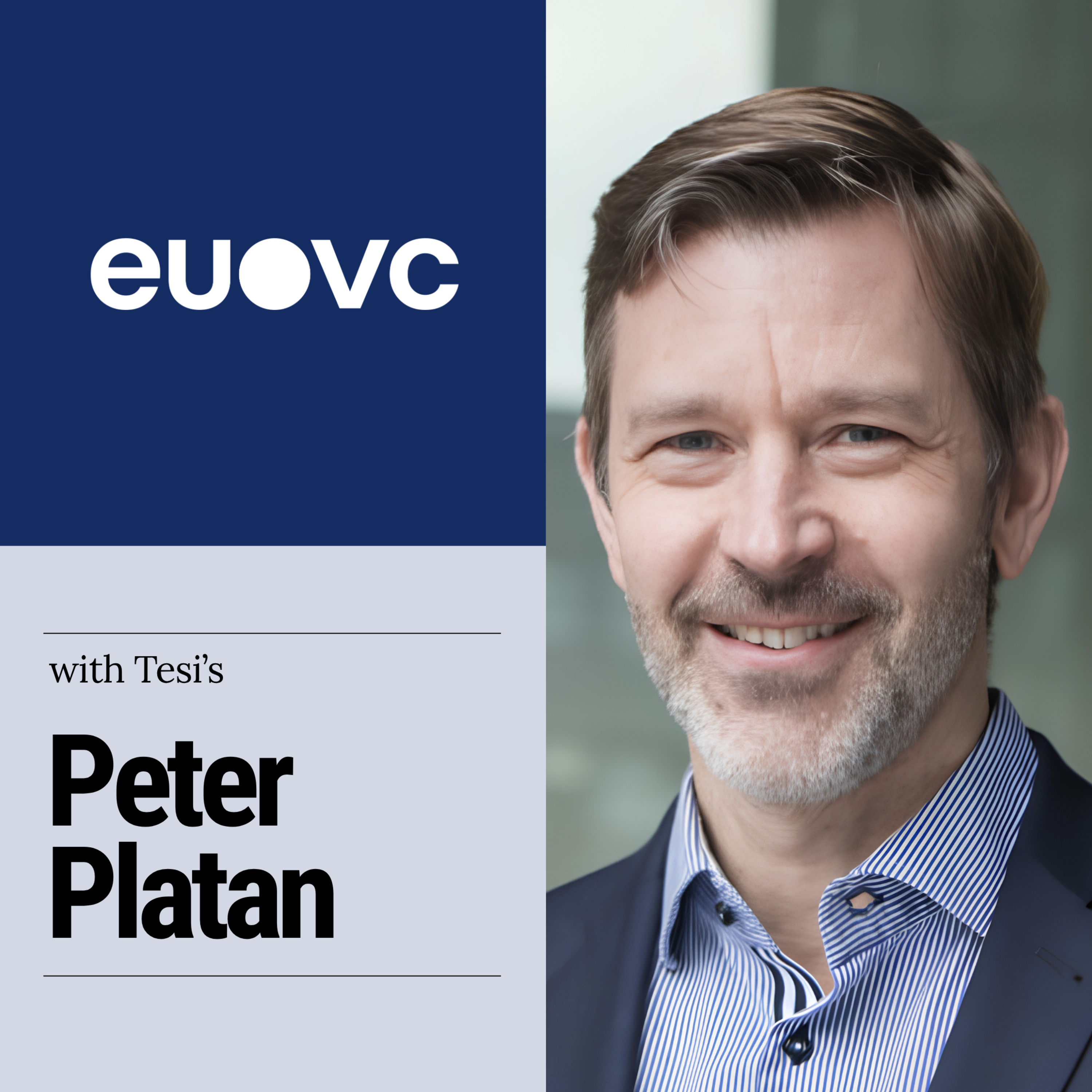
Peter Platten (Tesi) argues climate investing must be judged on fundamentals (DPI/value realization, durable value creation) rather than labels, green premiums, or regulatory hopes. He explains how Tessie invests, what it looks for in climate/energy-transition managers, and why Europe lags on scaling (B+ rounds and first-of-a-kind hardware).
Peter Platten is Investment Director at Tessie (Finland’s state-owned sovereign wealth fund), leading the climate portfolio on the fund side. He previously spent 10 years in development finance (FinFund and UK CDC/British International Investment), then did an MBA in Singapore, and worked as COO/CFO for a startup/foundation before joining Finnish Climate Fund (direct industrial climate investing) and then Tessie.
Markets won’t pay for “climate” labels; green premiums and regulation alone are insufficient. Climate funds should prove market-fit and realized value (DPI). Red flags include broad “sustainable” generalist mandates without sector edge, weak full-cycle track records, and carbon-removal/certificate-heavy economics.
Solar Foods (solane protein via fermentation using green hydrogen) illustrates first-of-a-kind risks: CapEx, technology scaling, regulatory approval delays (Europe), and uncertain market uptake/price. Tessie’s approach to fund selection emphasizes Finnish interest, GP credibility, and likelihood of investing in Finland.
Written by AI. May contain mistakes.
Explore the changing landscape of climate investing and the risks involved.
“I think it's also a healthy move because I don't think we can play the climate card as strongly as before because I don't think markets will pay for a label anymore.”
Learn about Peter's unconventional career path leading to his role at Tessie.
“This show is not investment advice, and the hosts of this episode may be invested in the funds and companies featured.”
Delve into Tessie's mandate and investment strategies in Finland.
“So Tessie, in a nutshell, I'll try to keep it more brief this time.”
Discover how Tessie assesses potential fund managers for investment opportunities.
“And we look at that also through a lens that does the GEP have the skills and credibility to potentially invest in Finland?”
Understand the evolving landscape of pension funds and their impact on private equity.
“Do they have the skills and credibility of doing that?”
Explore Peter's views on climate investments focusing on fundamental outcomes.
“Any number you can put to the fund-to-fund?”
Learn why natural market demand is essential for climate solutions.
“I think there was two drivers previously in climate which were driving the change.”
Explore the importance of electrification and its downstream effects.
“I think now within climate, we need to push more on market demand instead of market push.”
Insights on assessing the climate investment landscape and fund quality.
“And they don't require, as such, just the regulation every premium is for the push.”
Learn how to evaluate fund managers in the climate space effectively.
“And I think there was a lot of opportunistic GP behavior in the market.”
Discover the key elements of a strong investment track record in climate.
“It's not about the narrative of climate.”
Understand the four critical pillars for evaluating climate fund managers.
“So even if it's not that good, why did you succeed at this one?”
Identify common red flags in fund general partner strategies.
“And then the third one is the strategy and go-to-market skills.”
Explore how LP mandates can create misalignment in investment strategies.
“So we want to understand what edge the GP has.”
Discuss the challenges and gaps in scaling up climate investments in Europe.
“And I imagine that have even made you pass on funds because you thought that...”
Learn about the challenges in scaling up funding for post-VC companies in Europe.
“So overall, I think that Europe, what we're good at is there's lots of research.”
Understand the risks associated with funding first-of-a-kind climate projects.
“I mean, there's quite a lot of issues and risks that we have.”
Examine Solar Foods' journey and the market risks they faced in scaling production.
“they were producing very small amounts of this sole, maybe a few hundred grams.”
Discuss whether investors are equipped to handle the unique challenges of CapEx heavy startups.
“So I'm successful, but in the end, still questions I will scale.”
Explore the missing elements in the investment ecosystem for hardware-heavy scale-ups.
“What type of engineering do we need for our plant?”
Evaluate the optimism surrounding European climate funds and their future potential.
“I mean, there is successful first-of-a-kind scale-ups out there, but I think it's still sort of a relative new asset class.”
Learn how European investors can adopt patient capital strategies from development finance.
“but in a perfect world, obviously, in 10 years, like let's say in wind and smaller, the public sector is not needed anymore.”
Learn how DFIs utilize patient capital and blended finance to catalyze private investment.
“Overall, what I think that the DFIs did well is that they can take a longer term perspective to what we call patient capital.”

Get the gist, explore an idea or ask about something said.
 Claude
On EUVC, what are the key points of this episode?
Searching your listeningAutomatic transcript. May contain errors.
0:00I think it's also a healthy move because I don't think we can play the climate card as strongly as before because I don't think markets will pay for a label anymore. Because if you're just looking at TVPI, it's basically paper money. So you want to see that value being realized that DPI is the only measure of that. I think broad generalist mandates, so sort of the opportunistic approach that we invest in anything sustainable without, let's say, sector-specific operating skills or evidence. So we want to understand what edge the GP has. So you're kind of stuck in this gap and valley of death, that there's lots of risks.
0:38The private sector is not able to assess them and price them. So then you have to often work with, let's say, public funding and grants as well. And the end result, obviously, should be that the public funding, if it participates, it demonstrates additionality. So it provides something that the private capital doesn't, and it creates a path towards greater private participation. Welcome back to the European VC podcast, everyone. Today, I'm joined by Peter Platten, Investment Director at Tessie, Finland's state-owned investment company, where he leads the climate portfolio on the fund side. We've never had Tessie on this show, which is a bit of a surprise to myself even.
1:17So let's get into how Tess invests and what they look for in managers, but also we'll jump into why Peter thinks climate should be judged on fundamentals and where he believes the gap in European climate is. And finally, because of Peter's background, we'll also land on where Europe can learn from development finance.
1:39Peter Platan: This show is not investment advice, and the hosts of this episode may be invested in the funds and companies featured. Peter, welcome to the podcast. Thank you, Andreas. It's a pleasure to be on the show. So, Peter, I didn't do the big intro on you. So please tell everyone how you ended up at Tessie. Sure. So it's not really like a conventional or straight line path, but if I do a bit of my background. So I started at corporate and investment banking, as usually is the trend in my field. It was obviously a very, let's say, educative experience. However, I felt that after a couple of years, that investment banking is not really my field.
2:19This might sound like a cliche, but I thought there was more to life than long days at the office. And I was also watching a TV documentary called Mad Ventures in Finland, and they had a saying, go before it's too late. So for some reason, that stopped with me. So in other words, I went, I quit my job, I decided to volunteer in Peru and Latin America. I mean, I'm not a teacher, but I worked for a teacher training institution in the Peruvian Amazon, did administrative work, but obviously living beside the Amazon River in the Peruvian jungle was a fantastic experience. So after that time, I thought, how can I combine finance and also emerging markets?
3:01So I got a treat about the emerging markets of finance and how to combine it. So I found out about development finance. So it's a marmer of finance that focusing on investing for profit, but also with impact. So I joined the Finnish DFI called FinFund. Eight years with FinFund investing into Africa, Latin America and Asia. And also two years with UK's CDC, their DFI called British International Investment. Working on 10 years in development finance institutions. It was a fantastic adventure. Very, very exotic places I got to visit. And I saw lots of talent in many emerging markets considered as poor, but what they lack is frameworks and capital and so on and forth.
3:43Sorry if this is a long story, but I will end up with the Tessie part. So then after 10 years of development finance, I thought that I have to do something else before I retire. So I did an MBA in Singapore. The idea there was that I wanted to step on the other side of the table instead of being on the buy side. So I spent five years as COO and CFO for a startup company and for a foundation as well. But nevertheless, I felt the pullback to finance. So I joined the Finnish Climate Fund 2021. Now we're getting near to the current date. I spent two and a half years investing directly into Finnish industrial climate-related projects.
4:23And from there, I joined DESI and DESI's fund investment team as investment director two and a half years back. So there's the, it wasn't in a nutshell, but a long, long history. And then tell me, for those that don't know Tessie and what you're investing in and what you're here on this earth to do, can you just give us that? Yes. So Tessie, in a nutshell, I'll try to keep it more brief this time. So we're the Finnish Sovereign Wealth Fund owned by the Finnish state. Our mandate is to promote the growth of the Finnish VCMP ecosystems. And how do we do that? We do that through three investment teams.
5:00So we have two direct teams, an industrial team investing growth and scale-ups in Finland. And then we have a VC team, obviously, investing into earlier stage Finnish companies. So we can only invest directly into Finland. We always do it on market terms, minority equity stakes, tickets approximately 5 to 20 million euros. And what we want to do is to catalyze private funding always alongside our own funding. And therefore, we can only take, or the funding rounds can only have 50 % of public funding, including TSE in them. So then the third team is the fund investment team, where I sit and I work.
5:36So what we do is we mainly also need to have a Finnish interest in our investments. So we mainly invest into Finnish GPs. Only Finnish GPs, is that what you're saying? Not only. So mainly Finnish. But we can also selectively invest in what we call international funds, which can invest outside Finland. So these are funds that Finland naturally fits into these funds investment strategy. And we look at that also through a lens that does the GEP have the skills and credibility to potentially invest in Finland? So we're still tied to the Finnish interest on what we call international funds. But these are funds that can also invest outside Finland, but still need to cover Finland.
6:16So we can do that. Can you try and make that as concrete as possible? Because we might as well make sure that the deal flow that comes at you from doing this episode is going to be relevant. So does that mean that an investment mandate that also covers Finland, does that mean, yeah, and you probably should have boots on the ground, if I'm being honest? Or, yeah, if you haven't invested here but have three fund iterations behind you or fund generations behind you, I think that that probably counts not as someone who has a real mandate for Finland. How do you weigh that? Yeah, that's good. So first, I'll start with first-time fund managers, unfortunately, usually not, but we love to build relationships.
6:59So we can discuss with the first-time non-Finnish GEP manager, but then we'll have to wait and see how it pans out the strategy. The more probability and likelihood there is that the fund will potentially invest in Finland, the higher it is on our scale. So let's say it's a fund, a Singaporean e-commerce fund investing into Pesia with no one in Europe, and Europe is not even in the geographical mandate. Well, that's a simple... Yeah, but they have a 10 % rest of world mandate. That would not get money. That would not get money. And obviously, if you have fund mandates that are global, it's probably less likely that they would invest into Finland.
7:35So let's say a European an investment mandate, a GEP proven investment track record. If you haven't invested in Norwich or Finland before, obviously that's also a plus. If you have boots on the ground in Nordic or close to Finland, that's also a plus. But it's an overall analysis estimation of how likely it is that they would invest in Finland. Do they have the skills and credibility of doing that? Yeah, very cool. Okay, so now let me ask a different question, which is now that we're on the mapping of both your mandate, but also a bit the Finnish LP world. I'd love to ask you because and this is now this is not a fastball but it's not a pre-planned question.
8:14So I want to ask you this and then you can say it's hard for me to comment on but there's a lot of movement in all countries on the pension fund side. I'd love to ask you if you have any insight for people on what's happening in Finland on the pension fund side, what's Tessie's role in it, those questions. Well, I think as within the other Nordic countries, the pension funds have been very regulated. So what's been happening in Finland as well, that they're providing more flexibility on those pension fund regulations so they can actually invest more in private equity. Because, and I don't want to go into politics, but one of the issues in Finland and the other Nordics is that the public finances are very part of the issues where we're running a deficit.
9:00So we need to look at how do we grow, finish companies and build the economy to create more work and tax income and so on. So the pension funds are playing a role in that. What we as DESE do is quite often we like working together with the pension funds. So either directly, I mean, lots of the pension funds at Finland have invested together with us in the same funds, or then also on the direct investment side. And what Tessie also has done is that we have a fund of funds instrument or a line. So we have already have several vintages of what we call the growth fund of funds. Tessie manages that fund and the LPs, obviously Tessie puts in a key anchor investment in it, but the LPs are Finnish institutional LPs.
9:45For example, all the large Finnish pension funds. So our perspective there is that we would like pension funds to allocate more into private equity. Obviously, they still have a mandate that they need to be able to pay my pension 20 years from now. So they need to balance the risk. But we try to work together and capitalize some of that pension funds and institutional funding through us into finished funds. Can you say anything about how far that catalytic effect has come? Are you seeing the pension funds now starting to allocate more directly themselves? I don't have the statistics, so I don't want to say anything that's not there.
10:27But based on some media coverage that I've been reading, there has been more activity with selected pension funds in investing directly into finished growth companies at later stages. So I think that's positive. And we're actually fundraising for our number six growth fund of funds. and the interest from venture funds on our previous LPs has been quite good so far. And we're going to grow the fund size. So I would say that, yes, they're playing a role. And it looks good from my perspective. Any number you can put to the fund-to-fund? Perfectly fine if you can. Yeah, I'm not putting it out there what our target is because we're not out with an official figure.
11:07But altogether in these fund-to-funds, we have almost 500 million commitments under management in the previous fund-to-funds. Very cool. Okay. So I wanted to make sure that we made that coverage, so to say, because of course, in every single country, the sovereign wealth funds are playing a big role in catalyzing LP capital from the pension funds, but also just like a natural anchorage point for many of these conversations. And you're, of course, also as Tessie, very involved in the European pension fund dialogues that we're doing together at Slush. So many times there. Now, let me ask you, let's go to the climate thesis that you have and the climate space that you're running within Tessie.
11:46I called it climate as fundamentals. Let me ask you why you're thinking of it in those terms and what that means specifically. So I would start to, and I don't want this to be too long, but. No, you can go very long. What do we mean by climate? I mean, there's been a lot of relabeling recently, right? So what does climate, for me, what resonates with climate, it describes an outcome. So the outcome being the attendant environmental benefit for the planet, less CO2 emissions. And nowadays, what labeling has changed is we're talking about energy transition and resilience. So I think transition describes how we produce and use energy and resilience more how we withstand disruptions.
12:31So, and by the way, I was around when clean tech was invented in the beginning of the 20s. So clean tech was an actual definition before climate, which also encompasses like water and environments and so on and forth. So it's a question of how we label this and what the narrative is. In practice, what currently we talk about climates, I think it just describes energy transition and lots of the new labels in the same way. But what I think is actually healthy is the fact that these new labels also describe what the manager wants to invest and what the intended end result is. So let's take an example that energy transition reflects more a commercial region or narrative to buy a certain product.
13:16So it doesn't say that we specifically want to cut CO2 emissions and save the planet. It tells more about what the customer wants to buy and what cost. So I think whatever the labeling is, mostly we're still talking about climate as an umbrella of different types of investment that you do that have generally a positive effect on the planet and climate. So overall, what has happened in sort of the past five years, I think, is that we've moved from the heydays of climate more towards the leader days of focus being more, let's say, resilience and energization due to many, many factors. I think it's also a healthy move because I don't think we can play the climate card as strongly as before, because I don't think markets will pay for a label anymore.
14:10So what do I mean by that? I think there was two drivers previously in climate which were driving the change. That was the green premiums. So I don't think a project today can solely be dependent on end users or industrial or consumer paying more for a climate solution compared to a fossil alternative. There might be some cases where there's room for small premiums, but overall the market is not there anymore. And then they rely on regulatory change. I mean, there was high hopes that regulatory would really create demand. And I mean, it's still needed, but I don't think we can solely rely on regulatory changes to create end product demand.
14:48It's still important in the long term, but it's not really working out. As an example, the hydrogen sector, there's been lots of downsizing on ambitions. I think the ambition was by 2030 to have 10 million tons of hydrogen produced in Europe and 10 million tons reported. For example, the fuel bending applications are important, but politically sensitive. So what does it mean? I think now within climate, we need to push more on market demand instead of market push. So we can't rely on these green premiums and regulations. And we have to rely on natural market demand pulling the right products. So what does it mean?
15:26I think it means creating products or solutions at lower price points to equivalent phosphide ones. So superior products that can solve a problem better or more efficiently or cheaper, it becomes that logical choice for a consumer and usage use. And it also means, I think, that the next decades in climate will be about scaling the best alternatives that are superior to their phosphide counterparts. So through scale... So what are those? Those would be the no-brainers, right? What are those in your world? The no-brainers, I would say that everything in electrification and everything downstream of the electrification.
16:09And why is that? I think the amount of renewables is growing. So I think wind and solar supplied about 85 % of new global power capacity in last year. And in Finland, 95 % of power production is renewable if we consider nuclear to be also renewable. So everything to do with electrification and downstream, so energy storage, network grid balancing, efficiency improving solutions, etchification of fleets, heat pumps, electric arc furnaces, enabling technologies. So all of these, I think, are valid if they're competitive at a cost point. And they don't require, as such, just the regulation every premium is for the push.
16:55Now, let me ask you, if we take the fund investor angle on this, when you look at the last five years, the funds that have been back, the new funds that have come out, how do you feel about where we are? How do you feel about the quality of the European manager base when it comes to the climate world? When you look at the funds, I think, unfortunately, I think we were a bit over-indexed on the climate story. Don't get me wrong, climate challenges is there and they need to be solved. I think there was a political push in 2019, the Green Deal, and then followed the climate tech boom. And this was all well-founded.
17:37But I think we went overboard on pushing climate and also to the investor side. So I think investors gave the climate narrative more attention than the customers of reason to buy. And I think there was a lot of opportunistic GP behavior in the market. So when you hear all the political incentives, regulatory incentives come in, and now we need to solve this climate issue, obviously there's lots of opportunistic behavior, maybe a bit like in the defense and dual use currently, that, hey, climate is the next gold nugget. but obviously then the war broke out, energy prices went up and as an end result climate tech funding plunged.
18:16So where we are currently with the funds is that I think there's been sort of a healthy check. The survival of the fittest, it can sound like cold but quite often the GPs that are still in the market that have been able to fundraise and are showing track records and being able to create value are the strongest ones. So I think there's been sort of a healthy check in where we are. Obviously, I think there's still lots of opportunities. Happy to go into those, but just stopping there on where we are currently. Yeah. Well, let's go into then, if we translate this into how you're thinking about a manager that pitches you on, call it climate, call resilience and energy transition.
18:57What are you looking for in those managers? Starting from the general basics, I would treat climate or energy transition like any other vertical. So being it health or AI or robotics. So the key questions are, which we think is that on the GP front. So what problem is the strategy solving? What kind of traction does the GP and the portfolio companies have in finding market fit? And we look at the team composition and so on and forth. So our assessment on climate is that much different to any other fund. It's not about the narrative of climate. It's more about, let's say, durability and value creation.
19:35And I think this is fairly standard due diligence, but I'll try to pinpoint the parts where climate stands out. I promise you, the GPs listening in will be very excited to hear it. All right. So four areas. First of all, obviously, is strategic fit. So GP strategy. So does the GP strategy fit with the market needs? And does the track record and any experience of the GP align with the proposed strategy? So how likely is it that the GP was able to execute that strategy? So this is based on the facts and the track. So what investments the GP has won in the past? Why have they been better? Have the other GPs missed that these guys have it?
20:21So strategy. Then the most important, and this is not a surprise, is the team. So the team and track record. So one, we want to look at a fear PE track record. So full cycle from sourcing to exit, attribution of each individual to that value creation, DPI, TVPI. This is the same for all funds. But then when it comes to… Can I ask you on this one? Sure. And I'm going to make it challenging for you. But I'm going to ask you, what is a thin GP track? What is one that you're saying this is solid? Well, if you look at just the investment track, obviously you have different types of individuals on the partner team, but you need someone who has a very strong investment track record.
21:07So we're looking at if it's VC, but obviously if it's first time manager, then we're going to have to look at your angel investments and the tickets that you've done previously. If it's more emerging manager, your previous investments in previous funds and vintages. So you obviously want to see more than an average of 1x on, let's say, 10 investments that the partner has done. There is always also, I mean, misses and losses. So if we have 10 investments, I would expect 1 or 2 to be 0 point something x. Then I'd like to see like a couple of 5x and 10x. And then I'm out from 1 to, let's say, 1 to 2x.
21:46and obviously with explanations. So even if it's not that good, why did you succeed at this one? How did you find these investments? How much can you attribute to the actual value you created with the founder? What are the networks? How did you find these? And then we just statistically look at that and compare it with the peer groups. So lots of numbers. And in the end, it's how many investments, how many were successful, what are the reasons for products, successful ones? Full cycle necessary, meaning all the way from investing to DPI? Yes, you would want to see that, especially because you're talking about partners who are usually a bit more senior, so from sources to value creation to exit, because if you're just looking at TVPI, it's basically paper money, so you want to see that value being realized, the DPI is the only measure of that.
22:44So that was the track. Let's continue through your diligent framework, let's just say the four pillars. The four pillars are operational and value-adding skills. And here I think that, especially when it comes to climate or energy transition, what would be great to see, especially if it's hardware heavy, first of a kind, is engineering skills and technical skills and construction ramp-up skills and experience. So also scientific understanding of new markets and technological readiness levels. So in that sense, I think operational and value-added skills, especially in a climate-related technology, is obviously key.
23:23And then the third one is the strategy and go-to-market skills. So experience of taking portfolio companies and founders to the next level. Can the GP solve operational challenges of portfolio companies and help their companies create value? And number four is deal flow. So ability source. So top founders of technologies quite often is actually, if we're talking about BC, it would be great to see an ex-founder in a fund because that founder has the networks, they've gone through building their own companies and they really add value, I think, to do the sourcing and value addition. And then finally, I mean, we want to see a GEP succession plan in the team as well and LPGP alignment, so skin in the game, and carry tie-to-out cups.
24:09What have you seen GPs do in your process where you're like, this happens too often and it's not a good look, or this is not a smart idea. Anything that you're seeing GPs often make as mistakes? Well, generalize it, trying to, what makes it sort of pass? What are the red flags? I think broad generalist mandates, so sort of the opportunistic approach that we invest in anything sustainable without, let's say, sector-specific operating skills or evidence. So we want to understand what edge the GP has. So that doesn't mean that you can't be a generalist. It's just that we need to see an edge in what you are good at, even if you are a generalist.
24:53So then climate, when it comes to carbon removal credits or certificate revenues, I don't think it's core economics. It could be supplementary, but those strategies, climate not really fond of. And then overall, insufficient investment track record, full cycle. So quite often our response would be that, hey, you have a good blend of skills, but you need someone with more track record and senior experience in this sort of ECMP investing. But those are some of the facts where we often say pass or let's come back at a later point. You, I imagine, as a sovereign fund, are pretty good at being one of the first institutional investors in.
25:33Of course, considering that you're also putting a lot of money to work, so it does take some time to get your money in the end. But that also means that there's a lot of LPs standing next to you, oftentimes looking at what you're doing. I'd love to ask you, what are you often seeing or maybe sometimes seeing other LPs where they could maybe improve their process a little bit or where you think that they're not understanding the asset class fully enough or they're misreading the asset class and for that reason they're missing out on opportunities? So in other words, advice to fellow LPs out there.
26:11Well, I don't want to single everyone out. I think all LPs have their own mandates, which they need to follow. So some LP might be tied, let's say, to a specific country mandate, and they need to see more investment. It's there like we do in Finland. But overall, what quite often can, from our perspective, create misalignment, is having these requisites that when an LP makes an investment, a certain amount has to be investment back in a certain home country or region. So let's say that if LPX invests$10 million into the fund, the fund has to 2X or 1X, at least the same amount, invest back into country Y.
26:53So we don't do that because I think it can create misalignment in the GP strategy. Quite often towards the end of the investment period, it might be that the market has changed, the environment has changed, and the GP should actually be flexible in the strategy to decide where it invests. And quite often these restrictions force the GP maybe to make investments that are not the most potential ones. and also a concurrent. And I imagine that have even made you pass on funds because you thought that... Yeah, exactly. If you have three LPs and they all have a mandate, the 2X or 3X has to be invested in their home countries, then what's left for the GP to naturally choose, especially when it comes to Finland?
27:35And it also creates this misalignment among LPs. So that's one point that I would say that we're not fond of when it comes to other LPs. Let me go on to ask you then a bit about how you're looking at what's lacking in Europe. We often talk about, and you said it before, there's a lot of early stage climate money in Europe, but there's also a considerable scale-up gap is what most people would say that we have in Europe a lack of. Tell me, what's your read on that? Well, I agree. So overall, I think that Europe, what we're good at is there's lots of research. There's a high level of research. There's lots of the ideas and innovations that are well-educated workforce.
28:19So we have lots of new early stage technological innovation coming out. And I think I'm not saying that there's too much funding for early stage, but there's more early stage funding than there is later stage funding. So, yes, I think the gap is when you're trying to scale up these post VC companies into their B++ rounds. and there just isn't large enough finished funds or interest for institutional investors to provide the capital, especially when it's asset-heavy CAPEX-related projects like first-of-a-kind projects. I think first-of-a-kind is even a separate risk that you need to look at. But generally, I think that this is where we're lagging behind and I think that in the US, for example, Europe is on average, I think, 20%.
29:01I remember a statistic, 20 % below US rounds, B-plus rounds, which leaves large amounts of these European post-VC potential scalar companies unfunded. So I think there we're missing out. And I can talk about the first of the kinds as well. Yeah, please do. If we start with the first of the kinds problem, you've worked on one in Finland. Can you tell us about that case and abstract it to say, this is how we need to start thinking when it comes to funding these? When it comes first of the kind projects, I mean, there's quite a lot of issues and risks that we have. So just to run through the risks quickly.
29:38First of all, it's very CapEx heavy. So you need to find large funders to fund those amount. But then I think there's quite a lot of technological risk as well, because these are new technologies that are being scaled for the first time to their industrial level. So there's technology risk and the ability to understand technology risks. And then there's also the market risk. So you're creating a new product with a new technology in large volumes. So you want to have an offtake and you want to have a price for that offtake, which quite often is possible in the early stages. So you need an industrial buyer and the industrial buyer will not make a committed offtake agreement because it actually see the end product coming out from the first of a kind plant in scale.
30:23So you're kind of stuck in this gap and valley of death that there's lots of risks. The private sector is not able to assess them and price them. So then you have to often work with, let's say, public funding and grants as well. One example, a Finnish company called Solar Foods. Solar Foods, it's listed on the stock exchange for this public information, so I can share this. So the background is that Solar Foods is a Finnish research institute spin-off. So they invented a protein called solane, which is created through fermentation using green hydrogen, so it requires electrolyzers, and CO2. So it's a protein powder used as a food ingredient, for example, in ice cream.
31:10Even NASA has been interested because you could produce this on a space shuttle, so it could be space food. So basically it replaces conventional sources of proteins, and it has an impact. So originally when these guys were working at the university research level, they were producing very small amounts of this sole, maybe a few hundred grams. So at the early lab work stage, the technical readiness level was around four or five. Then they went on to a pilot and that worked. So they were already at the readiness level of six to seven. So it was all scientifically sound, but on a small scale. So then you need to demonstrate on a large industrial scale that you can produce it and in the end sell it to commercial buyers.
31:52And they were able to meet the funding needs of the demo plant to different sources. So they used public government grants. They also used public funding. They had some institutional funds and private funds as well. And they built the first commercial scale plant, which actually now works, which is producing solein. But as an example of the risks here, the market uptake is not yet there. First of all, because you need regulatory approval. So this is one of the risks that quite often can be materialized is that it's a new food product. It has approval in Singapore, for example, for selling with ice cream.
32:31In the States, it doesn't yet have a final low-questions approval. In Europe, it's been in regulatory approval for, I think, four years. So sort of the lessons learned is here that even though everything goes fine and you build a demo plant, then you still have your market uptake and price point risk as well. So in addition to getting the approval, the question is, what will the price point be and what will the uptick in the market be? So that's one example of first of all. So I'm successful, but in the end, still questions I will scale. Can I ask you, because this in the end becomes a bit of a financing risk.
33:08Do you think that our investors in general are thoughtful enough and well-networked enough and experienced enough in managing this risk? Or is it something when you see managers that you're often thinking this team is very light on being able to navigate how to help CapEx heavy startups navigate the funding journey that they necessarily have to do with all the complexities and the very different parties that you need to be able to pull into this type of investment than all the VCs that will jump because it's hype? Yeah, well, one question is, is first of a kind, is it a VC funding case? I think in the early stages, it can probably be when you're still on your pilot.
33:59But once you go to your demo factory and commercial industrial factories, when you need a blend of finances for the CapEx, so you need debt funding and so on and forth. And it's a long term play. I would say that it's probably not a traditional VC play in the first place because you're looking at longer time perspectives. As with this Solane example, it's already been, what, over five years. So the VC investor would already be expecting an exit. So I would say it's a VC play. But overall, for GPs that say growth scale-up, GEP strategies, I think it's very relevant. And obviously, we would like to see more success stories here in the sector when it comes to not just first of a coin, but scale-up capital in Europe.
34:43And what I would look at if I was looking at a fund is specifically the GEP's experience in scalar projects. So you need the engineering experience and you need the technical experience to understand what is this technology, this electrolysis or fermentation technology. Has it been used before? What type of engineering do we need for our plant? Is it off-the-shelf products or is this made custom for our products? What are the energy balances? I'm not an engineer myself, but having looked at all these plans, I would like to see more GPs where you're actually combining the traditional, the BCP investment experience and track record with more operational skills and also engineering and technical skills.
35:27If you would want the best possible GEP out there, let's say in a perfect world. So is that what you think is the missing piece in the ecosystem, So to say more GPs with the mix of both technical and engineering talent in the GP, or is there another thing that you think we have as a missing piece? Well, I think overall there's also a missing piece when it comes to all types of funders. So how do we fund these scale, hardware heavy and scale up investments? So I think we need to look at what type of funding is available. I mean, traditionally, when you look at hardware-heavy CapEx investments, it's infrastructure.
36:12So I think we need to find ways into bringing in also these traditional, let's say, debt providers. And I think usually the model is that when you start to build a new technology, you build a platform. So you need someone first to invest in the platform. So development expenditure and this Debex phase, this can be more of a venture, very stage funding. And then what you're trying to do is you're trying to develop your new technology towards scalability on the platform. And once you demonstrate it through your first plans, your first pilots, that's when you start replicating and you start building SPVs or plants through SPVs.
36:53And in these SPVs, obviously, you need a different kind of funding mix than you need for the DEVEX part, which is usually equity in the beginning of these investments. So there, I would say that you need a blend. You might still need grants. Quite often there is grants available still for the first commercial plans, and then you need your debts and your equity. So what I'm saying is that finding a way to de-risk these models also for the traditional investors would be great. So it's not just the GPs, but it's just the whole ecosystem. I was about to ask you, are we lacking the playbook? Are we lacking the GPs with the connections?
37:30Or are we lacking the other side, in other words, the connections for the GPs to connect into? Or is it all three? I think we're sort of lacking all three. I mean, there is successful first-of-a-kind scale-ups out there, but I think it's still sort of a relative new asset class. So what we're also missing, in addition to all three points you mentioned, I think we're also missing success stories, and we're missing also statistics. So let's say that the first climate initiatives were in 2019, 2020. The funds are still out there completing their investment periods. But what we'd also like to see is successful exits and value creation.
38:16So what we need to see is also that we can sort of support this new ecosystem, a new asset class through successful stories showing that this is actually something investable. And in this way, probably demonstrating that other investors should also come into this sector. But in the first of a kind, I admit that it's still sort of the valley of death in a project. So how to get there, I think it's going to take time. Are you optimistic on this situation that we're in, that if we look at the tail end of the first vintages of climate funds, if we're looking at the tail end of their investment periods now, some of them are just out of it and investing out of their second, third vintages?
39:00others are well out of them. Do you think that we're at a spot now where you have grounds to be optimistic, meaning you're seeing corporates lean in more, which, of course, in many cases will be important both as customers but also as funders or acquirers? Do you see that the larger financing houses are leaning in more than they have in the past? What do you think? I think overall there's a recognition in Europe that scale-up funding is required and there's a market gap. So I think that's positive. For example, the European Commission, they set up a separate scale-up fund. The EQT is now managing it.
39:44So quite a large fund for scaling up European companies. For example, they invested in the Finnish ISAI, which is the sort of dual-use NATO satellite company. So I think that's a positive signal. First of all, that it's been recognized. Hopefully, it's not only public funding that will be chasing these deals, but also catalyzing private funding. So I think that there's a positive sort of trajectory and trend in the market. And you mentioned pension funds as well. So I think at least in Finland, it's been recognized that more domestic capital is required to scale these early stage companies. and to the build possible.
40:29Has it been commercially recognized as well? Because it's one thing, the policy side, it often comes before, if we're being very honest, the commercial side leaning in and saying, yeah, we can see the commercial opportunity. I think it's natural that when an industry is not mature yet, when there's lots of risks, that's when the public actor should be acting. When it's a mature industry where there's no risks or the private sector can underwrite all those risks, then the public shouldn't be there. So in that sense, I think there's still lots to be proven. I mean, the solar foods example was one example that was almost there.
41:11There are lots of these, but there's also currently lots of examples of first-of-a-kinds that unfortunately did not materialize due to many of these market risks. So I think we're still in a phase where we need both, but in a perfect world, obviously, in 10 years, like let's say in wind and smaller, the public sector is not needed anymore. So the private sector can manage that risk and have funding by itself. Let me bring us all the way home to your background as a development finance guy. You spent 10 years there. I'd love to ask you if you were to reflect on our conversation up until this point now and where we are as a market and climate industry, what do you think that we can learn as European investors from the development finance world?
42:03Overall, what I think that the DFIs did well is that they can take a longer term perspective to what we call patient capital. So their investment corridors are longer, and there's no more willingness to bear risk for a longer time period if required. What is that in practice then? For example, they can provide different types of structures, so subordinated capital in risky projects or first-loss tranches that help catalyze private equity. And if you think of Europe, I think this would be applicable, for example, in CAPEX or hardware or scale-ups. so not just providing equity, but structuring your equity and your waterfall so as to catalyze more private funding.
42:47What I think the DFIs also do is provide guarantees, for example. Am I right that you, with Tessie, despite you not commenting specifically on Tessie now, am I right that you do that on the GP side, as far as I remember, when you're investing into funds?
43:03So what way in GP? You don't participate fully as a normal LP always, do you? Yes, we always do on market standard, market expectations. So we're just a normal LP with standard requirements. If you're thinking about that, we'd give away our upside or carry. Yeah, I actually thought that you did, but maybe I was remembering incorrectly. Yeah, that was probably a predecessor. So we had called Business Finland Venture Capital, which was able to do like asymmetric investments into funds. And they were able to, for example, give away some of their carry to the private investors. Yeah, that's what I remember.
43:44Yeah, okay. But a good example of what public investors could do to catalyze more private in it. So obviously in the DFI toolkit, you have like political risk guarantees. You have grants. So, for example, training of personnel, technical engineering know-how, and so on and forth. So I think what the DFIs were good at overall, they talk about blended finance. So that's structuring these different types of instruments to increase the mobilization of commercial funding. And the end result, obviously, should be that the public funding, if it participates, it demonstrates additionality. So it provides something that the private capital doesn't, and it creates a path towards greater private participation.
44:28So overall, I think that's sort of the umbrella where the DFIs work, and that's quite a lot where the public institutions are part of Tessie also is. Yeah, incredible. We're up on time, so I think we should stop, Peter, but I cannot wait to be visiting you when we're coming over for Slush. Thank you so much for joining on the podcast here a month before Slush. So we'll get this episode out before so everyone can hear a bit about Tessie heading in. Great. Thanks for the great discussion and welcome everybody to Slush. I'll also be attending. So hopefully it'll be a good one this year. It absolutely will.
45:01Thank you so much, my friend. Great. Thank you.
Climate investing is entering a more disciplined phase. Strong narratives are no longer enough if the underlying economics, market demand and path to scale do not hold up.
In this EUVC conversation, Peter Platan, Investment Director at Tesi, explains how Finland’s state-owned investment company approaches fund investing, what it looks for in managers and where he sees the biggest gaps in European climate capital.
Peter argues that climate, energy transition and resilience should be assessed like any other investment vertical, with a focus on durability, value creation, team quality and evidence of market fit.
He shares what Tesi looks for in GP track records, why broad mandates without a clear edge are a concern and why realised performance still matters when assessing managers.
The conversation also explores Europe’s scale-up and first-of-a-kind funding gap, particularly for hardware-heavy businesses where technological, market and financing risk converge.
Peter explains why these projects often need a blend of equity, debt and public funding rather than traditional venture capital alone.
Drawing on his background in development finance, he also discusses patient capital, blended finance and how public investors can help bring private capital into areas where risk is still difficult to price.
Highlights
How Tesi approaches fund investing
What Tesi looks for when underwriting managers
Why climate funds need more than a strong narrative
Why green premiums and regulation are no longer enough
What makes Tesi pass on a GP
Why home-country investment quotas can create misalignment
Where Europe’s scale-up and first-of-a-kind funding gap sits
Why hardware-heavy climate companies need different capital
What development finance can teach European investors
How public capital can help mobilise private funding