Ask ChatGPT
 EUVC
23 Nov 2026 · 35m · 18 chapters
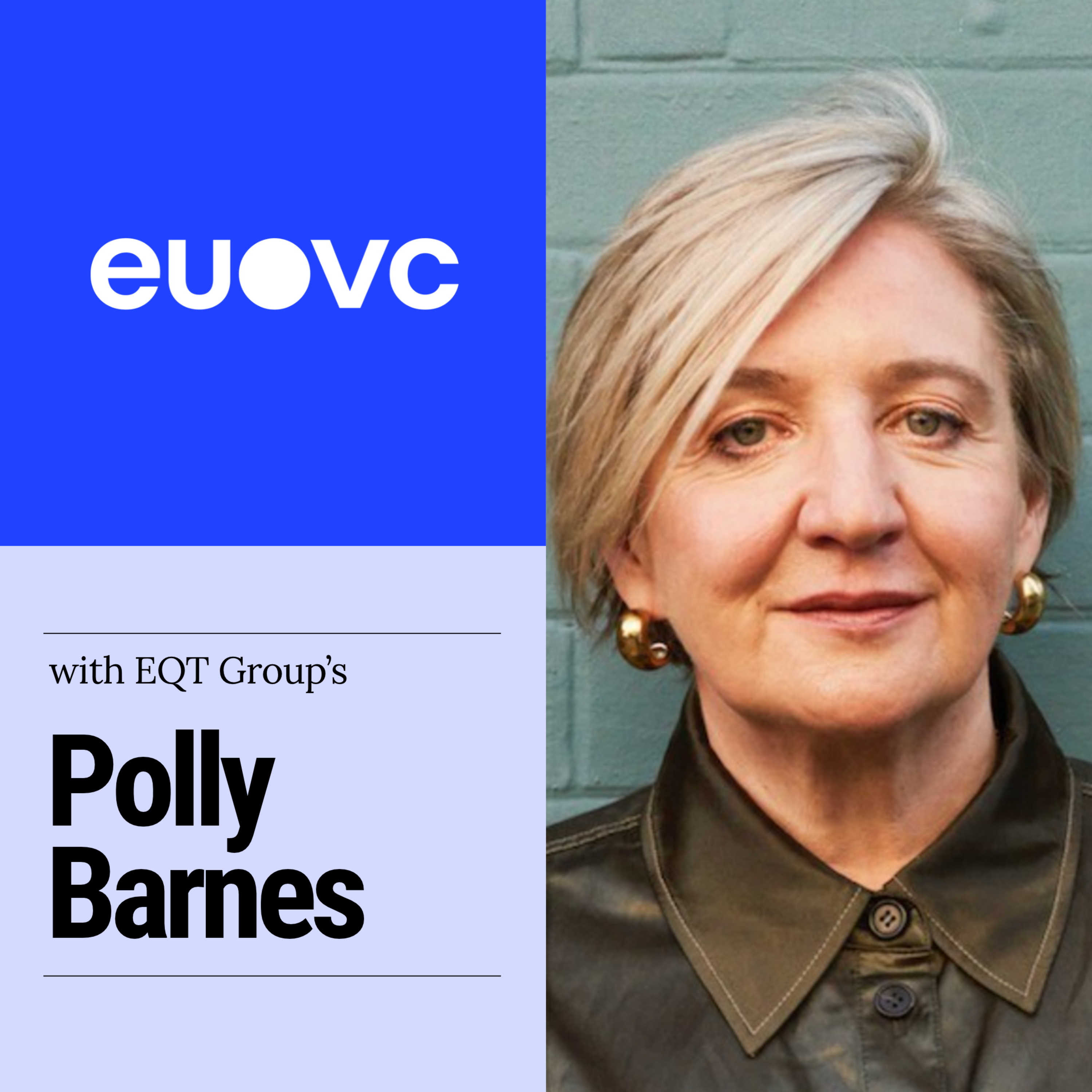
Polly Barnes (EQT Group) explains her Founder6 framework for predicting and developing founder success, arguing that the two biggest differentiators are lightning focus (fast speed with prioritization) and transparent self-awareness (understanding how your behaviors negatively affect others). She challenges “gut feel” and “busy fool” pivoting, saying speed is necessary but activity without intentional plans isn’t.
Tech talent operating partner at EQT; marketer-turned-people/HR leader in entrepreneurial environments; 17 years using psychometrics; has built Founder6 using Big Five-based testing and EQT portfolio data, plus research inputs from Oxford University and mentions Princeton.
Founder6 is based on 5 years of data and 5,000+ psychometric profiles; she cites ~98th/99% predictive accuracy; lightning focus is rare (<1% high natural strength). Transparent self-awareness is harder than VC “coachability.”
founders who intentionally stop to reflect (journaling, taking time away like woods/sea); Hungary founder ecosystem examples (e.g., 11:11 Labs, Vinted) showing coaching culture.
Written by AI. May contain mistakes.
Learn about the six critical traits that lead founders to success, focusing on lightning focus and transparent self-awareness.
“Those founders that go all the way to exit, they have those six traits to really high degree.”
Introduction to the European Easy Podcast and guest Polly Barnes, who discusses the Founder6 framework for identifying successful founders.
“You know, pivoting feels good because it feels like activity.”
Polly shares her career journey, experiences, and passion for working with founders in entrepreneurial settings.
“The framework draws on five years of data and over 5 ,000 psychometric profiles, isolating six traits that consistently show up in Europe's most successful founders.”
Explore the Founder6 framework's predictions on founder success, backed by psychometric data and studies.
“So I think data and being backed by data is like just fundamental to who I am.”
Understanding lightning focus as a critical trait for founders and its rarity in the entrepreneurial ecosystem.
“Now let's go to the actual Founder 6 framework.”
Discussing transparent self-awareness and its significance in driving success for founders and their teams.
“If we start with lightning focus, what is that?”
Exploration of whether the six traits are innate or can be developed, emphasizing the learning curve of being a founder.
“Now, let me ask you, Polly, when you look at these six traits, are they innate or can founders develop them?”
Discussing the rarity of strong founders and filtering outliers.
“Polly, you described that only 85 in a million people are naturally strong across all six trades.”
Exploring the challenges investors face in supporting founders.
“the rest of us are learning on the investing side and also as founders.”
Polly shares insights on working with incubators and founder groups.
“And by the way, to anyone listening in, we will, of course, put together with this episode the link to the test so that you can use it yourself.”
Explaining how EQT uses the Founder6 framework in their processes.
“Let me ask you about how you're using it at EQT operationally, both in your investment process and in your work with your founders.”
Discussing the potential of AI in sourcing and decision-making.
“I mean, you got me there because I don't do board hiring, but I don't think boards are always full of ex-founders.”
The difference between assessing traits and understanding founder psychology.
“that is very well researched and very strongly founded in data, which would make one think that you can do a lot with AI.”
How different ecosystems impact founder ambition and success traits.
“Those two are slightly different things.”
Polly provides advice on how founders can improve their capabilities.
“Because to do this to any level, even to hire two people and build something, you know, that, you know, maybe is not yet getting investment, that takes enormous ambition.”
Learn why intentional self-reflection is vital for a founder's success.
“or they're in competitive padel, whatever it is, but they don't tell me that they actually stop.”
Explore the meaning and implications of the trend 'retard maxing' in venture capital.
“It encourages people to stop planning endlessly, ignore the need for perfection and start acting immediately, even if it feels unrefined or reckless.”
Discover how to collaborate and use the Founders 6 framework for better insights.
“because you do need the nuance to understand that, yes, retard maxing has its place.”

Get the gist, explore an idea or ask about something said.
 Claude
On EUVC, what are the key points of this episode?
Searching your listeningAutomatic transcript. May contain errors.
0:00Those founders that go all the way to exit, they have those six traits to really high degree. But the two that make the biggest difference are lightning focus and transparent self-awareness. And they work in combination with each other. You cannot have lightning focus and develop lightning focus if you are not transparently self-aware. I have an abiding view that we shouldn't trust our gut. And we talk a lot about investor gut, right? And I think investor gut is great if you are a really, really famous investor who almost has the mandate to ask these kind of questions that I'm talking about here, right?
0:35I don't hear founders talking about this. They tell me they run a marathon every day or they, you know, they're in competitive, you know, padel, whatever it is. But they don't tell me that they actually stop. They don't tell me so much that they reflect. So actually, what I'm learning is that the people who do that are the outliers because they are doing something different to the thing that the ecosystem thinks we need to pattern match to. It's totally contradictory because speed is an absolute prerequisite of founder success. But being busy fools is not that. You know, pivoting feels good because it feels like activity.
1:13But it isn't. if you pivot without having an intentional plan, then you're not achieving quicker outcomes. Welcome back, everyone, to the European Easy Podcast. Today, we're joined by Polly Barnes, tech talent operating partner at EQT Group and the creator of the Founder6, a predictive framework built with Oxford University that redefining how EQT identifies and develops successful founders. The framework draws on five years of data and over 5 ,000 psychometric profiles, isolating six traits that consistently show up in Europe's most successful founders. They are lightning focus, resilience alchemy, magnetic leadership, fearless drive, progressive explorer, and transparent self-awareness.
1:54Poly's work quantifies what has long been intuitive in venture, that behind ever great outcome lies a rare combination of human traits. One that some would say that AI can't replicate. And I've actually taken the test myself and with some anxiety, we're going to go through some of my results as well and talk about what that means for me.
2:16Polly Barnes: This show is not investment advice and the hosts of this episode may be invested in the funds and companies featured. Polly, welcome to the podcast. Hi, really good to be here. So I gave a really short bio on you, but I think you should be allowed to give your own take on who you are. Okay, brilliant. So I started my career in marketing. So I think data and being backed by data is like just fundamental to who I am. And then a bit later on, I moved into a people role. Always in entrepreneurial businesses, those are the ones that I like the best. I love agility. I love change. I hate being told what to do.
2:55I like ideation. So this is like just the perfect territory for me. And I don't know why. Maybe I'm a sucker for punishment, but I love working with founders. They're just my people. and I find that journey fascinating. I've done a few entrepreneurial things myself. I can't stay away from them and I love to build. So this environment is one that I'm fascinated by and when I took that first people job, which is quite sort of mid-stage in my career, the challenge I was hired against is a fast growth business that was failing to hire the right people. So I was like, what are the characteristics here?
3:31because the thing about change is that everyone tells you they like change because otherwise they sound boring. But the reality is a lot of people don't like change, right? Like just that ambiguity and the constant recalibration is very hard for a lot of individuals and that's fine, but it probably doesn't make you very good in a startup environment. So I went to psychometrics then because, you know, I fundamentally, even though my job is assessing talent and meeting incredible talent I don't really trust my own bias and I was like what could I leverage here to to really build my instinct so for 17 years I've been working with psychometrics I've been working with psychometrics purely in a fast growth environment and of course the extension of that was coming to EQT because I really was passionate about aligning insights on human characteristics and traits to commercial outcomes, right?
4:31And the only place you can really do that is in a fund. So through the past, you know, six years that I've been working here, we've been utilizing behavioral science to help our founders determine commercial outcomes through, you know, the team that they build, their own leadership, impact and behavior, and, you know, removing some of the subjectivity that often shows up in the people arena. Now let's go to the actual Founder 6 framework. You claim it has a 99 % accuracy rate in predicting founder success. It's a pretty bold statement. It's obviously backed by real data from your own portfolio, as well as partner VCs out there that have been using this tool to evaluate their founders and the Oxford study.
5:16How did you get to this level of predictive precision? and what does it really mean when you're saying that there's a 99 % accuracy rate? Okay, so the Founder 6 is backed on the Big 5 personality test, right, which is the most rigorous research-based psychometric test. So accuracy is possible because of the type of testing that you do. So the other example of that test that people would know is Hogan, which is also backed by exactly the same data. So first of all, we started with a very stable, very research-backed psychometric. And then, of course, we have a pretty large data set. So when we say that it's 98th percentile accurate, it correlates to high performance across every single other high performance model that there is to that degree in terms of isolating the characteristics and that determined success.
6:11but what we've done that is unique is build that within the startup environment right so like the the ip here if you will is that we're we're applying standardized high potential frameworks and known ways of predicting success so that's why we can do that to a 98th percentile but we're doing that within the startup environment and that is the new model that we've built and and we made that a really big data set by partnering not only or using not only the Oxford University insights, but also those of Princeton who had done very big founder success. I think for us to be able to really give the audience an understanding of what the framework is so that we can dive deeper on how you apply it and what it means for people.
6:58Let's go through each of the six just to unpack them. If we start with lightning focus, what is that? So lightning focus is the ability to build fast speed with prioritization and it is the absolute rarest of the six traits. So it is the most critical. Possessing that as a unique and natural capability is the most important element within a successful outlier founder. and it's the rarest quality. So less than 1 % of the data set have that to a really high degree naturally. And that's because it's a challenge between, it's a contradiction more or less between moving super fast and being prioritized and focused when you do that.
7:48That's what makes it so difficult, like contradictory skill sets.
7:52Polly Barnes: What we know is that we work in an ecosystem that's obsessed by speed, right? Speed is something that we identify really, really easily. So there are two other traits, resilience and risk and speed, and a very high degree of the data set of successful founders have those characteristics. They're almost like table stakes, right? So resilience, alchemy, and risk orientation and speed, those are very strong and prevalent across the whole of the data set. Doing that with prioritization is what's really And then, of course, there's also the magnetic leadership and the self-awareness piece. I think you covered the resilience part, the fearless part quite well as well.
8:37Also, that you've got to be progressive, which is the progressive explorer part, of course. If we just touch on the magnetic leadership and transparent self-awareness, I'd be curious. If we start with the transparent self-awareness one, that's an interesting one, I find, because it's actually one of the things that you hear very often, VCs, when they say what they look for in founders. They say they look for coachability, while, of course, you want someone who is fearless and who is self-driven and all of these things. You're also looking for someone with the self-awareness to know where their shortcomings are and know how to take in feedback and know to poll smarter people than themselves in individual spaces, that type of thing.
9:18Can you talk about the importance of that and how you see it correlate to success and those things. Yeah. So transparent self-awareness. If I were to isolate, so, you know, since we did the first round of this report, which was April last year, and we identified these six traits, we've since done a further cut of the data. And those are, you know, what I'm pinning, the insights I'm sharing on today. So you have those first. But what we have learned is that the six traits are really important. In those founders that go all the way to exit, They have those six traits to really high degree. But the two that make the biggest difference are lightning focus and transparent self-awareness.
9:57And they work in combination with each other. You cannot have lightning focus and develop lightning focus if you are not transparently self-aware. And it's really interesting what you say about, you know, investors looking for that trait. Of course, we all do. But actually coachability, or I would say coachability from a VC is a fairly tertiary version of transparent self-awareness, because if someone's giving you money, you're probably going to listen to them or at least be smart enough to pretend that you're listening to them. What transparent self-awareness actually is, is an understanding of where your behaviors show up in an impactful and negative way, probably, on those individuals around you in driving results.
10:40And that is a really hard thing for any individual, not just founders, to acknowledge and to learn from, right? Particularly in the kind of echo chamber of investment where it is also really important for you to build brand and reputation. there's big tells there you know one of those is the team that you build around you and you know you talked about taking on in you know challenge and and ideas I think again you know I don't meet a founder who doesn't talk about wanting that much fewer and far between are the founders who actually do that the founders who I was talking to Charles at strawberry the other day and he was talking about how active listening was like a built-in trait amongst him and his co-founders like very intentional listening which isn't challenge it's absorbing reacting you know you would have transparent self-awareness if you have very deep examples of where you have altered course stopped doing some things because another individual has influenced you to do that even though you wanted to do it, right?
11:51Even though you were super passionate to do it. So I think it's something, it is something that is very difficult for any human to kind of really acknowledge because we can't live unless we forgive ourselves. But that ruthless pursuit and acknowledgement of that, maybe you don't have to admit that to your investors, but to yourself is very critical because without that, you don't develop in the other areas. Now, let me ask you, Polly, when you look at these six traits, are they innate or can founders develop them? I'm, of course, asking with great excitement and interest because I said I always share my results and I score high on every single one of them, except for the most important one, the lightning focus one.
12:37I'm actually at a 55 points there out of 100, whereas on all the other traits, I am just around either 100 or 95. So I would say absolutely, because you've got a high score in transparent self-awareness. So the place for everybody to focus is on really knowing themselves. I guess that's why we believe this tool is so powerful, because it is a lever to look at yourself in an objective way and understand where some of the things that you do really, really well might also trip you. you up. Having a natural inclination towards transparent self-awareness is going to help. And then that's your route through to developing greater focus in, you know, lightning focus, moving at speed with prioritization, how you do that and focusing on that.
13:33So, of course, it's possible to develop. The experience of being a founder is an enormous learning curve. I mean, probably the most accelerated extreme learning curve there is. And then, you know, the entire, we have to acknowledge that everyone, both founders and investors, have an inbuilt belief in natural ability here, right? There are individuals who are entrepreneurial, who move fast, who are founders because they are hardwired like that. And that's why we're all having a go. Polly, you described that only 85 in a million people are naturally strong across all six trades. Yeah. That's rarer than unicorns.
14:15I would love to ask you, how should investors think about this as a filter for outliers? Is it that? Is it a filter mechanism or is it a roadmap for us to develop more human founders? I mean, it's a bit of both. I have an abiding view that we shouldn't trust our guts. And we talk a lot about investor guts, right? And I think investor gut is great if you are a really, really famous investor who almost has the mandate to ask these kind of questions that I'm talking about here. Right. But that's probably the problem, because there are only a few individuals globally who could probably go into a room and ask the type of questions that I'm sure reveal strength or weakness in the traits that I'm talking about.
15:00the rest of us are learning on the investing side and also as founders. So I believe we're very good at identifying strong founders. I believe that the ecosystem is also expecting outlier founders, and that is a level up. That is why it works great to strengthen everybody's ambition and conviction here. And then also, of course, you know, if we follow this route, it really is a supportive tool to founder development. I've been doing loads of work with incubators recently. I was at Stastion F. Recently, I was with Leeds Ventures last week in Hungary. And one of the things that all founders tell me is their investors don't talk to them enough about this stuff.
15:47And these are people, you know, with investment who are these, you know, the really high performing founding founders in our group. And yet you get the money. And from the moment that happens, it's all about the numbers and nothing about your growth. And, you know, that is part of the challenge that many founders face. And that's why it feels so lonely. Polly, you said something there that I just want to double click on, which is you were at Station F with Roxanne and the amazing team there. And you were in Hungary and also talk with a VC firm and their founder group about how to apply this framework and how to grow as founders.
16:24Everyone knows EQT, but it's also a massive machine and behemoth in the ecosystem that I don't think everyone knows exactly how we can engage with, other than, of course, co-invest or raise money from. But you're clearly running around doing some of this important work. How can people engage with you? And by the way, to anyone listening in, we will, of course, put together with this episode the link to the test so that you can use it yourself. Yeah, so I'm really keen to introduce the Founder6 across the ecosystem. EQT are really keen to do that. You know, we don't see this as something that resides with us.
17:02It's proving to be really powerful when we use it to run founder circles and share the insights. You know, one of the other insights we have is around how you hire your team, which is a huge problem. And, you know, my team at EQT exists because of the scale of us, but lots of founders do not have the kind of operational support that EQT offers. We know that the strongest teams are full of, have really high founder density, right? You might have one outlier founder, but you'd have a lot of sort of mini founders who are learning to be founders within that mix. So we're very keen to partner with incubators.
17:40We're very keen to partner with seed funds. We're very keen to partner with founder groups who are interested in this. And those people should just connect with me. And I'd love to talk to them. I don't want this data set to be boundaried by only the people that EQT invests in and brings to that because all of this work is about eliminating bias. So it's very important that we don't do that. And as an example, an expression of this, the Founder 6 framework doesn't live on EQT's website. It lives on its own standalone website because you want it to be a resource for the community. I think that's super important.
18:20Let me ask you about how you're using it at EQT operationally, both in your investment process and in your work with your founders. Yeah. So I just touched on that. So, you know, this thing about founder density is really critical, you know, and I, you know, you're always course correcting your own mistakes, haven't you? Aren't you? And I think, you know, one of the suppositions with founder led businesses is that you need to kind of hire senior teams to accommodate around a founder. Whereas actually like this, this work has really reversed my thinking. I think it's all about founder density. I think it's all about optimizing kind of founder mode by having many founders.
19:02You know, you see a lot of people we just published today and sifted on like these teams that are springing up for all founders who are maybe not in a position right yet to launch and get their own investment, but have all of these characteristics. And that to me is number one, what I would advise and what we do inside the funds to help our founders. So, you know, we share this test not only as a founder development tool, but as a hiring tool. So that's one way. But equally, I'm excited about what that brings to the European ecosystem that we have. We cultivate and encourage and, you know, highlight and celebrate the kind of founder characteristics that will grow more founders.
19:43Let's try and bring it into the boardroom. I'm super curious here. It's a place where all founders navigate. It's a place where all VCs navigate. How would you use this to both maybe staff the board, but also to help board composition once it's made, but makes maybe some better dynamics than what are oftentimes seen? I mean, you got me there because I don't do board hiring, but I don't think boards are always full of ex-founders. Maybe they should be. I mean, I think, you know, I think the most, the best chairs that I meet with and work with, they use tools like this in supporting their founders and having this conversation and they act like coaches.
20:29One of my observations that I have is in, especially in Europe, I think we really conflate the idea of coach and advisor. so a lot of founders want to work of course with ex-founders who've been on this journey before and can advise them those advisors might not be the strongest coaches and we think that's all we need whereas in the bay area if you get investment from one of the tier one vcs you have a therapist and a coach and advisors you have all three of those things because they play a different role And this intervention is very coaching focused. I think it would absolutely create transparency and empathy in a board situation and help you think about the board that you build around you.
21:16But I don't see that often utilized. I'm curious to hear your take on something. A lot of VCs, and there's a constant debate in our market, of course, will AI take over sourcing and even decision-making at some point? I know you've said that EQ does not scale as fast as AI does. I'd love to hear how you see this play out based on the fact that we now have a tool that is very well researched and very strongly founded in data, which would make one think that you can do a lot with AI. I'm excited about where we are. I've always, I mean, like, you know, I said, the journey that I've been on is to overcome my bias and to help others overcome theirs, whether they acknowledge they have bias or not.
22:04So I think a moment where we can train our bias with data, where we can learn from that and we can get even sharper is super, super exciting. This is what I wanted to build for quite a long time and now I can. I don't believe, though, I know, in fact, where the AI is not good yet. But I equally know there is a nuanced part of human interaction and assessment where the human view will always be critical. So all I see this as is, yes, we've got incredible insights, but that just serves for us to be better in this sphere and develop ourselves quicker. And I think, you know, that's pretty much similar to what any AI founder would tell you.
22:55It's augmenting us. It's making it's overcoming things that were the failures of the human assessment and creating like really massive opportunities. But we have to have enough transparent self-awareness to accept that we might be getting some really deep insights now that we don't really want to acknowledge or haven't had before. Polly, where do you draw the line between quantifying people and understanding people? Those two are slightly different things. And the last one, one could argue, requires a bit more human finesse. You know, the one, the area, we've touched on it several times in this conversation, the EQ part, the transparent self-awareness, which is so critical in founder success, that bit we should trust humans in, right?
23:44We should build on that. And it's something that we can only assess ourselves. But the other elements can be quantified more easily. Because I'm super curious about this. You could see it's investing globally, of course, and this has penetration across the world. I'd be super curious to hear how you're seeing any difference in psychological profiles from geography to geography, be that U.S. versus Europe versus Asia, or even within Europe, if you see anything that's foundationally different between a UK founder and, say, someone from Eastern Europe, because there are stigmas around how the US founders are more ambitious or more fast moving and blah, blah, blah.
24:33And Europe is a bit more conservative and those things. I personally, and I'll put my head on the line here and maybe I'll get cut off now that you say what is actually the truth, but I would think that those are not characteristics of the founders, but rather the ecosystems that we live in. Yeah. Yeah. I mean, that's what I would think too, because the ambition exists in the individuals. It's not even a trait that we're testing for, right? Because to do this to any level, even to hire two people and build something, you know, that, you know, maybe is not yet getting investment, that takes enormous ambition.
25:13But the traits that drive that are pretty standard. The resilience, the risk appetite, those are really strong. What you do find is in markets where there's a less established ecosystem, it requires enormous amounts of the resilience and the risk and the drive to just do anything. So there is a danger that unless you have a more mature ecosystem and network and support that, you know, those traits come to the prominence, right? And they're not going to like deliver the full outcomes. outcomes. But, you know, for example, the minute it's very interesting going, you know, you always learn everything, don't you?
25:57And I was like blown away by the experience in Hungary last week, because of course, in that room, you have some incredible success or stories from the region, 11 labs and other, you know, Vinted who were invested in, you know, proximate to that area. And those people act in a really totemic, really coaching way to the people coming up through the ecosystem. So it's super smart that a more nascent culture ecosystem is adopting these things earlier. Whereas where we've got really established ecosystems, we've maybe become, you know, a little more corporate looking at these things. So it's definitely ambition is driven by the culture of the ecosystem.
26:46It's not a it's not a trait. Every founder is ambitious. Whether or not they have the other things that make them successful is, you know, what we're trying to help with here. Polly, shifting maybe a little bit away from the framework and into the coaching side, which you're, of course, also massively successful. And how would you recommend founders that take this test and realize that I'm scoring low on lightning focus like myself or I'm scoring low on transparent self-awareness? How would you advise that a founder starts working on building up any of these capabilities? So I think you can do lows with self-analysis.
27:27There is not a single individual. You know, I speak to a lot of obviously the pretty successful founders and I ask them this question. they talk about journaling they talk about I was talking with Albert at Stacks recently and he intentionally takes himself he's his strongest trait is lightning focus so he takes himself out of the business he actually goes to the woods in his instance I was I was talking to another founder the other day that went to the sea I mean these sound funny things for me to be suggesting because I don't hear founders talking about this I tell they tell me they run a marathon every day or they're in competitive padel, whatever it is, but they don't tell me that they actually stop.
28:10They don't tell me so much that they reflect. So actually what I'm learning is that the people who do that are the outliers because they are doing something different to the thing that the ecosystem thinks we need to pattern match to. And this pattern matching is one of the things that is maybe not driving the right outcomes because you have a set of highly competitive investors investing in a set of highly competitive ambition founders and we're replicating our own bias around what high performance looks like. So I'm very interested when people say they stop. There are a lot of really successful founders who find and create that time for the intentional self-reflection, you know, a lot journal, and that is the path, you know, with some frameworks, which we're offering here, that show you where your, you know, your areas of development are, the self, the consistent, intentional self-reflection is a critical thing that drives results.
29:09Then if you can afford it, the acknowledgement that a strong coach is different from advisor and both are necessary. But, you know, when you have a coach, you really have to direct that person intentionally to help you with the things that you acknowledge to be your weaker areas and it takes a lot of work to get to work with a good coach and there are a lot of bad coaches on areas where you where you really acknowledge you need to focus so i think i almost know the answer to this question and those watching with video will see me smiling all over my face now because i'm going to say a forbidden word.
29:49I want to ask you, Polly, we have as of early 2026 a new word in the VC dictionary, which is retard maxing. To those that don't know what that is, the internet definition of it from Google is retard maxing is a viral early 2026 internet philosophy and trend that serves as a radical cure for overthinking and analysis by paralysis or paralysis by analysis. It encourages people to stop planning endlessly, ignore the need for perfection and start acting immediately, even if it feels unrefined or reckless. Some will have seen VC Twitter overflow with retard maxing hashtags over the past six months.
30:30I'd be super curious to hear your take on this latest evolution in the venture ecosystem. The problem is you need to be both and, right? So we like you cannot delay. that's why lightning focus is so critical because you do move fast but you move fast with prioritization and that is the hardest thing to do i think you know we are definitely in a moment in time where the speed that everyone knows is required will drive some of the wrong outcomes to those people that haven't managed to focus and whether or not you can focus depends upon your own determination to do that, but also your ability to triangulate around all the different outputs you have super fast and determine what the best outcome is.
31:21So I do think it's important, but I think it'll be misinterpreted by a lot of individuals at just, you know, hyperspeed. And that is not what it is, right? That's not what lightning focus is. And that's not actually what I take out of retard maxing either. It's incredibly interesting because I think it's an expression of what I think is a problem in VC comms, both on Twitter, but also even in more closed fora, especially with people that haven't been around and seen how the world is changing and what actually happens. because you do need the nuance to understand that, yes, retard maxing has its place.
32:01But just because it's a meme right now doesn't mean that we should go full on. There's still a place for reflection. Yes. I mean, you know, it's a it's a totally contradictory because speed is an absolute prerequisite of founder success. But being busy fools is not it's not that, you know, pivoting feels good because it feels like activity. But it isn't. If you pivot without having an intentional plan, then you're not achieving quicker outcomes. You're just moving at, continuing to move at momentum. This is why it's so rare, but so critical. Yeah. Polly, thank you so much for joining me on the podcast.
32:43I truly enjoyed it. I think that the framework will truly become something that the ecosystem will use both here and abroad. I want to thank you once again for developing it and coming on the podcast today. Thank you. That was a great, it was a great and a challenging conversation. You definitely made me think about some new things. You know, I would just leave with that. It was great that you asked about the connections. We're very keen to have friends on this. I'm really excited about offering it and fascinated by and learning from the results. So we love connections. If we stay on that point, actually, because one thing I know is that you're not just saying, yeah, come and take the test, but you can actually collaborate with you about both developing the framework further.
33:31And also you can use it on your own portfolio or in your own screening process. And then you get privileged access to data as well and that type of thing. Absolutely. Yes. So, you know, I run frequent founder circles. We're not putting ourselves in the middle of this. The most powerful thing is for founders to learn and reflect from other founders. But this framework works really well to enable that and, you know, not only give these insights, but also make that whole process less lonely. So, you know, we just facilitate that. We offer the framework and super open to how people would want to use that, bringing our resources to that, you know, my time in any way that would be helpful.
34:11But I think that we will learn as we go along the way. And as I said, you know, we're just about to share some of the insights with you today. But a year in, we have even deeper insights than the published report. And I can use these opportunities to share those with people. So good. Polly, thank you again so much for building the Founders 6 framework and for coming on the podcast. All right. Thank you.
Speed and resilience are common among successful founders. Moving fast while staying sharply focused is much rarer.
In this EUVC conversation, Polly Barnes, Operating Partner at EQT Group, explains what behavioural science and psychometrics can reveal about founder performance.
Polly breaks down The Founder Six, a framework built around six founder traits, and explains why lightning focus and transparent self-awareness make the biggest difference among founders who go all the way to exit.
She discusses how founders can develop weaker areas, why investors should be cautious about relying on instinct alone and how the framework can support hiring, leadership development and stronger founder teams.
Polly also shares where AI can improve human assessment without replacing it, why understanding people still requires judgement and why deliberate reflection may be one of the less obvious habits separating outlier founders from the rest.
---
Listeners can explore The Founder Six and take the test themselves at thefoundersix.com.
---
Highlights
What The Founder Six measures
Why lightning focus is the rarest trait
The role of transparent self-awareness
Which founder traits can be developed
Why investor gut instinct can be misleading
Using the framework for hiring and founder development
Why founder density matters
How AI can reduce bias without replacing human judgement
Why reflection matters in high-performance leadership
Timestamps