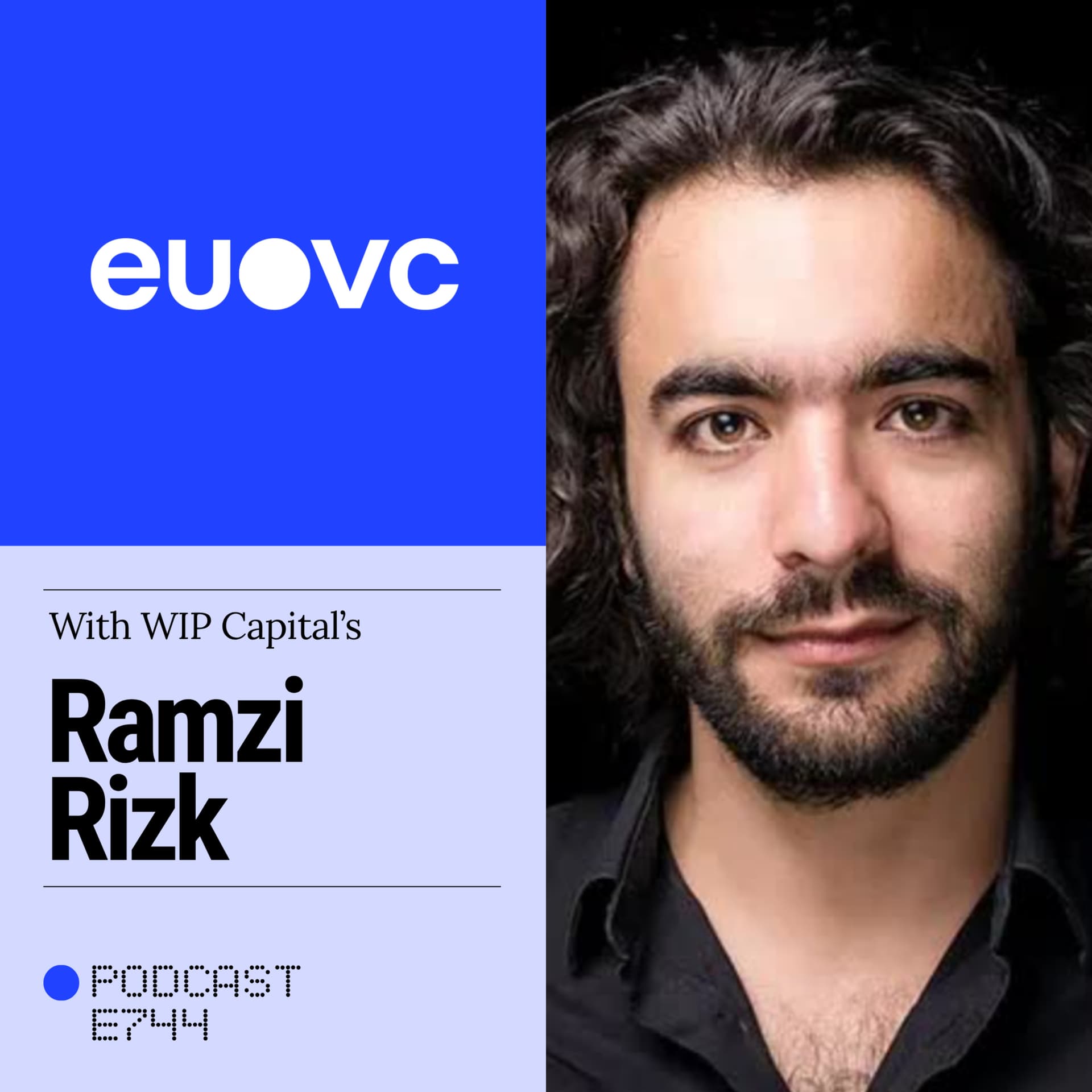

In short
Ramsey Risky (WIP Capital) argues that the “alpha” in frontier investing is in sci-fi-like domains where nature is computable and AI’s architecture is still being written—especially bio/neuro/AI, with opportunities like soil. He also discusses neuroethics and why Europe should “build and force the hand” of slow systems rather than wait for mainstream adoption.
Guests
Ramsey Risky, software engineer by training; researcher by trade; dropped out of a PhD; built five companies (three exited); 60+ angel investments; solo GP running a 10M euro fund at the intersection of bio, neuro, and foundational AI.
Key claims
Scientists/engineers make better founders when they combine domain depth with drive; informed consent for brain-embedded tech is unrealistic; researchers can learn commercialization; investors should deploy before a field becomes mainstream.
Notable examples
Metabologic (AI enzyme design; cancer diagnosis); Netho Labs (neurotech); Asilomar neuroethics workshop (FDA vs NIH leadership, lived-experience participants); AI vs GDPR and rapid EU AI directives as a “pragmatic” contrast.
Written by AI. May contain mistakes. Listen to the episode to check what was said.
Chapters
Tap a time to open that second in VOThe Alpha in Sci-Fi vs. SaaS
0:31 to 1:40
Explore the idea that true innovation lies in sci-fi concepts rather than traditional SaaS.
“A typical, what we would consider an exceptional founder traditionally, they can't do this stuff, right?”
The Role of Scientists as Founders
1:40 to 4:36
Understanding why scientists can be better founders compared to traditional entrepreneurs.
“So there's a conference in Pacific Row, California that has a habit of showing up right before everything changes.”
Insights from Asilomar Event
4:36 to 7:22
Gain insights from the Asilomar event focused on neuroethics and emerging technologies.
“I mean, for me personally, one thing is I like to be the stupidest person in every room.”
Europe's Role in Technological Progress
7:22 to 10:14
Discussing Europe's position and opportunities in advancing technology responsibly.
“In many cases, educating the public becomes sort of a checkbox that a lot of companies get out of the way, but nobody's really educated.”
Investing in Science-Backed Ventures
10:14 to 14:00
Examining the investment approach towards science-backed ventures and their unique challenges.
“I lobbied against GDPR, despite my privacy background, because my thinking then was, this is just misinformed.”
Navigating Investment Challenges
14:00 to 15:00
Learn how to balance idealism with practical investment decisions.
“Let me ask you about how you're thinking about that and how you avoid falling in the trap of helping something you want to see in the world get out into the world versus backing something that will be a rocket ship.”
Identifying Exceptional Founders
15:00 to 16:20
Discover the traits that make successful founders and researchers.
“In both cases, these are people that think they know something nobody else does.”
The Researcher-Founder Dichotomy
16:20 to 17:40
Explores the complexities of researchers transitioning to founders.
“I think there's a level of disingenuity where we say we have these platforms and we give the founders all they need.”
Survivorship Bias in Investment
17:40 to 19:20
Understand how personal experiences shape investment decisions.
“They've just maybe not framed it as such, if that makes any sense.”
Integrating Research with Commercial Goals
19:20 to 21:34
How to align research endeavors with commercial viability.
“and even if I can't explain it I trust it quite implicitly.”
Show all 19 chapters
The Limitless Opportunities in Deep Tech
21:34 to 22:52
Explore the diverse paths and potentials in deep tech investments.
“And you're creating buffers between them and product, them and then sales, them and engineering.”
Emerging Markets in Technology
22:52 to 24:51
Identify lucrative opportunities in different tech sectors.
“So it's quite, the options are limitless on the downstream.”
The Importance of Adaptability in Investment
24:51 to 26:17
Learn why being flexible is crucial for successful investing.
“All major AI labs are looking at neurotech because they've realized this data and these models are very relevant for us down the line.”
The Solo GP Model in Deep Tech
26:17 to 28:00
Insights into the unique challenges of being a solo GP in deep tech.
“you, in my view, are also a generalist within the deep tech science space.”
Exploring the Solo GP Model in Deep Tech
28:00 to 28:42
Discuss the unique challenges and opportunities of being a solo GP in deep tech.
“So I think I might be doing something right.”
The Decision to Invest Early
28:42 to 29:52
Understand the rationale behind investing early and the implications of being a solo GP.
“And also, one of the things that many people say about deep tech is that, oh, my God, if you're investing super early, you really have a valley of death where it's very difficult and you need a lot of money very early.”
Navigating Fundraising Challenges
29:52 to 31:08
Learn about the difficulties of raising funds as a solo GP and the insights gained.
“And then being a solo GP, I think it forces clarity a little bit about my edge and there's nothing to hide behind, which, you know, half the time feels very, very vulnerable.”
The Ideology Behind Investment Choices
31:08 to 31:49
Explore the ideological stance on investing in impactful technologies versus trends.
“is we've had markups for the last six years.”
Strategic Fund Size and Returns
31:49 to 33:07
Discuss the strategic choices behind fund size and the desire for quicker returns.
“There's a lot of dry powder on the other side, both for acquisitions as well as for follow-on capital.”
Transcript
Automatic transcript. May contain errors.0:00Andreas Munk Holm:Before we start, five weeks from now, Love Tomorrow Summit takes place at Tomorrowland. Take a look at your screen right now, because there is something amazing in which you're having right now. EUVC is on stage, keynotes on Thursday at the Rose Garden stage and the Investor Lounge at the Impact Circle on Friday the 24th. The speaker lineup is nearly locked in. If you're active in impact investing, sustainable capital or climate-focused venture, the people in that room on Friday are exactly the people you want to be meeting. Link is in the show notes. If you're coming, I would love to see you there.
0:30I like to say that the alpha is in sci-fi and not SaaS. A typical, what we would consider an exceptional founder traditionally, they can't do this stuff, right? You can't vibe code enzyme design. You can't vibe code a model of the brain. And also, I think you can teach a researcher to pitch probably much more easily than you can teach a salesperson to understand these complex scientific processes. There's a pattern that kind of crosses everything biological, physical, and industrial, which is being empowered and enabled by like all these advancements in compute and AI and technologies today. And that's really where I like to invest and where I think scientists and engineers are in the best position to truly create the future that we want to live in.
1:06It's not scientists instead of founders. It's founders who are also scientists, right? That rare intersection of genuine domain depth and the drive to build. Right now, it just happens to be that a couple of my investments have been in bio. Metabologic is doing enzyme designs with AI or almost is diagnosing cancer. But it's not really biotech stories. It's like AI stories happening in the biology modality. And this is kind of what I figured out over the last 10 days or so. It's a framing problem that I had, but it's rather that the natural world is computable and that critical industries are being automated for the first time and that the architecture of AI is still being written.
1:36Still, those are slightly different kind of opportunities and they have to be looked at slightly differently.
1:42Andreas Munk Holm:Welcome back to the UBC podcast. So there's a conference in Pacific Row, California that has a habit of showing up right before everything changes. In 1975, it was recombinant DNA. In 2023, AI safety. Ramsey Risky, as I like to call him, was just in that room for neuroscience. He's a founder who has built and sold two companies, made 60-plus angel investments, and then looked at everything he'd learned and decided the most interesting bet he could make was on scientists and engineers. They're people that too many VCs are too impatient to back. WIP Capital, or WIP Capital, is a 10 million euro solo fund at the intersection of bio, neuro, and foundational AI.
2:20Andreas Munk Holm:Today, we're finding out what he heard at Asimilar, why he thinks scientists make better founders than just normal founders do, and what it means to be alone with every decision.
2:34This show is not investment advice, and the hosts of this episode may be invested in the funds and companies featured.
2:40Andreas Munk Holm:Welcome to the podcast, my friend. Hey, Andres. Thank you for having me. Excited to be here. Did I get some of this correct? I know you wrote me an email saying, 60 investments, Andreas. That's actually, if you also count my scout investments. Tell everyone who you are, my friend. Yeah, I'm excited to be here. I'm Ramsey Risk. I'm a software engineer by training, researcher by trade. Dropped out of my PhD because I realized that impact can be done kind of more by building companies. I ended up building five companies altogether. Three of those exited and then started angel investing. caught that bug realized it was kind of my icky guy i had i had a passion for it um i felt like i had a knack for it my my angel portfolio over four years was kind of top percentile i'd say 5.2 gpi which got me thinking about the next steps and i realized i had no choice but to kind of launch a fund and that's where work in progress was born with the idea like you're saying uh to back engineers and scientists who are creating the future that we want to live in.
3:45I wouldn't say bio and neuro as a focus, even though I've realized that's a bit of my mistake and how I was framing it, because it put me in a sort of a bucket which isn't actually true. The reality is there's a pattern that kind of crosses everything biological, physical, and industrial, which is being empowered and enabled by like all of these advancements in compute and AI and technologies today. And that's really where I like to invest and where I think scientists and engineers are in the best position to truly create the future that we want to live in.
4:17Andreas Munk Holm:Very cool. We'll dive more into that in a second. I want to ask you, because you just came back from Asilomar, which has a way of showing up just before everything changes. Tell me who was in the room, what were the serious disagreements, What was the real consensus there? What were the live tensions? Absolutely. I mean, for me personally, one thing is I like to be the stupidest person in every room. I feel like that's how I learn. And most of the time, it's a bit of a humble brag when I say that, because I'm not the stupidest person in the room. And Silomar was one of those cases where I was like, I want to sit as far back in the back as possible.
4:56I want to hide under a cover, you know, sitting on breakfast. and there's the former head of the FDA debating with the head of the NIH. And I'm like, hmm. So a couple of things. First, I unfortunately can't dive deep into naming people because Chatham House rules and there's a certain level of expectation that goes with it. But I can tell you everything about the event. The core of the event was organized by BrainMind and it was an attempt to start thinking about neuroethics a little bit before these technologies that, you know, some of them have become, have made it at least into the public psyche, others have not, but they have a lot of huge implications, right, when it comes to consent, when it comes to autonomy, right, physical and mental autonomy, when it comes to privacy in a much broader sense than what I post on social media.
5:51And these were the topics, right? There were around 100 people at the event, three days. from government buddies, public buddies, regulatory buddies, to a lot of top researchers and a lot of operators that are building, as well as investors. And we spent basically the days trying to figure out, can we create frameworks? Can we create ways to align? Can we identify the best way to guarantee that the technologies that get built and get funded are not harmful? That's a really big ask. What made, I think, one of the things that made this event very meaningful, apart obviously from the historical context of where it was and the caliber of people there, there were a lot of people in the room with so-called lived experiences, right?
6:39People who had actually devices embedded in their brains, who had had treatments, who had had BCI interfaces, in many cases, obviously, on a more of a health point of view and not necessarily a consumer point of view. but it made the entire conversation much more real you know and funnily enough a lot of those people were I guess they were arguing for optimism for example a big chunk of the conversation was oh my god tech is gonna do something bad and they're like I can walk and I couldn't walk I had tremors I don't have tremors like let's frame this as the positive and then figure out the rest so yeah I mean there's a lot of ways we can dive dive into this for me at the end of the day, there's a big challenge around educating the public.
7:26In many cases, educating the public becomes sort of a checkbox that a lot of companies get out of the way, but nobody's really educated. You take the terms and conditions, that kind of covers my ass, but that doesn't mean you really know what's going on. And that's kind of history from my privacy research back in the day. It's very, very similar. But in this case, it becomes much more important. And my argument, for example, was, doesn't matter. Informed consent doesn't exist. You cannot expect the average Joe to understand what a device embedded into their brain will do. So we have this responsibility, one, of simplifying the language, two, of kind of controlling it, framing it.
8:06There needs to be advanced regulation to understand, and again, not in the European sense of let's block progress but in the sense of if you can embed a device into my brain that allows me to focus more I need to be sure that you can't at some point make that device make you work over hours or maybe make decisions that I wouldn't make otherwise you know think of I don't know think of a drone operator that suddenly gets programmed to lose empathy there's there's so many nuances. It was exciting. It was eye-opening. It was insane to see how many unbelievable technologies are being programmed and created.
8:47But it was also quite refreshing to see that both from the public and the regulatory organizations, the researchers, as well as the people building, there was an alignment on this stuff is coming. We need to build this stuff. The worst thing we can do is block it. The second worst thing we can do is hide our head in the sand and hope that the problems take care of themselves.
9:07Andreas Munk Holm:If you were to comment on Europe's role when you're thinking about these problems and issues, what would be your take? I think it's an opportunity, like in many other cases, it's an opportunity to get ahead of the curve. The problem is generally with Europe that we tend to move a little bit slower, which has benefits, but also we tend to disregard, and this is a lot of what I like to invest in, we tend to disregard things until, even from the VC side, I'm not even talking about regulation, until they become mainstream accepted and in vogue in the US. And if you look at Europe and our resource institutes, 40 % of the top world's institutes are here.
9:53We have departments in every single scientific field that are doing unbelievably amazing work that are stuck in academia. They don't even know how easy it is to build companies. And if we empower them, my thinking is generally, don't wait for change to happen, make it inevitable. And if we create these technologies, then change will happen. Perfect example is AI versus GDPR. I lobbied against GDPR, despite my privacy background, because my thinking then was, this is just misinformed. You took a piece of policy, you drafted it over 10 years, and now you want to ratify it. And it's just not reflecting of the world as it is today.
10:32and the reason was there was no urgency. Whereas when it came today, the Copyright Act and the AI directive, they were terrified because all of a sudden, you know, GPTs are on the market, Anthropic Cloud, OpenAI, et cetera. And suddenly they had to do something and they were able to draft within three months. I'm not saying it's perfect, but definitely much more pragmatic. So I think we need to build and force the hand of the systems that are bureaucratic and slow to react.
11:04Andreas Munk Holm:So let's continue on the vein of the fact that we have such strong research institutions, which I think it also explains why you chose to come back to Europe and invest here and not in the States as much, because we do have exceptional research backgrounds here. We have exceptional research institutions. It's a quite different bet from just backing the typical founder profile. Many would say that it requires a different investment process, a different company building path. I'd love to hear your take on this. Do you think that's true? Do you think it's not? We have oftentimes, when it comes to pure science-backed ventures, we oftentimes have some very specialized funds doing that.
11:48Yes, absolutely. So there's a few thoughts there. I don't think there are two distinct sets, right? I think I'm still backing exceptional founders. It's just that not every exceptional founder would be a fit for me. And the way I look at it, it's not scientists instead of founders. It's founders who are also scientists, right? That rare intersection of genuine domain depth and the drive to build. The things that I want to invest in, the things where I think the opportunities lie in, I like to say the alpha is in sci-fi, I'm not SaaS. a typical what we would consider an exceptional founder traditionally they can't do this stuff right you can't vibe code enzyme design you can't vibe code a model of the brain and also i think you can teach a researcher to pitch probably much more easily than you can teach a salesperson to understand these complex scientific processes now for me since i invest so early i almost don't really need to worry as much because the i mean obviously i have my filters and my models and and my frameworks come coming from years of being a researcher and working with researchers at my first company to understand who of them have the right traits and what it takes but once you pick them then it just becomes a question of potentially coaching them or finding a planning someone to to join their team to cover their backs on the other side right i like to call this the the the The genius and the shield is one of the, essentially, the founding team frameworks I look for.
13:22Andreas Munk Holm:One of the things I see most different from a traditional VC and a lot of the investors that I see very focused on scientist founders is that the traditional VC most often have the approach, I'm backing people who don't need my help. and oftentimes the VCs that end up investing with a thesis that's directed towards founders that have scientists backgrounds they tend to come at it with a very different mindset which is I know there's such powerful intelligence here I know there's such powerful innovations here I want to see them come out into the world and I want to help it happen and no one else is helping them so now I'm doing it while that's a super worthy goal it's also a super dangerous one because it can very easily lead you astray because you veer away from the foundational principle that you're looking for exceptional people who will run through walls and make it happen no matter what.
14:22Andreas Munk Holm:Let me ask you about how you're thinking about that and how you avoid falling in the trap of helping something you want to see in the world get out into the world versus backing something that will be a rocket ship. again I don't think the two are mutually exclusive and I need to look they're not at all but it's where you can often go wrong as an investor because you're backing the wrong thing because you're so hugely motivated I hear you there's a bias right I get so excited when I talk to someone who's just unbelievably smart and passionate about a topic that they've been researching and they know more about than anyone else and I genuinely have to force myself to step away for 24 hours 48 hours from that company because I know like hey this is this is your dopamine hit this is you're just crushing this is a real love let it build um I'm not looking to back founders that need me to kind of get into the into the trenches with them I think it would be disingenuous I think it's like you're saying I think it would be probably wouldn't work even because you know whether it's a researcher a scientist an engineer or or a traditional kind of business founder you need to find those people that are willing to run through walls right and and they won't want you to be telling them what to do but they're they'll be willing to be coached they want to be learned they want to learn they want to they're open to understanding things that they don't understand which is a very common trait in researchers and and when you look at really good founders and really good researchers there are so many things that are parallels right i think there's a bifurcation in the road at some point where a really smart person decided to found a company instead of getting a job that is more well-paid, or a really good scientist researcher decides to go into advanced research instead of joining as an engineer and also being highly well-paid.
16:15In both cases, these are people that think they know something nobody else does. These are people that are willing to go against the mainstream because they believe something. the biggest challenge i think is finding the type of researcher that is more fascinated by the solution than the problem finding the kind of researcher that is that that where it clicks when you tell them that they shouldn't be kind of indexing and optimizing for cash but rather for time because as a researcher you're kind of limited by cash that's your main constraint versus in industry it's really how fast can you get to market it's people that are kind of comfortable operating with incomplete information.
16:55So there's a lot of overlaps. I think there's a level of disingenuity where we say we have these platforms and we give the founders all they need. In some cases, it's relevant. Maybe a lab, lab space, access to peers and so on and so forth. But at the end of the day, I'm trying to find someone who does have that sense of, hey, this is the commercial application. These are a bunch of commercial applications. Someone who's driven by this big, big, big picture of, say, I want to model the brain and create a digital twin of the entire human brain. But by the way, along that way, the data I harvest is super valuable.
17:33Once we get to this point, there's clinical applications that are relevant. Once we get here, there's consumer applications. And the people that have that already have essentially all it takes to be a founder. They've just maybe not framed it as such, if that makes any sense.
17:47Andreas Munk Holm:What have your 60 plus investments taught you when it comes to investing in the frontier of tech? To be fair, as an angel, my investing was obviously not as focused as it is with the fund for a variety of reasons. I had a full-time job. I was more opportunistic. Definitely the founder bet is very similar. Like the kind of people I like to work with, the kind of founders I look for, they're very similar. there's a challenge with kind of frontier and research type founders that they might be a bit too stubborn but looking at my 11 years pushing at IAM where you know every few years there was like a very clear indication of what the hell are you doing you're just literally you know you're Sisyphus you're just literally rolling the stone up until you hit the next you know wall and it rolls back down and there's a balance between how many times you need to try to break through a wall and when to know how to when to give up.
18:46That's something I'm still learning every day to figure out with the researchers that I work with today. For lack of any better way of putting it, there's an energy that you feel with the right person. And this is something I trust, right? I think of it as kind of my gut. And I know in hindsight, survivorship bias always goes and says how excellent every choice you made along the way and you everything would lead you here. I kind of believe that luck factors into it quite a bit and I believe that gut factors into it quite a bit and I think of my gut as kind of my own privately trained machine learning model that's trained in all my experiences and even if I can't explain it I trust it quite implicitly.
19:31Andreas Munk Holm:How do you evaluate the commercial potential in someone whose entire identity has been built about being an amazing researcher? Like I am always, I love this question because I've seen back in my days of investing in research type founders, the firm that I was with, what they often I think did wrong was that researchers were coupled with commercial talent that would be hired in and there wasn't much commercial talent inside the founding team. And I often saw that not go super well. Absolutely. You know, one particular example of one of the companies I invested in, this enzyme design company, it's a theme of two.
20:22One is a pure academic, biochemist, PhD, researcher, probably not as interested in necessarily commercializing. And the other is an AI guy. And I think that's the trick, right? At that early stage, you probably don't need as much this pure commercial external talent as much as the typical kind of founder that would be building a SaaS, maybe an engineer, an engineer with a bit of a product sense. And I think that's closer and they can communicate better. We had this challenge at my first company, right? We were doing pure research like 2012 at the very early days of deep learning. We're doing pure research on computer vision.
21:02And we were also licensing the technology and we were integrating it into our products. And I had to create this entire infrastructure of pure research where the researchers can just go into their rooms, hide for six months, not be disturbed. They're not working agile, sprints, whatever it is. They're also not reporting anywhere. To kind of apply it where people are taking this pure research and turning it into something usable to the people that were doing almost rotations, that you'd rotate them out of this as a reward. And then they do kind of some iterative work on improving the models that were in production.
21:34And you're creating buffers between them and product, them and then sales, them and engineering. But you're also creating these interfaces. So I've built that a few times and I kind of have a sense for how to search for it within teams. I fully agree with you that the solution is not to bring an MBA into a researcher's room and go like, now you are the perfect founding team that doesn't exist. I don't think we should underestimate how quickly a researcher can develop this instinct for commercialization and understanding how to build a commercial product. And now for me, for my investment, I obviously have a team of scientific advisors.
22:15These are people that I've known for a long time, worked with and so on. They helped me to vet the science and the tech part of things. And then my access and so on on the commercial side helps as well. At the end of the day, the opportunities, when the stuff that I'm investing in, the opportunities are limitless when it works out, right? There's not even one path. And this is why, you know, we're talking about bio and euro. And I've been up since 6 a.m. today in the process of reframing how I talk about all of this. Because it doesn't mean your bio doesn't mean you're creating a drug and going through clinical trials and going to market.
22:51it could very much mean a new modality of an AI model that is as valuable as a large language model, right? So it's quite, the options are limitless on the downstream.
23:05Andreas Munk Holm:Ramzi, let's talk about the specific markets, the specific technologies you're investing in. You're sitting at the intersection of three fields that I think we can fairly say are all moving at different speeds and somewhat in different directions as well. Could you talk a bit about where you're seeing the opportunities? Yeah. The obvious ones, of course, but also those that you think that we're kind of missing in the broader media? Absolutely. You know, I don't know how much of that curveballs, but maybe I'll throw one here. Yeah, please. When I came into this, even like the last couple of weeks where I was kind of feeling just something off, I was saying the three beliefs are that the body is deterministic, the brain is computable and the AI story is not told yet.
23:51And I was trying to kind of retrofit my investments into that. But the reality is there's, and this is kind of what I figured out over the last 10 days or so, it's a framing problem that I had, that it's rather that the natural world is computable, right? And that critical industries are being automated for the first time and that the architecture of AI is still being written. That's not done yet. But still, those three are slightly different kind of opportunities and they have to be looked at slightly differently. Right. So in the case of this natural world is computable. That could be bio, that could be neuro, that could be ag tech.
24:29I need to stay as open as I can to the modalities that I'm confronted with. Right now, it just happens to be that a couple of my investments have been in bio. Metabologic is doing enzyme designs with AI or almost was diagnosing cancer. But these are not really biotech stories. These are like AI stories happening in the biology modality. And same with neurotech, with Netho Labs and so on. All major AI labs are looking at neurotech because they've realized this data and these models are very relevant for us down the line. I'm just right now exploring soil. And I think soil is a very fascinating space, right?
25:06We barely understand it. We've never had the skills to understand it and the tools to understand it. and the opportunities both in terms of food security, in terms of discovery of products and molecules and so on, in terms of crop, harvest, yield, are just enormous. And this is only now coming to fruition, right? So if you'd asked me two months ago, I would have not really had an opinion on soil. And now I'm like, oh yeah, fuck yeah, soil. That's really exciting. And so I don't know what's coming next, but all of these sciences, there's super smart people that have suddenly been empowered by compute, by AI, by the access to data, and their work is accelerating.
25:47Andreas Munk Holm:To those that are listening in thinking, Ramsey is a bit going in many different directions. Why doesn't he have an exact thesis here? I want to draw out something that I heard from, I think, one of the guys from Angular, I think, where he said that the reason why he's a generalist and master is because if he could form a thesis about any space, then he would already by definition be too late. I think that while you can be a generalist and that's all good and fine, you, in my view, are also a generalist within the deep tech science space. And your point is exactly like yesterday I didn't know anything about soil.
26:27Andreas Munk Holm:Now I've spent 24 hours or 10 days looking at soil and I can see, oh my God, there's so much happening here. And that is prompted by an outstanding entrepreneur that comes to you. And then it's about having, of course, an organization that's built up of devices, in your case, that can help you diligence investments within any space, but also having a prepared mind. And I, for one, I'm a complete technological illiterate or scientific illiterate. I would not be able to DD any deep tech science. And for that reason, I would never be a fit for that thesis. But you don't necessarily need to be the expert yourself.
Read the full transcript
27:04Andreas Munk Holm:you just need to be prepared and able to go into it. Absolutely. And then thank you for framing it that way. I mean, it's absolutely true, right? The fund is not really organized by sector per se. It's by this pattern that I've been in myself and I've learned to identify both the moment the domain kind of crosses from scientific complexity to being computable and commercially actionable, as well as my sense for the type of founders that are able to do that. But I think it's very, very hard in this day and age to go and say, oh, I'm going to invest in bio for the next four years. The way windows are opening and closing, the way the world is moving, it would be disingenuous, naive at best, disingenuous at worst.
27:49And I think my job is rather deploying before a field makes it into the mainstream. Once the eye of Sauron turns to that domain, it's too late for me. But so far, I mean, a couple of already, half the portfolio has markups. So I think I might be doing something right. Let's see.
28:05Andreas Munk Holm:Let me ask you a bit about the solo GP model. We could talk a ton about being a solo GP and how it's difficult and you're making every decision on your own and that type of thing. Those are transversal for every solo GP and we've heard the conversations many times. Well, we haven't heard as much, at least I haven't run on our podcast, or conversations around being a solo GP in the deep tech space. because I think you and Rick Howe are probably the only one doing it in Europe. And he's more on the industrial side, and you're more in this intersection between neuro and bio. I'd love to ask you a bit about how you're thinking about that, what it's like to navigate there.
28:48Andreas Munk Holm:And also, one of the things that many people say about deep tech is that, oh, my God, if you're investing super early, you really have a valley of death where it's very difficult and you need a lot of money very early. And for that reason, to be investing here, we need a larger fund. That's the talk track of many larger early stage deep tech funds. Which is great for me because there's more opportunities. I mean, the solo GP choice, which I guess you touched on as well, was partly deliberate, right? It's not that I was like, this is what I'm doing. Rather, the decision that I want to invest early, that this is the kind of investment I want to make, and this is the kind of setup I want around me, those decisions were made first.
29:35I spoke to a bunch of people, considered partnering up. It's great to have partners. It's just not something I felt the urge to do, right? I wanted to move fast. I had conviction. Having founded a few companies, I'm very well aware that, you know, it's a long-term commitment. That's not something you want to commit to after a couple of months, which was sort of the decision. And then being a solo GP, I think it forces clarity a little bit about my edge and there's nothing to hide behind, which, you know, half the time feels very, very vulnerable. I feel like I'm flying by the edge of my seat. But at the same time, it's just unbelievably fulfilling because, you know, I'm doing it.
30:18Fundraising is probably the hardest thing, I have to admit. It's probably the hardest thing I've ever done professionally, which is saying something, having built five companies and sold in tough times and raised in tough times. Not that I expected it to be easy, but there's realizations you only make when you're in the midst of it, right? When you're a founder raising, you're typically the most knowledgeable person in the room. But I'm raising for a fund and everyone I talk to as an investor has more experience in the asset class from that side of the table. So there's a lot of learnings happening there, but I'm pretty convinced it's the right choice.
30:54Now, on the deep tech side, there's part of it that's ideology, right? I don't want to invest in the next, I don't know, AI legal tech, blah, right? And yes, there might be markups. So I think that's a big part of the problem with VC is we've had markups for the last six years. And at some point, there's going to be a reality, a hard reality to face. I want to invest in, again, at that intersection of the future that we want to live in, people creating these technologies that are meaningful, which goes hand in hand with where the alpha is, with where the opportunities are, right? So I'm quite convinced of that.
31:31You hear often the argument of it takes a long time, maybe, but I think AI has accelerated the first couple of years of discovery, so things are faster. Regulatory tailwinds have led to, again, things moving faster in that period. There's a lot of dry powder on the other side, both for acquisitions as well as for follow-on capital. And with my size of fund, I'm very much in a position to actually also take money off the table a little bit earlier and not have to wait the 10, 15 years that it potentially takes the company without any negative signaling towards the product itself because of my kind of small ownership stake, which would allow me to start returning capital, which is, again, like one of the things I want to do.
32:17I don't want to, you know, follow the J-Curve and wait six years. I want to start, you know, returning maybe the fund in the next two, three years and still have enough for that upside. And the size of the fund allows that. So that was kind of part of the thinking as well into why I wanted to do a 10, 15 million fund and not a 30, 40 million fund. Yeah.
32:36Andreas Munk Holm:I love solo GPs. I'm a huge fan. I think the European solo GP landscape is incredibly exciting. I think there's so much happening. Such incredibly powerful people coming to the market, at least, or not at least, but especially over the last four years. If we take the ones that have pulled it off and really been able to raise their own funds, I think that they're definitely leading the pack when it comes to be at the forefront of what's moving. So, Ramsey, I think you'll be one of them. And I'm glad to welcome you on the podcast here. Thank you so much for joining me today. Thank you so much, Andreas.
From the publisher
The next generation of great founders will be scientists and engineers.
That's the argument of Ramzi Rizk, General Partner at WIP Capital, a €10 million solo-GP fund backing scientists and engineers at the intersection of bio, neuro and foundational AI.
In this episode, Andreas Munk Holm speaks with Ramzi about why the biggest opportunities in venture are moving beyond SaaS, how AI is accelerating scientific discovery and why founders with deep technical expertise may have an advantage in building the next generation of category-defining companies.
The conversation explores Ramzi's recent visit to the Asilomar neurotechnology conference, Europe's opportunity in deep science, the idea that the natural world is becoming computable and the lessons he's learned from building companies, making more than 60 angel investments and launching WIP Capital.
Topics covered
- Why the next generation of founders will be scientists and engineers
- Why the alpha is in sci-fi, not SaaS
- Lessons from the Asilomar neurotechnology conference
- Europe's opportunity in deep science and research
- Why the natural world is becoming computable
- How AI is accelerating scientific discovery
- What Ramzi looks for in technical founders
- Building WIP Capital as a solo GP
Timestamps
- (02:00) Introduction and Ramzi Rizk's background
- (04:00) Inside the Asilomar neurotechnology conference
- (09:00) Europe's opportunity in deep science
- (11:00) Why Ramzi backs scientists and engineers
- (16:00) What makes a great technical founder
- (19:00) Commercialising scientific research
- (23:00) Why the natural world is becoming computable
- (25:00) Bio, neuro and the next wave of AI innovation
- (27:00) Why the best investors follow patterns, not sectors
- (29:00) Building WIP Capital as a solo GP
- (31:00) Why deep tech may move faster than investors think
- (33:00) The future Ramzi wants to help build
Learn more about the Love Tomorrow Summit and the programmes EUVC is curating, and secure your tickets here.


