
In short
EUVC Podcast Episode #197 Summary
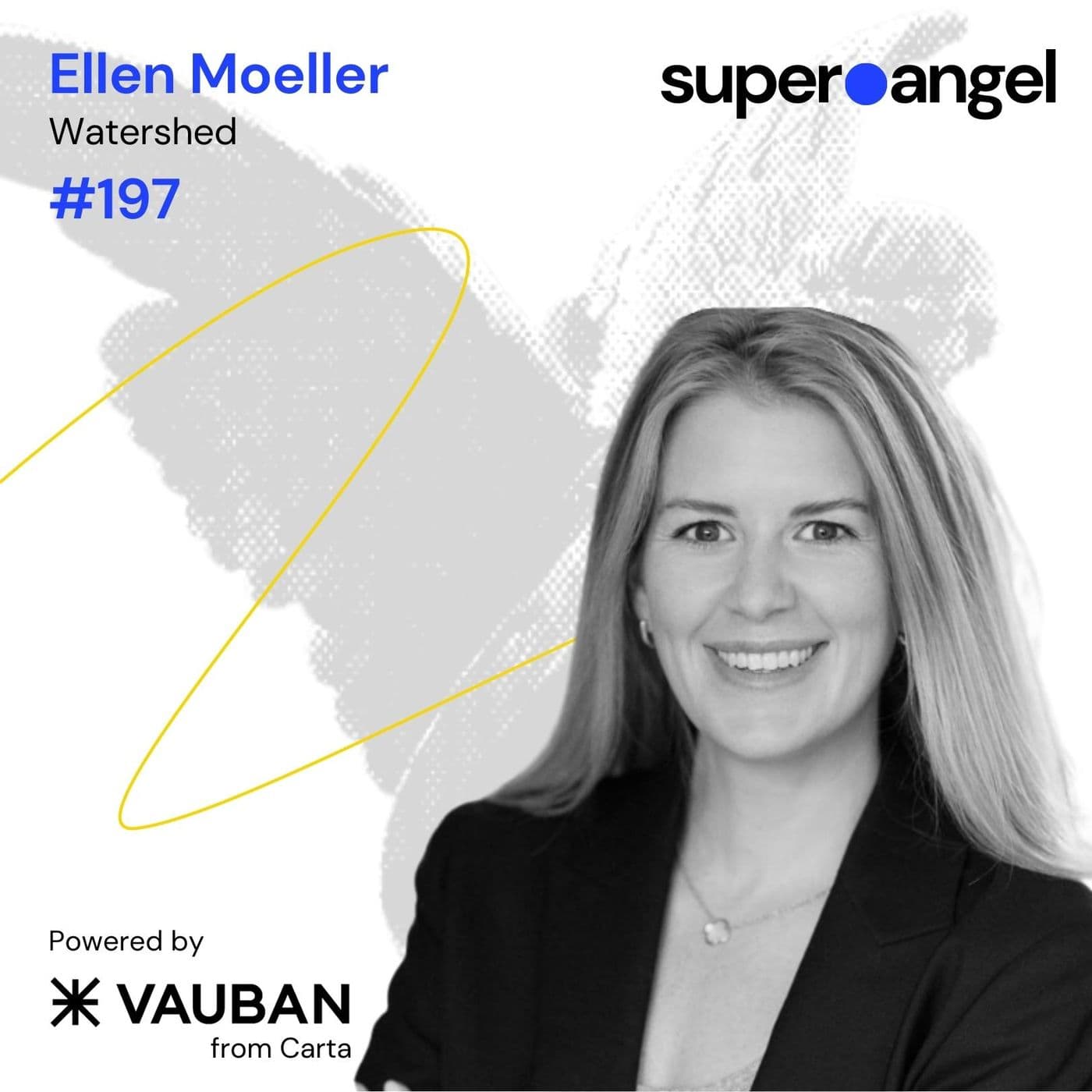
Podcast Overview Title: Super Angel #197 Ellen Moeller, Watershed Description: In this episode of EUVC, co-hosts Andreas Munk Holm and David Cruz e Silva welcome Ellen Moeller, Watershed’s Head of Europe. Watershed helps companies measure, report, and reduce greenhouse gas emissions, with notable clients like Walmart, Klarna, and Spotify.
Guest Background
- Ellen Moeller: Head of Europe at Watershed.
- Previous Experience:
- Over a decade in technology businesses.
- EMEA Partnerships and Operations at Stripe for over six years.
- Business development roles at Marqeta and Visa.
Key Discussion Points
Angel Investing Journey
- Introduction to Angel Investing:
- Ellen began angel investing actively over the past two years.
- Experienced in tech, particularly in early-stage companies.
- Career Path:
- Started at Visa in 2012 before moving to Marketa during its formative years.
- Joined Stripe when it was smaller, played a critical role in international expansion.
- Transition to Watershed:
- Currently focusing on climate tech after leaving Stripe.
Insights on Angel Investing
- Surprising Learnings:
- Operators often possess more knowledge and insights than they realize, which is valuable for supporting startups.
- Importance of pattern matching from diverse experiences in different startups.
- Notable Investments:
- We Equity: A promising Belgian startup where Ellen provided support on early team growth and strategic decisions.
- Cold Brew Coffee Company: Ellen's first investment, which successfully exited.
Navigating Conflicts of Interest
- Transparency with Founders:
- Ellen emphasizes being upfront about potential conflicts due to her role at Watershed.
- Importance of setting boundaries and having open communication.
Investment Thesis and Strategy
- Focus on Inputs:
- Emphasis on the founding team and their motivations rather than solely on outputs or final results.
- Diversification:
- Maintaining a diverse portfolio through smaller investments in multiple startups to mitigate risks.
- Understanding the Business:
- Ellen aims to invest in areas she can comprehend and pitch herself, ensuring she can add value as an angel investor.
Key Learnings as an Angel Investor
- Be Involved and Accessible:
- Maintain easy communication with founders, using informal channels for support.
- Self-Awareness:
- Recognize and adapt to personal biases, avoiding overly prescriptive advice based on past experiences.
- Diversification Strategy:
- Prioritize a broad investment approach to reduce risk in early-stage investing.
Final Thoughts
- Ellen concludes that the landscape of investing is constantly evolving, and it’s crucial to stay adaptable and engaged with current market conditions. She highlights the importance of focusing on inputs and supporting founders effectively.
Episode Conclusion The hosts encourage listeners to share the podcast and join the EUVC community. They also promote their sponsor, Vauban, which facilitates the launch and management of angel syndicates and VC funds.
---
Note: For more details, visit [EUVC website](http://www.eu.vc) and check out the latest episodes.
Written by AI. May contain mistakes. Listen to the episode to check what was said.
Transcript
Automatic transcript. May contain errors.0:02Is this a dream? No, it's not a dream I'm an angel. Why would God send me an angel? Because God knows that everyone needs a little coaching now and then. I'm loving angels. I saw an angel. All angels say. For a long day. Please say it's me an angel. With a smile on her face. Be in it together. But don't love me, Angel. Thanks, let's buy an angel. Girl, girl. Hi, and welcome to the Super Angel Podcast. The go-to podcast for angels backing the next generation of European unicorn founders. If you love our show, do drop us a review, share it with your friends and join our community at eu.bc. Today we're happy to welcome Ellen, Watershed's head of Europe.
0:49Watershed helps companies measure, report and reduce their greenhouse gas emissions. Some of its clients include organisations like Walmart, Klarna and Spotify. Prior to joining Watershed, Ellen spent a decade scaling technology businesses, including more than six years leading EMEA partnerships and operations at Stripe out of London. Prior to joining Stripe in 2015, Ellen worked in business development at Marketa and at Visa. If you're an angel listening in and wanting to get closer to the European angel scene, do not hesitate to reach out to us. We'd love to connect and see how we can play together.
1:27And now, some words from our beloved sponsor.
1:57will be with you all from fundraising to exit. Investors on the Verban platform have raised over$2.5 billion in global investment for companies including Revolut, Bolt, and SpaceX. If you'd like to learn more, please check out www.verban.io forward slash EUVC.
2:21Ellen, welcome to the Super Angel Podcast. We're so excited to have you with us. Thank you so much. I'm thrilled to be here. Heard fantastic things and what a background, Ellen. So excited to have you on the show. Do you want to start by sharing your story and what got you into angel investing? Sure, I'm happy to. I will say, you know, for me, angel investing is relatively new. It's only something I've kind of been doing actively over the last two years. But my whole career over the last kind of more than a decade has been in tech and in tech at various early stages. So maybe kind of starting, I began my career 2012 at Visa, kind of right when the big unicorns of the last kind of five, seven years were sort of just getting started and kind of swiftly left Visa to follow a pretty amazing woman to a company which at the time was 15 people.
3:07It was FinTech before FinTech was a thing called Marketa, which I think many folks might know today as sort of the issuing processing company. They ultimately ended up going public in 2021. But when I joined them, it was a very different time. It was 15 people in a tiny room, pivoting actually from a consumer business to a B2B business. So really fascinating kind of journey with them for two years that all of the scaling and raising money and everything that comes along with that. And then, you know, I was hearing about this great company Stripe at the time. And, you know, a lot of the other Silicon Valley businesses were using them for payments and ultimately met some great people there and went to Stripe, which at the time felt huge.
3:45It was 250 people, primarily San Francisco-based and joined them. And that was just a real journey over seven years of true kind of hyperscaling. A lot of my work with them was in international expansion, in kind of growth in India and South America, in the rest of EMEA and the Middle East. So that was a lot of kind of what I ended up spending time on when I was at Stripe and eventually moved to London, which was a bit of moving back home, despite my American accent. Grew up between London, Germany, and then the U.S., led partnerships for them and global partner operations. But kind of around that time, also started working on a lot of the investments for Stripe.
4:23So during the period of time that was there, Stripe actually invested in a lot of the ecosystem. Given the role that I played, which was kind of very deep product partnership expertise on actually how you build the infrastructure for the products that Stripe was launching, I often got pulled into those diligence conversations. And so one, for example, if people know the company Rapid, also FinTech, That was something that Stripe early invested in. That was a deal that I sort of worked on closely with the CPO at the time. So that was kind of my first entry into really thinking about diligence of early stage companies.
4:54Ultimately, kind of through that time, started getting connected to a lot of founders, actually through the Stripe ecosystem, particularly the Stripe C-suite at the time, saying, oh, talk to Ellen. She's seen this. Or, oh, you should talk to her. She's kind of got insight there. And that is really what sort of ultimately led me to meet some of the Excel team as well. and they actually eventually asked me to join their starter program, which has really been sort of where I've been doing the bulk of my angel investing over the last two years. I actually left Stripe two years ago, joined a company called Watersheds, out of FinTech, now in the climate tech space, which has been really fascinating, a lot of growth in the space, very excited about it.
5:30But it's been great to kind of allow angel investing to still get me kind of plugged in with that FinTech ecosystem. And that's really what I've been doing for the most part from an investing perspective. Lucky them, I'll say to Excel. Do you want to tell us actually one of the most surprising things, you know, starting angel investing personally that you didn't thought of would be the case? And then maybe if you wanted to share like a deal or two with the audience that you want to talk more about, it would be great. Yeah, I'd say, you know, from a surprising standpoint, especially as someone who, for me, I've always been an operator, right?
6:02I've seen myself as an operator. I would say the most surprising thing is that you actually know more than you think you do and that can help other companies. And I say that with humility because sometimes you're in your role and you've got these blinders on. But actually, the more time that I spend with founders, the more pattern matching you really see. And I think it's important not to totally project your own experience onto them. Obviously, circumstances change and that's a very important part of being able to be a good backboard. But actually, some of the pattern matching and actually experience the pain of how do you choose your first sales hire or how do you think about building a diverse team early, being able to bring some of my own experiences of that across a number of different companies to founders.
6:44And that actually kind of creating real value has actually been something that is both rewarding and maybe surprisingly surprising. You know, as an operator, you have so many bottom-up data points. And if you can actually filter out like your bias to that and give kind of a framework to founders, that tends to be like the, you know, the best ingredient. The other question was more about if you wanted to share a deal or two that you've done with the audience? So more recently, one deal that's been very fun, been exciting is a company called We Equity. It's a young Belgian founder. This was actually a funny one because he reached out to me about a year ago.
7:17We got talking, I was really impressed with just his drive, his hunger, the kind of team and the way he was thinking about building around him. But for me, again, as an operator, there was enough of a little bit of a kind of overlap with what I do at Watershed that I felt probably wasn't something I should and could invest in for those reasons right now. Ultimately, they, as it happens with many early stage companies, kind of had a bit of a pivot. We had stayed in touch, ultimately was able to invest and have been spending a lot of time as he's been thinking about, again, that early stage team growth, how to think about early hires, how to think about the ecosystem.
7:51And so building that relationship has been really rewarding for me as one of my investments. Another one totally different, my first investment, which is a little different than what I invest in now because I largely focus on fintech and impact investing. But I invested in a cold brew coffee company, actually, with a cool female founder who recently sold her company to Grind. And that was a very different kind of approach. Not the focus for me right now on consumer, but definitely a rewarding one to see that kind of through completion and exit. I'd love to have access to a cold brewed coffee of good quality.
8:24I do that investment anytime. Ellen, many in our audience will be operators or maybe even founders in their own businesses and then do angel investing on the side. So I'd love to dive into that part around how to navigate potential, you know, incentive misalignments and that type of thing. How have you gone about that in terms of working with Watershed? I have tried to be very open, honest and relatively conservative on this. And I think there it is being really upfront with the founders early on of, look, hey, I'm really happy to have the conversation. This is what I do. Anything that feels like there's going to be overlap either in terms of types of customers are going after for the same types of solutions.
9:12I want to you know I want to back away from it happy to be supportive of you in the industry but I can't go be well beyond that on knowing the ins and outs and so I don't think there's a perfect playbook for it and for me like in that case it was also letting the watershed founders know hey I'm doing this I think it's orthogonal to what we do for these reasons they had no issue with that to me it's all about transparency up front the reality is businesses may pivot and over time there may be areas of overlap and that's where again that kind of transparency and saying, okay, I know I'm invested, but I probably have to step away from these conversations or I can absolutely help you think about, I'm thinking like diverse hiring practices, but maybe I can't be there for your kind of go-to-market sale pitch iteration, understanding sort of where those boundaries are and then being upfront with them, both with the founder and then potentially with your kind of operating team, if that's appropriate.
10:01To me, that's been the approach today. Yeah, very cool. I think that's valuable to just hear because I I think we have so many that are navigating that or thinking about, I want to do angel investing, but I also kind of feel like I'm going to get into too many difficult situations, both with their boss or with the founders and find themselves in a piggy there. But I want to go into our investment thesis segment. Oh, no. Not about the thesis segment.
10:31Ellen, you said just before we started this, I think maybe I'm a bit, you know, early in my investing career than some of your other guests. And then we said, well, we actually think that's great because that's where many people are. So we want to show the breadth of it. And you're on your trajectory to be exactly what this podcast is about, Super Angels, right? So the big question that we would have to use then, you know, if you could describe to us, where are you now on your journey with more words than what I just did? And then where are you headed? What are you trying to build and what's the investment thesis and strategy that you're pursuing?
11:04I am early in my journey. I've only done about eight investments to date. And so that's been primarily over the last kind of 18, 24 months. I'm loving it. I want this to be a big part of the way that I build my career going forward. I think it's had a number of benefits. As I mentioned, it's both allowed me to kind of tap in and engage with different parts, for example, in the kind of impact investing ecosystem, broadened my network, allowed me to give back to founders, especially diverse founders. And then for me also, it's allowed me to really stay close to the fintech world where I built up 10 years of expertise and a deep network and want to stay close to that world, but it's a little bit different than kind of the world I'm in day to day.
11:41So that's the kind of way I think about it is I, even though I see my career over the next several years, probably staying as an operator, having this kind of healthy growing book of angel investments is something that is very much the way that I want to think about my career. And for me, from a kind of investment thesis perspective, I love this concept of the score takes care of itself. And I think that's very applicable to early stage investing as well. And as I think about what that means, the score takes care of itself is really thinking about the inputs versus kind of the outputs at the end of the day.
12:16And especially with early stage, like, gosh, like the journey could go in so many different directions. It's very hard to predict the future. You're really banking on companies over the long term. Look at the inputs, care about the inputs. And early on, the inputs in my experience from all the early stage companies where I've worked or seen or been close to, it is about that founding team. And that is the main thing that I look at. It is kind of who is the founder? Why are they tackling this problem? What's driving them? How are they thinking about the team they build around them? Are they humble?
12:49Are they asking questions? Do they have a learning mentality? All of that makes such a difference. And I've seen that be true in the success of Marketta and of Stripe. And obviously we're early days in Watershed as well, but that is absolutely the thing I think I look for both in investing and also in the way that I build my operating career. So that's kind of thesis number one, as I think about how I invest. I'll say the other one is, is obviously diversification. I'm sure people bring this up a lot in the, in the podcast already. Angel investing is such a bet. And so as I think about the way I invest, it is smaller checks in a lot of different places.
13:23And that is definitely the way that I've been approaching things. It's the way I plan to approach things as going forward. And then finally, and this may be sort of personal to me, but it's more, I don't want to invest in something I can't pitch myself and understand. And I think that's probably not true for most people. But if I think about the ways I want to be able to be a helpful angel for the companies that I work with, I need to be able to understand their business. I need to be able to look at it and say, you know, I can introduce you to these people and I can talk about what you're doing or we can get into the meat of things and problem solve together.
13:54And so I'm never going to know it the way an operator knows it, but I want to at least be able to understand enough that I feel like I can actually be helpful as an angel in the way that I'm working with that business. And I know Anthony has something to say, and I will give Anthony the mic in just a second, but I just want to double click on what you just said there. because I think it's so important that we don't mix. I want to invest in things where I can see that I can add value versus I want to invest in things where I can see that I want to help fix things. Because this is the difference between being, I think, on the right path of angel investing, which is I back super-powered people and then I bring what I have to the table versus I meet founders and I see that there's these tweaks that I wanted that should be done to the business model and how they work and blah, blah.
14:43And now I'll go in and help them fix that. We're like, I think that that's two very different things, but it could be understood as the audience as the same thing. And I just want to kind of make sure that we don't endorse the message of, if you think that there's something you can fix in a startup, you should invest and then go along. A hundred percent. I think that is so right. I mean, it is on that team to go fix the things and do the things. Let them come to you if they have questions on how do I think through a trade-off decision? I can explain how I've seen trade-off decisions we made, but that is maybe my earlier point on, you can't be projecting your own experience.
15:17Like, yes, I saw the way Stripe built its business. It doesn't mean I'm going to go in and tell every FinTech how to build their FinTech business, but there are definitely learnings you can take from kind of a framework perspective from other companies. And that's the way to think about it. But as I engage with founders, often the conversation is like, where do you think you need help from an angel? And this is the Venn diagram of where I think I can help you with that. And usually with a lot of the investments I've done to date, it's, I actually need someone to make introductions at American Express.
15:49Great. I can help you do that. I can tap my network. I can find some people or I'm really trying to recruit these three roles. Do you know anyone in this space? I think that is the perfect way to be using an angel. Or it's, hey, I'm like, I'm thinking about what the right kind of first sales hire is for me? What have you seen work really well early stage on a first sales hire when you move from founder selling into actually hiring a salesperson? To me, those are the types of problems where you want to use your angels versus getting really in the weeds of the technical infrastructure or the strategic direction.
16:20So let me double click on some of the areas and I couldn't agree more with all of what's been said. So you said founders first, that's also for me. Any one or two things you always look out for and then conversely, any no-go areas or signs of something that you usually would think maybe not for me in terms of investing? I always ask the question or a variation of the question with founders of what are they looking for in their, how are they thinking about how they're building out their early team? And I think that's really important because the best kind of founders know their strengths and also know their limitations and are looking for complementary teams around them early on.
17:00And I think that is so critical and so important. I will say, I think that is, you know, with the success of Stripe, one thing that was very true of the Stripe founders early on is they built this really complimentary founding initial kind of leadership team. And that is so important. And so I think that relative to someone who's saying, well, it's my show and I'm not really thinking about the areas where I'm not great or I'm trying to do everything, or there's a level of kind of humility that I think is really important as a founder. And that is something that I absolutely look for in the conversations that I have with them.
17:33Yeah, for sure. And what about the opposite? Maybe in putting you on the spot, like any no-go areas or like one thing you're like, I'm not sure that's for me. I think that again, if there's, if I can't see where I can be adding value, this is less of the founder. Like then I don't think that makes sense for me to angel invest. And adding value doesn't mean I need to deeply understand the space they're in, but it does need to mean I can, we together, me and the founder conversation, There's a reason for me to be involved in that deal. I think that's what they would want ultimately in an angel. And that's typically kind of what I look for as well as I'm going.
18:05Makes sense. And the other thing you mentioned is diversification, which obviously, you know, makes a ton of sense. I think you're at a really great place because you're relatively getting started, right? But you have a lot to go forward because you're very excited about angel investing. But there's always the trade-off between kind of diversification and capacity to support, right? Like you have a full-time job. You have, you know, you're kind of doing so many things already. Are you thinking about this proactively? Do you have any views on how to balance that? Yeah, completely. I think that this has been, there was actually a little bit of, and I don't know if other operators who are listening to this may feel this as well.
18:39There's a little bit of fear for me and actually going into angel investing and that I wasn't, I was worried I wasn't going to have time for it because my day job is plenty busy as it is. And you both, I both was sort of intimidated by the, I should be doing some level of diligence. I'm going to want to be engaging with the founders. And for me, that's actually just being intentional on the space that I carve time for it, but also being okay with those relationships with the investments that I have can be really informal. Like they can be on WhatsApp. They can be a, hey, I just have a question on this or, hey, I'm looking for this kind of connection.
19:14And that is, you know, in the same way I'm spending days texting friends or catching up with family, you can have a quick, hey this is the update on this i'm looking for this great i can help you great i can't and it can actually be more efficient maybe than what i bargained for so coming back to some of the learnings that's maybe one for me as well is there's a way of actually doing it that isn't suddenly you're having a three-hour meeting once a month with each of each one of those founders they don't want that they're too busy for that they just want to be able to tap you when they need you and i've experienced that on the operating side as well i don't want to spend three hours with our investors every month i want to be able to just shoot them a note and say can you intro me to this person and they say yes or no and then they shoot off an email and so it's actually having that view coming into how i've been approaching it has also really helped and then kind of gaining efficiencies as i go from there especially if there's kind of cohorts of companies that all have similar types of needs and just being thoughtful about it that way that resonates so much by the way like if you get close to the founders understand their needs they understand what you have to bring to the table you become available to them and then you use your network and your you as a sounding board it's already something that's much more scalable let's say and very targeted and contextual.
20:20And then also, as companies tend to grow, the ones that do manage to graduate and grow, they would need you increasingly for less and less, but more specific things. So I think that scales. So totally agree. I want to go back a bit just because we heard about where you are, eight investments so far over the last 18, 24 months. I'm curious to ask you how you have thought about ticket size and portfolio size, or if not in portfolio size, then at least the pace with which you want to add new portfolio companies? How are you thinking about that? I am not being overly prescriptive for myself on pacing.
21:00I think that for me, it is about finding the right investments, finding the right founders. I think as I've been building out even just sort of my angel network and using that as ways to access deals, talking to different founders, I think part of that balance of being an operator and not being able to balance angel investing with my intensive job on operating is also not being so rigid with myself necessarily on angel investing. I think it's different for different people. Ticket size is relatively, it can vary, but it's relatively small. It's sort of everything from something like 15K up to something like 30K is kind of the range as I think about it.
21:38But as soon as I start to add some sort of deadlines and boundaries for investments, I think that's where it, one, can start to conflict with being able to balance in a way that makes sense with the job that I have. But also, I don't want to be investing for the sake of investing. I want to be investing in founders that I believe in, investing in companies that I believe in, and allowing that to happen relatively organically. But I'm also finding the more that I do, the more that I find, right? Like, it ends up being a little bit of a, the more I'm engaging with the ecosystem, the more I'm meeting the other angels, either from the Excel program or through my own network.
22:11the more deals kind of come my way. And that was part of my ethos for kind of getting started in the first place was continuing to build out that network. So I don't know if that answers your question, Andreas, but I guess it's probably a less prescriptive answer than you may have been looking for there. So I'm not looking for a specific answer, right? But I'm looking to get verbalized what your strategy is and how you've come to it, right? Because that is what we want for our audience to hear and then they can make up their own mind, right? By the way, I think one of the largest privileges of being an angel is you don't have forced pace, right?
22:45You can go with what's coming at you and the level of excitement. And you did mention increasingly the more investments you make, the more potentially active you become because you become more active in the ecosystem. And these are all nodes in an ecosystem, I guess, right? And they retrofeed each other. Do you have any or have you thought about in a more systematic way how you think about collaborating with other angels and VCs? I mean, besides Excel, of course, who, you know, you're part of the starter program there. Yeah. I mean, a number of my investments I've done alongside other angels that I know.
23:18And I think that has been really exciting, really powerful. I mean, another way that I have approached some of my investments have been through my own network. right? So founders that I know personally, people that I've worked for or worked with at Stripe in earlier years, I've known their good. I know other people that are kind of going in on it. I think that can be helpful as I'm approaching angel investing. I think the signals, so there's kind of different ways of knowing whether I want to invest in a company. There's sort of the founder piece of it. There's also whether I think I know that space, I see the problem space and that it actually has a need around it.
23:51But there's also this kind of network signaling that can happen as well. And so part of the benefit that I think of being an operator is you get to actually work alongside great people across different parts of a business and maybe know a business better than you do. For example, one of my investments was in a more of a kind of data science space, but the person who was leading that and the people who I also knew were kind of going in on that investment were former data scientists that I knew from Stripe. And that's this kind of interesting network signal that I think you get. And it's one of these great benefits of being an operator angel is that you have this other network of individuals around you that can be some of that kind of network signal for some of those early stage investments.
Read the full transcript
24:31And so that to me has been also a very kind of powerful add to the approach that I've taken to how I choose and how I identify investments. So if you had to share three core learnings to date from angel investing, what would those be? One key learning for me is, I think we spoke about this earlier, but be involved and make it easy. I think that that is this early stage conversation with the founder, where do you need help? Where do you think I can be helpful? And then make that as easy as possible. That's coming back to the point on what's up relationships are the easiest, maybe grabbing a coffee once every couple months, if that makes sense.
25:15But for me, the best relationships I have founders are, we're really clear on sort of what value I can add, what they need. And we make that kind of communication layer really easy. So that's one of them. I think that the second is just being aware of my own biases and being willing to adapt. And that comes back to sort of not overly projecting. I think a good angel investor is sort of listening as well to the founder and kind of giving them food for thought and applying again, sort of some of those learnings, sharing learnings, but not being overly prescriptive. I think it's very easy sometimes to fall into your operating mode.
25:49As you kind of mentioned earlier, Andreas, like, you know, when I'm in my day job, I am supposed to be a problem solver. I'm supposed to be solving the problems for the business. That is not my job as an angel. And so that kind of awareness on how to flip out of that operating mode into that investing mode is also really important. And being able to give sort of more framework approaches rather than being overly prescriptive is probably the second learning for me, which has been really important. And then again, I think that third one is the obvious one, but it is diversification. And the more that I've spent time with other angels, listened to their approach, I think your podcast is great at sharing a lot of these theses from the angels that you've spoken to.
26:28But I think the key learning there is early stage investing is all about diversification. And so that is very much the approach that I intend to take as I continue to grow from eight to 18 to hopefully kind of 80 investments over the course of my career. I'd love to ask you, Ellen, on the second one, be aware of my own biases. What have you found to be the bias that most often gets you nonetheless? As you can see, we love sticking with the script. No, it's a good question. I think it's probably less of a bias and more of a sort of like circumstantial difference that I have to kind of approach, which is, you know, the world has shifted a lot over the last few years.
27:16And so has the, you know, the way that investing is happening, the way that, you know, the challenges ahead for founders in today's macro environment are very different than they were sort of five years ago, six years ago. And so I think actually coming into it from an angel investor, since a lot of my conversations are on with some of my, the companies that I work with are on raising money, or it's on sort of some of that approach is like looking at the world in a slightly different way now. I actually think that makes a lot of sense because that is exactly what I think most, if you're not very aware of it, then you do end up being prescriptive and using learnings made in a different market.
27:57And that's exactly what you've seen through the last 18, 24 months, right? You've seen the market change quite a bit. Yeah, completely. And, you know, I feel this and experience this in my current operating role, but it's very easy to kind of look back on experiences that were 2016, 2019 and try and apply those to now. And the reality is, I think for most early stage companies, the market has just shifted a little bit and the way of operating is also shifting. And so I think taking that into account as I'm having those conversations with founders is really important. And so that's probably a particularly key one that I try and take into consideration when I'm having those conversations.
28:38Could I put you on the spot with another question? And sorry about this, Ellen, but I don't know what made me think of that. Now, it was the ability to draw out your learnings from your own world to then apply that to founders. because we very often see, of course, executives and senior leadership operators from startups that are quite far, quite advanced, right? Much of your experience is built building Stripe. And as you said, 250 people when you joined grew to quite a bit more later. And then we often see the types of you go into angel investing, where you then do three guys and a dog. And then in a way, it's like they go to you, of course, because you've got the experience of taking something very, very far.
29:25But how well do you see the learnings from taking a hyperscaling company like Stripe converting to a three-person shop in Europe? Well, I'll say the thing for me, and it comes back to not being aware of which types of my experiences I'm bringing into those conversations, because you're absolutely right. Talking about the way Stripe approached something at 4 ,000 people is not helpful when you're a business company and you're just getting started. But most recently, I was first person on the ground for Watershed. And when I joined them, there were 40 people, right? Like I was building the entire team, which now is product, go-to-market, engineering, marketing, policy for Watershed here from zero to now 40 people.
30:14And so depending on the shape of the conversation I'm having with founders, I pull from different parts and I sort of have to be conscious of what I'm pulling from because coming back to your biases question, it's so not helpful for me to explain the way that we approach something as a thousand people, a person shop. And so if I'm having a conversation with a founder and they're saying, Hey, I really need an intro to sticking on the example from before someone at American express, that's great because my stripe knife, I know the GM for American express and I can make an intro and get them the right person.
30:43That's maybe helpful to them still at four people. But then there's a conversation on how am I thinking about building my first team or where should I be located in Europe? And that's a conversation I can have and pull in my watershed experience from as well. And so I do try and be conscious of sort of where I'm pulling from where. And again, not taking too much of an approach or, because I think then you can get a little bit, how do I describe this? Well, I will say that like the, you're giving just sort of supremely unhelpful feedback sometimes to founders. And for them, I think they could leave those conversations saying, well, yeah, if I had an entire marketing team to do X, Y, and Z, I would also do that kind of thing.
31:22And that's just kind of not helpful in those circumstances. But you're absolutely right that much of the Stripe experience, it's actually more of a network help and much of the sort of watershed experience, it is much more of a, how do I approach X, Y, Z type of growth scale challenge. That's the exact part, right? That's the key. That's why it makes so much sense to get angel investors from much later stages because they have that network. So it's probably not as much their lived experience as it's the fact that they have network that they know the people that they should pull in. Anthony, I want to pull you in here.
31:56Yeah, just before the quick fire, right? I just want to give a shout out to you, to other founders, to seek people like you, Ellen, because I think it is very rare to have scale-up experience, scaling teams, the network of specialism, having pivoted to a different segment, but also being a GM, which is kind of like your own CEO for a specific segment from bottom-up zero to one. So not much more to add, just wanted to highlight. Just want to say it's great you've started, like last, I don't know, 48 months or so. And I'm hoping more and more founders seek out people like you. Thank you. I was laughing a bit because when you said the part around not being the one sitting there telling war stories.
32:33For some reason, that brought me back to when I worked a bit more with families. And then you had the older generation, almost like you know that, be aware that don't get them started on their war stories about how it was to build the company 10 years or 20 years or 30 years ago to the younger generation. So I just thought, it's actually funny to see how it's the exact same dynamics, whether you're managing family enterprise or you're an angel investor that comes with grand old experience. Yeah. And I, cause I think to that point, you know, war stories, when you're, you're talking about like all the growth of that happened 10 years ago, whatever it was, they can also be really glorified and they miss the kind of human pain in the moment.
33:16And being a founder can be really isolating experience. And so some of what you pick, you kind of try and pull from your angels, I think is people who've been through that experience. And if you get into kind of glorifying of war stories, gosh, it's just so far removed that you're not really getting to the kind of human element of being the founder and having to navigate some of these decisions. Whereas I do think one of the value adds I can bring as a operator who's so recently gone through some of that pain and kind of GMing and building out that team is, I know this is going to be hard in these four ways.
33:45So prepare for that. And this is the way to think about this. And that gets lost when you're 10 years removed or when it's a thing you did when it was 5 ,000 people and you had a whole HR team helping you out with it. So I think that piece is super important. I agree with your take on the war stories. All right, let's go to the quickfire route.
34:08First question is, what's the most counterintuitive thing you've learned since you started investing in venture? I will say, as an operator, you know more than you think you do. That was probably the biggest learning for me. I mentioned it earlier, but I, as soon as I started sort of getting introduced to founders, even before I was investing in them and just sort of giving some advice, naturally, that's kind of how I got into this. I almost surprised myself with how much value I could actually add. And that has been a really, really great learning as an operator, kind of moving more into angel investing.
34:40And what would be your top tips to angels wanting to do more international investments? I'd say, you know, tap into your network and try and just meet other angels. I can almost guarantee anyone that is operating right now that if they ask around, they'll find avenues into other international angel investors. And that's probably the best way to start. Understand how they're meeting founders. Start to get to know them. Start to build your own angel network. It doesn't need to be 30, 40 people. It doesn't need to be massive events. But I think even just accessing five to seven people in your network can actually really open up doors.
35:14It can really help you identify opportunities. And that to me has been very powerful, just having that early network of other international angel investors who I chat with, catch up with, see how they're approaching things. That's been great. Very interesting. I wish we could dive much more into this one. I think it's very interesting. And it's rare that we see someone with aid investments that already have international investment experiences. Because normally people start very local and then they grow later. And then it's a bit of a different conversation. but let's not open that up now but maybe save it for some day later.
35:50Final question in the quickfire round is what advice would you give to your 10-year younger self if you only had 30 seconds? I would come back to my favorite saying which is the score takes care of itself. Focus on the inputs. I think always focus on the inputs and that is the approach for the way you choose operating careers and I think it's the way to choose investing as well. It is look at the inputs. Inputs are the team and following great people has never failed me. And so I would tell my tenure under self to focus on that. This has been amazing. Thank you so much. Thank you for joining us, Ellen.
36:23It's been great. Thank you so much. It's been a lot of fun.
36:32Thank you for listening to this week's episode of the Super Angel Podcast. The go-to podcast for angels backing the next generation of European unicorn founders. If you love our show, do drop us a review, share it with your friends and join our Angel LPSyndicate at EU.VC. And if you're an angel listening in and wanting to get closer to the European angel scene, please do not hesitate to reach out to us. We'd love to connect and see how we can play together. And now, some words from our beloved sponsor. Verban from Qatar is the easiest way to launch and run your syndicate. Verban's end-to-end platform automates your back office so you can focus on what matters, supporting the next generation of entrepreneurs and building your network.
37:17Angel investors are the fuel to innovation, and they've created the Atom SPV to allow for more deals, more ownership, and less fees. Backed by Carter, the leading fintech infrastructure company, Verban will be with you all from fundraising to exit. Investors on the Verban platform have raised over$2.5 billion in global investments for companies including Revolut, Bolt and SpaceX. If you'd like to learn more, please check out www.verban.io forward slash EUVC. You've been touched by an angel, girl.
From the publisher
Prior to joining Watershed, Ellen spent a decade scaling technology businesses, including more than six years leading EMEA Partnerships and Operations at Stripe out of London. Prior to joining Stripe in 2015, Ellen worked in business development at Marqeta and at Visa.
This episode is sponsored by Vauban. Vauban makes it easy to launch your angel syndicate or VC Fund, check them out at www.vauban.io/euvc


