
In short
EUVC Podcast Episode Summary: Super Angel #200 with Julia Morrongiello, Zero Hash
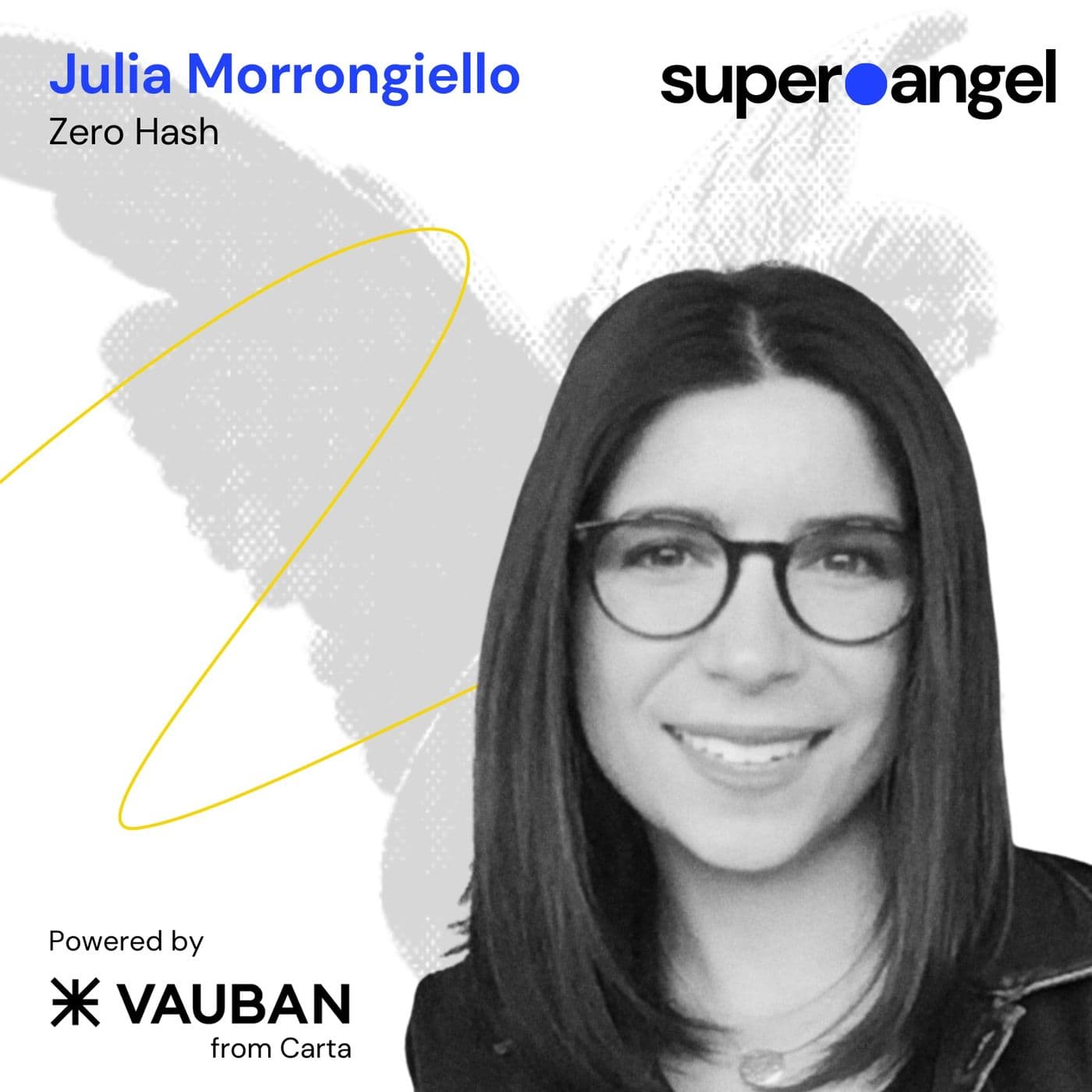
Episode Overview In this episode of the EUVC podcast, co-hosts Andreas Munk Holm and David Cruz e Silva welcome Julia Morrongiello, an experienced angel investor and Head of Growth Europe at Zero Hash. Julia shares insights from her journey transitioning from a VC to an operator and now an angel investor, focusing on the fintech and crypto sectors.
Key Themes and Discussions
Julia's Professional Journey
- Transition from VC to Operator to Angel Investor: Julia discusses her career journey, notably her experience as a VC at Point Nine and GFC, advising founders, and the challenges she faced, including imposter syndrome.
- Operational Experience: Emphasizes the importance of gaining hands-on experience in building startups, highlighting her role at Trade Republic and now at Zero Hash, a crypto-as-a-service provider.
Angel Investing Insights
- Investment Strategies:
- Contrasts VC investment methodologies with angel investing, noting a more founder-driven approach due to limited resources for due diligence.
- Discusses the importance of investing in many companies to optimize returns, emphasizing the power law in venture capital.
- Focus on Women Founders:
- Highlights the need for increased investment in female founders, sharing her personal experiences in the fintech and crypto spaces.
- Acknowledges the unconscious biases in the industry and the importance of seeking diversity in investment.
Reflections on Investment Philosophy
- Importance of Relationships: Julia expresses that personal relationships with founders can significantly influence investment decisions.
- Diversity of Investments: Discusses the importance of diversifying investments to mitigate risks and capture potential outliers that drive returns.
Personal and Professional Growth
- Networking and Community: Julia underscores the value of networking in the angel investing space, fostering connections that can lead to better deal flow and opportunities.
- Balancing Dual Roles: Reflects on managing her time between her full-time job and angel investing, treating the latter as a fulfilling hobby that complements her professional growth.
Key Takeaways
- Founder First Approach: When investing, prioritize the capabilities and vision of the founder over thorough metric analysis, especially at early stages.
- Volume Over Selection: Successful angel investing often requires a higher volume of investments as a strategy to capture potential outlier successes.
- Navigating Unconscious Bias: Investors should be aware of biases and actively seek diverse founders to enhance their portfolios.
- The Power of Community: Building a robust network is essential for both deal sourcing and support in the angel investing landscape.
Closing Thoughts Julia concludes the episode by addressing the importance of focusing on personal growth and joy in one’s career, especially in the competitive landscape of venture capital and angel investing. She encourages aspiring angel investors to embrace their unique paths without comparison.
Additional Resources
- For more insights on European VC and the angel investing scene, listeners are encouraged to join the EUVC community and share feedback or engage on LinkedIn.
---
This summary encapsulates Julia Morrongiello's insights, experiences, and the overarching themes of the podcast, reflecting the evolving dynamics of the venture capital and angel investing landscape in Europe.
Written by AI. May contain mistakes. Listen to the episode to check what was said.
Transcript
Automatic transcript. May contain errors.0:03Hi, and welcome back to the European VC, the go-to-podcast for everything European VC. If you love the show, share with your friends and join our newsletter at eu.vc. Welcome back to another special Super Angel episode on the EU VC pod. Andreas, who are we listening to today? Yeah, so today we are joined by Julia Marangelo, an ex-VC turned operator, turned angel investor. She's now head of growth at Zero Hash. And I really enjoyed this conversation because I am baffled with the journey from going from VC, interoperate, and then into angel investor. And I think that there's something here that people will, everyone here listening in will enjoy because we're going to be talking about the investing style as an angel versus her experience with Point9.
0:52I think that was very interesting. I also like what she says about LP investments, you know, thinking about LP investments as a means to diversify and that it's more kind of opportunistic slash relational than anything else. And then finally, Andreas, as we said when introducing our first, I believe, Super Angel episode on the UBC podcast, we also talk a bit about the power law and how it applies to being an angel and how one can optimize their returns by deploying into many businesses. So in other words, how success for an angel hangs on those outliers. And I think that that's, you know, very much the horn that we're tooting here on both the Super Angel podcast and also on UBC.
1:34and I'm actually more and more mindful that we should maybe try and bring on some angels that don't have that perspective per se. But I think it'll have to be in a round table format because I would push a bit back on it. And I think that it's more fair if we have multiple stakeholders around the table that have the experience and affinity for both types of strategy. So if you're listening in, get ready for a great episode and do share some feedback on this idea. Would you like us to do it? Yes, no. Should we do it? How? Engage with us on LinkedIn.
2:08Is this a dream? No, it's not a dream. I'm an angel. Why would God send me an angel? Because God knows that everyone needs a little coaching now and then. I'm loving angels. I saw an angel. All angels say. For long years. They say it's me an angel. The smile on her face. We're here now together. Don't help me. Thanks, let's buy an angel, girl. Hi, and welcome to the Super Angel Podcast. The go-to podcast for angels backing the next generation of European unicorn founders. If you love our show, do drop us a review, share it with your friends, and join our community at eu.vc. Today, we're happy to welcome Julia, an ex-VC turned operator turned angel investor.
2:57Julia is the head of growth in Europe for ZeroHash, a crypto as a service provider whose clients include the likes of Stripe, Moonpay, Curve and Interactive Brokers. Julia spent most of her career working as a VC investor at Point9 and GFC and now continues to invest in fintech and crypto as an angel and scout for Excel. Since starting her career as an angel investor a little over a year ago, she's invested in 10 companies and one fund. If you're an angel listening in and wanting to get closer to the European angel scene, do not hesitate to reach out to us. We'd love to connect and see how we can play together.
3:36And now, some words from our beloved sponsor. How are you currently reporting to your LPs? Is fund administration taking hours? Are you getting lost in spreadsheet version control? Well, Flow solves all of these issues and more. allowing you to unlock the power of your fund's data by consolidating your work streams onto Flow. Book a demo to learn about Flow's portfolio and fund management features and transaction infrastructure at flow.io forward slash VC. F-L-O-W-W dot I-O forward slash VC. Tactic is the leading forecasting and scenario planning software for venture capital funds. Tactic combines portfolio construction, portfolio management, forecasting, and reporting into a unified platform.
4:23Investors are empowered with data-driven insights on fund strategy, reserve allocation, exit planning, and fund performance. Tactic was built using quantitative techniques researched from hundreds of data-driven fund managers and is trusted by over 250 funds globally today. Tactic is a proud sponsor of the first season of the At The Cat Table podcast series. If you'd like to learn more, please check out tactic.io. T-A-C-T-Y-C dot I-O.
4:57Julia, welcome to the Super Angel Podcast. We are so excited to have you with us. Likewise. Thanks so much for having me on the show. Thanks for joining the pod, Julia. So excited to have you on. I mean, I've known Julia for many years from when we were both starting in the VC space together. So it's even more special for me. But let's get started. So I wanted you to share a bit more with the audience about your story and your foray into angel investing as well. Anthony and I have known each other for quite a long time because I actually have a background in venture capital. I worked at two different funds, GFC and Point9, where I was focused on fintech, marketplaces and crypto.
5:31And I've spent six or seven years in venture capital. And then I started to suffer from something which is quite common in VC, which is imposter syndrome. So I started advising founders, working with them, and realized that I'd actually never done any of this by myself. I didn't know what it meant to actually scale a startup. I didn't know what it meant to build from the inside, although I'd seen a lot of companies from the outside and advised a lot of companies. And then I started seeing the founders of Revolut and TransferWise launching their own funds. And I thought to myself, well, why would someone want to have Giulia Morangiello on their board when they could have the founder of the hottest fintech startup?
6:13So it was really important for me to actually go out and get some operational experience. So I eventually ended up leaving venture capital. I joined Trade Republic, which it was or still is a leading neobroker in Europe, very similar to Robinhood, where I was working on their crypto product. And I now lead European expansion for Zero Hash, which is an American company. They're a crypto as a service provider. So they enable any platform, whether it's fintech or financial institution, to seamlessly embed crypto into their offering. So if you want to compete, if you're a neobank, you want to compete with Coinbase or Binance, we provide you with that capability.
6:49Because I loved VC so much, I angel invests on the side. Before we talk a bit more about some of your kind of memorable deals, I wanted to ask, I mean, having now done a bit of your stint in operating, have you seen already kind of visible differences on your thinking when it comes to investing? Yeah, definitely. It's a very different process and a very different mentality. In VC, and particularly when I was at 0.9, you're taught to be extremely thesis-driven, to do a lot of diligence, and to always have a hypothesis and validate your thinking. and in angel investing you have to take a slightly different approach because you can't afford to do that diligence if you're putting you know small checks you can't do three or four calls with a founder so it tends to be a lot more founder driven and less kind of metrics and hypothesis driven so that's definitely been a big switch and then there has also been a big switch in terms of the types of conversations i have with founders particularly when i'm speaking to fintech and crypto founders, there's a kind of a different level of depth that I could go into and different things that I can help them with, whether it's, you know, how to scale their team on an international basis, how to think about regulation.
7:59So the types of conversations and the types of thinking that you're doing is slightly different. Would you want to share maybe from the two different experiences, maybe a memorable deal that you worked on or did while it's at point nine and maybe one while angel investing? So in terms of point nine, so one of the most memorable deals was a crypto deal actually called Tenderly and their crypto developer tool, which at the time had this thesis around investing in picks and shovels to enable crypto to develop. So what are the core pieces of infrastructure you need to make this happen? And I came across this team from, I think they're based in Serbia.
8:36No one had ever heard of them before. And really this team that like came out of nowhere, didn't know anything about VC, very developer focused. And I just kept on meeting them at different crypto events. And every time the metrics would keep getting better and better and better, you know, one month to another, everything, you know, spiked. It was just a very interesting journey to follow as the crypto market kind of went into this bull cycle. They were kind of able to ride that wave and seeing that journey was really interesting. But that was also an example of very thesis driven, looking at the metrics, seeing them increase month on month.
9:10So that was probably the most memorable one from a 0.9 standpoint. From an angel investor standpoint, actually, my most memorable one was very different. A case where I invested in this female-focused investing platform called Alpha, and I just loved the founder. I didn't look at, I mean, they were pre-launched. There wasn't anything there. And it was really a case of, like, switching that mentality from being really metrics-driven to actually this person is so determined, has a really clear vision, and I just want to invest in this person regardless of what they end up building. That experience in particular was very memorable for me because it was actually a female founder and it made me realize how rare it is to come across female founders in the fintech and crypto space.
9:57And part of that has actually encouraged me to seek out more of these founders and really make an active effort to find more female founders, because I do believe that that area is really underserved and there's a lot that we can do to improve funding for those types of founders. I find myself continuously in conversations with VCs that are seeing the same thing, right? And they very much believe that there are female founders that are underserved and don't get the credit that they should. And for that reason, there's obviously also a great business potential in investing there. But what they're also seeing is that it's difficult for them, because in the end, most VCE shops are very male dominant, right?
10:37It's difficult for them to surface the good deals in this space. And what I'm then seeing from the teams that have women on board, the women then typically say, well, they kind of tend to come to me automatically, right? I have a much larger female deal flow than my male colleagues, and especially, of course, the firms that are pure women driven. And I'm curious if you're seeing the same thing and what you're talking to your fellow colleagues in the industry about. It's definitely a case that women attract women. VC and angel investing is notoriously a network-driven business. And it's only natural that as a man, you have more men in your circle of people that you meet.
11:16And similarly, as a woman, you just tend to attract more women. And I actually, although I'm someone that I've always worked in male-dominated environments, very, very comfortable working with men, a lot of friends that are men, I do find that a lot of the relationships that I've developed with female founders have ended up being much more deep and much closer than the ones that I've had with male founders because, you know, we go for coffees, we'll meet up for brunch on the weekends, and you kind of engage in a different way. So I do think that there is that kind of different way of engaging, which sometimes makes it easier for two women to relate and to help each other versus a men and women relationship.
11:56That's also probably one of the things about being an angel that is great, which is you can invest in the deals that you want to invest and you don't have a fiduciary duty to do something particular with the capital in the sense that if you haven't raised the capital with this explicit focus, it can be difficult to then also how to attribute time and so on. Whereas as an angel, it's absolutely up to yourself. And it sounds to me like, given that angel investing is both a returns game, but it's also something that you do because it excites you a lot. It sounds like given that those relationships also become better when it's female founders, that it also gives you more on the personal side when it is into women founders.
12:34Am I right in saying that? Yeah, no, absolutely. And I think you definitely have a point in terms of the fact that as an angel, you don't have these constraints of operating within a fund. You don't need to get approval from your peers and colleagues. And you also don't need to meet these specific capital metrics requirements and generate a certain return. And I think that gives you actually a lot of power as an angel to actually use capital as an engine for change, to invest in areas that you really believe in. Like, for example, as an angel, yes, fintech and crypto are the areas that I know the best where I'm able to help founders the most.
13:13But at the same time, I do believe that I can use and I should use the capital that I invest to make a change. So sometimes I'll invest in things like in the climate change space or in areas that I think are having an impact because I have the capacity to do so. And I'm not limited by this fund driven thesis. You know, looking forward, but also taking a step back, what do you think angel investing does give you personally and professionally? So a fulfillment towards change and interaction with founders you've mentioned. Anything else you want to share with the audience? For me, it's really given me and it's continued to give me because I've been investing in venture capital before the opportunity to really broaden your perspective and reach.
13:55If you think about a typical operator role, unless you're kind of the CEO, you tend to sometimes be very, very focused on one specific thing. I mean, even I'm leading European expansion, but sometimes I'll spend, you know, weeks on end focusing on kind of how we solve this specific regulatory problem. And doing angel investing allows you to kind of take a step back from that detail, from that minutiae and actually get a bigger picture of what's going on in the tech ecosystem. What are the interesting trends? And that is really interesting from both a personal perspective in terms of satisfying that curiosity, but also from a professional perspective in terms of just understanding what's out there.
14:38And given that I'm working in crypto and fintech and I'm investing in fintech and crypto, there are those parallels. There are those things that you can kind of leverage. There are operators that I meet from the angel side of things that I end up being very close to from kind of an operator side of things. So there is that dynamic. And from a personal perspective, for me, it's also I'm a social person. I love meeting people, getting to know different people. And angel investing allows me to keep doing that. I think it's one of the most privileged jobs in the world. And the fact that I can do this on the side makes me very happy and brings me a lot of joy.
15:15Oh, no. Not about the thesis.
15:22And as you heard, that was the sound of the investment thesis segment. And that means I'll now ask you, Julia, to dive a bit into your strategy and approach of investing. But before that, let's just ask you, number of investments, what portfolio companies have you done? Are you an LP in any funds, that kind of thing? I'd love to hear a bit about the background before we dive into then what were you focusing? From an angel perspective, I'm still fairly new to the game. I've done about 10-ish so far, but did many more when I was in venture capital. Those have been kind of across Europe, some in the US, all very early stage deals, primarily fintech and crypto.
15:58But as we did too before, a few that kind of divert away from that. I am also a LP in 0.9, the fund that I used to work at. Definitely believe that, you know, investing in other funds, you can kind of get diversified return as opposed to doing individual angel investments. In terms of my thesis, I alluded to this previously, but I've been doing fintech and crypto. A lot of people, when they think about crypto, they think about tokens, NFTs, and so on. Although I look at those kind of things, I have to say, despite having followed crypto for over 10 years, I find that investing in tokens and NFTs is still something that doesn't come naturally to me, that I sometimes struggle to actually, how do you value these underlying assets and And what I prefer to invest in, and this applies for, you know, fintech and crypto, but also other industries, is actually what is the underlying infrastructure and these picks and shovels to enable a certain industry to flourish.
16:56So with crypto, it can be, you know, developer tools, it can be regulatory infrastructure. And I try and take that lens. For me, it's an interesting way to look at investments. And, yeah, that's kind of what gets me going and what I'm excited about. And now you said that you've done 10 investments and of anyone, right, with a background in Point9 and also GFC, you have seen up close the investment strategies of the best. Now that you're angel investing, how do you think about your investment strategy? Do you think about reserve allocations at all? Do you think about, I want this broad exposure?
17:29I want this type of ownership. I'm curious because you're very well versed compared to many angels in the nomenclature of VC, right? I actually think about two things mainly when I'm doing angel investment. The first is founders above all. You're investing at such an early stage. And the reality is there's no point over analyzing because it's very likely that the business will change. So, so long as there's a founder that you really believe in and a market that you think there's scope to build a significant business in, those are like the two main indicators that I'll go for. And then as an angel, I believe that it's all about volume.
18:08The reality is investments, venture capital, it really operates on a power law. So, one investment will really help you return your entire fund as a VC. And you have to adopt a similar approach as an angel, except in a fund, there's many different partners investing. Whilst as an angel, it's just you. And in order to optimize for getting a good return, you actually have to deploy capital into many, many different businesses with the hope that one of them succeeds. And in line with that, you really need to be prepared to actually lose money and be prepared that most of your investments won't succeed.
18:46And ultimately, success hangs on these one or two outliers that will really make all of that work worth it. You know, just before Cocoa, I was also angel investing. I did around 16 of those. And I would totally agree with you that it's always, I think, the right approach to treat it even as a right-off the moment you invest in it from a financial perspective, right? Right. I mean, mentally very invested, but financially as if you've lost it. Exactly. You just don't think about it. Exactly. But what about upside potential? Is this something that you think about it as much as you did before when you were a venture capitalist?
19:16Definitely not as much because the reality is as an angel, you don't necessarily need to be optimizing on these massive unicorn fund returners. actually if you invest in a business and you invest as an angel small amount the company sells for a hundred million and you have kind of a small stake in it that can be a very very good return for you whilst as a VC a hundred million exit is kind of inconsequential in most cases so it's a very different return dynamic and as an angel you can afford to essentially take bets that don't necessarily have that huge upside, but that are kind of good businesses that won't give you, you know, a 3x, 5x return.
20:02Yeah, that's very interesting. I mean, double clicking on those elements just because you have that unique perspective of having been a VC and now an angel. I think there's one more question on that that I wanted to ask, which was with regards to portfolio support. I mean, I know when you're a lead VC, right? Like you're all in, you're 24-7 doing that. How do you think about that, the expectation setting, the value you want to bring to the investments that you make as an angel? It really varies for me. There's some investments where I'm very hands-on and there's others where, you know, I've done maybe one or two calls and then just exchanged a couple of the emails with the founders post-investment.
20:38And ultimately that boils down to the personal relationship that I've developed with the founder and also the stage of development that that founder is at. There's some founders that are very, very experienced operators. And to a certain extent, they don't necessarily need my support as much. Whilst there's others that maybe are in an earlier stage of their career and there I'm more involved. It really also depends on the personal relationship, how you know the person. You know, I've invested in an ex-colleague. We have a very close relationship because we know each other from before. it depends and i guess to a certain extent as an angel you do not necessarily have that duty and it's really up to you and to the founder to kind of make it work and it's up to me to you know reach out and ask how i can help and also up to the founder to really make the most of their angel network i love in these conversations with you angels rather than as we have on the european bc podcast it's always bcs but here there's the angle of time right how what do you really want to sink into this activity as an individual.
21:44And that means that you're all the time thinking about how does this stack up against my own career slash my own day job. And I'm curious to hear how you think about that, both for yourself and then also in the more, let's call it a wider conversation of should operators and founders especially be doing angel investing or should they focus entirely on their day job? I'd love to get your take on that as well? Yeah, I think it's a good question. For me, both things are very separate. My full-time job at ZeroHash is what I'm focused on, and that's really work for me, and that's what I dedicate my day-to-day doing.
22:22VC is angel stuff. For me, it's almost like a hobby. So I don't necessarily think of the two as one taking time from the other. I think of them as two separate things. one the thing that I do for work but I also enjoy a lot and two this kind of hobby which I think both actually feed into each other because there's a lot of things that I do from an operator perspective that actually lead me to meet different founders and then there's the angel stuff which kind of allows me to connect with people that are relevant from the operator job so I don't really see it as like two conflicting things I see it as two things that kind of feed into each other and are mutually beneficial.
23:03And does that mean that you have the same view when you look at founders as you would have on yourself as an operator, that it can make a lot of sense for founders to be angel investing on the side? Yeah, I do think so. I think as a founder, it's slightly different because being a founder, you are 100 % full on in your business. I think when you're just setting up, it can be extremely time consuming and you don't necessarily want to take time away from that to do angel investing, but there's a lot of founders that once they've reached a stage in their business where they can actually delegate a lot of the work, then they have more capacity to actually do these angel investments.
23:42When I think about this, I always say that there's a time for everything, right? And there's a time where you need to be 100 % heads down, focused on the operations of your business as a founder. And then there's also a time when, well, it's actually the input that you get as an angel from looking at other issues, other business models, that kind of thing, navigating that network and so on can actually be very giving towards your company as well. But of course, the first couple of years when you're just trying to get things off the ground, probably your time is best spent knee deep in your own business.
24:10Exactly. When it comes to angel investing and the effort you put in, I also think it depends on what your background is, where you're coming from in terms of that network. So most of the time spent investing is actually developing that network, finding people that will send you the right deals, meeting people that might eventually turn into entrepreneurs that you back. And for example, if I think about my background in VC, I don't actually need to invest very much time in developing that network. I automatically get sent leads that I'm interested in investing in. And kind of a similar thing applies for founders that have been running their company for a long time.
24:50If you're a serious VC founder, you've probably met lots of other founders that are maybe starting their second businesses. And so as you get more experience, you also develop a network which enables you to actually make those angel investments, meet the right founders without necessarily having to invest a lot of time in developing those sorts of leads. So I have two questions that I have to ask you given that this is the Super Angel podcast run by two European VCs and we're here because we're all about doing, connecting Europe more and more. So I'd love to hear you because you said that you've done primarily pan-European deals, but also some U.S.
25:28deals. I'd love to hear how you reflect on doing international investments, both in Europe, but also U.S. So I've always looked at investing from primarily a pan-European lens. Both funds I worked at, we invested across Europe and occasionally in the U.S. For me, when it comes to investing across Europe, it's fairly natural. The VC network across Europe is quite tight-knit. So even if you're based in London, you can easily see deals in Paris, in Berlin, and so on. Investing in the U.S. is a little bit more difficult and more counterintuitive. One thing that we used to think about when I was at 0.9 is, why would a founder raising in the U.S.
26:13take money from a European VC when there's so many amazing U.S.-based funds? It's sometimes a red flag if you see a U.S.-based founder coming to the EU for funding because you almost think, well, maybe they didn't manage to raise. So as a fund, you have to think about, does it make sense for me to invest in this business? What can I bring? And is there a specific reason that they're choosing me versus some scout at Sequoia? as an angel you have to think about like what value add you can bring and why this specific person wants you there's less of a need for european vcs and angels to actually go over to the u.s unless you're really selling something specific because at the end of the day when you think about angel investing when you think about venture capital you're actually selling a product and your product if you're in europe is probably much more valuable to european founders because your product is a European network connection to other European VCs, your product has less of a clear selling point if you're then going to sell it in the US where US VCs have a stronger network and so on, unless you're trying to help that company move into Europe, unless you have specific fintech expansion skills that they're looking to leverage.
Read the full transcript
27:27So that's how I think about it. You said something there that I have to double click on. You said that the VC network in Europe is very tight knit, so you can see deals in London, even though you're in Berlin or in Paris, even though you're in London. And being now the host of the European VC and having built what we have, I would absolutely say 100%, right? But I also know a lot of angels in Denmark, as an example, where I'm from, who would say the contrary, right? I would say, I don't ever see deals outside of my own country and maybe even city. So I'd love to ask you, and this is a bit of a curveball maybe, because I'm asking you to think outside of your own world, right?
28:02Why do you think that it's kind of like we have two worlds in Europe? You know, we have the ones that are inside the VC space very much and see all those deals and think of it as one ecosystem, basically. And then you have the wider growth or the wider population of angels and also VCs, I would maybe even venture to say, who are not part of that network and would not say, well, you kind of see a good deal if it surfaces in any city. So it'll get to me. Do you have any reflections on that? You're right to a certain extent in that you definitely have local pools of capital and local pools of investors.
28:39In Denmark, you might have that local ecosystem. In Spain, you might have another one. And those angels and those VCs are most likely to see the deals in those ecosystems first. But then because their incentive is to see deals in other countries often, what they'll do is actually share those deals to their broader international network, to other VCs in the hope that they will get deals back. The interesting thing about VC and angel investing, it's really about actually sharing as much as possible. And collaboration is really key to ensure that you get as much as you give. So the more deals that you give to someone else, the more likely you are to get back.
29:27And that's why you end up having these local ecosystems that are then connected to a broader pan-European ecosystem and often global ecosystem. And that's how the two are linked. So you have these local networks that are actually sharing beyond those local ecosystems into broader networks. You said you're an LP in 0.9 and that there's a natural relationship there, given your past. And then you also said that I'm definitely going to do more LP investments. And I'm curious to hear if you think about LP investments as part of your deal flow funnel and the partners that you have close to you. Is that how you would think about LP investments or would it be a purely financial play?
30:07I think it's more about diversifying your outcomes. Doing LP investments is obviously more difficult because there's a lot less funds raising than there are founders raising. Often, also these funds have a minimum capital requirement that you have to invest, which precludes a lot of angels from investing into those funds. So for me, it's more of an opportunistic thing. If there's a fund that I'm close to, that I've built relationships with from my time in VC and as an angel that happens to have, you know, space in their fund. If I believe in them, I would probably choose to invest just as a way to diversify.
30:46It's like investing in a managed fund to a certain extent. You know, they do the work and they invest your money on your behalf rather than you having to pick one by one. You're out here learning more about them angels are you?
31:03So Julia, tell us, looking back, if you had to choose three core learnings, having invested as angel over the kind of recent year or so, what would they be? So the first one, counterintuitive, would probably be think less, don't overanalyze, think about the founder, the market, things will change. And I think there's only so much diligence that you can do at such an early stage. The second learning link to that is really, it's all about people. At the earliest stages, there's little that you can control, there's little that you can predict. But if you have an operator that has a history of success before, the chances that they will succeed again are higher than the average.
31:47So that would be the second. And then the third would be, you know, it's all about volumes. You have to invest in many companies to get a return. There's no point doing two angel investments because the likelihood that one of those will succeed is low. So it's really about doing it on a continuous basis, cultivating that network, sharing deals so that you get more and just turning it into a almost a habit, something that you do on the side. And in line with that, I think a lot of these stop programs are really great way to get started. The reality is most of us don't have, you know, millions, we can just invest as we please.
32:24And things like scout programs, which to be honest, most funds have nowadays, enable people that are interested in this space and want to connect with other founders, want to contribute to this ecosystem, enable them to actually do that on the side with the backing of a larger fund. How much do you rely on kind of gut feel versus kind of rationalizing your gut feel, I guess, right? Is it just impromptu a call and if you're really feeling bullish about it, you go for it? Or do you try to rationalize that into different ways? It's a combination of both. I think gut feel, I've also developed the gut feel since I used to do this as a job.
32:59So looking at certain signals and I have that pattern recognition. So to a certain extent, pattern recognition has now translated into gut feel. So I do rely on that. And then I also rely on signals. The reality is you can't do a lot of diligence as an angel. So you have to rely on external signals and things like, as much as this might be a shortcut, things like, you know, a really good fund has invested, Sequoia has invested. For me, that's a sign that someone that has had time to do the diligence approves of this deal. So it's more likely to succeed. And another thing on that front, I do believe that to a certain extent, some VC is a self-fulfilling prophecy in that if a Sequoia or an Excel invest in it, it's much more likely to succeed because you have this power of the brand.
33:48Sequoia will attract great employees to work at this firm. It will signal to other VCs at later rounds that this is a legitimate company. So you have this kind of flywheel effect. And as an angel, you do have to piggyback on that. And sometimes don't overthink it. Just a great fund is investing. It's a good founder, proven operator in a market that you think is interesting and potentially needs to be disrupted. and those three ticks are really enough most of the time to make an investment. Yeah, very good point. And I do think that even the kind of reduction of fundraise risk that some of those brands bring in the very short term, right?
34:26Because a lot of times if you have really great execution, it just takes a bit longer. But having someone like a Sequoia and Excel or other fund by your side kind of reduces a bit of that fundraise risk so it could give a bit more of that chance, right? Exactly. And the same thing can be said for the companies that the founders have worked at before. If the founder has worked at Revolut and TransferWise, those companies have a history of success. They're likely to have been surrounded by people that are very ambitious, that have kind of learned interesting things from those experiences and are more likely to kind of try and replicate that success into their own startup versus someone that is straight out of university and doesn't necessarily have that background.
35:05So it's really about figuring out what are all the signals which make me believe that this company can be a great success. Any views on unconscious bias? I mean, on the one hand, like, you know, you want to be subjective and have your own conviction. On the other hand, sometimes we suffer from unconscious bias. I don't know. Do you have any views on that? I think this is a really important subject to think about. Everyone should try and put more effort into being aware of unconscious bias. Even I realize if I meet someone that has a similar background, that's international, that has worked in VC before, you immediately have a connection with that person and you're more likely to get along with them, to like them, to want to invest in their company.
35:46And I think it's very difficult to actually differentiate, do I really like this person versus is this going to be a good entrepreneur? And there have been many cases I've seen in the past of people passing on businesses because the founder was just different from them, didn't fit that specific stereotype. For example, Revolut is a clear case of this. So 0.9 invested in the bridge round of Revolut. A bridge round is usually when VCs are not really excited in a company. and the Revolut founder didn't really fit the stereotypical mold. He was Russian. He wasn't necessarily a really good communicator.
36:20He was very opinionated. And that led a lot of people to overlook him and pass on the round. And I think there's always these kind of unconscious biases, which you only realize much later on. Being aware of that and really training yourself to think like, this person is really different from me, but is he or she a really good operator? What can this person bring to the table, even if I don't necessarily want to be best friends with them, but that's not what you're trying to evaluate. And I think separating those two things is really important because often you're just tempted to invest in someone that you like because they're similar to you.
36:55And actually, you have to think about your investing because of the person's skills, because of their ideas, even if their way of being is very different to you. So I think it's something that people should be, and myself included, should be much more attuned to. At point nine, you'd have a team that you would then be discussing this through. And typically, those teams are quite complementary, or at least that's what you try to build as a VC. So in that sense, you have a sounding board for it. As an angel, how do you do that? Do you surround yourself with people that you bounce the idea of investing into a company or how do you do it?
37:25I think it's important to have that network as well, to validate your ideas, to brainstorm. At the same time, I think there's a difference between validating ideas and groupthink. And I often find that if you're many people trying to discuss a business together, you'll actually end up moving towards consensus and investing in things that make sense for everyone. Whilst actually the most interesting ideas are the ones that most people don't agree with that are kind of controversial. So I do think that there's value in sometimes sticking to your gut and not necessarily over evaluating the business with other people's perspective.
38:05All right, let's go to the quickfire round.
38:14Julia, let's end this. Three questions, quick answer. Are you ready for it? Yes. First question, what's the most counterintuitive thing you've learned since you started angel investing? To think less. I love that. That was the quickest answer, I think. Awesome. Second one, what would be your top tips to angels wanting to do more international investments? Cultivate an international network. Really find operators or other investors that are investing in other countries. And naturally, by developing those relationships, you'll get deal flow from other countries. And final question, what advice would you give to your 10-year younger self if you only had 30 seconds?
38:52To compare myself less to other people. I think as an angel, as a VC, you're always surrounded by brilliant, talented people. And it's easy to compare yourself to them and feel like maybe you haven't achieved enough. And the reality is everyone has their own journey. Everyone's timeline for success is very different. And I think by focusing on what brings you joy, what you're good at, and really doing that rather than thinking about how you compare to this unicorn founder will make life a lot easier. Absolutely. Just today, I am sharing in our newsletter an article that is titled, How to Deal with the Fact that You're Meeting Someone More Successful and Younger Than Yourself Every Single Day.
39:36Because that is the life of a VC-oriented investor. Exactly. Especially once you hit the 30s, you start meeting a lot of people in their 20s that are on their second startup and have raised millions and millions. And it's easy to feel self-conscious and get overwhelmed. So just focus on yourself. You do you and everything will be all right. What a refreshing perspective, having been a VC turned operator and an angel. Thank you so much for joining us today, Julia. Thanks so much for having me. This was a lot of fun. Thank you for listening to this week's episode of the Super Angel Podcast, the go-to podcast for angels backing the next generation of European unicorn founders.
40:16If you love our show, do drop us a review, share it with your friends and join our Angel LP Syndicate at eu.vc. And if you're an angel listening in and wanting to get closer to the European angel scene, please do not hesitate to reach out to us. We'd love to connect and see how we can play together. And now, some words from our beloved sponsor. Voban from Qatar is the easiest way to launch and run your syndicate. Our end-to-end platform automates your back office so you can focus on the things that matter. supporting the next generation of entrepreneurs and building your network. Angel investors are the fuel to innovation and we've created the Atom SPV to allow for more deals, more ownership and less fees.
41:00Backed by Carter, the leading fintech infrastructure company will be with you all from fundraising to exit. Investors on our platform have raised over$2.5 billion in global investments for companies including Revolut, Bolt and SpaceX. I've been touched by an angel, girl.
From the publisher
In this episode you’ll learn:
- Julia’s journey from VC to Operator to Angel & the value it brings to her both professionally and personally
- How investing in women can be a better investment on both the hard and soft metrics
- Why angel investing is the most giving hobby in the world!
- Reflections on power law investing, upside maximization and why you can only get as much as you give
- The importance of paying attention to unconscious biases and how to create processes that protect you


