
In short
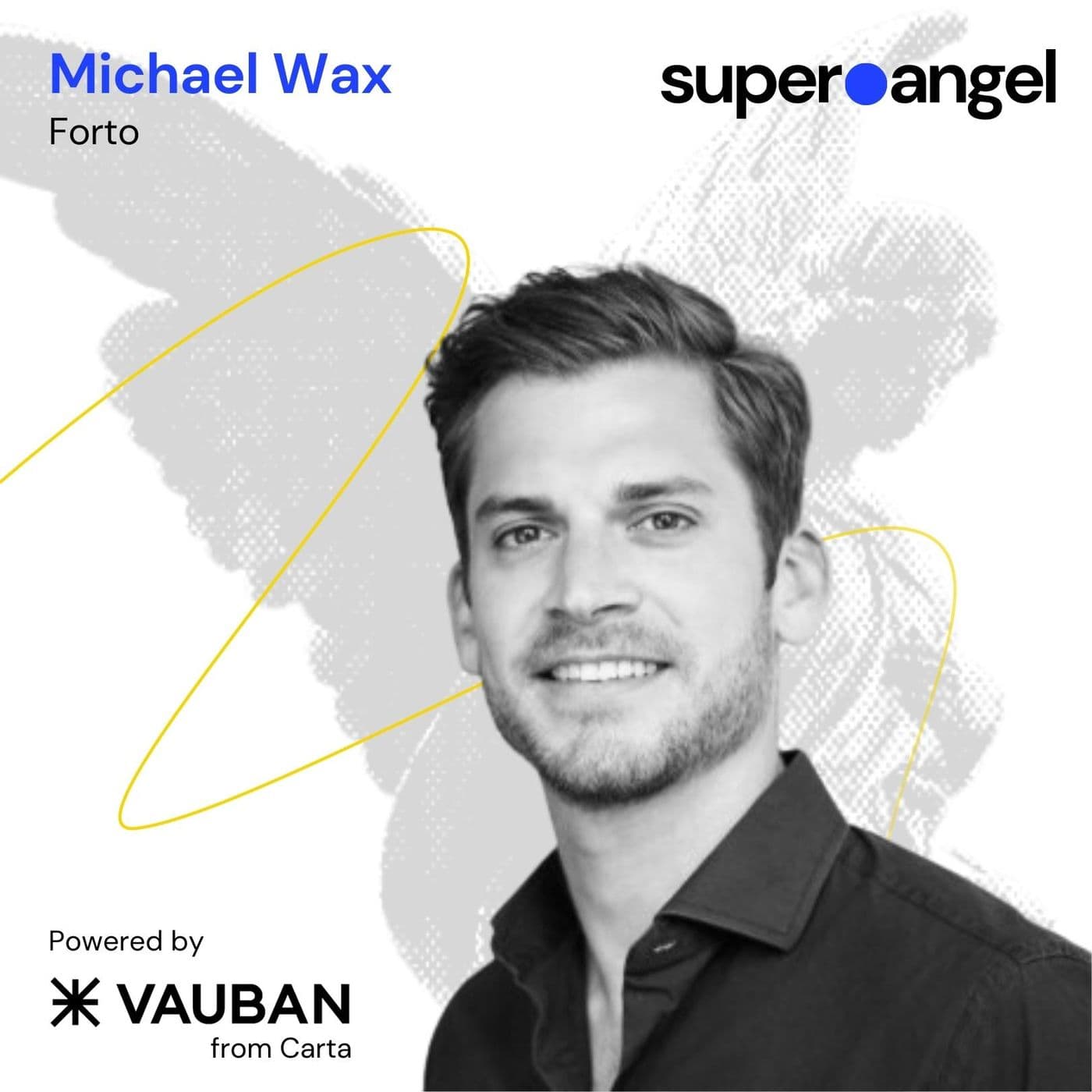
EUVC Podcast Episode Summary: Super Angel #202 with Michael Wax, Forto
Podcast Overview
- Title: EUVC
- Description: A podcast focusing on European VC, co-hosted by Andreas Munk Holm and David Cruz e Silva, featuring prominent figures from the European venture capital industry.
- Episode Title: Super Angel #202 Michael Wax, Forto
- Episode Description: Featuring Michael Wax, Co-Founder and CEO of Forto, a digital freight forwarding company in Europe with over $600 million in funding. The episode discusses Michael's entrepreneurial journey, his approach to angel investing, and insights into the logistics and supply chain industry.
Key Points from the Episode
Introduction to Michael Wax and Forto
- Background:
- Michael Wax is an entrepreneur with a decade of experience.
- Co-founded Forto, Europe's largest log-tech company, focusing on a transparent and sustainable digital supply chain.
- Previously part of KONUX, a pioneer in industrial IoT.
- Forto's Mission:
- To simplify global trade for businesses by facilitating various types of freight (sea, air, rail).
Transition to Angel Investing
- First Investment:
- Michael's initial investment was in a UK-based company called Graphy, introduced through a VC connected to Forto.
- Organic Growth in Investing:
- His journey into angel investing was not initially planned but grew from interactions and personal connections within the entrepreneurial community.
- Now aims to invest in 3 to 5 companies per year strategically.
Investment Philosophy
- Focus on People:
- Invest in individuals he knows well, valuing character and past interactions.
- Industries and Sectors:
- Strong preference for B2B investments, especially logistics and supply chain technology, leveraging his expertise and network.
- Key Traits in Founders:
- Resilience and optimism are essential.
- Humility and a willingness to learn from others.
- Team Dynamics:
- Emphasizes the importance of a complementary founding team to navigate challenges.
- Highlights that many startup failures stem from poor team dynamics rather than business models.
Geographic Focus and Collaboration
- Investment Geography:
- While based in Munich, Michael invests across Europe, with significant involvement in Berlin, London, and Madrid.
- Collaboration with Other Investors:
- Maintains a network of co-investors and actively shares deals to enhance support for entrepreneurs.
Core Learnings from Angel Investing
- Building a Portfolio:
- The necessity of making multiple investments (10+) to mitigate risk.
- Diversification:
- Importance of diversifying across topics and time periods.
- Long-term Reputation:
- Building a good reputation in the VC ecosystem is crucial; it takes time to build and moments to ruin.
Quickfire Round Insights
- Counterintuitive Learning:
- Initial expectations of successful companies can be misleading; some fail quickly.
- Advice for International Investments:
- Start with LP investments to broaden exposure.
- Advice for Younger Self:
- Embrace early risks and ensure to enjoy life while being truthful to oneself.
Closing Remarks
- Michael expresses gratitude for the opportunity to share insights and emphasizes the enriching experience of supporting founders in their journeys.
Conclusion This episode provides a deep dive into the experiences and philosophies of Michael Wax, showcasing his journey from entrepreneur to angel investor. It highlights the significance of character, team dynamics, and the importance of maintaining relationships in the venture capital landscape.
For more insights and discussions on European VC, tune in to the EUVC podcast and explore the broader European angel investing scene at [eu.vc](http://www.eu.vc).
Written by AI. May contain mistakes. Listen to the episode to check what was said.
Transcript
Automatic transcript. May contain errors.0:02Is this a dream? No, it's not a dream I'm an angel. Why would God send me an angel? Because God knows that everyone needs a little coaching now and then. I'm loving angels. I saw an angel. All angels say. For a long day. Please say it's me an angel. With a smile on her face. Be in it together. But don't love me, Angel. Thanks, let's buy an angel. Girl, girl. Hi, and welcome to the Super Angel Podcast. The go-to podcast for angels backing the next generation of European unicorn founders. If you love our show, do drop us a review, share it with your friends and join our community at eu.bc. Today we're happy to welcome you to Michael, co-founder and CEO of Forto, Europe's digital freight forwarding pioneer.
0:53Forto drives the vision to deliver a highly transparent, frictionless and sustainable digital supply chain. With more than 600 million US dollars in funding, they are Europe's largest log tech company. Michael is a true entrepreneur with a strong passion for innovation in global trade and e-commerce. He was part of the founding team at Konux and an early pioneer in industrial IoT. If you're an angel listening in and wanting to get closer to the European angel scene, do not hesitate to reach out to us. We'd love to connect and see how we can play together. And now some words from our beloved sponsor.
1:31Verban from Carter is the easiest way to launch and run your syndicate. Verban's end-to-end platform automates your back office so you can focus on what matters, supporting the next generation of entrepreneurs and building your network. Angel investors are the fuel to innovation, and they've created the Atom SPV to allow for more deals, more ownership, and less fees. Backed by Carter, the leading fintech infrastructure company, Verban will be with you all from fundraising to exit. investors on the Verban platform have raised over 2.5 billion dollars in global investment for companies including Revolut, Bolt and SpaceX.
2:06If you'd like to learn more, please check out www.verban.io forward slash EUVC.
2:19Mike, welcome to the Super Angel podcast. We're so excited to have you with us. Likewise, very happy to be here and many thanks for the invitation. So excited to have you on, Michael. And what a background. And on that note, let's get started. Maybe you want to share with the listeners your story and what got you into angel investing. Thanks, Anthony. So I'm an entrepreneur for the last 10 years. The first company I started was an industrial monitoring company that helped to basically make railways more reliable and helped to increase the amount of trains being on time. That company was started in 2013.
2:54It's still up and running and called Konox, based in Munich. a couple years later, then I was fortunate enough to start Fortu, a digital freight forwarding company that simplifies global trade for businesses. So we helped them to ship sea freight, air freight, rail freight today with more than a thousand people across 21 locations and roughly$600 million of capital that we raised. Over the course of the time, I was fortunate enough to basically use some of the entrepreneurial proceeds to invest that into early stage entrepreneurs again and to basically help them with the early innings of their company and to share some of the operator experience I was able to gain over the course of the last 10 years.
3:33And would you say that came organically from the interactions or what was the motivator if you go back to the first ones you did maybe it's a blurred memory I would love to hear a bit more and maybe maybe you also remember the first deal you made would love to if you wanted to share any other memorable one so the first deal i made was an investment into andre from graphy based in the uk so they basically helped to simplify collaboration around charts and and reporting and yeah here i basically was made aware of the of the company through a vc that was also invested into fortu who basically wanted me to join that round to help the first-time entrepreneur to basically overcome some of the challenges that all of us have.
4:16So it was not necessarily a planned initiative, but you basically stumbled into it. And then, I mean, you do a first investment, you do a second investment, all of a sudden you realize, well, it is after all, I think, an interesting asset class, but that also requires a certain minimum amount of investment. And then I said, well, I probably should approach this a bit more strategically and basically set myself a investment target of like three to five companies a year that I want to support from now going forward. I guess besides the financial upside that you mentioned, I mean, in some respects as an asset class, you want to do it properly, right?
4:52But you start with an emotional trigger or something that happened organically. What would you say when you look back that you think angel investing has given you, right? Both personally, professionally, what is it that you do it for as well from a return perspective? Yeah, so I think predominantly Secondly, it's giving back and helping and also getting the feeling that the help that you can provide is really useful to the people and entrepreneurs you work with. But second of all, also learning from them. What I have definitely learned is that starting a company seven years ago is very different from starting a company today.
5:26The tools you use, the processes you use, the way you hire, the way you get off the ground, the way you fundraise. It's a very agile industry. So what we've been doing seven years ago may easily not work again today anymore. For me, it's basically a way to stay plugged into the scene, to stay on the pulse. And so I think it's a super rewarding combination of doing good by doing well and ultimately learning while basically sharing some of your own learnings. Mike, you're one of the most acclaimed entrepreneurs and angel investors in Europe. That's why we bring you here on the Super Angel Podcast to talk about how you're investing.
6:04And for that reason, I'd love for us to dive deeper into your investment thesis.
6:16So would you take us, Mike, through your overall investment thesis, your strategy, how you think about portfolio construction, if that's even the terms that you use when you think about it? So I think I have to disappoint you a bit on this point. And there's not a big thesis. There's not a big strategy behind it. So I think first and foremost, if you invest early stage, you invest in people. I usually invest into people that I know very well, that I've been following for a while, former employees, people that basically I've met through interviews and that then basically decided to become entrepreneurs themselves.
6:52Or let's say funds that we've been working closely, where I know that the partners, nine out of 10 times basically judge character in a similar fashion. And I think that's in the shortest possible form, the summary of the strategy that I follow. Besides that, to not make it sound as freestyle as it may sometimes, if I look for my portfolio, there's certainly a heavy compensation around B2B investments. I think that's just the space I understand better. I've been doing B2B sales myself for the last 10 years, And this is, I think, also where my core network is. So I think this is where I also can help founders the most through connecting them with early customers, partners, but also, let's say, coaches or experts in the field of go-to-market and product market fit processes.
7:42On top of that, obviously, there's a certain condensation around companies that somehow are connected to logistics or supply chain technologies. I think this is probably more down to the fact that people think that's where I have most of expertise. On top of that, there's also, let's say, a small bucket of passion investments. So for example, they're an investment in a sustainable bike clothing company here based in Munich, totally out of my usual scope, but it's just something where I enjoy working with the people that have started this. And people's always at the center of it all, right? And you did mention, I'm going a bit off script now, but you didn't mention some character traits of founders, right?
8:20I mean, you know, if you had to choose one or if you had to choose a few of those elements, you definitely look out for or even the opposite, right? Any characteristics that you're usually wary of when you meet entrepreneurs would be great to if you want to share. The number one asset you want to look for or number one character trait is, I mean, good entrepreneurs, I think, need to need to be like cockroaches, like they can't be killed. and ultimately you look for people that make you believe you can go through steel doors by just a very very heavy resilience by a very optimistic let's say base attitude and I think that already is I think a great fundamental trait on top of that I think I prefer to look for people that are very humble and bring a natural curiosity to the game I think you have to have a high self-esteem to not be easily disencouraged if things don't go as well but you i think have to bring an attitude to the table that means 99 of the time you won't be the smartest person in the room 99 of the time you will have to learn from others that are have done things before have been in in places you want to go so you need to be very eager to learn and also be willing to learn from others.
9:34Early success can also, let's say, easily get the best of you. So I think if you generally approach topics with humility, I think this period for you then is maybe a little bit better and lighter for you to digest. You started for so in a quite young age yourself and didn't have what you might call a super long journey where everyone could say, okay, you've proven that you're a cockroach here, here and here because you've seen so much adversity. How do you think about that in terms of now looking at founders that are equally young at their founding time of their company? Because it's always easy with the serial entrepreneur when you can see it, okay, they've done three times before.
10:17I think there's a couple of ways where you can, let's say, see great persistence, like are the people reaching out to you multiple times? Are they trying it via multiple channels? do they really go for an effort to show credibility through whatever signal that may be? Because in the beginning, it's a market of imperfect information, so every signal counts. So if someone is able to basically get to a person that knows me well and that I trust, and then this person can make an intro, you already have proven that you have something in yourself that you can probably repeat and recall when it is about getting to the first employee, the first customer, the first partner, the first investor.
10:58So I like persistence. I like diligent follow-ups. I like basically keeping people in the loop. And you then can easily see that people have been showing this trade during the fundraising process, usually also have consistent reporting. They have some sort of standards. They basically, with this show already a certain operator mentality that you don't necessarily always need. Yeah, I think there's a couple of X-factor people that also do well without that. But the majority, I think, of the entrepreneurs do better with, let's say, some sort of structure coming to the game because there's so much chaos in the beginning that just at least one person has to be in control of that, right?
11:36This is a little bit of the signals I think you can watch out for. Then obviously you see a similar trait also in the way materials are prepared. so you're not looking for perfectly designed pitch decks but you look for well thought through documents where there's a certain level of diligence and also depth baked into it if you basically schedule a first call there's people that fumble around guide you through a notes list or there are people that just are completely switched on and guide you through a pitch and the first five questions that you have for them they can answer within the blink of an eye in a very sharp way So I think there's a lot of those small signals that just tell you, okay, listen, if you can easily convince me now, you can probably also convince a next phase investor, which provides you with follow-on funding.
12:25And even though you may not be the expert in your field of operation yet, I trust you can also bring on people on board that are smarter than you, that have done things before, and that can help you solve the technological challenge. It's an interesting question, by the way, Andreas, because as you said, the serial entrepreneur has all the top line, whatever you want to see on LinkedIn. But it's a lot of times youth with a unique insight, like you mentioned, but then the clarity of mind, which shows you really understand the space, the hustle. And these people, you know what they have that sometimes serial founders don't, but serial founders might be driven a different way.
13:01They have like a huge chip on the shoulder. They have to prove the world everything, right? And so that plus speed of learning, these are the two things you can see up front. But sometimes that's what leads those people to outperform even others. Yeah, I think that also maybe a healthy level of naivety is on top of that. If you're a serial founder, you may be more easily frightened of failing in your venture. So you may not be willing to take on the same level of risk anymore. So I think early stage founders, it's like a clean sheet of paper, right? The story is still about to be written. You're in the first chapter of hopefully a very exciting and entertaining book that has a successful end to it.
13:40So, yeah, ultimately, as I said, it very much comes down to character. And I think there's multiple signals that show you where a team may be heading. Probably a second factor that we haven't touched upon yet. We spoke about, let's say, a founder personality much more, let's say, in a singular fashion than in the form of a team. but I think this team factor then becomes a very very important second dimension you basically need a team that can tackle the challenge that is complementary I think there are great solo founders out there but I think every founder knows that there's periods where you feel incredibly lonely so if you have a strong founder team that is 100 % aligned in terms of incentives and just builds a great foundation for the story and journey of a company and those tough paths are probably more easily mastered.
14:29So I think you look for a team that is well complemented in the beginning, ideally that has some track record of working together. In a lot of cases where startups fail, it's not the business model, it's not the technology solution, it's often just team dynamics that then break after some point. And I think this is also one of the core areas where I like to be helpful. I've been through difficult founder periods myself where there was dynamics in the founder team that needed to be sorted out. And I think in that case, having an angel on board that I think has, let's say, a sense for sorting out such a situation has been through a similar period helps you because you're not dependent on his check in the next round.
15:11So you may not open up to the same level to your VC investor. You may also be in a position where you can't talk to every co-founder in the same level of depth and detail anymore. And then I think angel investors are a great go-to reference to help you find the right kind of coaches, to help you potentially even coach through a topic like this. And with that, I think you have a massive risk mitigation for periods that are most likely to come in every company. I would love to ask you because, as you mentioned, sitting in Munich, that's not London. And many of the people that we have had on this podcast have been from London.
15:45And then it very much sounds like, well, everything is about the core ecosystems. And then people would most often say London, Berlin, and then they would sometimes switch out Paris for Stockholm or whatever. And I'm curious to ask you, investing out of Munich, how much do you focus on founders that are close to you versus all of Germany versus the rest of Europe? And how do you go wider than just the closest ecosystem? I live in Munich with a family. the business is located in Berlin. That's at least where the headquarter is. There's more than 20 locations. We're a global company with six offices in Asia and multiple across Europe.
16:22I travel pretty much every week of the year, more or less. So I'm certainly not tied to Munich as my core investment location. Out of, I think, 30 plus investments that I've done today, three or four are based in Munich. So it's still a massive minority and the rest is based in Berlin, London, Madrid, a couple in the US. So I think it's a pretty colorful mix. I think it helps if you can meet people in person, but I think through COVID, we also learned how to assess some of the core trades, probably through Zoom. I mean, we were able to raise a bit more than 450 million in a period where we couldn't meet lead investors in person.
16:57And so, I mean, writing a 30, 40, 50K angel check should be possible then as well. You mentioned a couple of times other VCs as well that you'd collaborate with. I mean, how do you think about that? Like collaborating with other angels and peers like you and other VCs, whether it's for sourcing or co-investing or even supporting entrepreneurs? So I maintain a list of roughly 60 to 70 co-investors from the angel side. I have a couple of really close friends where there's certainly the highest condensation and mix of investments or with one or two friends, there's probably an overlap of 60 to 70 % of the portfolio.
17:32So we like to do deals together a lot. But then I also have, let's say, a mixed group of people where I just know they bring in a certain form of expertise or know a market really well. And so I also like to actively share deals. And beside this, let's say, operator network that I try to cultivate and grow, I have 8 to 10 LP investments in VC funds, where obviously there's also active deal sharing and participation and, let's say, doubling down on some of the most promising ones or doubling down on investments where they feel like can be particularly helpful. This LP point is everything that's behind what me and my partner are doing because we're only doing LP investments to begin with.
18:12And then we'll do tickets directly into companies afterwards, exactly with the strategy of following on. My question to you on this point is, do you then use those funds to go deeper in verticals that you already know and geos you know? Or do you use them to then go wider? I think predominant strategy would be to go wider, to just, let's say, really make sure that you, besides the, let's say, 30 to 50 direct investments, I'm probably going to make overall. And then ideally keep as an ongoing number. It allows you to just diversify wider. It allows you to learn. It allows you to basically also keep deal flow up and also share deal flow.
18:52So I think from a financial perspective, obviously for LP investments, you do pay 220, so a management fee and a carry. If you invest directly and even for some of the deals get state subsidies, you may have 20 to 25 % discount on a direct investment because you get some of the investment back. At least this is true for investments you do in Germany. And so there's a significant advantage if you basically invest directly. Yet at the same time, I really don't think I'm, my profession today is investor. I'm an operator at heart. I love to share my experience along the way and see how the founders grow.
19:30And so I think there's a lot of cases where just I don't have a clue how to do diligence on a deal. So I think it helps to have a network there where you can share deals and then tag along if a VC really decides to double down on that deal. So let's pass on to core learnings then. You're out here learning more about them agents, are you?
19:51you might have touched on some already in our nice conversation but if you had to share three core learnings from your time in angel investing what would those be so i think it's first and foremost you gotta build up a portfolio yeah so if you want to get into angel investing today you don't do one angel investment either you become the most lucky person on earth and works out but let's say general probabilities and chance rather speaks against this strategy so So I think you need to calculate if you have enough capital and liquidity to, let's say, make 10 plus investments where I think you can start speaking about a portfolio.
20:26The second one is make sure you diversify ideally in terms of, let's say, vintages in terms of years, but also, let's say, topics and markets. Most likely, this is natural, so you won't be doing, there were 10 investments into fintech robot advisors, which can then also easily provide a conflict of interest at some point. But I think some sort of diversification on top of that also makes sense. The third advice I would say is, in general, if you are plugged into a network like, let's say, the VC ecosystem and startup ecosystem in Europe, it, I think, takes ages to build up a reputation and you can ruin it within minutes.
21:05And so I think making sure that you think long term, that you think not only you benefit from a deal, but always both sides go happy from the field. I think it's just super essential if you want to do this for multiple decades. And I think there's a lot of very positive examples of great investors out there who really have this natural gene to make sure like there's people feeling great about the deal that they've done. But I think there's really a lot to that, that if you really make sure you partner with other people, if you bring them into new deals, you share that, that they don't have the feeling that you basically take advantage of.
21:40Yeah. And, you know, the last point is so important. Like it's such a industry made on relationships. Also, it's such a humbling industry, as you said, right? You know, so many people pass an Airbnb before Airbnb became Airbnb and Spotify the same and let's keep going. Right. And so every time before I get into a call, I'm like, you don't know who this person might end up being. Plus, you're taking their time, right? So they should be building a business and that's what they're starting. And that's why you're having that call with them. So at a minimum, you can try to be the best intro. You can try to somehow help at a minimum.
22:13And that comes back. That's what's, I think, really beautiful about early stage, right? It comes back and it pays forward. It's such a long-term game. So I couldn't agree more. I think it's insane. And even in like the short period of time that I've been doing this, there were companies where I thought they're really going through roof right now. And other companies where I thought they really have a tough time. And then in both cases, it goes in completely the opposite direction. So it is really, really a long term game. So I think you have to know that investment periods are usually, let's say, 8 to 12 years for an angel, sometimes longer.
22:48And so a lot of stuff can happen. And most often you overestimate what happens in the first two years and then you underestimate the long-term potential over the next 10. Yeah, and I'm adding a common knowledge that I think some of our other people we had on the show actually have mentioned and many others have in other podcasts, which is, you know, trying to morph your check size based on your level of conviction up front tends to be a big mistake, right? And then you go in retrospect and the ones you felt were less obvious and you had less excitement on might end up being your best performers.
23:20So kind of like having a threshold of conviction and then crossing that chasm and trying to do something within a range with whatever you can actually do and get within that round tends to be the common wisdom, right? If you agree. I'd love to ask you on this reputation point, because it's a conversation Anthony and I had just the other day about how do you deal with founders and having to say no to founders and also having, as you said just before, you like founders that show perseverance. Perseverance is then, you know, in this case of trying to get to you, it's, well, they tried multiple times, but you didn't have time to begin with, right?
23:59I'd love to ask you, how do you navigate that? Because I think that this is where I'm seeing people maybe not, you know, if you know that you need to say no or we can't meet now or whatever, right? Getting that set rather than ghosting is sometimes quite often the difficult part for people where it should be quite simple to say, I'm sure it's super cool what you're building, but I don't have the time right now or I'd love to meet you in two months or whatever. but it ends up being a non-reply instead of it, right? How do you navigate that? First and foremost, I'm really falling short of my own ambition to obviously reply to all requests.
24:38I mean, there's for sure more than 10 people a week reaching out, sending deals through various channels. And I mean, 99 % of my time is focused on photo, right? I mean, I'm CEO of a company that's going through a massive growth period right now. We are hiring more than 200 people right now. and just let's say managing a company like this is more than one full-time job so angel investment is truly something i do let's say within like a magic time spending like half an hour a week on it so i'm just replying kindly and respectfully like i would love to to all of those messages is impossible so if i get a great intro and people share why it would make sense to now to hop on a call with those founders, I'm very happy to do that.
Read the full transcript
25:27It may take two or three weeks sometimes, but it's just something that I can't prioritize in my daily activities. On the other hand side, if I know people closely from the past, then I do a lot of meetings also on the weekend. But yeah, it's certainly difficult to be as kind and respectful as you would wish for to everyone reaching out to you. But it's just not my full-time job. So I think here, I also need to be realistic. Honestly, Mike, even if it is your full-time job, because I'd say it is for me and Anthony, it's still impossible, right? Because then we're out there marketing what we're doing as well at the same time.
26:01And then that only escalates the number of outreaches. And the worst thing is that, as you said, then you want to be building on the bag of good intros. And then all of a sudden, people have kind of gotten to that realization. And then you start getting, you know, almost requests for getting intros or for giving intros. And like, you know, I don't know you, so I can give you an intro. Sometimes that's respectful, though. Sorry for interrupting. I feel a duty of taking someone's second of time that I need to give them value, right? And then you give them value. And then if it goes to second, third degree of introductions, I think it's respectful to say, like, you know, I wish I could help you, but I just currently don't have the time.
26:41I hope I can do in the future. you know if there's anyone you see i'm connected to or anything you know and because it comes from someone i respect i'm very happy to ping them and see if they're interested to connect to you and that's kind of already putting something out there and closing the window right being honest i think it responding and by the way many times you know if it's something completely out of scope for me and someone's reached out to me for an intro called inbound just responding saying like thank you so much and congrats on this but it's not one for me and you and i haven't taken any of their time, so I'm not expected to explain them why.
27:13I had so many people say, thank you so much for responding to me, Anthony. Thank you so much. And I think, Anthony, for people to be effective with exactly what you just said, it's a matter of having thought it through and then having that almost copy-paste message ready to go whenever you get them. Because they come too often and I think it's necessary for every angel to get trained in terms of doing this reply. I wanted to ask you a bit about your views on diversification because you said you've done 30 investments so far. You also nodded when Anthony said you don't want to be building your ticket size on the back of your commitment level or the excitement that you feel around the deals.
28:00But you also said that you are quite diversified across both vintages and topics and deals. But I'd love to ask you, where do you see yourself ending up? Do you have like a view of having a 50 company portfolio and so on? Do you have any thoughts around that? My rough goal is depending obviously on the deal flow I get and how excited I am about the companies I see to do maybe three, four, maximum five investments a year and all of that roughly around the same kind of ticket size. So average ticket size is probably somewhere between$25 ,000 and$30 ,000. Whereas my max ticket so far was probably$45 ,000,$50 ,000 and minimum check size was like$15 ,000.
28:39And so somehow it ranges in between there. And I agree with Anthony, it's probably very difficult to just decide based on conviction. So far, I've been doing slightly larger deals when it was, let's say, also larger state investments, later stage investments. But also that may be completely wrong. So I think that's just a difficult thing. You can only tell in eight to 10 years. I can philosophize a lot about it. Same also about following on, right? As a group of people that say, you really need to double down on the winners. This is really how you basically then generate the best returns. But once again, I think here, if you do this full time and you really decide to become a full time angel investor, then I think it's fair to think about this in such a sophisticated way.
29:21Other than that, I mean, you probably can say, I mean, it's not gambling, but it's something that probably comes close to that in terms of the nature of the probabilities and the risk affiliated to it. So I think overthinking may easily be not worth of the time in terms of return you can expect from that. as long as you have, let's say, certain ground rules in place. Now let's go to the quickfire round.
29:49Are you ready for it? Sure, go ahead. First question, what's the most counterintuitive thing you've learned since you started angel investing? That some of the best companies you initially think are going to do great fail very quickly. What would be your top tips to angels wanting to do more international investments? Start with LP investments. And what advice would you give your 10-year younger self if you only had 30 seconds? Take a lot of risk early, then make sure you don't forget to enjoy life and never lie to yourself. Thank you so much for joining us. I think the ecosystem is so much better from having people like you investing in it.
30:29So really appreciate you taking the time and sharing some of your insights. Wow. Anthony, Andreas, thanks a lot for the great questions. It was a fun conversation. And yeah, I'm sure we're going to see each other soon. Thank you for listening to this week's episode of the Super Angel Podcast. The go-to podcast for angels backing the next generation of European unicorn founders. If you love our show, do drop us a review, share it with your friends, and join our angel LP syndicate at eu.vc. And if you're an angel listening in and wanting to get closer to the European angel scene, please do not hesitate to reach out to us.
31:06We'd love to connect and see how we can play together. And now, some words from our beloved sponsor.
31:28fuel to innovation, and they've created the Atom SPV to allow for more deals, more ownership, and less fees. Backed by Carter, the leading fintech infrastructure company, Verban will be with you all from fundraising to exit. Investors on the Verban platform have raised over$2.5 billion in global investments for companies including Revolut, Bolt, and SpaceX. If you'd like to learn more, please check out www.verban.io forward slash EUVC. I've been touched by an angel, girl.
From the publisher
Forto drives the vision to deliver a highly transparent, frictionless, and sustainable digital supply chain. With more than 600m USD in funding, they are Europe's largest log-tech company.
Michael is a true entrepreneur with a strong passion for innovation in global trade and e-commerce. He was part of the founding team at KONUX, an early pioneer in industrial IoT.
This episode is sponsored by Vauban. Vauban makes it easy to launch your angel syndicate or VC Fund, check them out at www.vauban.io/euvc


