
In short
```markdown
Podcast Summary
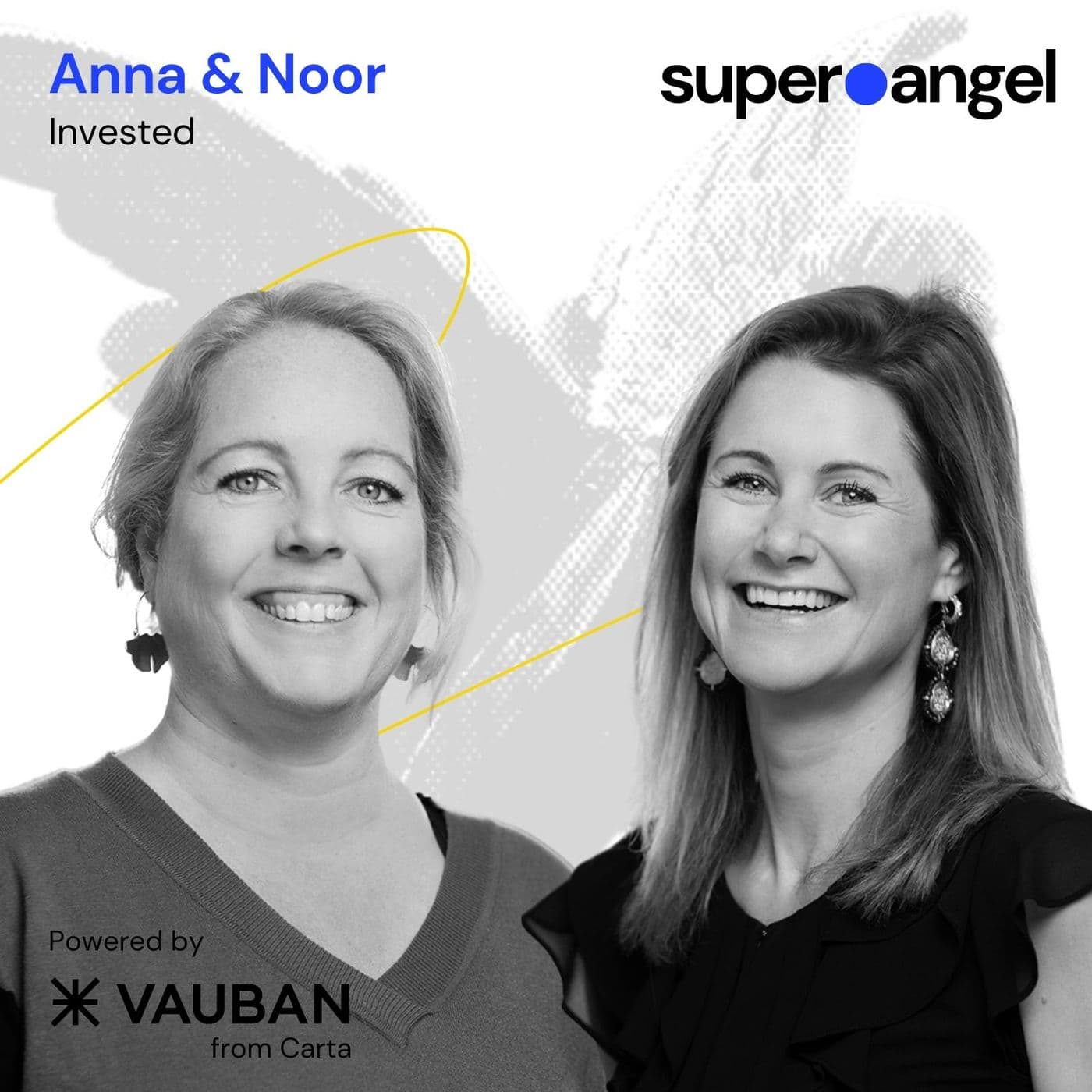
EUVC - Episode 204: Super Angel with Anna Brandt and Noor van Boven
Podcast Title: EUVC Episode Title: Super Angel #204 Anna Brandt and Noor van Boven of Invested on Angel Investing as a Team Co-Hosts: Andreas Munk Holm and David Cruz e Silva Date: [Insert Date Here] Description: Anna Brandt and Noor van Boven discuss their journey as angel investors, their investment strategies, and the importance of collaboration in the European venture capital ecosystem.
Key Participants
- Anna Brandt - Co-Founder of Invested, with a focus on talent and operational strategies in tech organizations.
- Noor van Boven - Co-Founder of Invested, specializing in HR tech and fintech solutions.
Episode Highlights
Introduction
- The hosts welcome Anna and Noor, recognizing their achievements in the HR and fintech sectors.
- The conversation centers around their experiences in angel investing and the unique dynamics of working together as co-founders.
Background and Journey into Angel Investing
- Anna and Noor's Connection: They met while working at TomTom and realized their synergy and mutual drive.
- Founding Invested: They established Invested to assist startups in navigating growth challenges, particularly in the intersection of HR tech and fintech.
Investment Philosophy
- Decision Metrics: Investments are based on:
- Problem Identification: Focus on what problem the startup addresses.
- Disruption Potential: Look for innovative solutions that can transform industries.
- Team Connection: Importance of alignment and belief in the founding team.
- Investment Vehicles: They operate with two vehicles targeting pre-seed, seed, and Series A rounds.
Notable Investments
- First Investment: The first deal was with Kobe, a company providing flexible employee benefits, showcasing their focus on HR tech and fintech.
- Support for Underrepresented Founders: They prioritize investing in diverse founding teams and those with less access to capital.
Benefits of Teaming Up in Angel Investing
- Anna and Noor discuss the complexities and advantages of co-founding:
- Emotional and Practical Support: Their partnership allows them to complement each other’s strengths and weaknesses.
- Shared Decision-Making: They encourage each other to critically assess potential investments, fostering a more cautious approach to FOMO in investment decisions.
Challenges and Market Observations
- Investment Landscape Changes: Reflections on investing through market cycles of boom and bust.
- Cross-Border Investing: Emphasizes the importance of understanding European market dynamics and the need for startups to think regionally.
Key Takeaways for Aspiring Angel Investors
- Learning and Collaboration: Engaging with the community and sharing knowledge is essential for success in angel investing.
- Focus on Founders over Products: The panel stresses evaluating the founder's capabilities and willingness to adapt rather than fixating solely on product details.
- Staying True to Strategy: Maintaining alignment with one's investment thesis amidst changing market conditions is crucial.
Quickfire Round Insights
- Counterintuitive Lesson: The time invested in seeing returns often differs greatly from the urgency felt during funding rounds.
- International Investment Tip: Establish a clear profile that sets an investor apart in the market.
- Advice to Younger Selves: Stay curious and believe in your own abilities amid the uncertainties of investment.
Conclusion
- The episode encapsulates the journey of Anna and Noor as angel investors, highlighting the significance of team dynamics, strategic investment approaches, and fostering connections within the European VC landscape.
Call to Action Listeners are encouraged to engage with the European angel investing community through the podcast's platform and connect with co-hosts and guests for further insights and opportunities in venture capital.
Follow EUVC to stay updated on the European VC scene: [eu.vc](http://eu.vc) ```
Written by AI. May contain mistakes. Listen to the episode to check what was said.
Transcript
Automatic transcript. May contain errors.0:02Is this a dream? No, it's not a dream I'm an angel. Why would God send me an angel? Because God knows that everyone needs a little coaching now and then. I'm loving angels. I saw an angel. All angels say for a long day. Please say it's me an angel. With a smile on her face. Be in it together. But don't love me, Angel. Thanks, let's buy an angel. Girl, girl. Hi, and welcome to the Super Angel Podcast. The go-to podcast for angels backing the next generation of European unicorn founders. If you love our show, do drop us a review, share it with your friends and join our community at eu.bc. Today, we're happy to welcome Anna and Noor, angel investors, board advisor and board member of Invested.
0:51They accelerate growth through consulting and investing, being focused on the future of work, specifically when fintech meets HR tech. If you're an angel listening in and wanting to get closer to the European angel scene, do not hesitate to reach out to us. We'd love to connect and see how we can play together.
1:16Anna, Noor, welcome to the Super Angel Podcast. We are so happy to have you with us. We're very excited too. Thank you for the invite. I'm so excited to have you both on the show. I think you're a few of the most brilliant people in the HR and people space within Take I Know. So thank you so much for joining us. Tell us more about your story, how you got to know each other and what got you into angel investing. So Anna and I actually know each other already for quite a while when we used to work together at TomTom. Sometimes you meet someone in your life where that everything becomes bigger, with us also louder, but a lot of more fun and it's increasing quality.
1:54we had that immediately and we back then i think it's already like 15 years ago or something we said oh one day we start a business together people who know us know that we are probably in the top score of the most impatient people in the world so it took us quite a long time before we had that company together so i've always worked on a general hr site after tom tom i moved to Berlin led the people team at SoundCloud and later at N26 before our joint dream really kicked off. But I'll let Anna cover that. So my background is more on the talent side. So mainly work for fast growing tech organizations, help them scale from a strategic point of view, but also from an operations point of view.
2:37So worked indeed alongside Noir with N26, but also Uber and Zalando. And basically currently living the dream. Two years ago, we basically opened a bottle of wine and wrote everything down what we love to do. And work-wise, that's a lot because we're, I think, neatly workaholics. And then we said, let's try to make this a company. We're trying this for a year. It worked. We had an incredible kickstart, not stopped since. I think our focus is on helping founders grow their business. And that's in times of extreme growth. but it's also times like this where you need to do more with less. And we do this 50 % of the time by consulting, so especially on strategic and technical org and people topic.
3:23And 50 % of the time, we do that by investing. We have two vehicles, pre-seed and seed, and Series A and beyond. And our main focus is on HR tech and fintech. And we get extremely excited when both of those worlds meet. So we tend to meet each other many times and I'm very excited for that as well. It's actually one of the very unique stories of blending, I think, like the actual day-to-day of people with investing, which is very much the same. So very excited for that. So, I mean, we will talk about thesis a bit later and strategy. Very excited for that. But before then, just looking back to the amounts of deals that you've done, are you happy to reference some of your most memorable deals and any ones you want to share with the audience?
4:07I would like to definitely highlight our first deal. We basically just decided we just finished this wine. We just were strategizing on our investment focus and we were exploring and really thinking about how we could make a difference. And then one of the VCs that we worked closely with called us and said, look, we've seen this company. It's actually Kobe that provides flexible benefits to employees. Would you be willing to do an export call? and we're super excited because that was actually the space we were exploring already right HR tech and FinTech where they both meet and we're like yes of course and they said yeah please do so and then we can create a co-investment and so we did we got really excited about what they were building so we're like we're in this is going to be our first investment and then we found out that the actual VC that got us in got kicked out because the round was oversubscribed so that was quite an interesting introduction to this world.
5:06We're very close still with this VC, so it's all cool. But that was sort of a very exciting start of our investment career. So basically you kicked out the VC with your subscription. Obviously. We like to work with underrepresented founders who maybe have less access to capital. there are multi-variations of that I think both Anna and myself throughout our career have always focused on strong women and during my time at N26 at an interview I met this woman who was just interviewing for N26 for a very senior role Chilp Chilp Gautam and she is from Indian heritage and I've lived in India like I have a big passion for India and anyone who have met her will be swept away immediately like she if we're talking about one lady i think her picture is next to it in the dictionary really hit it off at the interview didn't started working together i think she chose a different opportunity but years later at a dinner for women in fintech i'm sitting opposite of her and we started to geek out over india and she tells me oh my god yeah do you know i actually am in the guinness book of records for the longest journey of stand-up paddle boarding in india so So she stand-up paddleboarded the full gongers.
6:25And Anna and I were also just starting. So this is still in the early phase. And I said to Anna, I don't know yet. Like, how are we assessing founders? But I think if you did this, you must be a founder to invest in. I didn't understand what she was doing at all, by the way. Later on, we took a call. She was also solving a problem we're very passionate about. So she started SOLD. SOLD enables corporates and financial institutions to finance carbon projects either for offsetting or for investment returns. Doing an amazing job and we invested in her. But who can say that you invested in someone in the Guinness Book of Records?
7:01That's the greatest story. So what have surprised you in joining forces around your investment activity and not doing it on your own? You know, that always changes the dynamic a bit. So for me, I would say that joining forces with my co-founder has been absolutely amazing and it's given me so many things. and some of it also stuff that I had not expected. I hadn't had a co-founder before either. And I've kind of come to say that you have your family, then you have your spouse who you pick, and then you have your children who you make and whatever, you will always have them. And then there's this co-founder category that you get so close to and there's no relationship else in this world that is the same as a co-founder because you're not married, but still your financial situation is so intertwined.
7:51Anything that will happen in your life is contingent on that person not screwing you over and all that. So it's such a complex relationship compared to anything else. And I'm curious to hear from you too because you sound like two very, I'll call it extreme women and really powerful. So I'd love to hear what are your reflections on, what it has given you to power up like you have. The one thing that the bestest that we have is that after this podcast, we will both together love for half an hour that you're calling us extreme women. So we're very aligned on the sense of humor part. I think it's even something almost closer than a business deal, right?
8:29For Anna and me, it's that it almost feels like we have a sister-like relationship. So there's an unconditional level to it where you know each other really well. You can complement each other and it will not break. I think that we have a similar approach on how you think about how you do business and how you view the world. I think that is really important. That is, I think, very similar to how you choose your life partner as such, right? Do you meet on certain values? And we see that back in kind of the angel investing. Because if you look at what it has given us, it's true exciting that you're at the forefront of, you know, see where disruption happens, where there are people that want to change the world, are driven to work 24-7 to change something they're passionate about.
9:18but it also results back to us, especially to Noor and myself, is, okay, so what do we think about, you know, what is valuable to us? Where in society do we believe change should happen? So therefore, where should we invest money and time? And then you need to be very aligned on what you think is important to society. And I think, interestingly enough, we thought at the beginning we were very close and aligned, and has proven over the last two years. We have never been misaligned on an investment. For example, and that's crucial because it's hard work for a lot of times. It's also hard work for us.
9:58It's money that we earned. Yeah, it made us even deeper connected because you talk on a deeper level about how you want to make impact to society. Because you know each other so well and you're so fully aligned is that you also know where people have their personal biases or circumstances where you're a little bit less sharp. So it's very easy to tap in and out. As a partnership with two, you're always on, right? You're always acting on the sharpest level. And I think that that's really powerful. There are so many angels out there that are actually doing angel investing full-time or very close to it.
10:36Then there's a tendency to, when you then go together with someone else, you then professionalize in either running a syndicate where you raise capital from others or you professionalize and become a VC firm. But you might as well just say, well, I actually think that I'm a better angel investor and I would enjoy it more if I worked very closely and committed together with someone else. So I'd love to hear your reflection on that. And also maybe it's not advice, right? But what would you say to other angels that are considering banding up with someone else very close? So not necessarily to raise external capital or manage for others, but just because it's a better experience to be doing you know going through life not alone i think what we have done is basically find someone that you're basically back to what i said before that you're aligned with on a more moral and values level the second piece is how you go about it so we're very emotional connected but from a legal standpoint we have it all figured out and that's also hygiene right so be very serious about who you choose and then really basically make sure that you have everything kind of nailed down so you don't end up in fights because you have been through that discussion before about all the what-ifs yeah and then i think thirdly don't ever lose sight of the positive things about the other person right this also sounds so cliche because before you know you're like oh this person always does this but that's also why you're connected because there's another side of the metal that makes you be such a good partner.
12:05And I think that's what especially Normie are very, but we do that actually very naturally, but we know each other's flaws and we don't have to talk about it. We don't provide each other feedback every day about the flaws. What does it matter? Because it's a flaw and it will probably not change. And if it changes, it changes in a very minor percentage. So better compromise and counteract certain flaws of the other person and support each other. So I think we are very natural in providing feedback or helping each other, but we don't do sit around and telling someone less strong points, but actually more slap each other on the back saying, well done.
12:44So you get stronger together. It's also easier when you have very little flaws, right? So I would also really think through how closely knit you want to make it, right? Because what Anna and I did means that we knew from the beginning, investment is a long-term play. So we also knew we're now going to be basically, for a big chunk of our lives, completely be financially connected. If you at one point feel like, oh, I want to team up with someone, there are also looser forms to do it. You can also create a stronger group or an angel network with who you can still have the knowledge sharing or the team level without being financially completely intertwined.
13:33So I would choose a setup that fits well and not in your excitement. Don't forget that if you make one investment now, you might be connected for the next eight years. right actually now that you've been angel investing for a bit like what would you say it's given you kind of personally professionally and actually how does that guide your angel investing activities and strategy maybe i think it links back to what anna was saying the energy that you get from people solving world problems basically it sounds a bit grand but i think for us it really also therefore gives a lot of positivity like if you think we're both very politically engaged and in tune to what's happening in the world and especially I think nowadays that can give a bit of a dawning perspective but then if you're throughout the week are talking with people who are actually solving these problems and having creative ideas and how to tackle that and and to make it a big grant but making it a better world yeah that also gives a lot of energy and hope for the future but it also encourages you a lot to be more creative and to act and stand for something where you see problems where you can make a difference.
14:44That is the perfect place to cue the music for our investment thesis segment. Oh no, not about the thesis.
14:56And now let's dive deeper into that because you just said that, you know, you're really motivated by how you can see the world being changed by your investments, or at least you can believe and tell yourself that you will be able to change the world with your investment. So I guess that informs your thesis quite a bit. So tell us your investment thesis. How do you think about both, you know, the grand scheme of sectors and so on, but also portfolio, how big do you want it to be? How do you think about your investment size, tickets, all those questions? Yeah, we are quite structured, actually, in our approach.
15:31And we have been since the beginning. Basically, what we look at, one is, of course, the problem that they are solving. Is that a problem that we recognize? And is it a problem we get excited about tackling? There are a lot of problems in the world, but some I'm happy for other people to solve, but I don't get excited about it. Then we really want the solution to be a disruptive and creative solution. So the solution itself should add something completely new to an industry. And then lastly, but for us actually, most importantly, we really need to have a connection and a belief in the founding team and connected to that, that we can make a difference to those people at the stage of investing.
16:13So we do angel investments. Our money is not the game changing check size that will change the course of direction. So that impact that we could have on them is either through our network or through the expertise that we bring alongside the ticket. And when all those three things are a yes, then we invest. And I think the reason that we are very structured in our investment is that we would like to track our success, right? Ultimately, it's a long play, but you want to see, okay, what are the indicators and the trends that made an investment successful successful in order for us to be better investors ourselves.
16:53You know, you mentioned fintech and HR, you know, and the expertise, I think, helps of being deep. Would you say your thesis first or people first? Or how do you think about that dynamic when you look at deals? It depends a bit because the people space is really broadly. And for example, we are being approached a lot for recruitment solutions, for example. But it's a problem where we are semi-passionate about. I'll let Anna also comment on that. But we also find a lot of those solutions that are coming in are not necessarily super creative for disruptive. So if you look at our portfolio, you will see very little recruitment tech companies in there.
17:35Even there, it is a big category within the HR tech space and one that aligns with our background. What Anna was saying before about when it's HR tech and fintech, so if you think in compensation space, for example, that's an underserved space. We know the problem really well. The players and the ecosystem is fintech, which is an ecosystem that we know well from the companies that we work with, combined with our functional expertise. Then it really comes nicely together in what we can bring. Yeah, but also because we see in that space specifically Specifically, that there is a need for disruption, more so than in recruitment.
18:14I'm very passionate about recruitment, but it's about, you know, again, the disruption. We're looking for a disruption product. Having said that, very clearly, we are doing a very, our main focus is on the founders. Because ultimately, they're most of the time so early stage when we invest in them. So pre-seed and seed, the product will pivot significantly still. we see in our angel network that a lot of times there's a lot of focus on the product and sure like their reasoning of what they're building and is that relevant in the moment and if there's traction we all take that into account sure otherwise you wouldn't invest we assess if the founder has the understanding of the domain the grid and also the opportunity to basically pivot the product in a way that the chances for success are very high yeah i couldn't agree more to that for sure and one more follow-up question which is i think goes back to saying that you're you're operating in a area of domain expertise but also in industries you've been exposed to what would you say is the key value add founders look you out for and also how do you think about portfolio support right as angel investors um you know your time and capacity to support those founders as you build a larger and larger portfolio well i don't know if you're lucky it feels like that right so you met great people like yourself on this first of all who have been very open in sharing a lot about the investment world first of all and have been shown to be very generous something we didn't expect to be fair so that has been the nicest surprise i think of our investment journey the second piece is that i think alongside over the last few years i think people have been a way more strategic topic for most tech organizations than decades before.
20:05So the upcoming need of senior HR leaders to help drive the growth that you desire has helped us also to kind of position ourselves as angels. That knowledge is needed. And I think most tech founders really understand that. So it kind of has leveraged us and positioned ourselves as angels that could also support you on org topics and help you think around how do you evolve through the different stages of your journey and yeah we've got very positive response to that maybe on the second half of your question on like how do you deal with investment and support to also give the boundaries of that support what does of course happen is there's always an hr topic on people's minds right whether it's from i want to hire a tech engineer and i can't get them because no one knows us or we're scaling or we're going to a new market there it is important and that we learned over time is that you align on expectations very clearly because sometimes we are in a very oversubscribed round and like the ticket size is really minimized which is okay but what we sometimes see is that those are also the investments that require most attention and there is always a point where it becomes disproportional Right.
21:25And having the conversations before the investment on we are there for you, like we want to be active angels. But there's also a reality around the support that we can give. Right. Like we are now not your full time recruiters or sales team. And managing and aligning on expectations has helped us in making it a very positive journey. This is maybe a blunt question, but are you finding that that conversation sometimes also has the founder come back and say, okay, but then wait a second. What I just told you about, you know, allocation being small and so on. Maybe let's have a conversation again.
22:03Because, you know, sometimes that's the pure play VC, right? The VC would go in and argue very hard to get the allocation that they want. As an angel, you're sometimes more quick to back off on that and not create a situation. Because in the end, you don't have as hard metrics and cutoff rates as a VC. I don't think we had any cases where the venture backed out. We have had two cases where we stayed at a very clear minimum for which we are willing to come in. And then it's up to them how important our involvement is. and our scenarios we have been lucky that we were still in. I think one of the things in angel investment is like, it's also okay when it doesn't happen, right?
22:48Like if you can't make it work on the terms and that are important on both sides and terms not only being the exact terms in the contract, but also like how you're going to interact and what you expect from each other. It's also okay to walk away from it. Why would you step into it if you're not aligned on that? And interestingly enough, yesterday came to this discussion is that we have seen a very interesting trend from when we started investing that was up at the top of the bill, like two years ago, right? Valuation like blew out, every round was oversubscribed. The asks that we got from founders on what they expected from us were like certain percentages of leads that they will track.
23:34We need to bring so many intros. They wanted like sales plans. And one says, this is not my full-time job, right? We do more. And they had really worked it all out. And we forgot about it. But yesterday it popped up again. And we realized how much the world has changed again. I think there's a lot of ease now again in the conversations and air about how do we want to do this together. And in some sense, that's also a much nicer way to do business, let me put it this way. and more equal. Yeah. I cannot say how often I've heard that in the ecosystem, right? Everyone saying it's just a better industry.
24:12Right now, we can feel everyone is taking their time to do things in a decent manner compared to before. So I think that it's very much echoed from many. So I would love to ask you, because it is very much our thesis here to want to connect the European ecosystem with this podcast. And I'd love to hear about international investments you've done and how you think about doing investments cross-border in Europe? We do invest internationally, but with a very strong focus on Europe. We actually very strongly also believe that the European countries to play a role in the world, they need to operate as a European player and they cannot operate on a singular market player, right?
24:51Like, for example, being the Dutch player. So we're also encouraging with our own investments that they surround themselves with international people, even if they're in a phase of just operating the first years in a singular market. But it's just good to understand what's happening in aligning markets. And we're sometimes a little bit surprised about it, to be honest, that some players are very little aware that the same venture is being built in a neighboring country. That's our invitation to founders. It's like even if you're a Dutch player and the same is being built in Germany and you have not even the ambition to go to Germany, understanding the dynamics, getting a perspective from a different country is really important early on and not to build it just in the bias of a singular market.
25:43And let's not forget that as European countries assume you're going to be big, that is what you should assume. If you want to be a global payer, you will have to represent Europe. So you better build it in your DNA early on. And for us, that also means that if we want to bring that European perspective, that we need to be connected to the European ecosystem. So we very actively, both on the consulting and investment side, stay very international connected. And then one topic we did touch on, and I wanted to see if you've actually experienced the same in the episode with Keith, was that because he's focused very much on fintech and has some sort of very sector focus, that it's also a thread to be known for and it actually crosses borders more easily.
26:28In other words, like by being a generalist fund, you know, developing systematically relationships across countries, it might be more difficult for people to have you top of mind than if, let's say, you're sector focused, right? So anytime there's an HR topic or a fintech HR topic benefits, you know, on and on or to the rescue kind of thing. It also always has been across Europe. We have also worked internationally a lot. So Anna has lived in Berlin for a long time. I've lived in Berlin for a long time. So there's also not one ecosystem where we are more strongly wired into than in another. But I recognize what Keith has been saying for sure.
27:07I'd love to now ask the question, and I always come with this intro so that there's a clear disclaimer to anyone listening in that I'm building LP Syndicate's Interventor Fund. and Anthony is a VC. So it's with that background that I'm asking this, but I'm curious to hear, and I can see also on your website that you've done investments into Hedotopia and also Speedinvest. So I'm curious to hear, what is your experience with investing into VC funds and how do you leverage that, if at all? Yeah, for sure. So we collaborate a lot with VCs and for angels, especially if you have specific expertise, this can be really beneficial.
27:47If you look at us, a lot of times we see access for our HR tech insights and share our findings on the companies that they are exploring. And likewise, they're basically sharing their insights, but also the broad research they have done on a category in a certain market or even on European or world level. That's the full research play that we as angels and no angel can ever do, right? If you're individually. So that's super powerful. And at the same time, I think a lot of the people that we work with in VCs have incredible knowledge about investing. So we've been around the block for two years.
28:26But it's fantastic, especially it has been fantastic also to share knowledge with Anthony. And there are a lot of other VCs we've worked with and investors that share their thoughts on best practices, on what to look for and how do you actually see those patterns to success. So it has been tremendous experience for us also in our learning. And in regards to fund investing, I think we have done this with VC we strongly believe in based on their approach. We've invested in one fund and general funds are good and very relevant if capital is your main driver. So we have invested in one fund because we believe in the people running the fund.
29:06but in general investment is much broader for us that we really want to be involved and want to basically share our knowledge and help people to for success so hence we have done both but we're mainly angel investing ourselves and i must say that like you know also from putting the investor's perspective hat on like you know having you know and then or in our network you know by our side you know is a very big asset right because anytime you look into related spaces with you know hr benefits you know being able to tap into now you know noor and anna's mind and understand from bottom up how they've experienced things and they're hyper connected in the space is is fantastic right and it's also organic in our workflow i think there's been many times already that you know we're looking at companies that you know might need help with their hr topics might be in a space related to the thesis of anna and noor and i think they'd be you know lucky at the maximum we learn a lot at the minimum from chatting with Anna and Noor, right?
30:04And so, you know, we'd always love to introduce them to them. And that's what we do. And I'm sure that's a lot of other VCs, what they do as well. So I can attest to that for sure. You're out here learning more about them angels, are you?
30:21Time to talk about core learnings. We have touched on a few of those already. But if you had to name three core learnings from your time in angel investing, thing what would you say i think number one and i think that we really want to call out you can learn to invest yeah i think that's a call out to more angels to diversify the investor world it feels like a very closed space with a lot of jargon with a lot of things you don't understand and it feels very close when you're an outsider but the interesting thing is quite the opposite when you enter so there is a lot of willingness for people to share to help and learn you understand how you do good investment, what do you need to look at, and especially a lot of openness to share deal flow, as I mentioned earlier, has been such a pleasant surprise to us, but also we started to understand the dynamic more, right?
Read the full transcript
31:14I think sharing deal flow, sharing knowledge is really making an investment a success. Yeah, so that's a call out for people who want to learn to invest, Reach out to people you know that do. I'm sure they want to help you. And otherwise, reach out to Nora and myself. We're happy to share what we know and what we have learned in the last two years. And I think second, really drill down, you know, avoid to drill down only on the product and the futures when you're investing, but really focus on that founder, right? Are they willing? Do they understand the domain, the industry? Do they have the ability to change?
31:51and do you really understand how they could pivot their product right really ask them that question right what are the opportunities how do they think about visiting when it doesn't work they probably don't know exactly how they will pivot but it's their thinking their analysis of how they would go about it will tell you a lot about how they're wired and probably their chances to success yeah to add number three is like valuations change a lot we saw that definitely in the last couple of years and FOMO is very easily created. The transparency of the market also means that everyone is sharing the same information.
32:31So stay very close to your strategy and approach and still try to structurally go through whether an investment fits you because the excitement that is going around in this space about some companies can be very contagious. but as a pro but make sure that it still fits your approach and portfolio how are you seeing the markets today how have been some of those learnings of fomo investing kind of manifested themselves as learnings for you anything you'd like to share or expand on that or how you're viewing and navigating today as angels would be super helpful of course we also have done those FOMO investments and for sure and even I have to say that there's one investment where basically it was so oversubscribed even for angels people told us even before we knew what they did they only want to get female investments in from an HR tech background so we completely formed the only place yet and then by our network we were already set up of like you're almost crazy if you don't do it so we went in also with the full bias in this scenario we love being in we work a lot with the founder we have a great connection and we really believe in it but we later said actually at the moment that we made and this way it turned out really well but actually at the moment that we said yes we are going in we had completely drank cool eight from others that we didn't even know what what the ingredients were right so it can plan out really well i think that is happening in this scenario but um and yeah we have become a bit stricter on that uh over time and then maybe it links also andreas what you asked before like what when does it help that you're with two, it's easier when you're with two that you force each other to explain the other why you're excited.
34:28And then you hear yourself say like, it's so cool that we're in. And then you're like, oh yeah, that's not really a very strong justification. It's funny how you could get more excited about coming to agreement that you will do a deal compared to coming to agreement that you don't want to do a deal. Because in a way, you should almost be more happy that the other one talked you out of wanting to do something that would have been a mistake, right? But we're just wired to be more like, yes, we're doing this deal. It's so cool. Okay, so let's go to the quickfire round.
35:05Now, NNNOR, we love to end these sessions on this real fun quickfire round. So first question, and I'll let you pick who goes first. First question, what's the most counterintuitive thing you have learned since you started angel investing? Well, that's definitely time. I think in the funding round, there is most of a big pressure cooker environment. You need to make quick decisions. You're all steering each other up. You need to act fast and organize things. And everything needs to drop to seal this deal. And then you get in, you're super excited for a minute, and then absolutely nothing happens for years.
35:43so you don't know for years if it's a success or not. I think that's just such a bizarre realization to have. And of course, there are little trends that show you if you're on the path of success, but that is definitely the most counterintuitive thing that we have experienced, especially because we're also quite impatient people. But, you know, it kind of teaches us to be patient. Noor, then let's hear from you what would be your top tip to angels that want to do international investing? Yeah, make sure that you have a clear profile that distinguishes you from other angels. And it can be your expertise, it can be the segment that you're in, it can be your network.
36:28But make sure that you really profile yourself in the market with that expertise that you differentiate. It links a little bit back to what Anthony touched on with the previous podcast with Keith. Absolutely. And, you know, it's funny to see how even VCs struggle there and they should be the pros doing this full time every day. So now the question I was about to ask just before, what advice would you give your 10-year youngest self if you only had 30 seconds? And we'll give you 60 so each of you can have a go at that one. Cool. I would say stay impatient. It can be a challenging trait for yourself.
37:04But in combination with curiosity, it also gets you in the most rewarding and exciting adventures. And I think next to that, really believe in yourself. You always think the other person has figured it all out and they know better, right? Your manager knows everything he's doing or the other investor understands it all. But the closer you get to these people or these roles, you realize everybody is just trying to figure it out. So just go on and believe in yourself and then you get really far. I'm so happy that you are not raising a venture fund because I would have huge self-confirmation bias with you too because you're so optimistic and as am I.
37:47And the two things you said is exactly what I would probably say. I walked the other day and then I thought there must be some quote about how if a glass is full of all good stuff and you just keep pouring good stuff in, it's impossible for the bad stuff to get in. Love that. yeah no no i mean such interesting perspectives anna noor it's a people's business after all no thank you so much for joining us today thank you so much for the invite yeah and thank you for having us i think it's really we are really passionate that more people get into angel investing and i think podcasts like this truly help with lowering the entry bar to join investing and sharing the knowledge.
38:30So thank you for doing that and thank you for inviting us all. Thank you for listening to this week's episode of the Super Angel podcast. The go-to podcast for angels backing the next generation of European unicorn founders. If you love our show, do drop us a review, share it with your friends and join our angel LP syndicate at eu.vc. And if you're an angel listening in and wanting to get closer to the European angel scene, please do not hesitate to reach out to us. We'd love to connect and see how we can play together. And now, some words from our beloved sponsor. Voban from Carter is the easiest way to launch and run your syndicate.
39:10Our end-to-end platform automates your back office so you can focus on the things that matter, supporting the next generation of entrepreneurs and building your network. Angel investors are the fuel to innovation, and we've created the Atom SPV to allow for more deals, more ownership, and less fees. Backed by Carter, the leading fintech infrastructure company will be with you all from fundraising to exit Investors on our platform have raised over$2.5 billion in global investments for companies including Revolut, Bolt and SpaceX I've been touched by an angel, girl
From the publisher
In this episode you’ll learn:
- How to think about joining forces as angels, what it takes and the superpowers it can give you
- Why Anna & Noor pick their investments based on the problem the startups target, the disruption they can bring about and the connection, belief and match they have with the founding team
- How Anna & Noor think about scaling their investment activity and what it takes from them as a team and individuals
- Reflections on having invested through the boom and the bust cycle
- How the team think about working with the European Venture ecosystem and to optimize their role in it


