
In short
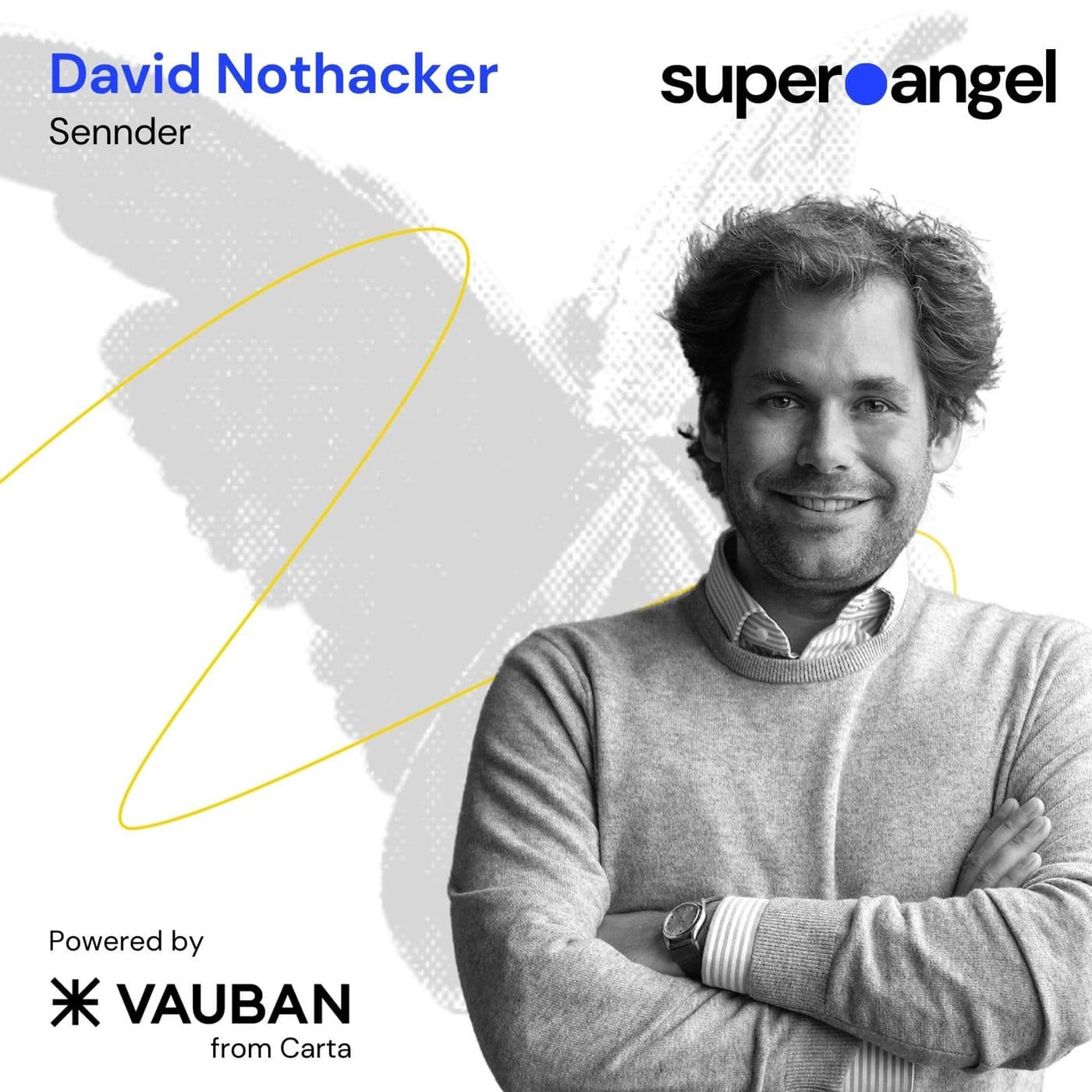
EUVC Podcast Episode Summary: Super Angel #211 with David Nothacker, Sennder
Podcast Overview Podcast Title: EUVC Description: EUVC is a podcast dedicated to the European venture capital scene, co-hosted by Andreas Munk Holm and David Cruz e Silva. The show features prominent figures from the European VC industry, offering fresh insights into the field.
Episode Details Episode Title: Super Angel #211 David Nothacker, Sennder Description: In this episode, David Nothacker, angel investor and CEO & co-founder of Sennder—a digital truck freight forwarding company—shares his experiences in entrepreneurship and angel investing within the European ecosystem. The discussion covers his memorable investments, insights on managing startup boards, and the dual investment strategies he employs.
Key Takeaways
David Nothacker's Background
- Company: CEO and co-founder of Sennder, employing over 1,000 people across Europe.
- Funding: Secured over €300 million from investors like Scania, Accel, and Project A.
- Investment Activity: Active angel investor in the German ecosystem, with over 40 investments primarily in European startups.
Memorable Investments
- Gorillas:
- Insight into multiple investment phases and exit dynamics.
- Valuable learning experience about investment processes.
- Cargo One:
- Active advisory board member, gaining perspectives from the board-side of startups.
- Enhanced skills in managing board discussions and dynamics.
Investment Strategies
- Two-Pronged Approach:
- Early-Stage Focus: Invest early in logistics and supply chain startups.
- Co-Investing with VCs: Partner with venture capital firms in opportunistic deals, providing support for scaling businesses.
Learning and Development
- Role of Angel Investing:
- Enhances leadership skills and decision-making abilities.
- Provides a platform for giving back to the entrepreneurial community, helping founders avoid common pitfalls.
Expectations and Relationships
- With Founders:
- Establish expectations for support duration, typically committing one year of active involvement.
- Encourage open discussions about sensitive topics that may not be easily discussed with VCs.
- With VCs:
- Building relationships by investing in VC funds provides access to deal flow and strengthens collaborations.
- Commitment to sharing investment opportunities with VCs after making a financial commitment.
Core Learnings from Angel Investing
- Invest in Founders: The ability of founders to adapt and navigate challenges is crucial.
- Time and Patience: Angel investments often require a long-term perspective.
- Beyond Financial Returns: The experience gained through angel investing can significantly benefit personal and professional growth.
Insights on Assessment and Decision-Making
- Evaluating Founders:
- Development of a gut feeling based on past experiences is essential for assessing a founder's potential.
- Engaging founders in deeper discussions to reveal their thought processes and adaptability.
- Investment Flexibility:
- Angels have more flexibility in timing exits compared to VCs, allowing for strategic decision-making.
Quick Fire Round Highlights
- Counterintuitive Learning: Avoid FOMO; stick to areas of expertise.
- International Investments: Carefully consider the implications; LP investments can help expand reach.
- Advice to Younger Self: Expect a longer journey with more challenges; embrace mistakes to find successful investments.
Conclusion David Nothacker's journey through entrepreneurship and angel investing offers valuable insights into the dynamics of the European startup ecosystem. His structured approach to investment and commitment to supporting founders exemplifies the role of angel investors in nurturing innovation within the region.
For more insights and to stay updated on the European VC scene, visit [eu.vc](http://eu.vc).
Written by AI. May contain mistakes. Listen to the episode to check what was said.
Transcript
Automatic transcript. May contain errors.0:02Is this a dream? No, it's not a dream I'm an angel. Why would God send me an angel? Because God knows that everyone needs a little coaching now and then. I'm loving angels. I saw an angel. All angels say for a long day. Please say it's me an angel. The smile on her face. Be in it together. But don't love me, Angel. Thanks, let's buy an angel. Girl, girl. Hi, and welcome to the Super Angel Podcast. The go-to podcast for angels backing the next generation of European unicorn founders. If you love our show, do drop us a review, share it with your friends and join our community at eu.bc. Today, we're happy to welcome David, angel investor, CEO and co-founder of Senda, a digital truck freight forwarding business.
0:53Together with his co-founders, David has built up a team of over 1 ,000 employees across 11 offices in Europe. In the process, they have been supported by strong investors such as Scania, Axel and Project A and have secured over 300 million euros in funding. They are quite active angels, particularly in the German ecosystem. If you're an angel listening in and wanting to get closer to the European angel scene, do not hesitate to reach out to us. We'd love to connect and see how we can play together.
1:27David, welcome to the Super Angel Podcast. Super exciting to have you here. And to be honest, super exciting for me to be hosting this session with Anthony as well. How are you today? I'm great. Super excited to be here as well. I'm looking forward to the conversation. Thanks for joining the pod, David. So psyched to have you come on the show and share your perspective, as you are truly one of a very successful entrepreneurs in the European tech scene, but also quite an active angel too. So let's get started. Share with us your story and what got you into angel investing. My entrepreneurial journey started doing an MBA when I started working on a project.
2:02And after graduating, I thought I had the best business plan ever and a great presentation. So I decided to move to Berlin to start and launch and execute on that idea. After a year, we realized that that idea was not as great as we thought and I went through a tricky phase, almost had to switch off the lights. But in 2017, with two new co-founders pivoted into Standard 2.0 and that the new business model was much more successful. Today we have over a thousand employees and active across Europe as the largest digital freight forwarder. To my grandmother, I explained it as an Uber for trucks, very straightforward business model in this journey, I learned a lot.
2:46So I wanted to also take these learnings in multiple ways and started doing some angel investments with my two co-founders, Nico and Julius. And to date, I think we've done just over 40 investments in pretty cool startups, mostly in Europe. Very cool. And from those, tell us, do you want to share a bit more with the listeners a few of the most memorable deals you've done and a bit of more color around them? One deal we made was gorillas. Probably most listeners know gorillas. And it was a great experience for me because I went through the different phases and learned a lot from, let's say, the different rounds, the dynamics, as well as the exit to get here, understand how that process works, what are the dynamics behind the scenes, and let's say what is happening until the very last moment of the deal.
3:40was extremely valuable for me. I learned a lot. And I think that once I'm going to get maybe into a similar situation or anyway, other exit situations that I can learn from that. And the second maybe memorable investment for me, where I learned a lot was in another logistics startup called Cargo One. And I sit in the advisory board and support the team. And it was extremely valuable for me because I took a different perspective. I'm sitting on the other side of the board table and also from my own board meetings I learned so much on how to interact with the board how to avoid awkward silences how to avoid certain discussion how to better structure the conversation and so that has been extremely valuable also for me there's plenty VCs that haven't seen the full cycle you know from investment to exit it's amazing to hear that angels like yourself have do you think and that's a bit out of the blue but would Would you say that your positioning as an angel was very much complementary to those of VCs, to the eyes of the founders as they were going towards that process or any experience you want to share with regards to that?
4:51Absolutely. I think it's also our pitch and also our promise to the founders that we invest into that they can discuss with us things that with the VC maybe are more difficult to discuss. topics around compensation, topic around stress with your co-founders, topics around secondary. These are all things that, especially for first-time founders, when they witness these opportunities or challenges, something new and things that you might not want to discuss directly in the second step, definitely. But in the first step with your venture capital investors, this is where I think the experience that I made with my co-founders and our journey come in handy and this is let's say where we complement venture capital firms very much aligned to that and for us with cocoa we're trying to do a bit of a hybrid of that for different types of topics as well but that relationship 100 you did mention a lot of professional learnings already do you want to share anything that you think angel investing has given you personally as well um in addition to the learnings that are now using my also day to day at Senda.
5:56I think it was, but it is still one side an ability to disconnect from my day to day job. I really see it as a hobby. I really enjoy doing this. So it's a way to compensate a little bit for some of the stress that I witnessed at Senda. And the other thing is also to give back a little bit. We've done a lot of, make a lot of mistakes. I think a lot of young founders are still going to do similar, if not the same mistakes, but maybe they can avoid some and also find better outcomes to some others. And also in the game with VCs, try to optimize maybe here and there a bit more than maybe what we did as first-time founders.
6:37And yeah, this is also something that motivates me very much. David, I'd love to kind of derail completely the script from the get-go, which is you spoke about Cargo One and your learnings about working the board or work on the board, whatever you want to call it, right? Could you give us a quick rundown? I think that's super insightful, something some VCs have written about a bit last year, but that I don't think we hear that much. I'd love to hear your kind of key takeaways of that experience. It was a completely new setting for me. Before, I always had a board that I had to manage and with all the challenges and the preparation and also the stress that you have.
7:13And then suddenly on the other side, where you're more a listener and you're supporting the team. And I saw, you know, how the two sides sometimes are much closer than one would think as a founder. But also realize a lot of things around managing expectation, aligning expectation, especially when there are shifts in strategies, new opportunities that you want to evolve. Sometimes as a founder, because you're in it on a daily basis, you already jump ahead of the thinking process. And then when you go to, for example, to your board, you sometimes maybe also assume that part of that thinking and learning process is understood by the rest of the board members and why they have multiple investments.
8:00And therefore, one learning for me is always start with the basics and take investors through the learning process that you have done when recommending new opportunities that came up throughout this journey. Oh no, not about the thesis.
8:22So if you've listened to that sound, you know that now is the section where we talk about David's thesis and strategy as an angel. David, many angels don't necessarily think about their angel investing as something that's super structured. You know, it is strong investment thesis and super well-defined strategy. Others do. So I'd love to ask you, how do you think about it as a whole? You've started off by saying 40 investments or so already. It's quite a lot. So I'd love to know how you think about this in the macro sphere. We developed a strategy as we learned and went through the investments.
8:56As I mentioned earlier, I only invest with my two co-founders, Nico and Julius. And this is why I was also able to do with them so many investments. We divide and conquer and support each other. There are different parts in angel investing. it's definitely the sourcing part then there is more the execution and admin part and then there is the portfolio support part and the different skill sets needed for all three of them and this is why i think having two very strong co-founders that complement myself is extremely important for example entire execution part everything from reviewing documents cap tables managing power attorneys and so on transferring the money at the right time and all of that is extremely time consuming and something that one of my co-founders nico loves to do so this is where he has the opportunity to take over leadership and responsibility i like to do a lot of sourcing and bring in deals that we can all review together portfolio management we try to divide a little bit among ourselves.
10:04We commit typically to one year of active support where we have regular meetings, at least on a quarterly basis with the portfolio companies that we invest into. We divide and conquer. Julius and I maybe take a bit more than Nico since he's taking care also of the other part I mentioned. And we say one year, not because after one year it ends, like with Cargo One, it has been now three or four years already. They've been supporting them, but it's what we think is fair and something that we can really commit to. After one year, we still support if we can, if it makes sense. But then if you have so many, let's say, direct investments, it becomes a lot.
10:46So we want to be very clear. Let's say for one year, we do that. So on a yearly basis, we do maybe 10, 15 investments, and we divide them among us so we can support them actively. In terms of strategy, we decided to have two vehicles. into slightly different strategies. One is we invest in logistics, supply chain focused startups in a broader sense. And this is where also a guerrilla, a cover one fit in. And this is where maybe we go in a bit earlier, also as angel in the right sense of the angel. So before venture capital firms, we understand that and can really support them in the finding product market fit and the business model as they are in a much earlier stage.
11:30And then we have a second vehicle where we co-invest with venture capital firms. And this is more opportunistic when we like the founders and when we can support the founders with scaling the organization, going through some of the challenges, not really business model related, but it's more scaling related. And we divided this into two different vehicles. And we are quite strict to ensure that on one, we focus on a bit earlier, logistics, supply chain, focus enabled startups. And the other one is a bit later stage co-investing with leading VCs, tier one VCs, and then supporting the founders more on the organizational side of their journey.
12:14Wow. I must say, I'm quite impressed. I think that's quite a structured approach and, you know, versus other people we've had and generally other angels that I've discussed. And I do think we've found that like expectation setting when it comes to portfolio support so you can scale yourself is super important as well. And having a firm kind of value add towards the entrepreneurs that you pitch is super important. Would you say you have any no-go areas that you wouldn't invest into or conversely, like any passion areas besides logistics and supply chain when it comes to more generalist investments?
12:44I think it's important for us to understand the business model. So there are a few things that we don't understand. Things that maybe last year was still, let's say, hot areas such as, I don't know, crypto metaverse are things that we don't fully understand. So we say we don't do that. Also on the, let's say, core investment side, the second vehicle that we invest through, this is more things that we really understand in the education space, for example, a little bit in the fintech space, but are things that we really have to understand. So no-go is things that we don't understand. And on things beyond logistics and supply chain is what I just mentioned, actually, education-related startups.
13:28We did a couple of investment, for example, Stewie, a German startup, or FinTech Lemon Market. I don't know if you know that. It's the second one, earlier stage that we did. So probably these are two areas that we like, probably because we also understand them. So geo-wise, you know, there's a lot of differing opinions there in what should be the geo-focus. Are you saying that you're focused more in your home turf because you have access, you know the people, you know, you get invited into out deals, etc.? Or are you guys actually trying to build out that network even further and get deals outside of your home turf?
14:01No, I think it's important to have the focus and to have access to a specific deep flow. And this is why we did most of our investments in Europe, I would say 90-something percent. unless there's a very specific reason why we as an angel can support startups outside of Europe and it's only logistics outside of Europe because there are similarities and really where you can support. There's no reason why we should be investing or having access to these deal flows. If a deal arrives on my table on, I don't know, a startup in South America that is not in logistics, probably there should have been someone else taking that opportunity unless I have a preferred connection, direct connection to the team or the area.
14:46So I think it just makes sense to focus and we have a better network and better access to the right deals in Europe. And this is where we focus on. And again, outside of Europe, it's mostly because there is a specific, let's say, know-how in logistics that we can bring to the table. And that's more like a reach out from the team or venture capital firms that say it could make sense to bring in also our expertise. Two follow-ups on assessing opportunities. I mean, angels potentially have more flexibility when it comes to things like upside potential. How do you think about that? I know in venture capital and being myself, that's a very big factor to make the maths work, to return the funds for the power law and the power of that.
15:33But as an angel investor, frequently, a check-in is a check-out. So how do you think about upside potential when you're assessing companies? Well, especially when we co-invest with Tier 1 investors, we say there are two upsides that maybe venture capital firms don't always have. When you have a Tier 1 top VC invest, the likelihood of having a follow-on round is extremely high with maybe Tier 2, Tier 3 investors. which de-risks and also the second point is around when is the time to exit an angel has much more flexibility especially maybe if there's a follow-on round with the tier 2 tier 3 investor um lbc when angel can exit the tier 1 investor probably cannot exit because of uh clear messaging reasons and because probably a t2 otherwise wouldn't come in and so there's just more flexibility on the time horizon.
16:32Luckily until now, we haven't executed on this opportunity, so it's more hypothetical for us. But definitely as an angel, you just have more flexibility than a venture capital firm. But it's also a bit tempting, right? Because you can take off chips off the table, but also for angel investments, at the end of the day, there are a couple of deals, one to three deals that will be those that hopefully will make all the difference. And if you take chips off the table too early because you can and because it's tempting then you know you might divest too quickly from actually those that those startups that you want to stay in until the very end if you had to choose would you say founder or market what do you tend to invest based off founder 100 and the reason is and this is something that i saw also in my journey There's so much uncertainty and business evolution that a founder has to go through.
17:30And you need to find founders that have this killer instinct. And I think something that I got from one of our board members from Accel, her name is Sonali. I learned from her, you have to invest in founders that will always find a way forward and face challenges without giving up and always trying, finding a solution. And especially for early stage startups, I think investing in the right team that can scale and the right founder that can scale with the complexity is the more important thing. But it's extremely difficult to sense that because as organizations become more complex, and we've seen this with a thousand people now, it's just difficult to summarize in words.
18:15But the complexity also for a brain to handle, understand, is so much higher than with a hundred people. And you have to make sure that you find founders that can scale and follow that growth. And it's so difficult, if not impossible, to find that up front. So gut feeling plays an important role, but understanding founders that can really go through this journey is extremely, let's say, important for me. I know it's difficult to have a full assessment, but it's definitely one of the main focus areas for me when taking a decision. I love how immediate your reply was on that one. Super clear also.
18:53You know, you talked about your two different vehicles, so to speak, two different sub-strategies, right? And I think it's very clear like that is very much you talking about the first strategy, which is your focus. But I'd love to deep dive a bit on your second strategy where you're co-investing with VCs. And obviously here I'm completely biased, right? Because I'm literally just day in, day out focused on investing into VC funds and thinking how to collaborate with them. How can I help angels extract value from them, et cetera, et cetera. So I'd love to ask, you know, how you think about working with VCs?
19:22How do you think about collaboration? Have you invested into VC funds? If yes, why? And if you can share, we'd love to know those names. If not, why not? Or is it just a happenstance that you haven't? So a big question, but I'd love to hear your thoughts. Investing in VCs, I think, complements our strategy and also strengthens our relationship with VCs. So we said we only focus in Europe and mostly into logistics. Investing into venture capital firms allow us to go a bit broader, both geographically, as well as let's say industry-wise. I think that's one of the reasons why we decided to go also for LP investments.
20:07And I think the second very important aspect here is also the relationship building. Investing into a VC as an LP also gives you better access to Deflow and helps you build a relationship with the funds and the managers in the funds that is active. The big problem in deal sharing is always so many people, but when there's a deal, it's kind of not always top of mind to reach out to the right people. It goes both ways. And once you have financial commitment towards a VC, that changes a little bit that dynamic. And that's why we decided to do that. Well, knowing that today we are in a very privileged position as founders of a scale up, where we have also opportunities to build this network through also LP investments, I expect that maybe in 10, 20 years, depending on what I will be doing then, I won't be as privileged and I won't have as many opportunities as I have today.
21:06So to maximize a little bit the spot I'm in right now and the seat I'm in right now, I think VC investments make a lot of sense to boost that privileged position that I'm in today. I love that. I took a quick note in the beginning of our chat. You know, you're talking about your value add and your positioning as a group of angels, you and your co-founders, right? And I literally wrote down my expectation management, something this podcast has spoken a lot about, you know, and you say, you know, it's a one year relationship, not that it ends after a year, but it's what they can expect from, you know.
21:41So in my head, that's you also being very good at managing the expectations of the founders. So I'd ask a similar question towards this topic. You were very purposeful in your reply just now of what you expect to get in this relationship with the VCs, right? Whether that's as an LP or just as co-investing with them. So how do you manage the expectations there, both your own but also the GPs, right? Because if you want to get deal flow as an example, well, you can't just put a ticket in for that to happen, right? You need to be also purposeful and have some intent towards that with the VC. I think on one side, we commit also to share deals.
22:20And especially on, let's say, the second strategy, because investments are mostly with funds that we invested into. And this is where we have an active commitment that once we have an opportunity that we are exploring or that we invest into, that we also share this with the funds we invested in. And this has to stay top of mind. So again, having this relationship and this commitment just pushes us to really share these opportunities without forgetting about it, even though sometimes they're a bit early, but it's just about the process and making sure that we share that. And I think the same way funds have then a commitment towards us to show us co-investment opportunities.
23:03And I have to say, when there's anything related to supply chain logistics that crosses their table, you know, they reach out. And as you might have picked up, I typically have an opinion, sometimes a strong opinion. And my commitment then towards the DWCs is to share that opinion. And I know that sometimes it might be a bit too hard, but let's say that's what I give. let's say as a commitment when they reach out and say hey what do you think about this opportunity you know i just want to highlight that that you know also coming from a vc perspective that you know the value thinking about rlps as well from a founder operator perspective like the value we derive is is so so big right from sourcing to due diligence to co-investment right it's it comes across it becomes a huge asset it complements we see it as a very very core weapon of ours so i can just attest to that.
23:57So if you heard this cue, this means we're in the core learning segment. So on that note, and I know we touched upon some already, but if you had to share three core learnings from your time angel investing, what would those be? The first one, invest in a founder. Founders have to figure out ways to always find solution to challenges that they face. The second learning is that angel investing takes time and patience. Things just take always longer. And sometimes startups that you invest into might have to take a step back before they can move forward again. So you have to expect that it takes years until you see anything come out of an angel investment.
24:43The last learning is that there's much more to be gained as an angel investment beyond the financial return of the investment. Also, this is something I mentioned earlier. I learned so much in terms of things that I use now with my investors, with my board. That is extremely valuable. And I would urge also other founders to give a little bit back the learnings and keep learning as they support younger teams in their journey. Just touching on the second point you mentioned, that it's a long journey and I can definitely attest to that as well. But how do you think about feedback loops or learning curves?
25:23I mean, maybe I'm putting too much my VC hat on and I know you bring a much deeper bottom-up perspective than most VCs that haven't been founders and operators. But one of the issues of early stage investing is feedback loops, right? And calibrating to that. How do you think about that? So within companies, I think feedback loops have to be part of a performance review and about part of the culture of a company. If you think about Zenda, we have twice a year performance reviews and feedback is extremely important. One-on-one feedback where it's two-sided. And this is the only way to really have a relationship move forward.
26:00and challenges to be addressed in a better way. So I think feedback is extremely valuable. Also, to share a bit more on Senda, also between us founders, we have regular feedback session. And I can tell you that most of the time, extremely hard. So we're all big boys. We don't cry. But, you know, sometimes we go very deep. And I think this is what also helped us manage so many different situations and so much change that we went through. So I would recommend everyone to have this feedback. With investors, it's a bit more tricky, especially with venture capital, because most of the cases you're figuring out things and you want to freak out investors, especially if there are certain challenges that just popped up, losing a customer, losing a key team members and so on, without having already analyzed the situation fully and having a solution to that.
26:56So I would actually recommend founders, especially when they're getting feedback from investors on tricky situation, to always come up already with one, two or three recommendations on how to address it. Maybe there's a third, fourth approach that is defined in the discussion, in the feedback discussion. But bringing only a problem to an investor is not always the right thing. If the house is on fire and there's no other way to find a solution, and definitely founders have to go to VCs. But if there is time to develop a hypothesis and a proposal, then bring the problem and the solution to a VC and then get feedback, which is then extremely important as well, but in a slightly different way than the feedback that you get within the company.
27:49Coming back to the first one, right? The killer instinct of founders. And, you know, you spoke a bit about this when Anthony asked about a founder market. I really enjoyed that answer. My question would be actually, you know, it's something that is incredibly easy to understand, you know, founder grid, founder persistence, whatever you want to call it. Right. But it's at the same time, incredibly hard to diligence identify and even more to kind of do so in a structured manner. Right. And some investors that I know, angels, VCs alike, they just create these easy kind of ways in their mind to do it.
28:22And sometimes it's very qualitative and that's fine where they say, well, if I leave the first call and I'm fucking excited, right? There's something there which I can't measure, but it is still there, right? And that is enough. So my first question to you would be, you know, how do you try and assess it? And then let me add a little provocation in the question, which is where do you draw the lines? Because, and I won't name names, we've seen founders with Killer Instinct, but not necessarily taken the right direction. So it's taken too far, right? where it starts becoming, we can call it abusive behavior to employees, or we can call it non-ethical behavior, whatever it is.
28:59How do you kind of try to frame it in what you believe is ethical behavior and right way to run a company? But first question being, how do you assess for it? Taking a step back, I look at the quality of angel investors and VCs along two dimensions. One is the understanding of the founder, understanding this killer instinct, the ability of the founder to figure things out. And the second one is more analytical, understanding the business models, economics behind that, the cohorts and so on. And I feel that investors, when they're extremely strong and one of the best investors, they are very high on, let's say, on both dimensions.
Read the full transcript
29:42but I think especially for early stage investing in angel investing, there's people dimension, understanding and being able to read the founder is even more important than analytical side. So the question now that you had is how do you assess that? How do you learn that? I think it's developing a gut feeling and gut feeling is developed by learning, doing mistakes and really understanding, okay, I did an investment in a founder that had a killer instinct, but the wrong killer instinct because he did things he or she shouldn't have done. And this is, let's say, then the next time you face a similar type of founder, you already remember from the mistake you did the first time.
30:25The way I try to assess today the killer instinct is by choosing one topic and try to go a bit deeper and see what the answers are. And they're typically no right or wrong answers, but it just shows how much founders have thought about certain key, I think, decisions that they would have further down the road and also how quickly they can think for the first time about that topic and how they react to that. So that's, let's say, how I try today. Take one topic and go a bit deeper and put them a little bit out of the comfort zone and see how they react. But I'm still, let's say, I would say a relatively young angel investor.
31:05I've been doing this for three, four years. And there's so much more, especially on the people dimension that I still have to learn. And this is why I think it's good to do mistakes. And we make mistakes and we learn from them. It's part of the journey. I assume that as time passes, I hopefully want to get better in understanding who has the right killer instinct and will push it through. You know, always learning. That's one of the key messages I keep from your reply. And then second, you know, just deep diving on as concrete example as you can to get the mental frameworks and understand how that person kind of processes information.
31:41David, I love this next session. And this is how we end every single episode. It's with our quick fire round.
31:55Quick answer questions, 30 to 60 seconds each. Are you ready? I'm ready. Let's go. First question. What's the most counterintuitive thing you've learned since you started angel investing? Don't chase FOMO and stick to your area of expertise. Second question. What would be your top tips to angels wanting to do more international investments? Think about whether international investments are the right thing. consider investment into funds as LP if you want to have a more international and diverse exposure to the startup scene. Third and final question. What advice would you give your 10-year younger self if you only had 30 seconds to do so?
32:45The journey takes much longer than you expect and it's much more painful than you think. Finding product market fit as a founder is the first big painful aspect. And as an angel, you have to do mistakes, more mistakes earlier in your investment career in order to make sure that over time, you find the two, three angel investment opportunities that make all the difference. Beautiful. David, thank you for joining us today. It was a pleasure to host you here on the Super Angel Podcast. Thank you so much. Thanks for joining the pod, David.
33:27Thank you for listening to this week's episode of the Super Angel Podcast. The go-to podcast for angels backing the next generation of European unicorn founders. If you love our show, do drop us a review, share it with your friends and join our angel LPSyndicate at eu.vc. And if you're an angel listening in and wanting to get closer to the European angel scene, please do not hesitate to reach out to us. We'd love to connect and see how we can play together. And now, some words from our beloved sponsor. Boban from Carter is the easiest way to launch and run your syndicate. Our end-to-end platform automates your back office so you can focus on the things that matter, supporting the next generation of entrepreneurs and building your network.
34:13Angel investors are the fuel to innovation, and we've created the Atom SPV to allow for more deals, more ownership and less fees. Backed by Carter, the leading fintech infrastructure company, will be with you all from fundraising to exit. Investors on our platform have raised over$2.5 billion in global investments for companies including Revolut, Bolt and SpaceX. I've been touched by an angel, girl.
From the publisher
In this episode you will learn:
- Why David considers his investments into Gorillas and Cargo 1 his most memorable angel deals
- David’s learnings from managing startup boards
- Why David has two different, yet synergistic, investment strategies: investing early in logistics & supply chain startups and co-investing with VCs in opportunistic deals
- How LP investing can complement your angel activities when starting to do more international investments
- How angel investing makes you a better, more experienced business leader


