
In short
EUVC Podcast Episode Notes
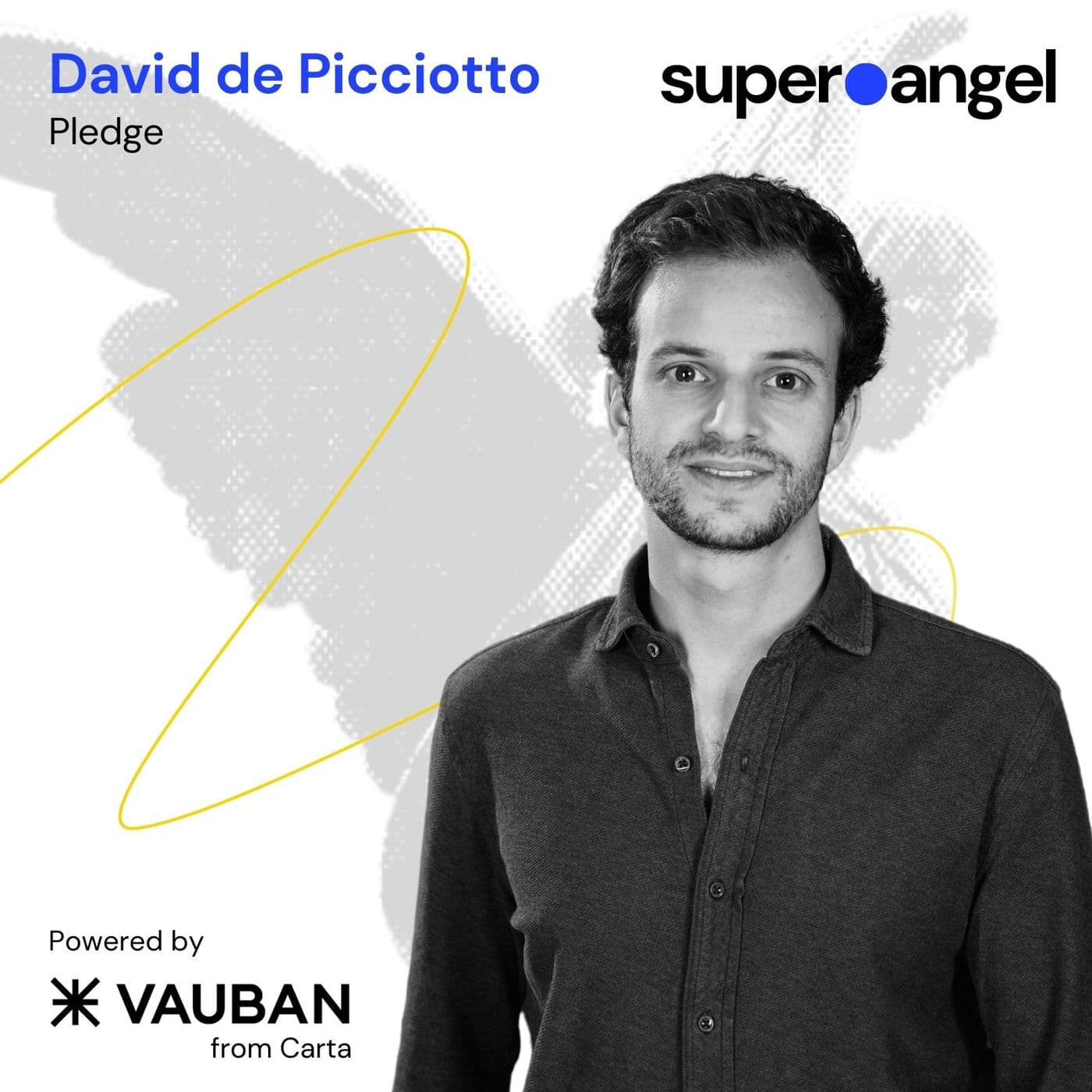
Episode Overview Title: Super Angel #214 David de Picciotto, Pledge Co-Hosts: Andreas Munk Holm and David Cruz e Silva Guest: David de Picciotto, Co-founder & CEO of Pledge
Episode Description In this episode, David de Picciotto discusses his journey from operator to investor and founder. Pledge, the company he co-founded, focuses on decarbonizing the logistics supply chain through its integrated platform. The conversation delves into his background, investment strategies, and insights into the European venture capital landscape.
---
Key Topics Discussed
- David's Background
- Career Path:
- Formerly at Partners Group, focusing on growth equity.
- Led International Expansion at Revolut.
- Co-founder of iRewind, which he exited in 2016.
- Now co-founder and CEO of Pledge.
- Pledge Overview
- Founded in 2021 in the UK.
- A climate software company aiming to decarbonize the logistics supply chain.
- Backed by notable investors: Zinal Growth, Lowercarbon Capital, Visionaries Club.
- Angel Investing Journey
- Initial Attraction to Investing: Fascination with the investment world and its impact on innovation.
- First Investments:
- Involvement in Belvo, a fintech company in Latin America.
- Invested in a last-mile delivery startup with a former colleague.
- Encounter with LockTax, leading to further investments.
- Investment Thesis
- Focus Areas: Primarily fintech, B2B SaaS, and climate tech.
- Strategy Development:
- Emphasizes understanding one's unique value add and what can be brought to the table.
- Highlights the importance of backing what one knows and leveraging previous experiences.
- Decision-Making in Investing
- Investors should prioritize potential upside rather than downside risk.
- Importance of aligning decisions with the startup’s ability to grow and succeed.
- Building Relationships with Founders
- Key questions to ask founders: "How can I help?" and understanding their biggest challenges.
- Establishing a rhythm of communication based on the founder's preferences.
- Insights on Fintech Investments
- Regulatory frameworks play a crucial role; understanding them can mitigate risks.
- Prioritizing companies that can sell to established firms outside the venture bubble.
---
Key Takeaways
- Invest for Growth: Focus on the potential scale of an investment rather than solely on analytical downside risks.
- Know Your Right to Play: Understand what unique expertise you bring that can benefit the founders.
- Network and Local Knowledge: Building relationships with local funds can enhance potential investment opportunities, especially in international markets.
- Founder Traits: Look for founders who have been part of successful growth journeys and possess strong problem-solving capabilities.
---
Advice for New Angel Investors
- Start small and diversify investments to maximize learning and minimize risk.
- Assess potential investments based on team quality and timing rather than just financial metrics.
- Be ready to adapt and learn from each investment experience.
---
Conclusion This episode provides valuable insights into the angel investing landscape in Europe, particularly within the fintech and climate tech sectors. David de Picciotto’s perspective as an operator-turned-investor enriches the conversation, making it a noteworthy listen for aspiring angel investors and entrepreneurs alike.
For more insights and updates on European VC, follow the EUVC podcast at [eu.vc](https://eu.vc).
Written by AI. May contain mistakes. Listen to the episode to check what was said.
Transcript
Automatic transcript. May contain errors.0:02This is a dream? No, it's not a dream I'm an angel. Why would God send me an angel? Because God knows that everyone needs a little coaching now and then. I'm loving angels. I saw an angel. All angels say. For a long day. Please say it's me an angel. The smile on her face. Be in it together. Don't love me, Johnny. Thanks, let's buy an angel. Girl, girl. Hi, and welcome to the Super Angel Podcast. the go-to podcast for angels backing the next generation of European unicorn founders. If you love our show, do drop us a review, share it with your friends and join our community at eu.bc. David is the co-founder and CEO of Pledge, a climate software company helping decarbonize the logistics supply chain through its accredited and integrated platform.
0:55Founded in 2021 in the UK, Pledge is backed by venture investors including Zinal Growth, Lower Carbon Capital and Visionaries Club Before Pledge, David worked for Partners Group a global private equity firm where he focused on growth equity investments and previously led international expansion at Revolut, the UK fintech David is also the co-founder of media startup Irewind where he exited in 2016 If you're an angel listening in and wanting to get closer to the European angel scene do not hesitate to reach out to us. We'd love to connect and see how we can play together. And now, some words from our beloved sponsor.
1:33Verban from Carter is the easiest way to launch and run your syndicate. Verban's end-to-end platform automates your back office so you can focus on what matters, supporting the next generation of entrepreneurs and building your network. Angel investors are the fuel to innovation, and they've created the Atom SPV to allow for more deals, more ownership, and less fees. Backed by Carter, the leading fintech infrastructure company, Verban will be with you all from fundraising to exit. Investors on the Verban platform have raised over$2.5 billion in global investments for companies including Revolut, Bolt, and SpaceX.
2:09If you'd like to learn more, please check out www.verban.io forward slash EUVC.
2:21Welcome to the Super Angel Podcast, everyone. David, we are so excited to have you with us. Thanks for having me. Thanks for joining the show, David. A good friend and actually quite unique background because you've been an operator turned investor turned founder and angel. So super excited to get started. Do you want to start by sharing a bit more about your background, your story and what got you into angel investing in the first place? Sure, happy to. So hi, everyone. By way of background, I'm the co-founder and CEO of Pledge, which is a UK-based decarbonization software focused on the transport and logistics sector, a series I stage that I founded with former friends and colleagues from Revolut, which I joined in the early days and looked after international expansion.
3:08Following that, I was actually also working in private equity. So looking at fund-to-fund investments, specifically also in VC funds, as well as some direct opportunities. I was just about, I had to interject here and say, you're then a fellow comrade because all my partner and I are doing is fund investing. And then we do angel tickets later directly, but we've got that fund angle. So we're going to have some fun today. and today yeah next to pledge and since now a couple of years i also do some angel investments and i'm a scout for sequoia capital tell me a bit more on how you got into your first angel investment if you remember that and you're happy to share and then maybe let's discuss a bit more about a couple deals that you're quite excited about and you want to share with the listeners yeah i've always i was always probably quite fascinated by the investment world and this idea that you can back multiple ideas and that eventually will change the world.
4:06So I kind of mystified that part of the world and I thought, well, if there's an opportunity one day to go into that, then maybe I should explore it. And when I was at Trevolute, a couple of these opportunities came about. And I think I have two. So two of my first deals were actually quite organic. One of them is a company called Belvo in Latin America, founded by Revoluta alumni, which essentially, for lack of better comparison, applied for Latin America. And so that was the classic case of, well, former colleague setting up a new company in a region where that I was also scoping for Revoluta as part of international expansion.
4:47So there was a lot of parallels from the fintech world there. And obviously, I put a very modest check. And then another one, a funnier one was a last night delivery company which is actually not venture backed but doing extremely well and is now profitable five years after founded by a former delivery team member who used to work in corporate development and sorry if i'm sharing any secrets from him but at the time he was interviewing with revolut for a us gm role and we got to the final interview around but then he decided that he wanted to sign his own company and when he re he rejected our offer I reached out to him to ask why because we we had developed sort of a friendly relationship and he told me he was starting his company and was now fundraising for it so that's when I asked him well can I participate and maybe maybe the third one or this third more memorable deal right after I left Revolut so that was what early 2020 and and I joined Partners Group which is this private equity fund one day your colleague comes to me it was probably my second week he comes to my desk asking, he's like, oh, you're the revenue guy and you do some startup investments, right?
5:57And I'm like, yeah, I do some. And he's like, oh, I met a guy at a party in Brussels on Saturday night. I think you should speak to him. And me being the new guy, I thought, well, I'll be kind and I'll take the introduction. Not knowing this guy nor the company he was about to share. And it turned out that the founder had a phenomenal story. And it's a company called LockTax, which I think now is a series A stage company backed by Index. goes to show the power of serendipity. I think you usually call it design serendipity, don't you, Anthony? Manufactured serendipity, yes. A lot of VC jargon. Anyways, so looking back and what you've done today, what do you say and why do you do angel investing, right?
6:38Why do you say it gives you personally and professionally? So selfishly, I think you gave me my first customers with pledge. So that was very helpful. and then looking back or now that I'm building a company again I think it gives you quite unique insights into company building and also specific functional knowledge which is very complementary to this activity so I think these are the these are the main two things and it's also just from an intellectual curiosity standpoint I think it's quite enriching following all these people who have all the odds against them and are pursuing their dreams yeah these are a couple of points both from a personal and also professional standpoint.
7:19But I think I can't articulate enough how now having done a couple of angel investments, how much this helps you when you start your own company and how much you can also triangulate or how much potentially you can also reach out to people within your network for advice because a lot of companies you've invested in will probably have gone through the same challenges that you're currently facing. Since you've done fund investing professionally as well with Partners Group, I'd love to ask you where you see the differences in terms of what it gives you as an investor and also if you've done fund investing yourself personally maybe also shed a bit of light on that because of course with partners it was in a different capacity you were there for one and a half year and so on so so there's there's a bit of a difference between doing it as a personal investor the first thing is or the first question to to to ask yourself what I'd ask myself is why am I doing this?
8:12And is it for fun? Is it for returns? Is it because I want to support friends, former colleagues, or a person with a big dream? And I think once you answer that question, it's probably going to inform your strategy and how you want to go about things. If you work as part of an institutional investment firm, this obviously, first of all, it's not your capital and someone else's capital. So you probably have a fiduciary duty to allocate it in line with a strategy you pitched and that your LP has agreed to. So I think it's a very, very different setting. And you probably have also certain covenants that you need to respect.
8:52And also you need to calculate fund allocation to reach the returns that you've promised. It's a very, very different process. And I think looking back at the more institutional investment experience, you spend also a lot more time thinking about the risks and what can go wrong, especially from a legal financial due diligence standpoint. Obviously, you would invest as part of a partners group in much more mature companies, obviously funds directly. So it's very different to an angel investment where you probably should not think about the downside risk, but you should rather think if the stars align, how big can this get?
9:29On the fund investing side, I'm just going to pursue it a little more because this is something that's very core to me. It's my whole strategy around my investing, right? As an individual, I see so much happening in Europe. You know, I don't have, as Anthony, a huge fintech background. I've been in this space for years. For that reason, I'm going to get access to all the best deals. I don't have that. So my strategy is instead doing fund investing to give me the exposure to ecosystems across Europe. And then I'll then tag along in the later rounds. So that's my strategy to angel investing. But I'm curious to ask you, How do you think about it?
10:04Do you do any fund investing at all or not? So I've done very select ones and I've done them in geographies where I don't have a local presence. So think more emerging markets, think South Africa or other markets like Nigeria or in Latin America. these are actually funds or more if i can say micro funds that i've met through some angel investments in these geographies and then started discussing with with with these people and actually now even form friendships with with them so these are some examples but it's been very very selective and the quantum of the of the check hasn't changed because it's a fund i still come in as an angel yeah yeah not but exactly but it's super exciting i just wanted to touch and now let's go into our investment thesis segment.
11:05David, tell me your investment thesis. You've got quite the background in investing. So I think we're going to get a very thoughtful answer to this one. So your investment thesis, your investment strategy, could you tell us a bit about how you're thinking about it, the portfolio you're trying to build? How do you think about ticket sizes, all those typical aspects? I'm probably going to disappoint you because I wouldn't go to the extent that I could pretend that I have a strategy or at least that I had a strategy when I started. Initially, it was all about getting in, getting my first check done.
11:36Then once you do your first checks, about getting the second, the third, the fourth, and so on. And when you think pragmatically, then you ask yourself, well, what's my right to play? And what do I bring to the table? Because at the end of the day, it's great to want to invest in companies. But at the end of the day, especially with what we've seen in the past few years until maybe 12, 18 months ago, it's been often very hard to get into these companies. So what do you bring to the table? And if I look at what I had to bring, coming from my Revolut experience was experience scaling or expanding a company in a highly complex and regulated space, which is financial services across multiple geographies.
12:17geographies, and then also an intimate knowledge of, if I think about fintech, a regulatory regime with payments regulation, which made the UK the fintech hub it is, which actually a lot of other countries were trying to mimic in their own geographies, especially in emerging markets, like in Latin America or Africa, where they were trying to implement also similar payments regulation. So by being present in a lot of these countries, which feet on the ground, as part of my revolution. And with this regulatory tailwind, I got to meet a lot of entrepreneurs and a lot of early stage companies and a lot of regulators.
12:55And sort of naturally organically, this has, this opened quite a few doors for me. Then I was very lucky to back some, some interesting companies like Belvo, for example, or then a similar one in Africa called Stitch, which again is, is think of it as a plan for a plan for the continent. And the reason I got in is because they were keen to speak with someone who was at Trevolute and to better understand expansion strategy. These are two examples. And I think the other parallel you'll see here is that I try to stick to what I know, what I believe I know, or put differently what I have some experience in, and try to back models that I've seen successful in other markets.
13:38I think we can talk again about Plaid in the US, or you could think about other payments model or capital markets model that we've seen in Europe or North America that are being replicated or localized or even some say tropicalized in other geographies. As mentioned previously, I think initially it was about being pragmatic and it was all about getting in, getting into the first company. And then it was about asking myself, what's my right to play? And it's probably better to play close to home in an area where I have a certain functional expertise. And as you start investing in more companies, and probably also as you, in my case, at least found a second company, you also develop a more company scaling knowledge or insights, which I think can be valuable across any sector.
14:27But I still do think that angel investment is, or venture investing is difficult enough. And as a result of that, to maximize chances of success, you better focus on areas that you have some experience or unique insights in, and also a network where you can help the entrepreneur. So I would say my strategy is mostly focused on fintech, B2B, SaaS, now obviously some climate tech, and optimizing for trying to be as helpful as possible to the entrepreneur. A question on kind of specialization expertise, right and that's coming from someone who is a specialist himself so it might be a bit biased but like how do you balance let's say in some respects the kind of use of the expertise without necessarily biasing yourself too much towards it right in other words sometimes to be an entrepreneur in certain areas you might you need to be slightly naive or because you have learnings from the past you might be over generalizing on them and missing on things like how do you tend to balance that in your investing?
15:34I probably have some bias, but I also think that it's probably a good thing because it comes down to the question to what do I bring to the table? And that's, I think, for the entrepreneur to judge. You wouldn't suddenly find me doing a health tech deal because I don't know anything about it, or at least about the industry. Now, maybe I can bring some more functional or organizational scaling expertise to the table. but I think yeah obviously trying to be trying to be open-minded but it's the first when you get that email from somebody in your network telling you about this new company I think if you have some familiarity with the space it's definitely going to help trigger your interest for it and then make you take the first call and so yeah for example if tomorrow Anthony you send me a deal about in an industry I don't know anything about maybe it might be a bit more difficult for me to get excited unless the team is exceptional.
16:25That's the way I try to think about it. But then once I have this call and when I look at the deal, if I look at the deck, then obviously I'll try to start from a blank piece of paper. Yeah. And I think you did mention that like once the team is exceptional thing, which is kind of my framework, which is I might have firm views for a category and can see some of the challenges. But if someone I know from a network or I don't shares with me a deal and I can see the founders seem exceptional, like I'm always prepared to kind of like break everything on my notion, right? Of what I've known about it and take that call.
16:58And on that note, I would love to ask you like, from a founder assessment perspective, you know, are there any specific things or traits you usually look at when you invest as an angel? And also maybe vice versa, any yellow, red flags, if you want to share, of course. Maybe it's a bit counterintuitive, but sometimes I try to think about the airport test. Sometimes you could think about founders that wouldn't pass the airport test with lots of people I know because they have a very strong personality. These are usually the most interesting people to back. That's one way to look at it. Am I right in saying you're using the reverse airport test in a way?
17:34Exactly. You can call it that way. Another way to look at it is, has this person seen what great looks like? I.e., were they part of a fast-growing company? and I think it's important also to zoom in on that and look at, if you think about Uber, Revoluta, Monzo, these type of companies, when did they join also this rocket ship? Was it towards the end when this was already a scale-up or were they part of the hyper-growth stage? I think it often correlates with people who've been embedded in a very strong culture, entrepreneurial culture in these companies and I think just looking at the number of former Revoluta alumni and started businesses, that's quite telling.
18:15Time will tell if they're successful or not. I think what you're saying, David, is completely correct. I think it's a relevant point to double-click on for our audience that are angels and just getting started and maybe are crossing over from not having that operator or founder background from a company where they have really caught lighting in a bottle. Because if you haven't seen it firsthand, it can be very difficult to, from the outside looking in, say, yeah, okay, these guys have it or they don't. Could you guys share a bit on that? Because I think both of you have been close to those success stories and have definitely benefited from it in your angel investing.
18:55So I guess me, I've done like two years of operating, right? And then I've been a VC, right? But I think it takes backing or being part of those journeys and seeing bottom up what good looks like, right? I'll start with that as a prompt to David and then can go back at it. My view on it is that people will have had the chance to be at the right time at the right place and experience that hyper growth. They will have seen a lot of mistakes being made as part of this company, even done probably by themselves. And I think the key skill that a lot of people learn is when you're growing that fast, there's so many more decisions that you need to take.
19:37And it's about sequencing these decisions in the right step. So it's essentially about prioritizing these decisions. Because when you look at the outcome of a company over the long term, and I'm probably oversimplifying things here, success is a function of the number of decisions you take and the sequence in which you take them. And the more right decisions, correct decisions you take, the higher chances of success. Be it from a product strategy standpoint down to who you hire, to which investors you take on board, to how you manage your burden, etc, etc. Yeah, I love that framework. And also what's very important with that framework is it avoids paralysis, right?
20:15Because a lot of first-time founders or operators, like they put too much weight on one decision and they just don't make that decision. And so, you know, speed of decision-making, conviction of decision-making, directionality and where you're going towards is very important. But as you said, it's the net-net of decisions you make, right? informed decisions you make. I'd love to ask the two of you, and I know that you're both very sector focused and you're both fintech focused. And that's why I want to ask you exactly this question, because we have many in our audience who, of course, go a bit wider or don't necessarily, they do fintech sometimes, but it's not the only thing they do.
20:51To the audience that are thinking about fintech, they're doing investments in fintech once in a while, but it's not their core element. What advice would you say for an outstander looking in, trying to, you know, thinking about fintech in general, what would you say these are the things to be thinking about? As an example, it could be the regulatory frameworks are super heavy. If you don't, you know, there's some red flags here or you need to always get external advice on or blah, blah, blah. What would be your main cues to that listener? Outside the classic lens of looking at team, time, traction, etc.
21:29I think from looking at the fintech space, obviously the regulatory element is very important. And also digging into that, if the company has any expansion plan, what also the potential regulatory impacts or the pain of potentially getting some licenses to unlock new product lines. I think I'd also try to think about more from a maybe more market analysis standpoint, thinking about, for example, mobile penetration. If you look, for example, at the growth of mobile penetration in Africa, I mean, it's been skyrocketing over the past few years. So I think that's another very strong tailwind. So these are just two simple examples of the type of tailwinds that I tried to look into.
22:08Now, I think one thing that I think will become increasingly interesting to watch over the next few months and years, as probably VC funding dries up, is that a lot of fintechs are selling to early-stage fintechs. And based on everything we're reading in the media lately, obviously funding is going to dry up. As a result, probably a lot of companies will go under. And so there's a whole portion of design partners, especially for early-stage companies, that will probably vanish or disappear. And as a result, it's really about asking yourself, well, if you're building a fintech, who's actually your target audience?
22:44and can this fintech sell to mature established companies or companies with a sustainable business model outside just this venture fintech bubble? When I think about fintech investments right now, these will be the kind of companies that I would tend to more look into. Yeah, this is so important. There's so many fintech companies that have actually backed their success by actually piggybacking on small, high-growth fintechs that actually were getting outsized funding, right? then that's dried up quite significantly. I think one example that comes to mind, if you think about Marketa, the card issuer, well, the biggest clients was and is still Square, which I think now it should be public information, but it's about 70, 80 % of the revenue and started as a very, very small client in the early 2010s, with then Uber and DoorDash being the other 10, 15 % of the revenue.
23:39And that was the case up until post IPO. deal. So obviously they bet on the right horse or the right partner, but you have a big concentration risk there. I'd add, I mean, not too much to what David has said. I think being regulatory principle is something that's important, meaning you might decide consciously that you're not going to get heavily regulated up front. That doesn't mean it's a bad thing. It just needs to be very consistent with your strategy and where you're going with that. You can't ignore regulation. I think there's a lot of nuance of different business models. And in the past years where a lot of generalists have started doing fintech, I think they've confused everything with anything.
24:18Like, you know, if you back a lending model, AUM model, payment specific company, to what extent and how deep it plays within that. And, you know, the multiples, the expectations, the type of revenue really can inform the profile of company. And I think a lot of people have overgeneralized on that. And now they're saying they're also very generalizing on whether the quality is there, right? Lending companies are not good or like, you know, AUM models don't scale. I think it's just a matter of really understanding the context and how you'll monetize and how you'll value those companies. And then the last thing I'll say is I've seen a lot of times, especially for areas in fintech where there's always demand for things.
24:58So like everyone wants a loan, right? Or, you know, it's not the traditional B2B SaaS where you need to find like market validation by a quality of product. I think people have under-indexed on how productized offerings are, but I would just highlight that it's so important as well, right? Just because of the fact that it's fintech, it can't be a financial company with a bit of UX on top. I think the degree to which you productize the things you do can be a big determinant on how you're valued in the future, how well you do, the edge you have, how scalable you are, among other things. So that's a couple I would reference just off the top of my head.
25:37To build on that, I think one thing I've seen over the past few months is a lot of companies considering net interest income as recurring revenue. So I think yet digging under the hood and looking at how a fintech's revenue is, what is it made of, is also quite insightful because now a lot of companies will just generate revenue off deposits that they have, for example. Yeah, exactly. I mean, companies went, insurter companies went public with multiples on the gross written premium, right? Like, I mean, their revenue was like 20 % of that. And it's a very complex type of revenue as well, no? Or as you said, the nuance of like valuing something that has deposits that suddenly has ARR that's much larger because they're earning interest in that.
26:25But that interest will have to go to the end customer sooner than later, right? There's nuances like that that are super important. This goes to show the value of sector expertise. I think it's something we should do more on the podcast, Anthony, just reflecting here. We should definitely be diving into the sectors that the guests that we have are really experts. Yeah, totally. Incredibly exciting. All right, Anthony, take us into the core learning segment. You're learning more about them agents, are you?
26:59If you had to choose three core learnings from your time in angel investing, what would those be? The first one that comes to mind and probably the most important, and obviously this is in the context of angel investment, is try not to think too much about downside risk. But rather, as I mentioned earlier, try to think about how big can this get if the stars align. Because at the end of the day, in the majority of cases, an angel investment will fail and you won't retrieve your money. and I think that's probably applicable to venture investments generally. But if this makes it, how big can this get?
27:35So I think that's the first thing where initially when I started, I was trying maybe putting the institutional investor hat on, trying to think too much about being a bit too analytical about it. And it's probably maybe more an art than a science at this stage when you're the first check. Secondly, and that's something we touched on quite a bit, but knowing your right to play and what you bring to the table, because at the end of the day, the entrepreneur will decide whether or not they want to take you on the cap table. So make your value proposition very clear to them. And build on that second one, and that's something I only realized more recently and actually experienced as well as a founder, is that as an angel, whether you put$500, 1K, 5K, 10K or 50K as part of a multi-million seed round or series A round, most of the time it won't change anything to the founder.
Read the full transcript
28:27And so I think especially if you are beginning your angel investment career, or if you have obviously a limited amount of capital to deploy, and your goal is maybe to maximize your learnings through this investment process, or try to specialize in a certain area, or just try to diversify your investment portfolio as much as possible. That's, I think, something that's quite important, and that you don't need necessarily to put tens of thousands of dollars in a single company and put all your eggs in the same baskets. I want to double click a bit on that, actually. Also from a founder's perspective, right?
29:02It's like the type of angel you end up selecting and I think the way they view things from my experience, having seen them on the sidelines, is much more about the commitment they see, the enthusiasm they see, the value add, the thing you can bring to the table, right? And the assessment of that as a proxy to skin in the game and commitment rather than how much money you make. I think people even say like, it's the relative savings you have that matter. Not even that. I don't think founders are as, I think theoretically speaking, it makes a ton of sense. I think practically both the most important thing, but also the very hard to assess is that to what extent will that angel I'm getting on board have specific expertise and value add I need, a very good personal fit with me, seems super enthusiastic and will end up being available.
29:51And the latter part, by the way, is the most difficult to assess. You might end up getting your childhood hero on the cap table that seems enthusiastic, but has a personal circumstance and for two years are completely offline. And you might end up getting someone you met by proxy of like a second degree introduction for 5K and will change your game because they're obsessed about you and they have ample time to do so, you know? I'd love to actually that exact one because it ties so well together with the other one as well. how do you think about building that relationship? Because I think that's what everyone says in the end, but there are definitely some ground rules that you can follow and principles you can follow before heading into the relationship that are worthwhile taking into consideration as a new beginning angel.
30:37The first very simple thing I do is, and as cliche as that sound, is asking the founder, how can I help? And maybe another way to ask the question is, what are your three biggest challenges right now? Because there's maybe a less direct one. And then based on the answer, then you see if you're able to help them or not. And I think just being very clear about it will also set the right boundaries and the right tempo with that person. So that's a very, very simple tactic that I do. And then once you get past that first question, it's also about understanding what's the cadence of conversation that the founder wants to have.
31:13Maybe some of them want to speak to you every other week, every month, every quarter. while some others will just ping you once every three years. So I think it's very situation dependent as always. And as long as the person knows why they took you on the cap table and what value you can bring, then you just need to make sure that the door is open when they need to reach out to you. You mentioned earlier, and I'm curious to tie this with the question of how you communicate and how you build those relationships, because you said earlier that you've done some investments internationally, very internationally, globally even.
31:46So I'd be curious to hear how you think about that global presence in your portfolio. How do you make sure that it all makes sense to you and so on? So when I look at these international investments, usually the commonality is that I've backed similar models in multiple geographies. So I probably have some interesting insights to share with one company or the other. Or even better, I can connect one or two companies in the same sector, but totally different geographies. or not competitive in these markets. And I think I found this and founders tell me it's always very valuable. And then the second piece is, and that's back probably from my revenue days in expansion, there are a lot of global fintechs who are expanding internationally and need to localize products.
32:38And when they need to localize product, they may need a local KYC provider, a KYB provider. They may need a local acquiring or issuing processor. They may need to connect to the local person at Visa or MasterCard, and so on and so forth. And I think through these connections I've been able to establish in some markets, then also that's a conduit to support these local companies. Super interesting. I think that's actually a very good angle to put on it. Now I'll take us to our quickfire. Quick fire, quick fire.
33:12I think most in our audience are used to it by now, but it's a 30, 60 seconds question answer round. Are you ready for it? Sure. All right. What's the most counterintuitive thing you've learned since you started angel investing? Keep it very simple. Back to some items we were discussing earlier. When you think about investments, you're trying to be very analytical, thinking about market sizing, thinking about market tailwind unit economics and all these things in the context of angel investments i think just stick to the basic team you think it's the right timing and if things pan out as you hope or as the founder hopes it does how big can this get now what would be your top tips to angels investing internationally one would be connect with a local fund and build a relationship with them by demonstrating the domain expertise you have or the connection that you can make.
34:03Now, what advice would you give to your own 10-year younger self if you only had 30 seconds? Don't listen to your 10-year older self.
34:15The reason why I'm saying this is that 10 years ago was probably at an age where you should just go and do stuff and not listen to advice and follow your instincts and build your own experiences. If you ask me the same question in 10 years, I'll probably give you a different answer. I love that. How people project their risk conversion at the point in life to their more juniors, right? Which they shouldn't. I love that. The ecosystem is super likely to have people like you supporting the next generation of entrepreneurs, David. Thanks so much for joining the show. Thank you very much. Thank you for listening to this week's episode of the Super Angel Podcast.
34:52The go-to podcast for angels backing the next generation of European unicorn founders. If you love our show, do drop us a review, share it with your friends, and join our angel LPSyndicate at eu.vc. And if you're an angel listening in and wanting to get closer to the European angel scene, please do not hesitate to reach out to us. We'd love to connect and see how we can play together. And now, some words from our beloved sponsor. Verban from Qatar is the easiest way to launch and run your syndicate. Verban's end-to-end platform automates your back office so you can focus on what matters. Supporting the next generation of entrepreneurs and building your network.
35:33Angel investors are the fuel to innovation and they've created the Atom SPV to allow for more deals, more ownership and less fees. Backed by Carter, the leading fintech infrastructure company, Verban will be with you all from fundraising to exit. Investors on the Verban platform have raised over$2.5 billion in global investments for companies including Revolut, Bolt and SpaceX. If you'd like to learn more, please check out www.verban.io forward slash EUVC. I've been touched by an angel, girl.


