Ask ChatGPT

 EUVC
15 Oct 2026 · 15m · 7 chapters
European manufacturing automation to address a looming labor shortage; productized robotics that can be deployed in weeks for high-mix, low-volume factories.
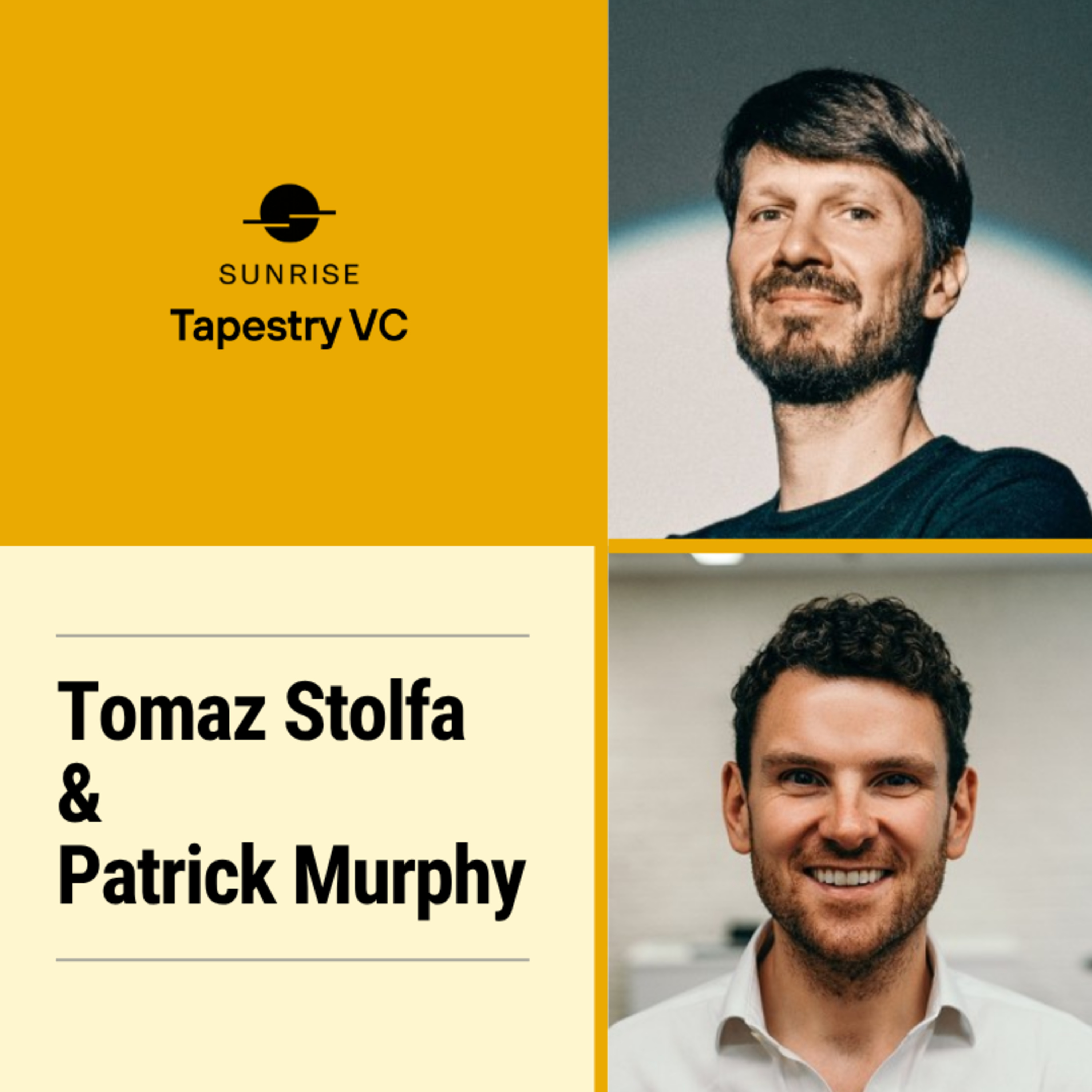
Tomás Stolfa, founder at Sunrise Robotics; previously built software, now focused on industrial robotics. Patrick Murphy, investor at Tapestry VC.
EU manufacturing employs 32M+ people; ~30% retire in 15 years, creating a 10M+ worker gap. Many “AI-driven” robot installs fail because customers only care about moving workers to higher-value tasks. Traditional automation projects take 12–18 months; Sunrise deploys robotic cells in one shift and aims for high autonomy/robustness (99.9%+) rather than relying on foundational models.
Sunrise captures operator data, then rolls in a plug-and-play robotic cell (IKEA-level assembly, ~150 hours). Robotics must be physically safe at industrial speeds (2–2.5 m/s) with radar safety and physics-first design.
Written by AI. May contain mistakes.
Learn how robotics can help mitigate the impending labor shortage in EU manufacturing.
“I'd love to understand, I have a view on the macro, but would love to understand why you built this company in Europe and what are the key interesting items that people don't maybe appreciate.”
Discover the unique solutions Sunrise Robotics offers to enhance factory productivity.
“And it's more than just about working with cool tech and sticking cameras and robotic arms and all of that, which is absolutely fun.”
Explore the real-world challenges that robotics must overcome to be effective in industrial settings.
“And then they're not used by those manufacturing businesses.”
Understand how Europe's unique advantages differentiate its robotic landscape from other regions.
“But what I do know is that in the industrial setting, that is just not enough.”
Learn about the operational strategies that enable robotics companies to thrive in Europe.
“And I often mean that quite academically from a textbook.”
Gain insights into the changing dynamics of the venture capital landscape in Europe.
“What is it about setting up and operating in Europe?”
Learn about the importance of a strong, long-term aligned cap table in entrepreneurship.
“At the end of the day, Plural was the best choice for us because the partnership there is just spectacular.”

Get the gist, explore an idea or ask about something said.
 Claude
On EUVC, what are the key points of this episode?
Searching your listeningAutomatic transcript. May contain errors.
0:00Europe has the second largest manufacturing base in the world. It's about 15 % of the European GDP. There are 32 plus million people employed in EU manufacturing and shifts in demographics show that about 30 % of that workforce is going to retire in the next 15 years. So we're going to have a 10 plus million people gap across. And unfortunately, many medium-sized businesses have robotic arms that, you know, the son-in-law thought would be a great idea to install. And then they're not used by those manufacturing businesses. If you just, you know, like I said, stick a camera on a robotic arm and call it AI-driven robotics, that is great.
0:37But the customer doesn't care. Like, they just want to move the person to a higher-value workstation and hand the repetitive work to something else. One of the other physical realities is actually shipping. And I think what's been interesting in robotics, you know, and also many other deep tech areas over the last 20 years of venture is people haven't necessarily actually delivered. We are live. We are live. In five. We are live. Four. We are live. Three. We are live. Two. We are live. One.
1:15What's really interesting when we think about robotics is some of the differences where there's so many more companies in Europe right now building interesting robotics and hard tech, whether that's all the way to drones and automated machines. I'd love to understand, I have a view on the macro, but would love to understand why you built this company in Europe and what are the key interesting items that people don't maybe appreciate. I'm just going to throw some numbers at you. This is no secret, but Europe has the second largest manufacturing base in the world. It's about 15 % of the European GDP.
1:56There are 32 plus million people employed in EU manufacturing. and demographics or shifts in demographics show that about 30 % of that workforce is going to retire in the next 15 years. So we're going to have a 10 plus million people gap across manufacturing. And when I say we, the tech community, the venture community and so on, we talk a lot about defense. But if you compare defense to manufacturing, the numbers speak for itself, right? And if we lose 15 % of GDP, if this is a hole in a critical industry that we will not be able to fill quite quickly, this is an existential risk. And so for us, the mission is really, really important.
2:38And it's more than just about working with cool tech and sticking cameras and robotic arms and all of that, which is absolutely fun. Everybody loves robots and flashing lights on robots. But there is a clear application. And Europe is a very unique place to be building a company like this. Also because automation currently works for high volume. So if you're in automotive, if you're in pharmaceuticals, if you're in food processing, you produce enough volume every year, predictably for five plus years, to be able to call a system integrator and have them build a one-off solution just for you, just for that line or for that workstation.
3:15But if you are one of the two-thirds of European manufacturers who work on high mix, low volume, well, then you have a lot of labor because labor is flexible. but if there is no more labor, like, well, that's a problem, right? And again, an existential risk for a very, very important piece of our economy. And so we feel like this mission is quite important. And medium-sized manufacturing, often family-owned manufacturing. And I think we've all done, especially during COVID and now post-COVID Zooms, where someone has their Peloton bike, an advanced piece of robotics, in the back of the Zoom covered in clothes, a very expensive clothes hanger.
3:53And unfortunately, many medium-sized businesses have robotic arms that the son-in-law thought would be a great idea to install. And then they're not used by those manufacturing businesses. Tomas, talk us through a little bit the Sunrise solution and what is making the biggest difference for the people you've deployed with. Yeah, so maybe you can use the clicker and people can see what we're doing. So we've gone and basically productized the entire end-to-end journey to go from an operator doing the work on a workstation so we can capture data around that. And then the second time the customer sees us, we come in with this robotic cell that we roll into position, plug into electricity.
4:34Any of the workstation is similar enough to the one we capture data from. It just goes to work within one shift. You know, there's a lot of interesting technology pipelines and other things that we can go into detail more about to make this happen. But we believe that this is the experience that's needed because, you know, for those of you who might not be so familiar about it, like an average automation project today is 12 to 18 months. We do this in weeks and we have a plan on how to get this to an even shorter time frame. And this is the only way really that you can actually approach this because if you just figure out a better way to program robots That doesn't make an end because you still have to do a bunch of other things If you just you know, like I said stick a camera on a robotic arm and call it AI driven robotics That is great, but the customer doesn't care like they just want to Move the person to a higher value workstation and hand the repetitive work to something else right very much like what I'm assuming most of us are now doing with with digital agents for some repetitive tasks, we want to bring that to the factory floor.
5:39And this is just one component of the broader robotics industry. Why did you decide to focus on this part? And what are your, you know, from the cold face views on things like getting my dishwasher unloaded by some robotic arms or, you know, having a humanoid live in my house, etc.? Yeah, so I'm a big fan of a lot of companies that are playing in robotics, starting with foundational models. They're trying to solve that. I think there is a very important need to be solved there. I am also a big fan of people that are trying to build form factors that look like humans. TBD, what is the actual use case there?
6:20But what I do know is that in the industrial setting, that is just not enough. Why? is because if you have 99 % robustness, and most visual language action models or state-of-the-art models currently are probably about 80, 85 % robustness, you will still have a lot of daily interventions needed to get the robot out of trouble, which means that the economics are just not going to cut it because if you need a human to get the robot out of trouble every 20 minutes or every hour, well, then, you know, it doesn't really make a big difference. So you need to take a slightly different approach and get that robustness and autonomy up to 99.9 and then adding nines there.
7:06And unfortunately, foundational models are not there yet and I think won't be there for a little while longer. But then the second piece is the form factor, right? So, you know, our robotic cell does three things really well. So it sees really well. It has lots of edge compute, so it can think really well, and has two arms to manipulate the world around us. And we move those arms at industrial speeds, so two, two and a half meters per second. That is pretty fast, and it gets pretty scary. So safety is an important consideration. So you need to have a bunch of radars, safety certified, and so on, right?
7:41But most importantly, physics are a real problem, because if you're swinging a robotic arm that has 1.5 meters in reach at two and a half meters per second with a payload, I don't know if you can balance on two legs. I mean, it's pretty problematic. All of those things are very important in environments where productivity is the number you're chasing and not ergonomics, right? So I think form factors, there's going to be plenty of different form factors for different use cases, but the industrial use cases will require to adhere to the laws of physics first, optimize for productivity and for safety.
8:18Yeah, one of the main mantras, I'm always talking to my team about is, is it physically possible? And I often mean that quite academically from a textbook. And so Tomás is not building a perpetual motion machine, which is good. One of the other physical realities is actually shipping. And I think what's been interesting in robotics, you know, and also many other deep tech areas over the last 20 years of venture is people haven't necessarily actually delivered, right? I think one of the big differentiators of Sunrise today and why you're of interest to many of the people in the room is you know you're actually deployed in factories and deployed in days what does success look like for a robotics company like yours here in Europe yeah I mean like we have we have pretty strong ambitions or the course of you know tens of quarters if you want ahead of us but one of the key goals when we started the company was to get to a factory floor on a production line as soon as possible and So we got there in about 18 months from our first hire, which I don't know.
9:18I've done software before, but people tell me this is pretty fast in hardware. And we have still a couple of sales running on actual production lines on a daily basis. We survived Christmas season, and I have lots of war stories to share. But, you know, this is a long journey, and we are starting to kind of ship many more sales in the next couple of quarters. so the ambition is to go into high double digits triple digit numbers like next year and then continue growing like how we are doing that it's also kind of important because we've decoupled data acquisition from actually training and preparation of the cells from the actual hardware so you know when you see our robotic cells you should think about them closer to being like a consumer electronic device so we don't manufacture them we did the design we did the mechanical engineering, we have assembly instructions that are IKEA level, and about 150 hours of work, they get put together, and the cell that goes to the customer has never seen the application before.
10:19And that is very key, because then you can scale kind of all these parts of the business in parallel, and you can compress the timelines. So it's, again, not just about the technology, but it's about operational excellence and how you design the company, and I think that's the only way you can make it work in robotics. So we are here at the EU VC summit. What is it about setting up and operating in Europe? You built companies, as you said, at the inset in San Francisco for a very long time. What brought you back to Europe, brought your founding team together and, you know, makes you differentiated by being here in your mission?
10:57Yeah. So, I mean, the difference is San Francisco is very noisy, right? Like there's always the hype of the week. It's very hard to stay focused. It's very hard to stay building. And it's also a great talent pool. So those are the differences. But I think Europe has its own advantages. For us, for example, there's an incredible customer base that has been incredibly receptive for the products we do. So we spend a lot of time at factories, like talking to owners and so on. And I think this is because there's manufacturing base in Europe that's exceptional. The second thing is, which is a little bit weird for a hardware company, We are a distributed team.
11:36So we are a team of 45 people now across 10 European countries. So we have an office and a lab in Ljubljana where I sit, so it's very convenient for me. But we have world-class mechanical engineers that did Formula One engines before in Ireland, ranging to roboticists that sit in the UK, in Barcelona, and so on. And we've designed the organization so it can function in this way. primarily also because when we deploy sales to the customer we are also not sitting next to the hardware so you know if we're not sitting next to the hardware when it runs in production maybe it's also good to not sit next to it when we kind of build things so that on its own kind of enabled us to build a lot of tools but coming back to Europe I think Europe has incredible talent I think that the cultural mix of ambition passion for this particular mission is is really unique.
12:30And maybe just one other stat I was looking at last time, about 80 % of our team doesn't live in their country or in the national country, which is wild. So we have a bunch of Italians in Spain. We have British people moved around. So it's really wild to observe how Europe is becoming much more like the US from the perspective that people that grew up in Massachusetts moved to California and all of that. So I think that that has really changed in the last 15 years. You know, we had the good honor of being your pre-seed investor and then Seed Camp and Plural and now some other people have become part of your cap table.
13:12You've met many VCs on both sides of the Atlantic over the last decade and a half. What are some thoughts on the industry and how it's developed here and maybe are there compliments or points of feedback for the industry now that you have all of their ears? you know I feel like we I mean I'm extremely grateful for the for the cap table we have built right and a lot of these people we've known for for 10 plus years work together in multiple companies even those ones that didn't work out and so so for me it was an easy choice to kind of work with the people that have a long time horizon alignment where I mean you knew about the company and you committed before it was incorporated so I guess I guess you get credit for that as well you know So these were people that navigated the maze with us early days.
13:59I mean, this is all public information, I guess, a little bit. But our seed was pretty competitive. At the end of the day, Plural was the best choice for us because the partnership there is just spectacular. And we continue building the cap table in a very, very deliberate way. So I think that it is quite simple, I guess. What I've seen that has changed since my early entrepreneurial endeavors is that all investors have become much more constructive in terms of just pushing for the right things at the right time. And I guess the second bit is, and this is maturity of an ecosystem, is much more even-keeled to some extent, right?
14:42I would say we buy less into the hype when things go well and we try to figure it out when things don't go well in that quarter. But I think that that's super important for an entrepreneur and for the team is to have that anchor, if you want, for the good times and for the bad times, because it's a long journey. It's going to take like 15 years to build this company, if not more. And that's the last thing, is like this long-term alignment is something that we really care about. And I'm very happy to say that, you know, our cap table is very long-term aligned and also has the capital to support long-term.
Europe’s manufacturing sector faces a growing labour shortage, while much of the continent’s industrial base remains difficult to automate with traditional robotics.
In this conversation from the EUVC Summit & Awards Show 2026, Tomaz Stolfa, Co-Founder and CEO of Sunrise Robotics, joins Patrick Murphy, Partner at Tapestry VC, to discuss what it takes to bring robotics into high-mix, low-volume manufacturing, where flexibility and reliability matter as much as the technology itself.
Tomaz explains why manufacturers care less about the label of “AI-driven robotics” than whether a system can reliably take repetitive work off people’s hands, why even 99% robustness can fall short on a factory floor and how Sunrise is reducing automation projects that typically take 12 to 18 months to a matter of weeks.
They also discuss Europe’s advantages in robotics, the importance of getting hardware into production early and why building a deep-tech company requires investors who are aligned for the long term.
Highlights
Timestamps