Ask ChatGPT
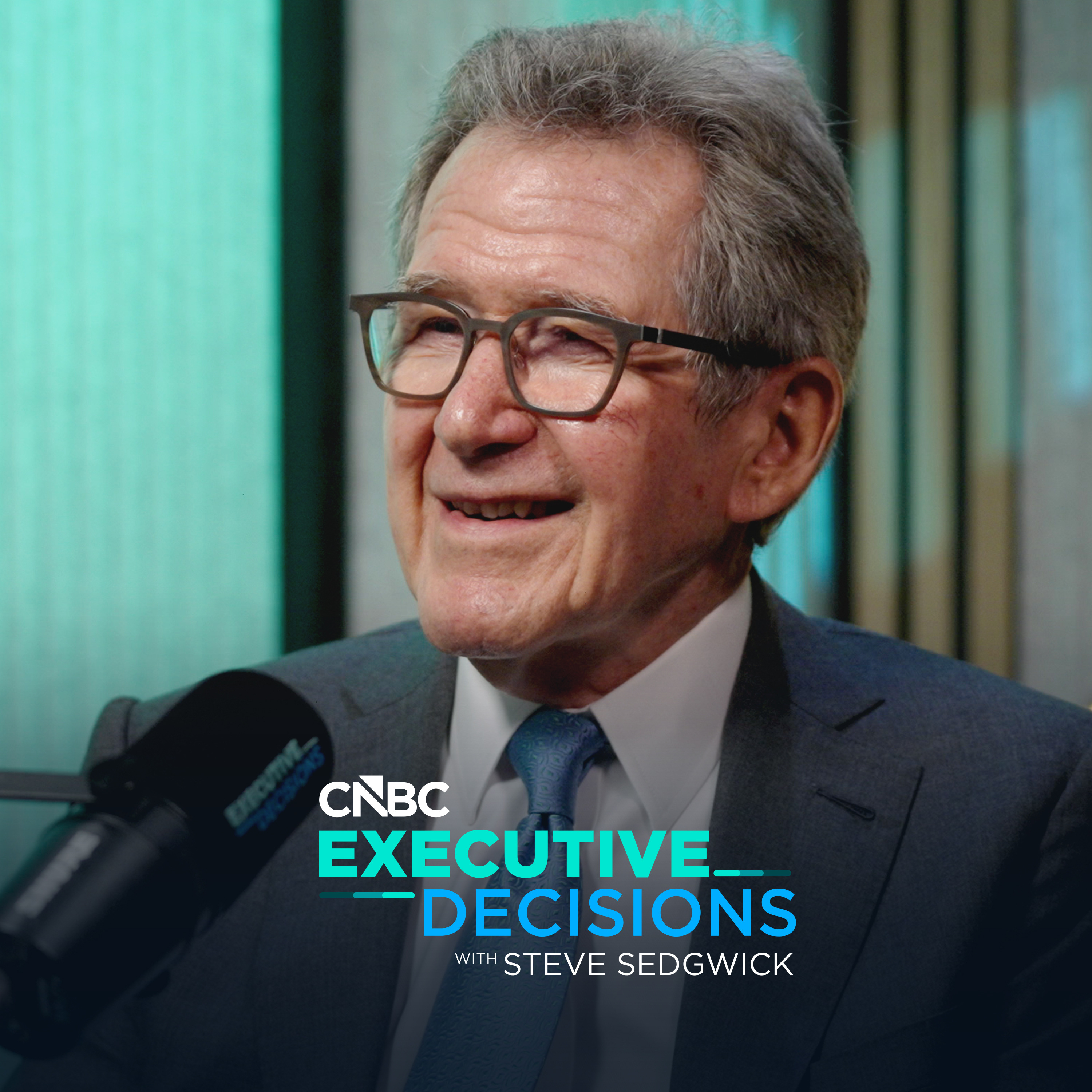

 Executive Decisions with Steve Sedgwick
13 Oct 2026 · 37m · 17 chapters
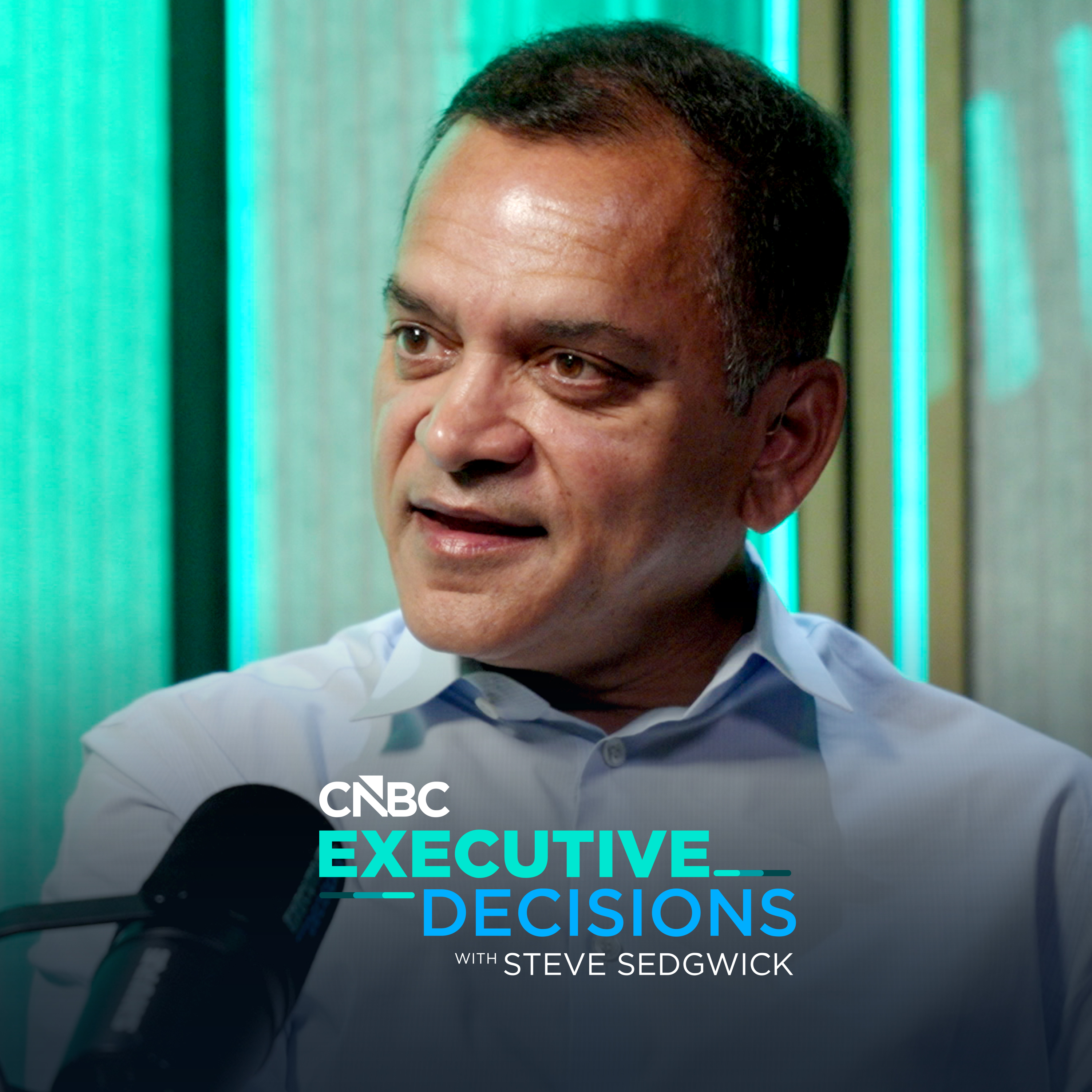
Tarang Amin, CEO of e.l.f. Beauty, explains how he chose e.l.f., built strategy around strengths and curiosity, and runs the company using community-led product development, fast iteration, and inclusive hiring. He also addresses whether makeup for teens/kids is harmful and defends e.l.f.’s DEI approach.
Tarang Amin is an immigrant (born in East Africa to Indian parents; raised in the U.S.). He learned business by running a family motel business from age 14, earned an MBA at Duke, worked at Procter & Gamble (brand management; mentored by R&D leader Franco Spadini), then led Clorox leadership and later CEO roles at Shift Nutrition (grew ~$180M to $1.5B; sold to Reckitt Benckiser).
“It never hurts to have a conversation”; invest in strengths; e.l.f. co-creates with its community; diverse teams outperform; e.l.f. is “for every eye, lip, and face”; e.l.f. products are vegan and cruelty-free (PETA/Leaping Bunny) and “ELF clean” (no 2,900+ ingredients).
e.l.f. lip oil priced at $8 vs Dior’s $36; community requests drive R&D pipeline timing; two-week product review meeting uses open-ended questions; Target distribution testing showed e.l.f. didn’t “trade down” but attracted a new user base.
Written by AI. May contain mistakes.
Tarang Amin reflects on his initial skepticism about the cosmetics industry.
“Tarang Amin had already helped grow a company and lead it through a major sale when he began thinking about what to do next.”
Tarang shares his family's immigrant story and their entrepreneurial spirit.
“Tell me a little bit about your origin story because I find it fascinating looking at what happened to you and your amazing family from Africa to the United States.”
Tarang discusses his childhood experiences managing a motel and learning about cash flow.
“But that was probably one of the most formative experiences I've had, not only as a teenager, but throughout my business career.”
The significance of formal education in Tarang's life and his family's values.
“All it takes though is really hard work and determination and certainly there was no better proving ground of that than the motels.”
Tarang recounts his career path leading to a brand management role at Procter & Gamble.
“You just didn't have the formal piece of paper to say that you knew it as well.”
A humorous anecdote about Tarang's mother's expectations for his career.
“My mother could never understand what brand manager was.”
Tarang emphasizes curiosity and asking questions as key leadership traits.
“I'm not engaged and I'm not learning and I'm not doing well at my job.”
Tarang shares valuable mentorship experiences and lessons learned in his career.
“I was actually even before I was a brand manager, I was an assistant brand manager.”
Explore Tarang Amin's professional journey leading to e.l.f. Beauty's CEO role.
“How would I get after a higher overall rating?”
Learn about the strategies and metrics that make e.l.f. Beauty a standout in the cosmetics industry.
“Alan and Joey Shama, they created this real disruption in the industry.”
Discover how e.l.f. Beauty engages its community to drive product development and innovation.
“compelling thing she told me is, oh, by the way, it's the most productive brand I carry.”
Discuss the relationship between beauty products, self-expression, and the mental health of young consumers.
“It's co-creating with our community, seeing what our community wants.”
Discusses the significance of self-expression in young people and how skincare is embraced by the younger generation.
“I'd say the bigger piece that we worry about is the younger generation has really embraced skincare.”
Explores how younger generations learn about makeup and the evolving consumer behavior surrounding it.
“What about younger kids even playing these games thinking makeup is essential at a younger and younger age?”
Examines e.l.f. Beauty's commitment to diversity and inclusion amidst current corporate trends.
“We're big believers from a competitive standpoint that having a team that reflects communities you serve is a competitive advantage.”
Discusses the strengths and weaknesses of the CEO, including the importance of patience and leveraging team strengths.
“When people are looking at opportunities, I'm looking at strengths and driving the heck out of strengths is what I'm best at and assembling these high performance teams.”
Shares insights on achieving balance and peace through family and outdoor activities.
“part of me that says, give it a moment and, uh, and, and make sure that we're, I'm taking that.”

Get the gist, explore an idea or ask about something said.
 Claude
On Executive Decisions with Steve Sedgwick, what are the key points of this episode?
Searching your listeningAutomatic transcript. May contain errors.
0:00Tarang Amin: A CNBC original podcast. Tarang Amin had already helped grow a company and lead it through a major sale when he began thinking about what to do next. He was then approached about cosmetics brand Elf and initially wasn't convinced. At first I wasn't interested in color cosmetics to be honest. I thought there were way too many brands, way too fragmented a category, not enough product differentiation. But Amin had a rule that made him take the meeting. I've always had this other saying in my career, which is it never hurts to have a conversation. What he learned changed his mind and convinced him to invest his own family's money in Elf.
0:37That decision reflects an approach he still follows today.
0:41Tarang Amin: When people are looking at opportunities, I'm looking at strengths. And driving the heck out of strengths is what I'm best at. These are Tarang Amin's executive decisions.
0:56Tell me a little bit about your origin story because I find it fascinating looking at what happened to you and your amazing family from Africa to the United States. Just tell me about that.
1:08Tarang Amin: Sure. So first of all, thank you for having me. I'm excited about this as well. My story is an immigrant story of Indian ethnicity. Both my parents were born and raised in India. I was actually born in East Africa. My dad used to work in Kenya, spent part of my childhood in Kenya and Uganda. And we immigrated to the U.S. when I was a child. And it's like any American dream story. My parents came here to make a better life for us. They worked extremely hard. My dad's last job, he wore many hats, but the last job was selling educational publishing to school systems throughout the Virginias and the Carolinas.
1:42Tarang Amin: So he would disappear on Sunday nights, kind of do a sales route, come back Friday nights. And we really decided we wanted to be together as a family. So when I was 14 years old, my parents sold our house, took every penny we had, and we bought our first motel on Route 1 in Alexandria, Virginia. We moved right into the manager's apartment and our business model as a family's, we'd find these distressed properties, we'd fix them up, we were good operators, and we kept building that business out. But that was probably one of the most formative experiences I've had, not only as a teenager, but throughout my business career.
2:20You were thrown out of Uganda. Uganda was a terrible place in those days, run by a dictator who was a terrible human being, Idi Amin, as well. Tell me a bit about that. Was it traumatic for you as it sounds?
2:35Tarang Amin: Well, you know, it was less traumatic than others because my father saw kind of the writing on the wall and it sent my mom and me over earlier so we weren't it wasn't as bad as some people experience where they literally were getting thrown out of the country and the panic there so it was better planned obviously just as disruptive my parents lost everything they had in Uganda everything they lost everything so my dad had invested in land had their their savings so they did come with very little to the states and make a life for ourselves. So I can relate to that part of the experience. But like I said, I think some had it much worse than we did.
3:15Tarang Amin: I'd say there was less trauma and more the shock in being in a completely different culture and a different world. There were very few people that looked like me growing up, even early in my business career. I'd probably be the only brown person in the room. And so I'd that was more the part to get used to of being an American, but somehow feeling like an outsider. And so a big part of my, I think, professional career is making sure I gave opportunities to others that may have not felt welcome. And one of the things I learned early on, and I give my parents a lot of credit, that you can be anything you want to be, you can do anything that you want to do.
4:00Tarang Amin: All it takes though is really hard work and determination and certainly there was no better proving ground of that than the motels. Because to give you a little bit more of a visual story on that, it was 1979 when we bought our first property. I think interest rates in the US were about 18%. I developed an intuitive sense of what cash flow was at the age of 14. I knew every single dollar that was coming out, every single dollar that was going out. I knew what our mortgage payments were. I knew what our expenses were. It was an incredible - You were a fully fledged businessman at 14 years of age.
4:38Tarang Amin: And you had to be. It was by necessity because I knew everything we had as a family was in this property. If this property didn't work, I think there was no alternative. So it was really about making it work. I mean, it was so funny. I later, I mean, many years later, I went to get my MBA and I learned the definition of economic profit. And I was like, you know, I actually intuitively knew what economic profit was. I got the whole thing of your cash flows and your profits relative to your assets. Any motel owner understands that. Any property owner generally understands that. And so it was fabulous.
5:12Tarang Amin: I mean, at the time, it was hard work. At the time, it was stressful as a 14-year-old knowing that this had to work. There was no alternative. But I learned so much just watching my father. So Tarang, you were at Duke and then you did your MBA at Duke. I want to know why you even bothered with that because you were already very, very qualified in business before that as well. You knew all of this stuff as well. You just didn't have the formal piece of paper to say that you knew it as well. Why couldn't you just be an entrepreneur without going to Duke and without that formal education? Well, my family and my parents, big believers in education.
5:50Tarang Amin: They themselves were highly educated. But you had your education. You got it working and knowing about cash flows and knowing about profits and knowing about interest rates at 14 years of age. Well, I think one of the things my parents instilled in me was a real sense of curiosity and of learning and the passion of learning. My dad had multiple degrees, including a law degree. He was a practicing lawyer. He himself had a tough childhood having lost both his father and his brother at a young age. He ended up having to suspend his college studies to take care of their family farm. So their story, and yet at the same time, he was still determined to get an education, to finish his studies, to learn.
6:28Tarang Amin: And they instilled that in me, that there's real power in knowledge, in learning. And that's actually the key to be anything that you want to be. And they wanted more from me, frankly, than the motels. My parents absolutely hoped I'd either be a doctor or an engineer. So I went in with a biomedical engineering major. And I don't know, about three years into it, it was my junior year, I realized, you know, I'm just not intellectually as interested in some of the subjects. So much to the shock of my parents, I changed my degree after my junior year to international policy, public policy. And they, my mom was just heartbroken because she thought, my God, he's going to, you know, we work this hard in our lives to give them a better life.
7:12Tarang Amin: And what's he going to do? I had an interview only this week with a guest whose mother refused to admit that their son was going to an investment bank and wanted their son to be a lawyer. And she went around telling everyone he's practicing law at Goldman and Sachs rather than he's an investment banker. She refused to admit that he wasn't going to be a lawyer. I can top that story because after my MBA, I joined Procter & Gamble in brand management. Yeah. My mother could never understand what brand manager was. She was like, well, you make the advertising. I'm like, no, we have agencies. She's like, well, you make the product.
7:49Tarang Amin: No, we I don't. In the end of the day, she was like, what do you do? It's like, you know, well, I help direct all these other areas so we can move the business forward. She was at a loss. She just couldn't understand why I would do this. Over the years, as my titles got better, I thought she understood what I did. but sure enough I was an executive at Clorox I got appointed to their leadership committee which was their highest level and my wife was talking to my mother and she said oh Terang had a very important promotion today without missing a beat my mother said you guys need to open up a subway and and my my wife said you mean like the the sandwich shop she's like yeah uh you can't get ahead working for someone else.
8:35Tarang Amin: You need your own business. My sister has three subways and she's doing extremely well. I asked my wife, what did you say? She goes, I was dumbfounded. What am I supposed to say? She thinks running a subway would be much higher in elevation than what you've been doing for the last 20 years. I was so happy. I went straight into the CEO's office and I say, listen, I want to thank you and the board for this appointment. But just so you know, if it doesn't work, I have a plan B. Mom's got my back covered here. I love it. Mothers are amazing. Look, I find that in my small way doing the job I do, if I'm not curious, I'm not engaged and I'm not learning and I'm not doing well at my job.
9:16Curiosity is so important for anyone listening to this who wants to build their career and carry on. Never, ever, ever rest on your levels. Never just chase the money. Never just chase the titles.
9:26Tarang Amin: No, that's right. And I think people sometimes get confused as a CEO, you're in charge. I often say the more powerful impact you can have are the questions that you ask, right? I can direct people to do things, but by asking questions and seeking that learning, not only are the decisions better that we make, but it actually teaches along the way. One of my favorite meetings I do is a product review we do every two weeks. It talks to our speed. It's my meeting. But I make that an open ticket. I remember my CMO when she first came in, she was horrified because she came from Prestige. She's like, these are the nuclear codes to the company.
10:04Tarang Amin: How are you letting anyone in? And I was like, two reasons. One, anyone looking at me would not confuse me as being a makeup enthusiast. So I am not as close to our community as our incredibly talented team. And two, the whole point of that meeting are the questions that I ask both in terms of what I learned to make better decisions but how it teaches the rest of the organization what we're gonna do so I that's the one meeting I love looking at the chat field on I there's the one meeting that we will do live but I will have my iPad and I'll be going through on this the zoom chat to see what and I'll just throw out a bunch of open-ended questions tell me why our melting lip balm is is phenomenal what's so great about this formulation Tell me about this formation.
10:47Tarang Amin: Tell me how it's different than the prestige item. Tell me why$9 is the right pricing. The prestige item is$26. Why can't I charge$12? Why can't I charge$14? Having that inclusive nature and like again, I said curiosity, the questions make really propel our entire company.
11:10I want to just revisit a couple of points about your amazing 12 years, I think, at Procter & Gamble. 1991 to 2003.
11:19Tarang Amin: Mentors. Franco Spadini. I'll tell the story. I was actually even before I was a brand manager, I was an assistant brand manager. P &G would have these big reviews. There'd be, I don't know, it seemed like 100 people in them. and someone relatively junior, you'd be off on the side and you'd be observing the meeting. And it was a sector president, their leadership and the GMs and, and you'd go there and the sector president would be asking a few questions and I'd have thoughts in my head. And there was this man, soft spoken man, a little bit further down the table. He would say something. And I was like, you know, I was thinking that same thing.
11:58Tarang Amin: And this happened a few times. And then I noticed that the sector president, who was the person who was all in power, was quite deferential to this man. So I turned over to someone. I said, you know, who is that? Who is that man? That's Franco Spadini. He's the head of R &D for beauty. And I was like, you know, he really, some of the things he said really sparked to me. It seemed like there's, I bet you I could learn from him. So I picked up the phone and I called his office. The people I was working with freaked out because R &D was an empire at P &G. And they wanted to know, oh my God, why are you calling Franco Spadini?
12:38Tarang Amin: What's going on with him? I'm like, I'm just calling for some advice. And that's the way I framed it to his assistant. And I went and I saw him and he said, you know, in all the years he'd been at P &G, probably about 30 years by then. And he said, no brand manager had ever actually called me up to ask me advice. And I said, well, that seems a shame. Crazy. And it ended up being one of the most productive. And it was true because a lot of times people seek their mentors in their own functional lines or their own reporting lines. And this is the way it should work. And I always found the best mentors came from who did you actually have affinity from?
13:14Tarang Amin: Who did you think you could learn from? Who did you connect with? and those often aren't people anywhere near your direct line and that was very much the case with Franco he helped me tremendously in terms of my understanding of R &D I remember at the time I was like you know I'm telling the group and that I need better conditioning performance and they're not really listening to me and say oh you know when you talk that way you sound kind of stupid I'm like what what do you mean he goes well let's talk about conditioning you said you want better conditioning. I have fine hair. It's a parabola in terms of your conditioning.
13:47Tarang Amin: You can have a certain amount of conditioning, then after a while, it's too much. I've got normal hair. I've got a different curve. I've got thick hair. I've got a different curve. So when you talk that way, you sound stupid to the people that you're working with. He taught me. Well, how would you ask that question? How would you talk? How would I get after a higher overall rating? Franco was absolutely instrumental because he was outside of the norm. And you left Procter & Gamble in 2003. You went to the Chloric Company until 2011. Then you were at the Shift Nutrition Group up until 2014. I'm sorry to jump over that period of your career, but I want to get to Elf if I may as well.
14:21Why did you become the CEO of Elf in 2014?
14:24Tarang Amin: I became a CEO of Elf because I became CEO of Shift Nutrition back in 2010. And that was my first public company CEO role. We built that company up from about$180 million to$1.5 billion, selling direct at Ben Kieser. So it was a successful outcome that proved I could be a CEO, that could be successful at it. Had you always wanted to be a CEO? You know, I did. There was an element. Did your mother always want you to be a CEO? Once I got into business, I wouldn't say my motel business, all I wanted to do was get to the next week. But I think once I got into brand management and went into general management, it definitely was an aspiration.
15:02Tarang Amin: But I would say the success we had at Shift Nutrition, particularly after the sale to Reket Benkieser, made it such that every and I had a fully formed team everyone wanted to talk to every private equity company in the world wanted to talk to us about looking at another business and then I was going to in this particular case say take the proceeds I made at because you know we came as we mentioned pretty humble roots was upper middle class but working shift nutrition wasn't my was It's probably my first real big payday. And we said, you know, I learned early on the power of ownership. My next company, we're going to invest what we made in Shiffin.
15:47Tarang Amin: So it's going to be really important what the next company is because we're going to put our own skin in the game. And I took a number of meetings, saw a number of businesses. One private equity company said, hey, there's this company, Elf Cosmetics, coming up for sale. The founders are putting it up for sale. You're going to take a look. And at first, I wasn't interested in color cosmetics, to be honest. I thought there were way too many brands, way too fragmented a category, not enough product differentiation. But I've always had this other saying in my career, which is it never hurts to have a conversation.
16:18Tarang Amin: So I said, all right, let's take the meeting. And I fell in love with the business. And what I fell in love with was this was a father and son entrepreneur who created this brand back in 2004 with this crazy idea of selling cosmetics over the internet for$1. dollar. Everyone thought they were nuts. This is pre-iPhone. People didn't think he could sell cosmetics over the internet. And he certainly couldn't make money at a dollar. But they were incredibly frugal, incredibly scrappy. Alan and Joey Shama, they created this real disruption in the industry. Lived hand to mouth for the first few years, online only as a digital business.
16:55Tarang Amin: Then a couple viral waves where there are rumors, I think the first one was Bloomingdale's, was gonna buy this brand make it a house brand and jack up all the prices so you better get your elf i think they've went from a couple hundred orders to um almost 200 000 orders the same rumor happened a couple years later with nordstrom uh i got involved when they had just gotten distribution at target the large national retailer in the u.s um i love i love the value orientation of the business i love the digitally native roots i love the spirit of disruption uh but because we're going to invest my own family's money into it, I really did diligence on the company.
17:32Tarang Amin: So I remember the first call I made was to Christina Hennington, who ran Beauty at Target, who I knew from previous lives. I said, Christina, tell me about this brand. And she said, oh, we love Elf. I never even heard of it. What do you love about it? She's like, well, our buyers are always looking at interesting new brands to test. We'd seen all this buzz virally on Elf. And so she wanted to test it. At first, I was reluctant because I thought it would trade down. At that time, Elf was the average unit retails of Elf were$2. And we thought it would trade down the Maybellines, the L 'Oreal Paris's, the CoverGirls of the world.
18:05Tarang Amin: But I let her test it. And then because they have that guest relationship managed database, she said, you know, we found it didn't trade down those brands. It brought in this entirely different user base. They were young, they were diverse, they're core enthusiasts in the category. Instead of buying that one CoverGirl foundation, they could buy five or six different Elf products. But the two things she said that were compelling that made me invest my family's own money into buying this company. Number one, she said, and they bring me real insight. And I couldn't understand it because this was a small little private company,$100 million of sales.
18:39Tarang Amin: There's no one with the word insight anywhere near their name. I said, Christina, tell me more. She said, well, every year, L 'Oreal, P &G, Cody and others come with their big trends decks, their big launch plans. And you and I both know new item hit rates are less than 50%. I'm the one left holding the bag as a merchant. Instead, this little company comes and tells us exactly what's selling on their website, what the reviews are, what they think will work, and they proactively change out 20 % of my assortment each year, which having been a consumer for so long, I thought was brilliant. I was like, oh my God, that is actually real insight.
19:14Tarang Amin: That is really great. But the most compelling thing she told me is, oh, by the way, it's the most productive brand I carry. And I said, oh, you mean on a unit basis because it's really inexpensive? She said, no, on a dollar per linear foot, which is the key measure of retail productivity, it outsells everything. And of course, we went back, looked at the data, and it did. And my head was racing. I was like, the only places in distribution is at Target and their own site. Oh, my God, this is beautiful. We know how to build out distribution. We know how to build out a team. We know how to do the hard work.
19:47Tarang Amin: And then I had a different thesis at the time. my thesis was, you know, this is interesting. They're doing$1,$2,$3. What if we instead focused on the best products in prestige? It would give us a higher price umbrella to still have superior value, but where we could engineer in better quality. And so it was perfect for a price. So to take a pharmaceutical analogy, you've got these amazingly expensive blockbuster drugs coming up for Peyton Clif, and then they're open to generic competition. You're the generic competition of the prestige brands. No, absolutely. With one twist, on the pharmaceutical to generics, it's the identical formulation.
20:30Tarang Amin: We always put our twist on it because we always study the prestige item and something we're allowed to do. I'll give you a great example. In our community, it tells us what they're looking for. So a couple, maybe three years ago, post-pandemic, there was a real resurgence in the lip category. Everyone had expressed themselves. They wanted bold looks of color. And so there was a prestige brand that had been out there for 10 years, an item they had, a lip oil. All of a sudden blew up. Dior, I can miss it. Dior for more than 10 years had these lip oils. $36 in the market. All of a sudden they went viral.
21:10Tarang Amin: They just took off. Everyone needed this bold burst of colors, this incredible glossy finish. Those took off. Our community will come to us and say, hey, Elf, help us out. We want to lip boil, but we can't afford - Community came to you. You didn't go to the community. No, the community comes to - We have a terrific relationship with our community. We are big on every major platform from TikTok to Roblox. And we have an open dialogue with our community. The community will direct message us. They will engage with us. They'll come. I do a different story here for later, but I end up doing TikTok lives where I get set up as you've got the big boss on now.
21:52Tarang Amin: Tell them what you want. And our community is not shy. So the community came to us and basically said, we want lip oils, but we can't afford$36. Help us out. And what we'll do is we'll study the product. We'll basically look at it and we'll say, what do people love? They love that incredible burst of color. They love the glossy payoff. But then we'll also find out what don't they like. And in this particular product, for some consumers, it dried out their lips. When we introduced our lip oil, we did a few important things. It was a completely different hydrating formula, a much bigger doe foot, which is what the applicators cost, and an$8 price point instead of$36.
22:31Tarang Amin: It went viral instantly. And we don't have to do anything. We never will compare it to the prestige item. in that way, which is also different than the generic example of, hey, this is the same as. We don't do that, but we don't have to. The next week, there were probably a thousand TikTok videos of consumers going, I'm trying, I'm doing my own testimony. So the TikTokers, the Roblox generation, the influencers, they're telling you the product that they want. You're going off with your R &D team and your branding team and coming up with a product and then giving it straight back to them at a cheap price point.
23:05That is the USP of Elf?
23:07Tarang Amin: That is, that is. It's community-led. It's co-creating with our community, seeing what our community wants. Now, we have a three-year pipeline. Because our team represents communities we serve, our team has many of these insights already because they are our consumers. And so they will be doing a pipeline. And then what we often do is the teams often thought of some of these ideas. We then, because of our speed, can move them up. Another example last year, Same thing. I went on a TikTok Live community came on and said, hey, Prestige brand has these bronzing drops, but they're$39. We can't afford$39.
23:42Tarang Amin: I'll look on the thing and it's like, oh, yeah, you guys want bronzing drops because I'm looking at the chat. 20 chats in will be like, no, no, boss, man, we want them now. I'll come off traumatized, call my head of R &D and say, please tell me. Come off traumatized. Yeah, absolutely traumatized and basically say, hey, do we have bronzing drops in our pipeline? She said, yes, we do. I'm like, thank God. Thank God you guys have been working on it. When is it coming out? She's like, 18 months. I'm like, oh, no, no, I cannot get yelled at by our community. I cannot have the mask or something and wait 18 months to give it to them.
24:13Tarang Amin: It has to happen now.
24:19I have two daughters. One's a young teenager. One's nearly an adult. They use a lot of product. They use elf products amongst others. I think that's fair to say. I worry that when they were both younger, and one of them still is young, that they're using a lot of elf products. They're using a lot of other makeup products. And the advice out there from a lot of people is kids just need a moisturizer occasionally or they need sun cream. They do not need elf products. They do not need to have a routine. They do not need to be instructing their mother how to apply makeup, which is something that you and I have talked about off camera as well.
24:59That generation teaching an older generation how to do the makeup rather than the other traditional way around. Why is it okay for my 13-year-old daughter to use your products when a lot of advisors say she just needs sun cream?
25:13Tarang Amin: Well, you know, it's ironic. When I became CEO of Elf Beauty, my daughter Priyanka went to Berkeley, political economy, real believer in injustice. It was another proof point the world wasn't just. She said, Dad, my entire life you told me I don't need makeup. And then they make you CEO of a makeup company. Life's not fair. Right. So that's I'm starting with that perspective of early on. I was very much of the same mindset of. And by the way, I'm 100 percent. Everyone needs moisturizer. Everyone needs SPF, needs protection from the sun. And that's something we absolutely tell. And that's why we have our sun touchables line on Elf.
25:55Tarang Amin: That's why I have our holy hydration line as we go through. at the same time who am i to tell someone how they should express themselves or not the reality of our category of color cosmetics of skincare of beauty on the whole is it's all about self-expression and that expression really drives a lot in terms of both self-worth value in terms of what they want to do or lack of self-worth terrain because you've got influencers You've got them showing kids how to do makeup. You've got filters which are distorting the end product in many ways as well. Do you not think it's putting pressure on these young people and maybe affecting their mental health?
26:37Tarang Amin: You know, I would say there is certainly cases of that. I'm not going to disagree. And I think that gets wrapped up in the whole use of social media or too much use of social media, peer pressure, everything else like that. I would say there's a broad range of looks and expression. So you're talking about a self-expression that is way over the top, mega influencer, multiple routine of 12, 14 different products. If you look at health, our strength is in everyday complexion. These are the things I need to look natural, frankly, every day. Our strength. Our strength is primers. Everyone can use a primer.
27:21Tarang Amin: Even a younger consumer can use a primer. It helps with the adhesion of your next products. Everyone can use a concealer, especially if you have acne and you're worried about your own expression there. Everyone can use our core. If you look at where our key strengths are as a product, talked about a moisturizer, talked about sunscreen in skincare is our biggest franchise within our skincare range. so we feel really good about our approach to beauty and in terms of what you can use as you go through but like any category i can point to you you can throw out any category there's there could be abuse in any category they can be on the whole i would argue it's it drives greater good than any harm mainly because the importance of self-expression at again these ages we're talking about people that are going through quite a bit as I think about both adolescence and beyond in terms of how they're doing it, developing that confidence, developing that sense of self-worth, I would say is important.
28:22Tarang Amin: I'd say the bigger piece that we worry about is the younger generation has really embraced skincare. And we love that from an elf standpoint, because all of our formulations, the last thing I should have said is we have a higher standard because we are appealing to younger consumers, we have a standard of ELF clean. If you look at our formulations, every one of our products, they are vegan, they're double certified cruelty-free by both PETA and Leaping Bunny. They're ELF clean, which means we don't formulate with 2 ,900 ingredients. And just for perspective, in the US, the FDA only bans 11 ingredients.
28:58Tarang Amin: So we feel great about our formulations, the efficacy and the safety of those formulations really at any age. I'll just come up one more time at this one as well. And it's not an assault on you. It's just one of the accusations that have been raised. I looked in my research at Elf Up and Glow Up, which is, correct me if I'm wrong, but one is about creating a beauty empire, the first game. The second is more about putting on the makeup, what you're going to look like when you glow up, so to speak. I was talking about my teenage daughters. That's one thing. What about younger kids even playing these games thinking makeup is essential at a younger and younger age?
29:35Tarang Amin: I don't you look I don't think I think that's just the reality of consumer behavior I don't think it has anything to do with anything other than consumers are way more savvy than when we grew up and I'll use the example if you used to be moms used to teach their daughters about makeup my wife is an immigrant as well when she came to this country she didn't know much about makeup how did she learn about makeup she went to a department store counter got a makeover got instructed in terms of how we do that. That's not how the younger generation learns these days. They learn through online. That's one of the reasons why not only we number one amongst Gen Z, Gen Alpha, Millennials, we're picking up more Gen X.
30:17Tarang Amin: And if you take a look at how we're picking up more Gen X, the daughters are going to their mothers going like, mom, why are you using... Actually, a bigger travesty is why are you paying$50 for your foundation when Okay, hands up. That happens in my house. Yeah. It happens in my house. Let me move on. We've got a limited amount of time. DEI is not popular in corporate America at the moment. On the surface, it's being taken out of annual reports very often because the political environment is against it. And companies do not want to be a target for the administration elsewhere. But according to what I've seen from your company, building diversity and inclusion is a strategic imperative for ELF.
30:58At a time when companies are hiding their DEI initiatives, and a lot of them are carrying on, they're just not talking about it anymore as well. Are you actually doubling down and saying DEI for both your employees and indeed your clients is actually a really good thing?
31:14Tarang Amin: Yeah, we've always believed that diversity inclusion is a really good thing. Are you making a political statement by saying it's still a strategic? It's not a political statement. It's a statement of who we are. Our mission is to make the best of beauty accessible to every eye, lip, and face. And the word every is really important. We're for everyone. We're big believers from a competitive standpoint that having a team that reflects communities you serve is a competitive advantage. I learned long ago in business that to seek out strengths, that if you can seek out strengths in the business, but also seek out strengths in people.
31:45Tarang Amin: Well, if you have a diverse team and everyone's leveraging their unique superpower, the entire team is stronger. They outperform homogenous teams every single time. They outperform homogenous teams every time. And you've worked for big, big American companies. I've worked every, every. Does that go through across industries, whatever it is, a diverse team will outperform a homogenous team? Absolutely. And there's a ton of research on this. You don't even want to take my word for it. I can tell you over 35 years of being in the consumer space, every team I've had, I went out of my way to really assemble a diverse team, really seek out each person's individual superpowers and have that teamwork together.
32:25Tarang Amin: I'll get to high-performance teamwork in a minute. But in the last 20 years, I've been practicing high-performance teamwork. Every one of my teams has outperformed teams that didn't have that orientation in terms of inclusion. And again, like I said, you don't have to take my word for it because there's a ton of research that shows that. You are a stunningly successful businessman who's had enormous experience in corporate America. Why isn't corporate America standing up for DEI? Well, you know, I think, look, there's part of the political rhetoric. One of the things we have an advantage is we actually never had a DEI program.
33:02Tarang Amin: We never had quotas, many of the things that are being attacked. We just did it. It was more fundamental than that. We believe representing the community you serve is smart business. It's common sense. We believe having a board that is diverse is common sense. And so for us, maybe we have an advantage because that's authentically who we've been for 22 years is for every eye, lip and face, for believing in having inclusion as a key part of our business strategy. And so for us, there's a leg up where it wasn't a corporate initiative. It was more fundamental than that. It's who we are. It's just your DNA.
33:42Tarang Amin: Yeah. A couple more questions. Your time is very valuable. what are you best at and what are you worst at as a ceo where do you need to work hardest on see you've always got curiosity you're always learning you've said that what are you really good at i know that's sometimes hard to say and what do you actually need to really work on yeah so i'm really good at leveraging strengths seeking out people's unique strengths seeking out strengths in the business uh dry putting them again in a way that drives advantage uh that's been like the one unifying theme for me over time. When people are looking at opportunities, I'm looking at strengths and driving the heck out of strengths is what I'm best at and assembling these high performance teams.
34:23Tarang Amin: And it's really based on looking at the strengths and how do you drive performance? I'd say the part I'm working on and I'll probably be working on till the rest of my days is I'm inherently impatient. And so practicing greater patience, practice in greater peace is I think one of the things that's always going to be an opportunity for me. Now, there's some benefits to it. We have a thing called L-speed, which talks about our ability to move much faster than the rest of the industry. Some of that comes from my inherent lack of understanding of time, where I'm inherently impatient, where it's like if we talked about something last week and we talk again this week, I'm like, oh my God, we're still working on that.
35:04Tarang Amin: I don't want to become a big bureaucratic company. Get on with it. Let's go. But then there's another part of me that says, give it a moment and, uh, and, and make sure that we're, I'm taking that. And the final obvious question is, how do you find peace in your life? How do you find calm? How do you, this high powered businessman at a high powered company, how do you find the balance? You know, for me, uh, last week I celebrated, uh, my wife and I celebrated our 35th wedding anniversary. And so my calm is, uh, hiking with her in, in, in the hills, in the San Francisco Bay Area or in Biedmont where we live, which is quite hilly.
35:42Tarang Amin: And there's a peace to that and a serenity. And I'd say being outdoors, being hiking, spending time now with our two grandkids is both exhausting and a point of serenity. It's been a real, really great conversation. I've loved learning more about you and Elf and your journey. Thank you so much indeed. Thank you so much for having me. Thank you for joining me on Executive Decisions. I hope you enjoyed the episode. Before you go, click on that follow or subscribe button. And I'd love to hear from you. So please leave a comment or a review. I'll read them all. On the next episode, I'll be speaking to the CEO of Morningstar, Kunal Kapoor.
36:24Tarang Amin: I had another competing offer and everybody close to me thought I should take that job, including my parents. No one had heard of Morningstar at that time. I'm looking forward to it. We'll see you then.
Tarang Amin wasn't looking to run a cosmetics company when the opportunity to invest in e.l.f. Beauty came his way. He thought the category was crowded, fragmented and lacked differentiation. But Amin followed a rule that had served him throughout his career: “It never hurts to have a conversation.”
That conversation changed his mind. After looking more closely at e.l.f., Amin saw a digitally native brand with a strong value proposition, an unusually close relationship with its consumers and exceptional performance at retail. He decided to invest his own family's money and become CEO.
In this episode of Executive Decisions, Amin tells Steve Sedgwick how his family's immigrant experience and motel business shaped him, why curiosity remains central to his leadership style and how listening to e.l.f.'s community drives the company's product innovation. He also explains why he believes diverse teams are a competitive advantage — and the leadership philosophy behind his approach: “When people are looking at opportunities, I'm looking at strengths.”
See Privacy Policy at https://art19.com/privacy and California Privacy Notice at https://art19.com/privacy#do-not-sell-my-info.