
In short
Unconventional career choices and long-term thinking, anchored by Tim Adams’ warnings about unsustainable global debt and short-term fiscal policy.
Guest backgrounds
Tim Adams is CEO of the Institute of International Finance (IIF). He previously worked in U.S. Treasury under multiple secretaries after serving on the George W. Bush presidential campaign. Early career: he was offered a major role at Enron but turned it down, choosing the 2000 campaign instead. He also describes growing up in rural Kentucky, shaped by a nearby public library.
Key claims
Governments, corporations, and households are “levering up” and borrowing to fund consumption rather than long-term investment; this will require a painful, large-scale balance-sheet restructuring (possibly akin to the 1930s). Trade-offs and sacrifice are avoided, and markets may be ignoring fiscal risk.
Notable examples
Enron offer rejection; 9/11-era Treasury work (including Afghanistan/Iraq currency efforts); IIF’s “debt monitor” as its origin story from the Latin America debt crisis; debt-funded consumption vs capital formation; Bitcoin discussed as speculative (he doesn’t own it).
Written by AI. May contain mistakes. Listen to the episode to check what was said.
Chapters
Tap a time to open that second in VOTim Adams: Journey Overview
0:44 to 1:37
Tim Adams discusses his pivotal career decisions, including an offer from Enron.
“You can run up your balance sheet for a long time, you just can't run it up forever.”
The Debt Monitor's Significance
1:37 to 3:19
Tim explains the importance of the debt monitor and its historical context.
“Tim, one of the reasons why you and I first started speaking and why I've been such a big fan of your work at the IF is your debt monitor.”
Growing Up in Kentucky
3:19 to 4:19
Tim shares his background and how it shaped his worldview.
“levering up your balance sheet at this pace.”
The Love for Reading and Libraries
4:19 to 7:39
Discussion about the decline of reading and the impact of libraries.
“Perhaps the most important decisions we make are when we're younger and we become path dependent.”
Turning Down Enron
7:39 to 10:15
Tim reflects on his decision to decline a job offer at Enron to pursue politics.
“And I think we're unfortunately losing that.”
9/11: A Life-Altering Moment
10:15 to 11:43
Tim recounts his experiences on 9/11 and the immediate aftermath.
“And I always had a desire to be involved in policy and make the world a better place.”
Reacting to Crisis
11:43 to 13:15
Discussion on the challenges and changes in policy during Tim's time at Treasury.
“Yeah, I went to Treasury after we won the election, the recount.”
Formative Experiences in Crisis
13:15 to 14:00
Tim reflects on his experiences in creating a currency in Afghanistan.
“How did you get on with the day-to-day being part of the administration that was reacting and having to react aggressively on an international stage as well?”
Formative Experiences in Afghanistan and Iraq
14:00 to 15:07
Learn about the challenges faced while establishing central banks in conflict zones.
“We had a program where the warlords would bring down the old currency from the mountains on packed mules.”
Lessons from High-Pressure Decision Making
15:07 to 15:49
Understand the importance of adaptability and quick decision-making in uncertain situations.
“Early on, even in Iraq, when the military wanted to look at bombing targets, you had to tell them, please leave the Central Bank and Finance Ministry alone, but especially the Central Bank.”
Show all 23 chapters
Revitalizing the IAF: A New Challenge
15:49 to 16:46
Explore the journey of joining and revitalizing the IAF amidst industry challenges.
“Once again, you haven't chosen the easy route, have you?”
Interviewing Under Pressure
16:46 to 18:18
Discover the unusual circumstances surrounding a critical job interview.
“He was the chairman of the IAF at the time, as well as chair of HSBC.”
Balancing Family and Ambition
18:18 to 20:13
Examine the complexities of maintaining family relationships while pursuing career goals.
“And I ran the Manchester marathon the day before.”
The Role of Trust and Credibility
20:13 to 21:30
Learn about the key qualities that foster trust and credibility in leadership.
“And I've got a whole list of things that are important to you, building relationships and trust and credibility.”
Empathy in Leadership
21:30 to 22:28
Understand how empathy distinguishes effective leaders in a competitive environment.
“Whereas actually what you're talking about is something very different.”
Learning from Mistakes
22:28 to 24:19
Realize the importance of acknowledging and learning from mistakes in professional settings.
“Those little personal relationships, those things, those attributes really matter because I feel respected.”
Fiscal Responsibility and Long-Term Decision Making
24:19 to 26:11
Discuss the implications of short-term financial decisions on future generations.
“and you learn from it and you realize that it's just part of being human, that we, you know, it is what it is, but I make mistakes every day without question.”
The Cost of Short-Term Focus
26:11 to 28:00
Explore the consequences of short-term thinking in policy-making and its impact on society.
“I talked about failure a couple of questions ago, but is this a failure of the IIF?”
Understanding Short-Term Decisions in Economics
28:00 to 29:01
Explore the impact of short-term financial decisions on long-term economic health.
“Short-term financial decisions, are they adding to the problems now, let alone down the road?”
Investment Perspectives and Real Estate Trends
29:01 to 30:24
Discuss the dynamics of investing in real estate and the psychology behind asset ownership.
“and to a certain extent in Europe and in China and we can name a dozen other countries as well are actually going to create a cataclysm that is far worse than some of the other crises we've mentioned in this interview?”
The Challenges and Risks of Investing
30:24 to 32:34
Learn about the risks of investment and the importance of diversification.
“You can see why they want to get into the stock market as well, because every one of these episodes has led to a retrenchment, then far greater asset price values later on.”
Entrepreneurial Spirit in America vs Europe
32:34 to 33:43
Examine the cultural differences in entrepreneurship and risk-taking between America and Europe.
“We've talked a bit about failure, and we've talked about the US system and concern that we have about borrowing today and taking from our children, our grandchildren.”
Personal Balance and Decompression Techniques
33:43 to 34:21
Discover how successful individuals maintain balance and manage stress in their lives.
“As far as you can remember with your schedule.”
Transcript
Automatic transcript. May contain errors.0:00A CNBC original podcast. We all have to make big decisions in our lives. Decisions that define and influence our professional and personal journeys. If you reflect on them, some are good, of course, and some I'm sure you'd definitely regret. In my nearly three decades as a financial journalist, I've interviewed literally thousands of CEOs, politicians and market voices, and they all had to make choices to get where they are today. In this podcast, I hear about those decisions, as well as the moments of doubt, of risk and conviction that impacted our guests' journeys and the people they lead. This is Executive Decisions with me, Steve Sedgwick.
0:43My guest today is Tim Adams. You can run up your balance sheet for a long time, you just can't run it up forever. We're not learning the need to think long term, to invest long term. Tim is the CEO of the Institute of International Finance. One of his most pivotal decisions happened early in his career. He was offered the job of a lifetime at Enron, the kind of role that young executives dreamed of. But something didn't sit right. It was an epiphanal moment, and I just thought, this feels too good to be true. There's something in my gut that said, this isn't for you. That instinct didn't just save him from scandal.
1:17it charted a path that would lead him to the US Treasury and ultimately make him one of the most influential voices sounding the alarm on a looming global debt crisis. This is a problem that will, at some point, explode. But that's a subject we'll dig into later in the conversation. First, the choices that changed everything. These are Tim Adams' executive decisions.
1:46Tim, one of the reasons why you and I first started speaking and why I've been such a big fan of your work at the IF is your debt monitor. And it's the most sent email I probably send out on a yearly basis. I send it to the team on a regular basis and they know when the debt monitor comes in, they know they're going to get an email from me as well. Do you think that defines your mission at the moment, that debt monitor? Do you think the debt monitor is the most important piece of work you put out? It's a great question. Thank you for the plug. It's our origin story. 40 years ago, we were founded in the Latin America debt crisis.
2:20And so we were founded as a creditor committee, which didn't exist. You know, Walter Riston famously said, governments don't go broken until they did. And so it is our origin story. And I think it's a really compelling story. And I appreciate your interest. I think it's going to be a huge story at some point. I don't know when, but we are levering up our public balance sheets at a pace, which we've not seen before, it is not sustainable. But the thing is, the origins of the IAF are the financial community, the central banks, more latterly, the hedge funds, all these financial institutions. They just weren't talking to each other.
2:51They weren't discussing what the big risks were out there as well. They weren't looking at the big problems as well. But one thing I would say is that since 1983, in the 42 years of the IIAF, we keep repeating the same mistakes. Yeah, we don't learn them, I guess, or at least we've become very short-term in nature. But this is a problem, and you're rightfully aware of it, that will at some point explode. And I don't know, next year, next month, 20 years from now, you can't keep continuing levering up your balance sheet at this pace. And at some point, and it's only going to get worse. We have demographic challenges, we need to invest for a variety of different reasons.
3:29We've got defense spending, which is going to go through the roof. This is not sustainable. And the more that you and I and others can go out and make the case that something needs to be done, eventually someone will pay attention. But we're kind of whistling in the wind. Yeah. People are listening. Governments are piling debt upon debt. Corporations will load up as much debt as they possibly can. The consumer is having to load up more and more debt just to stay afloat at the moment as well. When this breaks, this could be enormous this time, couldn't it? Yeah, we're pulling demand forward. We've been doing it for a long time.
3:59and to just restructure all our balance sheets at the public, corporate and household level and do it simultaneously. We haven't done before, certainly maybe not since the 1930s. It'll be incredibly painful. There are some amazing formative stories that I have about you, and I wouldn't mind expanding a little bit more on some of those. And there's been some key decision points in your life. Perhaps the most important decisions we make are when we're younger and we become path dependent. there are. Tell me a little bit about the key decision you made. I think you were about the age of 17 and your father and you just had to think about where you want to go in life.
4:34Sure. Well, thank you. I grew up in a very small town in rural Kentucky. Maybe that's redundant to say, but a wonderful little town. In fact, it was idyllic, a wonderful place to grow up. And when I was 17, my father was a union welder and he took me down to the union hall, union 184 in Paducah, Kentucky, and said, this is your future. This is what I've done. This is what others in our community do, this is for you. And I said, you know, dad, thank you very much. I really respect your profession. You put dinner on our table our entire lives. I'm going to do something different. There's a big world out there.
5:04I want to see it. I've never really been anywhere. A lot of books to read, a lot of things to learn, a lot of people to see. And I'm going to go, you know, put my knapsack over my shoulder and go see what's over the hill. Why did your father want you to follow in his footsteps? And why did you decide you didn't want to? Well, maybe every parent wants their child to follow their, you know, he had a noble profession. He loved what he did. You know, they came out of the Great Depression, World War II. He learned his skill in the factories in Detroit during World War II, building things, you know, armaments for the war.
5:37And he was very proud of his profession. And he wanted to share that pride, right? And I respected him for it. But there was greater opportunities. And I want to take advantage of those opportunities. In terms of the opportunities that were there, I mean, obviously through your education, you said you've read a lot of books. I know for a fact you do read a lot of books. I think I've read somewhere in your notes that you buy far too many books. You've always got a dozen books on the go. I'm not quite as bad as you, but I share your passion for literature. And we've shared a couple of titles amongst ourselves as well.
6:09What made you that person at an early stage? You come from a small town in Kentucky. There was a great future ahead of you in manufacturing and welding as well. What made you become more bookish and have this worldview, do you think? Yeah, that's a great question. The school where I went to school for most of my life, first through eighth grade, was two blocks from my house. So I walked every day. But between my house and the school was the public library. So it was a place I stopped off in the afternoons if I didn't have sports and would spend the hours sort of milling about the shelves of the public library.
6:44And I thought, there's a magic world here. I could see the world without ever leaving the library or my hometown, right? It was magical. And I was just bitten by it. And from there, I thought, you know, once you open your mind, it never goes back. We did in our generation, you know, we're similar vintage. We did go to libraries. We did read books. We did go in without a formulation of what we're going to read next. We just looked around from, you know, maybe at the start, it was the Tintin and the Asterix. Then we'd move on to kind of all kinds of, I don't know, Robert Louis Stevenson. Then we'd move on to Dickens and what have you as well.
7:18But dare I say, do you think younger people today are missing that opportunity and missing those formulations? Because they don't go to libraries. My kids don't go to libraries. No, most libraries are struggling to function. We have TikTok, right? We don't have libraries anymore. But I think we've lost the art of reading. I think we've lost the art of even long-form journalism, let alone reading novels. And I think that's unfortunate. You need to have the discipline to be able to sit down and think through a longer story and focus. And I think we're unfortunately losing that. I want to follow your career a little bit more because the late 90s, I remember it well, a time of great upheaval.
7:53I mean, all kinds of East Asia crisis, LTCM, Russia. But actually, in 1999, you had an opportunity to join a company that very soon afterwards became part of the crisis. And that was Enron as well. But we hadn't had the start of the public crisis at Enron. I'm sure it was going on behind the scenes in 1999. Tell me a little bit about the evolution of your decision there, A, to be offered a job at Enron, and B, to just turn it down. You mentioned long-term capital. They were actually a client of mine in the 90s. I remember when they called and said, we can't pay our invoice anymore because we've had problems.
8:28And those were the smartest guys in the room, right? Enron, yes, my wife was from Houston. A lot of friends who worked for Enron. It was a hot company in the 90s. In fact, you know, maybe Fortune or one of the business magazines kept citing it as the top place where MBA students wanted to go work. And so I got to know a number of the executives there. And they wanted me to come work there. And they actually hired my wife. And they wanted to buy the little company that I was a part of. and the offer just was off the charts in terms of attractiveness and I kept flying to Houston kept having great conversations the offer got better and better and there was and there was a day that it was an epiphanal moment and I just thought this feels too good to be true right and there's something a little something in my gut that said this isn't for you and instead I decided to move to Austin Texas and go to work on the presidential campaign the 2000 presidential campaign.
9:21It was late 1999. And I remember telling my wife, there's a high risk strategy and a low risk strategy. A low risk is Enron, high risk is the presidential campaign. And in fact, the odds were right the opposite. I've got to go into that a bit more. There aren't many youngish businessmen, as you were in 1999, who could turn down offer after offer from one of the most systemically important companies in the world as well, and then go into politics. You're going to have to explain that a bit more to me as well because you'd build up this company and we're offering you a lot of money which would make you for the next 10 15 to maybe even for life as well and you choose to go into politics yeah it seems kind of crazy uh at the time and my wife said are you sure uh unfortunately she's always believed in me which has been a great a great uh strength and important part of our marriage but i wanted to you know back to your your earlier question why do we do what we do it's like the old boy scout motto leave the campground better than the way you found it.
10:19And I always had a desire to be involved in policy and make the world a better place. I know that sounds cliche, but I believe that. And I've spent my whole life in some form or fashion doing that. But in Enron, it was a great offer. And I thought, you know, we're going to move to Houston. And my wife actually did. She moved to Houston and went to work for the company. And it just seemed too good to be true. And I thought, I'm young. I want to try something else. something like that will always be there let's go let's go take a let's go take a risk and work on something really big yeah amazing and and so then you went to work on the george w bush campaign i did you know i'd worked for his father i was in the white house for three years so i knew i knew many of the people advised around george schultz some of the just giants of the time yeah and it was uh and so it was a great opportunity just to be a part of the team from the very beginning and he was a wonderful candidate, a wonderful person to work for, very ethical and moral individual.
11:16And we just thought, you know, what the heck, we've had a good run. We've made a little money. Let's take a risk and try to change the world. If he wins, you know, you're in administration, maybe you can make a difference. And then of course he did win. And soon after world events just took on an unbelievable turn of events. Of course, 9-11, We all remember where we were, 9-11. Oh, absolutely. And we all remember the consequences thereafter. Talk me through that period because you were working in various roles under various Treasury secretaries throughout that period. Yeah, I went to Treasury after we won the election, the recount.
11:51The White House sent me over to work with Paul O 'Neill, who was the first Treasury Secretary. And I liked Paul, and I've worked for three of them, including Jon Snow and Hank Paulson. But Paul and I went to, we were in Beijing for the first China visit. And then we just had flown from Beijing to Tokyo and just checked into the Imperial Palace Hotel in Tokyo. And someone, we'd set up a media room and someone said, you know, there's been an accident in New York. So we turned on the television, seen one tower aflame. And then in real time, we saw the second plane hit. And that's when I thought, this isn't an accident.
12:24This is something very different. And then it took us two days scrambling to get on the Department of Defense. We finally got on a cargo flight from Tokyo back to the United States. And I'll never forget flying across the Pacific. We were the only airplane in the air because everything was shut down. And we did an aerial refueling over Alaska as the sun was just coming up. And I thought, we're going back to a world that we don't know what does it hold for us. And my wife and children were back in Washington. And in fact, my oldest was in a daycare center not far from the Pentagon. And so you see the smoldering, you see the smoke, and you think we're at war with an unknown adversary, and we need to go back and go to work.
13:08And we did. It was a life-altering event. It was a life-altering event. And then, of course, the invasions thereafter in the ensuing years as well. How did you get on with the day-to-day being part of the administration that was reacting and having to react aggressively on an international stage as well? Did it feel that it wasn't just the geopolitics were changing, that other things were changing in the world as well? Well, and remember, the president came in wanting to be the domestic policy president, right? It was not focused on nation building. In fact, he ran as opposed to nation building, but he had an amazing foreign policy team.
13:47So we wanted to be the domestic president, focused on domestic policy, education, health care. And now it's about foreign policy and terrorism. And so I was a part of the Treasury team. So it was everything from tracing how financial flows were going to terrorist organizations to how do we how do examples of when we went into Afghanistan, how do we reinstitute a currency? So we flew to Afghanistan. We had a program where the warlords would bring down the old currency from the mountains on packed mules. We would shred it and burn it and issue a new currency. So where were the plates? They were somewhere.
14:23The currency plates were in Switzerland. So just creating a whole new currency, helping the central bank, helping the finance ministry, and then doing the same thing in Iraq. How could this not have been an incredibly formative period? four years earlier, three, four, five years earlier, you're thinking about selling your company to Enron. And then of course, the Enron collapsed 2001 onwards. And now you're working with warlords, shredding currency, creating new currencies in Afghanistan. Tim, it just seems almost a crazy story. Yeah, that's my whole life. It's a crazy story. You make choices and you find yourself in Kabul, you know, with a lot of people with firearms and you're trying to figure out how to get a central bank up and running.
15:01John Taylor was instrumental. The economist from Stanford was really instrumental in helping that. But it's not only that. Early on, even in Iraq, when the military wanted to look at bombing targets, you had to tell them, please leave the Central Bank and Finance Ministry alone, but especially the Central Bank. Here's the building. Here's the map. Please don't bomb this building because we need to get a Central Bank back up and running in both Iraq, but especially Afghanistan. What did you learn most in that period? Well, that, you know, you've got to be nimble, that you think as soon as you think you've got things figured out, you're going to be wrong.
15:37And you've got to make decisions very, very quickly with limited, imperfect information.
15:48So I want to move forward to 2012. you're joining an institution which probably needs a refocusing of its message it's now 30 plus years old 29 years old the iaf in 2012 you get the opportunity to join the iaf once again you know you i think you say you were making great money had a comfortable life consulting at this point as well but when you were hired to this role you came into an organization which needed revitalization as well. Once again, you haven't chosen the easy route, have you? No, I don't want the easy route. If I want the easy route, I go back to where I came from and, you know, run a fishing shop or something.
16:28But, you know, Douglas Flynn, who was then chair of HSBC, called me and he said, hey, I'm in Washington. Would you meet me for breakfast? And I said, sure. And Douglas, I've remained great friends ever since. And he said, look, we've got this position open at the IF. Would you be interested? So, Douglas is the chairman? He was the chairman of the IAF at the time, as well as chair of HSBC. And we had a long conversation. And I said, look, what are you looking for? If you want someone just to come over and just, you know, serve coffee and tea to policymakers, I have no interest. But if you want to remake the organization and I think remake the image of the industry, because this is post-financial crisis and our reputation as an industry was not great, I can help you do that.
17:11I know all the policymakers. They know me. They trust me. I'm willing to put my reputation because I think this industry does great things. And Douglas and I had several conversations. And when I interviewed for the job, it was in, it's an interesting series of events. I ran the Chicago Marathon in October of 2012. I ran through the finish line, went to the airport, flew to Tokyo, got off a plane, took a shower and interviewed for this job. and so i was jet lagged were you were your compass mentis tim i was running to you myself i having run chicago i'm not normally in the best state of mind for 24 hours afterwards no and i was i was wiped out from the marathon i was wiped out from jet lag i'd caught a cold because it was 30 degrees in october in chicago i had a fever of about 103 i should have been in the hospital should have been a bit i went in and interviewed for this job with about eight ceos i don't it was a blur you know i went back to my hotel room and slept for i don't know 24 hours and i thought well that i just blew that one you know uh and they said it was great that's you're you're exactly what we're looking for so when so when do you think that uh the next time you know you ask someone about interviews that's the toughest interview i ever had because i was completely wiped i had a similar situation we relaunched this year on uh the brand new set that we're in now and the brand new score box and everything.
18:35And I ran the Manchester marathon the day before. It went really badly. You know what it's like on these long races. Sometimes they go well, sometimes they get badly. I was pretty ill. I had to get down on a train in the evening. And then early start of the brand new score box. Every big boss at CNBC from around the world is watching. And one of the producers sitting here, she said to me after, I said, yeah, you did look ill. And I was trying to hold the look, but that's a great point. your story, not mine, about the balance of life, of how you make key decisions. Because you are a family man.
19:10You can get your warmth, the closeness of you and your dad. The relationship, you've already mentioned your wife. I know for a fact you're immensely proud of your kids as well. Getting the balance right between having family, doing something for yourself, because marathon running is selfish. You know, your wife doesn't want you to go out on all those hours. and taking the big job and going for the big interview. It's a hell of a decision-making process. Yeah, fortunately, I have a wonderful family here, very patient with me. And there have been times, you know, one of my children said to my wife once, where does daddy live, right?
19:46And I said, you know, somewhere around Dulles Airport. But it's hard because you're trying to do, I can't do things halfway. I've got to throw myself into it. And this shows why I've been to 17 cities, right? In eight weeks. I throw myself into it. I give it everything I have, but I also want to be a great family, a great father. You try to do all these things. It's really hard to balance. Your approach to decision making is probably similar to your approach to family. You build relationships. That's a very key point. And I've got a whole list of things that are important to you, building relationships and trust and credibility.
20:20Why don't you expand on some of those key qualities that you see is important in who you are and how you make decisions? Yeah, you know, I come from a small town. Very simple. I lived in a community where you didn't lock your doors at night or ever. I don't think I ever had a house key because someone might come over and want to borrow something from you. So it really is trust. It's about common sense and plain dealing. I think Kerry Truman once said. So it's about tenacity, which I believe you've got to just out hustle everyone else, be the first one in, first one to volunteer. You outwork everyone.
20:49Humility and empathy. You've got, you know, was it Elvis Presley? It said never judge a man until you walk in his shoes. You've got to have empathy. Humility. Always remember where you come from. and I think curiosity but at the end of the day it's about trust if people don't trust you if you're not credible you're never going to get in the door you're never going to be persuasive and you're never going to achieve what you want to achieve trust is you know Francis Fukuyama's got a great book entitled trust and you find out that it's critical not only for business relationships it's for personal relationships it's marriages it's businesses and it's in the way that societies function.
21:26Low trust societies don't survive. High trust societies do. It's fascinating hearing a chief executive talk about that trust, credibility, empathy, tenacity as well, because the image from the outside, looking in at the corporate world, looking at international CEOs, is that these are very tough individuals who make tough decisions and get to the top by not necessarily jettisoning people along the way, but actually being tougher than the next guy. Whereas actually what you're talking about is something very different. You've got to make key decisions, key problem-solving decisions, but at the same time be very empathetic and never forget where you came from.
22:04Yeah, that's my style. Other people may have different approaches, but some of the great leaders, the Jamie Diamonds of the world, they're empathetic. It's hard to say. You may not think this, but James is a very personable individual. He's one of the individuals that if I go see him, he always walks me to the elevator, right? And punches the butt and waiting for me to leave. He doesn't just whisk me out with a wave of the hand. Those little personal relationships, those things, those attributes really matter because I feel respected. And I think you've got to show the same respect to others. It's amazing.
22:38I speak to an enormous number of global CEOs. and the really great ones, the ones I really admire, are so personable. And yet it's often they're lieutenants two or three roles further down who are the tough guys, who are the ones who are so aggressive. And it seems, I don't know, the really great CEOs, the chairmen, presidents, leaders of their company, leaders of countries, they just have that empathy. They have that warmth about them as well. Yeah, I was just visiting with one of the UK's great financial leaders. I went to his office. He said, hey, would you like a bowl of cherries? I was just in Kent.
23:11They've got great cherries. Would you share some cherries with me? So we sat in his office and ate cherries for an hour. You know, it was important enough for me to mention it. It's that personal relationship to make this less formal. And it really is about sharing information and sharing trust. What about making mistakes? We, as a team at CNBC, and certainly on the shows I work on, we make mistakes. And I tell the team, and I've been around a long time. I'm the old man of the team. I say, we'll make mistakes and we'll make them together. And it's important to make mistakes and learn from them as well.
23:43I heard the old James Dyson story that he didn't make X thousand mistakes before he came up with his vacuum cleaner that worked and sold millions and millions. He had different patents and he wouldn't have learned enough without those mistakes as well. How do you feel about that within your organization? Yeah, I make mistakes every day. You know, I'm human, right? And as I said, you have to make decisions with imperfect and partial information. You're doing the best you can. You're making decisions on the fly. and you find out, yeah, I should have said it differently. I should have done it differently.
24:13I wish we'd done this a different way. You have the beauty of hindsight. I don't let it get me down. I don't lose any sleep over it. You get up the next day and you go back to work and you learn from it and you realize that it's just part of being human, that we, you know, it is what it is, but I make mistakes every day without question.
Read the full transcript
24:35There's a line here in the notes from you and your team. it says here the real question is have we lost our capacity for fiscal responsibility and what does responsible growth actually look like at this moment and I and I thought a lot about that have we lost our capacity fiscal responsibility when my wife and I make financial decisions we look at what we've got what we need to borrow what is the right thing not for a growth strategy but for the right thing for our household as well when our leaders on sovereign nations making those decisions. I can't help thinking they're making very short-term decisions now and not thinking about their children and their children's children when they make these fiscal decisions.
25:16You're spot on. If you just look at the latest, the big, beautiful bill out of Washington is very short-term focused. Many of the tax provisions expire in 2028, 2029. So, on a giveaway status, they're very short-term in nature, running up massive deficits and adding trillions of the debt. Now, the story is that somehow we're going to generate growth. And I've got nothing wrong with debt. I think debt for investment for capital formation makes sense, right? If it generates either a social return or a private return that covers the cost of capital. But we're borrowing to fund consumption. That's, you know, when I was at graduate school, using credit card to buy groceries, you can do that for a while.
25:57You just can't do it forever. And so I think we're not investing enough. We're not focused on human capital. We're not focused enough on capital formation, on science, on research, and you can rob from that. You just can't rob from it forever. We need to be more long-term focused. I talked about failure a couple of questions ago, but is this a failure of the IIF? Is it a failure of me as a TV news anchor in the financial world to explain to people the ramifications of their decisions? You talked about the IAF being formed in 83 in the aftermath of the crisis. We talked about you joining the Bush campaign in the aftermath of several financial crises.
26:38We talked about you joining the IAF in 2012 amidst other financial crisis or post-financial crisis. Well, we're not getting the message across, Tim. No, the broader message is just one of trade-offs and sacrifice. And, you know, those don't play well. So, and I understand I didn't run, I've never run for election for anything. No one's ever voted for me. I've never had to go out and persuade people to vote for me. And I'm sure it's, but I've been around a lot of elections. It's very difficult to get people to accept sacrifice, except in times of great times of stress or crisis. We had a crisis.
27:13We had a global pandemic. It would have been an opportunity for us to do a variety of different things, but we didn't. In fact, in some ways, it made us more divisive and disputatious than it has made us more unified. But there is a very complex world and making those decisions is more complex than ever. They've got to keep taxes low. They've got to keep growth strong. There's vast amounts of competing demands out there as well. You've got the geopolitical overlay, which is complex to say the least. No one knows how the relationship between the greatest superpowers on the planet is going to look going forward as well.
27:46It is more complex than ever. But are we making the problem worse? Our leaders, and you mentioned the one big, beautiful bill, but similar spending decisions are being made, have been made elsewhere around the world. The Chinese, as I know from your monitor, are increasing their debt load enormously. Short-term financial decisions, are they adding to the problems now, let alone down the road? Indeed. And, you know, people say it's a crisis of capitalism, but you mentioned other countries, other economic systems which have similar outcomes, and I wouldn't describe them as overly capitalistic. It is short term in focus and I think that describes most of the countries that are running large fiscal imbalances You know, look, everyone wants everything that they want, right?
28:32You want to consume but you don't want to pay tax You want social insurance programs but you don't want to pay for them Eventually you have to pay for things But we don't have a mature conversation about trade-offs, about what it takes In fact, we've told voters for decades now You can, as Oprah Winfrey says, you can have it all, you just can't have it all at the same time. We told them you can have it all at the same time, and we're just going to borrow from our grandchildren and our children. But they don't have a vote in this. If they did, I think we'd have a different outcome. Do you fear the executive decisions being made on a sovereign basis in the U.S.
29:08and to a certain extent in Europe and in China and we can name a dozen other countries as well are actually going to create a cataclysm that is far worse than some of the other crises we've mentioned in this interview? I would say as I spend time in C-suites, we worry about technology, the rapid change of technological change, the rapid pace of social change. But I would say that in trade and tariffs, which I think is creating enormous uncertainty and I think freezing capital formation, and that's anti-growth. But I hear of fiscal concerns about fiscal trajectory in almost every CEO I talk to.
29:45And so they're aware of it. It's like, how do you plan for it? But the markets seem to not care, right? The markets continue going up. It's as if there's a huge disconnect. The disconnect can't continue forever. It's like looking at charts in 2005 and looking at housing prices going up at a faster pace than incomes. And you realize that the difference in those trend lines can't continue forever. And they didn't. But, Tim, it's like that story. Man who buys house in 1988 hailed as financial guru. If you didn't buy property at any one of these stages, you'd have been a fool. And so it's like you can see why people want to own these assets.
30:24You can see why they want to get into the stock market as well, because every one of these episodes has led to a retrenchment, then far greater asset price values later on. Indeed. In fact, when I first got married, my accountant said you should buy more house than you can afford because there are tax advantages. You get the interest rate right off. And it's, you know, it's always been a great investment in the United States. Of course, it was until we had a housing financial crisis. But still, it's been a great long-term asset. But assets don't go up forever. Their laws of gravity do apply. And I set up investment accounts for my three children over the past year.
30:57And they think I'm some investment guru because every day they look at it and say, look, it continues to go up. Look how good you are at this. And I said, it won't do this forever. So we need to think about how do you hedge? What are different financial instruments in case, in fact, equity prices were to turn and you need to diversify? I had a similar conversation with one of my sons, well, my son, and I said, well, you know, you made some money on something. It's never bad to take a bit of money off the table. Absolutely. And he did. And he left half to leave half, so to speak. And he went down a bit afterwards.
31:30He said, oh, Dad, what did you know? I said, I knew nothing. I've just been around a long time. You know, so you can pass on a lot of good knowledge from our own mistakes, can't you? Yeah, but my son never lets me forget that when Bitcoin was$400, he suggested we buy Bitcoin. at$400. And I was dismissing the whole idea. Of course, we would be retired now. But, you know, it is what it is. And I take the Warren Buffett approach with investing for my children. I said, you know, find good, solid companies that have, you know, great brands and long term in nature. And that's what you should invest in.
32:03Tim, this podcast is going out in the latter half of 2025. At the time of recording, Bitcoin is hitting new record highs. Have you re-evaluated your view of Bitcoin? I do not own Bitcoin. I don't own Bitcoin, but like you, had one owned it, despite all of our concerns. Absolutely. Yeah, I missed out on that one. But, you know, it's a speculative asset. I know a lot of people who've been very bullish and have done quite well. I'm much more traditional in my approach. I look for good, solid companies, and I think they're good, solid companies to invest in. We've talked a bit about failure, and we've talked about the US system and concern that we have about borrowing today and taking from our children, our grandchildren.
32:41But one thing I want to be really positive about, and I love about America, and I love about America entrepreneurialism and capitalism is the ability to take a knock and get up again, and take a knock and get up again. And the system is very encouraging and accommodative for that, unlike, dare I say, on this side of the Atlantic as well. It's a real positive about the United States. And it's not just a cliche, is it? No, it really is. You know, some of the most successful people I know have had numerous business failures before they found that one true success. And it's not a stigma. It is in some societies and some economies, but even in places like Silicon Valley, where unless you have failed multiple times, you're not seen as having your chops in terms of being able to lead an organization.
33:23And the U.S. economy has many wonderful attributes. It's dynamic, it's large, it's deep. You know, someone like me who comes from just rural Kentucky can be successful, and it's a great opportunity. But you can fail and pick yourself up, dust yourself up, start all over again and succeed. Europe could do a bit more of that, couldn't it? It can. And, you know, I've asked that in various cultures, various places. It was in Stockholm a few weeks ago. As far as you can remember with your schedule. I keep it in my diary. And someone said, you know, you couldn't do that here because the social stigma would be too enormous.
33:58And that's so unfortunate because we do. It's all about risk. You've got to take risk to succeed and you can't take risk without failure. That's just part of it. And I think Europe, you know, I try to get bullish in Europe. I think there are many wonderful attributes to the European economy, but more risk taking is what needs to happen. We've covered a lot of ground and I want to ask you one or two very final questions now. We've talked about your evolution, what you see as key qualities, some of the absolutely important decisions you've made that America has made that actually we still have to make going forward as well.
34:31But I want to know just one more question really about you as a person. How do you decompress? Because everyone I'm speaking to on this podcast is a very important person, has had an amazing career, is at the top of their profession. There must be mechanisms that you have to decompress. Just tell me a little bit about how you find balance in your life. A great question. No, I try to go for a run every morning wherever I am just to clear my head. It's as much for thinking through challenges as it is, you know, staying in fiscal shape. I try to read everything I can get my hands on. And then I try to do sort of interesting travel.
35:06So this year I've been exploring the Arctic regions. We went to Antarctica earlier this year. We're going to do some trips to the Arctic later. You know, I just look maybe next year, the Amazon basin, maybe the Himalayans, just looking for places to disconnect, look at the beauty that this world has to offer, natural wonders, and really just get out and see the world in a different way than what I do for a living. Tim Adams, it's been an honor and a pleasure speaking to you today. Thank you so much indeed for joining us on Executive Decisions. Thank you for having me. I absolutely love this conversation with Tim Adams.
35:41I've known him professionally for well over a decade. Our views are aligned. I'll hold my hands up. We both have enormous concerns about impending crises caused by growing debts, not just in America, not just in Europe, but on a global basis. And what that could mean for our children, what it could mean for our grandchildren. And one day the world is going to stand up and start listening to the likes of Tim Adams about what the ramifications are of this building debt pile. For me, it was an important and timely conversation and great to hear how the man formulated all these amazing ideas. Thank you very much indeed for joining me on Executive Decisions.
36:21I'd like to hear your feedback. Drop your thoughts in the comments or a review. And please hit that follow or subscribe button. You won't want to miss the next episode of the podcast dropping on Tuesday, where I speak to Andrea Rossi. The gentleman who was interviewing, he asked me the question. He said, what is it you would like to be in five to 10 years? And I said, I want to become a CEO. I want to run a big business. I'm looking forward to it. We'll see you then. you ah you
From the publisher
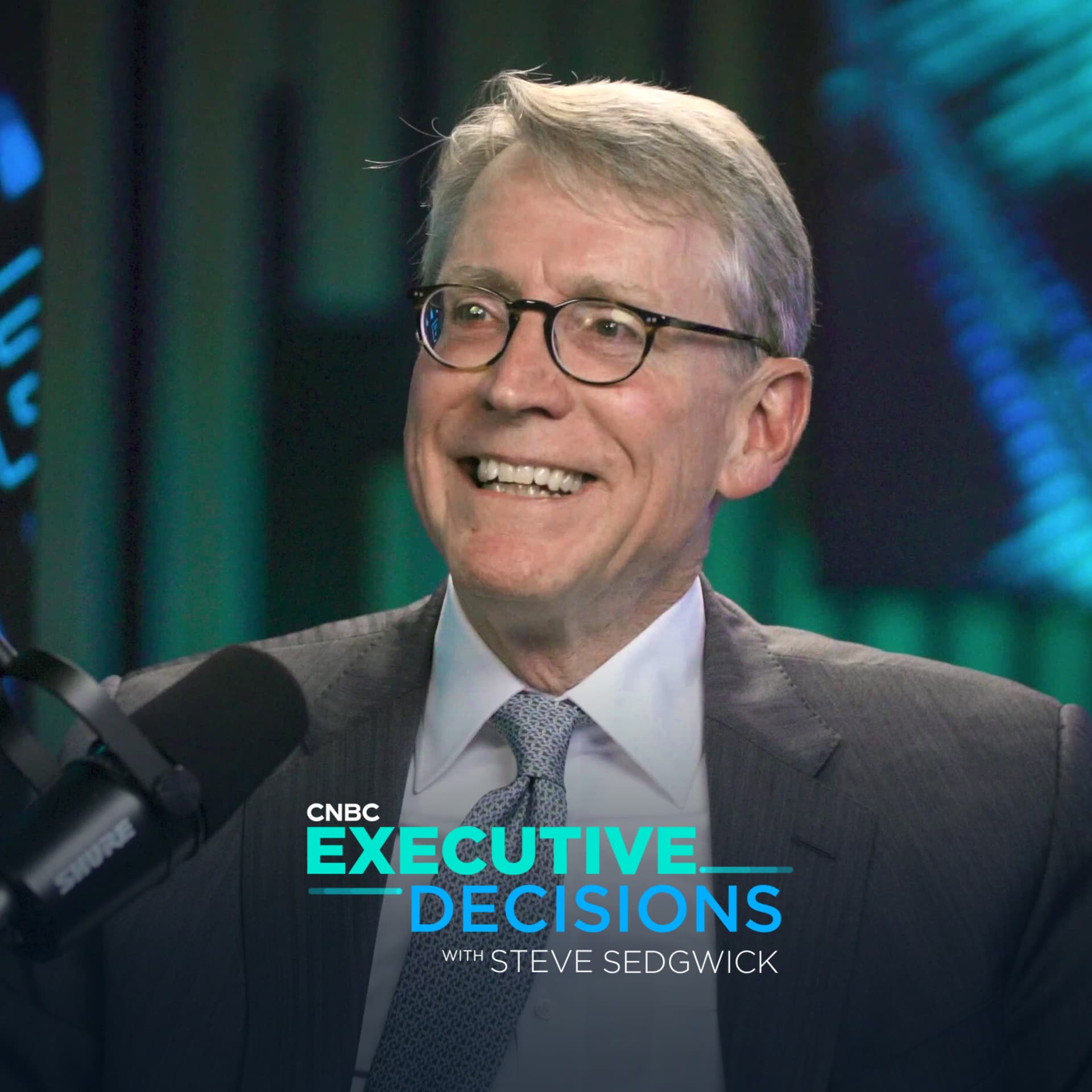
In this episode of Executive Decisions, Steve Sedgwick speaks with Tim Adams, President and CEO of the Institute of International Finance and one of the most influential voices warning about the global debt crisis.
Adams shares his remarkable journey from a small Kentucky town to the forefront of international finance. A childhood spent in the local library sparked his curiosity and ambition: “Once you open your mind, it never goes back,” he says.
Tim reflects on pivotal career choices, including turning down a job at Enron that “seemed too good to be true,” joining George W. Bush’s presidential campaign and later serving at the U.S. Treasury, where he helped rebuild financial systems in Afghanistan and Iraq after 9/11.
He also discusses the origins of the IIF, founded during the Latin American debt crisis and shares insights on the challenges facing today’s global economy.
See Privacy Policy at https://art19.com/privacy and California Privacy Notice at https://art19.com/privacy#do-not-sell-my-info.


