
In short
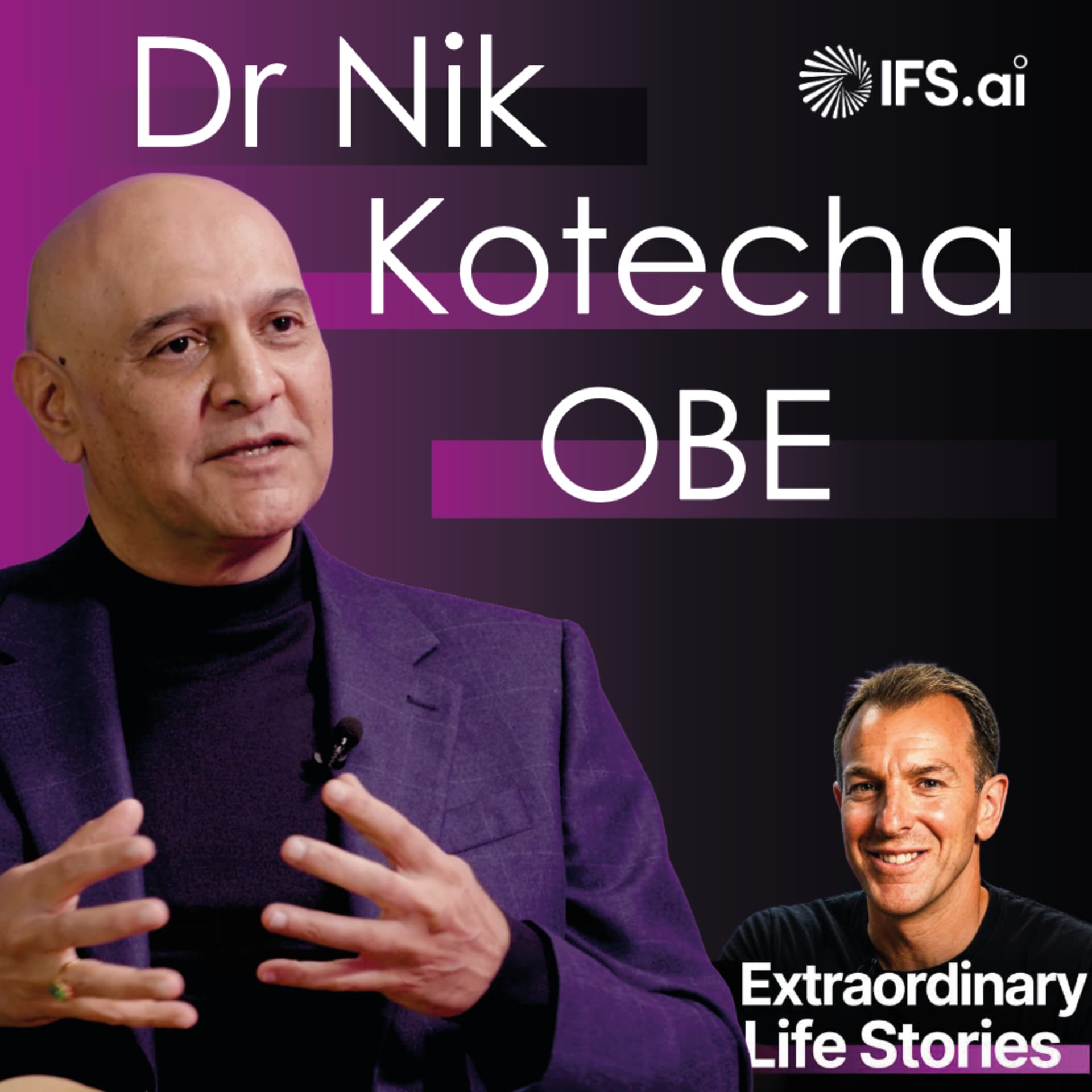
Dr Nik Kotecha OBE discusses his refugee-to-entrepreneur journey, building a life-sciences business, and why success should mean giving back—especially by expanding opportunity for UK youth.
Guest backgrounds
Dr Nik Kotecha OBE is a scientist/academic turned entrepreneur and business leader. He says he arrived in the UK in 1972 as a Ugandan refugee (aged six). He is a director of the Centre for Social Justice and a trustee of the King’s Trust; he also runs a life-sciences-focused investment approach and a charitable Randolph Foundation.
Key claims
Opportunity crises for youngsters require education, sport/work experience, and role models; entrepreneurship takes hard work, resilience, and patience (not overnight wins). In AI-era success, “smart” should include empathy, experience, emotion, and love.
Notable examples
Morningside/medicine export started from a garage (fax/phone) and later pivoted after internet-era changes; he highlights pivoting to UK manufacturing for NHS/ hospitals. He credits Red Cross/UN aid for refugee escape and says his business supplied high-quality medicines to developing countries for 25+ years.
Written by AI. May contain mistakes. Listen to the episode to check what was said.
Chapters
Tap a time to open that second in VOMorning Decisions and Coffee Choices
0:31 to 0:55
Discussion around morning routines and coffee preferences.
“How about a creamy mocha frappuccino drink?”
Introduction to Dr. Nik Kotecha
0:55 to 2:26
Introduction to Dr. Kotecha's background and mission to provide opportunities.
“I'm somebody who has gone on a bit of a mission to give opportunity to other people in the UK and around the world.”
Understanding the Mission of Giving Back
2:26 to 4:17
Dr. Kotecha discusses his mission and the importance of supporting youth.
“The same opportunity that I had in 1972 when I came here as a very young child, as a refugee from Uganda, really fleeing people who were being killed there.”
The Role of Role Models
4:17 to 7:30
Exploring the influence of role models and the need for guidance in entrepreneurship.
“in the hotel we're filming at with Sir Gav Southgate in the CSJ, the Centre for Social Justice, which you're a key part of.”
The Reality of Entrepreneurship
7:34 to 10:00
Dr. Kotecha shares insights on the challenges of entrepreneurship and the hard work involved.
“There's a really invaluable point there about the hard work that goes into being an entrepreneur, which you know only too well.”
The Purpose Behind Morningside
10:00 to 14:00
Dr. Kotecha discusses the motivations behind starting his business and its evolution.
“But then over time, I realized that this is learning experiences.”
Investing in Entrepreneurs: The Importance of People
14:00 to 18:59
Learn about the key factors Dr. Kotecha considers when backing entrepreneurs, focusing on the individual and their team.
“I know another part of what you do is you have almost like a family office investment fund set up to back entrepreneurs.”
Reflecting on Success and Personal Growth
19:04 to 21:45
Dr. Kotecha shares his evolving definition of success, and the importance of helping others succeed.
“Do you have a morning routine where you do get the exercise in and prioritize that kind of physical fitness?”
The Journey from Refugee to Philanthropist
21:45 to 24:21
Explore Dr. Kotecha's childhood experiences as a refugee and how they shaped his views on success and giving back.
“And I did a degree, then I did a PhD, and I went on to do other research and things like that.”
The Importance of Education and Career Guidance
24:21 to 27:48
Discussing the need for an updated education system and the value of real-world experience for young people.
“And that's something that, you know, we're trying to work on and say, well, charities need to be more entrepreneurial, understand, you know, how to bring money in apart from just fundraising.”
Show all 15 chapters
Mentorship and Work Experience for Youth
27:48 to 28:00
Dr. Kotecha emphasizes the importance of mentorship and work experience to prepare the next generation.
“How can they get access to more of that?”
The Value of Early Work Experience
28:00 to 29:02
Learn how early work experiences shape character and career direction.
“I wanted to go into pharmaceuticals and medicines and things like that.”
Building Confidence Through Experience
30:04 to 32:25
Understand the importance of confidence and support in personal growth.
“It's so clear that an early version of you with a sort of white coat scientist, which that person often isn't very articulate.”
The Randolph Foundation's Mission
32:25 to 33:30
Explore the goals of the Randolph Foundation to improve lives.
“You kindly shared with me when we were talking outside that you'd always wanted to be on Bloomberg and we've got an audience now that very much could and can support the charity.”
Reflecting on the Journey
33:30 to 33:42
Hear about the importance of gratitude and legacy in one's journey.
“So for me, I was looking forward to this conversation, and I really hope you've enjoyed it.”
Transcript
Automatic transcript. May contain errors.0:00When you need to build up your team to handle the growing chaos at work, use Indeed Sponsored Jobs. It gives your job post the boost it needs to be seen and helps reach people with the right skills, certifications and more. Spend less time searching and more time actually interviewing candidates who check all your boxes. Listeners of this show will get a$75 sponsored job credit at Indeed.com slash podcast. That's Indeed.com slash podcast. Terms and conditions apply. Need a hiring hero? This is a job for Indeed Sponsored Jobs. Morning decisions. How about a creamy mocha frappuccino drink? Or a sweet vanilla?
0:35Smooth caramel maybe? Or a white chocolate mocha? Whichever you choose, delicious coffee awaits. Find Starbucks frappuccino drinks wherever you buy your groceries. Find your passion. From your fashion, you'll get your purpose, and from that you'll build your business. And don't worry what you see on social media where people are talking about doing it overnight. You know, take your time, patience, and then build it properly. Tell me, who is Dr. Nick Kottesha? I'm somebody who has gone on a bit of a mission to give opportunity to other people in the UK and around the world. The same opportunity that I had in 1972 when I came here as a very young child, as a refugee from Uganda, really fleeing.
1:13And I've got huge respect for you because you could be sitting on a beach right now with a cocktail. You don't need to be here. The success you've achieved, all that you've done. And there's a crisis of opportunity here in the UK at the moment for our youngsters. Incredible amounts of talent, but we've got to really give them more opportunity. the kind of opportunity that I had when I was growing up through education, through sport. You know, back yourself, but it's hard work. It's going to take time. Absolutely right. I think it does take hard work. It takes resilience and there'll be setbacks.
1:40And that's normal in business. It's normal in life as well. Over time, I realised that this is learning experiences. And as you learn more, wisdom and experience is a real powerful asset and it compounds. But one more question. I know you don't do any podcasts or too much media. You're very private, which I really respect. What made you say yes to coming on Extraordial Stories with me?
2:14Sorry to interrupt. I've never asked this before, but if you can subscribe and follow, that will allow me to keep bringing extraordinary guests onto the show. Now let's get back to it. You're looking forward to this? Yeah, me too. Tell me, who is Dr Nick Kottasher? Wow, that's a good question. Well, I guess I'm a father, I'm a husband, but going through my career, I'm somebody who's been a scientist, an academic, an entrepreneur, a business leader, influencer, but probably at this stage of my life, most importantly for me today, I would say I'm somebody who really has gone on a bit of a mission to give opportunity to other people in the UK and around the world.
2:55The same opportunity that I had in 1972 when I came here as a very young child, as a refugee from Uganda, really fleeing people who were being killed there. So that's probably where I am today. Yeah, what a great introduction. There's so much to unpick there. We've met through that sort of philanthropic and mission-led side that has brought us together. Yes. And I've got huge respect for you because you could be sitting on a beach right now with a cocktail. You don't need to be here. The success you've achieved, all that you've done. But that mission is trying to be Burns, doesn't it? To give back, to help.
3:27So I want to open that up more. What is that purpose, that drive that you've got? I think it's a passion. I think I get happiness by helping other people. That's something that I've lived with for many, many years. And I've now got the opportunity to be able to do that after growing a business over 32 years. And I think there's a lot of need, especially when we see our youngsters and some of the challenges that we're seeing. And I think there's a crisis of opportunity here in the UK at the moment for our youngsters. Incredible amounts of talent, but we've got to really give them more opportunity, the kind of opportunity that I had when I was growing up through education, through sport, through different things that they can actually get involved to prevent this isolation, loneliness, probably disengagement that we're seeing with youngsters.
4:10So I'm really having fun doing that and trying to see if we can make a difference. Yeah, and you're quite at the heart of that. We had a memorable dinner here, actually, in the hotel we're filming at with Sir Gav Southgate in the CSJ, the Centre for Social Justice, which you're a key part of. And as recent as was it last week when we were together with a number of people, you included, trying to really help that kind of crisis of identity, almost the anti-manosphere, if you like, that's been allowed to develop, where, for me, the role model piece is key. Yes. And I wanted to bring that in to the conversation where I see you as a role model, an entrepreneur, a fellow entrepreneur that looks at what you have achieved and looks at the fact that making money at some point in your life was a clear goal and target to survive.
4:55But then the moment that you reached a certain point, you were already looking to be able to help others and give back. Was there a role model for you that inspired you to ultimately become an entrepreneur? Very much so. I think it was my parents. I mean, And if you think the story that came, they were entrepreneurs in Uganda and they were very well off. And literally overnight, that money left them. They came here to the UK. And then with nothing,£34 and a couple of suitcases and albums of memories of photos. And started from scratch. And I saw their work ethic of working hard. They both ended up working in factories to support their three children.
5:31So I think that stayed with me for a long time. And even though they had nothing, they were always there to make sure that if anyone came to our house, they would be supporting them, helping them, making sure they were fed, all of these things. And I think that's the kind of culture that we grew up with. And I'm incredibly proud because both of my children are like that now as well, both doctors and want to help people. But I think this point about the Centre for Social Justice, and I'm very proud of that. I'm a director there and a trustee of His Majesty's King's Trust. This is all about raising aspirations of youngsters, giving them hope, giving them the opportunities to really go out and build lives for themselves and giving them some purpose.
6:08And of course, we saw that through the Milburn Report recently, where they were talking about that, that kids need those opportunities. And Gareth Scalke just very recently did a fantastic documentary where he talked about youngsters having work, but it gives them a sense of identity. It gives them a routine purpose and it gives them structure in their lives as well. So I think we're trying to promote that and see how we can help young people to really build futures for themselves. Hey, it's Ryan Reynolds here from Mint Mobile. Now, I was looking for fun ways to tell you that Mint's offer of unlimited premium wireless for$15 a month is back.
6:44So I thought it would be fun if we made$15 bills. But it turns out that's very illegal. So there goes my big idea for the commercial. Give it a try at mintmobile.com slash switch. Upfront payment of$45 for three months,$90 for six months, or$180 for 12-month plan required. $15 per month equivalent. Taxes and fees extra. Initial plan term only. Greater than 50 gigabytes may slow when network is busy. See terms. If you've ever blasted synth beats from your boom box or burn CDs for your besties, this one's for you. As people get older, much like their music tastes, their health needs change. AG1 is the simple daily health drink designed to deliver over 75 essential daily nutrients and pre and probiotics to support energy, digestion and mood.
7:26So you can make the most out of every decade and dance break. Learn more at drinkag1.com. There's a really invaluable point there about the hard work that goes into being an entrepreneur, which you know only too well. So there is a crisis. There is a need to be able to support and help young lads in particular right now. But as a young lad yourself, you started business in a garage and you put 16 hour days into that. So there's an affinity that I think you've got with entrepreneurs. I know you do a lot to help them with the Great British Entrepreneur Awards. And I want to bring that into the conversation.
8:02But going back to a young version of you that knows how hard it is to set up a business. Tell me how that started. Well, I'm absolutely inspired by entrepreneurs and I know what it's like starting out, growing and then scaling up a business. And I think from my side of it, you know, I tried the corporate world. So I did a lot of education. I went into a big pharmaceutical business, didn't really enjoy it. And my passion was to help people. And that's how the business started. It was about really why do people in developing countries not have access to high quality medicines? The kind of medicines we had here in the UK, which we could trust.
8:36We had Brand UK, we called it, the quality, the regulatory. Other people in the world weren't getting those. So we thought maybe we could export medicines from the UK into developing countries. Very unique model, 100 % export business, which then grew into the UK market. But I think that journey was that it was hard work. Entrepreneurship is hard work. And you see all the success later on in life. But of course, there's a lot of unglamorous work that goes in to actually build businesses and grow. And I guess for me, hard work was built into me and I had no problems. It was the day job, working for a big farmer and then a little garage with a fax and a phone starting out and starting a business.
9:18And I remember you telling me in a previous conversation, you took no investment. You bootstrapped it. We did. You put the graft in with your wife to then create something that, dare I say, became a lot bigger than you ever imagined. And I think that that piece, I might be repeating this slightly, but the fact that Instagram, social media now promotes the kind of entrepreneurial world is kind of look at me with the view of the Dubai Merino and look what I've achieved. And I did it overnight. Yeah. I feel like it's a false message where you really are trying to instill that. And is that part of the kind of mentoring piece that you give to entrepreneurs where, you know, back yourself, but it's hard work.
9:59It's going to take time. Yes, absolutely right. I think it does take hard work. It takes resilience. And there will be setbacks. And that's normal in business. It's normal in life as well. And I think it took me a little while. I used to get quite upset with that. But then over time, I realized that this is learning experiences. And as you learn more, wisdom and experience is a real powerful asset and it compounds. And I think that's something that I say to people, don't look for the big wins immediately. You do have to put the hard work in. And there is, of course, measured risk taking as well in a business, which is exactly how we did it.
10:34We took things and things will change. You have to be able to adapt. You have to change your business model depending on circumstances. And we had that two or three times in our business growth journey. Can you give an example? Because that resilience piece and the fact that you brought that up, Rather than talking about any significant achievement, any significant deal that was X amount, you bring up the fact that you're probably a better version of yourself sitting here now because of the challenges you went through. Yeah, well, I remember we started the business in 1991. So for almost probably 10 years, we were very successful.
11:05Not many people were exporting medicines to developing countries at that time. And suddenly we'd hit 25, 30 countries very quickly. Huge growth. Huge growth in that time. But of course then the internet age came in and at that time in the 90s we were a middleman, we were a trader. We were buying from somebody, we were selling to somebody in a different country. But now with the internet age coming in the world was communicating and we knew we couldn't survive just being in the middle there. So we had to change our model, completely pivot and think about well what do we do next? And that's when we started the UK business and we thought right now we want to have our own generic medicines, our own formulations, our own IP.
11:45We want to start manufacturing and then distributing in the UK to our NHS and all the hospitals and pharmacies. So a big decision, a level of investment needed to build all the quality, the regulatory and the infrastructure to allow you to do something like that. But it really was a necessity, otherwise the business wouldn't have survived. When you started Morningside out of your garage with your wife, what was the motivation and how ambitious were you with it? Well, it really came from a sense of purpose. We couldn't understand why people in developing countries were not getting high quality medicines.
12:18And of course, a lot of them were counterfeit there. So it was never really a business that we thought would grow and was going to be a big business. It was something that had a purpose, which we could help people in developing countries, but also allowed us to maybe make some money to go out and have dinner once in a while, go out and things like that, rather than thinking it was going to be a large global business. So that's really how it started from that little garage with a fax and a phone. So important to share that. How many youngsters now or even people pivoting want to start a business and aspirations just to make lots of money?
12:50Yeah, I think I always find, as I say to youngsters, is that find your passion. From your fashion, you'll get your purpose. And from that, you'll build your business. And if you've got passion for your cause of what you're trying to do, and it's not always about just making money, it could be lots of different things that you're trying to do. Of course, the money is nice to have as well. and be patient with that as well because it takes time to go to build good businesses it will take time and don't worry what you see on social media where people are talking about doing it overnight and you think oh I've not done enough it doesn't work like that you know take your time patience and then build it properly.
13:24I've got one more question um I know you don't do any podcasts or too much media you're very private which I really respect what made you say yes to coming on extraordinary stories with me. Oh, I think when I met you, I just felt a connection, John. I think it worked. And you're right, I don't very do, very rarely do media like this. But you gave me this confidence to come out and talk a little bit about some of the life. And more importantly, just to say to youngsters and other people that, well, if I did it, you definitely can do it and have the confidence that's going to be help out there and support and go and do it.
14:00I know another part of what you do is you have almost like a family office investment fund set up to back entrepreneurs. Yes. What do you look for when you're backing someone? Oh, I think I love this bit. So, of course, we focus very much on life sciences because that's my background and that's our understanding. So stick to what you know. Stick to what you know. And I did, you know, after we sold the business, I went and looked at space and robotics and AI and lots of things. Everyone advised me, you've been doing this a long time, you understand this. And I think there's quite a few things you look for when you're looking at an investment.
14:31It's always first about the individual, the person and the team and the people. That's the best thing. The kind of things I did, you know, dedication, 12, 16 hours, wants to work hard, got the passion, got a reason. And then you go on to the business model. But I think on an investment, what I look for is that how do I add value? It shouldn't be about the investment of the money. It's about the relationships, route to market, regulatory experience, quality experience, things like that. that the investor brings in to your business. And that's when it makes a very powerful and strong relationship and investment.
15:04Yeah, you came alive then as well. I can tell that's a real passion. That's the almost keeping relevant bit. Can we bring AI into the conversation as well? So the people first, I love that. You're looking for that fire, that drive, that work ethic that you can then help mold and shape. And of course, capital can then accelerate. And that joins you. It's a beautiful kind of marriage. Where are you using AI in any business interests you've got right now? and how is it changing things for you? Well, AI is changing everything we're seeing and it's going to be incredibly powerful. And especially for knowledge, I think this is probably where we use it.
15:35We can do our backroom research on that and a lot of people are using it for that. But I think I saw an interview, it was actually on Bloomberg TV, I think it was, and it was Janstrand Huang, the CEO of NVIDIA. And I think one of the interviewers actually said to him that, you know, what is smart or who's the smartest person you've ever met? And he dodged that question and said, well, there's lots of smart people and a lot of smart people work for me. But let's define smart in this world of AI. And that really resonated with me. I think smart in this world of AI is very much, and I'm adding my bits to it on top of what he said, was really it's going to be empathy.
16:13It's going to be experience. It's going to be emotion. It's going to be love. It's going to be the human qualities that maybe AI can't give you, but can give you lots of information and a lot of education and things like that. And I think that's going to be the smart of the future. And that's what I think we need to encourage much more in our youngsters and as they go out looking for jobs. It's great to share that because, you know, that's the human piece, isn't it? That's the connection, the vibration that is a feeling almost more than anything you could learn or kind of ask. And we know business works like that.
16:45That gut feeling that you know or the relationship building, the communication, all of that works through that. I'm really glad we've covered that. I want to humanise you, that kind of successful entrepreneur, business person, philanthropist. At what times in your life have you managed to get what you might call a balance right? The family, the work, and looking after yourself. And what I mean by that is keeping that kind of gym going or going for a run where you can distance from the busy life that's business. Yeah, if I'm honest, I didn't do that very well as I was growing the business. And many entrepreneurs will say the same thing.
17:19You know, we're running the business and focusing very much on that and then growing families as well. So I think I was very, very lucky that I had a great family around me from family, parents, wider family and my wife and the children. And that really helped me and supported me. They were completely supported. And that's allowed me to spend a bit more time with them. We try to get away. But, you know, like everyone, I was on holidays and I was on the laptop and doing emails in different parts of the world. It's a myth, isn't it? That balance. Yeah, I think as you're growing a business and scaling, and especially when it becomes a large business, you're going to have to go through a lot of that stuff.
17:59But I get the rewards of that now, where I can really follow my passions and do the things I want to do. And for me, that's helping other people. When it's time to scale your business, it's time for Shopify. Get everything you need to grow the way you want. Like, all the way. Stack more sales with the best converting checkout on the planet. Track your cha-chings from every channel right in one spot. And turn real-time reporting into big-time opportunities. Take your business to a whole new level. Switch to Shopify. Start your free trial today.
18:36Experience a membership that backs your business journey with American Express Business Platinum. When you pay with membership rewards points for all or part of an eligible flight booked with a qualifying airline through Amex Travel, you can get 35 % of those points back, up to 1 million points back per calendar year. American Express Business Platinum. There's nothing like it. Terms apply. Learn more at americanexpress.com slash business dash platinum. them. I feel that the graph, the time you put in invested as a younger version of you allows you to thankfully didn't burn yourself out because that's probably where I was going with it and actually so understanding that I'm reflecting on that now.
19:18Yeah. Do you have a morning routine where you do get the exercise in and prioritize that kind of physical fitness? I do and I would say I would give advice to a lot of youngsters on that make sure you do that life work balance is incredibly important. And when you get a bit older, you realise that. So build that in much earlier in your lifetime. And I do that now. I'll get up quite early. I'll read the papers and watch the different channels I watch for the news and things like that. And then probably usually go for a walk or a run before I start my day. So it clears the head. It's important to cover that, isn't it?
19:51That mentoring piece that you're giving to younger people that are so aspirational, they can sacrifice health to get the next goal achieved, the next, you know, whatever's on their list from an entrepreneurial point of view. Yes. And then, of course, that can catch up, will you? It can. It can. I think it's really important. Patience is very key for when you're an entrepreneur and that resiliency we talked about. Yeah. Your family fleed Uganda when you were only six years old. That must have been incredibly stressful, particularly for your parents. I wonder how much of the seriousness you really understood about that at the time and how it was framed.
20:26Yeah, I think it was very serious. And of course, we were fleeing for our lives because Idi Amin, who was the president, they were shooting people and we had 90 days to leave Uganda. But I think probably didn't understand so much about the Uganda piece. That's when we got here. And I came here as a young six-year-old boy, not speaking English and spent quite a few years just learning English and getting into that. So I was always behind other people because I was still learning from scratch and stuff like that. So that's the bit I remember the most. But in Uganda, it was really panic and people trying to get out.
20:59And luckily, my mum and the three children, very young children, me being the oldest, came here. But my dad, again, was helped through an aid agency to go to another country. And then another charity helped him repatriate with the family. So it was, you know, the whole family got separated and came back. So it was a very difficult time. Thank you for sharing that. I know from a previous conversation we've had where we talked about success and the association of wealth almost makes you feel uncomfortable in a very non-arrogant way. But the things you've achieved in business, the positions you hold where there's such mission-led importance to you.
21:33Sitting here now, what is your definition of success? I think success changes or definition changes as you go through your life. I mean, when I was young, it was really about getting an education and And that education was my way out of poverty. So that was probably success for me. And I did a degree, then I did a PhD, and I went on to do other research and things like that. And then as you start, it's the corporate world. And then you go on, start a business. And that was really about growing the business and the responsibility it brings about having people working with you. And, you know, their livelihoods and all of that stuff.
22:05So it was really about managing the business, keeping it a strong, profitable business so that the people we were employing could have their lives and raise their children. And that was a big part of the success. Today, it's really about, I would say, really helping other people, giving them the opportunities that I've been given, which we started with nothing. And I think that's success. And if I can do that now, then it's been a successful life. Yeah, I can feel that. That's proper passion coming there. And another question that's slightly similar, there's a lot of things you've achieved with OBE and all the different milestones in business and, again, positions you've got now.
22:44What would you say is your greatest achievement? Well, my two children, I would say it's incredible what they are. And I would say also, you know, it was the Red Cross who got us out of Uganda when we left as refugees. And very early on in the business, I wanted to make sure that we could work with international aid, because I saw over my 30-year career of traveling around the world and what kind of work they were doing in these countries when there's an Ebola crisis or there's an earthquake. And we wanted to work with them very early on, and I got a contract with a UN organization. And I'm really proud to say that for over 25 years, we became one of the leading suppliers from the UK of medicines to these countries, which was saving lives all over the world.
23:24So these were high quality medicines from the UK, cost effective going out through UNICEF or Red Cross or MSF into different parts of the world. And that's something I'm very proud of, I think, in my business life. Well, that's something that you've enabled through endeavours of your own to put yourself in a position to help so many other people. We keep coming back to that in this conversation, which is brilliant. Why would you say that there are so many people out there that have achieved a certain amount of wealth and success? and keep it all. It's almost like a fear of losing their money and don't in any way do anything like what you're doing to help so many others.
Read the full transcript
24:03And yet the passion and the purpose and fulfillment that comes from every story that you're telling me, let alone countless others, is so inspiring. If I was in that position, I'd want to be doing that. Why have people closed off to that? No, I think lots of people have got great hearts. I think what it is, is that probably there's a lack of awareness and of course my life experiences have allowed me to do the things I'm doing. But more importantly I think I spend a lot of time going out in the UK especially meeting charities and seeing some of the challenges in society in our communities and that really humbles you, it grounds you, it makes you realise that you know life is good but life is also difficult and we all go through all sorts of issues, we're all human and we'll go through all the emotions in life and i think probably it's i would say yes it's a lack of awareness if people went out and saw what was going on they would probably do a lot more secondly i think it's also knowing where to put your money the impact bit you know because of course business people uh you know we have a business plan we have a model where we will go through and we'll invest money into something and see it grow and things like that we're charities they raise money for 12 months they spend money for 12 months and start again.
25:13And that's something that, you know, we're trying to work on and say, well, charities need to be more entrepreneurial, understand, you know, how to bring money in apart from just fundraising. So some business people don't always understand that. But what I've seen is that we've got some incredible people here in the UK. And when they go out and see a cause, they always want to help. Yeah, there's this lovely cycle there as well, where you've reflected a number of times on where you were helped as a younger version of yourself. Yes. And so it's clear that that was acknowledged at the time. And the moment you got the chance, you were looking to be able to help back.
25:49You mentioned education and that's a key part. When we talked about kind of success, if you like, that was your key kind of denominator to get into business, become a scientist, become an entrepreneur. And the conversation we had around the table with Sir Gareth Southgate and a number of people that really knew their stuff about that was really showing up just how the education curriculum could well be a bit out of date, a bit archaic, AI replacing jobs. And if you take the university, so unless you really are going to want to be a doctor or an academic, it feels like that piece now needs fixing.
26:24Yes. What are your thoughts on that? Yeah, I agree. I mean, for me, growing up, mum and dad said, we have got very little, but education was our silver bullet. It allowed us, and this country gave us that opportunity. It paid for my education all the way up to very high levels. So I'm a real advocate for education, but I think education is changing in this new world with internet, Wi-Fi, AI. Education, I think, in our school system, if we can do much more softer skills, where we can encourage sport, drama, culture, raising confidence, raising aspirations, building self-esteem, self-confidence, self-worth, which sometimes is leading to real issues around mental health with young kids.
27:07I think those are the type of education we should also be teaching as well as the grades and things that we measure. Yeah, I think that's a key thing that concerns me. We're two teenage daughters now, right at that point where perhaps university would have been a suggestion. And we now know there's so many grads unable to get jobs that, dare I say, they were either promised pre going into studying for those years to get a degree or just assumed that they could get. So that's a changing world right now. Yes. And one of the things we talked about was that kind of almost apprentice stroke, getting experience early.
27:44So I wondered where you sit with that because I feel like there's a lot of mentoring and a lot of advice that you give to younger people. Yes. How can they get access to more of that? What needs to change in that space? Yeah, I think, I mean, I'm a very big believer in work experience. I mean, my first job was working at a shop called Olympus Sports in John Lewis in Leicester. And the experience I got there over seven years of working holidays from a 15-year-old boy, weekends, you know, and whenever I was back in there, back at home from university, was absolutely essential for what I've been able to do.
28:17and that was putting you know trainers on people's shoes but what it allowed me to do is to actually understand people's characters their moods their emotions sometimes angry whatever it taught me about real life skills and that was so valuable and I think our youngsters probably missed that from working in a sandwich shop to doing the paper round and for me I did a sandwich course which meant that I had a year in industry in between my degree my first degree and that really helped me because it gave me direction. It made me understand I love research. I wanted to go into pharmaceuticals and medicines and things like that.
28:50So I think our youngsters don't always have that from doing all just the academic subjects. They need exposure and we need to do much more. And I think business need to engage much more to go into schools and inspire youngsters and talk about some of the real life experiences they can get. Trading at Schwab is now powered by Ameritrade, bringing you an expanding library of education with even more ways to sharpen your trading skills. Access new online courses, insightful webcasts, articles, engaging videos, and more, all curated just for traders. Plus, guided learning paths with content designed to fit your unique interests.
29:27No sifting to find exactly what you need so you can spend your time learning to trade brilliantly. Learn more at schwab.com slash trading. Do you hear that? Sounds like breakfast is ready. Because Quaker's coming in hot with morning nutrition, 100 % whole grain oats, and a good source of fiber to fuel the rhythm of your morning and kickstart your day. And that sounds absolutely delicious. Fuel to start whatever's next. Quaker, official sponsor of FIFA World Cup 26. I was just listening to you then. It's so clear that an early version of you with a sort of white coat scientist, which that person often isn't very articulate.
30:16They're incredibly intelligent, but they can't explain what they're doing. Yes. It feels like that one of the things I'm really picking up from you is that you've had so much experience. You put yourself in a place where you've tried different things to build the character, to build the personality that you are, where at a certain point, rather than being sort the scientist in the lab, you go, actually, I can step out of this and I can grow that part of me. And I think that's a really important message to get across where you didn't pigeonhole yourself. No. You flourished as that entrepreneur to be such a multifaceted version of you sitting here right now.
30:50Yes. And I think that's really important. You know, you've got to try new things. You've got to put yourself out. But then somebody has to be around you to give you that confidence to do that as well. And I think that's where family community support. And there's so many organisations that do that with young people now as well. But confidence is a big part of it to go and put yourself out there because it is a bit scary going out and doing things and even just coming from an education background, going and working that first day, that new environment, all of these things. But I would say there is support out there and the work we do with the King's Trust and many other organisations help people to do that.
31:26Lots of bring legacy into play. I feel like you probably thought about that quite early and set up that kind of family office stroke, the people that you know you can help and you're you're living that real time now but if you fast forward it to almost looking back on your life is there something you haven't made happen yet or something you're actively working on that you want to make happen oh well I guess we have a charitable foundation called the Randolph Foundation which is all about saving lives and significantly improving lives we have an ambition that we want to help one million people here in the UK and worldwide and I think that's something that for the next hopefully 20-30 years of my life that's what I'm going to be really pushing for because I think there is opportunity out there to do that in the developing world of course lots of opportunity but here in the UK as well and that's what I've been learning about through the different roles that I have is how do we help people and significantly improve lives here in the UK so I think that's something that I look forward to over the next 10, 20, 30 years.
32:27You kindly shared with me when we were talking outside that you'd always wanted to be on Bloomberg and we've got an audience now that very much could and can support the charity. So I think that's really important to share that because there's a legacy play there for anyone else that wants to in any way be part of the mission to help a million people's lives for the better, right? Absolutely. Well, I think you hit one of my tick boxes on my bucket list because I'm there I watch Bloomberg because I love economics I love politics and I learn a lot about this so to be on that has been incredible but yes you know it's a foundation we like to partner we like to work with other people I think collaboration is key to really scale up and also policy change and you know influencing things so we do a lot of work around doing research around different challenges in the UK in our communities through the work with the Center for Social Justice and other organizations where we find out what the challenges are, do the research, create the evidence base, and then we see how we change policy.
33:25Because I think if you can change a policy, you can help on millions of people. I just want to say thank you, heartfelt, because I know this is not something you typically do. So for me, I was looking forward to this conversation, and I really hope you've enjoyed it. Oh, I have. It's been an absolute honour and a privilege to be here. Thank you, John. Thank you.
33:53The right window treatments change everything. Your sleep, your privacy, the way every room looks and feels. At Blinds.com, we've spent 30 years making it surprisingly simple to get exactly what your home needs. We've covered over 25 million windows and have 50 ,000 five-star reviews to prove we deliver. Whether you DIY it or want a pro to handle everything from measure to install, we have you covered. Real design professionals. Free samples. Zero pressure. Right now, get up to 45 % off site-wide. Plus, get a free professional measure at blinds.com. Rules and restrictions apply. Stitch Fix. Stop shopping.
34:26Get styled. A plus on the outfit, Ms. Turner. You are about to slay parent-teacher conferences. Oh, these? Just the most perfect-fitting jeans my stylist sent me. Oh, hello you who didn't set one foot in a mall and still looks amazing. Just share your size, style, and budget, and your stylist sends personalized looks right to your door. Stitch Fix. Get started today at stitchfix.com. To my stylist, this look is dedicated to you. Thank you. Thank you.
From the publisher
Dr Nik Kotecha OBE arrived in the UK as a six-year-old refugee with his family after fleeing Uganda. Decades later, he built one of Britain's most successful pharmaceutical companies before dedicating his life to creating opportunities for others.In this deeply personal conversation with John Reynolds, Nik shares the untold story behind his extraordinary journey, from starting a business in a garage with nothing more than a phone and fax machine, to building a global healthcare company, mentoring entrepreneurs, supporting young people, and working to improve millions of lives through philanthropy.Together they explore:- Escaping Uganda as a child refugee- Building a business through resilience, not shortcuts- Why purpose matters more than money- The reality of entrepreneurship behind social media- AI, education and the future of work- Helping the next generation find opportunity and hope- Why true success is measured by the lives you improveThis is a conversation about gratitude, leadership and leaving a legacy.Extraordinary Life Stories is proudly sponsored by IFS.ai


