Ask ChatGPT
 Extraordinary Life Stories
3 Nov 2026 · 43m · 17 chapters
Dan Gillespie Sells discusses fame’s psychological “dopamine” effects, how turning creativity into a job can drain the “shining unicorn” magic, and how he learned to protect creative instincts (including slowing down and using walks/meditation). He also reflects on being gay in a macho rock scene, and on the uplifting, non-preachy storytelling of Jamie: based on the documentary.
Dan Gillespie Sells only. Backgrounds: musician/composer; early piano obsession; session musician/recording artist; co-writer of The Feeling; later theatre work including Jamie (from documentary) and musical adaptations; gay man raised by gay parents; Brit School attendee.
fame “pulls people out of shape” and affects everyone around you; pedestalling/boxing queer identity is unhealthy; radio success didn’t match the indie culture; creativity needs protected time to stay joyful.
five number-one radio records after 12 Stops on Home (2006); French Alps “boat cupboard” gigs; homophobic band circuit; Jamie’s audience reactions; AI critique via slower analog demo lyric-writing.
Written by AI. May contain mistakes.
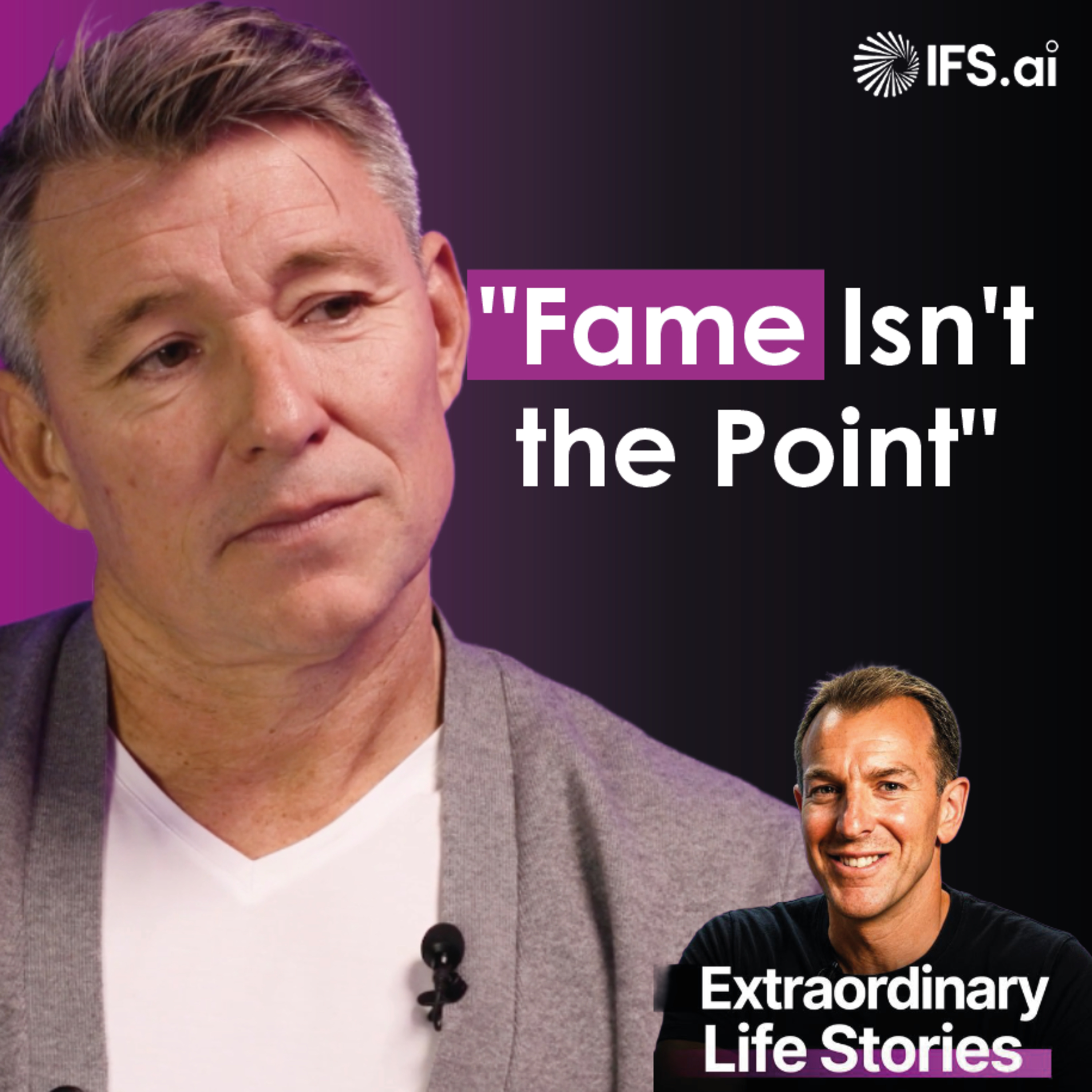
Dan discusses his rise to fame and the complexities that come with it.
“and so I kind of had to stay out of things a little bit, and that was difficult.”
Exploring how music became a coping mechanism for Dan.
“That sounds, there's something quite flamboyant about that, isn't it?”
Dan shares his early experiences with music and the piano.
“when you realize you've got a knack for something, you know, then it's easier to carry on with it.”
Discussing the role of education in shaping Dan's musical journey.
“But still, I felt confident enough, weirdly, and it was only when I got older that I actually started to develop real interests in lots of other subjects.”
Dan reflects on his school experiences and the lack of focus on academics.
“So to escape into the music room, there was another reason I wanted to escape into the music room, right?”
Dan discusses the inspiration behind 'Everyone's Talking About Jamie'.
“We go, people are just people, people are messy.”
Exploring the ongoing impact of Jamie's story on audiences.
“Back to following the instincts and backing yourself.”
Learn about Dan's early years at the Brit School and his initial experiences in the music industry.
“middle of the road straight school to the Brit school so that was my college year so that was like 16, 17 and at the Brit school anything went.”
Explore the challenges Dan faced after his band's initial setback and their journey to success.
“2005 four or five when we actually finally signed a record deal in 2006 when that record came out Yeah.”
Discuss the cultural challenges Dan faced in the music industry during his rise to fame.
“But also as a gay man, I also felt like it was quite, there was a lot of homophobia.”
Examine Dan's feelings about fame, its addictive nature, and the impact on his life and artistry.
“to realise there's lots of different versions of being a gay person and there's lots of different ways of being queer and there's lots of different versions of expression and that goes with gender as well as sexuality.”
Learn how Dan balances his performance life with personal challenges after fame.
“it's a problem for me yeah how often do you now get to perform it's still quite a lot luckily because the band luckily has become, I suppose, what you'd call a heritage act after 20 years.”
Explore the profound effects of fame on personal relationships and mental health.
“And most importantly, it does weird things to the people around you.”
Discuss the challenges artists face when turning passion into a profession.
“and sort of then bring that to you in your world of the next things you're working on, what you're doing, how are you using AI?”
Learn about the creative projects and aspirations that lie ahead for artists.
Learn about the unique experiences and challenges of creating musical adaptations.
Discover the emotional impact of creativity on individuals and the appreciation for artistic contributions.
“conversation I not only look forward to but I thoroughly enjoyed.”

Get the gist, explore an idea or ask about something said.
 Claude
On Extraordinary Life Stories, what are the key points of this episode?
Searching your listeningAutomatic transcript. May contain errors.
0:00It blew up on radio, became massive on radio. We had five number one radio records. They were all just endlessly being played on the radio. And you feel that energy and it becomes quite addictive. Tell me, who is Dan Gillespie Sells? I am a musician. I suppose newly a composer. I would escape to the front room where the piano was for hours, absolutely hours.
0:21Dan Gillespie Sells: Ivan Novello, award-winning, sold over a million copies, and this is 2006. That's huge success, and that blows you up significantly very quickly. If you're in a band, you know, you'd go and play the band scene, which was like, you know, all the clubs and the pubs, and you'd come up through that scene and that circuit, and that circuit's a very homophobic place, like, very, very much, very blokey. If you're throwing TVs out of windows and hanging out with baby shambles, then you're cool, but if you're not, then... And I just didn't fit me. It didn't fit who I was as a person. and so I kind of had to stay out of things a little bit, and that was difficult.
0:53When I was famous, life changed to a point where I didn't even carry my bags anymore.
0:59Dan Gillespie Sells: Did you ever become a bit of a diva? At the same time as me enjoying it and loving it and taking it for, trying not to take it too seriously and going on the ride of it all, it takes a toll and it does weird things to you. It does weird things, and most importantly, it does weird things to the people around you.
1:23Tell me, who is Dan Gillespie-Sales? I am a musician and a composer. I suppose newly a composer. I used to call myself a songwriter, but I've started working in slightly broader fields and they call me a composer now, which is exciting.
1:43Dan Gillespie Sells: That sounds, there's something quite flamboyant about that, isn't it? I don't know where I'm getting that from, a composer. It sounds fancy. You always imagine the conductor. Yeah. Yeah, I mean, I came from being a recording artist. Actually, truth be told, session musician, recording artist, then composer. So the flow there for me, there's music and creativity. Yeah. Those are kind of key, obviously, ingredients, but also passions of yours. Music was a passion from a very young age. And I would say more than a passion. I would say a way of life, maybe a coping mechanism. maybe a yeah it was it was so intrinsic to who I was and still is but I think particularly when I was young I think I used music to escape situations I think I used music to when I was I mean I was think I was about four when I first started playing the piano I was five when I got my first piano at home I begged my parents for a piano and got a piano and then I would escape to the front room where the piano was for hours absolutely hours and he wouldn't see me for a long time and I would just go into a kind of bit of a zone um do you know where that influence came from as to the why you wanted the piano did you see something or did you hear I think I must have seen a piano at school It must have just been like nurse for your school.
3:09I think I must have just like seen a piano in the corner and heard someone play it or whatever. And I think I just was just obsessed from a really young age, particularly with the piano. It was like the best toy in the world. And it became a kind of, yeah, slightly weird obsession with me. I got good at it quickly, which I think is always when you're a kid, you know, you can when you realize you've got a knack for something, you know, then it's easier to carry on with it.
3:40Dan Gillespie Sells: What was the rest of school like for you? Because that's interesting, because I've not thought of this before we sat down, but you're known from the music point of view and that creative point of view, but if you hadn't had that flair, were you in any way excelling in anything else academically, or did that just become, like you mentioned that word, obsessed, is that just like that was all you had time for? I'm sad to say, I saw all I had time for. there was very little focus on anything else. I couldn't concentrate in classes, I was constantly getting in trouble for looking out the window and daydreaming and if I wasn't daydreaming I was tapping on the desk practicing various finger shapes and things like that because I was working on getting my dexterity and I wanted, I used to write patterns so it was for me the piano was a pattern-based instrument so I had to work on getting rid of the mirror image of my hands so that my fingers would work this way as opposed to this way because obviously on a piano your left hand and your right hand don't mirror each other when everything else you do physically is more of a mirror but with the particularly with the piano it was like they had to do backwards mirror so I used to practice doing these finger patterns on the desk during classes and I'd be in the corner tapping away driving the teachers crazy and I was just very focused on it and I'm not focused on anything else and for a really long time I had no interests really beyond, only mildly, but mildly interested in everything but not really very interested in anything except for music.
5:13Dan Gillespie Sells: So there's the whole journey we go on and we're similar age by the way, I only just found this out by doing a little bit of reading beforehand, you're the 20th of September, 78, I'm the 20th of September 77. Oh okay, wow, okay. And the relevance of that is we've seen the world as we've grown up in the certain kind of similarity, if that makes sense, to use it coming out at the same time, events happening. But a key thing that probably hasn't changed is the education side of things, where the importance put on GCSEs and A-levels, which was so unimportant to me. I couldn't imagine a career academically.
5:47Dan Gillespie Sells: So I didn't have the skills you had. I wasn't developing. I was a bit lost thinking, what am I going to do? but how did you manage that period where you clearly are developing a talent and you've got such a passion for music yes but there was the pressure to pass your exams and then you've got to get a job and so on yeah i mean to be honest with you though there was i have my parents or great parents who are telling me that you you know you can't just rely on being a musician but i didn't take them seriously at all so it's a self-belief world seriously i believe that i was going to be a musician from the very beginning and it's not a kind of delusional belief i was happy to be playing in a pub and or busking or whatever but i knew i'd make a living out of it um and actually there was a point in which in my secondary school so i went to um state schools so my regular you know kind of uh regular comprehensive state schools um that were pretty sport heavy not very arts heavy um but we did have a really good music teacher in my secondary school and he actually did say at one point maybe he shouldn't have but bless him he said i think that'll be all right because he could see what i could do musically and he was like he won't he won't starve he'll be fine did that did that filter through to you did you kind of always get said that to my parents and i was like great yeah and i kind of knew it i saw something about it i knew i just i just knew that i was good enough at doing this thing yeah also you're you're you're a big fish in a small pond in a in a primary school and then even in a secondary school school, particularly North London State School, there wasn't any other fancy musicians in our orbit, you know, and I was like the best musician in the school, but that wasn't particularly difficult in a not music heavy school.
7:29But still, I felt confident enough, weirdly, and it was only when I got older that I actually started to develop real interests in lots of other subjects. And now I'm fascinated with science and history and literature and all those things that I did. It's on your terms now though. It is on my terms. I think you're right. I think there's a sense of when it's being pushed upon you and you're being told to do it, you resist. And also I was not a terribly sociably comfortable kid. I was quite effeminate. I was quite overweight. I was quite bullyable. So to escape into the music room, there was another reason I wanted to escape into the music room, right?
8:13That was the other reason. was to get away from safe space get away from the from the not there was a huge amount of bullies i wouldn't i wouldn't claim that it was like a it was a particularly hostile environment but it but it was still teenagers and you know young people kids of cruel and i could avoid all that cruelty if i was in the music room you know jumping about a little bit my brain's just going straight to
8:36Dan Gillespie Sells: everyone's talking about jamie yeah which you must have loved doing because i'm just sensing an element of empathy there? Oh, Jamie, there's a lot of Jamie in me. There's a lot of Jamie and Tom, my co-writer, and our director, Jonathan. We all recognise Jamie's story because Jamie was a kid with big dreams going to a pretty crap state school. All three of us are state school kids. And we saw a lot of similarities between us as being slightly effeminate kids in a pretty square school um and seeing what he went through the documentary that it's based on which inspired the piece um showed us everything we needed to know about jamie and we were little jamies ourselves and we think there's a bit of a jamie in everyone actually it's not just queer kids it's everyone that's where i was going to go but actually how much of that is suppressed particularly in dare i say previous society where you didn't show weakness yeah you didn't express yourself or your real feelings you conformed and to how much of what kind of came out from everyone's talking about jamie do you think opened that bit about people where they could relate yeah it's it's so relatable that story i mean it does amaze me when i when i go and see it still because it's still playing all over the world and and sometimes it tours in the uk and i'll go and see the tour and i see the audience and it's full of people um who you wouldn't expect you know you get loads of young queer kids and loads of young theater people and music theater fans and the mums but also you get the dads and they love it and they find it exciting and thrilling and they might actually see a bit more of the bully dean in themselves but they still love it yeah and they still connect with it yeah and actually what we do with jamie is try not to be too didactic and preachy in the storytelling we show this kid going through all kinds of stuff even but even our bully's not really a baddie he's a bit of a dickhead you know he's a bit of he's that kid he's that kid who wants to show off and and we show his vulnerability as well you know toward the end dean is less of a bully than you thought he was and jamie is a bit tougher than you thought he was and the teacher is strict but she kind of yields toward the end actually toward the end all of these archetypes of characters that we're so used to become softened And I think that's what's uplifting about the story, because what we don't do is we go, we're right, you're wrong, they're right, they're wrong.
11:05We go, people are just people, people are messy. And you know what? People are less like you think they are once you get to know them. Do you know what I mean?
11:15Dan Gillespie Sells: I really do. Yeah. That's what that for me is what's uplifting about the story for everyone, no matter who you are. You get to see someone just kind of like showing their true colors and showing how messy they are and vulnerable they are and how tough they are and how surprising they can be. All of these things in that story make people feel good without having to tell them off or without saying who's right and who's wrong. So true. I can remember I've actually been to see it twice. And on the one in the West End that I went to, there was so much interaction and engagement and a vibration from the audience that was at certain key points.
11:53Dan Gillespie Sells: where people literally physically roared, and at the end there was a standing ovation, because it just felt like it had captured what a lot of people can't put into words, don't articulate, but actually there it was unfolding, and dare I say giving people permission. So by amplifying, and we know how important role models are for the right reasons and for the wrong reasons, but actually, did you feel that? Did you feel that there would be such a ripple effect where actually it was a lot more than you just creating something? Oh yeah. It has a life of its own, that story. But it actually comes from that original documentary, that original kid, you know, the original Jamie.
12:31He was brave, he did a bold thing. He kind of followed his instincts and had the support of an amazing mum. And that was enough of a spark for us to go as long as we maintain those elements as long as we keep that stuff true we can invent the rest and you know make the rest a big fancy dancing show right but as long as we maintain those fundamental elements we think we've got something which has power and and and and has um some kind of will create a connection with the audience and and it has just had a life of it so And ever since the first time we did it, it's just had this effect. And it continues and it's 10 years later and it's kind of still doing that.
13:19That's brilliant. It's just wild. Rightly so. Back to following the instincts and backing yourself.
13:25Dan Gillespie Sells: Young version of you, going back to where you are backing yourself. You're now coming into the time where you form the band, The Feeling. And you said it yourself. You said you had so much of a passion for it. You were prepared to just follow that without perhaps knowing where that would go or the money. would come. The way I'm going with that is you were, I think I've read somewhere you were doing like 10 gigs a week. Yeah so that was an era after we went, I went to the Brit school in between that so I went to the Brit school for two years which was extraordinary because I'd gone from this very you know pretty straight down the line you know school uniform regular you know very very middle of the road straight school to the Brit school so that was my college year so that was like 16, 17 and at the Brit school anything went.
14:15It was crazy. Still non fee-paying school but suddenly it's like you're full of all the arty kids. The arty kids are there, you're amongst it all and that was amazing. And after two years of that we then got offered a record deal which was kind of a development deal. I was never the singer at that point. There was someone else who was our singer.
14:38Dan Gillespie Sells: So you were the songwriter? I was a songwriter, she wrote songs as well and I wrote songs, it was a female lead singer. I always wanted to be like Lindsey Buckingham, who's the guitarist in Fleetwood Mac, who's kind of like, does a couple of the lead songs, but mostly stands at the side and plays the guitar and it's kind of like, I thought that would be quite cool, like not too much pressure. Yes, I'm part of it but I don't have to have all the pressure of leading it. Do you know what I mean? You don't have to be, yeah, you're not really in the firing line the whole time i never i didn't never see myself as i never saw myself as like front man you know so um that was great until the record label decided that they wanted to sign her to a solo deal and then the rest of us got ditched so then we were broke living in london not having any way of paying the rent and and and stuck so um my drummer had seen a um an advert in the nme the back of the enemy that said come to the French Alps and play gigs, get a free ski pass and we'll feed you and we'll give you somewhere to stay.
15:42So we slept in basically a boat cupboard in the Alps and ended up doing ten shows a week. And we had to learn how to play covers which we didn't know how to do. We'd never played anyone else's music before so suddenly we had to learn two hour set of covers and we had to do that two hour set ten times a week. and it was and it was just you know four of us living in this tiny boot room with like two you know the bunk beds um just enough room to get in between the bunk beds it was very very but you know when you're 19 it's kind of great so we were like 19 then we were 20 and we just we learned our trade we learned what we were doing it was the best thing that ever happened i learned how to be a front man you know playing in the corner of a bar but it's a great place to
16:25Dan Gillespie Sells: learn to be a front man and probably bonded as well right yeah we bonded and we musically kind of gelled and then it was actually a good few years later that that the feeling became something was signable as an act you know in the note but in those intimate interim years we learned a lot i wrote more songs wrote songs for my voice um created an album um and it was 2005 four or five when we actually finally signed a record deal in 2006 when that record came out Yeah. It's important to share that, right? Because there's a lot of graft there. And there's also, you know, there's nothing particularly salubrious about, you know, you described the boot room, you know, you were, you were following the passion for what you had.
17:06Dan Gillespie Sells: Yeah. Or the passion for what you did and what everybody wanted to go. Yeah. Is the fuel that then gets you to what everyone knows is the actual success, which is when you become household names, if you like. It wasn't pop star for me. It was musician, jobbing musician, like musician who can pay the rent. To make an album, get an album released, that was the dream as well. I wasn't expecting it to be a big album, a number one album or anything. I just wanted to, you know, every time we got offered another step, I was like, I'll take that, I'll take that, I'll do that. The proper progression of the journey.
17:37Yeah, but my focus was always like on just making a living as a musician. That always felt like the dream to me, no matter how I did it.
17:43Dan Gillespie Sells: Yeah. So that album was 12 Steps then, home. Yes, 12 Stops on Home. 12 Stops on Home. And that album blew up. So the journey you've had then, thankfully you've got a good group of people around you that you trust. You know each other very well at that time. You've honed your skills. But did you expect it to be so well received? Because if I'm right, Ivan Novello, award-winning and sold over a million copies. And this is 2006. So that's huge success. And I don't want to say overnight because the journey is the journey. but that blows you up significantly very quickly. And it was interesting because it wasn't a time when I would have liked to have been in the music industry, particularly the culture didn't suit me at the time.
18:32Can you elaborate just so I understand where you... So we released, we had a record deal, we released the record and it blew up on radio, became massive on radio. we had five number one radio records they were all just endlessly being played on the radio over that year we were sent around the world but also at the same time as that it was a culture of t4 cool britannia um you know never mind the buzzcocks lots of and like lots of like the second wave of indie, that kind of noughties indie wave. I mean, I love nineties indie, but noughties indie was very... it was like a kind of major record label, kind of corporate version of indie.
19:19It's quite macho. And it was, you know, everyone wanted to be loved by the NME and the Melody Maker and the people that wrote for those papers didn't like us. I wanted to create something that was really beautiful and that had harmonies and that had melody because I knew that that was missing. I knew that was missing out there. There was lots and lots of people that wanted to sound like The Strokes because The Strokes record was so big and everyone wanted to be cool and a little bit harsh and hard-edged and that was what was fashionable and that was what the major record labels were creating, fake indie labels in order to come across as like what they called credible and culturally i was i thought this isn't going to last very long this can't go on forever this is so fake i'm going to make a record that's beautiful and pretty and sounds like something else and bring back pop and bring back melody and bring about all that kind of stuff so we released that album and it did exactly what i thought it would do and the radio played it but the culture didn't go with it it was weird i was like, well, they love us on the radio.
20:32But it's almost like the kind of establishment had gone, no, we're doing indie now. What do you think you're doing playing this pop music? It was weird. The push, the kind of pushback was quite strong, I think. Maybe I'm overthinking it. Maybe I was sensitive at the time.
20:49Dan Gillespie Sells: But you'd have had a good barometer for it. But also as a gay man, I also felt like it was quite, there was a lot of homophobia. There was a lot of that whole, if you're in a band, you know, you'd go and play the band scene, which was like, you know, all the clubs and the pubs and you come up through that scene and that circuit. And that circuit's a very homophobic place, like very, very much, very blokey, very like tequila bars, strippers, oi oi oi and very macho and very much like if you're if you're throwing tvs out of windows and hanging out with baby shambles then you're cool but if you're not then right and i just didn't fit me it didn't fit who i was as a person so i kind of had to stay out of things a little bit do you know what i mean i stayed away from it as much as i could but still try and sell records but stay away from it all and that was difficult i bet and i wish that it was a bit if i if i look the way the culture is now i'd go i'd have much better time now but has yeah i was just thinking that and actually the people who got used to queer people in rock bands or whatever do you know what i mean we've had the scissor sisters we've had you know what i mean we've had we've had that representation now yeah but when i was doing it it was you know and i was out i was out of the closet but i still had crap written about me in the sun you know about dan admits he's gay and all this kind of stuff i was like what do you mean i've always been gay yeah yeah i was raised by gay people you know like it's like i'm second generation gay because i found the culture difficult at the time that's all do you think where do you sit with that role model piece because your mother was a role model to you but she was also a big influence in the lgbq um uh kind of space if you like and you you pick that batten up a new run with that i think it's refreshing to hear that you can see that if the version of you, younger version, sort of excelling now and in that creative space would feel accepted and wouldn't have the oppression, if you like.
22:47Dan Gillespie Sells: But just in terms of where you sit in that kind of supporting that community, do you feel now there is much more acceptance and that's a much better place? Oh, it's undoubtedly better. Good. It's undoubtedly because some of the behaviour that was normalised back then is not normalised now. And so it's easier. I'm not saying it's perfect, and I think we've still got some way to go, whatever that means, but you know, it's not perfect. But it certainly feels a lot easier for someone to talk openly about their sexuality or just to be queer without it being like, therefore that means all these other things about you.
23:23Do you know what I mean? The other thing was this idea that gayness was the be all and end all of your personality, it meant everything about you, something that defines you in a broader way and I think that we're seeing with more visibility you start to realise there's lots of different versions of being a gay person and there's lots of different ways of being queer and there's lots of different versions of expression and that goes with gender as well as sexuality. And so we're learning more about who we are as people and we're not, you know, pedestalling or, you know, I mean, actually, I think actually pedestalling is a bit of a problem.
24:07I think we are still pedestalling. We're going, oh, you're amazing because you're, you know, that's a problem, I think. But the flip side of pedestalling is boxing people in and saying, you're lesser than because. And I don't think either thing is healthy, actually. I think humans are humans and we're complex and we're complicated and we need to be seen in a 3D way ideally you know and I suppose that's what I'm trying to always trying to aim for in the theatre that I make as well as in the music that I make is that allow people to be complex and allow people to be you know human and realise that there's a commonness to our messiness you know what I mean is there's a commonality in our mess and that's the stuff to celebrate I think.
24:51I like that.
24:52Dan Gillespie Sells: I really like that beautiful articulation. That version of you that didn't want to be the front man. Yes. And then by default, when the lady was ultimately taken to be solo, and you took that responsibility and ultimately led to then have what effectively was the byproduct of fame. Yeah. How did you deal with that? I hated it. I mean, I loved it and I hated it. It's a drug. It's like, it's thrilling. You walk into a room and everyone smiles because you walked into a room, which very rarely do people get. That's an odd thing to happen. You walk into a space and even if they don't really like you, even if they're not a fan of your band, they recognize you and therefore they're thrilled.
25:38So they tap their friends on the shoulder and they go, ah, look at what it is. And you feel that energy and it becomes quite addictive.
25:45Dan Gillespie Sells: Dopamine hit. Yeah, right? you get a dopamine hit and then you get really used to that and then you get scared that that might go away because you're you that's a dopamine thing that's just physical right and it's an odd situation and that's why i'm and like i don't like pedestalling and i don't like fame because i think it does a weird thing to your as a human as an individual it's not good for you as an artist it's certainly not good for you that's why i asked and it's not good for the people around you and it's not good for the people that do it like it's not good for anyone um and it's unhealthy and i'd love to avoid it if i could it's initially it's a battle isn't it because your love of music creating to then perform which that must be an amazing feeling when you are performing to people that are loving you yeah and and your your bandmates and the music you're producing yeah the dopamine hit the feeling well that's that's when it's relevant that's when it feels like it's the right situation because there's a you know you've all bought into that you're bought into this idea that you're performing you're singing you're expressing you're sharing and also they're sharing back so that that feels okay when i'm performing that's all right um it's just the rest of the time it's interesting that it's a problem for me yeah how often do you now get to perform it's still quite a lot luckily because the band luckily has become, I suppose, what you'd call a heritage act after 20 years.
27:14And so now we get to play festivals throughout the summer. We do anniversary tours. You know, we did an anniversary tour this year because it's 20 years since 12 Stops on Home. So we did a 12 Stops on Home anniversary tour, one leg and we've got another leg to go. So we still get to perform. I still get to perform. I'm happy to perform. I actually, I'm not a reluctant performer in that I know that I'm good at it. Like I know that I'm okay at doing it, right? I'm not terrible. I get into the zone when I'm on stage and I kind of, I know it's the right place for me to be because I know I can do it.
27:52And I think I do it pretty well. I'm not the best, but I do it pretty well, right? And that's a thrill. But then when I come off stage and it's all over, I want it to be all over and maybe i'm just asking for my cake and eat it but that that dopamine hit that comes from
28:08Dan Gillespie Sells: performing when in the environment that you love yeah do you have any challenges with what's effectively normal life so your next gig say is in three weeks time and then you look at well where's my good feeling for the next three weeks no that's good no i don't i don't like i say when i was when i was famous you know like properly famous like when we were doing tv stuff all the time and we were like noticeable and really noticeable life changed to a point where you know i didn't even carry my bags anymore you know we were just working and working and promoting and doing stuff and events and you know fashion shows and you know get invited to everything and press nights and and you know movie premieres and you just constantly someone's carrying your bag the whole time and you don't even know where your passport is right you know you're just being looked after the whole time and you kind of turn into a bit of a baby because you know you don't have to worry about booking your own flights and booking your own tickets and someone does everything for you and you float on a kind of cloud of success and fame and everyone adores you and everyone brings you a drink.
29:10Dan Gillespie Sells: Does you ever become a bit of a diva? You do and you become, you just become very used to it and I think that you then become slightly someone else and I, at the same time as me enjoying it and loving it and taking it for, trying not to take it too seriously and going on the ride of it all, it takes a toll and it does weird things to you. It does weird things. And most importantly, it does weird things to the people around you. Even if, and I've heard people say, what I would say is complete nonsense, which is make sure you keep your old friends close and your family members and keep the old people around you because they remember how you were before and they're really there for your son.
29:49It doesn't help because it makes them go weird. Even your oldest friends, they get caught up in it. And it contorts people. It pulls people out of shape. And nobody says this, but it pulls people out of shape. Fame pulls people out of shape. And even if it doesn't pull you out of shape, everyone around you will get pulled out of shape by it.
30:09Dan Gillespie Sells: It's a really weird thing. Because even just by association to you, they've got a new status. And it goes to their heads. And it goes to your family's heads. And it goes to your friends' heads. It goes to everyone's heads around you and there's no it's it's really dark but i swear it happens and we all think that we're immune to it and i'm telling you now no one is immune to it no one is because it's it's physical it's biological it's a thrill it's really interesting you say that because so often the conversations we have on or off camera about the person the lived experience yeah but it's the people around and how they're affected that your experience is your experience then another example for example, it would be that someone that's got a cancer diagnosis and all the focus goes in, but actually the people around them, the parents, the children, the best friends, no one actually there sort of realizes how much that changes.
31:01Dan Gillespie Sells: And I think the way you articulated that, where... We're all connected. We are all connected. Yeah. Yeah. No one's immune to that stuff. And I don't think anyone's immune to, you know, having smoke blown up their ass. I don't think anyone's immune to it. I don't care how smart you are and how grounded and down to earth and how you try not to take it seriously and you try to realize this might go away any minute and I mustn't take it for granted and mustn't take it too seriously. It's still a kind of physiological thing. When people smile, one person smiles at you, you feel that, right? Imagine walking to a room and a hundred people smiling just because you walked in the room.
31:38It's powerful and you don't realize it's happening to you until it's happened and then you're like, oh, until it goes away. And then you you go, oh, I miss that. But I think it's really important to know that's what's happening. Yes. And to know it's happening to you. And no one ever warns you.
31:51Dan Gillespie Sells: No. And I think I champion you for sharing that. And you sort of had so many people over the years give you advice that you have or haven't taken. You now sit here with a maturity perspective. What advice would you give to a young Dan? and dare I say an aspirational youngster, male or female, that's looking at you as a role model. It's quite harsh what I'd have to say, really. The real, the difficult stuff, the most important thing that I could give any young artist that I would speak to them about is quite a tough message in that you probably have become an artist because your music or your creativity, whatever kind of art it is, is a kind of consolation, a place to go, a safe space, as I mentioned before, right?
32:45When you turn that into your job, I often use it as a, I use it as a, I use a metaphor, which is a bit camp, obviously, but it's a good metaphor. It's like, it's pure. It's like a shining unicorn. It's like a shiny rainbow unicorn, right? Prancing around and you, And that's what music could be for you, or for example, painting or whatever the art is. It's kind of pure. It's untarnished. It's this place that you can go to, this thing that you can do that just makes you feel nothing but glee. And it's untarnished by stuff. You're not self-conscious, you're just doing your thing. But then imagine you realize that that thing has power and it has like horsepower, right?
33:26And you're like, okay, well, maybe we can just put a saddle on that thing and I can ride that horse somewhere. And actually, maybe I could put a cart on the back of that horse. And then if I, you know, if it can pull that, it can probably pull my mortgage, right? So you get a mortgage and you get success and you buy a house and a car. And all these things are sitting on that cart. And before you know it, your prancing unicorn has turned into a workhorse. And then before you know it, if you're not careful, it turns into a tired old donkey. And you're like, what happened to my shining unicorn? wrong and i think that a lot of people who turn their creativity into their job struggle at one point when the thing that used to bring them joy has become or the thing that even worse the thing that brings them consolation for stress has become their reason for stress so if someone suddenly is like we need another album we need another thing you know what i mean like we need to you know they're asking for stuff from you and suddenly there's pressure on it and suddenly there's and where do you go to then because you normally you used to go to that place you used to go to your shining unicorn you used to go to your piano you used to go to your paint box or whatever it is but now that's the reason you're stressed so where do you go then that's why people take drugs that's why people get caught up in all kinds of crazy other things because they they they find other mechanisms to to find release or to find a safety or whatever it is they need you know So I warn people, I don't say, I mean, I wouldn't say to my younger self, don't do this for a career.
34:59But I would be, expect that to happen and find another way. Find a way to maintain the shiny unicorn power of music. Just save a little bit of it for yourself. Like still, still do it for a living, but don't hitch everything on it. save a little bit of unicorn-ness in your brain, even if it's just a mental trick you have to do to just keep the magic alive a little bit. It very easily goes away. That is golden advice. That's the warning, I think.
35:31Dan Gillespie Sells: No, it's a great warning. And you probably get it in lots of other fields as well, right? So that your passion, it could be anything, right? It could be anything. It could be building something, making something, creating anything. If that's your passion, that's great. But when you make it your business, there's a price to be paid. It doesn't come for free. and just be aware of it, I think. And I don't know what the answer is, but maybe just being aware, people won't be so surprised when they feel something happens. And we all know what the 27 Club's about. We all know that a lot of people did not survive that transition from, you know, amateur, gleeful, creative to professional creative with nowhere else to go, with nowhere to go for consolation.
36:18Dan Gillespie Sells: Thank you for sharing that. That's powerful. Keeping that thread, the youngster coming through, which could actually be at any stage thinking about it, but the threat, if you like, that AI has clearly brought to traditional jobs, which now is rippling into the way that kids are now being told certain jobs that were available are now not available and how that affects positively and negatively creativity. and sort of then bring that to you in your world of the next things you're working on, what you're doing, how are you using AI? Yeah. And how do you see it as a positive force and a negative force?
36:58I haven't touched AI at all.
37:01Dan Gillespie Sells: Haven't used it. I thought you might say that. Not for ideological reasons, but I'm quite technically backwards. I'm quite old school. I started learning on tape. you know i literally started to record on tape you know i was i've been late to everything i was late to to hard drive recording i was late to working out i had to use you know logic and sequencing and all that was always late i was never one of those kids who had like all the latest midi gear and all that kind of stuff in the 90s i never did um quite old school in the way that i work and um It's slow and slow is sometimes good. So my fear of it is that it makes things very frictionless.
37:51All technology does this. It can make things really frictionless. But the friction has value as well. If I took a week to make a demo, which is how long it used to take in the old days, You know, when you had to, when you were doing a four track or an eight track, you know, or you had, even if you had two inch taping or whatever, it's a week to do a demo. Like not even a proper recording. It was a week and it had bounced tracks around. It was laborious. But if I put the vocal on at the very end, I've had a week to think about those lyrics. And every time I have a shower and every time I have a little break and every time I take the dog around the block for a walk, I'm going, was that quite the lyric?
38:31Is that really what I meant? And I tweak a word and I tweak a word here. here, the product at the end, once I put that vocal down at the end, is so much better than what I would have done if I could have done it in half a day, which is what I can do now with the technology. I can do a demo in half a day. But have I been living with that lyric for a week? While I'm spooling up the two-inch tape and while I'm doing all of the boring, kind of laborious stuff around analog recording, while I'm working with all that equipment and while trying to get the gain structure right and while I'm fiddling with the inputs.
39:03My brain is also in the background working on, and I might go, actually, maybe this chord, actually maybe that, now I haven't put it down yet, maybe this chord, maybe that change, maybe this. I do little adjustments. If you do things quickly, they're done and then it's done and then it's, it feels different. It's a different whole thing. And I think going slow is sometimes good.
39:26Dan Gillespie Sells: Where are you most creative? I was really interested there when you mentioned And even without probably consciously saying, when I take the dog, walk around the corner and I'm spinning. So that creative element, you know, there's sitting down, dedicated, if you like, almost like pen and paper. But then there's that element of like, where do you go where you can really stimulate that creativity? I think it's really important to like get certain parts of your brain offline for a second and let the other bits take over. And lots goes on subconsciously and then lots goes on consciously. And there's lots of stuff in your prefrontal cortex, which is incredibly useful.
39:58That's the craft. But then there's also magic that happens behind there somewhere, you know, somewhere back in the back of your brain is hugely powerful processing that we're not conscious of and it's happening. And that's where instincts lie. That's where, you know, those ideas that pop into your brain from nowhere, you know, it comes from your brain, it just comes from further back and jumps into the front part of your brain. And that won't happen if your front part of your brain is constantly online with an edit and with a change here and with like you know sitting there trying to pen a lyric or whatever it is sometimes you just need to have a break and so i go for a walk around the block and and then something will jump in and solve the problem from the back of my brain you know that's the way i see it anyway to remove yourself from that almost
40:41Dan Gillespie Sells: the hub of where you are to then have the actual potential solution of what you're thinking about come from removing yourself yeah because i think that there's all parts of your brain working on problems at the same time and you just need to allow some of the stuff that goes on subconsciously to come into your conscious mind and that can come in lots of different ways walking the dog or anything that's meditative in a way as well you might want to supercharge that by meditating i'm terrible at meditating i don't really do it but i know people find a lot of power in that because what that's doing is quietening down that prefrontal cortex part of your brain and allowing other parts of your brain to actually um you know uh uh to actually kind of be heard yeah you know over the noise of what's going on in the front of your brain and that's meditation is brilliant for that i want to finish on kind of almost a legacy piece yeah there's a there's a composer there's a songwriter there's there's all the experience that you've amassed to this point but i imagine all that's done is built an algorithm as you as dan that now potentially could can do any number of things is there something that you really want to make happen that you haven't done yet i've got so much to do so many things i'd love to do i've there's so many challenges in in the arts you know there's so many you know i've i've not done i've only done one movie soundtrack i'd love to do more i've only done you know i'd love to do a game soundtrack that would be a great thing to do i've never done a game soundtrack and i've always wanted to do one of those every musical is another whole journey so i did an adaptation of brokeback mountain i'm just working on an adaptation of a thing called come back to the five and dime jimmy dean jimmy dean and that's going to new york both of them have been in america and every musical is a new experience none of them are the same and they're all each one's a mountain so there's another 100 mountains out there to climb before i feel like i've you know before i feel like i'm done no it's good no i'm excited to see where because you know the things you've already done and they've and i love the fact that despite the the conversation from an extraordinary stories point of view you've touched my life in many ways through your creativity that's then come into shape and the way i think and countless other people will be saying the same so this was conversation I not only look forward to but I thoroughly enjoyed.
43:08Oh great well I'm glad, I'm glad I, I mean I talk a good game I'm sure that I'm sure that you can use some of it.
43:15Dan Gillespie Sells: Use all of it. Dan thank you.
Musician and Ivan Novello award-winning composer Dan Gillespie Sells (The Feeling, 'Everybody's Talking About Jamie') opens up about his journey from a piano-obsessed kid escaping schoolyard bullies to leading one of the UK's biggest pop-rock acts. Dan candidly discusses the harsh reality of the mid-2000s indie music scene, navigating tabloid homophobia, the psychological toll of fame on personal relationships, and why he warns young creatives against letting their "shining unicorn" of passion turn into a tired workhorse. He also shares his creative process, why he embraces slow analog friction over modern AI tools, and his future ambitions in theatre and film scoring.Extraordinary Life Stories is proudly sponsored by IFS.ai