
In short
Harvey Armstrong, co-founder/CEO of Primetime beer, discusses building a “beer, but better” brand focused on low-calorie, low-carb, gluten-free, non-bloating beer with functional ingredients; his entrepreneurial path, reality-TV marketing via Made in Chelsea, and major operational setbacks (a brewery partner going into liquidation). He also touches on resilience, mental/physical health routines, and why he believes “better-for-you” beer is becoming mainstream.
Guest backgrounds
Harvey Armstrong grew up in Australia and moved frequently (about seven schools in six years, including Spain and Gibraltar), learned adaptability, and was competitive in sport (rugby). He worked in accounting/auditing (PwC, ACA) before leaving for entrepreneurship. Co-founder Sam met him on a train at age 19.
Key claims
Primetime solves bloating/heaviness while preserving taste (4.2% ABV); they pioneered the better-for-you beer category in the UK; TV exposure was a strategic launch platform; resilience scales with business size.
Notable examples
trash-and-treasure reselling as a teen; mask business during early lockdown; brewery supply-chain failure in months 9–10; caffeine-infused lager; magnesium/B12 “zero”; “pear lager” using nashi pear to reduce hangover.
Written by AI. May contain mistakes. Listen to the episode to check what was said.
Chapters
Tap a time to open that second in VOIntroducing Harvey Armstrong
1:00 to 1:42
Meet Harvey Armstrong, co-founder of Primetime and his journey as an entrepreneur.
“Yeah Brilliant I've been a beer drinker throughout my whole life not my whole life 18 plus I love that I want to know almost the sort of the challenges that you've had.”
Harvey's Background and Challenges
1:42 to 2:49
Harvey shares his diverse upbringing and the challenges faced moving schools.
“He grew up in Australia, traveled around the world when I was younger, grew up all over the world.”
The Entrepreneurial Journey Begins
2:49 to 4:04
Harvey discusses his early entrepreneurial ventures and what motivated him.
“So it just makes me hungry and I'm big into my sport and I'm a competitive person.”
First Business: Primetime
4:04 to 5:39
Learn how Harvey conceptualized Primetime and his experiences leading up to its launch.
Navigating the Pandemic
5:39 to 7:22
Harvey explains how he adapted his business approach during the pandemic.
“me through my essay and i think that was kind of maybe the other other extremes of entrepreneurism but being an auditor, very mundane, very secured, just didn't thrill me, didn't kind of, I guess, keep that flame alive.”
Understanding the Market
7:22 to 9:06
Discover Harvey's insights on the beer market and his business's unique selling proposition.
“And then you found, you just had one in your pocket, one in your jacket pocket, one in the drawer and it was like, they're everywhere.”
The Shift in Drinking Culture
9:06 to 11:28
Harvey discusses changes in drinking culture and how he aims to cater to health-conscious consumers.
Innovations in Beer Creation
11:28 to 14:00
Harvey shares the innovative process behind Primetime's products.
“Natural swimming pool filled with the sea.”
The Journey of Primetime Beer
14:00 to 17:50
Learn about the innovation behind Primetime's functional beers and its founders' story.
“The whole premise of Primetime is beer, but better.”
Challenges of Entrepreneurship
17:50 to 20:58
Explore the harsh realities and challenges faced by entrepreneurs.
“Decision-making on you and your co-founder and that sort of direction element.”
Show all 17 chapters
Reality TV and Business Strategy
20:58 to 23:14
Discover how participating in reality TV propelled the business forward.
Balancing Life and Business
23:14 to 27:40
Learn about maintaining mental and physical health while building a business.
“manner so yeah really probably the most anxious and like sleepless nights i've ever had in making that decision because i knew that if i went on the show it is all or nothing with prime time Do I regret it?”
Marvel Television Promo
28:00 to 28:23
A brief promotion for the new season of Daredevil streaming on Disney+.
“of Marvel Television's Daredevil Born Again.”
Balancing Work and Wellness
28:24 to 29:27
Discussion on managing stress, burnout, and the importance of personal health routines.
“Yeah, still very much finding my feet in that.”
Defining Success and Legacy
29:28 to 31:20
Exploring what success means personally and the desire to build a lasting brand legacy.
“But deliberate kind of, you listen to yourself now.”
Inspiration and Passion
31:21 to 32:03
A conversation about following one's passion and achieving fulfillment in work.
“Yeah, where so many times that could have been where ultimately you've got to do all of that, celebrating and big wins and so on.”
Closing Reflections
32:04 to 32:38
Final thoughts on enjoying life and the positive outlook on work and Mondays.
“You said it earlier, the sort of intersection of marrying your passion with what you enjoy and what you're good at.”
Transcript
Automatic transcript. May contain errors.0:00Trading at Schwab is now powered by Ameritrade, bringing you an expanding library of education with even more ways to sharpen your trading skills. Access new online courses, insightful webcasts, articles, engaging videos and more, all curated just for traders. Plus, guided learning paths with content designed to fit your unique interests. No sifting to find exactly what you need so you can spend your time learning to trade brilliantly. Learn more at schwab.com slash trading. If we knew more about our sleep, what would we do differently? Would we go to bed at a consistent time? Or take steps to reduce interruptions to our sleep?
0:38With Sleep Score, Apple Watch measures your bedtime consistency, interruptions, and sleep duration. Then, every morning it combines these factors into an easy-to-understand score from 1 to 100. So you'll know how to take the quality of your sleep from okay to very high. Know your sleep score with Apple Watch iPhone 11 or later required Your role as a CEO and a co-founder is just problem after problem after problem The mission of Primetime is to solve a problem bloating heavy beer and therefore I'm solving one big problem which is just disguised by loads of mini problems on the way to that one big problem What was your first entrepreneurial experience?
1:15Primetime's my first business Is it? Yeah Brilliant I've been a beer drinker throughout my whole life not my whole life 18 plus I love that I want to know almost the sort of the challenges that you've had. Our brewery went under like in month nine, ten. Harvey Armstrong. Welcome. Thank you very much. Looking forward to this chat. So am I. We're going to have a beer during this chat, aren't we? That's the best way to have a good chat, I'd say. But tell me, who is Harvey Armstrong? Deep. Who is Harvey Armstrong? A competitive, hungry individual.
1:55He grew up in Australia, traveled around the world when I was younger, grew up all over the world. I think I went to seven schools in six years at one point. It kind of taught me to see the world through a wide lens and multiple perspectives. It kind of gave me, I guess an ambition to to conquer it um but in a in a caring and supportive way of those around me because I've I've grown up with a brother of a very similar age who struggled very much through his upbringing and childhood and you know learnings of these and bullied and all the rest so um yeah and through all those moving around schools I've seen it like you know at its height So kind of, I don't know, yeah, I guess I grew a hunger for supporting those around me through seeing struggles of people around me.
2:47And then that is kind of one of my big drives. So it just makes me hungry and I'm big into my sport and I'm a competitive person. So yeah. Competitive is at the heart of this, isn't it? But you've obviously had to compete to a certain point. What I mean by that is how many schools? It's about seven schools in six years. It's a lot of reinventing yourself, making new friends and having to almost maybe put up a bit of a shield and learning how to get on with people as well pretty quick. Definitely adapting and being able to mould. And two of the schools, well, one of the schools was Spanish. So I went from Australia to Spain and then to a school in Gibraltar, another school in Gibraltar, a school in England and another school in England.
3:27So within that, I went to full Spanish school and I learned Spanish. and that was adapting massively. Like I was doing English lessons in Spanish, basically, and maths and Spanish and everything in Spanish. But yeah, I think the biggest takeaway from that was just being able to adapt and yeah, on like an emotionally intelligent level, I guess. Yeah. Yeah. I know you as an entrepreneur, so we'll kind of almost come back to that, but the early version of Harvey that has learned to adapt and learned a lot very quickly through the school life and so on, talk to me about that entrepreneur journey when did that start did you always feel like you wanted to be kind of your own boss and trying different things i was i was one of those kids that was like selling things at school and you know little tuck shops on the side and i used to go around in australia there was a um thing called council pickup once every six months everyone would throw their their stuff out and the council would come and sweep up um you know like sofas and anything that you can't just throw out in the normal um rubbish um and we called it trash and treasure and we'd go around as little kids and go pick up like things that we thought actually was quite valuable but like you know old tvs or and then i'd go back around the houses and resell it back to the other to the other people like the neighbors who didn't throw it out and i was like hey how about some adaptability there right uh so i remember doing things like that um and then yeah up through you know nice up until 16 when you know pre actually being able to get into the real world and do practical things um and then obviously i i start i basically had a job from 18 um through university i did like a hybrid course where i worked for pwc um and fast track myself through the aca uh and i kind of did that again as a as a route uh i guess a route that was more boundary pushing and and i guess fast tracked and and challenging um to the normal university route you know i was i was at uni and i had a uni career to a degree but i i didn't get my three months holidays like everyone else had like six weeks i got instead of like you know six weeks at christmas i got like three weeks and it was just a more intense process but i was still there in the thick of it so it was a really nice balancing um route so then yeah i guess that took me through my essay and i think that was kind of maybe the other other extremes of entrepreneurism but being an auditor, very mundane, very secured, just didn't thrill me, didn't kind of, I guess, keep that flame alive.
5:53Not stimulating at all. Not stimulating enough. The fact that you did that gave you the barometer that that's not for you. You've got to be stimulated, you've got to be sort of growing. Yeah, and then off the back of that, once I qualified, I was like, I need to go out on my own here and push the boundaries and challenge myself and see what I can do. um and what did that become what was your first entrepreneurial kind of experience prime time's my first business is it yeah brilliant so for anyone watching i said about beers at the beginning so that's you starting your own beer yeah i didn't i wondered if you'd had other forays if you like apart from the the fun bits at school i did i started but i'd already started prime time pre-lockdown and then lockdown hit and then i started a mask business for a short amount of time selling like more aesthetically looking masks when everyone was putting on these these NHS ones that just was, you know, just so non-aesthetic and stylish.
6:48I actually launched like a mask business, you know, multicoloured pastels and whatever. So I kind of did that while building the infrastructure in the beginnings of primetime, obviously seeing this boom and the need for those sorts of PPE. But that lasted a couple of months and people started to not care about having a mask on their face because it became the new norm. So then it was like, all right. It's funny because we, as a family and the people I've spent time around, we were all wearing the NHS masks and then my wife did end up going and buying some leopard print ones and so on, but we didn't need them anymore.
7:21Yeah. So it's such a short window, wasn't it? Yeah. And then you found, you just had one in your pocket, one in your jacket pocket, one in the drawer and it was like, they're everywhere. You're not going to invest in a nicer one. So now I know that Primetime was your first, what was the why behind it? So the version of Harvey back then, where did the passion come from and the desire to create your own beer? The why came from, yeah, first ambition and desire to go out and do my own thing. And so I went to the drawing board and, you know, where are my passions? Where does my skill set lie? Where's the opportunity in the market?
7:53You know, the classic Venn diagram and finding that intersection. And, you know, I've been a beer drinker throughout my whole life. Not my whole life. 18 plus. I love that. Yeah. All my adult drinking. As long as you can remember. Little drinking. Yeah. I yeah I was you know from my first drink to my last drink I drink beer I don't sort of switch and have the vodka mixes or something a bit lighter um I'm really into my health and my sports used to play rugby at quite a high standard um and I'm a social butterfly I love being out and about I love connecting with people I love you know especially through like your young uni career into your young professional career in London just such a social scene um and I just found beer as we knew it was so conflicting to that lifestyle when you're trying to have a good beer not feel bloated not feel heavy not undo all your hard work in the gym trying to stay fit and shape um and it was it was that i wanted to create a beer that you know allowed you to live a more balanced lifestyle while enjoying the you know the the fruits of beer which is you know the alcohol the taste the yeah allowing it to be uh um you know the gel between society and and connection and um uh yeah and i think there's influencing factors from growing up in australia where low-carb low-calorie beer market is a massive thing it's established so I obviously I left when I was 12 from Australia so I grew up there dad's an Aussie I'm half Aussie so I obviously wasn't drinking beer at 12 but having gone back sort of a few years or a few times since moving away you know you can't go into a bar or pub without having a few options of low-carb low-calorie beer so I kind of saw that there was case studies of success in other territories you know like minded you know parallel territories like the us australia um and knew there was there was a market here and an opportunity um so we yeah so i kind of i think it was all those factors combined gave me the confidence i think to to jump ship and um go for it the other viewpoint there is that there's someone's already done it and doing it so there's a lot of people that potentially would have had the the desire the vision previously to create their own beer but then well you know what chance have I got so I love firstly the confidence that you're like okay someone's proven concept I'm going to come in and I'm going to bring something to my government and what's almost like that USP you've got and why have you had success I was asked to go on main chelsea for a number of years while I was leaving university while I was finishing off my accounting qualification and it just didn't work for me it wasn't like aligning to to my financial career and at that time I thought I'd go into investment banking or corporate finance or something a bit more commercial facing in the finance world um so i was like it's not really for me but as i came to the end of the acm was like no this is not where i want to be i want to start my own business um and conceptualize prime time uh they were still knocking on the door and i then thought you know what it now makes sense for me to go on the show and use it as a platform to launch prime time and create this brand awareness um that would otherwise cost the money yeah and also i needed you know uh i didn't have you know an income at the time yeah and wanted something where I could have a part-time job and focus on building the business as well so it kind of really worked so I guess that's a usb in that we we had sort of a tv show covering the kind of initial launch and you know parts of the journey obviously it's very much still a reality show focused on everyone's lives but my life very heavily involved prime time so that was you know you had snippets of of the journey and I did that with my business partner um he did it for a year and a half for me and then got fiance and wasn't quite in the thick of the drama so it got boring but um i i i flew the flag for five years uh and then i get and then our usp is is generally we are the we are pioneering the better for you space here in the uk so yes it's been done in australia in the us funnily enough michelle boulter has just become the number one selling beer in the us and it's the same premise as prime time it's 4.2 uh abv but 95 calories per can and low carb so it just shows that it's not a niche it's a it's a mainstream macro movement but we are the you know the leaders here in the UK and for some reason it hadn't been done here in the UK I think we're a bit more stagnant in our drinking nature you know pubs and obviously like Australia especially is very much more progressed in the health conscious kind of industry they're very like forward thinking even growing up in the educational system they teach you about kind of um you know nutrition and good eating and like all that at such a young age that actually it's um it's kind of ingrained in their culture a lot more than us i'm really interested in that because that edema's of um i'm 40 48 so i've got years on you so that whole beers in the pub and beers with mates we were not looking at what was in the beer if you were drinking out of a can and if it was poured for you in the pub you just drank it that's changed doesn't it we are really aware and just the the culture that you got brought up in in australia i remember going to uh bondi and going for what i thought was an early run uh a bit of lag and so on and there was this lovely strip all the way yeah yeah they call it koogee to yeah koogee you're gonna get me i was waiting for me i should know i can visualize it but i was It's amazing.
13:01Natural swimming pool filled with the sea. But this whole pathway was full of super fit looking people that had clearly been running way earlier than me. And this culture's changed where actually, you know, this is where I pull credit to you. Still want to drink beer, but actually want to be healthy with it. It doesn't have to be traditionally made the same way. And you change that. You've got some beers with you here. And I want to know that there must be such a test. There must be such a test and learn of flavors, ingredients, and you can get lost in that. So I want to know how you've chosen where you've settled.
13:42Yeah, okay. Well, interestingly, I've got two of our newest products here, but maybe we'll start from the beginning. I might have this one. We're going to have one. Do you want a zero? Absolutely. Zero? Yeah, I have a zero. Or a pair. It's our newest product. I have someone else to interview after, so I can't go into that with alcohol flowing. So we started with, well, it's probably best to just set... Sorry, I probably... Came over on my backpack. Oh, God, yeah. The whole premise of Primetime is beer, but better. As you said, people want to have a good beer, not compromise on taste, not on experience, but that now aligns more with the lifestyles that we're all living.
14:21um lowering calories lowering carbs gluten-free non-bloating you know it doesn't impact the waistline as much you know the next day um so you can kind of enjoy it more guilt-free but still the fruit you know it's still a 4.2 award-winning taste beer um so we started with that we started with the lager as your you know go-to most consumed form of beer um and we started with our world's first caffeine infused lager so kind of leading the functional space um you know looking at the popularity of espresso martinis vodka or bulls um but yeah and sam and i my business partner we always like because we're beer drinking through and through especially in our uni careers where um you know there's a few nights in a row or you know big weekends whatever we would have coffee and then a beer to get ourselves up for the night or you know when you're skiing or settle i don't know after a rugby game i was finding coffee beer because it was you know four o 'clock you finished eight minute game having a beer with you know in the change room but you've got a whole evening ahead of you dinner etc but like but the two things just really didn't um complement each other on the palate on the stomach but you got you know you got that little pick me up while having a beer so we kind of that was kind of yeah the early beginnings of of uh you know looking into innovation and function within beer so we wanted a beer that yeah sam shares a very similar background to me um and we actually met on a train when we were 19 over a beer and we then met two consecutive weekends after in other parts of the country one time but that so on the way up to Newcastle from London I was going out to uni um I met my co-founder now um he was out had a case of beer on his lap um and I was going down the train to go get myself a beer and I was being a cheap uni student I was like oh mate don't mind if I crack one over with you do you and he's like yeah fine and I I knew that I might like felt familiar and I was like I know a nation somewhere and then we kind of like tried to figure out and I'd obviously seen him in in mutual photos of what turns out to be you know one of our best mates mutually And then the next consecutive weekend I was down in the club in London turned to my right.
16:25I see this train boy again I just shared like three beers on the way up to Newcastle with and then the third consecutive weekend I saw him at a house party down in Oxford Brookes and it was just chaotic house party and and everyone was running out because someone burst a pipe and the sink had fallen off something. And I'm telling Ryan, it's him again. I'm like, this is mental. And what draws together is this love for beer, this love for socializing, and our sort of interest in health and wellness. So that's what underpins everything about prime time. It's all our beers are low calorie, gluten free.
16:57It's delicious. So that's our zero, which is infused with magnesium and vitamin B12. This is our newest pear lager, which is infused with a... I've never heard of a pear larger before. Yeah, it's a world's first as well. But it's using a nashy pear. So nashy pear is an Asian-grown pear, which is actually being studied now. And there's a few movers here in the UK where it has an enzyme that breaks down the alcohol, so it actually reduces your hangover. So it's studied for reducing that, yeah, it affects the hangover. And there's a few brands that are saying, let's hit the UK market now, they're going into retail and people are really getting behind it.
17:31So we were like, all right, well, that's... makes sense like we're all about you know better for you and function led yeah there's growth in the fruit lager category and we you know this is true to the core of prime time it's also our lower calorie low carb base gluten-free so it's kind of like it's really nice nice i'm loving that there's really innovation there a lot of world firsts um one of the questions i wanted to ask you before now knowing you're a co-founder if you like is that that being an entrepreneur can glamorized on social media um you know it can be the classic kind of image of the lamborghini behind or the dubai marina and look at how much money i'm making and you know you should all do this sort of thing and we both know that that's not the reality i want to know almost the sort of the challenges that you've had you've had along the way and how you've navigated them i mean it started off potentially the biggest challenge i mean if it happened now we'd be in trouble but our brewery went under like in month nine ten um so we work you know with brewing partners and um that's obviously we you know that that was our one supply chain and we just got off the ground we just started we'd opened up sort of 40 50 pubs and we were starting to really like get a bit of traction and then um the brewery that we were working with went under and into liquidation pardon pun well non-liquidation um and they weren't weren't allowing any liquid off the site so we basically just had to almost start again from from scratch like in in year well end of year one um so that was a big learning like the reliance um on your partners and i guess you know the wider stakeholders around you um and not i guess we were naive and young and you know we were just happy to have found a brewery that brewed great beer and brewed art like you know we developed the recipe and all the rest of them um and it was a great product but yeah um so i think you know that was a tough learning.
19:23Definitely the lonely nights and that. It's not talked about a lot, right? Yeah. Decision-making on you and your co-founder and that sort of direction element. I'm just interested in how that's been for you because you're clearly coming up with great concepts. You're sort of well-received in the market and just knowing almost the backstory behind it, the fact that there are sleepless nights and there's long hours that go into it. you have to have such a raw passion and belief because it's the only thing that's gonna you know give you that resilience and tolerance for for what is to come and what comes and and i've found like every year as the business gets bigger those highs and lows and those challenges just get bigger and bigger but you know your resilience is almost like proportionally proportionate to to that so you can you still with it but yeah and like you know you haven't come this far to not finish the job kind of thing.
20:18And I mean, you know, it's everyone who's an entrepreneur describes it's just firefighting, isn't it? It's your role as a CEO and a co-founder is just problem after problem after problem. You know, I guess the mission of Primetime is to solve a problem, which is, you know, bloating heavy beer. And therefore, I'm solving one big problem, which is just disguised by loads of mini problems on the way to that one big problem. And that's all it is. So it's kind of. have you got like a miles yeah yeah i get it do i think so yeah and that resilience piece is key is there like a milestone or an achievement that you would love uh that you almost are manifesting or visualizing with prime time or are you just literally enjoying the journey and growing it as you can i want it to be a household name brand like that's kind of where i feel like i've i've done my job and left my legacy in the uk um and i had an amazing experience like a week ago we were at an event that we were the beer supplier for and there was a guy drinking beer and and i just overheard the conversation and he was just telling his mate how he has it in the fridge and i forget it from waiters every day and like my go-to beer and i just like that's such a nice feeling and he didn't know who i was like next to them that's cool to have that yeah and to have like moments like that but like that just gave me it was a pinch of moment right because i was sometimes i think when you're caught in the in the weaves and and just in the trenches you just forget that you're like that you're there's you know building this thing like around you um but you do yeah you kind of don't stop a validation you can pay for that someone's giving their opinion to you mate yeah so i'm not i'm not i'm not going to say i want it in everyone's fridges but i'd like you know the majority of the households to know i could have prime time i know prime time i've heard of prime time the same way you'd you know you've heard peroni or um heineken etc and yeah the mission is to to bring the world beer for the better you so everyone can enjoy beer and then and all the joys that comes with it but in a better way so we do want to spread it globally but UK is our mission at the moment yeah.
22:10You mentioned Made in Chelsea I really really I was interested to know the journey into that and I love the fact that actually the why behind going on it was to promote your business and of course there was a there was a smart business decision making bit going on there right where you actually you saw no necessary sort of value of just going on a reality tv program it's that's been a very popular program for a long time so a lot of people would clearly just gone on for that you weren't prepared to do it until you actually had a bit more of a purpose behind it did you enjoy those years because now knowing the reason why you went on um did you enjoy the experience did was there was that a was that a part of your life that uh you know you ultimately enjoyed it was obviously a scary decision when i made it because i was going from you know a young accountant um with a potential you know secure um financial career behind me um or leaving that behind and taking a deep into the and taking a dive into the deep unknown which is entrepreneurism and reality tv which can be very um you know scary for for people you know putting your life into the public forum and you know exposing yourself in that in that manner so yeah really probably the most anxious and like sleepless nights i've ever had in making that decision because i knew that if i went on the show it is all or nothing with prime time Do I regret it?
23:29Absolutely not. Has it paid off? It's paying off. This isn't said and done yet. But yeah, I did enjoy it when I look back. It was five years of good fun, met some great people. Like if you compare it to the days of sitting behind a laptop in order at PwC, you know, it was a fun it was a fun gig. And, you know, and the strategy behind it has got prime time to where it is now. So I have a lot to thank for it. And yeah, sort of, yeah, I'm glad I'm now kind of onto the next chapter. But yeah, I enjoyed it. Well, I've got a lot of respect for you that you mentioned that whole wasn't just prime time, which is the reason you were putting yourself right in the British public, which, you know, opinionated and cruel often.
24:16And so you mentioned resilience. So that's the word I was going to bring up if you hadn't say that, because I would struggle to do that. you know we're doing it now but it's um a lot of what might be happening on that program at any one time is out of your control we are we are literally having a conversation that we know what's going out and so and of course i guess ultimately you're prepared to uh fail or succeed in real time in front of everyone and but i guess potentially that's what made it more alive to you more um you know you actually you know you were going to make it happen put it that way because you know the option wasn't to fail it was only going to be to succeed yeah and i think that was part of probably psychologically you know i throw i didn't give myself a plan b by going on the tv show meant that i wasn't walking back into pwc anytime soon or into an investment bank which was my other route and what i'd you know set the base foundations for through getting my aca so i was like if i do this which is going to amplify you know if i do the show it's going to amplify prime time it's you know it's those two things and nothing else minus dropping the the show can i jump in there because i'm talking to someone who's clearly very intelligent someone who ultimately could have chosen to go and be an investment banker not everyone can do that but everyone's got the intellect for that so just my brain spun into a place where the association it can often be with reality tv and it's all a bit shallow and it's people that are like well they're not really doing anything actually i don't know where that sits with you because you're clearly very capable very capable entrepreneur pioneering and innovating a very cool product with prime time but actually you know you made the decisions to go on for all your reasons but how do you because i imagine some of the other people you worked with for five years on that program also equally intelligent but there is an element of levy that well they're not doing anything yeah it's interesting i think obviously the rise of reality tv in the last many years it's been 14 15 years i think even since main chelsea started which was one of the one of the first you know with fame and and that sort of instagram following and everything that came with it in the early stages i think now that people have become wise to what reality we can do for your careers like the love island effect you know you just i think there are some people that catch on to that and go well actually i've got this concept this business that i've either got or i want to do and therefore i can use this as an amplification tool or there are the others that you know doing it for fame and fortune through the normal route that is you know the instagram and the money you can earn through the social channels but but yeah there's two types of people um but there are some that are you know that foresee the value that comes with getting on a tv show like me and chelsea um and there are others that kind of go on it build a following realize oh actually i've got this asset which is my profile and my you know ability to speak to my audience and then they flip it into a product or something yeah um but i just kind of yeah i sort of strategically put it no i think it's great i really i didn't know this before you so learning real term and i love that and just humanizing you that the the many an entrepreneur uh and hard working business person that might be watching this this program knows again the long hours and the sort of the dedication to to make a business successful how have you found that balance to prioritize your own mental and physical health beyond what clearly described as a social butterfly that that is also very stimulating being around people and actually the fact you can then choose to drink beer with people in business as well we're doing it now but the me time the time that that you clearly keep fit you said you're still playing rugby so you can't do that anymore when you're an entrepreneur so what what do you do and how do you do it to make time for both your mental and physical fitness.
27:55Where is Daredevil? I'm right here. Don't miss the return of Marvel Television's Daredevil Born Again. So what's next? I've been liberated. I'm going to take this city back. Over Medicaid. In an all new season now streaming only on Disney+. They're hunting us. It's time we started hunting them. I can work with them. This should be tons of fun. Marvel Television's Daredevil Born Again now streaming only on Disney Plus. Yeah, still very much finding my feet in that. I do go through periods of like, whoa, like close burnout because I do push it. But, you know, drinking better beer, we always say, Sam and I, it's like, thank God we developed a low-calorie beer because the amount of times I'm meeting is over a beer or, you know, we have events and activations and there's always a beer around.
28:45So I think we've kind of solved our own problem there. But, yeah, I always, like, I'm, you know, dedicated to the gym. at least five times a week that's my therapy like that's my that's my switch off time go on my own i don't go with like someone else i just that is about it and then i mean i'm kind of like and maybe i need to get better but i'm just a kind of like brute like not walls down i don't really i'm not too structured with it i just put hours in the day i work as much as i have the capacity for i do listen to my body when it's like you know sort of burn out the eyes are stinging and Like I'm starting to not, my productivity's falling off.
29:24I will just switch off and do something a bit more, you know, mind numbing. But deliberate kind of, you listen to yourself now. Make that time rather than ignore it. And then, as you say, you get anywhere near to burnout. You have built clearly a brand that is successful and a younger version of yourself, all the aspirations and that competitive, which is literally how you started the conversation. And then that's still there. But there's an element of kind of mountains climbed already, if you like sitting here now how would you define success i think for me it would be setting it'd be achieving the mission i set out to and because that's a personal endeavor it's an internal thing um and i've said in my head when i conceive this that i want to build it to a certain point i want to you know build a certain scale um and there's lots of metrics that can be seen through financially through distribution for how many people I've you know put this in the hands of and better their beer experience um but yeah for me it's it's leaving that legacy brand that it does last to eternity and it might not be me at the like helm the whole time but um I want to leave something that is a household brand name that is yeah that goes into for future generations because yeah I I generally see this as the new form of drinking beer.
30:45As I said, Mischlub Ultra has just become the number one best selling beer in the US, and it is what prime time is, in effect. So it's just the way that the world is moving. And I'd like to be a part of this kind of macro movement of everything moving to better for you, alternatives and more function-led. But while we're never going to lose that want and need for social connection, for enjoying life, for smiling more, for, you know, enjoying the big wins and the celebratory, you know, birthdays and weddings, etc. So... I love that. It's really hard. Yeah, where so many times that could have been where ultimately you've got to do all of that, celebrating and big wins and so on.
31:29You have to be unhealthy to do it. And actually you flip that whole narrative. And I'm not saying you completely, but the beer we're drinking now wasn't around 10 years ago and you're pushing that and pioneering. I've got massive respect for you. I was looking forward to this chat, but I've learned loads from you. We've run out of time, but massive congratulations on what you've done so far. And I'm really excited to see how far you go. Well, thank you. And thank you for, yeah, all the... Thanks for bringing the beers. ...introoting questions. Yeah, a pleasure. It's more for you guys. I've enjoyed it.
32:02You're an inspiration. And I think anyone, young or old, you know, it shows that you can follow that. You can... You said it earlier, the sort of intersection of marrying your passion with what you enjoy and what you're good at. You know, you're doing it. Yeah, so it's funny. I was... I had this morning thought, which was exactly the question you asked, like, you know, the sleepless nights and the challenge. And then I was laughing on the way to work this morning going, you know what, I love Mondays and I used to hate Mondays. And that trumps it all. And I was like, I had a little smile. I was like, meh.
32:32I love Monday. You're loving what you're doing. You've got purpose. Yeah. Fair play to you. Well, thank you. Thank you. Pleasure.
From the publisher
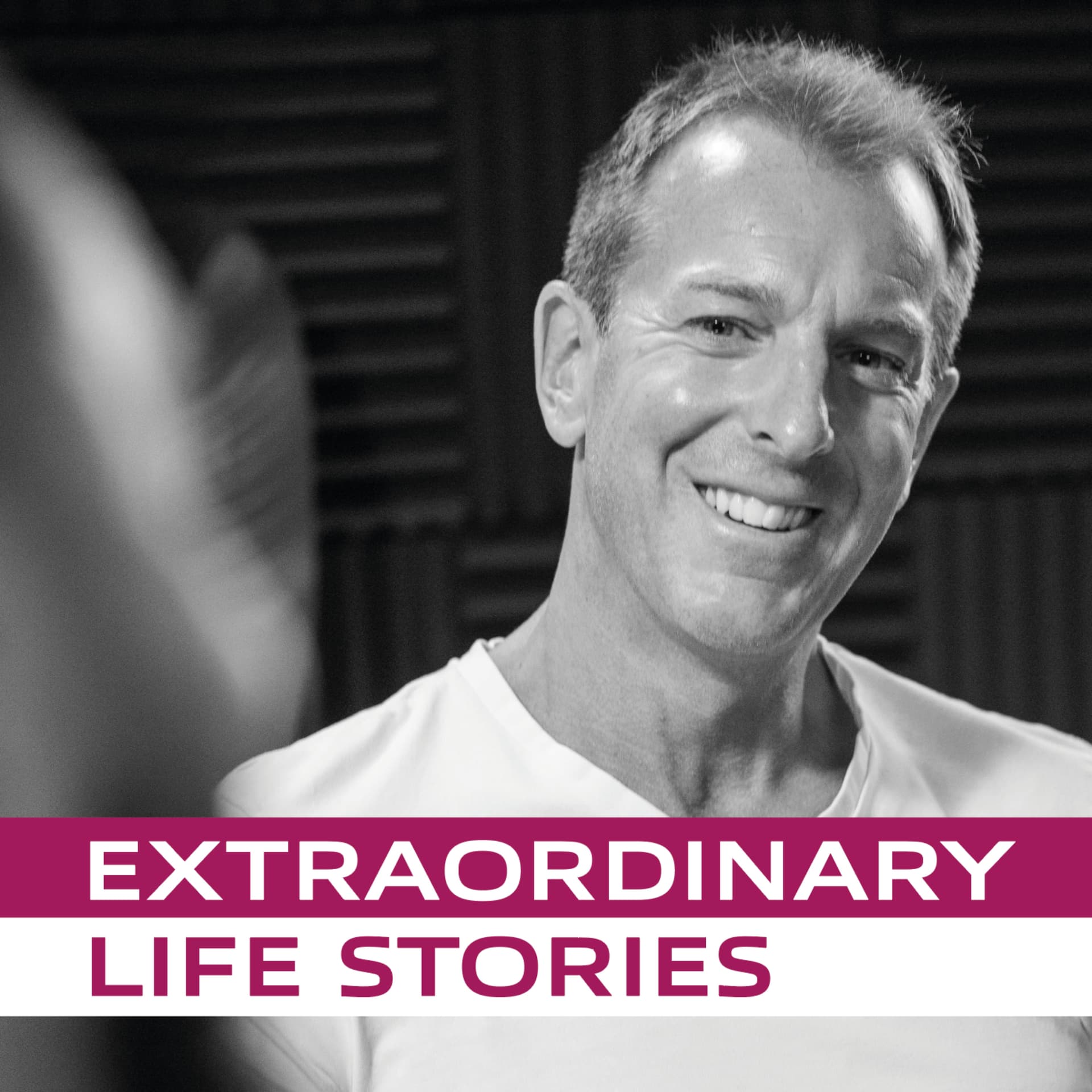
In this episode of Extraordinary Life Stories, John Reynolds talks with Harvey Armstrong.
A former star of the reality TV show Made In Chelsea, Harvey is now the Co-Founder and CEO of Prime Time Beers, a British-brewed low calorie, award-winning beer brand.


