
In short
Rob Pierre (co-founder/CEO of Jellyfish) discusses entrepreneurship, leadership without hierarchy, neurodivergence traits as “superpowers,” curiosity-driven “test and learn” culture, and his post-exit mission to mentor and create access to advisors. He also shares his definition of success (achieving outcomes without compromising values) and why he prioritizes sleep over hype routines.
Guest backgrounds
Rob Pierre is best known as co-founder and CEO of Jellyfish (started 2005), which grew to ~2,200 people across 38 global offices serving major brands in digital marketing (content, analytics, media buying). He’s a father and a golfer; now invests in and mentors entrepreneurs.
Key claims
Distributed accountability beats top-down delegation; identify and empower the best people by “superpower” (skill, knowledge, experience, aptitude, passion); founders should look for curiosity and outcome focus; sleep and recovery matter more than extreme morning routines; success is values-aligned outcomes.
Notable examples
Jellyfish’s “superpower” self-rating exercise (e.g., SEO “selling SEO”); Sunglass Hut anecdote about adapting inventory to flight demographics; IBM exam rejection as a catalyst to build a fairer hiring/assessment system; “social offsetting” concept (calculate and offset a “social footprint” like carbon).
Written by AI. May contain mistakes. Listen to the episode to check what was said.
Chapters
Tap a time to open that second in VOThe Journey of Rob Pierre
0:35 to 0:45
Rob Pierre discusses his background and the founding of Jellyfish.
The Journey of Rob Pierre
0:59 to 2:33
Rob Pierre discusses his background and the founding of Jellyfish.
“I was almost obsessed with not getting consultants, not looking for frameworks and blueprints.”
Defining Success
2:33 to 4:36
Rob shares his perspective on success and the importance of support systems.
“My daughter was born the same year I started Jellyfish in 2005.”
Empowerment and Leadership
4:36 to 7:12
Rob discusses the importance of empowering others in leadership roles.
“and they were asking for leadership advice.”
Overcoming Challenges
7:12 to 9:06
Rob reflects on his personal challenges with dyslexia and ADHD.
“How could you possibly not have the best person to take a lead?”
Innovative Business Practices
9:06 to 12:42
Rob shares insights on innovation and the success of his business practices.
“And so all of that, I think, has been an ongoing battle for me.”
Curiosity and Growth
12:42 to 14:00
Discussion on the importance of curiosity in business and personal development.
“store of Sunglass Hut, because you changed it up.”
Curiosity and Its Impact
14:00 to 14:48
Explore how curiosity influences personal and professional growth.
“You know, I felt it even when we were getting to know each other in your restaurant a few days ago.”
Defining Moments: The IBM Experience
14:48 to 15:40
Learn about a pivotal experience that shaped Rob Pierre's entrepreneurial journey.
“And you saw it as a given that you'd done what you needed to get in.”
Investing in Disruptive Founders
15:40 to 18:16
Discover the qualities Rob looks for in entrepreneurs he invests in.
“And I almost never looked at exam results.”
Show all 17 chapters
The Role of Mentorship in Business
18:16 to 24:45
Understand the importance of mentorship and sharing knowledge.
“I'm going to hang up my boots and just I'm done.”
Social Footprint: A New Concept
24:50 to 27:54
Learn about the idea of social footprint and its implications.
“We gather here tonight to bring women back to their rightful place.”
Redefining Success
27:54 to 28:04
Hear Rob's perspective on success and the role of fulfillment in it.
“We've said that briefly, but that energy you talk about that's coming off you is so inspiring.”
The Importance of Sleep in Success
28:04 to 31:04
Learn why prioritizing sleep is essential for mental and physical health.
“And there's all sorts of things going on in my head about what can we do, how can we do it, and totally mission aligned.”
Relentless Pursuit in Business
31:04 to 34:15
Explore how a relentless work ethic can drive success without compromising personal health.
“And to not be conforming to, yeah, I'm up at 3.30 and all that.”
Finding Balance After Success
34:15 to 38:04
Understand the emotional complexities of transitioning from business success to new ventures.
Lessons on Education and Non-Conformity
38:04 to 41:04
Discover insights on how to navigate traditional education pathways while pursuing personal ambitions.
“And all of these things you'd have to sort of come to terms with.”
Transcript
Automatic transcript. May contain errors.0:01If you've ever blasted synth beats from your boom box or burn CDs for your besties, this one's for you. As people get older, much like their music tastes, their health needs change. AG1 is the simple daily health drink designed to deliver over 75 essential daily nutrients and pre and probiotics to support energy, digestion and mood. So you can make the most out of every decade and dance break. Learn more at drinkag1.com. trading at schwab is now powered by ameritrade giving you even more specialized support than ever before like access to the trade desk our team of passionate traders ready to tackle anything from the most complex trading questions to a simple strategy gut check need assistance no problem get 24 7 professional answers and live help and access support by phone email and in platform chat.
0:52That's how Schwab is here for you to help you trade brilliantly. Learn more at schwab.com slash trading. You had such a big exit and without necessarily saying the number, can I say it was over 500 million? It was, yeah. You don't need to be working. I was almost obsessed with not getting consultants, not looking for frameworks and blueprints. I was obsessed with looking at what's the challenge and coming up with our own way of overcoming that. Somebody was talking about having people under me they were asking for leadership advice and I said well the first thing I would do is not use that term you know the one size fits all for school which I didn't conform to I didn't get on with yeah where did you sit with that so I had an appetite to conform I just didn't do it very well the ADHD you could be hyper focused on one thing just not at all interested in something that you don't want to do and but the more people the more entrepreneurs I talk to the more people that have been successful in either a creative or disruptive way they have these traits and i want to know now with sort of a perspective and maturity what your definition of success is that success probably the best answer i've ever had rob pierre hello looking forward to this so am i don't know what to expect well Well, entrepreneurship, leadership, and I think that sort of purpose, if you like, was a big connection for us when we were chatting only a week or two ago.
2:18Indeed. But tell me, who is Rob Pierre? Well, that's a very great and big question. Who is Rob Pierre? Probably most famous for being the co-founder and CEO of a digital marketing company called Jellyfish. that started in 2005 and we grew it to 2 ,200 people in 38 global offices working for many global brands that you may think of we had services across all the disciplines in digital marketing content creation analytics and media buying and we did things a little bit differently so people may see something out there about our model and how our culture and how we developed I would say one of the leading service businesses and cultures out there.
3:05I'm also a father. My daughter was born the same year I started Jellyfish in 2005. I often tell the story that you know I had these two things in my life that I reimagined what they're capable of every single day and you know I think Ria could be anything and achieve anything. I don't mention my son because he wasn't born the same year but I've got a son as well so I'm a father I've also a frustrated golfer probably that is the my hobby and yeah so working on that as well and somebody that feels a little bit like the village elder now you know I feel like I have a duty I have a privilege lots of retrospective wisdom financial freedom time freedom and just trying to figure out how I can take everything I've learned on my journey and sort of empower and support other people to achieve their best and that's sometimes philanthropic activities but it could also be just mentorship it's making myself available to talk and to engage with people and just try to be accessible and helpful that's probably who I am today I love that and that's why we're so mission aligned and that whole wanting to make a difference and help people I want to I want to go back to a version of you where dare I say, you sort of said you did things differently.
4:26Was there a version of you at any one time that wanted help, needed help? Yes. And that led to how we did things differently because, you know, and actually last night I had an event and somebody was talking about having people under me and they were asking for leadership advice. And I said, well, the first thing I would do is not use that term because that is just such a hierarchy, traditional organization structure mentality that on that chart, I'm here and I've got people under me. Whereas where I started to realize throughout my whole tenure at Jellyfish is that I had everybody supporting me.
5:06And it wasn't that I was the boss in actual fact for everyone's specialist subjects, everyone's contributions within the organization. if I had to go to a board meeting and talk about what we were up to, I had to go and seek advice and guidance and find out what they were doing and from them how we were approaching certain things, how we were trending. And it suddenly occurred to me that, of course, the CFO, when it came to the finances, our P &L, our balance sheets and everything, he was the expert. When it came to our businesses and the commercials, she was the expert. And when it came to our marketing or operations you get the picture I mean it was literally what made me a better CEO was having this amazing support network around me and so I was always getting help and when you actually realize and you do genuinely believe that everybody around you are the best at one or many things everyone in this room we're the best at things and once you identify that then why wouldn't you have a mini mentor in that person because they've got the they understand the subject they've got experience passion aptitude all of those things in that particular area and you can actually absorb that and learn from that and so everybody became a mentor for me everybody I was learning from on a day-to-day basis so um yeah I've always I always need help that's that's the only reason I'm here today I love that there's an empowerment there isn't that these people, I imagine some will watch or listen to this and remember what that feeling where you were ultimately the creator, the entrepreneur, the founder.
6:47But as you scaled and built, you empowered people to have that feeling that they were captaining their own part of what was a ship that united. But there's a skill there. There's a skill there to be self-aware. And I want to open that up. I want to know where you got that from because ego can come into being a founder and come into being the boss which brings that hierarchy in yeah and I feel like you've managed that so well did you did you learn it on the job or did you kind of have that basic feeling a sort of primitive feeling of understanding that I think I just started to learn it very early on and I think it was simply I got the best results from identifying who's the best at something and empowering them and making them realize and feel that they had the autonomy and the accountability to take ownership of that area because why wouldn't you?
7:34How could you possibly not have the best person to take a lead? So the best person within the Jellyfish organization would do the training, help us develop the go-to-market strategy, they would improve the product, they would be the face within both internally and externally of that particular either discipline or product or subject matter. So it was just getting better results and I think if if you can just focus on the outcomes and how things are trending and how you perform better and you know test analyze and refine it just can't kept coming back to if you identify the best people give them the autonomy empower them to do it and get everybody trying to figure out what they're best at what their superpowers are I mean we defined superpower we said that if you took the it took anything and for these five things you can rate yourself like eight or nine out of ten and that was skill knowledge experience aptitude and passion anything that you do and I always tell the story because our head of earned media Nick he kind of sat and he took this question very seriously and being an SEO he was all about long tail keywords and stuff and he said you know what I'm gonna have to go a little bit long tail on this I can't just say SEO because I don't think I am nine out of ten for those five things but selling SEO yeah I think I've got the skill and knowledge experience I definitely have the aptitude to continue to improve and I am ridiculously passionate about it so I'm gonna put I think my superpower is selling SEO and then when everybody in the organization you've got 2 ,200 people all trying to figure out what is their superpower and therefore their own self-development plans they're all looking at the overall mission of the organization and what are the initiatives and what can I do to contribute to that overall mission and then that's when you start just getting brilliance it's brilliant it's incredible and it went so well for for you for that business that you ultimately created and they exited now and that was a successful exit in context of how we define success as big numbers and again the staff count I imagine the people that that were and still are part of that loved that culture and that and I love the fact that you've been able to elaborate on that you you described yourself in context of doing things differently so that could be that could be described as a disruptor an innovator which often is not encouraged you know the one size fits all for school which I didn't conform to I didn't get on with yeah where did you sit with that and I'm asking specifically about school days you see it strangely I conformed to my best ability so I had an appetite to conform I just didn't do it very well you know and I didn't I see you know I'm looking at my son today and I'm not into labels etc but you know when it comes to dyslexia or ADHD I mean I tell people I'm 52 years old and I've probably read two books in my life I can't get to the end of a book I can't get to the end of a page my mind drifts and I just start thinking about other things and that might be a little bit of dyslexia I find it quite hard work to read for a long period of time totally relate to this by the way right and then and then the traits I'm seeing in my son, sort of the ADHD, you could be hyper focused on one thing, just not at all interested in something that you don't want to do.
11:15And so all of that, I think, has been an ongoing battle for me. You know, I'm working with my son to make sure that he at least understands and the coping mechanisms for all of those. But the more people, the more entrepreneurs I talk to, the more people that have been successful in either a creative or disruptive way, they have these traits so you know people to new neurodivergent they can call it a disability whatever it's not is it is that if it's a superpower if you understand the coping mechanisms to deal with society and rules and the way you have to conform with certain things but when you concentrate on what it does and the abilities it gives you to do things differently and creatively and to to really be focused on an outcome that i think ended up being um what was successful so yeah we were disruptive.
12:05I was almost obsessed with not getting consultants, not looking for frameworks and blueprints. I was obsessed with looking at what's the challenge and coming up with our own way of overcoming that, which is why our business infrastructure doesn't look like anyone else's. Yeah, I mean, there's a saying from the greatest showman, no one ever achieved anything by doing what everyone else does. I love the fact that you've shared that because I know the story of of Sunglass Hut, where effectively you were working for a company, but you did things differently, completely differently, and got extremely successful results.
12:39To the point where I think you were the highest earning person in the company in a Gatwick store of Sunglass Hut, because you changed it up. And I know some of those details where like when there was a flight in from You'll Tell Me and you changed the style of the glasses to suit the demographic. That's proper entrepreneurial. Right. Wasn't even my idea. You know, I walked past the shoe shop in the departure lounge. You took it. Yeah, exactly. They were taking down all the shoes, all the size sevens. And I said, well, you're shutting down. And they said, no, we had just had the Lagos flight and we've now got a Japanese flight.
13:13So we're putting up size threes because we don't have time to go out to the storeroom and keep changing. I was like, yeah, genius. And yeah, I mean, obviously observing around you also, again, learning off everyone. That's always going to be the common theme. And it's almost like that marginal growth, you know, where it was all within Sunglass Hut, that store. It was lots and lots of little things that we just kept improving. And exponentially, you multiplied it together. And we were getting these really dramatic increase in results. And everybody, when you see that momentum and trending in the right direction and the fruits of your labor, everyone becomes incredibly motivated.
13:55and it's all about measurement, you know, gamifying. And yeah, we had a... Test and learn. Test and learn. Yeah, which is curiosity, right? I mean, you've got that in spades. You know, I felt it even when we were getting to know each other in your restaurant a few days ago. And even that story with your restaurant, that test and learn, you know, you know what food you like and where am I going to base yourself? You bring that into everything. You didn't have to stop and observe the shoes being put away. You didn't have to then ask the question. And by asking the question, you got told something that then goes in to you to think, I'll translate that.
14:27And I guess I'm saying that to you to make the point that that's where some people say, you're so lucky or, you know, he's so good at what he does. Well, actually, we can all bring those things into what we do and keep being naturally curious. Absolutely. And you don't know how that will affect your own business. There's a story where you, as a youngster, had an opportunity to join IBM. Yeah. And you saw it as a given that you'd done what you needed to get in. and then there was a small print about getting a certain exam result which you didn't get and I know that's quite a defining moment so I'll flip that back to you yeah and uh I told this story last night actually um it was almost like that Batman moment you know where Bruce Wayne isn't it his parents die and he's like that creates Batman I think that moment created the entrepreneur in me that said one day I'm going to own a company that is not going to do what I just experienced two days of lateral thinking, mensa tests, interviews, role-playing, two full days of it and then you get accepted and then for an arbitrary one and a half hours in a physics exam, that is a curriculum nothing to do with what I was being assessed for on those two days and then they retracted the space.
15:41It just made no sense to me and I didn't know it but it was burning inside of me to be in a situation where I could hire people, assess them properly on their aptitude, their passion, their abilities, and actually then bring them into the organisation. And I almost never looked at exam results. It wasn't a criteria for me. Never going to stop someone getting into jellyfish. If anything, that's someone to flip to. The elder statesman, you describe yourself as someone looking back in now, and you do back other founders, you invest in other entrepreneurs. How much of that kind of disruptive, not following what everyone else does, do you look for in someone when you're backing them?
16:24Yeah, that is everything. It is because the founder is very, very important. And normally, if we end up in a conversation, it's because they were curious. So we go back to the curiosity. they've demonstrated that by coming to me and saying Rob can I have a chat with you and most of my investments I didn't go in as an investor I went in just to help and eventually after three or four conversations then it leads into you know what Rob I would really love to have you either strategically or on my cat table or just having access to you and this would be a great excuse if you invested into the company and so that's pretty much how most of my situations have arisen and my investment so and uh during all of those conversations i'm listening to them and i'm hearing how they approach things and that they are trying to be creative and they're very solutions oriented and they definitely think about the outcomes and then they want to work out that path and i always say it you know if i could just be around and employ motivated lazy people i would they're the best in the world and they just know they're motivated to get to the outcome but they just look at all the laborious ways to get there and go i can't do this and then they find that that balance of methodology technology and human capabilities coming together and tweaking it so that you can automate everything you can you find you look at the easiest route or the best route to not without compromising on the outcome and you just watch brains that do that and um and you just get so much more out of them it's not a about patting yourself on the back for hard work every day it's about getting to your desired outcome in the best most efficient often most cost effective way and that's again what i'm looking for in people that i'm engaging with you came alive then there was so much fulfillment and i guess purpose from that you must be such a good mentor and i want to sort of reframe that to you where you had such a big exit and i without necessarily saying the number can i say it was over 500 million it was yeah you don't need to be working you don't need to be doing anything you don't need to be sitting here with me now let alone the the email the approach you get tomorrow from someone that really wants to to work with Rob Pierre and then you go like the sound of him or her this sounds a good opportunity you're not going to sit up on the beach of a cocktail anytime soon that fulfillment is that what's driving you now there's there's a little bit of the fulfillment there's also yeah it feels like an obligation and that's why I use the village elder You know, I can't now suddenly say thank you very much to the environment and all that I have benefited and gained and all the support I've had along the way and then go, right, well, I'm good.
19:12I'm going to hang up my boots and just I'm done. It just feels like what a waste, because also it's that it's that retrospective wisdom. It's just being able to provoke thought and to guide people on just having the right conversation. And often I'm not giving answers. and and this is quite interesting because I've invested in a company called open intro and and essentially that is access to people entrepreneurs or experienced people if they're on there as advisors and instead of going through LinkedIn and trying or going to events and trying to get somebody to have a meeting you just pay you could you could just pay like 200 pounds for an hour and you just buy it you book them and you have that meeting instead of having all of the the the challenge is to get hold of them.
19:58So you're making that accessible to people that wouldn't be accessible at all. Correct. It's kind of meet the unmeetables. It's a strapline on it. But the reason I bring it up is that we were talking about, well, what is the benefit of this? And what is the benefit of having that conversation? When a lot of people are just asking ChatGPT these days, you know, I need this, what do I do in this situation? And somebody said something really interesting to me. They said, yeah, I think all the questions I asked you, I think I could have asked ChatGPT, but I would have never had the energy and they said you know this intangible energy I left the meeting and I wanted to run through walls I wanted to get straight on it I had my mind was racing on the the possibilities and it is just I think it's just having incrementally had those achievements those milestones have you know of course I've got all the scars and the um I've got the war stories but also those milestones and those wins and those achievements, that gives me enthusiasm and energy to talk to people about the possibilities and visualising what's possible and getting everybody to actually see this picture that you visualised and you've painted.
21:16You need to get everyone around you to see it so clearly they believe it's real. And when they believe it's real, you're going to get it. I use the analogy of golf. You know, I don't if I'm if I've got a caddy, often they don't tell me exactly what to do. But the conversation about what I'm trying to do becomes the most valuable part of the interaction because they say, what are you going to do here? Well, I'm just going to hit it over there with a little bit of draw and it's going to land on the green. And I'm suddenly I realize that this visual picture in my head means my body then executes far more consistently if I have that visual picture.
21:52if you just walk up and try to do it instinctively you just don't do it in the in to your best ability have you brought that visualization to everything you've done previously do you recognize that more now very much so very much and it always starts with that the mission the thematic goal exactly what we're trying to achieve what does it look like if we did achieve it and then you work backwards and you have all of the different define um you have like primary objectives then you have all the defining objectives and each defining objective has a bunch of initiatives and then each of those initiatives only one person is accountable for delivering it we had like 2 000 initiatives i think on a sheet at jellyfish all of the 150 leadership across the organization and we had all of these initiatives that laddered up to our our goal and our thematic goal and i could go straight to that sheet and filter it and see this who's responsible for this okay and then And I'll go to that individual and speak to them directly.
22:50And I also know that everybody's working to the thematic goal. And it meant I had engagement. You didn't have those. You know, the telephone situation where everybody has a slightly different version by the time the communication gets to you through all the layers. It doesn't even resemble what the first person said. Really efficient. Oh, really efficient. Really inclusive. again you are putting systems and processes that back up the theory that everybody's the best at something or everybody's autonomous and accountable why would I speak to somebody's line manager and then their line manager to get the information when the business has already said you're the one I should be speaking to so um yeah I absolutely enjoyed being able to engage with people directly That's brilliant.
23:40There's a lot of people that could relate to all the things you just said there and ultimately the exit with Teddy Fish about being successful. I can imagine there was a very driven, ambitious version of you coming through. And I want to know now with sort of perspective and maturity, what your definition of success is. The definition of success is basically achieving your outcome without compromising your values. That's success. Probably the best answer I've ever had. The worst. No, I mean that. There's a lot in that. And so that version of you that's got no desire to put your feet up and retire anytime soon because you've got that fulfillment from giving back.
24:17Is there a destination that you in any way could describe and visualize? Or is it a journey? Study and play. Come together on a Windows 11 PC. And for a limited time, college students get the best of both worlds. Get the Unreal College Deal. Everything you need to study and play with select Windows 11 PCs. Eligible students get a year of Microsoft 365 Premium and a year of Xbox Game Pass Ultimate with a custom color Xbox wireless controller. Learn more at windows.com slash student offer. While supplies last, ends June 30th. Terms at aka.ms slash college PC. We gather here tonight to bring women back to their rightful place.
24:58The Testaments, a new Hulu original series from the executive producers of The Handmaid's Tale. It's easier to accept a story than believe that the people around you are monsters. The battle isn't over. There comes a time when you have to take action, when you have to choose your own destiny. Never quite as it seems. Watch the new Hulu original series, The Testaments. Streaming on Hulu and Hulu on Disney Plus for bundle subscribers. Terms apply. It's definitely a journey, but as an example, some of the projects I'm working on, like I'm working on the social offsetting project, which is a concept which is exactly like carbon offsetting.
25:35But I believe your privilege comes at a price. And so I believe you have a social footprint in exactly the same way you have a carbon footprint. And with a carbon footprint, if you've got a gas guzzling car or you fly all the time on holiday and you've got a big house that you're heating, that has a carbon footprint. And then there's mechanisms in place to offset your carbon footprint. You can plant trees, renewable energy, all those type of things. I believe that we can calculate your social footprint and that will be your education. The postcode, where you live, the amenities and the safety of where you live.
26:07It will be your network. I mean, think of what your social footprint would be. Who you can actually connect and who you've got access to that can influence the outcomes. It will be your disposable income. It's the number of golf clubs, you know, how many times you eat out. All of those type of things will work out your social footprint. because you just think to yourself how could you possibly be eating out in fancy restaurants in London three times a week and not buy just one box in a food bank how could you be a member of two exclusive golf clubs and not give one young talented golfer who hasn't has access to a golf club and give them membership in their local club you know how could you have a PhD and not go to the Globe Academy and do an assembly or talk to others how could you not have the success I've got and be a mentor and help young people and the list goes on so if we can actually work out people's social footprint and then give them opportunities to offset that on this platform that's an example of where you don't just talk about the theory I'm not lobbying to try and get people to give more and it's I'm not I'm also trying to get people to understand that your privilege isn't just money it's about what you can offer people and how you could add value in your community and to people around you.
27:21So, yeah, I think that's my drive now, is that how do you articulate that? And as you can tell, I'm an operator. I don't want to sit here and talk to you and give you theories and be like a guru on how the world should be on my soapbox. You know, I'm all about, yeah, trying to think about ways in which you can make it happen and that you can get to that tangible outcome. And for me, luckily, they're aligned with my values anyway. So, yeah, it's all good. I've already said it once, but I'm not only aligned, I'd love to actually do more with you. We've said that briefly, but that energy you talk about that's coming off you is so inspiring.
28:04And there's all sorts of things going on in my head about what can we do, how can we do it, and totally mission aligned. Just using that word success again, there are countless self-development books, podcasts, and kind of conversations around the fact that to be successful, you've got to get up at four in the morning, you've got to go to the gym, you've got to run the marathon, you've got to read the book, you've got to meditate. Now, you're at a different stage of where you were when you were building Jet of Fish. I want to get that sort of feel from you about what works for you and how disciplined are you over that kind of morning routine and mental and physical fitness?
28:35None of those things. How refreshing that is to hear. None of them. Sleep, yes. I'm a big believer in sleep. So I'm the opposite. it getting up at five but i would much rather it's it was all the same when you know if you're exercising i have to tell my son you know he goes to the gym five times a week and then he wants to live heavier and heavier and i have to remind him just remember that training for three hours or whatever you're not building when you're exercising it's the recovery the recovery when you rip your muscles to pieces and all your fibers and everything but how you get bigger and how you get stronger is when those muscle fibers repair themselves and sleep is repairing us and it's your mind and your energy and I think that so I'm big on sleep make sure I can sleep as much as I can and then around that I just prioritize life and it's that impact versus effort again if you could just keep concentrating on the things that you know don't require so much of either your brain points your energy your time your money but has the maximum impact and then work your way towards things that are a whole load of effort and zero impact you should never get to that and so life is about prioritizing there's no work-life balance I don't there's so many things at work I love doing and I'm just I would do it every day at a heart in a heartbeat and there's so many things in my private life I'm like oh gosh exercising is one I have it's only discipline I don't think if you're motivated and passionate you don't have to tap into discipline you just love doing it you're just going to do it anyway whereas oh i mean i i have to exercise to try and make sure that i've got longevity and i stay in reasonable shape but you know i i don't enjoy it as much so if somebody says work-life balance they would be putting that exercising and as your life balance whereas i'm like no just just prioritize everything less is gold less is gold And, yeah, and I just...
30:31Yeah, so I don't believe in many of those theories. And I do think it's also we're all individuals. So... Oh, I love that. That's why it's so refreshing. I mean, I'll parallel you, actually. I interviewed Europe's biggest biohacker, Tim Gray, where you are now. And all these biohacking are from supplements to weights to everything we can do. And I asked him straight up, what's the number one thing? He said, it costs nothing. It's sleep. Oh, did it? Prioritise your sleep. So to hear that from the biohacking kind of guru and then someone that's been... so successful in business and entrepreneurship is, I think, a really powerful message for anyone watching and listening.
31:05And to not be conforming to, yeah, I'm up at 3.30 and all that. But mental fitness. So at any one time, and I love what you said about that, there's clear purpose and fulfillment coming through when you're doing stuff that you love, whether that's personal or business. At any one time, you would have been relentless. Because you can take time out for golf now and so on but that version of you that was scaling building opening up offices in other countries and so on how did you make time for yourself do you know what you just did so you know companies um and organizations do this exercise where they distill their mission or their culture into one word you know you've got like volvo is safe disney's magical apple's different do you know we did that exercise at jellyfish and it was relentless that was the word and so i've got a whole presentation on our word at Jellyfish was relentless.
31:59That's really weird that you said that. I didn't know that. Yeah, you didn't. And so I've totally forgotten the question, but downtime for yourself. So that relentless side of you got the business to where it got to, and you excelled and everyone around you, I imagine was relentless in that execution, but at certain times, and this is where the need to preserve sleep and so on, you know it, but at any one time, well, I've got a presentation to you tomorrow. I've got a pitch tomorrow. I want to know where there was a was there an off button where I'm going to stop I'm going to have a walk I mean what what did you do to bring yourself back always I I said earlier I'm if I could surround myself with motivated lazy people I was a motivated lazy person love that simple as that I would have got to the outcome but I was not going to do long hours and and that's where the distributed accountability came from you know it it didn't most well I say most a lot of CEOs it's that accountability that ladders up to you because that's not where because we we banned the word delegation in jellyfish you couldn't delegate something if somebody was the right person to do it you distributed the accountability you didn't say I will hold the accountability I've delegated it to you you're now responsible for delivering it but ultimately I'm still accountable on the outcome no so how many times several times somebody would be distributed that accountability and you'd get that phone call right before they're about to go live or they're about to announce it or submit that document and go could you just look this over no you don't get to because now if I look it over and I say it's okay it's now my accountability so you've put it back on me so um and I think with the organization what ended up happening is that everything wasn't laddering up to me and so I wasn't feeling that stress because everybody in the organization were taking on that distributed accountability and I just knew what my accountabilities were and it may be the mission the vision it could be to go and meet the senior people in our partners or our clients it could be that you know I did inductions for everybody that started I did the company updates where I traveled the world and and did these global updates from the different offices and got them all involved all of these things were my accountabilities but when I went to the board meeting and they asked me about certain subjects I didn't spend three weeks preparing for a board meeting so that I could answer every permutation of every question wasn't interested and they often at the beginning they thought it meant that I didn't have a handle on my business I thought well that's a traditional view isn't it I don't have to know everything about but I've got I can tell you who is accountable and they will know and I could go directly to the person who knows and we can bring them into the board meeting you can ask them directly but please don't expect me to know everything that's going on in this business and that's so um yeah i wouldn't i wouldn't have stayed up all night i would know what needs to be done i would have prioritized impact versus effort and i would have got to a point where um we would have been able to deliver what we needed without doing 24 hours that's probably the best i can no no it's brilliant I'm so enjoying this conversation I'm conscious of time we said this before we filmed I knew that I would want to talk to you for a lot longer but there'll be a lot of people watching listening and me included that are super inspired by this conversation with that kind of village elder hat on looking back and you mentioned your son you know your daughter if you look back now and we're giving advice to someone coming through that dare I say let's let's relate this to that kind of element of I don't really feel like I fit in I want I feel like I want to do things differently but whether it's school society parents are kind of saying this is what you've got to do you've got to you've got to pass your exams to get a good job which is how i was brought up yeah me too well you know and actually how well that worked for you by not passing the exam to then find your true calling and ditto for me what advice would you give well i wouldn't give advice to not do it i think that let's not set the standard on the anomalies i think life and society it's all well and good me now retrospectively saying this all worked out but I always use the analogy the bullets miss me you know there's a lot of people that run through the jungle and they you know all those paras get deployed and they're all just as fit just as well trained just as prepared and as you're running through the jungle some sometimes the bullets miss you and I'm telling this story because they did I wouldn't suggest that you don't go down the path of education etc I would say that you just take out of all of those processes what you can and maybe just not put pressure on yourself to get the same outcome as everybody else.
36:46So still go into education, still try and pass your exams and then after that if you don't feel you can conform start to do things differently but you to change everything so do take on a small project if you want to prove that you can do something or be successful in a certain area that minimal viable product or test the proof that prove the concept do it in a small way where the impact isn't as great but you do it from end to end and you and then you build confidence in yourself people get caught you know start to believe in you and then you do something slightly bigger and you it's almost like that offset you don't so if you're a dj you know you just you you fade one in and out you don't love that analogy you just you don't have to always not a hard stop it's not a hard stop so so if you want to do things differently start the process but fade in and fade out and i think people won't even notice you'll be in a new track before and a new path before anyone even knows you're so such a pleasure to listen to and learn from i've got one more question which is something that i have experienced through my own journey and through a number of people i've had the pleasure of meeting through this kind of medium and in business and that is that having been a founder having created an opportunity that became a business that became so successful and then exited I want to know how that actual journey was for you specifically the feelings after exiting where that was your baby you know you'd incubated it you'd grown you scaled and then it's not yours anymore it's it's very strange you you have to go through first how much of your business over 19 years how much it defines you and how much my identity was embroiled in in all of the achievements and the success and the team and the culture and the brand equity and all of that did I get invited to events because I was the CEO and co-founder of Jellyfish did I Did people laugh at my jokes because I was the CEO?
38:53And all of these things you'd have to sort of come to terms with. Also, during your day hours, that's a lot of time. And I literally loved the people I worked with. I'm not overusing that word. I mean, it was we were on a mission together and we did great things. And I enjoyed being on that journey with them. And it's a bit like, I suppose, again, I use military analogies. But, you know, when you go through an experience like that, the bond is incredible. And then suddenly I still had all of my family and friends and everything that I engaged with outside of day hours. And now I'm doing new things.
39:36Sorry, outside of day hours. And I'm now doing different things in the day hours. There's no time to engage with people that I, my family. and we did amazing things. And then so that's very strange as well. And again, it's like, I suppose I'm lucky to have this analogy that I can keep drawing upon. But Ria, she left the university. I've instilled all the values. I've nurtured her. I've done my best to make sure that it can then go on to, she can go on to do amazing things. And actually, she went to university pretty much the same year I exited jellyfish as well so I had so over those 19 years I had these two things in my life that parallel one in the personal life and one in the business correct yeah and it's very strange to have your daughter leave the house and then live somewhere else and you know the accountabilities on and what you have to do and how you engage with them it's all so different so it felt very similar yeah it felt very similar that it was like um we feel like a bit of like an empty nester because both your business and your children start to leave.
40:48And yeah, so it's all a very, very strange process. And a lot of people, I got so many congratulations because of the exit and leaving. And I thought, my best work and my best achievements was when I was there. The exit is not my best achievement. And it's the headlines, isn't it? It's the, yeah. But what you've done, how you're doing it And what you're still doing, which comes back to that mission alignment, is super exciting. And, you know, again, running out of time, we'll wrap up now. But I want to see more of you, Rob. I'd love to do more with you. Amazing. I'd love to see how we can fill each other's sails with wind and do some cool things together.
41:29100%. I'd love to. I'd love this conversation. Have you enjoyed it? Absolutely. I didn't want it to end, if you can't tell. It was very easy. Thank you so much. Ryan Reynolds here from Mint Mobile. I don't know if you knew this, but anyone can get the same premium wireless for$15 a month plan that I've been enjoying. It's not just for celebrities. So do like I did and have one of your assistant's assistants switch you to Mint Mobile today. I'm told it's super easy to do at mintmobile.com slash switch. Upfront payment of$45 for three month plan equivalent to$15 per month required. Intro rate first three months only.
42:05Then full price plan options available. Taxes and fees extra. Default terms at mintmobile.com. Are you one of those media strategy people clicking through slides, scrolling spreadsheets? Yes? Good. This is for you. Because on Spotify, there's an audience that's different. Locked in. Loyal. Invested. They're called fans. Fans don't just listen to music. They feel seen by it, like it belongs to them. So when your brand shows up on Spotify, that's who you're talking to. And you're right next to artists like me, Lizzo. So, are you ready to talk to fans? Spotify Advertising. You're among fans. You
From the publisher
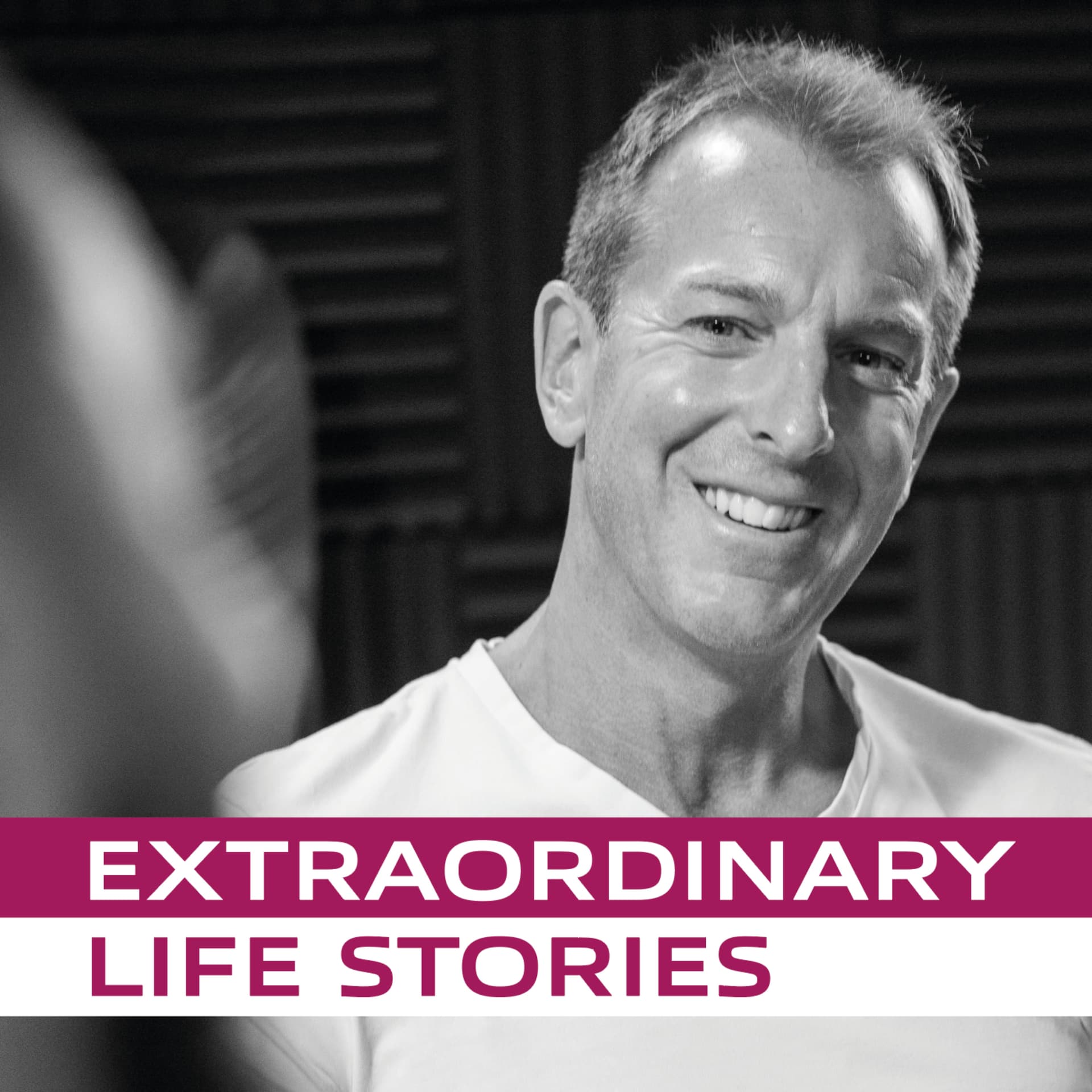
In this episode of Extraordinary Life Stories, John Reynolds talks with Rob Pierre.
Rob is one of the UK’s most successful media leaders. Rob co-founded digital marketing business Jellyfish in 2005 and as CEO, he grew the business to over 2000 employees, working across 28 global offices on clients including Google and Netflix. Jellyfish was acquired by The Brandtech Group in June 2023 for a figure quoted as over £500 million.


