Ask ChatGPT
 Extraordinary Life Stories
17 Oct 2026 · 33m · 9 chapters
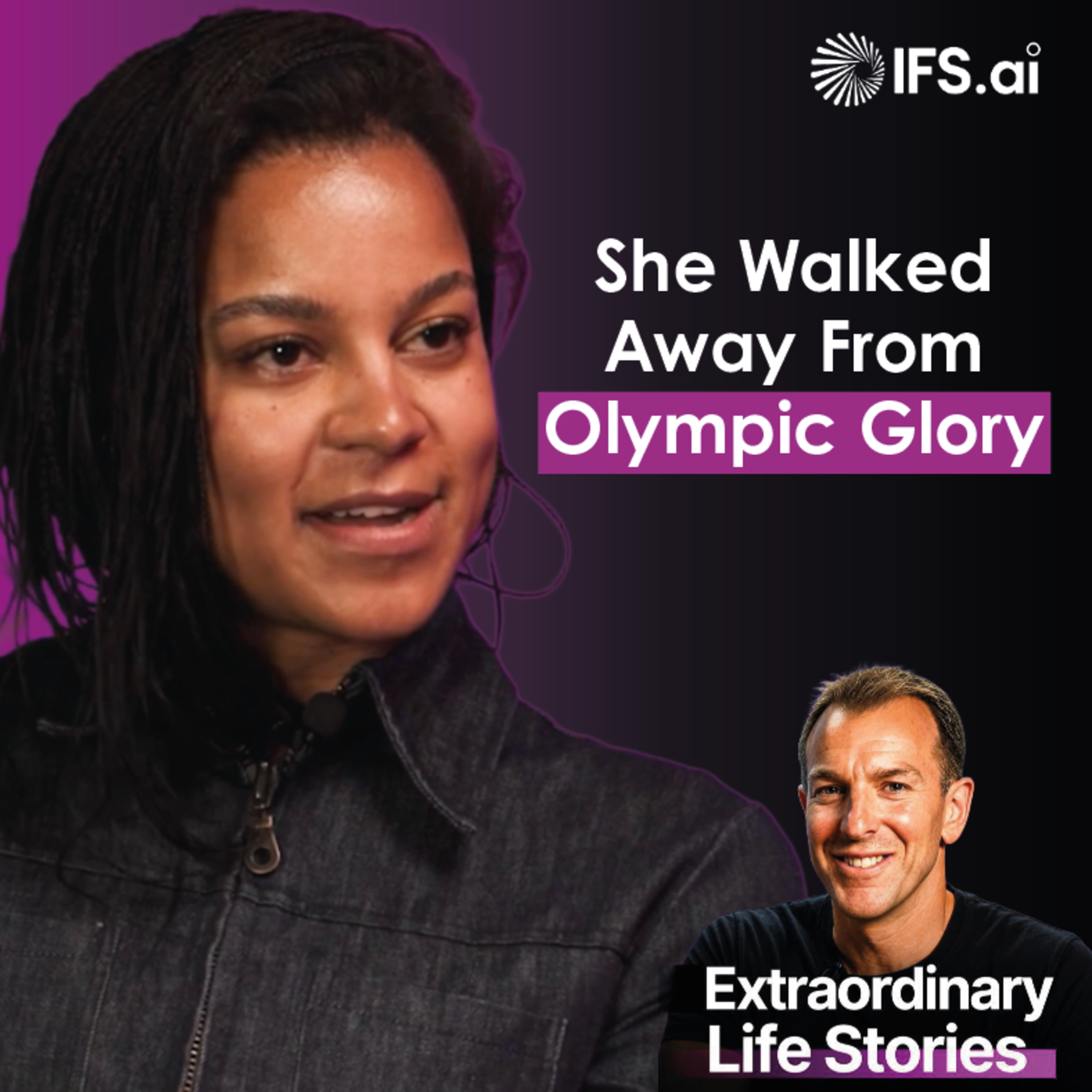
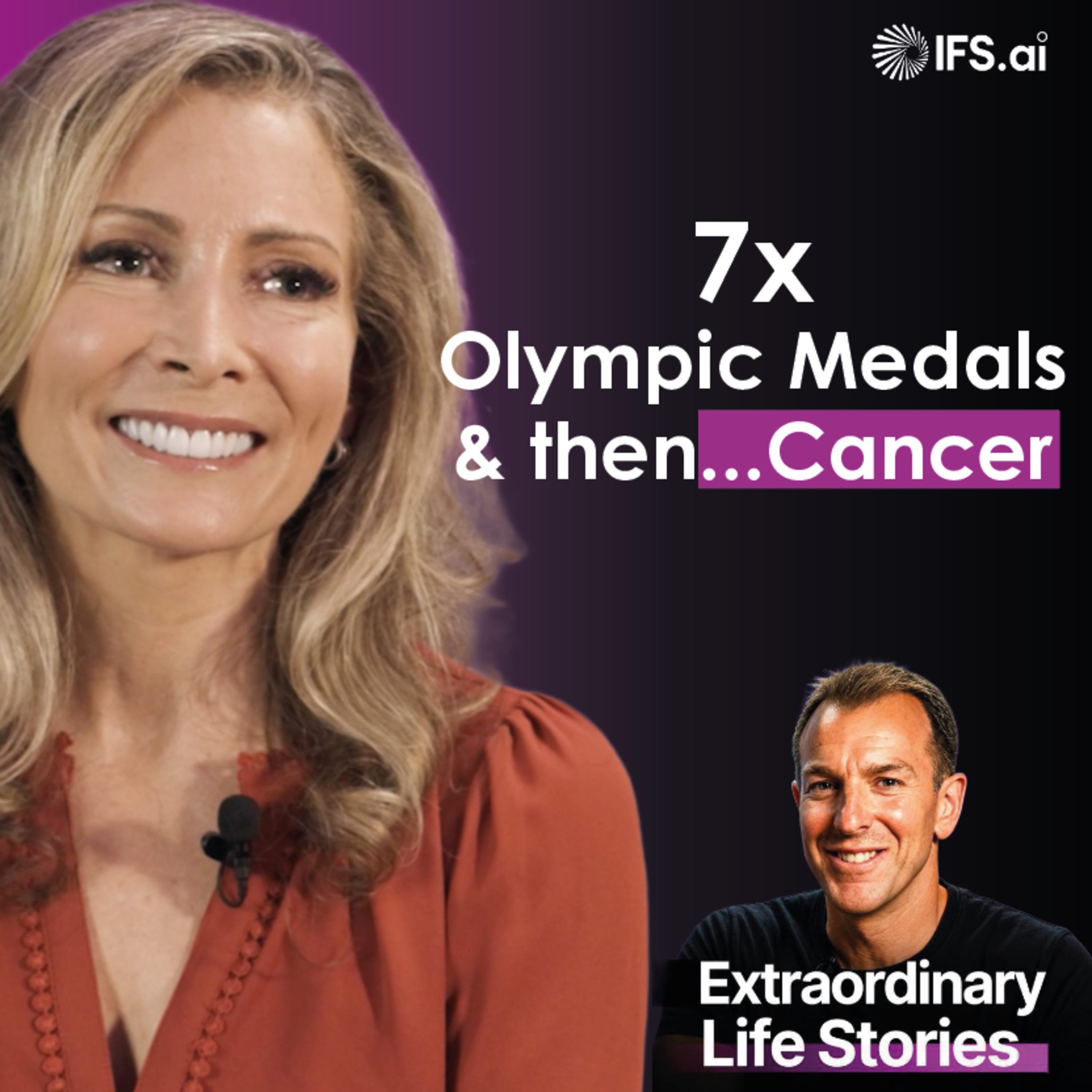
Rebecca Achieng Ajulu-Bushell (Julie Bushman) reflects on walking away from Olympic swimming at 17, the racism and pressure she faced as the first Black woman to swim for Great Britain, and how that choice shaped her later work in business and philanthropy. She also discusses representation in corporate leadership and her charity’s impact.
Former British swimmer; started swimming at age 4 in the Indian Ocean; Commonwealth Games competitor, British champion, world number one; Oxford University; later CEO/business leader; runs 10,000 Interns Foundation.
Athletes are “commodified” and sidelined when they opt out or challenge institutions; progress depends on representation (“no front door”); success isn’t awards/KPIs but team development and fulfillment; education helps athletes transition.
She quit the Olympic team before 2012; wrote a book 10 years later; cites 12 Black managers out of 3,000 at a city dinner; notes only one Black FTSE 100 leader; 10,000 internships created with 71% in full-time employment.
Written by AI. May contain mistakes.
Discover Propel Fitness Water's hydration benefits.
Meet Rebecca, the first black woman to swim for Great Britain.
“I was the first black woman to swim for Great Britain.”
Rebecca discusses the challenges of being a role model in sports.
“if we haven't got a diverse representation of different kinds of people?”
Rebecca shares her tough decision to leave competitive swimming.
“And then I wrote a book about it 10 years later.”
Rebecca reflects on her choice and its implications on her life.
“away for me it's heartbreaking to know that you chose to do that because there's a part of me It was like, what if?”
Rebecca discusses her journey into education and charity work.
“We were children and we were seen as athletes first.”
Learn about the foundation's goals to improve access to opportunities for underrepresented groups.
“And then I went to university, you know, September 2012.”
Explore leadership values and the balance between ambition and personal well-being.
“Actually, my next question for you is about leadership.”
Explore the nuanced definition of success that transcends accolades.
“I made the times list of, you know, I've got all of the stuff.”

Get the gist, explore an idea or ask about something said.
 Claude
On Extraordinary Life Stories, what are the key points of this episode?
Searching your listeningAutomatic transcript. May contain errors.
0:00This episode is brought to you by Google Chrome. You think you know a browser, but Gemini and Chrome? That's new. It can help you with practically anything on the web, like restoring a vintage motorcycle from a 50-page restoration block, or finally break down that long article you've had open for weeks. Gemini and Chrome is here for it. Ready to make anything online make sense? There's no place like Chrome. Check responses set up required, compatibility and availability varies 18+. Propel Fitness Water with Gatorade Electrolytes, zero sugar and vitamins propel hydrates better than water to help you get the most out of your workout and get back to your best self what propels you propel with gatorade electrolytes athletes are really commodified as soon as you opt out or you challenge the institution or the status quo you know you are often sidelined quite quickly we were children and we were seen as athletes first tell me who is we're back at the julie bushing i am someone who i think has felt the responsibility of using my freedom to free others my whole life.
1:01I was the first black woman to swim for Great Britain. I went to Oxford University and now I run a national charity that supports young kids who look like me. Now in business you're mixing with incredibly influential people and the legacy potential you can build and leave is phenomenal. I was 17 when I walked away and for so long I was terrified of the best thing that was ever going to happen to me and the best thing I was ever going to do with my life had already happened. So you now then pooling other people's stories, is there change that you can see happening in that business sector? If there's no representation and there's no way through the front door, how is progress going to change and how do we fully believe that we've got the right people in the room if we haven't got a diverse representation of different kinds of people?
1:46You know I think progress happens at the rate of the slowest person in the room and there's still a lot of work to be done.
2:03Welcome. Thank you. Tell me, who is Rebecca Julie Bushman? It's such a big question. I'm an athlete. I'm a daughter. I'm a sister. And I am someone who I think has felt the responsibility of using my freedom to free others my whole life. I've had experiences of many different institutions. I was the first black woman to swim for Great Britain. I went to Oxford University. And now I run a national charity that supports young kids who look like me. And so I guess there's this thread of being the first in the room in lots of places that I've been and feeling the responsibility and the weight of that.
2:47And then, I don't know, trying to use my experience to help other people. What an intro. I didn't get to meet you, but I saw you at the Sportsbook Awards a year ago. Oh, I didn't say writer. Well, I've just done that for you. And you won that whole thing. I did. With these heavy black bones. And you've just gone in, that intro is all about that sort of that weight and responsibility. I just want to open up that whole, the heavy, the heavy part. And where you sit with that now. I never find that question easier to answer the more times they get asked it. And I think, you know, as a young girl growing up, my parents told me that I could do whatever I wanted, that I could be whoever I wanted to be.
3:27And so I was so fortunate to have that upbringing. But it doesn't stop you from going into the world and facing all of the barriers that you do being a woman, being a woman of color, and especially in a sport that was very white. And so I started swimming in the Indian Ocean. It's where I learned to swim. I was about four years old. and it took me all the way to the Commonwealth Games, British champion, world number one and then I quit the Olympic team just before 2012 and it was a huge decision but I think it was primarily driven by the fact that every time I got up behind the blocks I wasn't just you know swimming fast to win my race, I also had to prove people wrong and swim against these kind of racist narratives that said that people who look like me couldn't swim and when you are when you're a teenage girl as you might know having experience of young daughters yourself two right now two teenagers you want to fit in right that's the thing that you want to do and so I think being told that you were other and then that being written about you in the press and having to be a role model even if you didn't ask to be one you know those were all things that were so difficult to deal with at 15, 16 years old And so this thing that I loved got taken from me and kind of transformed into something different.
4:51And I walked away. I don't regret it, but also it was one of the hardest things I've ever had to do. And then I wrote a book about it 10 years later. And when non-athletes read the book, you know, they're always shocked by what we put our bodies through, what we put our minds through to be the best at the thing that we love. And, you know, I often get asked that question, oh my God, it's so brutal, this sport, and it was so challenging. You know, why did you... And I just, I love to swim. I love the feeling of standing on the edge of the world about to fall off. I love the thrill of it all. So I would do it all over again, exactly the same, but it was a huge challenge.
5:36Do you still love swimming? I can still swim. Yeah. Because when you walked away from the sport, there was a competitive element. You were number one. you probably were tipped to win gold. My training partner actually won the Olympics that year, which made the whole thing even more challenging. You still don't regret it? No, I wanted a life bigger than the one I think sport could offer me. And especially being a woman, you peak earlier in sport, body develops and suddenly everything's different. And so, you know, I write and think a lot about this now, that sports people aren't really incentivised to think about their life beyond the sport that they're doing.
6:16There aren't many coaches that allow you to plan your future beyond Olympic gold or the next racing or competition cycle. There was a period of time in America when the biggest employer of ex-Olympians was Home Depot. And so you kind of end up, you know, washed up oftentimes without education, without the resources to kind of think about what happens next and I was lucky enough to have a great education and I wanted to pursue it.
7:10propel fitness water with gatorade electrolytes zero sugar and vitamins propel hydrates better than water to help you get the most out of your workout and get back to your best self what propels you propel with gatorade electrolytes there's such a strong woman sitting opposite me and i feel like the strength that you had to walk away for me it's heartbreaking to know that you chose to do that because there's a part of me It was like, what if? You know, you clearly could have won, and then who knows where that would have gone. And also, there's an element of the fact that you would have proved doubters, haters, wrong.
7:45And yet, did you almost do that by walking away? And has anything changed since you did? It's a really beautiful and nuanced question. You know, I'll be really honest. I was 17 when I walked away, and for so long, I was terrified that the best thing that was ever going to happen to me and the best thing I was ever going to do with my life had already happened. And that was such a huge weight. You know, we were talking about the heaviness of this earlier. And then as I grew up, I guess I realized that there are so many versions of the best thing in your life. And oftentimes they're not things happening to you.
8:22They're the things that happen to the people that you love around you and you're lucky enough to be there. And so it took, I think, maturity and time for me to let go of all of the possibilities that I walked away from. but also that that was one version of my life and I live in, you know, another version and that's okay. Yeah, and I want to get to that. I just, one last thing, that kind of role model piece. There was clearly no one that you could say you aspired to be because you were the first. Right. And you can't be what you can't see. So I just wonder where you sit with the elements of the fact that you then had got to number one status, 15.
8:58So the potential and again, the what ifs. and is there a part of you I'd love to know what the decision making was where you had that choice of okay I'm going to show everyone I can win this you know feisty competitor and skilled to be able to do that but actually the choice to walk away which meant you wouldn't have actually been the role model for other people like you as you say to then aspire to be that where do you sit with that it's really complicated I don't think I've made peace with it you know I wrote a whole 70 ,000 word book about it. I still don't think I've made peace with it. I guess when I used to get out of the pool and, you know, people would kind of, all the reporters would put a microphone in my face and, you know, they'd ask me about my race, maybe.
9:45But oftentimes the first thing they asked me was, you know, so why don't black people swim? And I was 16 years old. I was like, I don't know. You know, I don't have the tools to solve this problem or even answer this question for you. All I know is that I'm so good at this thing that I love to do and I'm the only person on poolside who looks like me and that in itself was already such a huge challenge. And so I think I had to block it out. I think I blocked out what it would mean for other young black and brown boys and girls to see me walk away and for the press to write, you know, that I couldn't do it or that I wasn't strong enough, but I wasn't dedicated enough.
10:26because I had to live my life and maybe I've spent a lot of time trying to make up for that in some ways. I get that. And what was the reaction? And I'm interested to know how that was received by perhaps people that in any one way had been watching your career and backing you and other people that maybe that's when you actually came into contact with them because that got people's attention. And just that divided that sort of opinion, if you like. When you are an athlete, especially in a sport like swimming, people have put so much into you. There are so many stakeholders in your success and your body kind of becomes this, I guess, object through which they also realize their own desires and their own dreams.
11:06And so, you know, it was really challenging. It was hard for my parents. It was hard for my mom, you know, to have invested so much time and so much belief in this thing that I wanted to do. And I did want it. and then to accept that I made a decision to walk away from it, especially when, you know, I was still under 18. I was still a child myself. I still feel like a child now. One of my coaches really let me go with dignity and she really supported this decision to, you know, move on from the sport. But, you know, I often think that athletes are really commodified and as soon as you opt out or you challenge the institution or the status quo you know you are often sidelined quite quickly and you're often reject you know if you speak against the group you're kind of breaking the rules you're rejected from the group and I did say at the time you know I think British swimming could do more to support athletes through all of the complications of the sport because it's not just about performing physically it's about dealing with the mental pressure, dealing with the press, being a whole human being.
12:15We were children and we were seen as athletes first. And that, I think, is something that hasn't changed across sporting institutions. And there's still a lot of work to be done. It's sad to hear that. But I think it's also, that's a key part of our conversation to champion and that awareness. And you've written the book and just talking openly now, bringing it back to you personally, so much effort would have gone in in terms of the training and the physical, the mental side of things to have got to that point where you were number one. And that identity loss that athletes lose at the end of their career, they've gone through the pain, they've had their injuries, their comebacks, it becomes cemented as their identity.
12:59And then when they retire, they can have a whole identity crisis. I guess you avoided that because you'd actually sort of gone to a certain stage and then made a decision to stop. I want to know what you then lean into as your next purpose. You know, I had a kind of relatively complex and like interesting upbringing and my dad wasn't in the picture from when I was born actually. And so I think there's always been this kind of well inside me of, you know, wanting to, probably wanting to be seen, wanting to succeed, feeling like that would bring me the things that emotionally I probably was craving.
13:35And so So when I quit swimming, I realized that that was one of the ways I was, you know, achieving that for myself. And it was terrifying to not know how I was next going to achieve that. And so education was definitely the thing that I lent on as I left the sports. I think I quit at the end of December in 2011. And then I went to university, you know, September 2012. So I have one more year of school. And I think I just shut myself away and read books for about 11 months. And then that was it. And then I was at uni. And sitting here now, you're a businesswoman. And I say that because there's so much you've done to build up, one, the business side of things.
14:21And then the element of the sort of team around you, if you'd like to try and make a difference, I'd love to open that up. And the 10 ,000 interns, have you got that right? Just tell me more about that. So the 10 ,000 Interns Foundation, we're a charity. and we believe that talent is everywhere but opportunity often isn't and so often the spaces that are created don't allow for equal access for so many different reasons um racial bias and you know access to education social mobility you know kids are often carers disability all of these things that make us different and make us who we are often keep us out of certain spaces and so we started five years ago with a small project called 100 black interns and the desire was to kind of create real representation by offering people paid internship and just that little bit of work experience you need opportunity to get opportunity you know it wasn't a huge project there wasn't a huge idea behind it but like all good ideas that kind of got out of hand And so five years later, we have created 10 ,000 internships and at least 71 % of our interns are in full-time employment.
15:36We do a huge amount of training, mentoring, development, work a lot with the disability community as well. And, you know, we're on a mission to fundamentally make access more equal. That's the goal. What a brilliant mission. And there's your own lived experience there. I wonder when you went about setting this up, whether you unearthed what I guess might have been unseen, so many people that had gone through different, but similar principles of underrepresented and just not given a voice, if you like. And how many of those people did you find? Was it quite overwhelming when you had people coming to you saying their story?
16:11I mean, it's like all of the people you said opposite. And like yourself, you know, business is hard work. and it's it's much less glamorous than it appears even if you're the CEO of a company but the stories of the individuals that we support that's the thing that keeps me going every single day and so the founders and four guys in investment management actually who started this project they kind of looked around in 2020 and they tried to have a dinner for the black money managers in the city and of the 3 ,000 only 12 of them were black and they thought well it's going to be a pretty small dinner.
16:49So they started to look at the statistics of, you know, underrepresentation in their community and were really, it was stark. You know, there was no entry, there was no progression and there weren't leaders. And it goes back to what you were saying. If there's no representation and there's no way through the front door, how is progress going to change? And how do we, you know, fully believe that we've got the right people in the room if we haven't got a diverse representation of different kinds of people? That's not just about race, right? It's about gender, female representation. There's still a lot of work to be done there, disability, people who are care leavers, et cetera.
17:26So all of these stories came to the fore and all of these young kids write to me every day, which is amazing. Oh, that must be full for me. And there's an undertow there which dovetails with thought as well about storytelling. Your story, as heartbreaking as it is for me to hear and for anyone else, it ended up being a best-selling book that got everyone around me in that room to give you a standing ovation, and there were tears. Storytelling. So you now then pooling other people's stories. Is there change that you can see happening in that business sector? Like, you know, 12 out of 3 ,000 is a ridiculous statistic.
18:042 % of VC funding goes to women. And I think I'm seeing changes there through different attitudes and people that are rising now as entrepreneurs that other women can see and want to be. But are you seeing that change? You know, I think we really have to name the moment that we're in right now. We're in a really difficult and divisive time from a macro political perspective. And a lot of the progress that we thought we were making in 2020, 21, 22, you know, a lot of corporates are being put in very difficult positions by legislation, by changing attitudes. And so we have seen marginal change in terms of representation in certain sectors.
18:49But on the whole, there is still a huge amount of work to do. There is currently, you know, only one Black FTSE 100 leader, for example. But that only tells you one part of the story, right? If we think about 10 ,000 individuals who have got workplace experience, who have a sense of broadened horizons, who can imagine themselves in a different place because they've been there and they've seen it, who have a network now of each other and also potential people that work at these corporates who are invested in change. I think there's a lot of short-termism at the moment and I think we need to take a much longer view.
19:30You know, the, lots of the initiatives around women's development started 20, 30 years ago. And they're only just starting to see the kind of fruits of that labor. And so, you know, I think we've got to keep believing in progress and in hope and in each other. And that these 10 ,000 lives are potentially 10 ,000 future leaders.
20:28We'll be right back. What propels you? Propel with Gatorade Electrolytes. Yes. Actually, my next question for you is about leadership. You made a decision at 15. You made a decisive decision, which you stood by and you don't regret. And I feel like that's a really key attribute to you. I wonder what you could tell me your standout values are as a leader. You know, I run a charity, but I'm definitely not like a cuddly, wuddly charity CEO. I'm an ex-athlete so I'm exacting and I really believe that excellence and accountability can go hand in hand with psychological safety my values are around compassion collaboration staying true to ourselves and sometimes that means making decisions that people don't like but also you know really I guess probably one of my core values is around ambition and getting my team to believe that what feels impossible from a KPI perspective actually is achievable.
21:31And balancing that with how you keep people inspired, engaged, motivated is the biggest challenge of readership. Yeah. You mentioned the athlete part, that physical element. When you had the next race to try and win and the consistency of being the athlete for the next event and so on, you knew you were training for something. You're clearly keeping really good shape still. how do you do that and what motivates you to still keep fit sorry um I don't do any exercise I know I know I know it's awful it's awful I shouldn't be laughing about it I work all the time I work all the time um I work all the time and it's it's a really it's a big challenge in my life which is I spent all of my childhood being an athlete I love movement I love being outside.
22:22I love pushing my body. And yet, as leaders, especially as women, we often have to deal with the trade-offs of what it means to be ambitious and choose to put yourself in a place of challenge. I love my job. I love my team. And I also want to show up and be a good sister and daughter and friend. And I need to sleep sometimes. And so, you know, something had to give. I walk a lot all the time and that's I think the way that I get away from my screen and the way that I keep active but this chapter of my life is not defined by physical activity it's not a priority defined by mental yeah mental pressure and fortitude resilience um I guess I keep fit for that in different ways yeah because I mean one of the reasons why I have a gym at home I try and go there every morning where I can.
23:17And it's to set my brain up for the day as much as anything. It's to fire myself up. Whereas you're clearly able to do that through the sheer determination and perhaps the purpose of what you're trying to do now without needing to build any of the training alongside. Well, listen, this is I'm definitely not advice giving. I could be living a lot better. It's working for you. It's a stage of life right now. It is a stage of life. I mean, you know, I became CEO when I was 27. I was really young. And I didn't know what I was doing in a lot of arenas. I did know what I was doing in many others. And I think the thing I felt most in my career, especially this chapter, is not my race or my gender, but my age.
23:58Oftentimes the youngest person in the room by a good couple of decades. And that's been an interesting development, just having to grow up in those rooms. And so a lot of my spare time has been devoted to kind of closing those knowledge gaps. And that's been the thing that I've had to focus on. Probably very stimulating that as well. It's incredibly stimulating. It really is. This has been like going on six MBA courses back to back. You know, this job has just been all consuming and this huge, huge challenge. But I think also, you know, I get to draw on a decade as a professional athlete. I know how to get in the zone.
24:33You know, it's a muscle that never really dies. Yeah, because if you had gone on to compete, that would have dominated everything. that would have been all you would have had time for so that's that's if you were still competing now then that's all you'd have and then you'd be facing into the next chapter like actually it gives you incredible perspective at a relatively young age the intellect along with the fact that you pushed your body to its limits and you can be satisfied that you reached number one it's quite an unusual position to be in it is i mean they say ex-athletes make good business people we're very able to tolerate discomfort i think i probably have quite a high risk tolerance because i know how far you can go really before you break and you're both of those things have made me quite an intuitive leader but I recognize the difference between authority and expertise and so yeah there's a lot to learn still a lot to learn so what I love is you're at peace with the fact that you stand by the decisions you've made to get to where you are now however if you could have a conversation with a younger version of yourself now with all the perspective and knowledge that you've now got and perhaps a certain amount of confidence and resilience that's come from the business side of things as well what advice would you give of course go to therapy the reason why i ask that is at 15 it's so young i'm thinking of my 15 year old daughter now who's got she's got no real life experience she's been watching you know myself and my wife and the adults around her to get any kind of grounding anything she's read and listened to and then you had so much to deal with, external pressure.
26:06So you made the decision in which you stand by. I just wonder, now that you could be someone that's got that experience and all the other experience and all that pool of knowledge, just what you'd actually say back. I think I would tell myself to focus on, you know, who I can become and not who I am at that moment in time. I think being a teenage girl is one of the most challenging experiences in the world honestly and you know I would tell that girl not to be scared that you're going to be defined by this moment there's so much life and I think when you know when you're that age and you just want to race through it and you think that you know growing up is going to solve all your problems or achieving this is going to solve all your problems but when you get there you know you're still yourself and everywhere you go there you are and so you know the passage of time and experience, I think, is the thing that I would want her to value as opposed to the outcome.
27:03That's beautiful. Thank you for sharing that. There's a lot you've achieved in relatively young years to be called successful. At 15, you were number one and you had the doors wide open to go where you want in the sport. Now in business, you're mixing with incredibly influential people and the legacy potential you can build and leave is phenomenal. What would you describe as success? I mean success definitely has two faces and I know one of its faces very well which is the moment where you get the award or you achieve the KPI or you deliver on the funding round and you know I'm still relatively young in my journey and I have a lot of those things and I think it's really important that people know that those are not true definitions of success.
28:00You know, I'm Forbes 30 on a 30. I made the times list of, you know, I've got all of the stuff. And those days are incredibly inconsequential when I think about what it means to be successful. Achieving as a team and really watching the people who you've trained develop. and that moment where everything just clicks into place and everyone is aligned and clear on what we're doing and why we're doing it and where we're going. And those are kind of quite, you know, they're quite inconsequential days that can happen on a Tuesday. But that's the definition of success. It's a feeling though, isn't it?
28:38It's a feeling. The way you were just talking then. Satisfaction is the wrong word. Fulfillment is probably closer. But it's not a selfish element. It's that whole, like, it's bigger than me. And it feels right, it feels good, and it's perhaps not, like you say, it's not a physical trophy. It's a journey. And on that, is there one thing or is there anything you would really like to try and achieve out of what you're doing? You know, it's so funny when you work in the non-profit space, I think people kind of assume that we're just plodding along, but it's like an incredibly resource-strapped environment.
29:10We've been very high growth. And there's always challenges. There are like seven fires every day and you have enough water to put half of one of them out. And so it's sometimes hard to think about the big picture, not just next month, next year, but like three, four years from now. I want my legacy, I think, to be about education and, you know, unity at its core. Not only have I been the only person who looks like me in so many different spaces. I'm also not from London. I didn't grow up in a space that was very black. or particularly diverse. My parents live in Gloucestershire. And so, you know, I think progress happens at the rate of the slowest person in the room.
29:54And so if I can bring as many people along on my journey, believing that everyone deserves the chance to flourish, everyone deserves the opportunity to, you know, to prove that they can live their life to the fullest. And that doesn't mean that everyone should do everything. Sure. It just means that people should have the chance to show that they have something to offer. I love that. So you're inspiring me right now talking to you and anyone once in listening that's being inspired by you. How can someone help you? Oh gosh. Sign a check. So being honest. No, no. I'll be very serious about it. Collaboration, which you're big on.
30:34There's people that are like, what can I do in my position of influence and then there's physical money? Yes. So, you know, where we are right now as a country, I think, is in a place of real challenge and at a crossroads. And what I believe British values are, I think, are embodied by so many things that I see every single day. But we're not seeing that on the news. And those aren't the kinds of conversations that people are having. and so what we do has become seemingly more and more divisive what we do is we help underrepresented kids access you know meaningful opportunity through training through mentoring and development and so beyond supporting us with that program delivery which we always love to get more people involved organizations can head to our website and check out our program um of course we need infrastructure and that means funding big partnerships long-term investment but the single most important thing I think is educating yourself and people around you about you know what it means to be British and what those values that we should stand for and defend especially at this moment when we're being divided what are those values um no I think those values are about community.
31:52I don't think that we fundamentally as people in this country believe that anyone should be left out or treated worse than anybody else because of the colour of their skin or who they love or what they believe in. And I do, I see that all the time. I see it on the bus every day, I see it, you know, on my street. And so when our organisation is being challenged for supporting, you know one group of people I think that you know it's incumbent upon all of us to decide that you know we don't want to be divided this episode is brought to you by google chrome you think you know a browser but gemini and chrome that's new it can help you with practically anything on the web like restoring a vintage motorcycle from a 50-page restoration blog or finally break down that long article you've had open for weeks gemini and chrome is here for it ready to make anything online makes sense?
32:46There's no place like Chrome. Check responses set up required, compatibility and availability varies 18+. Propel Fitness Water with Gatorade electrolytes, zero sugar and vitamins. Propel hydrates better than water to help you get the most out of your workout and get back to your best self. What propels you? Propel with Gatorade electrolytes. Can I ask who is helping? Have you got almost like a demographic of people that are coming forward and they've almost got their own backstory or there's a why behind why they want to be involved. Yeah. I mean, we have a couple of mutual friends, all of whom have been incredibly influential, not just in terms of the charity and its impact, but in my leadership journey.
33:30And I think those people can roughly be characterized by kind of one single trait, which is that they believe in people. And for whatever reason, when they've needed support, they've had that person reach out to them and give it to them. And that's really all we're doing. You know, we're just reaching out to people and we're helping them in one step on their journey. And I've needed that. I'm sure you have. You know, everyone needs that. And so, yeah, the kinds of people that help are I think definitely people who've been helped. So important to share that and if you have someone that's been helped you've felt that you've understood what it feels like and then you're more inclined to want to help someone else that's the one thing I've noticed about people that are generous with their time and money it's they've been helped along the way in some way.
34:26And I think that it gets paid back. Always we say to our interns lift as you climb right and so if you go through the door it's your job to hold it open for other people. And it's really important to understand what that means. It's not about anyone cheating the system. It's not about anyone being given preferential treatment. It's simply saying, you know, if you look after your mum and you have to take a two-hour bus to kind of take her to hospital, you're probably not going to have time to study for your exams in the same way as somebody else who doesn't have to do that. And so, you know, if we can support that person with a little bit of extra training and mentoring and development, hopefully they end up at the same place as the person who's had that support.
35:09And that's all it is. Well, I said to you off camera, I couldn't wait to talk to you. I was in your company at that Sportsbook Awards where you won, rightly so, and everyone was cheering you. I didn't get to meet that night because when I finished what I was doing, I went to try and find you. You'd scarpered to have the conversation with you today. It's an absolute pleasure. It's a privilege. It's such an honor. Thank you so much. Thank you so much.
36:00ZocDoc. Ready to be seen? Download the ZocDoc app today. Brussels clean up nicely at Sweetgreen. Maple glazed, roasted, and edges perfectly caramelized. Sweetgreen's fall harvest is back on the menu, and the season's most overlooked little green vegetable is dressed to be devoured. You know what to do. Order on the Sweetgreen app.
What happens when you walk away from the dream everyone else expects you to fulfil?Rebecca Achieng Ajulu-Bushell was a British swimming champion, a world number one and the first Black woman to swim for Great Britain. Yet, with the London 2012 Olympics approaching, she made the extraordinary decision to leave competitive swimming behind.In this episode of Extraordinary Life Stories, John Reynolds sits down with Rebecca to explore the story behind that decision, the pressures of elite sport and what happens when the pursuit of success begins to come at the expense of your own identity.Her journey took her from the swimming pool to Oxford University and, ultimately, to leading the 10,000 Interns Foundation, where she champions opportunities for underrepresented talent. Through her work and her memoir, These Heavy Black Bones, Rebecca challenges conventional ideas about ambition, achievement and what it really means to succeed.This is an honest conversation about identity, resilience, belonging and the freedom to redefine your life on your own terms.Extraordinary Life Stories is proudly sponsored by IFS.ai.