
In short
Steve Tappin discusses his “Awareness Code” for leadership, arguing that effective CEOs move “above the red line” of low self-awareness by mapping emotions and ego into a “periodic table” of human psychology. He claims most CEOs misread self-awareness (often naming only a few emotions), and that ego shows up in “60 parts” (e.g., frustration, anxiety, imposter syndrome, know-it-all behavior, perfectionism). He also covers mental/physical recovery, meditation, and avoiding alcohol, plus how AI can create “future predictability” for strategy.
Guest background
Steve Tappin is a Yorkshire-based leadership expert who has worked around CEOs and global companies, co-authoring the Awareness Code with a collaborator known for 35,000 one-to-ones.
Key claims/examples
Frustrated CEOs should accept the situation and reconnect with teams; founders feel lonely because they believe they must know answers. He cites Jeff Bezos, Zuckerberg, and Branson as examples of strengths to combine, while noting weaknesses in real-world leadership. He suggests CEOs should love their business, broaden “ambition” beyond metrics, and choose partners who are warm, self-aware, and committed to growth.
Written by AI. May contain mistakes. Listen to the episode to check what was said.
Chapters
Tap a time to open that second in VOIntroductory Remarks
0:00 to 0:29
Steve Tappin introduces the themes of resilience and personal stories.
“We are outgunned and we are outmanned, but we have each other.”
Introductory Remarks
0:30 to 0:51
Steve Tappin introduces the themes of resilience and personal stories.
“And for a limited time, college students get the best of both worlds.”
The Importance of Self-Awareness in Leadership
1:31 to 4:36
Steve discusses self-awareness as a cornerstone of effective leadership.
“It was relaxed, but you were in the company of a lot of very successful business people and entrepreneurs around that table.”
Understanding and Managing Ego
4:37 to 7:20
A deep dive into the complexities of ego and its impact on leadership performance.
“The next level is you want things too much for yourself.”
Navigating Frustration and Loneliness in Leadership
7:21 to 11:42
Exploration of how CEOs can manage frustration and the loneliness of leadership.
“And what I mean by that is, you know, a certain behaviour element that needs the most amount of work.”
Promoting Work-Life Balance for CEOs
12:38 to 14:01
Discussion on the shift towards prioritizing mental and physical health in leadership.
“So you've got to be absolutely at your best, relentless execution all the time.”
Meditative Techniques for CEOs
14:01 to 15:39
Learn about the benefits of meditation and lifestyle changes for CEOs.
Steve's Personal Transformation
15:40 to 19:39
Discover Steve's journey from an unhealthy lifestyle to one focused on wellness.
The Search for Exceptional CEOs
19:40 to 21:59
Explore the qualities that make an exceptional CEO and current challenges in leadership.
“So what I mean in practical terms, John, is if the awareness code is 60 to 100 is high awareness, I want people who could step into anything.”
Integrating AI in Leadership
22:00 to 24:42
Understand how AI can improve business predictability and enhance leadership.
“so there's a real legacy human element to what you said there and i want to bring ai into this part of the conversation because we know that AI, and rightly so, is speeding so many things up.”
Show all 14 chapters
Advice for Aspiring CEOs
24:43 to 27:38
Gain insights on the importance of passion and purpose in leadership roles.
“There'll be a lot of people watching and listening that will be aspirational and wanting to be a seer or to be the best seer they can be.”
Choosing Collaborations
27:39 to 28:01
Learn how Steve chooses who to work with based on personal values.
“And if you're not passionate and you don't enjoy what you're doing and you don't believe in that mission, that's going to get tricky.”
Choosing Exciting Collaborations
28:01 to 29:43
Learn how to evaluate potential collaborators based on their character and commitment.
“Then secondly, have they got a higher calling that could be really exciting?”
Reflections on a Meaningful Conversation
29:43 to 30:28
Hear insights on the value of self-awareness in leadership from a seasoned expert.
“But ultimately, you've got your own journey as well.”
Transcript
Automatic transcript. May contain errors.0:01I'm not giving up. I am selling the building. The final season of FX is the bear. The restaurant is flooded. Everything's either going to be okay. Or not. We are outgunned and we are outmanned, but we have each other. FX is the bear. The final season. All episodes now streaming on Disney plus. Study. And play. Come together on a Windows 11 PC. And for a limited time, college students get the best of both worlds. Get the Unreal College Deal. Everything you need to study and play with select Windows 11 PCs. Eligible students get a year of Microsoft 365 Premium and a year of Xbox Game Pass Ultimate with a custom color Xbox wireless controller.
0:51Learn more at windows.com slash student offer. While supplies last, ends June 30th. Terms at aka.ms slash college PC. Steve Tappin. Been looking forward to this. Thank you for coming. Thanks, John. Tell me, who is Steve Tappin? Steve Tappin's just like an ordinary Yorkshire bloke, really, who sort of spent his life focused around CEOs. Yeah, down-to-earth, Yorkshiremen, spent a bit of time around the world. Very humble way of explaining that you have operated at the highest level of leadership. And I really respect you for that. and I know I'm going to learn a lot from you. We only met a couple of weeks ago at an entrepreneurial dinner.
1:35And would you describe it as a keynote? It was relaxed, but you were in the company of a lot of very successful business people and entrepreneurs around that table. And we went straight into kind of what makes a great CEO, which actually I found really interesting because it was actually what makes a great leader that led into people saying, well, is that the same transferable to a teacher or a parent? and it really came down to self-awareness yeah and i want you to explain to me in more detail because i found it fascinating how you come to that yeah yeah my god that's a good question john um so so i think what i've discovered over the last 30 years is like self-awareness is so fundamental to everything for any any form of leadership really and but the the question is how do people know if they're self-aware or not?
2:27Most people think they're very self-aware, but they might not be. So basically, my own background in it was, my life's always been with CEOs and global companies, but I also met another guy who was just incredible on the human being, and he's somebody who had like 35 ,000 one-to-ones with people. So he was incredible on the human being, and we sort of merged our work together. and the idea was that if you ask people if they're aware you ask you ask a CEO if they're aware they'll say yeah I'm aware you know I sometimes get a bit frustrated or sometimes I get a bit anxious and most CEOs could name like seven emotions now there's actually about over 30 ,000 emotions you could choose from so the CEOs in general aren't that self-aware but there's no like a periodic table to help them understand emotions.
3:17So what we did with, I co-authored, was this idea of there's a periodic table of the elements, you know, so we know where hydrogen is, we know where copper is and the weights and so on. So we created a periodic table for human psychology and where we've got the lowest levels of energy, like self-loathing, through to like the highest levels of being incredible and beyond incredible. And so we mapped them out so people could actually understand it and then we realize that some people are in high awareness you know you feel that you're positive your conviction you're fully in but equally at the same time in work or at home you might feel despondent or frustrated or anxious or worried so there's these things both going on at the same time so the idea was we wanted to help people first of all understand their low awareness and the low awareness is where you're not at your best you're not consistent you're not able to deliver at your best.
4:14And then high awareness is where you're at your best, where you've got the most power and impact. So the idea is to help people move out of low awareness and being high. And that can apply to any facet of life. To have the conviction to be either a leader, an ambition to move up through business, or be an entrepreneur, start your own business, which by default you almost become the CEO role. You've got to have an ego, you've got to have drive you've got to have that kind of confidence but what's so interesting about that periodic table when I was looking at it and we can try and almost sort of paint that picture for people watching and listening all those emotions and what was was effectively a top line of things you're aspiring to be across a number of sectors and then the kind of worst case the worst version of what you could do yeah and you had a red line that's it that you kind of wanted to be above as an average on all of these and any one time you could drop below on one that you might be doing very well on others and then you've got to work harder you've got to put the time and commitment and have the awareness to bring that up and I just wonder listening to you there where you know you sort of said a CEO might only think of sort of seven emotions is that because there's pressure pressure to perform pressure from a board pressure from kind of an upbringing could be a father who sort of put that pressure on they've been to a good school and i'm throwing a lot at you in this question but it's that whole like actually managing ego feels like it's one of the hardest things to do as a ceo role first of all there's the assumption that you've got to drive and drive to be you know you need ego to be a successful ceo i don't think that's true okay so i don't think it's true so the idea of it i think we get confused between above the line which is conviction fully in that's the drive whereas below the line is ego is a bit forceful so so in our what we've done is we've taken the ego john and for the first time said the ego is in 60 parts and there's like six levels to an ego the first level is you might be egotistical you've got an overinflated view of yourself that's inside you the next level is you're overly controlling.
6:28The next level is you want things too much for yourself. The next level is you're carrying stress. The next level, you're carrying despondency. The next level, you feel lifeless. So this is what we've defined as the ego in 60 parts. And now what we're saying is we have to let go of that altogether. We don't want any of that in there. That's not going to help us and others be successful. But let's be above the red line where we can step into anything with positive conviction we're open we're receptive we can trust each other we connect so well john things will happen it'll be exciting we've got a highest calling that's going to change our lives and we've got a sense about i'm living an incredible life so that's the above the red line that we want so really for us we want to really help people to really understand their ego at this deeper level right because egos is too too general a term so let's make it very specific and then help them release it.
7:22Thank you for articulating that. So when you're working with a CEO in the role that you have in particular, looking in, is there, and we'll have to sort of paint this picture for anyone who's listening, is there one particular section or segment that really almost needs the most amount of work? And what I mean by that is, you know, a certain behaviour element that needs the most amount of work. Yeah, so if you're talking about the UK in the Western world, the most common aspect of ego is frustration. So it dominates many UK boardrooms and Western companies. The next level is people carry high levels of anxiety and worry.
8:02The next important level is many CEOs carry never enough and imposter syndrome. And another inconvenience is the know-it-all, too many know-it-alls who think they have all the answers rather than working with their teams so these are the dominant ones also perfectionism is quite high as well so picking one and uh whether we sort of almost imagine i'm the the person that needs this advice on on one of the things you just mentioned so let's just say it's frustration you mentioned it first so i'm a frustrated ceo where do you start with me yeah so so john what are you frustrated about what's what's going on for you not not hitting the numbers that I set out to achieve you know I've got a I've got a board that have invested and they're expecting us to become a unicorn you know we want to hit the billion status and not on target yeah see behind on the numbers they've got very high expectations so why are you frustrated because I know we've got the team and I know I've got the capability to get there right so in other words it's just a fact that it's not happening as it could do yes he's seen a bit of the red mist the frustration with it is there so the challenge is when you're frustrated like that you won't be able to find the solutions so what we've got to do you've got to be able to accept the situation a bit more and then how do you reconnect with your team maybe in a new way where you're not frustrated and actually you can connect with them and start to develop new solutions around the most fundamental issues for your business so I think that would be the this is a real human element to that isn't it so like you know that that frustration back to what you're saying it's an emotion we're talking about business numbers but it comes back to how important people are and managing emotions which actually i think it's probably a good time to bring mental health into the equation i'm an entrepreneur myself yeah and by default there's a loneliness that can come with that so if if in my entrepreneurial role in a business i'm pioneering i'm the ceo role it could be all the all the role you know everything at any one time that means i should know the answers i started this so i should know what i'm doing is there an element of people not asking for help and trying to go alone because that for me feels like you know that the loneliness spreads across whether it's that solo entrepreneur or the ceo with a board and doesn't necessarily they feel they can ask for help because they should know the answer yeah well i think you describe it well is is the founder feels like they shouldn't have all the answers now actually that means they should be a know-it-all right but the in the end as the company goes bigger and bigger and bigger and more global it's impossible for one person to know all the answers and so they're sat there feeling that they've got to know all the answers and that feels very very lonely But the question is then, have they got the ability within themselves to ask for help?
10:56And that is the key. They've got to be able to ask for help and recognise that maybe, no, it all isn't the best answer for this company. If we're really going to grow it beyond one person, then we need to open up. Now, the other piece that you also said before was one of the challenges is most of those founders might be operating at not 100 % of capacity, 120 % of capacity. so they're absolutely overworking trying to find the answer to that problem probably feeling frustrated and then that continues on for a period of weeks so then they get even more exhausted at 140 percent and they're starting to feel anxious at a deeper level and then the question is do they go to 150 where they could have health problems or are they able to reset back and operate at 80 90 percent where they're enjoying it again.
11:44So I think it's asking for help and also being aware as to whether they're overstretched physically and mentally.
12:12Indeed.com slash podcast. That's Indeed.com slash podcast. Terms and conditions apply. Need a hiring hero? This is a job for Indeed Sponsored Jobs. Tomorrow morning is knocking. Stock your fridge now. How about a creamy mocha frappuccino drink? Or a sweet vanilla? Smooth caramel maybe? Or a white chocolate mocha? Whichever you choose, delicious coffee awaits. Find Starbucks frappuccino drinks wherever you buy your groceries. It's back to that self-awareness, isn't it? And actually, I wanted to ask you this. so that physical and mental piece it feels like there's been a very positive shift towards a previous culture of work ethic which was you up early um really sort of strict discipline regime all about work whereas it feels like some of the very successful people that are are in any way being role models now are championing making time for yourself yeah prioritizing fitness because fitness physical fitness actually stimulates my brain well you've obviously been at the forefront of watching this shift change and i wonder how much of that you've been encouraging because i can the self-awareness comes back to being the best version of yourself and we need fresh air we need to be simulated through exercise yeah so the way we think about it john is we talk about it being uh we want co's to be rude okay and rude means to some degree they've got to have relentless, unimaginable daily execution every day.
13:39So you've got to be absolutely at your best, relentless execution all the time. But that's not sustainable if you're doing that all the time. So you've got to be able to rest and recover. So equally, what we're saying is we want CEOs who can actually in a day will go out in nature, will go out for walks, will go to the gym, they'll do some great fun activities. And so we really do encourage them to make sure that they've got both and also we're encouraging CEOs to apply many more meditative techniques so I'll talk to many CEOs and let them know that I'll meditate two to three hours a day before 8am and most of them fall off the chair when they hear that but then they start to ask questions well why do you do that what's the benefit of it and so we've got a whole set of meditative techniques that help you with presence helps you with your energy help you with your low awareness and so then we want CEOs us to have that sort of level of training the other thing we say to rc is we don't want any of you to drink so no alcohol because it's you know that's a huge cultural shift right yeah yeah and with the english ceos in particular the scandinavian so um yeah so we say look you know if you if you've got alcohol how do you feel in the morning are you at your clearest so if you really want to be at your best we want you to have no alcohol and obviously no alcohol no drugs you want to be absolutely at your best as an individual so we start to even think about even before you arrive you know how do you wake up in the morning how do you get we actually train them before they go to sleep with ways of being above the line so they've got meditative practices at 10 o 'clock in how to be positive how to have conviction they go to sleep and then we train them not to go on the phones don't do any work till after breakfast have you have your meditative practices then you a relentless and imaginable execution and then you're swimming dancing singing on an evening and then you go again the next day so that's the sort of techniques that we're using now thank you for sharing that and there's a real balance there isn't there i want to humanize you in this you know um we had a chat very briefly before cameras started rolling about the association of leadership that goes with that that crazy early four four in the morning start run a marathon meditate read a book um and and sort of own the morning own the day if you sort of it's sort of mindset what works for you personally steve tapping what what and how's that changed as well from dare i say a younger ambitious ceo coming through yeah that was that person that there i say you advise now yeah to what works for you now in my 30s john i would be um i get up in the morning and i go to the gym early to clear my head so I could operate I then would have giant lattes I'd literally have five giant lattes during the day maybe four diet cokes on a bad day I'd have a KFC and I would just come home too much to drink exhausted and I just did that over and over again and in my late 40s I had a mild stroke okay so so so it caught up with you yeah it caught up with me and I remember sitting there in hospital with my hand wouldn't move my leg wouldn't move and i'm like you know i don't want to lose my life i want to do something with my life and i realized at that stage you you you know there's a different way needed a couple of things happened one is i changed my diet i then i then obviously started to develop the awareness code with wayno this was nearly 10 10 years ago um and then and then as you say i just i just just just said that if you're going to be at your best then there's a sort of a commitment to doing it so so basically i just completely change my lifestyle so i don't drink meditate for two two to three hours a day um i eat healthy healthy meals um i do a lot more in nature a lot more work a lot more time in nature like the gym um i'm sort of living between australia and england so i'm trying to juggle places to stay and go but it's fundamental change and i think then if you're a confidant you have to practice what you preach so you can't be sort of saying one thing unless you're living it yourself the perspective you've got of someone that's been through the trenches to become a successful ceo and have the the fall if you like that kind of you know your body gave up on you you know everything was going on in your in your head in your brain and you were probably absolutely smashing it in business yeah body couldn't keep up yeah you you're then able to recognize that in potentially uh ceos that you you work with and of course all of this has gone to use that word again into the algorithm for the sort of self-awareness code yeah i want to ask you who in your opinion stands out for you as a brilliant ceo and why when i wrote sequence of ceos in 2008 i could go wow um i felt that two-thirds of the ceos in truth struggled to do the job really well and there were more managers rather than real leaders.
18:38But I saw there was different types of leaders, like Branson was very good as a missionary, you know, Lord Brown as an ambassador, Terry Leahy as an executor. So I could say, really think these people are amazing. But I also realised they had strengths and then they had challenges as well. Some were great ambassadors, but not good on execution. Some were great at mission, but then it was all about them. So I saw strengths and weaknesses. So if I move forward to 2025, it's the same thing again. Now, unfortunately, the top CEOs aren't necessarily UK anymore. And that's what I'd like to help change.
19:14But some of the top CEOs are more American. So you might say Jeff Bezos, you know, Jeff Bezos, customer obsession, long term view, incredible leader. And yet there's some humanitarian, not humanitarian, humanity issues in terms of how Amazon might operate. so at the moment I don't see a great overall an incredible CEO I don't see one in the world yet I see that some of them have got amazing strengths but then they've got issues and challenges so some of them do incredible things but they've got big egos so at the moment I don't see yet a really good CEO that we could say they are incredible or beyond incredible again without anyone be able to see the periodic table you know the ingredients better than anyone that would go into being the kind of ultimate ceo are you able to give them to me because there isn't someone that stands out as the example of a real life person but if you were to match the ingredients that that were needed and of course i guess you could argue that they would be the top line across the period and if they are just just tell me what yeah yeah yeah it's a very good question so um so so first of all i think we we should try and take the best bits of jeff bezos the best bits of zuckerberg the best bits there's probably an app that will do this give us what they would look like as well yeah quite scary so so we do take all those best bits and then and then make sure you don't have any of their weaknesses as a start point then the next point from your awareness is is as a leader you have to be above 60 at all times in your life so you know all the time you've got to be holding above 60.
20:53So what I mean in practical terms, John, is if the awareness code is 60 to 100 is high awareness, I want people who could step into anything. They've got complete conviction and they're fully in. I'd like to see people in the 70s who could build a really deep human connection and collaborate with anybody. I'd like to see somebody in the 80s who could have a highest calling for their life and also help others find the highest calling. and in the 90s I want them to be people who just love life and they're just so inspiring and amazing and yet they're very very humble and real and then if we could find a beyond incredible CEO which which I think would be really exciting I would say a beyond incredible CEO would be able to do profound things for the world they'd be able to unite communities cities countries and the world and make a contribution they would do things that people would be seen as doing the impossible and they do it without ego and make it happen they do things that would be breathtaking you would look at what they do and it would take your breath away people would see it as miraculous and and i think these are the ingredients of what we need for the next generation of ceos so there's a real legacy human element to what you said there and i want to bring ai into this part of the conversation because we know that AI, and rightly so, is speeding so many things up.
22:18It's the efficiency side of business is benefiting hugely, let alone outside of business. How do you bring AI into how you're working with CEOs and how would a CEO watching, listening to this, look at it and think, you know, what's the best use of AI, if you like, and how might that manifest towards anything close to what you just said? What do you think, John, is the biggest challenge for CEOs today? Tell me. So I think it's, if you go into ChatGBT and put down what their company does, so, you know, who is the best in health and personal well-being advisory in the UK? I'll give you a bet that most of the time their company is not the number one.
23:05And yet this is the most biggest emerging market that we've ever seen. So many CEOs have not realised that they have to really be that company in their space and in their sector. And also, I work with other CEOs who are world class, who know how to actually help you ensure that your name is the highest in that sector, give you the best possible chance. So I think the first part is that the CEOs are just not even aware of what's important. The next thing I think is they're starting to understand operationally what needs to be, you know, how to operate the business and use AI. But for me, I think AI is AI gives future predictability.
23:45So I think it's so exciting to think that in any industry now we can bring future predictability to it. So for me, it changes every vision and mission. Now we can just create the most amazing things. So when I work with a CEO now, I work with my friend who's a real guru in AI. And we create strategies for the CEO, which is beyond their strategy in meeting one. So we ask the CEO, what are you doing with your business? And they'll say, we're doing this and it's general terms. And we say, well, what happens if you did this with it? And they're like, my God, what's that? And then they say, well, that's just what it could be.
24:21It could be even more. And that's why we need to really think about if you could predict the future in your industry, what could that mean for your company and you were and you were also the most trusted ai interface in your industry what could that be and if ai played a 24-hour role in your company what would that be so these are like the big questions that ceos yet haven't got the minds around and it's so exciting yeah i knew you'd be interesting to talk to and that that's fascinating because so i like about that as well is that's really kind of a human element to ai so that's Really, that's almost reverse engineering, the sort of the destination, the way you could get to and then kind of how do we get to that with a kind of mission statement in place, but without the human vision to be able to get there, if that makes sense.
25:06Yeah. So that's exciting. There'll be a lot of people watching and listening that will be aspirational and wanting to be a seer or to be the best seer they can be. so with all your knowledge and perspective and you know from an author point of view to the most recent um awareness code you've created if there was one piece of advice that you could give because some people it can be almost overwhelming and could have all sorts of sessions to talk to you but if it's just like that almost that one step in front of the other and almost almost the same question like you know going back to you starting out what's the most important big step if you like that goes towards being a really good CEO.
25:48One level, I think, is if you're going to be CEO, you've got to do it in a business that you absolutely love. You've got to love to want to do it. You've got to want to love to work with the people. And that, I think, is such a basic start point to it all. Then I think if I ask a CEO, they don't know what ambition is. so so they'll think ambition is i've run a company that's going to be like the market leader or they'll say um you know i'm going to i'm going to get the share price up this level or the metrics so they don't they don't give a an integrated answer for what ambition and success would be so i think we've got to help the ceos widen their horizon about ambition so i think you can have something about the numbers and the metrics and the share price and everything great but also let's have something about transforming the future and making a massive change to an industry in the world and let's have something about human beings let's let's connect with our human beings so they can have a life of their dreams in my company and also why can't we all be above 60 so we can all love it and enjoy it so i think the idea is create a wrapper for ambition and that's what i'd try and encourage the CEO is to try and hold this and then once the CEO has been really ambitious then what happens if their exec team could do that or their top 50 so I think the idea of let's get 100 people not just the CEO the FD and two or three others working too hard let's get 100 people doing what they really love and then following their ambitions and their dreams I love that and yeah that sort of sense of purpose and fulfillment that comes from loving what you do but also So, you know, we both know this.
27:36Business is hard. Business has plenty of days that are not enjoyable, plenty of sort of curveballs. And if you're not passionate and you don't enjoy what you're doing and you don't believe in that mission, that's going to get tricky. Yes. And bringing this very much back to you in your capacity right now and how you work, how do you decide who you work with? So that goes a little bit hand in hand, what you just said. you know what do you look for that gets you excited because you don't you don't need to do anything else anymore you're at a stage in your life where everything you're doing now is by choice so i'm interested to know kind of the and it might even be someone that's watching this but what what what is it uh about the company or ultimately the person that gets you excited about wanting to work with them yeah it's changed you know you know like many years it was like you know you wanted to work with the the biggest companies and the top ceos and everything but now and you've done that by the way you've worked at the highest level i feel what i do is i just go in i go in in neutral really and i just see is the is this person warm are they are they are they a good person so i just sort of just sort of just sort of take it easy and just sort of feel into them a bit um i feel that that yeah i'd like to i'd like to feel that the person is fundamentally a good person.
28:56Then secondly, have they got a higher calling that could be really exciting? Are they open to really exploring their highest potential? And I think that's important as well. Then are they the sort of person who's going to do the work? Are they going to do the work on themselves? Are they going to really do the work for the company? Are they committed to beyond themselves? So I think that would be another factor. And then also, are they, to what degree are they self-aware and are they willing to sort of develop and grow so I think these are all the factors and then I think there's then just a there's just a moment where you go yeah this is it this is going to be exciting yeah I have one of those moments today and I thought wow this guy's got high potential he can do something fantastic you have been someone I really look forward to talking with and I have so enjoyed it we're out of time but for from anyone wanting to learn about leadership and that whole kind of mechanism that goes with what you put together with the self-awareness code I just wanted to open that up and thank you so much for sharing so much of your knowledge your information is it's been a pleasure I hope you've enjoyed it I've really enjoyed it John I think you know you asked some challenging questions well all coming from a place of curiosity because I think you very unusually you've got the the expertise and knowledge of helping incredible household names that have built huge businesses as the CEO.
30:22But ultimately, you've got your own journey as well. And so that blend is fascinating to talk about. Yeah, yeah. So thank you. I've loved it. Yeah. Cheers, John. This episode is brought to you by Google Health. Stop chasing someone else's definition of health. What matters is what's healthy for you. Google Health offers a new kind of coach built with Gemini for effortless tracking, sleep insights, and holistic coaching tailored to you. Visit GoogleStore.com to learn more and start a new relationship with your health. Requires Google account, Google Health app, internet, and Google Health premium subscription.
30:54Features subject to change. Availability and results vary. Not intended for medical purposes. Works independently of Gemini apps. Check responses for accuracy. Ryan Reynolds here from Mint Mobile. I don't know if you knew this, but anyone can get the same premium wireless for$15 a month plan that I've been enjoying. It's not just for celebrities. So do like I did and have one of your assistant's assistants switch you to Mint Mobile today. I'm told it's super easy to do at mintmobile.com slash switch. Upfront payment of$45 for three month plan equivalent to$15 per month required. Intro rate first three months only, then full price plan options available.
31:29Taxes and fees extra. Default terms at mintmobile.com.
From the publisher
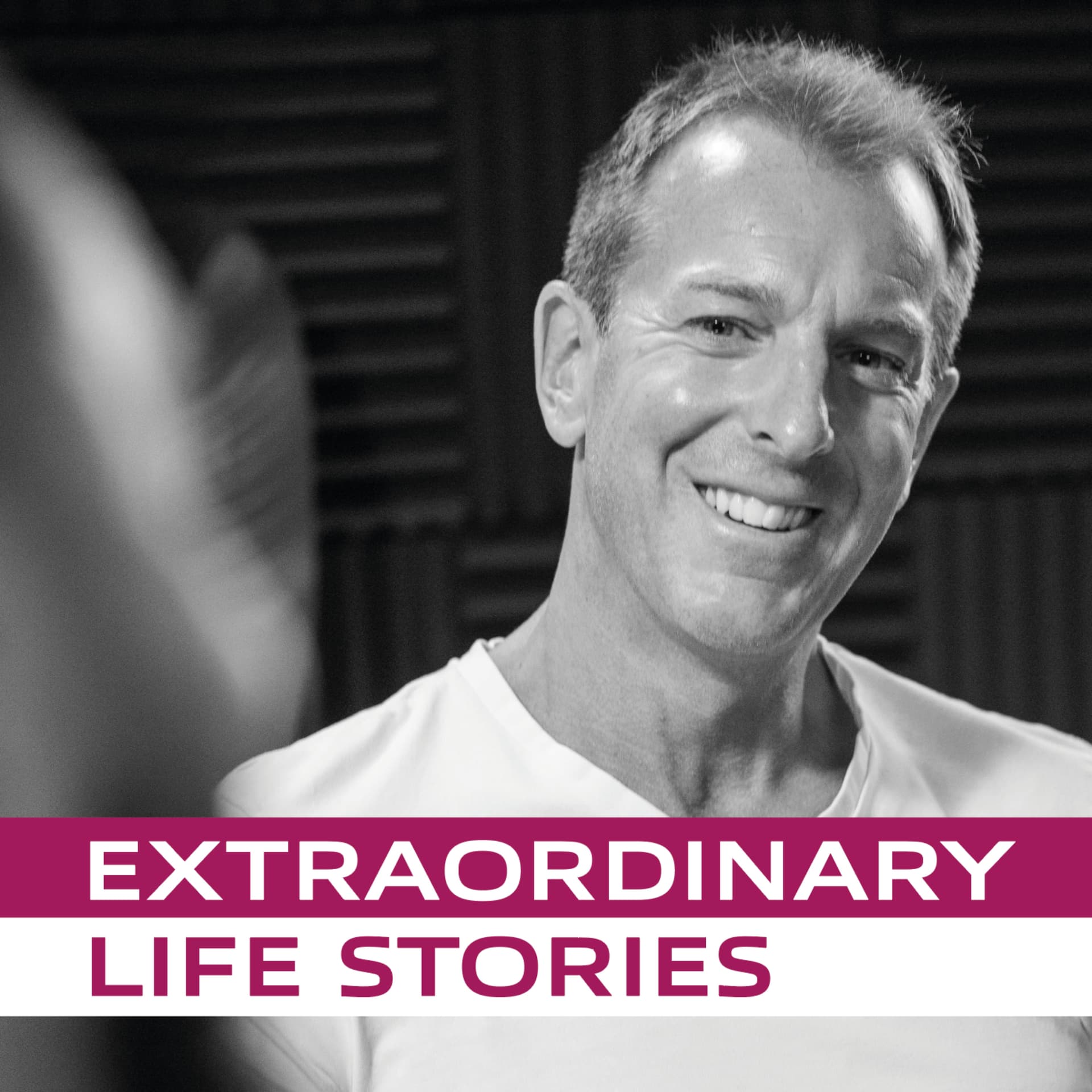
In this episode of Extraordinary Life Stories, John Reynolds talks with Steve Tappin.
Steve is a British leadership coach, author, the co-founder CEO of Beyond Unity and in 2013 Tappin became host of the BBC business programme, CEO Guru.


